• Skip to main content
  • Skip to header right navigation
  • Skip to after header navigation
  • Skip to site footer
MyZA

MyZA

News, Directory, Events and Other Stuff

  • Social Media
  • Sport
  • World News
  • Home
  • Submit News
  • Directory
  • Events
  • Stratlec
  • TFSA
  • News
    • APO
    • Today’s Sport News
    • Todays Social Media and Tech Headlines
    • Today’s World News
    • Today’s SA Financial News
  • Contact
You are here: Home / Archives for new

new

24 February 2025

Government continues working for the people, despite Budget postponement 

Location: News

Government continues working for the people, despite Budget postponement 

President Cyril Ramaphosa says the events of last week present an opportunity to raise the level of understanding among South Africans around the budget and what it means for them.

This as the annual Budget Speech by the Minister of Finance was postponed last week for the first time in the nation’s democratic history. 

“As GNU [Government of National Unity] partners, we will continue working for the South African people. As we have done in the past to overcome differences, we will once again find one another. 

“The considerable public interest around the Budget Speech, including from young people and on social media platforms, was greatly encouraging. It is our hope that this sparks a necessary national conversation on how we will fund our national priorities and the trade-offs that will need to be made,” the President said in his weekly newsletter on Monday.

Cabinet decided to postpone the presentation of the budget to allow further discussion on areas of disagreement among parties in the GNU. The budget will now be tabled in Parliament on 12 March 2025.

READ | Budget postponed for further deliberations

“The last-minute postponement was unfortunate. It gave rise to concern and uncertainty among South Africans, investors and the financial markets, who look to the Budget for important signals about the state and direction of our economy,” the President said. 

He further highlighted that the budget reflects government’s choices and priorities for the country’s development. 

“Decisions on how to spend public funds have implications for every South African. It is therefore essential that the concerns raised by different parties around the budget are properly addressed, in the interests of accountability, transparency and consensus-building,” he said. 

President Ramaphosa noted that this is the first time that the budget is being presented by the Government of National Unity. He said that it is understandable that this new arrangement would require a different approach in some respects. 
He told the nation that the process of forging agreement among the political parties in the GNU is still work in progress.

“Disagreements, contradictions and policy divergence are inherent in governments made up of several political parties. 

“It has been more than six months since the formation of the GNU. Despite disagreement between parties on a range of matters, the centre holds. It is a sign of a healthy and robust democracy that such differences may emerge from time to time and be ventilated in public. 

“Such differences don’t mean that the GNU is in crisis. It means that democracy is working. A Government of National Unity by definition infers consensus-building. No one party can impose its will. There needs to be thorough deliberation and meaningful engagement,” the President explained.

Public confidence

He added that the decision to postpone the Budget Speech and to continue discussions should engender public confidence in the GNU. It should reassure citizens that despite differences of opinion, government is pulling in the same direction. 

He further added that the reality is that government strives to implement national priorities in a context of slow growth, limited revenue, high unemployment and a large social wage. The state is simply not able to fund every priority and ambition. 

The President emphasised that the critical issue of the public purse must be a subject of discussion and debate not just among political parties, but among all South Africans who aspire to lead lives of dignity. 

“The social contract between government and the citizenry relies heavily on accountability and transparency. These have been features of our budgetary process since the advent of democracy. 

“The formation of the GNU was the result of the desire by the South African people that political parties work together to move the country forward. 

“As we continue to do so, we are adapting and strengthening our existing frameworks for cooperation, partnership and building consensus. We are learning, we are adjusting to new circumstances and we are moving forward,” the President said. – SAnews.gov.za


DikelediM
Mon, 02/24/2025 - 10:16
68 views
Read moreGovernment continues working for the people, despite Budget postponement 
24 February 2025

Solarafrica Secures R1.8 Billion Solar Investment, Advancing Wheeling Adoption in South Africa

Location: Business
Starsight Energy

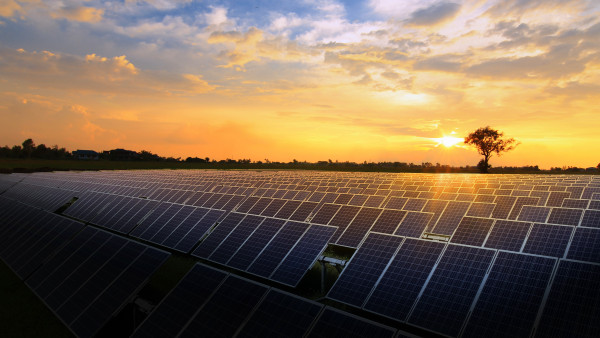
SolarAfrica (https://SolarAfrica.com/) is proud to take another major step forward in the development of its flagship utility-scale solar project, SunCentral, by successfully reaching financial close on the first 114 MW component of the project alongside funding partners Investec and RMB. The R1.8 billion investment into SunCentral marks the start of the project's rollout in South Africa.

SunCentral is a large-scale solar photovoltaic (PV) plant located between Hanover and De Aar in South Africa's Northern Cape province. The project will be developed in three phases.

Phase 1, consisting of 342 MW, will be delivered through a staged roll-out of three 114 MW facilities and will deliver renewable energy to a diverse range of off-takers by wheeling it through South Africa's power grid. Phase 2 and 3 will increase SunCentral's capacity to 1 GW.

Unlike similarly sized projects that offer wheeling on a one-to-one basis (with one generation plant supplying one off-taker), SolarAfrica's project will offer wheeling on a one-to-many basis, making it available to a wider pool of businesses in South Africa.

SolarAfrica's Chief Investment Officer Charl Alheit, who spearheaded the financial close, explains: “Reaching financial close on the first 114 MW of our utility-scale wheeling development and Main Transmission Substation (MTS) investment marks a significant milestone in our commitment to advancing sustainable energy solutions for our customers in the commercial and industrial sectors.”

He adds that the substantial size of SunCentral will unlock access to cheaper, greener power for even more businesses across the country. “We are excited to see this project move forward as we continue contributing to the energy transition while delivering long-term value to our customers."

SolarAfrica is part of the greater Starsight Energy Africa Group. The success of SunCentral will act as a blueprint for similar (and possibly smaller) off-site generation projects in other key African markets in which the Starsight Energy Africa Group companies operate.

“The construction of SolarAfrica's SunCentral is a critical step in our journey to expand clean energy adoption across Sub-Saharan Africa, says Paul van Zijl, Group CEO of Starsight Energy Africa Group. “We are excited to move this project forward and continue delivering long-term value to our customers,” he says.

SolarAfrica is backed by world-class investors African Infrastructure Investment Managers (AIIM) and Helios Investment Partners who both hold decades-long track records of bringing investment to support African innovation.

“Reaching Financial Close on the first 114 MW on SunCentral is a fantastic milestone for SolarAfrica, says Thor Corry, Investment Director at AIIM.

“The modular approach to construct the MTS and plug in subsequent 114 MW modules provides a superb platform for SolarAfrica to scale at pace to meet the needs of the C&I customers in South Africa who want to secure price certainty and cost efficiencies while furthering South Africa's Just Energy Transition. With South Africa requiring up to 30 GW of new capacity by 2030 to meet its climate commitments and energy needs, projects like this are crucial,” Corry concludes.

Distributed by APO Group on behalf of Starsight Energy.

About SolarAfrica:
Founded in 2011, SolarAfrica provides a suite of capex-free green energy solutions to the commercial and industrial sectors in Southern Africa. The holistic suite includes on-site solutions such as solar energy and battery storage together with virtual solutions like wheeling, trading and aggregation.

SolarAfrica partners with businesses in South Africa seeking an energy solution that provides power security, cost savings and carbon reduction – building towards long-term sustainability.

The company has evolved into an ambitious team who are passionate about what they do and the core values they uphold. SolarAfrica has been named the continent's leading solar energy firm twice, scooping the Africa Solar Industry Association's African Solar Company of the Year award in 2021 and 2023.

About Starsight Energy:
Across the continent, Starsight Energy is redefining what it means for businesses to be energy efficient. Starsight Energy provides premier clean on-grid and off-grid energy services to commercial and industrial clients in Africa.

Serving the commercial and industrial, financial, residential, educational and agricultural sectors, Starsight Energy delivers tailored power and cooling solutions to meet client requirements while optimising consumption through energy-efficient appliances and environmentally friendly practices and recommendations.

From load analysis and modelling to demand management and customised solution design, Starsight Energy helps clients optimize energy efficiency and cost savings across the board.

About African Infrastructure Investment Managers (“AIIM”):
AIIM, a member of Old Mutual Alternative Investments* (“OMAI”), has been investing in the African infrastructure sector since 1999 with a track record extending across seven African infrastructure funds. AIIM's team of 40+ investment professionals are based out of five locally staffed offices across the continent in Cape Town, Johannesburg, Nairobi, Lagos and Abidjan providing direct on-the-ground coverage of our key markets.

AIIM is Africa's largest dedicated infrastructure private equity manager and currently manages an aggregate AUM of USD2.9 billion in assets across the power, renewable energy, digital infrastructure, mid-stream energy and transport sectors with operations in 19 African countries.

AIIM is a licensed FSP approved by the Financial Sector Conduct Authority in South Africa.

*Old Mutual Alternative Investments (OMAI) is a private alternative investment manager in Africa, with over USD7.6 billion (ZAR139.4 billion) under management in infrastructure, private equity, hybrid equity and impact funds. It is a member of Old Mutual Investment Group, the investment management arm of Old Mutual.

About Helios Investment Partners:
Established in 2004, Helios Investment Partners is the largest Africa-focused private investment firm, with a record that spans creating start-ups to providing expanding companies with growth capital and expertise. The firm has over $3.0 billion in assets under management and is led and managed by a predominantly African team based in London, Lagos, Nairobi and Paris, with the language skills and cultural affinity to engage with local entrepreneurs, managers, and intermediaries on the continent.

Helios leverages its local and global networks to create attractive proprietary investment opportunities, with an emphasis on building market leaders in core economic sectors and driving performance through a highly engaged approach to portfolio operations. The firm's unique combination of a deep knowledge of the African operating environment, a singular commitment to the region and a proven capability to manage complexity, is reflected in its diverse portfolio of growing, market-leading businesses, and its position as a partner of choice in Africa.

Helios is the second mainstream private equity firm globally, and the largest emerging markets focused private equity firm, to achieve B Corp certification. B Corp status recognizes the firm's longstanding commitment to sustainability and responsible business practices.

Media files
Starsight Energy
Download logo
Read moreSolarafrica Secures R1.8 Billion Solar Investment, Advancing Wheeling Adoption in South Africa
23 February 2025

End of load shedding remains within reach 

Location: News

End of load shedding remains within reach 

The Minister of Electricity and Energy, Dr Kgosientsho Ramokgopa is confident that the end of load shedding in South Africa is within reach. 

Briefing the media on Sunday following an implementation of Stage 6 load shedding, Ramokgopa assured the nation that government and Eskom are making long-term decisions in the best interest of the country's power grid and economy.

“At all material points, we will never make expedient decisions at the cost of the grid, because the consequences will be too ghastly to contemplate. That is why it is important that to the degree that we need to initiate load shedding, understanding fully well that is going to deliver a message of an entity and a ministry that essentially is dropping the ball. 

“But we are making the point that we will not make expedient decisions. We'll make decisions that are in the interest of the of the grid and in the long term, in the interest of the South African economy,” the Minister explained.

The Minister further reassured the public that there is significant progress in stabilising the electricity supply.

“And I give you the assurance, that point I always make consistently, the end of load shedding is within touching distance,” he said. 

New capacity 

The Minister highlighted key developments in Eskom's recovery plan, including the synchronisation of Kusile Unit 6, initially expected by the end of February but now scheduled for 9 March.

Medupi Unit 4 is expected at the end of March or early April. These additions will bring 1,600 megawatts to the grid.
"Of course, the Medupi one is what we lost; we are recovering that. The Kusile unit, however, is entirely new capacity.  I'm confident that we are moving in the right direction.

“I want to say to the rest of the country, you are going through pain, we understand your anger, we feel your pain, we can hear your cries. We will resolve this problem,” Ramokgopa said. 

READ | Load shedding expected to be suspended by the end of the week 

Staying the course

Ramokgopa emphasised that government remains committed to the generation recovery plan, which he said is yielding positive results despite occasional setbacks.

“We're staying the course in relation to the generation recovery plan, because that generation recovery plan is giving us the results that we desire. We have accepted that there are going to be setbacks. 

He explained that the ongoing maintenance work is a critical part of ensuring that when the government ultimately declares load shedding a thing of the past, it does so with confidence.

“But as I’ve said consistently, when I stood before the nation to give an update on the grid’s performance, I made the point [that there will be] short-term pain, [and] long-term gain. We cannot postpone the maintenance of these assets.

“That’s why we are able to allocate the capital received from National Treasury to ensure that we carry out the necessary maintenance so that when we stand before you … that load shedding is behind us I'm able to speak with a degree of confidence. That is why I have not been able to make that absolute statement, because we have accepted that there are inherent risk in relation to the strategy that we have taken,” he explained.

In response to concerns about Eskom’s operational decisions, Ramokgopa dismissed any suggestions of underhanded dealings, reiterating that all efforts are aimed at long-term sustainability.

"We're not going to do shortcuts in relation to our obligations to the environment. We are committed to ensuring that South Africa’s energy supply is both stable and sustainable. As part of this journey to ensure that we eliminate load shedding, we're going to ensure that we keep to our obligations in relation to the environment,” he said. – SAnews.gov.za


DikelediM
Sun, 02/23/2025 - 15:50
629 views

Read moreEnd of load shedding remains within reach 
23 February 2025

SA welcomes first visitors from China through new visa initiative

Location: News

SA welcomes first visitors from China through new visa initiative

The digital Trusted Tour Operator Scheme (TTOS) visa initiative is bearing fruit with the first group of visitors from China having arrived in South Africa at the weekend.

Home Affairs Minister Dr Leon Schreiber along with Tourism Minister Patricia de Lille and other government and tourism stakeholders welcomed the first group of visitors from China through the TTOS visa initiative.

The 15 tourists arrived on Saturday through the Cape Town International Airport in the Western Cape.

The Ministers were delighted to welcome the tourists and a tour guide who arrived in South Africa only a few days after their visas were processed through the Department of Home Affairs visa initiative.

“This was an exciting moment in this ground-breaking initiative where the TTOS is providing a faster and more seamless process for visas for travellers from India and China. Together with the Department of Home Affairs we have worked tirelessly to make this happen and I commend Minister Schreiber and the team in the Department of Home Affairs for the swift implementation of this new and improved visa initiative,” Minister de Lille said.

Last year, an Inter-Ministerial Committee with the Department of Tourism, the Department of Home Affairs, the State Security Agency and Operation Vulindlela in the Presidency was established to tackle the visa regime issues. 

Home Affairs announced that the ground-breaking Trusted Tour Operator Scheme will significantly ease the process and allow for a seamless visa application process for travellers and tour operators from India and China. 
READ | Trusted Tour Operator Scheme to boost tourism from China, India

From 12 February, the first group of approved 65 tour operators from South Africa, India and China started processing visa applications through the TTOS. 

India and China have been identified as two key source markets for South Africa to grow arrivals due to the high number of tourists who travel internationally from these countries. 

Currently, South Africa only receives 41 600 arrivals from India and 79 700 from China, a minor share of the country’s total arrivals for 2024 which stood at 8.9million total international arrivals. 

“The TTOS is a massive win for the tourism and business events sector and the Department of Tourism will use the new visa initiatives as enablers to grow tourism arrivals to South Africa which will in turn drive inclusive economic growth and job creation,” Minister de Lille added.

Through targeted outreach engagements in India and China, the country has also been sharing the developments of the TTOS, the Electronic Travel Authorisation and Digital Nomad Visas with these two key source markets to ensure that more tour operators register and use these new and enhanced visa processes.  

“We are extremely excited about these visa developments and what it means for the growth of the tourism sector. We have no doubt that the TTOS will exponentially increase arrivals from India and China which will stimulate demand across the tourism and services sector,” the Minister said. – SAnews.gov.za


DikelediM
Sun, 02/23/2025 - 16:01
102 views

Read moreSA welcomes first visitors from China through new visa initiative
23 February 2025

Call to use water sparingly 

Location: News

Call to use water sparingly 

The Department of Water and Sanitation (DWS), uMngeni-uThukela Water and eThekwini Metro have urged the public to use water sparingly as eThekwini battle water supply disruptions.

In light of ongoing water supply disruptions in eThekwini, the Minister of Water and Sanitation, Pemmy Majodina, and Deputy Minister David Mahlobo convened an urgent meeting on Sunday with key stakeholders to address the matter. 

The meeting included eThekwini Mayor Cyril Xaba, Trading Services Committee Chairperson Mdu Nkosi, uMngeni-uThukela Water Board (UUW) Chairperson Advocate Vusi Khuzwayo, and senior management from the involved institutions.

“The public is encouraged to play their part in reducing the risk of water supply disruptions. All water users in the municipality are encouraged to use water sparingly to reduce the average consumption of water per capita per day. 

“The 2023 DWS No Drop audit (which was released by DWS in December 2023) found this to be 298 liters/capita/day, compared to the international average of 173 l/c/d,” the joint statement read. 

According to the statement, the root cause of the water shortages is that demand for treated water in eThekwini has outstripped supply. 
This is due to rapid population growth and significant leaks within the municipality’s water distribution system. 
This has resulted in a situation where the City’s reservoirs become depleted, because water is being drawn out of them faster than the reservoirs can be filled. 

This particularly affects water supply to high-lying areas and areas far from the reservoirs, because the water levels in the reservoirs drop to a level where they are insufficient to provide the pressure required to get water to the high-lying and far-away areas. 
This has been the main cause of water supply disruptions in Chatsworth, Umlazi and surrounding areas in the South, as well as Verulam, Tongaat and Ntuzuma in the North. 

Further exacerbating the situation, a key UUW pipeline was shut down last month to allow the South African National Roads Agency (SANRAL) to upgrade the N3 highway, affecting water supply to Hillcrest and surrounding areas.

The pipeline is expected to resume operations on 27 February. Additionally, restrictions imposed by the DWS on raw water abstraction from the uMngeni Water Supply System (uMWS) have also contributed to supply challenges.

“To ensure a continuous supply of water to users even in times of drought,  the DWS sets a limit on the amount of raw water that uMngeni-uThukela Water can abstract from the uMngeni Water Supply System (uMWS) for eThekwini to its consumers. Dam storage levels can fall rapidly when there is a drought, and it would therefore be irresponsible to raise the abstraction limit when the dams are full.”

UUW has been exceeding the abstraction limit imposed by DWS, and consequently the department instructed UUW to curtail its abstraction in October 2024. 

During the December holidays, when demand for water peaked in eThekwini, DWS temporarily lifted this curtailment directive, but it was reinstated again in mid-January 2025.

“Various projects are underway to augment the amount of water in the uMWS. The raising of the Hazelmere Dam wall was completed in 2023 at a cost of R820 million and has doubled the amount of water that can be stored in the Dam. 

“uMngeni-uThukela Water has completed a project to increase the capacity of the Hazelmere Water Treatment Works from 55 to 75 megalitres per day (75 million litres per day), at a cost of R135 million. The capacity of the treatment work will be further increased to 90 megalitres per day within the next three years, at a cost of R25 million,” the statement read. 

Work underway

In addition, UUW is currently constructing a dam and a 100 million megalitres treatment plant on the Lower uMkhomazi River.

The Trans Caledon Tunnel Authority (TCTA) is at an advanced stage of raising R28 billion for the construction of a large new dam and transfer tunnel on the upper uMkhomazi River which is part of the uMkhomazi Water Project. 
UWW is in the process of procuring additional treatment capacity so that it will be able to treat and supply more water to eThekwini once the uMkhomazi Water Project is completed.

“eThekwini Municipality is also working on its own measures to increase the supply of water. In addition to the existing water re-use plant currently being used by industries, which the City is implementing as a public private partnership, the City is in the process of procuring two additional water re-use plants that will treat secondary effluent to produce potable water that meets the required water quality standards.

“It is also planning to implement two seawater desalination projects. All these projects will also be implemented through public private partnerships.”

The City is also implementing several major projects to increase the resilience of its water distribution system to breakdowns and to enable it to manage peaks in demand better with fewer water supply disruptions. 

Examples of these include the R1.2 billion Southern Aqueduct upgrade which is approximately 30% complete; the commissioning of the new Northern Aqueduct which is approximately 70% complete; and the R60 million upgrade of the Tongaat Water Treatment Works, which will be commencing this year. 

Turnaround

The City Council approved a water and sanitation turnaround strategy in April 2023, which is now under implementation. The strategy includes ringfencing revenue from the sale of water for the water function, reduction of non-revenue water (NRW), improving leak repair, and disconnection of illegal connections. 

“The backlog of water leaks requiring repair has been significantly reduced. The City is in the procurement stage of a public private partnership to mobilise private sector funding and expertise to reduce non-revenue water. The City is also in the process of issuing several City-funded contracts for non-revenue water reduction,” the statement said.

The City is also installing pressure management valves to reduce the water pressure in the water distribution system, which reduces the frequency of pipe bursts and extends the useful life of the infrastructure. It also reduces the amount of water lost through leaks in the system.

A programme to replace old leaking water distribution pipes is also being implemented. 

The meeting agreed on the following measures that will be implemented :

•    The City Council will consider implementing formal water-use restrictions through by-laws
•    Given the recent rainfall and improvement in dam levels in the uMWS, DWS will again temporarily lift the curtailment, with effect from today, until 23 April 2025
•    Weekly technical coordination meetings between the city, UUW and DWS will continue and there will be weekly meetings between the Mayor, the Minister and the Chairperson of UUW to review progress
•    This work will be coordinated with the fortnightly meetings of the water and sanitation workstream meetings of the Presidential eThekwini Working Group
•    The City and UUW will improve their communications regarding water supply disruptions to residents, including the causes of the disruptions and what is being done about them. 

-SAnews.gov.za


DikelediM
Sun, 02/23/2025 - 16:26
99 views

Read moreCall to use water sparingly 
23 February 2025

African countries urged to address climate change

Location: News

African countries urged to address climate change

The Minister of Forestry, Fisheries and the Environment, Dr Dion George has called on African countries to act with resolve and clarity of purpose on issues of climate change.

This as the Minister attended the annual Committee of African Heads of State and Government on Climate Change (CAHOSCC) in Addis Ababa, Ethiopia on 16 February.

The meeting, which took place on the sidelines of the 38th African Union (AU) Summit, is where Heads of African States and Government consider climate issues of strategic importance to the Continent.

During this session, the Coordinator of CAHOSCC, Dr William Ruto, President of the Republic of Kenya delivered his report which highlighted various developments since the last meeting in 2024.

The report included reflections on the outcomes of the 29th Conference of the Parties of the United Nations Framework Convention on Climate Change in November 2024 and the implications for Africa, the CAHOSCC report from the meeting held on the margins of the 79th United Nations General Assembly in New York, in September 2024, updates from the Africa Climate Initiatives and Commissions, and the operationalisation of the Africa Climate Summit outcomes.

The CAHOSCC meeting also considered and submitted a draft decision on key climate change issues for adoption by the AU Assembly.

While delivering his intervention at the meeting, Dr George reiterated the need for African countries to "act with resolve and clarity of purpose" and went on to highlight the opportunities to do so through South Africa’s G20 Presidency.

“The Minister is leading on the G20 Environment and Climate Sustainability Working Group (ECSWG) which has the overall objective to advance the environmental dimension of the 2030 Agenda for Sustainable Development and its Sustainable Development Goals (SDGs) through focusing on a number of priorities and deliverables,” the Department of Forestry, Fisheries and the Environment said in a statement on Saturday.

These include focusing on adapting to climate change and building resilience, addressing loss and damage, the just transition and mobilising climate finance.

The other priority areas include biodiversity and conservation, addressing land degradation, desertification and drought, sustainable chemicals and waste management as well as oceans and coasts.

Following a request by Dr George in his intervention, the meeting resolved to request the AU Commission to convene a consultative meeting with AU Member States to deliberate about the priorities and proposed deliverables for the ECSWG prior to the first virtual meeting of the Working Group in March 2025. -SAnews.gov.za


Neo
Sun, 02/23/2025 - 12:18
16 views

Read moreAfrican countries urged to address climate change
23 February 2025

Afreximbank to Set up $1 Billion Oil Service Financing Facility in Guyana

Location: Business
Afreximbank

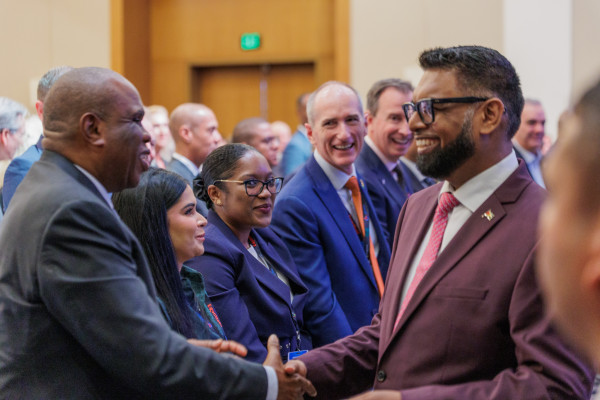
In a significant announcement at the Guyana Energy Conference and Supply Chain Expo being held from, February 18 - 21, Prof. Benedict Oramah, President and Chairman of the Board of Directors of African Export-Import Bank (Afreximbank) (www.Afreximbank.com), declared the multilateral Bank's intention to establish a $1 billion oil service financing facility in Guyana. This initiative aims to enhance local participation in the country's fast growing oil industry, in alignment with the government's local content policies. The Bank will deploy the $1 billion facility directly to qualifying corporate clients or through a factoring line via local banks, enabling them to finance invoices from local contractors.

President Oramah highlighted the transformative potential of Guyana's estimated 12 billion barrels of crude oil reserves. Emphasising the transformative power in proactive resource management, he advised Guyana to aggressively harness and build capital from its oil resources.

He said, "Given the level of oil production in Guyana and its offshore location, I estimate that the oil service sector would amount to 5 to 8 billion US dollars annually. But where will it go? Most of it would be paid to oil service companies abroad, if Guyana does nothing to avoid that. A 50% retention in Guyana would increase Guyana's GDP by 29% to 47%.” As such, he called for robust local content policies that would enable Guyanese entrepreneurs to become significant players in the oil value chain.

Based on Afreximbank's rich history of supporting commodity-dependent economies, President Oramah shared insights to complement the ongoing efforts of the Guyanese government. He acknowledged the inherent risks associated with dependency on a single commodity and laid stress on the importance of diversification.

He cautioned, “The commodity market is prone to volatility and cyclicality; hence, the reliance on crude revenues as a primary source of government funding could expose the national economy to volatile commodity markets." As such, he advised the government to secure long-term off-take contracts with oil service companies, which will enhance market access and price stability.

In the spirit of deepening Afri-Caribbean partnership, President Oramah remarked that skilled oil service companies from Ghana, Egypt, and South Africa, are "ready and willing to support Guyanese... And of course, Afreximbank is there to underwrite the marriage.”

He added that: “These measures are necessary if Guyana and other new entrants in the Caribbean and Africa are to avoid the painful "Dutch Disease. We make these suggestions based on the three long decades of financing oil and gas activities across Africa. We have witnessed oil-dependent economies transform for better or worse through these periods. In all these, the difference reflected the policy choices the leaders made.”

Distributed by APO Group on behalf of Afreximbank.

Media Contact:
Vincent Musumba
Communications and Events Manager (Media Relations)
Email: press@afreximbank.com

Follow us on:
X: apo-opa.co/436nryI
Facebook: apo-opa.co/3ENmLEu
LinkedIn: apo-opa.co/4bcByVp
Instagram: apo-opa.co/3Xb0g2y

About Afreximbank:
African Export-Import Bank (Afreximbank) is a Pan-African multilateral financial institution mandated to finance and promote intra-and extra-African trade. For over 30 years, the Bank has been deploying innovative structures to deliver financing solutions that support the transformation of the structure of Africa's trade, accelerating industrialization and intra-regional trade, thereby boosting economic expansion in Africa. A stalwart supporter of the African Continental Free Trade Agreement (AfCFTA), Afreximbank has launched a Pan-African Payment and Settlement System (PAPSS) that was adopted by the African Union (AU) as the payment and settlement platform to underpin the implementation of the AfCFTA. Working with the AfCFTA Secretariat and the AU, the Bank is setting up a US$10 billion Adjustment Fund to support countries effectively participating in the AfCFTA. At the end of December 2023, Afreximbank's total assets and contingencies stood at over US$37.3 billion, and its shareholder funds amounted to US$6.1 billion. Afreximbank has investment grade ratings assigned by GCR (international scale) (A), Moody's (Baa1), Japan Credit Rating Agency (JCR) (A-) and Fitch (BBB). Afreximbank has evolved into a group entity comprising the Bank, its impact fund subsidiary called the Fund for Export Development Africa (FEDA), and its insurance management subsidiary, AfrexInsure (together, "the Group"). The Bank is headquartered in Cairo, Egypt.

For more information, visit: www.Afreximbank.com

Media files
Afreximbank
Download logo
Read moreAfreximbank to Set up $1 Billion Oil Service Financing Facility in Guyana
21 February 2025

Grant beneficiaries urged to replace expiring SASSA Gold Cards

Location: News

Grant beneficiaries urged to replace expiring SASSA Gold Cards

Cabinet has called on all social grant beneficiaries to replace their South African Social Security Agency (SASSA) Gold Cards with the new Postbank Black Cards by the 20 March 2025 deadline.

In a statement on Friday, Cabinet said this is to ensure that beneficiaries continue to access their SASSA grant payments without disruption.

“Social grant beneficiaries can go to their nearest Postbank site located at retailers such as Checkers, Shoprite, Pick n Pay, Usave, and Boxer to get their Postbank Black Card," Cabinet said.

After the 20 March 2025 deadline - which was extended from the initial 28 February deadline - SASSA Gold Cards will no longer function at ATMs and retailers. 

The call follows concerns among grant recipients about the looming expiry of the SASSA Gold Cards and potential payment delays. 

Postbank, which administers the social grant payment system, has however assured beneficiaries that the transition to the new Postbank Black Card is simple and free of charge.

The move is part of Postbank’s broader efforts to modernise and secure the grant payment system, following past disruptions caused by fraud, card cloning, and system failures. 

By migrating to the new cards, beneficiaries can expect improved security and reliability when accessing their grants.

Postbank has deployed additional support at designated retailers and SASSA offices to assist with the replacement process, urging beneficiaries to make the switch before the deadline to avoid any inconvenience.

The agency has previously said that Postbank has also made it easy for beneficiaries to locate the nearest place in every province where they can collect their Postbank Black Cards. 

All they need to do from the comfort of their homes is to use their cellphone and: 

  • Dial: *120*218*3#
  • To continue, reply by pressing number: 1; and
  • Reply with the number representing the province they live in.

To get the new Postbank Black Cards, beneficiaries are required to have a valid South African ID, or a temporary ID. Beneficiaries are urged to be aware that no card will be issued without these documents. 

Ensuring that minimum documentation is required to get the new Postbank Black Cards is in line with SASSA and Postbank's ongoing commitment to continuously improve the customer experience of all social grant beneficiaries.

The Postbank Black Cards will be issued free of charge. For further enquiries, beneficiaries can contact Postbank on 0800 53 54 55 or SASSA on 0800 60 10 11. – SAnews.gov.za

DikelediM
Fri, 02/21/2025 - 11:21
324 views

Read moreGrant beneficiaries urged to replace expiring SASSA Gold Cards
21 February 2025

Crime Stats reveal reduction in some categories of crime

Location: News

Crime Stats reveal reduction in some categories of crime

Police Minister Senzo Mchunu says although there has been some reduction in several categories, more still needs to be done to reduce the country’s crime levels.

“We are positioning ourselves accordingly in terms of policing whilst we continue our work throughout the whole country,” Mchunu said.

The Minister was presenting the Quarterly Crime Statistics, reflecting on crimes that occurred during the third quarter of the current financial year (1 October 2024 – 31 December 2024). 

At Friday’s briefing in Pretoria, the Minister said the police had observed an overall decrease in several categories of crime when compared to the same period in the previous year.

“We have also registered a 4.5% reduction in stock theft, which is a welcome relief for farmers, communities and the agricultural sector as a whole,” Mchunu said, adding that the positive shift highlights the importance of continued collaboration between law enforcement, local leaders and communities to safeguard this vital industry.

“Although the percentage appears to be relatively small, we note the outcry of communities that farm livestock, particularly in the eastern Free State, north western parts of KwaZulu-Natal and in the northern Eastern Cape, hence our plan to combine these three provinces in a meeting to discuss this challenge.

“We must, however, also acknowledge the areas that require urgent attention. We have seen an increase in cases of assault with intent to cause grievous bodily harm and malicious damage to property. These crimes continue to disrupt communities and demand a reinforced response from law enforcement.

“For the third quarter, all provinces recorded a decrease in murder cases, marking a significant milestone in our national crime reduction efforts,” the Minister explained.

Murder
However, he expressed concern over the provinces of Gauteng, KwaZulu-Natal, Eastern Cape and the Western Cape.

This as Gauteng and KwaZulu-Natal remain the highest contributors to overall national murder figures, accounting for 25.0% and 21.4% respectively, while the Eastern and Western Cape account for 18.9% and 17.4%.

“The Western Cape continues to record the highest number of gang-related murders, with 263 counts reported in this quarter alone. 

“This is completely unacceptable, and it must change. A large number of these murders (collectively amounting to a figure of 135) occurred in Bishop Lavis, Mitchells Plain, Kleinvlei, Delft and Elsies River.

A 9.8% decrease in murder cases was recorded in the quarter.

“The issue of gang violence requires a rethink in approach, because this is not only a historic matter but is also repetitive in nature, there is no point in us discussing one and the same thing with no change.”

He further announced that the police are dedicating 27 February to amongst other things, to review policing in high murder zones. The focus, said the Minister, will be on murders and firearms, after which they will decide on the concrete steps to be taken.

“Partnerships with communities and other partners will be a critical element in the rethinking approach. A combination of interventions indicates that there are much more effective methods of fighting crime and criminals.

“Several individuals have been dealt with in a number of areas in the Eastern Cape recently and KwaZulu- Natal, following a series of taxi violence and extortion related murders. I do want to state that no one is classified as “untouchable” – you do wrong, we arrest you,” Mchunu said.

Crimes against women and children

Mchunu said while police have registered an overall reduction in contact crimes against women, the men and women in blue are deeply concerned by the increase in attempted murder cases against children aged 0 to 17 years.

“This is an alarming development that calls for a concerted effort to protect the most vulnerable members of our society,” he said.

Another bugbear was that of extortions, kidnappings and drugs with these matters being added to the meeting on 27 February.

Police have noted that some of the kidnappings are orchestrated from the St Albans prison in the Eastern Cape and that the mastermind of these kidnappings still has access to a number of cellphones.

Meanwhile, the statistics showed a 3.3%  reduction in rape cases; a 3.2% drop in attempted sexual offences and a decline in carjackings and robberies at both residential and non-residential premises.

Police also registered a 4.5% reduction in stock theft, which is a welcome relief for farmers, communities and the agricultural sector as a whole.

Safer Festive Season, new recruits 

Mchunu said the Safer Festive Season initiative, launched in October 2024, has played a significant role in the recorded crime reductions.

“Through heightened police visibility and strategic operations, fewer crimes were reported and recorded during this period.

“A key element in our crime-fighting strategy has been Project 10 000, aimed at bolstering police personnel,” he said.
In addition, to bolster the fight against crime, police welcomed 5500 new recruits at various South African Police Service (SAPS) academies.

“These individuals will undergo rigorous training and, upon completion, will reinforce our crime-fighting efforts as constables. This initiative not only enhances policing capacity but also contributes to job creation, a crucial aspect in addressing social determinants of crime,” the minister said. 

Destroying illegal weapons

Mchunu said that  just yesterday, 16 049 firearms were destroyed in accordance with Section 149 of the Firearms Control Act. 

“We will continue to carry out measures aimed at ensuring that illegal weapons are seized and destroyed so as to ensure the safety of our communities,” he said. 

Mchunu appealed to communities to work hand in hand with law enforcement. 

“Crime thrives in silence, and we urge all South Africans to report criminal activities, cooperate with the police, and participate in community policing forums,” he said. – SAnews.gov.za  


Edwin
Fri, 02/21/2025 - 13:52
208 views

Read moreCrime Stats reveal reduction in some categories of crime
21 February 2025

Cabinet supports bold vision outlined by President’s SONA

Location: News

Cabinet supports bold vision outlined by President's SONA

Cabinet has called on all sectors of society to support the initiatives announced by the President Cyril Ramaphosa during his State of the Nation address earlier this month. 

Cabinet said this in a statement on Friday following a Cabinet meeting held on 12 February 2025 and a special Cabinet meeting on 29 January 2025. 

“Cabinet calls on all sectors of society to support the initiatives announced by the President in his 2025 SONA and partner with government as we set our nation on a trajectory for the year ahead,” Cabinet said in a statement. 

Cabinet also expressed its support for the bold vision of creating a nation where all South Africans share in its prosperity and opportunities, as outlined by President Ramaphosa. 

“The President called on all South Africans to unite in action to reignite our collective vision and shared passion to build a South Africa that works for everyone. Through the planned National Dialogue, we will chart our nation’s course and forge a common vision for our country’s future,” Cabinet said. 

The statement highlighted that the new Medium-Term Development Plan (MTDP) guides government’s initiatives to create a more inclusive country that lives up to the commitments of the Government of National Unity. 

The MDTP aims, among others, to reduce unemployment, poverty and the rising cost of living as well as combat crime and corruption.

“The massive R940 billion investment drive announced by President Ramaphosa in new infrastructure and the upgrading of existing infrastructure over the next three years, puts infrastructure development at the heart of our country’s economic growth and job creation,” Cabinet said. 

The address outlined a clear path to tackle the challenges experienced at local municipalities, particularly in the maintenance of essential infrastructure. It also detailed intensive interventions to deal with the country’s water challenges, including the expansion of water infrastructure by investing R23 billion into seven large water infrastructure projects.

President Ramaphosa outlined government’s commitment to support the well-being of South Africans through various social support initiatives in health, education, social protection, community development and public employment programmes, with around 60 percent of our national budget spent on the social wage.

“The President affirmed our nation’s sovereignty and constitutional democracy, and South Africa’s position to advance the well-being of humanity, and those around the world who continue to experience colonialism and oppression,” Cabinet said. – SAnews.gov.za

DikelediM
Fri, 02/21/2025 - 10:34
10 views

Read moreCabinet supports bold vision outlined by President’s SONA
21 February 2025

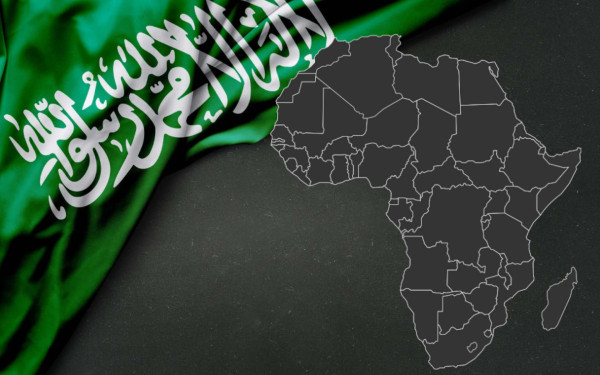
Saudi Arabia Expands Energy Ties With Africa

Location: News
African Energy Chamber

Earlier this week, Egypt's Minister of Petroleum and Mineral Resources Karim Badawi and Saudi Arabia's Minister of Energy Abdulaziz bin Salman Al Saud signed an agreement to develop an executive plan for energy efficiency cooperation, strengthening bilateral ties in the energy sector and fostering sustainable development. This follows another significant development in September, in which Egyptian Prime Minister Mostafa Madbouly secured a $5 billion pledge from Saudi Arabia's PIF, representing the “first phase” of a larger investment strategy. 

As a leading global energy giant, Saudi Arabia has been actively investing in Africa's energy sector, aiming to expand its energy reserves, advance energy diplomacy and compete with other global superpowers. This strategic push not only strengthens Saudi Arabia's influence in the region, but also paves the way for deeper economic and political ties with African nations. 

To date, the lion's share of investment in Africa's energy sector has focused on clean energy advancements. With total project costs reaching $7 billion across the continent, Saudi developer ACWA Power stands as the leading private-sector investor in African renewable energy. In October 2024, the company announced that its Redstone solar plant in South Africa was set to achieve its full 100 MW capacity, while its Kom Ombo solar PV plant in Egypt successfully reached its full capacity of 200 MW. ACWA Power is also leading Project DAO, South Africa's largest hybrid renewable power plant, with an $800 million investment. The project is expected to come online by 2026 and aligns with the Kingdom's broader Vision 2030 goals.  

In addition to renewable energy, Saudi Arabia is diversifying its investments to secure critical minerals for clean energy technologies. In October, Saudi Arabia's Manara Minerals, a joint venture between Ma'aden and the Public Investment Fund (PIF), entered advanced talks to acquire a minority stake in First Quantum Minerals' Zambian copper and nickel assets. The potential investment, valued between $1.5 billion and $2 billion, underscores Saudi Arabia's strategy to secure critical minerals that are vital for the global clean energy transition. 

Turning to broader regional commitments, Saudi Arabia's financial support for Africa's energy infrastructure has grown. In October, the Kingdom announced a major funding initiative, pledging at least $41 billion for sub-Saharan African nations. This includes $1 billion for development, $5 billion for startups, $10 billion in financing from the Saudi Export-Import Bank and $25 billion in private sector investments over the next decade.  

Meanwhile, the Saudi Ministry of Energy has established the "Empowering Africa" initiative as part of its broader commitment to supporting sustainable development across the continent. In collaboration with the Ministries of Communications and Information Technology and Health, the initiative aims to deliver clean energy, connectivity, e-health and e-learning solutions to enhance lives and promote long-term growth in Africa. Building upon the Clean Fuel Solutions for Cooking Program, it focuses on providing cleaner cooking solutions to vulnerable populations, aiming to reduce reliance on traditional biomass fuels and improve health outcomes for millions of households. Minister bin Salman Al Saud has emphasized energy as a fundamental human right and is spearheading efforts to improve access to clean cooking technologies across the continent. 

Additionally, state-owned petroleum company Saudi Aramco is strengthening its partnerships with African nations to support energy investments and mobilization. These collaborations are expected to drive infrastructure development, enhance oil and gas production capacity and facilitate knowledge transfer between Saudi and African energy stakeholders, while aligning with broader energy security and sustainability goals.  

In the multilateral arena, the African Energy Chamber is working with Saudi Arabia to support South Africa's G20 energy investments and mobilization. This partnership is set to facilitate greater financing and policy coordination, ensuring Africa's energy priorities are well-represented in global energy discussions. The upcoming African Energy Week: Invest in African Energies conference in Cape Town serves as a key platform to facilitate and support these investments, bringing together Saudi stakeholders, African governments and global energy leaders to advance new projects, strengthen partnerships and accelerate the continent's energy transition. These collaborations are essential in addressing energy challenges, driving economic growth and fostering long-term sustainability. As Saudi investments expand – alongside those of other G20 nations – their impact on Africa's energy landscape will only deepen.  

AEW: Invest in African Energies is the platform of choice for project operators, financiers, technology providers and government, and has emerged as the official place to sign deals in African energy. Visit www.AECWeek.com for more information about this exciting event. 

Distributed by APO Group on behalf of African Energy Chamber.

Media files
African Energy Chamber
Download logo
Read moreSaudi Arabia Expands Energy Ties With Africa
21 February 2025

AEW 2025 to Fuel Regional Investment as Southern Africa Advances (O & G) Development

Location: News
African Energy Chamber

From significant oil deposits in Namibia's Orange Basin to untapped potential in South Africa to gas frontiers onshore Zimbabwe and developments in Mozambique and Angola, Southern Africa has emerged as a highly-promising oil and gas market. However, to unlock the full potential of the industry, investors need to rally, providing the much-needed capital and technology to boost energy development across the region.

African Energy Week: Invest in African Energies – taking place September 29 to October 2, 2025 - will highlight Southern Africa's energy potential, from major projects and exploration campaigns to investment opportunities and emerging challenges. By uniting regional governments, major operators and global stakeholders, the event fosters collaboration, serving as a catalyst for South African energy development.

Angola Drives Exploration Towards Near-Term Production

Sub-Saharan Africa's second-largest oil producer, Angola continues to leverage industry reform to accelerate exploration and development. Seeking to maintain oil output above one million barrels per day while increasing natural gas production, the country is preparing to launch the final bid round of its six-year licensing strategy in Q1, 2025. Offering nine blocks for exploration in the deepwater Kwanza and Benguela basins, the round is expected to entice major deepwater players to expand their portfolios offshore Angola. To further support production growth, the country introduced five marginal fields for exploration in 2024 and continues to promote blocks available on direct negotiation. Major projects such as the Cabinda Oil Refinery (2025); the New Gas Consortium (early-2026); and the Agogo Integrated West Hub Development (mid-2026) are also set to fuel production.

Mozambique Targets LNG Advancement

With over 100 trillion cubic feet (TCF) of gas resources in the Rovuma Basin, Mozambique is pushing ahead with several large-scale LNG projects. These include the operational 3.4 million ton per annum (MTPA) Coral South FLNG project; the under-development 3.37 MTPA Coral North project; the 18 MTPA Rovuma LNG project; and the 13 MTPA Mozambique LNG project. Despite delays, operators are committed to accelerating development. While pushing the Mozambique LNG project timeline from 2027 to 2029/2030, TotalEnergies expects a U.S. loan approval to be restored under the Trump administration in the coming weeks. ExxonMobil also anticipates FID for the Rovuma project by 2026, paving the way for advanced development.

Namibia: The Next Deepwater Oil Producer

Following a string of discoveries in the offshore Orange Basin, Namibia is working towards first oil production by 2029. The Venus-1X discovery by TotalEnergies is at the forefront of this goal, with the French major seeking to finalize its phase one development plan in 2025 and make FID in 2026. However, the development of the Mopane well – situated in PEL 83 and operated by oil and gas firm Galp - could bring the timeline to first production much closer. Two discoveries were made at the Mopane 1-A well and the Mopane 2-A well, and the operator is now seeking a farm-in partner to develop the asset. Other companies such as Shell, Petrobras, Africa Oil Corp, Chevron and more are also investing offshore while independents including ReconAfrica and Sintana Energy are conducting exploration and appraisal drilling onshore.

South Africa Prioritizes Gas Exploration, Renewable Expansion

Two offshore basins have generated significant interest by foreign player in South Africa: the Southern Outeniqua Basin and the Orange Basin. Southern Outeniqua featured two major gas discoveries made by TotalEnergies (Luiperd and Brulpadda) in 2019 and 2020, representing some of Africa's biggest finds made during the period. While TotalEnergies exited the Southern Outeniqua basin in 2024, the company has turned its attention to South Africa's Orange Basin, hoping to mirror upstream success in neighboring Namibia. Other firms including Africa Oil Corp, Shell and Petrobras are investing in the Orange Basin, and all eyes are on future discoveries offshore South Africa.

Zimbabwe: An Onshore Gas Frontier

Zimbabwe made headlines in 2022 when Invictus Energy announced successful drilling activities at the Mukuyu-1 well at the onshore Cabora Bassa Project. This was followed by the discovery of gas at the Mukuyu-2 well in 2023, with the find revealing the potential for 20 TCF of gas resources. In 2025, the company completed an independence review of the Petroleum Production Sharing Agreement, which would enable the Invictus Energy to unlock value-sharing from the project. Going forward, the company is pursuing a 3D seismic survey alongside appraisal drilling and well testing to further delineate the resource potential while refining development plans and improving the operational efficiency. All eyes are on the project as Zimbabwe strives to bring its first natural gas development to fruition.

Distributed by APO Group on behalf of African Energy Chamber.

About AEW: Invest in African Energies:
AEW: Invest in African Energies is the platform of choice for project operators, financiers, technology providers and government, and has emerged as the official place to sign deals in African energy. Visit www.AECWeek.com for more information about this exciting event.

Media files
African Energy Chamber
Download logo
Read moreAEW 2025 to Fuel Regional Investment as Southern Africa Advances (O & G) Development
20 February 2025

Chaos Outside Cape Town Schools as Parents Demand Places for Their Children

Location: News

Parents say their children are subjected to poor learning conditions at Solomon Mahlangu Primary School

Read moreChaos Outside Cape Town Schools as Parents Demand Places for Their Children
20 February 2025

Deputy President Mashatile Receives Courtesy Visit From Chairman of the China Council for the Promotion of International Trade

Location: News

The Presidency of the Republic of South Africa
Download logo

Deputy President Shipokosa Paulus Mashatile has today, Thursday, 20 February 2025, received a courtesy visit by the Chairman of the China Council for the Promotion of International Trade (CCPIT), Mr. REN Hongbin, at the OR Tambo Official Residence in Pretoria, Gauteng Province. 

The CCPIT is a key Chinese economic promotion institution that reports directly to the State Council responsible for the facilitation and promotion of trade and investment with foreign countries by supporting Chinese companies (their members) to do business abroad and to engage and support foreign companies that have operations in China.

It has more than 400 000 Chinese business members, the majority of which are from State-owned Companies (SoEs).

This visit to the Deputy President follows the successful 2nd State Visit to China by President Cyril Ramaphosa in September 2024. In particular, it builds on the outcomes of the President's business engagements, including the seminal South Africa – China Presidential Business Forum, the closed roundtable discussion between the President and the Leadership of 20 high-level Chinese investors, and the Presidential Business Programme in Shenzhen that focused on key investors in China's leading technology and innovation hub. 

Therefore, the Chairman's visit is mainly focussed on following up on the implementation of the outcomes of the 9th Forum on China-Africa Cooperation (FOCAC) Summit held in Beijing in September 2024, as well as optimising the trade and investment environment for better cooperation between South Africa and China.

Deputy President Mashatile has welcomed China's plan to host the FOCAC Ministerial Coordination Meeting alongside the China-Africa Economic and Trade Expo in June 2025.

Such events, he said, would strengthen Africa-China economic relations and accelerate projects in industrialisation, infrastructure, agricultural modernisation, and green development, aligning with AU Agenda 2063 goals.

“Chairman, our President was encouraged by the number of Chinese companies he interacted with in Beijing and Shenzhen last year, who all expressed a wish to increase their investment exposure in South Africa. We continue to prioritise new investments in targeted sectors and enlarge the beneficiation and manufacturing base in South Africa, especially in the automotive and energy, which will contribute to local job creation, technology, and skills transfer,” said the Deputy President.

Furthermore, the Deputy President took the opportunity presented by the visit to mobilise Chinese businesses to attend the Business20 (B20) meetings of the G20 in South Africa this coming year.

In reciprocating the invite by the Deputy President, the Chairman also invited South Africa to attend the 3rd China International Supply Chain Expo (CISCE) that will be hosted by the CCPIT in Beijing in July this year. The CISCE is one of the four national-level trade and investment conferences hosted in China yearly. The 2nd CISCE was held in Beijing in November 2024 and was addressed by the Vice President of China, Mr Han Zheng.

Post the meeting with the Deputy President, the Chairman is expected to meet with the Minister of Trade, Industry, and Competition, Mr Parks Tau.

During this meeting, Deputy President Mashatile was supported by Deputy Minister of International Relations and Cooperation, Ms Moraka and Deputy Minister of Trade Industry and Competition, Mr Godlimpi.

Distributed by APO Group on behalf of The Presidency of the Republic of South Africa.

Read moreDeputy President Mashatile Receives Courtesy Visit From Chairman of the China Council for the Promotion of International Trade
20 February 2025

KZN motorists urged to be extra vigilant on the roads

Location: News

KZN motorists urged to be extra vigilant on the roads

The KwaZulu-Natal Department of Transport has urged motorists to be extra vigilant on the roads, as the South African Weather Service (SAWS) warned of prolonged rainfall in various parts of the province.

“We are also requesting those who are involved in school transport to always remember that they are transporting future leaders. They need to avoid speeding, as roads are slippery when wet,” Transport and Human Settlements MEC, Siboniso Duma, said on Thursday.

According to the Yellow Level 2 warning issued by SAWS, widespread showers and thundershowers are expected over the south-western part of the province tonight.

Rainfall accumulation of at least 40 millimetres (mm) is expected over the south-western parts of the province today, which may lead to flooding and localised impacts.

The districts affected by severe weather include uMgungundlovu, Amajuba, uThukela, eThekwini, Zululand, Ilembe and Umkhanyakude.

The MEC also reported that a roving team from Human Settlements is on standby to ensure quick intervention if there is any destruction of houses. 

“There are families that were affected by prolonged rainfall that started on the 1st of January 2025. We are ready to hand over contractors to build temporary accommodation for these families.

“Importantly, today we are in Alfred Duma Local Municipality as part of our efforts aimed at speeding up the construction of road networks in various parts of the province. We will introduce the contractor that will start the rehabilitation of the P32 [road], which starts from KwaMaphimbane to Uitval,” Duma said.

New HOD appointed

In a bid to respond with speed to the needs of citizens, Duma recently announced the appointment of a new Head of Department (HOD) of Human Settlements, Sihle Maxwell Mbili.

Mbili is not new to the Department of Human Settlements, as he worked as Chief Director - Corporate Services in the department. 

“He is the former Municipal Manager of Ray Nkonyeni Local Municipality, where he developed a 20-year-plan. Under his leadership, Ray Nkonyeni achieved clean audits and was singled out as the best-run municipality for many years. 

“He was also selected as the best municipal manager in the province and was instrumental in the building of 4 000 houses in the municipality. He achieved this by ensuring closer working relations with the Department of Human Settlements,” Duma said. – SAnews.gov.za

Matona
Thu, 02/20/2025 - 16:14
227 views

Read moreKZN motorists urged to be extra vigilant on the roads
20 February 2025

Police Committee Applauds High Arrest Figures

Location: News

Republic of South Africa: The Parliament
Download logo

The Portfolio Committee on Police has applauded the remarkable number of arrests of suspected criminals over the festive season but raised alarm that a worrying disjuncture remains between arrests and convictions. The committee received presentations from the South African Police Service (SAPS) management on the Safer Festive Season operation, policing extortion over the festive season and capacitating the detective services.

“It is commendable that 244 951 wanted criminals were arrested for the period between 1 October 2024 to 31 January 2025, but these arrests will be futile of they are not followed by effective prosecution. In line with this, the committee has reemphasised the importance of prosecution-led investigations that will aid prosecution. Also, the link between low conviction rates and the under-resourcing of the detective services cannot be overemphasised,” said Mr Ian Cameron, the Chairperson of the committee.

The committee also emphasised the need for the roll-out of similar high visibility and disruption operations throughout the year, as, on paper, this visibility is effective. While the committee acknowledged South Africa's fiscal challenges, it is of the view that the 6 332 festive-season operations can be replicated throughout the year.

The focus on unlicenced liquor premises is welcomed, as substance abuse is one of the causal factors of crime. The committee was informed that the SAPS closed 6 547 unlicenced premises during October to January period throughout the country, but the committee called on the SAPS together with Liquor Boards to work with communities to revisit these areas, as there is a trend of reopening these establishments after they are closed by the police.

Meanwhile, the committee acknowledged plans by the SAPS to capacitate the detective services through an initiative to recruit 4 000 additional detectives. The committee reemphasised that while this is welcomed, the reality is that this additional capacity does not address the dire capacity shortages in this critical component. Also, the additional capacity will have a minimal impact on the high docket-to-detective ratio and a comprehensive short- to medium-term plan is necessary to alleviate the pressure. The committee noted that the SAPS has made a request to National Treasury for additional funding but highlighted the need to put alternative strategies in place, especially in the context of South Africa's current fiscal constraints.

Furthermore, the committee is concerned about the availability of tools of trade, such as vehicles and office space, for the additional capacity within the detective services. Without suitable tools the additions will not add the required value in the fight against crime. “For example,” Mr Cameron said, “members of the committee conducted an unannounced oversight to the Anti-Gang Unit in the Western Cape and the unit only has 79 vehicles with 90% of those having over 250 000 km, operate in an infrastructure that is not maintained and 210 members share two female and one male toilet. These challenges are systemic and affect the SAPS at all levels and affect the wellness and operational efficiency of the police. Additional capacity without addressing those shortcomings will only exacerbate the challenges,” Mr Cameron said.

The committee is also concerned that the recruitment of 200 detectives who had previously left the SAPS is too small a number and will lead to juniorisation of the service and lock out many experienced police officers who are willing to return. The ripple effect is that these additional new detectives will take time to acclimatise to the new environment translating into minimal impact on the detective services' ability to fight crime.

Meanwhile, the committee welcomed the improved focus in tackling extortion case but noted that extortions continue. Nonetheless, the committee reemphasised the importance of law enforcement's integrated efforts to prevent and combat extortion. Also, intelligence-driven operations should be the primary drivers of pro-active and combat responses to disrupt extortions. Collaboration with the National Prosecuting Authority is also necessary to ensure that cases are placed before courts and that criminals are prosecuted effectively.

Distributed by APO Group on behalf of Republic of South Africa: The Parliament.

Read morePolice Committee Applauds High Arrest Figures
20 February 2025

Merck Foundation CEO Provides 194 Oncology Scholarships in Africa

Location: News
Merck Foundation

  • Merck Foundation marks World Cancer Day with African First Ladies by providing 194 scholarships of Oncology Training to African doctors from 32 countries. 
  • Merck Foundation together with Africa First Ladies and Ministries of Health has been building cancer care capacity and increasing the limited number of Oncologists in their countries by providing close to 200 Scholarships of One-, two- and three-years fellowship, diploma and Master Degree of oncology to African doctors from 32 Countries. 
  • Merck Foundation is making history in Africa by training the First African Oncologists and First Cancer Care Teams in Countries such as The Gambia, Sierra Leone, Burundi, Liberia, Guinea Conakry, Central African Republic, Chad, Burundi, Malawi, Niger, Namibia, Zambia, Zimbabwe and more. 

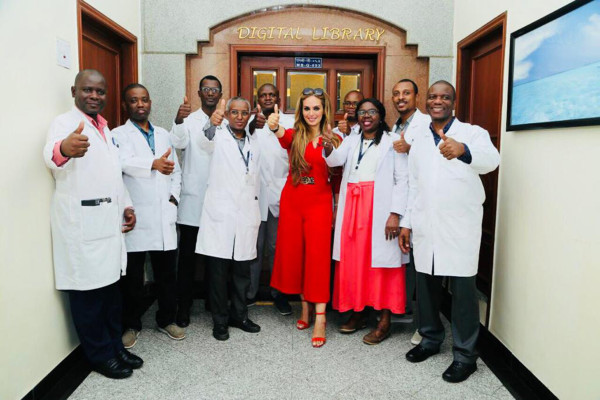
Merck Foundation (www.Merck-Foundation.com), the philanthropic arm of Merck KGaA Germany, marks ‘World Cancer Day 2025' together with Africa's First Ladies and Ministries of Health. Through their Cancer Access Program, Merck Foundation is is building quality and equitable cancer care capacity in Africa.  

Senator Dr. Rasha Kelej, the CEO of Merck Foundation, highlighted, “At Merck Foundation, we mark World Cancer Day not just as a single day, but as a our continued commitment to transform and advance cancer care in Africa.  

Together with my dear sisters, the Africa's First Ladies, we are have enhanced the cancer care capacity in the continent by providing 194 scholarships to young African doctors from 32 countries, significantly increasing the number of oncologists in Africa. We are making history together by providing these important scholarships for the first oncologists and /or the first cancer care teams in many countries across Africa.”  

Merck Foundation in total provided more than 2100 scholarships to doctors from over 52 countries in 44 critical and underserved medical specialties.  

The Merck Foundation Cancer Access Program provides One, two- and three-years fellowship, Post Graduate Diploma and Master Degree of oncology for doctors from Africa. The clinical training has been conducted in India, Egypt and Kenya. Additionaly, Merck Foundation also provides scholarships for 2 years online PG Diploma in Cancer and Clinical Oncology, 01 year online PG Diploma in Medical Oncology and 1 year online PG Diploma in Pain Management from reputed Universities in UK like University of South Wales, University of Buckingham, Queen Mary University of London, and Cardiff University. 

Merck Foundation is establishing Multidisciplinary Oncology Care teams in many African countries by providing scholarships of clinical training in Medical Oncology, Surgical Oncology, Pediatrics Oncology, Gynecology Oncology, Breast Oncology, Haemato-Oncology, Orthopaedic Oncology, Palliative Care, Pathology Oncology, Radiation Oncology, Research in Oncology, Surgical Oncology - Genital Urinary System, Advanced Cytopathology Training, Interventional Radiology, Radiation Technician, Laboratory Technician, Oncology Nursing. 

Merck Foundation through its Merck Foundation Cancer Access Program has provided 194 scholarships of Oncology to doctors from 32 countries including Botswana, Burkina Faso, Burundi, Cameroon, Central African Republic, Chad, Congo Brazzaville, Democratic Republic of the Congo, Ethiopia, Gabon, Gambia, Ghana, Guinea, Kenya, Liberia, Malawi, Mauritius, Mozambique, Namibia, Nepal, Niger, Nigeria, Rwanda, Sao Tome & Principe, Senegal, Sierra Leone, South Africa, Sri Lanka, Tanzania, Uganda, Zambia and Zimbabwe.  

“In several of these countries, there wasn't even a single oncologist. We are proud to be making history in Africa by training the first oncologists and establishing the first cancer care teams in nations such as The Gambia, Sierra Leone, Burundi, Liberia, Guinea Conakry, Central African Republic, Chad, and Niger. Merck Foundation remains committed to transforming the landscape of cancer care across the continent and leading Africa toward a healthier future,” explained Senator Dr. Rasha Kelej.  

Africa records around 1.1 million new cases of cancer, resulting in up to 700,000 deaths, every year, as per WHO data. The mortality rate of cancer patients is very high in Africa, as compared to the rest of the world.  

“One of the key reasons is also the late diagnosis of the disease. Therefore, these scholarships are very important” added Senator Kelej.  

Merck Foundation has also created awareness materials including awareness leaflets and videos on Cancer Prevention and Early Detection.  

Dr. Chifundo Kajombo, Merck Foundation Alumni from Malawi shares, “I am privileged to be awarded a scholarship by Merck Foundation to pursue the Surgical Oncology fellowship training program at Tata Memorial Hospital, India. I managed to advance from basic surgical oncology principles to the advanced level. This has helped me improve my understanding of cancer and operative principles. Since returning back home, I have managed to change the structure of how our breast clinic runs and modified it to incorporate a number of new things that we probably could not have possibly included. I am so proud to share that I have just been awarded the Best Surgeon for 2023 in Malawi. I would not have achieved this feat without Merck Foundation's scholarship. I am very thankful.” 

Watch testimonials videos of Merck Foundation Oncology Fellowship Alumni: https://apo-opa.co/4bab06Y

Distributed by APO Group on behalf of Merck Foundation.

Link of the extra posters: https://apo-opa.co/3X6RmD6

Contact details:
Mehak Handa
Community Awareness Program Manager
+91 9310087613 / +91 9319606669
mehak.handa@external.merckgroup.com

Join the conversation on our social media platforms below and let your voice be heard! 
Facebook: https://apo-opa.co/4k65XbW
X: https://apo-opa.co/43mGeGv
YouTube: https://apo-opa.co/3EVeWMS
Instagram: https://apo-opa.co/413ECyl
Threads: https://apo-opa.co/4gLTA1P
Flickr: https://apo-opa.co/4gSxZVs
Website: www.Merck-Foundation.com
Download the Merck Foundation App: https://apo-opa.co/413wo9z

About Merck Foundation:
The Merck Foundation, established in 2017, is the philanthropic arm of Merck KGaA Germany, aims to improve the health and wellbeing of people and advance their lives through science and technology. Our efforts are primarily focused on improving access to quality & equitable healthcare solutions in underserved communities, building healthcare & scientific research capacity, empowering girls in education and empowering people in STEM (Science, Technology, Engineering, and Mathematics) with a special focus on women and youth. All Merck Foundation press releases are distributed by e-mail at the same time they become available on the Merck Foundation Website.  Please visit www.Merck-Foundation.com to read more. Follow the social media of Merck Foundation: Facebook (https://apo-opa.co/4k65XbW), X (https://apo-opa.co/43mGeGv), Instagram (https://apo-opa.co/413ECyl), YouTube (https://apo-opa.co/3EVeWMS), Threads (https://apo-opa.co/4gLTA1P) and Flickr (https://apo-opa.co/4gSxZVs). 

The Merck Foundation is dedicated to improving social and health outcomes for communities in need. While it collaborates with various partners, including governments to achieve its humanitarian goals, the foundation remains strictly neutral in political matters. It does not engage in or support any political activities, elections, or regimes, focusing solely on its mission to elevate humanity and enhance well-being while maintaining a strict non-political stance in all of its endeavors. 

Media files
Merck Foundation
Download logo
Read moreMerck Foundation CEO Provides 194 Oncology Scholarships in Africa
20 February 2025

Parliament Urged to Pass Law on Detention of Immigrants

Location: News

Bill hailed as “progressive” by COSATU, but other organisations say it doesn’t go far enough

Read moreParliament Urged to Pass Law on Detention of Immigrants
19 February 2025

Budget postponed for further deliberations

Location: News

Budget postponed for further deliberations

Cabinet has postponed the tabling of the 2025 Budget Speech by the Minister of Finance Enoch Godongwana to 12 March 2025.

The Minister was scheduled to outline the financial, economic, and social commitments that the government would prioritise in its planned expenditure as part of the 2025 Budget Speech in the National Assembly, on Wednesday.

However, in an unprecedented move, it was postponed for further deliberation.

“The annual budget is tabled by the Minister of Finance but it requires the deliberation of the Cabinet before it is tabled in the National Assembly.

“Cabinet considered that although the tabling of the 2025 budget was scheduled for release at 2pm on 19 February 2025, a postponement is needed to allow for further deliberations to take place on the budget. Cabinet is united in the view that the budget must strike a balance between the interests of the public, economic growth and fiscal sustainability,” Godongwana said in a media briefing on Wednesday afternoon. 

Furthermore, the budget is produced and presented before the National Assembly according to the rules outlined in the Public Finance Management Act.

“Section 27 of the Public Finance Management Act requires that the annual budget be tabled prior to the start of the financial year or in exceptional circumstances on a date as soon as possible after the start of the financial year as the Minister of Finance may determine

“Therefore, further discussions in Cabinet will take place in preparation for a new amended or a new budget to be tabled on 12 March 2025,” the Minister said.

Minister in the Presidency Khumbudzo Ntshavheni said the request for a postponement was a Cabinet decision.

During the Budget Speech, the Finance Minister indicates the allocation of financial resources to the national government’s priorities outlined by President Cyril Ramaphosa in the State of the Nation Address.

He provides a detailed plan for 2025 spending, including proposals for revenue collection to help fund the government’s planned interventions and commitments.

The Budget Speech, among others, aims to balance economic growth and support for the vulnerable in our society despite limited resources. - SAnews.gov.za


nosihle
Wed, 02/19/2025 - 16:32
54 views

Read moreBudget postponed for further deliberations
19 February 2025

Budget Postponement Is a “Blessing in Disguise” Says COSATU

Location: News

Hundreds marched in Cape Town ahead of budget announcement

Read moreBudget Postponement Is a “Blessing in Disguise” Says COSATU
19 February 2025

Human Rights Council to Hold Its Fifty-Eighth Regular Session

Location: News

Office of the UN High Commissioner for Human Rights (OHCHR)
Download logo

The United Nations Human Rights Council will hold its fifty-eighth regular session from 24 February to 4 April 2025 at the Palais des Nations in Geneva, starting with its high-level segment from 24 to 26 February, when dignitaries representing more than 100 Member States will address the Council.

The session will open at 9 a.m. on Monday, 24 February under the Presidency of Ambassador Jürg Lauber of Switzerland. Delivering statements at the opening will be the Secretary-General of the United Nations, António Guterres; thePresident of the United Nations General Assembly, Philemon Yang; the United Nations High Commissioner for Human Rights, Volker Türk; as well as the Chief of the Federal Department of Foreign Affairs of Switzerland, Ignazio Cassis. The Council will be meeting in room XX of the Palais des Nations.

On Monday, 3 March, the Council is scheduled to hear a global update by the High Commissioner for Human Rights on the situation of human rights around the world. The general debate on his global update will start following his presentation of a number of country-specific reports and updates.

During the session, the Council will hold 30 interactive dialogues with the High Commissioner, his Office and designated experts, with Special Procedure mandate holders and investigative mechanisms, and with Special Representatives of the Secretary-General. The Council will also hold five enhanced interactive dialogues and one high-level dialogue, as well as nine general debates.

The Council will also hold theannual high-level panel discussion on human rights mainstreaming with a focus on the thirtieth anniversary of the Beijing Declaration and Platform for Action;the biennial high-level panel on the death penalty; panel discussions on early warning and genocide, HIV response and leaving no one behind, and onrights to work and to social security; the annual interactive debate on the rights of persons with disabilities; the annual discussion on the rights of the child; and a commemoration of the International Day for the Elimination of Racial Discrimination.

The Council will examine the situation of human rights in a number of countries under its various agenda items, including the situation in the occupied Palestinian territory, Eritrea, Sudan, South Sudan, Nicaragua, Afghanistan and Myanmar under agenda item two; in Iran, Syria, Venezuela, Ukraine, Belarus, the Democratic People's Republic of Korea, and Myanmar under agenda item four; and in Mali, Haiti, Ukraine, the Democratic Republic of the Congo, South Sudan and Central African Republic under agenda item 10.

The final outcomes of the Universal Periodic Review of14 States will also be considered, namely those of Norway, Albania, Democratic Republic of the Congo, Côte d'Ivoire, Portugal, Bhutan, Dominica, Democratic People's Republic of Korea, Brunei Darussalam, Costa Rica, Equatorial Guinea, Ethiopia, Qatar and Nicaragua.

Towards the end of the session, the Council will appoint three new members of the Expert Mechanism on the Rights of Indigenous Peoples.

A detailed agenda and further information on the fifty-eighth session can be found on the session'swebpage. Reports to be presented are available here.

First Week of the Session

The fifty-eighth regular session will open at 9 a.m. on Monday, 24 February with a short opening meeting, followed by the start of the high-level segment, which will continue until 26 February, and during which the Council will hear addresses by more than 100 dignitaries. Intervening during the high-level segment will be the annual high-level panel discussion on human rights mainstreaming in the afternoon of 24 February and the biennial high-level panel on the death penalty in the morning of Tuesday, 25 February. The general segment will follow the conclusion of the high-level segment in the afternoon of Wednesday, 26 February.

On Thursday, 27 February, the Council will hold an interactive dialogue on the High Commissioner's report on the occupied Palestinian territory, including East Jerusalem, and the obligation to ensure accountability and justice, followed byenhanced interactive dialogues on the situation of human rights in Eritrea and on the High Commissioner's report on Sudan, with the assistance of the designated Expert. Friday, 28 February, will see the conclusion of the discussion on Sudan, followed by an enhanced interactive dialogue on the report of the Commission on Human Rights in South Sudan. This will be followed by three interactive dialogues, the first on the report of the Group of Human Rights Experts on Nicaragua, the second with the Special Rapporteur on the situation of human rights in Afghanistan, and the third on the High Commissioner's oral update on Myanmar.

Second Week of the Session

At the beginning of the second week, on the morning of Monday, 3 March, the Council will hear the High Commissioner's global update, then conclude the interactive dialogue on the High Commissioner's oral update on Myanmar. This will be followed by the presentation of reports on the activities of the Office of the High Commissioner in Colombia, Guatemala and Honduras, and of another report on Cyprus, and oral updates on Sri Lanka and Nicaragua. The Council will then begin the general debate under agenda item two, namely the annual report of the High Commissioner for Human Rights and reports of the Office of the High Commissioner and the Secretary-General, which will conclude on Tuesday, 4 March. The Council will subsequently begin its considerations under agenda item three on the promotion and protection of all human rights, holding interactive dialogues with the Special Rapporteur on torture and other cruel, inhuman or degrading treatment or punishment and with the Special Rapporteur on freedom of religion or belief.

On the morning of Wednesday, 5 March, the Council will hold a panel on early warning and genocide prevention, then conclude its interactive dialogue with the Special Rapporteur on freedom of religion or belief. This will be followed by an enhanced interactive dialogue on the report of the Office of the High Commissioner on transitional justice. Another panel will be held on Thursday, 6 March on HIV response and leaving no one behind, in addition to two interactive dialogues with the Special Rapporteur on the situation of human rights defenders and the Special Rapporteur in the field of cultural rights. A third panel will be held in the morning of Friday, 7 March on rights to work and to social security, followed by two interactive dialogues with the Special Rapporteur on the right to adequate housing and the Independent Expert on the rights of persons with albinism.

Third Week of the Session

The Council will start its third week on Monday, 10 March with a focus on disability, beginning with an interactive dialogue with the Special Rapporteur on the rights of persons with disabilities, to be followed by the annual debate on the rights of persons with disabilities. The day will conclude with aninteractive dialogue with the Independent Expert on foreign debt, which will continue in the morning of Tuesday, 11 March. Two moreinteractive dialogues will also be held on Tuesday with the Special Rapporteur on the right to food and the Special Rapporteur on the promotion and protection of human rights and fundamental freedoms while countering terrorism.

Wednesday, 12 March will see a further three interactive dialogues with the Special Rapporteur on the right to privacy, and the Special Representatives of the Secretary-General on violence against children and on children and armed conflict, the latter of which will conclude on Thursday, 13 March. The focus on children will continue on Thursday, with the Council also holding its annual discussion on the rights of the child, the theme of which will be early childhood development, and starting an interactive dialogue with the Special Rapporteur on the sale of children, which will conclude on Friday, 14 March.

On Friday, an interactive dialogue with the Special Rapporteur on the human right to a healthy environment will precede the presentation of reports by the open-ended intergovernmental working group on transnational corporations and other business enterprises with respect to human rights, the Secretary-General, the High Commissioner and his Office, followed by the start of the general debate on agenda item three.

Fourth Week of the Session

The first day of the Council's fourth week, Monday 17 March, will be devoted to concluding the general debate on agenda item three. From Tuesday, 18 March, consideration of agenda item four, human rights situations that require the Council's attention, will begin. First on the schedule is a joint interactive dialogue with the Special Rapporteur and the independent international fact-finding mission on the situation of human rights in Iran, followed by interactive dialogues with the independent international commission of inquiry on Syria, the fact-finding mission on Venezuela and the independent internationalcommission of inquiry on Ukraine.

On Wednesday, 19 March, after the conclusion of the dialogue with the commission of inquiry on Ukraine, three more separate interactive dialogues will be held with the group of independent experts on the situation of human rights inBelarus and with the Special Rapporteurs on the situation of human rights in the Democratic People's Republic of Korea and in Myanmar.

Thursday, 20 March, will see the Council hear the presentation of the High Commissioner's report on the Democratic People's Republic of Korea and his oral update of the situation of human rights in Venezuela. This will be followed by the general debate on agenda item four, which will conclude on the morning of Friday, 21 March. On Friday, the Council will also hold an interactive dialogue with the Special Rapporteur on minority issues, before beginning considerations under agenda item five on human rights bodies and mechanisms. After hearing the presentation of reports by the Forum on Minority Issues, the Social Forum, and the Special Procedures of the Council, it will commence the general debate on agenda item five.

Fifth Week of the Session

The Council will start its fifth week on Monday, 24 March with its consideration under agenda item six of the final outcomes of theUniversal Periodic Reviews of 14 States: Norway, Albania, Democratic Republic of the Congo, Côte d'Ivoire, Portugal, Bhutan, Dominica, Democratic People's Republic of Korea, Brunei Darussalam, Costa Rica, Equatorial Guinea, Ethiopia, Qatar and Nicaragua. This consideration will continue through to the morning of Wednesday, 26 March, after which the Council will hold a general debate on agenda item six. This will be followed by the presentation of the reports of the High Commissioner and the Secretary-General under agenda item seven, namely the human rights situation in Palestine and other occupied Arab territories, and the general debate on this agenda item. The general debate under agenda item eight - follow-up and implementation of the Vienna Declaration and Programme of Action – is also scheduled to commence on Wednesday afternoon.

Ending racism will be the Council's theme for Thursday, 27 March. After concluding the debate under agenda item eight, it will hear the presentation of the report of the intergovernmental working group on the effective implementation of the Durban Declaration and Programme of Action, then hold its general debate on agenda item nine, namely racism, racial discrimination, xenophobia and related forms of intolerance, follow-up to and implementation of the Durban Declaration and Programme of Action. From 2:30 to 4:30 p.m., the Council will also hold a meeting in commemoration of the International Day for the Elimination of Racial Discrimination.

Friday, 28 March will begin with the conclusion of the debate under agenda item nine, followed by three interactive dialogues conducted under agenda item 10 on technical assistance and capacity-building. The first dialogue will be with the Independent Expert onthe situation of human rights in Mali; the second on the High Commissioner's report on the situation of human rights in Haiti, with the participation of the Independent Expert on the subject; and the third on the High Commissioner's oral update on the situation of human rights in Ukraine.

Sixth Week of the Session

Monday, 31 March is a United Nations holiday. On Tuesday, 1 April, the Council will hold an enhanced interactive dialogue on oral updates by the High Commissioner and by the team of international experts on the Democratic Republic of the Congo, followed by an interactive dialogue on the report of the Office of the High Commissioner on technical assistance and capacity building for South Sudan and a high-level dialogue on the Central African Republic. At the end of the day, the Council will hear the annual presentation of the High Commissioner on technical cooperation and his oral update on Georgia, and the presentation of the report of the Board of Trustees of the Voluntary Fund for Technical Cooperation, followed by the general debate on agenda item 10.

The general debate will conclude on Wednesday, 2 April, and the Council will then start to act on draft decisions and resolutions, appoint three new members of the Expert Mechanism on the Rights of Indigenous Peoples, and adopt the report of the fifty-eighth regular session, before closing the session on Friday, 4 April.

The Human Rights Council

The Human Rights Council is an inter-governmental body within the United Nations system, made up of 47 States, which is responsible for strengthening the promotion and protection of human rights around the globe. The Council was created by the United Nations General Assembly on 15 March 2006 with the main purpose of addressing situations of human rights violations and making recommendations on them.

The composition of the Human Rights Council at its fifty-eighth session is as follows: Albania (2026); Algeria (2025); Bangladesh (2025); Belgium (2025); Benin (2027); Bolivia (2027); Brazil (2026); Bulgaria (2026); Burundi (2026); Chile (2025); China (2026); Colombia (2027); Costa Rica (2025); Côte d'Ivoire (2026); Cuba (2026); Cyprus (2027); Czechia (2027); Democratic Republic of the Congo (2027); Dominican Republic (2026); Ethiopia (2027); France (2026); Gambia (2027); Georgia (2025); Germany (2025); Ghana (2026); Iceland (2027); Indonesia (2026); Japan (2026); Kenya (2027); Kuwait (2026); Kyrgyzstan (2025); Malawi (2026); Maldives (2025); Marshall Islands (2027); Mexico (2027); Morocco (2025); Netherlands (2026); North Macedonia (2027); Qatar (2027); Republic of Korea (2027); Romania (2025); South Africa (2025); Spain (2027); Sudan (2025); Switzerland (2027); Thailand (2027); and Viet Nam (2025).

The term of membership of each State expires in the year indicated in parentheses.

The President of the Human Rights Council in 2025 is Jürg Lauber (Switzerland). The four Vice-Presidents are Tareq Md Ariful Islam (Bangladesh), Razvan Rusu (Romania), Paul Empole Losoko Efambe (Democratic Republic of the Congo) and a fourth Vice-President to be elected later from the Group of Latin American and Caribbean States. Mr. Efambe will also serve as Rapporteur of the Geneva-based body.

The dates and venue of the fifty-eighth session are subject to change.

Information on the fifty-eighth session can be foundhere, including the annotated agenda and the reports to be presented.

Distributed by APO Group on behalf of Office of the UN High Commissioner for Human Rights (OHCHR).

Read moreHuman Rights Council to Hold Its Fifty-Eighth Regular Session
19 February 2025

All Beneficiaries Will Continue to Receive Social Grants Beyond the Deadline for Moving to Black Cards

Location: News

Republic of South Africa: The Parliament
Download logo

Having been briefed on the important matter of moving social grant recipients from the South African Social Security Agency's (SASSA's) Gold Cards to Postbank's Black Cards, the Portfolio Committee on Social Development and the Portfolio Committee on Communication and Digital Technologies welcomed an undertaking that all beneficiaries will continue to receive their grants beyond the new deadline of 20 March 2025.

However, those without Black Cards after the new deadline will only receive their grants at their nearest branches of the South African Post Office, because the Gold Card will be deactivated.

The committees both raised their serious concern about the way in which the project was conceptualised and managed from the start, saying that communication was inadequate. They also expressed displeasure about the inconvenience beneficiaries have suffered due to the long queues and slow services, calling on the Postbank to redouble its efforts to ensure that all beneficiaries are treated with dignity and are helped expeditiously.

The committees advised the Postbank and SASSA to work closely with the Government Communications and Information System to leverage its communication network and specialised competency.

To address the challenge of long queues, the committees called for the introduction of additional service points in the form of mobile offices in rural areas where beneficiaries will be assisted speedily, without relying solely on retail stores often located at big shopping centres and malls.

Lastly, the committees thanked social grant beneficiaries for their patience with the process, which was necessary to ensure the security of the cards used to access social grants.

Distributed by APO Group on behalf of Republic of South Africa: The Parliament.

Read moreAll Beneficiaries Will Continue to Receive Social Grants Beyond the Deadline for Moving to Black Cards
19 February 2025

Nkabane announces appointment of new NSFAS board

Location: News

Nkabane announces appointment of new NSFAS board

Higher Education and Training Minister, Dr Nobuhle Nkabane, has announced the appointment of the new board of the National Student Financial Aid Scheme (NSFAS).

The appointment underpins the Minister’s unwavering commitment to ensure that the NSFAS is led by highly qualified individuals with the expertise necessary to drive efficiency, accountability, and transparency.

Recognising the pivotal role that NSFAS plays in enabling access to higher education, Nkabane said she has prioritised the swift appointment of a board that meets stringent professional and academic criteria.

In a statement on Tuesday, Nkabane said the matter [stringent professional and academic criteria] has been of national interest, and she remains steadfast in her commitment to reforming the institution to benefit South African students.

“[The] NSFAS is a critical institution requiring the highest expertise and ethical leadership. The qualification standards for board appointments have been significantly raised to achieve this.

“Members appointed to the board possess a minimum qualification of a master’s degree and extensive professional experience in finance, law, engineering, or governance. This strategic approach ensures that NSFAS is managed by individuals with the necessary expertise to navigate financial and administrative complexities, while upholding transparency and efficiency,” Nkabane said.

In line with this commitment, the Minister highlighted that the board’s composition reflects the values of inclusivity, youth empowerment, and gender representation.

She said the newly appointed members meet the stringent qualification requirements and embody a diverse and representative leadership team dedicated to transforming higher education funding.

The Minister reiterated the government’s dedication to building a strong and credible NSFAS that functions efficiently and restores public confidence.

“By selecting individuals with proven expertise and experience, NSFAS will operate with integrity, prioritise student needs, and effectively deliver on its mandate. This appointment signals a firm stance on governance reforms within NSFAS and sets a precedent for accountability in state-funded institutions.

“The department remains committed to ensuring that NSFAS supports deserving students, while upholding principles of fairness, transparency, and efficiency,” Nkabane said.

Dr Karen Stander has been appointed as the Chairperson of the board. Stander is a senior lecturer in the Department of Business Management at the University of South Africa’s (Unisa) College of Economic and Management Sciences (CEMS).

With over 13 years in academia and a PhD in Business Management from the University of Pretoria, Dr Stander brings extensive experience in student empowerment, innovation, and entrepreneurship. She is committed to fostering an efficient, and well-governed NSFAS that ensures sustainable student funding.

Other board members include:
Ndileka Portia Loyilane - Board Member (Public Administration)
Advocate Richardt Tlou Ramashia - Board Member (Legal)
Advocate Ramashia 
Advocate Lavandran Nanda Gopaul - Board Member (Legal)
Philisiwe Sibiya: Member (Accounting, Chartered Accountant (CA SA))
Clarinda Elizabeth Simpson: Member Accounting (CA SA). 
Prashika Mahesh: Member Accounting (CA SA). 
Dr Siyanda Mngadi: Member – Governance.
Karabo Mohale: Member – Governance
Dr Johanna Maphutha: Member – Education.
Dr Mugwena Maluleke: Member – Education.
Dr Marcia Socikwa: Member - DDG: University Education (DHET Representative)

“These appointments mark a significant step in strengthening NSFAS as an institution that upholds integrity, accountability, and efficiency in delivering financial aid to deserving students,” Nkabane said.

The Minister reiterated her committed to ensuring that NSFAS fulfils its mandate of making higher education more accessible to South Africans. – SAnews.gov.za


GabiK
Tue, 02/18/2025 - 15:26
256 views

Read moreNkabane announces appointment of new NSFAS board
18 February 2025

Opportunities for Growth and Investment in Africa’s Energy Sector

Location: News
African Energy Chamber

Africa's energy sector presents significant opportunities for investment and growth through targeted infrastructure development. Despite the continent's abundant hydrocarbon resources, inadequate infrastructure has historically impeded efficient extraction, processing and distribution. Addressing these gaps can unlock substantial economic potential and meet the rising energy demands both within Africa and globally.

As Africa continues to prioritize energy infrastructure development, this year's Africa Energy Week (AEW): Invest in African Energies conference – taking place September 29 to October 3 in Cape Town - will serve as a critical platform for investors, policymakers and industry leaders to explore opportunities in oil and gas pipelines, storage facilities and gas-to-power projects. Discussions at AEW 2025 will highlight successful infrastructure projects, showcase emerging investment prospects and address challenges in financing and implementation.

Pipeline Infrastructure

One critical area for investment is the development of extensive pipeline networks. These pipelines are essential for transporting crude oil and natural gas from production sites to refineries and export terminals. The proposed Nigeria-Morocco Gas Pipeline aims to transport approximately 30 billion cubic meters of natural gas annually from Nigeria through to Morocco and onto Europe, traversing 13 African countries. The $25 billion, 5,600-km project is poised to enhance energy security and foster economic integration across the region, with the potential to create jobs, boost industrialization and provide a stable gas supply for domestic consumption and export, strengthening Africa's role in the global energy market.

Liquefied Natural Gas Facilities

Investing in Liquefied Natural Gas (LNG) facilities is another promising avenue. These facilities enable the processing and export of natural gas, catering to global markets with high energy demands. Countries like Mozambique, the Republic of Congo, Nigeria and Tanzania are advancing large-scale LNG projects to capitalize on their substantial gas reserves. For example, Tanzania's LNG Liquefaction Plant, estimated at $30 billion, is set to position the country as a key player in the global LNG market.

Refining Capacity Enhancement

Africa's limited refining capacity often necessitates the import of refined petroleum products, leading to economic inefficiencies. Investments in modernizing and expanding existing refineries, as well as constructing new ones, are crucial. Such developments would not only meet domestic demand, but also create export opportunities. Angola is in the process of developing three new oil refineries, which will collectively increase domestic refining capacity to 400,000 barrels per day and reduce dependence on imported fuels.

Storage and Distribution Networks

Robust storage facilities and distribution networks are vital for maintaining energy supply stability. Investing in these areas ensures that oil and gas products are efficiently stored and transported to end-users, minimizing losses and meeting market demands. Enhanced storage capacity also provides a buffer against market fluctuations, contributing to energy security. South Africa's Richards Bay III project – a $6 million initiative involving the construction of an oil storage facility – aims to enhance South Africa's energy storage capacity and improve supply stability. Additionally, South Africa is experiencing significant growth in its LPG industry, driven by new distribution hubs and rising electricity prices. Companies like Petredec have announced the establishment of the country's first rail-supplied LPG project, aiming to make LPG a more accessible and cost-effective energy alternative.

Power Generation and Electrification

Leveraging natural gas for power generation offers a dual benefit: monetizing gas resources and addressing electricity deficits. Investments in gas-fired power plants and associated transmission infrastructure can significantly improve electrification rates across the continent. Mozambique's Temane gas-to-power project is set to commence operations in 2025, leveraging gas from the Pande and Temane fields to produce 450 MW of affordable power for the state utility.

AEW: Invest in African Energies is the platform of choice for project operators, financiers, technology providers and government, and has emerged as the official place to sign deals in African energy. Visit www.AECWeek.com for more information about this exciting event.

Distributed by APO Group on behalf of African Energy Chamber.

Media files
African Energy Chamber
Download logo
Read moreOpportunities for Growth and Investment in Africa’s Energy Sector
  • Previous
  • Page 1
  • Interim pages omitted …
  • Page 60
  • Page 61
  • Page 62
  • Page 63
  • Page 64
  • Interim pages omitted …
  • Page 212
  • Next

Copyright © 2026 · MyZA · All Rights Reserved · Powered by Stratlec Online