SA Veterans Gear up for International Masters Cricket World Cup
JOHANNESBURG: The Veterans Cricket Association of South Africa (VCASA) 16-man squad has arrived in Colombo, Sri Lanka ahead of the fourth...

MyZA
News, Directory, Events and Other Stuff
JOHANNESBURG: The Veterans Cricket Association of South Africa (VCASA) 16-man squad has arrived in Colombo, Sri Lanka ahead of the fourth...
But we must not allow peddlers of hate to undermine our fragile constitutional democracy
SONA in numbers - 2025
MOURNING
HISTORY
ECONOMY AND INFRASTRUCTURE
WATER
ENERGY
VISA
BUSINESS FUNDING AND JOB CREATION
TOURISM
YOUTH EMPOWERMENT AND EMPLOYMENT
SOCIAL ASSISTANCE AND EDUCATION
HEALTH
HOUSING
RAIL TRANSPORT
CRIME AND CORRUPTION
GENDER-BASED VIOLENCE
VISION
Janine
Sat, 02/08/2025 - 09:11
Business rescue plan for social housing company will sell off state-funded special needs facilities
Accommodation providers urged to stop demanding deposit from NSFAS funded students
The National Student Financial Aid Scheme (NSFAS) has urged landlords not to demand a deposit or top-up payment from NSFAS-funded students.
This comes after NSFAS received reports about some accommodation providers who require NSFAS-funded students to pay a deposit or top-up payment in order to get access to the approved private accommodation.
“NSFAS reminds accommodation providers of the compulsory conditions, as provided by the Standardised Fixed-Term Lease Agreement between the private accommodation providers and NSFAS funded students,” NSFAS said in a statement on Thursday.
The Standardised Fixed-Term Lease Agreement states that the rent will be paid monthly to the accommodation provider (lessor) by NSFAS, on behalf of the lessee (NSFAS funded student), in accordance with the NSFAS terms and conditions for private accommodation providers’ participation on the student accommodation portal.
“The lessor may not require or permit the lessee to pay a deposit, top-up payments, or any other forms of payment to the lessor, or any other person in connection with this agreement, including payment of rent, while awaiting payment from NSFAS. The lessor shall have no recourse against the lessee for any default in the payment of rent by NSFAS,” the agreement reads.
The NSFAS terms and conditions for private accommodation providers’ participation on the student accommodation portal also states that: “Where the NSFAS-funded student is defunded due to an incorrect decision by NSFAS, the student will not be liable for payment of any arrear rent to the accommodation provider, up until the date of being defunded.”
NSFAS explained that where the NSFAS-funded student chooses to continue occupying the leased premises, notwithstanding being defunded by NSFAS, the student will be liable for payment of rent to the lessor from the date of being defunded.
“Where the student is defunded by NSFAS due to a misrepresentation by the lessee/guardian at any stage, the student must immediately vacate the leased property; and will be liable for payment of all rent due to the accommodation provider.
“Where the student moves, accommodation providers without the prior approval of NSFAS, NSFAS may elect not to pay any rental to the new accommodation provider, and any such rental payments will be for the student own account,” the scheme said.
The scheme emphasised that any dispute arising between the parties regarding the interpretation or implementation of the agreement, must be dealt with in accordance with any dispute resolution procedure determined by NSFAS for this purpose. – SAnews.gov.za
GabiK
Fri, 02/07/2025 - 10:35
President Ramaphosa tees off for charity
In a bid to raise funds for charity, President Cyril Ramaphosa has this morning teed off alongside a diverse stakeholder grouping during the annual Presidential Golf Challenge.
This year, President Ramaphosa partnered with an 11-year-old golfer Shalom Madlala from Malelane in the Mpumalanga province. Shalom is a provincial player in the South African Golf Development Board’s (SAGDB) program.
The PGC, held at the Atlantic Beach Golf Estate, Melkbosstrand, is held every year following the State of the Nation Address (SONA) and is hosted by the Ministry of Public Service and Administration in partnership with the private sector as part of the activities around SONA.
According to the Presidency, the challenge raises funds for charities designated by the sitting President and provides an opportunity for networking between government and the private sector.
The proceeds will be donated to the Cyril Ramaphosa Foundation, which will in turn distribute funds to deserving charities to improve education and promote skills development in the communities across the country.
Job creation, economic development and investment
Speaking to members of the media on the sidelines of the PGC, the President outlined his strategy for job creation and economic growth. He highlighted that investment confidence was rising, indicating a potential increase in investments and job creation.
“As I said yesterday in the State of the Nation Address, we intend to grow our economy, we're focusing more intently on growing the economy by ensuring that our reforms take root, and we broaden our reforms as well to the second phase.
“We've done relatively well so far with our reforms, particularly when it comes to network industries our electricity, our logistics, our rail, and our ports with doing much better than we did in the past. And that in itself is a really good indicator to investors they see that we are serious and beginning to address issue that they were believing are holding back their own investment,” he said.
The President emphasised that increased investor confidence was a key driver of economic growth and job creation.
“Investment confidence is up, and once investment confidence is up, we will see a real growth in investments in our economy, and then we will see growth and creation of jobs.
“We intend to get into the second phase, which will focus on water and local government as well and the regulatory environment. So, we are intending to do a clean sweep of everything that is holding our economy back,” he said.
The President also highlighted the government's commitment to expanding public employment programs, particularly targeting young people, women, and people with disabilities. He pointed to emerging sectors such as artificial intelligence, the green economy, and the digital economy as key areas for job creation.
“And at the same time, government itself is ramping up its public employment programs, we are going to be integrating them and making sure that we bring in young people, we bring in women, we bring in disabled people and give them opportunities, real opportunities of learning new skills…we want to get into new industries, the green economy, artificial intelligence and digital economy,” he said.
The President expressed confidence that opportunities would open up in South Africa, adding that the government was excited about this prospect. He highlighted the importance of collaboration with business, labour, and social organisations in driving economic growth.
“The growth of our economy is going to revolve around pulling together and I have a sense that South Africans collectively now want the country to move forward and that nothing should hold us back and government is going to be there to facilitate that,” he said.
International relations
President Ramaphosa stressed a diplomatic approach when it comes to international relations, particularly regarding engagements with the United States and South Africa’s role in the G20.
He reiterated that the United States was an important player on the global stage.
“They're the biggest economy and they are a very important trading partner. So, we intend to deal with them in a formal way and in proper engagement. And as I said, I'm going to be sending a delegation to the world, on our own continent, to Europe, to America, Asia, and to the Middle East…to go and explain our position, more particularly our G20 objectives, because we want this G20 to be an African G20 but also to be a G20 that is going to focus on the issues that impact on the global south and humanity more broadly,” the President said.
Addressing South Africa’s stance on international negotiations, President Ramaphosa underscored the importance of open dialogue and consensus-building.
“Anybody who says some things are not for negotiation is not being realistic. We live in a world where we want to promote cooperation. We want to promote dialogue. We want to promote being able to work with others, so we want people to put their views forward.
“It must be a festival of ideas being put forward, where we sharpen each other's wits and where we put wisdom and facts on the table, so we will be willing to talk to people,” he said.
As the current president of the G20, the President said South Africa takes on the role of host and lead in dialogue.
“We are the dialogue leader; we are going to be presenting positions and therefore we are open to talking as we are open for business. And when you're open for business, you want to hear views even when they are divergent to your own views. And you want to find consensus, and once we get consensus, we're then able to move forward,” the President said. – SAnews.gov.za
DikelediM
Fri, 02/07/2025 - 14:07
CPUT students have been sleeping outside and in hallways
SA powering on with AfCFTA to boost African trade
President Cyril Ramaphosa says government is working towards the full implementation of the African Continental Free Trade Area (AfCFTA), which will tear down the barriers to trade on the continent.
“As the most industrialised economy in Africa, we are positioning ourselves to be at the centre of this new and growing market,” President Ramaphosa said.
In his State of the Nation Address (SONA) delivered in Cape Town on Thursday, President Ramaphosa said government is harnessing the sun and the wind to make the country a leader in renewable energy and green manufacturing.
“With an abundance of cheap, green energy, we can produce products that are competitive anywhere in the world and create hundreds of thousands of new jobs in the process. We are making sustainable use of the rich abundance of the South African earth.
“By supporting our farmers, improving our logistics network and rural supply chains, and opening new export markets for products we can significantly expand our agricultural sector. We want South Africa to be leading in the commercial production of hemp and cannabis.
“We are breathing new life into the mining industry, which remains one of our most important and valuable endowments,” the President said.
The agreement establishing the AfCFTA came into force on 30 May 2019.
The AfCFTA agreement will create the largest free trade area in the world measured by the number of countries participating.
The AfCFTA is the engine for African economic and regional integration. The agreement establishing the AfCFTA includes in its general objectives the creation of a liberalised market for goods and services, and laying the foundation for the establishment of a continental customs union at a later stage. – SAnews.gov.za
Edwin
Fri, 02/07/2025 - 09:50
Defence force is violating the law
Government puts shoulder to the wheel to build a thriving economy
Growing the economy and job creation are at the top of the seventh administration’s agenda, President Cyril Ramaphosa said on Thursday.
“We want a nation with a thriving economy that benefits all. To create this virtuous cycle of investment, growth and jobs, we must lift economic growth to above three percent,” the President said, as he delivered the State of the Nation Address (SONA) in Cape Town.
In the first SONA of the seventh administration, the President said government has adopted the Medium-Term Development Plan, which sets out a clear and ambitious programme for the next five years.
The actions contained in the plan advance three strategic priorities: driving inclusive growth and job creation; reducing poverty and tackling the high cost of living as well as building a capable, ethical and developmental state.
“To achieve higher levels of economic growth, we are undertaking massive investment in new infrastructure while upgrading and maintaining the infrastructure we have.
“We are engaging local and international financial institutions and investors to unlock R 100 billion in infrastructure financing. A project preparation bid window has been launched to fast-track investment readiness.
“This includes revised regulations for public private partnerships, which will unlock private sector expertise and funds,” the President explained.
Focus on infrastructure
Over the next three years, government will spend more than R940 billion on infrastructure. This includes R375 billion in spending by state owned companies.
“This funding will revitalise our roads and bridges, build dams and waterways, modernise our ports and airports and power our economy. Through the Infrastructure Fund, 12 blended finance projects worth nearly R38 billion have been approved in the last year.
The aim of the Infrastructure Fund is to use committed government funding to leverage much higher levels of private sector investment in public infrastructure. Managed by Infrastructure South Africa, the fund is a portfolio of blended finance projects and programmes.
“These are projects in water and sanitation, student accommodation, transport, health and energy. Construction of the Mtentu Bridge continues. This bridge will rise above the river between Port Edward and Lusikisiki, and will become the tallest bridge in Africa,” the President said.
The Polihlali Dam will feed 490 million cubic metres of water a year from the Lesotho Highlands into the Vaal River System, securing water supply to several provinces for years to come.
In addition, government is working with international partners to revitalises small harbours and unlock economic opportunities for coastal communities.
“We are steadily removing the obstacles to meaningful and faster growth,” he said.
Operation Vulindlela
As government continues to implement economic reforms through Operation Vulindlela, the President said a new sense of optimism and confidence in the economy has been created.
“We have made progress in rebuilding and restructuring a number of our network industries. We are seeing positive results in the improvement of the functioning of our network industries as well as the investment opportunities that are opening up and are being taken by investors leading to job creation.
“Working together with business, labour and other social partners we must now finish this work. Over the coming year, we will initiate a second wave of reform to unleash more rapid and inclusive growth,” the President said.
Operation Vulindlela is a joint initiative of the Presidency and National Treasury to accelerate the implementation of structural reforms and support economic recovery.
The initiative aims to modernise and transform network industries, including electricity, water, transport and digital communications.
“Our immediate focus is to enable Eskom, Transnet and other state-owned enterprises that are vital to our economy to function optimally.
“We are repositioning these entities to provide world-class infrastructure while enabling competition in operations, whether in electricity generation, freight rail or port terminals.
“We continue with the fundamental reform of our state-owned enterprises to ensure that they can effectively fulfil their social and economic mandates."
READ | New wave of reforms to propel SA economy
This includes the work underway to put in place a new model to strengthen governance and oversight of public entities.
“We will ensure public ownership of strategic infrastructure for public benefit while finding innovative ways to attract private investment to improve services and ensure public revenue can be focused on the provision of public services,” the President said.
Meanwhile, government is in the process of establishing a dedicated State-Owned Enterprise (SOE) Reform Unit to coordinate this work.
Energy Action Plan
“The measures we have implemented through the Energy Action Plan have reduced the severity and frequency of load shedding, with more than 300 days without load shedding since March 2024.
“While the return of load shedding for two days last week was a reminder that our energy supply is still constrained, we remain on a positive trajectory.
“We now need to put the risk of load shedding behind us once and for all by completing the reform of our energy system to ensure long-term energy security.”
The President said the Electricity Regulation Amendment Act, which came into effect on 1 January, marks the beginning of a new era.
READ | President Ramaphosa signs Electricity Regulation Amendment Act into law
The act sets out far-reaching reforms of the country’s electricity sector, including the establishment of a competitive electricity market.
“This year, we will put in place the building blocks of a competitive electricity market. Over time, this will allow multiple electricity generation entities to emerge and compete.
“We will mobilise private sector investment in our transmission network to connect more renewable energy to the grid,” Ramaphosa said.
Rail network
The President said Transnet’s performance has stabilised and is steadily improving.
“We released a Network Statement in December 2024 which, for the first time, will enable private rail operators to access the freight rail system
“Open access to the rail network will allow train operating companies to increase the volume of goods transported by rail, while our network infrastructure remains state owned,” the President said.
This will ensure that South African minerals, vehicles and agricultural produce reach international markets, securing jobs and earning much needed revenue for the fiscus.
New cranes and other port equipment are being commissioned to speed up the loading and unloading of cargo and reduce waiting times for ships at ports. -SAnews.gov.za
nosihle
Thu, 02/06/2025 - 21:22
Charting the way forward for South Africa
President Cyril Ramaphosa has used his State of the Nation Address (SONA) to reaffirm to the nation the country’s resilience and determination to overcome its challenges.
“We are a resilient people. We will not be bullied. We will stand together as a united nation. We will speak with one voice in defence of our national interest, our sovereignty and our constitutional democracy,” the President said on Thursday night.
Delivering the first State of the Nation Address (SONA) in the seventh administration at the City Hall in Cape Town, the President emphasised the importance of unity and economic growth. This also includes the urgent need for a capable government to drive meaningful change.
The SONA evening commenced with a grand display of national pride which included a ceremonial guard, the singing of the national anthem, a 21-gun salute, an aircraft exhibition, and a full military band.
The President was ushered into the National Assembly by 19-year-old praise poet Inako Mateza, setting the tone for a speech that resonated deeply with South Africans.
READ | Young Imbongi ready to welcome the President at SONA 2025
SA’s position in the world
Acknowledging the complex global environment in which South Africa finds itself, the President spoke about the rise of nationalism, geopolitical tensions, rapid technological advancements, and the effects of climate change.
He highlighted South Africa’s position in this evolving world order, stressing that the country will not be deterred by external pressures.
“By staying true to our values, by harnessing our unique strengths and endowments, and by forging a common purpose, we can turn these trying circumstances to our advantage and propel our country forward,” he said.
South Africa, he affirmed, stands for peace, justice, equality, and human rights. He emphasised that the nation remains committed to democracy, tolerance, and non-racialism, and will continue advocating for the rights of women, persons with disabilities, and the lesbian, gay, bisexual, transgender, queer and intersex (LGBTQI+) community.
Collective effort
The President underscored the importance of collective effort in building a prosperous and unified South Africa.
He emphasised that progress can only be achieved through collaboration rather than discord.
“We will work together to build the nation that we want. We will only be able to do it by working together and not by shouting together.
“We will only be able to do it by ensuring that we as leaders ensure that those who will come after us – our children and grandchildren - inherit a country that we have helped to build and not to destroy,” he said.
While acknowledging differences on various issues, President Ramaphosa emphasised that South Africans share a common goal - building a better country and improving people’s wellbeing.
He called for renewed determination, empathy, and national pride, drawing on the same spirit that brought the country its democracy.
“While we may differ on many issues, we agree on one thing: that we need to build a better South Africa and improve the wellbeing of our people. And so, as we enter a new era in the world and in our own country, let us speak of the empathy and compassion that we have for one another,” he explained.
President Ramaphosa called on all South Africans to work together to build the nation they envision. He urged citizens to remain steadfast in their values, harness their strengths, and forge a common purpose to propel the country forward.
“We stand for our shared humanity, not for the survival of the fittest. So, this evening, let us speak of the nation we want,” he said.
President Ramaphosa’s address set the stage for renewed commitment to economic growth, public service excellence, and national unity, reaffirming South Africa’s resilience in the face of global and domestic challenges.
Government that works for the people
President Ramaphosa underscored the critical task of growing the economy to create jobs, reduce poverty, and improve the lives of citizens.
A key part of his address focused on strengthening the public service, ensuring that it is professional, ethical, and capable.
“Our most urgent task is to grow our economy so that we can create jobs, reduce poverty and improve the lives of all South Africans. To undertake this task, we need a government that works for the people.
“We need a state that is capable and competent, underpinned by a professional public service. South Africans want a state that treats all people with dignity, humility and respect.”
To achieve this, the President announced plans to enhance the role of the Public Service Commission in key appointments, ensuring that Directors-General, Deputy Directors-General, state-owned entities’ executives, and senior officials are chosen based on merit and integrity.
A graduate recruitment scheme will also be introduced to attract the best and the brightest into public service.
Honouring the Freedom Charter
This year’s SONA took place during the 70th anniversary of the adoption of the Freedom Charter, a foundational document of South Africa’s democracy. The President paid tribute to its vision of a united, non-racial, and democratic society, emphasising that the Charter remains a guiding force for the nation’s future.
“The Freedom Charter is the cornerstone of our democratic Constitution. It sets out a vision of a united, non-racial, non-sexist, democratic and prosperous South Africa. It sets out a vision of a country in which government is founded on the will of the people.
“Where the land is shared among those who work it, where the people share in the country’s wealth, and all are equal before the law. It is this vision that continues to guide us as we work to build the nation, we all want,” he said.
National Dialogue
The President also announced plans for a National Dialogue, in which South Africans will come together to shape a new path for the country, inspired by the spirit of the Congress of the People.
READ | National Dialogue structures to be in place in early 2025
He called on all South Africans to unite behind a shared vision for the country’s future, emphasising the power of cooperation in overcoming challenges and driving progress.
The President said the formation of the Government of National Unity (GNU) presents an opportunity for the country to demonstrate what can be achieved through collective effort.
“All of these things that we speak of are possible. As South Africans, we know the power of cooperation, of what is possible when people of different backgrounds, races, cultures, languages, ethnic groups and religions come together behind a shared objective,” he said.
The President announced plans for a National Dialogue, urging citizens to participate in defining South Africa’s vision for the next 30 years.
“The National Dialogue must be a place where everyone has a voice. It must be a place to find solutions that make a real difference in people’s lives. The National Dialogue must reaffirm that each and every one of us has a role to play in building the nation we want,” he said. – SAnews.gov.za
DikelediM
Thu, 02/06/2025 - 22:11
Government to spend more than R940bn on infrastructure
Government will spend more than R940 billion on infrastructure over the next three years.
“We are engaging local and international financial institutions and investors to unlock R100 billion in infrastructure financing,” President Ramaphosa said on Thursday, while delivering the State of the Nation Address (SONA) in Cape Town.
The President said government is developing innovative ways of funding infrastructure in a bid to achieve higher levels of economic growth.
"We are undertaking massive investment in new infrastructure, while upgrading and maintaining the infrastructure we have."
President Ramaphosa said a project preparation bid window has been launched to fast track investment readiness.
“This includes revised regulations for public-private partnerships, which will unlock private sector expertise and funds. This includes R375 billion in spending by State-owned companies.
“This funding will revitalise our roads and bridges, build dams and waterways, modernise our ports and airports, and power our economy. Through the Infrastructure Fund, 12 blended finance projects - worth nearly R38 billion - have been approved in the last year."
President Ramaphosa said the construction of the Mtentu Bridge continues.
“This bridge will rise above the river between Port Edward and Lusikisiki, and will become the tallest bridge in Africa. Working with international partners, we are revitalising small harbours, unlocking economic opportunities for coastal communities.
“We are steadily removing the obstacles to meaningful and faster growth. The economic reforms that we are implementing through Operation Vulindlela have created a new sense of optimism and confidence in our economy.
“We have made progress in rebuilding and restructuring a number of our network industries. We are seeing positive results in the improvement of the functioning of our network industries, as well as the investment opportunities that are opening up and are being taken by investors, leading to job creation,” the President said.
President Ramaphosa said over the coming year, government will initiate a second wave of reform to unleash more rapid and inclusive growth.
“Our immediate focus is to enable Eskom, Transnet and other State-owned enterprises that are vital to our economy to function optimally.
“We are repositioning these entities to provide world-class infrastructure, while enabling competition in operations, whether in electricity generation, freight rail or port terminals,” the President said.
President Ramaphosa has previously emphasised the seventh administration's commitment to expanding infrastructure investment, as a crucial part of driving economic growth and ensuring efficient service delivery. – SAnews.gov.za
Edwin
Thu, 02/06/2025 - 22:14
Government to 'breathe new life' into mining
President Cyril Ramaphosa has announced that government will pour efforts into re-energising the mining industry.
He said this when he delivered the State of the Nation Address at the Cape Town City Hall on Thursday.
According to the Minerals Council of South Africa, the mining industry contributed approximately 6.3% to South Africa’s nominal Gross Domestic Product (GDP) in 2023.
It also commands a large share of South Africa’s exports by value.
“We are breathing new life into the mining industry, which remains one of our most important and valuable endowments,” the President said.
He added that the Department of Mineral and Petroleum Resources was implementing modern mining rights systems.
While that work is underway, the backlog in prospecting and mining applications was also being attended to, with at least 114 mining rights, 982 prospecting rights, and 385 mining permits and ancillaries processed and finalised.
“We are on track to implement a new, modern and transparent mining rights system this year, which will unlock investment in exploration and production.
“We will put in place an enabling policy and regulatory framework for critical minerals.
“By beneficiating these minerals here in South Africa, we can make use of the extraordinary wealth that lies beneath our soil for the benefit of our people,” President Ramaphosa said.
Renewable energy
Although mining remains a key pillar in the South African economy, President Ramaphosa emphasised that a new growth sector in renewable energy was emerging which South Africa was well positioned to leverage.
“To create jobs, we must leverage our unique strengths and our unrealised potential to build the industries of the future – green manufacturing, renewable energy, electric vehicles and the digital economy,” he said.
Furthermore, South Africa is abundant in the natural resources linked to renewable energy.
“We are harnessing the sun and the wind to make our country a leader in renewable energy and green manufacturing.
“With an abundance of cheap, green energy, we can produce products that are competitive anywhere in the world and create hundreds of thousands of new jobs in the process,” President Ramaphosa said. – SAnews.gov.za
NeoB
Thu, 02/06/2025 - 21:46
Protesters march to Greenville Hospital near Bizana to complain about conditions
New wave of reforms to propel SA economy
Over the next year, government will unleash a second wave of reforms aimed at unlocking the potential of South Africa’s economy.
This is according to President Cyril Ramaphosa who delivered the State of the Nation Address (SONA) – the first of the seventh administration – at the Cape Town City Hall, on Thursday evening.
“The [current] economic reforms that we are implementing through Operation Vulindlela have created a new sense of optimism and confidence in our economy. We have made progress in rebuilding and restructuring a number of our network industries.
“We are seeing positive results in the improvement of the functioning of our network industries as well as the investment opportunities that are opening up and are being taken by investors leading to job creation.
“Working together with business, labour and other social partners we must now finish this work. Over the coming year, we will initiate a second wave of reforms to unleash more rapid and inclusive growth,” President Ramaphosa said.
The President explained that the first point of focus for these reforms lies with state-owned enterprises (SOEs), particularly Eskom and Transnet, which he described as “vital to our economy to function optimally”.
To propel this work forward, a dedicated SOE Reform Unit is in the process of being established.
“We are repositioning these entities to provide world-class infrastructure while enabling competition in operations, whether in electricity generation, freight rail or port terminals.
“We continue with the fundamental reform of our state-owned enterprises to ensure that they can effectively fulfil their social and economic mandates. This includes the work underway to put in place a new model to strengthen governance and oversight of public entities,” President Ramaphosa explained.
Electricity reform
A key reform is in South Africa’s energy sector, with the implementation of the Electricity Regulation Amendment Act which came into effect this year.
The President described this Amendment Act as the “beginning of a new era” that will unlock a competitive electricity market.
“We now need to put the risk of load shedding behind us once and for all by completing the reform of our energy system to ensure long-term energy security. The Electricity Regulation Amendment Act, which came into effect on the 1st of January, marks the beginning of a new era.
“This year, we will put in place the building blocks of a competitive electricity market. Over time, this will allow multiple electricity generation entities to emerge and compete. We will mobilise private sector investment in our transmission network to connect more renewable energy to the grid,” he said.
With the current and a new wave of reforms, the President said, “we are steadily removing the obstacles to meaningful and faster growth”. – SAnews.gov.za
NeoB
Thu, 02/06/2025 - 20:58
Forensic auditors found several red flags in the payment to Neo Solutions
By NJ Ayuk, Executive Chairman, African Energy Chamber (wwwEnergyChamber.org).
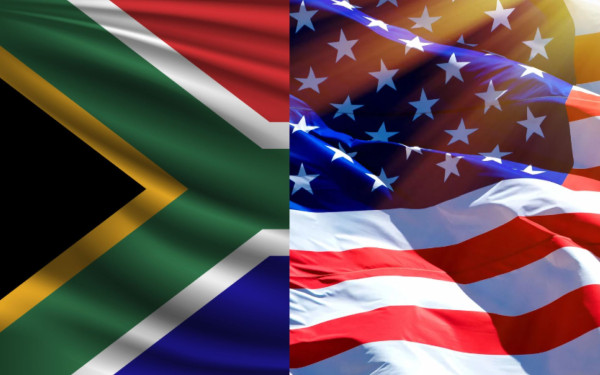
After President Trump announced a 90-day overseas spending freeze, Secretary of State Marco Rubio said "every dollar" must be "justified" by evidence that it makes the US safer, stronger and more prosperous.
I acknowledge that stance may sound ungrateful. At first blush, many might counter that starving people have no agenda. Destitute parents still need to feed their children. Turning a blind eye to their plight is inhumane.
Let me explain why the African Energy Chamber (AEC) continues to push for free-market solutions rather than good-will handouts from USAID. There was an era when Africa and Western pop music were closely linked.
Western entertainers spearheaded a number of internationally renowned events to raise awareness about the plight of starving Africans and generate funds for famine relief.
In December 1984, the supergroup Band Aid sang about feeding the world, asking “Do They Know it's Christmas?” Within a year, the group had raised over $9 million. Three months later, USA for Africa released “We Are the World” and banked $44.5 million after one year for its African humanitarian fund. Then on a hot July day in 1985, the worldwide concert event Live Aid raised more than $150 million for famine relief in Africa.
These are just a handful of grand and noble gestures intended to lift Africa out of poverty. These famous events arguably raised both awareness and funds. Unfortunately, the efforts — and others like them — fall far short of making any real socioeconomic change. In fact, some argue that injecting monetary aid into Africa, time and time again, has actually done more harm than good.
History of ‘Help'
Even aid genuinely given to help Africa tends to do more harm than good.
Since 1960, more than $2.6 trillion has been pumped into Africa in the form of aid. From 1970 and 1998, when aid was at its peak, poverty actually rose alarmingly — from 11% to 66% — due in large part to this massive influx of foreign aid that counteracted its intended good.
Aid decreased long-term economic growth by fuelling systemic corruption, in which powerful aid recipients funnelled foreign funds into a personal stash instead of public investment. Many leaders realized that they no longer needed to invest in social programs for their constituents because of the revenues from foreign donors.
Large inflows of aid also caused higher inflation, hindering African nations' international competitiveness in exporting. That resulted in diminishing the manufacturing sector – which is critical in helping developing economies grow — across the continent. And well-intentioned Westerners who saw the economic shrink just kept pouring more and more money at “the problem” — leading to a vicious cycle that furthered corruption and economic decline.
But here's the kicker: The World Bank has admitted that 75% of the agricultural projects it implemented to help Africa failed. So why do they and other aid providers continue to fund these failing efforts?
Examples of Failure
Across the continent, we see example after example of failed aid projects, with agricultural projects routinely providing little or no benefit to African farmers.
In Mali, the U.S. Agency for International Development (USAID) injected $10 million into “Operation Mils Mopti” to increase grain production. The government imposed “official” prices on the grain, which forced farmers to sell their crops at these below-market rates and resulted in grain production falling by 80%.
USAID also spent $4 million to help livestock producers grow the number of cattle in the Bakel region from 11,200 to 25,000 — but ultimately only succeeded in increasing it by 882 head. Another $7 million was injected into the Sodespt region, but that investment managed to sell only 263 cattle and failed to sell any goats or sheep.
Then we see example after example of Westerners wastefully “helping” without any understanding of the local situation. Norwegian aid agencies built a fish-freezing plant to improve employment in northern Kenya — a region where the local people traditionally do not fish because of their semi-nomadic pastoralist lifestyle. Couple the lack of fishing experience with the unfortunate reality that the plant required more power than was available in the entire region, and the result was that the brand-new processing plant sat idle.
The World Bank financed a $10+ million expansion of Tanzania's cashew-processing capabilities, which resulted in 11 factories with the capacity to process three times as many cashews as the country was growing on a yearly basis. The plants were too efficient for the available workforce and cost so much to run that it was cheaper to process the raw nuts in India. Half the plants were inoperable, and the other half only ran at about 20% capacity.
I'm not saying that we Africans are ungrateful for the outpouring of heartfelt care. The compassion of the West is certainly real. However, the outcome of said compassion is the concern: The more foreign aid African governments receive, the worse they perform. As long as the aid keeps flowing, government leaders and their employees who administer development programs may prosper while the rest of the citizenry continues to suffer the effects of a mismanaged economy.
Questionable Benefits
We also must acknowledge that, in far too many cases, aid has also been given to African nations and communities in attempts to manipulate and control.
“While hungry faces are used on posters and in media reports to sell the virtues of foreign aid, it is the hungry who rarely see any of the funds,” James Peron, executive director of the Institute for Liberal Values in Johannesburg, South Africa, lamented in a piece for the Foundation for Economic Education. “Poverty may be used to justify the programs, but the aid is almost always given in the form of government-to-government transfers. And once the aid is in the hands of the state it is used for purposes conducive to the ruling regime's own purposes.”
And now we witness the international community talking about aid for African countries as a substitute for our oil and gas activities. Western environmentalists argue that Africa should keep all of its petroleum resources in the ground to prevent further climate change. In exchange for that sacrifice, African nations would be compensated and inject that money into other opportunities like developing their sustainable energy technologies.
I've said it before, and I'll say it again: What a horrible idea!
I‘m offended by foreign stakeholders feeling that providing humanitarian assistance gives them the right to influence our domestic decisions. With Africa poised to participate in the worldwide energy transition, my fear is that international donors will feel justified to dictate Africa's policy regarding the lengths to which, and speed with which, our energy transition occurs. This would be a huge step backward in our energy, economic, and even individual independence.
Aid packages to incentivize giving up our oil and gas operations will be detrimental to Africans. Because let's be honest: History has shown that this assistance could never replace the oil and gas industry's ability to create jobs and business opportunities, grow local capacity, open the door to technology sharing, facilitate economic growth, and alleviate energy poverty.
Instead of continuing a pattern that clearly does more harm than good, why aren't African nations encouraged to leverage the wealth of resources at our feet?
The AEC is determined to make a case for African nations harnessing their oil and gas solutions to help themselves. We will not be bullied, or manipulated with aid, into a path that is not in our best interests.
Use What We Have!
One reason why the AEC is an outspoken advocate for Africa's oil and gas industry is because it represents more than big revenue for African governments. It is a free-market solution that creates pathways for Africans to help themselves. And, ultimately, empowering Africans is our number one goal.
We endorse an energy mix approach that allows Africa to use and sell our own hydrocarbon reserves to alleviate energy poverty, while at the same time moving toward a future in which renewable energy sources power the continent. The energy mix method can help more people more quickly because it takes a practical, people-first approach to helping those who have traditionally been left behind by the energy sector, while moving us toward greener energy sources.
Natural gas, in particular, can transform African lives and communities. Its potential benefits range from eradicating energy poverty to allowing Africans to develop skills for good jobs to creating hope for our youth.
Ramping up gas production to help alleviate the lack of access to electricity will create thousands of new employment opportunities in Africa. In addition, the new sources of energy can be exported to Western countries and also used to industrialized Africa. Then, as Europe transitions to alternative energy, a larger portion of Africa's natural gas can power domestic needs. By the time other countries complete their transitions to carbon-neutral sources, Africa will have a much more expansive and reliable grid system, which will allow for an easier transition.
And before we argue about the evils of hydrocarbons, let me point out that, although it might seem counterintuitive, it is possible for Africa to make use of its abundant fossil fuels while moving toward a future sustained by renewable energy sources. In fact, I believe that African nations must do everything they can to ensure that these two things work in tandem. Considering that 600 million people on the continent have no access to electricity and 900 million people lack access to clean cooking technologies, it's impossible — if not altogether inhumane — to discuss climate change without looking at energy poverty.
As I recently wrote in an article published by Medium, we cannot transition from the dark to the dark. We must deliver energy to the people of Africa and then worry about transitioning to environmentally friendly alternatives, just like we have everywhere else in the world.
This has been our platform, and we will continue to stand by it in 2025 and beyond. Looking at Africa and only pushing for aid is not in the interest of the everyday Africans. It caters to the egos of the elites and latte intellectuals who believe they have the solutions to why the continent is still poor.
Distributed by APO Group on behalf of African Energy Chamber.
PRETORIA: Proteas fast bowler Gerald Coetzee has been ruled out of the upcoming tri-nation One-Day International (ODI) series against Pakistan and...
All eyes on President Ramaphosa
President Cyril Ramaphosa will tonight outline the roadmap for the country for the year ahead, as he takes to the Parliamentary podium to deliver the State of the Nation Address (SONA).
The President will deliver the first SONA of the seventh administration at 7pm tonight, under the theme: “A nation that works for all”.
SONA 2025 takes place as South Africa recently took up the Presidency of the Group of 20 (G20) – a historical moment, as the country became the first African State to do so.
In a media briefing on Wednesday, Presidential spokesperson Vincent Magwenya said the address is expected to touch on the past, the present and the future of South Africa.
“The annual address gives us an opportunity to reflect on how far we have come as a nation and recommits us to working together to build the country we envisioned at the start of our democracy,” he said.
The address is also expected to touch on the Government of National Unity (GNU) and how it is setting about achieving its objectives.
In his Opening of Parliament Address last year, President Cyril Ramaphosa revealed that the GNU will dedicate the next five years to “actions that will advance” inclusive growth and job creation, reduce poverty and tackle the high cost of living.
The seventh administration took office last year following the national General Elections in which the South African people did not give a single clear majority to any political party.
“In the address, the President will outline the task of the Government of National Unity in implementing the three strategic priorities of the Medium-Term Development Plan, namely, driving inclusive growth and job creation, reducing poverty and tackling the high cost of living and building a capable, ethical and developmental state,” Magwenya said.
Parliamentary process
The SONA represents the official start of Parliament’s programme and is one of the rare occasions when the three arms of the state – the legislature, the judiciary and the executive – gather under one roof.
During a media briefing yesterday, National Assembly Speaker Thoko Didiza described SONA as a “crucial event on our national calendar as this Parliament but also as a nation”.
“This occasion is the result of months of meticulous preparation and coordination, which underscores its significance in shaping the national discourse and setting the tone for the year ahead.
“SONA allows the President as the head of state to speak to the nation and reflect on a wide range of matters of national importance, as well as outline the progress on the commitments made by the state.
“As such, SONA signifies the highest level of the state’s accountability to the citizenry by providing updates on the government programmes, developments in legislation and policies, profiling targets and a programme of action for the new financial year,” she said.
As the moment draws closer, leaders of the three arms of the state will form a procession and will enter the Assembly Chamber through the main entrance of the Cape Town City Hall.
The Speaker explained that SONA 2025 will “retain a full ceremonial format” including that procession.
“[This includes] a 21-gun salute, an aircraft flypast, a ceremonial guard, the singing of the national anthem, a full military band and procession involving provincial speakers and premiers, the judiciary, the Deputy President [Paul Mashatile] and the President,” Didiza said.
Youth involvement
Didiza told the media that although dignitaries from across the world will be in attendance, Parliament has also made special way for the youngest of South Africans to be involved in the day.
“As part of fostering civic awareness and public engagement, SONA… will feature the Junior Guard of Honour, comprising a hundred learners from four Western Cape schools selected in collaboration with the Western Cape Department of Education.
“The involvement of these young learners is crucial in educating and exposing them to the workings, roles and functions of State institutions, helping to shape them as the leaders of tomorrow,” Didiza said.
During the media briefing, Chairperson of the National Council of Provinces, Refilwe Mtsweni-Tsipane, announced that this year’s praise singer, who will usher the President in – a staple of the SONA – will be 19-year-old Inako Mateza, who hails from the Eastern Cape.
“The proceedings of this SONA will once again include praise singing by Imbongi. This practice is managed through rotational language and provincial selection processes, which ensures inclusivity and the promotion of all our official languages.
“This custom not only adds cultural significance to the event but also provides a platform to showcase grassroots talent on the prominent national stage,” Mtsweni-Tsipane said.
Speaking to SAnews, the award winning Mateza described her selection as an honour.
“Being chosen as an Imbongi to welcome the President in Parliament tomorrow means a lot to me because firstly, I'm a young person who embraces culture and tradition at a time where young people are focused and celebrated for amapiano music. So, for me being the Imbongi that will be welcoming President Cyril Ramaphosa makes me feel ecstatic.
“This opportunity will encourage me to continue the work I am doing. I've noticed that even people on social media enjoy the imbongi part of SONA. I thought I was doing this for my own enjoyment, but I see now that I have inspired others to walk this path too,” Mateza said.
The SONA will be broadcast live on television, on radio and will also be streamed live on the Presidency and Parliament YouTube channels. – SAnews.gov.za
NeoB
Wed, 02/05/2025 - 14:18
Government-funded Ncera farm has battled drought and price fluctuations
But official statement after lekgotla makes no mention of it
President Ramaphosa to participate in joint SADC – EAC summit on the DRC
President Cyril Ramaphosa is set to embark on a working visit to Dar Es Salaam in the United Republic of Tanzania on Saturday, to participate in the joint Southern Africa Development Community (SADC) – East Africa Community (EAC) Heads of State and Government Summit on the security situation in the eastern Democratic Republic of Congo (DRC).
This was announced on Wednesday by Presidential spokesperson, Vincent Magwenya, during a media briefing at the Imbizo Media Centre in Cape Town to update on the President’s programme and address recent developments of interest.
“The Heads of State and Government of SADC and the EAC agreed to meet urgently following their respective extraordinary summits held last month to deliberate on the way forward regarding the security situation in the DRC,” Magwenya said.
The joint SADC – EAC Summit will be preceded by Senior Officials and Foreign Ministers Meetings taking place on 6 and 7 February 2025.
The Extraordinary SADC Summit held last month mandated the SADC Organ Troika on Politics, Defence and Security Cooperation to engage all State and non-State parties to the conflict on a ceasefire process to protect lives and facilitate a smooth flow of humanitarian support to people and communities affected by the armed conflict.
It also urged Political and Diplomatic leaders who are parties to the conflict to engage in a coordinated effort of dialogue, including supporting the Luanda Process, United Nations Organisation Stabilisation Mission in the Democratic Republic of the Congo (MONUSCO) and others, to restore peace and security in Eastern DRC.
READ | SADC Extraordinary Summit condemns escalating violence in DRC, calls for urgent action
SONA Debate Reply
President Ramaphosa will deliver his reply to the State of the Nation debate on 13 February 2025.
Magwenya said the President looks forward to a constructive and substantively enriching debate that will follow his SONA address.
38th AU Assembly of Heads of State and Government
President Ramaphosa is also expected to lead the South African delegation to the 38th African Union (AU) Assembly of Heads of State and Government in Addis Ababa, Ethiopia.
“President Ramaphosa will lead the South African Delegation to the 38th Ordinary Session of the Assembly of the Heads of State and Government of the AU, which is taking place on 15 and 16 February 2025 in Addis Ababa, Ethiopia. He will be accompanied by several Ministers and senior officials,” Magwenya said.
The Assembly of Heads of State and Government of the AU will be held under the theme, “Justice for Africans and People of African Descent Through Reparations”.
It will review and assess what has been achieved in Africa’s efforts towards the attainment of long overdue justice and reparations after decades of colonialism and apartheid.
“The assembly is taking place two months after South Africa assumed its Presidency of the G20 in 2025. The Summit will be a unique opportunity for President Ramaphosa to brief his counterparts on the key priorities of South Africa’s G20 Presidency and their alignment to Agenda 2063. The high-level meeting on the G20 will take place on 15 February 2025, on the margins of the summit,” he said.
One of the main objectives of the forthcoming assembly is to elect the new senior leadership of the AU Commission, Chairperson and a Deputy Chairperson of the Commission. There are three candidates vying for the Chairperson position, while four candidates are contesting the Deputy Chairperson position. It will also appoint the six Commissioners following the endorsement by the Executive Council.
“The summit is expected to discuss the status of Peace and Security on the continent. The discussion on peace and security on the continent will take place against the backdrop of great concerns regarding the state of peace and security on the continent, including the ongoing conflict in the eastern Democratic Republic of Congo. The discussions on the peace and security situation in Sudan and South Sudan will also feature prominently during the summit,” Magwenya said.
The President, in his capacity as the Chairperson of the Ad Hoc Committee on South Sudan, also known as the C-5, will convene an extended meeting on South Sudan to include key countries in the Eastern Region such as Kenya, Ethiopia and Uganda. The current President of South Sudan, President Silva Kiir will also be in attendance.
South Africa will participate in the exchange of views on issues such as AUDA-NEPAD, APRM and Climate Change on the margins of the AU Summit. There will also be a review and assessment of the implementation of the Agreement Establishing the African Continental Free Trade Area (AfCFTA) as a critical flagship project of Agenda 2063.
G20 Foreign Ministers Meeting
President Ramaphosa will, on 20 February 2025, host the G20 Foreign Ministers meeting at the NASREC EXPO Centre, in Gauteng.
Issues for discussion include the current geopolitical dynamics, as well as the President's reflection on South Africa’s G20 Presidency High–Level Deliverables and the Review of the G20 @20.
South Africa’s G20 Presidency commenced on 1 December 2024 under the theme, “Solidarity, Equality, Sustainability”.
Basic Education Sector Lekgotla
President Ramaphosa will deliver a keynote address on 27 February 2025 at the Basic Education Lekgotla.
The Department of Basic Education will host the Basic Education Sector Lekgotla at the Birchwood Hotel and OR Tambo Conference Centre, Johannesburg.
The theme of the 2025 Lekgotla is “Strengthening foundations for Learning for a resilient future-fit education system”. – SAnews.gov.za
DikelediM
Wed, 02/05/2025 - 14:07
Fine weather conditions ahead for SONA
With less than a day until President Cyril Ramaphosa delivers the State of the Nation Address (SONA) in Cape Town, attendees of the joint sitting of Parliament can expect fine weather conditions.
“We are expecting fine weather conditions with a minimum of 17°C and a maximum of 24°C. For the Western Cape, there will be a 30% chance of showers and rain along the south coast but it will be a fine day with no precipitation in Cape Town,” South African Weather Service (SAWS) Meteorologist and Forecaster Lehlohonolo Thobela told SAnews on Wednesday.
The joint sitting will see attendees, including Members of Parliament (MPs) and invited guests, walking the red carpet ahead of the President’s speech.
Winds can be expected on the southerly to south easterly direction at between 10 and 20 kilometres per hour (km/h). If there are any gusts, this will be at about 60 km/h.
Around the coastal areas between Cape Agulhas and Cape Columbine, there could be damaging winds and waves. These conditions could result in difficulty in navigation at sea.
The President will address the nation on Thursday, 6 February, at 7 pm, at the Cape Town City Hall.
SONA is convened by the President in terms of the Constitution to provide the nation with an update on government's commitments and programme of action for the new financial year.
It is a joint sitting of the National Assembly (NA) and the National Council of Provinces (NCOP), presided over by the Speaker of the National Assembly and the Chairperson of the NCOP. The President's address is the sole item on the agenda.
This will be the first SONA of the seventh administration. - SAnews.gov.za
nosihle
Wed, 02/05/2025 - 14:36
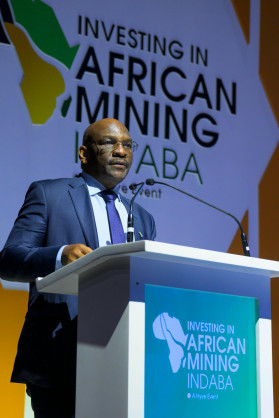
Africa must take bold steps to own its resources, create jobs and build industries that sustain prosperity for generations, African Export-Import Bank (Afreximbank) (www.Afreximbank.com) has told African leaders, policymakers, mining industry leaders and global partners at the African Mining Indaba 2025 in Cape Town, South Africa, on Sunday.
In a keynote address at the ministerial symposium of the Indaba, Mr. Denys Denya, Senior Executive Vice President of the Afreximbank Group, argued that the continent was standing at a crossroads and could either continue exporting its wealth and remain a marginal player in the global economy or take the bold steps to own its resources.
He noted that “While the global mining industry generated approximately US$1.7 trillion in revenue in 2023, Africa's share of this wealth remains disproportionately low. Our continent extracts the raw materials that power the world's industries, yet it is estimated that we retain as little as between four per cent and 20 per cent of the total value of our minerals due to minimal local processing and limited downstream development. The result? Lost economic opportunities, exposure to volatile commodity cycles and a persistent reliance on external markets for refined products derived from our own resources.” “The choice is ours. The time to act is now. Let us work together: governments, financial institutions, investors, and industry players to build an Africa where mining is not just about extraction but about transformation, innovation and wealth creation,” said Mr. Denya. “Africa has the resources, the market potential, and the policy frameworks to transition from a resource-dependent continent to an industrial powerhouse. However, success will depend on bold, decisive action from all stakeholders. Policymakers must implement clear, enforceable regulations that mandate local value addition and create investment-friendly environments. Private sector investors must step up with capital and technology to develop processing, refining, and manufacturing facilities.”
Reversing this trend demanded bold, coordinated action, he argued. “We must move beyond extraction and invest in refining, smelting and advanced manufacturing. African nations must increase local processing capacity for minerals such as bauxite, lithium, cobalt and iron ore.”
He added that regional collaboration was essential as no single country could build a mining value chain in isolation.
Mr. Denya highlighted the importance of the African Continental Free Trade Area (AfCFTA) in developing intra-African mineral value chains and strengthening cross-border collaboration and said that attracting capital for mining-related infrastructure, technology transfer and skills development were critical.
“Our mining policies must also prioritise environmental, social and governance standards, ensuring that mining benefits communities rather than displacing them,” he said, adding that the approach would create millions of skilled jobs for the youth and reduce reliance on volatile global markets while strengthening intra-African trade.
Reiterating Afreximbank's commitment to supporting Africa's mining sector and ensuring that mineral wealth drove economic growth rather than perpetuate resource dependency, Mr. Denya announced that, over the past three years, the Bank had approved more than US$1 billion in support of mining and mineral sector projects across the continent, including financing the development and construction of a bauxite processing plant in Guinea, supporting the expansion of a manganese processing plant in Gabon and providing working capital financing to a diamond company in Botswana.
Other major projects being supported by the Bank include a petrochemical fertilizer plant in Angola, a titanium dioxide pigment plant in South Africa and the feasibility study for the development of a limestone mine processing plant in Malawi, he added.
Mr. Denya said that the establishment of the US$10-billion AfCFTA Adjustment Fund, managed by FEDA, Afreximbank's impact investment subsidiary, would provide critical financial support to countries and businesses transitioning to the new trade regime, including those in the mining sector, and that the Bank's efforts to harmonise standards and implement the Africa Collaborative Transit Guarantee Scheme would also facilitate seamless movement of minerals and mining equipment across borders, reducing logistical bottlenecks.
Afreximbank was also leveraging digital platforms, such as the Africa Trade Gateway and the Pan-African Payment and Settlement System, to enable efficient transactions and market access, which would ensure that Africa's vast mineral wealth was utilised to drive industrialisation, value addition and economic resilience across the continent, he added.
Mr. Denya also noted that Afreximbank, in collaboration with development partners, was driving the development and expansion of industrial parks and special economic zones (SEZs) to address infrastructure challenges that hinder industrial growth.
One of the most transformative initiatives under that pillar was the DRC/Zambia Electric Vehicle Battery Manufacturing Special Economic Zones - a project that positions Africa at the centre of the global energy transition by the implementation of battery precursor SEZs aimed at making the two countries globally competitive investment destinations for the battery electric vehicle value chain.
The African Mining Indaba 2025, taking place from 3 to 6 February, is the premier gathering where Africa policymakers, industry leaders and global partners work to shape the future of the African mining sector.
Distributed by APO Group on behalf of Afreximbank.
Media Contact:
Vincent Musumba
Communications and Events Manager (Media Relations)
Email: press@afreximbank.com
Follow us on:
X: https://apo-opa.co/4116jsN
Facebook: https://apo-opa.co/4aLcd4I
LinkedIn: https://apo-opa.co/3Et8gFS
Instagram: https://apo-opa.co/4aOinBd
About Afreximbank:
African Export-Import Bank (Afreximbank) is a Pan-African multilateral financial institution mandated to finance and promote intra-and extra-African trade. For 30 years, the Bank has been deploying innovative structures to deliver financing solutions that support the transformation of the structure of Africa's trade, accelerating industrialization and intra-regional trade, thereby boosting economic expansion in Africa. A stalwart supporter of the African Continental Free Trade Agreement (AfCFTA), Afreximbank has launched a Pan-African Payment and Settlement System (PAPSS) that was adopted by the African Union (AU) as the payment and settlement platform to underpin the implementation of the AfCFTA. Working with the AfCFTA Secretariat and the AU, the Bank is setting up a US$10 billion Adjustment Fund to support countries effectively participating in the AfCFTA. At the end of December 2023, Afreximbank's total assets and contingencies stood at over US$37.3 billion, and its shareholder funds amounted to US$6.1 billion. Afreximbank has investment grade ratings assigned by GCR (international scale) (A), Moody's (Baa1), Japan Credit Rating Agency (JCR) (A-) and Fitch (BBB). Afreximbank has evolved into a group entity comprising the Bank, its impact fund subsidiary called the Fund for Export Development Africa (FEDA), and its insurance management subsidiary, AfrexInsure (together, "the Group"). The Bank is headquartered in Cairo, Egypt.
For more information, visit: www.Afreximbank.com