• Skip to main content
  • Skip to header right navigation
  • Skip to after header navigation
  • Skip to site footer
MyZA

MyZA

News, Directory, Events and Other Stuff

  • Social Media
  • Sport
  • World News
  • Home
  • Submit News
  • Directory
  • Events
  • Stratlec
  • TFSA
  • News
    • APO
    • Today’s Sport News
    • Todays Social Media and Tech Headlines
    • Today’s World News
    • Today’s SA Financial News
  • Contact
You are here: Home / Archives for Nigeria

Nigeria

15 October 2024

African Development Bank and Absa Unveil Multi-Billion Rand Financial Package to Expand Sustainable Capital Markets, Boost Economic Growth for Women and Youth

Location: Business

African Development Bank Group (AfDB)
Download logo

The African Development Bank (www.AfDB.org) and Absa Group, one of Africa's leading financial services providers, today celebrated a landmark agreement to mark the execution of a transformative financial package aimed at increasing funding for underserved segments, across South Africa and the continent. The target audience includes women-owned businesses, youth entrepreneurs, and small and medium-sized enterprises (SMEs).

In addition to enhancing Absa's regulatory capital, the facility will promote access to finance, deepen domestic capital markets, and ensure continued access to global supply chains for issuing banks in regional member countries, including low-income and fragile states.

The financial package includes:

  • A subordinated sustainability-linked (Tier 2) loan amounting to R1.7 billion, complemented by a non-financial support package of R18 million for capacity building and technical assistance targeted at SMEs, youth, and women-owned enterprises.
  • Subscription of R1 billion into Absa's inaugural social (Tier 2) bond issuance, with proceeds earmarked for providing affordable housing loans to female homeowners.
  • A trade finance Risk Participation Agreement (RPA) facility valued at $150 million, designed to underwrite the risks of trade transactions originated by African issuing banks, reinforcing Absa's role as a regional bank.

Several components of the package have already been executed, including the successful issuance of Absa's first Tier 2 social bond on the Johannesburg Stock Exchange in July 2024. The R1 billion proceeds from this bond will be allocated towards affordable housing loans specifically targeting women, empowering them as first-time homeowners in low-income segments.

Leila Mokaddem, Director General of the African Development Bank's Southern Africa Region, stated: “This partnership with Absa Group underscores our commitment to driving sustainable and inclusive economic growth across Africa. Through this financial package, we are not only fortifying Absa's capital base but also ensuring that essential funding reaches women, youth, and entrepreneurs, fostering a more equitable and prosperous continent. This collaboration aligns seamlessly with our strategic priorities of supporting Africa's industrialization and enhancing the quality of life for its people. “

Absa has secured a R1.7 billion sustainability-linked Tier 2 loan aimed at general corporate business purposes while incentivizing the extension of finance products to women-owned SMEs as a key performance indicator. As part of this agreement, Absa is collaborating with the African Development Bank to enhance skills among both Absa staff and women business owners. A capacity-building training program has been launched to address the unique challenges faced by female and youth entrepreneurs, by providing mentorship and financial solutions.

Charles Russon, Absa Group interim CEO designate remarked: “The finalisation of this package concludes a three-year process that significantly enhances our capacity to fund social initiatives aligned with our commitment to being a force for good. This partnership enables us to increase funding for women and youth in South Africa while facilitating greater trade opportunities across the continent. “

“This partnership aligns with the African Development Bank's strategic objectives of advancing green, social, and sustainability instruments in the domestic capital markets, supporting African capital market development and regional financial integration,” said Ahmed Attout, Director of the Financial Sector Development Department at the African Development Bank. He emphasised that it is designed to empower Absa to effectively disburse funds for highly impactful social and sustainable economic development initiatives.

The $150 million trade finance facility will drive trade support across Africa, addressing the continent's annual trade finance gap of over $100 billion. This initiative will enhance access to financing for key sectors such as agriculture, transport, and manufacturing, while fostering financial sector development and regional integration.

Distributed by APO Group on behalf of African Development Bank Group (AfDB).

Contact:             
African Development Bank:  

Natalie Naudé,
Communication and External Relations Department,
email: media@afdb.org

Technical Contacts:
Peter Onyango,
Chief Capital Markets Officer,
Financial Sector Development Department,

Bleming Nakati,
Regional Lead,
Private Sector Operations, Southern Africa

Absa:
Carli Cooke,
Head of Media Relations,
email : prmedia@absa.afrca

About the African Development Bank Group:
The African Development Bank Group is Africa's premier development finance institution. It comprises three distinct entities: the African Development Bank (AfDB), the African Development Fund (ADF) and the Nigeria Trust Fund (NTF). On the ground in 41 African countries with an external office in Japan, the Bank contributes to the economic development and the social progress of its 54 regional member states. For more information: www.AfDB.org

About Absa Group:
Absa Group Limited (‘Absa Group') is listed on the Johannesburg Stock Exchange and is one of Africa's largest diversified financial services groups.  Absa Group offers an integrated set of products and services across personal and business banking, corporate and investment banking, wealth and investment management and insurance.  

Absa Group owns majority stakes in banks in Botswana, Ghana, Kenya, Mauritius, Mozambique, Seychelles, South Africa, Tanzania (Absa Bank Tanzania and National Bank of Commerce), Uganda and Zambia and has insurance operations in Botswana, Kenya, Mozambique, South Africa and Zambia. Absa also has offices in China, Namibia, Nigeria and the United States, as well as securities entities in the United Kingdom and the United States, along with technology support colleagues in the Czech Republic. 

For further information about Absa Group Limited, visit www.Absa.africa. 
Read moreAfrican Development Bank and Absa Unveil Multi-Billion Rand Financial Package to Expand Sustainable Capital Markets, Boost Economic Growth for Women and Youth
11 October 2024

AEW 2024 Ministerial Lineup to Foster Strategies to Alleviate Energy Poverty in Africa

Location: News
African Energy Chamber

Energy and hydrocarbon ministers from across Africa have joined the African Energy Week (AEW): Invest in African Energy conference to discuss investment opportunities while engaging with financiers and project developers. Representing the entire energy value chain from oil and gas to renewable energy to power and infrastructure, regional ministers will unpack the continent's strategies to make energy poverty history by 2030.  

North African countries such as Libya and Algeria have set ambitious production targets for the coming years, aiming to plug Europe's energy gap while enhancing domestic energy access. Libya aims to boost output to 2 million barrels per day (bpd) in the next two to three years while Algeria aims to produce over 1.5 million bpd in 2025. Meeting production goals requires accelerated exploration, with both countries promoting investments in upstream drilling. At AEW: Invest in African Energy 2024, North African energy and hydrocarbon ministers will provide insight into these opportunities. They are joined by ministers representing global and African oil and gas organizations, including:  

  • Khalifa Abdulsadek, Minister of Oil & Gas, Libya 
  • Mohamed Arkab, Minister of Energy and Mines, Algeria 
  • Haitham Al Ghais, Secretary General, OPEC 
  • Omar Farouk Ibrahim, Secretary General of APPO 

In Southern Africa, the region is ripe with opportunity. An estimated 11 billion barrels has been found off Namibia's coast since 2022; over 100 trillion cubic feet (tcf) of gas found offshore Mozambique; and an estimated 200 tcf likely held onshore South Africa. While Angola - the second largest oil producer in sub-Saharan Africa – still offers significant potential in both on- and offshore basins, Southern African countries such as Zambia are largely underexplored, presenting strategic opportunities for exploration companies. At AEW: Invest in African Energy 2024, Southern African energy and hydrocarbon ministers will outline strategic basins and upcoming projects. Speakers include:  

  • Carlos Zacarias, Minister, Ministry of Natural Resources & Energy, Mozambique 
  • Diamantino Pedro Azevedo, Minister of Mineral Resources and Petroleum, Angola 
  • Gwede Mantashe, Minister, Ministry of Mineral Resources and Energy, South Africa 
  • Kgosientsho Ramokgopa, Minister of Electricity, South Africa 
  • Situmbeko Musokotwane, Minister of Finance and National Planning, Zambia 
  • Tom Alweendo, Minister of Mines and Energy, Namibia 

Recent offshore projects have positioned West Africa as a global hydrocarbon hotspot. Mauritania and Senegal's Greater Tortue Ahmeyim LNG project will start production this year, following the start of operations at Senegal's Sangomar Oil Project in mid-2024. Nigeria's Dangote Refinery – the largest in Africa at 650,000 bpd – recently secured a 400,000-bpd feedstock supply from the government a year after its start while Ivory Coast's Belaine project – the first net-zero upstream development in Africa – plans to commence phase two operations this December. Regional ministers will provide an update on ongoing projects, future investments and efforts to unlock additional reserves at AEW: Invest in African Energy 2024. Ministers include:  

  • Aboubacar Camara, Minister of Energy, Hydropower and Hydrocarbons, Guinea Conakry 
  • Birame Soulèye Diop, Minister of Energy, Oil and Mines Republic of Senegal 
  • Chief. Adebayo Adelabu, Minister of Power, Federal Republic of Nigeria 
  • Collins Adomako-Mensah, Deputy Minister of Energy in Charge of Power, Ghana 
  • Ekperikpe Ekpo, Minister of State for Petroleum Resources (Gas), Nigeria 
  • Foday Mansaray, Director General, PDSL 
  • Heineken Lokpobiri, Minister of State for Petroleum Resources (Oil), Nigeria 
  • Matthew Opoku Prempeh, Minister of Energy, Ghana 
  • Mohamed Ould Khaled, Minister of Petroleum & Energy, Ministry of Petroleum, Mines & Energy, Mauritania 
  • Nani Juwara, Minister of Energy and Petroleum, The Gambia 
  • Viriato Luis Soares Cassama, Minister of Environment & Biodiversity, Guinea-Bissau 
  • Yacouba Zabré Gouba, Minister of Energy and Mines, Burkina Faso 

Central Africa – with major producers such as Equatorial Guinea, Gabon and the Republic of Congo – are inviting investors to support diversification efforts in production and refining. Leveraging natural gas, these markets aim to unlock reserves in both domestic and regional basins while boosting export capacity and intra-African trade. The Republic of Congo exported its first LNG cargo in 2024 from the Tango FLNG facility, targeting 3 million tons per year by 2025, while Equatorial Guinea forged an agreement with Nigeria to import and process gas at its Punta Europa facility. At AEW: Invest in African Energy 2024, regional ministers will outline these initiatives, while sharing insight into available opportunities in natural gas. Ministers include:  

  • Antonio Uburu Ondo, Minister of Mines and Hydrocarbons, Equatorial Guinea 
  • Bruno Jean-Richard Itoua, Minister of Hydrocarbons, the Republic of Congo 
  • Marcel Abeke, Minister of Petroleum, Republic of Gabon 

As a frontier market, East Africa is incentivizing exploration in both on- and offshore basins while driving infrastructure and field development projects forward. Uganda inked a deal with Ethiopia in 2024 to export crude via pipeline while South Sudan is seeking diversified export routes and promoting exploration onshore. Regional ministers will share more insights at AEW: Invest in African Energy 2024. Speakers include:   

  • Ing Habtamu Itefa Geleta, Minister of Water and Energy, Ethiopia 
  • Okasaai Sidronious Opolot, Minister of state for Energy, Ministry of Energy and Mineral Development, Uganda 
  • Puot Kang Chol, Minister Petroleum, South Sudan 

AEW: Invest in African Energy is the platform of choice for project operators, financiers, technology providers and government, and has emerged as the official place to sign deals in African energy. Visit www.AECWeek.com for more information about this exciting event.  

Distributed by APO Group on behalf of African Energy Chamber.

Media files
African Energy Chamber
Download logo
Read moreAEW 2024 Ministerial Lineup to Foster Strategies to Alleviate Energy Poverty in Africa
11 October 2024

Benin to Contribute $2 Million to the African Development Fund

Location: News
African Development Bank Group (AfDB)

Benin joins six other African countries that contribute to ADF; 74 million people in Africa have benefitted from improvements in agriculture for food security through the Fund.

Benin has pledged $2 million to the next replenishment of the African Development Fund, the concessional window of the African Development Bank Group.

The country's Minister of Economy and Finance, Romuald Wadagni, made the announcement in Cotonou, at the opening session of the Mid-Term Review of the 16th Replenishment of the Fund.

It came shortly after the head of the African Development Bank Group, Dr Akinwumi Adesina invited Benin's President Patrice Talon to be a champion of ADF 17 and encouraged him to “pledge financial support.”

Announcing his country's pledge, Minister Wadagni said the African Development Fund was a trusted partner for low-income countries and recommended that each “recipient country demonstrates rigour and transparency.”

He said one of Benin's objectives was “to ensure that we can use the ADF instrument in the form of guarantees and raise money in order to benefit from its leverage effect.”

The current three-year financing cycle, which received a record $8.9 billion ends in 2025. Benin becomes the seventh African country to contribute, joining Algeria, Angola, the Democratic Republic of Congo, Egypt, Morocco and South Africa.

“Our ambition is encouraging more African countries to become state participants in the ADF,” said Adesina, citing Kenya's pledge of $20 million to ADF, announced last May by President William Ruto during the Annual Meetings of the African Development Bank Group in Nairobi.

He said the African Development Fund is providing Benin with $108.2 million towards general budget support for economic governance and private sector development program focused on improving the overall business climate, supporting agro-industrial sector and strengthening the development of Special Economic Zones, like Glo Gjigbe, that ADF delegates visited as part of the Mid Term Review program.

Across the continent, Adesina said the African Development Fund is achieving impactful and impressive results.

“15 million people have been provided with access to electricity. 74 million people have benefitted from improvements in agriculture for food security. 45 million people have benefitted from improved transport. And over 8,700 kilometers of roads have been built or rehabilitated,” said Adesina.

“I am proud of what this institution has achieved in its 50 years of existence,” he added, pointing out that the Fund has been ranked “the second-best concessional financing institution in the world for the quality of its development assistance.”

The Cotonou meeting was attended by ministers, representatives of donor and beneficiary member countries, the Bank Group's Board of Directors, senior management and staff.

Distributed by APO Group on behalf of African Development Bank Group (AfDB).

Media contact:
Amadou Mansour Diouf
Communications and External Relations Department
media@afdb.org

About the African Development Bank Group:
The African Development Bank Group is Africa's premier development finance institution. It comprises three distinct entities: the African Development Bank (AfDB), the African Development Fund (ADF) and the Nigeria Trust Fund (NTF). On the ground in 41 African countries with an external office in Japan, the Bank contributes to the economic development and the social progress of its 54 regional member states. For more information: www.AfDB.org

Media files
African Development Bank Group (AfDB)
Download logo
Read moreBenin to Contribute $2 Million to the African Development Fund
9 October 2024

Heroin Use Spreads as Prices Plummet

Location: News

South Africa’s central position in a drug smuggling route between West Asia and Europe plays a role

Read moreHeroin Use Spreads as Prices Plummet
8 October 2024

NBA Africa and Opportunity International to Build Basketball Courts and Conduct Youth Clinics in Kenya and Rwanda

Location: Sport
National Basketball Association (NBA)

NBA Africa (https://Africa.NBA.com/) and Opportunity International, a global nonprofit organization that develops innovative programs that use financial services, training and support to address some of the greatest challenges facing those living in poverty around the world, today announced a collaboration to build outdoor basketball courts and conduct youth clinics in Nairobi, Kenya and Kigali, Rwanda next year.  The collaboration will support NBA Africa's commitment to build 1,000 courts in Africa over the next decade, including 100 in Kenya.

As part of the collaboration, NBA Africa and Opportunity International will also hold a development program for coaches and teachers in both cities aimed at providing them with skills and best practices in coaching, refereeing, game operations, event management, program administration, and more.

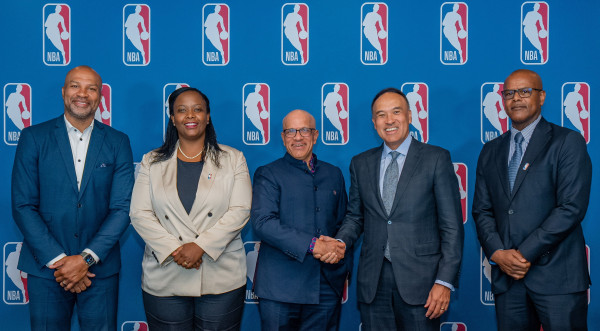
The announcement was made today by NBA Deputy Commissioner and Chief Operating Officer Mark Tatum, Opportunity International CEO Atul Tandon and five-time NBA champion Derek Fisher at a press conference in Nairobi.

“Our collaboration with Opportunity International reflects our commitment to investing in local basketball ecosystems across Africa and providing youth with the resources and opportunities to develop their leadership and basketball skills,” said Tatum.  “We look forward to working together to create safe spaces where Kenyan and Rwandan youth can play the game and participate in programs that help develop the next generation of coaches and mentors.”

“We are absolutely thrilled to work with NBA Africa to bring world-class basketball courts and coaches to Africa,” said Tandon.  “This initiative is key to our longstanding commitment to bring more education and more opportunities to the youth of Africa, and we are grateful to NBA Africa, NBA Deputy Commissioner Tatum, and our longtime friend and partner Sam Garvin for coming together to help build a rising Africa.”

The Jr. NBA, the league's global youth basketball participation program for boys and girls, teaches the fundamental skills as well as the core values of the game at the grassroots level in an effort to help grow and improve the youth basketball experience for players, coaches and parents.  Last year, Jr. NBA programming directly reached more than 170,000 youth across Africa.

Distributed by APO Group on behalf of National Basketball Association (NBA).

About NBA Africa:
NBA Africa is an affiliate of the National Basketball Association (NBA), a global sports and media organization with the mission to inspire and connect people everywhere through the power of basketball. NBA Africa conducts the league's business in Africa, including the Basketball Africa League (BAL), and has opened subsidiary offices in Cairo, Egypt; Dakar, Senegal; Johannesburg, South Africa; Lagos, Nigeria; and Nairobi, Kenya. The league's efforts on the continent have focused on increasing access to basketball and the NBA through youth and elite development, social responsibility, media distribution, corporate partnerships, NBA Africa Games, an NBA Store, the BAL, and more.

NBA games and programming are available in all 54 African countries, and the NBA has hosted three sold-out exhibition games on the continent since 2015. The BAL, a partnership between the International Basketball Federation (FIBA) and NBA Africa, is a professional league featuring 12 club teams from across Africa that concluded its fourth season in June 2024. Fans can follow @ NBA_Africa and @ theBAL on Facebook, Instagram, X and YouTube.

About Opportunity International:
Opportunity International is a global non-profit that has been equipping people to build sustainable livelihoods and educate their children for 53 years.  Opportunity works across 30 countries to provide over 20 million families with innovative financial resources, training, and support to grow their small businesses and send their children to school.

Media files
National Basketball Association (NBA)
Download logo
Read moreNBA Africa and Opportunity International to Build Basketball Courts and Conduct Youth Clinics in Kenya and Rwanda
26 September 2024

National Basketball Association (NBA) Africa Announces Four Prize-Winning Companies at First Startup Accelerator Demo Day

Location: Sport
National Basketball Association (NBA)

Festival Coins (Nigeria), Salubata (Nigeria), HustleSasa (Kenya) and UBR VR (Egypt) Win Top Prizes, including Financial Support and Mentorship; Paystack Payments Ltd., Kuramo Capital Management and Nigerian University of Technology and Management Join Demo Day as NBA Africa Triple-Double Accelerator's First Official Partners (www.NBA.com).

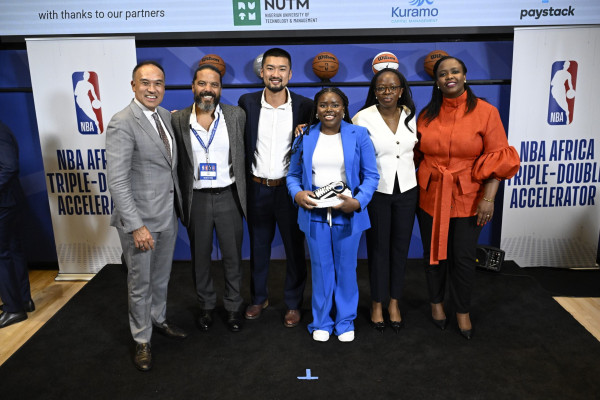
NBA Deputy Commissioner and Chief Operating Officer Mark Tatum today announced the four prize-winning startup businesses from “NBA Africa Triple-Double Accelerator” (http://apo-opa.co/3ZLmNoC), which NBA Africa launched in April 2024 to support the continent's technology ecosystem and the next generation of African entrepreneurs.  The four winning businesses – Festival Coins (Nigeria), Salubata (Nigeria), HustleSasa (Kenya) and UBR VR (Egypt) – will be awarded financial support and mentorship, including an opportunity to participate in workshops and development programs facilitated by NBA Africa or its partners. 

The 10 finalists, shortlisted from more than 700 early-stage African startup businesses that applied to participate, pitched their products to a panel of international industry leaders at a Demo Day at the NBA headquarters in New York City yesterday. The judges included Accelerate Africa Co-Founder and CEO Iyinoluwa Aboyeji; NBA Assistant General Counsel, Technology, Software Licensing and Digital Platforms Franciscus Diaba; Managing Director, Centre for the Fourth Industrial Revolution Rwanda Crystal Rugege; Chegg Inc. Executive Chairman Dan Rosensweig; and Partner at Development Partners International Joanne Yoo.  NBA Commissioner Adam Silver also delivered opening remarks and met the 10 finalists.

Below are the four winning businesses:

  1. Festival Coins (Nigeria), an event technology company that offers a customizable, no-code event registration and ticketing platform called Tix Africa for events in Nigeria and Ghana, won the first-place prize and $50,000. 
  2. Salubata (Nigeria), a company that creates modular shoes repurposed from plastic waste to reduce the global carbon footprint through its environmentally friendly products, won the second-place prize and $40,000. 
  3. HustleSasa (Kenya), which provides live event services that support payment processing, attendee check-in, merchandise sales, customer data management, influencer tracking, and more, won the third-place prize and $30,000.
  4. UBR VR (Egypt), which delivers state-of-the-art, fully immersive, in-person virtual reality (VR) experiences across Egypt, won the fourth-place prize and $20,000.

The six other finalists each received a $10,000 prize. 

The Demo Day was supported by three official partners: Paystack Payment Ltd. (http://apo-opa.co/3XHn75j), Kuramo Capital Management (http://apo-opa.co/3ZGroJ2) and Nigerian University of Technology and Management (NUTM) (http://apo-opa.co/3XHn1dX).  

“Congratulations to all of the incredibly talented entrepreneurs who participated in this year's program, with special recognition to the 10 finalists and four distinguished winners,” said NBA Africa CEO Clare Akamanzi.  “These outstanding companies have demonstrated the creativity, drive and determination to shape the future of sport in Africa and will help the continent take its rightful place on the world stage.  We look forward to following their successes for many years to come.”

“NBA Africa Triple-Double Accelerator” is open to early-stage startups in Africa that develop solutions in event management and ticketing, youth development, AI, and digital marketing. 

Distributed by APO Group on behalf of National Basketball Association (NBA).

About NBA Africa:
NBA Africa is an affiliate of the National Basketball Association (NBA), a global sports and media organization with the mission to inspire and connect people everywhere through the power of basketball.  NBA Africa conducts the league's business in Africa, including the Basketball Africa League (BAL), and has opened subsidiary offices in Cairo, Egypt; Dakar, Senegal; Johannesburg, South Africa; Lagos, Nigeria; and Nairobi, Kenya. The league's efforts on the continent have focused on increasing access to basketball and the NBA through youth and elite development, social responsibility, media distribution, corporate partnerships, NBA Africa Games, NBA Stores, the BAL, and more. 

NBA games and programming are available in all 54 African countries, and the NBA has hosted three sold-out exhibition games on the continent since 2015. The BAL, a partnership between the International Basketball Federation (FIBA) and NBA Africa, is a professional league featuring 12 club teams from across Africa that concluded its fourth season in June 2024.  Fans can follow @ NBA_Africa (https://apo-opa.co/3XytCXW) and @ theBAL (https://apo-opa.co/3N01pod) on Facebook, Instagram, X and YouTube.

Media files
National Basketball Association (NBA)
Download logo
Read moreNational Basketball Association (NBA) Africa Announces Four Prize-Winning Companies at First Startup Accelerator Demo Day
24 September 2024

Leading Fintech M-KOPA Reaches 5 Million Customers, Unlocking $1.5BN in Credit Across 5 Markets

Location: Business
M-KOPA

M-KOPA (https://M-KOPA.com/), a leading emerging market fintech, announced that it has surpassed 5 million customers across Kenya, Uganda, Nigeria, Ghana and South Africa. Two million of these customers have come onboard in the past 15 months.

M-KOPA's innovative model makes affordable smartphones embedded with financial services available to ‘Every Day Earners': the wide majority of African adults who earn their income daily but struggle to afford smartphones and typically fail to qualify for conventional financial services. According to the World Bank, 75% of adults in sub-Saharan Africa remain financially excluded. To date, M-KOPA has supported its customer base with more than US $1.5 billion in financing.

Starting with smartphone access, customers gain entry to the digital economy with an affordable daily repayment model, which fits their daily income and cash flow and makes it easier to manage. By leveraging rich payments data and proprietary AI-driven analytics, M-KOPA builds a credit record for each customer which forms the foundation for a long-term financial relationship for lower cost digital loans, affordable data subscriptions and medical insurance.

According to M-KOPA co-founder and CEO, Jesse Moore: “We are thrilled to welcome our 5 millionth customer to M-KOPA this month. The scale of our operations and our positive impact on customers is what keeps us working hard to go even further. We're just getting started; the opportunity for much larger impact and scale is right in front of us.”

M-KOPA also published its 2024 Impact Report this week, in which the company annually releases its progress against key social and environmental impact metrics.  As with prior reports, the 2024 survey of M-KOPA customers was undertaken by a third-party company – Dalberg Research.

Key impact highlights from the 2024 report include:

  • 92% confirm that M-KOPA's financing has made technology more affordable.
  • 80% of customers report an improved quality of life thanks to M-KOPA's products.
  • 70% credit M-KOPA with helping them achieve their financial goals, demonstrating the company's contribution to financial empowerment.
  • 62% use their M-KOPA product to generate income

The company is having a major impact in improving digital access in Africa. Nearly 2 million customers are first-time mobile internet users and 40% are women. M-KOPA also built the first and largest smartphone assembly factory in Kenya – which has produced more than 1m phones locally and further reduced the cost of access.

As with prior reports, M-KOPA's board and management use the annual impact report to help shape forward company strategy. Based on this year's findings, M-KOPA is working to further increase its percentage of female customers to 50%, to reduce its carbon footprint by making circularity central to its smartphone supply chain, and to continue pioneering green products like electric motorbikes that contribute to the health and sustainability of the communities where it operates.

M-KOPA's Chief Product Officer Nena Sanderson, notes: “Our product and services build pathways to prosperity for our customers and agents, enabling them to overcome financial setbacks, generate income and progress towards the futures they aspire to. Our impact extends beyond our customers, reaching their families and communities, and contributing to building a more sustainable world.”

Headquartered in London, UK, M-KOPA now creates employment for more than 3,000 staff and 30,000 commission-based sales agents across Kenya, Uganda, Nigeria, Ghana and South Africa.  The company has been recognised by the Financial Times as one of Africa's Fastest Growing Companies for the past 3 years, and by Time Magazine as one of the 100 Most Influential Companies globally for the past 2 years.

To read the full report, download it here: M-KOPA Impact Report 2024_Pathways To Progress (http://apo-opa.co/4eguFD2).

Distributed by APO Group on behalf of M-KOPA.

For media enquiries, please contact:
Wimbart
mkopa@wimbart.com

About M-KOPA: 
M-KOPA is a UK-headquartered emerging market fintech that provides affordable smartphones and digital financial services. With operations in Nigeria, Ghana, Kenya, South Africa and Uganda, the company has extended over $1.5 billion in credit to more than 5 million customers. Using an innovative financing model based on daily repayments, M-KOPA provides affordable smartphones embedded with financial services that fit with the cash flow of millions of underserved individuals who earn their income on a daily basis.

By leveraging rich payments data and proprietary AI-driven analytics, M-KOPA builds a credit record for each customer which forms the foundation for a long-term financial relationship for digital loans, affordable data subscriptions and insurance.

The company employs over 3,000 staff and 30,000 sales agents across its African markets. M-KOPA has been recognised by the Financial Times as one of Africa's Fastest Growing Companies for the past 3 years, and by Time Magazine as one of the 100 Most Influential Companies globally for the past 2 years.

Media files
M-KOPA
Download logo
Read moreLeading Fintech M-KOPA Reaches 5 Million Customers, Unlocking $1.5BN in Credit Across 5 Markets
20 September 2024

CLG Appoints Daoudou Mohammad as Director of Tax & Legal at Pointe-Noire Office

Location: Business
CLG

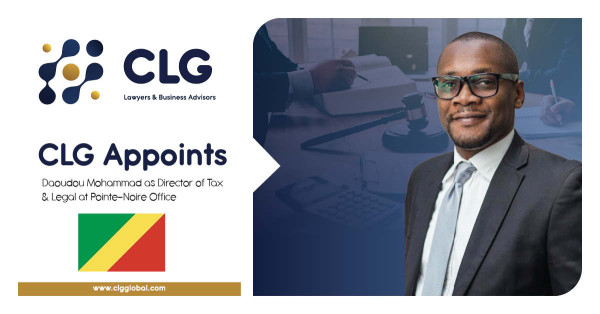
Supporting clients operating in the CEMAC region, trusted legal adviser Daoudou Mohammad has been appointed as Director of Tax & Legal at CLG's Pointe-Noire office (www.CLGGlobal.com). Mohammad brings a wealth of demonstrated expertise that will be instrumental to the law firm's Africa-wide practices, as the Republic of Congo and wider Central African region sees rapid growth in the energy sector.  

Mohammad holds over 15 years of experience in business and tax law, developing a solid competence in handling complex legal issues and providing effective client support. Prior to joining CLG, Mohammad served as Senior Manager at PwC's Tax & Legal Department in Pointe-Noire, managing the tax and legal coordination center for Francophone African countries, supervising quality and risk management operations, ensuring legal due diligence and supervising restructuring operations for groups of companies – including mergers and acquisitions and company transfers – among other key responsibilities.

Having also held a managerial role at PwC's South Africa office, Mohammad maintains an in-depth knowledge of different international systems and compliance with the highest standards of practice and service delivery, adapting to varied legal and cultural environments. Specializing in business, tax and labor law, as well as foreign exchange regulations and intellectual property, his multidisciplinary background represents a major asset to CLG and will enable the provision of integrated solutions to client needs and up-to-date advice on the latest legislative and regulatory developments. Mohammad holds a dual Master's Degree in Intellectual Property Law and Business Law from Cameroon's University of Yaoundé II.

The Republic of Congo is in the midst of a major investment drive, as it aims to accelerate oil and gas exploration and transform into a major LNG hub on the back of multiple large-scale LNG export projects and new exploration and appraisal drilling activities. To attract further investment and streamline regulatory processes, the country is launching a comprehensive gas code, recently approved a new Gas Master Plan led by national oil company Société nationale des pétroles du Congo, and plans to establish a dedicated national gas company. As a result, specialized tax, legal and regulatory advisory expertise is needed by companies operating in the Congo to navigate evolving energy sector legislation. 

CLG represents an experienced team of legal professionals, offering an in-depth understanding of African markets and a flexible and innovative approach to meeting the diverse needs of its clients. Serving as the preferred professional services partner in Africa, CLG is equipped to offer on-the-ground support across multiple sectors and has a rich history of spearheading transformative oil and gas transactions across the continent, providing top-tier legal services and strategic advice to clients across the energy spectrum, and guiding clients through complex regulatory landscapes and contractual negotiations. In addition to the Republic of Congo, CLG operates in South Africa, Nigeria, South Sudan, Mauritius, Ghana, Cameroon, Equatorial Guinea, Mozambique and Germany.     

“Navigating local laws, including taxation on oil and gas revenues, production-sharing agreements, and environmental regulations, demands thorough understanding to ensure compliance and optimize returns. We are excited to have Daoudou Mohammad head up CLG's tax and legal services in Pointe-Noire, who offers expert guidance on mitigating risks, avoiding costly legal disputes, and ensuring that investments are structured to meet both local obligations and international standards,” states Zion Adeoye, CEO of CLG.

Distributed by APO Group on behalf of CLG.

Media files
CLG
Download logo
Read moreCLG Appoints Daoudou Mohammad as Director of Tax & Legal at Pointe-Noire Office
19 September 2024

Reliance on Social Media for News Makes Africans Vulnerable to Disinformation, Survey Finds

Location: News
KnowBe4

A recent survey across Africa by KnowBe4 (www.KnowBe4.com) reveals that 84% of respondents rely on social media as their primary news source, with 80% favouring Facebook; This heavy dependence on social platforms for information is concerning, particularly as disinformation continues to rise.

With 19 African countries set to hold elections in 2024 and numerous political campaigns underway, worries about misinformation (unintentionally shared false information) and disinformation (deliberately spread fake news) are mounting. The Africa Centre for Strategic Studies (http://apo-opa.co/3Bj92mY) reports that disinformation campaigns in Africa have quadrupled since 2022, often backed by foreign states like Russia and China, leading to social instability.

In response to these issues, KnowBe4 conducted a survey in June 2024 on political disinformation and misinformation across five African countries: Botswana, Kenya, Mauritius, Nigeria, and South Africa. The survey, which included 500 respondents, found that the vast majority of users (84%) prefer social media for news consumption over traditional channels like radio, TV, and news websites. Anna Collard, SVP Content Strategy and Evangelist at KnowBe4 AFRICA, notes, “80% of respondents are consuming news on Facebook and over 50% use TikTok. This is alarming as neither of these channels is very reliable in terms of news.”

The ability to discern fake news may be exaggerated

Another concerning finding is that 82% of respondents feel confident in their ability to distinguish between true and false information online, despite a generally low level of formal education on the topic. Collard comments, “While most respondents reported being able to tell the difference between real and fake news, I doubt this is the case. Other research (http://apo-opa.co/4di3hDj) has shown that most people overestimate their ability to detect deepfakes, and ironically, more people trust AI-generated images than actual photographs.”

The survey also revealed that disinformation is becoming a significant concern for many. 80% of respondents expressed high levels of worry about the negative impact of fake news and its potential to cause social division. “In Kenya, many respondents said they had seen firsthand how disinformation can lead to tribal conflict,” Collard notes.

She further explains that social media influencers using inorganic hashtags fuelled similar political discord during Nigeria's election last year. “Social media's rapid spread of false information and the increasing accessibility of AI tools allow for the quick and cheap creation of sophisticated disinformation campaigns.”

Collard adds, “As we saw when entities disputed the outcome of South Africa's 2024 election, there are individuals motivated to disrupt democracies and act maliciously to create chaos because it serves their own agenda.” Another historic example is the #whiteminoritycapital disinformation campaign (http://apo-opa.co/3XOF1Eu) run by the British PR company Bell Pottinger in 2017 to obfuscate state capture by former SA president Jacob Zuma.

Need for more training and tighter controls

The survey underscores the need for increased education and awareness surrounding misinformation and disinformation. A significant 58% of respondents report having received no training on the topic, while a concerning 32% admit to simply ignoring fake news, highlighting the need for a more proactive and engaged response.

“We need a multi-faceted strategy to combat disinformation,” says Collard. This approach should encompass enhanced awareness and critical thinking among users; coordinated government action to prevent the spread of fake news (including stronger legislation), and increased vigilance from social media platforms in detecting and removing disinformation campaigns.

“Fake news is an ongoing challenge that requires continuous attention,” Collard concludes. “To fight it effectively, we need a combination of new technology, better ways to prevent it, and most importantly, teaching people to consume media while thinking critically, particularly if it is emotionally laden or potentially polarising content. As the digital landscape develops, so too must our strategies for maintaining the integrity of information.”

To read the full 2024 Political Disinformation in Africa report, click here: https://apo-opa.co/3zxqZO7

Distributed by APO Group on behalf of KnowBe4.

Media files
KnowBe4
Download logo
Read moreReliance on Social Media for News Makes Africans Vulnerable to Disinformation, Survey Finds
18 September 2024

Payretailers Expands Further Into Africa, Boosting Financial Inclusion Across Eight Additional Key Markets

Location: Business
PayRetailers

Expansion includes Burkina Faso, Cameroon, Kenya, Ivory Coast, Ghana, Senegal, South Africa, Nigeria; Leveraging success in Latin America to provide underbanked populations in Africa with efficient payment functions. 

PayRetailers, the leading payment processor for Latin America, has today announced further expansion into Africa. With coverage now across 12 countries, the company offers a unified simple payment solution that will be a game changer for cross-border online merchants looking at Africa as their next move for strategic growth.

PayRetailers offer a simple, user-friendly, and scalable experience to businesses looking to grow their regional operations and give them access to major local payment methods like MPESA, Airtel, and MTN. The further expansion includes Burkina Faso, Cameroon, Kenya, Ivory Coast, Ghana, Senegal, South Africa and Nigeria, having recently launched in Rwanda, Zambia, Uganda, and Tanzania three months ago.

This expansion effort further solidifies PayRetailers' ability to unlock new growth opportunities for their clients, giving them easy access to additional emerging markets. For existing clients, in fact, this process requires zero integration efforts, as it is all handled via the same API.

With many populations across Africa being underbanked, PayRetailers accelerates financial inclusion across the region by supporting businesses with their growth journey. The market is increasingly mobile and connected, with global businesses seeking to tap into the strong growth opportunities across Africa.

The expansion marks a significant milestone in PayRetailers' ambitious growth plans, with further expansion planned into more African countries as well as Europe. Leveraging its extensive experience in Latin America, the company is well equipped to address the unique needs of African consumers and businesses.

Jonathan Vintner, Global Head of Sales at PayRetailers, said:

“Expanding into eight new markets marks a significant milestone for PayRetailers as we continue our mission to bring tailored payment solutions to diverse regions. Africa is a vibrant and varied continent, with payment preferences that differ from region to region. For example, our launch in Kenya enables merchants to access M-Pesa, the country's leading mobile money provider, while in South Africa, we're offering a blend of card and cash solutions to meet local demands. All of this is seamlessly integrated into our existing API, allowing merchants to access the top payment methods across Latin America and now Africa through a single connection—with more countries on the horizon”.

Distributed by APO Group on behalf of PayRetailers.

For media inquiries, please contact:
Issie Rees-Davies
Account Manager
Lansons
payretailers@lansons.com
07712447161

About PayRetailers: 
Founded in 2017, PayRetailers is a global payment processing solution for secure and efficient transactions in Latin America and Africa. The company is a trusted partner for businesses seeking customized payment solutions. With a flexible platform supported by a direct API and commercial agreements, PayRetailers provides access to 300+ local payment methods, adapting rapidly to market demands. Its own technological architecture is highly flexible and scalable, allowing rapid innovation to meet the demands of constantly evolving markets. For more information about PayRetailers, visit www.PayRetailers.com

Media files
PayRetailers
Download logo
Read morePayretailers Expands Further Into Africa, Boosting Financial Inclusion Across Eight Additional Key Markets
13 September 2024

The Coca-Cola System in Africa Unveils Water Stewardship Initiative

Location: Business

Coca-Cola
Download logo

The Coca-Cola Company in Africa (www.Coca-ColaCompany.com) and its bottling partners Coca-Cola Beverages Africa (CCBA), Equatorial Coca-Cola Bottling Company (ECCBC) and Coca-Cola HBC announced a nearly USD 25 million investment to help address critical water-related challenges in local communities in 20 African countries, starting this year through 2030. The work will be led by Global Water Challenge (GWC) and implemented by a consortium of partners, including The Nature Conservancy (TNC), The International Union for Conservation of Nature (IUCN) and the World Wildlife Fund (WWF).

The effort, called ‘The Coca-Cola System's Africa Water Stewardship Initiative', was introduced in Cape Town, South Africa, in presence of executives from the Coca-Cola system in Africa and NGO partners. During the event, Karyn Harrington, Vice President of Public Affairs, Communications and Sustainability at The Coca-Cola Company's Africa Operating Unit indicated “Water is a priority for The Coca-Cola Company and its local bottling partners because it is essential to life, the communities we serve and our beverages. As we face increasing water insecurity worldwide, with demand outstripping supply in many regions such as Africa, Coca-Cola is taking steps to help accelerate efforts to address water stress, protect local water resources, and build community climate resilience. Our 2030 Water Security Strategy focuses on helping enhance water security where we operate, source ingredients, and touch lives.”

“One in three Africans face water insecurity. The Global Water Challenge and ‘The Coca-Cola System's Africa Water Stewardship Initiative' partner coalition will seek to improve water security for millions across the African continent, helping advance community health and resilience through abundant, clean water. We applaud Coca-Cola's continued leadership on African water security” said Monica Ellis, CEO of GWC.

‘The Coca-Cola System's Africa Water Stewardship Initiative' aims to help protect and enhance the health of important watersheds and to help improve access to water and sanitation services in local communities. We will have projects in Algeria, Botswana, Cabo Verde, Comoros, Egypt, Eritrea, Eswatini, Ethiopia, Kenya, Mayotte, Morocco, Mozambique, Namibia, Nigeria, Somalia, South Africa, Tanzania, Uganda, Zambia and Zimbabwe.  

“CCBA has a responsibility to help those who face water scarcity and to help protect local water resources where we operate, especially in places with the biggest challenges. We are proud to partner with The Coca-Cola Company on this project,” says Layla Jeevanantham, Chief Public Affairs, Communication and Sustainability Officer at CCBA.

“We are proud to partner with The Coca-Cola Company and fellow bottlers on this critical initiative to help tackle water challenges across Africa. By working together, we can leverage the expertise of our partners and the knowledge of local communities to help create sustainable solutions that enhance water access and safeguard vital water resources,” said Sonia Ventosa, Public Affairs, Communications & Sustainability Manager at ECCBC.

“Coca-Cola HBC has been part of African communities for more than 70 years, and sustainability is an important part of how we operate. We're very happy to see this new water initiative come to life and to support the system's water stewardship efforts,” said Marcel Martin, Chief Corporate Affairs & Sustainability Officer, Coca-Cola HBC.

Recognizing that partnerships are critical to support this work, the company and its bottlers are collaborating with governments, businesses, and civil society organizations to design and implement strategic interventions. In addition to supporting the company's water strategy, this effort also aims to contribute to advancing the United Nations' Sustainable Development Goal 6, which focuses on ensuring availability and sustainable management of water and sanitation. 

This water initiative will build upon The Coca-Cola Foundation (TCCF)'s Replenish Africa Initiative (RAIN), a groundbreaking collaboration with key partners and co-funders which helped improve access to clean water, sanitation and hygiene for 6 million people across African countries between 2009 and 2019. Through 120 projects, the initiative positively impacted homes, schools and healthcare clinics in more than 4,000 communities.

Distributed by APO Group on behalf of Coca-Cola.

Contacts: 
Amel Benchikh El Houcine 
abenchikh@coca-cola.com

About The Coca-Cola Company:
The Coca‑Cola Company (NYSE: KO) is a total beverage company with products sold in more than 200 countries and territories. Our company's purpose is to refresh the world and make a difference. We sell multiple billion-dollar brands across several beverage categories worldwide. Our portfolio of sparkling soft drink brands includes Coca‑Cola, Sprite and Fanta. Our water, sports, coffee and tea brands include Dasani, smartwater, vitaminwater, Topo Chico, BODYARMOR, Powerade, Costa, Georgia, Gold Peak and Ayataka. Our juice, value-added dairy and plant-based beverage brands include Minute Maid, Simply, innocent, Del Valle, fairlife and AdeS. We are constantly transforming our portfolio, from reducing sugar in our drinks to bringing innovative new products to market. We seek to positively impact people's lives, communities and the planet through water replenishment, packaging recycling, sustainable sourcing practices and carbon emissions reductions across our value chain. Together with our bottling partners, we employ more than 700,000 people, helping bring economic opportunity to local communities worldwide. Learn more at www.Coca-ColaCompany.com and follow us on Instagram (http://apo-opa.co/3Ttw0hL), Facebook (http://apo-opa.co/3ToqwVu) and LinkedIn (http://apo-opa.co/4db5D6V).

 Forward-Looking Statements:
This update may contain statements, estimates or projections that constitute “forwardlooking statements” as defined under U.S. federal securities laws. Generally, the words “believe,” “expect,” “intend,” “estimate,” “anticipate,” “project,” “will” and similar expressions identify forwardlooking statements, which generally are not historical in nature. Statements about our sustainability goals, aspirations and anticipated progress also constitute “forwardlooking statements.” Forwardlooking statements are subject to certain risks and uncertainties that could cause The CocaCola Company's actual results to differ materially from its historical experience and our present expectations or projections. These risks include, but are not limited to, evolving sustainability regulatory requirements and expectations, including evolving processes, controls and methodologies for identifying, measuring, assuring and reporting sustainability metrics and data, which could result in significant revisions to our previously reported data; increasing concerns about the environmental impact of plastic bottles and other packaging materials; water scarcity and poor quality; increased demand for food products, decreased agricultural productivity and increased regulation of ingredient sourcing due diligence; climate change and legal or regulatory responses thereto; adverse weather conditions; unfavorable economic and geopolitical conditions; disruption of our supply chain, including increased commodity, raw material, packaging, energy, transportation and other input costs; an inability to successfully integrate and manage our acquired businesses, brands or bottling operations or an inability to realize a significant portion of the anticipated benefits of our joint ventures or strategic relationships; and other risks discussed in our filings with the Securities and Exchange Commission (the SEC), including our Annual Report on Form 10K for the year ended December 31, 2023, and our subsequently filed Quarterly Reports on Form 10Q, which filings are available through the SEC's website. You should not place undue reliance on forwardlooking statements, which speak only as of the date they are made. We undertake no obligation to publicly update or revise any forward looking statements. 

Read moreThe Coca-Cola System in Africa Unveils Water Stewardship Initiative
13 September 2024

Mandela Washington Fellowship for Young African Leaders

Location: News

U.S. Embassy in Namibia
Download logo

The Mandela Washington Fellowship, begun in 2014, is the flagship program of President Obama's Young African Leaders Initiative (YALI) that empowers young leaders through academic coursework, leadership training, and networking. In 2016, the Fellowship provided nearly 1,000 outstanding young leaders from Sub-Saharan Africa with the opportunity to hone their skills at a U.S. higher education institution with support for professional development after they return home.

Ideal candidates are self-identified leaders, aged 25 to 35, with proven accomplishment in promoting innovation and positive change in their organizations, institutions, communities, and countries.

U.S.-based Activities

Academic and Leadership Institutes: Each Mandela Washington Fellow takes part in a six- week academic and leadership institute at a U.S. university or college in one of three tracks: business and entrepreneurship, civic leadership, or public management.

Summit: Following the academic component of the Fellowship, the Fellows visit Washington, D.C. for a summit. During the three-day event, Fellows take part in networking and panel discussions with U.S. leaders from the public, private, and non-profit sectors.

Professional Development Experience: Selected Fellows remain in the U.S. to participate in a six-week professional development experience with U.S. non-governmental organizations, private companies, and governmental agencies related to their professional interests and goals.

Africa-based Activities

Upon returning to their home countries, Fellows continue to build the skills they have developed during their time in the United States through support from U.S. embassies, Regional Leadership Centers, the YALI Network, and customized programming from affiliated partners. Mandela Washington Fellows have access to ongoing professional development opportunities, mentoring, networking and training, and seed funding to support their ideas, businesses, and organizations.

Application Information

The application includes basic information and questions about the applicant's professional and academic experience, including educational background; honors and awards received; extracurricular and volunteer activities; and English language proficiency.  A résumé is also requested (with dated educational and professional background), and personal information (name, address, phone, email, country of citizenship). Additional elements, such as letters of recommendation or university transcripts, are OPTIONAL and may supplement your application.

Who is eligible to apply?

Applicants will not be discriminated against on the basis of race, color, gender, religion, socio-economic status, disability, sexual orientation, or gender identity.  The Mandela Washington Fellowship is open to young African leaders who meet the following criteria:

  • Are between the ages of 25 and 35 on or before the application deadline, although exceptional applicants ages 21-24 will be considered;
  • Are not U.S. citizens or permanent residents of the United States;
  • Are eligible to receive a United States J-1 visa;
  • Are not employees or immediate family members of employees of the U.S. Government (including a U.S. embassy or consulate, USAID, and other U.S. Government entities);
  • Are proficient in reading, writing, and speaking English (applicants who are deaf should refer to the English Language instructions on the Resources page);
  • Are citizens of one of the following countries: Angola, Benin, Botswana, Burkina Faso, Burundi, Cameroon, Cabo Verde, Central African Republic, Chad, Comoros, Democratic Republic of the Congo (DRC), Republic of the Congo, Cote d'Ivoire, Djibouti, Equatorial Guinea, Eritrea, Eswatini, Ethiopia, Gabon, The Gambia, Ghana, Guinea, Guinea-Bissau, Kenya, Lesotho, Liberia, Madagascar, Malawi, Mali, Mauritania, Mauritius, Mozambique, Namibia, Niger, Nigeria, Rwanda, Sao Tome and Principe, Senegal, Seychelles, Sierra Leone, Somalia, South Africa, South Sudan, Sudan, Tanzania, Togo, Uganda, Zambia, or Zimbabwe;
  • Are residents of one of the above countries; and
  • Are not Alumni of the Mandela Washington Fellowship.

Please note that Fellows are not allowed to have dependents, including spouses and children, accompany them during the Fellowship. The U.S. Department of State and IREX reserve the right to verify all information included in the application.  In the event of a discrepancy, or if information is found to be false, the application will immediately be declared invalid and the applicant ineligible.

Selection Process

The Mandela Washington Fellowship selection process is a merit-based open competition.  After the deadline, all eligible applications will be reviewed by independent readers.  Following this review, chosen semi-finalists will be interviewed by the U.S. embassies or consulates in their home countries.  Selected semi-finalists will be required to participate in these in-person interviews in their home country within Africa.  If advanced to the semi-finalist round, applicants must provide a copy of their international passport (if available) or other government-issued photo identification at the time of the interview.  Selected Finalists are required to attend the mandatory Pre-Departure Orientation in their home country within Africa. The following criteria will be used to evaluate applications (not in order of importance):

  • A proven record of leadership and accomplishment in business or entrepreneurship, civic engagement, and/or public/government service;
  • ​A demonstrated commitment to public or community service, volunteerism, or mentorship;
  • ​The ability to work cooperatively in diverse groups and to respect the opinions of others;
  • ​Strong social and communication skills;
  • ​An energetic, positive, and flexible attitude;
  • ​A demonstrated knowledge of, interest in, and professional experience in the preferred sector/Fellowship track and concrete goals for applying lessons knowledge and skills gained from the Fellowship to current and/or future work; and
  • ​A commitment to return to Sub-Saharan Africa and contribute skills and talents to build and serve their communities.

Learn More

Application Resources

Got questions? Visit our Frequently Asked Questions about the Fellowship application to learn answers to common queries.

Check out our Resources page to download and learn more about:

  • Instructions for the Fellowship Application
  • Information for Prospective Fellows with Disabilities
  • Information for Prospective Fellows Who Are or May Become Pregnant

Distributed by APO Group on behalf of U.S. Embassy in Namibia.

Read moreMandela Washington Fellowship for Young African Leaders
11 September 2024

National Basketball Association (NBA) Africa Announces Finalists for Triple-Double Startup Accelerator Demo Day

Location: Sport

NBA Africa (www.NBA.com) today announced the 10 startup companies from seven African countries that have been selected to pitch their products to a panel of international industry leaders at a Demo Day at the NBA headquarters in New York City on Wednesday, Sept. 25 as part of “Triple-Double: NBA Africa Startup Accelerator (http://apo-opa.co/47lTICe),” which the league launched in April 2024 to support Africa's technology ecosystem and the next generation of African entrepreneurs.

The panel will then determine the four winning companies that will be awarded financial support and mentorship, including an opportunity to participate in workshops and development programs facilitated by NBA Africa or its partners.  Below are the 10 startups that will compete for the four prize-winning spots.

  • Backrest (Rwanda) provides a wearable technology solution called WristWrist for venues and event organizers to facilitate cashless payments at event venues.  WristWrist provides a payment system whereby attendees can load money onto wristbands before an event and spend it at the event venue through seamless, quick transactions.
  • Buzza (Nigeria) helps sports organizations improve their operations through digital solutions, including enabling organizations to transition from paper-based to digital management, setting up websites, collecting payment, and growing revenue.  Athletes can also sign up for the platform to track their matches and scores and build their profiles to become more prominent sports figures and influencers across Africa.
  • Festival Coins (Nigeria) is an event technology company that offers a customizable, no-code event registration and ticketing platform called Tix Africa for events in Nigeria and Ghana.  It enables event organizers to sell tickets online, process payments, and handle on-site registrations.
  • Gara (Côte d'Ivoire) is a pan-African video gaming and comics platform that encourages and facilitates the distribution of digital entertainment experiences on the continent.  Through culturally relevant products, including games featuring local celebrities and adaptable payment systems for local currencies, Gara aims to facilitate greater reach and monetization of the creative and cultural industries on the continent.
  • HustleSasa (Kenya) provides live event services that support payment processing, attendee check-in, merchandise sales, customer data management, influencer tracking, and more.
  • Naemo Global (Nigeria) aims to revolutionize sports scouting on the African continent through its proprietary scouting software Afriskaut, which utilizes data analytics and AI.  The Afriskaut platform processes football match videos and extracts critical data, which it makes available to clients via a platform and application programming interface (API) to support scouting the next generation of elite talent.
  • Power to Girls Foundation (Ghana) provides a social connection and mentorship platform called My Power App dedicated to empowering and supporting girls and women ages 13-20.  The platform provides educational resources, connects users with mentors, offers a confidential helpline, and fosters a supportive community of like-minded girls, addressing critical growth areas such as education, mental health, and personal development.
  • Salubata (Nigeria) creates modular shoes repurposed from plastic waste.  With a global patent and two design rights for its innovation, the company aims to reduce the global carbon footprint through its environmentally friendly products.
  • UBR VR (Egypt) delivers state-of-the-art, fully immersive, in-person virtual reality (VR) experiences across Egypt.  Its rich historical and fantasy VR worlds are culturally relevant and localized, allowing players to roam freely in enclosed spaces and interact with each other in a designated play area.  These VR experiences are unparalleled in the country and foster a sense of connection to both the local community and fellow players.
  • Vambo Technologies (South Africa) provides a digital language technology platform that leverages AI to provide real-time translation, content creation, and language learning technology.  Not only does Vambo AI offer widely spoken languages such as Amharic, Yoruba, French and Portuguese, it also offers more niche languages spoken across Africa to facilitate true digital inclusion on the continent.

“We have been inspired by the level of talent and creativity from all of the applicants, and we congratulate the 10 deserving finalists who will showcase their innovative solutions at Demo Day later this month,” said NBA Africa CEO Clare Akamanzi.  “NBA Africa is committed to supporting the continued growth of startups on the continent, including the four prize-winners whose innovative solutions will further elevate the sport and creative industries in Africa for years to come.”

Operated by ALX Ventures, “Triple-Double: NBA Africa Startup Accelerator” was open to early-stage startups in Africa that develop solutions in event management and ticketing, youth development, AI, and digital marketing.  The initiative will support Africa's tech ecosystem and the next generation of African tech entrepreneurs by providing them with access to mentorship and capital that will help drive growth in the sports and creative industries.

The four prize-winning startups will be announced at Demo Day.

Video (http://apo-opa.co/4d2bY4w): Triple-Double: NBA Africa Startup Accelerator Reveals 10 Finalists for Demo Day

Distributed by APO Group on behalf of National Basketball Association (NBA).

Contact:
Pawel Weszka
NBA Africa Communications
pweszka@nba.com
+27 10 0072666

About NBA Africa:
NBA Africa is an affiliate of the National Basketball Association (NBA), a global sports and media organization with the mission to inspire and connect people everywhere through the power of basketball.  NBA Africa conducts the league's business in Africa, including the Basketball Africa League (BAL), and has opened subsidiary offices in Cairo, Egypt; Dakar, Senegal; Johannesburg, South Africa; Lagos, Nigeria; and Nairobi, Kenya.  The league's efforts on the continent have focused on increasing access to basketball and the NBA through youth and elite development, social responsibility, media distribution, corporate partnerships, NBA Africa Games, NBA Stores, the BAL, and more. 

NBA games and programming are available in all 54 African countries, and the NBA has hosted three sold-out exhibition games on the continent since 2015.  The BAL, a partnership between the International Basketball Federation (FIBA) and NBA Africa, is a professional league featuring 12 club teams from across Africa that concluded its fourth season in June 2024.  Fans can follow @ NBA_Africa and @ theBAL on Facebook, Instagram, X and YouTube

Media files
National Basketball Association (NBA)
Download logo
Read moreNational Basketball Association (NBA) Africa Announces Finalists for Triple-Double Startup Accelerator Demo Day
9 September 2024

Africa’s Trade Transformation: The Power of Technology for Sustainability (By Arnaud Bouraima)

Location: News
Webb Fontaine

By Arnaud Bouraima, Deputy Chief Commercial Officer, Webb Fontaine (https://WebbFontaine.com/). 

In the face of mounting global environmental challenges such as climate change, biodiversity loss, and pollution, and increasing focus on environmental, social and governance (ESG) awareness, sustainable trade practices and supply chains have the potential to radically transform Africa's economic future.

From green logistics to fair trade and circular economy principles, sustainable trade practices have a significant positive impact on global and local trade. In addition to environmental benefits, they enhance market competitiveness and open access to new markets that value a commitment to sustainability.

However, the transition to eco-friendly and sustainable supply chains is reliant on several factors, not least a significant investment in the infrastructure and technology needed to streamline port and customs operations and ensure a smooth entry of goods into the country in question. An understanding of the importance of digital transformation by governments and regulatory bodies is also a key factor in adopting digital solutions over more traditional manual systems.

African countries that understand and embrace these requirements are well on their way to laying the groundwork for sustainable trade practices.

As an example, the port of Cotonou in the West African country of Benin handles an average of 80 to 90 merchant vessels monthly. According to the African Development Bank (https://apo-opa.co/3MF9Kxi), Cotonou deals with 90 percent of the country's international trade, serving up to 100 million consumers. In 2022, the port handled 12.5 million tonnes of goods, a figure that is predicted to almost double by 2038, reaching 23 million tonnes.

In a gesture of confidence, the recent extension of an €80 million loan (https://apo-opa.co/3MF9Kxi) by the African Development Bank for significant infrastructure upgrades will expand the port's operations even further. Yet despite the vast and complicated operations of one of Africa's busiest ports, Benin has jumped to 66th place on the World Bank's Logistics Performance Index (https://LPI.WorldBank.org/), an astonishing leap of approximately 100 places in just under a decade, positioning the country as West Africa's key trade hub.

But this wasn't always the case. High shipping costs, low efficiency, and poor logistical facilities threatened to stifle any hopes the port had of becoming a key trade route, despite the fact that the country is a crucial transit route for West Africa, connecting millions of people in the landlocked countries of Niger, Mali, Burkina Faso, Chad, and the northern regions of Nigeria.

Technology is revolutionising trade practices

The solution? Leveraging technology to break through the complexities, inefficiencies, and obstacles impeding effective trade, and transform Benin into an economically competitive trade hub.

This is a story that replicates itself in trade ports along Africa's entire coastline. Operators and customs entities are constantly looking for ways in which to alleviate the backlogs and delays caused by the high volumes flowing through these trade entry points, and digitisation, along with improved physical infrastructure, is proving to be an extremely effective solution. Partnerships and collaborations with specialist service providers hold the key to success.

The Webb Fontaine and Benin story

Backtracking from the current situation, and highlighting the importance of long-term public-private collaborations in modernising and streamlining trade landscapes, Webb Fontaine started working with Benin's Ministry of Finance and Benin Control in 2017. Implementing a suite of innovative solutions including Webb Single Window, Webb Transit Tracking, Webb Valuation, Webb Ports, and Webb Customs, we are proud to be playing a pivotal role in transforming trade in the country.

Webb Single Window has been a game changer. It forms the basis of GUCE Benin, a digital platform with over 6,500 users in the logistics chain that facilitates import, export, and transit operations, and incorporates electronic payment via Paylican, Webb Fontaine's official payments partner. Webb Single Window has also automated the processing of key administrative operations like issuing licenses and authorisations, overseeing currency exchange operations, managing exemptions, and communicating with tax services.

In practical terms, this means streamlining the process needed to get containers out of the port. Digitising processes to create efficiencies, using new technologies such as artificial intelligence (AI), reduces the time spent on clearance of goods, for both customs brokers and administrators. Benin now ranks as West Africa's top port and holds the third-highest rating in Africa behind Egypt and South Africa. Release times have been reduced by 30%, with a remarkable 50% of containers being released within only two days.

Along with operational efficiency at the ports themselves, economic growth is a key benefit. From digital skills development to higher revenues as a result of streamlined operations, technology is playing a crucial role. For example, reducing the clearance time from 47 days to only a few days allows for more cycles of importation, increasing tax revenue and creating a healthy economic cycle. This also attracts foreign direct investment, making the port more attractive for investors and traders.

However, the use of technology in port operations is just one aspect in a larger framework of sustainable trade. The resultant benefits, such as automated systems and data analytics have the potential to lead to more efficient operations, reduced emissions, and less waste, which are all key components of sustainable trade practices. For instance, quicker turnaround times not only reduce the carbon footprint of shipping and logistics operations, but they also reduce the need for extended storage, in turn decreasing energy consumption and waste.

Is Africa ready for sustainable and eco-friendly supply chains?

Despite the challenges faced by African countries, many are making great strides. Togo's new container platform, Nigeria's planned green port, Liberia's green economy reforms – all are notable examples. Yet much still needs to be done to fully embrace the digital transformation journey, while at the same time addressing issues like infrastructure development.

All stakeholders have a role to play in implementing sustainable and eco-friendly trade practices and policies. African governments, for instance, can make a commitment to investing the funds and resources needed to create infrastructure that will support both trade and digital advancements, as well as support sustainability initiatives. The African Continental Free Trade Area can play a crucial role in developing a standardised approach to these issues, based on learnings from other countries on the continent.

Africa is a continent that has immense potential when it comes to creating and maintaining sustainable trade practices that will drive economic growth. The continent's success stories demonstrate this, and serve as a call to governments, industry stakeholders, policymakers and the private sector to work together to find tangible solutions that will promote further growth and development. Webb Fontaine is already playing a crucial role in supporting Africa's governments on their trade facilitation journeys, with specialised port technology that is securing customs revenue, mitigating trade fraud, and streamlining clearance times. In the same way, when all stakeholders collaborate and contribute to improvements in their respective areas, Africa's economies will reap the collective rewards.

Distributed by APO Group on behalf of Webb Fontaine.

Media files
Webb Fontaine
Download logo
Read moreAfrica’s Trade Transformation: The Power of Technology for Sustainability (By Arnaud Bouraima)
8 September 2024

SA-Nigeria relations benefit the African continent

Location: News

SA-Nigeria relations benefit the African continent

Deputy Minister in the Presidency, Kenny Morolong, insists that a collaborative relationship between Nigeria and South Africa is a benefit to the African continent.

The Deputy Minister was speaking at the Roundtable Discussion on the Media’s Influence in Shaping Africa’s indispensable relationship: Nigeria and South Africa.

The two countries have shared diplomatic relations since the dawn of democracy in South Africa 30 years ago.

“Throughout this diplomatic friendship, both our governments have sought to place multilateralism high on the agenda of our international relations, both within and without Africa. I am certain that you as the media, have made copious reports on all of these efforts. 

“At times and more often than its necessary; this reportage has sought to craft a narrative of hegemonic contest between our two brother countries. This narrative is divisive and should through word and deed, be silenced,” he said.

Morolong urged media practitioners to contribute to the enhancement of the relationship between the two countries.

“A healthy society is one that is based on notions of social solidarity, democratic principles, prosperity and led by accountable leadership. It is a society that has the inherent capacity to invite and promote the wits and creativity of all its members to contribute to national and international life. 

“We therefore, have to make sure as South African and Nigerian media practitioners that we contribute our bit to ensure that the media power is wielded in a manner that contributes to a healthy society, thus defined. 

“Our first task when we leave from this round table discussion, is to utilise media effectively to enhance relations between our two countries. It is critical that our relations are not only viewed within the context of narrow and myopic confines of competition, but rather, collaboration that seeks to benefit the entire continent and influence international relations across the world,” he said.

He also told the media to hold the two governments to account on the several bilateral agreements and memoranda of understandings signed between the two countries.

“The last session of the BNC [Bi-National Commission] was hosted in Abuja in December 2021 and the next session is expected be hosted in South Africa in December 2024. 

“You in the media, will have to report on the successes and failures of the bilateral agreements that have been made so far. We hope such reportage will be accompanied by the depiction of truthful state of implementation. Seeking to hold both our governments to account to both our peoples and the world,” he said.

The Deputy Minister told the gathering that it is crucial for “us to take full advantage of the available rich content and formulate messages that build and strengthen the bonds between our countries”.

“In your skills of trade and the nature of profession, critical reviews are important for the democratic values of the two countries. 

“Both countries would benefit from investing in using digital media to set and lead a positive narrative and capitalise on the rich culture of both nations through Cultural Diplomacy exchange.” – SAnews.gov.za

NeoB
Sun, 09/08/2024 - 14:02

289 views
Read moreSA-Nigeria relations benefit the African continent
1 September 2024

Following Directives From His Highness the UAE President Dispatches Vaccines to Five Countries in Africa to Combat the Outbreak of Monkeypox

Location: News

United Arab Emirates Ministry of Foreign Affairs & International Cooperation
Download logo

Following the directives of His Highness Sheikh Mohamed bin Zayed Al Nahyan, UAE President, and as part of the country's continuous humanitarian efforts to support other nations in confronting challenges and crises, the UAE has  dispatched several aircraft carrying Monkeypox vaccines to the Democratic Republic of the Congo, Nigeria, South Africa, Côte d'Ivoire, and Cameroon, to support their efforts to address and contain the outbreak of the virus.

His Excellency Sheikh Shakhboot bin Nahyan Al Nahyan, Minister of State, said: “The support offered highlights the significant importance placed by the UAE on enhancing global humanitarian and healthcare efforts, and affirms the country's steadfast commitment to assisting other nations during crises and disasters."

His Excellency added: “The initiative reflects the UAE's commitment to humanitarian values as part of its ongoing commitment to extend a helping hand and assist impacted communities across the world."

Distributed by APO Group on behalf of United Arab Emirates Ministry of Foreign Affairs & International Cooperation.

Read moreFollowing Directives From His Highness the UAE President Dispatches Vaccines to Five Countries in Africa to Combat the Outbreak of Monkeypox
29 August 2024

Season Two of NBA Africa’s “Born & Bred” Original Content Series Featuring Raptors’ Ulrich Chomche and Jazz’s Babacar Sané Premieres on the NBA App

Location: Sport

Second Season Tells the Stories of Five Current and Former NBA Academy Africa (www.NBA.com) Prospects from Cameroon, Central African Republic, Egypt and Senegal; All Five Episodes Will Be Available on the NBA App with One Episode Releasing Weekly Throughout September. 

NBA Africa announced the return of its first original documentary series “Born & Bred” which will premiere its second season on the NBA App today.  The docuseries returns with five episodes telling the stories of current and former NBA Academy Africa student athletes from Cameroon, Central African Republic, Egypt and Senegal as they pursue their basketball dreams at the academy and beyond. 

Season two of “Born & Bred” features the first NBA Academy Africa prospect drafted to the NBA Ulrich Chomche (Toronto Raptors; Cameroon), former NBA G League Ignite players Babacar Sané (Utah Jazz; Senegal) and Thierry Darlan (Central African Republic), and current NBA Academy Africa prospects Ali Assran (Egypt) and Modou Fall Thiam (Senegal). 

Chomche became the first prospect from one of the three NBA Academies around the world to be drafted directly to the NBA when he was selected 57th overall by the Memphis Grizzlies and traded to the Toronto Raptors in the 2024 NBA Draft.  During his time at NBA Academy Africa, he was named the Defensive Most Valuable Player (MVP) at the 2022 Basketball Without Borders (BWB) Africa camp and participated in the Basketball Africa League's (BAL) Elevate program, representing Rwanda Energy Group Basketball Club (REG BBC) in 2023 and Cameroon's Forces Armées et Police in 2022. 

The first episode, “Small Village. Big Dreams”, features Chomche and is available to watch today on the NBA App.  All five episodes will be available to stream on the NBA App, with one episode releasing each week throughout September.

Descriptions of each season two “Born & Bred” episode are included below:

  • Episode 1 (Aug. 29): “Small Village. Big Dreams” features Ulrich Chomche, an 18-year-old forward from Bafang, Cameroon, who is set to make his NBA debut later this year during the 2024-25 NBA season.  Chomche joined NBA Academy Africa in 2019.  He represented Team World at the 2024 Nike Hoop Summit in Portland, Oregon in April, before declaring for the 2024 NBA Draft.  He became the seventh Cameroonian to be drafted, joining Ruben Boumtje-Boumtje (NBA Draft 2001), Luc Mbah a Moute (NBA Draft 2008), seven-time NBA All-Star and 2022-23 Kia NBA MVP Joel Embiid (NBA Draft 2014), two-time NBA All-Star Pascal Siakam (NBA Draft 2016), Christian Koloko (NBA Draft 2022) and Yves Missi (NBA Draft 2024).

  • Episode 2 (Sept. 5): “Birth of Young Ossoko” features Babacar Sané, a 20-year-old forward from Ziguinchor, Senegal.  Following his breakthrough performances during the BAL's second season, he spent two years with NBA G League Ignite, before going undrafted in the 2024 NBA Draft and signing with the Jazz earlier this month.  

  • Episode 3 (Sept. 12): “Breaking Ground” features Ali Assran, a 17-year-old forward from Cairo, Egypt.  Assran represented the U17 Egyptian national team at the 2024 FIBA Basketball World Cup and joined the NBA Academy Africa in 2023.  The episode follows him as he continues to discover his passion for basketball while channeling his struggles into determination and finding solace on the court.

  • Episode 4 (Sept. 19): “The Quiet Leader” features Modou Fall Thiam, a 19-year-old from Senegal who joined NBA Academy Africa in 2023.  Hailing from Yeumbeul, the athletic dunker faced an early injury which saw the young point guard sidelined in his second year at the academy.  Thiam details his journey of playing in several international tournaments, participating in the BAL's third season as a BAL Elevate member of Nigeria's Kwara Falcons, and the adversity of dealing with an injury as a young athlete.

  • Episode 5 (Sept. 26): “Against All Odds” features Thierry Darlan, who as a 20-year-old guard from Bangui, Central African Republic became the sixth NBA Academy graduate and third from the NBA Academy Africa to sign with NBA G League Ignite.  Named the MVP of the 2022 BWB Africa camp in Egypt, Darlan also led the academy team to a championship at the NBA Academy Games in Atlanta, Georgia the same year.  Following his BAL debut with Angola's Petro de Luanda in 2022 as part of the BAL Elevate program, Darlan returned to the BAL in 2024, making his professional debut during the Nile Conference for Central African Republic's Bangui Sporting Club.  

“Born & Bred” season one (https://apo-opa.co/4e2kQbl) premiered on the NBA App last November, featuring current and former NBA Academy Africa prospects Nigeria's Rueben Chinyelu, Egypt's Seifeldin Hendawy, South Sudan's Khaman Maluach, Senegal's Khadim Rassoul Mboup, and Angola's Aginaldo Neto, spotlighting each prospect's basketball journey, including the communities where they were raised and the moments that have shaped them as players and young men. 

NBA Academy Africa is an elite basketball training center in Saly, Senegal for the top high-school-age prospects from across Africa and the first of its kind on the continent.  Since its launch in 2017, more than 40 male and female participants have committed to NCAA Division I schools in the U.S. or signed professional contracts.

The NBA App is free to download here (https://apo-opa.co/3T9WrZA).

Distributed by APO Group on behalf of National Basketball Association (NBA).

Contact:
Chumani Bambani
NBA Africa Communications
cbambani@nba.com
+27 65 548 1031

About NBA Africa:
NBA Africa is an affiliate of the National Basketball Association (NBA), a global sports and media organization with the mission to inspire and connect people everywhere through the power of basketball.  NBA Africa conducts the league's business in Africa, including the Basketball Africa League (BAL), and has opened subsidiary offices in Cairo, Egypt; Dakar, Senegal; Johannesburg, South Africa; Lagos, Nigeria; and Nairobi, Kenya. The league's efforts on the continent have focused on increasing access to basketball and the NBA through youth and elite development, social responsibility, media distribution, corporate partnerships, NBA Africa Games, NBA Stores, the BAL, and more. 

NBA games and programming are available in all 54 African countries, and the NBA has hosted three sold-out exhibition games on the continent since 2015.  The BAL, a partnership between the International Basketball Federation (FIBA) and NBA Africa, is a professional league featuring 12 club teams from across Africa that concluded its fourth season in June 2024.  Fans can follow @ NBA_Africa and @ theBAL on Facebook, Instagram, X and YouTube.

Media files
National Basketball Association (NBA)
Download logo
Read moreSeason Two of NBA Africa’s “Born & Bred” Original Content Series Featuring Raptors’ Ulrich Chomche and Jazz’s Babacar Sané Premieres on the NBA App
29 August 2024

AEW 2024 to Place Leadership at the Forefront of Africa’s Just Energy Future

Location: News
African Energy Chamber

As the global energy landscape shifts towards sustainability, Africa faces the unique challenge of balancing energy access, economic development and environmental stewardship. At African Energy Week (AEW): Invest in African Energy 2024, the Just Energy Leader Dialogue – sponsored by bp South Africa – will gather industry figures to explore how Africa's leaders can balance competing priorities and harness technology, policies and best practices to overcome energy access challenges.

The dialogue brings together key voices, including CEO of bp South Africa Taelo Mojapelo; Chief Investment Officer at the African Development Bank (AfDB) Wole Lawuyi; and Vice President and Country Manager, Senegal at Kosmos Energy, Khady Ndiaye. Moderated by Vice President at S&P Global, Michael Wynne, the session will explore how African leaders are navigating the complex intersection of social justice, economic growth and environmental sustainability in energy policymaking.

AEW: Invest in African Energy is the platform of choice for project operators, financiers, technology providers and government, and has emerged as the official place to sign deals in African energy. Visit www.AECWeek.com for more information about this exciting event.

African countries are leading the charge toward a just energy transition through a mix of enabling policy and investment promotion activities. Under its Department of Mineral Resources and Energy (DMRE), South Africa has rolled out its Integrated Resource Plan (IRP) outlining the country's strategy for energy diversification. The IRP provides for the accelerated adoption of renewable energy, while recognizing the continued role of coal and gas in national energy security. The DMRE has consistently advocated for a balanced energy approach, ensuring that the transition does not come at the expense of jobs and economic stability.

In Nigeria, the Federal Government has announced $585 billion in energy sector investment opportunities, aligning with the Nigerian Energy Transition plan, which focuses on increasing renewable energy, reducing methane emissions and achieving net-zero goals. Investments include $272 billion toward renewable power and infrastructure, $96 billion toward optimizing oil and gas processes, energy efficiency and carbon capture, $80 billion toward zero-emissions technologies and $2.8 billion toward clean cooking solutions. Nigeria will also host the $5-billion African Energy Bank, established by the African Petroleum Producers Organization (APPO) and African Export-Import Bank and set to accelerate access to capital for oil and gas projects across the continent. The initiative affirms Nigeria's leadership and commitment to ensuring energy security in Africa, as well as improving energy project financing.

Last month, APPO held discussions to help identify transition strategies, focusing on reducing gas flaring, enhancing local content and promoting research and development. Thought leaders like NJ Ayuk, Executive Chairman of the African Energy Chamber and Chief Academic Officer of Maarifa Education Olubayi Olubayi, united to explore pathways to more sustainable energy practices across the continent.

In West Africa, Senegal is also prioritizing the simultaneous development of fossil fuel and renewable resources, striking a balance among other, single resource-centric economies.  The country is set to begin gas production from the Greater Tortue Ahmeyim LNG project later this year, creating opportunities in gas processing, gas-to-power and infrastructure and establishing itself as a key regional energy hub. In 2024, Senegal expanded its focus on renewable energy by launching new initiatives aimed at integrating renewables into its energy mix and aligning with its Just Energy Transition Partnership with France, Germany, the EU, the UK and Canada. High-level international cooperation supports Senegal's goal of universal energy access through a low-carbon energy mix and has established the country as a regional pioneer.

Distributed by APO Group on behalf of African Energy Chamber.

Media files
African Energy Chamber
Download logo
Read moreAEW 2024 to Place Leadership at the Forefront of Africa’s Just Energy Future
27 August 2024

Addressing Debt Challenges in State-Owned Enterprises

Location: News

United Nations Economic Commission for Africa (ECA)
Download logo

In a concerted effort to tackle the growing challenges of State-Owned Enterprise (SOE) debt in Africa, the United Nations Economic Commission for Africa (ECA) hosted a high-level workshop in Pretoria from 21 to 23 August 2024. The event brought together finance policymakers, industry experts, and international organizations to share best practices and develop strategic solutions for effective SOE debt management across the continent.

The workshop brought together officials from the Ministries of Finance of Cameroon, Ethiopia, Ghana, Nigeria, South Africa, and Zambia, along with representatives from UNDP, the African Forum and Network on Debt and Development, and major state-owned entities. The focus was on enhancing governance frameworks, improving financial oversight, and exploring privatization options.

Participants discussed the critical role of SOEs in driving national development, acknowledging that while these entities have the potential to bolster economic growth and address market deficiencies, they also pose significant risks to government finances. The workshop highlighted that poorly managed SOEs can lead to severe financial burdens, potentially destabilizing national budgets and contributing to the deterioration of sovereign credit ratings.

“In many African countries, SOEs play a vital socio-economic role. This workshop comes at a critical time for Africa's development, with both SOE and government finances under pressure amid cascading crises and multiple shocks,” said Zuzana Schwidrowski, Director of the Macroeconomics, Finance, and Governance Division (MFGD) at ECA, in her opening remarks.

Ms Schwidrowski noted that “critical public services tend to deteriorate alongside SOEs' financial difficulties, leading to a downward spiral of weakened service delivery and growth.” That is why ECA organized this capacity-building workshop “to develop practical solutions and options for Africa,” she added.

The discussions also underscored the importance of corporate governance, risk management, and internal oversight as drivers of reform. Participants shared successful approaches to SOE debt management and identified key barriers, including challenges related to mandate delivery and the intricate links between sovereign and SOE credit ratings.

Lee Everts, Chief of the Macroeconomic Analysis Section in MFGD, emphasized the need for a multifaceted approach to address the rising SOE debt. “Financial restructuring, governance and operational improvements, and in some cases, privatization or asset sales, are essential steps to mitigate the risks posed by SOE debt,” she said.

The workshop, organized by ECA's Macroeconomics, Finance, and Governance Division in collaboration with its Sub-Regional Office for Southern Africa, is part of a broader series of capacity-building initiatives aimed at strengthening public debt management across Africa. ECA remains committed to supporting African nations in implementing innovative and robust solutions to the persistent challenges posed by SOE debt and related government liabilities.

Distributed by APO Group on behalf of United Nations Economic Commission for Africa (ECA).

Read moreAddressing Debt Challenges in State-Owned Enterprises
26 August 2024

Applications Now Open for the Meltwater Entrepreneurial School of Technology (Mest) Africa Challenge 2024

Location: News
The Meltwater Entrepreneurial School of Technology (MEST Africa)

The Meltwater Entrepreneurial School of Technology (MEST Africa) (www.Meltwater.org), in collaboration with the Norwegian Embassy, proudly announces the launch of the 6th edition of the MEST Africa Challenge (MAC). This year's challenge seeks to identify and support exceptional AgriTech entrepreneurs who are addressing critical agricultural challenges in West Africa. 

In the rapidly evolving world of AgriTech, innovation needs the right conditions to flourish. While many African entrepreneurs possess bold visions, they often face challenges in accessing the necessary resources and networks to bring their ideas to fruition. MAC 2024 is here to bridge that gap, offering startups the opportunity to “Find Their Soil” by providing critical support, funding, and mentorship. 

"‘Find Your Soil' is a call to action for AgriTech innovators to discover the ideal environment where their vision can flourish. Through the MEST Africa Challenge, we aim to support this ecosystem by providing the necessary resources, visibility, and strategic support for these entrepreneurs to thrive,” said Ashwin Ravichandran, Portfolio Advisor, MEST Africa. 

MEST Africa is committed to fostering job creation and economic growth across the continent through software entrepreneurship. By offering specialized tech entrepreneurial training and investment opportunities, the organization empowers Africa's brightest minds to build and scale impactful businesses. 

The MEST Africa Challenge 2024, centered on the AgriTech sector, is open to startups from key West African markets, including Benin, Cape Verde, Côte d'Ivoire, Gambia, Ghana, Guinea, Guinea-Bissau, Liberia, Mauritania, Nigeria, Senegal, Sierra Leone, Mali, and Togo. The winning startup will receive $50,000 in equity funding along with access to MEST's extensive global network, unlocking valuable partnerships, mentorship, and investment opportunities to accelerate their growth and global presence. 

Since its inception, MEST has invested over $30 million into training more than 2,000 entrepreneurs and has supported the launch of 90 early-stage tech startups across sectors including AgriTech, FinTech, SaaS, eCommerce, Digital Media, and Healthcare. This year presents an unparalleled opportunity for AgriTech entrepreneurs to “Find Their Soil” and take their businesses to the next level. 

Eligibility Criteria for MEST Africa Challenge 2024: 

  • Early-stage technology startup 
  • Monthly Recurring Revenue: A minimum of $5k 
  • Funding raised: $0 to $1M cumulative 
  • Years in existence: 3 years and below 
  • Traction: At least 6 months of recurring revenue 
  • Founding team: At least 2 founding team members 
  • Registered in Delaware (This is preferred) 
  • Any industry 
  • Any business model (B2B, B2C, B2B2C, B2G etc…) 
  • All participants must pitch in English 

Interested AgriTech entrepreneurs can learn more and apply here https://apo-opa.co/3yUlSr6.

Distributed by APO Group on behalf of The Meltwater Entrepreneurial School of Technology (MEST Africa).

Media Contact: 
Ophesmur Adjei 
Communications and Community Manager 
Mobile: +233 242 8171 174 
Email: marketing@meltwater.org or Ophesmur@meltwater.org 

About MEST Africa: 
The Meltwater Foundation, established in 2008, is the non-profit arm of the global media intelligence company, Meltwater. With a clear mission to foster job opportunities and stimulate economic growth in Africa through software entrepreneurship, the Foundation is based in Accra, Ghana. The flagship program, MEST, offers a 1 year specialized tech entrepreneurial training to high caliber talent from over 22 countries including Nigeria, Kenya, South Africa and Senegal; and invests in early to growth stage startups.  

MEST Programs was launched in 2020 to focus on partnerships with other foundations and organizations who share our mission of creating wealth and jobs in Africa through digital skills training and startup acceleration.   

To learn more about MEST Africa, visit our website https://apo-opa.co/4cBTfwx.

Media files
The Meltwater Entrepreneurial School of Technology (MEST Africa)
Download logo
Read moreApplications Now Open for the Meltwater Entrepreneurial School of Technology (Mest) Africa Challenge 2024
23 August 2024

International Federation of Red Cross and Red Crescent Societies (IFRC) Announces CHF 40 Million Appeal as Africa Faces Surge in Mpox Cases

Location: News

International Federation of Red Cross and Red Crescent Societies (IFRC)
Download logo

The International Federation of the Red Cross and Red Crescent Societies (IFRC) has launched an CHF40 million regional emergency appeal to bolster mpox preparedness and response across Africa. This funding will help us reach 30 million people in countries with an active outbreak, including DRC and neighbouring countries at high risk of the virus spreading further.  

Mohammed Omer Mukhier, IFRC Regional Director says: 

“It's a serious situation that could potentially spread like wildfire across the continent and beyond, if we don't act fast. We have already ramped up our mpox response in DRC which is bearing the brunt of this mpox outbreak putting its neighbours at high risk.” 

 The Democratic Republic of the Congo (DRC) has become the epicentre of a rapidly escalating mpox epidemic. The virus is now in all 26 provinces of the DRC, with different variants (‘clades') being spread simultaneously. Alarmingly, cross-border transmission from the DRC's eastern regions, particularly North and South Kivu, is rising, affecting non-endemic countries like Burundi, Rwanda, Uganda, and Kenya. Meanwhile, outbreaks in endemic countries such as Nigeria, Central African Republic, South Africa and Cote d'Ivoire are re-emerging or escalating. This marks the first time that sustained transmission of multiple variants is being reported concurrently both endemic and non-endemic regions across Africa.  

Dr Irene Kiiza, IFRC, Manager - Africa, Health and Care in Disaster and Climate Crises says: 

“We are quickly deploying available resources to focus on hotspots like DRC and Burundi, but we need more to ensure the virus is contained. Our priority is to curb the spread of the virus through community-based surveillance, contact tracing, mental health support and targeted interventions partnering with local health authorities and communities.” 

In response to this crisis, the DRC Red Cross has intensified its efforts. Leveraging skills and strategies honed through the Community Epidemic and Pandemic Preparedness Programme (CP3) with USAID and the Programmatic Partnership with the European Union, DRC Red Cross volunteers are actively engaged in health information dissemination, community-based surveillance, and the provision of psychosocial support. USAID also provided additional funding since April 2024 to support the DRC Red Cross response to mpox in Equateur, one of the hardest hit provinces. 

 Mercy Laker, IFRC Head of Country Cluster Delegation, Kinshasa:  

“We have been working in the mpox response as well as other disease outbreaks such as Ebola and COVID-19. Our team, including staff and volunteers, are on the ground, helping keep communities safe during this tough time. The funding from the appeal will help boost our operations in DRC and Burundi.”   

In Burundi, the government has a comprehensive response plan to tackle the ongoing health crisis. With more than 100 active cases, the Burundi MOH is focused on boosting the capacity of health facilities and laboratories nationwide, while the Burundi Red Cross is providing direct support to affected communities to ensure they are aware of the risks and can access the care available.  

Through this appeal, the IFRC will strengthen African National Societies' capabilities to fulfil their auxiliary role and support national governments in enhancing disease surveillance, providing community health education, providing care and support for mpox patients - and delivering psychosocial support. The response will be tiered, with specific interventions tailored to the level of outbreak in each country including heightened risk case importation, imported cases and established mpox transmission.  

Distributed by APO Group on behalf of International Federation of Red Cross and Red Crescent Societies (IFRC).

Read moreInternational Federation of Red Cross and Red Crescent Societies (IFRC) Announces CHF 40 Million Appeal as Africa Faces Surge in Mpox Cases
22 August 2024

Hats off to a winning nation

Location: News

Hats off to a winning nation

Cabinet has praised the nation’s sportsmen and women, who continue to proudly fly the flag high in various sporting codes around the world, and further unite the country.

This follows a series of remarkable victories recently, for South African athletes on the global stage.

“These victories demonstrated the power of sport to unite and transcend all boundaries.

“Cabinet encourages South Africans to use unifying moments as an opportunity to reach out to fellow South Africans to build the society that we want to live in,” Minister in The Presidency Khumbudzo Ntshavheni said during a post Cabinet media briefing, on Thursday.

The Springboks, South Africa's rugby world champions, defeated Australia for the second time at the weekend, maintaining their unbeaten record in the Rugby Championship.

In Perth, Dricus du Plessis defended his Ultimate Fighting Championship (UFC) middleweight title with a stunning win over Nigeria’s Israel Adesanya.

The Proteas continued with the winning streak by defeating the West Indies in the second cricket test in Guyana, clinching the series 1-0. 

Meanwhile, Team SA made history at the 2024 Paris Olympics, securing 1 gold, 3 silver, and 2 bronze medals, doubling their medal tally from the 2021 Tokyo Games.

“This achievement will live long in our collective memories,” Ntshavheni said.

She further celebrated the South African relay team -- Bayanda Walaza, Bradley Nkoana, Shaun Maswanganyi and Akani Simbine -- for winning silver in the men's 4x100m relay final, setting a new African record of 37.57 seconds.

Additionally, Jo-Ane van Dyk earned a silver medal in the women's javelin event. – SAnews.gov.za

DikelediM
Thu, 08/22/2024 - 14:09

319 views
Read moreHats off to a winning nation
22 August 2024

Young perfumer’s sweet smell of success

Location: News

Young perfumer’s sweet smell of success

By Khanyisile Rasmeni

Phumulile Mkhonza of Nelspruit in Mpumalanga is growing as a perfumer and revolutionising the African fragrance industry.

Mkhonza is the owner of PSD Scent Perfumes, a business that she started in 2019 but only registered in 2022.

It specialises in high quality personal care products including perfumes for men and women, body lotions, body butters, tissue oils, home diffusers, and car air-fresheners.

Mkhonza enrolled for a three-month perfume-making course while studying at the University of Johannesburg for a degree in political science.

“I decided to launch my own perfume brand due to my love for perfume making. I registered the business while I was still employed. In August 2023, I decided to resign from my job and focus solely on my business,” she said.

The 31-year-old Mkhonza said she has distributors across the country who buy her products in bulk and resell them. Her footprint also spans across three African countries including Swaziland, Mozambique and Nigeria.
Mkhonza was guided by the Small Enterprise Development Agency (Seda) to start exporting her products beyond South African borders.

“I was able to establish relationships with other entrepreneurs based in these countries through the entrepreneurship development programmes [offered by Seda] that I have been part of,” she said. 

In 2022, she received R671 000 from the Mpumalanga Office of the Premier’s Youth Development Fund Programme. 

She further received financial assistance from Seda to purchase assets for the business in 2024.

Her business currently employs eight people.

The entrepreneur also holds an honours and master’s degrees in public management and governance. 

For more information, contact PSD Scent Perfumes on 064 505 4838, or on WhatsApp at 072 060 6093 or on email at info@psdscent.co.za and www.psdscent.co.za.

You can visit the Mpumalanga Office of the Premier website at www.mpumalanga.gov.za or call 013 766 0000/2473. Visit Seda by logging on to www.seda.org.za or call 087 158 7991.

*This article first appeared in Vuk’uzenzele

Janine
Thu, 08/22/2024 - 10:05

220 views
Read moreYoung perfumer’s sweet smell of success
22 August 2024

TikTok Announces Industry-First Sub-Saharan Africa Safety Advisory Council

Location: News
TikTok

TikTok (www.TikTok.com) is taking major steps to boost safety on its platform across Sub-Saharan Africa with the launch of its inaugural Safety Advisory Council and the expansion of its #SaferTogether community education campaign. By partnering with key stakeholders, including policymakers, members from academia, NGOs, and community leaders, TikTok aims to foster a collaborative approach to ensuring a secure and positive platform environment. This announcement was made at TikTok's Safety Summit held in Nairobi, Kenya. 

A Continuous Investment: The Safety Advisory Council 
Since 2020, TikTok has established nine regional Safety Advisory Councils alongside the U.S. Content Advisory Council, each composed of experts in areas such as youth safety, free expression, and hate speech. These councils play a vital role in shaping TikTok's policies, product features, and safety processes, ensuring the platform remains responsive to evolving challenges. 

The newly launched Sub-Saharan Africa Safety Advisory Council will further this effort by bringing together local experts who will collaborate with TikTok to develop forward-looking policies and address regional safety concerns. Their input will help TikTok manage current issues and anticipate future challenges, reinforcing the platform's commitment to user safety and fostering a positive online environment. 

Members of the Sub-Saharan Africa Safety Advisory Council are: 

  • Prof Guy Berger, Rhodes University (South Africa)  
  • Dennis Coffie, Content creator (Ghana)  
  • Peter Cunliffe-Jones, University of Westminster Visiting Research Fellow (UK)  
  • Aisha Dabo, Co-Founder and coordinator of AfricTivistes (Senegal)  
  • Lillian Kariuki, Founder and Executive Director of Watoto Watch Network (Kenya)  
  • Dr Akinola Olojo, Expert on preventing and countering violent extremism (Nigeria)  
  • Prof Medhane Tadesse, Policy academic on peace and security issues (Ethiopia) 
  • Berhan Taye, Independent Researcher (Ethiopia)  

"With the launch of the Sub-Saharan Africa Safety Advisory Council, we are demonstrating our commitment to including expert African voices in our Trust and Safety work. This group of leaders was chosen for their broad range of expertise and experience, and we look forward to working with them over the coming years." - Valiant Richey, Global Head of Outreach and Partnerships, Trust and Safety, TikTok 

#SaferTogether: A Community-Centric Approach 
This iteration of the #SaferTogether campaign is designed to engage the community actively in promoting a basic understanding of the platform's community guidelines and safety features. This initiative will include workshops, social media outreach, and partnerships with key stakeholders to raise awareness about the importance of following TikTok's community standards. The campaign aims to foster a collaborative effort to ensure a secure environment for creative expression. 

Fortune Mgwili-Sibanda, Director of Government Relations & Public Policy for Sub-Saharan Africa emphasised, “The community empowerment campaign highlights the importance of safety being a shared responsibility. This part of the campaign will speak directly to the TikTok community, to join us in making TikTok a safer space for all by ensuring they follow the Community Guidelines and use the safety features available to them. With the additional layer that the Safety Advisory Council presents, we believe that safety can be achieved, collectively.” 

Understanding TikTok's Community Guidelines 
TikTok's Community Guidelines (https://apo-opa.co/4dT5vdm) are integral to the platform's safety efforts. Developed through comprehensive research and input from various stakeholders, including safety experts and community members, these guidelines set the standard for acceptable behaviour and content on the platform. They are designed to foster a safe and welcoming environment, ensuring that everyone can express themselves freely and creatively while staying protected from potential harm. The guidelines are continuously updated to address emerging safety concerns and support a respectful online community. 

Impact of the #SaferTogether Partnerships in Sub-Saharan Africa 
In Kenya, TikTok has so far achieved remarkable milestones with its flagship #SaferTogether workshops (https://apo-opa.co/3Ayt4cZ).  

  • Reaching students and youth aged 13 to 24 from secondary schools to universities 
  • Conducting workshops in 26 out of 47 counties across Kenya, these workshops continue to encourage best practices on online platforms 
  • Workshops have also benefitted over 64,000 students, more than 467 parents, and 346 teachers 

In 2022, the #SaferTogether workshops and campaign launched in Nigeria. 

Earlier this year, TikTok announced the official partnership with the African Union Commission's Women, Gender, and Youth Directorate (https://apo-opa.co/3XhbDGU) (WGYD) at the inaugural TikTok Safer Internet Summit in Ghana. This partnership will help deliver digital literacy programmes across Africa, guiding young people and their caregivers on how to diversify their livelihoods using digital platforms, in a safe and engaging way.  

Safaricom has been a long-standing strategic partner of TikTok, collaborating on a number of mobile and network initiatives over the past several years, including TikTok data bundles and participating in the #LevelUpAfrica Creator event. In light of these ongoing collaborations, Safaricom expressed strong support for TikTok's recent efforts to enhance online safety in Africa. "At Safaricom, we see the internet as a resource that everyone should have access to, safely. Having witnessed the announcement of the TikTok Safety Advisory Council and the launch of the #SaferTogether campaign, we commend TikTok's efforts in bringing together various stakeholders for a common goal – ensuring online safety and promoting the safe use of its platform across Africa," said Fawzia Ali, Chief Consumer Business Officer, Safaricom PLC. 

More information about the work of the Safety Advisory Councils can be found on TikTok's Transparency Centre (https://apo-opa.co/3MmsGAJ). 

Distributed by APO Group on behalf of TikTok.

Media files
TikTok
Download logo
Read moreTikTok Announces Industry-First Sub-Saharan Africa Safety Advisory Council
  • Previous
  • Page 1
  • Interim pages omitted …
  • Page 9
  • Page 10
  • Page 11
  • Page 12
  • Page 13
  • Interim pages omitted …
  • Page 19
  • Next

Copyright © 2026 · MyZA · All Rights Reserved · Powered by Stratlec Online