• Skip to main content
  • Skip to header right navigation
  • Skip to after header navigation
  • Skip to site footer
MyZA

MyZA

News, Directory, Events and Other Stuff

  • Social Media
  • Sport
  • World News
  • Home
  • Submit News
  • Directory
  • Events
  • Stratlec
  • TFSA
  • News
    • APO
    • Today’s Sport News
    • Todays Social Media and Tech Headlines
    • Today’s World News
    • Today’s SA Financial News
  • Contact
You are here: Home / Archives for Nigeria

Nigeria

13 September 2023

IYF Celebrates Women In Tech – Skills For Success Is Changing The Gender Landscape In Information Technology

Location: MyPR

Digital technologies have created new spaces for interaction and enabled new ways to connect, share experiences, work and build communities. It is estimated that by 2030 in Sub-Saharan Africa alone more than 230 million jobs will require digital skill sets. The Information and Communications Technology (ICT) sector has always been a male-dominated industry. In 2022, …
Read moreIYF Celebrates Women In Tech – Skills For Success Is Changing The Gender Landscape In Information Technology
11 September 2023

Unleashing Agritech Innovation in Africa

Location: News
Pitch AgriHack

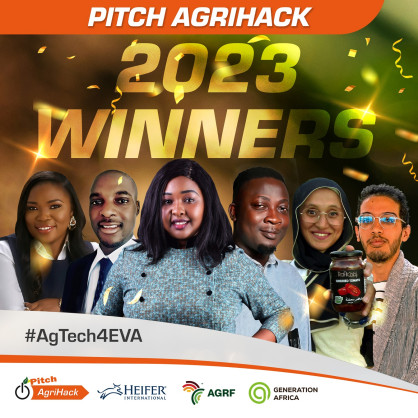
The Pitch AgriHack (https://apo-opa.info/3Zaz0kE) 2023 results are in, capping an inspiring journey celebrating Africa's most exciting agritech visionaries. Applicants from 39 African countries went through a rigorous selection process until six winners were crowned at the Youth Innovation Awards on the final day of The Africa Food Systems Forum hosted at the Julius Nyerere ICC, in Dar es Salaam, Tanzania. This year's Pitch AgriHack theme, “Unleash your Innovation,” resonated deeply with the entrepreneurs who demonstrated how technology can be harnessed to drive sustainability, improve productivity, and uplift communities.

Pitch AgriHack (https://apo-opa.info/3Zaz0kE) 2023 was jointly organized by the African Food Systems Forum (AGRF), Heifer International, and Generation Africa. This year participants and supporters witnessed an impressive showcase of innovation. The competition underscored the power of technology-driven solutions in addressing pressing challenges across the agricultural value chain. Awarding a total prize pool of USD 45,000, the competition recognized and celebrated the brilliance of young minds that are reshaping the future of African agriculture.

"This competition serves as a dynamic showcase of sustainable practices and innovation that is set to define African agriculture. Beyond acknowledging inventive ideas, Pitch AgriHack underscores the steadfast commitment of our youth to revolutionize the sector. At Heifer International, we recognize technology's pivotal role in fostering prosperity for smallholder farmers and rural communities," said Adesuwa Ifedi, Senior Vice President for Africa Programs. "We are deeply committed to investing in and enabling young individuals to create solutions that enhance the yields of smallholder farmers, and the agritech solutions presented not only address challenges within the agricultural value chain but also promote environmental conservation, resource efficiency, and long-term viability."

Dr. Agnes Kalibata, President of AGRA and Former Special Envoy to the UN Food Systems Summit, remarked, "The achievements seen at Pitch AgriHack 2023 truly celebrate entrepreneurial excellence in agriculture. These young innovators are not only shaping the sector's trajectory through their creativity and dedication, but they're also inspiring future leaders to consider impactful careers in agriculture and agribusiness. The technologies presented demonstrate the power of youth to drive practical and sustainable solutions, paving the way for a resilient and prosperous tomorrow."

The innovative solutions developed by the 2023 Pitch AgriHack finalists span a diverse spectrum. From turning waste into cooking gas and electricity, to ultra-fast composting with integrated nutrient analysers, these young entrepreneurs are finding value in nature-positive projects. Cost-saving measurement devices that analyse crop and soil health, providing recommendations that empower farmers, also impressed the judges. Artificial Intelligence integrations featured in several digital farming assistants. Drawing on massive data sets they optimize production, detect diseases, and generate recommendations for improved farming practices.

The entrepreneurs also presented game-changing inclusive finance solutions for women farmers and commodity-backed, post-harvest handling and storage for smallholders. With automated farm management and monitoring systems and behaviour modification solutions that reward farmers for following better practises, Africa's young innovators are determined to build a better food system. 

“The multi-facetted technologies, environmentally-aware approaches, and thorough business models we saw here today indicate that our youth entrepreneurs are building more resilient businesses with more comprehensive offerings that in turn help their farmers become more resilient, too,” said Dickson Naftali, Head of Generation Africa. “It is exactly the type of transformation we need, at scale, for the responsible development of the African food system. Pitch AgriHack not only celebrates such innovation but also fosters networking, collaboration, and exchange among these enterprising youth, mentors, investors, and industry experts. It creates a supportive ecosystem that propels them to grow. We are excited to see how they benefit from this opportunity."

The Pitch AgriHack 2023 Winners are:

Early-Stage Winners:

Winner: Watson Matsa, Co-Founder and CEO of eSusFarm Africa, South Africa

eSusFarm connects with rural farmers via feature-phone USSD, allowing them access to value-chain services, markets, and credit providers. Their system helps small farmers build their track record by collecting farm production data, and monitoring produce quality. Connect with Watson's venture at www.eSusFarm.Africa.

Runner-up: El Mahdi Aboulmanadel, Founder and CEO of DeepLeaf, Morocco

DeepLeaf is an agricultural deep learning lab that is focused on leveraging the latest in AI technology to revolutionize the way we grow crops. Their intelligent farming chatbot, Morshida, uses deep learning to analyse plant images and assist farmers in disease analysis. With natural language processing, Morshida can communicate in 14 different languages and dialects. Connect with El Mahdi's venture at https://DeepLeaf.io.

Mature and Growth-Stage Winners:

Winner: Tunde Adeyemi, Founder and CEO of D-Olivette, Nigeria

D-Olivette builds Bio-Tanks, anaerobic digestors that transforms organic farm waste into fertilizer and biogas for cooking and electricity generation. Their solution is helping smallholder farmers to reduce operational costs, pollution, and CO2 emissions. Connect with Tunde's venture at http://D-Olivette.com.

Runner-up: Reem Nafea, Co-Founder and Business Development Director of BioMasr, Egypt

Biomasr's new Rafik app is a hub for organic agriculture in Egypt. It connects farmers to ecological waste management, clean energy production, and organic fertiliser suppliers, while also empowering women farmers to grow and sell quality organic produce. Connect with Reem's venture at https://BioMasr.com.

Women-led Agribusiness Winners:

Winner: Priscilla Wakarera, Co-Founder and CEO of Rhea, Kenya

Rhea helps smallholder farmers make the right decisions by providing affordable, convenient soil testing for smarter farming. Their IoT device does moisture testing, NPK measurements and soil PH tests before sending AI generated recommendations for fertiliser, pH adjustments, irrigation, and crop recommendations. Connect with Priscilla's venture at www.Rhea.Africa.

Runner-up: Solape Akinpelu, Co-Founder and CEO of HerVest, Nigeria

HerVest is about inclusive finance for African women. They provide easy access to target savings, impact investments and credit financing for smallholder women farmers and women-owned/led SMEs in Nigeria. Connect with Solape's venture at https://www.HerVest.ng.

The winners were selected by an esteemed panel of judges that included experts and leaders in agriculture and technology. Pitch AgriHack contestants were honoured to get invaluable advice and guidance from this highly-respected judges group consisting of:

  • Barbra Sehlule Muzata, Communications Lead – CGIAR  
  • Dr. Nalishebo Meebelo, Executive Director – Regional Network of Agricultural Policy Research Institutes (ReNAPRI)
  • Nono Sekhoto, Sector Lead - AL for Agribusiness Network – African Leadership Academy
  • Victor Mugo, Head of Local Youth Action – World Food Forum
  • Sheila Kaaya, Lead - Agriculture, Agribusiness and Agrifood systems – The Mastercard Foundation
  • Jane Lowicki-Zucca, Senior Youth Advisor – USAID
  • Patrick Heffer, Deputy Director General – International Fertilizer Association
  • Jehiel Oliver, Founder & CEO – Hello Tractor
  • Dr. Charles Iyangbe, Signature Program Director - Africa Programs – Heifer International

This year's Pitch AgriHack applicant breakdown mirrors Africa's youthful dynamism. 79.3% were early-stage startups, embodying the innovative pulse of the competition. Mature/growth-stage agritech ventures represented 20.5%, underlining the sector's growth.

The innovation showcased at Pitch AgriHack 2023 is a strong affirmation of the commitment of AGRF, Heifer International, and Generation Africa to nurture innovation, create job opportunities, and enhance food security across the continent. Through this dynamic competition, the partners seek to inspire a new generation of agritech entrepreneurs who will not only revolutionize the agricultural landscape but also empower smallholder farmers to overcome challenges and embrace sustainable change.

For further information and updates, please visit the official Generation Africa website: https://GenAfrica.org. 

Distributed by APO Group on behalf of Pitch AgriHack.

Contact:
Jane Machigere
jane@jsmcommunications.com
www.GenAfrica.org 

About Heifer International:
Since 1944, Heifer International has worked with nearly 43 million people around the world to end hunger and poverty in a sustainable way. Working with rural communities across Africa for nearly 50 years, Heifer International supports farmers and local food producers to strengthen local economies and build secure livelihoods that provide a living income. Heifer is currently operating in 19 countries across Africa, Asia and the Americas. For more information, visit https://www.Heifer.org.

About Generation Africa:
Generation Africa is a thematic platform of the AGRF, whose mandate is to strengthen the ecosystem for youth entrepreneurs in the agri-food sector across Africa. From its start in 2019, Generation Africa has brought together industry leaders, government institutions, NGOs, NPOs, and community platforms to collaborate on ecosystem development, curation and support of agribusinesses, research and advocacy, and the inspiration of young people to embrace opportunities in the agrifood sector. Find out more at https://GenAfrica.org.

About the AGRF:
The AGRF is the world's premier forum for African agriculture, bringing together stakeholders in the agricultural landscape to take practical actions and share lessons that will move African agriculture forward. Under AGRF's current strategy, the Forum is particularly focused on driving progress of the Malabo Declaration by 2025 as the priority set of commitments African Heads of State and Government have made to strengthen agricultural development at the centre of the continent's overall development and progress. The AGRF is organised by the AGRF Partners Group, a coalition of institutions that care about Africa's agriculture transformation. For more information visit https://AGRF.org.  

Media files
Pitch AgriHack
Download logo
Read moreUnleashing Agritech Innovation in Africa
11 September 2023

How cybercriminals trick their victims

Location: News
KnowBe4

Key findings:

  • 40% of the respondents from eight countries had been scammed online
  • Distraction and multi-tasking made 43% of the victims fall for an online scam
  • Financial scams affected nearly 48% of respondents

Nearly half of the 800 African survey participants have fallen victim to an online scam at least once, losing thousands of dollars in the process and compromising their personal data. This alarming statistic is one of the key findings of the KnowBe4 2023 Online Scams and Victims in Africa Report, which was just released. The report is based on a survey of 800 respondents across eight African countries, including South Africa, Kenya, Ghana, Nigeria, Morocco, Egypt, Mauritius, and Botswana. According to the report, 53% of the respondents who fell victim, were convinced the offer was legitimate because the website looked real, while nearly 48% of the scams were financial.

“These numbers highlight that online scams have evolved,” says Anna Collard, SVP Content Strategy & Evangelist at KnowBe4 AFRICA. “What is concerning is that 43% of the victims were distracted and multi-tasking when they fell for the scam, which highlights how easy it is for a person to make a mistake when they are not paying attention. Their emotional states can affect a person's judgment, awareness, and decision-making, causing them to be more vulnerable to online deception,” says Collard.

Financial scams were the most common type of online fraud, affecting nearly half of the respondents (50%). Other prevalent scams involved fake investments (30%), cryptocurrencies and NFTs (29%), brand impersonation (28%), information theft (24%), online shopping (21%), and fake job offers (21%). Less frequent but still significant scams included the classic Nigerian scam (17%), family or friend impersonation (18%), law enforcement impersonation (7%), tax fraud (6%), holiday fraud (9%), romance fraud (13%), and lottery fraud (15%).

An email was the preferred channel for scammers to initiate contact, accounting for 24% of the cases. Social media came in second with 19%, followed by WhatsApp with 10% and other messaging services like Telegram with 8%. In Nigeria, however, social media was the most used platform for scams (32%), while in South Africa, email was the dominant method (28%). The scammers often used social engineering techniques to convince their victims, such as creating rapport or trust by making websites look legitimate, sending messages that appealed to emotions, using social media profiles that seemed authentic, and avoiding spelling or grammar mistakes.

Collard says that the statistics reveal a more evolved and sophisticated network of scammers who use emerging technology to lure people into costly mistakes. 30% lost between US$100 and US$1,000, 40% around US$100, and 9% more than US$1,000.

The report also showed that falling for a scam had a significant psychological impact on many victims. While 23% said it had little or no effect on them, nearly 50% felt a strong or moderate impact. The results highlight how easy it is for victims to blame themselves, when in reality, they were deceived by cunning scam tactics. The survey found that many victims experienced negative emotions, such as embarrassment (39%), anger (40%), naivety (40%), loss of trust (36%), and shame (25%). Some also felt traumatised (20%), vulnerable and helpless (25%), anxious (16%), and guilty and fearful (15%).

The emotional toll of falling for an online scam may be more harmful than the money lost as a result. For most victims, the financial consequences were not severe, with 24% saying it took them several months to recover and 10% saying it took more than a year, but the majority had no repercussions or recovered in a few days to a few weeks. However, when it came to healing from the psychological impact of the scam, the majority said it took them a few months (22%) and 11% said it took more than a year.

“The report shows how vulnerable people are to online scams and the emotional distress they cause,” says Collard. “While respondents were aware of scams and understood the risks, many still said they did not feel prepared, which highlights the need for regular training that gives people continuous awareness of scams and the threat they pose, to themselves and their organisations.”

You can download the full report here. https://apo-opa.info/3LjspOS

Distributed by APO Group on behalf of KnowBe4.

Media files
KnowBe4
Download logo
Read moreHow cybercriminals trick their victims
10 September 2023

Message from Rugby Africa President Herbert Mensah to Africa’s World Champions

Location: News
Rugby Africa

As South Africa prepares for their opening game today, Herbert Mensah, the newly elected President of Rugby Africa, (www.RugbyAfrique.com), the continental governing body of rugby across Africa, issues letter addressed to Mark Alexander, President of the South Africa Rugby Union:

A warrior fights with courage, not with anger. African proverb

From the four (plus) corners of the greatest continent in the World, AFRICA We wish You, The Springboks well. We stand by You as we love, respect and honour You and with all the collective strengths of our Gods and our Ancestors We pray for You!

You are “Our” World Champions (1995, 2007 and 2019) .... all 1.3 billion of us. You give us hope and send the message that the rainbow stretches from Ras ben Sakka (most northerly point of Africa) to the Cape Aglhas (South Africa) and from Cape Verde Peninsula (most westerly point of Africa) to Xaafuun (Hafun) Point, near Cape Gwardafuy, Somalia (most Easterly point of Africa).

Rugby Africa watched with keen interest as head coach Jacques Nienaber named the South Africa Rugby World Cup squad and we knew that this squad would be ready for the battle. Winners all. What will the opposition squad do with seven mighty forwards on the bench

FORWARDS                                                            

Props
Vincent Koch
Ox Nché
Frans Malherbe
Trevor Nyakane
Steven Kitshoff

Hookers
Bongi Mbonambi
Malcolm Marx

Locks
Marvin Orie
RG Snyman
Jean Kleyn
Eben Etzebeth

Back-rows
Marco van Staden
Jasper Wiese
Kwagga Smith
Pieter-Steph du Toit
Duane Vermeulen
Siya Kolisi (captain)

Utility forwards
Franco Mostert
Deon Fourie

BACKS

Scrum-halves
Faf de Klerk
Jaden Hendrikse
Grant Williams
Cobus Reinach

Fly-halves
Manie Libbok
Damian Willemse

Centres
Andre Esterhuizen
Jesse Kriel
Damian de Allende

Back-three
Canan Moodie
Cheslin Kolbe
Makazole Mapimpi
Kurt-Lee Arendse
Willie le Roux

Mark from the tribes of the Zulu, Masaai, Berbers, Fula People, Nubians, Somalis, Oromo People, Shona People, Habesha Peoples and my own Ashanti representing some of the most famous warriors in our history, We are ready to share and carry your pain and propel you to victory.

We are proud of You

Herbert

Download official letter here: https://apo-opa.info/3RkzWRH

Distributed by APO Group on behalf of Rugby Africa.

Media contact:
Nicole Vervelde
Communications Advisor to the President of Rugby Africa
rugby@apo-opa.com

About Rugby Africa:

Rugby Africa (www.RugbyAfrique.com) is the continental governing body of rugby in Africa and one of the regional associations under World Rugby. It unites all African countries that play rugby union, rugby sevens, and women's rugby. Rugby Africa organizes various competitions, including the qualifying tournaments for the Rugby World Cup and the Africa Sevens, a qualifying competition for the Olympic Games. With 39 member unions, Rugby Africa is dedicated to promoting and developing rugby across the continent. World Rugby highlighted Ghana, Nigeria and Zambia as three of the six emerging nations experiencing strong growth in rugby.

Media files
Rugby Africa
Download logo
Read moreMessage from Rugby Africa President Herbert Mensah to Africa’s World Champions
9 September 2023

Message from Rugby Africa President to Namibia ahead of the 2023 RWC

Location: News
Rugby Africa

On the eve of Namibia's first game, Herbert Mensah, the newly elected President of Rugby Africa, (www.RugbyAfrique.com), the continental governing body of rugby across Africa, issues letter addressed to Petrie Theron, President of the Namibia Rugby Union:

Mwa lala po Petrie (Good Morning Petrie)

Warriors Never Give Up - The hunter in pursuit of an elephant does not stop to throw stones at birds (Namibian Proverb)

The battle lines are drawn. Italy first then New Zealand and lastly France! Saam kan ons! (Together we can!)

Battles can never be fought and won alone which is why we in Africa never forget our forefathers, our history and our children. From the deserts of the Namib to the Skeleton Coast, Namibia is beautifully unique. Rugby Africa stands with Namibia at the 2023 Rugby World Cup. We bring our heritage and our beliefs to bless and support in the struggle ahead.

Rugby Africa congratulates and stands tall with and by Namibia! World Cup 2023 beckons and Africa supports and watches! Namibia represents a continent dark in its mystery and rich in heritage, culture and substance. From the highest dunes in the world at Sossusvlei and for the Etosha National Park, one of the world's greatest conservation areas, Namibia has what no other has. Proudly African in every way.

Africa is represented by two Giants. Namibia who have competed in six Rugby World Cup tournaments, having qualified as one of the African representatives and South Africa the record equaling World Champions!

Never doubt yourselves because we do not!

We believe in you so believe in yourselves!

Enda po nawa (Good luck and God Bless You all!)

Herbert

Download official letter here: https://apo-opa.info/44LlxRv

Distributed by APO Group on behalf of Rugby Africa.

Media contact:
Nicole Vervelde
Communications Advisor to the President of Rugby Africa
rugby@apo-opa.com

About Rugby Africa:
Rugby Africa (www.RugbyAfrique.com) is the continental governing body of rugby in Africa and one of the regional associations under World Rugby. It unites all African countries that play rugby union, rugby sevens, and women's rugby. Rugby Africa organizes various competitions, including the qualifying tournaments for the Rugby World Cup and the Africa Sevens, a qualifying competition for the Olympic Games. With 39 member unions, Rugby Africa is dedicated to promoting and developing rugby across the continent. World Rugby highlighted Ghana, Nigeria and Zambia as three of the six emerging nations experiencing strong growth in rugby.

Media files
Rugby Africa
Download logo
Read moreMessage from Rugby Africa President to Namibia ahead of the 2023 RWC
7 September 2023

300 occupants share one tap and one toilet in Joburg “dark building”

Location: News

The building’s residents say they need help not eviction

Read more300 occupants share one tap and one toilet in Joburg “dark building”
7 September 2023

The key to Africa’s industrialisation process and ending the region’s massive energy poverty

Location: News
African Energy Chamber

By Jason Mitchell

Africa's vast natural gas reserves are key to bringing energy to Africa's poorest countries, to a solid industrialisation process throughout the region and to significant poverty reduction.

The region is home to 33 of the world's 46 least-developed countries (LDCs) with an average income per head of less than $1,018 a year. The continent's poorest countries must expand at 6-7% a year if poverty is to be reduced in a big way and if the life chances of hundreds of millions of people are to be improved. To achieve this goal, these countries require abundant and cheap energy. Luckily, for many African states, the answer lies on their own doorstep — natural gas. Gas has remained a niche fuel in sub-Saharan Africa — contributing only 5% of the total energy mix against a global average of 20-25% — but its potential is enormous.

A new vision for Africa is required — a criss-crossing network of natural gas pipelines that brings energy to all corners of the region. The continent's contribution to global greenhouse gas emissions is tiny and will only become slightly bigger if the region's natural gas reserves are exploited. There is also a massive opportunity to wean poor Africans away from the use of biomass fuel and to help protect the region's forests through the rollout of small, liquified petroleum gas (LPG) stoves. Climate change is an issue in Africa but poverty reduction is a bigger one. Poverty is the biggest killer in Africa today.

It's very hard for Europeans and North Americans to imagine what it's like to live on under $1,018 a year, to not have readily available electricity, to not have a refrigerator or a washing machine, to not have a car, to not have a lawnmower, to not be able to fly from one country to another cheaply, to not have electricity in the school or the workplace and to have to use firewood or charcoal for cooking purposes. Fossil fuels have been at the heart of the Industrial Revolution that has brought prosperity and better living standards to the developed world. People in the First World must be very careful if they decide to deny Africans the same chance to prosper.

Africa has the lowest energy use per capita in the world — the average electricity use of a sub-Saharan African resident is lower than that of a household fridge in the United States. Average consumption per person in sub-Saharan Africa, excluding South Africa, is a mere 185 kilowatt-hours (kWh) a year, compared with about 6,500kWh in Europe and 12,700kWh in the US. Every year San Antonio, Texas, with a population of 1.5m people, uses as much electricity as the whole of Nigeria, with 203m people. Golden, Colorado, a small town with only 19,000 people, uses as much electricity as Chad, a country with 16m people.

The UN's Sustainable Development Goal Seven aims to “ensure access to affordable, reliable, sustainable and modern energy for all” by the year 2030. That's a tall order. In 2019, 917m people in Africa (around 80% of the region's population) relied on wood, charcoal, kerosene, animal and crop waste or other solid fuels to cook their food and heat their homes. The International Energy Agency (IEA) reports that almost 490,000 people die prematurely every year in sub-Saharan Africa from household air pollution-related causes — stemming from the lack of access to clean cooking facilities. Gas is a much cleaner form of cooking than biomass and its use should be encouraged. Biomass burning-power plants emit 300-400% more CO2 than natural gas per unit energy produced. Natural gas emits almost 50% less carbon dioxide than coal. 

Africa has one-fifth of the world's population but contributes only 3% to global greenhouse gas emissions. Incredibly, some 48 sub-Saharan African countries, excluding South Africa, have an estimated share of global emissions of only 0.55%. The fact is that many African states are already at net zero. If the continent were to use an additional 90bn cu m of natural gas per year — or 50% more than today — the resulting emissions would only raise Africa's cumulative contribution to global carbon emissions to 3.5% (ten gigatonnes) by the year 2050, according to the IEA. It really is a tiny increase compared to the chance of reducing poverty levels for hundreds of millions of poor people. If Africa is to provide universal electricity access by 2030 it would have to almost double its total generation capacity from around 260gw today to 510gw. 

Almost half the continent's 55 countries have proven natural gas reserves. Across the region, natural gas reserves amount to around 17.5trn cubic metres (cu m), making up around 9% of the world's total gas reserves. They are considerable in northern Africa (accounting for 45% of African reserves) and western Africa (32%), in particular. Commercial quantities of natural gas have been found in many African countries.

Previously, only four countries from the region have been major natural gas production hubs: Nigeria (with total gas reserves of 5.8trn cu m), Algeria (4.5trn cu m), Egypt (2.2trn cu m) and Libya (1.5trn cu m). These four accounted for 78% of African gas reserves in 2021 (https://apo-opa.info/48gDBWG), according to the United States Energy Information Administration.

However, seven African countries — Mozambique, Senegal, Tanzania, Mauritania, South Africa, Ethiopia and Morocco — with no history of fossil gas exploitation have now opened up their doors to gas projects. Some 84% of new reserves in the pre-production stage are found in these states — total new reserves amount to 5.1trn cu m. Mozambique has re-production reserves of 2.3trn cu m, Senegal 779bn cu m, Mauritania 575bn cu m, Tanzania 512bn cu m, South Africa 96bn cu m, Ethiopia 42bn cu m and Morocco 39bn cu m.

Furthermore, major untapped reserves have been discovered in Angola, Cameroon, Ghana, Equatorial Guinea, the Republic of the Congo, Kenya and Uganda. A number of these states — including Mozambique, Tanzania, Mauritania and Senegal — are actively marketing natural gas to capitalise on recent discoveries. In fact, the IEA has declared Africa the ‘new frontier' in global oil and gas.

The big four gas-producing countries will continue to dominate gas production in the near term but experts estimate that Mozambique and the other new entrants will contribute more than 50% of the region's gas production by 2038.

Natural gas can be used for electricity generation, industry and domestic use. Crucially, harnessing Africa's gas could provide the baseload power needed to boost Africa's capacity to process its raw materials locally. It could provide enough energy for industrial processes, including steel and cement production and paper and pulp manufacturing. It could be also used to make fertiliser to raise agricultural yields. Renewables, including solar and wind, cannot yet provide enough energy for these purposes.

The huge reserves of gas can play a significant role in the continent's energy transition, as natural gas has a much lower carbon footprint than oil and coal. Critically, natural gas development and renewable power are not mutually exclusive. If Africa were to triple its use of natural gas, the United Nations Economic Commission for Africa (Uneca) estimates that the region would be able to increase its use of renewable energy eight-fold. Reliable forms of energy such as gas can be used to stabilise a grid powered by intermittent sources such as wind and solar. It can play a key role in a ‘just' energy transition.

However, expanding gas supply across Africa would require a whole web of new gas pipelines and that does not come cheap. A lot of the gas from the new projects already under way in Africa is destined for international markets, including the European Union — which have been seeking new sources of energy since the Ukraine crisis — but it is vital that the region's gas reserves are deployed for domestic use, as well. Nigeria, for example, sits on the continent's largest known natural gas reserves but only 55% of the population had access to secure electricity in 2020.

Multilateral financial institutions (MFIs) — many of which are headquartered in the developed world — are now shying away from investing in natural gas projects in Africa because of pressure from a vociferous green lobby. In 2021, 20 countries — including almost all the world's big, rich democracies — pledged to stop almost all financing of new fossil fuel projects internationally by the end of 2022. Furthermore, under the Glasgow Financial Alliance for Net Zero (GFANZ), 450 financial firms across 45 countries, responsible for over $130trn in assets, committed to accelerate the global decarbonisation process. The problem is that most Western governments and financial institutions do not distinguish between coal, oil and gas, and the pressure to stop funding all hydrocarbons has negatively impacted gas projects in Africa in a big way.  

Some of the continent's biggest financiers — including the African Development Bank (AfDB) — are finding it increasingly difficult to support gas project developments that require loan syndication and foreign partners. The World Bank is pulling back, too. Local banks cannot finance major gas projects on their own, as they are limited by their capital base. In particular, the fossil fuels divestment campaign is having a big impact on the amount of development and concessional finance available. This kind of finance used to support a number of gas projects for their poverty-reducing and economic development value.

For example, without the guarantees of development finance institutions (DFIs), most of Africa's recent gas-to-power plants would have never been built in the first place. The withdrawal of development finance from downstream gas and gas-to-power projects is a serious cause for concern for Africa's electrification effort and moving the needle on energy access.

Furthermore, there is a glaring double standard — many European countries have increased their use of hydrocarbons (coal as well as gas) since Russia's invasion of Ukraine. They are constructing new fossil fuel pipelines at home. The EU recently classified natural gas a ‘green' fuel, which will allow Europe's projects to be backed by investors committed to environmental, social and governance (ESG) principles. European countries are now looking towards African states for new sources of gas. However, they are not prepared to back new gas projects in Africa that would supply the fuel to the region itself. That smacks of hypocrisy of the worst kind. How can you deny the poorest people in the world the sort of energy that you want to use yourselves?

Lumping all hydrocarbons together is a blunt policy mechanism that is not good from an emissions perspective either. In poorer places, like sub-Saharan Africa, the available alternative to gas is not renewable electricity but rather coal, diesel and, most of all, polluting biomass. In sub-Saharan Africa, demand for biomass fuels is expected to surge by 40% by the year 2040 if ‘business as usual' continues. The burning of biomass is a major contributor to global carbon emissions and charcoal has been a top driver of tropical forest loss during the past two decades, with the greatest footprint in Africa. The continent's carbon sinks need protecting and the irony is that the greater use of gas would achieve that.

Africa is home to 18% of humanity but receives less than 5% of global energy investment. And much of this investment goes on producing oil and gas for export. There must be much more investment in the region for the domestic use of gas. Gas projects could play an absolutely vital role in bringing energy to Africa but obviously the projects require financing. DFIs must think again about their decision to limit investment in new projects in Africa. The financing of a network of gas pipelines throughout Africa would be one of the quickest and surest ways of industrialising the region in a big way and of alleviating poverty on a large scale. Renewables just cannot do that how ever much wishful thinking takes place.

In fact, development institutions should go one step further and consider subsiding a massive roll out of small LPG stoves to millions of poor households in the region. It could be one of the biggest moves in contributing to Africa's decarbonisation effort by arresting the pace of deforestation in the region. LPG is recovered from ‘wet' natural gas (gas with condensable heavy petroleum compounds) by absorption and reaches the domestic consumer in cylinders under relatively low pressures. The widespread adoption of LPG stoves would reduce the amount of pollutants in the air from biomass fuels. Poor households that currently depend on woodfuel for cooking require a cleaner cooking alternative — LPG is one of the solutions.

LPG stoves are also suitable for domestic use in rural settings — a key consideration in Africa where energy poverty is greatest in the countryside. For instance, in 2016, electricity access in urban and rural areas in Nigeria was 86% and 34%, respectively, according to the World Bank.

Africa only needs to look to Asia for examples. In 2006, Indonesia implemented a ‘mega-programme' to induce a large-scale transition from kerosene to LPG stoves in order to reduce government spending on kerosene subsidies. The initiative invested in LPG infrastructure, domestic cylinder production and consumer awareness. By 2012, 93% of the target had been reached and LPG consumption had grown by almost 350%.

In India, LPG access expanded through the early-2000s but it was still not reaching most poor families. To boost access among the poor, the Indian government introduced the Pradhan Mantri Ujjwala Yojana (PMUY) Scheme. Under it, the country's oil marketing companies provide subsidies to reduce the cost of both LPG connections and cylinder refills to women in households classified as below the poverty line. In 2016, the cost of a connection was about Rupees 3,200 ($48) and included the first full cylinder (plus deposit), deposit for a regulator, an LPG stove and administrative fees.

Furthermore, African governments must consider increasing domestic gas allocations from liquified natural gas (LNG) export projects. These are an effective way to ensure that even if developers prioritise lucrative exports over local sales, they must reserve part of their production for the domestic market. Upcoming LNG terminals in sub-Saharan Africa — for example, in Mozambique — now make it compulsory to allocate a specific amount of gas to the domestic market. The availability of domestic gas from export facilities can encourage gas-based industrialisation (for example, in Senegal) or additional gas-to-power capacity (Mozambique, Mauritania and Senegal). In August 2022, for instance, Senegal's Petrosen Trading & Services signed an MoU with Turkey's Çalık Enerji and Japan's Mitsubishi for the pre-feasibility study of a gas-based ammonia and urea manufacturing unit.

It is a huge mistake to lump all hydrocarbons together and for Western environmentalists to argue that no new new fossil fuel projects should happen in Africa whatsoever. Deforestation is one of the biggest issues in Africa today. Poor Africans must be weaned off the use of wood-based fuels. The widespread adoption of small LPG stoves would be one of the surest ways of reducing deforestation. Natural gas could also form the basis for a solid, large-scale industrialisation process in Africa — something that is essential if the region is to achieve the sort of economic growth needed to lift hundreds of millions of people out of poverty.

Distributed by APO Group on behalf of African Energy Chamber.

Media files
African Energy Chamber
Download logo
Read moreThe key to Africa’s industrialisation process and ending the region’s massive energy poverty
4 September 2023

Africa’s Business Heroes Announces Top 10 Finalists for 2023

Location: News
Africa’s Business Heroes (ABH)

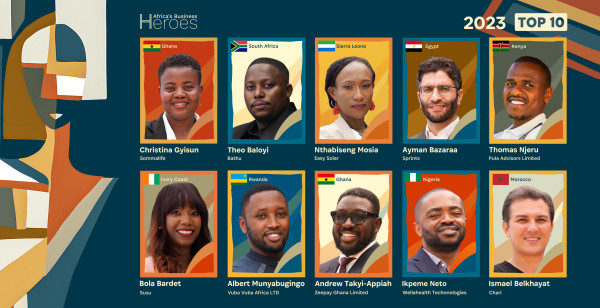
The Africa's Business Heroes (ABH) (www.AfricaBusinessHeroes.org) Prize Competition, a philanthropic program sponsored by the Jack Ma Foundation and Alibaba Philanthropy, now in its fifth year, has announced this year's top 10 finalists following an intense round of semi-finale business pitches and judging held on September 1 and 2 at Norrsken House in Kigali, Rwanda. These 10 entrepreneurs will compete for their share of the final prize of US$1.5 million in grant funding at the competition's Grand Finale scheduled for November 23 and 24.

The top 10 finalists are (in alphabetical order, by country): 

  1. Ms. Bola Bardet, CEO and Co-Founder, Susu (https://apo-opa.info/3Pq49NQ) (Benin)
  2. Mr. Ayman Bazaraa, CEO and Co-Founder, Sprints (www.Sprints.ai) (Egypt)
  3. Mr. Andrew Takyi-appiah, Founder, Zeepay Ghana Limited (https://apo-opa.info/3sCxgEH) (Ghana)
  4. Ms. Christina Gyisun, CEO and Co-Founder, Sommalife Limited (www.Sommalife.com) (Ghana)
  5. Mr. Thomas Njeru, CEO and Co-Founder, Pula Advisors Limited (https://apo-opa.info/3L4blfF) (Kenya)
  6. Mr. Ismael Belkhayat, CEO and Founder, Chari (www.Chari.co) (Morocco)
  7. Mr. Ikpeme Neto, CEO and Founder, Wellahealth Technologies (https://apo-opa.info/3qVGqvr) (Nigeria)
  8. Mr. Albert Munyabugingo, CEO and Co-Founder, Vuba Vuba Africa LTD (www.VubaVuba.rw) (Rwanda)
  9. Ms. Nthabiseng Mosia, CMO and Co-Founder, Easy Solar (https://apo-opa.info/3LaFf1X) (South Africa)
  10. Mr. Theo Baloyi, CEO and Founder, Bathu (www.Bathu.co.za) (South Africa)

The 2023 ABH top 10 entrepreneurs were selected through multiple stages of interviews and evaluation from 27,267 applications across all 54 African nations. They hail from eight African countries, including Benin, Egypt, Ghana, Kenya, Morocco, Nigeria, Rwanda and South Africa. Their start-ups have been drawn from a wide variety of industries, including agriculture, education & training, energy, financial services, healthcare, manufacturing and retail.

The 10 finalists will present their businesses on stage to a panel of inspiring businesspeople at this year's Grand Finale, which will take place in conjunction with a summit and will be the biggest in ABH's history in celebration of the fifth anniversary of the competition. Held offline in Kigali, Rwanda on 23 and 24 November and also partially livestreamed to reach audiences across Africa, the Summit and Grand Finale will be a gathering of a diverse group of African entrepreneurial ecosystem players. The action-packed event will comprise exciting sessions including speeches, workshops, an entrepreneurial showcase and a live pitch competition, among other activities. Register here to secure your seat: https://apo-opa.info/3sJzPoa

“ABH remains committed to uncovering, championing and supporting trailblazing African entrepreneurs who are bringing positive change to their communities. As we reach the fifth anniversary of our 10-year commitment to this initiative, we're excited by the expanding and diverse array of talent among our contenders,” said Jason Pau, Executive Director of International Programs at the Jack Ma Foundation. “With November on the horizon, we wish every of the top 10 finalists the best of luck on their journey, and we encourage the public to join our Summit and Grand Finale, as it promises to be truly special.”

“The ABH competition has shown that African entrepreneurship can emerge as a potent force propelling both social upliftment and economic progress. It is a dynamic stage, spotlighting ingenious start-ups that steer toward solutions, tackling challenges with a resonance that's impactful, competitive, sustainable and additive. I believe that entrepreneurs are carriers of HOPE as they can unlock possibilities that can change the world. I look forward to the Grand Finale, where the top 10 finalists will demonstrate their remarkable business acumen on stage,” said Rene Parker, Cofounder and CEO of RLabs, ABH semi-finale judge (2019 – 2023).

Originally launched in 2019, the ABH Prize Competition is Pan-African, inclusive, sector-agnostic and grassroots-oriented. It aims to identify, support and inspire the next generation of African entrepreneurs who are making a difference in their local communities by working to solve the most pressing problems and building a more sustainable and inclusive economy for the future.

For more information about ABH 2023, please visit: https://apo-opa.info/3qVklx5 and follow ABH on Twitter (https://apo-opa.info/3KY3OQs), LinkedIn (https://apo-opa.info/3R1QXQl), Instagram (https://apo-opa.info/3KZTXKa), Facebook, (https://apo-opa.info/3ylgNE9) and YouTube (https://apo-opa.info/3YDG5bH).

Distributed by APO Group on behalf of Africa’s Business Heroes (ABH).

Press Contact:
Africa's Business Heroes Press Room:
abh.press@list.alibaba-inc.com

For media inquiries or interview requests, please contact:
English:
Tracy Walakira
tracy.walakira@apo-opa.com

French/Arabic:
Malika Bouayad
malika.bouayad@apo-opa.com

About Africa's Business Heroes:
The Africa's Business Heroes Prize Competition is a philanthropic initiative sponsored by the Jack Ma Foundation and Alibaba Philanthropy. It aims to support, inspire and enable the next generation of African entrepreneurs across all sectors who are building a brighter future for the continent, by offering grant funding, training programs and support for the development of an entrepreneurial ecosystem. Over a 10-year period, each year the ABH Prize Competition and show features 10 entrepreneur finalists as they pitch their business to win a share of US$1.5 million in grant money.

Media files
Africa’s Business Heroes (ABH)
Download logo
Read moreAfrica’s Business Heroes Announces Top 10 Finalists for 2023
1 September 2023

President Tinubu Offers Condolences to South Africa Following Tragic Fire Incident

Location: News

The State House, Abuja
Download logo

President Bola Tinubu expresses his deepest condolences to the government and people of South Africa, following a tragic fire incident at a multi-storey building in Johannesburg's central business district.

“In this moment of tragedy, our thoughts and prayers are with the victims and their families impacted by this devastating fire incident. The extent of this loss is truly profound, and during this challenging time, please be assured that Nigeria stands in unity with you,” the President said, while praying for a speedy recovery for the wounded.

Reiterating the strong bond shared between Nigeria and South Africa, President Tinubu expresses hope that the collective strength of the South African people, relevant government agencies and the unwavering spirit of Africa will positively impact the healing and rehabilitation of all those affected.

Distributed by APO Group on behalf of The State House, Abuja.

Read morePresident Tinubu Offers Condolences to South Africa Following Tragic Fire Incident
29 August 2023

Coca-Cola Africa welcomes current Vice President of Operations in South Africa

Location: News
Coca-Cola

Coca-Cola Africa has welcomed Sergio Vieira as the new Vice President of Franchise Operations, South Africa. Vieira joins the Coca-Cola Africa Operating Unit (AOU) (http://www.Coca-ColaCompany.com/) in Johannesburg.

Vieira replaces Phillipine Mtikitiki, who has taken on the role of Vice President of Franchise Operations, overseeing Italy and Albania.

Vieira's mission is to hone the company's strategic direction, grow and develop the business, strengthen partnerships, and build new relationships across South Africa, Eswatini, and Lesotho.

Luisa Ortega, Africa Operating Unit President at Coca-Cola Africa, said, "Sergio has a critical role in creating a highly dynamic environment that drives high performance and in building the next generation of leaders. His experience and expertise are invaluable as we continue to grow and expand our operations, and we look forward to the contributions he will make to our company."

Vieira has worked in the Coca-Cola system for over 20 years, joining Brazil's bottler's commercial function in 2002. In 2016, he took on the role of Marketing Director at Coca-Cola Hellenic, Nigeria. A key highlight was the awards for the best Growth Project for EMEA and the best Revenue Growth Management project globally.

Vieira said, "I am thrilled with the appointment and with the move to South Africa with my family. The business in South Africa supports a strong brand portfolio, has a talented team, and an enviable reputation as a leader in FMCG. Coca-Cola in South Africa is well-positioned and has achieved significant strides, such as being certified as a top employer in the food and beverage category by the Top Employer Institute, strategically positioning it for far greater success in the future."

Vieira has a bachelor's degree in business from Universidade Federal de Pernambuco in Brazil, specialising in finance, marketing, and innovation. He is passionate about football, loves learning about new cultures, is committed to leading the equity and female agenda, and enjoys travelling with his wife and children.

Distributed by APO Group on behalf of Coca-Cola.

For Media Enquiries
Lindiwe Zikalala:
lzikalala@coca-cola.com

Media files
Coca-Cola
Download logo
Read moreCoca-Cola Africa welcomes current Vice President of Operations in South Africa
29 August 2023

International film stars head to the KZN South Coast for the 11th Ugu International Film Festival

Location: Entertainment, MyPR

With its exquisite natural scenery, year-round subtropical climate, ease of accessibility, and welcoming local communities, the KZN South Coast is establishing itself as a premier film production destination. This is further entrenched by the fact that the KZN South Coast is hosting the 11th Ugu International Film Festival which is running from 14 to 16 …

Read moreInternational film stars head to the KZN South Coast for the 11th Ugu International Film Festival
25 August 2023

15th BRICS Summit: Nigeria Remains Committed to Collaborating with China, Others – Vice President Shettima

Location: News

The State House, Abuja
Download logo

Nigeria remains committed to collaborating with China and other African countries to ensure that the partnership's objectives are achieved for the mutual benefit of both parties, says the Vice President, Sen. Kashim Shettima.

Vice President Shettima, stated this yesterday when he represented President Bola Tinubu at the BRICS Summit, in Johannesburg at the China-Africa Leaders' Roundtable Dialogue Meeting on the margins of the BRICS Summit, Johannesburg, South Africa.

According to the Vice President, “Nigeria welcomes the new initiatives introduced by the Chinese authorities, which include supporting and promoting the modernization of Africa's agriculture and agribusiness sectors; providing robust support for Africa to expedite regional integration and backing Africa's industrialization and infrastructure expansion.”

Vice President Shettima spoke to a large audience including President Xi Jinping of China and some African leaders on the theme “Promoting African Integration and Jointly Building a High-Level Africa-China Community with a Shared Future” at the Sandton Convention Centre.

He commended the existing partnership between China and Africa particularly “the three newly identified initiatives and priority areas of cooperation, between China and Africa in the areas of agriculture, industrialization, and human capacity development.

He said these align with the “Renewed Hope” mantra of Tinubu Administration, the African Union's Agenda 2063, and the United Nations Sustainable Development Goals 2030”, adding that “they are relevant to our continental and national development aspirations.”

Vice President Shettima praised further the commitment of China stating that “Nigeria firmly endorses China and anticipates forging a close collaboration with the Chinese authorities, the African Union, and all stakeholders.”

He envisioned that this collective efforts will elevate the Africa-China comprehensive strategic and cooperative partnership to unprecedented heights, driven by our mutual pursuit of economic prosperity.

While appraising the partnership further, the Vice President identified critical areas for the prevailing partnership between Africa and China to include “fostering synergy among the pertinent national institutions tasked with formulating, coordinating, and implementing national policies in the three priority areas of cooperation; and encourage efforts that promote African ownership of these initiatives.

Other areas include “the new undertakings should be designed in a manner that acknowledges local particularities, is community-based, and tailors to individual country needs, “amplify international resources for financing education in Africa; Solicit input from pertinent African Union institutions and continental organizations such as the African Development Bank (ADB), the Alliance for a Green Revolution in Africa, and other related regional bodies.

The VP also stressed the importance of “financing Africa's Infrastructure, with a focus on advancing key infrastructural components like Farm-to-Market Corridors, Farm-to-Ports Corridors, Export Transport Corridors, Railway Networks, Road Network Upgrades and Expansions, Airport Enhancements, including dedicated export-oriented airports, Power Generation, Transmission, and Distribution.”

On Nigeria's relationship with the global south, Vice President Shettima told his audience that Nigeria prioritises its relations with the Global South and deeply values all aspects of the South-South Cooperation, noting that the Global South is currently grappling with unparalleled challenges.

Continuing, “we are compelled to devise solutions for climate change and establish security measures to contain and prevent transnational crime, terrorism, and cyberattacks. We are confronted with a significant rate of youth unemployment and disruptive natural disasters.

“This situation provides us with the chance to reassess the challenges we collectively face, as well as those confronting our partners”, he submitted.

In his address, the President of China and co-chair of the Dialogue, Xi Jinping pledged to African leaders who attended the meeting on the sidelines of the Summit that China would launch initiatives to support Africa's industrialization and agricultural modernization.

The Vice President was accompanied to the event by Nigeria's High Commissioner to South Africa, Amb. Muhammad Haruna Manta, the Consul-General, Amb. Andrew Idi and other senior government officials.

Distributed by APO Group on behalf of The State House, Abuja.

Read more15th BRICS Summit: Nigeria Remains Committed to Collaborating with China, Others – Vice President Shettima
24 August 2023

A Record 1,490 Fintechs entered the Ecobank Fintech Challenge 2023 with Eight (8) reaching the Final

Location: News

Ecobank Transnational Incorporated
Download logo

Eight finalists emerged from an impressive pool of 1,490 Fintechs drawn from 64 countries in and beyond Africa; the Grand Finale will take place on 6 October at the Ecobank Group Pan African Centre (www.Ecobank.com) in Lomé, Togo; all finalists will be admitted into the Ecobank Fintech Fellowship Programme; the overall winner of the Ecobank Fintech Challenge will receive a cash prize of US$50,000, in addition to being admitted into the Fellowship Programme.

Over 1,400 Fintech startups from 64 countries across Africa and beyond applied for this year's Ecobank Fintech Challenge with eight of them making the cut to the final where they will compete for the ultimate prize. This is the sixth edition of this international competition, with the highest number of applications on record.

Ecobank Group, Africa's leading pan-African banking group, said this year's applications had more than doubled compared to last year's 703 applications received from 59 countries. In 2022 Nigeria's fintech startup, ‘Touch and Pay', wowed the jury with their ‘Cowry App' to win the top prize of US$50,000.

The eight finalists who emerged from the fiercely competitive pool will compete for the coveted top prize of US$50,000 at the Grand Finale, which is scheduled to take place at the Ecobank Pan African Centre in Lomé, Togo, on 6 October 2023.

The 2023 Ecobank Fintech Challenge finalists in alphabetical order are:

  • Flexpay Technologies (Kenya) – FlexPay offers customers a merchant-embedded saving-based purchase experience called Save Now, Buy Later.
  • IPOXCap AI (South Africa) - FinanceGPT is a financial analysis platform for frontier markets. It processes structured and unstructured financial data to generate actionable insights, using advanced algorithms for financial forecasting, health monitoring and valuation.
  • Kastelo (South Africa) - Provides a democratised solution through diversified products, focusing on transaction, savings and forex offerings, aimed at banking the underbanked in emerging markets through client-centric solutions.
  • Koree (Cameroon) - Koree is a card wallet application that addresses sub-Saharan Francophone Africa spare change scarcity by digitising cash merchant payments, while empowering millions of African consumers through an incentive reward system.
  • Kori Tech (Senegal) – Koripass is an E-wallet linked to physical payment accessories such as
    bracelets, stickers and keychains. It enables quick and easy merchant payments
    using NFC and QR Code technology. No internet or smartphone required.
  • Smart Teller Technologies Limited (Nigeria) - Empowering cooperative digital banking, IT services, and online bill payments for seamless services.
  • Rubyx (Belgium and Senegal) - Rubyx enables digital lending solutions for service providers in emerging markets to bridge the financing gap that faces informal entrepreneurs and small businesses to fund their activities.
  • Wolf Technologies (Democratic Republic of Congo) - Makuta is a state-of-the-art application that provides a simple, convenient and secure electronic money transfer and payment experience.

Ecobank Group Chief Executive Officer, Jeremy Awori, who will be hosting the Fintech Challenge final for the first time said: “We are encouraged by the very high number of applications received for the sixth edition of our Ecobank Fintech Challenge. The significant increase in the number of participants reflects the growing impact of our investments in the fintech space, and on our operations and fintech initiatives across Africa. The finalists went through a rigorous process, and we look forward to the pitches of the eight competitors vying for the top prize and ultimately partnering with the Ecobank Group.”

On his part, Dr. Tomisin Fashina, Ecobank Group Executive, Operations and Technology, congratulated the eight finalists of the 2023 Ecobank Fintech Challenge and said, “We are proud to support the development of fintechs to drive digital banking transformation across Africa and beyond. The ever-increasing level of participation - from just 412 applications in 2018 to 1,490 submissions this year - reflects the richness of the untapped innovation and talent that exists across our continent.”

As in previous editions, all the finalists in the 6th edition will be inducted into the Ecobank Fintech Fellowship Programme which offers:

  • Product roll-out on a pan-African scale: Providing the opportunity to explore product and business integration with Ecobank and potentially launch products or services in all or part of Ecobank's 35-country pan-African ecosystem.
  • Access to Ecobank's pan-African Banking Sandbox: Opportunity to test and develop products in the pan-African market.
  • Priority access to Ecobank's venture capital partners: Opportunity for access to funding.

The Ecobank Fintech Challenge recognises and promotes groundbreaking African fintech start-ups. The initiative is consistent with Ecobank's Fintech strategy of building partnerships with African fintechs to help transform digital finance and banking.

The 2023 edition of the Ecobank Fintech Challenge is co-sponsored by Huawei, Arise Invest, Asky Airlines and Proparco, and supported by ALX Africa, , ABAN Angels, Africa Fintech Network, MEST Africa, Bluespace, Naija Startups, Jeune Afrique, TechCabal and Konfidants.

For more information on the competition, please visit https://EcobankFintechChallenge.com.

Distributed by APO Group on behalf of Ecobank Transnational Incorporated.

Media Contact:
Christiane Bossom
Group Communications Manager
Ecobank Transnational Incorporated
Email: groupcorporatecomms@ecobank.com
Tel: +228 22 21 03 03
Website: www.Ecobank.com

About Ecobank Group (or ‘Ecobank Transnational Incorporated' or ‘ETI'):
Ecobank Group is the leading private pan-African banking group with unrivalled African expertise. Present in 35 sub-Saharan African countries, as well as France, the UK, UAE and China, its unique pan-African platform provides a single gateway for payments, cash management, trade and investment. The Group employs over 14,000 people and offers Consumer, Commercial, Corporate and Investment Banking products, services and solutions across multiple channels, including digital, to over 32 million customers. For further information, please visit Ecobank.com.

Read moreA Record 1,490 Fintechs entered the Ecobank Fintech Challenge 2023 with Eight (8) reaching the Final
22 August 2023

President Tinubu very Passionate About Empowering Micro, Small and Medium Enterprises (MSMEs), Says Vice President Shettima

Location: News

The State House, Abuja
Download logo

President Bola Tinubu is very passionate about empowering Micro, Small and Medium Enterprises (MSMEs) for the development of the nation's economy, says Vice President, Sen. Kashim Shettima. 

According to the Vice President, “It is a known fact that the empowerment of the MSMEs is key to empowering our youth and women towards contributing to the nation's economic development.” 

The Vice President stated this today when he spoke with journalists during his tour of exhibition stands at the BRICS Trade Fair.

Speaking further about the commitment of President Tinubu towards empowering the MSMEs, he said “ the President is a very compassionate leader and in the coming months, there will be changes in the fortunes of Nigeria.”

Explaining the economic impact of the growth of MSMEs on the economy, VP Shettima said “this will have positive impacts which will enable them to support their families and add value to the nation.”

The Vice President commended the organizer's of the trade fair which had about 180 exhibitors from various sectors of the economy. He stressed that the exhibitions will in the long run serve the purpose of galvanising investment and trade in the continent.

Vice President Shettima who took time to inspect Nigeria's exhibitions lauded the investments of Nigerians in South Africa. 

He said “I am quite impressed by the investment Nigerians are making in South Africa. This is the harbinger of greater things to come. I can say that Nigerians are active in digital economy, they are active in fashion, they are equally active in mining.

“I am quite glad that quite a number of our country men are doing well and are willing to partner with the home nation for the greater glory of the African continent.”

While praising Rose Bank, a Nigerian investment outfit in South Africa for the funding of a cassava project worth 40 billion Naira, the Vice President affirmed that “it is game a changer with the cassava value chain with its huge economic benefits. We hope that it will be reflected in other parts of the country.”

The Trade Fair is being organised by the BRIC South Africa & The SA BRICS Business Council (SABBC) in collaboration with the Department of Trade Industry and Competition, on the sidelines of the on-going 15th BRICS Summit.

The exhibition is expected to serves as a platform for showcasing products and services from the BRICS countries as well as business-to-business interaction aimed at increasing intra-BRICS trade and investments.

The Vice President was accompanied to the Trade Fair by Nigeria's High Commissioner to South Africa, Amb. Muhammad Haruna Manta, the Consul-General, Amb. Andrew Idi and other senior government officials.

Distributed by APO Group on behalf of The State House, Abuja.

Read morePresident Tinubu very Passionate About Empowering Micro, Small and Medium Enterprises (MSMEs), Says Vice President Shettima
21 August 2023

Africa’s 25 Under 40 Energy Women Rising Stars

Location: News
African Energy Chamber

The African energy sector serves as a catalyst for global development, and in this dynamic industry that powers the modern world, a select group of remarkable women have emerged as trailblazers. The African Energy Chamber (AEC) (www.EnergyChamber.org) is proud to announce the “25 Under 40 Energy Women Rising Stars' - individuals whose dedication, ingenuity and unwavering commitment serve as beacons of hope and pillars of inspiration. These women are redefining the possibilities within a traditionally male-dominated field, and the AEC proudly celebrates the rising stars who are leading the way towards making energy poverty history by 2030.

In no particular order:

Gbemisola Adeyemi Afolabi, Junior Geoscientist, AMNI International

Adeyemi Afolabi, a budding Junior Geoscientist at AMNI International, is an emerging force in the energy sector. With a Masters' Degree in Energy Geosciences from Rice University, she brings a fresh perspective to her role. Adeyemi's educational background, combined with her passion for geoscience, underscores her dedication to exploring and understanding the Earth's resources. Afolabi's commitment to harnessing scientific knowledge for practical energy solutions sets her apart as a promising talent within AMNI International.

Ibilola Akinnola, LNG Shipbroker, Maersk

Ibilola Akinnola has a wealth of experience across the legal and logistics fields, and represents an individual whose creativity, commitment and drive has advanced the global energy industry. A qualified Solicitor and Barrister of the Supreme Court of Nigeria, Akinnola went on to complete her Masters' degree in International Shipping Law at Queen Mary University of London. Now, she works at integrated logistics company Maersk as the LNG Shipbroker, and continues to make a lasting impact in the industry.

Rekik Bekele, CEO and Founder, Green Scene Energy

Rekik Bekele is a seasoned professional with over 10 years of experience in renewable energy. With a BSc in Electrical Engineering, she leads Green Scene Energy PLC as its CEO, providing affordable solar solutions in Ethiopia. Bekele also serves as a board member at Ethiopian Solar Energy Development Association, an Acumen fellow, and founder of PurposeBlack ETH and Run Africa. Her diverse initiatives drive positive change in energy and social development.

Sarah Bouzid, Technical Sales Lead: Production Systems Division, Schlumberger

Sarah Bouzid is a Chemical Engineer and Technical Sales Lead for Schlumberger's Production Systems Division – representing the only woman in this role in MENA region. Her expertise lies in the Audit to Optimize program, where she engages with clients to enhance process equipment performance. After completing an engineering degree from Bourmerdes University, she worked in various roles at Sonatrach. Navigating the largely male-dominated sector, Bouzid serves as a beacon of hope for women in science and engineering.  

Sandra Chukwudozie, CEO, Salpha Energy

Sandra Chukwudozie is the Founder & CEO of Salpha Energy, a company dedicated to providing clean, affordable and innovative energy solutions for a carbon-neutral future. She is also Executive Director of Dozzy, one of Africa's largest petroleum storage facilities. After completing her studies at the University of Dundee in 2015, Chukwudozie dedicated her professional life to supporting economic growth through energy development, gaining experience in international management, industrial relations and economics. Her innovation, resilience and ability to embrace change has made her a leader in her field and an inspiration to many across the industry.

Nadia Simao da Costa, HR People Analytics Supervisor, Chevron

Nadia Simao da Costa is the People Analytics Supervisor at Chevron and represents the youngest person to be selected for Human Resource leadership at the company in Angola. Leveraging analytics and evidence to develop strategies to manage the current and future workforce needs, Simao da Costa is a strong advocate for inclusivity and human capital development. As the African energy sector grows and more people enter the workforce, professionals such as Simao da Costa serve as valuable role models.

Eghosa Ebube, Portfolio Analyst, Chevron Nigeria

Eghosa Ebube, initially Project Engineer and now Portfolio Analyst at global energy powerhouse Chevron, brings a wealth of expertise to the table. Having honed her skills in various roles including Onshore Construction Engineer, she has emerged as a force to be reckoned with in the energy sector. Her adeptness in engineering and her dedication to innovation shine through in her work, making her a pivotal contributor to Chevron's and Nigeria's energy success.

Katuiscia Laurence Ewane, General Field Engineer, SLB

With a Masters in Industrial Engineering from Ecole Nationale Supérieure Polytechnique, Katuiscia Laurence Ewane has spent several years working for global energy services company SLB. She currently serves as a General Field Engineer for the company and has pioneered several successful initiatives, including a new approach for the integration of Drilling Fluids and Cementing Fluids; completing a complex cementing operation on Mt Cameroon; and spearheading community outreach under the SLB Excellence in Educational Development program. Ewane is a testament to the important role female engineers play in Africa.

Taimi Itembu, Public and Government Affairs, ExxonMobil

A Harvard Kennedy School graduate with over 14 years' experience in leadership, energy and policy, Taimi Itembu represents an inspirational leader in Namibia's energy sector. She has served in various roles in the Namibian Government, showcasing her aptitude for policy dialogue and partnership building to drive transformation across the region. Her leadership in energy and exploration includes advocating for Africa strategy, investment protection, and a favorable operational environment, and as an industry expert, she represents a beacon of impactful leadership.

Anine Kilian: Managing Editor, Energy Capital & Power

Anine Kilian is a strong advocate for Africa's energy development. Currently serving as the Managing Editor for Africa-focused investment platform Energy Capital & Power, Kilian's journey began as a dedicated journalist and editor after studying at the Tshwane University of Technology in South Africa. Her career has taken her worldwide, and her expertise led her to become a pivotal writer at Creamer Media before joining Energy Capital & Power in 2018. Recognizing her talent and passion, Kilian was swiftly promoted to Managing Editor in 2021. Her journey epitomizes resilience, growth and a commitment to driving Africa's energy narrative at a time when the continent needs it most. Kilian represents a standout figure in the landscape of energy journalism and advocacy.  

Ubuhle Noluti Mtetwa, National Manager, Secondary Logistics, bp Southern Africa

Armed with a degree in Transport Economics and Logistics Management, Ubuhle Noluti Mtetwa spearheads innovative projects in a traditionally male-dominated industry. In a relatively short period of time, Mtetwa climbed the ranks at bp from Logistics Intern to National Manager of Secondary Distribution. Now, she supports diversity efforts, using her platform to not only advance logistics in Africa's energy industry but support the progression of others.

Faith Musimenta, Senior Petroleum Economic and Financial Analyst, Petroleum Authority of Uganda

Faith Musimenta is currently the Senior Petroleum Economic and Financial Analyst at the Petroleum Authority of Uganda (PAU), where she leverages her skills in investment analysis to develop oil and gas financial models for billion-dollar projects. After competing her studies at the University of Dundee, Musimenta worked for various financial institutions including Citi Bank, Diamond Trust Bank and DFCU Bank. She represents an inspiration for women across the African financial sector, and continues to advocate for both inclusivity, sustainability and development of Uganda's oil and gas industry. 

Nancy Asantewah Nkansah, Resource Manager: Planning and Supply Chain for West Africa, SLB

Nancy Asantewah Nkansah, a Resource Coordinator at SLB with 8+ years' experience, excels in planning chemical requirements and workforce coordination for efficient operations. With a BA in Political Science and a Geography minor, she spearheads resource management, enhances supply chain efficiency and facilitates environmentally responsible practices. From groundbreaking innovations to resilient problem-solving, Nkansah is redefining the energy industry in Africa.

Ezinne Nnachetta, Development Geologist, Chevron

Following the completion of her MSc in Petroleum Geoscience at Imperial College London, Ezinne Nnachetta has gained significant experience as a leading geoscientist for global energy major Chevron. Her 10-year commitment to the company demonstrates her dedication to opening up new hydrocarbon basins, integrating innovation with petroleum and forging new paths for women in energy. Nnachetta represents a role model for aspiring women in the field. 

Teresa Isabel Nnang Avomo, CEO, GEPetrol

Teresa Isabel Nnang Ovomo, accomplished CEO of Equatorial Guinea's national oil company GEPetrol, ascended to the position after working in various positions at the company, including Deputy Director of Operations where she streamlined and optimized the NOC's upstream operations. Armed with a Masters from Heriot-Watt University, her journey includes various pivotal roles at Repsol. Avomo's leadership exemplifies operational acumen, innovation and drive, and she serves as an inspirational figurehead, both in Namibia's and Africa's energy sectors.

Monique Ntumngia, CEO, Green Girls Project

Monique Ntumngia is a sustainability entrepreneur and advocate for climate-gender justice. Founding Green Girls Organization, a Pan-African energy social enterprise, she leverages AI to pinpoint clean energy challenges faced by women in African rural communities. She is also the Founder of Monafrik Energy, whereby Monique measures and compares environmental impacts in supply chains, advancing clean energy initiatives. Her impactful work exemplifies her dedication to providing clean, affordable energy solutions not just in Cameroon but across Africa and beyond.

Lynette Nyagah, Project Lead, Bentworth Energy

As Project Lead at East Africa's pioneer oil and gas service company, Lynette Nyagah plays a pivotal role in establishing robust operational and quality systems. A graduate from the University of Cape Town, Nyagah gained experience in the sector as a Field Engineer for Baker Hughes. Now, she plays an instrumental part in positioning Bentworth as a globally recognized and competitive firm. Advocating for innovation in carbon footprint reduction, automation for enhanced efficiency, and the increase in participation by local African companies, Nyagha is an inspiration to many in the industry.

Oneyka Cindy Ojogbo, Partner, Centurion Law Group

Oneyka Cindy Ojogbo has a proven track record of providing strategic counsel to clients in complex energy transactions and projects. A graduate of Columbia Law School, Ojogbo currently serves as a Partner of Centurion Law Group, a pan-African legal and business advisory group. Throughout her career, Ojogbo has counselled clients across power, energy and infrastructure sectors. Her work has covered multiple sectors and tackled transactions of varying complexity, with her determination, passion and vision serving as an inspiration for many.

Isioma Okolo, Reservoir Engineer, Shell

Isioma Okolo is a Reservoir Engineer with the Shell Petroleum Development Company in Nigeria. She holds a Bachelor of Engineering Degree in Petroleum Engineering from The Federal University of Technology Owerri and an MBA from the Edinburgh Business School, Heriot-Watt University. Having worked as a Consultant in Pricewaterhouse Coopers and as a Society of Petroleum Engineering Certified Engineer, Okolo is paving the way for a prosperous future for Africa and beyond.

Uzochukwu Ozoh, Legal Advisor, Chevron

With a LLM from the University of Dundee and an MBA from Imperial College Business School, Uzochukwu Ozoh has emerged as an accomplished transactional lawyer who merges business acumen, legal prowess and risk analysis within the energy sector. Currently serving as Legal Advisor at Chevron, Ozoh guides a team of legal experts facilitating intricate gas, commercial, and supply chain transactions exceeding US$1 billion. Her mastery of stakeholder relations, leadership and organizational development makes her a force to be reckoned with.

Lecticia Sepulvede, Public and Government Affairs Advisor, ExxonMobil

Lecticia Sepulvede has a Masters in Petroleum, Energy, Economics and Finance from the University of Aberdeen and currently serves as the Public and Government Affairs Advisor for global energy major ExxonMobil. Her vision is to support Mozambicans achieve their full potential, and she works closely with stakeholders to facilitate safety and security efforts in the Cabo Delgado province of the country. Her commitment to people, her focus on the energy sector, and her ability to manage stressful environments makes her a highly valuable and admirable energy professional.

Eman S Shahin, Performance Lead and Senior Petroleum Engineer, Dragon Oil Egypt

Eman Shahin is a proficient Performance Lead and Senior Petroleum Engineer (SPE) at Dragon Oil Egypt, and boasts over 9 years' experience in reservoir, petroleum and production engineering. Her prowess spans budgeting, production forecasting, reservoir development planning and optimizing waterflood management. As a leader and coach at SPE Egypt, her commitment to mentorship shines. With roots at Cairo University and experience at GUPCO, Shahin's journey embodies expertise, leadership and fostering an inclusive energy landscape.

Mwanyengwa Ndapewoshali Shapwanale, Director: Communications and Stakeholders Relations, ReconEnergy Namibia

Mwanyengwa Ndapewoshali Shapwanale is the Director of Communication and Stakeholder Relations at Recon Energy Namibia. With a degree in Communication and Media Studies from the University of Cape Town and 10 years' experience in journalism and communication, she brings valuable compliance and ESG skills to her role in the energy sector. As the youngest member of Recon's management, she plays a pivotal role in shaping the organization's communication landscape.

Natznet Tesfay, VP Economics & Country Risk, S&P Global

Natznet Tesfay is Vice President of Economics & Country Risk at S&P Global Market Intelligence. Leading a global team of 150+ experts, she forecasts economic and country risk outlooks. With a rich background at IHS Markit and Exclusive Analysis, her expertise spans geopolitical analysis, energy transition and supply chain alignment. With degrees from Harvard University, The London School of Economics, and SOAS University of London, she has emerged as a trailblazer and advocate for Africa's economic future.

Nidra Araba Yebuah, Digital and Integration Account Manager for Ghana and Equatorial Guinea, SLB

Nidra Araba Yebuah is an accomplished Senior Geologist and Account Manager with over a decade of experience in the oil and gas service industry. She blends technical proficiency with business acumen to excel in her role. Her expertise spans data interpretation, geological environments and technical sales support. Yebuah has significantly contributed to sub-Saharan African operations, demonstrating innovation and leadership in the dynamic industry.

Call for Nominations

If you were not chosen this year, or if you nominated someone who was not selected, please understand that the process is highly selective, and we encourage you to re-submit updated information in 2024. We welcome suggestions of well-deserving candidates throughout the year. Simply email awben@energychamber.org. We look forward to honoring outstanding 25 Under 40 Energy Women Rising Stars again in 2024.

Distributed by APO Group on behalf of African Energy Chamber.

Media files
African Energy Chamber
Download logo
Read moreAfrica’s 25 Under 40 Energy Women Rising Stars
21 August 2023

Caveat Legal Provides Modern Africa-Focussed Data Compliance Programmes for Companies

Location: MyPR

Cape Town, South Africa – Specialist Commercial Legal consultancy Caveat Legal has announced a new programme to help African companies comply with the myriad different Data Protection Laws across the multiple jurisdictions on the African continent. The last two years have seen a massive uptake in data protection laws and regulations in Africa with South …

Read moreCaveat Legal Provides Modern Africa-Focussed Data Compliance Programmes for Companies
16 August 2023

Fame Week Africa and Super App ayoba join hands to Spread Entertainment Excellence across the African Continent

Location: Entertainment, MyPR

FAME Week Africa, the prestigious event celebrating outstanding achievements in the African entertainment industry, is pleased to announce its media partnership with ayoba, the leading African SuperApp. This strategic collaboration is set to amplify ayoba’s reach and engagement within the African market while complementing FAME Week Africa’s mission to promote excellence and innovation across the …

Read moreFame Week Africa and Super App ayoba join hands to Spread Entertainment Excellence across the African Continent
15 August 2023

Hopes pinned on Dr Naledi Mbude to turn around South Africa’s abysmal reading scores

Location: News

Mbude is now Deputy Director-General for Special Projects including African language education, seen by many as a key to improving child literacy

Read moreHopes pinned on Dr Naledi Mbude to turn around South Africa’s abysmal reading scores
7 August 2023

Cloudmania opens up opportunities for Mauritius’ business market

Location: News

Liquid Intelligent Technologies
Download logo

Cloudmania, launched by Liquid C2 in 2021 to support Africa's digital transformation journey, opens its doors for the Mauritius channel partner ecosystem. With partners in 22 countries across the continent, Cloudmania is committed to providing cloud and cyber security services to partners within an ecosystem defined by support, expertise, and enablement.

Vinay Hiralall, Managing Executive of Cloudmania, said, “Our operations have grown exponentially, in the last year itself, we have grown from 100 partners to over 500. This highlights that our value proposition resonates with channel partners across the continent. We have a deep understanding of the channel ecosystem and work with partners to provide the technical enablement, operational efficiency, and solution portfolio to drive their businesses forward. Winning the Microsoft Partner of the Year award in Ethiopia and Côte d'Ivoire in 2022 and 2023, respectively, reinforces our commitment to delivering solutions that propel cloud adoption and partner growth and accelerate digital transformation for businesses in Africa”.

All resellers that partner with Cloudmania receive access to a suite of market-leading solutions tailored to suit their customers' needs. Cloudmania aims to help channel partners better manage their business by creating a single-pane view via an always-on platform that assists with billing and subscription management services. In addition to providing partners with programmes that drive sales enablement, they also have access to our marketing initiatives and technical advisories. By alleviating the backend operations, partners can focus more on their core business of expanding their operations and increasing their customer base.

Cloudmania understands the critical role cloud and cyber security technologies play in today's digital economy. “Being recognised by one of the largest global hyper-scalers like Microsoft as ‘Partner of the Year' is testimony to Cloudmania's unwavering commitment towards ushering change, development, and progress through technology, and we hope to win next year's award for Mauritius,” concluded Hiralall.

Distributed by APO Group on behalf of Liquid Intelligent Technologies.

About Cloudmania:
Launched by Liquid C2 in 2021, Cloudmania is a Cloud Services and Solutions provider extending convenience, diversity, and a range of services. The company has opened its doors to numerous countries across the African continent, including South Africa, Uganda, Tanzania, Kenya, Rwanda, Zimbabwe, Zambia, Nigeria, Ghana, Mauritius, Ethiopia, Côte d'Ivoire, Senegal, Cameroon, Botswana, and the Democratic Republic of Congo serving the mission to bring about digital disruption using the power of the cloud. Cloudmania offers cutting-edge solutions to provide a full suite of partner-focused products and services. The organisation was awarded a Microsoft Partner of the Year in Ethiopia 2022 and Côte d'Ivoire in 2023. For more information: https://Cloudmania.Africa/ 

About Liquid C2:
Liquid C2 is a business of Liquid Intelligent Technologies, a pan-African technology group, offering managed cloud and security services, product solutions, and related professional and advisory services in 22 African countries. It operates Africa's widest Azure Stack deployment across four countries and deployed the only African Cyber Security Fusion Centres in South Africa and Kenya, with another four to be launched in 2023. Liquid C2 was selected as an Operator Connect launch partner by Microsoft in six countries. The organisation was a finalist in the Microsoft Partner of the Year 2021 in South Africa and Microsoft Partner of the Year in Ethiopia and Côte d'Ivoire in 2022 and 2023. https://LiquidC2.com/

Read moreCloudmania opens up opportunities for Mauritius’ business market
12 May 2023

Nigeria gaining ground and winning hearts

Location: News, Sport

FIFA
Download logo

Artificial pitch built in Kebbi, a state in northwestern Nigeria; another being installed further south in Ugborodo, in Delta State; projects supported by the FIFA Forward Programme (https://www.FIFA.com).

“Before it became a career, I just played football for fun. Farming was my main job. I had to finish work on the farm before I could go and play football. The only goal I had in life was to have my own farm.”

Reported in the Nigerian press, those words belong to Porto and Nigeria full-back Zaidu Sanusi, who hails from the state of Kebbi. They could, however, belong to any number of young people who live in this northwestern corner of Nigeria, which is home to 4.4 million people and lies on the borders with Niger and Benin. It is a part of the world where football is secondary in importance to other matters, but where talented players like Sanusi are not in short supply.

It is no surprise, then, that Birnin Kebbi, the capital of Kebbi, was chosen back in 2020 as the site for the construction of an artificial football pitch that is now available for young boys and girls to use. Meanwhile, a second pitch is under construction in Ugborodo, situated further to the south. Undertaken by the Nigerian Football Federation (NFF), these two ambitious projects have received around USD 2 million in funding from FIFA through its Forward Programme.

The main goal of the programme, which is now into its third cycle, is the growth of football around the world. Forward 3.0 (https://apo-opa.info/3VWIiPy) is giving the game's global governing body the chance to redouble its efforts and lay down ever more solid foundations for promoting this growth, with the construction of facilities an important lever in supporting the whole process.

“The aim is simply to develop football in the region,” said Alhadji Abubakar Ladan, NFF representative for the state of Kebbi. “Of the seven states in the northwestern region [Nigeria has 36 states in all], Kebbi has the largest number of amateur teams. Even so, there is no question that it also has fewer football facilities than the rest. The NFF is aware of the efforts being made to develop football here, but these efforts are being held back by the lack of facilities. This artificial pitch is a boost and a push in the right direction.”

It has certainly proved a source of motivation and delight for local young footballers, who have made it their second home as they work on the skills they hope will one day make them Super Falcons and Super Eagles. A unique pitch flanked by a stand that is regularly filled with enthusiastic supporters, it is now the scene of friendlies, competitive matches and training sessions.

“Football used to be just a street sport for us, so we're delighted to be able to play on this wonderful pitch,” said Zeynup Dauda, a teenager from Birnin Kebbi. “This sport means a lot to me. I tend to get a bit bored at home, but when I'm on the pitch, it's magical. I forget everything. My ultimate dream would be to play for a big team in a big stadium and on a big pitch. I want to play all over the world. I want to play for the whole nation.”

Zaidu Sanusi has shown the way for his home region and has proved that nothing is impossible, that there are pathways running from the street to the football pitch, between farms and the world's greatest stadiums, and between dreams and reality.

Distributed by APO Group on behalf of FIFA.

Contact for African media: 
AfricanMedia@fifa.org

Read moreNigeria gaining ground and winning hearts
10 May 2023

27 Mandela Washington Fellowship Program Nigerians Named

Location: News
U.S. Embassy & Consulate in Nigeria

The U.S. Mission in Nigeria is pleased to announce the names of the 57 Nigerians who were selected for 2023 cohort of the Mandela Washington Fellowship program.  Launched in 2014, the Mandela Washington Fellowship for Young African Leaders  is the flagship program of the Young African Leaders Initiative (YALI)  and embodies the U.S. commitment to invest in the future of Africa.  The Fellowship is composed of academic coursework, leadership training, and networking.

The Fellows will travel to 28 cities across the United States from June 21 to August 4 to participate in Leadership Institutes hosted by American colleges and universities.  In the final week of their program, the fellows will converge with their sub-Saharan counterparts in Washington D.C. for a Leadership Summit which will feature meetings with top U.S. government officials and private sector leaders.

In his remarks at the pre-fellowship orientation reception, Charge d'Affaires David Greene said, “The U.S. Mission is committed to supporting Nigerian youth and providing them opportunities to reach their full potential, especially our Mandela Washington Fellows.  We look forward to working with you in the future to deepen the relationship between the United States and Nigeria.”

Since 2014, over 500 young leaders from Nigeria have participated in the Mandela Washington Fellowship. U.S. Mission Nigeria is proud to announce the 2023 cohort of Mandela Washington Fellows.

First Name

Last Name

Track

Leadership Institute

1

Abdulrahman

Ahmed

Leadership in Public Management

Texas Tech University

2

Abiola  Nurudeen

Durodola

Leadership in Civic Engagement

The Presidential Precinct

3

Abubakar

Umar

Leadership in Public Management

University of Minnesota – Twin Cities

4

Adaeze

Menekpugi

Leadership in Business

Drake University

5

Aisha

Abdullahi Bubah

Leadership in Business

Drake University

6

Aisha

Jaafar

Leadership in Public Management

Replacement candidate yet to be placed in an institute

7

Anthony

Okoboshi

Leadership in Public Management

University of California – Davis

8

Blessing

Ashi

Leadership in Civic Engagement

University of Maryland, Baltimore County

9

Chimdindu

Neliaku-Chukwu

Leadership in Public Management

Arizona State University

10

Chukwuemeka

Uzoho

Leadership in Public Management

Wayne State University

11

Comfort

Effiom

Leadership in Public Management

Arizona State University

12

Damilola

Oligbinde

Leadership in Public Management

Cornell University

13

Diepriye

Diri

Leadership in Civic Engagement

Michigan State University

14

Ebenezar

Okafor

Leadership in Public Management

Wayne State University

15

Elijah

Affi

Leadership in Business

Drake University

16

Gabriel

Ogunsua

Leadership in Business

Lehigh University

17

Geraldine

Ofulue

Leadership in Public Management

Texas Tech University

18

Godspower

Oyubu

Leadership in Civic Engagement

Kansas State University

19

Godwin

Henry

Leadership in Civic Engagement

Florida Gulf Coast University

20

Hashidu

Aminu

Leadership in Business

Rutgers University

21

Henrietta

Anene

Leadership in Business

Clark Atlanta University

22

Ibrahim

Hassan

Leadership in Civic Engagement

Drexel University

23

Jasper

Deebari

Leadership in Public Management

University of California – Davis

24

Jemimah

David-Makeri

Leadership in Civic Engagement

Michigan State University

25

Jessica

Oba

Leadership in Public Management

Howard University

26

Julius

Ilori

Leadership in Civic Engagement

University of Delaware

27

Mahfuz

Alabidun

Leadership in Civic Engagement

Drexel University

28

Mathias

Pwol

Leadership in Business

Jackson State University

29

Michael

Showunmi

Leadership in Civic Engagement

University of Georgia

30

Mohammed

Lawal

Leadership in Civic Engagement

The Presidential Precinct

31

Muhammad

Usman

Leadership in Business

Purdue University

32

Muhammad

Yakubu

Leadership in Business

University of Texas at Austin

33

Nkemakonam

Agu

Leadership in Business

Drake University

34

Nnanna

John

Leadership in Business

University of Notre Dame

35

Okeoghene

Akusu

Leadership in Public Management

Bridgewater State University

36

Oluwafunke

Adeoye

Leadership in Civic Engagement

University of Georgia

37

Oluwatoyin

Olufon

Leadership in Business

University of Notre Dame

38

Onyedikachi

Nwakanma

Leadership in Civic Engagement

University of Delaware

39

Onyeka

Nwigwe

Leadership in Civic Engagement

Michigan State University

40

Osato

Omo-Osemwingie

Leadership in Business

Purdue University

41

Praise

Akobo

Leadership in Civic Engagement

University of Georgia

42

Rabi

Sufi

Leadership in Public Management

Wayne State University

43

Saad Ayodeji

Erubu

Leadership in Public Management

Bridgewater State University

44

Saheed

Ibrahim

Leadership in Public Management

Syracuse University

45

Sandra

Orgu

Leadership in Public Management

Texas Tech University

46

Sunday

Onuche

Leadership in Civic Engagement

University of Maryland, Baltimore County

47

Susanne

Ogunleye

Leadership in Business

University of Nevada-Reno

48

Sylvia Chioma Chigozie

Nwosu

Leadership in Civic Engagement

Michigan State University

49

Terese

Akpem

Leadership in Business

Purdue University

50

Testimony

Asiagwu

Leadership in Business

University of Notre Dame

51

Uju

Onyekachi

Leadership in Business

University of Notre Dame

52

Uyi

Effiom

Leadership in Public Management

University of California – Davis

53

Uyiosa

Obasohan

Leadership in Public Management

University of Minnesota – Twin Cities

54

Victoria

Ogwanighie

Leadership in Business

Clark Atlanta University

55

Vivian

Ezeonwumelu

Leadership in Public Management

Syracuse University

56

Yusuf

Nurudeen

Leadership in Public Management

Bridgewater State University

57

Zainab

Ahmad

Leadership in Business

University of Texas at Austin

Distributed by APO Group on behalf of U.S. Embassy & Consulate in Nigeria.

Media files
U.S. Embassy & Consulate in Nigeria
Download logo
Read more27 Mandela Washington Fellowship Program Nigerians Named
10 May 2023

Court Challenges against Nigerian Presidential Election Result

Location: News

Human Rights Watch (HRW)
Download logo

Nigeria's Court of Appeal, which constitutes the Presidential Elections Tribunal, yesterday began proceedings to hear the challenges brought against the declaration of Bola Ahmed Tinubu of the ruling political party, the All Progressives Congress, as the winner of February's presidential elections. The elections were marred with irregularities, including violence at the polls and logistical and procedural shortcomings, including the inability to upload election results from polling units in real time.

There is a high level of interest in the tribunal process following what many have described as disappointing and unacceptable failings in the Nigerian election process.

Among the petitions brought before the tribunal are those of the two main opposition parties, the Peoples Democratic Party, and the Labor Party. Both parties claim that the election was fraught with corrupt practices, voter suppression, and noncompliance with the provisions of the country's electoral law.

The United Nations has previously raised concerns about the independence of Nigeria's judiciary and it is likely the Tribunal's ruling will be closely scrutinized both inside and outside of the country. To build trust in the process, the Tribunal should ensure that the proceedings are carried out transparently and in accordance with the rule of law. In doing so, it can send a clear message that it is committed to the integrity of Nigeria's elections.

The proceedings could last up to 6 months, long after the new President is sworn in May 29. It is therefore crucial that regional and international partners, many of whom deployed election observers as part of efforts to support Nigeria in strengthening its democracy,  prevail on the government to ensure the Tribunal is able to work independently and that the government will respect the verdict, regardless of the result.

As well as ensuring that the electoral challenges receive a fair hearing, the Nigerian justice system should doggedly pursue those responsible for the violence that blighted the elections. Unfettered access to free and fair elections is critical to ensuring Nigerians are able to exercise their rights and is a cornerstone of a democratic nation.

Distributed by APO Group on behalf of Human Rights Watch (HRW).

Read moreCourt Challenges against Nigerian Presidential Election Result
9 May 2023

Oyo States Bodija market fire, building collapse at Sango police barrack and 2023 flood prediction

Location: News

National Emergency Management Agency (NEMA), Nigeria
Download logo

NEMA, South West Zonal Office coordinator, Mr Saheed Akiode today 8th May, 2023 was featured on a Yoruba radio program “Oro Ilu” at inspiration F.M 100.5fm, Ibadan.

1. “Oro Ilu” is a popular Yoruba radio show that focuses on issues affecting lives and livelihood of the people of oyo and its environs.

2. Discussions at the program were centered on the recent Bodija market fire, building collapse at Sango police barrack and 2023 flood prediction by NIMET and NIHSA respectively.

3. While responding to questions on the show, Mr. Akiode identified the causes of fire outbreak at Bodija market and Building collapse at police barrack in Sango, and proffered possible solutions in that regards.

4. He stressed the needs for having fire service station at the market places for quick response; insurance policy for market women/ men and carryout integrity test on buildings to prevent future occurrences.

5. Mr Akiode also discussed about 2023 flood outlook. He called on residents of Oyo and its environs to adhere strictly to early warning as contain in the Seasonal Climate prediction (SCP) released by NIMET and NIHSA.

Distributed by APO Group on behalf of National Emergency Management Agency (NEMA), Nigeria.

Read moreOyo States Bodija market fire, building collapse at Sango police barrack and 2023 flood prediction
8 May 2023

Fifth Batch (Eighth Flight) of 132 stranded Nigerian Citizens evacuated by Federal Government through National Emergency Management Agency (NEMA) from the Internal conflict in Sudan Arrive Nnamdi Arzikiwe International Airport

Location: News

National Emergency Management Agency (NEMA), Nigeria
Download logo

The fifth batch (eighth flight) of 132 stranded Nigerian citizens evacuated by the Federal Government through the National Emergency Management Agency (NEMA) in the on-going evacuation from the internal conflict in Sudan arrived Nnamdi Arzikiwe International Airport today at 9:15am. They comprised of men, women and children, including infants. Of a particular note among them is a 3 weeks old baby.

They were airlifted via Tarco Aviation from Port Sudan and were received at Hajj Terminal of the Abuja Airport on behalf of the Federal Government by a team of senior Civil Servants led by the Director Special Duties NEMA Dr Onimode Abdullahi Bandele. Also present were the Head of Consular and Migration Ministry of Foreign Affairs, representatives of the Federal Ministry of Humanitarian Affairs, Disaster Management and Social Development, NCFRMI, NiDCOM, NAPTIP

After clearance by the Nigerian Immigration Service, the returnees were served with meals and given tokens to assist them travel to their various locations. A philanthropic organization, Dangote Foundation distributed to the returned token worth N100,000 for cashing at bank and dignity kits for each of them. Furthermore, telecom giant, MTN gifted each of them with sim cards with N25,000 worth airtime and 2GB data.

Also today at the reception, the returnees sang the Nigerian National Anthem as they were excited over the Federal Government's concerns and successful airlifting of them back home to safety in dignity.

Distributed by APO Group on behalf of National Emergency Management Agency (NEMA), Nigeria.

Read moreFifth Batch (Eighth Flight) of 132 stranded Nigerian Citizens evacuated by Federal Government through National Emergency Management Agency (NEMA) from the Internal conflict in Sudan Arrive Nnamdi Arzikiwe International Airport
  • Previous
  • Page 1
  • Interim pages omitted …
  • Page 17
  • Page 18
  • Page 19

Copyright © 2026 · MyZA · All Rights Reserved · Powered by Stratlec Online