Starlink Launches Amid Job Losses in Lesotho
Elon Musk’s satellite internet service comes after months of US funding cuts and tariffs put immense pressure on the country’s economy

MyZA
News, Directory, Events and Other Stuff
Elon Musk’s satellite internet service comes after months of US funding cuts and tariffs put immense pressure on the country’s economy
GOOD Statement by Brett Herron,GOOD Secretary-General 19 May 2025 The latest Socio-Economic Rights Institute (SERI) “Food for Thought” report exposes a nation in crisis. One in five households in South Africa experiences inadequate or severely inadequate access to food. Thirty percent of boys under five are stunted due to chronic undernutrition, while millions of South […]
The post SERI REPORT REINFORCES URGENT NEED FOR BASIC INCOME GRANT appeared first on For Good.
Union Against Hunger shines light on the right to food
The World Health Organization (WHO) and the United Nations Children's Fund (UNICEF) are today launching a “Babies Before Bottom Lines” manifesto to warn parents in South Africa against false and unethical baby milk advertising. The manifesto was posted online today to call out “predatory and pervasive practices” and has been backed and shared by prominent parenting influencers around the country.
WHO and UNICEF are jointly calling the attention of parents and caregivers to the WHO International Code of Marketing of Breastmilk Substitutes and its related information sources. The code provides guidelines on stricter regulation of marketing of breastmilk substitutes, to curb harmful effects on babies' short- and long-term health.
WHO's Country Representative in South Africa, Shenaaz El-Halabi, says: “False, incomplete, misleading health and nutrition claims by formula companies should stop now. The WHO calls on formula milk companies to stop presenting incomplete scientific evidence and inferring unsupported health outcomes.”
WHO and UNICEF are specifically calling on local regulators to update Regulations Relating to Foodstuffs for Infants and Young Children (aka R991) to include other advertising techniques and digital marketing practices that have become prevalent in the past few years since the International Code of Marketing of Breastmilk Substitutes of 1981 and local Regulation R991 of 2012 were drafted. Some popular social media platforms, whose algorithms can target specific consumers with specific messages at specific times, were still in their infancy or did not yet exist in 2012. Of particular concern is that parents are often targeted with information that blurs the lines between nutritional facts and promotional pseudo-science and emotional manipulation when they are at their most vulnerable.
The pseudo-scientific health claims made by formula companies discourage mothers from breastfeeding, which should always be a first choice as breastmilk is the most complete and healthiest milk for babies. In addition, widespread evidence exists that women have internalised doubts about the quality and quantity of their breastmilk, mirroring the themes and messaging of formula milk marketing campaigns.
In line with their multi-country study on the impacts of marketing breastmilk substitutes, WHO and UNICEF warn that “inappropriate promotion of breastmilk substitutes negatively impacts breastfeeding practices, and that advertisers are promoting a false choice between formula feeding and breastfeeding, without offering informed choice to parents about the real differences between breastmilk and various brands of formula”.
UNICEF South Africa Representative, Christine Muhigana, notes that: “Government and civil society partners are to be commended for their efforts to address this concerning issue. It is evident that formula milk companies continue to actively target health professionals to convince them to prescribe formula. This Manifesto is part of a broader effort to address these unfair practices so that mothers and caregivers are fully aware of unethical marketing practices.”
Cross promotion, also known as “brand extension” which is a marketing practice whereby one product is used to advertise another product by using similar branding, packaging and labelling (including but not limited to similar colours, design, font types, mascots and logos) has become a common practice by the bay formula companies.
“All families need to be supported with evidence-based information so that they can make the most appropriate and informed decision for feeding their babies. Those choices, however, should never be exploited for corporate profits. We are finding again and again, all around the world, that unethical corporate influence is imposed on caregivers through false advertising. Companies use digital marketing algorithms that exploit parents when they are most vulnerable. They capitalize on parents' doubts and questions. For instance, we see advertisers directing fake science at caregivers in the middle of the night, when they or their babies are struggling, to falsely convince them that bottle-fed babies sleep better than breastfed babies. This is wrong and needs to stop,” says Dr Laurence Grummer-Strawn, who leads WHO‘s work on infant and young child feeding.
WHO and UNICEF have uncovered systematic and unethical marketing strategies by the US $55 billion infant formula industry, finding it uses the “infant formula industry uses pervasive, personalised and powerful methods to target parents when they are at their most vulnerable in the early days of their new babies life, and manipulate scientific claims to promote their products whilst undermining parents' confidence”.
Aqeelah Harron, an online content creator who owns the popular Fashion Breed social media platform, is supporting the campaign. "I'm a mom to a toddler and my child's health matters to me more than anything. I think it's wrong that powerful formula companies with big platforms are preying on parents to manipulate us into falling for fake science. Babies and new parents are vulnerable and should never be exploited. We need to prioritise comprehensive feeding education for all caregivers, free from the influence of profit-driven marketing." Several other online influencers are also backing the campaign.
WHO and UNICEF invite the public to join them in calling for an end to the aggressive marketing of formula milk, and to share their call to action: “Choose babies before bottom lines.”
Distributed by APO Group on behalf of World Health Organization (WHO) - South Africa.
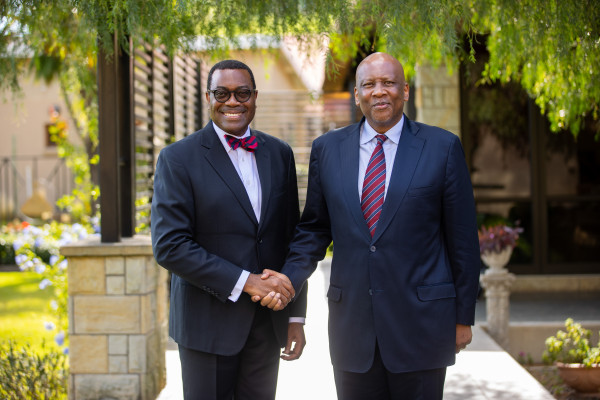
The African Development Bank Group (www.AfDB.org) plans to invest $331 million in key strategic sectors in Lesotho as part of its proposed Country Strategy Paper for 2025-2030 to boost economic growth and industrial competitiveness.
During an official visit to Lesotho -- the first by an African Development Bank President -- Dr. Akinwumi Adesina met with His Majesty King Letsie III to discuss strengthening development partnerships and expanding the Bank's investments in the country.
His Majesty expressed delight at the Bank President's visit, viewing the mission as a reflection of the Bank and Adesina's appreciation for Lesotho's progress in improving people's lives.
“With haste, we will ensure that the policies and incentives to accommodate the needs of and attract the private sector are in place, especially in healthcare, agriculture, and manufacturing,” the King remarked.
King Letsie said he was confident that Adesina, whom he described as a 'man of action,' would help catalyze progress on the Bank's strategic projects in Lesotho.
Adesina thanked King Letsie for his strong leadership role as the African Union Nutrition Champion since 2014, his advocacy for improved nutrition and food security on the continent -- especially for women, adolescents, and children -- and his passion for youth development.
The African Development Bank president commended His Majesty for his leadership on the King Letsie III Just Energy Transition Fund, which aims to generate approximately 200 megawatts of power through private sector investments.
He also briefed King Letsie about the Bank's new 2025-2030 Country strategy paper and planned investments of $331 million to support quality infrastructure, capacity building, energy, integration and interconnectivity, debt management and standards, and strengthening the office of the Prime Minister.
Referencing dwindling donor commitments globally, Dr. Adesina said, "Africa must prepare to engage more proactively with the private sector. Every challenge is an investor's dream. Ultimately, capital, like water, will always find a receptive place to go."
According to Adesina, the Bank has implemented 87 projects totaling $429 million since Lesotho joined the Bank in 1973.
"We have eight ongoing projects worth $60 million, and we look forward to significantly expanding our commitments," Adesina said.
The Bank's investment strategy for Lesotho will focus on several priority areas:
The African Development Bank-led Lesotho Rural Water Supply and Sanitation Project has delivered remarkable results: 190 kilometers of pipeline to distribution networks, water storage tanks with a total capacity of 3.48 million liters, and 166 public water points serving approximately 28,266 people across eight zones in Maseru and Berea districts.
Responding to King Letsie's request, Dr. Adesina said the Bank will prioritize investments in primary healthcare centers across Lesotho.
“We will work on an integrated project that includes components of energy, a potential multi-partner $2.3 billion water transfer project from Lesotho through South Africa to Botswana, agro-value chains, and trade facilitation in Lesotho,” Adesina said after the meeting with King Letsie III.
The Bank is expected to support Lesotho in mobilizing approximately $260 million for the integrated water transfer project, which will supply 308 million cubic meters of water for domestic, agricultural, and industrial use through a 700 km pipe system. The project has the potential to generate up to 22 MW of hydropower.
Speaking earlier, Minister of Finance and Development Planning Retselisitsoe Matlanyane indicated that as Lesotho's energy supply will exceed domestic demand by the end of 2026, the country intends to build a substation to export excess power production to South Africa. She reiterated Lesotho's commitment to private sector-friendly policies and engagement.
The minister highlighted the importance of primary healthcare and nutrition investments to help combat extreme stunting in several parts of the country.
King Letsie is the African Union-appointed African Leaders for Nutrition champion. The initiative, spearheaded by the African Development Bank and championed by African leaders, works to galvanize political will and significant investments to end malnutrition on the continent.
Dr. Adesina also met with Prime Minister Samuel Ntsokoane Matekane; and the ministers of Foreign Affairs; Agriculture, Food Security & Nutrition; Natural Resources; Health; Communication, Science & Technology; and Education & Training.
The Bank's delegation to Lesotho included its Executive Director for Lesotho, Dr. Nomfundo X. Ngwenya; Deputy Director General for Southern Africa, Moono Mupotola; and Senior Advisor to the President for Communication and Stakeholder Engagement, Dr. Victor Oladokun.
Distributed by APO Group on behalf of African Development Bank Group (AfDB).
Media Contact:
Emeka Anuforo
Principal Regional Communication Officer
media@afdb.org
About the African Development Bank Group:
The African Development Bank Group is Africa's premier development finance institution. It comprises three distinct entities: the African Development Bank (AfDB), the African Development Fund (ADF) and the Nigeria Trust Fund (NTF). On the ground in 41 African countries with an external office in Japan, the Bank contributes to the economic development and the social progress of its 54 regional member states. For more information: www.AfDB.org
The Food and Agriculture Organization of the United Nations (FAO) has welcomed a contribution of nearly USD 1.2 million (£ 950 000) from the United Kingdom of Great Britain and Northern Ireland which will support the implementation of the Africa Phytosanitary Programme (APP).
APP is an initiative of the International Plant Protection Convention (IPPC) and is designed to strengthen the technical capacity of personnel in national plant protection organizations - government agencies responsible for phytosanitary work. The programme equips them to use scientific approaches and advanced digital technologies to improve monitoring, detection, response and recovery from pest outbreaks.
Annually, pests cause between 30 to 60 percent of crop losses in Africa, resulting in an economic cost of about USD 65.58 billion. These losses leave millions of people at risk of food insecurity, impact small-scale and commercial farmers' livelihoods and hinder regional and international trade of agricultural commodities.
“This contribution to the APP will strengthen Africa's phytosanitary capacity, enhancing our collective efforts to combat plant pests. Robust plant health systems are essential for safeguarding food security, enhancing biosecurity, facilitating trade, and protecting livelihoods across the continent,” said Beth Bechdol, FAO Deputy Director-General and interim IPPC Secretary.
The APP implementation targets all 54 African countries, with phase one underway in Cameroon, the Democratic Republic of the Congo, Egypt, Guinea-Bissau, Kenya, Mali, Morocco, Sierra Leone, Uganda, Zambia and Zimbabwe. Phase two will be launched in 2025 with eight countries: Algeria, Cabo Verde, Chad, the Republic of the Congo, Liberia, Malawi, South Africa and Tunisia.
A partnership for sustainable and resilient agriculture
Since becoming a Member of FAO in 1945, the United Kingdom has helped to promote sustainable agriculture and global food security by supporting the Organization's strategic work in areas such as agricultural statistics, nutrition and food security analysis, development cooperation, resilience and peacebuilding, and climate change. The most recent contribution from the UK's International Biological Security Programme will bolster a key area of FAO's work, helping to prevent, detect and manage plant pests that have the potential to move quickly and easily across borders and cause significant economic and environmental damage.
“We applaud the support of the United Kingdom of Great Britain and Northern Ireland to strengthen phytosanitary systems across Africa,” said Alexander Jones, Director of FAO's Resource Mobilization Division. “As global travel and trade increase, improving the technical capacities of national plant protection organizations so that they are able to identify and respond to threats as they emerge is an investment whose impacts will be felt at a global level.”
The United Kingdom has been a strong advocate for plant health throughout the years, lending support to various IPPC initiatives such as the International Year of Plant Health, the first International Plant Health Conference, the IPPC ePhyto Solution, and assessment and management of climate change impacts on plant health. The United Kingdom is also closely engaged in the development and implementation of the International Standards for Phytosanitary Measures (ISPMs), which provide the basis for countries to make national legislation, guidelines, and measures to protect their plant resources from pests.
Distributed by APO Group on behalf of FAO Regional Office for Africa.
Department of Health commemorates World Obesity Day
The Department of Health will observe World Obesity Day on Monday, 10 March 2025, to raise awareness about the global challenge of obesity and advocate for systemic changes that promote healthier lifestyles.
This year’s World Obesity Day is celebrated under the theme: “Changing Systems, Healthier Lives,” which emphasises a need to shift focus from individuals to the systems that influence people’s health.
According to the department, previous responses to obesity have primarily focused on individual behaviours. However, this year, they are shifting their focus.
“This highlights the need for multi-sectoral interventions to address the root causes of obesity and improve health outcomes.”
The department highlighted that being overweight and obesity are serious health issues in South Africa, significantly contributing to non-communicable diseases, and are associated with an increased risk of death and disability from these conditions.
According to the 2022 National Food and Nutrition Security Survey, nearly 50% of adults in South Africa are overweight or obese, with 68% of women and 38% of men affected.
In addition, almost 69% of obese adults reside in households that do not have enough food.
It is estimated that by the year 2025, one in four people will be living with obesity.
“It is time we turn our attention to creating supportive environments where people can have access to available healthy food and physical activity opportunities and to receive appropriate nutritional information to make decisions that will contribute to healthy eating habits and lifestyles,” the statement read.
World Obesity Day is observed on March 4 every year to raise awareness about the causes and prevention of obesity in adults and children and to encourage action to address it.
The commemoration will take place at the Durban University of Technology in KwaZulu-Natal today. – SAnews.gov.za
Gabisile
Mon, 03/10/2025 - 08:51
62 views
Alfonso Arries Primary School in Gqeberha said parents took a decision to donate R100 per child to fix the crumbling school
KZN aims to attract investment while also creating jobs
The KwaZulu-Natal province aims to secure an additional R4 billion in investments in the 2025/26 financial year and create 5 000 potential jobs, Premier Thamsanqa Ntuli said on Friday.
This is after the KZN Investment Conference held in November 2024 resulted in R75.8 billion in investment pledges, including major projects like the Westown mixed-use development in Shongweni and SAPPI Southern Africa upgrades.
Delivering the State of the Province Address (SOPA), the Premier outlined a bold future for the province.
Ntuli began by honouring the memory of citizens lost to recent floods and heavy rains, as well as soldiers who died in the Democratic Republic of Congo (DRC).
READ | KZN flood victims moved to temporary accommodation
He stressed the province’s resilience and commitment to overcoming challenges, including high unemployment, poverty, and the impacts of global crises.
Ntuli also highlighted significant achievements over the past eight months and outlined strategic priorities for the coming year.
The Premier also detailed the ongoing and upcoming infrastructure projects, including upgrades to the N3 and N2 highways, the construction of new dams, and the expansion of the Dube Trade Port and Richards Bay Industrial Development Zone.
According to Ntuli, these projects are expected to create thousands of jobs and boost the local economy.
Meanwhile, the King Dinuzulu Innovation Valley at Dube TradePort, set to open in June 2025, will serve as a hub for technological advancement and entrepreneurship.
The province is also rolling out broadband connectivity projects to ensure high-speed internet access for all citizens.
He also emphasised the province’s commitment to reducing poverty and the rising cost of living which remains as a persistent challenge for many families across the province.
Initiatives include social grants, support for child-headed households, and efforts to combat gender-based violence, while also focusing on youth and women empowerment through various programmes and funds.
“Poverty and the rising cost of living remains a persistent challenge for many families across KwaZulu-Natal. While social assistance remains a necessary lifeline for many of our people, this trajectory is not sustainable.”
Instead, he believes government should build a nation where economic opportunities replace dependency, where employment and entrepreneurship empower people, and where prosperity is driven by innovation and productivity.
The Premier also noted the province’s record-breaking 2024 matric pass rate of 89.5% and improvements in healthcare services, including the purchase of new ambulances and the expansion of the school nutrition programme.
Meanwhile, he stated that efforts to improve school infrastructure and reduce dropout rates are also underway.
Ntuli reaffirmed the administration’s commitment to building a capable, ethical, and developmental State. This includes strengthening public institutions, enhancing service delivery, and rooting out corruption.
Spaza shops
Meanwhile, he said from 14 October to 14 November 2024, the provincial government conducted unannounced inspections of spaza shops and wholesale businesses.
“What we uncovered was deeply concerning. It became abundantly clear that economic activity in many of these areas has shifted away from our local entrepreneurs, with some businesses operating in direct violation of our laws – engaging in illicit trade and other criminal activities that threaten the well-being of our communities.”
A joint operation was conducted, resulting in the inspection of 7 729 premises and as a result, 337 premises were closed, and 142 arrests were made.
In addition, 2 429 compliance notices and 480 fines were issued, alongside the confiscation of 10 210 kg of illicit goods.
“It is our firm belief that the township and rural economy in KwaZulu-Natal plays a vital role in both economic growth and job creation for local communities, with substantial value and employment opportunities across informal sectors like spaza shops, street vendors, and small-scale manufacturing.”
READ | Deadline won't be extended for spaza shops to register
Today marks the deadline for spaza shop and other food handling to register their businesses with their local municipalities.
He called on all citizens and stakeholders to work together towards a prosperous and inclusive future for KwaZulu-Natal.
“The future calls, and we must answer with action, integrity, and unwavering dedication to the service of our nation, “ he said. – SAnews.gov.za
Gabisile
Fri, 02/28/2025 - 14:58
233 views
Over R20 million allocated to boost North West economy
The North West Provincial Government has allocated R24 million to establish a Development Fund to accelerate development initiatives across the province.
The fund will be established with a special focus on stimulating economic growth and creating sustainable job opportunities.
This is according to the North West Premier Lazarus Kagiso Mokgosi who delivered his State of the Province Address (SOPA) at the provincial legislature on Thursday.
He informed the Members of the Provincial Legislature (MPL) that the efforts of the Economic and Investment Advisory Council are starting to produce positive results.
The Council is responsible for assisting the province to drive its industrialisation programme, lure investments, and see to the full implementation of the Provincial Growth and Development Strategy.
“We envisage establishing a Regional Research, Innovation and Development Office, which will be in, and coordinated by, the Office of the Premier with a specific focus on Science, Technology and Engineering,” he said on Thursday.
The SOPA outlined the province’s strategic priorities for the next five years, focusing on inclusive growth, job creation, poverty reduction, and building a capable and ethical State.
Mokgosi highlighted the province’s challenges, including high unemployment and poverty rates, and emphasised the need for aggressive measures to address these issues.
He announced several initiatives, such as the expansion of the National School Nutrition Programme to provide two meals per day to learners in more schools and the launch of the “Ntime o Mphele Ngwana Poverty Alleviation Programme” to combat hunger among children and youth.
In addition, infrastructure development was a key focus, with significant investments in road projects, water and sanitation improvements, and the construction of new schools and clinics.
The Premier also announced plans to revitalise the Taung irrigation scheme and other agricultural projects to boost food production and support emerging farmers.
“The collaborative work between the Vaalharts Water Users Association, the Department of Water and Sanitation, and the Dr Ruth Segomotsi Mompati District Municipality will result in an increase of water supply to households in areas such as Taung, Pudimoe, and Huhudi.”
Jobs and attracting investment
Mokgosi reaffirmed the government’s commitment to creating job opportunities through public employment programs, such as expanded public works, community health workers, community works, and labour activation programmes.
These initiatives aim to create over 150 000 job opportunities in the next five years, targeting women, youth, and persons with disabilities.
The provincial government is fostering relations with the private sector to address infrastructure backlogs and attract investment.
The Premier cited the Mekgareng Smart City project, which is expected to create 20 000 jobs for the people of Madibeng Local Municipality and attract investments of between R10 and R25 billion.
The smart city project is a collaborative development initiative between the North West and Gauteng, coordinated by the national Department of Human Settlements.
Meanwhile, the provincial government has partnered with the South African National Defence Force (SANDF) and Phila Jordan Academy to provide training opportunities to 3 000 beneficiaries in artisanal and tooling programs.
In addition, more than 1 200 young people are participating in a National Youth Service programme, and over 7 000 youth have been provided with skills and job placements.
The Premier hopes that these comprehensive measures will help reduce unemployment and stimulate economic growth in the North West.
In addition, he covered efforts to promote clean governance, combat corruption, and improve audit outcomes.
He concluded with a call for unity and collaboration among all stakeholders to tackle the province’s socioeconomic challenges and build a better future for all residents.
“Ours is a skewed past centered on exploitation, exclusion, and oppression but we remain hopeful about the socio-economic prospects of our province, and we are unflinching on our commitment to creating a better life of all, irrespective of race, class, and gender or creed,” he said. – SAnews.gov.za
Gabisile
Thu, 02/27/2025 - 15:36
32 views
Cabinet commends Class of 2024 for impressive results
Cabinet has commended the Class of 2024 for achieving the highest matric pass rate since the advent of democracy in 1994.
The National Senior Certificate (NSC) results saw an impressive 87.3% pass rate, marking a significant 4.4% increase from the previous year.
A total of 615 429 learners successfully passed the NSC examinations, with nearly half of those who sat for the exams obtaining a Bachelor pass, granting them access to higher education institutions. Additionally, close to 320 000 distinctions were achieved, highlighting the academic excellence of the matriculants.
Government lauded the results as a significant milestone in the country’s education sector, emphasising that the achievements of the Class of 2024 reflect the strides made in improving the quality of education in South Africa.
These results coincide with the country’s celebration of 30 years of freedom and democracy, symbolising the ongoing efforts to dismantle the remnants of apartheid-era educational disparities.
“The achievements of the Class of 2024 are a clear demonstration of the progress we have made as we commemorate 30 Years of Freedom and Democracy. They also provide proof that we are reversing apartheid’s planned legacy of intergenerational indignity, disadvantage and poverty for the majority of South Africans," Cabinet said in a statement on Friday.
South Africa's education system has undergone significant reforms since 1994, with the government implementing policies aimed at improving access to quality education for all learners.
Under the National Development Plan (NDP), education remains a key pillar in addressing inequality and fostering economic growth.
Over the years, interventions such as the provision of no-fee schools, the school nutrition program, improved infrastructure, and curriculum enhancements have contributed to the steady improvement in matric results.
The increased focus on Science, Technology, Engineering, and Mathematics (STEM) subjects, teacher training programs, and digital learning initiatives has also played a crucial role in raising learner performance.
Despite these successes, challenges remain, including resource disparities between urban and rural schools, socio-economic factors affecting learner performance, and the need to further enhance post-matric opportunities.
However, the Class of 2024’s results demonstrate resilience and a positive trajectory for the country’s education system.
Government has previously urged learners who did not pass to explore alternative pathways such as the Second Chance Matric Programme and Technical and Vocational Education and Training (TVET) colleges to ensure they remain within the education and skills development pipeline. – SAnews.gov.za
DikelediM
Fri, 02/21/2025 - 12:00
30 views
Lack of funding for food and electricity has forced at least one hostel to close
Conserving crop diversity key to food security
Millions of farmers across Africa play a crucial role in preserving crop diversity by cultivating traditional crop varieties, saving seeds for the next planting season, and exchanging seeds with neighbours and other farmers.
This practice is essential for safeguarding crop production and ensuring food security, as the population continues to grow.
Agriculture Minister John Steenhuisen in a statement said farmers have long been the stewards of crop diversity, helping to secure food production and improve crop yields.
"Farmers have not always been formally recognised for their role in conserving plant genetic resources, but the adoption of the International Treaty on Plant Genetic Resources for Food and Agriculture has changed that," Steenhuisen said on Thursday.
The treaty acknowledges the vital contribution of farmers and indigenous communities in the conservation and sustainable use of plant genetic resources, which is key to food security and agricultural biodiversity.
In a significant step for the country’s agricultural and food security landscape, the Department of Agriculture has confirmed that South Africa has ratified the International Treaty on Plant Genetic Resources for Food and Agriculture, making it the 154th Contracting Party to the agreement.
READ | SA signs international treaty to boost food security, biodiversity
This treaty aims to ensure global collaboration in conserving and sustainably using plant genetic resources.
Steenhuisen emphasised that by joining the treaty, South Africa must align its national policies and programmes to recognise farmers’ contributions to the conservation of traditional crops, especially those that are often neglected or underutilised.
Crops such as millets, cowpeas, sorghum and bambara groundnuts play an important role in local food systems but often lack the attention they deserve.
“We must ensure that indigenous farmers are involved in decision-making processes related to plant conservation, the sustainable use of genetic resources, and in the sharing of benefits derived from these crops. Farmers must also be empowered to save, exchange and sell farm-saved seed,” Steenhuisen said.
Supporting community seed banks
To further enhance the conservation of crop diversity, the Minister said the Department of Agriculture is working in partnership with farmers, traditional leaders, civil society organisations, and provincial agriculture departments, to support and strengthen community seed banks.
These hubs for the conservation and revitalisation of local seed systems focus on crops suited to local conditions.
“Currently, community seed banks are operational in Limpopo, the Eastern Cape and the North West provinces. In the 2025/26 financial year, two new community seed banks will be established in KwaZulu-Natal and the Northern Cape provinces.
“These seed banks are central to preserving traditional crops, encouraging participatory plant breeding, and facilitating seed exchanges among farmers and communities through traditional food and seed fairs,” Steenhuisen said.
Crop diversity
Conserving crop diversity is integral to building sustainable food systems and advancing food and nutrition security.
According to the National Food and Nutrition Security Survey (NFNSS), approximately 20 million South Africans face food insecurity, a situation exacerbated by high poverty levels, unemployment, and income inequality.
The report also highlights the adverse impacts of climate change on crop yields, particularly in smallholder and subsistence farming communities.
The Minister said the NFNSS provides valuable insights to guide South Africa’s National Food and Nutrition Security Plan (2024-2029), “a key priority for government”.
Global collaboration and benefits
South Africa’s participation in the International Treaty on Plant Genetic Resources for Food and Agriculture's multilateral system facilitates access to a global pool of genetic resources, benefiting the country’s farmers and researchers.
“This system supports the training, breeding and research needed to strengthen food security and improve crop resilience. Additionally, the treaty’s Benefit-Sharing Fund offers financial support for crop diversity conservation and capacity-building initiatives worldwide,” Steenhuisen said.
The Minister said the successful implementation of the treaty in South Africa will require strong government support at all levels and collaboration across the public, private and civil sectors.
He called for continued cooperation to ensure that South Africa’s farmers and communities benefit from the country’s participation in the treaty. – SAnews.gov.za
GabiK
Fri, 01/31/2025 - 10:47
Teachers and principals tell GroundUp how their schools are coping
Hendricks commends engagement on sustainable food security
Social Development Deputy Minister, Ganief Hendricks, has expressed his satisfaction at the success of the stakeholder engagement on sustainable livelihoods, food security, and nutrition.
The inaugural engagement, held in Pietermaritzburg, in the KwaZulu-Natal midlands on Thursday, brought together key stakeholders from all three spheres of government, including local councillors, representatives from the national department, business leaders and members of the public.
The event marked a major step in fostering collaboration between government, business and communities to ensure that South Africa’s food security and poverty eradication goals are met effectively.
It was aimed at informing the community about the role of the department’s directorate and the ways it can assist those it serves.
In his address, Hendricks emphasised the importance of food security, underscoring the goal that “no child should ever go to bed hungry”.
Hendricks stressed the need for stakeholders to work together, not just to alleviate poverty, but to completely eradicate it - especially food poverty.
“The community-based initiatives and collaborative efforts play a critical role in ensuring the success of these objectives.”
Officials from both the national and provincial department in attendance committed to the visions outlined by the Deputy Minister, which reinforces shared determination to fight food insecurity, poverty, and to support sustainable livelihoods across the country.
The engagement concluded with an in-loco inspection of a farming blueprint in Hardingdale, Msunduzi.
The blueprint, which showcases a successful model for food security, poverty eradication, and sustainable livelihoods, is being presented as a model that other communities can adopt and replicate for their benefit. – SAnews.gov.za
GabiK
Fri, 01/10/2025 - 11:32
Public health facilities deliver over 1360 Christmas babies
The Department of Health has announced that over 1 360 babies were safely delivered at public health facilities across the country on Christmas Day.
This figure represents approximately 300 fewer births than the 1 708 babies delivered in 2023 and about 50 fewer than the 1 414 babies born in 2022.
The births included six sets of twins that were safely delivered in public health facilities across the country.
The first Christmas baby was born exactly at midnight at Osindisweni Hospital in KwaZulu-Natal, followed by another delivery at 12:01 am at Nkhensani Hospital in Limpopo.
Two deliveries were recorded at 12:02 am at Standerton Hospital in Mpumalanga and Madwaleni Hospital in the Eastern Cape.
The department reports that Gauteng recorded the highest number of births, totalling 393.
This is followed by the Eastern Cape with 196 births, and both the Western Cape and Limpopo each with 172 births.
Mpumalanga recorded 152 births, the North West had 102, the Free State counted 79, and the Northern Cape had 49 births.
In KwaZulu-Natal, the current number stands at 42, as the department awaits final figures.
According to the department, the number of teen mothers has decreased from 145 in 2023 to just under 90.
Among the new mothers is a 13-year-old who gave birth to a healthy baby at Seshego Hospital, located outside Polokwane in Limpopo.
Three 15-year-olds delivered their babies at Emmaus, Hlabisa, and St Andrews Hospitals in KwaZulu-Natal.
In addition, a 16-year-old gave birth to a baby boy at Klerksdorp-Tshepong Tertiary Hospital, in the North West.
Decrease in teenage pregnancies
The department believes that the decrease in teenage mothers may be due to several interventions, including Sexual and Reproductive Health (SRH) programmes, a healthy lifestyle campaign, and the establishment of youth-friendly zones in primary health facilities nationwide.
These initiatives create an enabling environment for young people to access sexual and reproductive health services without waiting in the queue with general patients.
The interventions are implemented in collaboration with various stakeholders, including the Departments of Basic Education and Social Development, the South African National AIDS Council, Higher Health, loveLife, and Soul City.
The aim is to increase the uptake of family planning services, reduce stigma, and minimise unplanned pregnancies among young people by promoting contraception methods.
Immunisation and care
The department urged mothers to immediately commence the developmental journey of their newborns which entails immunisation to achieve a long and healthy life for their babies.
“For every child to achieve their full potential in terms of healthy growth and development, they need healthcare, the right nutrition, initiation of exclusive breastfeeding, immunisation and timely care during illness.”
The first 1 000 days of a child’s life are important because they lay the foundation for their physical, emotional, and academic development.
“The department will walk side by side with the new mothers as they embark on this incredible journey of motherhood,” it said, adding that parents should ensure they are up to date with immunisation to protect their children against vaccine-preventable diseases such as measles and polio.
Meanwhile, mothers who subscribed to MomConnect, a free text-based programme, are encouraged to to remain active on this platform.
The programme covers various topics such as newborn care, breastfeeding, immunisation, and appointment reminders.
To join MomConnect, simply dial 134550*2# on your phone or send “join” on WhatsApp to 079 631 2456. – SAnews.gov.za
Gabisile
Fri, 12/27/2024 - 09:51
How a network of non-profit organisations, co-operatives and companies captured the department’s “sustainable livelihoods” budget
Basic Education launches app to track eradication of pit toilets
Basic Education Minister Siviwe Gwarube has unveiled the Safe Schools App, a technological solution designed to tackle one of the most urgent issues in South African schools - the eradication of pit toilets.
The app was unveiled to the media in Tshwane on Monday afternoon during a briefing hosted by the department.
The Safe Schools App, developed and donated by Vodacom South Africa, is a tool aimed at promoting accountability and transparency in addressing the pressing challenge.
“The Safe Schools App is more than just an application; it is a bold statement of our resolve to eliminate unsafe sanitation facilities in schools and to do so with transparency, efficiency and accountability,” Gwarube said.
The Minister outlined three strategic objectives for the app.
In the short-term, it will provide real-time monitoring of the eradication of pit toilets. The app features a dynamic heat map that tracks progress on the removal of pit latrines nationwide. This feature ensures that government has access to real-time information about its efforts on the SAFE backlog. It also highlights areas requiring urgent attention, ensuring that indeed, no child is left behind.
In the medium-term, the app will enable crowdsourcing of data to fill existing gaps in information about sanitation facilities across the country.
In the long-term, the department will roll out the use of the app to monitor other key programmes.
Beyond sanitation, the app has the potential to serve as a key platform to track other critical departmental initiatives, including the National School Nutrition Programme, infrastructure projects, and the delivery of learning and teaching materials.
Gwarube said the launch of the app represented a significant step forward in the department’s strategy to leverage technological partnerships to improve education outcomes in the country.
“In today’s world, technology is not just a tool but a necessity. It allows us to enhance accountability, optimise resource allocation, and improve efficiency across the education system.
“The Safe Schools App is a prime example of how technology can be harnessed to address societal challenges that seemed too big and too complex for us to resolve,” she said.
The Minister invited every South African to play a role in ensuring that the nation’s schools are safe and dignified spaces for learning.
“This is what education in a modern democracy should look like: engaged, participatory and driven by a shared vision for the future,” she said.
Mechanism for accountability
Gwarube said accountability was at the heart of the Safe Schools App.
By providing a clear and real-time view of progress, the app ensures that everyone involved -- government officials, implementing agents, school administrators, and communities -- remain focused on achieving the goal of eradicating the backlog of SAFE pit toilets by the 31 March 2025 deadline.
“This tool will enable us to identify and respond to delays, allocate resources where they are needed most, and celebrate successes along the way. It is a game-changer in how we approach infrastructure challenges, and I believe it sets a new standard for accountability and for transparency in public service delivery,” Gwarube said.
The Minister said the eradication of pit toilets speaks to the dignity, safety, and well-being of children in schools.
“It is about ensuring that every learner, regardless of their background or location, has access to toilets that reflect the values of a democratic and inclusive society,” she said.
She said the urgency of the task cannot be overstated because unsafe sanitation facilities not only compromise the health and safety of learners but also impact their ability to focus on their studies and achieve their full potential.
The Minister urged every parent, teacher and concerned citizen to report pit toilets to www.safeschools.gov.za.
“This is a collective effort, and every contribution counts. By working together, we can ensure that no child has to endure unsafe or undignified learning conditions,” Gwarube said.
Tragic losses
Pit latrines in South Africa have claimed the lives of several children, highlighting the urgent need for improved sanitation in schools.
Tragic incidents include the case of Michael Komape, a five-year-old boy who drowned in a pit toilet at his school in Limpopo in 2014. His death brought national and international attention to the dire state of sanitation infrastructure in rural schools.
In 2018, Lumka Mketwa, a five-year-old girl from the Eastern Cape, died after falling into a pit latrine at her school.
The South African Human Rights Commission and other organisations have called for accountability and the urgent eradication of pit latrines, emphasising the role of government and private sector partnerships in addressing this critical issue. – SAnews.gov.za
DikelediM
Tue, 12/10/2024 - 11:55
South Africa’s progress in 2024 sets the stage for hope in the New Year
As the year draws to a close, President Cyril Ramaphosa has reflected on South Africa’s achievements and challenges, expressing optimism for the year ahead in his weekly newsletter.
This year marked three decades since the advent of democracy, with the country commemorating its progress in building a constitutional order rooted in freedom, equality and human rights.
Among the highlights was South Africa’s seventh successful General Election, with 70 political parties contesting. The Electoral Commission was lauded for its efficient management of the polls, reflecting a maturing democracy.
“Our democracy has evolved and matured. We have a Government of National Unity comprising 10 political parties from across the political spectrum. They have agreed on three strategic priorities for this administration. The first strategic priority is to grow our economy and create jobs.
“The structural reforms initiated under the sixth administration are continuing to create conditions for our economy to grow and to create jobs,” the President said.
Economic growth and energy stability
Efforts to grow the economy and create jobs have borne fruit, with over 250 days of uninterrupted power supply this year. This achievement was credited to improved maintenance by Eskom, increased renewable energy capacity, and widespread adoption of solar solutions.
“The work of the National Energy Crisis Committee continues. It is working to get more power onto the grid, expand our electricity infrastructure, diversify the market for the benefit of consumers, and lay the groundwork for an energy-secure future,” the President said.
President Ramaphosa said the recovery of commuter and freight rail services also marked a turning point. Passenger rail saw a surge in usage, with 31 of 40 corridors operational and passenger numbers climbing to 40 million from 15 million in the previous year.
Ports in Durban and Cape Town also experienced operational improvements, further boosting economic activity.
“We are making progress in the recovery of freight rail and dealing with longstanding operational challenges in our ports. We are seeing improvements at the container terminals in Durban and Cape Town, as well as with infrastructure upgrades,” the President said.
Tackling poverty and the cost of living
Turning to poverty and the cost of living, the President noted a significant drop in consumer inflation, bringing down prices of essential goods, including food and fuel.
While unemployment levels remain extremely high, the President said more South Africans are finding jobs.
Government continued to sustain a substantial social wage, dedicating 60% of the national budget to social grants, subsidized housing, free basic services, and no-fee schools.
“These are the measures that reduce poverty and directly improve people’s lives. In addition to the provision of grants to vulnerable groups and unemployed people, this social wage includes subsidised housing, free basic services, no-fee schools and school nutrition. Government has been able to sustain these measures, even as public finances are under severe pressure,” President Ramaphosa said.
Strengthening State capacity
The President said the administration has worked to enhance government’s ability to deliver basic services, despite the challenges of poor governance and financial constraints in many municipalities.
“The third strategic priority of this administration is to strengthen the capacity of the State to deliver on its mandate. Our efforts to improve the capacity and capability of the state to deliver on basic services continue,” the President said.
The President cited disruptions in the supply of electricity and clean water as a major problem in many municipalities. He added that many local councils are plagued by poor governance, limited capacity and severe financial constraints which affect service delivery.
“These are the challenges we are grappling with. We have identified local government as a major focus in this administration. Through initiatives like the Presidential eThekwini Working Group, we are bringing all stakeholders together to solve local problems,” the President said.
Challenges and Future Plans
While progress has been made, the President acknowledged persistent challenges.
Unemployment remains high, crime and violence are widespread, and service delivery disruptions are a major concern. However, he emphasised the importance of collaboration among government, business, labour, and civil society to address these issues.
“The progress we have made this past year and during the course of the previous administration shows that we can overcome the difficulties our country faces.
“As government, business, labour and civil society, we are able to achieve a great deal when work in unison to overcome our common challenges,” the President said.
G20 Summit in 2025
Looking ahead, South Africa will host the G20 Summit in 2025, further positioning itself as a key player in addressing global challenges.
The administration also plans to launch a National Dialogue to unite citizens in crafting a shared vision for the country.
“In the new year, we will embark on a National Dialogue that will draw together all South Africans in crafting a common vision for the country,” the President said.
Concluding his message, the President expressed hope for 2025, vowing to build on the momentum of 2024.
“Overcoming poverty and underdevelopment, creating more jobs, and addressing societal ills like gender-based violence, requires that we must all play our part, where we can.
"On many fronts, this year has been better than the last. We will build on these achievements in 2025.
"Wherever you may be this festive season, I wish you well,” the President said. – SAnews.gov.za
DikelediM
Mon, 12/09/2024 - 11:24
SA- Nigeria conclude successful Bi-National Commission
President Cyril Ramaphosa and his Nigerian counterpart, Bola Ahmed Tinubu, have paid tribute to the existing deep fraternal relations between the two nations.
In a joint communique on the 11th session of the South Africa - Nigeria Bi-National Commission on Tuesday, the two Heads of State and Government once more acknowledged the strong support that Nigeria provided to the liberation movements in South Africa during South Africa’s struggle for freedom and democracy.
President Tinubu was in South Africa for a working visit at the invitation of President Ramaphosa to co-chair the 11th Session of the Bi-National Commission (BNC) between the two countries.
READ | South Africa and Nigeria strengthen ties
The BNC was preceded by a meeting of Senior Officials on 28 and 29 November 2024 and the Ministers Meeting on 02 December 2024.
READ | SA eyes increased trade relations with Nigeria
The 11th Session of the BNC also marked the 30th anniversary of formal establishment of diplomatic relations between the two countries.
“The two Heads of State and Government renewed their commitment to work closely to broaden and sustain the two nations’ bilateral relationship in a manner that enhances strategic cooperation and partnership for mutual benefit. In this regard, the Heads of State and Government directed the various Ministries, Departments and Agencies to deepen their cooperation in the context of the BNC,” the joint communique read.
The Heads of State and Government acknowledged the more than 34 Agreements covering various sectors which have been signed since the establishment of diplomatic relations between the two countries in 1994.
“The two leaders underscored the need to urgently finalise the MoU [Memorandum of Understanding] on the Early Warning Mechanism. To this end, it was agreed that the MoU will be signed, no later than March 2025, during the visit of the South African Minister of International Relations and Cooperation to Nigeria, for Political Consultations.
“The two leaders also welcomed the ongoing negotiations to conclude other new agreements,” the communique said.
Investment
The Heads of State also welcomed the high levels of economic cooperation between the two countries. In this regard, they welcomed the significant investments of South African companies in Nigeria and encouraged corresponding Nigerian investments in the South African economy.
The leaders recognised the need for the two countries to create an enabling business environment in both countries.
“The two leaders agreed to encourage cooperation and partnership between private and public entities for investment in mining, infrastructure development in rail, road, ports, amongst others. In this regard Nigeria invited South Africa’s Development Finance Institutions to partner with Nigeria in co-financing infrastructure projects,” the communique read.
The leaders further made a commitment to work towards increased and balanced trade between the two countries by utilising the opportunities provided by the African Continental Free Trade Area (AfCFTA). Both South Africa and Nigeria have ratified the AfCFTA.
Addressing mutual challenges
The two countries also agree to collaborate on programmes that address mutual challenges in food and nutrition security, strengthening meaningful digital connectivity, taking leadership in the development of artificial intelligence, expanding digital literacy initiatives, as well as prioritising data protection and online safety for all citizens.
The two leaders welcomed the convening of the South Africa-Nigeria business roundtable held on the margins of the 11th session of the BNC during which they had an opportunity to address and engage with Chief Executives of companies from both countries.
“The Heads of State and Government also exchanged views on regional, continental and global issues of mutual concern. Nigeria highlighted its efforts and those of ECOWAS [Economic Community of West African States] in fostering and promoting peace and security in West Africa. South Africa also outlined efforts undertaken by the Southern African Development Community [SADC] in supporting peace initiatives in both the eastern Democratic Republic of the Congo and northern Mozambique”.
The delegations also underscored the need to redouble efforts to realise the African Union (AU) Agenda 2063 Aspiration to “Silence the Guns”.
In this regard, the Heads of State and Government expressed concern at the devastating conflict in Sudan, which has resulted in the loss of lives, destruction of infrastructure and property and a humanitarian crisis.
The Heads of State and Government also reflected on the upcoming elections for the leadership of the African Union Commission and underscored the need for the election of the leadership that would be responsive to the challenges facing the African continent.
International developments
“The two countries further exchanged views on international developments, particularly the ongoing conflict in the Middle East and called for a ceasefire in Gaza and increased access to humanitarian aid.
“The Heads of State and Government reiterated their principled position that the only long-lasting solution to the resolution of the conflict, is to advance a two-State solution where Israel will exist side by side in peace and harmony with a viable and fully independent Palestinian State. Nigeria commended South Africa for taking the case of Israel and Palestine to the International Court of Justice,” the communique read.
Similarly, the Heads of State and Government agreed to intensify support for the cause of Western Sahara for self-determination, freedom, and justice.
Reforms
“The two Heads of State and Government further renewed their call for a responsive international system of governance through a reformed United Nations Security Council, respect for and promotion of universal human rights in a just and equitable world,” the communique said.
South Africa congratulated Nigeria on the re-appointment of Ngozi Okonjo-Iweala as the Director General of the World Trade Organisation. South Africa and Nigeria agreed to work closely together in international organizations.
G20
Meanwhile, Nigeria congratulated South Africa on its assumption of the G20 Presidency from 01 December 2024 and commended South Africa on its priorities which address inclusive economic growth, industrialisation and the reduction of inequality, food security and artificial intelligence, data governance and innovation.
Agenda 2063
The Heads of State and Government further committed to working closely with the African Union and each other to advance the African Agenda in pursuit of the implementation of Agenda 2063.
According to the AU, Agenda 2063 is Africa's development blueprint to achieve inclusive and sustainable socio-economic development over a 50-year period.
At the end of the 11th Session of the BNC, President Tinubu expressed his gratitude to President Ramaphosa, for the warm reception and hospitality accorded to him and his delegation since their arrival in Cape Town. – SAnews.gov.za
DikelediM
Wed, 12/04/2024 - 10:37
EAST LONDON: For Faye Tunnicliffe, the journey back to the Proteas Women’s T20 International (T20I) squad has been anything but...
They want the per-child daily subsidy increased from R17 to R23
Basic Education department hard at work to protect learners from foodborne illnesses
The Department of Basic Education is working to prevent the infiltration of industrial and agricultural pesticides into schools as part of a broader multidisciplinary effort to address the recent deaths of school-going children due to foodborne illnesses.
Speaking at a media briefing on Thursday, Basic Education Minister Siviwe Gwarube emphasised the department's role in safeguarding learners, particularly as many of the recent fatalities have involved children of school-going age.
“We have done a lot of inspection in terms of the school nutrition programme to figure out whether the school nutrition programme has been compromised. Our findings indicate that the majority of these deaths are not linked to the school nutrition programme,” Gwarube said.
Gwarube cited an incident two weeks ago, where several children fell ill after consuming food but confirmed it was unrelated to foodborne illnesses or pesticide poisoning.
The Minister highlighted the danger posed by children bringing snacks into schools, which are often shared among learners.
“These pesticides, which are strictly for industrial and agricultural use, have no place on school premises, including those storing food for the school nutrition programme,” she said.
In response, the department is implementing stricter guidelines to protect food in schools from contamination. These include:
“Our... priority is to make sure that that school nutrition programme, which feeds 9.7 million learners every single day, is protected from being compromised because we want to make sure that those who are food handlers and those who are distributors of the programme, are adhering to very strict guidelines so that we can make sure that we are still able to give and provide meals to learners every single day.
“We are confident that we’ve provided sufficient guidance to provinces and schools. We are hoping that we can continue insulating the school nutrition programme from any further contamination. And of course, we are working together with other Ministers to make sure that we do our part in terms of what we can at a school level,” said Gwarube. – SAnews.gov.za
DikelediM
Thu, 11/21/2024 - 13:22