• Skip to main content
  • Skip to header right navigation
  • Skip to after header navigation
  • Skip to site footer
MyZA

MyZA

News, Directory, Events and Other Stuff

  • Social Media
  • Sport
  • World News
  • Home
  • Submit News
  • Directory
  • Events
  • Stratlec
  • TFSA
  • News
    • APO
    • Today’s Sport News
    • Todays Social Media and Tech Headlines
    • Today’s World News
    • Today’s SA Financial News
  • Contact
You are here: Home / Archives for office

office

6 April 2025

State-of-the-art Home Affairs office opens in Mitchells Plain

Location: News

State-of-the-art Home Affairs office opens in Mitchells Plain

Home Affairs Minister Dr Leon Schreiber on Saturday officially opened a new state-of-the-art office in Mitchells Plain, Cape Town. 

He was joined by the Western Cape MEC for Cultural Affairs and Sport, Ricardo Mackenzie, and Executive Mayor of the City of Cape Town, Geordin Hill-Lewis.

The new office is modern and spacious, with 250 seats (it previously had 50). It also includes upgraded technology like cameras installed directly at each counter, which eliminates the need to queue to take photos.

“This new office serves as tangible proof to the people of Mitchells Plain that Home Affairs is delivering dignity for all. The vastly improved facilities and technology will transform their daily interactions with our services. 

“We have brought Home Affairs closer than ever to the people of Mitchells Plain and in the coming months, our plans to expand access to services through many more bank branches will take us closer still to delivering 'Home Affairs @ home',” Schreiber said. 

READ | Work underway to transform government services 

– SAnews.gov.za

Edwin
Sun, 04/06/2025 - 09:09
83 views
Read moreState-of-the-art Home Affairs office opens in Mitchells Plain
3 April 2025

Government departments commended for timeous payment of supplier invoice

Location: News

Government departments commended for timeous payment of supplier invoice

Public Service Commission (PSC) Commissioner, Anele Gxoyiya, has commended government departments that are complying with the legislation of paying suppliers timeously.

“Departments that consistently comply with this legislation are commended and encouraged to continue and maintain this performance and pay all legitimate invoices from suppliers timeously or within 30 days as required by the Public Finance Management Act and its related prescripts,” Gxoyiya said.

Addressing the media in Pretoria earlier today, Gxoyiya highlighted that as of the end of the third quarter of the 2024/25 financial year, 38 153 invoices, amounting to approximately R1 billion, were paid by the national departments after 30 days.

However, 4 993 invoices valued at about R442 million, remained unpaid by the departments, beyond the 30-day period.

Gxoyiya said the Department of Defence reported the highest number of invoices paid after 30 days during the third quarter with 30 355 invoices amounting to over R456 million.

“This department was also the highest during the first and second quarters with an average of 61% and 80% respectively of the total number of invoices paid after 30 days by national departments,” Gxoyiya said.

“The most common reasons provided by departments for the late and/or non-payment of invoices vary from misfiled, misplaced or unrecorded invoices to internal control deficiencies,” he said.

Gxoyiya said a total of 76 154 invoices amounting to over R8 billion were paid after 30 days and a total of 94 914 invoices older than 30 days not paid with the rand value of over R12 billion.

“The non-payment of invoices within 30 days remains a concern to the PSC as it is a contravention of the Public Finance Management Act. 

“The PSC will further engage the Office of the Auditor-General on mechanisms to ensure consequence management against Accounting Officers who fail to pay service providers within 30 days upon receipt of an invoice particularly where queries are concerned,” he said.

The National Treasury is continuously assisting suppliers with queries on non-payment of invoices through a dedicated central email address (30daysqueries@treasury.gov.za) by following up with transgressing institutions and providing feedback to suppliers with reasons for the late or non-payment of invoices, and possible date for the payment or any other resolution.

The National Treasury is encouraged to engage with service providers on various platforms to raise awareness of the dedicated queries communication platform so that more queries can come to the fore and receive attention. – SAnews.gov.za  

Edwin
Thu, 04/03/2025 - 14:12
34 views

Read moreGovernment departments commended for timeous payment of supplier invoice
3 April 2025

Former MPs Refuse to Leave Their Subsidised Housing in Parliamentary Villages

Location: News

State Attorney to take steps to evict them

Read moreFormer MPs Refuse to Leave Their Subsidised Housing in Parliamentary Villages
2 April 2025

Parliament adopts 2025 budget framework

Location: News

Parliament adopts 2025 budget framework

Parliament has voted to adopt the 2025 Fiscal Framework and Revenue Proposals, following a debate in the house.

Parliament also debated on and adopted the report of the Standing Committee on Finance related to the national budget, on Wednesday afternoon.

Members of Parliament voted as follows:
•    182 members voted against
•    194 voted in favour
•    there were no abstentions.

“The question that the 2025 Fiscal Framework and Revenue Proposals and the report of the Standing Committee is thus adopted,” Presiding officer Cedric Frolick said after the votes were counted.

Earlier in the debate, Chairperson of the Standing Committee on Finance Mkhacani Maswanganyi outlined the steps taken since Finance Minister Enoch Godongwana delivered the Budget Speech in March.

“The Minister, together with the commissioner of SARS [South African Revenue Service], briefed the committee on the 14th of March. On 18 March…the committees of Finance, both in the NCOP [National Council of Provinces] and the NA [National Assembly] received the post-budget input from the Parliamentary budget office and the financial and fiscal commission.

“The committee issued adverts for public hearings…on websites, social channels and print media. The committees held public hearings on 25 March 2025 [and] we received 51 submissions – 29 written and 22 orally.

“National Treasury and SARS responded to the issues raised during the public hearings and engaged with the committees and stakeholders on the 28th of March 2025,” he said.

Following that, the committee secretariat sent out a draft report and set an agenda meeting for both the Standing and Select committees on Finance to consider and adopt the report.

“The report…is a result of an extensive process,” Maswangayi explained. – SAnews.gov.za


NeoB
Wed, 04/02/2025 - 18:33

174 views

Read moreParliament adopts 2025 budget framework
2 April 2025

Mixed Reviews for Cape Town SASSA Offices on Grant Payment Day

Location: News

Beneficiaries using the SASSA Gold Card have until 31 May to swap to the Black Card

Read moreMixed Reviews for Cape Town SASSA Offices on Grant Payment Day
2 April 2025

How Women Political Leaders Are Beating the Odds in Eastern & Southern Africa

Location: News

UN Women - Africa
Download logo

Progress in women's representation in politics globally has been slow. Women's representation in parliaments in Africa increased by one point from 2021 to 2024, shifting the total from 25% to 26%. “At this rate, it will take Africa until the year 2100 to achieve gender parity in its parliaments. But this assumes a linear progression, which is unlikely given the fact that generally after countries achieve the 30%-mark, progress slows down,” says Gram Mutenga, Regional Head of Programmes at International IDEA. In November 2024, UN Women and the International Institute for Democracy and Electoral Assistance (International IDEA), supported by the European Union, hosted the WYDE Women's Leadership Initiative regional dialogue in Johannesburg, South Africa. The programme brought together more than 50 women political leaders from East and Southern Africa for three days of exchanging ideas, sharing lessons and best practices, and networking.

One of the participants, Lioness Sibanda, holds the prominent position of Secretary General of a political party in Eswatini. She is tirelessly fighting for democratic reforms while mentoring the next generation of female leaders: “Eswatini has deep-rooted cultural and religious practices that still hold to the belief that a woman cannot be in the forefront or stand in front of men and tell them what to do. I have done a lot of work in terms of contributing to the struggle for women's rights in Eswatini, but because I am a woman, I am not taken seriously." Sibanda added that her work as a politician is mainly recognized by leaders of organizations advocating for democratic reform, and it remains challenging to persuade voters about the benefits of electing women into office.

Another challenge women political leaders face is violence, which includes tech-facilitated gender-based violence. Sibanda knows this reality well as she reveals that she must constantly be on the lookout for threats to her life. UN Women's data, based on five national surveys across Asia and Arab States, reveals that up to two-thirds of women elected in local government experience violence, yet less than 20% file formal complaints. Reiterating this issue, Hazel Gooding, UN Women Deputy Representative for the South Africa Multi-Country Office said, “We know that violence against women in politics weakens democracy by silencing voices and deterring future leaders. It is our collective duty to protect them, for instance by enacting and enforcing laws, providing victim support, protection and access to justice, training law enforcement officials, advocating to change minds and social norms.”

Betty Milgo, Secretary General for Persons with Disabilities in Kenya's ruling party, is also a teacher and disability rights advocate. Her journey into politics has not been an easy one: "My community is patriarchal and many don't understand the types of disabilities that exist, including albinism," she explains. Milgo emphasized that women politicians urgently need increased visibility and institutional support to promote their participation in politics. 

For women like Motamma Horatius, a politician from Botswana who also attended the dialogue, the slow progress comes at a high cost. For five years, she was at the helm of one Itumeleng Ward as the Councillor. She recalls one of the biggest challenges she faced in her career as running for office while pregnant. “I had to wear extra-big dresses to conceal my pregnancy, on the campaign trail to avoid being viewed as a weak link. Culturally, they would say a pregnant woman will not manage. I won primary elections without them knowing that I was pregnant,” says Horatius.

Immediately after winning the elections, she gave birth but only took two weeks' leave as media articles scrutinized her absence. “I gave birth via C-section, and days later, there was already an uproar. ‘Where is she? She has abandoned her voters. She cannot serve,' these were some of the statements in the media. Two weeks post-partum, I was on the campaign trail again, this time for the general elections,” she recalls. These experiences shed light on the numerous systemic barriers unique to women politicians and aspiring candidates. These challenges are rooted in deeply ingrained social and cultural norms that dictate certain expectations for women's behaviour and impose restrictions on what they can and cannot achieve.

When asked what women political leaders want and need, Horatius, Milgo, and Sibanda shared similar perspectives. They underscored the importance of robust mental health support systems to help navigate the unique pressures of public life, particularly the pervasive violence against women in politics. Equally crucial is the need for comprehensive training and education programs to equip women with the skills and confidence to excel in leadership roles.

Building on these insights, participants of the Regional Dialogue identified additional strategies to enhance women's and youth participation in leadership and decision-making. These include providing financial support and fostering economic independence for women and youth candidates, challenging restrictive social norms through education and advocacy campaigns, ensuring balanced media coverage, and amplifying the visibility of female role models. Finally, capacity building through training and mentorship, as provided under the WYDE Women's Leadership initiative, was recognized as essential, alongside addressing intersectional challenges and actively combating violence against women in politics. Only by tackling these barriers collectively can the political landscape evolve to enable and empower women leaders.

WYDE | Women's Leadership, funded by the European Union, is a collaborative global effort aimed at advancing women's full and effective political participation and decision-making at all levels, especially those most often left furthest behind. WYDE | Women's Leadership is implemented by UN Women, the International Institute for Democracy and Electoral Assistance (International IDEA), the Inter-Parliamentary Union (IPU) and United Cities and Local Governments (UCLG), and is part of the Women and Youth Democratic Engagement initiative (WYDE), powered by the European Union, which seeks to empower and strengthen the rights, and participation in public and political life of women and youth as key actors of development and change.

Distributed by APO Group on behalf of UN Women - Africa.

Read moreHow Women Political Leaders Are Beating the Odds in Eastern & Southern Africa
2 April 2025

Men as Allies: Youth Dialogue Tackles Patriarchal Masculinities for Gender Equality

Location: News

UN Women - Africa
Download logo

On 27 March 2025, UN Women South Africa Multi-Country Office, in partnership with the Tshwane University of Technology, and the Departments of Women, Youth, and People with Disabilities, hosted a dialogue on ‘Transforming Patriarchal Masculinities for a Gender-Equal World' for 150 young people. The dialogue, which took place in Pretoria, brought together students from universities, Technical and Vocational Education and Training Institutions (TVETs), and high schools from South Africa's Gauteng Province.

The dialogue, supported by the Embassy of Ireland in South Africa, was convened to compile youth recommendations for the upcoming Women Empowerment Ministerial Working Group (W20) meeting to be held later this year as part of the support to South Africa's G20 Presidency in 2025.

One of the pillars of South Africa's National Strategic Plan (NSP) on Gender-Based Violence and Femicide (GBVF) served as the basis for the dialogue. Pillar 2 of the NSP on GBVF focuses on unlearning toxic masculinities and embracing alternative positive forms of masculinity. This was seen as a key strategy in a country where more than one-third of women have been subjected to violence at least once in their lifetime.

"Engaging young men and boys as allies in gender equality is critical for addressing the root causes of gender-based violence and patriarchy in our society," said Aleta Miller, UN Women Representative for the South Africa Multi-Country Office. "The dialogue creates a valuable platform to amplify the voices of young people to influence global policy discussions on gender equality through South Africa's G20 Presidency."

Civil society organizations, government stakeholders, youth representatives, women's movements, academic institutions, and the private sector discussed how positive, respectful, and inclusive behaviors that promote accountability can help to transform harmful social norms and prevent violence.

The dialogue began with reflections UN South Africa Resident Coordinator Nelson Muffuh and Advocate Joyce Maluleke who provided opening remarks before the keynote presentations. Two impactful presentations were delivered by Professor Langa Malose from Wits University and Rahul Gandhi from the Southern Centre for Inequality Studies. Both shared their experiences to explain how their views about masculinity and its effects on society were shaped.

These were followed by two engaging panel discussions that explored ways for men and boys to serve as successful allies in gender equality promotion and gender-based violence prevention. Sibulele Poswayo from W20 South Africa and Nkere Skosana from the Department of Social Development, along with Precious Banda from Young Women of Africa, Kabelo Chabala of Primestars, Thabo Limema from Absa, and Andiswa Mthembu ofYoung Women for Life, participated in direct discussions with youth participants to create open dialogue about these essential matters.

For Gomolemo Mokemane, a TUT student, the workshop was “very enlightening” because it allowed him to hear different opinions from different stakeholders on gender-based violence. “From attending this dialogue, I walk away with the firm belief that women should be treated as equals and not as competitors or subordinates, that we are all human beings first and foremost and not men and women, and that if we embraced Ubuntu (our shared humanity and interconnectedness), many of our problems would be solved,”

Nhlanhla Ditire also gave his view on gender equality: “To make the world gender equal, men must learn that they have to respect and protect women from a young age. I was nine years old when I lost both my parents, but I told myself that I would never raise my hand on a woman.” Nhlanhla also emphasized the importance of emotional health and saying, ‘When men get angry, it's good to cry it out; crying does not mean that you are weak. Get help, get therapy. Don't break the law."

The discussions concluded with selected representative reading out commitments to gender equality that they believe leaders should consider and adopt in their policies for action towards a gender-equal world.

Distributed by APO Group on behalf of UN Women - Africa.

Read moreMen as Allies: Youth Dialogue Tackles Patriarchal Masculinities for Gender Equality
2 April 2025

Deputy President Mashatile Appoints Ms Gadija Brown as Economic Special Advisor

Location: News

The Presidency of the Republic of South Africa
Download logo

The Office of the Deputy President of the Republic South Africa, His Excellency, Mr Shipokosa Paulus Mashatile, is pleased to announce the appointment of former MEC for Finance in the Free State Province, Ms Gadija Brown as Special Economic Advisor to the Deputy President.  

A seasoned professional with rich experience in the commercial banking sector, Ms Brown brings a wealth of knowledge and expertise to her role as an Advisor in the Presidency, having served the Free Sate Provincial Government in various capacities; as a Member of the Provincial Executive Council for Finance, Head of the Departments of Agriculture and Rural Development, Public Works and Infrastructure as well as the Economic, Small Business Development, Tourism and Environmental Affairs department. 

Among her educational qualifications, Ms Brown holds a Bachelor's Degree in Management and Leadership,  majoring in Finance and Economics, from the University of Free State as well as various other Certificates in banking, project and risk management, ethics, contributing to her academic aptitude.

“The appointment of Ms Brown will surely enhance the work of the advisory team in the Office of the Deputy President, and her great deal of expertise in various fields, will significantly strengthen the delivery of tasks delegated to us, by President Ramaphosa”, said Deputy President Mashatile. 

Distributed by APO Group on behalf of The Presidency of the Republic of South Africa.

Read moreDeputy President Mashatile Appoints Ms Gadija Brown as Economic Special Advisor
2 April 2025

Deputy President appoints Gadija Brown as Special Economic Advisor

Location: News

Deputy President appoints Gadija Brown as Special Economic Advisor

The Office of the Deputy President, Paul Mashatile, has announced the appointment of Gadija Brown, the former MEC for Finance in the Free State, as his Special Economic Advisor.

A seasoned professional with rich experience in the commercial banking sector, the Office of the Deputy President believes Brown brings a wealth of knowledge and expertise to her role as an advisor in the Presidency. 

Brown served the Free Sate Provincial Government in various capacities as a Member of the Provincial Executive Council for Finance, Head of the Departments of Agriculture and Rural Development, Public Works and Infrastructure as well as the Economic, Small Business Development, Tourism and Environmental Affairs Department. 

“The appointment of Ms Brown will surely enhance the work of the advisory team in the Office of the Deputy President, and her great deal of expertise in various fields, will significantly strengthen the delivery of tasks delegated to us, by President Ramaphosa,” the Deputy President said on Wednesday.

Brown holds a Bachelor’s Degree in Management and Leadership, majoring in Finance and Economics, from the University of Free State. 

She also holds various certificates in banking, project and risk management, and ethics, contributing to her academic aptitude. – SAnews.gov.za
 

Gabisile
Wed, 04/02/2025 - 11:00
28 views

Read moreDeputy President appoints Gadija Brown as Special Economic Advisor
2 April 2025

Still No Compensation for Victims of George Building Collapse

Location: News

Dysfunction at the Compensation Commission mean some victims may never receive payment

Read moreStill No Compensation for Victims of George Building Collapse
1 April 2025

Thousands March to Call for Justice for Raped Child

Location: News

Still no arrests after seven-year-old raped in Eastern Cape in October

Read moreThousands March to Call for Justice for Raped Child
1 April 2025

eThekwini Municipality commits to address Public Protector concerns 

Location: News

eThekwini Municipality commits to address Public Protector concerns 

The eThekwini Municipality Executive Committee (EXCO) has affirmed its commitment to address concerns raised by Public Protector, Advocate Kholeka Gcaleka, following a special meeting held at Inkosi Albert Luthuli International Convention Centre in Durban, on Monday.

The engagement formed part of the Public Protector's ongoing strategic stakeholder outreach, which seeks to forge a robust collaborative framework to resolve outstanding matters and reinforce the existing memorandum of understanding between the municipality and the Public Protector's Office.

This as Gcaleka presented a detailed assessment revealing that 29 formal complaints were lodged against the municipality. The complaints highlighted concerns, including allegations of maladministration, undue delays, abuse of power, improper prejudice, and critical service delivery failures.

"Our Office has identified systemic issues that demand urgent attention. The complaints we have received reflect a profound erosion of public trust, stemming from persistent service delivery breakdowns and administrative shortcomings. This meeting is a critical step towards rectifying these issues through enhanced collaboration and stringent implementation of remedial actions,” Gcaleka said.

In response to the Public Protector’s assessment, eThekwini Mayor, Cyril Xaba emphasised the council’s commitment to take immediate and decisive action.

Xaba commended the proactive engagement and pledged the council’s full cooperation to address the issues raised.

"We will immediately convene a dedicated session to rigorously review the existing memorandum of understanding and will develop comprehensive action plans to address each identified issue. This process will ensure the Public Protector’s investigations are expedited and that tangible, measurable improvements are implemented without delay,” said the mayor.

City Manager, Musa Mbhele echoed the mayor’s commitment, stressing that the concerns raised by the Public Protector are being taken seriously.

“We are actively implementing strategic plans to rectify these deficiencies. Crucially, the proposed new municipal organogram will establish a dedicated office to manage and promptly address all concerns raised by Chapter 9 institutions, including the Human Rights Commission and the Special Investigating Unit (SIU).

“This will guarantee a streamlined, efficient, and transparent process for handling all complaints and inquiries. The Municipality acknowledges the urgent need to restore public confidence and will ensure that this engagement marks the beginning of a sustained and rigorous effort to deliver accountable, efficient, and effective governance," Mbhele said. – SAnews.gov.za


GabiK
Tue, 04/01/2025 - 12:02
52 views

Read moreeThekwini Municipality commits to address Public Protector concerns 
1 April 2025

JSC Must Urgently Fill Vacant Posts and Hold Judges to Account

Location: News

This week the Judicial Services Commission will hold interviews for judges and decide on two important disciplinary matters

Read moreJSC Must Urgently Fill Vacant Posts and Hold Judges to Account
31 March 2025

Lottery Ticket Sales Likely to Be Suspended From 1 June

Location: News

Minister Tau backtracks on temporary licence, will announce permanent operator at end of May

Read moreLottery Ticket Sales Likely to Be Suspended From 1 June
31 March 2025

A Rare Opportunity for Real African Energy Independence

Location: Business
African Energy Chamber

By NJ Ayuk, Executive Chairman, African Energy Chamber (https://EnergyChamber.org)

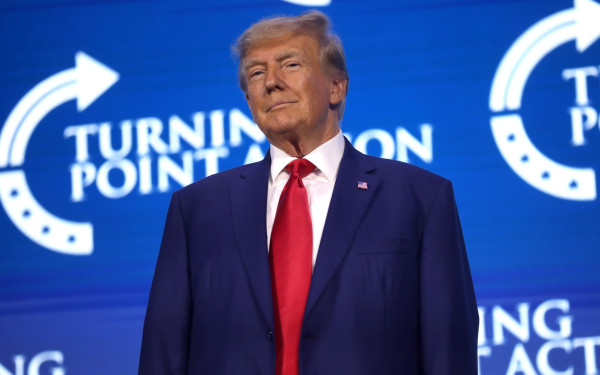
Donald Trump's return to the White House in 2025 represents a pivotal moment for Africa's fossil fuel industry. His administration's swift reapproval of a USD4.7 billion loan from the U.S. Export-Import Bank (Exim) for TotalEnergies' liquefied natural gas (LNG) project in Mozambique — initially greenlit in 2020 during his first term but sent into deep-freeze for the full duration of the Biden years — sets the tone for what could be a transformative era for Africa's energy sector. 

Despite Mozambique's stabilization of security issues and concerns that the transfer of power in America would delay receipt of the loan even further, the Biden Administration refused to release the funds ahead of Trump's inauguration, a decision reflective of the administration's reluctance to support new fossil fuel initiatives throughout Biden's time in office. In contrast, Trump's decisive action within weeks of taking office signals a renewed, positive working relationship between the United States and Africa — one that prioritizes energy development over ideological objections and the Green Agenda's influence. 

The African Energy Chamber (AEC) contends that Africa should seize this potentially brief moment in history and embrace the Trump administration as a partner rather than an opponent. For too long, global pressures have insisted that African nations move toward green energy projects only and leave their fossil fuel resources behind.  

While renewable energy has its place, and will be important to Africa's future, fossil fuels still clearly constitute the backbone of any realistic efforts for African industrialization and economic growth — goals we simply cannot afford to sideline.  

Alignment with Trump's energy-first ethos would mean that Africa could unlock significant funding for wide-ranging fossil fuel projects, and not just the offshore oil and gas ventures that dominate the headlines. The continent should capitalize on all opportunities in onshore projects, wildcat wells (exploratory drilling in unproven areas), and the proliferation of numerous small operators. These avenues lead the way to diversity in Africa's energy portfolio, job creation, and massively strengthened energy security. 

The reapproval of funding for Mozambique LNG is a case in point. The project's revival under Trump demonstrates how quickly thick bureaucratic congestion can dissolve when political will aligns with economic practicality. This USD4.7 billion infusion will boost Mozambique's economy while sending a message to other African nations: Under Trump, at long last, America is open for business.  

In contrast to the previous administration, which openly regarded fossil fuel development with skepticism and disdain, Trump's “drill baby drill” mantra — while rooted in an “America First” agenda — pairs seamlessly with the ambitions of the African oil and gas industry. Africa should adopt a similar mindset and position itself as an attractive destination for American investment dollars. 

Coal's Comeback 

Another of Trump's domestic priorities, no doubt a response to China's unabashed expansion of coal production within its borders, is to revive clean coal production in the U.S. This initiative offers a compelling blueprint for Africa. While coal remains a contentious, harshly criticized resource globally, its advantages are undeniable: It's cheaper to produce, often doesn't require big bank financing, and is abundant across the continent. For African nations grappling with energy poverty, coal can serve as a means to an end, delivering affordable power to millions in the interim while the infrastructure for other energy sources matures. Simply put, Africa deserves to be the last global holdout on coal production and should leverage its coal reserves to meet domestic needs and export demands. Trump's willingness to disregard the international campaign against coal should embolden African leaders to reopen their abandoned coal mines and rest assured that this time around, they'll be able to operate freely, without fear of U.S. opposition. 

Fossil Fuels Unleashed 

Looking beyond coal, over the next four years, Africa has the rare chance to pursue an aggressive fossil fuel agenda. The continent should unite under an “Africa First” banner and adopt its own “drill baby drill” mentality in support of every promising oil exploration and production project, every possible natural gas project, and a multinational effort to slash through regulatory red tape.  

In Nigeria, for instance, the wheels of progress moved agonizingly slowly when it came to passing the Petroleum Industry Act, first proposed in 2008 and not signed into law until 2021. Even after the law was passed, Nigeria has been slow to fully implement it. This kind of inertia deters investment and slows development. A Trump-inspired push to clean up such bureaucratic roadblocks could unleash a wave of prosperous development. Similarly, addressing security issues — like those that drove U.S. firms out of Libya — will be critical to restoring confidence and attracting capital from abroad. 

While the offshore sector will undoubtedly remain a cornerstone of Africa's fossil fuel strategy, the continent's onshore potential is equally vast. Wildcat wells offer high-risk/ high-reward prospects that could uncover new reserves. Meanwhile, instead of relying solely on multinational oil and gas giants, empowerment of more independent companies and indigenous small operators could diversify the industry, build up local entrepreneurship, and ensure the economic benefits are more widespread. It is highly unlikely that the Trump administration, with its emphasis on deregulation and energy independence for its own shores, would obstruct such efforts on ours. Conversely, it may actively encourage them through financing and technical support, as seen with the Exim loan. 

Balancing Development and Climate Realities 

Though critics will argue that this push for fossil fuel proliferation contradicts global climate goals, at the AEC, we insist that the calculations for Africa are simply different.  

Africa accounts for a fraction of global emissions but bears a disproportionate burden when it comes to energy poverty. Fossil fuels offer a realistic and relatively quick path to electrification and industrialization, the proven prerequisites for lifting millions out of poverty. Trump's indifference to international climate orthodoxy, while controversial, gives Africa the much-needed breathing room to prioritize development over decarbonization. This is in no way an outright rejection of renewables but a recognition that fossil fuels can and will facilitate a just transition to green technologies once their capabilities catch up to Africa's current needs. 

Seizing the Moment 

The next four years under Trump could redefine Africa's energy landscape. With U.S. interference a thing of the past, Africa can pursue a multi-pronged energy strategy. With a ramp-up in natural gas to meet global demand, a coal revival to power its own grids, and on and offshore opportunities tapped into, Africa could finally secure its full resource base.  

However, this approach will require bold leadership. Governments will have to eliminate obstructive policies and address security challenges head-on to secure foreign investments. The payoff could be immense: energy abundance, economic growth, and a partnership with the U.S. that is stronger than ever before. 

For example, Nigeria's oil and gas sector has been hampered by regulatory uncertainty and security threats in the Niger Delta. A Nigerian “drill baby drill” mindset could accelerate regulatory, social, and economic reforms needed to address the Niger Delta's deep-rooted instability. This kind of mindset could restart stalled projects and attract American firms eager to invest in a Trump-approved climate. Likewise, in Libya, a resolution to security concerns could lure back U.S. companies that fled during years of instability, reviving a once-thriving oil industry. Across the continent, small operators could flourish under a lighter regulatory touch, drilling wildcat wells and tapping into overlooked reserves. 

South Africa, with its vast coal deposits, could take the lead on clean coal technologies to balance affordability and environmental concerns. Smaller nations with untapped coal reserves could follow Trump's lead in defying global pressures against production. The result would be a continent less dependent on foreign aid and more capable of powering its own future. 

Trump's presidency offers Africa a chance to unapologetically double down on its fossil fuel potential. The USD4.7 billion Mozambique loan is just the beginning — a proof of concept for what collaboration with the U.S. can achieve. By embracing this partnership, Africa can shed the shackles of the Biden era and chart a course toward energy sovereignty.  

The tools are all there: offshore rigs, onshore fields, wildcat wells, established mines, and a willing ally in Washington. The question that remains is whether Africa's leaders have the courage to stand up to the anti-carbon lobby. 

Trump's second term could be remembered as the moment Africa's fossil fuel industry came into its own — as a partner to the U.S. in a shared vision of energy abundance. With four years of clear skies ahead, there is no question that Africa should build, mine, and yes, drill, baby, drill like never before.  

If we don't act now, it might be a very long wait for an opportunity like this one to present itself again. 

Distributed by APO Group on behalf of African Energy Chamber.

Media files
African Energy Chamber
Download logo
Read moreA Rare Opportunity for Real African Energy Independence
31 March 2025

Stakeholders commit to improved water services for all 

Location: News

Stakeholders commit to improved water services for all 

Stakeholders in the water sector have committed to collaborative efforts to implement tangible plans and reforms outlined at the recent Water and Sanitation Indaba aimed at improving water security and services for all citizens.

This pledge was made on the final day of the two-day Water and Sanitation Indaba, held at the Gallagher Convention Centre in Midrand, Johannesburg, from 27-28 March 2025.

At the Indaba, stakeholders including government representatives, agreed to work together and hold each other accountable for their actions and commitments. Stakeholders also agreed to increase investment in water research and development as well as technological transfer.

They also agreed to recognise the existing body of knowledge including indigenous systems as well as promote the inclusion of women, youth, and people with disabilities in the water and sanitation sector.

Several key resolutions were also made during the event, including a commitment by the Department of Water and Sanitation (DWS) to finalise the establishment of the National Water Resource Infrastructure Agency by mid-2026, and the creation of Catchment Management Agencies, set to be completed by July 2025.

The Water Service Authorities (WSAs) pledged to adopt a utility model for water and sanitation to ensure operational efficiency while maintaining municipal ownership, to be implemented within three years.

A utility can be a ring-fenced internal department, municipal entity, water board, special purpose vehicle, or concession, amongst other options.

Additionally, the South African Local Government Association (SALGA), in collaboration with the Departments of Co-operative Governance and Traditional Affairs (CoGTA) and DWS, committed to implement a coordinated Municipal Systems Act Section 78 consultative process, according to the timeframes in the plan. This process will facilitate the appointment of capable Water Service Providers (WSPs). This should lead to the appointment of capable Water Service Providers (WSPs).

In line with good governance and legal compliance, it was resolved that all WSAs must separate their WSA and WSP functions, accounting for them independently within one year. Resolutions on this matter should be presented to Council within three months.

The metropolitan municipalities were also tasked to implement the Reform of Metropolitan Trading Services Programme. This includes establishing or appointing ring-fenced, professionally managed utilities, either internal or external, for water and sanitation services within two years, with support from National Treasury and relevant departments.

Stakeholders also agreed that COGTA should review the current local government structure including the appropriateness of the two-tier system, followed by the review of the allocation of WSA status to municipalities.

Furthermore, the DWS committed to finalise the amendments to the Water Services Act for tabling to Parliament by May 2025.

“Following this, [the] DWS [is] to put in place an operating licensing system for Water Services Providers by June 2026. DWS to provide guidance to WSAs on the different options for external WSPs, on request from April 2025, and to issue guidelines on the roles and functions of WSAs versus WSPs by April 2025.

“[The] DWS and AWSISA [Association of Water and Sanitation Institutions of South Africa] to develop a plan for building Water Boards’ capacity and readiness to provide a retail WSP function to WSAs if requested, informed by a capacity assessment of the Water Boards, by end July 2025,” the declaration read.

Non-revenue water programmes 

Meanwhile, all WSAs and WSPs that have not yet established non-revenue water programmes, will be required to have these in place by May 2025.

These programmes should cover:

•    Budgets for maintenance and for reducing leaks in water distribution systems;
•    Ensuring that all reported leaks are fixed quickly;
•    Closing illegal water connections; 
•    Replacing old leaking pipes, including asbestos pipes (which are a danger to health);
•    Improving management of water systems (through pressure management for example); and
•    Strengthening metering, billing, and revenue collection, including ensuring that billing systems are accurate.

All WSAs that have not yet ring-fenced revenues from the sale of water for the water function, will be required to bring resolutions to their Councils within six months.  The DWS will facilitate provincial workshops with all WSAs in each province to develop a common understanding of "ring-fencing."

“All WSAs to review their indigent registers and ensure the provision of free basic water to the indigent within two years. All other water users to be billed and revenue to be collected from all other users. DWS and the Water Partnerships Office to develop Green and Blue Bond financing mechanisms with the private sector, for implementation by Catchment Management Agencies and WSAs, starting immediately.”

In his weekly newsletter on Monday, President Cyril Ramaphosa said a well-functioning water and sanitation sector is not only a constitutional right and a pillar of development, but also a crucial factor in driving economic growth and job creation.

READ | Water and sanitation sector is a key cog in economic growth 

President Ramaphosa underscored the importance of efficient water management in boosting investor confidence and ensuring sustainable development. – SAnews.gov.za
 

GabiK
Mon, 03/31/2025 - 14:41
313 views

Read moreStakeholders commit to improved water services for all 
31 March 2025

Minister refutes claims of interference in NPA’s work

Location: News

Minister refutes claims of interference in NPA's work

Justice and Constitutional Development Minister Mmamoloko Kubayi has opened a criminal case to investigate a fabricated WhatsApp conversation falsely linking her to prosecutorial decisions at the National Prosecuting Authority.

This after a Sunday news report alleged that two Cabinet Ministers had instructed the National Prosecuting Authority to bring charges against Deputy President Paul Mashatile.

The Minister opened a case of fraud, impersonation and obstruction of justice at the Brooklyn Police Station in Tshwane on Sunday evening.

“I’ve [opened a case] because it’s important for us to protect [democratic] institutions and that are implementing our justice system. One of the critical institutions that must be protected for its independence is the NPA.

“We have seen previously how the issues of state capture have compromised our institutions to the point of collapse. I’m one of those that has committed that we will rebuild our institutions and that we allow them to function without fear or favour. 

“That’s why it’s important for me to open this case because we cannot allow where, in the public domain, an impression is given that these institutions are compromised to the point that they cannot do their work,” she said.

The Minister emphasised that the “law must take its course in all aspects”.

“No one must be above the law. But most importantly, no one – including myself – must interfere with law institutions or any institutions that must do their work. 

“We will not have political interference of any sort in the work of the NPA. I reassure South Africans of my commitment to fulfil my obligation and to abide by my oath of office,” Kubayi said.

The NPA has also rejected the news story – calling it “fake news” and reaffirmed its commitment to executing its mandate without fear, favour or prejudice.

“The current leadership of the NPA is on record to confirm that it has never been subjected to any executive interference in the discharge of its prosecutorial mandate, and this remains the position. The current leadership is beholden only to the constitutional mandate of the NPA and serves only the people of South Arica,” the prosecutorial body said. – SAnews.gov.za


NeoB
Mon, 03/31/2025 - 09:47
24 views

Read moreMinister refutes claims of interference in NPA’s work
31 March 2025

Committee on Women, Youth and Persons With Disabilities Wraps Its KZN Oversight Visit

Location: News

Republic of South Africa: The Parliament
Download logo

The Portfolio Committee on Women, Youth and Persons with Disabilities has today wrapped its week-long oversight visit to KwaZulu-Natal (KZN) province where it assessed critical government programmes that included gender equality, youth development, gender-based violence (GBV), and the inclusion of children with disabilities in the education system.

The committee chose KZN province for the March oversight due to the challenges that the province experiences. The challenges that include high rate of teen pregnancies and the highest reported incidents of rape in the country. GBV remains a top priority for the committee.

The committee evaluated the implementation of the Sanitary Dignity Programme, which the province has touted as a best practice model. The committee raised concerns over inequality regarding the allocation of resource. Some girls received more sanitary products and others less, a very unfair situation.

During its visit at the Commission for Gender Equality (CGE), the committee emphasised the need for improved visibility of the Commission and its accessibility to the people it was established for. The committee noted that the location of CGE offices in the Durban CBD makes it inaccessible to those who stay in deep rural areas. The committee has urged the CGE to consider relocating its offices and utilising government mobile units for accessibility to its clients.

At the National Youth Development Agency (NYDA), the committee recommended that the agency improves its outreach by using municipal offices and mobile vehicles to connect with the youth, especially in rural areas. Furthermore, it urged the NYDA to address diversity concerns among its coordinators.

The committee also visited Umlazi Police Station where it engaged with Rapid Response Teams (RRT) on infrastructure problems, high incidences of GBV, and the impact of liquor outlets in the area. Members of the committee expressed concerns over the backlog at forensic labs and called for improved staffing ratios.

The committee visited the Arthur Blaxall School where it noted the lack of maintenance and the crumbling infrastructure. The committee expressed a concern over the socio-economic challenges faced by learners, health problems, and the lack of parental involvement. At the KZN Blind and Deaf Society, which the committee also visited, it noted a lot of problems that included non-accreditation of courses offered. It also called on the management of the institution to forge partnerships with accredited organisations.

In a meeting with the Office of the Premier and the Standing Committee on Quality of Life, the committee received a briefing on the Premier's Women's Empowerment and Youth Empowerment Fund on new initiatives aimed at combating GBV. The committee appreciated the Premier's Office for its commitment to protect vulnerable people and it acknowledged the collaborative efforts that are applied to address the problems experienced by the people.

Distributed by APO Group on behalf of Republic of South Africa: The Parliament.

Read moreCommittee on Women, Youth and Persons With Disabilities Wraps Its KZN Oversight Visit
29 March 2025

Deaths Spark Protest Over Unsafe Bridge Outside Pinetown

Location: News

Umngeni River claims two lives

Read moreDeaths Spark Protest Over Unsafe Bridge Outside Pinetown
28 March 2025

Window for grant recipients to switch to black cards extended 

Location: News

Window for grant recipients to switch to black cards extended 

The Postbank has announced a two-month extension for beneficiaries using the South African Social Security Agency (SASSA) gold card to switch to the Postbank black card, allowing them to continue accessing their social grants through April and May 2025.

Postbank CEO Nikki Mbengashe stressed that beneficiaries who have not yet replaced their gold cards with the new black Postbank black card now have additional time to make the switch.

Government had initially set the deadline for the transition to the new cards to 28 February after which a second extension was set for 20 March 2025.

Mbengashe said the extension provides relief for those who have not yet completed the card replacement process.

“This is now mainly, of course, to those beneficiaries who have not had the time to go and replace their gold card with the black card. It is quite important as well to note that the usage of the card and how it works remains the same,” she said at a media briefing on Friday.

At the briefing in Pretoria, the CEO warned that after 31 May 2025, there will be no alternative methods to access grants.

Grants will continue to be paid into bank accounts but can only be accessed using the new Postbank black card.

“There will be no new extensions. Therefore, after these two months, there'll be no alternative. If you don't have your black card, you will not be able to access your grant,” she cautioned.

She said the gold SASSA cards still work the same and can be used at all retailers and ATMs through to 31 May 2024.

For those who still need to switch to the black card, there are over 300 national sites available for card replacement.

The sites are primarily located within select outlets of major retailers that include Shoprite, Usave, Shoprite, Spar, Pick ’n Pay and Boxer and beneficiaries can dial *120*355# from any cellphone to locate a nearby site.

According to the CEO, only an ID or temporary ID document is required to get a new card.

She said the sites are currently processing approximately 30 000 card replacements daily and urged beneficiaries not to wait until the last minute to replace their cards.

According to Postbank only 1.3 million of the 2.6 million social grant beneficiaries managed to switch from SASSA gold cards to Postbank black cards.  

Mbengashe encouraged those who are still using their SASSA gold cards to not use the Post Office.

“So, we are insisting that people please not use the Post Office. They will not service you if you go to them,” she said, adding that the card can be used at all retailers and ATMs.

She stated that only Mzansi Flexi card customers using the Post Office or asylum seekers can continue to use the Post Office.

“I think the most important thing as we continue to allow people to use their gold card is to emphasise that you must go and still replace this gold card and use these two months to your advantage and your benefit,” she added. – SAnews.gov.za

Gabisile
Fri, 03/28/2025 - 13:59
274 views

Read moreWindow for grant recipients to switch to black cards extended 
27 March 2025

Hundreds March to Johannesburg Mayor’s Office Demanding Houses

Location: News

Many say they have been waiting 30 years for government housing

Read moreHundreds March to Johannesburg Mayor’s Office Demanding Houses
27 March 2025

Days of Protests in Indwe Over Hospital Downgrade

Location: News

Health MEC assures residents there will be no downgrade if they are against it

Read moreDays of Protests in Indwe Over Hospital Downgrade
25 March 2025

UN Tourism Launches Investment Guidelines: “Tourism Doing Business: Investing in Namibia”

Location: News

World Tourism Organization (UN Tourism)
Download logo

UN Tourism has presented its “Tourism Doing Business” guidelines, focused on the opportunities for international investors in Namibia's burgeoning tourism sector

“Tourism Doing Business Investing in Namibia” aims to attract potential investors and provides essential insights into the vibrant opportunities within Namibia's tourism sector. The guidelines showcase Namibia's unique cultural heritage, robust economy, and supportive business environment, highlighting areas of potential significant growth in the years ahead.

Namibia: A thriving tourism ecosystem

Namibia, known for its breathtaking landscapes and rich cultural heritage, is poised for significant growth in tourism investment. With its unique positioning as a gateway to Southern Africa, the country offers a diverse array of attractions, from the iconic dunes of Sossusvlei to the remarkable wildlife of Etosha National Park. According to UN Tourism's guidelines:

  • Namibia has demonstrated steady economic growth and stability. In 2024, the country recorded GDP growth of 3.1%, which is projected to rise to 4.2% in 2025.
  • The country is also growing as a tourism destination. Namibia welcomed 863,872 international visitors in 202, an 87.4% increase on 2022
  • The tourism sector contributed 6.9% to GDP, generating USD 348 million in international tourism receipts in 2023.
  • Namibia has experienced remarkable growth in Foreign Direct Investment (FDI), with inflows reaching USD 2.61 billion in 2023—a significant increase from USD 1.06 billion in 2022. Major contributors to FDI include China (29.6%), South Africa (22.4%), the United Kingdom (9.4%), and Mauritius (6.8%).

UN Tourism Secretary-General Zurab Pololikashvili says: “Namibia's diverse investment opportunities and its dedication to sustainable growth make it an interesting destination for global investments. The country's efforts in energy transition and tourism expansion reflect its commitment to innovation and inclusivity."

Highest level political support for tourism in Namibia

The Investment Guidelines were officially launched as part of a visit by the UN Tourism leadership to Namibia. In Windhoek, Secretary-General Pololikashvili was honored to attend the Inauguration of H.E Dr. Netumbo Nandi-Ndaitwah as Namibia's 5th President, and the first woman to hold the office. The inauguration coincided with celebrations of the 35th Anniversary of Independence for the country.

Secretary-General Pololikashvili also delivered a Keynote Address at the  Namibia University of  Science and Technology as part of a special day focused on harnessing the power of technology to build a more inclusive and resilient tourism sector across Africa.

Distributed by APO Group on behalf of World Tourism Organization (UN Tourism).

Read moreUN Tourism Launches Investment Guidelines: “Tourism Doing Business: Investing in Namibia”
25 March 2025

Rodgers announces strategic initiatives to drive KZN economic growth, job creation

Location: News

Rodgers announces strategic initiatives to drive KZN economic growth, job creation

KwaZulu-Natal Finance MEC, Francois Rodgers, has announced a number of strategic initiatives aimed at boosting the province's economic growth, creating jobs, and stabilising the cost of living.

Rodgers highlighted some of the initiatives, when he was tabling the province’s R158.478 billion budget for the 2025/2026 financial year, on Tuesday.

In his address, Rodgers highlighted the positive signs of economic recovery, pointing to key indicators, including an increase in the province’s equitable share and additional allocations in conditional grants.

He also noted the progress being made through the Provincial Financial Recovery Plan.

“What is required now is discipline with a sharp focus on the end objective, growth in our economy, job creation, and stabilising and reducing the cost of living,” Rodgers said.

Initiatives to strengthen financial discipline

The MEC said the provincial Treasury is committed to perform financial oversight and monitor provincial expenditure, with a view to prevent non-essential government activities.

He added that efforts are underway to identify new streams of revenue for the provincial fiscus.

Another key initiative is the adoption of a cost-containment instruction by the Executive Council, which aims to sustain KZN’s ability to meet its needs, “while protecting its future.”

“Cutting the nice to haves to protect the must haves. One such example is [council] agreement to do away with rental vehicles, with procurement for vehicles, in line with National Treasury guidelines.

“When the GPU (Government of Provincial Unity) took office, the province was projecting to over-spend in the region of R10 billion, [but] with strict control measures and compliance, we have now reduced this to R4.9 billion,” Rodgers highlighted.

E-procurement tool

To further improve financial efficiency, Rodgers announced that Treasury is awaiting approval for the acquisition and implementation of an e-procurement tool, a system designed to eliminate overcharging of goods and services during the Supply Chain Management (SCM) and tender processes.

“This system will yield enormous savings for the province and reduce irregularities in the procurement process,” Rodgers said.

The MEC said the provincial government is making great strides in achieving a balanced budget, noting that “it’s a painful process, but a process that needs to be sustained and supported.”

Rodgers further announced that starting in April 2025, the provincial government will introduce departmental financial dashboards, which will reflect departments financial metrics, such as creditors, debtors, cash balances, and projected expenditure.

He said these dashboards will assist members of the Executive Council and oversight committees with a clearer picture of the province's financial health.

Additionally, the provincial Treasury is exploring the establishment of an information centre, which will focus on "Operation Pay on Time" and assist with tender processes and supplying information on Public Private Partnerships (PPPs).

“Going forward, I will continue, in my capacity as MEC, to regularly engage the Premier and the provincial executive on good financial practices. We will be consistent in our advocacy for efficient expenditure and the prioritisation of programmes aimed at alleviating poverty, inequality, unemployment, effective service delivery and building a sustainable economy,” the MEC said.

Provincial budget highlights

A large portion of the 2025/2026 provincial budged (79.9%), has been allocated to the three key social services departments, including Education, Health, and Social Development.

The Education Department received the largest share of the budget, with R66 690 206 allocated, followed by Health with R56 211 801.

Other allocations include:
•    Transport allocated R13 827 066.
•    Office of the Premier R817 875. 
•    Provincial Legislature R850 796. 
•    Agriculture and Rural Development R2 757 443. 
•    Economic Development, Tourism and Environmental Affairs R3 606 998.
•    Provincial Treasury R710 190. 
•    Human Settlements R3 549 877.
•    Community Safety and Liaison R275 716.
•    Sport, Arts and Culture R1 598 141.
•    Co-operative Governance and Traditional Affairs R1 931 153.
•    Social Development R3 613 297. 
•    Public Works and Infrastructure R2 037 490. – SAnews.gov.za


GabiK
Tue, 03/25/2025 - 13:53
157 views

Read moreRodgers announces strategic initiatives to drive KZN economic growth, job creation
  • Previous
  • Page 1
  • Interim pages omitted …
  • Page 17
  • Page 18
  • Page 19
  • Page 20
  • Page 21
  • Interim pages omitted …
  • Page 71
  • Next

Copyright © 2026 · MyZA · All Rights Reserved · Powered by Stratlec Online