• Skip to main content
  • Skip to header right navigation
  • Skip to after header navigation
  • Skip to site footer
MyZA

MyZA

News, Directory, Events and Other Stuff

  • Social Media
  • Sport
  • World News
  • Home
  • Submit News
  • Directory
  • Events
  • Stratlec
  • TFSA
  • News
    • APO
    • Today’s Sport News
    • Todays Social Media and Tech Headlines
    • Today’s World News
    • Today’s SA Financial News
  • Contact
You are here: Home / News / Business / A Rare Opportunity for Real African Energy Independence

A Rare Opportunity for Real African Energy Independence

31 March 2025 by Guest
African Energy Chamber

By NJ Ayuk, Executive Chairman, African Energy Chamber (https://EnergyChamber.org)

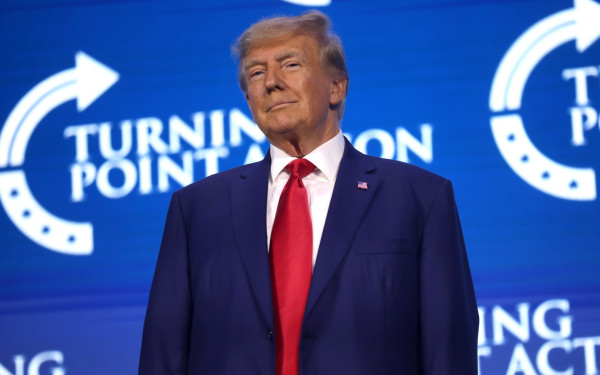
Donald Trump’s return to the White House in 2025 represents a pivotal moment for Africa’s fossil fuel industry. His administration’s swift reapproval of a USD4.7 billion loan from the U.S. Export-Import Bank (Exim) for TotalEnergies’ liquefied natural gas (LNG) project in Mozambique — initially greenlit in 2020 during his first term but sent into deep-freeze for the full duration of the Biden years — sets the tone for what could be a transformative era for Africa’s energy sector. 

Despite Mozambique’s stabilization of security issues and concerns that the transfer of power in America would delay receipt of the loan even further, the Biden Administration refused to release the funds ahead of Trump’s inauguration, a decision reflective of the administration’s reluctance to support new fossil fuel initiatives throughout Biden’s time in office. In contrast, Trump’s decisive action within weeks of taking office signals a renewed, positive working relationship between the United States and Africa — one that prioritizes energy development over ideological objections and the Green Agenda’s influence. 

The African Energy Chamber (AEC) contends that Africa should seize this potentially brief moment in history and embrace the Trump administration as a partner rather than an opponent. For too long, global pressures have insisted that African nations move toward green energy projects only and leave their fossil fuel resources behind.  

While renewable energy has its place, and will be important to Africa’s future, fossil fuels still clearly constitute the backbone of any realistic efforts for African industrialization and economic growth — goals we simply cannot afford to sideline.  

Alignment with Trump’s energy-first ethos would mean that Africa could unlock significant funding for wide-ranging fossil fuel projects, and not just the offshore oil and gas ventures that dominate the headlines. The continent should capitalize on all opportunities in onshore projects, wildcat wells (exploratory drilling in unproven areas), and the proliferation of numerous small operators. These avenues lead the way to diversity in Africa’s energy portfolio, job creation, and massively strengthened energy security. 

The reapproval of funding for Mozambique LNG is a case in point. The project’s revival under Trump demonstrates how quickly thick bureaucratic congestion can dissolve when political will aligns with economic practicality. This USD4.7 billion infusion will boost Mozambique’s economy while sending a message to other African nations: Under Trump, at long last, America is open for business.  

In contrast to the previous administration, which openly regarded fossil fuel development with skepticism and disdain, Trump’s “drill baby drill” mantra — while rooted in an “America First” agenda — pairs seamlessly with the ambitions of the African oil and gas industry. Africa should adopt a similar mindset and position itself as an attractive destination for American investment dollars. 

Coal’s Comeback 

Another of Trump’s domestic priorities, no doubt a response to China’s unabashed expansion of coal production within its borders, is to revive clean coal production in the U.S. This initiative offers a compelling blueprint for Africa. While coal remains a contentious, harshly criticized resource globally, its advantages are undeniable: It’s cheaper to produce, often doesn’t require big bank financing, and is abundant across the continent. For African nations grappling with energy poverty, coal can serve as a means to an end, delivering affordable power to millions in the interim while the infrastructure for other energy sources matures. Simply put, Africa deserves to be the last global holdout on coal production and should leverage its coal reserves to meet domestic needs and export demands. Trump’s willingness to disregard the international campaign against coal should embolden African leaders to reopen their abandoned coal mines and rest assured that this time around, they’ll be able to operate freely, without fear of U.S. opposition. 

Fossil Fuels Unleashed 

Looking beyond coal, over the next four years, Africa has the rare chance to pursue an aggressive fossil fuel agenda. The continent should unite under an “Africa First” banner and adopt its own “drill baby drill” mentality in support of every promising oil exploration and production project, every possible natural gas project, and a multinational effort to slash through regulatory red tape.  

In Nigeria, for instance, the wheels of progress moved agonizingly slowly when it came to passing the Petroleum Industry Act, first proposed in 2008 and not signed into law until 2021. Even after the law was passed, Nigeria has been slow to fully implement it. This kind of inertia deters investment and slows development. A Trump-inspired push to clean up such bureaucratic roadblocks could unleash a wave of prosperous development. Similarly, addressing security issues — like those that drove U.S. firms out of Libya — will be critical to restoring confidence and attracting capital from abroad. 

While the offshore sector will undoubtedly remain a cornerstone of Africa’s fossil fuel strategy, the continent’s onshore potential is equally vast. Wildcat wells offer high-risk/ high-reward prospects that could uncover new reserves. Meanwhile, instead of relying solely on multinational oil and gas giants, empowerment of more independent companies and indigenous small operators could diversify the industry, build up local entrepreneurship, and ensure the economic benefits are more widespread. It is highly unlikely that the Trump administration, with its emphasis on deregulation and energy independence for its own shores, would obstruct such efforts on ours. Conversely, it may actively encourage them through financing and technical support, as seen with the Exim loan. 

Balancing Development and Climate Realities 

Though critics will argue that this push for fossil fuel proliferation contradicts global climate goals, at the AEC, we insist that the calculations for Africa are simply different.  

Africa accounts for a fraction of global emissions but bears a disproportionate burden when it comes to energy poverty. Fossil fuels offer a realistic and relatively quick path to electrification and industrialization, the proven prerequisites for lifting millions out of poverty. Trump’s indifference to international climate orthodoxy, while controversial, gives Africa the much-needed breathing room to prioritize development over decarbonization. This is in no way an outright rejection of renewables but a recognition that fossil fuels can and will facilitate a just transition to green technologies once their capabilities catch up to Africa’s current needs. 

Seizing the Moment 

The next four years under Trump could redefine Africa’s energy landscape. With U.S. interference a thing of the past, Africa can pursue a multi-pronged energy strategy. With a ramp-up in natural gas to meet global demand, a coal revival to power its own grids, and on and offshore opportunities tapped into, Africa could finally secure its full resource base.  

However, this approach will require bold leadership. Governments will have to eliminate obstructive policies and address security challenges head-on to secure foreign investments. The payoff could be immense: energy abundance, economic growth, and a partnership with the U.S. that is stronger than ever before. 

For example, Nigeria’s oil and gas sector has been hampered by regulatory uncertainty and security threats in the Niger Delta. A Nigerian “drill baby drill” mindset could accelerate regulatory, social, and economic reforms needed to address the Niger Delta’s deep-rooted instability. This kind of mindset could restart stalled projects and attract American firms eager to invest in a Trump-approved climate. Likewise, in Libya, a resolution to security concerns could lure back U.S. companies that fled during years of instability, reviving a once-thriving oil industry. Across the continent, small operators could flourish under a lighter regulatory touch, drilling wildcat wells and tapping into overlooked reserves. 

South Africa, with its vast coal deposits, could take the lead on clean coal technologies to balance affordability and environmental concerns. Smaller nations with untapped coal reserves could follow Trump’s lead in defying global pressures against production. The result would be a continent less dependent on foreign aid and more capable of powering its own future. 

Trump’s presidency offers Africa a chance to unapologetically double down on its fossil fuel potential. The USD4.7 billion Mozambique loan is just the beginning — a proof of concept for what collaboration with the U.S. can achieve. By embracing this partnership, Africa can shed the shackles of the Biden era and chart a course toward energy sovereignty.  

The tools are all there: offshore rigs, onshore fields, wildcat wells, established mines, and a willing ally in Washington. The question that remains is whether Africa’s leaders have the courage to stand up to the anti-carbon lobby. 

Trump’s second term could be remembered as the moment Africa’s fossil fuel industry came into its own — as a partner to the U.S. in a shared vision of energy abundance. With four years of clear skies ahead, there is no question that Africa should build, mine, and yes, drill, baby, drill like never before.  

If we don’t act now, it might be a very long wait for an opportunity like this one to present itself again. 

Distributed by APO Group on behalf of African Energy Chamber.

Media files
African Energy Chamber
Download logo

By NJ Ayuk, Executive Chairman, African Energy Chamber:

Donald Trump’s return to the White House in 2025 represents a pivotal moment for Africa’s fossil fuel industry. His administration’s swift reapproval of a USD4.7 billion loan from the U.S. Export-Import Bank (Exim) for TotalEnergies’ liquefied natural gas (LNG) project in Mozambique — initially greenlit in 2020 during his first term but sent into deep-freeze for the full duration of the Biden years — sets the tone for what could be a transformative era for Africa’s energy sector.

Despite Mozambique’s stabilization of security issues and concerns that the transfer of power in America would delay receipt of the loan even further, the Biden Administration refused to release the funds ahead of Trump’s inauguration, a decision reflective of the administration’s reluctance to support new fossil fuel initiatives throughout Biden’s time in office. In contrast, Trump’s decisive action within weeks of taking office signals a renewed, positive working relationship between the United States and Africa — one that prioritizes energy development over ideological objections and the Green Agenda’s influence.

The African Energy Chamber (AEC) contends that Africa should seize this potentially brief moment in history and embrace the Trump administration as a partner rather than an opponent. For too long, global pressures have insisted that African nations move toward green energy projects only and leave their fossil fuel resources behind.

While renewable energy has its place, and will be important to Africa’s future, fossil fuels still clearly constitute the backbone of any realistic efforts for African industrialization and economic growth — goals we simply cannot afford to sideline.

Alignment with Trump’s energy-first ethos would mean that Africa could unlock significant funding for wide-ranging fossil fuel projects, and not just the offshore oil and gas ventures that dominate the headlines. The continent should capitalize on all opportunities in onshore projects, wildcat wells (exploratory drilling in unproven areas), and the proliferation of numerous small operators. These avenues lead the way to diversity in Africa’s energy portfolio, job creation, and massively strengthened energy security.

The reapproval of funding for Mozambique LNG is a case in point. The project’s revival under Trump demonstrates how quickly thick bureaucratic congestion can dissolve when political will aligns with economic practicality. This USD4.7 billion infusion will boost Mozambique’s economy while sending a message to other African nations: Under Trump, at long last, America is open for business.

In contrast to the previous administration, which openly regarded fossil fuel development with skepticism and disdain, Trump’s “drill baby drill” mantra — while rooted in an “America First” agenda — pairs seamlessly with the ambitions of the African oil and gas industry. Africa should adopt a similar mindset and position itself as an attractive destination for American investment dollars.

Coal’s Comeback 

Another of Trump’s domestic priorities, no doubt a response to China’s unabashed expansion of coal production within its borders, is to revive clean coal production in the U.S. This initiative offers a compelling blueprint for Africa. While coal remains a contentious, harshly criticized resource globally, its advantages are undeniable: It’s cheaper to produce, often doesn’t require big bank financing, and is abundant across the continent. For African nations grappling with energy poverty, coal can serve as a means to an end, delivering affordable power to millions in the interim while the infrastructure for other energy sources matures. Simply put, Africa deserves to be the last global holdout on coal production and should leverage its coal reserves to meet domestic needs and export demands. Trump’s willingness to disregard the international campaign against coal should embolden African leaders to reopen their abandoned coal mines and rest assured that this time around, they’ll be able to operate freely, without fear of U.S. opposition.

Fossil Fuels Unleashed 

Looking beyond coal, over the next four years, Africa has the rare chance to pursue an aggressive fossil fuel agenda. The continent should unite under an “Africa First” banner and adopt its own “drill baby drill” mentality in support of every promising oil exploration and production project, every possible natural gas project, and a multinational effort to slash through regulatory red tape.

In Nigeria, for instance, the wheels of progress moved agonizingly slowly when it came to passing the Petroleum Industry Act, first proposed in 2008 and not signed into law until 2021. Even after the law was passed, Nigeria has been slow to fully implement it. This kind of inertia deters investment and slows development. A Trump-inspired push to clean up such bureaucratic roadblocks could unleash a wave of prosperous development. Similarly, addressing security issues — like those that drove U.S. firms out of Libya — will be critical to restoring confidence and attracting capital from abroad.

While the offshore sector will undoubtedly remain a cornerstone of Africa’s fossil fuel strategy, the continent’s onshore potential is equally vast. Wildcat wells offer high-risk/ high-reward prospects that could uncover new reserves. Meanwhile, instead of relying solely on multinational oil and gas giants, empowerment of more independent companies and indigenous small operators could diversify the industry, build up local entrepreneurship, and ensure the economic benefits are more widespread. It is highly unlikely that the Trump administration, with its emphasis on deregulation and energy independence for its own shores, would obstruct such efforts on ours. Conversely, it may actively encourage them through financing and technical support, as seen with the Exim loan.

Balancing Development and Climate Realities 

Though critics will argue that this push for fossil fuel proliferation contradicts global climate goals, at the AEC, we insist that the calculations for Africa are simply different.

Africa accounts for a fraction of global emissions but bears a disproportionate burden when it comes to energy poverty. Fossil fuels offer a realistic and relatively quick path to electrification and industrialization, the proven prerequisites for lifting millions out of poverty. Trump’s indifference to international climate orthodoxy, while controversial, gives Africa the much-needed breathing room to prioritize development over decarbonization. This is in no way an outright rejection of renewables but a recognition that fossil fuels can and will facilitate a just transition to green technologies once their capabilities catch up to Africa’s current needs.

Seizing the Moment 

The next four years under Trump could redefine Africa’s energy landscape. With U.S. interference a thing of the past, Africa can pursue a multi-pronged energy strategy. With a ramp-up in natural gas to meet global demand, a coal revival to power its own grids, and on and offshore opportunities tapped into, Africa could finally secure its full resource base.

However, this approach will require bold leadership. Governments will have to eliminate obstructive policies and address security challenges head-on to secure foreign investments. The payoff could be immense: energy abundance, economic growth, and a partnership with the U.S. that is stronger than ever before.

For example, Nigeria’s oil and gas sector has been hampered by regulatory uncertainty and security threats in the Niger Delta. A Nigerian “drill baby drill” mindset could accelerate regulatory, social, and economic reforms needed to address the Niger Delta’s deep-rooted instability. This kind of mindset could restart stalled projects and attract American firms eager to invest in a Trump-approved climate. Likewise, in Libya, a resolution to security concerns could lure back U.S. companies that fled during years of instability, reviving a once-thriving oil industry. Across the continent, small operators could flourish under a lighter regulatory touch, drilling wildcat wells and tapping into overlooked reserves.

South Africa, with its vast coal deposits, could take the lead on clean coal technologies to balance affordability and environmental concerns. Smaller nations with untapped coal reserves could follow Trump’s lead in defying global pressures against production. The result would be a continent less dependent on foreign aid and more capable of powering its own future.

Trump’s presidency offers Africa a chance to unapologetically double down on its fossil fuel potential. The USD4.7 billion Mozambique loan is just the beginning — a proof of concept for what collaboration with the U.S. can achieve. By embracing this partnership, Africa can shed the shackles of the Biden era and chart a course toward energy sovereignty.

The tools are all there: offshore rigs, onshore fields, wildcat wells, established mines, and a willing ally in Washington. The question that remains is whether Africa’s leaders have the courage to stand up to the anti-carbon lobby.

Trump’s second term could be remembered as the moment Africa’s fossil fuel industry came into its own — as a partner to the U.S. in a shared vision of energy abundance. With four years of clear skies ahead, there is no question that Africa should build, mine, and yes, drill, baby, drill like never before.

If we don’t act now, it might be a very long wait for an opportunity like this one to present itself again.

Per Kind Favour of APO

Africa Fact: At least half of mobile users in SSA have used their phones to make or receive payments in the past year.

Share this:

  • Share on X (Opens in new window) X
  • Share on Facebook (Opens in new window) Facebook
  • Print (Opens in new window) Print
  • Email a link to a friend (Opens in new window) Email
  • Share on LinkedIn (Opens in new window) LinkedIn
  • Share on Tumblr (Opens in new window) Tumblr
  • Share on WhatsApp (Opens in new window) WhatsApp
  • Share on Mastodon (Opens in new window) Mastodon
Category: BusinessTag: ACT, Africa, African, APO, Baby, business, critical, demand, Donald Trump, Energy, global, green, green energy, growth, head, infrastructure, law, Mozambique, new, Niger, Nigeria, office, ONE, Partnership, production, relationship, Release, Renewable, renewable energy, Resource, South Africa, United States, washington

If you feel strongly about this article then feel free to send MyZA a ‘Letter to the Editor’ using the submission form below:


Letter to the Editor

This field is for validation purposes and should be left unchanged.
If this is in response to an article please include that article title here or as the lead in for the first paragraph of your Letter below.

Separate tags with commas

Localise your letter by naming the city your words are about. Add relevant words describing your subject. Single comma separated words of no more than 5
Your Name(Required)
Your Name will be linked to the website below.
Your personal, business or social media web site
Choose NO to not set up a user account on MyZA. User Accounts will allow you to submit letters under your own Author Name

3 Latest Letters to the Editor:

  • Fun South African fact

    Dear Editor Fun South African fact: towns like Franschhoek and Stellenbosch are home to world-class wine farms set in stunning, scenic surroundings. Regards Aressa Smith In Response to/From: Luxury Properties Seized in New Lottery Crackdown

    27 January 2026
  • Condolences on the Passing of Lusanda Dumke

    Statement by Leander Kruger MPL – DA Buffalo City Constituency Leader: The Democratic Alliance in Buffalo City Metropolitan Municipality mourns the passing of Springbok Women’s rugby player and Mdantsane trailblazer, Lusanda Dumke, who lost her battle with cancer at the age of 28. South Africa has lost an exceptional athlete, a leader, and a source…

    17 December 2025
  • Rape Kits Delivered, But…

    Statement by Nicholas Gotsell MP – DA NCOP Member on Security & Justice: The DA can confirm that 2 840 rape kits arrived in Cape Town on Monday, following sustained DA oversight and pressure after multiple police stations across the Western Cape were found to be without this critical forensic evidence tool. While this delivery…

    17 December 2025

About Guest

Previous Post:Choosing the Right Garage Door
Next Post:Fueling Your Fitness Goals: Supplements for Better Results

Reader Interactions

Comments

  1. Romance Guppy

    1 April 2025 at 11:45 pm

    Thuli Madonsela – Former Public Protector, Current Professor of Law, holding a chair in social justice at Stellenbosch University since January 2018. \”Thuli Madonsela is very centred. Her leadership style is non-reactive and very clearly on point. She signals her intention and she holds her presence. This gives her enormous integrity and adds credibility and moral authority to her professional presence,\” says Liz de Wet, course convenor of the Women in Leadership programme at the UCT Graduate School of Business. Thuli Madonsela\’s greatest influence on the business industry is being a voice of integrity and reminding business leaders of the importance of ethical governance and business practises. \”Business is in a position of power and privilege, and business has a voice‚ in the same way that when you become an advocate‚ you have a voice. It also means that you have an obligation to leverage your influence for good‚\” said Madonsela. In 2014, she made Time Magazine\’s list of the 100 most influential people in the world. In 2016, she was named Forbes Africa Person of the Year. In 2017, she won the 3rd Commonwealth Law Conference Rule of Law Award.

Copyright © 2026 · MyZA · All Rights Reserved · Powered by Reach Trust