• Skip to main content
  • Skip to header right navigation
  • Skip to after header navigation
  • Skip to site footer
MyZA

MyZA

News, Directory, Events and Other Stuff

  • Social Media
  • Sport
  • World News
  • Home
  • Submit News
  • Directory
  • Events
  • Stratlec
  • TFSA
  • News
    • APO
    • Today’s Sport News
    • Todays Social Media and Tech Headlines
    • Today’s World News
    • Today’s SA Financial News
  • Contact
You are here: Home / Archives for office

office

22 November 2024

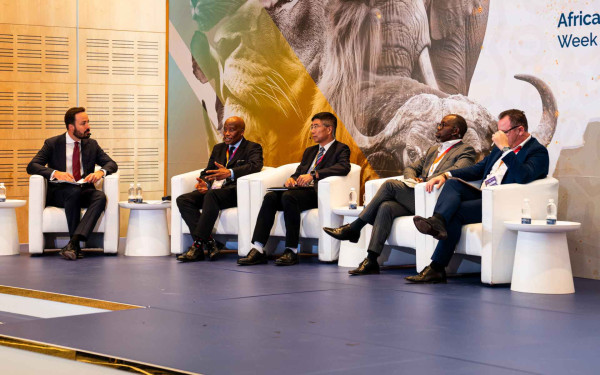
Africa Celebrates Ranger Heroes at the 2024 African Conservation Awards

Location: News
Game Rangers Association of Africa

The 2024 African Conservation Awards, hosted by the Game Rangers' Association of Africa (GRAA) (www.GameRanger.org) is an opportunity to celebrate just some of the outstanding work by African conservationists. It is the GRAA's privilege to be able to showcase the exceptional contributions to protecting Africa's natural heritage. In 2024, the GRAA modified categories in this prestigious event to ensure Marine Rangers are also recognised and celebrated.

These awards continue to remind us of our responsibility to rangers working across Africa, many of whom are working in challenging environments with a lack of resources. Every organisation and individual nominated for these awards has displayed remarkable resilience and determination, despite their overwhelming odds and have remained steadfast in their dedication to achieving their conservation goals, inspiring us all with their unwavering commitment. Rangers should be acknowledged and celebrated.

The Winners for the 2024 African Conservation Awards are:

Best Field Ranger

Winner: Modiki Claver, Ranger Team Leader, Dzanga Sangha Protected Areas, Central African Republic (CAR)

Modiki Claver, the Team Leader of Dzanga Sangha Protected Area's law enforcement section in CAR, has risen from starting as a porter in 2010 to becoming the top team leader in the landscape. Leading a team of seven rangers across the Congo Basin, including parts of Noubale-Ndoki National Park and Lobeke National Park, Claver exemplifies leadership by dismantling snares, seizing weapons, and making arrests. He has significantly contributed to scientific research, including tracking elephant populations, assessing the impact of logging, and monitoring illegal hunting activities. Beyond his law enforcement duties, Claver has fostered strong relationships with local communities and youth, guiding them toward conservation careers. During the 2013 military-political unrest, he demonstrated exceptional courage by covertly tracking rebel movements and providing critical information to protect wildlife. Known for his field skills, ethical leadership, and commitment to the rights of indigenous people, Claver is an inspiring role model in conservation.

1st Runner Up: Sekibibi Bareke Désiré, Central Sector Manager, Virunga National Park, Democratic Republic of Congo (DRC)

2nd Runner Up: Jean Claude Kyungu, Former Head Ranger Maiko National Park, DRC

Best Marine Ranger

Winner: Chanel Hauvette, Senior Marine Field Ranger, Robberg Nature Reserve and Marine Protected Area and Keurbooms River Nature Reserve, South Africa

Chanel Hauvette is a Senior Marine Field Ranger who demonstrates extraordinary dedication to marine conservation, leading stranding responses, law enforcement, biodiversity monitoring, and community engagement across Robberg Nature Reserve and Marine Protected Area. As coordinator of the Plett Stranding Network, she manages hundreds of annual strandings, from seals and birds to endangered turtles, often stabilizing animals at her own home. Despite challenges like limited resources and transportation, Chanel forges strong partnerships with local businesses, NGOs, and residents to secure support. Her leadership, innovative protocols, and passion for conservation inspire her team, educate communities, and ensure the protection of marine biodiversity.

1st Runner Up: Emily Nyevu Simba, Ranger Corporal, Watamu Marine Protected Area, Kenya

2nd Runner Up: Clive Hendricks, Section Ranger, Addo Elephant National Park - Marine Section, South Africa

Best Ranger Team

Winner: South Luangwa Rapid Response Unit for Human-Wildlife Conflict, South Luangwa National Park, Zambia

The South Luangwa Rapid Response Unit for Human-Wildlife Conflict (RRU-HWC) is a joint initiative between Conservation South Luangwa and the Department of National Parks and Wildlife. It has significantly improved coexistence between communities and wildlife through proactive education, innovative solutions, and swift conflict resolution. Reaching over 4,000 people, their educational outreach fostered awareness and led to a 44% improvement in predator-proof livestock enclosures, reducing livestock predation. The team also tackled challenges like elephant crop raids and predator attacks with rapid responses and non-lethal deterrents, earning trust within the community. Despite resource limitations, the RRU-HWC has empowered local wildlife committees, inspired community-led initiatives, and strengthened partnerships with government and NGOs. Their dedication has not only mitigated conflicts but also fostered a culture of conservation, ensuring long-term benefits for both people and wildlife.

1st Runner Up: Tango 1 Mobile APU Team, Tana Delta, Kenya

2nd Runner Up: South Luangwa K9 Unit, South Luangwa National Park, Zambia

Best Ranger Supporter

Winner: Munene Kamundi, Strong Ranger Initiative, Kenya

Munene Kamundi is a dedicated advocate for wildlife ranger wellbeing, leveraging his expertise in occupational health and safety to address critical challenges faced by rangers in conservation. Despite financial hardships and resource limitations, he has reached over 400 rangers this year, aiming to support 5,000 annually. Through his innovative wellness ambassadors program, Kamundi promotes mental health, safety practices, and emergency response training, aligning with global biodiversity frameworks like the Kunming-Montreal agreement. His tireless commitment, even in the face of adversity, highlights his transformative leadership and vision to integrate ranger wellbeing into sustainable conservation efforts across Africa.

1st Runner Up: Amon Koutoua Benoît, Technical Director, Office Ivoirien des Parcs et Réserves, Côte d'Ivoire

2nd Runner Up: WCS Congo Counter-Wildlife Trafficking Teams (North and South), DRC and Republic of Congo

In a poignant video message, His Serene Highness Prince Albert II of Monaco, esteemed Patron of the African Conservation Awards, paid homage to the brave conservation heroes who have made the ultimate sacrifice. He solemnly honored the memory of the 64 rangers who tragically lost their lives in the line of duty over the past year, safeguarding our planet's invaluable natural heritage. Prince Albert expressed profound gratitude to these fallen heroes and to all of Africa's rangers, who selflessly dedicate their lives to protecting our natural spaces. He urged collective action to support the 30x30 global initiative, emphasizing that achieving these ambitious goals requires providing rangers with the resources, infrastructure, and tools they urgently need. His message carried a deep reverence for the thousands of rangers who face immense risks daily, serving as steadfast guardians of our planet's biodiversity and natural wonders.

"Every year we are reminded of the dedication, commitment and resilience required to be a ranger in Africa. This year is no different and those recognised today are some of Africa's best working in seven different countries across our continent. We are humbled to call them our colleagues and to be able to bring their work out into the light for all to see. It is particularly exciting to be recognising Marine Rangers this year who do such inspiring work on our oceans and coastlines to conserve our marine resources. Well done to the winners, runner ups and nominees of the African Conservation Awards 2024! Thank you for what you do for our planet and its people!" - Andrew Campbell, CEO, Game Rangers Association of Africa

The African Conservation Awards are hosted annually by the Game Rangers' Association of Africa (GRAA) and are endorsed by the Department of Forestry, Fisheries and Environment. His Serene Highness Prince Albert II of Monaco, who is committed to the protection of endangered species through the support of his Foundation, is the Patron of the African Conservation Awards.

For more information about the African Conservation Awards, please visit https://apo-opa.co/4eD5JFr.

Distributed by APO Group on behalf of Game Rangers Association of Africa.

Media Contact:
Game Rangers Association of Africa
Louise de Bruin
Email: info@gameranger.org

GRAA background:
The Game Rangers' Association of Africa (GRAA) is a non-profit organisation, founded in 1970 which provides support, networks and representation for rangers across Africa. The GRAA is a proud member of the International Ranger Federation (IRF) and the International Union for Conservation of Nature (IUCN) where it serves as the voice of the African ranger.

Information:
African Conservation Awards: https://www.ConservationAwards.africa
Game Rangers Association of Africa: https://www.GameRanger.org/
Media files
Game Rangers Association of Africa
Download logo
Read moreAfrica Celebrates Ranger Heroes at the 2024 African Conservation Awards
22 November 2024

Promise Mabilo’s Child Has Asthma. She Is Fighting for Cleaner Air in Mpumalanga

Location: News

“Living in Emalahleni is like living in a closed bottle. It’s difficult to breathe.”

Read morePromise Mabilo’s Child Has Asthma. She Is Fighting for Cleaner Air in Mpumalanga
22 November 2024

ICC Pre-trial Chamber I Issues Warrants of Arrest for Mohammed Diab Ibrahim Al-Masri (Deif)

Location: News
International Criminal Court (ICC)

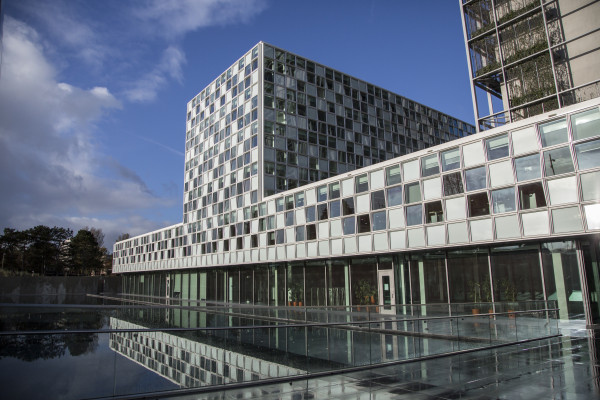
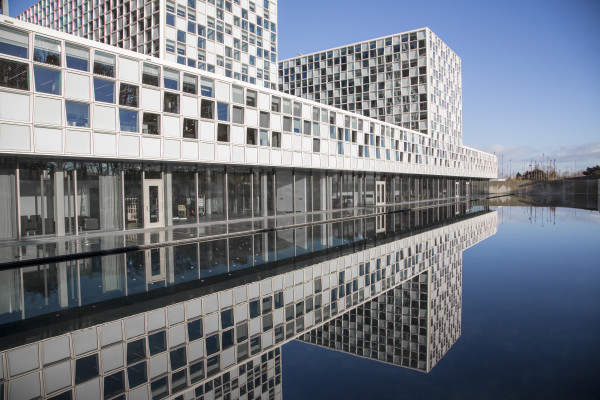
Today, on 21 November 2024, Pre-Trial Chamber I of the International Criminal Court (‘Court') (www.ICC-cpi.int), in its composition for the Situation in the State of Palestine, unanimously issued a warrant of arrest for Mr Mohammed Diab Ibrahim Al-Masri, commonly known as ‘Deif', for alleged crimes against humanity and war crimes committed on the territory of the State of Israel and the State of Palestine from at least 7 October 2023.

The Prosecution had initially filed applications for warrants of arrest for two other senior leaders of Hamas, namely Mr Ismail Haniyeh and Mr Yahya Sinwar. Following confirmation of their deaths, the Chamber granted the withdrawal of the applications on 9 August 2024 and 25 October 2024, respectively. With respect to Mr Deif, the Prosecution indicated that it would continue to gather information with respect to his reported death. On 15 November 2024, the Prosecution, referring to information from both the Israeli and Palestinian authorities, notified the Chamber that it is not in a position to determine whether Mr Deif has been killed or remains alive. Therefore, the Chamber issues the present warrant of arrest. The Prosecution also noted that it continues to investigate the crimes in the ongoing conflict and envisions that further applications for warrants of arrest will be submitted.

The warrant of arrest for Mr Deif is classified as ‘secret' in order to protect witnesses and to safeguard the conduct of investigations. However, the Chamber decided to release the information below since conduct similar to that addressed in the warrant of arrest appears to be ongoing, in particular the holding of a number of hostages captive. The Chamber considers it is also in the interest of victims and their families to be aware of the warrant's existence.

The Chamber found reasonable grounds to believe that Mr Deif, born in 1965, the highest commander of the military wing of Hamas (known as the al-Qassam Brigades) at the time of the alleged conduct, is responsible for the crimes against humanity of murder; extermination; torture; and rape and other form of sexual violence; as well as the war crimes of murder, cruel treatment, torture,; taking hostages; outrages upon personal dignity; and rape and other form of sexual violence.

The Chamber found reasonable grounds to believe that Mr Deif bears criminal responsibility for the aforementioned crimes for (i) having committed the acts jointly and through others and (ii) having ordered or induced the commission of the crimes, and (iii) for his failure to exercise proper control over forces under his effective command and control.

The Chamber found reasonable grounds to believe that during the relevant time, international humanitarian law related to international armed conflict (between Israel and Palestine) and non-international armed conflict (between Israel and Hamas) applied. The Chamber also found that there are reasonable grounds to believe that the crimes against humanity were part of a widespread and systematic attack directed by Hamas and other armed groups against the civilian population of Israel.

Alleged crimes

With regard to the crimes, the Chamber found reasonable grounds to believe that on 7 October 2023, shortly after a large number of rockets triggered the ‘Tzeva Adom' alarm in several communities in Israel around 6:20-6:30 am, armed men entered these communities, as well as the site of the Supernova festival, a music event with a few thousand participants (‘7 October Operation'). Members of Hamas, notably fighters of the al-Qassam Brigades, carried out mass killings at and/or around the communities of Kfar Aza, Holit, Nir Oz, Be'eri, and Nahal Oz, as well as at the Supernova festival. The attackers, for example, fired at people while they were seeking shelter and throw grenades at them. Hamas fighters followed similar patterns in other locations and killed further persons. These killings qualify as the crime against humanity and the war crime of murder.

The Chamber also found that in some locations, namely at the site of the Supernova festival and in the vicinity thereof, attackers fired at people with semi-automatic weapons and/or rocket-propelled grenades. In light of this, the Chamber concluded that there are reasonable grounds to believe that the war crime of intentionally directing attacks against civilians was committed.

In light of the coordinated killings of members of civilians at several separate locations, the Chamber also found that the conduct took place as part of a mass killing of members of the civilian population, and it therefore concluded that there are reasonable grounds to believe that the crime against humanity of extermination was committed.

Furthermore, in the context of 7 October Operation, the Chamber found that a large number of persons were seized from various locations in Israel, including Kfar Aza, Holit, Nir Oz, Be'eri, Nahal Oz, and the Supernova festival. The victims were civilians, including children and elderly people, as well as members of the IDF (Israeli Defence Forces). After being taken to Gaza, most of them were detained in secret locations, including apartments and underground tunnels. A number of groups participated in seizing and detaining these persons: the al-Qassam Brigades, the Palestinian Islamic Jihad al-Quds, and other Palestinian armed groups. The Chamber found that Hamas was in control of the hostages as of the start of their detention in Gaza, irrespective of the group affiliation of the individuals initially seizing the hostages. The Chamber also found that hostage taking in the context of the 7 October Operation was conducted with the aim to negotiate their release in exchange for Palestinian prisoners held in Israel. In light of the above, the Chamber considered that there are reasonable grounds to believe that the war crime of hostage taking was committed.

The Chamber further found that, while they were held captive in Gaza, some hostages, predominantly women, were subjected to sexual and gender based violence, including forced penetration, forced nudity, and humiliating and degrading treatment. On the basis of the material presented, the Chamber found reasonable grounds to believe that the crimes of torture as a crime against humanity and war crime, rape and other forms of sexual violence as crimes against humanity and war crimes, cruel treatment as a war crime, and outrages upon personal dignity as a war crime were committed against these persons during the relevant period.

With respect to Mr Deif's individual criminal responsibility, the Chamber found reasonable grounds to believe that senior leaders of Hamas, comprising of at least Mr Deif, Mr Sinwar, and Mr Haniyeh, agreed to jointly carry out the 7 October 2023 Operation. The plan included targeting military and civilian objects in Israel and other acts of violence against Israeli persons. The material presented by the Prosecution indicated that several senior members of Palestinian Islamic Jihad al-Quds joined the plan in the morning of 7 October 2023 at the latest, and that other Palestinians armed groups participated in the Operation.

Mr Deif, in his role as the commander of the al-Qassam Brigades, and through his actions prior to, during and after the 7 October Operation, is responsible for the commission of these crimes. In addition, the Chamber considered that Mr Deif ordered or induced the crimes or is responsible as a military commander for the criminal conduct of his subordinates. 

Background

On 1 January 2015, The State of Palestine lodged a declaration under article 12(3) of the Rome Statute accepting jurisdiction of the Court since 13 June 2014.

On 2 January 2015, The State of Palestine acceded to the Rome Statute by depositing its instrument of accession with the UN Secretary-General. The Rome Statute entered into force for The State of Palestine on 1 April 2015.

On 22 May 2018, pursuant to articles 13(a) and 14 of the Rome Statute, The State of Palestine referred to the Prosecutor the Situation since 13 June 2014, with no end date. 

On 3 March 2021, the Prosecutor announced the opening of the investigation into the Situation in the State of Palestine. This followed Pre-Trial Chamber I's decision (https://apo-opa.co/3OlxLKY) on 5 February 2021 that the Court could exercise its criminal jurisdiction in the Situation and, by majority, that the territorial scope of this jurisdiction extends to Gaza and the West Bank, including East Jerusalem. 

On 17 November 2023, the Office of the Prosecutor received a further referral of the Situation in the State of Palestine, from South Africa, Bangladesh, Bolivia, Comoros, and Djibouti, and on 18 January 2024, the Republic of Chile and the United Mexican State additionally submitted a referral to the Prosecutor with respect to the situation in The State of Palestine.

Distributed by APO Group on behalf of International Criminal Court (ICC).

For further information, please contact Fadi El Abdallah, Spokesperson and Head of Public Affairs Unit, International Criminal Court, by telephone at: +31 (0)70 515-9152 or +31 (0)6 46448938 or by e-mail at: fadi.el-abdallah@icc-cpi.int

You can also follow the Court's activities on Twitter (https://apo-opa.co/3OlxMP2), Facebook (https://apo-opa.co/4eFN6k7), Tumblr (https://apo-opa.co/3OlxOq8), YouTube (https://apo-opa.co/3OhQUgL), Instagram (https://apo-opa.co/490pm92) and Flickr (https://apo-opa.co/3Zjr560)

Media files
International Criminal Court (ICC)
Download logo
Read moreICC Pre-trial Chamber I Issues Warrants of Arrest for Mohammed Diab Ibrahim Al-Masri (Deif)
21 November 2024

ICC Pre-trial Chamber I Rejects the State of Israel’s Challenges to Jurisdiction and Issues Warrants of Arrest for Benjamin Netanyahu and Yoav Gallant

Location: News
International Criminal Court (ICC)

Today, on 21 November 2024, Pre-Trial Chamber I of the International Criminal Court (‘Court') (www.ICC-cpi.int), in its composition for the Situation in the State of Palestine, unanimously issued two decisions rejecting challenges by the State of Israel (‘Israel') brought under articles 18 and 19 of the Rome Statute (the ‘Statute'). It also issued warrants of arrest for Mr Benjamin Netanyahu and Mr Yoav Gallant.

Decisions on requests by the State of Israel

The Chamber ruled on two requests submitted by the Israel on 26 September 2024. In the first request, Israel challenged the Court's jurisdiction over the Situation in the State of Palestine in general, and over Israeli nationals more specifically, on the basis of article 19(2) of the Statute. In the second request, Israel requested that the Chamber order the Prosecution to provide a new notification of the initiation of an investigation to its authorities under article 18(1) of the Statute. Israel also requested the Chamber to halt any proceedings before the Court in the relevant situation, including the consideration of the applications for warrants of arrest for Mr Benjamin Netanyahu and Mr Yoav Gallant, submitted by the Prosecution on 20 May 2024.

As to the first challenge, the Chamber noted that the acceptance by Israel of the Court's jurisdiction is not required, as the Court can exercise its jurisdiction on the basis of territorial jurisdiction of Palestine, as determined by Pre-Trial Chamber I in a previous composition. Furthermore, the Chamber considered that pursuant to article 19(1) of the Statute, States are not entitled to challenge the Court's jurisdiction under article 19(2) prior to the issuance of a warrant of arrest. Thus Israel's challenge is premature. This is without prejudice to any future possible challenges to the Court's jurisdiction and/or admissibility of any particular case.

Decision on Israel's challenge to the jurisdiction of the Court pursuant to article 19(2) of the Rome Statute (https://apo-opa.co/4i2p05M)

The Chamber also rejected Israel's request under article 18(1) of the Statute. The Chamber recalled that the Prosecution notified Israel of the initiation of an investigation in 2021. At that time, despite a clarification request by the Prosecution, Israel elected not to pursue any request for deferral of the investigation. Further, the Chamber considered that the parameters of the investigation in the situation have remained the same and, as a consequence, no new notification to the State of Israel was required. In light of this, the judges found that there was no reason to halt the consideration of the applications for warrants of arrest.

Decision on Israel's request for an order to the Prosecution to give an Article 18(1) notice (https://apo-opa.co/40Y6DsN)

Warrants of arrest

The Chamber issued warrants of arrest for two individuals, Mr Benjamin Netanyahu and Mr Yoav Gallant, for crimes against humanity and war crimes committed from at least 8 October 2023 until at least 20 May 2024, the day the Prosecution filed the applications for warrants of arrest.

The arrest warrants are classified as ‘secret', in order to protect witnesses and to safeguard the conduct of the investigations. However, the Chamber decided to release the information below since conduct similar to that addressed in the warrant of arrest appears to be ongoing. Moreover, the Chamber considers it to be in the interest of victims and their families that they are made aware of the warrants' existence.

At the outset, the Chamber considered that the alleged conduct of Mr Netanyahu and Mr Gallant falls within the jurisdiction of the Court. The Chamber recalled that, in a previous composition, it already decided that the Court's jurisdiction in the situation extended to Gaza and the West Bank, including East Jerusalem. Furthermore, the Chamber declined to use its discretionary proprio motu powers to determine the admissibility of the two cases at this stage. This is without prejudice to any determination as to the jurisdiction and admissibility of the cases at a later stage.

With regard to the crimes, the Chamber found reasonable grounds to believe that Mr Netanyahu, born on 21 October 1949, Prime Minister of Israel at the time of the relevant conduct, and Mr Gallant, born on 8 November 1958, Minister of Defence of Israel at the time of the alleged conduct, each bear criminal responsibility for the following crimes as co-perpetrators for committing the acts jointly with others: the war crime of starvation as a method of warfare; and the crimes against humanity of murder, persecution, and other inhumane acts.

The Chamber also found reasonable grounds to believe that Mr Netanyahu and Mr Gallant each bear criminal responsibility as civilian superiors for the war crime of intentionally directing an attack against the civilian population.

Alleged crimes

The Chamber found reasonable grounds to believe that during the relevant time, international humanitarian law related to international armed conflict between Israel and Palestine applied. This is because they are two High Contracting Parties to the 1949 Geneva Conventions and because Israel occupies at least parts of Palestine. The Chamber also found that the law related to non-international armed conflict applied to the fighting between Israel and Hamas. The Chamber found that the alleged conduct of Mr Netanyahu and Mr Gallant concerned the activities of Israeli government bodies and the armed forces against the civilian population in Palestine, more specifically civilians in Gaza. It therefore concerned the relationship between two parties to an international armed conflict, as well as the relationship between an occupying power and the population in occupied territory. For these reasons, with regards to war crimes, the Chamber found it appropriate to issue the arrest warrants pursuant to the law of international armed conflict. The Chamber also found that the alleged crimes against humanity were part of a widespread and systematic attack against the civilian population of Gaza.

The Chamber considered that there are reasonable grounds to believe that both individuals intentionally and knowingly deprived the civilian population in Gaza of objects indispensable to their survival, including food, water, and medicine and medical supplies, as well as fuel and electricity, from at least 8 October 2023 to 20 May 2024. This finding is based on the role of Mr Netanyahu and Mr Gallant in impeding humanitarian aid in violation of international humanitarian law and their failure to facilitate relief by all means at its disposal. The Chamber found that their conduct led to the disruption of the ability of humanitarian organisations to provide food and other essential goods to the population in need in Gaza. The aforementioned restrictions together with cutting off electricity and reducing fuel supply also had a severe impact on the availability of water in Gaza and the ability of hospitals to provide medical care.

The Chamber also noted that decisions allowing or increasing humanitarian assistance into Gaza were often conditional. They were not made to fulfil Israel's obligations under international humanitarian law or to ensure that the civilian population in Gaza would be adequately supplied with goods in need. In fact, they were a response to the pressure of the international community or requests by the United States of America. In any event, the increases in humanitarian assistance were not sufficient to improve the population's access to essential goods.

Furthermore, the Chamber found reasonable grounds to believe that no clear military need or other justification under international humanitarian law could be identified for the restrictions placed on access for humanitarian relief operations. Despite warnings and appeals made by, inter alia, the UN Security Council, UN Secretary General, States, and governmental and civil society organisations about the humanitarian situation in Gaza, only minimal humanitarian assistance was authorised. In this regard, the Chamber considered the prolonged period of deprivation and Mr Netanyahu's statement connecting the halt in the essential goods and humanitarian aid with the goals of war.

The Chamber therefore found reasonable grounds to believe that Mr Netanyahu and Mr Gallant bear criminal responsibility for the war crime of starvation as a method of warfare.

The Chamber found that there are reasonable grounds to believe that the lack of food, water, electricity and fuel, and specific medical supplies, created conditions of life calculated to bring about the destruction of part of the civilian population in Gaza, which resulted in the death of civilians, including children due to malnutrition and dehydration. On the basis of material presented by the Prosecution covering the period until 20 May 2024, the Chamber could not determine that all elements of the crime against humanity of extermination were met. However, the Chamber did find that there are reasonable grounds to believe that the crime against humanity of murder was committed in relation to these victims.

In addition, by intentionally limiting or preventing medical supplies and medicine from getting into Gaza, in particular anaesthetics and anaesthesia machines, the two individuals are also responsible for inflicting great suffering by means of inhumane acts on persons in need of treatment. Doctors were forced to operate on wounded persons and carry out amputations, including on children, without anaesthetics, and/or were forced to use inadequate and unsafe means to sedate patients, causing these persons extreme pain and suffering. This amounts to the crime against humanity of other inhumane acts.

The Chamber also found reasonable grounds to believe that the abovementioned conduct deprived a significant portion of the civilian population in Gaza of their fundamental rights, including the rights to life and health, and that the population was targeted based on political and/or national grounds. It therefore found that the crime against humanity of persecution was committed.

Finally, the Chamber assessed that there are reasonable grounds to believe that Mr Netanyahu and Mr Gallant bear criminal responsibility as civilian superiors for the war crime of intentionally directing attacks against the civilian population of Gaza. In this regard, the Chamber found that the material provided by the Prosecution only allowed it to make findings on two incidents that qualified as attacks that were intentionally directed against civilians. Reasonable grounds to believe exist that Mr Netanyahu and Mr Gallant, despite having measures available to them to prevent or repress the commission of crimes or ensure the submittal of the matter to the competent authorities, failed to do so.

Background

On 1 January 2015, The State of Palestine lodged a declaration under article 12(3) of the Rome Statute accepting jurisdiction of the Court since 13 June 2014.

On 2 January 2015, The State of Palestine acceded to the Rome Statute by depositing its instrument of accession with the UN Secretary-General. The Rome Statute entered into force for The State of Palestine on 1 April 2015.

On 22 May 2018, pursuant to articles 13(a) and 14 of the Rome Statute, The State of Palestine referred to the Prosecutor the Situation since 13 June 2014, with no end date. 

On 3 March 2021, the Prosecutor announced the opening of the investigation into the Situation in the State of Palestine. This followed Pre-Trial Chamber I's decision (https://apo-opa.co/4fYvUHo) on 5 February 2021 that the Court could exercise its criminal jurisdiction in the Situation and, by majority, that the territorial scope of this jurisdiction extends to Gaza and the West Bank, including East Jerusalem. 

On 17 November 2023, the Office of the Prosecutor received a further referral of the Situation in the State of Palestine, from South Africa, Bangladesh, Bolivia, Comoros, and Djibouti, and on 18 January 2024, the Republic of Chile and the United Mexican State additionally submitted a referral to the Prosecutor with respect to the situation in The State of Palestine.

Distributed by APO Group on behalf of International Criminal Court (ICC).

For further information, please contact Fadi El Abdallah, Spokesperson and Head of Public Affairs Unit, International Criminal Court, by telephone at: +31 (0)70 515-9152 or +31 (0)6 46448938 or by e-mail at: fadi.el-abdallah@icc-cpi.int

You can also follow the Court's activities on Twitter (https://apo-opa.co/3CE1oV7), Facebook (https://apo-opa.co/4fUFF9J), Tumblr (https://apo-opa.co/40ZF16K), YouTube (https://apo-opa.co/3OnCATX), Instagram (https://apo-opa.co/4g1UEyR) and Flickr https://apo-opa.co/3CHEUT9).

Media files
International Criminal Court (ICC)
Download logo
Read moreICC Pre-trial Chamber I Rejects the State of Israel’s Challenges to Jurisdiction and Issues Warrants of Arrest for Benjamin Netanyahu and Yoav Gallant
21 November 2024

Enhanced Control Measures Helping to Control Mpox Outbreak in Africa

Location: News

WHO Regional Office for Africa
Download logo

More than 13 000 laboratory-confirmed mpox cases have been reported in the African region since the start of 2024, as of 17 November. Three countries – Burundi, the Democratic Republic of Congo and Uganda - account for approximately 97% of all reported cases so far this year.

From reinforcing outbreak control measures including health worker training, to the delivery of medical supplies and equipment, and to the development of vaccine deployment plans, World Health Organization (WHO) is providing critical technical and financial support to countries to effectively respond to and end the mpox outbreaks in the region.

While much of the focus has been on those countries whose populations are at higher risk of exposure to mpox due to larger outbreaks, WHO is also supporting countries experiencing sporadic cases. With WHO support most countries in the region that have been affected by mpox this year have successfully prevented a small number of isolated cases from spreading more widely among their populations and taking on epidemic proportions. 

By the time Ghana reported its first mpox case of the year on 1 October 2024 – a junior high school student in the Western North region - public awareness of the virus was already elevated due to weeks of risk communication and community engagement through WHO-sponsored social media campaigns. 

Recognition of the symptoms meant that both the student and his mother, who was subsequently infected, were promptly taken to medical facilities for treatment and made full recoveries without infecting other members of the community. Rapid contact tracing and testing were conducted to ensure that the virus had not spread beyond the household, early actions that helped contain the disease. 

To strengthen the response, WHO is working closely with the Ghana Health Service to increase public awareness even further. Police and immigration officials at key points of entry have also received training on how to recognize the signs of mpox to prevent the virus being imported into the country. 

“Mobilizing resources to support risk communication and community engagement is just one pillar of our mpox response, but it has so far proven critical; Ghana has registered just two cases in 2024. Without informed populations there is a risk that infected people will carry on as normal, passing the virus on to those around them,” said Dr Frank Lule, Acting WHO Representative in Ghana. 

Gabon—which alongside South Africa, Guinea, Cameroon and Congo is assessed to no longer be experiencing active community transmission of mpox—provides another example of how early interventions can yield significant benefits. The country reported its first laboratory-confirmed mpox case on 22 August. A 30-year-old man who had travelled to Uganda and returned with fever, fatigue and a skin rash. After seeking medical attention, he was isolated until full recovery and an extensive contact tracing operation was launched by WHO-trained health workers. One of the contacts identified was a 25-year-old IT worker living to the north of Libreville.

“As a contact, rigorous protocol was put in place to ensure my safety and the safety of those around me. I was told to watch out for symptoms like fever, fatigue or lesions and to immediately contact the surveillance teams should these symptoms develop. They also asked me to limit social interactions and close physical contact,” explained Axel Mouketou. 

“The surveillance teams remained in close contact with me, conducting visits and calling me on the phone to evaluate my health. This regular contact helped me feel supported and gave me the chance to ask any questions to better understand what actions I should take,” he said. 

WHO has also provided personal protective equipment and other medical supplies to the Ministry of Health; installed thermal cameras at multiple points of entry to Gabon; trained 72 officials at points of entry—including police officers, customs workers and health workers—to recognise mpox symptoms and isolate patients; and provided technical guidance to key ministerial officials. These measures have helped limit the number of lab-confirmed mpox cases in 2024 to just two.

“Our main focus is to maintain surveillance, health training and community engagement once this epidemic is over,” said Dr Narcisse Tounaikok, WHO's interim mpox Incident Manager in Gabon. 

Similar contact tracing efforts were initiated in Guinea, after a seven-year-old child was confirmed to have been infected with the clade 2b subvariant of mpox on 2 September. Almost all the 91 identified contacts were fully followed up, with diagnostic tests revealing no further transmission of the virus.

Within days of the first mpox case being declared, Guinea's national health authorities published a response plan with technical input from WHO. In Macenta, where the case was discovered, WHO provided training to staff in 18 health centres and two hospitals, to emphasize appropriate infection prevention and control measures that can be used to limit the spread of infection within health facilities. WHO is also continuously supporting laboratories across the country with training and equipment necessary to monitor mpox and a host of other diseases. 

The successful containment of mpox has not been limited to Cameroon, Congo, Gabon, Ghana, Guinea and South Africa. With WHO support, in 2024, Angola Mauritius, Morocco, Zambia and Zimbabwe have so far all prevented one or two identified cases from spreading further. 

“These countries are evidence of the value, both human and financial, of rapid detection, response and containment. With a timely push of reactive funds and technical assistance from WHO, they were able to stop the virus from spreading on a scale that would ultimately be much more challenging to manage, said Dr Samuel Boland, Mpox Incident Manager at WHO Regional Office for Africa. 

Across the African region, 14 countries—the Democratic Republic of the Congo, Burundi, Uganda, Nigeria, Côte d'Ivoire, Central African Republic, Ghana, Liberia, Rwanda, Kenya, Zimbabwe, Mauritius, Zambia, and Angola—are still assessed to have active transmission of mpox, a viral disease endemic to Central and West Africa. All require further enhancement of disease surveillance measures. High levels of mobility on the continent, the emergence of the particularly infectious clade 1b subvariant in 2023 and the persistent risk of zoonotic transmission are all causes for continued vigilance, even in countries where cases have been successfully contained.

Distributed by APO Group on behalf of WHO Regional Office for Africa.

Read moreEnhanced Control Measures Helping to Control Mpox Outbreak in Africa
21 November 2024

Electricity and Energy Committee Receive Briefing on Just Energy Transition

Location: News

Republic of South Africa: The Parliament
Download logo

The Portfolio Committee on Electricity and Energy received a briefing on the Just Energy Transition (JET) Investment Plan and Implementation Plan from the Presidency's Project Management Office and the Department of Mineral Resources and Energy.

It was taken through the different investment portfolios within the plan, including details on the progress and financing secured to date. The plan outlined an investment of approximately R1.5 trillion over five years to support the country's decarbonisation efforts.

The committee raised concerns about the impacts on workers and communities affected by the energy transition, particularly the lessons learned from the Komati power station closure, and the need to ensure a truly just transition. Members of the committee also queried South Africa's continued reliance on coal, export of coal, and the potential role of clean coal technologies.

Members of the committee also questioned whether the transition will jeopardise reliable electricity supply, calling for the JET process to be aligned with and supportive of South Africa's broader industrialisation and economic development objectives. They stressed the need to build local manufacturing and skills capacity to support the renewable energy and green economy value chains.

The department was requested by the committee for regular updates on progress and engagement on the JET implementation. The committee acknowledged the complexity and importance of managing South Africa's energy transition in a just and equitable manner, emphasising the need for continuous engagement and oversight to ensure the JET plan delivers on its objectives.

The committee commended the presenters on the involvement of communities and workers, but it cautioned against using the term "poor" to refer to affected communities. Members of the committee stressed the importance of empowering local institutions and skills development from the grassroots level, rather than relying on externally driven initiatives.

The committee also expressed concerns about the weaponising of climate change legislation by developed countries, which could disadvantage South Africa's economy and trade. It stressed the need to ensure the JET process supports the country's broader industrialisation and economic development goals.

Members of the committee highlighted the need to hear directly from the affected communities. They also proposed a site visit to Mpumalanga to engage with local stakeholders.

Distributed by APO Group on behalf of Republic of South Africa: The Parliament.

Read moreElectricity and Energy Committee Receive Briefing on Just Energy Transition
21 November 2024

Ministry Confirms No Restriction on Amount of Sewage Cape Town May Pump Out to Sea

Location: News

Clarity given after City’s claim that it is still limited by historic licence conditions

Read moreMinistry Confirms No Restriction on Amount of Sewage Cape Town May Pump Out to Sea
20 November 2024

VFS Global Expands UK Visa Services in Sub-Saharan Africa in Second Phase of Rollouts

Location: News

VFS Global
Download logo

VFS Global (www.VFSGlobal.com) is proud to announce that residents of Angola, Botswana, Cameroon, Ethiopia, Malawi, Mozambique, Namibia, Rwanda, Senegal, Sierra Leone, Tanzania, Uganda, Zambia, and Zimbabwe, travelling to the UK can now book appointments to submit their visa applications through VFS Global's new state-of-the-art Visa Application Centres (VAC).

From 19 November 2024 customers applying for a UK visa will be directed to VFS Global to book an appointment to complete their visa application. Customers will also have the option to choose additional services designed to make the application process easier.

VFS Global has been contracted by UK Visas and Immigration since 2003, offering visa services in 58 countries prior to the new contract. In 2023, VFS Global was awarded the new contract to provide UK visa services in 142 countries worldwide.

Mr. Alok Singhal, Head- Sub-Saharan Africa, VFS Global, said, “We are excited to embark on this new journey with UK Visas and Immigration here across Sub-Saharan Africa. We have enjoyed a long-standing partnership with UKVI since 2003 and look forward to now bringing travellers from Angola, Botswana, Cameroon, Ethiopia, Malawi, Mozambique, Namibia, Rwanda, Senegal, Sierra Leone, Tanzania, Uganda, Zambia, and Zimbabwe, our best-in-class services.”

UK visa customers can now choose from a range of optional services, depending on their location, offered by VFS Global to provide enhanced comfort and convenience. These include document upload assistance, Prime Time for application submission outside of business hours, SMS notifications, document checking service, and courier return of the passport once a decision has been made. VFS Global's Keep My Passport While Applying service allows customers in all these locations to keep their passport once their application is submitted and biometrics have been enrolled. Customers will only need to re-submit their passport if a visa is issued.

Customers in Cameroon, Tanzania, and Uganda can also submit their UK visa applications from the comfort and safety of their home, office, or any other preferred location with our On Demand Mobile Visa service. In addition, our Premium Lounge service offers a personalised submission experience with dedicated staff members, which is available in Ethiopia, Senegal, Sierra Leone, Tanzania, Uganda, and Zimbabwe. The services can be booked in advance on www.VFSGlobal.com or at the Visa Application Centre at the time of the appointment. These services are completely optional and have no bearing on the processing timeline and outcomes of visa applications.

In the African region, VFS Global will provide Visa Application Centres for the UK in 31 countries. Under the new contract, VFS Global is already operating UK Visa Application Centres in nine other countries across Sub Saharan Africa since October 2024, including South Africa, Kenya, and Ghana.

UK Visa Application Centres

Angola: Rua 28 de Maio, Edificio Kende nº15 /17 , 1st floor F, Maianga, Luanda
Botswana: Game City Mall, 1st floor, Unit U101, A1 Lobatse Road, Kgale Hill, Gaborone
Cameroon: 4th Floor, Immeuble Ekang, Opp Palais Des Sports, Warda, Yaounde, 
Ethiopia: 6th Floor, NIB International Bank HQ, Ras Abebe Aragay Street, City Centre, Addis Ababa
Malawi: La Piazza Mall, Shop 7,  Plot Number 4/068-069 in Lilongwe
Mozambique: Maputo Shopping Centre, 6th Floor, 604 Maputo
Namibia: Hilltop Village, Section 27, corners of Grove and Ombika Street, Kleine Kuppe, Windhoek 
Rwanda:
5th Floor -KN 4Avenue, 63 street, Cogebanque Building, Kigali 
Senegal:
Immeuble Atryum-Center, 1st Floor, KM 8  Route de Ouakam, Dakar
Sierra Leone: Flat 7, floor 3 Aberdeen complex Building,58, Sir Samuel Lewis Road
Tanzania: 1st Floor, Right wing, Nature Building, Toure Drive, Masaki, Dar Es Salaam
Uganda: Plot No. 42, Wing C,2nd Floor, Lugogo House, Lugogo Bypass, Kampala
Zambia: Zep-Re Building, Alick Nkhata Rd No. 54, Plot No. 356184, Lusaka
Zimbabwe: Sam's Levy Village, Suites S And T, Sam Levy's Village, Borrowdale

Angola                                                                                                                                                      Website: https://apo-opa.co/4fx7MMr Business hours: 8 AM to 5 PM (Mon, Tue, Wed & Fri)

Botswana                                                                                                                                                      Website: https://apo-opa.co/3YW6Bis   Business hours: 8 AM to 5 PM (Mon to Fri)

Cameroon                                                                                                                                              Website: https://apo-opa.co/4i0MfgT Business hours: 8 AM to 5 PM (Mon to Fri)

Ethiopia
Website:
https://apo-opa.co/3YXsQVd Business hours: 8 AM to 5 PM (Mon to Fri)

Malawi
Website:
https://apo-opa.co/3AYcd3G Business hours: 8 AM to 5 PM (Mon to Fri)

Mozambique
Website:
https://apo-opa.co/4hPTckR Business hours: 8 AM to 5 PM (Mon to Fri)

Namibia
Website:
https://apo-opa.co/4hYqZZ6 Business hours: 8 AM to 5 PM (Mon to Fri)

Rwanda
Website:
https://apo-opa.co/3ZgdLzq Business hours: 8 AM to 5 PM (Tue to Thur)

Senegal
Website:
https://apo-opa.co/4fDAyLw Business hours: 8 AM to 5 PM (Mon, Wed & Fri)

Sierra Leone
Website:
https://apo-opa.co/40Wt55M Business hours: 8 AM to 5 PM (Mon, Wed & Fri)

Tanzania
Website:
https://apo-opa.co/3UYrsR7 Business hours: 8 AM to 5 PM (Mon to Fri)

Uganda
Website:
https://apo-opa.co/4fB7K63 Business hours: 8 AM to 5 PM (Mon to Fri)

Zambia
Website:
https://apo-opa.co/4hUbqBD Business hours: 8 AM to 5 PM (Mon to Fri)

Zimbabwe
Website:
https://apo-opa.co/40Wt5Tk Business hours: 8 AM to 5 PM (Mon to Fri)

*Except public holidays

Distributed by APO Group on behalf of VFS Global.

Media Contact:
George Cherian
georgec@vfsglobal.com
communications@vfsglobal.com

About VFS Global:
As the world's leading outsourcing and technology service specialist, VFS Global embraces technological innovation including Generative AI to support governments and diplomatic missions worldwide. The company manages non-judgmental and administrative tasks related to applications for visa, passport, and consular services for its client governments, increasing productivity and enabling them to focus entirely on the critical task of assessment.

With a responsible approach to technology development, adoption and integration, the company prioritizes ethical practices and sustainability while serving as the trusted partner to 69 client governments.  Operating over 3,400 Application Centres in 153 countries, VFS Global has efficiently processed more than 299 million applications since 2001.

Headquartered in Zurich and majority owned through investment funds managed by Blackstone Inc, along with the Swiss-based Kuoni and Hugentobler Foundation and EQT, VFS Global is committed to creating value for all stakeholders and leading in responsible, innovative solutions making government services more effective and efficient.

Read moreVFS Global Expands UK Visa Services in Sub-Saharan Africa in Second Phase of Rollouts
20 November 2024

Spaza shops: Register to benefit from government funding

Location: News

Spaza shops: Register to benefit from government funding

As township and rural entrepreneurs throughout the country are getting their papers in order to ensure they are compliant with government regulations to run a spaza shop, the great news is that once they have a valid trading permit, they can apply for funding from government institutions.

Through programmes like the Township and Rural Entrepreneurship Programme (TREP) or the Spaza Shop Support Scheme, entrepreneurs can access much-needed financial relief.

Earlier this month, government introduced a new standard draft by-law for township economies that offers a simplified permitting and registration process.

“To further support township businesses, municipalities will facilitate workshops, training, and access to essential resources such as infrastructure and markets. This proactive approach helps small business owners improve operational capacity, while also promoting compliance with relevant laws and standards.

“The new standard draft by-law introduces an efficient permit and registration system that provides clear guidelines for businesses, including both physical and online access to application forms,” the Department of Cooperative Governance and Traditional Affairs (COGTA) said earlier this month.

Municipal officials will assist applicants in the process, ensuring timely approvals and smooth operations for new and existing businesses.

“This by-law, issued in accordance with the Local Government: Municipal Systems Act of 2000, aims to create an enabling environment for small businesses in townships, supporting economic inclusion, job creation, and community empowerment,” the department said.

The full gazette can be accessed at https://www.cogta.gov.za/index.php/docs/local-government-municipal-systems-act-2000/.

President orders registration of spaza shops

Last week, President Cyril Ramaphosa called for all spaza shops and food-handling facilities to register with their respective municipalities as part of decisive measures to address the recurring food-borne illnesses that have claimed the lives of at least 22 children across the country.
  
The interventions, the President explained, included getting hazardous pesticides off the street, protection of children from exposure to these substances, and the prevention of future outbreaks.

To ensure compliance, the President ordered that all spaza shops and food-handling facilities must register with their respective municipalities within 21 days.

President Ramaphosa further announced the immediate closure of spaza shops implicated in the deaths and stricter regulations to protect communities.

READ I Spaza shops implicated in child deaths to be shut down

Township and rural entrepreneurs who are in need of funding are encouraged to consider applying for the Township and Rural Entrepreneurship Programme (TREP) or the Spaza Shop Support Scheme. The National Youth Development Agency also has numerous programmes targeted at assisting young people in business.

The TREP targets township and rural-based enterprises which are owned by entrepreneurs who are based in the townships or rural areas.

The programme is aimed at assisting entrepreneurs overcome the legacy of economic exclusion by creating a conducive environment for entrepreneurial activity and providing dedicated business support to enterprises in rural and township areas including access to funding.

Township or rural-based entrepreneurs must apply for support including funding through the common application template from the Small Enterprise Development Agency (Seda), the Small Enterprise Finance Agency (sefa), National Empowerment Fund (NEF) and the National Youth Development Agency (NYDA).

Owners of the business must be South African nationals.

How to apply:

•    Register on https://smmesa.gov.za/ and complete the information required. Once complete, you will receive an email with your unique smmesa.gov.za reference number.
•    The application form is available at https://www.eservices.gov.za
•    Create a user profile (account) with the email address used to register on smmesa.gov.za, the email address and smmesa.gov.za reference number is linked to the eservices platform.
•    Once registered and logged in, you are able to apply for the programmes available on the application window.
•    On the option <<apply for finance>>, choose the common application template.
•    Upload the required statutory documents: CIPC documentation, and proof of address as applicable.
•    All statutory documents must be submitted before an application is considered.
•    In case of application to purchase equipment/s and/or CAPEX, the applicants must submit quotations/proforma invoices for the equipment/CAPEX required.
•    Applications can also be submitted to trep@sefa.org.za should there be difficulties with the portal.
•    Application form can be accessed on the Department of Small Business Development (DSBD) website: https://www.dsbd.gov.za/programme/township-and-rural-entrepreneurship-programme.

Spaza shop support programme

Sefa’s spaza-shop support programme is targeted at township and rural entrepreneurs who own spaza shops, general dealers or grocery stores.

It is offered in partnership with Nedbank through the Sefa Khula Credit Guarantee Scheme. Each application will be assessed in terms of the following criteria:
•    The spaza shop/store must be owner-managed and -operated.
•    The owner must have a valid South African identification document.
•    S/he must register with the SMMESA (https://www.smmesa.gov.za/).
•    Spaza shop owners must hold a licence to trade or a municipal permit – if they do not have one, they must obtain one before they can access support.
•    Qualifying owners must go to their nearest Nedbank branch or the Nedbank desk at their nearest Boxer store for assistance in applying. 

The following documents will be required:
•    A valid South African ID document.
•    A valid and original municipal trading licence/permit to trade, or business licence in the case of a general dealer. Copies are not acceptable, and only permits/licences issued by a municipality, not a counsellor, will be accepted.
•    Qualifying spaza shop/general dealer owners must register with the Companies and Intellectual Property Commission (CIPC), the South African Revenue Service (Sars) and the Unemployment Insurance Fund (UIF), in cases where they are not already registered with these organisations.

Qualifying owners must:
•    Undertake to comply with consumer and customer protection and national disaster management regulations and directions.
•    Be willing to submit monthly management account.
•    Employ 70% South Africans.
•    Have been trading for a minimum of six months.
•    Have a valid business bank account (including newly opened).
•    Be willing to participate in the bulk-buying scheme as organised by the DSBD or any of its agencies.
•    Operate in a township or rural area.

How to qualify for the scheme:
•    The spaza shop, general dealer or grocery store owner must go to their nearest Seda office to physically submit the required permits and their ID, or they can submit these documents to Seda online.
•    Seda will assist with compliance registration and due diligence.
•    The owner will complete the application form, which will be submitted to the Department of Small Business Development for approval.
•    If approved, the owner will be advised to collect his/her bank card from a bank (appointed bank).
•    Clients can also apply directly to sefa by completing the Small Enterprise Finance Agency (soc) limited (Sefa) spaza shop support facility cardholder application form The application form must be accompanied by all supporting documents. To submit the application form directly to Sefa please send them to spaza@sefa.org.za. - SAnews.gov.za


nosihle
Wed, 11/20/2024 - 14:39

13 views
Read moreSpaza shops: Register to benefit from government funding
20 November 2024

Crucial Court Battle Over Future of “New” Trade Unions

Location: News

The Labour Appeal Court will hear an appeal by the Registrar of Labour Relations. The court will decide whether the Simunye Workers Forum can be registered as a trade union.

Read moreCrucial Court Battle Over Future of “New” Trade Unions
18 November 2024

African Development Bank to Join World Leaders at the G20 Leaders’ Summit

Location: News
African Development Bank Group (AfDB)

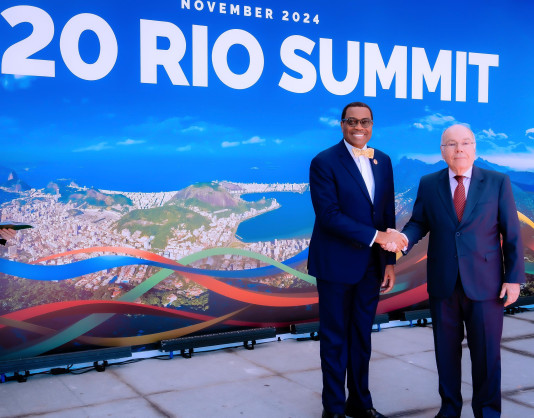
African Development Bank (www.AfDB.org) President Akinwumi Adesina is in Rio de Janeiro where he will reaffirm his commitment to ending hunger and malnutrition.

The theme of the G20 Rio Summit is “Building a just world and a sustainable planet”. It will be held from 18-19 November, and a major focus here will the G20's Global Alliance against Hunger and Poverty, an ambitious initiative led by the current G20 Chair Brazil, which seeks to unite developed and developing nations in eradicating hunger and addressing inequalities.

The Alliance will launch a range of coordinated actions which include expanding the production of healthy food and developing sustainable agriculture. Africa, which accounts for more than a third of the world's hungry people is central to that. According to the 2024 State of Food security and Nutrition in the world 20.4% of Africa's population are facing hunger.

“In Africa over 280 million people suffer from hunger, some 38% of the hungry people in the world” African Development Bank President Adesina stated at the 2024 World Food Prize Norman Borlaug Dialogue in Iowa last month.

“Hunger is the worst form of deprivation. The mind, the body, and the soul are shrivelled by hunger. Hunger strips away human dignity,” he said.

The African Development Bank, along with the World Bank and several other development institutions have affirmed support for the new Global Alliance initiative. Specifically, the African Development Bank and the Inter-American Development Bank have launched a campaign to use IMF Special Drawing Rights (SDRs) channelled through multilateral development banks under a hybrid financing mechanism, to scale up financing to back the effort.

The African Development Bank's Feed Africa (http://apo-opa.co/3ZazvNe) strategy under its High Five priority blueprint, steadfastly continues to bolster its objective of food security and resilience in Africa.

The Brazilian Presidency is building upon the progress achieved under the Indonesian and Indian G20 Presidencies in strengthening multilateral development Banks to become bigger, better and more effective institutions.

Brazil will hand over the baton of the chair of the G20 to South Africa at the end of the Rio summit.  The Group of Twenty or G20, comprises 19 countries and two regional bodies: the European Union and the African Union. The G20 members represent around 85% of the global GDP, over 75% of the global trade, and about two-thirds of the world population.

Distributed by APO Group on behalf of African Development Bank Group (AfDB).

Contact:
Amba Mpoke-Bigg,
Communication and External Relations Department 
email: media@afdb.org

About the African Development Bank Group:
The African Development Bank Group is Africa's premier development finance institution. It comprises three distinct entities: the African Development Bank (AfDB), the African Development Fund (ADF) and the Nigeria Trust Fund (NTF). On the ground in 41 African countries with an external office in Japan, the Bank contributes to the economic development and the social progress of its 54 regional member states. For more information: www.AfDB.org

Media files
African Development Bank Group (AfDB)
Download logo
Read moreAfrican Development Bank to Join World Leaders at the G20 Leaders’ Summit
16 November 2024

Commission Confirms Probe Into Magistrate Blose’s Appointment

Location: News

Blose was once an accused in a high profile corruption matter

Read moreCommission Confirms Probe Into Magistrate Blose’s Appointment
16 November 2024

Ethekwini Faces Backlash Over Last-Minute Invites to Homeless Workshop

Location: News

The invite was a “sop to inclusivity and disrespectful” to stakeholders and homeless people, says Raymond Perrier of the Denis Hurley Centre

Read moreEthekwini Faces Backlash Over Last-Minute Invites to Homeless Workshop
15 November 2024

MSF Slams Novo Nordisk for South Africa’s Insulin Pen Shortage

Location: News

But the multinational pharmaceutical company says it offered government solutions

Read moreMSF Slams Novo Nordisk for South Africa’s Insulin Pen Shortage
15 November 2024

SASSA CEO Must Resign Over Social Grant Failures, Say Western Cape Mpls

Location: News

But ANC members blame the Post Office

Read moreSASSA CEO Must Resign Over Social Grant Failures, Say Western Cape Mpls
15 November 2024

Long Queues as Eskom Meter Upgrade Deadline Approaches

Location: News

After 24 November old meters will no longer load electricity tokens

Read moreLong Queues as Eskom Meter Upgrade Deadline Approaches
15 November 2024

Government to host Construction Summit

Location: News

Government to host Construction Summit

Concerns around the so-called construction mafia, security and other criminal activity at construction sites, as well as the promotion of practical solutions for building crime-free environments within the construction industry, will come under the spotlight at the Construction Summit on Crime-Free Construction Sites next week.

The Department of Public Works and Infrastructure (DPWI), in collaboration with the South African Police Service (SAPS) and the Construction Industry Development Board (cidb), will host the summit at the Durban International Convention Centre in KwaZulu-Natal.

Public Works and Infrastructure Minister, Dean Macpherson, has expressed his strong commitment to addressing crime at construction sites across the country. 

“This is a fulfilment of a promise I made shortly after taking office to host a summit to deal with construction site stoppages nationwide.

“Construction sites should be places where workers build not just structures, but also a sense of safety, respect and trust. Unfortunately, crime has been a persistent challenge in the sector, undermining productivity, escalating costs and putting lives at risk,” Macpherson said.

The Minister committed to working with industry stakeholders to find solutions for safer work environments and underscored the government's dedication to eliminating crime, ensuring that workers return home safely each day.

The SAPS will also play a key part in the stakeholder engagement as law enforcement plays a critical role in maintaining security. Accordingly, Police Minister, Senzo Mchunu, is expected to address the summit to reinforce the role of the police in combatting crime in the sector.

Finance Minister Enoch Godongwana is also expected to speak at Tuesday’s summit.Other Speakers will include the Premier of KwaZulu-Natal and the Mayor of eThekwini.

The cidb, a key partner in ensuring the professionalism and development of the construction industry, is equally dedicated to creating a conducive environment for effective delivery of infrastructure. 

Bongani Dladla, CEO of the cidb, highlighted the importance of industry-wide collaboration in promoting security and efficiency in construction. 

"We’re looking forward to playing an active role in this summit as we strongly believe that the construction industry is vital to our nation's growth, and addressing crime is essential to protecting both assets and the lives of those who build our future. The cidb is committed to supporting initiatives like the National Construction Summit to set new safety standards and collaborate with the DPWI, law enforcement, and industry partners to make construction sites safer and more efficient,” said Dladla.

The summit will feature a series of expert-led discussions on legislation and policy, security and law enforcement, community engagement, empowerment, skills development and other strategic topics to equip stakeholders with the tools needed to combat crime on construction sites. 

It will also provide an opportunity for networking and forging partnerships aimed at improving site security and promoting the safety of workers. - SAnews.gov.za

Edwin
Fri, 11/15/2024 - 09:00

124 views
Read moreGovernment to host Construction Summit
14 November 2024

Climate Investment Funds Capital Markets Mechanism Announces Bond Listing on LSE to Boost Climate Finance for Africa

Location: News
African Development Bank Group (AfDB)

The Climate Investment Funds Capital Markets Mechanism (CCMM) has announced its bond listing programme (https://apo-opa.co/3CsQ7qw) on the London Stock Exchange, a move that will help to raise new climate finance at-scale from the international capital markets, for Africa and the developing world.

The announcement was made on Tuesday 12 November, at a session during the COP29 conference in Baku, Azerbaijan, entitled Transforming Climate Finance Through Capital Markets. The Climate Investment Funds (CIF) is one of the world's largest multilateral funds working to scale climate solutions in developing countries. It comprises two funds: the Clean Technology Fund (CTF) and the Strategic Climate Fund (SCF).

CCMM, an innovative issuer, raises private sector capital in the international capital markets to mobilize finance for climate action and sustainable development, based on reflows from existing Clean Technology Fund projects implemented by the six participating MDBs over the past 16 years.

The announcement follows the approval by the African Development Bank's Board of Directors last week, for the signing of a Financial Procedures Agreement with the International Bank for Reconstruction and Development (IBRD) acting as the trustee and the CIF Secretariat, opening the door for the Bank to become an Implementing Entity of the CCMM.

Congratulating CIF on the bond issuance, Dr. Adesina said: “At a time of declining levels of concessional financing and grants, new models are needed to secure larger climate finance for developing countries, for public and private sector.” He added: “I am pleased that the African Development Bank helped to develop the concept note for the CCMM initiative, which was accepted by the CTF Trust Fund Committee as one with the highest transformational potential, which then requested all parties to further develop the proposal.”

Tariye Gbadegesin - Chief Executive Officer, Climate Investment Funds described the listing was a testament to ingenuity and collaboration in the face of shared crisis.

“CCMM will mobilize private capital at scale and direct it to high-impact clean energy and clean technology investments. While this is an ambitious step forward, it is rooted in a 16-year track record of being a first mover, working with national governments, the private sector, and frontline communities to pioneer cutting-edge clean technologies and solutions paving the way for greater ambition.”

The financial procedures agreement replaces an earlier one signed by the Bank in 2010 following which the Bank became an Implementing Entity of the Clean Technology Fund.

Since 2010, the Bank has approved around $946 million in concessional resources for a total of 33 investment projects and 20 technical assistance projects across the African Continent. The Clean Technology Fund is the fund that has contributed most to this total, with $646 million for 11 investment projects, including flagship projects such as the Noor Concentrated Solar Program in Morocco and the Xina Concentrated Solar Project in South Africa.

“The CCMM marks the first time that a multilateral climate fund will use the strength of its balance sheet to unlock urgently needed climate finance. Given the track record of the CIF in leveraging $10 for every dollar invested, this mechanism holds the potential to raise tens of billions of dollars in critically needed climate finance. By devoting 65:35% to public and private sector financing it will also help leverage more private sector climate financing,” Adesina said.

Under these Clean Technology Fund projects, the African Development Bank has extended a total of $2.3 billion in co-financing.

Distributed by APO Group on behalf of African Development Bank Group (AfDB).

Download more images: https://apo-opa.co/4fwvnwH

Contact:
Amba Mpoke-Bigg
Communication and External Relations Department
email: media@afdb.org

About the African Development Bank Group:
The African Development Bank Group is Africa's premier development finance institution. It comprises three distinct entities: the African Development Bank (AfDB), the African Development Fund (ADF) and the Nigeria Trust Fund (NTF). On the ground in 41 African countries with an external office in Japan, the Bank contributes to the economic development and the social progress of its 54 regional member states. For more information: www.AfDB.org

Media files
African Development Bank Group (AfDB)
Download logo
Read moreClimate Investment Funds Capital Markets Mechanism Announces Bond Listing on LSE to Boost Climate Finance for Africa
13 November 2024

Dismissed and Ignored: Keys to an African Lobby Group’s Success Being Overlooked by Climate Activists and Africa Oil Week

Location: News
African Energy Chamber

By Ajong Mbapndah L.

In 2021, the citizen-driven African Energy Chamber-AEC (www.EnergyChamber.org), and its unapologetic position in support of the right of African countries to produce oil and gas spread like wildfire. They adopted a narrative of Drill Baby Drill shocking most western political establishment, African elites and pundits.

Within a short time, well funded backers were leaping at the chance to harness this new display of African public power backing the oil and gas industry led by a charismatic and well-connected US trained lawyer NJ Ayuk. He talks like a southern Baptist preacher and trial lawyer and religiously wears only cowboy boots. Ayuk had been mentored at the University of Maryland by Dr. Ron Walters, who was Jesse Jackson's campaign Manager and at William Mitchell College of Law by John Radsan who was Assistant general counsel of the C.I.A under George W Bush. In 2013, he became part of Global Shapers, a non-profit foundation created by the World Economic Forum to unite a community of young leaders. In 2015, he was named among the 10 most influential men in Africa by Forbes magazine.

Eventually, hundreds of energy groups across Africa translated their collective strength into substantial results, putting a message engineered by the African Energy Chamber to influence African political establishment to back the oil and gas industry during COP and also provide incentives for oil drillers. Oil and natural gas is not a dirty word in Africa thanks in large part to the crusade of the African Energy Chamber.  

It's true that the AEC's anger at western wokeness and transition plans sometimes came across as extreme. While they showed that African voices can impact energy policy and international discourse, they may have also set the stage for increased divisiveness in a polarised energy discussion across the world. In some instances, observers believe the AEC pressured African leaders into backing a capitalist driven oil and gas industry at the expense of green energy. They gave home to Trump loyalist who wanted to deal with Africa. 

Given even sharper language in 2021 and 2022, it's perhaps more important than ever to understand that the AEC's success wasn't dependent solely on hostility. Behind the scenes, the story is a bit more complex. And love them or hate them, the AEC showed that African voices really can add up to something big.

So, how did the AEC turn regular, even highly cynical, Africans into an army of engaged people defending the interest of Africa and oil and gas investors in Namibia, Nigeria, Angola, South Africa, Equatorial Guinea, Libya, Senegal, Algeria, Mauritania, Ghana, Mozambique, Uganda and many more countries? Here are some strategies that set the AEC apart, gained it instant attention, and built—in short order—real power.

These strategies aren't really secret, of course, or even necessarily new, but the AEC offers lessons that any grassroots group would be wise to review even when it is a capitalist organisation. After attending African Energy Week in Cape Town and talking to observers you understand a few things.

The AEC Gave Good Content And Sweets To The Media

The AEC content and position or energy transition and oil and gas were irresistible political theater for news media. Some of the early success was about novelty. An unusual African protest movement, featuring not only Africans but older, whiter, more conservative Europeans and Americans who weren't used to taking their views in public (that kind of action was considered by many whites, the domain of hippies and Lefties).

But beyond that, members' intensity and authenticity were key factors: their heart and soul, their true colors were on display and the media couldn't get enough. The AEC got massive coverage. Their members loudly embraced slogans and symbols, and most were extremely passionate and vocal. They demonstrated their commitment in authentic, home-spun ways that made great TV footage—that is, by brandishing provocative Drill Baby Drill signs. The attention they earned was tremendously exciting for participants, and when events garnered headlines, they encouraged others to join in and start AEC groups of their own in Nigeria, Namibia, Ghana, Equatorial Guinea, Angola, Senegal and Algeria.

The AEC Gave Africans A Safe Haven To Oppose A Western Driven Anti Oil And Gas Agenda

Many Africans were anxious about longstanding cultural shifts they felt were occurring in the climate change culture and strong calls to abandon oil and gas. Africans still have to deal with energy poverty issues and also industralisation that is lagging behind in the continent.

According to the International Energy Agency (IEA), more than 600 million Africans lack access to energy, around 900 million are without clean cooking. To solve this the African Energy Chamber has aggressively lobbied and pushed African nations to embrace an “All of the Above” energy strategy—which supports greater domestic production of oil and natural gas, renewable and nuclear energy, and critical mineral mining—would help to provide energy access and encourage development  and job creation.

For many Africans, speaking their minds in public was daunting and unfamiliar. The AEC events prompted many people to speak out in public for the first time. People who had felt shut out, misunderstood, and alienated were encouraged to vent their frustrations and talk about themselves, their families, and what they wanted—and into a microphone, no less! Great early set up and as crazy as it sounds it worked.

Africans and oil industry for once felt safe. The western oil companies had found “their people.” Their voices finally mattered. Western oil companies felt for once that an African organisation spoke to their issues. The AEC spoke from the heart through their press releases.

Most importantly, speaking out made them feel like proper, boisterous Africans having their say. 

The AEC Kept It Simple And Never Strayed Away From Its Core Purpose

The AEC has been laser focused on its core message around free markets, Drill Baby Drill, individual liberty, fiscal responsibility, and limited government intervention in the energy markets. They have been virtually lock stepped in agreement that these issues—and only these—were their primary focus.

Motivated largely by opposition to a radical energy transition that does not consider Africa's energy poverty needs and development, they built a solid and well-structured case against what they saw as a radical overreach by western governments. These values resonated powerfully with conservative whites and corporations in America and Europe who rallied support for the AEC, help sharpened their message and represent an agenda that any group could buy into. By sticking to these values, they avoided getting bogged down in arguments over more contentious issues that could divide, delay, or sidetrack their core base.

You need to watch how NJ Ayuk the Executive Chairman Keeps a clear and narrow focus and invites more people in and avoids alienating others over inevitable differences. By experimenting with this stripped-down approach, they have been able to avoid quibbles about top priorities and fast-forward to high-impact activities across Africa.

The AEC Built Its Muscle By Picking Fights It Could Win

While the rhetoric of the AEC favored sweeping Pan African change on how oil and gas industry is viewed and a rejection of western climate action, their actual achievements were huge, and they basically got the IEA and western governments to start listening to Africans. They got African Presidents and Ministers to be bold in their defence for oil and gas sector. They became the premier lobbying house for the oil and gas sector in Africa. They figured out where they could have an immediate impact and put their energies into small wins. Case in point, in 2021, Hyve group made a brutal and arrogant move of taking Africa Oil Week (AOW) to Dubai. The AEC saw an opportunity and produced a textbook rebuke of this British group. It recruited Blackwater's Erik Prinz, Robert Stryk Ryan Zinke (Trump's interior secretary) various American congressmen and former US Ambassadors to speak at its rival African Energy Week in Cape Town. They quietly built a relationship with the American Petroleum Institute and other US oil and gas groups and support came strong from the oil and gas companies like ExxonMobil, Total Energies, Chevron and many others. Since then, the Africa Oil Week brand by Hyve group has seen a gradual death with most of its staff defecting to the AEC or other companies. In 2023, sensing change the Biden administration deployed Joshua Volz, Deputy Assistant Secretary for Africa to attend the African Energy Week and meet with the African energy sector. American official Joseph McMonigle, Secretary General, International Energy Forum also gave a keynote speech at the event.

Small wins like African Energy Week or getting governments to approve projects for oil companies in a speedy format, gave the AEC the taste of victory and built momentum. And all the little victories tallied around Africa added up to a greater voice for the AEC. The AEC also scored strong victories across Africa for incentives to oil companies, getting them permits, license extensions, reduction in taxes, and passion oil friendly reforms.

Most organizations have broad, high-level goals, but it's worth remembering that every small victory can help pave the way in the direction you're going. In fact, you may want to purposefully pick a small, winnable fight, especially as you're getting started.

Climate Group Reaction

Climate activist have been stunned because they dismissed and overlooked the AEC. Climate activist and their allies ignore the AEC as it built a 4 million membership base something of a dream for any group. They decided to pummel the AEC and its leadership with a volley of attacks on the media then demonstrations at the AEC office and also in Cape Town. And yet from the blowback that erupted once the attacks started Africans rallied around the AEC and supported the AEC.  Climate activists were surprised that an oil lobby group in Africa was being seen as innocent civilian under assault by a drone western activist. Green groups and their negativity were self-destructive and made it difficult for them to push a green energy message in Africa which a continent that has great potential for renewables.

Only at the African Energy Week will you have a closing panel with Oil and Gas stalwarts like Bruno Jean-Richard Itoua, Minister of Hydrocarbons of the Republic of Congo, Heineken Lokpobiri, Minister of State for Petroleum Resources (Oil) of Nigeria, NJ Ayuk of the AEC, Florival Mucave, Executive Chairman of the Mozambique Oil & Gas Chamber, Eric Williams, Principal Consultant and President at Royal Triangle Energy Solutions inviting climate change zealots like David Le Page, Director-Coordinator at Fossil Free South Africa.

When I come to your events, I am booed and vilified, but here at the African Week, we welcome debates and diverse opinions and people even cheer for you when you make points, NJ Ayuk reminded David Le Page who looked flummoxed at the buoyant atmosphere and civility that greeted his presence.

“There is an amazing opportunity to transition as quickly as possible to renewable energy – if we can find the finance, and any new developments of oil and gas, no matter where they are developed in the world, risk the chance of pushing us past the point of stability, Le Page said.

Africa only accounts for 3% of global greenhouse gas emissions, NJ Ayuk schooled Le Page. “We need oil. We are not saying that we do not welcome solar, wind and renewable energy, but we understand the intermittent nature of these technologies. With oil and gas, you create a market where people do things for themselves rather than relying on others,” Ayuk said.

The Bottom Line: Restore Africans' Trust In Their Own Energy Sector.

So many people in the Africa and its energy sector feel isolated, frustrated, and powerless. Despite this, no matter how cynical or checked out they get, and no matter how divisive things seem, the vast majority of Africans still have faith in a foundational part of the oil and gas industry thanks to the AEC. Africa Oil Week has been sold to Paul Sinclair and he exited quietly to Ghana as the brand faces a natural death. Many observers wait to see what the AEC opinion on Hyve Group and Mining Indaba is. Will the AEC make a move?

Whatever you think of the AEC, one thing it did was restore trust in Africa's oil industry, showing that the grassroots—the public—can make a difference. Regular people who had long felt shut out of the process flexed their civic muscle in the AEC, and they saw quick and enormously satisfying results.

Distributed by APO Group on behalf of African Energy Chamber.

Media files
African Energy Chamber
Download logo
Read moreDismissed and Ignored: Keys to an African Lobby Group’s Success Being Overlooked by Climate Activists and Africa Oil Week
13 November 2024

Nelson Mandela Bay Mayor Targets Immigrant-Owned Spaza Shops

Location: News

“These are politically motivated actions against us. There are many more pressing issues facing this city.”

Read moreNelson Mandela Bay Mayor Targets Immigrant-Owned Spaza Shops
12 November 2024

Former SAPS officer sentenced for accepting a bribe

Location: News

Former SAPS officer sentenced for accepting a bribe

A former SAPS officer has been sentenced to eight years in prison for accepting a R5 000 bribe in exchange for facilitating an investigation in Alberton.

Former Colonel Gregory Beck was sentenced by the Specialised Commercial Crimes Court in Palm Ridge for the crime committed while he was on active duty.

“The case against Beck stemmed from a complaint filed in December 2014 with the office of the Provincial Commissioner regarding the mishandling of a case by SAPS in Vereeniging. It was revealed that Beck, then an active officer, demanded a bribe of R5 000 to ensure the investigation was concluded properly.

“The complainant, who initially promised to provide the requested amount later, reported Beck’s corrupt demand to the SAPS Anti-Corruption Unit. In response, the office of the Director of Public Prosecutions in Johannesburg approved an entrapment operation to catch the accused in the act,” the National Prosecuting Authority (NPA) said in a statement. 

The NPA said the operation was conducted in March 2015 in which the complainant and police officials met with Beck, where “during this meeting, the complainant handed over the R5 000, after which Beck was immediately arrested, and the money was recovered from him”.

“Although Beck pleaded not guilty, Senior State Advocate Terrence Zitha presented compelling evidence that established the accused’s participation in this white-collar crime. Advocate Zitha argued for a stringent sentence, stating that a strong example should be set to discourage similar conduct in the future. 

“In delivering the sentence, the court acknowledged Beck’s previously exceptional service record within the SAPS but emphasised that his criminal actions were motivated by greed. 

“The court concluded that he should be punished accordingly for his betrayal of the trust placed in him as a public servant. This conviction underlines the NPA's ongoing commitment to combating corruption at all levels of society and reinforcing the importance of accountability in public service,” the NPA said. – SAnews.gov.za

NeoB
Tue, 11/12/2024 - 10:55

381 views
Read moreFormer SAPS officer sentenced for accepting a bribe
12 November 2024

This Mobile Provider Is Failing to Implement RICA Law

Location: News

me&you mobile allows eSIMs to be activated within minutes using false information

Read moreThis Mobile Provider Is Failing to Implement RICA Law
11 November 2024

Former Lottery Executive Fired After Disciplinary Hearing

Location: News

A number of dismissed lottery officials who have lodged appeals, as well as suspended officials, continue to draw salaries

Read moreFormer Lottery Executive Fired After Disciplinary Hearing
10 November 2024

Africa’s Energy Infrastructure Can Only Succeed with Enhanced Transmission

Location: News
African Energy Chamber

As the demand for electricity continues to rise across the African continent, it is imperative for countries to act swiftly to enhance transmission capabilities and develop robust infrastructure to secure new energy integration sources over the next 25 years.

A recent report by consulting firm McKinsey & Company estimates that $400 billion will be required to enhance electricity transmission and distribution capacity across Africa by 2050. This investment is critical for modernizing energy infrastructure and ensuring energy security for the continent.

During a panel discussion titled ‘Optimizing Africa's Grid Capacity' at the African Energy Week: Invest in African Energies 2024 conference, Eskom's Transmission Group Executive, Segomoco Scheppers, highlighted the potential of the Electricity Regulation Amendment Act 38 of 2024 for South Africa and its neighboring countries.

This legislation will facilitate the establishment of a market operator in South Africa, creating opportunities for diverse players in the energy sector. “This shift signifies a transformative period in our industry as we adapt to new market dynamics,” he stated.

Despite having interconnections of 400 kV with neighboring countries, Scheppers acknowledged existing challenges. “Strengthening these connections is essential for enhancing regional cooperation and ensuring a reliable energy supply across borders. The reliance on thermal generation in the south, particularly to support countries like Zambia, underscores the need for stronger interconnections,” he explained.

Eskom is further embarking on an extensive domestic expansion program aimed at rapid development – an endeavor that also presents significant challenges. “Learning from global leaders in infrastructure development, particularly from experiences in China, could provide valuable insights into scaling our efforts efficiently,” Scheppers added.

Wang Wenan, Chief Representative, African Representative Office at the State Grid of China, discussed the successful completion of major projects, including the largest long-distance transmission project on the continent — a 500 kV DC line from Ethiopia to Kenya.

However, he noted that fostering private participation in energy projects remains a primary obstacle. “Engaging in dialogues about investment barriers and sharing best practices is crucial for unlocking potential growth in Africa's energy sector,” he emphasized.

Also speaking on the panel, Willy Ireri, Executive Director of Osprey Renewables, highlighted that while East Africa has abundant renewable resources such as wind, solar, and geothermal energy, access to reliable transmission infrastructure in this region also remained a critical challenge. “We are therefore committed to collaborate with state utilities and private investors to ensure that generated electricity reaches emerging green industries in the region,” he said.

With favorable legislation for private investment in transmission expected to be operational by 2025, Osprey Renewables aims to play a vital role in facilitating access to renewable energy for consumers.

“Our mandate at Osprey extends beyond generation; we actively engage across the entire value chain and we are seeing growing interest in green manufacturing and hybrid data centers,” Ireri added, noting that the Kenyan government has initiated proposals inviting independent transmission projects, signaling a positive shift toward increased private sector participation.

Power and Grid Segment President at Schneider Electric, Gary Lawrence, highlighted that a modernization of power grids was also needed. “The traditional grid was designed over a century ago for one-directional flow; today's needs require a bidirectional grid that allows seamless interaction between producers and consumer.”

The industry is balancing supply and demand effectively through initiatives such as collaborating with Egypt's Ministry of Electricity and Renewable Energy to develop distribution control centers that enhance grid intelligence and implementing distributed energy management systems in South Africa.

Distributed by APO Group on behalf of African Energy Chamber.

Media files
African Energy Chamber
Download logo
Read moreAfrica’s Energy Infrastructure Can Only Succeed with Enhanced Transmission
  • Previous
  • Page 1
  • Interim pages omitted …
  • Page 25
  • Page 26
  • Page 27
  • Page 28
  • Page 29
  • Interim pages omitted …
  • Page 71
  • Next

Copyright © 2026 · MyZA · All Rights Reserved · Powered by Stratlec Online