
As the demand for electricity continues to rise across the African continent, it is imperative for countries to act swiftly to enhance transmission capabilities and develop robust infrastructure to secure new energy integration sources over the next 25 years.
A recent report by consulting firm McKinsey & Company estimates that $400 billion will be required to enhance electricity transmission and distribution capacity across Africa by 2050. This investment is critical for modernizing energy infrastructure and ensuring energy security for the continent.
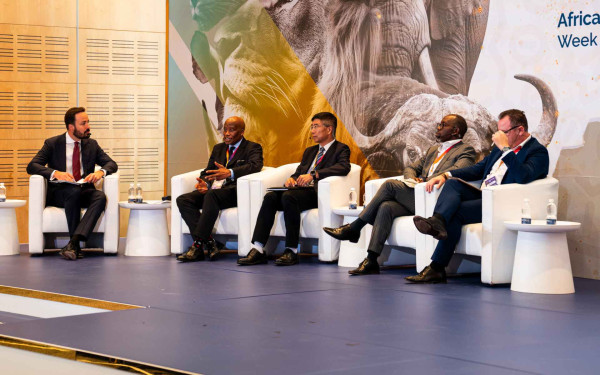
During a panel discussion titled ‘Optimizing Africa’s Grid Capacity’ at the African Energy Week: Invest in African Energies 2024 conference, Eskom’s Transmission Group Executive, Segomoco Scheppers, highlighted the potential of the Electricity Regulation Amendment Act 38 of 2024 for South Africa and its neighboring countries.
This legislation will facilitate the establishment of a market operator in South Africa, creating opportunities for diverse players in the energy sector. “This shift signifies a transformative period in our industry as we adapt to new market dynamics,” he stated.
Despite having interconnections of 400 kV with neighboring countries, Scheppers acknowledged existing challenges. “Strengthening these connections is essential for enhancing regional cooperation and ensuring a reliable energy supply across borders. The reliance on thermal generation in the south, particularly to support countries like Zambia, underscores the need for stronger interconnections,” he explained.
Eskom is further embarking on an extensive domestic expansion program aimed at rapid development – an endeavor that also presents significant challenges. “Learning from global leaders in infrastructure development, particularly from experiences in China, could provide valuable insights into scaling our efforts efficiently,” Scheppers added.
Wang Wenan, Chief Representative, African Representative Office at the State Grid of China, discussed the successful completion of major projects, including the largest long-distance transmission project on the continent — a 500 kV DC line from Ethiopia to Kenya.
However, he noted that fostering private participation in energy projects remains a primary obstacle. “Engaging in dialogues about investment barriers and sharing best practices is crucial for unlocking potential growth in Africa’s energy sector,” he emphasized.
Also speaking on the panel, Willy Ireri, Executive Director of Osprey Renewables, highlighted that while East Africa has abundant renewable resources such as wind, solar, and geothermal energy, access to reliable transmission infrastructure in this region also remained a critical challenge. “We are therefore committed to collaborate with state utilities and private investors to ensure that generated electricity reaches emerging green industries in the region,” he said.
With favorable legislation for private investment in transmission expected to be operational by 2025, Osprey Renewables aims to play a vital role in facilitating access to renewable energy for consumers.
“Our mandate at Osprey extends beyond generation; we actively engage across the entire value chain and we are seeing growing interest in green manufacturing and hybrid data centers,” Ireri added, noting that the Kenyan government has initiated proposals inviting independent transmission projects, signaling a positive shift toward increased private sector participation.
Power and Grid Segment President at Schneider Electric, Gary Lawrence, highlighted that a modernization of power grids was also needed. “The traditional grid was designed over a century ago for one-directional flow; today’s needs require a bidirectional grid that allows seamless interaction between producers and consumer.”
The industry is balancing supply and demand effectively through initiatives such as collaborating with Egypt’s Ministry of Electricity and Renewable Energy to develop distribution control centers that enhance grid intelligence and implementing distributed energy management systems in South Africa.
Africa Fact: The Funerary Complex in the ancient Egyptian city of Saqqara is the oldest building that tourists regularly visit today. An outer wall, now mostly in ruins, surrounded the whole structure. Through the entrance are a series of columns, the first stone-built columns known to historians. The North House also has ornamental columns built into the walls that have papyrus-like capitals. Also inside the complex is the Ceremonial Court, made of limestone blocks that have been quarried and then shaped. In the centre of the complex is the Step Pyramid, the first of 90 Egyptian pyramids.
Delicious Wing
Fun South African Fact: The aboriginal people of South Africa are the San and the Khoi.
Bootleg Taximan
Fun South African Fact: Water is not all there is to drink in this thirsty country! South Africa’s Cape Winelands have around 560 wineries and 4 400 primary producers. Included in the Cape Winelands region is Route 62, considered the longest wine route in the world. That alone is good reason to visit South Africa if you haven’t yet been!