South Africa Could Do Far More for Congolese Refugees
The long war in the Democratic Republic of Congo has displaced millions of people

MyZA
News, Directory, Events and Other Stuff
The long war in the Democratic Republic of Congo has displaced millions of people
Judge rules failure to deal with backlog of patients needing radio treatment is unconstitutional
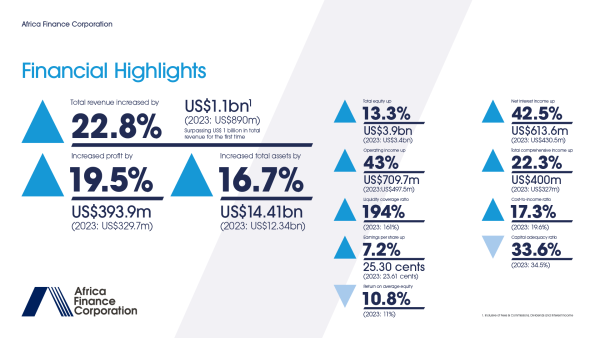
Africa Finance Corporation (AFC) (www.AfricaFC.org), the continent's leading infrastructure solutions provider, has announced its strongest financial performance to date, with total revenue for the year ended 31 December 2024 surpassing US$ 1 billion for the first time in the Corporation's history.
This record performance marks a significant milestone in AFC's mission to close Africa's infrastructure gap through scalable, de-risked investments that attract global capital and deliver tangible development outcomes. The Corporation posted a 22.8% increase in total revenue to US$1.1 billion and a 22.3% rise in total comprehensive income to US$400 million, up from US$327 million in 2023.
AFC's earnings growth was driven by improved asset yields, prudent cost-of-funds management and sustained traction in advisory mandates.
Further significant financial highlights include:
Throughout 2024, AFC continued to scale its impact by mobilising capital for landmark projects across energy, transport, and natural resources. These included the Lobito Corridor – a cross-border railway development spanning Angola, the Democratic Republic of Congo (DRC), and Zambia. AFC led the initiative to secure a concession agreement within one year of the initial Memorandum of Understanding (MoU), an unprecedented achievement for a project of its scale. In the DRC, AFC also invested US$150 million in the Kamoa-Kakula Copper Complex, Africa's largest copper producer and one of the most sustainable globally, thanks to its high-grade ore and renewable-powered smelter.
Other milestones transactions included financing support for the commissioning of the Dangote Refinery, the largest in Africa, and continued progress on AFC-backed Infinity Power Holding's 10 GW clean energy ambition, with power purchase agreements secured in Egypt and South Africa. AFC also invested in the 15GW Xlinks Morocco-UK Power Project, providing US$14.1 million to support early-stage development of a transcontinental renewable energy pipeline between North Africa and Europe.
AFC strengthened its capital base and expanded its investor network through several landmark funding initiatives. These included a US$ 1.16 billion syndicated loan - the largest in its history, a US$500 million perpetual hybrid bond issue, and the successful execution of Nigeria's first-ever domestic dollar bond, which raised US$900 million at 180% oversubscription. AFC also returned to the Islamic finance market after eight years, closing a US$400 million Shariah-compliant facility.
The year also saw strong momentum in equity mobilisation, with US$181.8 million in new capital raised from ten institutional investors. These included Turk Eximbank - AFC's first non-African sovereign shareholder - the Arab Bank for Economic Development in Africa (BADEA), and several major pension funds spanning Cameroon, Seychelles, Mauritius, and South Africa. Ratings agencies affirmed AFC's robust credit profile, with AAA ratings from S&P Global (China) and China Chengxin International, and a stable A3 Outlook from Moody's.
“These results send a clear message that strategic investment in African infrastructure creates lasting value for both beneficiaries and investors,” said Samaila Zubairu, President & CEO of AFC. “In 2024, we exceeded the billion-dollar revenue mark, delivered game-changing projects, and reinforced our financial resilience—demonstrating the scalability of our unique model that blends purpose with performance to accelerate Africa's economic transformation.”
Read the full annual report here (https://apo-opa.co/424qlmR)
Distributed by APO Group on behalf of Africa Finance Corporation (AFC).
Media Enquiries:
Yewande Thorpe
Communications
Africa Finance Corporation
Mobile: +234 1 279 9654
Email: yewande.thorpe@africafc.org
About AFC:
AFC was established in 2007 to be the catalyst for pragmatic infrastructure and industrial investments across Africa. AFC's approach combines specialist industry expertise with a focus on financial and technical advisory, project structuring, project development, and risk capital to address Africa's infrastructure development needs and drive sustainable economic growth.
Seventeen years on, AFC has developed a track record as the partner of choice in Africa for investing and delivering on instrumental, high-quality infrastructure assets that provide essential services in the core infrastructure sectors of power, natural resources, heavy industry, transport, and telecommunications. AFC has 45 member countries and has invested over US$15 billion in 36 African countries since its inception. www.AfricaFC.org
Eight Southern African countries have embarked on a landmark effort to bolster emergency preparedness and response systems in the face of increasing climate-related health threats.
With financial support from the Pandemic Fund, and technical assistance from World Health Organization (WHO) in the African Region and other partners, Botswana, Lesotho, Madagascar, Malawi, Mozambique, Namibia, South Africa and Zimbabwe are advancing their capacity to protect public health, and respond to emergencies.
The US$ 35-million, three-year programme is aimed at supporting these countries as they strengthen national and regional systems for early warning, disease surveillance, laboratory diagnostics and workforce development – key pillars of health emergency readiness.
While implementation activities are yet to begin on the ground, coordinated planning efforts are well under way, including the establishment of governance structures at country and regional levels. Through a dedicated technical coordination capacity at the WHO Emergency Hub in Nairobi, Kenya, WHO is putting in place systems to ensure agile implementation and project monitoring, evaluation, research and learning over the three-year project duration.
To date, all eight countries have convened multi- disciplinary National Steering Committees and have undertaken a detailed microplanning activity with key stakeholders. Furthermore, initial funds have been disbursed to countries, marking a critical early milestone in a regionally coordinated, country-driven initiative to build climate-resilient health systems.
A formal launch event is planned for next month.
“This investment represents a vital turning point for Southern Africa, a region on the frontlines of the climate and health crisis. Countries now have a unique opportunity to develop systems that are robust, responsive and resilient to emerging threats,” said Dr Chikwe Ihekweazu, Acting WHO Regional Director for Africa.
Southern Africa is warming at nearly twice the global average. Droughts, floods and cyclones are becoming more frequent and severe, fuelling the spread of vector- and waterborne diseases such as malaria and cholera, and placing added strain on health systems.
Five of the countries involved in the initiative – Lesotho, Madagascar, Malawi, Mozambique and Zimbabwe – rank among the world's 50 most vulnerable nations to infectious diseases. Many also face high climate risk, compounded by structural challenges such as weak infrastructure, limited resources and high levels of cross-border migration, underlining the urgent need for coordinated preparedness across the region.
The new programme, developed under the leadership of national governments, is focused on addressing critical gaps in three priority areas:
The proposal was developed as part of the Common Africa Approach under the Joint Emergency Action Plan, with WHO in the African Region, Africa Centres for Disease Control and WHO's Regional Office for the Eastern Mediterranean. Proposal development was supported by the Gates Foundation.
It builds on existing primary health care and community health efforts, and is aligned with global standards, including the International Health Regulations (2005) and the One Health approach.
One of its most ambitious long-term goals is the creation of a Climate-Health Observatory, a platform to support early warning systems and evidence-based decision making by tracking climate-sensitive health risks across borders. The observatory will facilitate data-driven policymaking and foster long-term resilience in the region.
In addition, the programme will help strengthen leadership and governance by establishing a regional network of connected leadership across Ministries of Health and National Public Health Agencies, further enabling swifter and smarter coordination during responses to emerging threats.
“These efforts are essential in a region with frequent population movement, fragile health systems, and limited emergency response capacity,” said Dr Abdou Salam Gueye, WHO's Africa Regional Emergency Director. “Our role is to support countries with the expertise, tools and evidence they need to lead these efforts effectively.”
Funding is provided by the Pandemic Fund, which supports pandemic prevention, preparedness and response capacity in low- and middle-income countries. The programme also contributes to building sustainable, resilient health systems that can withstand future pandemics and climate shocks.
By working together, and with strong technical support from WHO and partners, countries in Southern Africa are laying the foundation for a scalable model for climate-resilient health security – grounded in national ownership, regional solidarity and a shared commitment to protecting health and saving lives.
Distributed by APO Group on behalf of 2025 GoGettaz Agripreneur Prize Competition.
CSIR critical for innovative solutions to resolve challenges - President Ramaphosa
President Cyril Ramaphosa has hailed the Council for Scientific and Industrial Research (CSIR) as a “South African success story” as the institution marks 80 years since its establishment.
The President was delivering remarks at the institution’s headquarters following a tour of the facility on Tuesday afternoon.
“Over many decades, the CSIR has been [at the forefront]… of developing groundbreaking technologies and solutions that have profoundly shaped our country’s scientific and industrial progress.
“With the advent of democracy in 1994, the CSIR embarked on a trajectory of aligning itself with the values of our Constitution. The CSIR is a true treasure for our nation,” he said.
The President told the gathering that as the country – and the world – dealt with the COVID-19 pandemic, the CSIR stepped in to assist the country in fighting the virus.
During the pandemic, CSIR engineers produced some 18 000 ventilators, which were vital for the care of patients across the country.
It also developed a platform to track the impact of the pandemic, which assisted government to direct its response.
“At a moment of great crisis and danger, it was Minister [Blade] Nzimande who said let’s go to the CSIR, and indeed, we came rushing because you had already developed certain capabilities to help us deal with the crisis not only our country was facing.
“We came in a rush, and you distinguished yourselves as a truly capable facility and centre, and today you have displayed to me and us precisely what you true capabilities are. They range from... having the capability to develop missiles and aeroplanes, and cyber security systems,” President Ramaphosa said.
The President called on government to make more use of the CSIR’s capabilities to deliver on South Africa’s developmental mandate.
“In government, we don’t use… the CSIR enough. You are a government owned entity, and you do a great deal of work for others in other countries. We have used you, and you have demonstrated that you are more than capable.
“We are going to have a special Cabinet session where [the CSIR] comes and outlines... precisely what you do and also give us insights on how we can use you. I can’t think of a better way of State capability [building] other than through science, technology and innovation,” he said.
The President further emphasised the institution’s critical role in building State capacity.
“We are one of those countries where, at the advent of democracy, we deindustrialised. The manufacturing base in our country started receding and it is this that we now need to build back.
“[The CSIR] being the centre for industrial research, and who are so adept in a number of areas, can help us to address the challenges in relation to job creation, reducing poverty and also ensuring that there is inclusive growth,” President Ramaphosa said. – SAnews.gov.za
NeoB
Wed, 04/09/2025 - 10:10
22 views
Abulele Kwindana was killed in 2020. No-one has been charged with his murder.
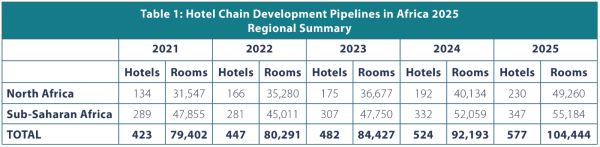
This year's Hotel Development Pipeline Report, the definitive study of international hospitality development projects in Africa, reveals record activity. There are 577 hotels and resorts, with 104,444 rooms, in the development pipeline, up by 13.3% on 2024, way ahead of the single digit pipeline growth reported globally by the leading international chains.
The report, compiled by Lagos-based W Hospitality Group, with data from 50 international and regional hotel chains, shows that development activity has been growing impressively in North Africa, which saw a 23% year-on-year increase, compared to a 6% increase in sub-Saharan Africa. Over the past five years, the hotel development pipeline has grown at an annualised rate of 4% in sub-Saharan Africa, 12% in North Africa and 7% overall.
Egypt continues to lead the way in terms of development, with 143 hotels and 33,926 rooms in the pipeline there. This is almost four times the number of rooms in second-placed Morocco, which has 8,579 rooms in 58 hotels. The following eight countries, ranked by number of rooms, comprise Nigeria, 7,320; Ethiopia, 5,648; Cape Verde, 5,565; Kenya, 4,344; Tunisia, 4,336; South Africa, 4,076; Tanzania, 3,432; and Ghana, 3,125. International hotel chains have deals signed in 42 of Africa's 54 countries.
Despite its clear leadership in the absolute pipeline numbers, Egypt has fewer than 50% of rooms under construction, a significantly lower proportion than second-placed Morocco, with over 72%. Of the top 10 countries, Ethiopia has the highest ratio of rooms “on site”, followed by Morocco and Ghana. Cape Verde, Nigeria and Tanzania have some of the lowest percentages. However, “under construction” does not necessarily mean that there is activity and progress towards completion and opening – many of the sites in Nigeria and Ghana, for example, have been closed for several years, with hardly a hard hat in sight.
A more granular analysis, looking at the location of planned properties, reveals an extraordinary boom in Cairo, with 17,757 new rooms projected in over 70 hotels. The contrast with the second-placed location, Sharm El Sheikh, is dramatic, where 4,231 rooms are planned in fewer than 10 properties. The cities and resorts with the next largest pipelines by number of rooms are Lagos, 3,709; Boa Vista, 3,650; Addis Ababa, 3,369; Casablanca, 2,939; Accra, 2,652; Abuja, 2,570; Zanzibar, 2,523; and Dakar, 2,334.
The growth is being driven strongly by the major international hotel chains, with Marriott International leading the way, 165 hotels with 29,639 rooms. It is followed by Hilton, 93 hotels with 17,040 rooms; Accor, 73 hotels with 15,013 rooms; IHG, 40 hotels with 7,951 rooms; Radisson Hotel Group, 32 hotels with 6,346 rooms; TUI Hotels & Resorts, 11 hotels with 2,954 rooms; Barceló Hotels & Resorts, 7 hotels with 2,193 rooms; The Ascott, 15 hotels with 1,897 rooms; Kerten Hospitality, 13 hotels with 1,881 rooms and Wyndham Hotels & Resorts, 7 hotels with 1,706 rooms.
In the race for dominance, Hilton added slightly more rooms to its African pipeline last year than Marriott International and achieved a higher percentage growth. Barceló Hotels & Resorts recorded the largest percentage growth, more than doubling its pipeline to 2,193 rooms, with three large resort signings in North Africa.
Below the headline numbers, there are three notable trends. First, the actualisation rate (actual openings vs. expected openings), which has nearly doubled from 21% in 2023 to 38% in 2024. While it's substantially less than the 75% actualisation rate achieved in 2019, it shows a continuing recovery from the economic devastation of COVID-19. Of the total 104,444 rooms in the pipeline, over 50,000 rooms (nearly 50%) in 304 hotels are expected to open in 2025 and 2026.
Second, resort projects are increasing much faster than city or airport hotels, both in percentage terms and in absolute numbers, driven by the number of signings and by the larger average size of the developments, 210 keys vs. 170. Also, almost half of the rooms that opened last year were in resorts.
Third, there is a definite movement by the chains towards the franchise model, with 108 projects representing almost 19% of the total, compared to less than 10% in 2020. A major factor is the emergence of quality, international, white-label operators such as Aleph Hospitality and Valor Hospitality, and some indigenous operators in Nigeria, Kenya and elsewhere, that are increasing confidence that brand standards will be met.
The full report will be discussed at FHS Africa (formerly AHIF) 17-19 June in Cape Town. It is the leading hospitality investment conference in the region, which brings together senior decision-makers to shape the future of the industry. Matthew Weihs, Managing Director of the Bench, which organises FHS Africa, said: “The growth in hotel development across Africa is a testament to the continent's economic and tourism potential. Furthermore, the commitment from the international hotel chains makes it clear that global players see Africa as a strategic opportunity."
Trevor Ward, Managing Director of W Hospitality Group, concluded: “Despite the various trials that the continent faces, the fact that hotel chains signed 125 new deals last year, with 21,000 rooms, is evidence that opportunities for further development abound. According to the Global Cities Institute, by the year 2100, 10 of the world's 16 largest cities will be in Africa, with all but one of them (Cairo) in sub-Saharan Africa. So, one might say that development activity in Africa has barely scratched the surface.”
Distributed by APO Group on behalf of The Bench.
For further information and high-resolution images, please contact:
David Tarsh
+44 (0) 20 7602 5262
+44 (0) 7770 816 070
Email: David@Tarsh.com.
About W Hospitality Group:
The W Hospitality Group, a member of Hotel Partners Africa, specialises in the provision of advisory services to the hotel, tourism and leisure industries, providing a full range of services to clients who have investments in the sector, or who are looking to enter them through development, acquisition or other means. In sub-Saharan Africa W Hospitality Group is regarded as the market leader due to the market and financial expertise of its staff, its worldwide knowledge, and its commitment to its clients. In Africa, W Hospitality Group has to date worked in 40 countries on the continent, from its Lagos and Addis Ababa offices.
About FHS Africa (Formerly AHIF):
For over a decade, the Future Hospitality Summit Africa (FHS Africa) has been the launchpad for hospitality investment in Africa, driving growth, connecting visionaries, and transforming the continent's tourism and hospitality landscape. As a beacon of opportunity, FHS Africa brings together global investors, developers, operators, and industry leaders committed to turning potential into reality.
Strategic Partners: Accor, BWH Hotels, Hilton, IHG Hotels & Resorts, Marriott International, Radisson Hotel Group
Headline Sponsors: CHIC, Hansgrohe, TUI Hotels & Resorts
Sponsors: Aleph Hospitality, CityBlue Hotels, Equate, JLL, Knight Frank, St Helena Island, STR, TIME Hotels, TV5 Monde, Valor Hospitality Partners
Official Carriers: Discover Airlines, Kenya Airways
Supporter: South Africa Tourism
About The Bench:
The Bench has a legacy of delivering world-leading investment forums and conferences in Europe, Africa, the Middle East, and Latin America. The key principle behind these events is "dealmaking'. Transforming the way businesses connect; the Bench has developed a reputation for creating innovative and high-impact industry meetings.
For over two decades, government leaders, tourism ministries, global travel & tourism associations, the world's most influential hospitality brands, hotel owners & investors, renowned restaurant groups, airlines & aviation authorities, destination developers, asset managers, financial groups, and consultants have been participating in the Bench's events. These include FHS Africa, FHS World, FHS Saudi Arabia and AviaDev, where industry players showcase their brands, position themselves as thought leaders and innovators, and connect with the right individuals, opportunities and knowledge.
Learn more at TheBench.com
President calls for holistic overhaul of policing
President Cyril Ramaphosa has called for a bold, coordinated, and community-driven approach to crime-fighting, describing policing in South Africa as being at a crossroads that demands urgent reform and collaboration from across all sectors of society.
The President was delivering the keynote address at the 2025 Policing Summit held in Ekurhuleni on Tuesday.
President Ramaphosa applauded the Ministry of Police for convening what he termed a “critical” gathering, which brings together government, civil society, business, interfaith groups, labour, and communities to reshape the country’s safety and security strategy.
“Safeguarding our nation’s safety and security requires that we are proactive, innovative and solution-oriented in our approach… Just as crime is an all-of-society problem, overcoming crime must be an all-of-society effort.
“In doing so, we must marshall our full support behind the hardworking men and women of the South African Police Service," the President said.
The President said crime has a direct impact on the economy, as it discourages investment, disrupts business activity and leads to increased security costs for companies.
He noted that social ills such as poverty and inequality, unemployment, lack of opportunity, patriarchy and misogyny, and broken family structures are just some of the issues that contribute to crime and criminality.
“Addressing crime without understanding its root causes is like a doctor treating a patient for a fever without diagnosing the underlying illness.
“It is therefore encouraging that this summit has as one of its key objectives adopting a more holistic approach to law-enforcement, encompassing not just the police but the entire policing system,” the President said.
The President emphasised that policing must be grounded in the Batho Pele principles of service delivery, which include respect, empathy, accessibility, and accountability.
He said that the policing terrain of today is complex and multi-faceted and the police strive to fulfil their mandate in the context of emerging threats.
These threats, he said, include transnational organised crime, illegal mining, extortion syndicates, the theft of economic infrastructure, money laundering and terror financing.
“And yet, even in this extremely challenging environment, the South African Police Service continues to register successes in fighting crime in its various operations,” the president said.
Restoring public trust
The President warned that restoring public trust in the police is critical to winning the fight against crime.
“We need to improve the relationships between the police and the communities they serve. We need to work to improve the morale of SAPS members, many of whom are battling heavy workloads, insufficient resources and outdated systems.
“Even as the SAPS budget has increased over the past ten years, the reality is that the number of police personnel has been declining while the country’s population has been growing,” the President said.
President Ramaphosa stressed that policing cannot succeed without the active involvement of communities.
He called for a stronger role for Community Policing Forums (CPFs), citizen empowerment, and partnerships with the private sector, which has already played a crucial role in equipping victim support centres and bolstering frontline capacity.
“We know that communities are the most potent resource for fighting crime. Crimes happen in communities and criminals are often known to communities.
“From this summit we need a clear plan on how to better involve communities in crime prevention and detection, and on harnessing the potential of CPFs in line with relevant legislation and regulations,” he said.
The role of technology and data
The President welcomed and backed the focus of the summit on exploring the role of technology in modern policing, investigation and intelligence.
“We need to harness modern technologies to support crime-fighting. Technology is particularly crucial when analysing crime trends and patterns. It is also valuable in empowering citizens,” President Ramaphosa said.
He further advocated for applying a socio-economic lens to crime data to better tailor responses for example, by examining links between substance abuse and robbery, or alcohol abuse and gender-based violence.
“Data plays a pivotal role in policing and law-enforcement. And we need to apply a socio-economic lens when analysing such data. The data may tell us, for example, about a community with a high prevalence of housebreaking and robbery, in which substance abuse is also rife.
“Understanding the connections revealed by this data should inform the approach to policing in that community. There is ample data on the linkages between alcohol abuse and the prevalence of gender-based violence,” the President said.
He added that a holistic policing approach would, for example, need to involve working with local authorities to enforce municipal by-laws for establishments selling alcohol.
As part of facilitating access to SAPS services, the President said it is encouraging that discussions are planned for how to leverage innovative digital platforms such as mobile apps, online reporting systems and virtual communication channels to improve the public’s interaction with the police.
“To turn the tide against crime, we need better collaboration among the different agencies in the law-enforcement space,” he said.
The President further highlighted that there is a proliferation of organised crime in South Africa, including the manufacture of illicit drugs, kidnapping for ransom and money laundering.
He said this is taking place alongside a growth in illegal mining, extortion in the construction sector, and the theft of public infrastructure.
Addressing corruption
The President urged police to stay away from corrupt activities, stressing that corruption has infiltrated every part of society, including the SAPS.
He said while prosecuting corrupt officers is important, it is equally crucial to instil a culture of honesty and integrity within the police service.
The President emphasised the need to strengthen the fundamentals of policing through ethics, accountability, and professionalism.
He expressed hope that the summit would focus on promoting ethical conduct, restoring public trust in law enforcement, and upholding the rule of law.
Key initiatives include protecting whistleblowers, implementing the National Anti-Corruption Strategy, and improving recruitment and training to attract the right calibre of candidates to the SAPS.
“If the SAPS is to fulfil its crucial mandate, we have to emerge from these few days with a clear plan on how to address the systemic deficiencies that are negatively impacting policing.
“As a country we owe the SAPS our full support. As government we remain committed to turning the tide against crime and to making our communities safer.
“It is our hope that the recommendations emerging from this summit translate into deeper collaboration, more effective methods and a promising future for policing in South Africa,” he said. – SAnews.gov.za
DikelediM
Tue, 04/08/2025 - 13:57
366 views
Five sluice gates remain open at Vaal Dam
The Department of Water and Sanitation (DWS) says the five sluice gates remain opened at the Vaal Dam, while outflows at Bloemhof Dam are to be increased to manage rising water levels.
“Since the opening of the fifth sluice gate [on Sunday] morning due to the heavy inflows into the Vaal Dam, the Department of Water and Sanitation will keep all the five sluice gates opened and there will be no changes in the dam’s outflow…
“However, should there be increased inflows into the Vaal Dam, it may result in additional gates being opened. The DWS will continue to monitor Vaal Dam and effect changes on the outflow as and when necessary,” the department said in a statement on Monday.
The department reported that the water storage level at the Vaal Dam was at 111.11% on Monday morning, rising from Sunday’s 109.3% full supply capacity.
This is due to the continuous high inflow of water at 1002.25 mᵌ/s from the upper catchment.
The Bloemhof Dam storage level has also increased from 107% on Sunday to 112.08% full supply capacity on Monday morning.
As a result, the department said water releases at the dam will be increased at different times on Monday and will be staggered from the current 1 400 m3/s to 1 550 m³/s at 12pm to 1 700 m³/s at 2pm, and the last increase will be 1 850 m³/s at 4pm.
Possible overtopping of riverbanks downstream
The department warned that the current controlled water releases by the five sluice gates may lead to possible overtopping of riverbanks downstream, and this will affect infrastructure built in lower-lying areas within the 1 in 100-year floodline.
“People living within the floodline of the Vaal River downstream of the Vaal Dam and the Bloemhof Dam should evacuate and move to a safe area and remove valuable equipment, movable infrastructure and livestock,” the department said.
One sluice gate remains open at Grootdraai Dam
One sluice gate remains open at Grootdraai Dam in Mpumalanga in the Upper Vaal River Catchment, upstream of the Vaal Dam, to enable water releases.
On Monday morning, the dam recorded 102% full supply capacity.
The department reiterated that these necessary controlled water releases at the dams are being implemented, as part of dam safety precautions to safeguard the infrastructure and protect human life.
“The DWS is continuously monitoring the water levels in the Vaal River System. Through various platforms, the department continuously shares hydrology reports and provides regular updates regarding the water levels in the dams, with recommendations in order to provide early warnings in case of flooding.” – SAnews.gov.za
GabiK
Mon, 04/07/2025 - 15:22
141 views
SA advocates for linguistic equity in AI at G20
South Africa has called on the Group of Twenty (G20) members to support initiatives that develop Artificial Intelligence (AI) in low-resource languages and share data and tools to make this possible.
Addressing the Meeting of the G20 Digital Economy Working Group Task Force on AI, Minister of Communications and Digital Technologies, Solly Malatsi, said there were over 7 000 languages spoken in the world, yet most AI models and digital content is trained on a tiny fraction of these – predominantly English and a handful of others.
“We know that AI is only as good as the data and algorithms it is built on and currently, both of these have serious gaps. One glaring gap is the linguistic and cultural diversity deficit in AI systems.
“This linguistic inequity is not just a cultural loss; it’s a practical barrier that threatens to exclude billions from the AI-driven digital economy,” the Minister said on Monday in Gqeberha.
He emphasised that AI must not only be looked at from a technology perspective, but from the standpoint of social impact.
“We must investigate how AI can help us achieve the Sustainable Development Goals. How can it improve healthcare, education, agriculture, and governance? Beyond language, ethical AI governance requires addressing issues of bias, transparency, and accountability.
“We have seen instances of AI algorithms that exhibit racial or gender bias in hiring, lending, or policing. These are systemic harms we have to root out. During our Task Force discussions, we must consider how G20 nations can share best practices on AI governance, including regulatory approaches and standards to ensure AI safety and trustworthiness,” Malatsi said.
South Africa’s G20 Presidency has set inclusion and equity at the heart of the digital agenda.
The G20 Presidency will focus on four key pillars that include bridging the digital divide with meaningful connectivity; building inclusive digital public infrastructure; nurturing innovation ecosystems for local development and championing ethical AI that respects diverse languages, cultures, and values.
“We cannot allow a new form of digital inequality to take hold in our world. We need to unite our efforts, North and South, public and private, to invest in connectivity for all. This means mobilising financing for digital infrastructure, sharing innovations to lower costs, and collaborating on policies to make internet access affordable for the poorest,” the Minister said.
The International Telecommunication Union indicates that roughly 2.9 billion people still don’t have internet access at all.
“While most of these individuals live within range of mobile broadband networks, they remain offline due to multiple factors ranging from high data costs, lack of affordable smart devices and limited digital skills. Infrastructure alone is no longer enough; the real barriers are economic, educational, and linguistic.
“And they demand our immediate collective attention. The socio-economic benefits of closing the digital divide are enormous. We cannot allow a new form of digital inequality to take hold in our world,” he said.
According to the Global System for Mobile Communications Association (GSMA), bringing the currently offline population onto the internet could add $3.5 trillion to the global economy by 2030, with 90% of the benefits flowing to developing countries.
“We propose that G20 members share strategies on supporting start-ups and micro, small and medium enterprises (MSMEs) – from startup financing initiatives to innovation hubs and tech parks, from simplifying regulatory burdens to providing mentorship networks.
“Let us commit to growing the digital innovation ecosystem in all our countries. As we discuss policy frameworks, we must also consider the idea of an innovation fund or facility to support digital entrepreneurship in underserved regions, an idea that has been floated with the notion of a possible global fund for AI and digital innovation.
“If we want a truly global digital economy, we must ensure that innovation knows no borders – that brilliant ideas from Africa, Asia, or Latin America can find the resources and support to grow,” Malatsi said. - SAnews.gov.za
nosihle
Mon, 04/07/2025 - 14:42
37 views
Young voices make their mark at Africa Children’s Summit 2025
Children have taken centre stage to address critical issues affecting their lives, from education access to violence prevention, proving that they are not just future leaders but active changemakers.
This is according to the Department of Social Development, which has hosted the Africa Children’s Summit 2025.
Since its opening last week Friday, the summit has brought together some of the brightest and courageous young leaders in person from across Africa, with hundreds joining virtually.
The children who attended in person are from South Africa, South Sudan, DRC, Ethiopia, Kenya, Lesotho, Ghana, Liberia, Mozambique, Uganda, Zambia and Zimbabwe.
In a statement, the department said the summit was child-led and child-centred, with its chairperson and programme facilitators all drawn from children invited to the summit.
“Under the theme 'Seen, Heard, and Engaged in Education,' the children have boldly taken centre stage to address critical issues affecting their lives, from education access to violence prevention, proving that they are not just future leaders but active changemakers today,” the department said.
One of the child leaders, 17-year-old Ison Cumbane from Mozambique, captured the spirit of the summit when he said: “Many children don’t have the opportunity to speak about their rights. We are here to give a voice to them and show that we can participate and influence decisions.”
The summit wraps up in Johannesburg today.
The child-led initiative is hosted by the South African Government through the Department of Social Development, in partnership with the Nelson Mandela Children’s Fund.
An Outcome Statement will be crafted by the children themselves, which will be handed over to the CEO of the Nelson Mandela Children's Fund and other key policymakers.
“The Outcome Statement outlines actionable recommendations for governments and civil society to implement policies that prioritise children’s voices and rights across Africa,” the department said. – SAnews.gov.za
DikelediM
Mon, 04/07/2025 - 11:12
249 views
Department of Home Affairs must issue Primrose Modisane with an ID, court rules
African nations are leveraging strategic partnerships to attract investment and strengthen their mining sectors. As competition between Western and Eastern powers intensifies over critical minerals, Africa has emerged as a key player in global supply chains, balancing geopolitical interests while maximizing economic benefits. With global markets racing to secure resources for the energy transition and the Fourth Industrial Revolution, the upcoming African Mining Week will facilitate collaboration between African governments and international stakeholders.
U.S.–DRC Partnership to Unlock Mineral Wealth
In March 2025, the U.S. State Department reaffirmed (https://apo-opa.co/43JPLr8) its interest in engaging with the Democratic Republic of Congo (DRC) to unlock its estimated $1.2 trillion in untapped mineral resources. Cooperation between the two countries could yield a transformative impact on the sector, with U.S. financing and technical expertise unlocking the potential of the world's largest cobalt producer and Africa's largest copper producer. The U.S. has already played an active role in the financing and development of the Lobito Corridor, facilitating mineral transport and trade between the DRC, Angola, Zambia and international markets.
EU Expands Mining, Green Energy Investments
This month, the European Union (EU) pledged €4.7 billion (https://apo-opa.co/42q3265) to South Africa to support raw material value addition, the energy transition, local vaccine manufacturing and green hydrogen production. South Africa, home to the world's largest deposits of platinum group metals (PGMs), will leverage this funding to enhance PGM production to meet growing demand for electrolysers used in green hydrogen applications. This follows South Africa's $1 billion green hydrogen partnership with Denmark and the Netherlands established in 2023. Neighboring Namibia has also attracted European investment, with the EU committing €25 million to Namibia Hydrogen Fund Managers in September 2024 to propel the country's green hydrogen sector. Meanwhile, Uganda is taking steps to develop its mining sector with the support of the EU and Germany's Federal Ministry for Economic Cooperation and Development, having launched the Sustainable Development of the Mining Sector project earlier this month.
China Strengthens its Position in African Mining
China remains one of the largest investors in African mining, with both state-owned and private firms driving sector growth. In September 2024, China pledged $50 billion over three years for infrastructure and mineral development across the continent. Key projects in the DRC include CMOC's $2.5 billion expansion of the Tenke Fungurume Mine and Sinohydro and China Railway's $7 billion infrastructure-for-minerals deal in copper and cobalt mining. China has also invested heavily in Zimbabwe's lithium sector and pledged $1 billion to upgrade the Tazara Railway, improving East Africa's mineral exports.
Growing Global Interest in Africa's Mining Sector
Beyond the U.S., EU and China, countries like Canada, Australia and the UAE are ramping up mining investments in Africa. Canadian firms are expanding their footprint in West Africa's gold sector, Australian companies are backing lithium and rare earth projects in southern Africa and the UAE is securing stakes in critical mineral supply chains through strategic joint ventures. African Mining Week, taking place October 1-3 in Cape Town, will provide a platform for African nations to engage global investors, strengthen cooperation and accelerate resource development.
Distributed by APO Group on behalf of Energy Capital & Power.
JOHANNESBURG: Cricket South Africa (CSA) today announced the Proteas Men’s contracted squad for the 2025/26 season. CSA has awarded 18...
Mining represents one of the most energy-intensive industries globally. As African nations ramp up mineral extraction to drive economic growth, mining projects and stakeholders are increasingly investing in energy infrastructure to sustain operations and meet rising production targets. Amid efforts to improve grid stability, the upcoming African Mining Week conference will highlight the continent's investment opportunities emerging from the mining-energy nexus.
Northam Bolsters Power Supply for South African Mines
In February 2025, mining firm Northam signed a power purchase agreement (PPA) for 140 MW of wind power to support its platinum group metals operations in Limpopo. This deal follows an earlier PPA signed in October 2024 for an 80 MW solar power facility to supply the company's Zondereinde mine, aimed at driving South Africa's expansion of its PGMs sector. These agreements are part of Northam's broader strategy to enhance energy security and sustainability while reducing its carbon footprint in alignment with national renewable energy goals.
Richards Bay Minerals Expands PPA Portfolio
Richards Bay Minerals, a subsidiary of mining multinational Rio Tinto, signed its third PPA with Red Rocket in February 2025, securing 230 MW of electricity from Red Rocket's 380 MW Overberg Wind Farm. This agreement increases the company's total contracted renewable energy supply to 500 MW and supports Rio Tinto's commitment to reducing emissions by 50% by 2030. Richards Bay Minerals also taps into energy from the 130 MW Bolobedu solar PV plant and 140 MW Khangela Emoyeni wind farm.
Further Investments in Renewables for Mining
Other mining companies across Africa are driving large-scale energy projects to secure a stable power supply. In South Africa, Ivanhoe Mines completed a 5 MW solar facility in Q1 2025 to support its Platreef PGM mine, while Impala Platinum signed a five-year PPA with Discovery Green to supply wheeled renewable energy to its Impala Refineries operation. Meanwhile, commodities firm Trafigura is developing a 2 GW initiative to power Angolan mines, and First Quantum is set to commission a 430 MW project in Zambia in 2025. Tronox Holdings plans to roll out 400 MW of energy projects in South Africa by 2027 and Chinese mining company CMOC is preparing a 200 MW energy project in the DRC, set for commissioning by 2028.
As these investments unfold, African Mining Week will showcase key milestones in energy security for the sector, highlighting lucrative opportunities within Africa's independent power markets. The event will emphasize the growing demand for stable, sustainable energy solutions as miners continue to invest in energy infrastructure.
African Mining Week serves as a premier platform for exploring the full spectrum of mining opportunities across Africa. The event is held alongside the African Energy Week: Invest in African Energies 2025 conference from October 1-3 in Cape Town. Sponsors, exhibitors and delegates can learn more by contacting sales@energycapitalpower.com.
Distributed by APO Group on behalf of Energy Capital & Power.
KZN mass murderer sentenced to life imprisonment
A KwaZulu-Natal mass murderer has been sentenced to seven life terms and 70 years imprisonment for the murders, attempted murders and housebreaking he committed in August 2023.
According to the National Prosecuting Authority (NPA), Siphamandla Dlomo – together with others – orchestrated the killing of nine people following a fallout with one of the complainants in the case.
“Shortly after the fallout, Dlomo planned with others to eradicate the family of the complainant. On 11 August 2023, Dlomo and others armed themselves with firearms and proceeded to the complainant’s homestead at Umlazi Q Section, in search of the complainant. They could not find the complainant as the complainant had fled his home, upon hearing that Dlomo was looking for him.
“Dlomo and the assailants then shot and killed the complainant’s neighbour, as well as other people who were in [the complainant's], before setting the house alight. Dlomo then managed to find the complainant and while a scuffle ensued between them, the complainant managed to escape.
“Dlomo and the others then proceeded to search for others and fatally shot them. The following night, Dlomo returned to Umlazi Q Section and fatally shot two people who were friends of the complainant,” the NPA said in a statement.
Dlomo subsequently handed himself over to police.
He was convicted and sentenced to:
“The NPA welcomes the successful finalisation of this matter. Together with our partners in the crime prevention cluster, we will continue to fight for justice on behalf of the victims of crime,” the prosecutorial body said. – SAnews.gov.za
NeoB
Mon, 04/07/2025 - 09:48
50 views
Fifth sluice gate opened at Vaal Dam
A fifth sluice gate has been opened this morning at the Vaal Dam to manage water levels, which have increased overnight as a result of the ongoing rainfall in the Vaal River catchment.
This is in about 24 hours after the Department of Water and Sanitation (DWS) had opened the fourth sluice gate at the Vaal Dam.
Water storage levels at the dam stood at 107.82% on Saturday but as of this morning, the levels have risen to 109.39%. The outflows at the dam will move from 550 cubic metres per second (mᵌ/s) to just under 700 mᵌ/s. The inflows into the dam are currently 1 000 m3/s.
Bloemhof Dam storage levels have also risen from yesterday’s 103.23% to 106.91% this morning, and water releases will be staggered incrementally from the current 1 000 mᵌ/s to 1 100 m³/s at 10am; 1 200 m³/s at 12h00; 1 300 m³/s at 14h00, and the last increase at 16h00 to 1 400 m3/s.
The increased outflows from Vaal Dam are expected to reach the barrage in about six hours and Bloemhof Dam in three to four days, and will result in water levels rising in both the dam and the river, overtopping of the riverbanks.
Due to increased water releases by the five sluice gates, there might be a possible overflowing at the riverbanks downstream and this will affect infrastructure built in lower lying areas.
At Grootdraai Dam located in Mpumalanga in the Upper Vaal River Catchment, upstream of Vaal Dam, one sluice gate remains opened at 2.5 metres to enable the water releases. The dam is currently sitting at 102.41%.
The department is implementing these necessary controlled water releases at the dams as part of dam safety precautions to safeguard infrastructure and ensure that there is full storage capacity after the rainfall season.
The department, through various platforms, continuously shares hydrology reports and updates on a regular basis with recommendations in order to send early warning systems and activate evacuation plans in case of flooding. – SAnews.gov.za
Edwin
Sun, 04/06/2025 - 11:22
197 views
This has left the community disappointed as they hoped the Tshivhuyuni sports facility would boost the local economy
Liquor Amendment Bill still not introduced to Parliament after nine years
Water is not reaching households despite millions of rands spent on water projects
Two ships carrying South African coal are due to arrive in Israel
Work continues to solve Matatiela rape case
No effort will be spared in bringing the responsible parties to account in the case of the alleged sexual assault of a seven-year-old child in Matatiele, says Police Minister Senzo Mchunu.
“What I can promise, on behalf of the Ministry of Police and the SAPS [South African Police Service] is that we are committed to upholding the law and ensuring that justice is served,” Mchunu said.
The Minister was addressing a media briefing in Pretoria on Friday.
“This is a matter that transcends individual tragedy, and we acknowledge the deep emotional impact it has had on our communities,” said the Minister, adding that the Eastern Cape matter is a sensitive one that police are handling and dealing with, with great sensitivity.
“When the matter first came to our attention earlier this year, we sent a warrant officer to investigate the matter, interact with the complainant and the investigating officer, whilst looking at other related matters.
“In the initial report we received from the warrant officer, we came to learn that the incident occurred in October last year, and a case was formally opened on the 16th of October 2024, following [the] medical examination of the minor and session with a social worker.”
The Minister said from the report provided by the warrant officer, police concluded that the matter could have been handled better and still needed intervention.
“We then realised that we needed to reinforce the team and have a dedicated officer on the matter. After the handling of the matter by the various offices, one critical aspect which has continued to present a serious challenge is the matter around DNA. DNA testing was done on the victim, with no foreign DNA having been found,” he explained.
Three persons of interest have since emerged and following that, further DNA processing is underway as the investigation continues.
“A thorough investigation is now fully underway, and I can assure you that we are consulting with all relevant role players to ensure that every aspect of this matter is examined carefully and comprehensively.”
Additionally, he said the track record of the Family Violence, Child Protection (FCS) Unit remains commendable with more than 35 500 gender-based violence and femicide (GBVF) suspects arrested in the last two years.
READ | FCS unit deployed to boost Matatiele case
“During the same period, 4500 accused were convicted to time in prison for GBVF related crimes and notably, 660 of them were sentenced to life in prison. This indeed, must illustrate the seriousness at which the SAPS treats victims of GBVF related crimes especially those involving young children,” Mchunu said.
Citing police success in dealing with gender-based violence cases, Mchunu said in the past week alone, 259 rape suspects were arrested.
“This week, we have also welcomed the arrest of a 58-year-old male educator on Monday afternoon, 31 March 2025, for an alleged rape incident of a 13-year-old female learner in the Capricorn District of Limpopo. The Educator has appeared before the Mankweng Magistrates Court and is facing a charge of rape.”
Police will continue to support the family and the victim through the Employee Health and Wellness unit, including any other aspects related to the case.
“We assure the affected family of our full support and commitment to this case,” he said.
On Saturday, the Ministry of Police assured members of the public that law enforcement is actively investigating two incidences involving the rape of minors in the Eastern Cape.
This was after the Ministry took note of calls on various social media platforms regarding the tragic violation of the two minors in two separate incidences in October and November last year.
In both incidences, the suspects have been identified and were arrested. – SAnews.gov.za
Edwin
Fri, 04/04/2025 - 14:54
27 views
TSHWANE: The Proteas Women will assemble for a national training camp from 06 – 14 April at the Cricket South...
Long-standing rivals Andre Bezuidenhout and Robert Wolk will be going head-to-head in equal machinery this year – both driving Gould GR55B hillclimb racing cars Three exciting new Investchem MSA4 single-seater race cars set to compete this year, along with Formula Ford and Formula VW entries Rui Campos expected to be a strong contender for podium […]