• Skip to main content
  • Skip to header right navigation
  • Skip to after header navigation
  • Skip to site footer
MyZA

MyZA

News, Directory, Events and Other Stuff

  • Social Media
  • Sport
  • World News
  • Home
  • Submit News
  • Directory
  • Events
  • Stratlec
  • TFSA
  • News
    • APO
    • Today’s Sport News
    • Todays Social Media and Tech Headlines
    • Today’s World News
    • Today’s SA Financial News
  • Contact
You are here: Home / Archives for Politics

Politics

12 January 2024

Shining the Spotlight on #BlackExcellence in Civic Engagement and Politics
Location: News
Energy Capital & Power

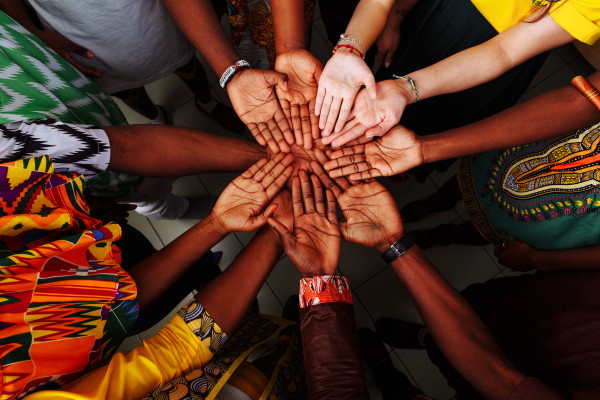
The influential history of Black individuals and organizations in civic engagement and political leadership throughout the world is incontrovertible and enduring. Strong leadership plays a crucial role in shaping the world and driving social progress, bringing innovation and opportunity to the realms of business, science, technology, sports, arts, and literature. As such, this year's Global Black Impact Summit (GBIS), taking place in Dubai on February 27, 2024, will honor the achievements and untapped potential of Black leaders in politics and civic engagement.

Concern for the welfare and civil rights of all people has been an outspoken theme in the policies of Black civic leaders for over a century. As an outspoken advocate for desegregation and unity in the United States (U.S.) during the mid-20th Century, French dancer, singer, actress, and activist, Josephine Baker became the first Black women inducted to the Panthéon in Paris, which came as a result of her contributions to French culture and the Civil Rights Movement in the U.S.

Moreover, as a long-time advocate for African American equality, Coretta Scott King was an author, activist, and civil rights leader whose prominent role during the U.S.'s Civil Rights Movement enthused Black participation in the U.S. political system, driving progress and spurring change in the country's political landscape. Furthermore, her long-standing opposition to Apartheid in South Africa in the 1980s prompted nationwide protests against the country's racial policies, contributing to the regime's dismantling.

Additionally, despite his relatively short career in government, former Congolese Prime Minister Patrice Lumumba's contributions to de-colonialism and African nationalist movements in the 20th century are defined by dignity, humanity, strength, and unity, and whose administration played a significant role in the transformation of the Republic of Congo from a colony into an independent republic.

Meanwhile, having jointly won the Nobel Peace Prize in 2018 for his efforts to end wartime sexual violence in Central Africa, Dr. Denis Mukwege is a Congolese gynecologist who serves in the Board Membership of numerous organizations and agencies that advocates healthcare and support for survivors of conflict. Dr. Mukwege's accomplishments in the fields of medicine and care in Africa has resulted in the growth of a culture of peace in the continent's Central region.

The accomplishments of these individuals and the many more in the global leadership and civic engagement space have laid the foundation for transformational change worldwide. As a platform for uniting the global Black community, GBIS will shine the spotlight on Black excellence, with achievement in civic engagement and politics celebrated. The conference, which serves to highlight the contributions, achievements, and influence of Black leaders from all over the world, takes place under the theme, Black Excellence: Unleashing the Unexplored Potential for Global Unity. The summit encapsulates the profound impact of Black individuals on the global stage while serving as a platform for networking, celebration, and the realization of the true potential of a united global community.

Distributed by APO Group on behalf of Energy Capital & Power.

About Global Black Impact Summit 2024:
Organized by Energy Capital & Power, the Global Black Impact Summit is an annual event that seeks to celebrate the achievements of the Black community, promote excellence, and explore untapped potential across various fields. This year's summit is set to be a transformative experience, featuring influential speakers, engaging panel discussions, and networking opportunities that encourage attendees to reach new heights.

To secure your spot at this prestigious gather, register promptly at www.GlobalBlackImpact.com.
Media files
Energy Capital & Power
Download logo
Read moreShining the Spotlight on #BlackExcellence in Civic Engagement and Politics
11 January 2024

Protesters exhibit support for South African case at International Court of Justice

Location: News

South Africa’s legal team is presenting at the International Court of Justice (ICJ) in The Hague, on Thursday about the devastating effects of the ongoing war in Gaza

Read moreProtesters exhibit support for South African case at International Court of Justice
8 January 2024

New African Magazine reveals the 100 Most Influential Africans of 2023

Location: News
New African Magazine

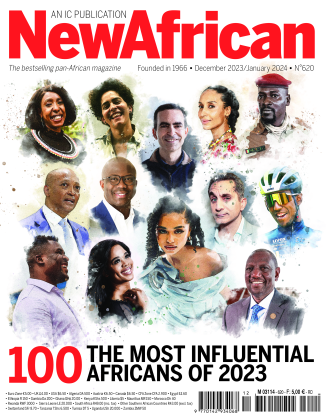
New African magazine (www.NewAfricanMagazine.com) released its annual listing of the 100 Most Influential Africans of 2023. The list celebrates the achievements and contributions of Africans from various fields and sectors, who have made a positive impact on the continent and the world.

The list features a diverse and inspiring group of men and women, who have demonstrated excellence, innovation, leadership, resilience, and vision in their respective domains. They include politicians, entrepreneurs, industrialists, environmentalists, creatives, scientists, educators, sports personalities, and more.

The list also reflects the shifting trends and priorities in Africa, as the continent faces new challenges and opportunities in the post-pandemic era. Creatives dominate the ranking with 31 representatives, including singer Abel Tesfaye, aka The Weekend, filmmaker Alice Diop and writer Nana Darkoa Sekyiamah.

The second category with the highest number of entries was the Business section, with 25 entries. The section included two behemoths from DFIs, supporting a private sector approach to investing: Samaila Zubairu from Africa Finance Corporation and the President of Afreximbank, Benedict Oramah, undoubtedly Africa's juggernaut from the last few years leading Africa's transformation. Also on the list is the former CEO of Eskom and whistleblower who nearly paid with his life André de Ruyter.

Nigeria was the country most represented on the list, highlighting the country's dominance in the creative sector and business. William Ruto, the President of Kenya, and Bola Tinubu, President of Nigeria, were the only heads of state to make it, along with the Guinean military leader Mamady Doumbouya. Doumbouya created quite a stir at this year's UN General Assembly and appears to have found a solution around the Simandou mining saga.

With Climate Change at the top of the agenda, the list features several players in the environmental space, such as James Mwangi, formerly from Dalberg Group who has set up his own venture fund investing in climate related businesses, and Elizabeth Maruma Mrema, the Executive Secretary of the UN Convention on Biological Diversity.

In the media, we have two media leaders from Côte d'Ivoire, Fabrice Sawegnon, founder of communications agency Voodoo, and Daniel Ahaoussa, serial entrepreneur and founder of a number of websites in West and Central Africa. Also included are the journalist Alan Kasujja, the BBC journalist, and Branko Brkic, founder of Daily Maverick, arguably the most powerful media in South Africa today.

And in sports, record breakers Faith Kipyegon and Kelvin Kiptum make it, as well as the Springboks team, under the leadership of their captain Siya Kolisi. Patrice Motsepe, the President of CAF, a close friend of FIFA president Gianni Infantino and an increasingly influential voice in sports, is also included.

The 100 Most Influential Africans of 2023 is a special edition of New African magazine, which offers a comprehensive and insightful overview of the lives and achievements of the selected individuals. The magazine also provides a platform for the readers to learn from their stories, and to be inspired by their examples.

Download the 100 Most Influential Africans of 2023 special edition of New  African: https://apo-opa.co/4aL1VB7

The 100 Most Influential Africans 2023 List:

Politics and Public Service

William Ruto

Ibrahima Cheikh Diong

Sidi Ould Tah

Akinwumi Adesina

Ngozi Okonjo-Iweala

Bola Tinubu

Mamady Doumbouya

Ousmane Sonko

Nadia Fettah Alaoui

Tsitsi Masiyiwa

Tidjane Thiam

Business

Mohamed Kande

Sim Tshabalala

Karim Beguir

Didier Acouetey

Olugbenga Agboola

Samaila Zubairu

Prof. Benedict Okey Oramah

Ralph Mupita

Ibrahim Sagna

Simon Tiemtoré

Jules Ngankam

Riham ElGizy

André de Ruyter

Aliko Dangote

Ham Serunjogi

Serge Ekué

Bahija Jallal

Coura Sène

Bernard Koné Dossongui

Hassanein Hiridjee

Shola Akinlade

James Mwangi

Pascal Agboyibor

Science and Academia

Anna Adeola Makanju

Chao Tayiana Maina

Nemat Talaat Shafik

Ismahane Elouafi

Moungi Bawendi

Timnit Gebru

Environmental

James Irungu Mwangi

Ephraim Mwepya Shitima

Wanjira Mathai

Rashid Sumaila

Elizabeth Maruma Mrema

Dr Musonda Mumba

Creative

Kaouther Ben Hania

Danai Gurira

Ncuti Gatwa

Black Coffee

Tyla Laura Seethal

Temilade “Tems” Openiyi

Lesley Lokko

Mulenga Kapwepwe

Alice Diop

Wanuri Kahiu

Bassem Youssef

Malenga Mulendema

Jadesola Osiberu

Editi Effiong

Ali Said Alamin Mandhry

Abel "The Weekend" Tesfaye

Pretty Yende

Julie Mehretu

Pierre Thiam

Teju Cole

Thebe Magugu

David Diop

Burna Boy

Serge Attukwei Clottey

Nana Darkoa Sekyiamah

Aïda Muluneh

Omoyemi Akerele

Mariam Issoufou Kamara

Victor Ekpuk

DJ Snake

Gandhi “Maitre Gims” Djuna

Media

Claude Grunitzky

Chioma Nnadi

Edward Enninful

Alan Kasujja

Wode Maya

Anton Harber

Khabane “Khaby” Lame

Charity Ekezie

Moses “Uncle Mo” Kiboneka

Branko Brkic

Tomiwa Aladekomo

Marie Mbullu

Nicolas Pompigne-Mognard

Daniel Ahaoussa

Fabrice Sawegnon

Sports

Francis Ngannou

Faith Kipyegon

The Springboks, led by captain Siya Kolisi

Patrice Motsepe

Kelvin Kiptum

Victor Osmihen

Biniam Girmay

Yassine Bounou

Distributed by APO Group on behalf of New African Magazine.

For any media inquiries please contact:
c.haasz@icpublications.com

About New African Magazine:
Published continuously since 1966, the English language monthly has consistently brought an African point of view to international news. It is the essential magazine for government officials, businessmen, professionals and Africa-watchers. New African is distributed in over 100 countries, and consulted whenever Africa is mentioned. The leading commentator on African affairs and Africa's best selling magazine.

The December / January 2024 issue of New African is one of the biggest of the year, most of it crammed with scintillating profiles and high-quality portraits of the best and brightest Africans of 2023. This issue will once again be a sure-fire source of animated discussion within Africa and abroad as readers discuss our choice of the 100 Most Influential Africans of 2023.

Media files
New African Magazine
Download logo
Read moreNew African Magazine reveals the 100 Most Influential Africans of 2023
26 December 2023

#BlackExcellence: Breaking Barriers to Female Leadership

Location: News
Energy Capital & Power

Black women continue to break barriers across diverse industries, paving the way for future leaders with their resilience, intelligence and determination. The upcoming Global Black Impact Summit (GBIS), scheduled for February 27, 2024 in Dubai, is set to celebrate the remarkable achievements of Black women, while connecting movers and shakers from across the global Black community.

Black women play a crucial role in transforming industries, leaving an undeniable impact from entertainment to business, science to politics. In Africa, Ellen Johnson Sirleaf – Liberia's first democratically-elected female president – has garnered international acclaim for empowering women, winning the 2011 Nobel Peace Prize and today advocating for female political participation. Meanwhile, Mozambican social scientist Alice Banze boasts a 25-year career in civil society and government and is the Executive Director of the Gender and Sustainable Development Association. Elected to the National Elections Commission in 2020 with support from the Women's Forum, she exemplifies transformative female leadership in Mozambique.

Many women are rising through the ranks across industries by forging their own paths. One example is Linda Mabhena-Olagunju, the founder and CEO of DLO Energy Resources Group, who leads a Black women-owned renewable energy company that focuses on wind power projects in South Africa. Other figures like Oprah Winfrey, who has built a media empire, and Ursula Burns, the first Black woman to head a Fortune 500 company, show the strength and determination of Black female leaders.

Yet despite their notable accomplishments, Black women in leadership often encounter systemic challenges to representation. In the US, Forbes reports that only 4.4% of Black women hold managerial roles, and merely 1.4% occupy executive-level positions, despite comprising 7.4% of the American population. In contrast, in Africa, women are making significant strides in governance roles. According to data from the Inter-Parliamentary Union, four African nations—Rwanda, Namibia, South Africa and Senegal—are among the top 15 countries globally for the highest representation of women in parliament. Rwanda leads with an impressive 61.3% of female parliamentarians, yet the sub-Saharan African average stands at 23.6%.

The intersectionality of race and gender amplifies challenges in the workplace for Black women, necessitating targeted efforts to address and mitigate specific barriers to leadership. Initiatives centered on diversity, equity and inclusion are crucial for dismantling these barriers and creating a more equitable playing field. To achieve this, companies and organizations must implement policies that recognize the unique value and perspectives of Black women in their respective industries, fostering a more inclusive environment that provides equal opportunities for success.

Celebrating Black women in leadership requires creating a supportive environment for future leaders through mentorship programs, educational initiatives and networking opportunities. Investing in the next generation of Black female leaders contributes to a more diverse and dynamic future, which the upcoming GBIS 2024 will facilitate by providing a platform for engagement, inspiration and unity. 

Distributed by APO Group on behalf of Energy Capital & Power.

About Global Black Impact Summit 2024:
The Global Black Impact Summit is an annual event that seeks to celebrate the achievements of the Black community, promote excellence and explore untapped potential across various fields. This year's summit is set to be a transformative experience, featuring influential speakers, engaging panel discussions, and networking opportunities that encourage attendees to reach new heights.

To secure your spot at this prestigious gathering, register promptly at www.GlobalBlackImpact.com.

Media files
Energy Capital & Power
Download logo
Read more#BlackExcellence: Breaking Barriers to Female Leadership
18 December 2023

AGOA illustrates inter-dependence of Africa and the US

Location: News

AGOA illustrates inter-dependence of Africa and the US

The African Growth and Opportunities Act exemplifies the growing inter-dependence between African countries and the United States of America.

“AGOA exemplifies the growing inter-dependence between Africa and the US. Don’t forget there are 40 million African Americans in the US,” says honourary Professor of International Relations at the University of the Witwatersrand, John Stremlau.

The act is an initiative of the United States and is aimed at giving duty-free market access for producers in eligible countries in sub-Saharan Africa.

 According to the Office of the United States Trade Representative, AGOA has been at the core of US economic policy as well as commercial engagement with the African continent. The Office of the United States Trade Representative further adds that by “providing new market opportunities, AGOA has helped bolster economic growth, promoted economic and political reform, and improved US economic relations in the region”.

South Africa hosted the 20th AGOA Forum in early November. The three-day session held in Johannesburg followed on the short, physical meeting held in Washington DC, in the US in December 2022.

One wouldn’t have been wrong to wonder how the meeting - which alternates between the US and the African continent annually - would pan out, given what appeared to be strained relations between South Africa and the US. This, following the Lady R matter in which US Ambassador to South Africa, Reuben Brigety, accused South Africa of having weapons intended for Russia, loaded onto the container ship that docked near Cape Town in December last year.

However, an independent panel appointed by President Cyril Ramaphosa found no evidence that weapons had been loaded.

Despite the outcome of the panel, the seeds of doubt had already been sown and what followed was a wait-and-see game of how the meeting would unfold, despite Cabinet’s welcoming of the acknowledgement of US National Security Advisor, Jake Sullivan, of the seriousness with which  President Ramaphosa had addressed the matter.  In a statement in October, Cabinet welcomed the affirmation of the strong relations between South Africa and the United States. 

In October, Sullivan spoke to President Ramaphosa’s National Security Advisor Sydney Mufamadi and the two officials reaffirmed the strong relations between the two countries.

In an interview with SAnews, Stremlau reflected on relations between South Africa and the US recalling how then US President Ronald Reagan in 1986 vetoed a bill that would have imposed sanctions on the apartheid government of the day. However, the US Congress overruled the President and sanctions were imposed.

“…South Africa is a really special case for America because of its own history of racism and South Africa’s history of racism… and the fact that you have Joe Biden in the White House now, who championed the overturning of the Reagan veto back in 1986 for the comprehensive ending [of] apartheid legislation that imposed sanctions on South Africa.”

He added that while there was a “sordid history” in which he was referring to “the tacit alliance between the Apartheid regime and successive US regimes during the Cold War era but also reflective of racism that was the sediments of slavery in the US that are ebbing but still pollute politics there,” the two countries “are moving on.”

“AGOA exemplifies the current complexity of the relations between the US and South Africa which have been good in the fundamental sense but strained over Russia and I suppose now the Israel –Palestine [matter],” Stremlau explained.

Enacted in 2000, the Act has been at the core of US economic policy and commercial engagement with Africa.

“The point is that both for the US and for South Africa, this relationship is important and was reaffirmed by the US Special Trade Representative Catherine Tai when she came here for the forum and by [Trade, Industry and Competition] Minister Ebrahim Patel and everyone else in the government.”

In a recent Cabinet statement, government asserted that AGOA provides an opportunity for the US to strengthen its economic relationship with Africa.

“And even though the South Africans and the Americans agree to disagree on Russia, which is a peripheral issue, it’s not the peripheral issue for the Ukrainians or the United States… and I think that’s the maturity in the relationship that you can differ on particular policies but still maintain the overall relationship and for AGOA, South Africa is the most important country,” he explained.

Impact

Currently, 35 countries in sub-Saharan Africa have been designated as eligible for AGOA benefits and Stremlau shared his thoughts on whether the Act has lived up to expectations.

“For Lesotho’s textile exports, it’s been a boon. It may be a possible example of where China, the US and African countries can have a positive sum game going. The point is, some countries have benefitted a lot; other countries not so much.

“South Africa is the biggest economic partner of America in Africa with 600 US companies operating here and  vis-a-vie exports of manufactured products particularly automobiles is vital, as evidenced by comments on both sides at the forum. I think you can safely say it depends on the expectation of the country involved.”

He added that overall, African trade with America is only at 1 or 2 % but has a big impact “on the development of a particular African country.”

“It boils down to jobs and the income of sectors. Governments should be free to negotiate that or try to get to a positive sum and in the case of the US, South Africa and AGOA, I think that they have got that positive sum.”

In his address at the forum, Patel said more African countries could benefit from AGOA while Tai reiterated her country’s commitment to strengthening the US-Africa trade and investment relationship to deliver real opportunities across societies.

Tai also announced that her country backs the implementation of the African Continental Free Trade Area (AfCFTA) under the US-AfCFTA Memorandum of Understanding (MoU) on Cooperation for Trade and Investment. 

This after the AfCFTA Secretary General, Wamkele Mene, and Tai signed the MoU during the US-Africa Leaders' Summit last December.

US Secretary of State, Antony Blinken has reiterated US President Joe Biden’s commitment to extend the act beyond the expiration date of September 2025.

This comes after the US Congress in 2015 passed legislation extending the programme to 2025.

Extension

In his remarks at the forum, President Ramaphosa said an extension of the act for a longer period of time could act as an instrument to entice investors to pour more resources into the African continent adding that shorter periods of extension “impeded investment ambitions.”

Meanwhile, the Department of Trade, Industry and Competition (dtic) said that African trade ministers had prior to the forum, met and agreed on a common position calling on the US to extend AGOA for at least 10 years when it expires with all existing AGOA-eligible countries retained in the programme.

Stremlau said there are now discussions on improving AGOA going forward.

“Now that I’ve seen the draft bill that [US Democratic Party Senator] Chris Coombs is tabling that would extend the AGOA 16 years to 2041 and read the [Senator] Jim Risch’s (Republican from Idaho) letter that criticises South Africa’s relationship with Iran and Russia and I think on the Middle East too, I’m of the view that there’s only one sentence in Coombs’s bill about South Africa and it calls for the President - who would be Joe Biden at least until February 2025 - to within 30 days do a review. I  think they will push for a renewal. I take [the] Coombs bill as a very positive sign, despite the fact that it calls for a Presidential review of South Africa. So long as Biden does it, South Africa has nothing to worry about in my view,” said Stremlau.

According to the draft bill, which was released following the forum, the long-term extension of the expiration date would “provide businesses the certainty needed to invest in sub-Saharan Africa, supporting economic growth and development in the region.”

On eligibility, the bill notes that the current statute requires the President to undertake an annual review of all 49 AGOA eligible countries to evaluate their continued eligibility for the program. The AGOA Renewal Act would reduce that obligation, requiring a review of each country at least once every three years.  It further adds that the “President would retain the authority to conduct an out-of-cycle review of the eligibility of any country at any time, and the bill requires that USTR [Office of the US Trade Representative] undertake an immediate out-of-cycle review of South Africa.”

On integration with the AfCFTA, the renewal act would “modify AGOA’s rules of origin to allow inputs from North African AfCFTA members to count toward the requirement that 35% of a product’s value originate in the region.”

On whether South Africa could be booted out of AGOA, Stremlau said he would be “surprised” if this were to occur.

“If you look at the Coombs bill, there is a provision for graduation where it requires middle income status [for a qualifying country] for five years before the review occurs even.

“The one thing we have to remember and one thing that is worth highlighting is that the bill is not a trade bill. It is an initiative by the US Congress so it has a lot of political conditions such as the rule of law, freedom of the press, periodic credible elections and South Africa passes all of those of course, even if it’s the most unequal country in the world,” he said. -SAnews.gov.za


Neo
Mon, 12/18/2023 - 13:08

0 views
Read moreAGOA illustrates inter-dependence of Africa and the US
4 December 2023

Local government should be covered by fulltime beat reporters

Location: News

Local government should be covered by fulltime beat reporters

Local government is an important sphere of government and should be covered by fulltime beat reporters in newsrooms, writes Lakela Kaunda.

Local government is regarded as the most important sphere of government as it is closest to the people. It delivers basic services that people require daily, such as water, electricity, good roads, refuse removal and cutting grass on the verges of roads. It is also at the local government level that people experience the work of government directly. A citizen or resident may never see a Minister until the end of a government term, but they are likely to know the local mayor or councillor.

The local government sphere also bears responsibility for promoting local economic development and to provide a conducive environment for the private sector to thrive and create jobs in the respective municipalities. A dysfunctional or distressed municipality becomes a threat to social cohesion and to economic growth and development. It also becomes an obstacle to the achievement of the apex goal of building a better life for all, especially the poor and the working class, as promised by President Nelson Mandela in 1994.

There are 257 municipalities in South Africa, made up of eight metropolitan, 44 districts and 205 local municipalities.  Essentially, given the country’s wall-to-wall local government system, everyone stays in a ward and every business enterprise is located in a ward. Due to the importance of local government, its work should be reported on consistently and continuously by the media. This should not be done only when there is a crisis, a scandal or major reports of corruption or maladministration in a particular municipality. Consistent reporting on municipal council meetings, analysing council budgets and expenditure, scrutinising and monitoring the delivery of services and infrastructure and covering ward committee meetings contributes to deepening democracy in the country as it promotes oversight and accountability and enhances the media’s watchdog role.

I undertook a research study of the role of mainstream commercial newspapers in deepening democracy in local government, for my public affairs doctoral thesis at Tshwane University of Technology. The study investigated the editorial policies and practices of newspapers and the model used for the coverage of local government, especially whether they had employed fulltime reporters or beat reporters to cover the sphere on an ongoing basis. Beat reporting is the practice of assigning special subjects to reporters for them to exclusively focus on, for example crime, sports, business, politics, or environmental affairs.

The study established that the press contributed meaningfully to deepening democracy through performing a watchdog role exposing corruption, maladministration or service delivery failures. However, this contribution was limited by the fact that local government was not prioritised as a special subject like politics, business or sports. Most newspapers do not have reporters that cover local government exclusively and assign general or political reporters on an ad-hoc basis. The study recommended a new model, the Media Watchdog and Development Model, which elevates local government to a special subject with fulltime reporters. The model also integrates the commercial liberal ideological outlook with the development communication paradigm. This means that the media would not ignore developmental stories such as the need for a bridge or road that would improve the lives of the people in a certain community. They would run such a story alongside a breaking news story which would boost newspaper sales and suit the commercial imperatives.

The beat reporting system is advantageous as it enables follow ups and staying with the story monitoring developments. When a building goes on fire in central Johannesburg every media house descends on the premises. After a few days or even less, the media would have relocated to other stories.  A municipal reporter will stay with the story and provide updates on what has happened to the victims and survivors and whether all the deceased were identified as well as their names. They would scrutinise the discussions in council and subcommittees and keep track of the work being done by relevant municipal departments to eliminate the problem of dangerous and hijacked buildings in the city. The media would therefore play the watchdog and oversight role in a more systematic and institutionalised manner.

The study was also encouraged by the difficulties facing the local government sphere. Marked progress has been made in the transformation of local government and the delivery of services since the dawn of democracy in 1994. This has been outlined in the various studies including the Statistics SA’s 2022 Population Count Census result as released in October 2023 (Statistics SA, 2023 link). The Census indicated that access to basic services had generally shown an upward trend from 2001 to 2022. Over 80% of households in the country had access to piped water, either inside their dwellings or inside their yards. The results also recorded an improvement in refuse removal. There was an increase in households whose refuse was removed at least once a week by a local authority/private service from 52,1% in Census 1996 to 66,3% in Census 2022. Electricity access has also expanded with more than 90% of households having access to electricity for lighting. This is a marked increase from the 58% recorded in 1996.

However, the Auditor-General of South Africa (AGSA) releases annual audit reports which indicate poor governance, financial management and administration by municipalities, the point at which the services must be delivered. In the 2019/20 local government audit report, the AGSA announced that only 27 municipalities obtained clean audit outcomes, with only 28% being able to submit quality financial statements for audit purposes. The 2021/22 Municipal Audit Report described the local government sphere as characterised by accountability and service delivery failures, poor governance, weak institutional capacity and instability.

Municipal beat reporting is not only about bad news. It is also about reporting on positive developments in communities such as sporting and education achievements, entrepreneurial activities or work that build communities and which encourages community participation in improving the quality of life. In this way, the poor would not only feature in newspapers when there are violent protests in their residential areas or when they are victims of disasters.  A key benefit for journalism is that local government beat reporting would develop a corps of expert reporters who understand the intricacies of local government, which is a highly legislated and regulated sphere.

An obstacle to beat journalism for local government could be the commercial constraints facing print media. The business model has changed. Scores of readers are migrating online and obtain their stories and updates from social media sources. Online giants such as Facebook or Google also provide stiff competition and grab the advertising spend.  The effect of COVID-19 on the print media was also severe as newspapers faced both an advertising and circulation decrease which led to the closure of some newspapers and magazines as well as job losses. The South African National Editors Forum produced a report on the impact of COVID-19 on the media which outlines the devastation.

Commercial constraints notwithstanding, nothing can take the place of having informed journalists who focus on a particular beat and develop sources and expertise in a particular field. This is currently the case for the sports, politics and business beats. Local government should be elevated to the same level.

*Dr Lakela Kaunda is a former newspaper editor and government communication executive and is currently a deputy director-general in a national government department.

This article was published by Politicsweb on 1 December 2023.


Janine
Mon, 12/04/2023 - 09:49

383 views
Read moreLocal government should be covered by fulltime beat reporters
1 December 2023

Here are the 2023 Vodacom journalism award winners

Location: News

Journalist of the Year award shared by News24 and GroundUp

Read moreHere are the 2023 Vodacom journalism award winners
30 November 2023

11th Annual Mistra Lecture To Unpack Potential And Pitfalls Of AI

Location: MyPR

South Africa, 29 November 2023 – The Mapungubwe Institute for Strategic Reflection (MISTRA), in partnership with the University of Johannesburg, is set to host the 11th annual Mapungubwe Lecture on Wednesday, 06 December 2023. The annual lecture is the institute’s flagship event and has been happening annually since 2012. A highlight on the academic and …

Read more11th Annual Mistra Lecture To Unpack Potential And Pitfalls Of AI
21 November 2023

Khayelitsha residents document their daily struggle with toilets

Location: News

Photographic exhibition shows access to sanitation from the perspective of people living in informal settlements

Read moreKhayelitsha residents document their daily struggle with toilets
9 November 2023

Meet the stellar line up of judges for the 5th edition of the Twyg Sustainable Fashion Awards

Location: Entertainment, MyPR

For the fifth annual edition of the Twyg Sustainable Fashion Awards, a renowned panel of six local and international judges will bring a strong global perspective to the evaluation process. This will be the second year that this same panel will be judging the awards. “We are confident that this dynamic panel, with wide-ranging and …

Read moreMeet the stellar line up of judges for the 5th edition of the Twyg Sustainable Fashion Awards
6 November 2023

SA remains concerned about ongoing Russia-Ukraine, Israel-Palestine wars – Pandor

Location: News

SA remains concerned about ongoing Russia-Ukraine, Israel-Palestine wars - Pandor

International Relations and Cooperation Minister, Dr Naledi Pandor, has told her Ukrainian counterpart, Minister Dmytro Kubela, that South Africa remains deeply concerned about the ongoing Russia-Ukraine war, the continuing loss of lives and the very worrying humanitarian situation.

"We are in discussion with our own leader, President Cyril Ramaphosa, to look at how we can have a greater impetus to the Africa Peace Initiative to address our concerns with respect to this war,” she said on Monday. 

Pandor was hosting Kubela in Pretoria for political consultations, where the two leaders also briefed media.

Africa, Pandor said, has been witness to numerous conflicts and overcame difficult wars over the years. 

“All conflict has devastating effects on the countries involved. The effects are felt both politically, as well as economically and in terms of the development opportunities for often innocent citizens.

“As a continent, we continue to strive to build peace; strive to work toward developing a culture of peaceful resolution of conflict, and the promotion of the importance of diplomacy and peace as the route to resolving any dispute.” 

This is the reason the Minister said South Africa always encourages a process of peaceful resolution of conflicts in Africa and globally. 

“We believe the only path to peace is through diplomacy, dialogue and commitment to the principles of the United Nations Charter, including the principle that all Member States shall settle their disputes by peaceful means, and many people forget this particular provision of the UN Charter.”

Regarding the unfolding tragedy in the Middle East, Pandor urged the international community to be louder in voicing a call for the immediate cessation of hostilities. 

During his address to the General Assembly in September this year, President Ramaphosa insisted that the UN Charter principle of respect for the territorial integrity of every country be upheld. He told Member States that South Africa values the importance of engaging all partners in conflict to achieve peaceful, just and enduring resolutions. 

“Minister, we’re meeting at a time when the world is experiencing a grave escalation of the conflict between Israel and Palestine. The carnage and senseless destruction of property, as well as the untold pain and suffering on all sides, should be condemned unreservedly,”  Pandor said on Monday.

The unfolding events, she said, reminded South Africa of its own suffering at the hands of the apartheid machinery. 

“Therefore, we call for an immediate end of hostilities, unconditional provision of medical supplies and humanitarian aid. It has thus become more urgent that the relevant UN resolutions and decisions are fully executed to ensure peaceful co-existence between Israel and Palestine for sustained peace. [It] is our belief, as President Mandela, said that the struggle of South Africa is not complete if the people of Palestine are not free.” 

Kubela said he was happy that he is the first Ukrainian Foreign Minister to visit South Africa since 1998. 

“On the other hand, I am unhappy that the pause in high-level bilateral contacts between foreign ministers has taken so long. We should commit today never to allow this to happen again, and to have regular political dialogue between our countries.” 

Kubela said the leaders will not only discuss bilateral relations between Ukraine and South Africa but also the larger regional perspective of African politics and development. 

“No one in today's world exists in isolation. Neither peace nor war exists in isolation in today's world. 

“So while Ukraine has been suffering from the large-scale invasion by Russia since February 2022, we do observe and follow with utmost concern the crisis in the Middle East, and we wish for just and lasting peace to be restored in the Middle East based on the principle of a two-State solution.”

Kubela said he believes that the deeper the contact between the countries, the higher the level of trust between both nations. 

“There are good reasons for that to happen, which will allow us to address the most sensitive issues in the bilateral and Global Agenda successfully and together.” 

These issues, according to Kubela, include the implementation of Ukraine's peace formula to end the war, international organisations, the development of trade and the involvement of Ukrainian expertise in the digitalisation of government services, and the production of agricultural food products across Africa. 

“All of this is on the table and I'm looking forward to a fruitful discussion, and as we diplomats like to say, 'result-oriented discussion',” he said. – SAnews.gov.za
 

Gabisile
Mon, 11/06/2023 - 12:52

79 views
Read moreSA remains concerned about ongoing Russia-Ukraine, Israel-Palestine wars – Pandor
24 October 2023

Nando’s Silverlakes: Ntho Tse Monate

Location: MyPR

If you’re looking for a place to enjoy delicious PERi-PERi chicken and admire stunning Southern African art, look no further than Nando’s Silverlakes Drive-Thru (DT). This fresh joint, located at the intersection of Solomon Mahlangu Drive and Stellenberg Road in Pretoria, is more than just a dining spot; it’s a destination that celebrates the diversity …

Read moreNando’s Silverlakes: Ntho Tse Monate
20 October 2023

Minister Pandor undertakes Working Visit to Zambia

Location: News

Republic of South Africa: Department of International Relations and Cooperation
Download logo

The Minister of International Relations and Cooperation of the Republic of South Africa, Dr Naledi Pandor, will undertake a Working Visit to the Republic of Zambia to hold political and diplomatic consultations with her counterpart, Mr Stanley Kakubo, Minister of Foreign Affairs and International Cooperation, on 20 October 2023.

It is expected that the Ministers will discuss preparations for the Inaugural Session of the Bi-National Commission (BNC) at a date to be mutually agreed by both countries.

The Working Visit will also provide an opportunity to exchange views on regional, continental and international issues of mutual interest.

Zambia has assumed the role of Chair of the SADC Organ for Politics, Defence and Security Cooperation in August 2023. The Organ is responsible for safeguarding peace, democracy and good governance in the region.

Bilateral relations and the bond of friendship between the peoples of South Africa and Zambia date back to the 1960s when Zambia provided much-needed support to the South African anti-apartheid movement.

In 1992, relations between the two countries were conducted at the level of Representative Offices. Full diplomatic relations were established in 1994.

President Cyril Ramaphosa visited Zambia in August 2018. During the visit, the Agreement on the Establishment of the South Africa-Zambia BNC was signed.

Distributed by APO Group on behalf of Republic of South Africa: Department of International Relations and Cooperation.

Read moreMinister Pandor undertakes Working Visit to Zambia
17 October 2023

MPC to Welcome ACDP

Location: News

On Thursday, 19 October 2023, the Multi-Party Charter (DA, IFP, FF Plus, ActionSA, ACDP, ISANCO, UIM and SNP) will host an event on the steps of Parliament, Cape Town to formally welcome the African Christian Democratic Party (ACDP) as the Charter’s newest member. The event will include a signing ceremony where the ACDP leadership will …

Read moreMPC to Welcome ACDP
29 September 2023

BRICS offers SA prospects to deepen relations

Location: News

BRICS offers SA prospects to deepen relations

The expansion of the BRICS not only gives weight to the bloc but also grants South Africa the opportunity to deepen ties with the countries that are expected to join the formation next year.

South Africa hosted the 15th BRICS Summit in Johannesburg last month where President Cyril Ramaphosa as chair of the bloc announced that Argentina, Egypt, Ethiopia, Iran, Saudi Arabia, and the United Arab Emirates will join the BRICS.

 “It gives the bloc more weight politically [and] economically in an international space. Domestically, we can gain from ensuring that there’s deepened trade ties with these countries which would expand economic opportunities within South Africa itself and the other emerging markets you find in the BRICS bloc.

“It increases your momentum within the global stage itself,” assistant lecturer at the Department of Politics and International Relations at the University of Johannesburg, Ndzalama Mathebula told SAnews.

The six developing countries are set to become full members of the BRICS [Brazil, Russia, India, China and South Africa] bloc from January 2024.

Senior research associate at the think tank, Institute for Global Dialogue, Sanusha Naidu said there could be other developments leading up to the new year.                                                                   

“…when we come to January 2024, what will be some of the issues? Will countries automatically accept the invitation to become members of the expanded BRICS  or what will be some of the strategic orientation that will influence and the factors that will shape this?,” remarks Naidu.

Naidu adds that this poses “some serious questions, introspection and reflection around South Africa’s BRICS strategy going forward.”

She adds that South Africa now needs to be much more coherent about its strategy.

In his address to Members of Parliament earlier this month, President Ramaphosa said South Africa’s trade with the bloc has increased by an average of 10% every year over the period 2017 to 2021. According to the President, the country’s total trade with other BRICS nations stood at R830 billion in 2022 from R487 billion in 2017.

During the Questions for Oral Reply session held at the National Assembly, the President explained that BRICS is an important source of foreign direct investment in key areas such as mining, automotive, transportation, clean energy, financial services and information technology (IT).

New chapter

In his address to the nation post the summit, the President described the summit—which was attended by the five BRICS member countries and representatives of 61 other countries-- as a success that “heralded a new chapter” for the group.

Naidu said the expansion of the BRICS is very much part of the interest in Washington right now.

 “I don’t think it’s because [and] I say this with the most respect for the South African government and for South Africa. I don’t think it is because of South Africa that there’s interest in the BRICS. The interest in the BRICS right now is because the BRICS is expanding but it is not because of South Africa.”

The country on the southernmost tip of the African continent, was invited to join the bloc in 2010 and in 2011, South Africa attended its first summit of the group of leading emerging markets and developing countries.

Having been part of the bloc for over a decade, it was interesting to see other countries invited to join the bloc on African soil.

She notes that the first expansion of the BRICS that happened was with South Africa being invited to join the formation but that “didn’t get the attention” because the world at that time was not as “volatile, unpredictable and inflamed as it is now.”

The summit called for a comprehensive reform of the United Nations (UN) including the Security Council. Speaking at the summit, Secretary-General of the United Nations, António Guterres said the Security Council and the Bretton Woods system are two areas which require a ”particularly important reform effort.”

He said if reform fails, “we risk fragmentation, and fragmentation can be one day a factor of confrontation.”

Naidu agrees with the Secretary-General’s comments.

“If reform is not happening; it is fragmenting and you can see that happening in a very real way. I think the expansion of the BRICS actually brings about a regionalisation of the geopolitics of the international system and you see that with the countries that are being invited to expand [the group].

Naidu said that this time around, the reform of the UN Security Council was not just a broad statement.

“My view was that for the first time in a long time, I think since the BRICS inception [that] the issue of the UN Security Council reform wasn’t just a broad statement. It kind of referred to the developing world and especially India, Brazil and South Africa.

“I feel that was a bit of a broad win in a way that [gets] Russia and China to kind of not to explicitly endorse, but to implicitly support the membership of India, Brazil and South Africa into the Security Council … where I didn’t previously see them doing that.”

Mathebula said that 15-years ago when the BRICS was formed, it was not thought that the group would one day challenge the United States.

“We never thought that it would challenge US hegemony but what we are seeing right now, is that we have this challenge of the US hegemony using emerging economies like South Africa [with] these countries being central to the global stage and determining policies instead of inheriting it.

“So considering that Russia and China are permeant members of the UN, it is an important indication of the changing global order,” Mathebula said.

Meanwhile, Naidu said South Africa must align its foreign policy to the new chapter.

“Yes the President was right that it brings a new chapter, but is South Africa understanding what that new chapter is? Is it aligning its foreign policy to the new chapter? You’ve got to think about the alignment of your strategic interests in where you want to position yourself in global affairs.”

The African voice

While the African voice was heard at the gathering, Mathebula said the question was whether or not “Africa will take what it needs.”

“Will Africa use the bloc in the right way to ensure that there’s development within their domestic markets?” she asked.

This year’s summit was held under the theme: ‘BRICS and Africa: Partnership for mutually accelerated growth, sustainable development and inclusive multilateralism’.

Both analysts were of the view that South Africa did a good job in hosting the summit.

“Overall I think it was from a technical, transactional perspective, yes [South Africa] hosted the summit well. It showed that South Africa can host summits and has done so in the past and I think it will be difficult to nit-pick. The summit in itself did give some kind of transactional value to South Africa,” said Naidu.

Asked about what the country could have done better in hosting the summit, Mathebula said while a lot of people had something to say about the summit, there was also plenty of misinformation going around on platforms like TikTok.

“Not many people understood what it was about, the youth don’t know. [I] don’t know if its ignorance… the ignorance that you find in African states are [sic] actually the engineers of underdevelopment … I urge everyone to read on what [the] BRICS is,” said Mathebula. –SAnews.gov.za


Neo
Fri, 09/29/2023 - 14:31

37 views
Read moreBRICS offers SA prospects to deepen relations
8 September 2023

Zimbabweans in SA march to demand elections be nullified

Location: News

“We just want to go home,” protesters chanted

Read moreZimbabweans in SA march to demand elections be nullified
31 August 2023

Understanding the Krugerrand Market: A Comprehensive Guide to Buying and Selling in South Africa

Location: MyPR

Introduction The Krugerrand, a gold coin that has its roots in South Africa, has been a symbol of wealth and a solid investment opportunity for decades. Whether you’re an investor looking to sell Krugerrand or a potential buyer exploring the market, understanding the intricacies of this gold coin is crucial for making informed decisions.   …

Read moreUnderstanding the Krugerrand Market: A Comprehensive Guide to Buying and Selling in South Africa
22 August 2023

SA charts energy growth path with China

Location: News

SA charts energy growth path with China

South Africa aims to enhance its energy collaboration with China, focusing on aligning the two countries' shared dedication to environmentally friendly, low-carbon and climate-resilient development.

President Cyril Ramaphosa on Tuesday hosted his Chinese counterpart, President Xi Jinping, on a State Visit in Tshwane, as eminent world leaders converge in Johannesburg for the 15th BRICS Summit in Sandton, Gauteng. Collaboration across a range of fields took centre stage as the two leaders met.

President Ramaphosa extended his heartfelt gratitude to President Xi for China’s acts of generosity and solidarity towards South Africa.

 “South Africa deeply appreciates China’s support in addressing our current energy challenges. This includes the donation of emergency power equipment worth R167 million and availing a grant of approximately R500 million as development assistance.

“Energy cooperation with China is a recent development that we look to deepen, particularly in line with our respective commitments to low-carbon, climate-resilient development,” the President said. 

President Ramaphosa said the relationship between the people of South Africa and China stretches back many decades, with the Chinese people supporting South Africa during its struggle for freedom and democracy.

China has been a valued friend and developmental partner of South Africa throughout the course of rebuilding South Africa from the "ruins of apartheid".

“I wish to make special mention of China’s support during the COVID-19 pandemic through the provision of personal protective equipment, vaccines and other essential items to South Africa and other African countries. This support extended to the cancellation of the debt of a number of Africa countries,” President Ramaphosa said. 

The President told his counterpart that Chinese companies, encouraged by his government, responded with enthusiasm to SA’s investment drive, which has raised more than R1.5 trillion in investment commitments over the last five years.

Building on this firm foundation, President Ramaphosa said the two countries should continue to provide each other with mutual support.

Over the years, the relationship between South Africa and China has been steadily strengthened and has transformed into a Comprehensive Strategic Partnership, underpinned by 10-Year Strategic Programmes of Cooperation. 

China and South Africa share common goals of economic growth, development and common prosperity for the respective countries and for all countries of the Global South. 

“It is this common outlook that has enabled us to deepen our cooperation on several fronts. South Africa maintains high-level cooperation with China in several areas. These include, but are not limited to, international politics, trade, investment, infrastructure development, science, innovation and education,” President Ramaphosa said. 

With China being South Africa's largest global trading partner and South Africa being China's biggest trading partner in Africa, the bilateral trade has grown exponentially, from less than R1 billion in 1998 to over R614 billion in 2022. 

“As South Africa, we are inspired by China’s common prosperity strategy, and are encouraged that this includes improving the welfare and well-being of all countries of the Global South.

“We welcome the progress that has been made regarding various FOCAC-related infrastructural development projects in South Africa, such as small harbours development and the flagship uMzimvubu Water Development project,” President Ramaphosa said. 

He emphasised that South Africa is looking forward to hosting the 15th BRICS Summit, having taken over from China as Chair in 2022. 

“We thank China for its support in convening this summit. We share your view, President Xi, that BRICS has a vitally important role to play in the reform of global governance and in the promotion of multilateralism and cooperation throughout the world.

“South Africa and China have similar views on the expansion of BRICS membership and we look forward to the discussions we will have on this matter during the BRICS Leaders’ Retreat,” President Ramaphosa said. – SAnews.gov.za

DikelediM
Tue, 08/22/2023 - 15:05

386 views
Read moreSA charts energy growth path with China
21 August 2023

President Ramaphosa commends UDF leaders

Location: News

President Ramaphosa commends UDF leaders

President Cyril Ramaphosa has commended the leaders who were at the forefront when the United Democratic Front (UDF) was formed 40 years ago.

“You were torchbearers in the onward march towards a free country, and we salute you all,” President Ramaphosa said on Sunday.

Speaking at the 40th anniversary celebration of the founding of the United Democratic Front in Johannesburg, President Ramaphosa said it is heartening that leaders remain committed to playing an active role in the politics of the country.

The UDF was formed at the Cape Flats 40 years ago.

“The UDF was launched as a popular front ‘to bolster the tide of the struggle’ against the great injustice of apartheid. The delegates came from the length and breadth of South Africa,” President Ramaphosa said.

President Ramaphosa said amongst the delegates who supported the UDF when it was formed were some 575 civic organisations, trade unions, student formations, the women’s movement, faith-based groups, anti-apartheid coalitions and community organisations.

“As we know, the launch date of the 20th of August was deliberately chosen. This was the date the regime planned to introduce a constitutional amendment to set up the Tricameral Parliament, a hated structure with its separate Houses for whites, coloureds and Indians. The African majority was left out in the cold.

“It was an attempt to lend legitimacy to an illegitimate system. The very purpose was to divide the ranks of the oppressed.

“In a massive show of defiance, the UDF was introduced to South Africa and the world at a public rally in Mitchell’s Plain attended by 10 000 people,” President Ramaphosa said.

The President told delegates that the new organisation had the potent slogan ‘UDF Unites, Apartheid Divides’.

“The UDF would go on to mobilise communities across South Africa against so-called grand apartheid, a system of brute force and petty laws. The UDF organised protests, rent, consumer and bus boycotts, and strikes and stay-aways.

“Affiliates assisted the families of detainees, campaigned for their release, organised political funerals and conducted political education. What made the UDF unique was its distinct political culture. It was able to forge alliances with organisations that identified with its aims.

“At its height, there were three million community members and more than 400 organisations under the banner of the UDF,” President Ramaphosa said.

President Ramaphosa said it is clear that the UDF transformed the country’s political landscape.

“What is remarkable is that it achieved so much when it was in existence for just eight short years.

“We also remember the many UDF activists who were detained without trial, tortured and killed by the regime, and the many men and women from across South Africa who made up the rank and file of the UDF,” he said. - SAnews.gov.za

Edwin
Sun, 08/20/2023 - 20:00

214 views
Read morePresident Ramaphosa commends UDF leaders
17 August 2023

Multi-Party Charter for South Africa

Location: News

The political parties involved in negotiating a pre-election agreement to inaugurate a new government following next year’s election have, under the guidance of independent Chairperson William Gumede, made solid progress on the first day of talks. Deliberations have been robust yet constructive, and we are pleased to announce the following. We have agreed that the …

Read moreMulti-Party Charter for South Africa
16 August 2023

President Ramaphosa arrives in Luanda for 43rd Ordinary SADC Summit

Location: News

President Ramaphosa arrives in Luanda for 43rd Ordinary SADC Summit

President Cyril Ramaphosa has arrived in Luanda, in the Republic of Angola, to participate in a summit of Southern African leaders who will focus on sustainable industrialisation of the region.

The President is accompanied by Minister of International Relations and Cooperation, Dr Naledi Pandor, the Minister of Defence and Military Veterans, Thandi Modise, and the Minister in the Presidency responsible for State Security, Khumbudzo Ntshavheni.

The 43rd Ordinary Summit of the Heads of State and Government of the Southern African Development Community (SADC) is held under the theme, 'Human and financial capital: The key drivers for sustainable industrialisation of the SADC Region'.

The Summit will be preceded by the Troika Summit of the SADC Organ on Politics, Defence and Security Cooperation today. President Ramaphosa, as the outgoing Chairperson of the SADC Organ, will also attend the Troika Summit.

“The Organ Troika Summit, will discuss the political and security situation in the region with particular focus on the Kingdom of Lesotho, Kingdom of Eswatini, Mozambique (SADC Mission in Mozambique) and the Democratic Republic of Congo. 

“The Organ Troika Summit will also reflect on consolidation of democracy in SADC and deliberate the socio-economic outlook for the Community,” the Presidency said in a statement. 

Other activities of the Summit will include the announcement of the 2022 SADC Secondary School Essay Competition, the Media Awards and the presentation of the Medal of Honour to one of the SADC Founders – the late and first President of the Republic of Botswana, Sir Seretse Khama. – SAnews.gov.za

DikelediM
Wed, 08/16/2023 - 14:39

147 views
Read morePresident Ramaphosa arrives in Luanda for 43rd Ordinary SADC Summit
15 August 2023

Ramaphosa to attend 43rd Ordinary SADC Summit in Angola

Location: News

The Presidency: Republic of South Africa
Download logo

President Cyril Ramaphosa will undertake a working visit to Luanda, in the Republic of Angola, on 16 and 17 August 2023, to participate in a summit of Southern African leaders who will focus on sustainable industrialisation of the region.

The 43rd Ordinary Summit of the Head of State and Government of the Southern African Development Community is themed “Human and financial capital: The key drivers for sustainable industrialisation of the SADC Region”.

The Summit will be preceded by the Troika Summit of the SADC Organ on Politics, Defence and Security Cooperation on 16 August 2023. 

President Ramaphosa, as the outgoing Chairperson of the SADC Organ, will also attend the Troika Summit.

The Organ Troika Summit, will discuss the political and security situation in the region with particular focus on the Kingdom of Lesotho, Kingdom of Eswatini, Mozambique (SADC Mission in Mozambique) and the Democratic Republic of Congo. 

The Organ Troika Summit will also reflect on consolidation of democracy in SADC and deliberate the socio-economic outlook for the Community.

Other activities of the Summit include the announcement of the 2022 SADC Secondary School Essay Competition, the Media Awards and the presentation of the Medal of Honour to one of the SADC Founders – the late and first President of the Republic of Botswana, His Excellency, Sir Seretse Khama.

The two Summits will be preceded by the SADC Council of Ministers meeting on 13 – 14 August 2023, and a Ministerial Committee of the Organ on 16 August 2023.

President Ramaphosa will be accompanied by the Minister of International Relations and Cooperation, Dr Naledi Pandor, the Minister of Defence and Military Veterans, Ms Thandi Modise, and the Minister in Presidency responsible for State Security, Ms Khumbudzo Ntshavheni.

Distributed by APO Group on behalf of The Presidency: Republic of South Africa.

Read moreRamaphosa to attend 43rd Ordinary SADC Summit in Angola
15 August 2023

President Ramaphosa to attend SADC Summit

Location: News

President Ramaphosa to attend SADC Summit

Southern African leaders are expected to gather at Luanda in Angola for the 43rd Ordinary Summit of the Heads of State and Government of the Southern African Development Community (SADC).

President Cyril Ramaphosa, in his capacity as outgoing Chairperson of the SADC Organ, is expected to attend the summit.

It will be held on Thursday under the theme “Human and financial capital: The key drivers for sustainable industrialisation of the SADC Region.” It will be preceded on Wednesday by the Troika Summit of the SADC Organ on Politics, Defence and Security Cooperation.

“The Organ Troika Summit, will discuss the political and security situation in the region with particular focus on the Kingdom of Lesotho, Kingdom of Eswatini, Mozambique (SADC Mission in Mozambique) and the Democratic Republic of Congo.

“The Organ Troika Summit will also reflect on consolidation of democracy in SADC and deliberate the socio-economic outlook for the Community.

“Other activities of the Summit include the announcement of the 2022 SADC Secondary School Essay Competition, the Media Awards and the presentation of the Medal of Honour to one of the SADC Founders – the late and first President of the Republic of Botswana, His Excellency, Sir Seretse Khama,” the Presidency said on Tuesday.

International Relations and Cooperation Minister, Dr Naledi Pandor, the Minister of Defence and Military Veterans Thandi Modise, and Minister in Presidency responsible for State Security Khumbudzo Ntshavheni will accompany the President. – SAnews.gov.za


NeoB
Tue, 08/15/2023 - 09:18

556 views
Read morePresident Ramaphosa to attend SADC Summit
10 August 2023

SA ready to host BRICS Summit  

Location: News

SA ready to host BRICS Summit  

It's all systems go for the 15th BRICS (Brazil, Russia, India, China and South Africa) Summit, which will be held in Johannesburg later this month.

Taking place from 22 to 24 August, government has indicated that it has concluded the BRICS outreach programmes for various sectors and communities.

“Cabinet was apprised that it is all systems go in terms of South Africa’s readiness to host the 15th BRICS Summit. The last of the BRICS Ministerial Meetings – the BRICS Ministers of Agriculture Meeting – is currently underway, while the Ministerial Meetings of Foreign Affairs, Security, Trade, Industry, Education, Science, Labour, Communications, Health, and Urbanisation Forum have concluded their reports for the Leaders’ Summit.

“These engagements provided governments, organisations, experts and academics from the BRICS nations an opportunity to discuss issues of mutual interest that will enable informed decision-making during the BRICS Summit,” Minister in The Presidency, Khumbudzo Ntshavheni, said on Thursday.

She was addressing a media briefing in Pretoria on the outcomes of the Cabinet meeting held on Tuesday.

Russia-Africa Summit

Meanwhile, President Cyril Ramaphosa and Russian President Vladimir Putin recently held a bilateral meeting and discussed opportunities to increase trade between the two countries, and for the Russian Federation to increase investments in South Africa.

This meeting took place during the Second Russia-Africa Summit in St. Petersburg, Russian Federation, on 27 and 28 July 2023. Ramaphosa was amongst other African leaders who attended the summit.

“This summit adopted the Russia-Africa Partnership Forum Action Plan, which focuses on strengthening cooperation in areas of politics and security, economics, humanitarian matters, and interests of mutual benefit and prosperity.

“On the sidelines of the summit, African Heads of State and Government, who are part of the African Peace Initiative on the conflict between Russia and Ukraine, held follow-up talks with President Putin on the previously discussed confidence-building measures that will create conditions for a negotiated settlement to ending the war,” Ntshavheni said.

Security in Niger

Cabinet also has noted the impact the security situation in Niger is having on air travel between South Africa/Southern Africa and Western Europe, with negative implications for business and individuals alike and the airline industry, which is just starting to recover from the devastating ravages of the Coronavirus (COVID-19) pandemic.

“Cabinet reiterated government’s condemnation of the coup in Niger and the call for the speedy restoration of a democratic order, and also noted the initiative to restore normality under the Economic Community of West African States,” the Minister said. – SAnews.gov.za

nosihle
Thu, 08/10/2023 - 11:47

Read moreSA ready to host BRICS Summit  
  • Previous
  • Page 1
  • Interim pages omitted …
  • Page 48
  • Page 49
  • Page 50
  • Page 51
  • Next

Copyright © 2026 · MyZA · All Rights Reserved · Powered by Stratlec Online