Hundreds Protest for Climate Solutions
Protestors complain of a lack of access to water and electricity, demanding environmentally sustainable solutions

MyZA
News, Directory, Events and Other Stuff
Protestors complain of a lack of access to water and electricity, demanding environmentally sustainable solutions
The SCA has set aside the 2019 environmental authorisation for the 3,000MW Richards Bay gas-to-power plant
Millions of jobs could be created from sustainable economic ocean development.
Stored data contributes to greenhouse gas emissions by needing power for servers and cooling systems.
Africa’s Second Climate Summit in Ethiopia will try to find ways to bring in more finance to help the continent adapt to climate change.
Roads, water supply, electricity supply and finances are in disarray
New study finds that people in 12 African countries don’t fully accept that extreme weather disasters are caused by climate change. More public awareness is needed.
Blue Crane conservation status moved to “vulnerable” after steep population decline since 2010, with Western Cape’s Overberg region worst affected

In a landmark diplomatic step, Tanzania has launched a revised National Foreign Policy that reinforces the country's leadership in African diplomacy. The updated policy embraces Pan-African values, supports the African Continental Free Trade Area (AfCFTA), and advances regional peace, integration, and sustainable development.
The launch event, held at the Julius Nyerere International Convention Centre (JNICC) in Dar es Salaam, was officiated by H.E. Dr. Samia Suluhu Hassan, President of the United Republic of Tanzania. It was also attended by Dr. Hussein Ali Mwinyi, President of Zanzibar and Chairman of the Revolutionary Council, members of the Diplomatic Corps, senior government leaders, and private sector representatives.
Rooted in the vision of Mwalimu Julius Nyerere, Tanzania has historically championed unity, liberation, and non-alignment in African diplomacy. Under Nyerere's leadership, Tanzania became a moral compass for the continent and a founding member of the Organization of African Unity (OAU).
“This policy speaks on who we are as a nation—firm in our values, proactive in our diplomacy, and committed to constructive partnerships that advance peace, security, and shared prosperity,” President Samia said during the event.
The new policy reflects this legacy while responding to contemporary priorities like trade, migration, regional infrastructure, climate action, and digital transformation. It aims to deepen Tanzania's engagement with continental bodies like the AU, SADC, and EAC while emphasizing Kiswahili as a tool for regional integration.
President Samia noted that the revised policy was shaped through a broad-based participatory process involving Tanzanians from all walks of life. “It was high time we revised the policy to cope with global shifts in various spheres,” she said, citing the global scramble for strategic minerals and trade disruptions caused by ongoing conflicts as key motivators.
A core feature of the updated framework includes economic diplomacy and the creation of a Special Status for Tanzanians in the diaspora. The policy promotes legal reforms that would allow non-citizen Tanzanians abroad to own land, register businesses, and invest back home.
To strengthen implementation, President Samia called on the Ministry of Foreign Affairs and East African Cooperation to engage retired diplomats in training current officials, ensuring that Tanzania's envoys are equipped to promote national interests globally.
President Mwinyi welcomed the revised policy as a catalyst for unlocking social, economic, and political potential. “Tanzania continues to position itself globally, and the revised policy aligns with evolving global needs,” he said.
He urged the Ministry to encourage more countries to open consulates in Zanzibar and called on all Tanzanians to embrace and defend national interests through the policy. “This policy will benefit both Tanzania Mainland and Zanzibar,” he emphasized.
President Samia's regional outreach began early in her presidency. In April 2021, she visited Uganda, where she and President Yoweri Museveni signed the Final Investment Decision for the $10 billion East African Crude Oil Pipeline (EACOP).
In May 2021, her visit to Kenya revitalized bilateral ties, followed by trips to Burundi, Mozambique, Rwanda, Zambia, and Egypt, resulting in cooperation on trade, energy, security, and innovation.
At the June 2021 SADC Summit in Mozambique, Tanzania reaffirmed its commitment to regional peace by supporting the fight against insurgency in Cabo Delgado. In Ghana, she received the Africa Road Builders–Babacar Ndiaye Trophy for leadership in infrastructure development.
In Senegal, during the IDA20 Summit, and at COP27 in Egypt, she positioned Tanzania as a leader in climate resilience, presenting an $18 billion renewable energy plan.
From 2023 to 2025, she maintained strong continental engagement through AU summits, the BRICS Summit in South Africa, and diplomatic visits to Malawi, Zambia, South Africa, and Morocco.
A key milestone in Tanzania's growing international stature was the invitation to the Lobito Corridor Development Project high-level meeting in Angola—part of the G7's Global Infrastructure Initiative. Although Tanzania was not originally a member of the project, its geographic and strategic relevance was recognized as critical to the corridor's success.
In February 2024, President Samia unveiled a statue of Mwalimu Nyerere at the AU Headquarters in Ethiopia—a symbolic act that underscored Tanzania's foundational role in the Pan-African movement.
As Chair of the SADC Organ, she presided over the 2024 Troika Summit in Zimbabwe, advancing peace and security initiatives and supporting Raila Odinga's candidacy for AU Commission leadership.
On May 18, 2025, Professor Mohamed Yakub Janabi was elected as the next Regional Director of the WHO African Region, a milestone widely credited to Tanzania's rising diplomatic influence. His nomination followed the untimely death of Dr. Faustine Ndugulile in 2024. Janabi's appointment will be formalized by the WHO Executive Board later this month.
According to Ambassador Mahmoud Thabit Kombo, the revised policy focuses on ten strategic pillars:
This updated policy reflects Tanzania's commitment to Pan-African unity while embracing innovation, inclusion, and global partnership. It sets the stage for the next chapter in Tanzania's regional leadership and sustainable development.
Distributed by APO Group on behalf of Tanzania Ministry of Foreign Affairs and East African Cooperation.
The African Energy Chamber (AEC) (www.EnergyChamber.org) – representing the voice of the African energy sector – offers its full support and endorsement of the upcoming Africa Energy Technology (AET) conference, recognizing the role the event plays as a platform for fostering innovation and technology in Africa. Taking place May 27-29, 2025, in Accra, Ghana, the event unites government representatives, policymakers and energy technology leaders to discuss financing and technology opportunities in Africa.
AET 2025 takes place under the theme: Innovate, Invest, Implement: Revolutionized Financing for Sustainable Energy Sector Growth in Africa, highlighting the need to scale-up spending across the continent. Key topics that will be explored include innovation in technology, attracting diverse investment through new financial mechanisms and ensuring effective implementation of energy projects. Striving to address Africa's most pressing energy challenges – including access to energy and financing – the event is expected to position the continent at the forefront of global energy discussions.
Africa is at a critical juncture in its energy development as it strives to advance large-scale energy projects while reducing carbon emissions. With over 600 million people living without access to electricity and 900 million people living without access to clean cooking solutions, countries across the continent are advocating for greater investment across the energy value chain, with the aim of accelerating oil, gas and renewable energy projects. Concurrently, the continent has committed to reducing greenhouse gas emissions to mitigate climate change impacts, given that Africa faces the worst impacts of the climate crisis worldwide. It is within this juncture that the need to fast-track technology adoption and enhance innovation becomes clear.
Africa's unique energy challenges can be addressed through the rapid roll-out of various energy sources, and progress is already being made to achieve this. Africa's biggest oil producers seek to increase oil production, with Angola planning to sustain output above one million barrels per day (bpd), Nigeria targeting 2.5 million bpd while Libya strives for 2 million bpd. In tandem, gas-rich nations across the continent aim to increase LNG output. The Republic of Congo targets 3 million tons per annum (mtpa) with the start of Congo LNG phase two in 2025; Mozambique is advancing its Rovuma Basin projects; while Senegal and Mauritania eye 5 mtpa at the Greater Tortue Ahmeyim project, following first production in 2024.
Meanwhile, countries are advancing their clean energy portfolios, with projects in nuclear energy and green hydrogen taking shape. Upcoming green hydrogen projects include the 2,100 kilo-ton-per-annum (ktpa) ACME Group Sokhna project in Egypt (2030); the 1,200 ktpa Project Nour in Mauritania; the 900 ktpa AMAN project in Morocco, among others. In the nuclear sector, over 15 GW of operational capacity is targeted across the continent by 2035. South Africa is expanding production capacity, Egypt is developing its first facility – comprised of four reactors – while over 10 countries are looking at embracing nuclear technology. To make energy poverty history by 2030, the continent will need all of these energy sources.
The AET 2025 conference steps into this picture to foster collaboration across the entire energy value chain in Africa. The event underscores the need for an integrated and diverse energy mix, with technology driving energy efficiency and sustainability. By leveraging innovation, the event emphasizes the value of groundbreaking technology and innovative investments.
“As the continent strives to unlock the full potential of its oil, gas and energy resources, greater technology deployment will be critical. AET is expected to not only revolutionize the African energy landscape by identifying key financing and technology opportunities, but to foster greater collaboration across the sector by bringing together key energy stakeholders,” stated NJ Ayuk, Executive Chairman of the AEC.
Visit https://AETConference.com/tickets/ to register
Distributed by APO Group on behalf of African Energy Chamber.
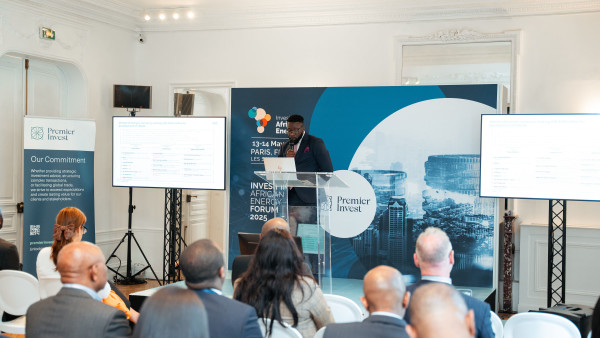
The Invest in African Energy Forum in Paris featured a standout session this year with the Premier Invest Deal Room, a platform that spotlighted over $10 billion worth of oil, gas and renewable energy projects seeking investment across Africa and the broader energy frontier.
“This is a platform to showcase interesting opportunities across Africa that we are advising on,” said Marcel Awasum, Head of Business Development for Premier Invest. “All of the deals we are advising on, we are also mobilizing capital for – from family offices to private equity in oil and gas – mostly from the Middle East, and some from Europe.”
The session featured 17 active deals spanning upstream, midstream, trading and renewable segments, underscoring the breadth of investment potential across the African continent and beyond. One of the flagship opportunities was the development of a 200,000-barrel-per-day crude oil refinery, seeking $4.8 billion in combined equity and debt to meet growing regional demand for refined products. Another deal sought $50 million through a 360-day revolving letter of credit facility to support the import of refined petroleum products.
Exploration and production prospects were also on the table, including a development project offering up to 40% participating interest to qualified investors, as well as an African oil and gas company seeking a $30 million capital injection, strategic partnership and offtake agreement to enhance its trade capacity and expand upstream.
Refining featured prominently among the deals, with one project calling for €2-5 billion to expand national capacity – open to debt, equity and strategic partnerships. A separate opportunity involved a $25 million equity investment in a highly prospective offshore Guyanese block, offering first-mover advantage with an estimated 400 million barrels of recoverable reserves.
Other ventures included the sale of a defunct Caribbean gas-to-liquids plant with a proven $50 million EBITDA when operational; an $18 million debt facility to drill additional wells in an active production field; and a fast-moving $360 million field development project already attracting soft commitments. The session also featured investment opportunities in the Republic of Congo, where a special purpose vehicle is seeking a co-investor for an M&A transaction involving producing assets; a $70 million fuel importation deal in Burundi; and a $200 million financing package to support the purchase of both crude and refined products in Ivory Coast.
The session concluded with five renewable energy projects seeking over $725 million in investment. This included $362 million for a 70 MW geothermal project in Kenya, $92 million for a 71 MW hybrid solar PV and wind project in Zambia, $87 million for a 100 MW solar PV project in South Africa, and two clean-gas projects – one in Benin (43 MW) and another in South Africa (100 MW) – seeking $84 million and $100 million, respectively.
Distributed by APO Group on behalf of Energy Capital & Power.
Africa is entering a pivotal phase in its energy transformation, characterized by a growing shift toward “Africa-first” energy policies. Despite contributing less than 4% to global emissions, Africa faces the world's most severe energy access challenges – with approximately 600 million people lacking electricity and 900 million without clean cooking solutions. With $47 billion in oil and gas capex in 2024 – a 23% increase year-over-year – Africa is proving its value as a competitive and resilient energy investment destination. This surge reflects growing investor appetite, strengthened policy frameworks and a renewed focus on project bankability.
In this context, African Energy Week (AEW): Invest in African Energies 2025 – taking place from September 29 to October 3 in Cape Town – serves as the continent's leading forum for turning vision into tangible investment. With a focus on public-private partnerships (PPPs), blended finance and strategic energy projects, the event brings together government leaders, financiers, developers and technology providers to advance deals, foster collaboration and position Africa as a global energy leader.
Building Institutions for Local Investment
A wave of institutional and policy advancements is laying the groundwork for increased local investment in energy. A key milestone is the establishment of the Africa Energy Bank (AEB) by the African Petroleum Producers' Organization (APPO) and Afreximbank, with an initial capital of $5 billion. Headquartered in Abuja and set to launch in June 2025, the AEB will finance oil and gas infrastructure projects, serving as a bold step toward regional energy self-sufficiency and resource sovereignty.
At the same time, the African Development Bank (AfDB) is supporting long-term energy planning. In Algeria, the AfDB has launched a strategic dialogue to shape the 2025–2030 Country Strategy Paper, aligning national goals with sustainable, diversified energy development.
In South Africa, the success of the Renewable Energy Independent Power Producer Procurement Program (REIPPPP) illustrates how structured procurement can generate market certainty. The latest round secured 1,760 MW of solar PV capacity backed by R31.4 billion ($1.7 billion) in investment — with 49% local ownership and 46% equity held by Black Economic Empowerment entities.
Scaling Investment through PPPs and Blended Finance
As Africa's energy project pipeline expands, PPPs and blended finance have become essential tools for scaling investment. The AfDB's $10 million concessional equity stake in the ARM-Harith Successor Infrastructure Equity Fund, a $200 million regional vehicle, highlights how development finance institutions can de-risk infrastructure and crowd in private capital. The fund supports AfDB's target to electrify 300 million people by 2030 through sustainable energy solutions.
Meanwhile, South Africa's Battery Energy Storage Independent Power Producer Procurement Program illustrates the power of blended finance in scaling innovation. With R12.8 billion ($678.8 million) allocated to eight projects delivering 615 MW of storage across three provinces, the initiative enhances grid stability and achieved a 35% cost reduction from the first bid round – a clear sign of growing cost efficiency.
Frameworks for African-Led Growth
The African Continental Free Trade Agreement (AfCFTA), ratified by over 48 countries, offers a powerful framework for prioritizing African-led energy development. By promoting intra-African investment flows and removing trade barriers, AfCFTA enables energy projects to be sourced, financed and executed within the continent. With Ghana spearheading the AfCFTA Guided Trade Initiative – engaging eight pilot countries – the agreement is fostering regional cooperation to scale African energy solutions and reduce external dependency. Once fully operational across more than 50 member states, AfCFTA is set to accelerate an Africa-first approach to infrastructure, technology, and capital deployment in the energy sector.
Meanwhile, the African Energy Commission continues to strengthen institutional cooperation across the African Union to support sovereign energy strategies. A prime example of African private-sector leadership is Coscharis Technologies' $4 billion solar project in Nigeria – the largest renewable energy initiative in West Africa – reflecting a shift toward domestically-driven, large-scale investment in clean energy that aligns with national priorities and regional ambitions.
“Africa's energy future must be shaped by African priorities, African solutions and African investment. At AEW: Invest in African Energies 2025, we are not just talking about the energy transition – we are driving real deals and partnerships that put Africa-led development at the center of the global energy conversation,” states NJ Ayuk, Executive Chairman of the African Energy Chamber.
Distributed by APO Group on behalf of African Energy Chamber.
About AEW: Invest in African Energies:
AEW: Invest in African Energies is the platform of choice for project operators, financiers, technology providers and government, and has emerged as the official place to sign deals in African energy. Visit www.AECWeek.com for more information about this exciting event.

Eswatini's efforts to scale up investment in its mining and renewable energy sectors will take center stage at African Energy Week (AEW): Invest in African Energies 2025, with the kingdom's Minister of Natural Resources and Energy Prince Lonkhokhela Dlamini confirmed to speak. Taking place from September 29 to October 3 in Cape Town, AEW: Invest in African Energies 2025 is the continent's premier energy event and will spotlight Eswatini's strategic initiatives to attract foreign investment in critical minerals, support energy independence and advance sustainable development.
Prince Dlamini's participation at AEW: Invest in African Energies 2025 reinforces Eswatini's commitment to leveraging strategic partnerships and international forums to attract capital and technology into both its mining and energy sectors. The kingdom recently celebrated a major milestone with the financial close and construction launch of the 13.5 MW Lower Maguduza Hydro Power Project, a public-private initiative that underscores Eswatini's drive to achieve greater energy independence and sustainability through renewables.
AEW: Invest in African Energies is the platform of choice for project operators, financiers, technology providers and government, and has emerged as the official place to sign deals in African energy. Visit www.AECWeek.com for more information about this exciting event.
Eswatini is also making significant progress toward universal energy access through the newly launched Accelerating Sustainable and Clean Energy Access Transformation (ASCENT) project. Backed by international financial institution the World Bank, this initiative aims to connect 50,000 new households – benefitting 200,000 people – to electricity using both on- and off-grid solutions, with a focus on underserved rural communities. Supported by over $100 million in concessional financing, the ASCENT project will enhance energy security, build institutional capacity and improve livelihoods, making Eswatini one of Africa's frontrunners in equitable and sustainable electrification.
In the mining sector, Eswatini is actively working to position itself as an emerging market for critical minerals, following the launch of the second phase of a national mineral mapping program in partnership with South Africa's Council for Geoscience in November 2023. Using AI-based geoscientific techniques, this initiative seeks to unlock the country's vast yet underexplored mineral wealth – ranging from gold and iron ore to a broader portfolio of high-demand critical minerals. As part of its outreach to global investors, Eswatini is creating an enabling environment for private sector participation in mineral exploration, production and job creation.
Stepping into this picture, Minister Dlamini's participation at AEW: Invest in African Energies 2025 aligns with the goals of Eswatini to open its doors to investors in both energy and mining. By sharing insights into investment opportunities, policy developments and major projects, Minister Dlamini will not only promote greater foreign spending in the kingdom, but position Eswatini as a top destination for energy and mining developers.
“With strong regional partnerships and a focus on innovation, Eswatini is rapidly becoming a compelling destination for critical mineral exploration and clean energy investment,” states Tomás Gerbasio, VP Commercial and Strategic Engagement, African Energy Chamber.
Distributed by APO Group on behalf of African Energy Chamber.

Lord Oates “To achieve a just energy transition in Africa that reduces energy poverty and accelerate development in a climate-friendly way will require the UK, other high-income countries and multilateral institutions to step up, in partnership with African countries.”
Download document: https://apo-opa.co/3H8UzwQ
Parliament's All Party Parliamentary Group for Africa (APPG) publishes today a report highlighting the importance of achieving a just and rapid energy transition in Africa, one that responds to the need for cleaner energy while expanding energy access and enabling more rapid development. In this transition, Britain has an important and constructive role to play. This report has been produced by the AAPPG in partnership with the Royal African Society (“the Society”), which acts as the Secretariat for the APPG.
As a continent, Africa has contributed least to causing climate change, yet is suffering most from its impact, while 600 million of its 1.4 billion people still have no or only intermittent access to electricity.
With enormous potential for renewable energy, as well as some of the world's largest carbon sinks and many of the essential minerals for a clean transition, Africa has a crucial role in tackling climate change. But to enable Africans to mitigate and adapt, faster economic development using increased energy supply and access is crucial.
The report, link to doc on RAS website (apo-opa.co/44AMX01): Africa's Just Energy Transition: How Can the UK Support? is the result of an 18-month inquiry consulting a wide range of witnesses from Africa and beyond. It explores the challenges and solutions to Africa's energy dilemma, from the use of solar mini-grids and stand-alone systems and clean cooking technologies, to hydro, wind, gas and geothermal energy, and the role of Just Energy Partnerships (JETPs) with South Africa and Senegal.
In particular it looks at how the transition can be financed, from traditional grants and loans, through blended finance and private sector investments, to better use of carbon markets.
It makes nine specific recommendations for action by the British government, covering:
The report is being sent to the British government and circulated widely in Africa and the UK as an input to policy-making and debate on climate and energy issues.
All-Party Parliamentary Group for Africa
Distributed by APO Group on behalf of Royal African Society.
For further information, please contact:
The Royal African Society
ras_communications@soas.ac.uk
Lord Jonny Oates
jonny.oates@uamh.org
Nick Westcott
nw28@soas.ac.uk
About The All Party Parliamentary Group for Africa:
The UK's All Party Parliamentary Group (APPG) for Africa is a dynamic cross-party group composed of UK parliamentarians from both the House of Commons and the House of Lords. The APPG for Africa is dedicated to fostering mutually beneficial relationships between African nations and the UK while actively working to challenge and dispel negative stereotypes about Africa.
Established with the support of the Royal African Society in January 2003, the APPG for Africa has grown to become one of the most active and independent APPGs within the UK Parliament, boasting over 200 members. The group's events and meetings provide a vital platform for UK parliamentarians to engage in meaningful dialogue on policy issues with African policymakers, diaspora communities, civil society organizations, and the private sector.
About the Royal African Society (RAS):
The Royal African Society (“The Society”) is the secretariat for the APPG for Africa. The Society was founded in 1901 and is the only UK-based non-governmental organisation with a Royal Charter dedicated to increasing knowledge about Africa, is a membership charity that provides opportunities for people to connect, celebrate, and critically engage with a wide range of topics and ideas about Africa today.
Through our events, publications, and digital channels, we share insight, instigate debate, and facilitate mutual understanding between audiences in the UK and Africa, fostering strong relationships and collaboration. We amplify African voices and interests in academia, business, politics, the arts, and education.
Our mission is to inform, inspire, and champion African perspectives. To find out more https://apo-opa.co/4j4Oij9 and to join https://apo-opa.co/3GU12Md
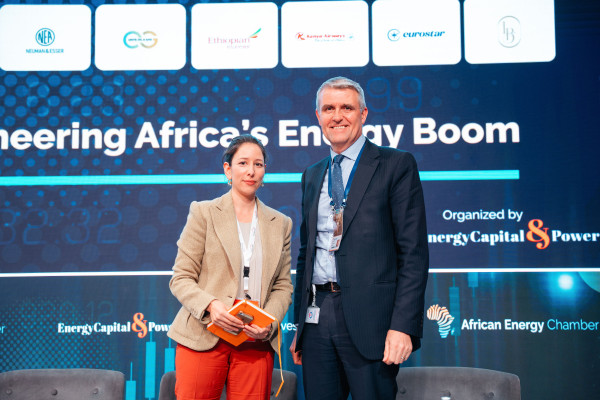
Mike Sangster, Senior Vice President for Africa at TotalEnergies, outlined the company's multi-energy strategy in Africa at the Invest in African Energy (IAE) 2025 Forum in Paris. Speaking during a one-on-one conversation with America Hernandez, Energy Correspondent at Reuters, Sangster said that the company is committed to producing more energy in a sustainable manner.
In the oil sector, TotalEnergies continues to invest in established markets such as the Republic of Congo and Angola as well as in emerging markets such as Namibia, Uganda and South Africa. According to Sangster, TotalEnergies' African portfolio constitutes half of the company's operated production globally. “The largest part of our exploration budget is also in Africa,” he said.
In South Africa, the company hopes to start drilling in 2026. The company is currently awaiting the requisite permits. In Namibia, the company is spearheading efforts to produce first oil by 2029 through its Venus project. A field development plan is currently underway, with plans to make a final investment decision by Q4, 2026. Given the complexity of the deepwater project, Venus will target oil production.
“The site is extremely remote, 300 km offshore and at a depth of 1,900 m,” Sangster said, highlighting that much of the associated gas discovered would need to be reinjected.
Monetizing Africa's natural gas resources through LNG deployment and flare reduction represents a core part of TotalEnergies' African strategy. “Part of our growth target is focused on LNG,” Sangster stated, adding that “we finished routine flaring in Nigeria, Gabon and Angola. In the Republic of Congo, we will eliminate flaring this year.”
In Nigeria, TotalEnergies is ramping up gas investments to support both local energy needs and exports. “It's important to monetize gas and its reservoirs,” Sangster noted. “In Nigeria, there are significant reserves and we are actively developing this sector. There are high-quality fields that can also serve export markets.”
Beyond oil and gas investments, TotalEnergies' broader energy strategy includes the development of renewable energy projects. Sangster reiterated TotalEnergies' rebranding from an oil major to a multi-energy company, stating that “It makes sense to expand integrated energy activities. We have invested in renewables, green hydrogen and even mining in Africa. The future of our industry is integrated energy combined with new technologies to meet growing demand sustainably.”
Meanwhile, TotalEnergies is committed to supporting capacity building across the markets in which it operates. Sangster explained that through projects such as Tilenga, TotalEnergies “has generated around 20,000 direct jobs in Uganda and Tanzania. We are also training 200 local people. These are high-paying jobs that will be there for the next 20 years.”
In Nigeria, TotalEnergies works closely with local educational institutions to transfer skills and enhance capacity building. “In Nigeria, we have the Petroleum Institute, and we're fully committed to developing [capacity] in the country,” Sangster said. These initiatives not only support the development of projects, but create tangible opportunities for local communities.
Distributed by APO Group on behalf of Energy Capital & Power.

The Spanish Chamber of Commerce in South Africa has partnered with the African Energy Week (AEW): Invest in African Energies conference to foster collaboration between Spanish and South African energy companies. The partnership builds on dual goals of driving investment and development in South Africa and will support greater participation by Spanish firms at this year's edition of the conference – scheduled for September 29 to October 3.
As a non-profit entity whose main objective is the promotion of commercial, economic and industrial relations between Spain and South Africa, the Chamber of Commerce seeks to strengthen business prosperity and trade between the two nations. At the heart of this strategy is the energy industry, with the Chamber committing to exposing its members to emerging opportunities in both Spain and South Africa. At AEW: Invest in African Energies, the Chamber will play an instrumental part in strengthening energy relations and trade, supporting market entry by Spanish firms into South Africa.
AEW: Invest in African Energies is the platform of choice for project operators, financiers, technology providers and government, and has emerged as the official place to sign deals in African energy. Visit www.AECWeek.com for more information about this exciting event.
The opportunities for heightened collaboration between Spain and South Africa are extensive. While Spain is a net-importer of oil and gas, Spanish oil and gas firms have seen great success abroad, highlighting the level of expertise the country has to offer. Spanish companies such as multinational energy and petrochemical firm Repsol already have a strong presence in Africa, offering significant expertise that could help unlock South Africa's energy industry. The company has been active in Algeria since 1973, recently receiving approval to invest up to €731 million in oil and gas blocks in the country. The Chamber has also been active in Libya since the 1970s and is implementing an ambitious exploration agenda in the country. It plans to drill nine wells consecutively via two drilling rigs by November 2025, and aims to increase production to 350,000 barrels per day (bpd) in the country. As of December 2024, production stood at 300,000 bpd.
Meanwhile, for South Africa, which is only just starting to realize the full potential of its oil and gas market, Spanish partnerships could propel a hydrocarbon evolution. Despite being a frontier market, South Africa has proven oil and gas discoveries and significant upside potential. The Luiperd and Brulpadda discoveries, for example, are the largest discoveries of natural gas resources in South Africa to date. Situated in the Outeniqua Basin, operator Africa Oil Corp plans to conduct surveys within the Block 11B/12B area to determine a development plan. Additionally, South Africa's Orange Basin – shared with Namibia where several high-impact finds have been made – offers strategic opportunities for billion-barrel finds. International companies have recently expanded their footprint in the basin, led by firms such as Eco Atlantic, TotalEnergies and QatarEnergy.
In the green energy sector, Spain is spearheading Europe's energy transition through rapid developments in green hydrogen. According to the World Economic Forum, the country already accounts for 20% of green hydrogen projects announced in the European Union, with plans to create industrial clusters expected to bolster the bloc's clean energy adoption. South Africa is also targeting ambitious green hydrogen projects. The government introduced a R300 billion investment pipeline in 2023, targeting between 6 and 13 million tons of green hydrogen and derivatives production per annum by 2050. Up to 19 projects were identified for accelerated development and global support will be key to bring these projects into fruition. In 2023, Spain committed $2.3 billion to help fund South Africa's energy transition, but further support could unlock greater value from the country's renewable energy industry.
“Global partnerships are fundamental for countries seeking to rapidly grow their oil, gas and renewable energy industries. Spain and South Africa have significant potential to expand their trade, energy and business ties, and the Spanish Chamber of Commerce in South Africa works hard to achieve mutual development goals,” states Tomás Gerbasio, VP Commercial and Strategic Engagement, African Energy Chamber.
Distributed by APO Group on behalf of African Energy Chamber.
Minister Dion George, South Africa's Minister of Forestry, Fisheries and the Environment, has concluded an impactful participation at the Copenhagen Climate Ministerial in Denmark on 7-8 May 2025, reinforcing South Africa's commitment to a resilient, sustainable future. Representing the nation ahead of COP30 in Belém, Brazil, Minister Dion George championed South Africa's priorities, ensuring the voices of its people, wildlife, and ecosystems shape the global climate agenda.
The Ministerial was a critical platform to advance the Paris Agreement's 1.5°C target, with direct implications for South Africans. Climate change threatens livelihoods through droughts, floods, and rising temperatures, impacting food security, jobs in agriculture, fisheries, and forestry, and endangering iconic wildlife and vital marine resources. Minister Dion George's leadership secured progress on ambitious climate commitments that drive job creation, poverty reduction, and biodiversity conservation, embedding community and environmental upliftment. He advocated for a just transition, protecting workers in high-carbon sectors while unlocking opportunities in renewable energy and green technologies. Minister Dion George also championed increased climate finance for adaptation, including water infrastructure, climate-smart agriculture, and marine conservation, to improve daily life and protect ecosystems. From coastal communities to rural farms and wildlife reserves, South Africa promoted solutions to strengthen resilience against climate impacts.
These outcomes translate into tangible benefits: cleaner air, safer water, healthier oceans, and new jobs in green sectors. South Africa's engagement secured stronger global partnerships, clearer funding pathways, and renewed momentum to tackle climate change, empowering communities and safeguarding natural heritage.
Minister Dion George stated, “Our work in Copenhagen is a step toward a future where South Africans thrive in a low-carbon economy, with resilient communities and protected biodiversity. We will carry these engagements forward into the G20, ensuring our priorities continue to shape global climate action.”
South Africa returns from Copenhagen with commitments to advance its climate agenda, delivering resources, technology, and support for its people and environment. The nation is poised to build on this momentum at the G20 and beyond, driving a just and sustainable future for all.
Distributed by APO Group on behalf of Republic Of South Africa: Department of Forestry, Fisheries and the Environment.
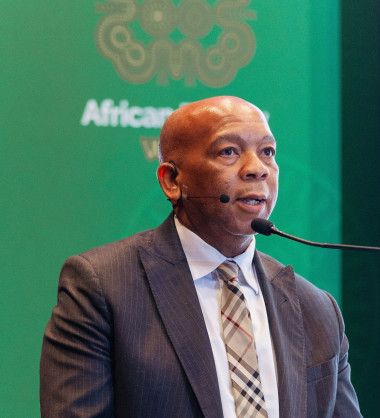
Dr Kgosientsho Ramokgopa, Minister of Electricity and Energy of South Africa, will speak at this year's edition of the African Energy Week (AEW): Invest in African Energies conference – taking place September 29 to October 4 in Cape Town. As the country targets large-scale power and renewable energy rollout, Dr Ramokgopa's participation will support greater collaboration with international partners and investors.
Faced with an energy deficit challenge, South Africa has been implementing bold changes across its electricity and energy sectors, seeking to strengthen infrastructure development and broader energy access. In 2025, the country implemented its newly enacted Electricity Regulation Act, aimed at creating a more competitive power market in the country. Designed to address the country's longstanding power supply challenges by restructuring the sector, the act enables independent power producers to play a larger role in the country's industry. Additional policies include the Renewable Energy Masterplan – approved in March 2025 and aimed at incentivizing investment across the renewable energy value chain – and the Energy Action Plan – aimed at mitigating power outages by securing energy supply.
On the back of regulatory reform, the country has seen several milestones achieved across its electricity and energy sectors in recent months. In March 2025, the country brought the sixth and final unit of the Kusile Power Station online. Following the requisite testing and optimization over a six-month period, the unit will add 800 MW to the South African national grid. Once all units at the station are operational by H2, 2025, the station will contribute 4,800 MW to the grid, representing the country's largest infrastructure project. Meanwhile, a second new-build power station is on track for commissioning its fourth unit shortly. The Medupi station – a greenfield coal-fired plant – will produce 4,800 MW once all six units are online.
While these projects represent strategic steps towards improving generation and transmission capacity in South Africa, much more investment is required to achieve the country's power and energy goals. The Ministry of Electricity and Energy estimates that South Africa requires up to R440 billion to finance transmission development over the next ten years. To enhance energy access, the country seeks to modernize and expand the national electricity grid by 14,000 km during this timeframe, highlighting a major investment opportunity for global financiers. In March 2025, Minister Ramokgopa announced short-term plans to acquire up to 1,164 km of 400 kV transmission lines, covering the Northern Cape, North-West and Gauteng. The acquisition falls under the country's broader Integrated Resources Plan – which provides a roadmap for achieving South Africa's forecasted electricity demand - as well as the 2024 Transmission Development Plan, which seeks to expand the grid and achieve greater access rates across various provinces.
Meanwhile, spearheaded by the Ministry of Electricity and Energy, the country is making significant strides towards scaling-up its renewable energy sector. A key driver of this is the Renewable Energy Independent Power Producer program (REIPPP) – an initiative aimed at increasing generating capacity through private sector investment in solar, onshore wind and hydropower. The REIPPP has successfully channeled substantial private sector expertise and investment in the renewable industry, with 16 winners selected under Bid Window 7 in December 2024. This window targets 5 GW of renewable energy capacity, with the winning projects featuring 1.76 GW of solar – representing a combined investment of ZAR 31.4 billion – as well as 615 MW of battery energy storage - a combined investment of ZAR12.8 billion.
Nuclear energy has also been identified as a strategic sector by the Ministry of Electricity and Energy. South Africa currently hosts the only operational nuclear facility in Africa and has plans to scale-up capacity in support of anticipated rising demand. The Ministry of Electricity and Energy plans to spend R60 billion on its nuclear-build program and is seeking support from international nuclear experts to enhance capacity. At AEW: Invest in African Energies, insights into South Africa's power and energy advancements will highlight key investment opportunities for global players.
“South Africa has put the requisite policies in place to advance large-scale power and energy projects. What the country now needs is action. International investors should take advantage of regulation and drive impactful projects,” states Oré Onagbesan, Program Director, African Energy Week.
Distributed by APO Group on behalf of African Energy Chamber.
About AEW: Invest in African Energies:
AEW: Invest in African Energies is the platform of choice for project operators, financiers, technology providers and government, and has emerged as the official place to sign deals in African energy. Visit http://www.AECWeek.com for more information about this exciting event.
Eskom issues tender to accelerate renewable energy deployment
Eskom has issued a call for proposals from experienced companies to establish renewable energy businesses to expedite the deployment of renewable energy solutions.
According to the statement released on Tuesday, Eskom will evaluate applicants based on several criteria, including a demonstrated history of successfully establishing a renewable energy company and the number of public-private partnerships (PPPs) and special purpose vehicles (SPVs) that have created tangible projects.
The evaluation will also look at expertise in the independent power producer (IPP) business model and financial structuring, technical capabilities, and knowledge of the sector.
This evaluation process aims to select firms that can effectively contribute to Eskom’s renewable energy initiatives.
The State utility announced that the new subsidiary aims to operate independently from the main Eskom entity, enabling better governance, improved market competitiveness, and enhanced PPPs.
“Agility and efficiency are at the heart of preparing for a competitive marketplace and ensuring we serve our current and future customers with the electricity supply solutions they require,“ said Eskom’s Group Chief Executive, Dan Marokane.
Marokane stated that Eskom is now one year into its turnaround strategy.
This strategy aims to not only end load shedding but also transform the utility into a sustainable and competitive company while ensuring a secure supply of electricity.
“To make a meaningful impact in the renewables space, we recognised that the most cost-effective way to do this is to bring in at the start some new skills, thinking and expertise to set our Eskom teams up for success in the business, so through knowledge transfer we can execute strategic initiatives in a competitive market faster and more efficiently. The creation of our renewable energy business also forms part of Eskom’s focus both in this country and internationally to identify the latest developments and strategies to reduce carbon emissions and other air pollutants,” he explained.
Eskom said it was committed to maintaining a balanced and diversified energy mix.
This includes utilising existing coal and nuclear power, introducing gas for baseload power, and incorporating renewable energy sources.
In addition, Eskom aims to implement energy storage systems, such as battery energy storage systems (BESS) and pumped hydro, to ensure overall security of supply and sustainably meet the growing electricity demand in South Africa.
The utility said it has an executable initial pipeline of at least 2GW of clean energy projects by 2026 and has developed a pipeline of more than 20GW of clean energy projects to diversify its energy mix.
Eskom will update the marketplace on the progress of the development of its renewable energy business throughout 2025.
The opportunity to respond to the tender closes on 7 May 2025 at 10 am, and application forms can be found on the Eskom website. The support will be required over 12 months. – SAnews.gov.za
Gabisile
Tue, 04/15/2025 - 10:03
195 views
Establishment of Eskom’s renewable energy business unit welcomed
The Minister of Forestry, Fisheries and the Environment, Dr Dion George, has welcomed Eskom’s recent issuance of a tender to establish a separate renewable energy business unit.
“This significant step reflects Eskom’s dedication to accelerating renewable energy deployment and supporting South Africa’s transition to a cleaner, more sustainable energy future, consistent with the nation’s Just Energy Transition (JET) objectives and commitments under the Paris Agreement,” the Minister said on Monday.
On 31 March 2025, the Minister granted conditional emissions exemptions to Eskom’s coal-fired power stations, underscoring the urgent need for prioritisation of renewable energy integration.
“The establishment of this independent subsidiary, structured to operate with agility and encourage public-private partnerships, directly addresses those conditions.
“It positions Eskom to capitalise on South Africa’s abundant solar and wind resources, enhance competitiveness, and secure green financing, while contributing to improved air quality and reduced carbon emissions,” George said.
He acknowledged Eskom’s proactive approach and called for a transparent, competitive, and inclusive tender process that fosters opportunities for local and international expertise.
The Department of Forestry, Fisheries and the Environment will closely monitor the initiative’s progress to ensure alignment with South Africa’s Nationally Determined Contributions (NDCs), the 2050 net-zero emissions target, as well as the stringent conditions imposed on Eskom on 31 March 2025 that support compliance with the Minimum Emissions Standards (MES).
The Minister further encouraged Independent Power Producers (IPPs) and the private sector to actively participate, driving innovation and investment to bolster renewable energy capacity.
“Through collective effort, South Africa can build a resilient, inclusive, and environmentally sustainable energy sector that upholds the constitutional mandate to protect the health and well-being of all its citizens,” he said. - SAnews.gov.za
nosihle
Mon, 04/14/2025 - 11:28
63 views
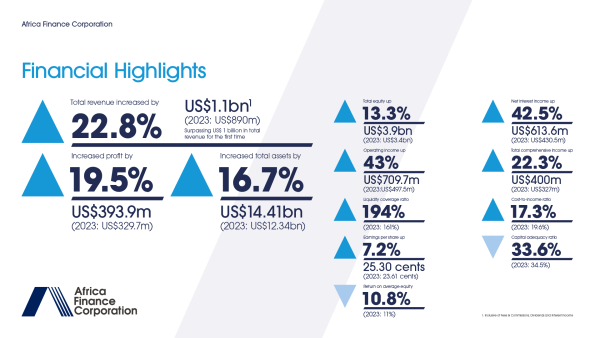
Africa Finance Corporation (AFC) (www.AfricaFC.org), the continent's leading infrastructure solutions provider, has announced its strongest financial performance to date, with total revenue for the year ended 31 December 2024 surpassing US$ 1 billion for the first time in the Corporation's history.
This record performance marks a significant milestone in AFC's mission to close Africa's infrastructure gap through scalable, de-risked investments that attract global capital and deliver tangible development outcomes. The Corporation posted a 22.8% increase in total revenue to US$1.1 billion and a 22.3% rise in total comprehensive income to US$400 million, up from US$327 million in 2023.
AFC's earnings growth was driven by improved asset yields, prudent cost-of-funds management and sustained traction in advisory mandates.
Further significant financial highlights include:
Throughout 2024, AFC continued to scale its impact by mobilising capital for landmark projects across energy, transport, and natural resources. These included the Lobito Corridor – a cross-border railway development spanning Angola, the Democratic Republic of Congo (DRC), and Zambia. AFC led the initiative to secure a concession agreement within one year of the initial Memorandum of Understanding (MoU), an unprecedented achievement for a project of its scale. In the DRC, AFC also invested US$150 million in the Kamoa-Kakula Copper Complex, Africa's largest copper producer and one of the most sustainable globally, thanks to its high-grade ore and renewable-powered smelter.
Other milestones transactions included financing support for the commissioning of the Dangote Refinery, the largest in Africa, and continued progress on AFC-backed Infinity Power Holding's 10 GW clean energy ambition, with power purchase agreements secured in Egypt and South Africa. AFC also invested in the 15GW Xlinks Morocco-UK Power Project, providing US$14.1 million to support early-stage development of a transcontinental renewable energy pipeline between North Africa and Europe.
AFC strengthened its capital base and expanded its investor network through several landmark funding initiatives. These included a US$ 1.16 billion syndicated loan - the largest in its history, a US$500 million perpetual hybrid bond issue, and the successful execution of Nigeria's first-ever domestic dollar bond, which raised US$900 million at 180% oversubscription. AFC also returned to the Islamic finance market after eight years, closing a US$400 million Shariah-compliant facility.
The year also saw strong momentum in equity mobilisation, with US$181.8 million in new capital raised from ten institutional investors. These included Turk Eximbank - AFC's first non-African sovereign shareholder - the Arab Bank for Economic Development in Africa (BADEA), and several major pension funds spanning Cameroon, Seychelles, Mauritius, and South Africa. Ratings agencies affirmed AFC's robust credit profile, with AAA ratings from S&P Global (China) and China Chengxin International, and a stable A3 Outlook from Moody's.
“These results send a clear message that strategic investment in African infrastructure creates lasting value for both beneficiaries and investors,” said Samaila Zubairu, President & CEO of AFC. “In 2024, we exceeded the billion-dollar revenue mark, delivered game-changing projects, and reinforced our financial resilience—demonstrating the scalability of our unique model that blends purpose with performance to accelerate Africa's economic transformation.”
Read the full annual report here (https://apo-opa.co/424qlmR)
Distributed by APO Group on behalf of Africa Finance Corporation (AFC).
Media Enquiries:
Yewande Thorpe
Communications
Africa Finance Corporation
Mobile: +234 1 279 9654
Email: yewande.thorpe@africafc.org
About AFC:
AFC was established in 2007 to be the catalyst for pragmatic infrastructure and industrial investments across Africa. AFC's approach combines specialist industry expertise with a focus on financial and technical advisory, project structuring, project development, and risk capital to address Africa's infrastructure development needs and drive sustainable economic growth.
Seventeen years on, AFC has developed a track record as the partner of choice in Africa for investing and delivering on instrumental, high-quality infrastructure assets that provide essential services in the core infrastructure sectors of power, natural resources, heavy industry, transport, and telecommunications. AFC has 45 member countries and has invested over US$15 billion in 36 African countries since its inception. www.AfricaFC.org
Germany is eyeing expanded investments in Africa's energy sector, having pledged €4 billion for green energy projects by 2030 and advancing hydrogen and gas partnerships through the European Union's (EU) Global Gateway initiative. These investments aim to enhance conditions for private sector involvement and infrastructure development, underscoring Germany's commitment to sustainable development and economic growth across the continent.
In South Africa, Germany committed R5.2 billion last December to support the country's energy transition and deepen bilateral cooperation. This funding is directed towards facilitating South Africa's shift from coal to renewable energy sources, addressing both environmental concerns and energy security. Earlier this month, the EU also announced a €4.7 billion investment in South Africa to support green energy initiatives and vaccine production, reflecting a broader commitment to sustainable development in the region.
Further strengthening these efforts, Germany and the African Development Bank announced joint initiatives last month to accelerate energy access and private sector growth across Africa. This partnership includes support for the Mission 300 initiative, which aims to provide electricity access to 300 million Africans by 2030, and expanded financing for youth entrepreneurship programs.
Meanwhile, German companies are optimistic about their prospects in South Africa, signaling growing confidence in the country's economic stability, expanding trade opportunities and the potential for long-term partnerships in energy and industrial sectors. A recent survey by KPMG Germany and the Southern African-German Chamber of Commerce and Industry revealed that 64% of German companies expect rising revenues in South Africa, with 44% planning to invest in the country within the next three years.
Germany has already been active in Africa's green hydrogen sector, recognizing the continent's vast potential for renewable energy production. In Namibia, German investors have partnered on the $10 billion Hyphen Green Hydrogen Project, aiming to harness the country's abundant solar and wind resources to produce green ammonia for global export. Additionally, Germany mobilized €150 billion through the Global Gateway initiative earlier this year to enhance its energy engagement in Africa, with green hydrogen as a key focus. West African countries alone have the potential to produce up to 165,000 TWh of green hydrogen annually – far exceeding Germany's projected demand for 2030.
Beyond renewable initiatives, Germany remains open to cooperating with African countries on natural gas and blue hydrogen production. This approach reflects Germany's updated Africa policy guidelines, which emphasize the importance of African energy resources – including renewable electricity, green hydrogen and, under specific conditions, natural gas – for a successful energy transition in both Africa and Europe.
"Germany's growing investment in Africa's energy sector signals a transformative shift toward sustainable development and economic growth. With a clear focus on green hydrogen, renewables and responsible fossil fuel cooperation, the country is positioning itself as a key partner in Africa's energy future. African Energy Week 2025 will serve as a vital platform to advance these partnerships, unlocking new opportunities and accelerating Africa's energy transition,” said Tomás Gerbasio, Vice President of Commercial and Strategic Engagement at the African Energy Chamber.
The upcoming African Energy Week (AEW) 2025: Invest in African Energies conference presents a strategic platform for German investors to explore and engage with energy opportunities across the continent. AEW 2025 aims to drive forward the momentum established in previous years, offering a dynamic space for leaders, policymakers and stakeholders to address regional and global energy challenges while advancing Africa's position as a leader in sustainable energy solutions.
AEW: Invest in African Energies is the platform of choice for project operators, financiers, technology providers and government, and has emerged as the official place to sign deals in African energy. Visit www.AECWeek.com for more information about this exciting event.
Distributed by APO Group on behalf of African Energy Chamber.
Mining represents one of the most energy-intensive industries globally. As African nations ramp up mineral extraction to drive economic growth, mining projects and stakeholders are increasingly investing in energy infrastructure to sustain operations and meet rising production targets. Amid efforts to improve grid stability, the upcoming African Mining Week conference will highlight the continent's investment opportunities emerging from the mining-energy nexus.
Northam Bolsters Power Supply for South African Mines
In February 2025, mining firm Northam signed a power purchase agreement (PPA) for 140 MW of wind power to support its platinum group metals operations in Limpopo. This deal follows an earlier PPA signed in October 2024 for an 80 MW solar power facility to supply the company's Zondereinde mine, aimed at driving South Africa's expansion of its PGMs sector. These agreements are part of Northam's broader strategy to enhance energy security and sustainability while reducing its carbon footprint in alignment with national renewable energy goals.
Richards Bay Minerals Expands PPA Portfolio
Richards Bay Minerals, a subsidiary of mining multinational Rio Tinto, signed its third PPA with Red Rocket in February 2025, securing 230 MW of electricity from Red Rocket's 380 MW Overberg Wind Farm. This agreement increases the company's total contracted renewable energy supply to 500 MW and supports Rio Tinto's commitment to reducing emissions by 50% by 2030. Richards Bay Minerals also taps into energy from the 130 MW Bolobedu solar PV plant and 140 MW Khangela Emoyeni wind farm.
Further Investments in Renewables for Mining
Other mining companies across Africa are driving large-scale energy projects to secure a stable power supply. In South Africa, Ivanhoe Mines completed a 5 MW solar facility in Q1 2025 to support its Platreef PGM mine, while Impala Platinum signed a five-year PPA with Discovery Green to supply wheeled renewable energy to its Impala Refineries operation. Meanwhile, commodities firm Trafigura is developing a 2 GW initiative to power Angolan mines, and First Quantum is set to commission a 430 MW project in Zambia in 2025. Tronox Holdings plans to roll out 400 MW of energy projects in South Africa by 2027 and Chinese mining company CMOC is preparing a 200 MW energy project in the DRC, set for commissioning by 2028.
As these investments unfold, African Mining Week will showcase key milestones in energy security for the sector, highlighting lucrative opportunities within Africa's independent power markets. The event will emphasize the growing demand for stable, sustainable energy solutions as miners continue to invest in energy infrastructure.
African Mining Week serves as a premier platform for exploring the full spectrum of mining opportunities across Africa. The event is held alongside the African Energy Week: Invest in African Energies 2025 conference from October 1-3 in Cape Town. Sponsors, exhibitors and delegates can learn more by contacting sales@energycapitalpower.com.
Distributed by APO Group on behalf of Energy Capital & Power.
George welcomes announcement on private sector-powered grid expansion initiative
The Minister of Forestry, Fisheries and the Environment (DFFE), Dr Dion George, has commended the announcement that government will pursue private investment for the construction of new transmission lines.
Electricity and Energy Minister, Dr Kgosientsho Ramokgopa, on Tuesday announced that a pilot programme, the Independent Transmission Programme (ITP) will pave the way for the construction of 1 164 kilometers of new transmission lines.
The Department of Forestry, Fisheries and the Environment said Ramokgopa's statement aligns with the DFFE's vision, by encouraging private sector involvement, which aims to address the transmission constraints that have hindered the integration of solar and wind energy, especially in the Cape province.
“This significant step forward aligns seamlessly with the vision Minister George articulated earlier this week in his landmark decision on Eskom’s emissions framework, marking a triumph for South Africa’s sustainable energy future,” the department said in a statement on Wednesday.
On Monday, George underscored the urgent need for innovative infrastructure solutions to balance energy security with environmental responsibility, subtly pointing to the expansion of transmission capacity as a key enabler for renewable energy growth.
The Minister said Ramokgopa’s announcement is a "resounding victory for the sustainable energy path we are forging."
“My decision on Eskom’s emissions earlier this week laid the groundwork for a modernised energy system that respects our climate commitments. Minister Ramokgopa’s bold move to unlock private investment in transmission lines is exactly what I alluded to – a practical, impactful step to harness our renewable potential and secure a cleaner future for all South Africans.”
George also commended the cross-governmental collaboration, noting that the R440 billion Transmission Development Plan, now supported by private funding, will ease the burden on Eskom and the national budget, while accelerating the transition to renewable energy.
He reaffirmed his dedication to partnering with Ramokgopa to ensure that environmental standards remain integral to this transformative infrastructure expansion.
“This initiative is about more than just power lines – it’s about powering opportunity. We are opening the door to investment, job creation, and South Africa’s emergence as a green economy leader,” George said
The procurement regulations are set to be released on Thursday, 3 April 2025. – SAnews.gov.za
Gabisile
Wed, 04/02/2025 - 13:12
240 views