• Skip to main content
  • Skip to header right navigation
  • Skip to after header navigation
  • Skip to site footer
MyZA

MyZA

News, Directory, Events and Other Stuff

  • Social Media
  • Sport
  • World News
  • Home
  • Submit News
  • Directory
  • Events
  • Stratlec
  • TFSA
  • News
    • APO
    • Today’s Sport News
    • Todays Social Media and Tech Headlines
    • Today’s World News
    • Today’s SA Financial News
  • Contact
You are here: Home / Archives for renewable energy

renewable energy

24 February 2025

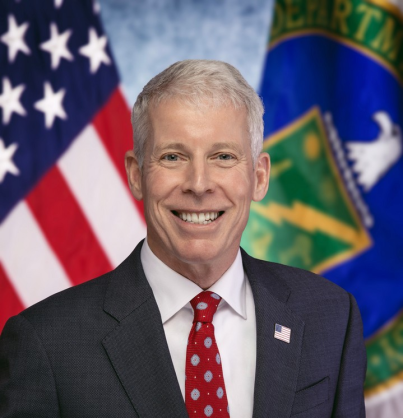
u.s. Secretary of Energy Chris Wright to Deliver Keynote Address at 10th Powering Africa Summit

Location: News
EnergyNet Ltd.

Secretary Chris Wright, U.S. Department of Energy, has been confirmed as a speaker and guest of honour at the 10th Powering Africa Summit (PAS), taking place at JW Marriott Washington, D.C. across March 6-7. This is an important step to provide an answer to the question that all of African energy is now asking: how will the new Administration approach the strategic energy relationship between the U.S. and Africa

Under the Summit theme, The Future of the US & Africa Energy Partnership, U.S. Secretary of Energy Chris Wright will deliver a keynote address at the 10th annual Powering Africa Summit. Wright will be joined by representatives from the U.S. Department of State: Ambassador Troy Fitrell, Senior Bureau Official, Bureau of African Affairs; Kimberly Harrington, Acting Principal Deputy Assistant Secretary, Bureau of Energy Resources; and Stephen Banks, Acting Deputy Assistant Secretary for Energy Diplomacy, Bureau of Energy Resources. All will share their vision for this future relationship between African countries and the US-based investors that are so vital to realizing their energy ambitions.

“As Secretary of Energy, I am committed to unleashing all forms of affordable, reliable and secure energy here at home and advancing that mission of energy security around the world – and nowhere is that more critical than the continent of Africa. I look forward to joining the Summit to reaffirm the strategic energy partnership between the U.S. and Africa and share my vision for advancing innovation and removing barriers to energy access, both at home and around the world,” Secretary Wright said.

Ministers and governments from 19 African countries will arrive in Washington D.C., where the Africa Welcome Address will be given by H.E. Honourable Adebayo Adelabu, Minister of Power, Nigeria. Together with H.E. Honourable Jeremiah Kpan Koung, Vice President, Liberia; H.E. Honourable Dr. Dele Alake, Minister for Solid Minerals Development, Nigeria; H.E. Honourable Mahmoud Mustafa Esmat, Minister of Electricity & Renewable Energy, Egypt; H.E. Honourable Karim Badawi, Minister of Petroleum & Mineral Resources, Egypt; H.E. Honourable Bogolo Joy Kenewendo, Minister of Minerals & Energy, Botswana; H.E. Honourable Alex Wachira, Principal Secretary, Ministry of Energy & Petroleum, Kenya; and Amina Benkhadra, Director General, Office National des Hydrocarbures et des Mines (ONHYM), Morocco, he will meet distinguished Ministers and leaders from South Africa, Senegal, Ethiopia, Zimbabwe, Togo, Sierra Leone and more to drive energy development across the continent.

Flagship ministerial boardrooms and regional energy cooperation sessions will discuss and debate   derisking projects, South Africa's energy future, the need for West African regulatory reforms, and the role of hydrogen in North Africa. New areas of opportunity such as bitcoin mining and data centers will be discussed through an East African lens. The Mission 300 initiative, set to provide electricity access to 300 million people in sub-Saharan Africa by 2030, is also high on the agenda.

The 10th Anniversary Gala Drinks Reception sponsored by Genesis Energy, will celebrate International Women's Day, ahead of March 8.

Critical to the week's discussions will be a host of private players including Alliant Insurance Services, GE Vernova, ARM-Harith Infrastructure Investment, Globeleq, Africa50, Nextracker, Schneider Electric, Newmarket Capital and the summit's general sponsor, Sun Africa, who are looking to a new future for the U.S.-Africa relationship.   

Sun Africa CEO, Adam Cortese said: “We are seeing a sea change in how the U.S. participates in foreign infrastructure development and our unique model of development is an excellent illustration of how U.S. energy companies can thrive in emerging markets on a strictly commercial basis. Sun Africa remains committed to harnessing Africa's immense energy resources through innovative structures, state-of-the-art technology and strong alliances while maintaining our long-standing market-based approach to development.  At Sun Africa, we believe energy development on the continent truly represents an opportunity for win-win partnerships and look forward to sharing our experience.”

Simon Gosling, MD of EnergyNet added: “This summit has always been about bringing together African countries seeking investment with U.S.-based investors who see the vast potential on the continent.  It is more important than ever to establish the crucial energy projects that Africa needs. PAS25 will put the continent center stage and make sure that both sides have a future relationship to be excited about.”

Media Credentials Requited for Powering Africa Summit

The Secretary will open the Summit on 6 March, delivering a Keynote Speech at 09:45, followed by a Fireside Chat with Mission 300 Accelerator CEO, Andrew Herscowitz.

Distributed by APO Group on behalf of EnergyNet Ltd..

For more information, please get in touch with 
Poliana@EnergyNet.co.uk
Senior Marketing Manager

Media files
EnergyNet Ltd.
Download logo
Read moreu.s. Secretary of Energy Chris Wright to Deliver Keynote Address at 10th Powering Africa Summit
24 February 2025

Solarafrica Secures R1.8 Billion Solar Investment, Advancing Wheeling Adoption in South Africa

Location: Business
Starsight Energy

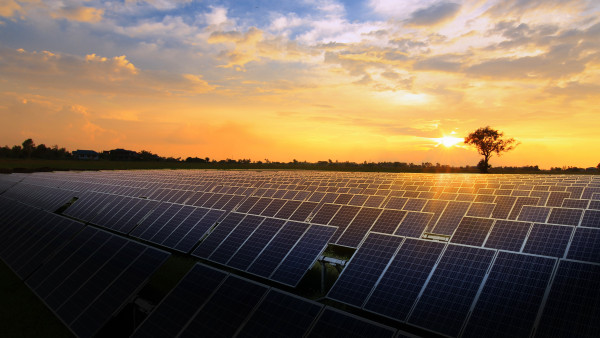
SolarAfrica (https://SolarAfrica.com/) is proud to take another major step forward in the development of its flagship utility-scale solar project, SunCentral, by successfully reaching financial close on the first 114 MW component of the project alongside funding partners Investec and RMB. The R1.8 billion investment into SunCentral marks the start of the project's rollout in South Africa.

SunCentral is a large-scale solar photovoltaic (PV) plant located between Hanover and De Aar in South Africa's Northern Cape province. The project will be developed in three phases.

Phase 1, consisting of 342 MW, will be delivered through a staged roll-out of three 114 MW facilities and will deliver renewable energy to a diverse range of off-takers by wheeling it through South Africa's power grid. Phase 2 and 3 will increase SunCentral's capacity to 1 GW.

Unlike similarly sized projects that offer wheeling on a one-to-one basis (with one generation plant supplying one off-taker), SolarAfrica's project will offer wheeling on a one-to-many basis, making it available to a wider pool of businesses in South Africa.

SolarAfrica's Chief Investment Officer Charl Alheit, who spearheaded the financial close, explains: “Reaching financial close on the first 114 MW of our utility-scale wheeling development and Main Transmission Substation (MTS) investment marks a significant milestone in our commitment to advancing sustainable energy solutions for our customers in the commercial and industrial sectors.”

He adds that the substantial size of SunCentral will unlock access to cheaper, greener power for even more businesses across the country. “We are excited to see this project move forward as we continue contributing to the energy transition while delivering long-term value to our customers."

SolarAfrica is part of the greater Starsight Energy Africa Group. The success of SunCentral will act as a blueprint for similar (and possibly smaller) off-site generation projects in other key African markets in which the Starsight Energy Africa Group companies operate.

“The construction of SolarAfrica's SunCentral is a critical step in our journey to expand clean energy adoption across Sub-Saharan Africa, says Paul van Zijl, Group CEO of Starsight Energy Africa Group. “We are excited to move this project forward and continue delivering long-term value to our customers,” he says.

SolarAfrica is backed by world-class investors African Infrastructure Investment Managers (AIIM) and Helios Investment Partners who both hold decades-long track records of bringing investment to support African innovation.

“Reaching Financial Close on the first 114 MW on SunCentral is a fantastic milestone for SolarAfrica, says Thor Corry, Investment Director at AIIM.

“The modular approach to construct the MTS and plug in subsequent 114 MW modules provides a superb platform for SolarAfrica to scale at pace to meet the needs of the C&I customers in South Africa who want to secure price certainty and cost efficiencies while furthering South Africa's Just Energy Transition. With South Africa requiring up to 30 GW of new capacity by 2030 to meet its climate commitments and energy needs, projects like this are crucial,” Corry concludes.

Distributed by APO Group on behalf of Starsight Energy.

About SolarAfrica:
Founded in 2011, SolarAfrica provides a suite of capex-free green energy solutions to the commercial and industrial sectors in Southern Africa. The holistic suite includes on-site solutions such as solar energy and battery storage together with virtual solutions like wheeling, trading and aggregation.

SolarAfrica partners with businesses in South Africa seeking an energy solution that provides power security, cost savings and carbon reduction – building towards long-term sustainability.

The company has evolved into an ambitious team who are passionate about what they do and the core values they uphold. SolarAfrica has been named the continent's leading solar energy firm twice, scooping the Africa Solar Industry Association's African Solar Company of the Year award in 2021 and 2023.

About Starsight Energy:
Across the continent, Starsight Energy is redefining what it means for businesses to be energy efficient. Starsight Energy provides premier clean on-grid and off-grid energy services to commercial and industrial clients in Africa.

Serving the commercial and industrial, financial, residential, educational and agricultural sectors, Starsight Energy delivers tailored power and cooling solutions to meet client requirements while optimising consumption through energy-efficient appliances and environmentally friendly practices and recommendations.

From load analysis and modelling to demand management and customised solution design, Starsight Energy helps clients optimize energy efficiency and cost savings across the board.

About African Infrastructure Investment Managers (“AIIM”):
AIIM, a member of Old Mutual Alternative Investments* (“OMAI”), has been investing in the African infrastructure sector since 1999 with a track record extending across seven African infrastructure funds. AIIM's team of 40+ investment professionals are based out of five locally staffed offices across the continent in Cape Town, Johannesburg, Nairobi, Lagos and Abidjan providing direct on-the-ground coverage of our key markets.

AIIM is Africa's largest dedicated infrastructure private equity manager and currently manages an aggregate AUM of USD2.9 billion in assets across the power, renewable energy, digital infrastructure, mid-stream energy and transport sectors with operations in 19 African countries.

AIIM is a licensed FSP approved by the Financial Sector Conduct Authority in South Africa.

*Old Mutual Alternative Investments (OMAI) is a private alternative investment manager in Africa, with over USD7.6 billion (ZAR139.4 billion) under management in infrastructure, private equity, hybrid equity and impact funds. It is a member of Old Mutual Investment Group, the investment management arm of Old Mutual.

About Helios Investment Partners:
Established in 2004, Helios Investment Partners is the largest Africa-focused private investment firm, with a record that spans creating start-ups to providing expanding companies with growth capital and expertise. The firm has over $3.0 billion in assets under management and is led and managed by a predominantly African team based in London, Lagos, Nairobi and Paris, with the language skills and cultural affinity to engage with local entrepreneurs, managers, and intermediaries on the continent.

Helios leverages its local and global networks to create attractive proprietary investment opportunities, with an emphasis on building market leaders in core economic sectors and driving performance through a highly engaged approach to portfolio operations. The firm's unique combination of a deep knowledge of the African operating environment, a singular commitment to the region and a proven capability to manage complexity, is reflected in its diverse portfolio of growing, market-leading businesses, and its position as a partner of choice in Africa.

Helios is the second mainstream private equity firm globally, and the largest emerging markets focused private equity firm, to achieve B Corp certification. B Corp status recognizes the firm's longstanding commitment to sustainability and responsible business practices.

Media files
Starsight Energy
Download logo
Read moreSolarafrica Secures R1.8 Billion Solar Investment, Advancing Wheeling Adoption in South Africa
21 February 2025

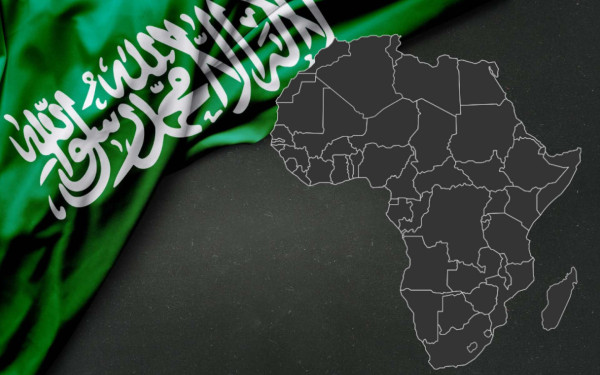
Saudi Arabia Expands Energy Ties With Africa

Location: News
African Energy Chamber

Earlier this week, Egypt's Minister of Petroleum and Mineral Resources Karim Badawi and Saudi Arabia's Minister of Energy Abdulaziz bin Salman Al Saud signed an agreement to develop an executive plan for energy efficiency cooperation, strengthening bilateral ties in the energy sector and fostering sustainable development. This follows another significant development in September, in which Egyptian Prime Minister Mostafa Madbouly secured a $5 billion pledge from Saudi Arabia's PIF, representing the “first phase” of a larger investment strategy. 

As a leading global energy giant, Saudi Arabia has been actively investing in Africa's energy sector, aiming to expand its energy reserves, advance energy diplomacy and compete with other global superpowers. This strategic push not only strengthens Saudi Arabia's influence in the region, but also paves the way for deeper economic and political ties with African nations. 

To date, the lion's share of investment in Africa's energy sector has focused on clean energy advancements. With total project costs reaching $7 billion across the continent, Saudi developer ACWA Power stands as the leading private-sector investor in African renewable energy. In October 2024, the company announced that its Redstone solar plant in South Africa was set to achieve its full 100 MW capacity, while its Kom Ombo solar PV plant in Egypt successfully reached its full capacity of 200 MW. ACWA Power is also leading Project DAO, South Africa's largest hybrid renewable power plant, with an $800 million investment. The project is expected to come online by 2026 and aligns with the Kingdom's broader Vision 2030 goals.  

In addition to renewable energy, Saudi Arabia is diversifying its investments to secure critical minerals for clean energy technologies. In October, Saudi Arabia's Manara Minerals, a joint venture between Ma'aden and the Public Investment Fund (PIF), entered advanced talks to acquire a minority stake in First Quantum Minerals' Zambian copper and nickel assets. The potential investment, valued between $1.5 billion and $2 billion, underscores Saudi Arabia's strategy to secure critical minerals that are vital for the global clean energy transition. 

Turning to broader regional commitments, Saudi Arabia's financial support for Africa's energy infrastructure has grown. In October, the Kingdom announced a major funding initiative, pledging at least $41 billion for sub-Saharan African nations. This includes $1 billion for development, $5 billion for startups, $10 billion in financing from the Saudi Export-Import Bank and $25 billion in private sector investments over the next decade.  

Meanwhile, the Saudi Ministry of Energy has established the "Empowering Africa" initiative as part of its broader commitment to supporting sustainable development across the continent. In collaboration with the Ministries of Communications and Information Technology and Health, the initiative aims to deliver clean energy, connectivity, e-health and e-learning solutions to enhance lives and promote long-term growth in Africa. Building upon the Clean Fuel Solutions for Cooking Program, it focuses on providing cleaner cooking solutions to vulnerable populations, aiming to reduce reliance on traditional biomass fuels and improve health outcomes for millions of households. Minister bin Salman Al Saud has emphasized energy as a fundamental human right and is spearheading efforts to improve access to clean cooking technologies across the continent. 

Additionally, state-owned petroleum company Saudi Aramco is strengthening its partnerships with African nations to support energy investments and mobilization. These collaborations are expected to drive infrastructure development, enhance oil and gas production capacity and facilitate knowledge transfer between Saudi and African energy stakeholders, while aligning with broader energy security and sustainability goals.  

In the multilateral arena, the African Energy Chamber is working with Saudi Arabia to support South Africa's G20 energy investments and mobilization. This partnership is set to facilitate greater financing and policy coordination, ensuring Africa's energy priorities are well-represented in global energy discussions. The upcoming African Energy Week: Invest in African Energies conference in Cape Town serves as a key platform to facilitate and support these investments, bringing together Saudi stakeholders, African governments and global energy leaders to advance new projects, strengthen partnerships and accelerate the continent's energy transition. These collaborations are essential in addressing energy challenges, driving economic growth and fostering long-term sustainability. As Saudi investments expand – alongside those of other G20 nations – their impact on Africa's energy landscape will only deepen.  

AEW: Invest in African Energies is the platform of choice for project operators, financiers, technology providers and government, and has emerged as the official place to sign deals in African energy. Visit www.AECWeek.com for more information about this exciting event. 

Distributed by APO Group on behalf of African Energy Chamber.

Media files
African Energy Chamber
Download logo
Read moreSaudi Arabia Expands Energy Ties With Africa
13 February 2025

South Africa’s G20 Presidency for 2025: A Catalyst for Energy Investment in Africa

Location: News
African Energy Chamber

In 2025, South Africa will hold the rotating presidency of the G20. Given its position as Africa's most industrialized nation and an energy hub, South Africa's leadership could play a pivotal role in attracting investment to the continent's energy sector. By leveraging its G20 platform, South Africa can push for increased funding from global partners, particularly for natural gas projects, which are critical for Africa's energy security and economic development.

While renewable energy is rapidly expanding across the continent, Africa continues to rely heavily on coal, oil and natural gas to meet growing demand and drive economic growth. Gas is increasingly viewed as a cleaner transitional fuel in Africa's energy mix, and many G20 nations are leading investment in gas exploration and production across the continent. For instance, the U.S. Export-Import Bank, U.K. Export Finance, China Development Bank and Japan Bank for International Cooperation, among other lenders, have played a key role in financing TotalEnergies' $20 billion Mozambique LNG project. Additionally, several G20 countries are driving further investment, with Italy's Eni developing new LNG facilities in the Republic of Congo, bp expanding operations in Senegal and Mauritania, Norway's Equinor advancing the Tanzania LNG development and ExxonMobil spearheading Rovuma LNG in Mozambique. South Africa can advocate for G20 nations to increase their financial backing for new gas projects, which have the potential to boost production, enhance energy security and attract much-needed investment to the continent.

While natural gas is essential for Africa's energy security, combining it with renewable energy sources could help diversify Africa's energy mix. South Africa's own experience with large-scale energy projects, such as its successful Renewable Energy Independent Power Producer Program, can serve as a model for blending financing and developing both gas and renewable projects. By advocating for mixed investment, South Africa can show G20 nations that supporting a variety of energy sources will allow Africa to meet its energy demands while transitioning toward greener energy.

In addition to advocating for investment in specific projects, South Africa can focus on creating favorable conditions for financing. One way to achieve this is by encouraging the G20 to support debt relief or concessional financing for African countries with high debt burdens. This would free up resources for governments to invest in energy infrastructure and allow them to prioritize projects that will improve energy access and support economic growth. South Africa could work closely with organizations like the World Bank, IFC, BRICS Bank, European Investment Bank and more to unlock financing mechanisms that reduce the risk for international investors.

The role of South Africa's G20 presidency in facilitating greater engagement between G20 nations and African energy markets cannot be overstated. By using its platform to promote key energy projects, South Africa can attract much-needed investment for both traditional oil and gas and clean energy developments. At the same time, it can help establish new financing structures that make these projects more attractive to investors. African countries like Nigeria, Angola, the Republic of Congo, Senegal, Namibia and Mozambique stand to benefit from increased G20 support for their oil and gas sectors, and other African nations can follow suit by aligning their own energy priorities with the goals set forth by South Africa during its presidency.

This year's African Energy Week (AEW): Invest in African Energies conference in Cape Town serves as a key platform for attracting global attention and investment to Africa's energy sector, facilitating discussions among G20 nations, financial institutions and energy companies. AEW acts as a conduit for driving investment into critical energy projects, positioning South Africa as a catalyst for sustainable development across the continent while ensuring Africa's energy needs are met. With South Africa's G20 presidency presenting a unique opportunity to secure crucial investments in Africa's energy sector, the 2025 edition of AEW is more significant than ever. By leveraging this platform to advocate for financing and foster partnerships between G20 nations and African energy producers, South Africa can play a pivotal role in advancing the continent's energy future and contributing to global energy security.

AEW: Invest in African Energy is the platform of choice for project operators, financiers, technology providers and government, and has emerged as the official place to sign deals in African energy. Visit www.AECWeek.com for more information about this exciting event.

Distributed by APO Group on behalf of African Energy Chamber.

Media files
African Energy Chamber
Download logo
Read moreSouth Africa’s G20 Presidency for 2025: A Catalyst for Energy Investment in Africa
12 February 2025

Minister George announces actions to grow SA’s green economy

Location: News

Minister George announces actions to grow SA’s green economy

The Minister of Forestry, Fisheries and the Environment, Dr Dion George, has announced key actions to accelerate South Africa’s green economy, create sustainable jobs, and to stimulate economic growth.

These actions focus on renewable energy, energy efficiency, and circular economy initiatives.

In a statement on Wednesday, the Minister said these actions will contribute to environmental targets while fostering economic opportunities.

The Department of Forestry, Fisheries and the Environment (DFFE) is prioritising renewable energy projects, including solar, wind, and hydropower. 

It has streamlined environmental authorisation processes to speed up project approvals, including the exclusion of solar and battery facilities from environmental authorisation in low and medium environmental sensitivity areas.

Furthermore, 11 renewable energy zones and five transmission corridors for incentivised green energy projects have been identified.

“Efforts to incentivise renewable energy development include identifying strategic zones where the environmental review will take just 194 days, instead of the usual 300.

“These measures will stimulate job creation in installation, maintenance, and in other related sectors, specifically targeting underserved communities,” the department said.

The Minister emphasised the importance of improving energy efficiency across sectors. 

“Through energy-saving programmes and technology incentives, we aim to reduce consumption and cut costs,” George said.

The DFFE is also investing in waste management to support the transition to a circular economy. 

The circular economy refers to a model in which products are re-used and recycled, waste is reduced, and products are re-designed.

“Initiatives like the Recycling Enterprise Support Programme (RESP) and e-waste projects in Bushbuckridge and Nkomazi municipalities are providing economic opportunities for communities while addressing waste,” the department said.

Earlier this month, government launched two E-Waste Recycling pilot projects in Mpumalanga that will enable residents to bring their old and unused electronic waste, such as cell phones, computers, televisions, and other electrical appliances.

Another green economy initiative that the department is driving is the launch of a Green Hydrogen Guideline, which will be launched on 17 February 2025. 

The guideline will help to streamline approvals for green hydrogen projects, which will support the country’s energy transition.

The Minister said that all of these initiatives are not only designed to preserve the environment but will also create much-needed jobs, especially in disadvantaged areas, while driving long-term economic growth. 

“By focusing on the green economy, we’re not just protecting the environment, but creating a sustainable future with meaningful jobs,” he said. -SAnews.gov.za


nosihle
Wed, 02/12/2025 - 09:32

100 views
Read moreMinister George announces actions to grow SA’s green economy
12 February 2025

How AEW is Driving Energy Investments Between G20 Nations and Africa

Location: News
African Energy Chamber

The development of Africa's energy sector is at a critical juncture, with several high-profile projects poised to drive economic growth and transformation across the continent. However, the success of these initiatives hinges on securing vital funding from international institutions from G20 countries. The U.S. Export-Import Bank (EXIM), in particular, is expected to play a significant role in supporting American energy companies operating in Africa. TotalEnergies is anticipating approval of EXIM financing for its $20 billion Mozambique LNG project in the coming weeks, while ExxonMobil aims to reach a final investment decision for its $30 billion Rovuma LNG project by 2026, underscoring the pivotal role of U.S. financial support in advancing these critical developments. 

Conversely, concerns have emerged that the U.K. is reassessing its $1 billion funding commitment to Mozambique LNG, potentially impacting the project's timeline and broader development of the country's energy sector. As a result, securing and disbursing financing for these projects promptly is crucial to keeping Africa's energy ambitions on track. 

African Energy Week (AEW): Invest in African Energies – taking place in Cape Town this September 29 - October 3 – has emerged as the premier platform for fostering energy investments between Africa and G20 nations with significant energy interests on the continent. By uniting government officials, financial institutions and energy sector leaders, AEW plays a pivotal role in driving strategic collaborations that promote energy security, sustainability and economic growth. 

At last year's AEW, a dedicated U.S.-Africa Energy Partnerships Roundtable outlined how the two actors can further collaborate on technology, policy and investment, along with a Saudi-Africa Partnerships Roundtable that unpacked Saudi Arabia's plans to position itself as a long-term partner to Africa's energy sector growth. TotalEnergies' LNG developments in Mozambique, Nigeria and Egypt, along with the East African Crude Oil Pipeline, drove discussions on energy security, while Eni's upstream projects in the Republic of Congo, Angola and Libya contributed to dialogues on regional supply resilience and investment opportunities. 

AEW has been instrumental in facilitating financial agreements that support Africa's energy infrastructure, often backed by G20 nations. Key highlights include China's Belt and Road Initiative investments in Africa's energy sector, under which Chinese firms have funded and built major energy projects, including hydroelectric dams, solar parks and oil refineries, reinforcing Africa's energy security. Germany's KfW Development Bank has supported renewable energy initiatives, including off-grid solar solutions and green hydrogen projects in South Africa and Algeria, with AEW serving as a critical forum for advancing these discussions. Brazil's state-owned Petrobras led a delegation of Brazilian companies at last year's AEW to unlock new avenues for partnerships in oil and gas exploration and production.  

AEW continues to serve as a marketplace for energy deals, with a specific focus on attracting investment from G20 economies. The African Farmout Forum, a dedicated platform within AEW, has attracted interest from G20-based companies seeking to acquire or partner in African exploration and production assets. Global firms from Australia, the U.S., the U.K., Canada and more have participated, looking to expand their footprint in Africa's oil and gas sector. 

As Africa navigates the energy transition alongside growing demand, AEW plays a vital role in aligning G20 investments with the continent's long-term sustainability goals. Timely funding from international institutions, including EXIM Bank, is essential to realizing Africa's energy potential. As the continent works to expand energy access and drive economic growth, support from these institutions will be instrumental in bringing transformative projects to fruition. By fostering collaboration between Africa and G20 nations, AEW ensures that investments enhance energy access and economic development while addressing global climate commitments. 

AEW: Invest in African Energy is the platform of choice for project operators, financiers, technology providers and government, and has emerged as the official place to sign deals in African energy. Visit www.AECWeek.com for more information about this exciting event. 

Distributed by APO Group on behalf of African Energy Chamber.

Media files
African Energy Chamber
Download logo
Read moreHow AEW is Driving Energy Investments Between G20 Nations and Africa
10 February 2025

Government creates enabling environment for investors

Location: News

Government creates enabling environment for investors

In an effort to create an enabling environment for investors, the Department of Forestry, Fisheries and the Environment (DFFE) is prioritising cutting red tape and boosting investor confidence by removing bureaucratic delays that prevent businesses from investing in sustainable industries.

“South Africa is uniquely positioned to become a leader in the green economy. Our vast renewable energy potential, our forestry-based carbon markets, and our sustainable fisheries sector all present opportunities for attracting much-needed investment. However, to fully unlock this potential, we must remove obstacles that hinder growth,” Forestry, Fisheries and the Environment Minister, Dr Dion George, said on Monday.

According to the Minister, countries that create an enabling environment for green investment will be at the forefront of economic growth and job creation in the coming decade.

He made this observation after his participation at the recent World Economic Forum (WEF), held in Davos, Switzerland, as discussions reaffirmed that global investors are actively seeking opportunities in sustainable industries.

During his engagements, George met with global leaders, investors, and policymakers to discuss how South Africa can attract investment in key sectors, such as renewable energy, sustainable forestry, and marine conservation. 

These sectors hold immense potential, not only to protect our environment, but also to drive economic expansion and employment opportunities, particularly in rural and coastal communities.

“The DFFE has also gone to great lengths to leverage forestry and fisheries for economic expansion. South Africa’s forests are not just an environmental asset, they are a key economic driver in carbon trading and sustainable wood production. 

“The department is working to enhance carbon sequestration initiatives that will allow South Africa to benefit from global climate finance mechanisms. Sustainable fisheries are central to food security and economic development. The department is actively working on policies that will protect marine ecosystems while creating sustainable jobs in the fishing industry,” the Minister said.

The DFFE is also aligning with the Global Green Finance Movement. 

“Investors at Davos made it clear that capital is moving toward sustainable projects. Our government must ensure that South Africa is positioned as a leading destination for climate finance and green investment, which includes partnering with the private sector to scale up renewable energy projects and green infrastructure,” George said.

The Minister’s engagements at WEF Davos underscored the critical message that South Africa must act decisively to secure its place in the global green economy. 

“We cannot afford to lag behind while other emerging markets capitalise on the shift toward sustainability,” he said. -SAnews.gov.za


nosihle
Mon, 02/10/2025 - 09:16

18 views
Read moreGovernment creates enabling environment for investors
7 February 2025

SA powering on with AfCFTA to boost African trade

Location: News

SA powering on with AfCFTA to boost African trade

President Cyril Ramaphosa says government is working towards the full implementation of the African Continental Free Trade Area (AfCFTA), which will tear down the barriers to trade on the continent.

“As the most industrialised economy in Africa, we are positioning ourselves to be at the centre of this new and growing market,” President Ramaphosa said.

In his State of the Nation Address (SONA) delivered in Cape Town on Thursday, President Ramaphosa said government is harnessing the sun and the wind to make the country a leader in renewable energy and green manufacturing.  

“With an abundance of cheap, green energy, we can produce products that are competitive anywhere in the world and create hundreds of thousands of new jobs in the process. We are making sustainable use of the rich abundance of the South African earth.

“By supporting our farmers, improving our logistics network and rural supply chains, and opening new export markets for products we can significantly expand our agricultural sector. We want South Africa to be leading in the commercial production of hemp and cannabis. 

“We are breathing new life into the mining industry, which remains one of our most important and valuable endowments,” the President said.

The agreement establishing the AfCFTA came into force on 30 May 2019.

The AfCFTA agreement will create the largest free trade area in the world measured by the number of countries participating.

The AfCFTA is the engine for African economic and regional integration. The agreement establishing the AfCFTA includes in its general objectives the creation of a liberalised market for goods and services, and laying the foundation for the establishment of a continental customs union at a later stage. – SAnews.gov.za 

Edwin
Fri, 02/07/2025 - 09:50

48 views
Read moreSA powering on with AfCFTA to boost African trade
7 February 2025

Government puts shoulder to the wheel to build a thriving economy

Location: News

Government puts shoulder to the wheel to build a thriving economy

Growing the economy and job creation are at the top of the seventh administration’s agenda, President Cyril Ramaphosa said on Thursday.

“We want a nation with a thriving economy that benefits all. To create this virtuous cycle of investment, growth and jobs, we must lift economic growth to above three percent,” the President said, as he delivered the State of the Nation Address (SONA) in Cape Town.

In the first SONA of the seventh administration, the President said government has adopted the Medium-Term Development Plan, which sets out a clear and ambitious programme for the next five years.

The actions contained in the plan advance three strategic priorities: driving inclusive growth and job creation; reducing poverty and tackling the high cost of living as well as building a capable, ethical and developmental state.

“To achieve higher levels of economic growth, we are undertaking massive investment in new infrastructure while upgrading and maintaining the infrastructure we have.

“We are engaging local and international financial institutions and investors to unlock R 100 billion in infrastructure financing. A project preparation bid window has been launched to fast-track investment readiness.

“This includes revised regulations for public private partnerships, which will unlock private sector expertise and funds,” the President explained.

Focus on infrastructure

Over the next three years, government will spend more than R940 billion on infrastructure. This includes R375 billion in spending by state owned companies.

“This funding will revitalise our roads and bridges, build dams and waterways, modernise our ports and airports and power our economy. Through the Infrastructure Fund, 12 blended finance projects worth nearly R38 billion have been approved in the last year.

The aim of the Infrastructure Fund is to use committed government funding to leverage much higher levels of private sector investment in public infrastructure. Managed by Infrastructure South Africa, the fund is a portfolio of blended finance projects and programmes. 

“These are projects in water and sanitation, student accommodation, transport, health and energy. Construction of the Mtentu Bridge continues. This bridge will rise above the river between Port Edward and Lusikisiki, and will become the tallest bridge in Africa,” the President said.

The Polihlali Dam will feed 490 million cubic metres of water a year from the Lesotho Highlands into the Vaal River System, securing water supply to several provinces for years to come.

In addition, government is working with international partners to revitalises small harbours and unlock economic opportunities for coastal communities.

“We are steadily removing the obstacles to meaningful and faster growth,” he said.

Operation Vulindlela

As government continues to implement economic reforms through Operation Vulindlela, the President said a new sense of optimism and confidence in the economy has been created.

“We have made progress in rebuilding and restructuring a number of our network industries. We are seeing positive results in the improvement of the functioning of our network industries as well as the investment opportunities that are opening up and are being taken by investors leading to job creation. 

“Working together with business, labour and other social partners we must now finish this work. Over the coming year, we will initiate a second wave of reform to unleash more rapid and inclusive growth,” the President said.

Operation Vulindlela is a joint initiative of the Presidency and National Treasury to accelerate the implementation of structural reforms and support economic recovery.

The initiative aims to modernise and transform network industries, including electricity, water, transport and digital communications.

“Our immediate focus is to enable Eskom, Transnet and other state-owned enterprises that are vital to our economy to function optimally. 

“We are repositioning these entities to provide world-class infrastructure while enabling competition in operations, whether in electricity generation, freight rail or port terminals.

“We continue with the fundamental reform of our state-owned enterprises to ensure that they can effectively fulfil their social and economic mandates."

READ | New wave of reforms to propel SA economy

This includes the work underway to put in place a new model to strengthen governance and oversight of public entities. 

“We will ensure public ownership of strategic infrastructure for public benefit while finding innovative ways to attract private investment to improve services and ensure public revenue can be focused on the provision of public services,” the President said.

Meanwhile, government is in the process of establishing a dedicated State-Owned Enterprise (SOE) Reform Unit to coordinate this work. 

Energy Action Plan

“The measures we have implemented through the Energy Action Plan have reduced the severity and frequency of load shedding, with more than 300 days without load shedding since March 2024.

“While the return of load shedding for two days last week was a reminder that our energy supply is still constrained, we remain on a positive trajectory. 

“We now need to put the risk of load shedding behind us once and for all by completing the reform of our energy system to ensure long-term energy security.”

The President said the Electricity Regulation Amendment Act, which came into effect on 1 January, marks the beginning of a new era.
 

READ | President Ramaphosa signs Electricity Regulation Amendment Act into law

The act sets out far-reaching reforms of the country’s electricity sector, including the establishment of a competitive electricity market.

“This year, we will put in place the building blocks of a competitive electricity market. Over time, this will allow multiple electricity generation entities to emerge and compete.

“We will mobilise private sector investment in our transmission network to connect more renewable energy to the grid,” Ramaphosa said.

Rail network

The President said Transnet’s performance has stabilised and is steadily improving.

“We released a Network Statement in December 2024 which, for the first time, will enable private rail operators to access the freight rail system

“Open access to the rail network will allow train operating companies to increase the volume of goods transported by rail, while our network infrastructure remains state owned,” the President said.

This will ensure that South African minerals, vehicles and agricultural produce reach international markets, securing jobs and earning much needed revenue for the fiscus.

New cranes and other port equipment are being commissioned to speed up the loading and unloading of cargo and reduce waiting times for ships at ports. -SAnews.gov.za

nosihle
Thu, 02/06/2025 - 21:22

235 views
Read moreGovernment puts shoulder to the wheel to build a thriving economy
6 February 2025

Government to ‘breathe new life’ into mining

Location: News

Government to 'breathe new life' into mining

President Cyril Ramaphosa has announced that government will pour efforts into re-energising the mining industry.

He said this when he delivered the State of the Nation Address at the Cape Town City Hall on Thursday.

According to the Minerals Council of South Africa, the mining industry contributed approximately 6.3% to South Africa’s nominal Gross Domestic Product (GDP) in 2023.

It also commands a large share of South Africa’s exports by value.

“We are breathing new life into the mining industry, which remains one of our most important and valuable endowments,” the President said.

He added that the Department of Mineral and Petroleum Resources was implementing modern mining rights systems. 

While that work is underway, the backlog in prospecting and mining applications was also being attended to, with at least 114 mining rights, 982 prospecting rights, and 385 mining permits and ancillaries processed and finalised.

“We are on track to implement a new, modern and transparent mining rights system this year, which will unlock investment in exploration and production. 

“We will put in place an enabling policy and regulatory framework for critical minerals. 

“By beneficiating these minerals here in South Africa, we can make use of the extraordinary wealth that lies beneath our soil for the benefit of our people,” President Ramaphosa said.

Renewable energy

Although mining remains a key pillar in the South African economy, President Ramaphosa emphasised that a new growth sector in renewable energy was emerging which South Africa was well positioned to leverage.

“To create jobs, we must leverage our unique strengths and our unrealised potential to build the industries of the future – green manufacturing, renewable energy, electric vehicles and the digital economy,” he said.

Furthermore, South Africa is abundant in the natural resources linked to renewable energy.

“We are harnessing the sun and the wind to make our country a leader in renewable energy and green manufacturing. 

“With an abundance of cheap, green energy, we can produce products that are competitive anywhere in the world and create hundreds of thousands of new jobs in the process,” President Ramaphosa said. – SAnews.gov.za

NeoB
Thu, 02/06/2025 - 21:46

26 views
Read moreGovernment to ‘breathe new life’ into mining
6 February 2025

New wave of reforms to propel SA economy

Location: News

New wave of reforms to propel SA economy

Over the next year, government will unleash a second wave of reforms aimed at unlocking the potential of South Africa’s economy.

This is according to President Cyril Ramaphosa who delivered the State of the Nation Address (SONA) – the first of the seventh administration – at the Cape Town City Hall, on Thursday evening.

“The [current] economic reforms that we are implementing through Operation Vulindlela have created a new sense of optimism and confidence in our economy. We have made progress in rebuilding and restructuring a number of our network industries.

“We are seeing positive results in the improvement of the functioning of our network industries as well as the investment opportunities that are opening up and are being taken by investors leading to job creation.

“Working together with business, labour and other social partners we must now finish this work. Over the coming year, we will initiate a second wave of reforms to unleash more rapid and inclusive growth,” President Ramaphosa said.

The President explained that the first point of focus for these reforms lies with state-owned enterprises (SOEs), particularly Eskom and Transnet, which he described as “vital to our economy to function optimally”.

To propel this work forward, a dedicated SOE Reform Unit is in the process of being established. 

“We are repositioning these entities to provide world-class infrastructure while enabling competition in operations, whether in electricity generation, freight rail or port terminals.

“We continue with the fundamental reform of our state-owned enterprises to ensure that they can effectively fulfil their social and economic mandates. This includes the work underway to put in place a new model to strengthen governance and oversight of public entities,” President Ramaphosa explained.

Electricity reform

A key reform is in South Africa’s energy sector, with the implementation of the Electricity Regulation Amendment Act which came into effect this year.

The President described this Amendment Act as the “beginning of a new era” that will unlock a competitive electricity market.

“We now need to put the risk of load shedding behind us once and for all by completing the reform of our energy system to ensure long-term energy security. The Electricity Regulation Amendment Act, which came into effect on the 1st of January, marks the beginning of a new era.

“This year, we will put in place the building blocks of a competitive electricity market. Over time, this will allow multiple electricity generation entities to emerge and compete. We will mobilise private sector investment in our transmission network to connect more renewable energy to the grid,” he said.

With the current and a new wave of reforms, the President said, “we are steadily removing the obstacles to meaningful and faster growth”. – SAnews.gov.za


NeoB
Thu, 02/06/2025 - 20:58

36 views
Read moreNew wave of reforms to propel SA economy
6 February 2025

Trump’s Aid Review Is a Win for Africa – Nations Must Reject Aid and Handouts

Location: News
African Energy Chamber

By NJ Ayuk, Executive Chairman, African Energy Chamber (wwwEnergyChamber.org).

After President Trump announced a 90-day overseas spending freeze, Secretary of State Marco Rubio said "every dollar" must be "justified" by evidence that it makes the US safer, stronger and more prosperous.

I acknowledge that stance may sound ungrateful. At first blush, many might counter that starving people have no agenda. Destitute parents still need to feed their children. Turning a blind eye to their plight is inhumane.

Let me explain why the African Energy Chamber (AEC) continues to push for free-market solutions rather than good-will handouts from USAID. There was an era when Africa and Western pop music were closely linked.

Western entertainers spearheaded a number of internationally renowned events to raise awareness about the plight of starving Africans and generate funds for famine relief.

In December 1984, the supergroup Band Aid sang about feeding the world, asking “Do They Know it's Christmas?” Within a year, the group had raised over $9 million. Three months later, USA for Africa released “We Are the World” and banked $44.5 million after one year for its African humanitarian fund. Then on a hot July day in 1985, the worldwide concert event Live Aid raised more than $150 million for famine relief in Africa.

These are just a handful of grand and noble gestures intended to lift Africa out of poverty. These famous events arguably raised both awareness and funds. Unfortunately, the efforts — and others like them — fall far short of making any real socioeconomic change. In fact, some argue that injecting monetary aid into Africa, time and time again, has actually done more harm than good.

History of ‘Help'

Even aid genuinely given to help Africa tends to do more harm than good.

Since 1960, more than $2.6 trillion has been pumped into Africa in the form of aid. From 1970 and 1998, when aid was at its peak, poverty actually rose alarmingly — from 11% to 66% — due in large part to this massive influx of foreign aid that counteracted its intended good.

Aid decreased long-term economic growth by fuelling systemic corruption, in which powerful aid recipients funnelled foreign funds into a personal stash instead of public investment. Many leaders realized that they no longer needed to invest in social programs for their constituents because of the revenues from foreign donors.

Large inflows of aid also caused higher inflation, hindering African nations' international competitiveness in exporting. That resulted in diminishing the manufacturing sector – which is critical in helping developing economies grow — across the continent. And well-intentioned Westerners who saw the economic shrink just kept pouring more and more money at “the problem” — leading to a vicious cycle that furthered corruption and economic decline.

But here's the kicker: The World Bank has admitted that 75% of the agricultural projects it implemented to help Africa failed. So why do they and other aid providers continue to fund these failing efforts?

Examples of Failure

Across the continent, we see example after example of failed aid projects, with agricultural projects routinely providing little or no benefit to African farmers.

In Mali, the U.S. Agency for International Development (USAID) injected $10 million into “Operation Mils Mopti” to increase grain production. The government imposed “official” prices on the grain, which forced farmers to sell their crops at these below-market rates and resulted in grain production falling by 80%. 

USAID also spent $4 million to help livestock producers grow the number of cattle in the Bakel region from 11,200 to 25,000 — but ultimately only succeeded in increasing it by 882 head. Another $7 million was injected into the Sodespt region, but that investment managed to sell only 263 cattle and failed to sell any goats or sheep.

Then we see example after example of Westerners wastefully “helping” without any understanding of the local situation. Norwegian aid agencies built a fish-freezing plant to improve employment in northern Kenya — a region where the local people traditionally do not fish because of their semi-nomadic pastoralist lifestyle. Couple the lack of fishing experience with the unfortunate reality that the plant required more power than was available in the entire region, and the result was that the brand-new processing plant sat idle.

The World Bank financed a $10+ million expansion of Tanzania's cashew-processing capabilities, which resulted in 11 factories with the capacity to process three times as many cashews as the country was growing on a yearly basis. The plants were too efficient for the available workforce and cost so much to run that it was cheaper to process the raw nuts in India. Half the plants were inoperable, and the other half only ran at about 20% capacity.

I'm not saying that we Africans are ungrateful for the outpouring of heartfelt care. The compassion of the West is certainly real. However, the outcome of said compassion is the concern: The more foreign aid African governments receive, the worse they perform. As long as the aid keeps flowing, government leaders and their employees who administer development programs may prosper while the rest of the citizenry continues to suffer the effects of a mismanaged economy.

Questionable Benefits

We also must acknowledge that, in far too many cases, aid has also been given to African nations and communities in attempts to manipulate and control.

“While hungry faces are used on posters and in media reports to sell the virtues of foreign aid, it is the hungry who rarely see any of the funds,” James Peron, executive director of the Institute for Liberal Values in Johannesburg, South Africa, lamented in a piece for the Foundation for Economic Education. “Poverty may be used to justify the programs, but the aid is almost always given in the form of government-to-government transfers. And once the aid is in the hands of the state it is used for purposes conducive to the ruling regime's own purposes.”

And now we witness the international community talking about aid for African countries as a substitute for our oil and gas activities. Western environmentalists argue that Africa should keep all of its petroleum resources in the ground to prevent further climate change. In exchange for that sacrifice, African nations would be compensated and inject that money into other opportunities like developing their sustainable energy technologies.

I've said it before, and I'll say it again: What a horrible idea!

I‘m offended by foreign stakeholders feeling that providing humanitarian assistance gives them the right to influence our domestic decisions. With Africa poised to participate in the worldwide energy transition, my fear is that international donors will feel justified to dictate Africa's policy regarding the lengths to which, and speed with which, our energy transition occurs. This would be a huge step backward in our energy, economic, and even individual independence.

Aid packages to incentivize giving up our oil and gas operations will be detrimental to Africans. Because let's be honest: History has shown that this assistance could never replace the oil and gas industry's ability to create jobs and business opportunities, grow local capacity, open the door to technology sharing, facilitate economic growth, and alleviate energy poverty.

Instead of continuing a pattern that clearly does more harm than good, why aren't African nations encouraged to leverage the wealth of resources at our feet?

The AEC is determined to make a case for African nations harnessing their oil and gas solutions to help themselves. We will not be bullied, or manipulated with aid, into a path that is not in our best interests.

Use What We Have!

One reason why the AEC is an outspoken advocate for Africa's oil and gas industry is because it represents more than big revenue for African governments. It is a free-market solution that creates pathways for Africans to help themselves. And, ultimately, empowering Africans is our number one goal.

We endorse an energy mix approach that allows Africa to use and sell our own hydrocarbon reserves to alleviate energy poverty, while at the same time moving toward a future in which renewable energy sources power the continent. The energy mix method can help more people more quickly because it takes a practical, people-first approach to helping those who have traditionally been left behind by the energy sector, while moving us toward greener energy sources.

Natural gas, in particular, can transform African lives and communities. Its potential benefits range from eradicating energy poverty to allowing Africans to develop skills for good jobs to creating hope for our youth.

Ramping up gas production to help alleviate the lack of access to electricity will create thousands of new employment opportunities in Africa. In addition, the new sources of energy can be exported to Western countries and also used to industrialized Africa. Then, as Europe transitions to alternative energy, a larger portion of Africa's natural gas can power domestic needs. By the time other countries complete their transitions to carbon-neutral sources, Africa will have a much more expansive and reliable grid system, which will allow for an easier transition.

And before we argue about the evils of hydrocarbons, let me point out that, although it might seem counterintuitive, it is possible for Africa to make use of its abundant fossil fuels while moving toward a future sustained by renewable energy sources. In fact, I believe that African nations must do everything they can to ensure that these two things work in tandem. Considering that 600 million people on the continent have no access to electricity and 900 million people lack access to clean cooking technologies, it's impossible — if not altogether inhumane — to discuss climate change without looking at energy poverty.

As I recently wrote in an article published by Medium, we cannot transition from the dark to the dark. We must deliver energy to the people of Africa and then worry about transitioning to environmentally friendly alternatives, just like we have everywhere else in the world.

This has been our platform, and we will continue to stand by it in 2025 and beyond. Looking at Africa and only pushing for aid is not in the interest of the everyday Africans. It caters to the egos of the elites and latte intellectuals who believe they have the solutions to why the continent is still poor.

Distributed by APO Group on behalf of African Energy Chamber.

Media files
African Energy Chamber
Download logo
Read moreTrump’s Aid Review Is a Win for Africa – Nations Must Reject Aid and Handouts
5 February 2025

Economic growth, job creation expected to take centre stage in President’s SONA

Location: News

Economic growth, job creation expected to take centre stage in President’s SONA

Economic growth, service delivery, infrastructural development, and job creation are some of the key issues that President Cyril Ramaphosa is expected to address in his highly anticipated State of the Nation Address (SONA) scheduled for Thursday, 6 February 2025.

Professor Dirk Kotze from the University of South Africa’s (Unisa) Department of Political Sciences, noted that economic growth will take centre stage in the President’s speech.

“I think first of all, what President Ramaphosa will focus on is, as always, on the economic matters - economic growth; the economic plan that he has developed since 2018,” Kotze told SAnews.

In addition, the Professor believes that the country’s commander-in-chief will zoom in on the water and electricity issues. 

“Yes, electricity is definitely becoming more of a success story, but he will continue with that,” he added. 

According to the political analyst, other important areas, including health, education, defence, and Home Affairs, will also be addressed. 

Kotze explained that SONA focuses on the current year and outlines the government’s plans and the legislative agenda for Parliament.

This includes the introduction of new legislation, as well as a medium-term plan covering the next three years.

“He will also refer to some matters that will later be presented in more detail in the budget speech by the Minister of Finance [Enoch Godongwana]. So, these two, the budget speech and the SONA address, are very much linked to each other.

“I don’t think one can expect new issues,” he added. 

In addition, the Professor stated that the President's address will reaffirm the government’s position on issues, such as climate change.

“Renewable energy will receive, I think, a lot of attention, given the developments in the US, President [Donald] Trump, who wants to move away from that,” he told SAnews.

According to the analyst, international relations will be specifically addressed, particularly in light of the recent incidents in the eastern Democratic Republic of Congo (DRC).

Several soldiers serving with peacekeeping forces in the DRC have been killed by the M23 rebel group in recent days amid fierce fighting, including 14 members of the South African National Defence Force (SANDF).

The recent deadly clashes have intensified in eastern DRC after Kinshasa withdrew its diplomats from Kigali in Rwanda. Rebels have advanced toward the strategic city of Goma, which is rich in minerals.

The SANDF soldiers are part of the mission which aims to help restore peace, security, and stability in Africa’s second-largest country.

Tomorrow’s SONA will mark the President’s first SONA as the Head of the Government of National Unity (GNU) in the seventh administration.

This address holds particular significance as it coincides with the 30th anniversary of freedom and democracy in South Africa, as well as the country’s Presidency of the Group of 20 (G20). 

Tomorrow's address also marks the official start of the parliamentary programme, which is followed by a debate in the National Assembly and the President’s response to that debate.

In an interview with SAnews on Tuesday, Deputy Minister in the Presidency, Kenny Morolong, emphasised the importance of this year’s SONA. 

He noted that President Ramaphosa will be addressing the nation following an election that led to the formation of a GNU, as no single political party received enough support to govern independently.

“This SONA will outline the three priorities and strategic direction of the GNU which are to drive inclusive growth and job creation, to reduce poverty and tackle the high cost of living, and to build a capable, ethical and developmental State.” 

Morolong said it was important for South Africans to tune in and watch the President and hear him deliver the plans of government that he leads, as the Head of State. – SAnews.gov.za
 

Gabisile
Wed, 02/05/2025 - 07:03

212 views
Read moreEconomic growth, job creation expected to take centre stage in President’s SONA
31 January 2025

SA’s economy on recovery trajectory

Location: News

SA’s economy on recovery trajectory

South Africa’s economic growth prospects are poised to recover in 2025 following a lacklustre economic performance for the past two years.

According to an economic and financial assessments by the International Monetary Fund (IMF), the real Gross Domestic Product (GDP) output growth is expected to accelerate from an estimated 0.8 percent in 2024 to 1.5 percent in 2025 driven by improved electricity generation, monetary policy easing, and a return of investor and consumer confidence post elections.

On Thursday, the IMF published the findings of its Article IV Consultation with South Africa, which was held from 11-25 November 2024. 

As part of the surveillance role, the IMF conducts periodic economic and financial assessments with each member country.

The IMF acknowledged progress in banking-resolution and safety-net reforms and praised macro-prudential measures to bolster capital buffers. However, it raised concerns on the rising public debt and the challenges South Africa’s faces to meet climate goals.

In addition, the IMF welcomed the ongoing electricity and logistics reforms aimed at alleviating critical supply constraints and called for the ambitious implementation of these reforms. 

The Fund indicated that meeting South Africa’s climate goals requires further efforts to increase effective carbon taxation and accelerate the rollout of renewable energy.

The IMF projects growth to reach 1.8 percent by the end of the decade, supported by ongoing electricity and logistics reforms. 

“Risks are tilted to the downside, related to a possible intensification of geoeconomic fragmentation and protectionist policies in the context of an uncertain global environment.

“With fiscal deficits moderating but still elevated over the medium term, the IMF projects public debt to continue to rise under its baseline scenario, recommending a more-ambitious-than-envisaged fiscal consolidation,” the IMF said.

The IMF expects inflation to stabilise around the midpoint of the central bank’s target range. 

The Fund recommended that the central bank continues to manage the normalization of the policy rate toward the neutral level in a flexible and data-driven manner.

The IMF argues that transitioning from a target band to a lower point target with a well-calibrated tolerance band at an appropriate time can help strengthen macroeconomic stability.

National Treasury’s response

National Treasury noted that the IMF’s concerns are aligned with government’s response to addressing immediate and long-term economic challenges.

“The National Treasury is committed to implementing reforms that will enhance inclusive economic growth, achieve a sustainable public debt level, further repair and strengthen network industries, and strengthen state capacity to support economic activity.”

In its 2024 Medium Term Budget Policy Statement (MTBPS), the National Treasury estimated economic growth to increase from 1.1 percent in 2024 to 1.7 percent in 2025.

It attributed the gains in the economy to household consumption gradually increasing, supported by rising purchasing power, employment recovery and wealth gains.

“South Africa is committed to fiscal consolidation and to setting debt on a sustainable path. The fiscal year 2023/24 was a significant success, with the first primary surplus in 15 years being recorded in 2023/24. 

“An overall main budget deficit of 4.7 per cent of GDP is expected for the current fiscal year. This is projected to decline to 4.3 per cent in 2025/26. Meanwhile, debt as a percentage of GDP is expected to stabilize in the 2025/26 financial year, with debt-service costs as a percentage of revenue also peaking at the same time,” National Treasury said.

The current focus of South Africa’s reform agenda includes the stabilisation of the electricity grid, enhancing the efficacy of freight and ports operations, implementing e-Visas, as well as prioritizing the advancement of targeted industries to enhance the business climate and promoting equitable growth. 

Nearly 94 percent of the reforms aimed for implementation by 2024 have been accomplished or are significantly progressing. 

“Following its successful first phase, Operation Vulindlela, will be going into its second phase with new initiatives aimed at reversing local government decline, tackling spatial inequality and advancing a digital government to improve service delivery,” National Treasury said.

These enhance the key focus areas of the first phase  - namely, reducing power cuts, improving the performance of the logistics system, lowering data costs, improving water supply and enabling the country to attract critical skills.

The SARB performed its first stress test of South Africa's key insurance firms during the 2023/24 cycle, of which climate-related risks were prominent. Ongoing efforts to exit the Financial Action Task Force (FATF) grey list during 2025 are well underway, with 16 out of 22 action items having been addressed,” National Treasury said. - SAnews.gov.za


nosihle
Fri, 01/31/2025 - 09:07

103 views
Read moreSA’s economy on recovery trajectory
28 January 2025

Revisiting the Africa-Paris Declaration: Progress, Challenges and the Road Ahead for African Energy

Location: News
Energy Capital & Power

The Africa-Paris Declaration, forged during the 2024 Invest in African Energy (IAE) Forum in Paris, was a pivotal moment in Africa's quest for sustainable energy solutions. Aimed at strengthening the continent's energy transition while addressing the urgent issue of energy poverty, the declaration set ambitious targets for expanding access to clean, affordable and reliable energy. With the 2025 edition of the forum approaching, now is the time to reflect on the progress made since the Africa-Paris Declaration and assess how these initiatives are shaping Africa's energy future.

Increased Engagement in Africa

In the months following the declaration, international investors, development banks and private equity firms have shown a steadfast interest in the African energy market. A key milestone was the launch of the Africa Energy Bank by the African Export-Import Bank and APPO, marking the creation of a first-of-its-kind institution designed to fund and facilitate energy initiatives across the continent. Several final investment decisions were successfully closed, including Shell's $5.5 billion Bonga North deepwater project. Additionally, strategic partnerships, including new PSCs signed by Panoro Energy in Equatorial Guinea and BW Energy in Gabon, highlight how international collaborations are accelerating energy development and creating new opportunities for exploration and production. This increased engagement is key to addressing the financing gap that has long hindered the growth of Africa's energy sector.

Natural gas continues to play a central role in Africa's energy strategy as a transitional fuel. The Africa-Paris Declaration underscored its importance as a bridge between traditional energy sources and renewable energy. Over the past year, significant strides have been made in natural gas exploration and LNG exports. Notable developments include Senegal's Greater Tortue Ahmeyim LNG reaching its first gas production, the Republic of Congo's first LNG exports to Italy from the Congo LNG project, Nigeria's UTM FLNG receiving its construction license, and Angola's Sanha Lean Gas Connection project achieving first gas, among others. These initiatives are not only crucial for advancing Africa's energy transition, but also serve as powerful drivers of economic growth by creating jobs and advancing infrastructure development.

Meanwhile, countries like South Africa, Egypt and Morocco are at the forefront of wind and solar energy development, with momentum expected to build as they meet renewable energy targets and explore new growth opportunities. These investments are driving a shift toward cleaner, more sustainable energy in Africa, though challenges remain. High costs of renewable technologies and insufficient grid infrastructure continue to hinder expansion, underscoring the need for more investment in off-grid and mini-grid solutions.

Investment Gaps Persist 

Despite these advancements, Africa still faces significant investment challenges. The financing gap for large-scale energy projects remains substantial and while the private sector has become more engaged, many projects still struggle to secure the necessary capital. In particular, the cost of financing remains high due to the perceived risks associated with energy investments in Africa. This is where continued efforts to de-risk investments and foster public-private partnerships are critical to unlocking the continent's full energy potential. Institutional capacity continues to be a challenge for many African countries. While progress has been made in improving regulatory frameworks, there is still a need for clearer policies, streamlined permitting processes and better enforcement of regulations. Governments must continue to strengthen their institutions to effectively implement energy projects and create an enabling environment for both local and international investors.

With the IAE 2025 forum just months away, industry stakeholders have an opportunity to reflect on the progress made since the Africa-Paris Declaration and determine next steps for the continent's energy future. The forum serves as a platform for government officials, industry leaders and financial institutions to renew commitments, share success stories and address ongoing challenges. While the road to universal energy access and a sustainable energy future is long, the declaration has set the framework for a collective effort that can lead to meaningful change. With the right investments, regulatory frameworks and political will, Africa can emerge as a global leader in energy innovation and sustainability.

Distributed by APO Group on behalf of Energy Capital & Power.

IAE 2025 (www.Invest-Africa-Energy.com) is an exclusive forum designed to facilitate investment between African energy markets and global investors. Taking place May 13-14, 2025 in Paris, the event offers delegates two days of intensive engagement with industry experts, project developers, investors and policymakers. For more information, please visit www.Invest-Africa-Energy.com. To sponsor or participate as a delegate, please contact sales@energycapitalpower.com.

Media files
Energy Capital & Power
Download logo
Read moreRevisiting the Africa-Paris Declaration: Progress, Challenges and the Road Ahead for African Energy
27 January 2025

Solar project makes strides in W Cape

Location: News

Solar project makes strides in W Cape

The Riversdale solar energy project, which is set to bring reliable, affordable and renewable energy, is making satisfactory progress, says Western Cape Premier Alan Winde.

The multimillion-rand energy initiative is currently under construction in Riversdale, located in the Southern Cape, following a sod-turning ceremony in September 2024. 

Riversdale, a growing hub of economic activity and job creation, is located along the N2 highway in the Hessequa region between Cape Town and George. The town is mainly agriculturally oriented, and is recognised as a hub for shopping and other services for surrounding farming communities, smaller towns and some coastal resorts.

Winde, who visted the project site on Friday, said the project is an important part of creating energy security, even though the country has had a reprieve from load shedding.

The first phase of the project is expected to provide power to local businesses by the beginning of next year. After three years, it should be extended to all residents of the Hessequa region.

READ | Eskom edges closer to meeting load shedding target

Winde believes that municipalities in the Western Cape should continue to explore and invest in alternative energy solutions, with an added focus on making power more affordable and environmentally friendly. 

He said the Riversdale project and others like it will help in the face of Eskom's "staggering" 44% proposed increase for electricity sales to municipalities in the upcoming financial year. Through these projects, municipalities, the Premier said, would be able to absorb some of the worst of these price increases and pass on the benefits to their residents. 

“This project is not just ensuring energy resilience, which is much needed after the disastrous spate of power cuts; we are also taking a more responsible approach to power generation through renewable and affordable energy provision.”

Eskom has applied to the National Energy Regulator of South Africa for a 44% increase in electricity prices for the 2024/2025 financial year. 

The Western Cape Government (WCG) believes that the Riversdale energy initiative is essential for providing for the town's residents, and that it will also play a vital role in securing economic growth and driving job creation in the region.

The solar project includes a 10 megawatt (MW)-hour solar photovoltaic (PV) system that can generate 15 million kilowatt-hours per year. 

It features a battery energy storage system with a capacity of 10MW-hours, allowing for efficient energy storage and discharge. 

It is also equipped with advanced monitoring and control systems, enabling real-time performance tracking and optimisation.

The project is being implemented in three phases. According to the WCG, It will provide energy to the whole of Riversdale, which currently has a population of around 22 000 people. 

Electricity and Energy Deputy Minister, Samantha Graham-Maré, commended the WCG for its efforts to assist municipalities to incorporate renewable energy into their business models. 

She commended Hessequa Municipality for taking a leading role in the country by leveraging renewable energy for the benefit of all residents.

The WCG’s efforts to ensure affordable, reliable and renewable energy extend across the province, with projects such as solar PV installations, which are guided by the Energy Resilience Programme. The programme is aimed at generating 5 700MW by 2035. – SAnews.gov.za

Gabisile
Mon, 01/27/2025 - 10:37

287 views
Read moreSolar project makes strides in W Cape
21 January 2025

South Africa to showcase country’s ‘energy agenda’ at WEF meeting

Location: News

South Africa to showcase country's 'energy agenda' at WEF meeting

Minister of Electricity and Energy, Dr Kgosientsho Ramokgopa, has arrived in Davos, Switzerland, for the World Economic Forum (WEF) meeting, where he is expected to spearhead South Africa’s energy agenda.

Ramokgopa is part of the South African delegation, led by President Cyril Ramaphosa at the 55th World Economic Forum annual meeting, currently underway in Davos-Klosters, Switzerland.

“The Minister…has arrived in Davos to join President Cyril Ramaphosa who is leading the South African delegation at the 55th World Economic Forum (WEF) from 20-24 January 2025, to share significant strides South Africa has achieved in energy stability, regulatory reforms and future energy plans that will enable inclusive economic growth,” the department said in a statement.

The Minister is supported by Eskom Group Chief Executive Dan Marokane and South African Nuclear Energy Corporation (NECSA) Group CEO, Loyiso Tyabashe, who are expected to “support in telling the South African energy story”.

“This year, South Africa is poised to showcase progress in energy reform and its commitment to a sustainable energy future and share how it will use the G20 Presidency to further regional and global sustainability goals. 

“As the nation embarks on an ambitious energy transition, the focus remains on achieving energy sovereignty, fostering sustainability, and promoting inclusive economic growth. The current positive sentiment South Africa enjoys based on stabilising the energy situation, augers well for its plans to attract investments into the country,” the department said.

The department outlined the key highlights of the country’s energy agenda at the WEF meeting, and these include:

  • Energy Reforms and Market Transformation: South Africa has successfully eliminated load shedding since March 2024, a testament to the effectiveness of recent energy sector reforms. The Electricity Regulation Amendment Bill, signed into law in August 2024, has modernized the electricity market, encouraging private sector participation and competition.
  • Elevating Private Sector Participation: The government is focused on increasing generation capacity from 48 GW to 78 GW by 2035, with significant investments in renewable energy, natural gas, and nuclear power. The collaboration between government through Eskom and other state-owned companies and private investors is crucial in driving this transition.
  • Advancing Renewable Energy Investments: South Africa has procured over 13,422 MW of renewable energy since 2020, with investments exceeding $16 billion. This positions the country as a competitive player in the global renewable energy landscape.
  • Global Leadership in Energy Transition: As South Africa prepares to assume the G20 Presidency in 2025, the focus will be on addressing global energy challenges, ensuring energy security and affordability, and promoting equitable energy transitions across Africa.

The department added that South African Energy Family delegation, aims to engage with international partners, to showcase the country's energy market reforms, and explore investment opportunities that will drive South Africa’s energy agenda forward. 

“This participation at the World Economic Forum underscores South Africa's commitment to leading the global conversation on sustainable energy transitions and climate action,” the statement said. – SAnews.gov.za

NeoB
Tue, 01/21/2025 - 09:23

334 views
Read moreSouth Africa to showcase country’s ‘energy agenda’ at WEF meeting
20 January 2025

Eskom to reach 300 days of no load shedding at midnight

Location: News

Eskom to reach 300 days of no load shedding at midnight

At midnight tonight, Eskom will reach 300 days without implementing load shedding – a milestone not seen since June 2018.

Eskom has shown vast improvement since the implementation of the Energy Action Plan introduced by President Cyril Ramaphosa in July 2022, as well as the implementation of the power utility’s own Generation Recovery Plan.

“This performance has also resulted in year-to-date diesel savings of R16.42 billion [year-on-year], which is about 62.9% less than the R26.09 billion spent during the same period last year, as a result of the continued execution of the Generation Operational Recovery plan.

“In August, Eskom shared its summer outlook for the period from 1 September 2024 to 31 March 2025, predicting a likely scenario of a load shedding free summer due to structural generation improvements. This outlook remains unchanged,” Eskom said.

The power utility listed the following as its key performance highlights:

  • Year-to-date unplanned outages average 12 040MW, remaining below the summer base case of 13 000MW by 960MW.
  • As of Friday, unplanned outages stand at 12 566MW, while available generation capacity is 28 145MW.
  • The Unplanned Capacity Loss Factor (UCLF) is at 25.22% for the financial year-to-date (1 April 2024 to 16 January 2025), improving from 32.78% in the corresponding period last year. This represents a 7.6% improvement.
  • Ongoing planned maintenance at 6799MW aligns with our summer maintenance strategy to further improve reliability in preparation for winter 2025 and beyond.
  • Strategic use of peaking stations, including pumped storage and OCGTs, remains available to manage electricity demand during peak times, particularly during evening peaks (5pm to 10pm).

Meanwhile, the power utility has appointed Dr Candice Hartley as Chief People Officer and Rivoningo Mnisi as Group Executive for Renewables.

Eskom Group Chief Executive, Dan Marokane, said: “In the last ten months, we have focussed on strengthening our executive team not only to bring in specialist skills to drive the delivery of our strategy in a fast-moving and increasingly competitive marketplace, but to also drive interventions to address the legacy management control issues that have characterised our recent audit findings”.

Hartley, who boasts two decades of experience in Human Resources, served as Executive Partner and Head of People at KPMG South Africa before joining Eskom.

Mnisi also brings to Eskom some two decades of experience in digitalisation, innovation, and sustainability and was Chief Strategy Officer at Exxaro before joining the power utility.

“A key area of [Hartley’s] focus will be to ensure Eskom has the skills the organisation requires to operate in a competitive marketplace. She will also transition Eskom’s human capital practices and workforce plans to align with the strategy and ensure the wider adoption of technology across the organisation.

“[Mnisi’s] focus will be on delivering an Eskom renewable energy business that will become a significant player in this segment, focussing on work already in progress for an executable initial pipeline of at least 2GW of clean energy projects by 2026. He will also lead the advancement of Eskom’s pipeline of more than 20GW of clean energy projects to diversify its energy mix as part of the emissions reduction strategy,” Eskom said in a statement. – SAnews.gov.za

NeoB
Mon, 01/20/2025 - 10:56

442 views
Read moreEskom to reach 300 days of no load shedding at midnight
17 January 2025

What to Expect at African Energy Week 2025

Location: Business
African Energy Chamber

Africa is on the precipice of accelerated growth, with major energy projects and untapped resources creating an attractive environment for project developers and financiers. With the continent's energy demand projected to more than double by 2050 and fossil fuels expected to comprise up to 60% of the energy mix by 2040, there lies a strategic opportunity for companies to invest, energy portfolios to grow and countries to reap the rewards of their oil, gas and energy resources.

Returning for its next edition from 29 September to 3 October at the Cape Town International Convention Center, the African Energy Week (AEW): Invest in African Energies conference serves as the leading platform for deal-making, energy partnerships and investments. Building on the success of its previous editions, the event offers a platform for capital and technology to be directed towards African energy projects. In 2025, the event returns bigger and better than before.

Greater Focus on Projects, Emerging Opportunities

With 2025 promising to be an impactful year for Africa's energy sector, the AEW: Invest in African Energies conference will further catalyze development by connecting investors to African projects. On the project front, a slate of major developments is either progressing or will begin operations. These include the second phase of the Congo LNG project; the full operation of the Greater Tortue Ahmeyim development in Senegal/Mauritania; the launch of the Cabinda Refinery in Angola; appraisal drilling in Namibia's Orange Basin, and many more. Strategic developments such as the East African Crude Oil Pipeline, the Mozambique LNG project and exploratory drilling continent-wide require capital, highlighting emerging opportunities for global financiers.

Additionally, Africa's 2024/2025 licensing rounds signal a renewed drive to position the continent as a leading frontier. In North Africa, Libya plans to launch a bid round featuring 22 blocks, Egypt plans to host an international bid round for 12 exploration blocks while Algeria will launch a tender featuring 6 onshore blocks. In West Africa, Mauritania, Nigeria and Liberia will launch licensing rounds, while in Southern Africa, Angola will offer 9 blocks for exploration, Namibia is rolling out a new open-door policy and Tanzania will promote 24 oil and gas blocks in March 2025. These opportunities will be on display at AEW: Invest in African Energies 2025, creating an in-roads for new players.

Uniting Stakeholders to Make Energy Poverty History by 2030

As the largest energy event on the continent, AEW: Invest in African Energies convenes energy, finance and policy stakeholders from the global and African markets. From presidents and ministers to explorers and infrastructure developers to financiers and technology leaders, the event serves as the premier event for the African energy sector. This year, the event offers an expanded program, covering strategic topics such as frontier exploration, refining and processing, power development and connectivity, green hydrogen, regulation and skills development. Speakers will not only address the pressing challenges impacting the continent's energy progress but showcase the range of investment opportunities available across the continent. AEW: Invest in African Energies is where African governments meet, international energy firms sign deals, and local companies drive the next wave of energy development in Africa.

Collaborating for a Just Energy Future

While the world prioritizes the development of renewable energy over traditional energy sources, African countries seek to drive a just energy transition that incorporates a variety of energy solutions. AEW: Invest in African Energies not only promotes a just transition in Africa but offers a platform where global and African energy stakeholders can forge a new pathway for the continent. Discussions in Cape Town will center on strategies for accelerating industrialization, how technologies such as gas-to-power and LNG can reduce emissions while bolstering energy security, and the impact of integrated energy systems on African economies. By driving a narrative of inclusivity, AEW: Invest in African Energies fosters collaboration, partnerships and cross-sector investments.

Policy Alignment, Global Engagement

To attract fresh investment in African energy projects, a slate of countries has enacted policy reforms to strengthen transparency and investor certainty. Nigeria signed the Petroleum Industry Act into law; South Africa launched a new petroleum company; the Republic of Congo is preparing to launch a Gas Master Plan; while Algeria has strengthened regulation to attract local participation in oil and gas projects. In conjunction with improved fiscal terms and rules of engagement, these policies have significantly enhanced the business environment in Africa, making 2025 a strategic year to invest in African energy.

For more information about AEW: Invest in African Energies 2025, visit www.AECWeek.com.

Distributed by APO Group on behalf of African Energy Chamber.

Media files
African Energy Chamber
Download logo
Read moreWhat to Expect at African Energy Week 2025
16 January 2025

RMB, TDB and AFC to Spotlight Innovative Energy Financing Solutions at IAE 2025

Location: Business
Energy Capital & Power

Top financial leaders in Africa's oil, gas and energy sectors will take center stage at the Invest in African Energy (IAE) 2025 Forum (www.Invest-Africa-Energy.com/) in Paris, offering strategic insights on funding opportunities and the pivotal role of finance in advancing the continent's energy transition. Scheduled for May 13-14, 2025, the event will explore investment strategies, emerging market dynamics and financing solutions needed to unlock Africa's vast energy potential. Featured speakers include:

  • Liz Williamson, Head of Energy Corporate Finance, Rand Merchant Bank
  • Admassu Tadesse, Group President & Managing Director, Trade Development Bank
  • Taiwo Okwor, Vice President, Investment, Africa Finance Corporation 

Rand Merchant Bank (RMB) continues to play a key role in financing energy and infrastructure projects across Africa, supporting the continent's energy transition. In partnership with the European Investment Bank, RMB's holding company, FirstRand Bank, recently launched a €400 million initiative to expand renewable energy projects in South Africa, enhancing clean energy supply, reducing carbon emissions and creating jobs.

IAE 2025 (https://apo-opa.co/3C1xE4G) is an exclusive forum designed to facilitate investment between African energy markets and global investors. Taking place May 13-14, 2025 in Paris, the event offers delegates two days of intensive engagement with industry experts, project developers, investors and policymakers. For more information, please visit www.Invest-Africa-Energy.com. To sponsor or participate as a delegate, please contact sales@energycapitalpower.com.

 The Trade and Development Bank (TDB) has spearheaded numerous high-impact financing projects that strengthen energy infrastructure and promote sustainability across Africa. Notable initiatives include a $150 million Trade Finance Risk Participation Agreement with the African Development Bank to boost intra-African trade and regional integration, expected to support $1.8 billion in trade over three years. Additionally, TDB secured a $100 million facility from British International Investment to finance essential imports and exports for African markets.

Africa Finance Corporation (AFC) remains at the forefront of large-scale infrastructure financing, focusing on critical energy projects that support the transition to cleaner energy sources. Earlier this month, the AFC announced plans to invest over $3 billion in 2025, with priority initiatives including a transnational railway connecting Zambia's mines to Angola's Port of Lobito, as well as investments in renewable energy, electrification, agriculture and eco-tourism to boost regional development. The upcoming forum is set to explore how Africa's energy market is evolving and the innovative financing solutions required to support large-scale energy projects, especially in the oil and gas sector.

Distributed by APO Group on behalf of Energy Capital & Power.

Media files
Energy Capital & Power
Download logo
Read moreRMB, TDB and AFC to Spotlight Innovative Energy Financing Solutions at IAE 2025
14 January 2025

The Just Energy Transition in Africa: Lessons From South Africa and Senegal

Location: News
African Energy Chamber

By NJ Ayuk, Executive Chairman, African Energy Chamber (https://EnergyChamber.org).

Just Energy Transition Partnerships (JETP) have been introduced in recent years to provide financial support to developing nations as they transition away from fossil fuels. In 2021, during the 26th UN Climate Change Conference of the Parties (COP26), South Africa became the first nation to sign such a deal. Senegal and the International Partners Group (IGP) signed a JETP in June 2023.

I have said before that the best way for Western countries, and the developed world at large, to help Africa transition from fossil fuels is through investment and collaboration, not patronization. This is precisely what the JETP programs seek to do, assist energy emerging economies that are dependent on coal to transition away from fossil fuels while leaving room to address the associated social consequences. That is investment, that is collaboration, and above all, it is respectful of the reality that Africa can move only on its own schedule in this matter. Arbitrarily forbidding us from using our natural resources will only do more harm than good.

So far, South Africa and Senegal are the only African countries to have agreed to a JETP, with South Africa securing a deal for USD8.5 billion, while Senegal secured one for USD2.7 billion. How South Africa and Senegal intend to leverage these deals differ drastically, however, as do their power generation circumstances.

South Africa: Pulled Between Priorities

Coal continues to dominate South Africa's energy portfolio, at over 80% of the country's power generation mix. Due to chronic load shedding and energy shortage issues, the country is now being pulled between two priorities, ensuring energy security and adhering to its decarbonization plans. General power outages have plagued the country since 2008 but intensified in recent years and effectively hamstrung South Africa's economy, which has not surpassed even 1% gross domestic product (GDP) annual growth in the last decade.

The country's aging coal fleet faces significant maintenance issues which led to several of the country's largest coal units being rendered inoperable in 2023. That year also saw the worst load shedding the country has faced yet, more than twice what it experienced in 2022, leading to energy shortages for 335 days out of the year. This load shedding led to a sharp increase in demand for solar panels and batteries, but Eskom (South Africa's power utility) has had to prioritize energy security instead, prolonging its reliance on coal-fired plants and slowing down their decommissioning. To their credit, Eskom has made significant improvements to their coal plants' maintenance and repair thanks to a recovery strategy launched in early 2023, and they have not suffered another load-shedding event since March 26, 2024.

Nevertheless, the decision to prolong their reliance on coal is at odds with South Africa's JETP. It has also directly led to the South African government seeking renegotiation of finance deals tied to its transition to cleaner energy sources, amounting to some USD2.6 billion of the originally agreed to USD8.5 billion.

Above all, right now South Africa requires a solution that will ensure its energy security while also keeping the country on track with its JETP commitments, especially given its peak demand by 2030 is expected to reach 38 gigawatts (GW), a full 6 GW more than its current peak. And even though 13.6 GW of new power plants are expected to come online by 2027, with solar PV accounting for over half and onshore wind accounting for 25% of the new capacity, coal is still expected to meet two-thirds of daily demand. Battery storage assets awarded by South Africa's Battery Energy Storage Independent Power Producers Procurement Programme (BESIPPP) will also contribute to this new capacity. Renewable-based generation in South Africa is also expected to grow from nearly 14.1% currently to nearly 29% by 2030.

I want to be very clear here: South Africa's renewable energy growth is commendable, and Eskom's decision to prioritize energy security via coal when an alternative solution wasn't immediately available was understandable and pragmatic. But the country's renewables are not advancing fast enough to cover for the aging of its coal fleet, and no amount of emergency maintenance campaigns can ensure that similar issues won't lead to a load-shedding crisis again. If unaddressed, it will introduce the risk of shortfalls when the coal fleet is inevitably shut down at its end of life. Gas-to-power is thus the most prudent option for South Africa to prioritize while it continues working to expand its renewable power sources. The flexibility provided by gas-to-power will help meet demand once the coal fleet can no longer provide South Africa's baseload power, leaving it with only its Koeberg nuclear power plant and currently limited solar and hydropower resources to fill in the gap. Not only is natural gas more cost-effective and efficient as a power source than coal, but it is also relatively cheap to retrofit a formerly coal-fired plant with gas turbines, allowing South Africa to both gradually phase out coal while saving money that would otherwise be spent building entirely new infrastructure. All of this will matter a great deal, as South Africa anticipates phasing out coal to require USD99 billion dollars between 2023 and 2027. So far, it has raised half between their JETP deal with the IGP, USD33 billion in private sector investments, and USD10 billion from the public sector. South Africa hopes to fill the gap through both domestic and international private entities in the form of grants, guarantees, and concessional loans.

Fewer Struggles in Senegal

Senegal, meanwhile, looks to be having fewer troubles, being reliant on liquid fuel sources rather than coal. The USD2.7 billion raised through its JETP is expected to attract and mobilize further investments from both the private and public sectors, much the same as South Africa. Senegal, however, will also be receiving technical assistance from its international partners to boost the integration of its renewable energy infrastructure and technology, with a heavy focus on grid stabilization and battery storage. This aligns well with its electrification plans, which aim to achieve 40% of its installed capacity mix provided by renewables by 2030, up considerably from the current 22%.  Senegal has also committed to developing an investment plan within 12 months to identify its needs, opportunities, and allocations to meet its targets.

To that same end, Senegal plans to publish a revised nationally determined contribution (NDC) at COP30, set to take place in late 2025. The current NDC outlines an unconditional target of 235 MW of solar PV, 150 MW of onshore wind, and 314 MW of hydro by 2030. With international assistance, these targets are set to rise to 335 MW of solar PV, 250 MW of onshore wind, 50 MW of bioenergy and 50 MW of solar thermal.

Overall, both South Africa and Senegal stand to benefit significantly from their JETPs, and this is a trend I hope to see continue in the future for African states. There are, of course, growing pains. JETPs are still a nascent program, and the first few deals were signed as political promises first and foremost before the full technical and coordination details could be fully worked out by all sides. The implementation process for South Africa and Senegal has thus been delayed while consultations and negotiations smooth over the logistical details. In addition, JETPs alone will be nowhere near enough to fully cover the financial burden of transitioning African countries away from fossil fuels, and acquiring the private financial investments to bridge the gap may prove difficult for many countries.

This is why it is crucial for African states, and the world at large, to keep a close eye on how things develop in South Africa and Senegal, as their efforts to address these challenges will no doubt set the example for others.

Distributed by APO Group on behalf of African Energy Chamber.

Media files
African Energy Chamber
Download logo
Read moreThe Just Energy Transition in Africa: Lessons From South Africa and Senegal
24 December 2024

Deputy President wishes nation a safe festive season

Location: News

Deputy President wishes nation a safe festive season

Deputy President Paul Mashatile has urged all road users to adhere to the rules of the road as holiday makers travel around the country, to ensure a safe festive season.

“[We] urge those who are driving during this period to please adhere to the rules of the road. Don’t drink and drive, no speeding, wear seat belts and take time to rest when driving long distances. We want everybody to arrive alive at their destinations,” he said in a recorded message to the nation. 

Deputy President Mashatile called on all citizens not to partake in excessive alcohol use during the holiday season.

“During the festive season, we must be mindful of alcohol and substance abuse. While celebration brings joy, it can also lead to overindulgence and unhealthy behaviours.

“Excessive drinking can impair judgment and cause accidents, especially on the roads. Alcohol and substance abuse can cause conflicts, leading to strained relationships in families.

“We urge all South Africans to remain responsible this festive season not to drink and drive. Drinking and driving endangers the lives of passengers, pedestrians, and other road users,” he said.

Deputy President Mashatile appealed to communities to remember the less fortunate over the festive season.

“As we celebrate…let us remember the families who are grieving the loss of their loved ones during the year. Let us also remember those who died on our roads; those who were victims of crime; and those who succumbed to various illnesses.

“To those who are in hospitals, we extend our best wishes and speedy recovery. We should remember those who are the less fortunate and share whatever we have with them so they too can feel the love and compassion as we engage in festivities,” he said.

Tackling challenges

Reflecting on the year that was, the Deputy President described 2024 as a significant one for the country.

“The year 2024 was an important year to all South Africans as we celebrated 30 years of democracy. South Africans were engaged in many activities that continued to make our democracy vibrant and make us remain a resilient nation.

“This year was also in some respect a turbulent one for many South Africans with wavering events that tested our resilience and unity as a nation. I would like to thank all South Africans for having participated in free and fair elections on the 29th of May this year. The outcome of this election sent a clear message to political parties in Parliament to work together to find solutions to the problems that our people are facing,” he said.

Deputy President Mashatile acknowledged the current economic challenges facing the country.

“Our economic challenges remain a constant feature in our struggle to reduce the cost of living. We remain committed to bringing under control the rising cost of transport, electricity and the cost of food that has become a huge burden to many South Africans.

“The Quarterly Labour Force Survey for the third quarter of 2024 showed a significant decrease in unemployment, yet millions remain unemployed.

“According to a World Bank report, our nation continues to be one of the most unequal societies in the world,” he said.

He assured that government is working on and implementing solutions to those challenges.

“Government is implementing plans to ensure inclusive economic growth to create jobs and has invested significantly in the social wage package to reduce inequality and address the worst effects of poverty.

“This package includes free basic services - health, education, and social housing for the poor, as well as extensive social security grants for the elderly and other vulnerable groups in our communities,” he said.

The Deputy President gave a nod to government’s “intensified efforts to attract investment by raising investor’s confidence in the economy”, the efforts to end load shedding and government’s work to resolve other challenges.

“This is the first winter that we spent without load shedding in five years. We thank the men and women in the Public Service for their hard work. We also thank the private sector for their contribution as we continue to keep the lights on and invest in Renewable Energy as we move towards the Just Energy Transition (JET).

“President Cyril Ramaphosa has established the Water Task Team this year to address water challenges in various parts of the country. 

“Government has also intervened to deal with the problem of illegal spaza shops and selling of illicit goods and food to communities. Many were affected by food- borne illnesses that saw many children lose their lives. Government has also adopted stringent measures to combat crime, corruption and also curb the illegality of Zama-Zamas,” he said.

On Gender Based Violence and Femicide, Mashatile urged communities to work with government to root out the scourge.

“We recently concluded the 16 Days of Activism for No Violence Against Women and Children, which underscores our collective responsibility to combat the scourge of Gender Based Violence and Femicide.

“However, sixteen days are not enough; we must come together as communities to address and combat GBVF throughout the entire year. We commend men who are participating in the “BETTER MAN 4 TOMORROW” campaign and stood up to commit against GBVF, HIV/AIDS, TB and STI’s. We urge more men to partake in this campaign,” the Deputy President insisted.

Reflecting on the good

Mashatile took time to acknowledge the efforts of South Africans from all sectors who contributed to raising high the national flag.

“Let me extend our gratitude to the civil servants and frontline workers who have worked tirelessly throughout the year. We also wish to pay tribute to thousands of matriculants who are awaiting their results. We are confident that you have done your best and will make us proud.

“Team South Africa represented the nation at the 2024 Olympic and Paralympic Games in Paris, France, and won six medals. The Springboks are now ranked number one in Men’s Rugby in the world and Bafana-Bafana have qualified for the Africa Cup of Nations. We are also closing the year on a high note, celebrating the historic double victory of the South African Women (SPAR Proteas) and Men’s Netball Teams.

“We also congratulate Tyla for winning a Grammy Award and applaud her contribution towards making South Africa to be recognised on this global platform,” he said.

The Deputy President wished the nation happy holidays as the year draws to a close.

“I urge every one of us to continue to work together to build a truly non-racial, non-sexist, and prosperous South Africa, united in our diversity.

“On behalf of the South African government, I wish you a merry Christmas and prosperous New Year,” Deputy President Mashatile concluded. – SAnews.gov.za


NeoB
Tue, 12/24/2024 - 10:23

83 views
Read moreDeputy President wishes nation a safe festive season
23 December 2024

Preferred bidders chosen for renewable energy bid windows

Location: News

Preferred bidders chosen for renewable energy bid windows

Eight solar PV projects – with a combined contracted capacity of some 1 760MW – have been appointed as preferred bidders under the Renewable Energy Independent Power Producer Procurement Programme (REIPPPP) Bid Window 7.

A further eight projects have also been appointed through the Battery Energy Storage Independent Power Producer Procurement Programme (BESIPPPP) Bid Window 2.

REIPPPP Bid Window 7

The Department of Electricity and Energy on Monday said the eight solar projects were appointed from a pool of some 48 bid responses.

“Total investments from the eight Solar PV Preferred Bidders in this Bid Window is R31.4 billion. South African Equity Participation of 49% across all the Preferred Bidders and average Black Economic Empowerment participation of 46% have been committed in this Bid Window,” the department said.

Some 6 971 job opportunities – measured in job years – are expected to be created through the projects.

“These projects will allocate 38.8% of their total project costs to local content, equating to R7.8 billion during construction and R2.4 billion during the operation and maintenance phases.

“The preferred bidders have also undertaken to invest R3 billion in Black Enterprise Procurement, R2 billion in B-BBEE Procurement on Qualifying Small Enterprises (QSEs) and Exempt Micro Enterprises (EMEs), and an additional R333 million in B-BBEE Procurement, specifically for black women. 

“Furthermore, the preferred bidders have undertaken to spend a total of R73 million in Enterprise Development, R129 million in Socio-Economic Development, and R138 million in Skills Development initiatives over the lifetime of the projects,” the department said.

BESIPPPP Bid Window 2

The department said it received 31 bid responses for BESIPPPP Bid Window 2, with the eight chosen bidders coming with a combined total investment of some R12.8 billion.

“The eight preferred bidders have committed to 41% black shareholding in the IPP Project Companies, up to 27% shareholding by construction contractors, and up to 36% in operations contractors. 

“The preferred bidders have committed to creating a total of 1 570 job opportunities for RSA citizens – measured in job years – during construction and operations. 

“These projects will allocate 31% of their total project costs to local content, equating to R2.6 billion during construction and R2.5 billion during the operation and maintenance phases,” the department said.

A further R1.8 billion will be invested in Black Enterprise Procurement, R1.4 billion in B-BBEE Procurement on Qualifying Small Enterprises and Exempt Micro Enterprises, and an additional R659 million in B-BBEE Procurement, specifically for black women.

“The preferred bidders have also committed to spend R316 million on supplier development, skills development, bursaries for black students, skills development for black disabled people, and socio-economic development initiatives over the lifetime of the projects,” the department concluded. – SAnews.gov.za

NeoB
Mon, 12/23/2024 - 13:08

37 views
Read morePreferred bidders chosen for renewable energy bid windows
13 December 2024

Call to expand SA-Angola trade and investment 

Location: News

Call to expand SA-Angola trade and investment 

President Cyril Ramaphosa has called for the expansion of bilateral trade and investment between South Africa and Angola.

“During our official engagement, we reached a shared understanding that significant opportunities exist to further strengthen and expand our bilateral trade and investment relations,” President Ramaphosa said on Thursday.

The President made the remark during the South Africa-Angola Business Forum held at the CSIR International Conventional Centre in Pretoria. This as he hosted his Angolan counterpart, President João Manuel Gonçalves Lourenço, who was in South Africa for a State Visit at the Union Buildings earlier in the day.

READ | SA, Angola deepen ties

Speaking at the inaugural South Africa-Angola Business Forum, President Ramaphosa said it was heartening and encouraging to see a broad representation of business from the two countries. 

“This is in itself a solid demonstration of confidence; confidence in the strength of the region’s two largest economies; confidence in the potential that exists for deepening trade and investment ties; confidence that the governments of both countries are taking the necessary steps to ensure that the business operating environment is improved so investments can be safe and secured,” the President explained.

The first citizen said in his engagements with President Lourenço and the respective delegations, a wide array of critical political, economic and social issues of mutual concern were discussed.

More than 20 South African entities are already investing in Angola in a range of sectors including rail, agriculture, industrial parks, oil refineries, manufacturing, IT, financial services and logistics.

“By way of example, the Development Bank of Southern Africa is financing port development, railway rehabilitation, oil and gas infrastructure and renewable energy development in Angola. 

“The Export Credit Insurance Corporation of South Africa has also maintained a healthy pipeline in Angola in infrastructure development, and the Industrial Development Corporation is involved in financing the Cabinda Oil Refinery and the Cabinda phosphate project. We would like to see substantially more Angolan FDI [foreign direct investment] inflows into the South African economy,” said President Ramaphosa.

In addition, between 2003 and 2024, “only a handful” of Angolan companies were investing in South Africa in communications, financial services and the metal sector.

With respect to trade, though South Africa’s exports to Angola have grown by approximately 11% since 2019, they account for just 3% of Angola’s total imports. 

South Africa’s imports from Angola have declined by some 19% since 2019.

“Casting the net wider presents immense possibilities for improving both trade and investment flows. South Africa is pursuing an ambitious economic development agenda based on export-led industrialisation.

“We seek to revitalise our industrial base, modernise our infrastructure network, and strengthen logistics and supply chain connectivity with the rest of the continent,” President Ramaphosa said, noting that this presents opportunities for cooperation in various sectors such as agriculture and agro-processing, energy and rail rolling stock.

Energy and infrastructure development

On energy matters, the President said the rapid growth of key clean energy manufacturing industries, as part of the global transition to a low-carbon economy, is an area that must be explored urgently. 

“The global energy transition offers new opportunities to upgrade and diversify into technology-intensive global value chains. The transition to a low-carbon economy therefore presents scope for collaboration around critical minerals, specifically with regards to value addition and beneficiation.”

The President said infrastructure development that unlocks intra-Africa trade is a priority.

“We must build on the work already underway on the Lobito Corridor to create sustainable industries in the region. South Africa is ready to partner with Angola in the development of strategic corridors, including the Central, North and South Corridors, with the aim of transforming them into dynamic economic infrastructure projects that can promote growth.”

Cutting red tape

President Ramaphosa called on business and government to use the forum proactively.

“As government and business, we must use this forum to engage proactively around not just the possibilities that exist, but also how to resolve the challenges in the business operating environment. Companies in both Angola and South Africa have challenges that make it difficult to do business.

“Stringent business visa requirements, high export costs, onerous import processes, taxation issues and bureaucratic red tape are just some of these. 

“We must be able to emerge from this forum with a clear understanding of what the main challenges are and what steps will be taken to facilitate greater market access on both sides.

“Promoting greater economic growth for the benefit of Angola and South Africa necessitates that we are agile, adaptable and responsive as both the public and private sectors,” he said. - SAnews.gov.za

Edwin
Fri, 12/13/2024 - 09:42

297 views
Read moreCall to expand SA-Angola trade and investment 
  • Previous
  • Page 1
  • Page 2
  • Page 3
  • Page 4
  • Page 5
  • Next

Copyright © 2026 · MyZA · All Rights Reserved · Powered by Reach Trust