• Skip to main content
  • Skip to header right navigation
  • Skip to after header navigation
  • Skip to site footer
MyZA

MyZA

News, Directory, Events and Other Stuff

  • Social Media
  • Sport
  • World News
  • Home
  • Submit News
  • Directory
  • Events
  • Stratlec
  • TFSA
  • News
    • APO
    • Today’s Sport News
    • Todays Social Media and Tech Headlines
    • Today’s World News
    • Today’s SA Financial News
  • Contact
You are here: Home / Archives for Resource

Resource

6 August 2024

Under One Roof rolls out its residential property listing service in South Africa

Location: Business
Under One Roof

Under One Roof (www.UnderOneRoof.co.za), is an entirely new concept set to solve some of the most frustrating problems encountered with other property listing websites. It introduces a homeownership resource-concentrated hub that not only presents properties for rent or sale - which uniquely also assists its clients to complete a transfer to a new owner - but also incorporates offerings that empower homeowners to make well-informed decisions about their lifestyle.

Simultaneously, Under One Roof heralds the entry of a new female real estate CEO, Lynne Krawchuk, who is set to change the traditionally heavily-male dominated property executive clique. Her decades of experience as a marketing professional give Under One Roof the edge when it comes to converting website visitors to loyal clients, putting their needs and wants ahead of merely presenting a search engine of listings.

“We are going to completely change the way properties are showcased,” says Krawchuk. “We will reveal the power of delivering an innovative property ecosystem that will optimise anyone's property journey, be that the property practitioner or agency, the buyer, seller, or renter.”

Under One Roof is something not yet seen before on existing South African property platforms, where listings and advice remain unsupported by other digital marketing strategies, and which are not catering to the different demographic markets.

“This is likely due to complacency by the dominant few property-listing players who have amassed a following due to their monopoly. As such they have created an uneven playing field that restricts the marketing efforts of, particularly, the small-, micro-, and medium-sized property players who are further compromised by the prevailing challenge of diminishing property prices and weakened purchasing power of consumers,” says Krawchuk.

The key differentiator with Under One Roof is its functionality and pricing plan. Krawchuk explains that all users, be those buyers, sellers, renters, landlords, developers, or property practitioners, are provided with a unique login aligned to their own customised backend dashboard.

“Here they can access in-depth data relevant to individual listed properties, be that municipal charges or alternative power and water solutions. Buyers and renters will be able to download walk-through video's and monitor listings they are interested in for an easy revisit or comparison.”

Estate agents and private listers will be able to monitor the number of visitors to their listings, update, and edit details, and can avail of either a three- or six-month subscription per listing with a unique twist. “If the property is sold before the subscription expires, the outstanding months of the package can be transferred to another property listing, provided the first property sale is proven. We can even upload listings if that is preferred, at no charge,” explains Krawchuk.

For buyers, especially those who either do not fully comprehend the property purchase journey or are frustrated by the number of steps in the process, Under One Roof offers to source bond origination, bridging finance, rate clearance certificates and assistance with the transfer. “This feature alone responds to an undeniably underserved market, more specifically first-time home buyers and millennials who prefer to engage a full-range service.”

The Under One Roof customer-centric approach is also going to present as a novelty, for while technology may be driving the platform, AI chatbots are not a feature. “Our research indicates that customers prefer having a human respond to online or email queries. We acknowledge that while today's customers are considered as ‘smart consumers' who may be familiar with the digital realm, chatbots have no empathy, are unable to solve critical problems, and tend to aggravate users who may have a unique request.” 

As Under One Roof grows, so too will the breadth of the platform. “Beyond the necessary features, we are concentrating on targeted demographics, where demands differ in terms of cultural and locality preferences,” says Krawchuk. “For example, in the future we will be presenting neighbourhood video visits hosted by a typical resident, and guidance manuals and features that highlight lifestyle choices. Commercial and retail properties will also be introduced.

“We believe that Under One Roof is the most intelligent, powerful, transparent, and streamlined real estate game-changer since property listings went online in the late 90s,” emphasises Krawchuk. “The team at Under One Roof is intentional about manifesting change in the market by filling the gaps that have been prevalent for too long. And, while others may think we are a disruptor, we disagree! We prefer to think of ourselves as renegades by challenging the existing, staid, and unadventurous status quo.”

Distributed by APO Group on behalf of Under One Roof.

About Under One Roof:
Under One Roof (www.UnderOneRoof.co.za) is reinventing the property listing experience by delivering a one-to-one personalisation online platform for agents, buyers, sellers, and renters. It has developed a unique South African approach to all thing's property-focused, including lifestyle, with its presentation of a combination of digital and human interactions. Under One Roof is a compelling property hub that speaks to, and inspires, a new generation of property stakeholders.

Headquarters: Pretoria, South Africa

For more information, please visit our website: www.UnderOneRoof.co.za
Media files
Under One Roof
Download logo
Read moreUnder One Roof rolls out its residential property listing service in South Africa
2 August 2024

3rd Annual B Lab Africa Summit 2024 to be hosted in South Africa

Location: MyPR

PRETORIA, South Africa – Themed Resilience and Growth in Africa: Leading Sustainable Businesses, Driving Change, and International Opportunities, the summit is gearing up for its 3rd annual edition, its first in South Africa, addressing the continent’s critical challenges by bringing together industry, academia, and government stakeholders to discuss innovative solutions and strategies for building a …

Read more3rd Annual B Lab Africa Summit 2024 to be hosted in South Africa
2 August 2024

Marine Protected Areas: Protection from whom?

Location: News

Subsistence fishers battle for permission to fish while illegal fishing boats plunder our oceans

Read moreMarine Protected Areas: Protection from whom?
29 July 2024

Gauteng launches e-Panic app

Location: News

Gauteng launches e-Panic app

The Gauteng Provincial Government has officially launched its e-Panic app (Gauteng e-Panic) as part of the province’s commitment to prioritise the safety and security of citizens and communities.

The panic button has been created to fight against crime and the persistent issues of domestic violence in Gauteng.

It is a free to use service and, according to the provincial government, the response team is fully equipped to assist residents in their time of need. 

The Gauteng MEC of e-Government, Bonginkosi Dhlamini, has encouraged all residents to use this free resource. 

"The Gauteng Panic Button is a testament to the progress made by the provincial government to create a safer environment for everyone in the province. By downloading and using this app, you can protect yourself and your loved ones in times of emergency,” Dhlamini said. 

The Panic Button initiative offers both a physical device and an electronic version that is available as an app. 

The Gauteng Panic Button app, is available for download on Android and iOS platforms, providing a convenient and accessible way for all residents to stay safe.

"The Gauteng Panic Button is not just a tool; it's a lifeline. It is an initiative by the Gauteng Provincial Government to ensure that all our residents are safe at all times," Dhlamini said.

Download and register for the app:

  • Go to Google Play or the App Store. Search for "Gauteng Panic Button”. Look for the blue icon labeled "Crime Prevention Panic Button Gauteng”.
  • Press Install: Download the app to your device.
  • Open the App: Once installed, open the app to start the registration process.
  • Enter your phone number: Provide your phone number and press "Submit”. You will receive a One-Time Password (OTP) via SMS.
  • Enter the OTP: Input the OTP and press "Submit”.
  • Complete your profile: Enter your name, surname, phone number, and email (email is optional). Accept the terms and conditions to complete your registration. – SAnews.gov.za


Edwin
Mon, 07/29/2024 - 13:37

4513 views
Read moreGauteng launches e-Panic app
29 July 2024

No “secret meetings” held to discuss climate change commitments

Location: News

No "secret meetings" held to discuss climate change commitments

The Department of Forestry, Fisheries and the Environment (DFFE) has asserted that it has not conducted any “secret meetings” with business on the review of the country’s climate change commitments.

This comes after the department received a request for access to information related to closed-door meetings and other interactions between government officials and private industry representatives relating to South Africa’s policy and regulatory approach to climate change mitigation and adaptation.  

The application also relates to other interactions on South Africa’s energy mix, the Just Transition to a low-carbon economy and any associated infrastructure and resource exploration activities.

The request was received on 25 August 2023 in terms of the Promotion of Access to Information Act, 2000 (Act No 2 of 2000) for information.

“DFFE will respond to the PAIA application from Just Share and the amaBhungane Centre for Investigative Journalism in due course. South Africa concluded its process to develop its national climate change commitments on climate mitigation and adaptation in 2021.

“The process involved rigorous public consultation and the Presidential Climate Commission, a constituency based advisory body, provided valuable advisory inputs that led to the finalisation of the Nationally Determined Contribution (NDC),” the department said on Monday.

Through the updated NDC, South Africa has committed to a target range of 420-350 million tonnes of greenhouse gas emissions by 2030.

“This is consistent with the Paris Agreement limit of a temperature increase well below two degrees Celsius.  Since then, there has not been any subsequent discussion to review these targets,” the department said. - SAnews.gov.za

nosihle
Mon, 07/29/2024 - 15:06

148 views
Read moreNo “secret meetings” held to discuss climate change commitments
29 July 2024

Enriching lives: A Guiding Principle

Location: News
MultiChoice Group

By Fhulu Badugela, CEO of Multichoice Africa (www.MultiChoice.com)

As MultiChoice published its annual ESG report earlier this month, I was struck by the aptness of the term sometimes used in relation to such documents: integrated reporting. Integration is fundamental to any kind of environmental, social and governance (ESG) impact. 

MultiChoice Group has had three decades to find that particular sweet spot, refining its formula of enriching lives, while transforming African entertainment and broader society. 

The beauty of the approach can be seen in the way key business touchpoints dovetail with ESG principles. 

By way of illustration, the MultiChoice commitment to hyperlocal storytelling has meant a need to create homegrown, locally relevant content. This in turn has led MultiChoice to create regional MultiChoice Talent Factory (MTF) academies in Nairobi, Lagos and Lusaka, training aspiring filmmakers.  

Not only has this created a rich pipeline of authentic talent, it has built a vast library of local content. This fuels the ongoing success of MultiChoice as an entertainment platform, where Africa's people can see African creators telling African stories. 

Social upliftment 
In ESG parlance, this supports the social-development pillar. To date, 467 filmmakers have been trained by the MTF. These young people have gone on to work on hit African shows on regional channels across the continent.  

In East Africa, graduates secured story development grants, gained acclaim at international film festivals and showcased their commitment to environmental consciousness by presenting at the Youth and Climate Action meeting. 

In West Africa, Azeezah Sama, produced by a student from the class of 2023, was selected for prestigious film festivals such as the Toronto International Nollywood Film Festival. Africa Magic commissioned productions from three MTF alumni companies, generating employment opportunities and amplifying the programme's impact in the region. 

Meanwhile, in Southern Africa, MTF alumni feature films have premiered on Zambezi Magic, and interns have contributed to more than 30 professional productions, including hit shows like Idols, Adulting, My Brother's Keeper, Champions, and Gen Zee. 

Economic impact 
Besides skills development, MultiChoice makes direct investments in job creation and economic empowerment for emerging economic sectors. The MultiChoice Enterprise Development Trust oversees two key initiatives aimed at fostering the growth of startups and small enterprises: the Innovation Fund and the Africa Accelerator programme. 
 
To date, the MultiChoice Innovation Fund has supported 77 black-owned small businesses with at least 50% female-black ownership and disbursed R407 million in loans, grants and business development expenses. This has created 1 400 employment opportunities.  

Last year, the MultiChoice Accelerator programme helped 11 entrepreneurs from South Africa to secure more than $17 million in investments from investors in the United Arab Emirates. 

Also last year, the Enterprise Development Fund funded four new tech-related companies, including two owned by black women, to the tune of R26.74 million, creating 395 jobs. 

Developmental governance 
Integrated ESG principles mean that the crucial MultiChoice governance function must also have a developmental role, while still enabling the business generate value for all stakeholders.  

That means ethical, developmental governance. The Group inculcates these principles in our people through mandatory training – anti-bribery, ethical conduct; and “better place to work” training on the MultiChoice Academy platform. 

Another of the company's biggest governance focus areas is the fight against content piracy, which poses a significant threat to the business and the wider industry. With Partners Against Piracy (PAP), MultiChoice has signed Memorandums of Understanding with governments across Africa to combat broadcasting piracy.  

The MOUs establish partnerships for capacity building, benchmarking, and experience sharing, as well as intellectual-property rights protection, training, and skills development. In addition, a multi-governmental workshop in mid-2024 will review piracy policies and actions, with an eye to amending cybercrime legislation. 

Environmental awareness 
Deeply conscious of how our operations impact the environment, MultiChoice takes direct steps to limit our emissions and energy efficiency – but always in ways that can be integrated into our ways of doing business.  

We have taken proactive steps to enhance energy efficiency in our electricity consumption, air-conditioning systems, data centres, heating and ventilation. We have invested in green infrastructure, including installing light motion sensors within buildings, LEDs equipped with daylight harvesting capabilities, solar panels and energy-efficient inverter technology.  

These initiatives have seen us reduce total Scope 1 and Scope 2 emissions to 67 675 tonnes of CO2 equivalent from 75 060 tonnes in 2023, a tangible move towards sustainability and responsible resource management through more eco-friendly operations. 

We have managed to make these sustainability improvements in ways that continue to generate income for the group. The R10,7 billion we pay in taxes in 2024 underlines our integration into the continent's economy.  

Ultimately, the proof of our ESG impact will be in our ability to continue operating sustainably, into the future, in a way that enriches lives for all the people we touch.  

We are proud to have met this challenge successfully for the past three decades, and we are confident we will continue doing so for decades to come, by integrating our purpose – enriching lives – into our way of doing business. 

Distributed by APO Group on behalf of MultiChoice Group.

Media files
MultiChoice Group
Download logo
Read moreEnriching lives: A Guiding Principle
25 July 2024

Unlocking The Potential Of Ai And Machine Learning For South African Companies

Location: MyPR

SevenC, a leading IT infrastructure and network service provider striving to identify and make available the best possible ICT strategies for its clients’ unique needs, explores the value of artificial intelligence and machine learning for South African companies. Artificial intelligence (AI) and machine learning (ML) are not just buzzwords; they are transformative technologies reshaping industries …

Read moreUnlocking The Potential Of Ai And Machine Learning For South African Companies
25 July 2024

SA’s Hidden Treasure: Groundwater and its use

Location: MyPR

South Africa’s water crisis is well-documented, with surface water resources under immense pressure from overuse, pollution and climate change. There is another critical water source that often goes unnoticed, however: groundwater. This underground reservoir, accessed through boreholes and springs, serves as a vital backup to the country’s primary water supply and is increasingly becoming a …

Read moreSA’s Hidden Treasure: Groundwater and its use
24 July 2024

Department works to secure water for all

Location: News

Department works to secure water for all

The Ministry and Department of Water and Sanitation, under the new administration, has committed to continue to ensure the implementation of all water projects without delay, and improved water and sanitation services.

Giving an update on the progress made in the water projects, which were previously delayed, Water and Sanitation spokesperson, Wisani Mavasa said in order to ensure water security,  government is focusing on investing in additional national water resource infrastructure. This includes building awareness of the need to use water sparingly, and improving municipal water and sanitation services.

Mavasa acknowledged that in the past, water projects have been subjected to unacceptable delays.

However, good progress has since been made in recent years in unblocking and accelerating the delayed projects.

She highlighted that there are currently 14 major national water resource infrastructure projects valued at more than R100 billion, which are in different stages of implementation around the country.

Among the projects which have been unblocked, include the Lesotho Highlands Water Project Phase Two, uMkhomazi Water Project and the raising of the wall of the Hazelmere Dam in KwaZulu Natal, construction of Ntabelanga Dam on the uMzimvubu River in the Eastern Cape.

This also includes the raising of the Clanwilliam Dam wall in Western Cape, the Giyani Water Supply Project in Limpopo, and the Loskop Regional Bulk Water Supply Project in Mpumalanga and Limpopo.

“In addition to unblocking and accelerating these projects, Parliament recently passed the National Water Resource Infrastructure Agency Bill, which will result in the establishment of an agency with a balance sheet which will enable substantially more funds to be raised for investment in national water resource infrastructure,” Mavasa said.

Water supply disruptions

Mavasa noted an increase in water supply disruptions in Gauteng and in eThekwini, which has resulted in hardship for residents.

According to the department, the demand for water in both areas is largely due to population growth.

The growth in demand was anticipated by planners, and new national water resource infrastructure projects were planned to meet it, unfortunately, the start of the projects was delayed.

“The new Polihali Dam and associated infrastructure, which is part of Phase Two of the Lesotho Highlands Water Project, was due to be completed in 2019 to enable additional water to be supplied to the Integrated Vaal River System, which in turn is the main source of water for Gauteng. 

“This project was unblocked, and the main contracts were all awarded in October 2022 and construction is now fully underway and is due to be completed by 2028.

“Similarly, the start of the uMkhomazi project to supply additional water to eThekwini and surrounding municipalities was delayed by nine years, due to concerns about its affordability in terms of the tariffs that would have to be charged to the residents of eThekwini. The affordability problem was resolved in 2023 with the approval by National Treasury of an application by DWS, with the support of the Presidential Infrastructure Fund, for a blended finance solution for the funding of the project which made the tariff more affordable,” she explained.

Among the solutions reached included a 25% interest-free loan and a 25% grant from the national fiscus, and this enabled the eThekwini Municipal Council to approve the water supply agreement on 31 January 2024.

The department has now started to raise the finance for the project and to commence with implementation. Work on the design of the dam and tunnel for the uMkhomazi project has started.

The department also noted the delays in a project to raise the Hazelmere Dam wall to further increase water supply to eThekwini Municipality and surrounding areas in KwaZulu-Natal, which started in 2011. This was due to contractual disputes between the department and the main contractor.

“The contract with the main contractor was terminated in 2018, resulting in a halt to the project. This was resolved in 2021, and the project was completed in 2023.”

Ntabelanga and Clanwilliam Dam upgrades

The department further noted that the construction of Ntabelanga Dam on a tributary of the uMzimvubu River in the Eastern Cape, which was planned to provide additional water for domestic and irrigation use was delayed because the department was unable to successfully motivate for a budget to be allocated to the project.

“The department resolved this blockage in 2023, by reconfiguring the project to reduce its cost while still providing the same benefits. The reconfiguration involved adopting a brown fields approach to water services infrastructure rather than the previous green fields (upgrading existing bulk water supply infrastructure rather than build new infrastructure).

“The reconfiguration of the project resulted in a decrease in the cost of the project from R18 billion to R8 billion, and National Treasury then agreed to fund the reconfigured project from the fiscus. As a result, site preparations and the process to obtain the license to construct the dam are currently underway and construction of the dam wall will commence by October 2024.”

A project to raise the wall of the Clanwilliam Dam in the Western Cape, resulting in a tripling of the volume of water than can be stored in the dam, was also started in 2013, but the implementation of the project was delayed due to budget constraints and several changes in construction approach.

As a result, by 2023 the project was only 10% complete. The delays have since been addressed, and the project is now fully funded and major construction work is currently underway.

Loskop Regional Bulk Water Supply project

The major Loskop Regional Bulk Water Supply project to increase water supply to Thembisile Hani Local Municipality in Mpumalanga and the Moutse-East area under the Sekhukhune District Municipality in Limpopo, has since been unblocked with construction having begun in 2022.

The project was originally planned to commence in 2019 but was delayed because of funding constraints and poor planning by the department.

The construction of a new bulk pipeline from Loskop Dam in Mpumalanga to Thembisile Hani Local Municipality and associated infrastructure is also underway.

Giyani Water Supply project

The Giyani Water Supply Project, which has been delayed for many years, and been the subject of investigations by the Special Investigations Unit, has since been unblocked and accelerated over the last two years.

Mavasa highlighted that the main bulk pipeline from Nandoni Dam to Nsami Dam near Giyani was completed last year, and projects are currently underway to refurbish and increase the capacity of the Giyani Water Treatment Works and to install bulk reticulation lines, bulk reservoirs, service reservoirs and reticulation to households.

“Water has started to flow to households in nine of villages in Giyani and we will strive to ensure a further 15 villages receive water by the end of August this year, and that a further 31 villages receive water within the next two years.”

Water Services Amendment Bill

In addition to assisting municipalities to improve their water and sanitation infrastructure, the department has proposed amendments to the Water Services Act, to address the poor municipal performance illustrated by the results of the Blue, Green and no Drop reports which were issued in December 2023.

“The Water Services Amendment Bill will be submitted to Cabinet shortly for approval for it to be tabled in Parliament.”

Improvement in issuing of water use licence

Meanwhile, the department’s turnaround plan for the issuing of water use licences has seen an improvement in performance from 35% of applications being processed within 90 days to 70% being processed within 90 days.

“In addition, the backlog of more than a thousand applications has been largely eradicated, with no more than 100 applications which have taken longer than 90 days to process,” Mavasa said.

The department has committed that further improvement towards the President’s 2020 State of the Nation Address (SONA) target of processing all applications within 90 days, will be achieved during this financial year. – SAnews.gov.za


GabiK
Wed, 07/24/2024 - 10:53

433 views
Read moreDepartment works to secure water for all
24 July 2024

Public Works workers picket in Durban, demanding to be insourced

Location: News

They say they have been on up to six-month contracts, which were renewed repeatedly for ten years

Read morePublic Works workers picket in Durban, demanding to be insourced
23 July 2024

Chair of the Subcommittee on Prevention of Torture Presents Annual Report to the Committee against Torture

Location: News

Office of the UN High Commissioner for Human Rights (OHCHR)
Download logo

The Chair of the Subcommittee on Prevention of Torture this morning presented the Subcommittee's seventeenth annual report to the Committee against Torture.

Suzanne Jabbour, Chairperson of the Subcommittee on Prevention of Torture, said that in 2023, the landscape within which the Subcommittee and the Committee operated had been significantly shaped by conflict, yet the commitment to the prevention of torture remained resolute. In 2023, the Subcommittee conducted eight official visits to the Philippines, Georgia, Guatemala, State of Palestine, Croatia, Madagascar, Kazakhstan and South Africa.

In 2024, the Subcommittee had already conducted visits to Gabon, Albania, Honduras and Mongolia, and planned to extend its efforts to Bolivia, Democratic Republic of the Congo, Greece and Nigeria throughout the rest of the year. Despite these efforts, the Subcommittee faced notable operational challenges, primarily stemming from resource limitations, as well as the prevailing liquidity crisis at the United Nations. The exchange of information between the Subcommittee and the Committee was a vital lifeline that enhanced operational efficiency.

In the ensuing discussion, Committee Experts asked about the impact of states of emergency and armed conflict on the work of the Committee, as well as how to encourage States to commit themselves to the principle of transparency.

The Committee against Torture will next meet in public this afternoon on Tuesday, 23 July at 4 p.m., for a follow-up discussion on articles 19 and 22 and on reprisals.

Statement by the Chair of the Subcommittee on Prevention of Torture

SUZANNE JABBOUR, Chairperson of the Subcommittee on Prevention of Torture, said the session this year took place in a year of special significance, the celebration of the fortieth anniversary of the Convention against Torture. In 2023, the landscape within which the Subcommittee and the Committee operated had been significantly shaped by conflict, yet the commitment to the prevention of torture remained resolute. Throughout the year, the Subcommittee had expanded its reach within the framework of the Optional Protocol to the Convention, with the accession of Côte d'Ivoire and the ratification by Slovakia, increasing the number of States parties to 93.

In 2023, the Subcommittee conducted eight official visits to the Philippines, Georgia, Guatemala, State of Palestine, Croatia, Madagascar, Kazakhstan and South Africa. These missions allowed the Subcommittee to identify repetitive issues and advocate for necessary reforms, including the establishment of national preventive mechanisms, actions to reduce prison overcrowding, and the modernisation of prison systems. In 2024, the Subcommittee had already conducted visits to Gabon, Albania, Honduras and Mongolia, and planned to extend its efforts to Bolivia, Democratic Republic of the Congo, Greece and Nigeria throughout the rest of the year.

During its visits in 2023, the Subcommittee had conducted more than 1,100 interviews with more than 3,500 persons, including detainees, officials, law enforcement personnel, and medical staff. The Subcommittee's approach was informed by the particular cultural, socio-economic, and institutional contexts of each country, enabling the Subcommittee to tailor advice to the different authorities. Despite these efforts, the Subcommittee had faced notable operational challenges, primarily stemming from resource limitations, as well as the prevailing liquidity crisis at the United Nations. Ms. Jabbour was pleased to have been informed that the Subcommittee would be able to proceed with planned missions to Nigeria, Democratic Republic of the Congo and Greece, as well as their third session.

Although not without challenges, the Subcommittee's visits yielded promising direct outcomes. During the recent visit to Honduras, the Subcommittee witnessed deeply troubling conditions in places of deprivation of liberty. While, the outlook was challenging, the Subcommittee's presence acted as a catalyst, possibly accelerating the appointment of the remaining commissioners of the national preventive mechanism. To provide comprehensive insights into the operational challenges, this year's report included annexes that addressed specific inquiries raised by national preventive mechanisms.

The Subcommittee continued to foster relationships with various United Nations bodies, regional organizations, and civil society stakeholders to bolster efforts in torture prevention. Notably, collaboration extended to the Global Alliance of National Human Rights Institutions during the International Conference on the Prevention of Torture held in Copenhagen. The publication of the Subcommittee's general comment no.1 on article 4 of the Optional Protocol to the Convention, adopted during their June session, would provide much-needed clarity to ensure comprehensive access for monitoring bodies, including national preventive mechanisms, in gaining access to places of deprivation of liberty.

The exchange of information between the Subcommittee and the Committee was a vital lifeline that enhanced operational efficiency. This synergy was further magnified by the Committee's role in advocating for the ratification of the Optional Protocol and the establishment of national preventive mechanisms by States. The expected adoption of the resolution by the Chairs of the treaty bodies this December to endorse the strengthening process would highlight the shared leadership between the Committee and the Subcommittee. Ms. Jabbour reasserted the Subcommittee's dedication to this cooperation and to the common goal, to prevent, and ultimately end, the use of torture and all forms of ill treatment.

Questions by Committee Experts

A Committee Expert said the Committee noted with appreciation the report of the Subcommittee and the publication of the general comment, clarifying the concept of places of deprivation of liberty. Effective coordination between the Committee and the Subcommittee was of vital importance. Transparency constituted a measure to prevent the risk of torture. The report indicated that by the end of 2023, 52 of the 82 visit reports had been made public, a total of 63 per cent. It was important to continue efforts to remain seized of this matter. Did the Subcommittee have further guidance to enhance commitments of States parties to upscale their efforts to commit themselves to the principle of transparency?

CLAUDE HELLER, Committee Chairperson, thanked Ms. Jabbour for presenting the report, which contained a great deal of substantive information. The report outlined the constraints being faced by the Committee and Subcommittee. The Committee and the Subcommittee played a pivotal role despite prevailing challenges. It was positive that the Subcommittee would be able to undertake a series of visits this year and hold their November session. This year, the Committee was commemorating the fortieth anniversary of the Convention. The issue of ratifications of the Optional Protocol should be highlighted. It was important that countries established national preventive mechanisms and facilitated visits to places of detention.

When the Subcommittee visited a State where there was a state of emergency in place, had they faced restrictions on their visits to places of detention? Many of the treaty bodies had been advocating for appropriate resources in light of the backlog of reports which needed to be reviewed by the Committees. How had this affected the Subcommittee with delays in conducting visits?

A Committee Expert said there were more than 100 armed conflicts in the world today. Could the Subcommittee work in the difficult circumstances of an armed conflict? Could they still undertake visits and visit detainees?

Responses by the Chair of the Subcommittee

SUZANNE JABBOUR, Chairperson of the Subcommittee on Prevention of Torture, said the work of the Subcommittee was built with the State on the principle of confidentiality. The presence of national preventive mechanisms could be a great added value to push for the publications of reports. The Subcommittee tried to have synergy with the national preventive mechanisms; they were their partners on the ground. Currently, States were less interested in human rights, particularly on issues relating to torture prevention. Other actors could also support the work of the Subcommittee, including the national human rights institutions.

The Subcommittee had faced the state of emergency issue in Palestine, where they had engaged with the authorities and the de-facto authorities. The Subcommittee had the obligation to respect how the United Nations engaged with de-facto authorities. Based on this, the Subcommittee failed to visit Gaza. The armed conflicts around the world put further responsibility on the Subcommittee. Because the Subcommittee had a proactive mandate, it believed that during armed conflicts, lifesaving actions were a priority, rather than preventive actions.

Distributed by APO Group on behalf of Office of the UN High Commissioner for Human Rights (OHCHR).

Read moreChair of the Subcommittee on Prevention of Torture Presents Annual Report to the Committee against Torture
23 July 2024

CMA to Host Investment Forum Showcasing Opportunities in African Critical Minerals

Location: Business
Energy Capital & Power

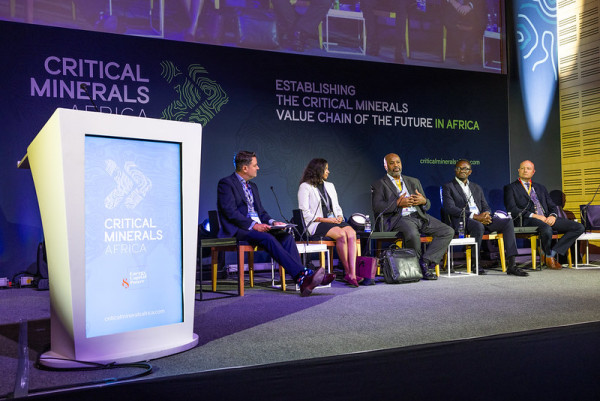
Investment in African critical minerals are on the rise, with global entities acquiring assets, funding upstream projects and developing midstream and logistics facilities. Over the past three years, Zambia (http://apo-opa.co/3yk2ymJ) ­– Africa's second-largest copper producer – has recorded $10 billion in investments (http://apo-opa.co/3WibyRd) in its mining sector. These investments are pushing the country closer to its goal of increasing copper production to one million tons by 2026 and three million tons by 2030, with several new projects coming online. To promote opportunities and drive fresh investment across African markets, the upcoming Critical Minerals Africa Summit (http://apo-opa.co/3WzznFR) will feature a dedicated Investment Forum.

The Critical Minerals Africa 2024 summit on November 6 - 7 serves to position Africa as the primary investment destination for critical minerals. The event is held alongside the African Energy Week: Invest in African Energy 2024 conference (http://apo-opa.co/3VMQTpp) on November 4 - 8, offering delegates access to the full scope of energy, mining and finance leaders in Cape Town. Sponsors, exhibitors and delegates can learn more by contacting sales@energycapitalpower.com

The Investment Forum will delve into investment opportunities across the spectrum of critical minerals and rare earth projects, highlighting how African governments are partnering with global stakeholders to create an enabling environment for market expansion.

Zambia introduced the Mineral Royalty Tax Reform in 2022 – reducing mineral royalty rates for investors – resulting in a surge of fresh investments. In June 2024, mining firm Jubilee Metals Group (http://apo-opa.co/3WiXJlA) acquired two operational copper mines to support efforts to increase activities at its Sable Refinery in Zambia. Canadian mining firm Ivanhoe Mines (http://apo-opa.co/4d4bNqc) also announced that is investing in the expansion of a concentrator at the Kipushi Copper Mine, aiming to increase output to 960,000 tons of copper annually by 2030, up from 140,000 tons in 2024. The UAE's International Resources Holding is providing $300 million to enhance copper production at Mopani Mines, following its acquisition of a 51% stake in a $1.1 billion deal in April 2024. The Investment Forum will showcase lucrative prospects for global investors within Zambia's copper value chain.

Meanwhile, Zimbabwe (http://apo-opa.co/3WwoAfw) banned the export of raw lithium in 2022 in a bid to attract investments across the midstream sector to value add its lithium output. The regulation aims to help the country account for 20% of global lithium demand, build a $12 billion economy by 2030 and has resulted in an influx in new investments and project launches. Mining revenue (http://apo-opa.co/4bPAEwM) has grown from $3.5 billion in 2020 to $9.77 billion in 2023, as a result. Mining firms including Rwizi Rukuru, Shengxiang Investments, Chengxin Lithium Group, Zhejiang Huayou Cobalt and Sinomine Resource Group have invested in large-scale lithium processing facilities in 2023 and 2024. The Investment Forum will feature stakeholders from Zimbabwe's critical mineral sector in panel discussions and exclusive networking sessions, highlighting investment opportunities across the mining value chain.

With the global demand for critical minerals set to increase by four times by 2030 – driven by increasing adoption of clean energy technologies – Africa, which holds 30% of the world's total critical mineral reserves, is well positioned to attract global investors. South Africa holds 80% of the world's platinum group metals, Morocco 70% of total phosphate, the Democratic Republic of Congo the world's largest cobalt reserves, Guinea-Conakry the world's second-largest bauxite reserves, and Gabon the world's second-largest manganese resources. CMA will spotlight these resources and partnership opportunities available for global stakeholders as African countries unlock their full mineral potential for GDP growth.

“Africa's critical mineral resources present an opportunity for the continent to forge partnerships on infrastructure development and economic growth with global investors. We hope to see an increase in investments flowing into Africa as global mining stakeholders capitalize on the continent's vast resources and strategic locations to feed the global demand,” stated Rachelle Kasongo, Project Director at CMA-organizer, Energy Capital & Power.

Distributed by APO Group on behalf of Energy Capital & Power.

Media files
Energy Capital & Power
Download logo
Read moreCMA to Host Investment Forum Showcasing Opportunities in African Critical Minerals
22 July 2024

The United States and Africa Women Innovation and Entrepreneurship Forum (AWIEF) launch the 2024 Academy for Women Entrepreneurs Lesotho, Eswatini and South Africa (AWE LESA)

Location: Business
Africa Women Innovation and Entrepreneurship Forum (AWIEF)

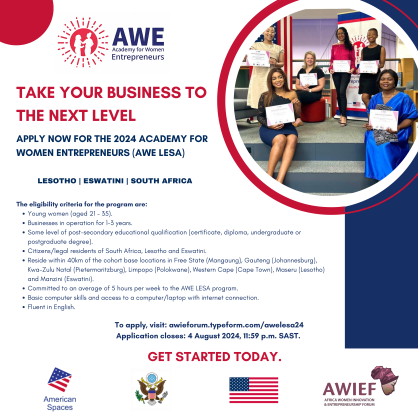
The U.S. Mission to South Africa and the Africa Women Innovation and Entrepreneurship Forum (AWIEF) (www.AWIEForum.org) proudly announce the launch of the 2024 Academy for Women Entrepreneurs program in Lesotho, Eswatini and South Africa.

The Academy for Women Entrepreneurs (AWE) is an initiative of the U.S. Department of State and Arizona State University's Thunderbird School of Global Management. It supports the U.S. National Strategy on Gender, Equity and Equality and reflects the United States' commitment to advancing gender equity and economic prosperity in Southern Africa

The Academy for Women Entrepreneurs LESA (Lesotho, Eswatini and South Africa) program is centred on the Francis and Dionne Najafi 100 Million Learners Global Initiative, an accredited online global management and entrepreneurship certificate consisting of five world-class courses and available to learners across the globe.

The overall goal of the program is to promote economic prosperity, including equitable economic development opportunities for historically disadvantaged groups and individuals. AWE LESA provides a resource for women entrepreneurs to engage in online education with guided facilitation and localization; fosters networks that support participants' access to peer-to-peer mentorship, business partners, and scaling opportunities with businesses in the region and in the United States; as well as provides access to a range of educational programs tailored to women's economic empowerment to expand the impact on the participant.

AWE LESA 2024 will empower 100 young women entrepreneurs in seven cities – five in South Africa and one each in Lesotho and Eswatini. The program will host cohorts in Bloemfontein (10 participants), Cape Town (10 participants), Johannesburg (15 participants), Polokwane (15 participants), Manzini (20 participants), Maseru (20 participants), and Pietermaritzburg (10 participants). The participants will attend in-person training sessions and events at designated American Corners and partner spaces in each location.

AWE LESA 2024 activities will take place between August 2024 and January 2025, and this edition will bring the total number of women entrepreneurs trained through the U.S. Mission to South Africa and AWIEF partnership to more than 700.

What do you gain from participating in the AWE LESA program?

  • Free entry to the program;
  • Enrolment in the Francis and Dionne Najafi 100 Million Learners platform for online learning;
  • Expert-facilitated in-person business management training and mentorship sessions at American Spaces;
  • Networking and peer-learning opportunities with like-minded entrepreneurs;
  • A collaboratively developed and refined draft of your business plan;
  • A 100 Million Learners certificate after completing the program;
  • Access to the U.S. alumni network's robust network of support, including business opportunities, potential seed funding and a vast, global network of like-minded and highly regarded entrepreneurs;
  • Membership to the AWIEF Community which provides ongoing peer learning and support; and
  • Free delegate pass to AWIEF2024 Conference, Exhibition and Awards scheduled to take place at the Cape Town International Convention Centre (CTICC), Cape Town on November 28 and 29, 2024.

What are the criteria to apply?

  • Young women (aged 21 – 35);
  • Early-stage entrepreneurs (with businesses in operation for 1-3 years);
  • Citizens/legal residents of South Africa, Lesotho and Eswatini;
  • Read, write, speak and listen to the program in English;
  • Reside within 40km of one of the seven program cities: Bloemfontein, Cape Town, Johannesburg, Polokwane, Maseru, Manzini, and Pietermaritzburg;
  • Commit to weekly in-person training sessions at a designated American Space of the U.S. Missions to Lesotho, Eswatini and South Africa;
  • Commit to up to 5 hours of weekly programmatic assignments; and
  • Basic computer skills, access to a computer with a data plan to access program content and activities.

Applications Open Now!

Academy for Women Entrepreneurs applications are officially open for highly motivated and self-driven young women entrepreneurs from Lesotho, Eswatini and South Africa. THERE IS NO COST TO APPLICANTS AT ANY STAGE.

To submit your application, please follow this link:  https://apo-opa.co/3WvSAIa

The deadline for submission is August 4, 2024 at 11:59 p.m. South Africa Standard Time (SAST).

For more information email: info@awieforum.org

Distributed by APO Group on behalf of Africa Women Innovation and Entrepreneurship Forum (AWIEF).

Media files
Africa Women Innovation and Entrepreneurship Forum (AWIEF)
Download logo
Read moreThe United States and Africa Women Innovation and Entrepreneurship Forum (AWIEF) launch the 2024 Academy for Women Entrepreneurs Lesotho, Eswatini and South Africa (AWE LESA)
22 July 2024

We should act against lawyers who undermine the Constitution

Location: News

There are advocates who are skilled liars, dissemblers, manipulators and propagandists; they employ the implements of legal practice to bedevil and confuse and dismay - the judiciary and the profession should take action

Read moreWe should act against lawyers who undermine the Constitution
19 July 2024

Interesting facts about four of South Africa’s biggest and oldest coastal Marine Protected Areas (MPAs)!

Location: MyPR

Marine Protected Areas (MPAs) are the ‘nature reserves’ of the sea, conserving marine biodiversity to protect threatened species and ocean health. South Africa is home to some 41 MPAs which play a vital role in ocean conservation, although currently only 5% of the country’s ocean space is protected by these vital areas. In celebration of …

Read moreInteresting facts about four of South Africa’s biggest and oldest coastal Marine Protected Areas (MPAs)!
19 July 2024

Using Fintech To Manage Costs In Business

Location: MyPR

Financial technology, or “FinTech,” is the term used to describe any technology or software that tries to improve and automate the delivery and use of financial services. Everyday examples include online banking, invoicing, mobile payment apps and more. We are probably preaching to the choir here, but keeping track of every last cent that moves …

Read moreUsing Fintech To Manage Costs In Business
19 July 2024

How Automated Bookkeeping is Rewriting Financial Management

Location: MyPR

“Digital transformation is crucial for the improvement of enterprise financial management, which cannot only improve the efficiency and accuracy of data processing but also enhance financial transparency, optimize resource allocation, improve risk control capabilities, and provide strong support for high-level decision-making”.  (source) With the world at our fingertips and accessible from our smartphones, efficiency and …

Read moreHow Automated Bookkeeping is Rewriting Financial Management
18 July 2024

Designer Pool Covers Cape Town Expands Product Line to Meet Growing Demand for Pool Safety and Efficiency

Location: MyPR

Cape Town, South Africa – Designer Pool Covers Cape Town, a leading provider of high-quality pool cover solutions, has announced an expansion of its product offerings to meet the increasing demand for pool safety and energy efficiency in the Western Cape region. The company has introduced several new automatic and safety cover options to complement …

Read moreDesigner Pool Covers Cape Town Expands Product Line to Meet Growing Demand for Pool Safety and Efficiency
16 July 2024

Natural Gas, the Right Transition Fuel for South Africa

Location: News
African Energy Chamber

By NJ Ayuk, Executive Chairman, African Energy Chamber (www.EnergyChamber.org).

A recent policy brief, “Natural Gas as a Transition Fuel in South Africa,” produced by Eye for Business, minced no words concerning the need to access and use that plentiful underground resource.

As stated up front, “Among alternatives, there is a compelling case for investing in natural gas as the most prudent steppingstone to a low-carbon future of power generation.”

In their brief, commissioned by The EnerGeo Alliance — a global trade alliance for the energy geoscience industry — Eye for Business makes a good point.

South Africa's continuing power deficits make the case anew each day for expanded extraction and use of the country's natural gas.  A significantly lower-carbon alternative to coal and diesel, this fuel can provide electricity for growing needs while paving the way for renewables and an increasingly lower-carbon future.

The Current Energy Picture

The brief highlights the growth forces that are now at work and expected to push South Africa's demand for energy to a projected three times current demand by 2040.  These forces include a growing population and a trend toward migration into cities. 

South Africa's current energy sources — coal, diesel, renewables, and unpredictable natural gas imports from Mozambique — are inadequate to prevent the daily 6- to 10-hour outages that now hinder business, education, medicine, industry, and more.

Residentially, these intermittencies impact poorer households the most. Likewise, the frequent failures of old coal-fired plants and associated maintenance costs result in higher tariffs that hit low-income families hardest.

These stark realities make it imperative that South Africa use its own clean natural gas to transition toward renewables, at a pace that allows its economy to benefit. Moving in that direction will draw more needed outside interest and investment in the country's natural gas deposits.

As a real-time example, Namibia is wisely using its offshore discoveries in this way, helping that nation move toward prosperity.

For South Africa to likewise gain the economic health needed to increase development of renewables, it must first stabilize its energy supply to reverse disturbing trends in business closures and increased unemployment due to intermittencies. Energy sources such as wind and solar, which are by nature intermittent, cannot provide immediate solutions to these economic and human problems.

With substantial in-country natural gas discoveries such as Brulpadda, prospects like the Karoo shale reserves, and potential offshore discoveries on the horizon, it just makes sense to put those resources to work to achieve energy stability.

Natural Gas, the Natural Solution

“Countries using gas as a source for power generation have seen their electricity supply grow about three times faster in the past 10 years than those not able to use gas,” states Eye for Business' brief.

As is well known, the wealthy countries around the globe have long made tactical use of their vital natural gas resources for building economic soundness. Once their people and businesses were supported by a reliable supply of electricity, these nations could begin to develop renewables on a large scale.

Importantly, for South Africa's industrial sector to grow, it needs increased feedstocks, such as those used to make fertilizers and petrochemicals. These vital chemicals are produced from natural gas, which can also supply the heat energy needed by the cement, steel, and other industries to make their products.

Less Cost, Less Emissions

Putting South Africa's natural gas resources to work during transition will cost less than most alternatives. Comparing the price tag for various types of electric power plants, the costs per kilowatt hour to build solar, biomass, nuclear, wind, and coal plants are all more than twice as high as the cost to build natural gas plants.

This difference is largely due to modular construction methods used for natural gas plants, which makes them easier to scale and suit to their locations, thus avoiding the cost overruns typical on larger facility projects.

Another cost-efficient build method for natural gas plants is converting inactive existing coal-fired power plants. These conversions can be done at lower costs than new construction. This is a win-win proposition that utilizes unused plants for producing cleaner energy while avoiding unnecessary expense.

As the brief highlights, natural gas emits 50% to 60% less CO2 than coal. This makes it an ideal transition fuel for South Africa that will contribute only a very miniscule amount to global emissions. And even that could be decreased with the use of carbon capture and storage.

To keep a realistic perspective on emissions, it is important to bear in mind that Africa as a whole, with about 17% of the world's population, contributes only a tiny 4% of global carbon emissions at 1.45 billion tonnes.

Potential Employment and Exports

Increased investment in and use of natural gas could pay off for South Africa in two very important areas — job creation and the opportunity to achieve net exporter status.

Growing new jobs is crucial, as South Africa's unemployment rate is currently hovering around 30%. Jobs will come with the territory as the country's gas infrastructure is enlarged for drilling, transport, and electricity production.

Young managers and workers will need to be trained in the necessary skills to run and maintain these operations. In short, revving up the natural gas sector will breathe new energy into the job market as young people see and take advantage of these new opportunities.

On the export front, a sizeable opportunity for boosting the country's economy has appeared on its northern horizon.  Because of Europe's recent reduction in imports of Russian gas, the vast European market presents an opportunity South Africa could pursue, along with other markets, after its own energy needs are met.

The Way Forward

To diversify South Africa's energy mix, government policy support in accordance with the country's draft Gas Master Plan (GMP2024) and the National Development Plan (NDP) will be needed.

The Integrated Resource Plan (IRP) aligns with those documents' goals, supporting, as Eye for Business' brief puts it, “a significant shift in the energy mix, projecting an additional 29,500MW to the electricity capacity by 2030, with 3,000MW expected from gas.”

With all the benefits they can bring, South Africa must not leave its valuable natural gas deposits stranded while lacking reliable green energy sources. Making steady progress toward a lower-carbon energy mix while transitioning toward renewables makes sense for South Africa and its people.

Distributed by APO Group on behalf of African Energy Chamber.

Media files
African Energy Chamber
Download logo
Read moreNatural Gas, the Right Transition Fuel for South Africa
16 July 2024

Scaling Your Business With Managed IT Services And Smart IT Consulting

Location: MyPR

SevenC, a leading IT infrastructure and network service provider striving to identify and make available the best possible ICT strategies for its clients’ unique needs, explores how managed IT services and IT consulting can help entrepreneurs scale their operations. “Combining managed IT services and IT consulting can significantly help your business grow,” says Graeme Millar, …

Read moreScaling Your Business With Managed IT Services And Smart IT Consulting
16 July 2024

Straight To The Point: The Drag Cartel’s Vibrant Voice in LGBTQI+ Discourse

Location: MyPR

In a groundbreaking initiative to amplify LGBTQI+ voices, the captivating podcast ‘Straight to the Point’ features the dynamic trio of Emogan Moore (35), Maxine Wild (30), and Chenal LeCap (23). Broadcasting every Monday at 6:30 PM on the GoBinge YouTube channel, the show offers a 30 to 40-minute weekly dive into the vibrant and often …

Read moreStraight To The Point: The Drag Cartel’s Vibrant Voice in LGBTQI+ Discourse
15 July 2024

South Africa aims for zero emissions by 2050

Location: News

South Africa aims for zero emissions by 2050

President Cyril Ramaphosa says South Africa aims to reach net zero carbon emissions by 2050.

Speaking at the Climate Resilience Symposium underway at the Council for Scientific and Industrial Research (CSIR) International Convention Centre in Pretoria, President Ramaphosa said the revised Nationally Determined Contribution balances the country’s developmental needs and economic realities.

“It takes into account the feasibility of undertaking a climate response through a set of just transition pathways. Importantly, it notes carbon tax as a vital component of our mitigation strategy to lower greenhouse gas emissions,” President Ramaphosa said.

By internalising the cost of carbon emissions, the President said the carbon tax incentivises companies to reduce their carbon footprint and invest in cleaner technologies, and also generates revenue for climate initiatives.

The President said these funds can be reinvested in renewable energy projects, energy efficiency programmes and social support mechanisms.

Government has launched a number of other initiatives to meet the country’s emissions targets, and these include the Renewable Energy Independent Power Producer Procurement Programme, which has been successful, attracting over R209 billion in investment and adding much-needed capacity to the electricity grid.

President Ramaphosa said the Integrated Resource Plan, which outlines the country’s energy mix, is in the process of being updated.

The plan sets out a viable energy mix over the medium- and long-term to achieve the decarbonisation objectives.

WATCH | Climate Resilience Symposium


Just transition

The President said the Just Energy Transition Investment Plan sets out a quantified investment plan of some $98 billion, noting this will drive huge investments in the electricity grid, green hydrogen, electric vehicles, economic diversification, and skills development, amongst others.

“We continue to explore opportunities to meet our emissions reduction targets in minerals extraction, in green hydrogen production, in new power infrastructure, in electric vehicle manufacturing, and economic infrastructure upgrades.

“It is crucial that the transition to a low-carbon economy is just and inclusive and that no worker or community is left behind. The growth of clean tech, renewable energy, battery storage, green hydrogen and minerals for the future low-carbon economy must result in opportunities for affected sectors, employees, and communities,” the President said.

READ | Cabinet approves Just Energy Transition Implementation Plan

The President also noted that government is investing in retraining programmes, creating new job opportunities in renewable energy, and supporting small enterprises in affected areas.

The President further underscored a need for substantial investments to build sustainable infrastructure, develop green technologies and support social programmes.

Moreover, he noted the substantial gap between available disaster funds and the cost of disaster response.

“Even as we have taken proactive measures like setting up a Climate Change Response Fund, we need to think seriously about the urgent financial and policy measures needed to address these shocks, and how to strengthen the National Treasury’s disaster financing response,” the President said.

He said the Department of Forestry, Fisheries and the Environment is already working with the Presidential Climate Commission on recommendations for the Climate Change Response Fund, and an Adaptation and Resilience Investment Plan to accompany it.

The President called on international partners to fulfil their commitments to finance both, noting that mitigation and adaptation financing remains a challenge.

While acknowledging the positive steps taken with the establishment of the Green Climate Fund, including the Loss and Damage Fund, and other global mechanisms, President Ramaphosa emphasised a need for more innovative financing solutions that mobilise private capital and incentivise sustainable practices.

READ | Climate Loss and Damage Fund to be established for developing countries

“The National Treasury’s Climate Finance Strategy is pivotal in this regard, outlining how we can leverage public and private finance to achieve our climate goals. 

“We must not underestimate the importance of our own domestic capital and financial markets to innovatively mobilise and deploy capital towards our just transition,” President Ramaphosa said.

The President announced that the Just Energy Transition Funding Platform will be launched in the next few months.

The funding platform will be an important precursor to a broader Just Transition Financing Mechanism, proposals for which are being developed by the Presidential Climate Commission.

“We call on South African business to invest in the projects needed for a successful just transition in this country. We need to use blended finance to unlock private sector flows,” President Ramaphosa said. – SAnews.gov.za

GabiK
Mon, 07/15/2024 - 12:47

594 views
Read moreSouth Africa aims for zero emissions by 2050
15 July 2024

Exploring Affordable Courier Services in South Africa

Location: MyPR

In today’s fast-paced world, the need for reliable and affordable courier services has never been greater. Whether you’re a business looking to ship products to customers or an individual sending a parcel to a friend abroad, finding the right courier service can make all the difference. In South Africa, there are numerous options available that …

Read moreExploring Affordable Courier Services in South Africa
13 July 2024

DIRCO faces critical staffing shortage due to budget cuts

Location: News

DIRCO faces critical staffing shortage due to budget cuts

International Relations and Cooperation Minister Ronald Lamola says his department, which is facing a critical staff shortage, must do more with less due to resource constraints.

A critical challenge faced by the department, Lamola explained, is managing exchange rate volatility, which affects 60% of expenditures allocated to missions abroad.

The Minister was speaking during his Budget Vote Speech for the 2024/25 financial year, where he announced that the department had been allocated R6.57 billion, which dropped by 5% compared to the previous year. 

“Strategic cost management in this area is essential to safeguarding our financial stability. Equally vital is addressing employee compensation, where the current ceiling set by the National Treasury requires careful consideration to maintain workforce morale and operational efficiency.” 

According to the Minister, the department could only fill critical vacancies identified at the head office to remain within the baseline for employee compensation, which resulted in a “very high vacancy rate”.

He said that this hurts the department’s operations and service delivery.

“However, several line function posts were filled at the Assistant Director, Deputy Director and Director levels, mainly through internal promotions to address the lack of upward mobility,” he added. 

The Minister also announced that the department cannot fill all the critical vacancies with the available funds, and operations continue to be negatively affected.  

“The June 2024 mission posts placement process was also deferred due to the shortfall in the compensation of employees’ budget. Additional funding is thus required to cover the shortfall and fill other critical vacancies at the head office and missions abroad.” 

This financial year, he stated that the department will improve its information and technology and property infrastructure portfolio to optimise resources. 

“This strategic initiative aims to release more lease funds and redirect them towards operational needs. While these budget adjustments pose challenges, they also present opportunities for efficiency gains and prioritisation of essential expenditures.”

He informed Parliament that the department will soon be advertising a cadet programme and a youth development initiative, which he deems crucial to the national youth development imperative and the department’s future capacity requirements.

The department is also finalising its organisational structure review process to streamline the business units and processes and optimise scarce resources to leverage global economic opportunities in advancing the country’s national interest, he added. 

“Our commitment to delivering quality services and fostering economic growth remains unwavering. This budget signifies our determination to balance fiscal prudence with the imperative to support our citizens and invest in our nation’s future.” – SAnews.gov.za
 

Gabisile
Fri, 07/12/2024 - 11:11

553 views
Read moreDIRCO faces critical staffing shortage due to budget cuts
  • Previous
  • Page 1
  • Interim pages omitted …
  • Page 11
  • Page 12
  • Page 13
  • Page 14
  • Page 15
  • Page 16
  • Next

Copyright © 2026 · MyZA · All Rights Reserved · Powered by Reach Trust