• Skip to main content
  • Skip to header right navigation
  • Skip to after header navigation
  • Skip to site footer
MyZA

MyZA

News, Directory, Events and Other Stuff

  • Social Media
  • Sport
  • World News
  • Home
  • Submit News
  • Directory
  • Events
  • Stratlec
  • TFSA
  • News
    • APO
    • Today’s Sport News
    • Todays Social Media and Tech Headlines
    • Today’s World News
    • Today’s SA Financial News
  • Contact
You are here: Home / Archives for Resource

Resource

27 August 2024

Scaling up Financing Is Key to Accelerating Africa’s Structural Transformation

Location: News
African Development Bank Group (AfDB)

By Adamon Mukasa and Anthony Simpasa, African Development Bank Group (www.AfDB.org).

Document 1: http://apo-opa.co/4g3EVzM
Document 2: http://apo-opa.co/473xTHm
Document 3: http://apo-opa.co/4gcshPk
Document 4: http://apo-opa.co/4gcsi5Q
Document 5: http://apo-opa.co/471DE8y
Document 6: http://apo-opa.co/4gcskL0
Document 7: http://apo-opa.co/47361TE

Document 8: http://apo-opa.co/4dXk53t

The calls for structural economic transformation in Africa date back to the 1960s when newly independent nations aimed to eliminate poverty through economic diversification, sustained growth, and job creation. This agenda persists today, as Africa continues to face significant developmental challenges.

Pursuing post-independence economic agendas was particularly important because, behind the euphoria (http://apo-opa.co/4dZMCVX) of independence, laid significant developmental challenges in several African countries: unskilled labor force, political and institutional fragilities, poor health conditions, rapid population growth, wide income disparities, and the legacy of colonialism and exclusion from the modern world. The establishment of the Organization of African Unity (OAU) (http://apo-opa.co/4g3EVzM) in 1963 and the African Development Bank (http://apo-opa.co/473xTHm) a year later aimed to tackle these other challenges in a more coordinated and impactful manner. The African Union (http://apo-opa.co/475z3Sz), successor of the OAU, developed Agenda 2063 (http://apo-opa.co/4g3EQMu) in 2013 as a blueprint for turning Africa into the global growth pole and powerhouse of the future.

Africa's Economic Development Paradox

More than sixty years after independence (http://apo-opa.co/3AzLutK), Africa's structural transformation – the shift of workers from lower to higher productivity employment and intra-sectoral productivity growth (http://apo-opa.co/4dQj0KK) – has not progressed as quickly as hoped. Both policymakers and analysts within and outside the continent are genuinely concerned that achieving structural transformation could remain a mirage for many African countries in the absence of bold structural reforms and financing to support implementation of these policies. Why being so pessimistic? Because historical facts tend to support their pessimism. The African Economic Outlook (AEO) 2024 (http://apo-opa.co/4g2RATW) report, released in May by the African Development Bank, reveals that Africa's transformation has been slow and uneven. In countries showing signs of transformation, the process has been characterized by low industrialization and predominantly by employment in low-skill, low-productivity services. The agriculture sector, employing 42% of Africa's workforce, is 60% less productive than the economy-wide average. Consequently, many workers remain trapped in low-productivity, low-wage jobs, unable to escape poverty.

As a result, Africa was the only region of the world where the average real GDP per capita contracted in the 1980s and 1990s, the so-called lost decades (http://apo-opa.co/4fYqm0D).

Africa is off-track in achieving almost all SDG targets by 2030, consistently showing the lowest SDG performance globally since the 2000s (Figure 1). Without intervention, it is predicted that by 2030, nearly 9 out of 10 of the world's extremely poor will be in Africa (http://apo-opa.co/4e2weEn) and under current conditions[1], it could take African countries over a century on average to reach high-income status.


[1] This scenario assumes that real GDP per capita of each African country will grow according to its post-COVID-19 (2022–25) average growth rate as computed by the African Development Bank's Statistics Department.

But Africa is a very large, diverse, heterogeneous, region. Some countries have, over the past four decades preceding the COVID-19 pandemic, experienced episodes of growth accelerations, growth spikes and failed take-offs (http://apo-opa.co/4gcshPk). Cases of consistent good performance include Botswana, Seychelles, and Mauritius, routinely ranked among the top 10 fastest-growing economies globally. African countries have indeed exhibited remarkable resilience amid confounding shocks, and in 2024, 10 countries[1] in Africa are projected to be among the world's top 20 fastest-growing economies, sustaining the trend observed during the past four decades pre-COVID-19.

Importantly, over the past quarter century, thanks to strong economic reforms and macroeconomic stability, enhanced governance, relative peace and improved political environment and, public investments in soft and hard infrastructure, some African countries[2] have managed to transform their economies and recorded economic growth rates above the global average.

The role of finance in fast-tracking Africa's structural transformation

Many factors, both internal and external, could explain the relatively slow progress in structurally transforming African economies. Among them: over-reliance on commodity-led growth (http://apo-opa.co/4fZJTxI), inadequate infrastructure (http://apo-opa.co/4dV5DZE); insufficient pool of skilled workers (http://apo-opa.co/4g49x4g) and low access to affordable finance (http://apo-opa.co/47361D8); weak institutional governance (http://apo-opa.co/4e0O5LG), recurrent conflicts (http://apo-opa.co/4g49rtq), effects of climate change (http://apo-opa.co/3ABuuTU), tightening of global financial conditions (http://apo-opa.co/4fZSFvC) and rising debt vulnerabilities (http://apo-opa.co/4724oWk).

While all these factors are equally important and call for urgent actions from policymakers, financing Africa's transformation (http://apo-opa.co/4fTo1Uy) is a multi-layered overarching challenge that demands special attention and a pragmatic approach to move from billions to trillions. The cost of achieving the SDGs by 2030 in Africa is estimated at about $1.3 trillion (http://apo-opa.co/4gcsi5Q) annually, equivalent to 42% of Africa's 2023 GDP. Infrastructure needs alone are estimated by the African Development Bank at $181-$221 billion per year over 2023-2030.  The climate finance gap is approximately $213.4 billion (http://apo-opa.co/4gcsiTo) annually through 2030.

Insufficient domestic resources (http://apo-opa.co/471DE8y), compounded by the failure of the global financial architecture (http://apo-opa.co/471zU6K) to mobilize and at scale, affordable finance for sustainable development (http://apo-opa.co/4gcskL0), have led many African countries to resort to commercial borrowing on unfavorable terms. This has resulted in increased debt vulnerabilities. Africa's Public and Publicly Guaranteed external debt has nearly tripled since 2010, reaching $656 billion in 2022, accounting for 22.4% of the continent's GDP and exceeding Africa's public revenue-to-GDP ratio of 20.4%. In 2024, African countries are expected to spend around $74 billion on debt service, up from $17 billion in 2010. Out of the projected debt service, $40 billion is owed to private creditors.

Even more concerning, debt service payments now account for about 11% of the continent's total revenues. High debt service is diverting resources from crucial investments in infrastructure, education, and health – all critical for economic transformation and long-term growth. As of April 2024, 20 African countries[3] (http://apo-opa.co/47361TE) were either in external debt distress or at high risk of external debt distress.

The AEO 2024 report estimates that to accelerate Africa's structural transformation, the continent needs to close an annual financing gap of $402.2 billion (about 13.7% of its projected 2024 GDP) by 2030. Figure 2 shows that transport[4] infrastructure accounts for the largest share of the gap (72.9%), followed by education (10.4%), energy (9.9%), and productivity-enhancing technologies (6.8%). These figures reflect decades of underinvestment in critical areas for development.

The level of financing gap in transport infrastructure reflects the continent's shortfall explained by decades of public underinvestment to upgrade existing road infrastructure or open new roadways, to match the growing population and economic dynamism across the continent. For instance, Africa's median road density is about 12 km per 100 km2, compared with 42.5 km in high-performing developing countries and 136 km in high-income countries. Only about 27% of African roads are paved, far behind the rest of the world (about 49%) and other developing countries (35.4%).


[1] Niger, Senegal, Libya, Côte d'Ivoire, Ethiopia, Rwanda, Benin, Djibouti, Gambia, and Uganda

[2] Algeria, Comoros, Djibouti, Egypt, eSwatini, Lesotho, Libya, Mauritius, Sao Tome and Principe, Senegal, Seychelles, and Tunisia

[3] Burundi, Cameroon, Central African Republic, Chad, Comoros, Congo, Djibouti, Ethiopia, Gambia, Ghana, Guinea-Bissau, Kenya, Malawi, Mozambique, São Tomé and Príncipe, Sierra Leone, South Sudan, Sudan, Zambia, and Zimbabwe

[4] Proxied by roads as road transport is the most frequently used means of transporting goods and people across the continent, carrying at least 80 percent of goods and 90 percent of passengers.

On education, vital for equipping the current and future workforce with the required skillset for structural transformation, African countries' median SDG index score was only 51.5 (out of a maximum of 100) in 2022, while other low-income developing countries reached a median score of 87. In addition, according to World Bank's World Development Indicators (http://apo-opa.co/3AGXw4N), African governments currently spend on average $312 annually per student in primary education, $473 on secondary education, and $2,227 on tertiary education, or about, respectively, 3, 2.3, and 1.1 times lower than high-performing developing countries on  SDG 4. On energy, Africa's median SDG 7 index score was 38.8 in 2022, suggesting that a typical African country was 61.2% further away from achieving the best possible outcome on SDG 7 targets. Despite its vast energy potential, electric power consumption per capita in Africa is still the lowest in the world, estimated at 638.4 kilowatt-hours (kWh) in 2021, versus 2,056 kWh in other developing countries. Due to poor energy infrastructure, over 600 million Africans have no access to electricity http://apo-opa.co/46YZuJT and this is despite progress in recent years[1]. On productivity-enhancing technology and innovation, the continent lags other regions too. This impedes its ability to either innovate and introduce new products, technologies, and/or services that could support its structural transformation. African countries' average Gross Domestic Expenditure on R&D (GERD) represents about 0.4% of their GDP (against about 1% in the rest of the world) and they spend on average $10.7 per capita on GERD (compared to $403.2 per capita in other regions of the world). Furthermore, the continent displays the lowest concentration of researchers in R&D, with an average of 221 researchers per million people, against 742 researchers in other developing countries.

The financing gap varies significantly across countries. The cross-country heterogeneity is mainly explained by differences in current SDG performance related to structural transformation as well as differences in demographics (current and projected population size and composition, land size, and the like) and socioeconomic characteristics (current and projected GDP per capita, and spending on education, infrastructure, and so on). As shown in Figure 3, the estimated annual financing gap represents at least 10 % of 2024's projected GDP in 36 African countries, and in nine of these, at least 50 % of GDP. For such countries, closing the financing gap by 2030 is, therefore, realistically impossible.


[1] For instance, the average share of people with access to electricity increased from about 38 percent in 2000 to about 59 percent in 2022. In 28 African countries, the percent of people with access to electricity has more than doubled between 2000 and 2022, out of which it has increased at least fivefold in 8 countries (Kenya, Lesotho, Mali, Mozambique, Rwanda, Somalia, Tanzania, and Uganda).

Note: COG: Congo; CPV: Cabo Verde; GHA: Ghana; CIV: Cote d'Ivoire; GAB: Gabon; GNQ: Equatorial Guinea; MUS: Mauritius; SYC: Seychelles; ZAF: South Africa. Source: Authors' computation based on the African Economic Outlook (AEO) 2024 database

A more realistic approach would be to allow for a gradual but steady transformation process over a longer period, aligning with the African Union's Agenda 2063. This would enable countries to mobilize more resources domestically and externally, without jeopardizing debt sustainability.

What next?

Scaling up finance to accelerate Africa's structural transformation should be a key priority for policymakers. While implementing structural reforms is crucial for sustainable growth, success depends on the availability, timeliness, and scale of long-term development financing and enhancing spending efficiency. African countries should therefore, inter alia, focus on: i) scaling up investment to build requisite human capital suited to local realities, circumstances, and development priorities; ii) boosting domestic resource mobilization and improving efficiency of public finance management; iii) creating targeted and streamlined incentives to attract private capital for key transformation sectors; and iv) launching ambitious national infrastructure programs with assured positive returns to attract affordable financing.

The international community should reform the global financial architecture (http://apo-opa.co/4dXk53t) to facilitate African countries' access to long-term, concessional development financing at scale, complementing domestic resources.

By addressing these financing challenges and implementing targeted reforms, Africa can accelerate its structural transformation and move closer to achieving its development goals as espouses in Agenda 2063.

Distributed by APO Group on behalf of African Development Bank Group (AfDB).
Media files
African Development Bank Group (AfDB)
Download logo
Read moreScaling up Financing Is Key to Accelerating Africa’s Structural Transformation
27 August 2024

Empowering Job Seekers and Entrepreneurs: Transformative Workshop Coming to Pretoria

Location: MyPR

Pretoria, South Africa – Aiming to equip job seekers and aspiring entrepreneurs with the skills they need to succeed in today’s competitive market, a highly anticipated workshop is set to take place on the 18th and 19th of October 2024 at 24 Skipper Avenue, Akasia, Pretoria North. Organized by Noble Wealth Creation Group, this event …

Read moreEmpowering Job Seekers and Entrepreneurs: Transformative Workshop Coming to Pretoria
26 August 2024

The Versatility of Shipping Containers

Location: MyPR

Shipping containers have evolved far beyond their original use for transporting goods across the world. Today, these sturdy and versatile structures are being repurposed for a wide range of applications, from storage solutions to innovative architectural projects. This article delves into the many uses of shipping containers, the availability of shipping containers for sale, and …

Read moreThe Versatility of Shipping Containers
26 August 2024

Workshop raises awareness on importance of environmental conservation

Location: News

Workshop raises awareness on importance of environmental conservation

The Department of Water and Sanitation has held a workshop to raise awareness about the impact of human activities on water resources and the environment.

The 6th Citizen Science awareness workshop was held recently in Gauteng’s Tembisa, in partnership with the South African National Biodiversity Institute (SANBI) and Nature Speaks.

Citizen Science is a powerful tool that harnesses the knowledge and participation of local communities in scientific research and environmental monitoring.

The session was held with an intention to educate and engage local traditional healers on the importance of environmental conservation and sustainable water resource management.

Among the key objectives of the workshop was to provide traditional healers with training on how to identify sources of pollution in their local areas [as] they often perform rituals and ceremonies in natural spaces, including rivers, making them particularly vulnerable to the impacts of pollution and environmental degradation.

Citizen Science national coordinator, Noloyiso Mbiza, highlighted the significance of the workshop in empowering traditional healers to better understand and protect their natural surroundings.

“By involving traditional healers, who often interact closely with natural ecosystems, the workshop aimed to raise awareness about the impact of human activities on water resources and the environment,” Mbiza said.

Mbiza, who is also a traditional healer, emphasised the role of traditional healers as custodians of traditional knowledge and practices, and the importance of integrating this knowledge with modern environmental conservation efforts.

“We also provide them with the tools to investigate pollution in their catchment areas, so they can understand where the pollutants are coming from. This is important because it directly affects them, given that they spend about 95% of their time in the affected environment.

“By equipping traditional healers with the skills to recognise and address environmental threats, the workshop aimed to promote sustainable practices that minimise harm to water resources and ecosystems,” Mbiza said.

She added that the collaborative efforts underscore the importance of partnerships in promoting environmental sustainability and community engagement.

By bringing together government agencies, research institutions, and local community organisations, the workshop facilitated dialogue, knowledge exchange, and capacity building among traditional healers and environmental stakeholders.

In addition, traditional healers, who attended the workshop, expressed gratitude for the opportunity to learn and engage with government and environmental organisations.

They also highlighted the importance of inclusive and community-driven approaches to environmental awareness and conservation.

Building on the success of the 6th Citizen Science awareness workshop, the next workshop will be held in Tembisa on 30 August 2024, and will be open to all members of the local community, including residents interested in learning more about citizen science, environmental conservation, and sustainable water management practices. -  SAnews.gov.za
 

GabiK
Mon, 08/26/2024 - 10:17

470 views
Read moreWorkshop raises awareness on importance of environmental conservation
26 August 2024

Municipalities must be at “driving seat” of clean energy

Location: News

Municipalities must be at "driving seat" of clean energy

Municipalities are at the centre of government’s efforts to move towards clean energy and fulfil the country’s commitment to global climate change.

This is according to President Cyril Ramaphosa, who was addressing the opening ceremony of the Municipal Just Energy Transition (JET) Conference held in Johannesburg on Monday.

The President highlighted that South Africa’s 257 metropolitan, district and local municipalities “own and operate approximately half of South Africa’s electricity distribution grid and facilitate universal access to electricity”.

“One hundred and sixty five municipalities are electricity service providers. Through the Integrated National Electrification Programme grant, municipalities are responsible for addressing the electrification backlog. 

“Municipalities therefore need to be in the driving seat when it comes to providing clean, affordable energy to communities, businesses and industry,” the President highlighted.

WATCH | 


In this regard, South Africa’s Cabinet approved the JET Investment Plan, which has a dedicated municipal portfolio roadmap with three areas of focus.

These are:

  • Providing access to affordable clean electricity;
  • Sustainable financing for electricity infrastructure, and
  • Strengthening the capacity of municipalities to manage the transition.

On the first area of focus, the President said the recent promulgation of the Electricity Regulation Amendment “paves the way for a new, competitive electricity market.

“The reforms contained in the law must help to speed up decarbonisation. But more than that, they must result in a better deal for households and businesses. 

“The national climate change effort must not come at a higher cost for electricity users. South African households, like many around the world, are battling with the rising cost of living, including the cost of energy. 

“We must therefore ensure that the energy transition does not contribute to energy poverty. It must not deepen inequality,” President Ramaphosa insisted.

In terms of sustainable financing for electricity infrastructure, he said municipal grid system needs to be upgraded, modernised and extended.

“The energy generation of the future requires systems that are fundamentally different in terms of design, capability and operation.

“Smart metering will have to accommodate the increased penetration of renewable energy at different scales. It will need to facilitate wheeling and feed-in by small-scale embedded generation. 

“Massive investment is needed to ensure optimal grid control, safety and energy storage. This investment will need to draw on both public and private sources of capital,” he said.

Turning to how the capacity of municipalities can be strengthened, President Ramaphosa said extensive training and upskilling of officials will be the order of the day.

“New systems will be required to identify human resource, technical capacity and other needs within municipalities, and plan and budget accordingly. 

“Municipalities will need to adopt best practice when it comes to the design and implementation of programmes and projects,” he said.

The President told conference delegates that the country’s drive towards a lower carbon intensive economy does not only reside with government.

“A just energy transition is about promoting economic diversification, transformation and industrialisation in the renewable energy sector that empowers workers, marginalised communities and black businesses.

“The achievement of defined just energy transition outcomes at a municipal level requires supportive policies and leadership, good governance and a coordinated effort among all relevant institutions.

“As government, business, labour and civil society, let us deepen our collaboration to achieve an energy future that is secure and sustainable for all,” President Ramaphosa said. 

READ | SA committed to meeting climate change undertakings

– SAnews.gov.za

NeoB
Mon, 08/26/2024 - 11:13

220 views
Read moreMunicipalities must be at “driving seat” of clean energy
26 August 2024

Gauteng’s Murray Park Library to get a new lease on life 

Location: News

Gauteng’s Murray Park Library to get a new lease on life 

The Johannesburg Development Agency (JDA) has commenced with the construction of the long-awaited upgrades to the Murray Park Library, located in Malvern, Johannesburg. 

The JDA  has commenced with the construction on behalf of the City of Johannesburg's Community Development Department.

First opened in 1957, Murray Park Library has been a cornerstone of knowledge and community engagement for over six decades. 

Recognising its importance as a hub for education and enrichment, the JDA spearheads a comprehensive redevelopment project to modernise and revitalise the beloved institution. 

“The upgrade of Murray Park Library is part of the Inner City Eastern Gateway Urban Development Framework, reflecting the City's commitment to enhancing infrastructure and services for its residents. 
Upon completion, the renovated library will serve as a beacon of learning and culture for Malvern and surrounding communities,” said the agency in a statement. 

JDA Executive Manager for Project Implementation Siyabonga Genu said the agency is excited about the upgrades.

“This project underscores our commitment to creating inclusive spaces that foster lifelong learning, cultural enrichment, and community cohesion. 

“Through thoughtful design and meticulous planning, we aim to deliver a modern, accessible library facility that will be a source of pride for generations to come," he said. 

Key features of the upgrade

The upgrade project will be done in two phases, with phase one focusing on foundational elements and phase two concentrating on constructing the two-story library structure.

Phase 1, scheduled for implementation in the 2024/2025 financial year, encompasses critical groundwork such as site clearance, construction of retaining walls, and foundational preparations.

Phase 2 will see the construction of the state-of-the-art library facility, spanning approximately 2000m². The ground floor will feature a general library space, a study area for children, meeting rooms, study centres, and essential amenities.

The first floor will accommodate a teenage section, activity centre, e-learning area, and additional facilities. The exterior enhancements will include landscaping, paving, lighting, and parking facilities.
Moreover, the upgrade project emphasises sustainability and accessibility, with provisions for solar panels, upgraded power supply capacity, and facilities for persons with disabilities.

Community impact

According to the JDA, the upgraded Murray Park Library will serve as a dynamic community resource, offering world-class library and information services to residents of all ages. 

From providing access to literature and educational resources to fostering a vibrant space for cultural exchange and lifelong learning, the new library will enrich the lives of a diverse population.   – SAnews.gov.za

Edwin
Mon, 08/26/2024 - 09:57

143 views
Read moreGauteng’s Murray Park Library to get a new lease on life 
23 August 2024

Youth is a strategic resource essential for moving the country forward

Location: News

Youth is a strategic resource essential for moving the country forward

The youth is a strategic resource and an intellectual reservoir of ideas essential for moving the country forward, says the Women, Youth and Persons with Disabilities Minister, Sindisiwe Chikunga.

“Our youthful population represents a blessing with limitless potential—a strategic asset for the current and future well-being of this country and continent,” Chikunga said.

Delivering a keynote address at the South African Youth Economic Council (SAYEC) 3rd annual job imbizo, held at Melrose Arch on Thursday evening, Chikunga argued that while the current socio-economic conditions pose a direct threat to national stability and undermine future prospects, it is not the youth who are a threat to national security.

According to Chikunga, the conditions under which the youth continue to exist, create opportunities for both known and unknown threats to emerge and become institutionalised.

“Without a more purposeful, quantifiable, and deliberate investment in their potential and capabilities, South Africa will not be in a position to reap the benefits of its demographic dividend.

“No country on earth has been able to industrialise or re-industrialise while neglecting the role of youth in the economy. A trained, capable, and industrious youth is the crucial ingredient currently missing in South Africa’s industrialisation puzzle,” Chikunga said.

She emphasised that placing the youth at the centre of re-industrialisation must be accompanied by fundamental changes in the structure, systems and institutions.

This must also be accompanied by fundamental changes in patterns of ownership, management, and control of the wealth producing resources in favour of all South Africans, particularly the marginalised, vulnerable and poor, who are primarily Africans and women.

She said youth participation in the economy should not be reduced to hopping from one internship to another.

To prepare the youth for meaningful participation in South Africa’s era of industrialisation, the Minister stressed the need for a reimagined industrial strategy that is both fit for purpose and responsive to rapidly changing global economic patterns.

“These patterns range from automation and the rise of artificial intelligence in manufacturing to the ongoing geopolitical realignment. Such a strategy should be anchored on robust economic and market intelligence in order to enhance the quality of decision-making in support of our goals of productivity, industrialisation, commercialisation, and beneficiation,” Chikunga said.

Chikunga added that addressing youth unemployment requires targeted, sustainable interventions with clearly articulated exit opportunities.

"High levels of youth unemployment require special programs. The National Youth Service Programme must better educate, develop, train, and empower youth, and enable them to participate in the reconstruction of society,” Chikunga said. – SAnews.gov.za

GabiK
Fri, 08/23/2024 - 11:40

307 views
Read moreYouth is a strategic resource essential for moving the country forward
22 August 2024

A nation’s health, is a nation’s wealth

Location: News

A nation's health, is a nation's wealth

South Africa’s health system is too essential to development to be weakened by mismanagement, funding crises, and other problems.

“We expect all stakeholders to bring solutions and work with the Departments of Health and Science and Innovation to implement them,” said Acting President Paul Mashatile on Thursday.

The Acting President was speaking at the Union Buildings in Pretoria, where he presided over the signing of the second Presidential Health Compact, an initiative established by President Cyril Ramaphosa in 2019.

The health compact is a framework for cooperation between critical sectors and stakeholders to strengthen the health system and monitors and evaluates preparations for implementing the National Health Insurance (NHI).

The stakeholders include government, business, labour, civil society, health professionals, unions, service users, statutory councils, academia, and researchers to develop sustainable and inclusive solutions to challenges in the national health system.

Its pillars range from the development of human resources, improving access to medicine, vaccines and health products, upgrading infrastructure and private sector engagement. 

It also zooms in on quality healthcare, public sector financial management improvements, governance and leadership, community engagements, and information systems to pandemic preparedness.

The Acting President told delegates present that implementation was the foremost priority of the country's seventh administration. 

“Effective policy implementation means we can take the right actions and follow through with the plans, leading to successful outcomes. I have full confidence that implementation is the priority of all of us gathered here today.

“On behalf of President Cyril Ramaphosa, it is my privilege to sign the second Presidential Health Compact today.”

He said he believed that a healthy nation is more economically productive and prosperous.

“A healthy population enjoys higher life expectancy, better quality of life and overall wellbeing. As a result, providing quality healthcare is of the utmost importance to all of us,” he added. 

Universal healthcare coverage

He said Africa is committed to the achievement of the United Nations Sustainable Development Goal of “ensuring healthy lives and promoting wellbeing for all at all ages”. 

“This is a bold commitment to achieve universal health coverage. It is a commitment to provide access to affordable medicines and vaccines for all. If our nation’s health is truly to be our nation’s wealth, we must fix our healthcare system.”

He said fixing the healthcare system will effectively protect the population against public health emergencies, such as HIV/AIDS, COVID-19, or Mpox.

The Acting President also outlined challenges that prevent government from providing decent and quality healthcare to all South Africans. 

Lack of funding and collaboration

He also touched on healthcare funding challenges due to budget cuts and a constrained fiscal environment, compounded by inefficiencies, mismanagement and corruption in resource allocation.

However, the Acting President said budgeting in the health sector is steadily improving to ensure a more equitable allocation of resources. 

“Less money is being lost to litigation. This is thanks to the hard work of the Health Sector Anti-Corruption Forum, which continues to expedite prosecutions and recover stolen funds.” 

With greater collaboration, he said the resources and capabilities of both the public and private sectors can be brought to bear to serve those who need healthcare most. 

However, some progress has been made as well with 149 new primary healthcare facilities being completed by November 2023. 

In addition, 30 new hospitals are either opened or under construction.

The Acting President also took the time to applaud the private sector for the crucial role it plays in strengthening health systems. 

“Our experience with COVID-19 showed how we could deepen public-private partnerships. With greater collaboration, the resources and capabilities of both the public and private sectors can be brought to bear to serve those who need healthcare most,” he added. – SAnews.gov.za

Gabisile
Thu, 08/22/2024 - 14:43

279 views
Read moreA nation’s health, is a nation’s wealth
22 August 2024

TikTok Announces Industry-First Sub-Saharan Africa Safety Advisory Council

Location: News
TikTok

TikTok (www.TikTok.com) is taking major steps to boost safety on its platform across Sub-Saharan Africa with the launch of its inaugural Safety Advisory Council and the expansion of its #SaferTogether community education campaign. By partnering with key stakeholders, including policymakers, members from academia, NGOs, and community leaders, TikTok aims to foster a collaborative approach to ensuring a secure and positive platform environment. This announcement was made at TikTok's Safety Summit held in Nairobi, Kenya. 

A Continuous Investment: The Safety Advisory Council 
Since 2020, TikTok has established nine regional Safety Advisory Councils alongside the U.S. Content Advisory Council, each composed of experts in areas such as youth safety, free expression, and hate speech. These councils play a vital role in shaping TikTok's policies, product features, and safety processes, ensuring the platform remains responsive to evolving challenges. 

The newly launched Sub-Saharan Africa Safety Advisory Council will further this effort by bringing together local experts who will collaborate with TikTok to develop forward-looking policies and address regional safety concerns. Their input will help TikTok manage current issues and anticipate future challenges, reinforcing the platform's commitment to user safety and fostering a positive online environment. 

Members of the Sub-Saharan Africa Safety Advisory Council are: 

  • Prof Guy Berger, Rhodes University (South Africa)  
  • Dennis Coffie, Content creator (Ghana)  
  • Peter Cunliffe-Jones, University of Westminster Visiting Research Fellow (UK)  
  • Aisha Dabo, Co-Founder and coordinator of AfricTivistes (Senegal)  
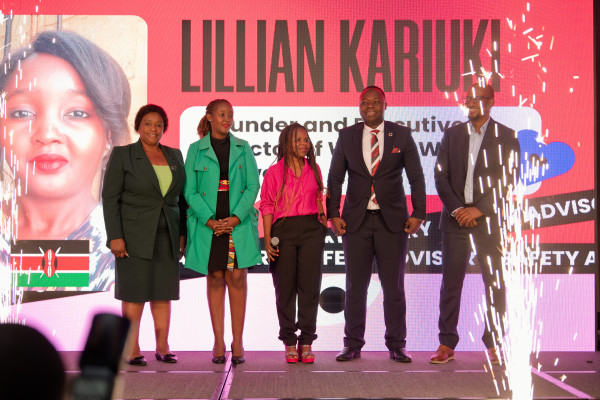
  • Lillian Kariuki, Founder and Executive Director of Watoto Watch Network (Kenya)  
  • Dr Akinola Olojo, Expert on preventing and countering violent extremism (Nigeria)  
  • Prof Medhane Tadesse, Policy academic on peace and security issues (Ethiopia) 
  • Berhan Taye, Independent Researcher (Ethiopia)  

"With the launch of the Sub-Saharan Africa Safety Advisory Council, we are demonstrating our commitment to including expert African voices in our Trust and Safety work. This group of leaders was chosen for their broad range of expertise and experience, and we look forward to working with them over the coming years." - Valiant Richey, Global Head of Outreach and Partnerships, Trust and Safety, TikTok 

#SaferTogether: A Community-Centric Approach 
This iteration of the #SaferTogether campaign is designed to engage the community actively in promoting a basic understanding of the platform's community guidelines and safety features. This initiative will include workshops, social media outreach, and partnerships with key stakeholders to raise awareness about the importance of following TikTok's community standards. The campaign aims to foster a collaborative effort to ensure a secure environment for creative expression. 

Fortune Mgwili-Sibanda, Director of Government Relations & Public Policy for Sub-Saharan Africa emphasised, “The community empowerment campaign highlights the importance of safety being a shared responsibility. This part of the campaign will speak directly to the TikTok community, to join us in making TikTok a safer space for all by ensuring they follow the Community Guidelines and use the safety features available to them. With the additional layer that the Safety Advisory Council presents, we believe that safety can be achieved, collectively.” 

Understanding TikTok's Community Guidelines 
TikTok's Community Guidelines (https://apo-opa.co/4dT5vdm) are integral to the platform's safety efforts. Developed through comprehensive research and input from various stakeholders, including safety experts and community members, these guidelines set the standard for acceptable behaviour and content on the platform. They are designed to foster a safe and welcoming environment, ensuring that everyone can express themselves freely and creatively while staying protected from potential harm. The guidelines are continuously updated to address emerging safety concerns and support a respectful online community. 

Impact of the #SaferTogether Partnerships in Sub-Saharan Africa 
In Kenya, TikTok has so far achieved remarkable milestones with its flagship #SaferTogether workshops (https://apo-opa.co/3Ayt4cZ).  

  • Reaching students and youth aged 13 to 24 from secondary schools to universities 
  • Conducting workshops in 26 out of 47 counties across Kenya, these workshops continue to encourage best practices on online platforms 
  • Workshops have also benefitted over 64,000 students, more than 467 parents, and 346 teachers 

In 2022, the #SaferTogether workshops and campaign launched in Nigeria. 

Earlier this year, TikTok announced the official partnership with the African Union Commission's Women, Gender, and Youth Directorate (https://apo-opa.co/3XhbDGU) (WGYD) at the inaugural TikTok Safer Internet Summit in Ghana. This partnership will help deliver digital literacy programmes across Africa, guiding young people and their caregivers on how to diversify their livelihoods using digital platforms, in a safe and engaging way.  

Safaricom has been a long-standing strategic partner of TikTok, collaborating on a number of mobile and network initiatives over the past several years, including TikTok data bundles and participating in the #LevelUpAfrica Creator event. In light of these ongoing collaborations, Safaricom expressed strong support for TikTok's recent efforts to enhance online safety in Africa. "At Safaricom, we see the internet as a resource that everyone should have access to, safely. Having witnessed the announcement of the TikTok Safety Advisory Council and the launch of the #SaferTogether campaign, we commend TikTok's efforts in bringing together various stakeholders for a common goal – ensuring online safety and promoting the safe use of its platform across Africa," said Fawzia Ali, Chief Consumer Business Officer, Safaricom PLC. 

More information about the work of the Safety Advisory Councils can be found on TikTok's Transparency Centre (https://apo-opa.co/3MmsGAJ). 

Distributed by APO Group on behalf of TikTok.

Media files
TikTok
Download logo
Read moreTikTok Announces Industry-First Sub-Saharan Africa Safety Advisory Council
21 August 2024

Enhancing Local Government Service Delivery in the South African Context

Location: MyPR

By Dr Daniel Govender (Academic Head- School of Law and Administration at Regent Business School) Local government in South Africa suffers from challenges such as bureaucratic inefficiencies, lack of resources, and widespread corruption, which together often hinder local government’s ability to meet the dire needs of the community effectively. Regent Business School’s Academic Head of …

Read moreEnhancing Local Government Service Delivery in the South African Context
20 August 2024

Employment Equity roadshow heads to Limpopo

Location: News

Employment Equity roadshow heads to Limpopo

The Department of Employment and Labour is taking the 2024 annual National Employment Equity workshops/roadshows to Limpopo today.

The workshops will be held at Moche Grace Land in Thohoyandou today and at the Bolivia Lodge in Polokwane on Wednesday. 

The workshops, which are run in collaboration with the Commission for Conciliation Mediation and Arbitration (CCMA), are designed to improve racial, gender and disability equality in the workplace under the theme: “Bridging the Equity Gap Through Diversity & Inclusion”.

“The EE workshops are targeting employers or heads of organisations, academics, assigned senior managers, consultative forum members, human resource practitioners, trade unions, employees and interested stakeholders,” the department said in a statement. 

The workshops will focus on the following topics: 
• The EE status of the labour market as per 24th CEE Annual Report; 
• An update on the EE amendments, in particular the proposed draft regulations on proposed sector EE targets; An update on the 2024 EE reporting season; 
• Key insights from the CCMA on topical cases related to unfair discrimination in terms of harassment, disability and discrimination based on arbitrary grounds.

The Employment Equity Act (EEA) of 1998 aims to, among others, achieve equity in the workplace by promoting equal opportunity and fair treatment in employment through elimination of unfair discrimination and implementing affirmative action measures to redress the disadvantages in employment experienced by designated groups. 

Moreover, the act aims to ensure equitable representation in all occupational categories and levels in the workforce. – SAnews.gov.za

DikelediM
Tue, 08/20/2024 - 10:12

76 views
Read moreEmployment Equity roadshow heads to Limpopo
18 August 2024

President Ramaphosa raises concern over rise of Mpox in AU region

Location: News

President Ramaphosa raises concern over rise of Mpox in AU region

President Cyril Ramaphosa  has expressed deep concern about the rapid spread of Mpox across the African Union (AU) region, as both cases and deaths continue to surge, reflecting a concerning shift in the epidemiological pattern.

The President was speaking in his role as the AU Champion on Pandemic Prevention, Preparedness, and Response (PPPR) regarding the Mpox outbreak.

“In my role as the AU Champion on PPPR, I have been closely monitoring the evolving Mpox situation, regularly briefed by the Director-General of Africa CDC and PPPR Commission,” he said in a statement on Saturday.

Since the start of 2024, he said 17 541 cases (2 822 confirmed and 14 719 suspected) and 517 deaths due to Mpox have been reported across 13 AU Member States. 

This week, three additional countries notified cases under investigation for confirmation, which brings the total to 16 countries. 

“Alarmingly, the number of reported cases in 2024 has surged by 160% compared to the same period in 2023.” 

Strengthening the response to Mpox

He said that he fully backs the Director-General of the Africa Centres for Disease Control and Prevention’s (Africa CDC) declaration of Mpox as a Public Health Emergency of Continental Security. 

“This crucial decision empowers Africa CDC to lead and coordinate our collective response efforts, strengthening the Mpox response at every level – from community engagement to collaboration with the highest political authorities and our international partners.” 

He believes that the declaration will also galvanise political leadership and engagement among AU Heads of State and Government, facilitating the rapid mobilisation of essential financial and technical resources. 

The President also commended the Permanent Representatives Committee for their decisive action in releasing US$ 10.4 million from the COVID-19 Fund to support the Mpox outbreak response. 

“I urge the AU policy organs to expedite the finalisation of the framework for operationalising the African Epidemic Fund, as approved by the Heads of State during the 2023 AU Assembly, by the end of August 2024.” 

The President has since called the AU Member States to increase domestic resource allocation, lead their national Mpox outbreak responses and enhance their capacities. 

These capabilities include building capacity, risk communication, community engagement, case detection, contact tracing, and cross-border surveillance. 

Public Health Emergency of International Concern

He also welcomed the World Health Organisation’s (WHO) declaration of Mpox as a Public Health Emergency of International Concern (PHEIC). 

READ | WHO declares mpox outbreaks in Africa a global health emergency

The WHO said the upsurge of Mpox in the Democratic Republic of the Congo (DRC) and a growing number of countries constitute a PHEIC under the International Health Regulations (IHR).

However, the President said this PHEIC “must be different and correct the unfair treatment from the previous one declared in 2022, where vaccines and therapeutics were developed and made available primarily to Western countries, with little support extended to Africa”.

President Ramaphosa has since called upon WHO and all partners to collaborate closely with Africa CDC to ensure that this PHEIC unlocks appropriate support from the international community, guaranteeing equitable access to medical countermeasures, including diagnostics, therapeutics, and vaccines. 

He also urged the international community, partners, and organisations to mobilise stockpiles of vaccines and other medical countermeasures for deployment in Africa, utilising the mechanisms established by Africa CDC to ensure equitable distribution, transparency, and coordination.

The President said Africa requires robust support in funding, research, and the sharing of technologies, with financial contributions directed to the Africa Epidemic Fund under the leadership of Africa CDC. 

Pandemic Agreement 

“This is also an opportunity to call on the international community to finalise a fair and equitable Pandemic Agreement – a duty that must be pursued with urgency and a spirit of equity. 

“By fostering global partnerships, we can accelerate Africa’s response and ensure that all nations, regardless of economic status, have fair access to the resources needed to protect their populations.”

As the AU Champion, he vowed to work closely with his esteemed colleagues to ensure adequate political support and fundraising for the continental response to mpox and to prevent a regional and global pandemic. – SAnews.gov.za

Gabisile
Sun, 08/18/2024 - 11:38

374 views
Read morePresident Ramaphosa raises concern over rise of Mpox in AU region
16 August 2024

Women still face barriers in accessing land 

Location: News

Women still face barriers in accessing land 

The Commission for Gender Equality (CGE) has recommended that the Department of Agriculture, Land Reform and Rural Development takes the lead in ensuring the introduction of necessary national legislative reforms related to communal land.

The recommendation follows the commission’s reports, which found that women in rural areas still face discriminatory and patriarchal challenges that pose significant barriers in gaining access to land.

The Commission launched the reports titled: “Exploring Barriers to Women’s Access to Land in selected Provinces of South Africa” and “The State of Maternity and Neonatal Health Care in the Eastern Cape Province” on Thursday.

The study was conducted in accordance with the CGE mandate to investigate the obstacles to women’s access to communal land in rural South Africa.

The research focused on the Eastern Cape, North West, and Limpopo provinces, examining legislative, procedural, cultural, and socio-economic factors that impede women’s access to communal land in the country.
According to the research findings released on Thursday, there is a fragmented approach to the allocation of communal land in the three sampled provinces.

This is due to each senior traditional leader and their traditional councils adhering to their own cultural norms and beliefs, leading to disparities even within the provinces.

Findings 

The study found that traditional leaders play a significant role in the allocation of land in all the communities visited.

Despite their involvement in traditional leadership structures at the local, provincial, and national levels, the study found that there is no coordination or consolidated framework to guide the allocation of communal land.

“It appears that the repeal of CLaRA (Communal Land Rights Act) created a legislative gap in the administration of communal land, with traditional leaders left to oversee processes, however, in an unguided and unregulated manner.

“There were no standard national guidelines or a policy for communal land allocation, resulting in corruption, gender discrimination, and queer invisibilising, resulting in inequitable access to land,” the report revealed.

The research findings indicated that traditional leadership structures, such as councils and land committees, did not fully represent all interest groups, despite being constituted through democratic processes such as elections and representative quotas.

The report noted that women in these structures did not always effectively represent the views of other women in the community, perpetuating inequality, and gender discrimination in some cases.

However, it noted that this is not universally true, as in some instances, women’s representation positively contributed to change.

Discrepancies 

The study also revealed significant discrepancies in the procedures and costs attached to communal land applications, with no clear justification.

“While applicants in the North West paid a consistent fee of R500, those in Limpopo paid a fee ranging from R500 to R15 000 and from R100 to R100 000 in the Eastern Cape. In some cases, applicants were also required to pay application fees with sheep, chickens, and alcohol, particularly in the Eastern Cape.

“In Limpopo, communal land became increasingly expensive when designated for entrepreneurial activities, with traditional leaders and headmen demanding a 50% share of the business. In contrast, land for entrepreneurial purposes was provided at no cost in the North West,” the report said.

Allegations of corruption and unfair pricing of communal land in Limpopo, along with claims of judgments based on appearance, were also heard.

During the research, one member of a traditional leadership structure in the province confirmed that land that was designated for residential purposes [and] was assigned a standard fee of R1 000 and R5 000 for entrepreneurship.

“The widespread corruption and deception had a negative impact on the economic situation of women in the province. In some areas, the allocation of communal land could take two weeks to three months, while in other cases, applicants had been waiting for years.

“Cultural practices that required women to adhere to certain dress and behavioural expectations also affected their access to communal land [and] clothing and behavioural expectations were used to marginalise queer persons in these communities, particularly transgender and gender non-conforming individuals,” the report reads.

In the Eastern Cape, transgender and gender non-conforming individuals were ostracised, and this indicated that requests by queer persons for communal land access would not even be considered.

There are also cases where cultural norms required women to obtain access to communal land through their fathers or a male relative.

“In a village in the North West, it was mandated that land be allocated to the eldest male child in the family. Inheritance also posed challenges, especially in Limpopo, where women were at times denied the opportunity to claim property inheritance under the pretext of preserving the family legacy by passing properties to male children. 

“Issues of marital status also discouraged women from independently accessing communal land. In some villages, women had a better chance of accessing communal land if they were married with children.

“In Limpopo specifically, a married applicant was considered ‘stable’ and therefore allocated land [while] unmarried women were often disadvantaged and risked losing their undeveloped land to reallocation and felt pressured to live with men for security as traditional leaders, who were often men, would grab their land,” the report said.

Age requirement 

In some villages in the North West, rules state that women had to be 40 years old and men between 40 and 45 years old to qualify for communal land allocation.

In the Eastern Cape and Limpopo, the age requirement was either 18 or 21 years. 

These age restrictions, especially in the North West, delayed individual development and served as an economic stumbling block, particularly given that land is an economic resource.

The Commission said the legislative reforms must address existing challenges of patriarchal practices, gender discrimination, and exclusions that are currently being justified under the guise of cultural beliefs and norms, which subjugate women and queer persons.

“Such reforms must be in accordance with the Constitution, including the Promotion of Equality and Prevention of Unfair Discrimination Act,” the Commission said. – SAnews.gov.za
 

GabiK
Fri, 08/16/2024 - 11:50

437 views
Read moreWomen still face barriers in accessing land 
16 August 2024

Nuclear power procurement Ministerial Determination withdrawn

Location: News

Nuclear power procurement Ministerial Determination withdrawn

Minister of Energy and Electricity, Dr Kgosientsho Ramokgopa, has announced that the Ministerial Determination for the procurement of 2 500MW of nuclear energy, has been withdrawn.

The Minister was speaking during a media briefing held on Friday in Pretoria.

The determination, and the National Energy Regulator of South Africa’s (Nersa) concurrence of the process, had come under legal pressure with groups contending that, amongst others, public comments had not been sought and the procedure had not been fair.

“I have taken the decision…to withdraw the gazette to allow for that public participation to happen.

“The only time we got to know and be alerted that the process was not subjected to a public consultation process is when the [court] papers were filed and the Minister took the decision that we are withdrawing the gazette; we allow for that public participation so that the process is clean…and transparent,” he told media.

WATCH | Minister Ramokgopa briefs media

In December last year, the Minister announced that South Africa would soon begin the procurement process for some 2 500MW of nuclear energy.

At a media briefing at the time, the Minister explained that the Department of Mineral Resources and Energy (DMRE) had to satisfy a raft of rigorous National Energy Regulator of South Africa (NERSA) suspensive conditions, which took into account various factors before the go-ahead could be issued.

As a result of the withdrawal, the Minister said, the process for the procurement will be delayed.

“Of course, there’s a penalty you pay as a result of this decision [in] that you are delaying the process. But we are happy to delay the process so that we are able to allow for each and every party in the country that wants to add a voice in how we are going to procure this process for them to be given the opportunity to be able to make that submission.

“So it will add another three to six months in the process. We are happy to do that for as long as we protect the integrity of the process; for as long as we cement the transparency of the process so that there’s general public confidence in the work that we are doing.

READ | Nuclear power build will be at a scale "we can afford" - Minister Ramokgopa

“I want to give confidence to the South African public that we will take you every step of the way. We will carry South Africans every step of the way to preserve the integrity of any procurement process, including the nuclear procurement process especially given its checkered history,” he explained.

Energy mix

Despite the withdrawal, the procurement of nuclear energy still remains a government plan for the country’s energy security.

Nuclear energy forms part of government’s Integrated Resource Plan 2019’s envisaged energy mix for South Africa.

“Nuclear is part of the mix. Nuclear is part of the future but it’s important that as we go out…the procurement process must be able to stand the test of time. In this instance, it’s the ability to be able to subject itself to scrutiny.

“Let’s go back to that process; accord the public an opportunity to scrutinise, respond and then on the basis of that [Nersa] can make a determination on concurrence. Once we receive that, we’ll issue the gazette and ensure that we procure,” he said. - SAnews.gov.za

NeoB
Fri, 08/16/2024 - 13:27

646 views
Read moreNuclear power procurement Ministerial Determination withdrawn
16 August 2024

Exploring the Versatility of Shipping Containers

Location: MyPR

Shipping containers have become an integral part of modern logistics, construction, and storage solutions. Their robust design and adaptability make them suitable for various uses beyond traditional shipping. This article explores the many facets of shipping containers, including the benefits of container conversions and the availability of shipping containers for sale.   What Are Shipping …

Read moreExploring the Versatility of Shipping Containers
15 August 2024

Women in Recycling: Empowering Change Through Glass Collection

Location: MyPR

The Unseen Heroes of the Circular Economy Across South Africa, countless women play a vital role in the circular economy by collecting and recycling glass and even running successful glass collection businesses. These women, often working in challenging conditions, turn discarded glass into a valuable resource, supporting their families and contributing to a cleaner environment. …

Read moreWomen in Recycling: Empowering Change Through Glass Collection
14 August 2024

Africa Centres for Disease Control and Prevention (Africa CDC) Declares Mpox A Public Health Emergency of Continental Security, Mobilizing Resources Across the Continent

Location: News

Africa Centres for Disease Control and Prevention (Africa CDC)
Download logo

The Africa Centres for Disease Control and Prevention (Africa CDC) has officially declared the ongoing Mpox outbreak a Public Health Emergency of Continental Security (PHECS), marking the first such declaration by the agency since its inception in 2017.

This declaration, under Article 3, Paragraph F of the Africa CDC Statutes, empowers the organization to lead and coordinate responses to significant health emergencies. The statute mandates Africa CDC to “coordinate and support Member States in health emergency responses, particularly those declared PHECS or Public Health Emergency of International Concern (PHEIC), as well as health promotion and disease prevention through health systems strengthening, addressing communicable and non-communicable diseases, environmental health, and Neglected Tropical Diseases.”

The declaration will enable the mobilization of resources across affected countries, unlocking essential funding, strengthening Risk Communication and Community Engagement (RCCE), boosting surveillance and laboratory testing efforts, and enhancing human resource capacities to respond effectively to Mpox through a One Health approach.

Africa CDC Director General Dr. Jean Kaseya emphasized the urgency of swift and decisive action: “Today, we declare this PHECS to mobilize our institutions, our collective will, and our resources to act—swiftly and decisively. This empowers us to forge new partnerships, strengthen our health systems, educate our communities, and deliver life-saving interventions where they are needed most. There is no need for travel restrictions at this time.”

At least 13 African countries, including previously unaffected nations like Burundi, Kenya, Rwanda, and Uganda, have reported Mpox outbreaks. So far in 2024, these countries have confirmed 2,863 cases and 517 deaths, primarily in the Democratic Republic of the Congo (DRC). Suspected cases across the continent have surged past 17,000, a significant increase from 7,146 cases in 2022 and 14,957 cases in 2023. This is just the tip of the iceberg when we consider the many weaknesses in surveillance, laboratory testing and contact tracing.

Dr. Kaseya underscored the gravity of the situation stating “This is not just another challenge; it's a crisis that demands our collective action. Article 3, Paragraph F of the Africa CDC Statutes mandates us to lead and coordinate the response when there is a declaration of a public health emergency of international concern.”

From May 2022 to July 2023, Mpox was declared a Public Health Emergency of International Concern (PHEIC) by the WHO. However, Africa did not receive the support it urgently needed during this period. As global cases began to decline, the escalating numbers in Africa were largely ignored. Dr. Kaseya emphasized the need for a change in approach: “We urge our international partners to seize this moment to act differently and collaborate closely with Africa CDC to provide the necessary support to our Member States.”

He continued, appealing to global partners: “We call on you to stand with us in this critical hour. Africa has long been on the frontlines in the fight against infectious diseases, often with limited resources. The battle against Mpox demands a global response. We need your support, expertise, and solidarity. The world cannot afford to turn a blind eye to this crisis.”

He explained that the emergency declaration follows wide consultations, including a unanimous decision by the Africa CDC Emergency Consultative Group (ECG), chaired by Professor Salim Abdool Karim, head of CAPRISA, an AIDS research program based in Durban, South Africa.

Prof. Karim highlighted that limited surveillance and evidence suggest the situation could be more severe than currently understood. “The number of cases has significantly increased compared to 2022 when WHO declared Mpox a public health emergency. It's clear that we're facing a different scenario with far more cases, resulting in a higher burden of illness,” he said. He also raised concerns about the rising fatalities, particularly the potential link between HIV and Mpox. “Our concern is that we may be seeing more fatalities in Africa due to the association with HIV,” he noted.

Cross-border transmission to previously unaffected countries was also a concern, prompting the ECG to urge the strategic distribution of the limited vaccines available. The lack of diagnostic capabilities was identified as a critical issue requiring urgent attention, and the ECG encouraged the development of response plans, promising to provide input and support.

To address the Mpox outbreak in Africa, Africa CDC has set up a 25-member Incident Management Team based at the epicenter of the Mpox epidemic with mandate to support affected and at-risk countries. Africa CDC has also signed a partnership agreement with the European Commission's Health Emergency Preparedness and Response Authority (HERA) and Bavarian Nordic to provide over 215,000 doses of the MVA-BN® vaccine—the only FDA and EMA-approved Mpox vaccine. Africa CDC will oversee the equitable distribution of these vaccines, prioritizing local needs across the affected Member States.

MPOX SYMPTOMS, PREVENTION, AND TREATMENT

Mpox is a viral illness caused by the monkeypox virus, with two distinct clades: Clade I and Clade II. Common symptoms include a skin rash or mucosal lesions lasting 2–4 weeks, fever, headache, muscle aches, back pain, low energy, and swollen lymph nodes. The virus can be transmitted to humans through physical contact with an infectious person, contaminated materials, or infected animals.

Distributed by APO Group on behalf of Africa Centres for Disease Control and Prevention (Africa CDC).

Read moreAfrica Centres for Disease Control and Prevention (Africa CDC) Declares Mpox A Public Health Emergency of Continental Security, Mobilizing Resources Across the Continent
14 August 2024

ICAO Signs New Agreements with African States to Boost Sustainable Aviation Development

Location: News
International Civil Aviation Organization (ICAO)

The International Civil Aviation Organization (ICAO) made a significant step forward in enhancing aviation's role as a catalyst for sustainable development in Africa. During the AFI Week held in Gabon, ICAO signed four pivotal capacity building and implementation support agreements with Member States, each aimed at strengthening their aviation sectors and alignment with international standards.

Gabon's Agence Nationale de l'Aviation Civile entered into a Management Service Agreement (MSA) with ICAO. This comprehensive agreement will provide Gabon with access to ICAO's expertise, project management and procurement services, and customized training packages. A key focus of this collaboration is the potential development of a Civil Aviation Master Plan, which will chart the strategic growth of Gabon's aviation sector, ensuring efficient, safe, and sustainable development of infrastructure and services.

Chad's Autorité de l'Aviation Civile partnered with ICAO for a preliminary assessment of training needs. This crucial project will evaluate the technical and general skills of ADAC's staff responsible for overseeing civil aviation safety and security. By optimizing human resources, Chad aims to significantly enhance the operational efficiency of its civil aviation authority.

Uganda's Civil Aviation Authority and ICAO agreed to develop a comprehensive 15-year Air Navigation Plan. This strategic framework will not only guide the implementation of air navigation services and infrastructure but also ensure Uganda's alignment with international aviation standards, in order to facilitate a safer, more efficient, and higher capacity air navigation system for the East African nation.

South Africa's Civil Aviation Authority signed a Declaration of Intent to host the next Global Next Generation of Aviation Professionals (NGAP) Summit. Set for February 2025 in Johannesburg, this summit highlights South Africa's commitment to nurturing the future leaders of the aviation industry.

These agreements represent ICAO's commitment to supporting African Member States in developing sustainable aviation sectors. By focusing on areas such as strategic planning, human resource development, and infrastructure enhancement, these initiatives are set to improve aviation safety, efficiency, and capacity across the continent.

The collaborative efforts between ICAO and these African states are expected to yield significant benefits, not only for the aviation sector but also for the broader economy. As aviation acts as a multiplier for economic growth, these agreements are poised to contribute to the UN Sustainable Development Goals, improve connectivity, and foster economic opportunities in the region.

As these projects unfold, they will serve as examples of how targeted ICAO support and collaboration in the aviation sector can drive sustainable development and economic growth in Africa.

Distributed by APO Group on behalf of International Civil Aviation Organization (ICAO).

Media files
International Civil Aviation Organization (ICAO)
Download logo
Read moreICAO Signs New Agreements with African States to Boost Sustainable Aviation Development
13 August 2024

Experts urged to add their voice on water and climate issues

Location: News

Experts urged to add their voice on water and climate issues

Water and Sanitation Deputy Minister, David Mahlobo, has implored academia and global experts in research and science to prioritise major water, environment and climate change issues facing the entire global community.

Mahlobo made the call at the International Conference on Water and Environmental Sustainability, currently underway in Richards Bay, KwaZulu-Natal.

The two-day conference which began on Monday, is organised by the University of Zululand in collaboration with the Changán University in China.

The conference presents a distinguished forum for global experts, including researchers, scientists, academics, industry representatives and students to engage in scholarly debate and knowledge exchange.

It is also used to address the ongoing water issues in South Africa, serving as a global platform for experts to discuss and find solutions for pressing challenges related to water scarcity, quality, and management in South Africa.

Addressing delegates on Monday, Mahlobo said the issues of environment and climate change have not been given the priority they deserve.

Mahlobo highlighted challenges, including population growth and migration, which have negatively impacted water availability to the people around the world, and the environment.

He said many countries have not properly planned for population growth and migration which have an impact on the sustainability of water and the environment.

“I therefore urge you that, in your discussions, you must come up with resolutions on how we deal with these issues especially around the finite resource of water. We call on you as the experts in your respective fields to raise your voices with information and knowledge to those in authority,” Mahlobo said.

University of Zululand Vice-Chancellor, Professor Xoliswa Mtose, noted that the conference is held at a time when the world is grappling with a myriad of interconnected issues elaborated in the framework of the United Nations Sustainable Development Goals (SDGs).

She said this has generated a lot of research and debate among the academia to galvanise national and global development on issues of water and environment.

“The collaboration between the University of Zululand and Changán University in China is on knowledge sharing aimed at addressing the challenges of developments in the water and sustainability as depicted in the Sustainable Development Goals framework.

“Therefore, the research papers to be delivered here today will reflect on the national, continental and global footprint as far as water and environmental issues are concerned,” Mtose said.

The scholars and academics at the conference indicated that the outcomes of the conference will not only influence the global versatile issues of water and environmental sustainability, but also enable them to enhance collaborations and knowledge sharing. – SAnews.gov.za
 

GabiK
Tue, 08/13/2024 - 12:22

49 views
Read moreExperts urged to add their voice on water and climate issues
11 August 2024

Cabinet commends addition of SA sites to UNESCO list

Location: News

Cabinet commends addition of SA sites to UNESCO list

Cabinet has commended the latest addition of the South African human rights and liberation struggle sites in the prestigious list of the United Nations Educational, Scientific and Cultural Organization’s (UNESCO) World Heritage Sites.

The sites in the prestigious list include the Union Buildings, Constitution Hill, Liliesleaf farm, Sharpeville memorial, Walter Sisulu Square, 16 June 1976: The Streets of Orlando West, University of Fort Hare and ZK Matthews House, Mqhekezweni, Waaihoek and Ohlange.

The UNESCO World Heritage Committee also inscribed three Middle Stone Age sites in recognition of South Africa’s significant contribution to the understanding of the origins of modern human behaviour.

These include Diepkloof Rock Shelter close to Elands Bay in the Western Cape, Pinnacle Point Site Complex in Mossel Bay also in the Western Cape and Sibhudu Cave in KwaDukuza, KwaZulu-Natal.

“The sites termed as The Human Rights, Liberation and Reconciliation: Nelson Mandela Legacy Sites, not only help preserve South Africa’s unique heritage, but catapults our country to prominence as a major tourist attraction for World Heritage Sites, thereby boosting tourism and the economy,” said Minister in The Presidency, Khumbudzo Ntshavheni.

The Minister was briefing media at a post-Cabinet briefing held in Pretoria on Thursday.

READ | UNESCO inscribes more World Heritage sites for South Africa

South Africans are living longer

Meanwhile, Cabinet has also welcomed the Mid-Year Population Estimates (MYPE) for 2024, which showed that South Africans are living longer.

The MYPE shows that life expectancy has increased to 66.5 years from 53.6 years in 2005 due to multiple government interventions, including the expanded rollout of antiretroviral therapy - which is one of the largest antiretroviral therapy programme in the world.

The estimates also show the provision of vaccinations and the decrease in the infant mortality rate from an estimated 57 infant deaths per 1000 live births in 2002 to 22.9 per 1000 live births in 2024.

“South Africa’s population now exceeded 63 million, growing 1.33 percent from July 2023 to July 2024. The updated population growth figures will assist government in its planning and resource allocation as we continue to better the life of all South Africans,” Ntshavheni said.

High-tech rail infrastructure

Cabinet has also commended the introduction of new high-tech trains on the Central Line in the City of Cape Town by the Passenger Rail Agency of South Africa (PRASA). PRASA is an agency of the Department of Transport.

The service has been extended from Nyanga to Mandalay station.

Ntshavheni highlighted that the trains utilise modern signalling system from Langa to Mutual Line, to enhance the safety and reliability of the rail service.

“The modern hi-tech features in these trains include automated doors, and CCTVs for each coach are for improved passenger safety,” the Minister said.

Cabinet has further commended the recovery of more rail lines part of government’s priority of providing safe, reliable and affordable public transport.

READ | PRASA introduces new modern trains in Cape Town

This as Cabinet held its first normal meeting of the seventh administration at the Union Buildings in Pretoria on Wednesday. – SAnews.gov.za

GabiK
Thu, 08/08/2024 - 12:38

526 views
Read moreCabinet commends addition of SA sites to UNESCO list
8 August 2024

Existing Employment Equity Act provisions remain relevant

Location: News

Existing Employment Equity Act provisions remain relevant

The existing Employment Equity (EE) Act provisions for the 2024 Employment Equity reporting period are still applicable, pending the signing of the EE amendments.

This is according to the Department of Employment and Labour’s Deputy Director of Employment Equity, Masilo Lefika, who was speaking during the second of the first series of annual Employment Equity roadshows, held in collaboration with the Commission for Conciliation, Mediation and Arbitration (CCMA) in Rustenburg on Thursday.

The series of the workshops is designed to improve racial, gender and disability equality in the workplace.

The first series of the roadshows kicked off in the North West province with workshops held in Klerksdorp on Tuesday and Rustenburg on Wednesday.

This year's Employment Equity workshops are being held under the theme: “Bridging the Equity Gap through Diversity and Inclusion".

The EE Amendment Bill was signed into law on 6 April 2023 by President Cyril Ramaphosa. 

The amendments to the EE Act of 1998 and its regulations are primarily aimed at empowering the Minister of Employment and Labour to regulate the setting of sector specific EE numerical targets and the promulgation of Section 53 that deals with the issuing of an EE Compliance Certificate as a prerequisite for the accessing of State contracts. 

Reflecting on the 26 years since the enactment of Employment Equity Act legislation, Lefika said the previous amendments implemented in 2013 have not had a positive impact. 

Lefika said following the publishing of EE regulations in February, the focus was on their refinement, as these were a key guide to legislation.

“Of importance is to broaden consultation while waiting for proclamation,” he said.

The 2024 EE workshops will focus on the EE status of the labour market, as per the 24th Commission for Employment Equity (CEE) Annual Report; update on the EE amendments, in particular the proposed draft regulations on proposed sector EE targets, and an update on the 2024 EE reporting season.

The workshops will also focus on the key insights from the CCMA on topical cases related to unfair discrimination in terms of harassment, disability and discrimination based on arbitrary grounds.

The EE workshops are targeted at employers or heads of organisations, academics, assigned senior managers, consultative forum members, human resource practitioners, trade unions, employees and interested stakeholders.

The next session of EE roadshows will be held at Upington on 13 August 2024.

More information on the EE workshops, including updates on the venues to be used is available on the department’s and the CCMA’s social media platforms, as well as the department’s website: www.labour.gov.za. – SAnews.gov.za

GabiK
Thu, 08/08/2024 - 10:40

22 views
Read moreExisting Employment Equity Act provisions remain relevant
7 August 2024

Roadshows to address outstanding student accommodation payments

Location: News

Roadshows to address outstanding student accommodation payments

The National Student Financial Aid Scheme (NSFAS) will be hosting roadshows across the country to engage directly with the landlords affected by outstanding payments of student accommodation allowances.

NSFAS Administrator, Freeman Nomvalo, said that in response to accommodation providers’ concerns, NSFAS has in the past two months processed bulk catch up payments of accommodation allowances for all legitimate claims.

Nomvalo said that as at 31 July 2024, NSFAS disbursements for private student accommodation had reached R1 billion.

However, Nomvalo acknowledged that there are some landlords who still remain aggrieved.

The important issue to be addressed now is to ensure that all payments are done on time as this is the main remaining “pain point for accommodation providers.”

The Administrator announced that the roadshows will kick off in KwaZulu-Natal on Wednesday, 07 August 2024. 

“I will be taking all critical functions responsible for student data and private student accommodation. I have also extended invitations to our colleagues at universities and Technical Vocational Education and Training (TVET) sector, to ensure we all work together in resolving these challenges experienced by our beneficiaries and the landlords,” Nomvalo said.

In response to the challenges and stabilising the organisation, Nomvalo highlighted some of the projects that have been launched, including the Organisational Re-engineering and Re-alignment Project; ICT and Business Processing Review Project; making NSFAS accessible to students and stakeholders; and planning for 2025 and beyond.

“The conclusion of Organisational Re-engineering and Re-alignment Project will result into a new resource allocation model fit for the purpose and function of the size and shape of NSFAS. It will also provide a greater alignment of functions to improve the efficiency of NSFAS.

“The conclusion of the ICT and Business Processing Review Project will deliver a more efficient ICT system that provides for a seamless interface and data sharing between NSFAS and its key stakeholders including universities and TVET’s. The newly envisaged system is also intended to improve the management of applications for bursaries, loans, and appeals,” Nomvalo said.

He said a feasibility study is intended to consider various regionalisation models and cost implications looking at the location of beneficiaries. 

“The appointed team will also be engaging with the PSET (Post School Education and Training) stakeholders to determine the most feasible model. The intention is to make NSFAS more accessible and responsive to its stakeholders,” Nomvalo said.

Alleged procurement irregularities

The Administrator announced that NSFAS is following up on various alleged procurement irregularities, including the direct payment mechanism.

Nomvalo acknowledged the support provided by the Special Investigating Unit (SIU) regarding this issue.

“To address capacity challenges in the Procurement Unit, I am currently engaged with the National Treasury with the intention of drawing in a secondment from Treasury for the period of six months to also help us with the review of SCM (Supply chain management) policies, as well as procurement processes at NSFAS,” Nomvalo said.

Fruitless and wasteful expenditure registers

The Administrator further announced that the scheme has put measures in place for the 2024/25 financial year, to implement the irregular expenditure and fruitless and wasteful expenditure registers. 

“We will also implement the non-compliance register. These registers will not only ensure compliance with the PFMA (Public Finance Management Act) but will also enhance transparency on the use of public resources by NSFAS,” Nomvalo said. – SAnews.gov.za

GabiK
Wed, 08/07/2024 - 11:20

235 views
Read moreRoadshows to address outstanding student accommodation payments
6 August 2024

The RMB Where to Invest in Africa 2024 report highlights Africa’s top investment economies

Location: Business
Rand Merchant Bank

RMB (www.RMB.com) has released the highly anticipated 2024 edition of its Where to Invest in Africa report, a comprehensive analysis of the top investment destinations on the continent. The report, which has been developed in collaboration with the Gordon Institute of Business Science (GIBS), leverages a robust methodology that has been updated to reflect new data sources, taking into account a variety of factors that have been proven to determine a country's progress and therefore its investment potential. 

“Africa is not a country, but a vast, diverse and complex continent with different cultures, economies and investment potential. Our report therefore is not a definitive guide, but rather it is designed to provide insight to uncover the underlying drivers of a country's performance that inform its ranking. This offers invaluable insights for investors, policymakers, and business leaders looking to navigate Africa's dynamic economic landscape,” says Isaah Mhlanga, Chief Economist at RMB.  

Expanded data, extended granularity 

Investment decisions need to be viewed through both an economic performance lens and an operating environment lens. As a result, the methodology used for this edition of the Where to Invest in Africa report builds and expands on previous editions, taking into account new data sets as well as changing geopolitical and macroeconomic climates.  

The scorecard for the 2024 issue highlights 31 countries that collectively represent 92% of the continent's economic activity (measured by GDP), and more than one billion people (three quarters of the continent's population). It draws on publicly available data sets from global institutions, including the World Bank, the IMF, the African Development Bank, the United Nations, and the International Labour Organisation.  

The model is constructed from 20 metrics across four measurement pillars: economic performance and potential; market accessibility and innovation; economic stability and investment climate; and social and human development. Each metric is weighted, which translates into a weight for each pillar, and based on these metrics a standardised scorecard is produced, with rankings that enable effective comparison across Africa's complex and heterogeneous environment.  

Africa's top five investment destinations 

Combining these elements results in a ranking across the 31 countries measured. The results of the report show that the two small island economies of Seychelles and Mauritius rank first and second as the most attractive investment destinations on the continent, while the significantly larger economies of Egypt, South Africa, and Morocco rank in third, fourth and fifth places respectively. 

Seychelles leads the rankings thanks to high levels of personal freedom, human development, and a stable economic environment. Seychelles offers a unique and attractive investment climate. Despite scoring lower on economic size and potential, Mauritius is known for innovation, economic freedom, and high GDP per capita. It continues to be a top destination for investors seeking stability and growth opportunities in a well-regulated environment.  

Egypt represents Africa's largest economy by GDP (2023), offering a substantial market with diverse opportunities in sectors like technology, manufacturing, and services. Its strategic location and economic complexity further enhance its attractiveness. Despite facing significant challenges, South Africa remains a crucial hub for investment in Africa. Its robust financial sector, diverse economy, and potential for infrastructure development make it a key player. Finally, Morocco's strong performance in connectedness, innovation, and economic stability positions it as a top investment destination. Its strategic proximity to European markets adds to its appeal. 

Distilling diversity – investment archetypes explained 

Africa is an incredibly diverse continent, and no two markets are the same, which means there is no such thing as a universal success story. However, when we zoom out and view nations through the lenses of size and the relevant investability score, it becomes apparent that they fall into distinct groupings with shared traits. The 2024 edition of Where to Invest in Africa suggests five potential investment archetypes based on shared characteristics revealed through the four measurement pillars.  

‘Highflyers' represent the large, well-established economies that offer stability and a range of investment opportunities, such as Nigeria, South Africa, Egypt and Ethiopia. Those ‘Cleared for Take-off' are countries with high economic growth and innovation potential thanks to factors like a young population and abundant resources, including Senegal and Côte d'Ivoire. ‘People Potential' are markets with a young and growing demographic, creating a sizeable consumer base and a future workforce, such as Kenya, DRC and Uganda. ‘Global Connectors' are more advanced economies with a strong international presence, such as Morocco, Mauritius, Tunisia and Seychelles. ‘Low-Base Boomers' are smaller markets with high potential for explosive growth but a corresponding higher degree of risk, including Rwanda, Mozambique, and Benin. 

Additional insights unpacked

The report also highlights a number of trends across the various markets, and the role of innovation and economic complexity in driving growth is a central theme. Countries such as South Africa, Kenya, and Ghana are noted for their strides in technological innovation and diversification of their economic bases, making them attractive destinations for investment. 

The African Continental Free Trade Agreement (AfCFTA) holds significant potential for boosting intra-African trade, enhancing economic integration, and creating a more competitive continental market. Effective implementation of the AfCFTA is expected to drive economic growth and development across the continent. Africa's young and rapidly growing population also presents a unique opportunity for economic growth, with countries like Ethiopia, Tanzania, and Uganda poised to benefit from this demographic dividend, provided they can create sufficient employment opportunities and foster a conducive environment for economic participation.  

In addition, there are a number of emerging markets with significant growth potential, including Nigeria, Ghana, and Kenya. Despite facing challenges such as political instability and infrastructural deficits, these countries offer substantial opportunities due to their large and youthful populations, improving business climates, and diversification efforts. Africa's vast natural resources, including minerals and arable land, are pivotal for sustainable economic growth. However, the report cautions against the "resource curse" and underscores the importance of good governance and strategic management. Angola, Mozambique, and the Democratic Republic of Congo are highlighted for their rich resources and potential for sustainable development. 

One area that requires critical attention across the continent is the need for infrastructure investment. Improved transportation, energy, and digital infrastructure are essential for unlocking Africa's economic potential, and South Africa, Kenya, and Nigeria are identified as key markets where infrastructure development could yield significant returns. 

Beyond the rankings – a deeper look at African investment 

Looking beyond metrics and scorecards, Africa holds massive potential but equally faces numerous challenges. The continent is rich in natural resources, which can be a major driver of economic growth, but they also present challenges in the form of corruption and environmental degradation. Increased activity around trade agreements can open new markets for foreign investors and boost economic activity, but lack of adequate infrastructure is a major hurdle for many African economies. Investment in this space will improve connectivity and create new opportunities, while rapid and increasing urbanisation will prove attractive to investors in consumer goods, retail, and financial services. Finally, countries in Africa are embracing new technologies, leapfrogging traditional development stages and creating new investment opportunities in the tech sector. 

“The richness of Africa's diversity makes fully analysing its nuance and contrast a challenging task, but an important one when it comes to understanding the varied markets that make up this vast regional economy. The 2024 RMB Where to Invest in Africa report aims to develop a balanced, robust and actionable view of the drivers, challenges and opportunities that characterise each of the 31 African markets included in the analysis,” Mhlanga concludes.  

Download the full report here to uncover the insights and drive more informed investment decisions. 

  • https://apo-opa.co/4dyoUQm
  • https://apo-opa.co/46CBs7c

Distributed by APO Group on behalf of Rand Merchant Bank.

Media files
Rand Merchant Bank
Download logo
Read moreThe RMB Where to Invest in Africa 2024 report highlights Africa’s top investment economies
6 August 2024

Alcohol Rehab: A Path to Recovery

Location: MyPR

Introduction Alcohol rehab is a vital resource for individuals struggling with alcohol addiction. It offers a structured environment where individuals can receive the support and treatment they need to overcome their addiction. In this blog, we will explore the various aspects of alcohol rehab and its benefits.   What is Alcohol Rehab?   Alcohol rehab …

Read moreAlcohol Rehab: A Path to Recovery
  • Previous
  • Page 1
  • Interim pages omitted …
  • Page 10
  • Page 11
  • Page 12
  • Page 13
  • Page 14
  • Interim pages omitted …
  • Page 16
  • Next

Copyright © 2026 · MyZA · All Rights Reserved · Powered by Reach Trust