• Skip to main content
  • Skip to header right navigation
  • Skip to after header navigation
  • Skip to site footer
MyZA

MyZA

News, Directory, Events and Other Stuff

  • Social Media
  • Sport
  • World News
  • Home
  • Submit News
  • Directory
  • Events
  • Stratlec
  • TFSA
  • News
    • APO
    • Today’s Sport News
    • Todays Social Media and Tech Headlines
    • Today’s World News
    • Today’s SA Financial News
  • Contact
You are here: Home / Archives for Resource

Resource

23 February 2025

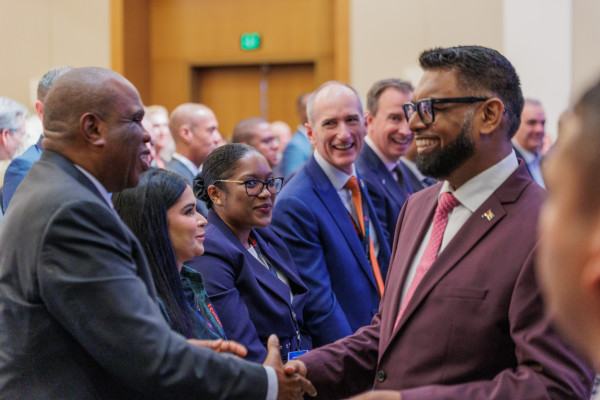
Afreximbank to Set up $1 Billion Oil Service Financing Facility in Guyana
Location: Business
Afreximbank

In a significant announcement at the Guyana Energy Conference and Supply Chain Expo being held from, February 18 - 21, Prof. Benedict Oramah, President and Chairman of the Board of Directors of African Export-Import Bank (Afreximbank) (www.Afreximbank.com), declared the multilateral Bank's intention to establish a $1 billion oil service financing facility in Guyana. This initiative aims to enhance local participation in the country's fast growing oil industry, in alignment with the government's local content policies. The Bank will deploy the $1 billion facility directly to qualifying corporate clients or through a factoring line via local banks, enabling them to finance invoices from local contractors.

President Oramah highlighted the transformative potential of Guyana's estimated 12 billion barrels of crude oil reserves. Emphasising the transformative power in proactive resource management, he advised Guyana to aggressively harness and build capital from its oil resources.

He said, "Given the level of oil production in Guyana and its offshore location, I estimate that the oil service sector would amount to 5 to 8 billion US dollars annually. But where will it go? Most of it would be paid to oil service companies abroad, if Guyana does nothing to avoid that. A 50% retention in Guyana would increase Guyana's GDP by 29% to 47%.” As such, he called for robust local content policies that would enable Guyanese entrepreneurs to become significant players in the oil value chain.

Based on Afreximbank's rich history of supporting commodity-dependent economies, President Oramah shared insights to complement the ongoing efforts of the Guyanese government. He acknowledged the inherent risks associated with dependency on a single commodity and laid stress on the importance of diversification.

He cautioned, “The commodity market is prone to volatility and cyclicality; hence, the reliance on crude revenues as a primary source of government funding could expose the national economy to volatile commodity markets." As such, he advised the government to secure long-term off-take contracts with oil service companies, which will enhance market access and price stability.

In the spirit of deepening Afri-Caribbean partnership, President Oramah remarked that skilled oil service companies from Ghana, Egypt, and South Africa, are "ready and willing to support Guyanese... And of course, Afreximbank is there to underwrite the marriage.”

He added that: “These measures are necessary if Guyana and other new entrants in the Caribbean and Africa are to avoid the painful "Dutch Disease. We make these suggestions based on the three long decades of financing oil and gas activities across Africa. We have witnessed oil-dependent economies transform for better or worse through these periods. In all these, the difference reflected the policy choices the leaders made.”

Distributed by APO Group on behalf of Afreximbank.

Media Contact:
Vincent Musumba
Communications and Events Manager (Media Relations)
Email: press@afreximbank.com

Follow us on:
X: apo-opa.co/436nryI
Facebook: apo-opa.co/3ENmLEu
LinkedIn: apo-opa.co/4bcByVp
Instagram: apo-opa.co/3Xb0g2y

About Afreximbank:
African Export-Import Bank (Afreximbank) is a Pan-African multilateral financial institution mandated to finance and promote intra-and extra-African trade. For over 30 years, the Bank has been deploying innovative structures to deliver financing solutions that support the transformation of the structure of Africa's trade, accelerating industrialization and intra-regional trade, thereby boosting economic expansion in Africa. A stalwart supporter of the African Continental Free Trade Agreement (AfCFTA), Afreximbank has launched a Pan-African Payment and Settlement System (PAPSS) that was adopted by the African Union (AU) as the payment and settlement platform to underpin the implementation of the AfCFTA. Working with the AfCFTA Secretariat and the AU, the Bank is setting up a US$10 billion Adjustment Fund to support countries effectively participating in the AfCFTA. At the end of December 2023, Afreximbank's total assets and contingencies stood at over US$37.3 billion, and its shareholder funds amounted to US$6.1 billion. Afreximbank has investment grade ratings assigned by GCR (international scale) (A), Moody's (Baa1), Japan Credit Rating Agency (JCR) (A-) and Fitch (BBB). Afreximbank has evolved into a group entity comprising the Bank, its impact fund subsidiary called the Fund for Export Development Africa (FEDA), and its insurance management subsidiary, AfrexInsure (together, "the Group"). The Bank is headquartered in Cairo, Egypt.

For more information, visit: www.Afreximbank.com
Media files
Afreximbank
Download logo
Read moreAfreximbank to Set up $1 Billion Oil Service Financing Facility in Guyana
21 February 2025

Cabinet commends Class of 2024 for impressive results

Location: News

Cabinet commends Class of 2024 for impressive results

Cabinet has commended the Class of 2024 for achieving the highest matric pass rate since the advent of democracy in 1994. 

The National Senior Certificate (NSC) results saw an impressive 87.3% pass rate, marking a significant 4.4% increase from the previous year. 

A total of 615 429 learners successfully passed the NSC examinations, with nearly half of those who sat for the exams obtaining a Bachelor pass, granting them access to higher education institutions. Additionally, close to 320 000 distinctions were achieved, highlighting the academic excellence of the matriculants. 

Government lauded the results as a significant milestone in the country’s education sector, emphasising that the achievements of the Class of 2024 reflect the strides made in improving the quality of education in South Africa. 

These results coincide with the country’s celebration of 30 years of freedom and democracy, symbolising the ongoing efforts to dismantle the remnants of apartheid-era educational disparities. 

“The achievements of the Class of 2024 are a clear demonstration of the progress we have made as we commemorate 30 Years of Freedom and Democracy. They also provide proof that we are reversing apartheid’s planned legacy of intergenerational indignity, disadvantage and poverty for the majority of South Africans," Cabinet said in a statement on Friday.

South Africa's education system has undergone significant reforms since 1994, with the government implementing policies aimed at improving access to quality education for all learners. 

Under the National Development Plan (NDP), education remains a key pillar in addressing inequality and fostering economic growth. 

Over the years, interventions such as the provision of no-fee schools, the school nutrition program, improved infrastructure, and curriculum enhancements have contributed to the steady improvement in matric results. 

The increased focus on Science, Technology, Engineering, and Mathematics (STEM) subjects, teacher training programs, and digital learning initiatives has also played a crucial role in raising learner performance. 

Despite these successes, challenges remain, including resource disparities between urban and rural schools, socio-economic factors affecting learner performance, and the need to further enhance post-matric opportunities. 

However, the Class of 2024’s results demonstrate resilience and a positive trajectory for the country’s education system. 

Government has previously urged learners who did not pass to explore alternative pathways such as the Second Chance Matric Programme and Technical and Vocational Education and Training (TVET) colleges to ensure they remain within the education and skills development pipeline. – SAnews.gov.za

DikelediM
Fri, 02/21/2025 - 12:00
30 views

Read moreCabinet commends Class of 2024 for impressive results
21 February 2025

AEW 2025 to Fuel Regional Investment as Southern Africa Advances (O & G) Development

Location: News
African Energy Chamber

From significant oil deposits in Namibia's Orange Basin to untapped potential in South Africa to gas frontiers onshore Zimbabwe and developments in Mozambique and Angola, Southern Africa has emerged as a highly-promising oil and gas market. However, to unlock the full potential of the industry, investors need to rally, providing the much-needed capital and technology to boost energy development across the region.

African Energy Week: Invest in African Energies – taking place September 29 to October 2, 2025 - will highlight Southern Africa's energy potential, from major projects and exploration campaigns to investment opportunities and emerging challenges. By uniting regional governments, major operators and global stakeholders, the event fosters collaboration, serving as a catalyst for South African energy development.

Angola Drives Exploration Towards Near-Term Production

Sub-Saharan Africa's second-largest oil producer, Angola continues to leverage industry reform to accelerate exploration and development. Seeking to maintain oil output above one million barrels per day while increasing natural gas production, the country is preparing to launch the final bid round of its six-year licensing strategy in Q1, 2025. Offering nine blocks for exploration in the deepwater Kwanza and Benguela basins, the round is expected to entice major deepwater players to expand their portfolios offshore Angola. To further support production growth, the country introduced five marginal fields for exploration in 2024 and continues to promote blocks available on direct negotiation. Major projects such as the Cabinda Oil Refinery (2025); the New Gas Consortium (early-2026); and the Agogo Integrated West Hub Development (mid-2026) are also set to fuel production.

Mozambique Targets LNG Advancement

With over 100 trillion cubic feet (TCF) of gas resources in the Rovuma Basin, Mozambique is pushing ahead with several large-scale LNG projects. These include the operational 3.4 million ton per annum (MTPA) Coral South FLNG project; the under-development 3.37 MTPA Coral North project; the 18 MTPA Rovuma LNG project; and the 13 MTPA Mozambique LNG project. Despite delays, operators are committed to accelerating development. While pushing the Mozambique LNG project timeline from 2027 to 2029/2030, TotalEnergies expects a U.S. loan approval to be restored under the Trump administration in the coming weeks. ExxonMobil also anticipates FID for the Rovuma project by 2026, paving the way for advanced development.

Namibia: The Next Deepwater Oil Producer

Following a string of discoveries in the offshore Orange Basin, Namibia is working towards first oil production by 2029. The Venus-1X discovery by TotalEnergies is at the forefront of this goal, with the French major seeking to finalize its phase one development plan in 2025 and make FID in 2026. However, the development of the Mopane well – situated in PEL 83 and operated by oil and gas firm Galp - could bring the timeline to first production much closer. Two discoveries were made at the Mopane 1-A well and the Mopane 2-A well, and the operator is now seeking a farm-in partner to develop the asset. Other companies such as Shell, Petrobras, Africa Oil Corp, Chevron and more are also investing offshore while independents including ReconAfrica and Sintana Energy are conducting exploration and appraisal drilling onshore.

South Africa Prioritizes Gas Exploration, Renewable Expansion

Two offshore basins have generated significant interest by foreign player in South Africa: the Southern Outeniqua Basin and the Orange Basin. Southern Outeniqua featured two major gas discoveries made by TotalEnergies (Luiperd and Brulpadda) in 2019 and 2020, representing some of Africa's biggest finds made during the period. While TotalEnergies exited the Southern Outeniqua basin in 2024, the company has turned its attention to South Africa's Orange Basin, hoping to mirror upstream success in neighboring Namibia. Other firms including Africa Oil Corp, Shell and Petrobras are investing in the Orange Basin, and all eyes are on future discoveries offshore South Africa.

Zimbabwe: An Onshore Gas Frontier

Zimbabwe made headlines in 2022 when Invictus Energy announced successful drilling activities at the Mukuyu-1 well at the onshore Cabora Bassa Project. This was followed by the discovery of gas at the Mukuyu-2 well in 2023, with the find revealing the potential for 20 TCF of gas resources. In 2025, the company completed an independence review of the Petroleum Production Sharing Agreement, which would enable the Invictus Energy to unlock value-sharing from the project. Going forward, the company is pursuing a 3D seismic survey alongside appraisal drilling and well testing to further delineate the resource potential while refining development plans and improving the operational efficiency. All eyes are on the project as Zimbabwe strives to bring its first natural gas development to fruition.

Distributed by APO Group on behalf of African Energy Chamber.

About AEW: Invest in African Energies:
AEW: Invest in African Energies is the platform of choice for project operators, financiers, technology providers and government, and has emerged as the official place to sign deals in African energy. Visit www.AECWeek.com for more information about this exciting event.

Media files
African Energy Chamber
Download logo
Read moreAEW 2025 to Fuel Regional Investment as Southern Africa Advances (O & G) Development
20 February 2025

Department clarifies status of commercial abalone fishing sector

Location: News

Department clarifies status of commercial abalone fishing sector

The Department of Forestry, Fisheries and the Environment has sought to clear up any misunderstandings regarding the status of the commercial abalone fishing sector and the sector’s future after misinformation spread via social media.

“Any proposed options for the future of the abalone fishery, including whether or not to split and/or classify abalone as a small-scale resource, will first involve a meaningful public participation process prior to any final decision being taken,” the department said on Wednesday.

In 2004, long-term rights in the commercial abalone fishing sector were allocated to 304 successful applicants for a period of ten years. 

These rights expired on 30 July 2014 and reverted to the state. 

“During the 2015/2016 Fishing Rights Allocation Process, applications were invited for commercial fishing rights in various commercial fishing sectors, including abalone. 

“However, the process was not concluded. Since then, and to date, the previous abalone right holders have been granted yearly exemptions from the requirement to obtain a fishing right in terms of the Marine Living Resources Act, 1998 (MLRA). 

“Accordingly, and on condition these previous right holders obtained permits, they have been allowed to continue to operate in the sector for the past 10 years,” the department said.

Between 2020 to 2024 the department found evidence that 10 exemption holders were wilfully and intentionally transgressing the MLRA.

Upon the conclusion of an administrative enforcement process, the exemptions in respect of these 10 fishers were revoked and no further permits have been issued to the non-complaint group.

“During 2024, it further came to the department’s attention that the majority of the exemption holders in the abalone sector were transgressing the MLRA. A verification process was conducted and finalised in December 2024. 

“As a result of this process, 179 previous right holders are suspected of having committed serious offences in terms of the MLRA. These fishers will not be issued with a further exemption until the criminal investigations have been finalised and only then their right of access will be reconsidered,” the department said.

While the sector was operating, on 23 October 2020, the then-Minister of Forestry, Fisheries and the Environment, invited the public to comment on the proposed resource split between local commercial and small-scale fishing in the traditional linefish, squid and abalone fishing sectors in terms of section 14(2) of the MLRA. 

Only a few comments were received and since then, the department has been having discussions with various stakeholders to consider the future of the management of the abalone sector as a result of changes that have broadly been happening in the fishing sector. 

“It is for these reasons that the department is considering reopening the consultation process. No decision has been taken in this regard. Each and every affected person will be provided with an opportunity to object to or otherwise provide comment on any future proposal and the comments will comprehensively be considered by the department prior to any final decision being taken,” the department said. -SAnews.gov.za

nosihle
Thu, 02/20/2025 - 09:44
201 views

Read moreDepartment clarifies status of commercial abalone fishing sector
20 February 2025

Select Committee Engages With Stakeholders on Marine Oil Pollution Bill

Location: News

Republic of South Africa: The Parliament
Download logo

The Select Committee on Public Infrastructure and the Minister in the Presidency heard joint oral submissions from stakeholders on the Marine Oil Pollution (Preparedness, Response and Cooperation) Bill [B10-2022].

The bill aims to incorporate the provisions of the International Convention on Oil Pollution Preparedness, Response and Cooperation (OPRC) into South African law. As a party to the OPRC Convention, South Africa is required to adopt measures to prepare for and respond to potential oil spills in the country's maritime domain.

Committee Chairperson Mr Rikus Badenhorst said combatting marine oil pollution is not only an environmental concern, it is also an economic, social and legal imperative. The destruction of marine habitats, the violation of environmental rights and the significant threats to livelihoods, particularly those dependent on the ocean economy, demand decisive legislative action.

“As outlined in the International Convention on Oil Pollution Preparedness, Response and Cooperation (OPRC), to which South Africa is a party, we have a duty to ensure that our legislative framework adequately provides for prevention, response and accountability in cases of marine oil pollution,” said Mr Badenhorst.

The committee was of the view that the presentations and submissions received reaffirmed the urgency of strengthening South Africa's legislative framework for marine oil pollution prevention and response.

Key insights were shared by organisations such as the Biodiversity Law Centre, SANCCOB [Southern African Foundation for the Conservation of Coastal Birds], BirdLife South Africa, the Green Connection, and Natural Justice. The stakeholders raised issues around delays in coordination between agencies and government officials during oil spill incidents, which allow the pollution to continue unabated. They also stressed the importance of integrating traditional ecological knowledge and ensuring transparent and accessible compensation mechanisms for affected communities.

Members of the committee picked up on the issue raised by stakeholders about the importance of including traditional healers in the discussions. The committee said traditional healers have a deep connection to the ocean and as custodians of cultural heritage and environmental stewardship cannot be overlooked. Engaging these communities is essential for holistic and effective marine resource management. The bill is currently in the provinces for the public participation process.

The Department of Transport provided a detailed responses to the stakeholder submissions, highlighting existing mechanisms and measures in place to address marine pollution, including the standby tug vessels patrolling the coastline and the country's membership of international treaties, such as the OPRC.

Mr Badenhorst said that as the committee continues its oversight role, members will remain vigilant in monitoring the implementation of the bill once it is enacted. “We are committed to ensuring that the necessary regulations are promulgated without delay and that our collective responsibility to safeguard our marine resources is upheld,” he said.

“The ongoing work to refine this bill must ensure that it is practical, enforceable and adequately resourced to fulfill its objectives effectively. We emphasise the importance of empowering relevant authorities, including the South African Maritime Safety Authority, and engaging coastal communities and small-scale fishers in decision-making and response efforts,” added Mr Badenhorst.

Distributed by APO Group on behalf of Republic of South Africa: The Parliament.

Read moreSelect Committee Engages With Stakeholders on Marine Oil Pollution Bill
18 February 2025

NBA Africa and Safaricom’s M-Pesa Launch League’s Most Expansive Youth Development Program in East Africa to Date

Location: Sport
Basketball Africa League (BAL)

NBA Africa and Safaricom (NSE: SCOM- https://apo-opa.co/4gKHaas), the region's leading technology company, on Saturday launched the M-PESA Jr. NBA program that will provide basketball development and financial literacy programming to more than 10,000 boys and girls in Nairobi, Mombasa, Eldoret, and Kisumu, marking the league's most expansive youth development program in East Africa to date.   

The first year of the M-PESA Jr. NBA program, which tipped off with a clinic for more than 100 local coaches at SABIS International School in Nairobi, will consist of four regional tournaments for youth ages 13-16 in Nairobi (Feb. 22-23), Mombasa (March 8-9), Eldoret (March 15-16) and Kisumu (March 22-23). 

In each city, 20 boys' and 20 girls' teams will participate in skills development sessions and competitive games. The top 80 players will then be grouped into four boys' teams and four girls' teams that will play games in a round-robin format. The top 16 boys and girls from each city will be selected to attend an elite top 100 camp at Aga Khan Academy in Mombasa in April.

In addition to the basketball development programming, M-PESA, Safaricom's innovative mobile payment platform, will host financial literacy workshops for the participating youth, empowering them to develop healthy financial habits.

“Tipping off our multiyear collaboration with Safaricom is an important milestone in our ongoing efforts to make basketball more accessible to Kenyan boys and girls,” said NBA Africa CEO Clare Akamanzi. “We look forward to positively impacting youth and coaches across the country through basketball development and life-skills programming.”

“Our collaboration with NBA Africa could not have come at a more opportune moment, as Safaricom's M-PESA will celebrate its 18th anniversary this March, marking a significant milestone in our journey,” said Safaricom CEO Dr. Peter Ndegwa. “Through M-PESA Go, this collaboration transcends beyond basketball. It is driven by a shared vision to create a lasting impact, not only in sports but also in the broader context of youth empowerment. We are committed to nurturing potential, building character, and equipping the next generation with the tools necessary for success. We firmly believe that the association between M-PESA Go and the Jr. NBA program can pave the way for growth and financial health, enabling young athletes to develop their skills and seize opportunities at the next level.”

Distributed by APO Group on behalf of Basketball Africa League (BAL).

About NBA Africa:
NBA Africa is an affiliate of the National Basketball Association (NBA), a global sports and media organization with the mission to inspire and connect people everywhere through the power of basketball.  NBA Africa conducts the league's business in Africa, including the Basketball Africa League (BAL), and has opened subsidiary offices in Cairo, Egypt; Dakar, Senegal; Johannesburg, South Africa; Lagos, Nigeria; and Nairobi, Kenya.  The league's efforts on the continent have focused on increasing access to basketball and the NBA through youth and elite development, social responsibility, media distribution, corporate partnerships, NBA Africa Games, NBA Stores, the BAL, and more.

NBA games and programming are available in all 54 African countries, and the NBA has hosted three sold-out exhibition games on the continent since 2015. The BAL, a partnership between the International Basketball Federation (FIBA) and NBA Africa, is a professional league featuring 12 club teams from across Africa that will tip off its fifth season in April 2025. Fans can follow @ NBA_Africa (https://apo-opa.co/3ELjWny) and @ theBAL (https://apo-opa.co/3ELjWE4) on Facebook, Instagram, X and YouTube.

About Safaricom:
Safaricom is the leading telecommunication company in East Africa. Our purpose is to transform lives by connecting people to people, people to opportunities, and people to information. We keep over 45.9 million customers connected and play a critical role in the society, supporting over one million jobs both directly and indirectly while our total economic value was estimated at KES 393 billion ($3.1 billion) for the 12 months through March 2022.

Listed on the Nairobi Securities Exchange and with annual revenues of close to KES 335.4 billion as of March 2024, Safaricom provides connectivity through wide range of technology, 2G, 3G, 4G and 5G in aggregate covering over 99% of Kenya's population.

Safaricom is an equal opportunity employer, actively recruiting staff from different backgrounds reflecting the communities that we serve. We are committed to equal gender representation at all levels. Our target is to achieve 50:50 senior management gender parity by 2025.

As part of our ongoing commitment to the Sustainable Development Goals (SDGs), we continue to work towards improving energy and resource efficiency in our network and facilities to reduce carbon emissions and our fuel consumption. We remain committed to becoming a Net Zero carbon-emitting company by 2050.

Media files
Basketball Africa League (BAL)
Download logo
Read moreNBA Africa and Safaricom’s M-Pesa Launch League’s Most Expansive Youth Development Program in East Africa to Date
16 February 2025

W Cape welcomes extension of SASSA-Postbank card replacement deadline

Location: News

W Cape welcomes extension of SASSA-Postbank card replacement deadline

Western Cape MEC for Social Development, Jaco Londt, has welcomed the announcement extending the deadline for replacing the South African Social Security Agency (SASSA) gold cards with the Postbank black cards to 20 March 2025. 

This decision was shared in a joint press release by the Ministers of Communications and Digital Technologies, Solly Malatsi, and Social Development, Nokuzola Tolashe, on Friday. 

“My office has been inundated with queries and complaints from SASSA grant beneficiaries across the Western Cape, even though SASSA is a national entity and does not fall within the powers of the Western Cape Government,” he said. 

According to the MEC, many of the complaints are centred on the lack of Postbank sites in rural areas. 

“It is unacceptable that the majority of service points in the province are in the Cape Metro, with only a few in George, Vredenburg and Caledon, although we have received reports that the sites in Vredenburg and Caledon do not seem to be operational. The offices also need to be adequately staffed to deal with the influx of beneficiaries.”

He believes that mobile offices will now be dispatched to service rural areas, but there will need to be clear and adequate communication on where and when these mobile units will be in the areas.

“Our office can assist in communicating this schedule, to ensure no resident is left behind in this process.”

These are the sites where SASSA people can replace their cards:

•    Boxer Langa;
•    Boxer Philippi;
•    Boxer Mitchells Plain;
•    Checkers Hyper Parow;
•    USave Bellville;
•    Shoprite Bayside Mall;
•    Shoprite Eerste River;
•    Shoprite Khayelitsha CBD;
•    Shoprite Gugulethu;
•    Shoprite Adderley Street;
•    Shoprite Thembalethu;
•    Shoprite George;
•    Shoprite Paarl;
•    Shoprite Vredenburg, and
•    USave Caledon.

Londt has called Postbank to increase the number of service points in rural areas and adequately resource other sites in larger areas like the Cape Metro where residents have been experiencing extremely long lines, while trying to replace their old cards. 

“We have heard of elderly residents standing in queues from the early morning hours, only to be turned away. Many of our most vulnerable residents are spending money so that they don’t have to travel long distances to get to facilities that may or may not be able to help them.

“As a government, we have a profound duty of care to protect our most vulnerable residents. We must demonstrate this by resolving the current crisis swiftly and with humanity.” 

He said the province will continue to monitor the card migration process, to ensure vulnerable residents – for whom these grants are essential for their survival, receive the best possible service from these national entities.

“I will also be raising this issue during a meeting with the Minister of Social Development and MECs from other provinces this week,” he added. – SAnews.gov.za 
 

Gabisile
Sun, 02/16/2025 - 09:01
42 views

Read moreW Cape welcomes extension of SASSA-Postbank card replacement deadline
14 February 2025

Minister Londt Welcomes Extension of SASSA-Postbank Card Replacement Deadline

Location: News

Republic Of South Africa: Western Cape Provincial Government
Download logo

I welcome the announcement by the national departments of Social Development and Communications and Digital Technologies that the deadline for the replacement of the SASSA Gold Cards with the Postbank Black Cards has been extended to 20 March 2025.

My office has been inundated with queries and complaints from SASSA grant beneficiaries across the Western Cape, even though SASSA is a national entity and does not fall within the powers of the Western Cape Government.

Many of the complaints are centered around the lack of Postbank sites in rural areas. It is unacceptable that the majority of service points in the province are in the Cape Metro, with only a few in George, Vredenburg, and Caledon (although we have received reports that the sites in Vredenburg and Caledon do not seem to be operational). The offices also need to be adequately staffed to deal with the influx of beneficiaries. 

We have been pressuring SASSA and Postbank to address the flaws we have found in the card migration process, such as the lack of service points and adequate staffing. This is still a huge concern, as we cannot leave vulnerable residents living in rural areas behind in this process. 

Apparently, mobile offices will now be dispatched to service rural areas, but there will need to be clear and adequate communication on where and when these mobile units will be in the areas. Our office can assist in communicating this schedule, to ensure no resident is left behind in this process.

These are the sites SASSA people can replace their cards at:

  • Boxer Langa
  • Boxer Philippi
  • Boxer Mitchells Plain
  • Checkers Hyper Parow
  • Usave Bellville
  • Shoprite Bayside Mall
  • Shoprite Eerste River
  • Shoprite Khayelitsha CBD
  • Shoprite Gugulethu
  • Shoprite Adderley Street
  • Shoprite Thembalethu
  • Shoprite George
  • Shoprite Paarl
  • Shoprite Vredenburg
  • USave Caledon

Postbank must increase the number of service points in rural areas, and adequately resource other sites in larger areas like the Cape Metro where residents have been experiencing extremely long lines while trying to replace their old cards. We have heard of elderly residents standing in queues from the early morning hours, only to be turned away. Many of our most vulnerable residents are spending money that they don't have to travel long distances to get to facilities that may or may not be able to help them. 

As a government, we have a profound duty of care to protect our most vulnerable residents. We must demonstrate this by resolving the current crisis swiftly and with humanity.

We will continue monitoring the card migration process, to ensure vulnerable residents – for whom these grants are essential for their survival – receive the best possible service from these national entities.

I will also be raising this issue during a meeting with the National Minister of Social Development and MECs from other provinces next week.

Distributed by APO Group on behalf of Republic Of South Africa: Western Cape Provincial Government.

Read moreMinister Londt Welcomes Extension of SASSA-Postbank Card Replacement Deadline
14 February 2025

Protest at Medical Conference Against Israeli Speaker

Location: News

Activists condemn Professor Didi Fabian’s presence at the Ophthalmological Society of South Africa’s Congress

Read moreProtest at Medical Conference Against Israeli Speaker
12 February 2025

‘We won’t backdown’ – Kubayi on war against corruption

Location: News

'We won't backdown' - Kubayi on war against corruption

The South African government will continue to stand resolute, refusing to flinch or retreat in the war against corruption.

Addressing the debate on the State of the Nation Address (SONA) held in Parliament on Tuesday, Justice and Constitutional Development Minister Mmamoloko Kubayi said left unattended, corruption deprives South Africans of resources which are meant for their development and well-being.

"It is therefore our patriotic duty to increase our efforts to rid ourselves of all corrupt practices so that we can create a truly ethical and capable developmental state.

“We shall not compromise or backdown in the fight against corruption at all levels,” Kubayi emphasised.

The Minister said effectively ridding the State of corruption requires strengthening “institutions which are tasked with fighting corruption”.

“The era of State capture starkly illustrated how institutions can be compromised, weakened, and rendered ineffective, ultimately transforming those meant to fight corruption into enablers of corruption.

“To strengthen these institutions and avoid the recurrence of state capture, the Department will lead efforts on the review of the anti-corruption architecture. This review is meant to eradicate duplication of mandates and enable resource allocation optimisation,” she revealed.

While that work is underway, a world-class digital forensics lab is being developed.

Additionally, resourcing and capacitation of the Investigating Directorate Against Corruption under the National Prosecuting Authority (NPA) is ongoing “so that State capture cases can be expedited amongst others”.

“To close the capacity gap within the NPA, in January this year, we developed and approved guidelines for section 38 appointments of prosecutors. 

“Through these guidelines the appointments will be effective, efficient and more importantly, avoid subjectivity,” Kubayi said.

The Minister said lifestyle audits on departmental staff will be conducted as part of rebuilding law enforcement institutions.

“The first phase will include all those categorised as Senior Management Service in the department, State Attorneys offices, prosecutors, investigators in the Special Investigating Unit (SIU), the officials in the sheriff offices and in the Masters office.

“We will then go further to subject all employees who deal with appointments of liquidators and admitted Guardian Fund to full vetting irrespective of their position, as well as those in supply chain management units.

“This is to ensure that those who lead the fight against corruption and other malfeasance in our society are not themselves implicated in wrongdoing that compromises and weakens institutions in which they discharge their responsibilities,” Kubayi said.

Progress and results

Kubayi informed Parliamentarians that the fight against corruption is “already yielding results”, with the SIU having saved some R8 billion in State coffers in the 2023/24 financial year.

“The amount includes a record recovery of funds in actual cash amounting to R2.28 billion, prevention of a further R2.32 billion in potential State losses and secured cash to be recovered from the acknowledgement of debt and admission of liability agreements to the value of R1.6 billion.

“In addition, the SIU successfully set aside contracts worth over R2.13 billion through the Special Tribunal and the High Court of South Africa, which bodes well for the effort to rectify irregular administrative decisions. 

“This, honourable members, is demonstration of our commitment to safeguard public resources and ensure they benefit all South Africans,” she said.

Whistleblower Protection

On the issue of protecting whistle-blowers, the Minister said the department is finalising a framework to address existing weaknesses.

“A benchmarking exercise was conducted on best practice on whistle-blower protection systems in the world and it found that there are gaps in our framework we currently use to protect whistleblowers. In response, the department is finalising the whistle-blower protection framework that addresses the current weaknesses.

“This is in recognition of the key role whistleblowers have played and continue to play in the fight against corruption. We believe the framework will help guide the whistle-blower protection programme and ensure their safety.

“Furthermore, it will pave the way for the introduction of the Whistle-blower Protection Bill in Parliament within this financial year,” she said. – SAnews.gov.za

NeoB
Wed, 02/12/2025 - 10:43

152 views
Read more‘We won’t backdown’ – Kubayi on war against corruption
12 February 2025

GNU will ensure SONA commitments made become a ’lived reality’

Location: News

GNU will ensure SONA commitments made become a ’lived reality’

Cooperative Governance and Traditional Affairs (CoGTA) Minister, Velenkosini Hlabisa, has assured President Cyril Ramaphosa that the Government of National Unity (GNU) will work to ensure that commitments made to the nation become a reality.

“Honourable President, the GNU will ensure that the commitments you made to the nation do not become empty promises, but a lived reality, “ he said in remarks at the State of the Nation Address (SONA) debate in Parliament on Tuesday. 

This as Members of Parliament (MPs) discussed President Ramaphosa’s SONA which was delivered last Thursday.

MPs addressed various issues, including tensions with the United States and the fallen soldiers in the eastern Democratic Republic of Congo (DRC), among other topics.

The President’s address emphasised economic growth, job creation, infrastructure development, and the reduction of household expenses.

“At the heart of this vision is a government that works for its people. The GNU must, therefore, be applauded, for it is committed to building a capable, ethical, and developmental State, comprising of ethical, skilled, and properly qualified public servants. 

“This work has already begun, under the capable leadership of the Minister of Public Service and Administration, the Honourable Inkosi [Mzamo] Buthelezi.” 

Hlabisa said he was encouraged that the President highlighted the important role that traditional leaders can play in improving services to the people. 

State of municipalities 

As the CoGTA Minister, he stated that he is heeding citizens’ outcry over the dire state of many municipalities over the failures of local government, and the need for municipalities to work. 

“Basic services must be delivered, and delivered efficiently,” he told MPs. 

Hlabisa said the crisis stems from the resource constraints faced by many municipalities. 

He believes that the current funding model for local government is unsustainable and exacerbates inequality between the wealthy and the impoverished.

“A new funding model is a must; one that considers each municipality's unique needs and challenges and provides a more equitable distribution of resources.”

Infrastructure development

He welcomed the President’s emphasis on new infrastructure development but believes it should also involve the maintenance and upgrading of existing infrastructure.

“To rebuild South Africa, we need to rebuild our education system, rebuild our healthcare system and rebuild our economy.”

Public healthcare 

He also threw his weight behind the National Health Insurance (NHI) but also raised concern about the feasibility and affordability of it in its current form.
 
“Government must prioritise strengthening the existing public healthcare system, which is plagued by inefficiencies and shortages of equipment and medical personnel. “

Growing the economy 

Hlabisa also welcomed government’s commitment to creating jobs and stimulating economic growth. 

“We look forward to the implementation of the Medium-Term Development Plan [MTDP] , particularly in relation to the three strategic priorities of driving inclusive growth and job creation, reducing poverty, and tackling the high cost of living.”

The MTDP is a five-year strategic framework that outlines the government’s priorities and serves as a roadmap for translating the commitments of the seventh administration into actionable programs and policies.

Global developments 

Shifting his focus to international matters, Hlabisa mentioned that unfolding events and the international, diplomatic fallout around the Expropriation Act is “deeply concerning.” 

“We condemn those who spread misinformation and work against our collective, national interest to rebuild South Africa. Having said that, Honourable President, the IFP [Inkatha Freedom Party] believes that greater clarity and certainty must be provided on key issues of the Act, such as compensation and the definition of public interest.”

The Minister also took the time to honour the 14 fallen soldiers who died at the hands of M23 as fighting in the Goma region intensified, with the rebel group engaging fiercely against the Congolese armed forces.

The South African National Defence Force (SANDF) soldiers are part of the Southern African Development Community Mission in the Democratic Republic of Congo (SAMIDRC), which aims to help restore peace, security, and stability in Africa’s second-largest country.

“Their selfless sacrifice will never be forgotten. [We] support initiatives to restore peace across the continent, knowing that peace and stability are essential for economic development, social justice, and human dignity. Abrupt withdrawal would not be in the interests of the continent.” 

The SONA debate will continue today at 2 pm. – SAnews.gov.za
 

Gabisile
Wed, 02/12/2025 - 10:20

99 views
Read moreGNU will ensure SONA commitments made become a ’lived reality’
11 February 2025

Nzimande mourns passing of SA’s most distinguished young scientist

Location: News

Nzimande mourns passing of SA’s most distinguished young scientist

The Minister of Science, Technology and Innovation, Professor Blade Nzimande, has joined the Presidency in mourning the passing of Senamile Masango, one of the country’s most distinguished young scientists. 

Masango passed away on Sunday, February 9, 2025, at the age of 37. 

The Minister described her as a young, resourceful, and passionate nuclear physicist, who served the country with distinction in various capacities.

Masango served as a board member of the Nuclear Energy Corporation of South Africa (NECSA), where she held the position of Chairperson for the Research and Development Committee.

“Because of her industriousness and commitment to scientific excellence, she was recognised through numerous prestigious honours, including being selected in 2017 to be among 50 candidates to be part of a team of scientists who conducted one of the first African research missions within the European organisation for nuclear research in Switzerland (CERN). 

“She also led the research team representing South Africa at the BRICS Youth Energy Agency,” Nzimande said.  

Masango was also a member of the Human Resource Development Council (HRDC), a national advisory body, led by Deputy President Paul Mashatile. 

The Minister described the young scientist as not only an extraordinary talent in her field but also a passionate advocate for promoting science among young black individuals, particularly young girls. 

Driven by her commitment to empowering women and girls, she founded the Women in Science and Engineering in Africa (Wise) Foundation in 2015. 

This initiative provides mentorship to young girls in schools, encouraging them to pursue careers in science.

Through her foundation, she launched programmes in South Africa and across Africa aimed at inspiring young girls to pursue science and empowering women with the skills to become high quality scientists, engineers and researchers.

“As a country, we continue to be confronted with the challenge of a lack of confidence and often the fear of mathematics and science, in particular within the black community. 

“Through her work as an activist scientist, Senamile made a huge contribution to the Department of Science, Technology and Innovation’s strategic goal of increasing the number of young girls and women who take up science careers, and the development of critical skills that are required to enable our country to achieve higher levels of development,” the Minister said.

At the time of her passing, she was conducting research at Triumf, Canada’s national laboratory for nuclear and particle physics, and was preparing to pursue her PhD in Nuclear Physics. 

“All of this underscores the depth of the loss to our country’s public science system,” Nzimande said. 

The Minister extended his deepest condolences to the family, friends, and colleagues of Masango. 

“May her selfless work serve as inspiration for us to empower more young girls and women through science.” – SAnews.gov.za

Gabisile
Tue, 02/11/2025 - 09:07

60 views
Read moreNzimande mourns passing of SA’s most distinguished young scientist
10 February 2025

Tributes pour in for nuclear scientist Senamile Masango

Location: News

Tributes pour in for nuclear scientist Senamile Masango

The Chairperson of the Human Resource Development Council (HRDC), Deputy President Paul Mashatile, has described the late pioneering nuclear scientist, Senamile Masango, as someone who was a beacon of hope for many young people, especially women. 

The Deputy President paid tribute to Masango, after receiving the sad news of the passing of South Africa’s first Black nuclear scientist, and a member of the HRDC, on Sunday, 9 February 2025.

Masango, who hailed from Nongoma in northern KwaZulu-Natal, passed away in hospital following a short illness. She was 37 years old.

“Her passion for developing critical skills among the population and women in science, in particular, will be sorely missed,” the Deputy President said in a statement on Monday. 

Masango, a PhD candidate, was a globally recognised nuclear scientist, esteemed energy leader and pioneering entrepreneur. 

As a trailblazer in the field of nuclear science, she was widely respected for her groundbreaking research particularly at the European Organisation for Nuclear Research (CERN). 

Her achievements were a source of pride, as she became the first African woman to conduct experiments at CERN.

Masango’s brilliance gained international recognition when she received the prestigious Women in Science Award in 2022. 

The Deputy President’s Office noted that her influence extended beyond her scientific accomplishments, as she is also a visionary entrepreneur. 

She served as the founder and Executive Chair of Mphathisithele Consulting, an energy consulting firm.

She also served on several public sector science bodies including the South African Nuclear Energy Corporation (Necsa) and recently became a member of the HRDC. 

Due to her groundbreaking work in empowering women through science, she has received numerous local and international honours. 

These include being recognised as one of the 50 Global Inspirational Women of 2020 and being named a finalist for the Women in Tech Global Awards in 2021.

Despite her youth, Masango made a significant contribution to the advancement of science and the development of essential skills for the country.

“On behalf of government and the HRDC, we wish to convey our deepest condolences to the Masango family, her immediate community, and the science fraternity at large. May her soul rest in eternal peace,” said the Deputy President. 

Her establishment of Women in Science and Engineering (WISE) and her advocacy for greater representation and opportunities for women in science, technology, engineering, and mathematics (STEM) fields have made a significant impact.

The Office of His Majesty the King Misuzulu KaZwelithini of the Zulu nation, has also paid his tribute to the renowned nuclear scientist.

Masango came from rural Nongoma, which is the traditional seat of the Zulu monarchy in northern KwaZulu-Natal.

“On behalf of the Zulu nation, I offer my deepest sympathies to your family. May you find comfort in the knowledge that her impact will continue to inspire many. We stand with you in mourning, and we pray that her soul rests in eternal peace,” the King said on Monday. 

Former Public Protector and the Law Faculty Trust Chair in Social Justice and Law Professor at Stellenbosch University, Professor Thuli Madonsela said she was “exceedingly” shocked and saddened by the news of the passing of Masango. 

Madonsela said Masango was a friend of the Centre for Social Justice at Stellenbosch University and a tireless supporter of the #Action4Inclusion initiative aimed at eradicating student debt as a barrier to higher education.

“Heartfelt condolences to the family, friends and colleagues. May her kind soul rest in peace,” Madonsela said. – SAnews.gov.za

Gabisile
Mon, 02/10/2025 - 12:55

297 views
Read moreTributes pour in for nuclear scientist Senamile Masango
10 February 2025

TNPA signs milestone agreements

Location: News

TNPA signs milestone agreements

Transnet National Ports Authority (TNPA) has achieved a key milestone in the development of the South Dunes Precinct at the Port of Richards Bay by signing two major Terminal Operator Agreements (TOA). 

The first agreement for Liquefied Natural Gas (LNG) has been signed with Zululand Energy Terminal, while the other agreement is signed with FFS Tank Terminals.

The agreements represent a leap forward in advancing South Africa’s energy and maritime sectors, underscoring TNPA’s strategic objectives to foster sustainable development and investment in critical infrastructure.

Speaking at the signing ceremony held at South Pier in the South Dunes Precinct at Port of Richards Bay in KwaZulu-Natal, Andile Sangqu, Transnet Board chairperson, said the agreements signify Transnet’s commitment to support South Africa’s crucial pathway to economic growth and industrialisation through energy transformation and enhanced energy security.

“They represent a dual achievement, the introduction of a pioneering LNG import facility and the enhancement of our liquid bulk capacity through the redevelopment of FFS Tank Terminals,” Sagqu said.

Sangqu said the LNG terminal is a critical response to the nation’s energy challenges.

“Overall, the TNPA LNG project is aligned with the Department of Mineral Resources and Energy (DMRE) plans to deliver 6 000 MW of Gas-to-Power in South Africa. 

“This 6 000 MW is split into 3 000 MW as per Integrated Resource Plan (IRP) and 3 000 MW for Eskom new generation in the UMhlathuze region. 

“By enabling the importation of Liquefied Natural Gas, we are promoting the development of sustainable source of energy to meet limited and depleting gas supplies,” he said. 

Sangqu said the initiative positions Transnet as a key player in South Africa’s nascent LNG market.

Sangqu said with the LNG Import Terminal expected to generate approximately 1 000 jobs and additional opportunities emerging during the construction of berth 207 and the necessary pipeline infrastructure, they are committed to building a sustainable workforce for the future.

In his remarks, Tshokolo Nchocho, TNPA Board Chairperson, said the agreements mark significant progress in advancing the country's energy security, economic growth and the transformation of our port infrastructure.

“The establishment of South Africa’s first LNG Import Terminal represents a strategic response to our nation’s energy challenges,” Nchocho said.

Nchocho said the establishment of South Africa’s first LNG Import Terminal represents a strategic response to the nation’s energy challenges.

“By securing a stable and diversified energy supply, we are ensuring that our industries and communities have the power they need to thrive. 

“By modernising existing infrastructure, this project not only enhances maritime fuel services but also plays a critical role in supporting global shipping operations, ensuring efficiency and competitiveness in an evolving energy landscape,” he said.

KwaZulu-Natal Premier Thami Ntuli hailed the signing of the two multibillion rand Terminal Operator Agreements (TOA), saying they will advance South Africa’s energy and maritime sectors and help grow the country’s economy and spur the creation of much-needed jobs.

“As detailed by Transnet already, this is a significant milestone in the development of the South Dunes Precinct at the Port of Richards Bay and is set to support the Gas-to-Power Programme of South Africa,” Ntuli said.

Ntuli said the signing ceremony aligns quite solidly with the DMRE’s Strategic Plan (2020-25) that charts ambitions to become a country that is not only energy secure, but one that is unrolling a decarbonisation strategy, as the country steadily transitions towards cleaner energy sources.

“Natural gas is becoming increasingly accepted as a viable alternative or transitional source of power which although not a renewable, is far cleaner and less expensive in capital cost than coal which currently supports our base load,” Ntuli said.

Ntuli said the country has learnt that gas can negate pollution output from other fossil fuel sources and at the same time, halve the carbon emissions.

“These two agreements are welcomed, as they are the fruit born out of the Zululand Energy Terminal (ZET), a strategic partnership between Vopak Terminal Durban (PTY) Ltd and Transnet Pipelines to develop, construct and operate a new Liquefied Natural Gas (LNG) Terminal in Richards Bay,” the Premier said.

Ntuli said one of the most pleasing aspects of the agreement is expected to generate significant employment opportunities, while also fostering skills development and driving transformation in the maritime and energy sectors.

“In this regard, the projects are expected to generate approximately 1 000 jobs, with additional opportunities created during the construction of berth 207 and pipelines,” he said.

Acting TNPA Chief Executive, Phyllis Difeto, said this milestone underscores the commitment to transforming the country’s logistics sector and being responsive to national energy goals.

Difeto said collectively, the projects contribute to the economic resilience of the uMhlathuze region, with significant job creation in construction, operations and port-related industries.

“These initiatives highlight our commitment to transformation and workforce empowerment,” she said.

The signing of the agreements aligns with Transnet’s strategic pursuit of partnerships with the private sector and signifies a leap towards delivering Transnet's objectives to align its freight logistics business with key commodities of the South African economy.

On 15 December 2022, TNPA issued a Request for Proposal (RFP) to secure a terminal operator for the development of a LNG terminal in the South Dunes Precinct.

Following a thorough evaluation process in compliance with Section 56 of the National Ports Act (Act No. 12 of 2005), Zululand Energy Terminals was appointed as the preferred bidder.

The project involves the design, development, financing, construction, operation and maintenance of the LNG terminal over a 25-year concession period.

The initiative supports the Gas to Power Programme of South Africa, aligning with the Department of Mineral Resources and Energy’s Strategic Plan (2020-25) to enhance energy security and transition to cleaner energy sources.

TNPA has also finalised a 25-year concession TOA with FFS Tank Terminals for the development and operation of a liquid bulk terminal specialising in bunker fuels at the Port of Richards Bay.

The facility, located at the former Engen bunker terminal, will focus on enhancing the port’s capacity for handling liquid bulk and fostering economic growth.

TNPA is responsible for the safe, effective, and efficient economic functioning of the national port system, which it manages in a landlord capacity. 

It provides port infrastructure and marine services at the eight commercial seaports in South Africa in the cities of Richards Bay, Durban, Saldanha, Cape Town, Port Elizabeth, East London, Mossel Bay and Ngqura. It operates within a legislative and regulatory environment and is governed by the National Ports Act (Act No. 12 of 2005). 

The development of these two terminals is a game changer in the economic landscape of the region. 

The LNG terminal alone is projected to create over 1,000 job opportunities during construction, operations including downstream business for communities surrounding the uMhlathuze region, while the bunkering services terminal aims to generate around 50 direct and indirect jobs from the project initiation phase. – SAnews.gov.za

Edwin
Mon, 02/10/2025 - 14:48

232 views
Read moreTNPA signs milestone agreements
10 February 2025

Corruption allegations, uncooperative communities hinder policing at two Gauteng police stations

Location: News

Corruption allegations, uncooperative communities hinder policing at two Gauteng police stations

The Gauteng Provincial Legislature’s Portfolio Committee on Community Safety says two of its worst performing police stations in Gauteng are facing challenges, including allegations of corruption and a lack of cooperation from some community members.

The committee visited two of the top 40 worst perform stations, Roodepoort and Kempton Park police stations, to “assess and address key challenges affecting crime prevention and law enforcement”.

“One of the most concerning revelations was the lack of cooperation from certain segments of the local community. In some instances, community members actively hinder police efforts by stoning and burning police vehicles when they respond to crime incidents.

“The committee acknowledges the deep challenges faced by law enforcement in this area but insists on greater collaboration with the public to combat crime,” a statement by the committee said.

At Kempton Park police station, committee members were told of alleged corrupt activities.

“[The] committee identified significant issues related to police corruption, with certain officers allegedly collaborating with criminals involved in illegal activities, such as the trafficking of drugs.

“Furthermore, the station is grappling with an increasing presence of undocumented foreigners in the area, which adds complexity to the already strained law enforcement situation.

“The committee also noted the lack of effective collaboration between the police, local councillors, and the Community Policing Forum, which undermines efforts to tackle crime effectively,” the statement said.

After the visit, the committee emphasized the “urgent” need for collaboration between stakeholders in order “to tackle crime collectively”.

“The Portfolio Committee has committed to raise the issues arising from the visits in their regular standing meeting with the Provincial Police Commissioner, Lieutenant General Tommy Mthombeni, to raise concerns regarding resource allocation and the need for strategic interventions to improve policing at these stations. 

“The committee is optimistic that, with the right resources and coordinated efforts, crime in these areas can be reduced. 

“The committee has seen positive results in its previous interventions, such as at the Rietgat Police Station, which services the Jukulyn area, amongst others, where crime has started to decrease following targeted interventions. The committee believes that similar strategies can be applied at Roodepoort and Kempton Park police stations to achieve similar successes,” the statement said. – SAnews.gov.za

NeoB
Mon, 02/10/2025 - 08:55

88 views
Read moreCorruption allegations, uncooperative communities hinder policing at two Gauteng police stations
6 February 2025

GCIS reaches out to Hammanskraal residents ahead of SONA

Location: News

GCIS reaches out to Hammanskraal residents ahead of SONA

By Sebjalo Rachuene and Boipelo Sefoka

Officials from the Government Communication and Information System (GCIS) have undertaken an awareness campaign in Hammanskraal, Gauteng, aimed at raising awareness on the State of the Nation Address (SONA) and services offered by the GCIS.

Held late last week at Kopanong Complex, the community outreach was supported by staff members from the GCIS Information Resource Centre (IRC), the Gauteng GCIS branch and those from the Office of the Public Protector.

The engagement was also an opportunity for the GCIS to spread the message of food safety, in light of recent incidents where young lives have been lost due to foodborne illnesses.

The GCIS plays a critical role in ensuring that South Africans have access to accurate and up-to-date government information. During the campaign, officials engaged with community members, highlighting the significance of the SONA, where the President will outline the government's priorities, policies, and plans for the year.

“By informing the public about the upcoming address, the initiative aimed to encourage greater civic participation and awareness of national developments that directly impact communities like Hammanskraal.

“The campaign placed a strong emphasis on food safety awareness. Given past concerns about foodborne illnesses and water safety in Hammanskraal, the initiative sought to educate residents on best practices for food handling, storage, and hygiene.

“Through informative discussions and distributed materials, the team provided valuable guidance on preventing food contamination, ensuring proper sanitation, and making healthier food choices to protect families from potential health risks.

“The campaign saw active participation from local residents, who welcomed the opportunity to engage with government representatives and community leaders. The presence of the Office of the Public Protector further reinforced government's commitment to transparency, accountability, and service delivery,” the GCIS said in a statement.

By bringing together the GCIS, local government representatives and public sector partners, the initiative successfully strengthened communication between government and the people, ensuring that essential information reaches those who need it most.

With the State of the Nation Address scheduled for 7pm tonight, such awareness initiatives remain vital in keeping citizens informed and engaged in the country's democratic processes. 

The food safety awareness aspect of the campaign also plays a crucial role in improving public health and ensuring the well-being of communities.

The GCIS and its partners continue to work toward bridging the gap between government and the people, fostering transparency, and empowering citizens with knowledge that impacts their daily lives. – SAnews.gov.za

Matona
Thu, 02/06/2025 - 10:20

48 views
Read moreGCIS reaches out to Hammanskraal residents ahead of SONA
5 February 2025

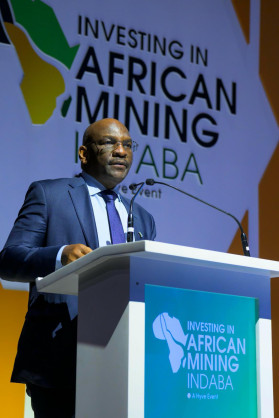
Afreximbank Challenges Africa’s Miners to Take Bold Steps to Own the Continent’s Resources

Location: News
Afreximbank

Africa must take bold steps to own its resources, create jobs and build industries that sustain prosperity for generations, African Export-Import Bank (Afreximbank) (www.Afreximbank.com) has told African leaders, policymakers, mining industry leaders and global partners at the African Mining Indaba 2025 in Cape Town, South Africa, on Sunday.

In a keynote address at the ministerial symposium of the Indaba, Mr. Denys Denya, Senior Executive Vice President of the Afreximbank Group, argued that the continent was standing at a crossroads and could either continue exporting its wealth and remain a marginal player in the global economy or take the bold steps to own its resources.

He noted that “While the global mining industry generated approximately US$1.7 trillion in revenue in 2023, Africa's share of this wealth remains disproportionately low. Our continent extracts the raw materials that power the world's industries, yet it is estimated that we retain as little as between four per cent and 20 per cent of the total value of our minerals due to minimal local processing and limited downstream development. The result? Lost economic opportunities, exposure to volatile commodity cycles and a persistent reliance on external markets for refined products derived from our own resources.” “The choice is ours. The time to act is now. Let us work together: governments, financial institutions, investors, and industry players to build an Africa where mining is not just about extraction but about transformation, innovation and wealth creation,” said Mr. Denya. “Africa has the resources, the market potential, and the policy frameworks to transition from a resource-dependent continent to an industrial powerhouse. However, success will depend on bold, decisive action from all stakeholders. Policymakers must implement clear, enforceable regulations that mandate local value addition and create investment-friendly environments. Private sector investors must step up with capital and technology to develop processing, refining, and manufacturing facilities.”

Reversing this trend demanded bold, coordinated action, he argued. “We must move beyond extraction and invest in refining, smelting and advanced manufacturing. African nations must increase local processing capacity for minerals such as bauxite, lithium, cobalt and iron ore.”

He added that regional collaboration was essential as no single country could build a mining value chain in isolation.

Mr. Denya highlighted the importance of the African Continental Free Trade Area (AfCFTA) in developing intra-African mineral value chains and strengthening cross-border collaboration and said that attracting capital for mining-related infrastructure, technology transfer and skills development were critical.

“Our mining policies must also prioritise environmental, social and governance standards, ensuring that mining benefits communities rather than displacing them,” he said, adding that the approach would create millions of skilled jobs for the youth and reduce reliance on volatile global markets while strengthening intra-African trade.

Reiterating Afreximbank's commitment to supporting Africa's mining sector and ensuring that mineral wealth drove economic growth rather than perpetuate resource dependency, Mr. Denya announced that, over the past three years, the Bank had approved more than US$1 billion in support of mining and mineral sector projects across the continent, including financing the development and construction of a bauxite processing plant in Guinea, supporting the expansion of a manganese processing plant in Gabon and providing working capital financing to a diamond company in Botswana.

Other major projects being supported by the Bank include a petrochemical fertilizer plant in Angola, a titanium dioxide pigment plant in South Africa and the feasibility study for the development of a limestone mine processing plant in Malawi, he added.

Mr. Denya said that the establishment of the US$10-billion AfCFTA Adjustment Fund, managed by FEDA, Afreximbank's impact investment subsidiary, would provide critical financial support to countries and businesses transitioning to the new trade regime, including those in the mining sector, and that the Bank's efforts to harmonise standards and implement the Africa Collaborative Transit Guarantee Scheme would also facilitate seamless movement of minerals and mining equipment across borders, reducing logistical bottlenecks.

Afreximbank was also leveraging digital platforms, such as the Africa Trade Gateway and the Pan-African Payment and Settlement System, to enable efficient transactions and market access, which would ensure that Africa's vast mineral wealth was utilised to drive industrialisation, value addition and economic resilience across the continent, he added.

Mr. Denya also noted that Afreximbank, in collaboration with development partners, was driving the development and expansion of industrial parks and special economic zones (SEZs) to address infrastructure challenges that hinder industrial growth.

One of the most transformative initiatives under that pillar was the DRC/Zambia Electric Vehicle Battery Manufacturing Special Economic Zones - a project that positions Africa at the centre of the global energy transition by the implementation of battery precursor SEZs aimed at making the two countries globally competitive investment destinations for the battery electric vehicle value chain.

The African Mining Indaba 2025, taking place from 3 to 6 February, is the premier gathering where Africa policymakers, industry leaders and global partners work to shape the future of the African mining sector.

Distributed by APO Group on behalf of Afreximbank.

Media Contact:
Vincent Musumba
Communications and Events Manager (Media Relations)
Email: press@afreximbank.com

Follow us on:
X: https://apo-opa.co/4116jsN 
Facebook: https://apo-opa.co/4aLcd4I 
LinkedIn: https://apo-opa.co/3Et8gFS 
Instagram: https://apo-opa.co/4aOinBd

About Afreximbank:
African Export-Import Bank (Afreximbank) is a Pan-African multilateral financial institution mandated to finance and promote intra-and extra-African trade. For 30 years, the Bank has been deploying innovative structures to deliver financing solutions that support the transformation of the structure of Africa's trade, accelerating industrialization and intra-regional trade, thereby boosting economic expansion in Africa. A stalwart supporter of the African Continental Free Trade Agreement (AfCFTA), Afreximbank has launched a Pan-African Payment and Settlement System (PAPSS) that was adopted by the African Union (AU) as the payment and settlement platform to underpin the implementation of the AfCFTA. Working with the AfCFTA Secretariat and the AU, the Bank is setting up a US$10 billion Adjustment Fund to support countries effectively participating in the AfCFTA. At the end of December 2023, Afreximbank's total assets and contingencies stood at over US$37.3 billion, and its shareholder funds amounted to US$6.1 billion. Afreximbank has investment grade ratings assigned by GCR (international scale) (A), Moody's (Baa1), Japan Credit Rating Agency (JCR) (A-) and Fitch (BBB). Afreximbank has evolved into a group entity comprising the Bank, its impact fund subsidiary called the Fund for Export Development Africa (FEDA), and its insurance management subsidiary, AfrexInsure (together, "the Group"). The Bank is headquartered in Cairo, Egypt.

For more information, visit: www.Afreximbank.com

Media files
Afreximbank
Download logo
Read moreAfreximbank Challenges Africa’s Miners to Take Bold Steps to Own the Continent’s Resources
5 February 2025

Sustainability of community media is of vital importance – Morolong

Location: News

Sustainability of community media is of vital importance - Morolong

The Deputy Minister in the Presidency, Kenny Morolong, has urged policymakers, businesses, and civil society to work together to secure the future of community media, by providing the necessary support and resources.

Morolong delivered a keynote address at the Media Development and Diversity Agency (MDDA) Community Media Consultative Forum at the Khayelitsha Thusong Centre, on Tuesday. 

The Forum aimed to bring government, community media, industry partners, and regulatory bodies together, to reflect on community media's contributions in the past 30 years of democracy in South Africa, while also tackling challenges facing the sector today. These include sustainability and digitalisation, to fortify the sector for the future. 

The Deputy Minister highlighted the contributions of the sector in the past 30 years of democracy, while emphasising its role in promoting identity, unity, and local awareness.

“The sustainability of community media is not just a sectoral issue; it is a societal imperative. Policy makers regulators, businesses, and civil society must work together to provide the tools, resources, and framework necessary for community media. As a sector community media is far more important,” Morolong said. 

The Deputy Minister also highlighted that community media serves as a platform for people to share their stories in their own words, balancing mainstream stories and ensuring that every citizen has a voice, regardless of their socio-economic status.

He described the sector as a key instrument in shaping public opinion and reinforcing democracy.

“Community media provides a platform for people to tell their stories in their own words, fostering identity, unity, and awareness of local issues. It serves as a counterbalance to centralise narratives, upholding the principle that everyone deserves a voice, regardless of their socio-economic status,” he said. 

However, the Deputy Minister acknowledged the pressing challenges facing community media, particularly its sustainability. He stressed that its survival hinges on robust governance, financial innovation, and strong stakeholder support.

“Strong governance is the backbone of community media sustainability. It ensures accountability, transparency, and ethical management. These are essential elements that we trust with communities. Unfortunately, many of our community media organisations lack the skills, policies, and resources to implement effective governance. 

“To address this, sector bodies must invest in training board members and leaders in strategic decision making and resource management. Simplifying compliance processes is equally essential, overly complex regulatory frameworks hinder small operations, diverting resources from the primary mission,” he said. 

Financial insecurity remains the greatest challenge facing the sector, he noted, as traditional advertising models become less viable. 

He also urged community media outlets to explore creative revenue streams, such as partnerships with local businesses, grant funding, and membership programs. 

“The greatest challenge facing community media is financial insecurity. Traditional advertising models are no longer viable, necessitating creative revenue streams partnering with local businesses leveraging grant funding and implementing membership programs can provide much needed financial stability,” he said. 

Additionally, he added that community events and workshops could serve as both a source of revenue and a way to strengthen ties with the communities they serve.

“Community events and workshops not only generate revenue but strengthen the bond between media outlets and the community they serve.

“Community media is not just a medium of information, it is an instrument of empowerment, it educates, informs, unites and plays a crucial role in supporting democracy and safeguarding marginalised voices. It contributes to the social framework though which social and political formations are shaped. Failing to address its sustainability risks silence of the vital important voices,” the Deputy Minister said. – SAnews.gov.za

DikelediM
Wed, 02/05/2025 - 06:08

26 views
Read moreSustainability of community media is of vital importance – Morolong
31 January 2025

Drone technology boosts border security over festive season

Location: News

Drone technology boosts border security over festive season

The use of drone technology has boosted South Africa’s border security efforts, with operations at ports of entry this festive season having been improved as a result.

Speaking at a briefing on Friday on the Border Management Authority (BMA) festive season operations, Home Affairs Minister Dr Leon Schreiber said the use of drones at five ports of entry on a pilot basis made an immediate and visible impact.

Schreiber said the piloting of new technology, including drones and body cameras, has demonstrated the power of digital transformation to secure and enhance border management.

“It is now time for the BMA to permanently acquire these capabilities, as we accelerate our work to digitalise South Africa’s port environment, including automating all entry and exit procedures,” the Minister said at the briefing held in Pretoria.

Schreiber commended the success registered at ports of entry to curb illegal activities.

“In previous years, festive season operations were characterised by fragmentation, lack of coordination and the inability to adjust quickly to changing circumstances on the ground.

“Thanks to the focus on coordination, technology and collaboration by the BMA, the number of attempted illegal border crossings by undocumented persons that were successfully prevented increased by 215% this past festive season.” 

Operational successes

BMA Commissioner Dr Michael Masiapato said the festive season plan was implemented from 6 – 31 December 2024 (the exit leg) and 1 - 18 January 2025 (the return leg). 

In 2023/24, 15 924 undocumented persons who tried to come into the country illegally were intercepted. In 2024/2025, this number increased to 50 312.

Another 6 159 people were detected for overstaying, and a further 1 923 were refused entry due to fraudulent documentation or non-compliance with entry requirements.

BMA border guards, in collaboration with the South African Police Service (SAPS), made 322 arrests, including 132 wanted criminals, and seized illicit goods that included R690 million worth of illegal cigarettes.

The Department of Agriculture, Land Reform and Rural Development assisted with the deployment of drones at Beitbridge, Maseru Bridge, Lebombo, Kopfontein and Oshoek. Forty-two pilots were assigned and effectively operated those drones across the five ports of entry.

The use of these drones at the five ports led to the detection of 2 188 additional people, who attempted to illegally enter the country.

“That is 2 188 people who would be walking among us illegally now if it was not for the use of this technology,” Schreiber said.

Furthermore, the drones led to 2 326 breaches in the border fence being identified and sealed.

Masiapato said prior to the implementation of the festive season plan, the BMA -- an entity of the Department of Home Affairs -- increased the human resource capacity at certain ports of entry and also extended operating hours at some of the ports, which do not normally operate on a 24-hour basis.

The BMA is mandated to facilitate and manage the legitimate movement of people and goods across South Africa’s 71 ports of entry, 52 of which are land, 10 are international airports and nine are seaports, as well as the border law enforcement area.

Cooperation pays off

Masiapato explained that during the implementation of the plan, the BMA collaborated with a multiplicity of law enforcement stakeholders, such as SAPS, South African Revenue Service (SARS), South African National Defence Force, Cross Border Road Transport Agency, Intelligence Structures, INTERPOL, the Department of Agriculture, Land Reform and Rural Development, the Immigration Inspectorate of the Department of Home Affairs, the Road Traffic Management Cooperation and various locally based traffic authorities across the various provinces.

During the festive season, the BMA facilitated the legitimate movement of about 5 084 251 travelers across the 71 ports of entry. This number represents an increase of 51 680 travelers compared to the 2023/24 festive period.

The BMA processed over 395 189 private vehicles, 12 974 mini-bus taxis and 6 071 buses through the movement control system. 

The BMA processed over 9 491 aircrafts through the international airports and about 660 vessels across seaports.

OR Tambo International Airport facilitated the majority of travelers at 1 065 636, followed by ⁠the Beitbridge land port of entry to Zimbabwe at 645 590 travelers, and then followed by the Lebombo land port of entry to Mozambique at 571 131.

Compared to the 2023/24 festive period, Lebombo experienced a decline of about 183 935 travelers. 

Working with SARS, the BMA facilitated a total of 58 938 trucks for both import and export.

Out of the total number of  58 938 processed trucks, 47 891 were processed for exports and 11 047 were processed for imports.

Masiapato thanked the border guards and coastal guards, who continue to do their best in the midst of challenges and complexities associated with border law enforcement work.

“We are very hopeful that we will be able to get the resources and fully enrol the requisite technologies required for effective border management,” he said. – SAnews.gov.za

Edwin
Fri, 01/31/2025 - 11:33

10 views
Read moreDrone technology boosts border security over festive season
30 January 2025

Limpopo Villagers Protest Over “One-Nurse Clinic”

Location: News

The department has now temporarily closed Valdezia clinic

Read moreLimpopo Villagers Protest Over “One-Nurse Clinic”
28 January 2025

DRC Emergency: Next 24 Hours Are Critical, Warn UN Agencies

Location: News

UN News
Download logo

Dead bodies lie in the streets, hospitals are overwhelmed and there has been an uptick in reports of sexual violence, rape and looting.

“Roads are blocked, ports are closed and those crossing Lake Kivu risk their lives in makeshift boats,” said Shelley Thakral, spokesperson for the UN World Food Programme (WFP) – one of many UN agencies on the ground striving to provide assistance and protection wherever possible. “I spoke just moments ago to an activist In Goma and he told me, ‘We're here, we're hiding. We don't know who will come to help us.'”

The UN aid coordination office, OCHA, echoed the humanitarian community's deep concerns about the spiralling violence across the resource-rich region that has uprooted some 300,000 people from camps around Goma in a matter of days.

Aid targeted

“Our colleagues in the DRC report heavy, small arms fire and mortar fire across the city and the presence of many dead bodies in the streets,” said OCHA spokesperson Jens Laerke. “We have reports of rapes committed by fighters, looting of property, including of a humanitarian warehouse and humanitarian and health facilities being hit.”

The emergency has left hospitals in Goma reportedly overwhelmed by the influx of wounded people, electricity and water supplies “compromised” and internet services cut off on Monday. “Goma is still offline this morning,” Mr. Laerke told journalists in Geneva.

The development came amid urgent calls from the international community including the Security Council in New York, where ambassadors on Tuesday demanded an immediate halt to the M23 rebel offensive and called for the group to withdraw from territories it has seized.

The ambassadors reiterated their support for the UN peacekeeping force in the DR Congo, MONUSCO, and paid tribute to blue helmets who have lost their lives from South Africa, Malawi and Uruguay in recent days.

The Council also condemned the presence of “external forces” in eastern DRC – amid reports Rwandan troops are heavily involved in the offensive – and called for all parties to adhere to the ceasefire and return to diplomatic talks.

Years of crisis

Before the latest escalation in violence in eastern DRC's Kivus, some 5.1 million people had already been displaced by years of insecurity in the mineral-rich region and forced to live in overcrowded camps with little food and no security.

UN agencies and partners continue to monitor the highly unstable situation which has forced WFP to temporarily pause food assistance activities in around Goma. “The airport and major access roads within the region have been cut off…Depending on the duration of violence, the supply of food into the city could be severely hampered,” said WFP's Ms. Thakral.

“This is a huge test for Congolese trapped by fighting in Goma and surrounding areas…the next 24 hours will be critical as people start to run low on supplies and will need to see what they can find to survive.”

Disease fears

The highly mobile nature of the emergency has prompted additional fears that existing diseases may spread quickly among uprooted populations, although preventive measures were taken before the latest escalation, the UN World Health Organization (WHO) said. 

For the moment the immediate concern is to help victims of the violence.

“There are currently hundreds of people in hospital, most admitted with gunshot and shrapnel wounds, with secondary infections becoming a health risk,” said Dr Adelheid Marschang, Emergency Response Coordinator for the DRC.

She noted that before Goma airport closed on Saturday, WHO had sent critical medical supplies for trauma and emergency care, infection prevention, cholera and more.

The UN agency's response to the crisis has also included providing tents for hospitals to cope with the increasing number of injured. It has medical hubs in North and South Kivu, in the cities of Goma and Bukavu to support health care needs in eastern DRC.

Last year the provinces of North and South Kivu reported high numbers of cholera, measles and malaria cases and deaths, Dr. Marschang said, warning of a “heightened risk for spillover of cholera” into neighbouring countries and provinces.

The area was also the epicentre of an outbreak of a new strain of mpox, declared a public health emergency of international concern in August 2024. Dr. Marschang warned that the new wave of displacement will make it increasingly hard to track and treat the disease.

Amid the lethal violence, hospitals and health workers themselves are in danger, the WHO official said, with “reports of health workers being shot at and patients including babies being caught in crossfire”.

“Attacks on healthcare violate the rules of war. Healthcare must be protected at all times,” she insisted.

Sexual violence alert

WHO and other UN agencies and partners said that they are especially worried about the increasing risk to women and girls from violence, including rape.

“Pregnant women are at risk, with very high maternal death rates, even before the violence escalated,” WHO said.

“Sadly, hospitals and health workers are in danger.  We are hearing reports of health workers being shot at, and patients, including babies, being caught in the crossfire.  WHO reminds everyone that attacks on healthcare violate the rules of war.  Health care must be protected at all times.”

Echoing those concerns, WFP's Ms. Thakral reported that mobile teams and mobile clinics are at work amid reports that women had been raped multiple times while searching for firewood or after leaving the perimeter of their camp.

Other reports indicated “an increase in rape along the pathways that some of the conflict partners are now taking into South Kivu,” she said, underscoring the agency's efforts “to have some solutions to follow the populations as they move”.

Distributed by APO Group on behalf of UN News.

Read moreDRC Emergency: Next 24 Hours Are Critical, Warn UN Agencies
28 January 2025

SA hosts global circular economy workshop

Location: News

SA hosts global circular economy workshop

Efforts to ensure that South Africa has a clean and healthy environment are under the spotlight at the 7th Global Forum of Cities for Circular Economy (GFCCE) workshop.

The two-day workshop, which is being hosted by the Department of Forestry, Fisheries and the Environment (DFFE) in Johannesburg -- in collaboration with the Centre for Science and Environment -- is aimed at enhancing South-South cooperation for improving the solid waste management ecosystem in the Global South, and building the capacity of nominated officials from 18 African nations.

The workshop, which concludes on Wednesday, is being attended by delegates from Botswana, Cameroon, Côte d’Ivoire, Ethiopia, Eswatini, Ghana, Kenya, Lesotho, Madagascar, Mozambique, Namibia, Rwanda, Senegal, South Africa, Tanzania, Uganda, Zambia and Zimbabwe.

Addressing the opening of the workshop, South Africa's Deputy Minister of Forestry, Fisheries and the Environment, Bernice Swarts, highlighted some of the measures government has adopted to bolster the circular economy, focusing on reusing and recycling materials to ensure a sustainable and secure supply of resources.

“South Africa has instituted various policy instruments and initiatives to advance sustainable development pathways, with circular economy principles firmly embedded in these strategies,” Swarts said on Tuesday. 

These policy instruments include the National Waste Management Strategy, Extended Producer Responsibility Regulations (EPR) for priority waste streams and other economic instruments that include fees, levies and taxes to incentivise or disincentivise behaviour change.

“Extended Producer Responsibility became necessary to be included in South Africa’s policy mix, given the increased generation of waste. EPR shifts seek to shift the responsibility for products from municipalities and consumers, to producers.

“South Africa is under immense pressure and the host city [of the workshop] - the City of Joburg - together with others - does not have sufficient landfill airspace. It is, therefore, necessary to utilise a policy mix to address resource efficiency. It is also necessary that cities are enabled to monitor resource use,” Swarts said.

The Deputy Minister noted that for meaningful progress to be made across the board, strong partnerships are needed.

"Collaboration between government and the private sector is paramount in realising the goals of the waste management hierarchy and facilitating our transition to a circular economy. 

“South Africa remains steadfast in its commitment to strengthening these partnerships and advancing the shared objectives of the GFCCE. This collaboration benefits our governments through reduced spending and creates green opportunities,” she said.

Since its establishment in 2021, the GFCCE has expanded to a community of 22 Member States, with 18 countries from Africa. This platform is dedicated to advancing circular economy principles in alignment with national policies and priorities. 

Cities account for 75% of natural resource consumption and 70% of global greenhouse gas emissions. 

Swarts said more people will continue to migrate to cities to seek better opportunities and it is necessary that cities become resilient in resource efficiency and reduce their environmental footprint. - SAnews.gov.za

nosihle
Tue, 01/28/2025 - 13:05

25 views
Read moreSA hosts global circular economy workshop
27 January 2025

Salute to police officers!

Location: News

Salute to police officers!

The blood, sweat and tears of the men and women in blue have been honoured at the official National Police Day event.

Police Minister Senzo Mchunu said National Police Day, which was held in Durban on Monday, 27 January, is a platform to recognise the sacrifices, courage and unwavering dedication of the members of the South African Police Service (SAPS).

“Today, we pause to reflect on your invaluable contributions, to honour your service and reaffirm our commitment to supporting and strengthening our police service,” Mchunu told officers at the event.

With South Africa having marked 30 Years of Freedom and Democracy last year, Mchunu said the journey of transformation towards a democratic South Africa has been characterised by significant shifts in creating a police service "for the people, by the people".

This year, National Police Day was held under the theme: "Celebrating 30 Years of Policing in Democracy".

In 2005, Cabinet approved 27 January as National Police Day -- a day set aside to remember the sacrifices made by men and women in blue.

“We transitioned from a past marked by division to a future founded on unity, justice and human rights,” Mchunu said. 

Throughout the years, SAPS has played a critical role in strengthening democracy, protecting citizens and ensuring that every South African can live in safety and dignity.   

“You are the shield between law-abiding citizens and those who wish to inflict harm upon them. You are the first line of defence in our fight against crime, corruption and lawlessness.

“We gather here at Kings Park Athletic Stadium, not only as officials and law enforcement personnel but as a unified force standing against crime and injustice. 

“As officers of the law, you bear the immense responsibility of ensuring peace, maintaining order and bringing justice to those who seek to undermine our nation’s security. Every day, you put your lives on the line, facing unimaginable dangers to safeguard our communities. 

“You leave your families to serve the greater family that is our beloved country. Your sacrifices do not go unnoticed. On behalf of the government of the Republic of South Africa and the people you so diligently protect, I extend my heartfelt gratitude to each and every one of you. We honour your bravery. We respect your resilience, and we salute your dedication,” Mchunu said.

Crime, however, remains one of the greatest challenges facing the nation.

“We will not falter in our duty to dismantle criminal networks, to root out corruption and to restore public confidence in law enforcement. We recognise that policing is not just about enforcement; it is about service. 

“It is about building trust between officers and communities, ensuring that every citizen regardless of where they live feels safe, protected and heard,” Mchunu said.

The Minister said the trust of the people in the SAPS is the greatest weapon. 

“Our strength lies in the bonds we forge with our communities. The more we work together, the stronger we become in our mission to eradicate crime. A police service that commands the trust of the people is a police service that can truly make a difference.

“We must continuously invest in training, technology, and community partnerships to enhance our effectiveness. A police service that adapts, innovates, and works hand in hand with the people is a police service that can truly serve and protect,” the Minister said. 

Honouring the legacy

At its last annual Police Commemoration Day in September last year, SAPS honoured 39 officers, who died in the line of duty between 01 April 2023 to 31 March 2024.

SAPS also has the South African Police Service Education Trust (SAPSET), which was officially established on 23 November 2010. The objective is to provide financial and resource support to the children of fallen heroes and heroines, who died in the line of duty.

To date, SAPSET has assisted 1 631 children; 21 have graduated, and 155 have matriculated. To date, SAPSET has raised over R17 million. 

According to SAPS, operational members’ danger allowance was increased from R400 to R700 as from April 2022. - SAnews.gov.za   

Edwin
Mon, 01/27/2025 - 14:21

97 views
Read moreSalute to police officers!
26 January 2025

SA film’s Oscar nomination highlights wildlife heroes

Location: News

SA film’s Oscar nomination highlights wildlife heroes

The Minister of Forestry, Fisheries and the Environment, Dr Dion George, has congratulated the creators of the short film, The Last Ranger.

The film has been nominated in the Best Live Action Short Film category of the 97th Academy Awards. 

George, who recently attended a ranger course at the Southern African Wildlife College in order to better understand the work of rangers, highlighted how timeous the Oscar nomination comes as the department intensifies the fight against wildlife poaching.

“I wish to congratulate the team behind this important body of work on choosing to highlight the plight of our rangers, a community of real-life heroes who are often overlooked. I believe that this film helps tell our rangers’ story and as a result of this nomination, rangers will garner more local and international support for their work,” said the Minister.

The Last Ranger short film explores the theme of rhino poaching and conservation efforts. 

Set against the spectacular landscapes of the Eastern Cape, The Last Ranger tells the story of a young Xhosa girl and a female game ranger who fight to save rhinos from poachers. 

The film exposes both the horrors of rhino poaching and the socio-economic complexities facing local communities. The film was directed by Cindy Lee and was locally produced by Star Films and internationally, by Kindred Films.

The Minister said the film showed the urgent need to address the resource constraints facing local rangers. 

“South Africa’s dedicated rangers are doing incredible work despite being massively under-resourced, and the government is committed to ensure that they have the tools and support needed to carry out their duties effectively.”

George called on the local and international community to come together against poaching criminal syndicates.

"We hope that The Last Ranger not only showcases the high calibre of our South African creatives, but also showcases the beauty of South Africa’s natural heritage, including our wildlife. We will be watching the Oscars with great anticipation on 2 March 2025 in the hopes that they will bring the Oscar home," said the Minister.

He encouraged all South Africans and international supporters of rangers to go out and watch the movie in their multitudes and to also experience the beauty and majesty of South Africa’s national parks by visiting the country's wildlife reserves. – SAnews.gov.za
 

Janine
Sun, 01/26/2025 - 11:36

69 views
Read moreSA film’s Oscar nomination highlights wildlife heroes
  • Previous
  • Page 1
  • Interim pages omitted …
  • Page 5
  • Page 6
  • Page 7
  • Page 8
  • Page 9
  • Interim pages omitted …
  • Page 16
  • Next

Copyright © 2026 · MyZA · All Rights Reserved · Powered by Stratlec Online