• Skip to main content
  • Skip to header right navigation
  • Skip to after header navigation
  • Skip to site footer
MyZA

MyZA

News, Directory, Events and Other Stuff

  • Social Media
  • Sport
  • World News
  • Home
  • Submit News
  • Directory
  • Events
  • Stratlec
  • TFSA
  • News
    • APO
    • Today’s Sport News
    • Todays Social Media and Tech Headlines
    • Today’s World News
    • Today’s SA Financial News
  • Contact
You are here: Home / Archives for Skills Development

Skills Development

18 May 2025

Minister Lamola arrives in France

Location: News

Minister Lamola arrives in France

International Relations and Cooperation Minister Ronald Lamola has arrived in France to co-chair the Ninth Forum for Political Dialogue alongside the Minister for Europe and Foreign Affairs of the French Republic, Jean-Noël Barrot.  

“This bilateral engagement will enable the two Ministers to review progress and discuss key issues of mutual interest, further strengthening the strategic partnership between South Africa and France,” the Ministry of International Relations and Cooperation said on Friday.

South Africa enjoys robust trade relations and significant investment flows with France, which remains one of its largest trading partners within the European Union. 

The two nations also collaborate strategically in critical areas such as education and skills development science, technology, arts, and culture, energy cooperation, health and defence. 

According to the Ministry, the forum will further provide an opportunity for the Ministers to exchange perspectives on pressing global and regional geopolitical developments, underscoring their shared commitment to multilateralism and a rules-based international order.  

“This dialogue reaffirms the enduring partnership between South Africa and France, rooted in mutual respect and a common vision for advancing peace, sustainable development, and innovation,” it said. - SAnews.gov.za

Neo
Fri, 05/16/2025 - 10:36
1003 views
Read moreMinister Lamola arrives in France
16 May 2025

Ninth Meeting of the South Africa-France Forum for Political Dialogue

Location: News

Republic of South Africa: Department of International Relations and Cooperation
Download logo

The Minister of International Relations and Cooperation of the Republic of South Africa, Mr Ronald Lamola, has arrived in France to co-chair the Ninth Forum for Political Dialogue alongside the Minister for Europe and Foreign Affairs of the French Republic, Mr Jean-Noël Barrot.

This bilateral engagement will enable the two Ministers to review progress and discuss key issues of mutual interest, further strengthening the strategic partnership between South Africa and France.

South Africa enjoys robust trade relations and significant investment flows with France, which remains one of its largest trading partners within the European Union. The two nations also collaborate strategically in critical areas such as education and skills development science, technology, arts, and culture, energy cooperation, health and defence.

The Forum will further provide an opportunity for the Ministers to exchange perspectives on pressing global and regional geopolitical developments, underscoring their shared commitment to multilateralism and a rules-based international order.

This dialogue reaffirms the enduring partnership between South Africa and France, rooted in mutual respect and a common vision for advancing peace, sustainable development, and innovation.

Distributed by APO Group on behalf of Republic of South Africa: Department of International Relations and Cooperation.

Read moreNinth Meeting of the South Africa-France Forum for Political Dialogue
16 May 2025

Mashatile Undertakes an Official Working Visit to France

Location: News

The Presidency of the Republic of South Africa
Download logo

Deputy President Shipokosa Paulus Mashatile will undertake an official Working Visit to the Republic of France from 19 – 24 May 2025, for the South Africa-France Investment Conference. The Visit is aimed at strengthening relations between the two countries and, most importantly, mobilising investments in order to realise the country's economic growth and transformation objectives.

South Africa and France enjoy cordial relations underpinned by a robust bilateral cooperation programme in areas such as Political Dialogue, Defence, Science & Technology, Energy cooperation, Education and skills development, Health, Transport, Arts and Culture, among others.

This Investment Conference will be held under the theme “SA-France: A Partnership for Mutual Prosperity” with the objective of attracting Foreign Direct Investment (FDI), Public-Private Partnerships (PPPs), and financial resources focusing on key issues such as unemployment, poverty, inequality, climate change and transitions in the digital economy.

The Conference will be centred on eight main sectors, namely Energy, Infrastructure, Transport and Logistics, Finance, Tourism, Agriculture and Agro-Processing, Mining, as well as Information and Communication Technology (ICT). There will also be breakaway groups, which will explore practical steps for projects and investments in these areas.

In addition, the Conference will consist of a high-level segment by Government officials who will lead on thematic discussions related to investment opportunities, policies, and the investment climate in South Africa.

The Deputy President is expected to have a bilateral meeting with his counterpart, Mr Francois Bayrou, Prime Minister of the French Republic.

Deputy President Mashatile will be accompanied by Dr A Motsoaledi: Minister of Health; Ms S Ndabeni-Abrahams: Minister of Small, Business Development; Ms B Creecy: Minister of Transport; Mr G McKenzie: Minister of Sport, Arts and Culture; Ms Patricia de Lille: Minister of Tourism; Mr A Botes: Deputy Minister of International Relations and Cooperation; Mr B Manamela: Deputy Minister of Higher Education and Training; Mr Z Godlimpi: Deputy Minister Trade, Industry and Competition; and Ms S Graham-Mare: Deputy Minister of Electricity and Energy.

Distributed by APO Group on behalf of The Presidency of the Republic of South Africa.

Read moreMashatile Undertakes an Official Working Visit to France
14 May 2025

Igniting Africa’s Energy and Water Future – Just One Week to Go!

Location: Business
Vuka Group

The countdown is on! From 20-22 May 2025, the vibrant city of Cape Town will host Enlit Africa, the continent's most electrifying gathering of power, energy and water professionals. This is not just an event—it's a call to spark transformation, forge connections and power a sustainable future for Africa and beyond. With a dynamic programme bursting with innovation, inspiration and actionable insights, Enlit Africa is set to be the unmissable epicentre of Africa's energy and water revolution.

A powerhouse of vision and innovation

Enlit Africa 2025 is where the brightest minds, boldest ideas and cutting-edge technologies converge to shape the future of Africa's power, energy and water sectors. Held at the Cape Town International Convention Centre, this three-day extravaganza will bring together utilities, policymakers, innovators, investors and thought leaders from across the continent and the globe. Expect nothing less than a high-voltage experience, with over 200 expert speakers, thousands of attendees and a programme designed to ignite change and challenge the status quo

From the Keynote Stage, where global visionaries like Sabine Dall'Omo, CEO of Siemens South Africa and Bronwyn Williams, Futurist at Flux Trends, will set the tone for transformation, to the Strategise Stage, tackling critical topics like nuclear energy and regional interconnectors, Enlit Africa is a catalyst for progress. The Innovate Stage will showcase breakthroughs in smart grids and digitalisation, while the Power Hub dives deep into generation and distribution advancements, including the game-changing potential of Small Modular Reactors (SMRs) and green hydrogen.

Water Security Africa: A Vital Focus

Running alongside Enlit Africa, Water Security Africa will tackle one of the continent's most pressing challenges—sustainable water management. With sessions on desalination, smart metering and climate-resilient infrastructure, this dedicated track features trailblazers like Sean Phillips, Director General, Department of Water & Sanitation and Jay Bhagwan, Water Research Commission, who will share strategies to secure Africa's water future. Highlights include the Youth in Water Forum, spotlighting young innovators and a GreenCape-hosted workshop to scale water security initiatives.

Unparalleled networking and business opportunities

Enlit Africa is more than a conference—it's a networking powerhouse. Connect with peers, partners and pioneers at the Engage Networking Dinner (sponsored by Standard Bank) or the Networking Function (sponsored by Actom).

Dive into exclusive roundtables, masterclasses and the Projects & Investment Network, designed to turn ideas into bankable projects. For those looking to explore real-world innovation, site visits on 23 May to Robben Island, Western Cape Water facilities and more offer a front-row seat to Africa's energy and water infrastructure.

The Women in Energy programme on 21 May is a highlight, celebrating female leadership with the launch of Standard Bank's Future Females in Energy Initiative and powerful discussions on tackling gender-based violence (GBV) and fostering inclusive workplaces. With speakers like Candice Hartley, Chief People Officer at Eskom, this session is a call to action for equality and empowerment.

Why you can't miss Enlit Africa 2025

  • Premium networking: Forge partnerships with utilities, municipalities, developers and investors.
  • Expert insights: Hear from over 200 speakers, including Calib Cassim, CFO of Eskom and Monde Bala, Group Executive: Distribution, Eskom.
  • Practical learning: Masterclasses and workshops deliver hands-on knowledge from industry veterans.
  • Business opportunities: Explore the latest technologies and innovations in the expansive exhibition floor.
  • Career advancement: Stay ahead of trends in nuclear, renewables, smart grids and water management.
  • Inspiration: Engage with a community passionate about transforming Africa's energy and water landscape.

Programme highlights

  • 20 May: Kick off with keynotes from South Africa's Minister of Electricity and Energy, Kgosientsho Ramokgopa and a panel on technology's role in powering Africa's future.
  • 21 May: Dive into climate finance, nuclear energy's strategic role and regional interconnectors, with insights from Ryan Collyer, CEO of Rosatom Central and Southern Africa.
  • 22 May: Join the Energy & Infrastructure Skills Development Taskforce workshop to shape the workforce of tomorrow.

For water enthusiasts, Water Security Africa offers roundtables on projects like South Africa's National desalination initiative and discussions on municipal water delivery with leaders like Shyam Misra, Group MD of Siza Water.

Join the movement

With just two weeks to go, now is the time to secure your spot at Enlit Africa 2025. Choose from a range of attendance options, from the Free Expo Visitor Pass to the Platinum Package, which includes exclusive access to strategic sessions, networking dinners and site visits. Visit Enlit Africa on www.Enlit-Africa.com or contact Vuyisa Mfobo at vuyisamfobo@wearevuka.com or +27 66 305 7203 to upgrade your experience.

Don't miss your chance to be part of the event that's lighting up Africa's energy and water future. Enlit Africa 2025 is where connections are made, ideas are born and the continent's sustainable tomorrow takes shape. Let's power up, innovate and transform—together!

Distributed by APO Group on behalf of Vuka Group.

Note: Programme details and speakers are subject to change.

For media inquiries, contact:
VUKA Group Media Team
Email: media@wearevuka.com
Website: www.Enlit-Africa.com

About Enlit Africa:
Enlit Africa celebrates 25 years in the African power, energy, and water sector. A game-changing event, it brings the top manufacturers, associations, institutions, and government leaders together to shape a sustainable, prosperous energy and water future for Africa. A leading power, energy and water conference and exhibition, Enlit Africa is designed to provide a unique platform to connect decision-makers and determine Africa's future direction of travel. 

Enlit Africa takes place from 20 - 22 May 2025 at the CTICC, Cape Town, South Africa. The event is CPD accredited by the SAIEE and SAICE, thereby contributing to the professional development of industry experts.

For more information, please visit the Enlit Africa website at https://Enlit-Africa.com/ or contact our team at info@enlit-africa.com.

About The Vuka Group:
VUKA Group brings people and organisations together to connect with information and each other in meaningful conversations to reach the next level of growth in their industry ecosystem. With 20 years of experience in Africa, the group serves the Energy, Mining, Smart Mobility, Transport and Retail sectors, through a range of industry touchpoints across digital, print and in-person platforms. With a commitment to data at its core, the group is well-positioned to support industry stakeholders today and into the future. Operating from Cape Town, South Africa the group is actively involved in projects across continental Africa and boasts a diverse African team who take great pride in the work they do for the sectors and markets they serve. 

Media files
Vuka Group
Download logo
Read moreIgniting Africa’s Energy and Water Future – Just One Week to Go!
12 May 2025

Revolutionising Cloud Access for Nigerian Business With Local Innovation

Location: Business
Angola Cables

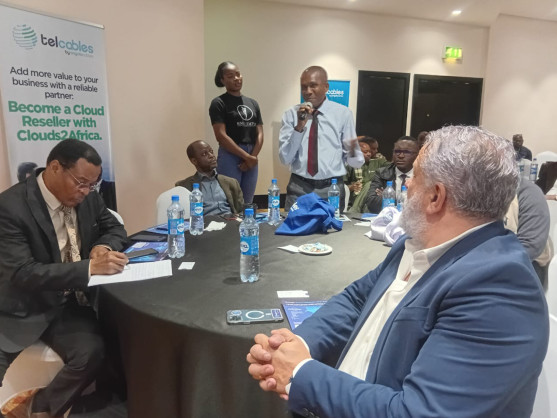
At the recent Connect Xperience event, TelCables Nigeria unveiled how Clouds2Africa, a locally hosted cloud solution, is transforming the way businesses in Nigeria access, manage, and expand their digital resources.

“Clouds2Africa is tailored to Nigeria's unique business environment”, explained Israel Ogboi, Pre-Sales Engineer at TelCables Nigeria. “With its scalable infrastructure, robust security protocols and user-friendly interface, our solution rivals – and in some cases surpasses – the more complex international cloud offerings.” Hosted in two Tier III data centres in Lagos, the platform guarantees lower latency, full compliance with local regulations and enhanced reliability.

In a live demo, Israel showed how businesses can efficiently scale operations and securely store data while meeting performance expectations. He also highlighted ACloudConnect, a hybrid Network-as-a-Service (NaaS) option that provides secure, dedicated links between on-premises infrastructure and global cloud providers – bypassing the public internet and reducing vulnerability.

Despite existing challenges such as policy constraints and talent shortages, Ogboi noted that TelCables is working closely with government and partners to drive skills development and cloud literacy. “We're debunking myths and breaking barriers. Through events like Connect Xperience and our local Partner Enablement Program, we're enabling ISPs and resellers to adopt revenue-sharing models and deliver future-ready cloud services,” he said.

Fernando Fernandes, CEO of TelCables Nigeria, added: “Backed by Angola Cables' extensive global infrastructure – including an integrated subsea cable network and over 300 cloud onramps – we're positioning Nigeria at the heart of Africa's digital future. Our mission is to empower local businesses with the tools they need to compete globally.”

Distributed by APO Group on behalf of Angola Cables.

About Angola Cables:
Angola Cables is an internationally established ICT and digital solutions and network services provider. The company specializes in connectivity solutions for the wholesale market and offers tailored digital services and solutions across multiple industries, including Cloud resources for the corporate enterprise sector.

Known for its innovation, Angola Cables operates a robust global backbone network, providing access to major IXPs, Tier I operators, and global content providers. With more than 30 PoPs and connections to plus 930 interconnected Data Centres and 6000 peering agreements, traffic over its international network is more than 18 500 Tbps.

The company has its own submarine cable network spanning over 33,000 kilometres (WACS, SACS, and MONET) and extends its services to over 50,000 kilometres through partner cables, connecting the Americas, Africa, Europe, and Asia.

Additionally, the company operates two world-class Data Centres, AngoNAP Fortaleza in Brazil and AngoNAP Luanda in Angola. Angola Cables also manages PIX in Brazil and AngonIX in Angola - one of the leading internet traffic exchange points in Africa that directly connects to over 21 IXPs worldwide.

With a significant international presence, Angola Cables is expanding its operations into strategic markets such as Brazil, South Africa, the United States and Nigeria. The company promotes intercontinental interconnection, driving digital and economic development, and ranks among the top 25 internet service providers in the world today.

*The Center for Applied Internet Data Analysis (CAIDA) 2023

For more information, visit the website: www.AngolaCables.co.ao

About TelCables West Africa:
TelCables West Africa is powered by the Angola Cables network, a multinational telecommunications company operating in the wholesale market. The company operates connectivity, IT solutions and services as well as international data circuit capacity and IP Transit via submarine cables.

As the most connected network operator in Africa, we provide secure, low-latency direct routes from West Africa to the USA and South America and from West Africa to London. With our presence across a few Nigerian IP hubs from Lekki, WACS CLS, Medallion DC, Rack Centre and others, and connections across Africa via the Djoliba network, we can connect your business to the world.

For more information, visit the website: https://TelCables.ng/

Media files
Angola Cables
Download logo
Read moreRevolutionising Cloud Access for Nigerian Business With Local Innovation
24 April 2025

AEC Champions Smart Policy, Strategic Partnerships to Advance Namibia’s Oil & Gas Discoveries

Location: Business
African Energy Chamber

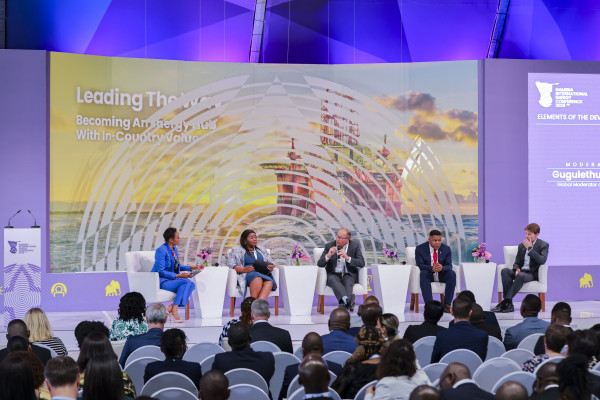
As a strategic partner of the Namibia International Energy Conference (NIEC), the African Energy Chamber (AEC) (www.EnergyChamber.org) is calling for a deliberate and accelerated approach to moving Namibia's recent oil and gas discoveries into production – emphasizing the importance of speed, investor confidence and strategic collaboration.

Speaking during a high-level panel at NIEC 2025, AEC Executive Chairman NJ Ayuk urged Namibia to seize the momentum of its frontier discoveries, while avoiding the pitfalls that have stalled progress in other hydrocarbon-rich African nations. He emphasized that Namibia's path to becoming a regional energy hub hinges on its ability to learn from international case studies and execute deals that ensure long-term national benefit.

“Namibia needs to move fast, produce quickly and negotiate the best deals with its partners to ensure the rapid development of its oil discoveries,” Ayuk stated. He pointed to Guyana as a prime example, noting how the South American country developed a robust strategy focused on national benefit and successfully attracted billions in investments to fast-track its energy projects.

In contrast, Ayuk cautioned against the delays experienced by countries like Mozambique, Tanzania, Uganda and South Africa, where production was significantly postponed, leading to rising project costs and lost opportunities. “There is a growing movement trying to discourage Africa – and Namibia – from producing its oil and gas. We must resist that,” he added.

Reinforcing the need for investor-friendly terms, Justin Cochrane, Africa Upstream Regional Research Director at S&P Global Commodity Insights, highlighted the necessity of contract stability, transparent data-sharing and a balanced approach to fiscal negotiations. “It's natural that Namibia wants to maximize its benefits, but pushing too hard on IOCs can result in getting 100% of nothing… The first milestone must be achieving first oil,” said Cochrane.

Representing Namibia's national oil company, Victoria Sibeya, Interim Managing Director of NAMCOR, stressed that the company is actively engaged in every phase of the industry, from data acquisition and exploration to shaping the downstream and midstream vision. “We are not just bystanders,” said Sibeya. “NAMCOR is deeply involved in data acquisition, exploration and the exchange of knowledge and technology with our partners. We are also preparing to invest in downstream and midstream sectors to ensure that we can add value once production begins.”

Echoing the call for local development, Adriano Bastos, Head of Upstream at Galp, underscored the need for early and continuous skills development – proposing that Namibians be trained abroad in specialized areas like FPSO operations to ensure they are prepared to lead once production begins at home. “Namibia has capabilities that are rare in the region, but more collaboration with international partners is essential to build the local skills base,” he said.

Bastos noted that Namibians make up 25% of Galp's workforce in the country, including its first female offshore base manager. “We are proud of the strides we have made. Our nationalization plans are aggressive, and we work closely with [the Namibian Ports Authority] and other local entities to implement meaningful capacity-building projects.”

As Namibia stands on the cusp of transforming exploration success into production, the message from industry leaders is clear: time, trust and talent will determine the country's trajectory. Through cross-border collaboration, pragmatic deal-making and a strong national vision, Namibia can emerge not just as an oil producer – but as a continental model for inclusive, forward-thinking energy development.

Distributed by APO Group on behalf of African Energy Chamber.

Media files
African Energy Chamber
Download logo
Read moreAEC Champions Smart Policy, Strategic Partnerships to Advance Namibia’s Oil & Gas Discoveries
15 April 2025

Eskom, Exxaro sign agreement to reduce carbon emissions

Location: News

Eskom, Exxaro sign agreement to reduce carbon emissions

Exxaro Resources and Eskom have signed a Memorandum of Understanding (MoU) to collaborate on strategic initiatives, research, and projects aimed at reducing carbon emissions, improving air quality and facilitating the Just Transition.

According to a joint statement, this move is consistent with South Africa’s commitment to achieving the goals of the Paris Agreement, international environmental standards, and national regulatory frameworks.

“The agreement focuses on jointly measuring, managing, and reducing Scope 1, 2, and 3 emissions and potentially investing in innovative technologies to drive decarbonisation. 

“It also emphasises inclusive and focused transition initiatives such as skills development, job creation in green sectors, and stakeholder engagement to ensure climate resilience,” the statement read. 

In addition, the MoU, which was signed on Monday, includes provisions for data sharing and transparent reporting to track progress and ensure accountability.

Exxaro Resources CEO, Ben Magara, believes that this collaboration marks a significant step forward in the company’s commitment to enabling a Just Transition and building a climate-resilient and low-carbon future. 

“By leveraging our deep experience in the diversified mining and energy solutions sectors, we aim to drive innovation that not only decarbonises and reduces air pollution in our operations but also delivers meaningful socio-economic benefits for the communities we serve.

“The collaboration with Eskom is important as we work to accelerate practical and scalable solutions that support South Africa’s energy security and environmental ambitions as part of our purpose of Powering Better lives in Africa and beyond,” Magara said. 

Exxaro is a South Africa-based diversified resources company with a coal business and acquisitive growth prospects in minerals and energy. 

The company stated that the initial focus of the collaboration will be to identify the necessary investments and stakeholders required to develop technology-based solutions for the challenges associated with the transition to a low-carbon economy. 
This effort will align with the country’s Integrated Resource Plan (IRP).

Eskom Group Chief Executive Dan Marokane said both organisations are committed to driving the transition to a more sustainable energy future while ensuring the country’s electricity supply remains secure. 

“This initiative forms part of Eskom’s focus both in this country and internationally to identify the latest developments and strategies to reduce carbon emissions and other air pollutants,” Marokane added. 

Meanwhile, Exxaro stated that it remains steadfast in advancing its Sustainable Growth and Impact strategy by embedding key Environmental, Social, and Governance (ESG) priorities into its operations. 

The company is of the view that through partnerships such as this one, it is well-positioned to become carbon-neutral by 2050.
Meanwhile, Eskom’s Research, Testing & Development (RT&D) business unit will lead this partnership. 

The RT&D is dedicated to finding technology solutions that can be applied primarily within the company to embrace innovation, enhance efficiency and improve operations, improvements related to emissions management, and greenhouse gas (GHG) abatement.

“Eskom remains focused on a balanced and diversified energy mix based on existing coal and nuclear and introducing gas for baseload power, as well as renewables, energy storage systems including battery energy storage systems and pumped hydro, to achieve overall security of supply and to meet South Africa’s growing electricity demand sustainably,” said the power utility. – SAnews.gov.za


Gabisile
Tue, 04/15/2025 - 11:18

111 views

Read moreEskom, Exxaro sign agreement to reduce carbon emissions
13 April 2025

Consumer Commission and PSETA partnership set to enhance skills development

Location: News

Consumer Commission and PSETA partnership set to enhance skills development

The National Consumer Commission (NCC) and the Public Service Sector Education and Training Authority (PSETA) have entered into a strategic partnership to collaborate on skills development and research on emerging issues.

This was done through a five-year Memorandum of Understanding (MoU). 

“As part of the MoU, PSETA can place its graduates at the NCC, significantly contributing to the NCC's work. In turn, through its internship programme, which these graduates will join, the NCC will help ensure that the programme aligns with the skills demanded by the workplace. This will ensure that the graduates are well-trained and ready for the industry by the end of their training,” a joint statement by the NCC and PSETA said on Saturday.

PSETA’s focus is primarily on transversal skills within the Public Service sector. These skills, dubbed the ‘business of government’, include administration, management, planning, legislation and policy development.
They form the focus to drive the growth of skills and competencies in areas that will make the delivery of the business of government.

The PSETA is a statutory body entrusted with driving skills development across the public sector. As an agency of the Department of Trade, Industry and Competition, the primary role of the NCC is to protect the interests of consumers and ensure accessible, transparent and efficient redress for consumers. 

“As mandated by the Skills Development Act and aligned with the National Skills Development Plan (NSDP) 2030, PSETA plays a critical role in shaping a professional, ethical, and capable public service workforce.

“As a trusted Authority, PSETA is committed to driving impactful, inclusive, and sustainable skills development that strengthens institutional capacity and supports service delivery excellence across the public sector,” the statement said.

The MoU, among other things, aims to achieve the following:

•    Identify priority research areas, including research to support the Public Service, in line with both parties’ research agendas and the PSETA’s Sector Skills Plan (SSP) priorities;
•    Facilitate cooperation and support on the development of capacity and capabilities for members and officials of the Public Service and unemployed learners, aligned to the PSETA SSP priorities, the National Development Plan, the National Skills Development Plan priorities and the Public Service;
•    Human Resource Development Strategy;
•    Facilitation and regular sharing of information on matters mutually relevant to the Parties;
•    Encourage the maximised usage of shared resources; and
•    Setting out the parameters for cooperation and support under the objectives of the MoU.

-SAnews.gov.za


nosihle
Sun, 04/13/2025 - 09:01

24 views

Read moreConsumer Commission and PSETA partnership set to enhance skills development
11 April 2025

Media industry called to transform ownership patterns

Location: News

Media industry called to transform ownership patterns

With the media industry fighting for its survival amidst the rise of digital media, Deputy Minister in The Presidency, Kenny Morolong, has called on the industry to make deliberate efforts to transform the sector’s ownership patterns.

“Government remains committed to working alongside industry stakeholders to ensure that South Africa's media landscape is inclusive, competitive, and representative of the country's diversity,” Morolong said.

The Deputy Minister was addressing the members of the Print and Digital Media Transformation and Revitalization Steering Committee in Rosebank, Johannesburg, on Friday.

The steering committee was established to drive collaborative efforts towards a transformed media that is inclusive in a digital and multiplatform environment, to sustain and grow the sector’s contribution to the country's Growth Domestic Product (GDP).

The Minister painted a sobering picture of the industry’s current state, noting a dramatic decline in print newspaper (both commercial and local) circulation  - from approximately 45 million copies annually to dwindled numbers that were never imagined before, which is "very worrisome for government."

“The current challenges of operating in the digital environment; excess print, distribution and transport cost; reduction in newspaper subscribers; dwindling circulation figures coupled with reduced advertising budgets, both from corporate and government, have forced publishers to close down, while others have become loss-making or liability enterprises. In the mist of all these things, we should not despair, we are a nation that works together to find common solutions,” Morolong said.

The Deputy Minister emphasised the critical role played by the media in society and reaffirmed government’s commitment to revitalise the industry.

“We have a responsibility to save an industry that is ailing and to do so, there needs to be government investment. You can’t put government in a position where it must support an industry that does not want to transform. 

“You are running a business, but you are also running an institution which has got a moral obligation to keep society informed. We want to support you because of your role in education and informing society. We have a responsibility to support you and empower you as business,” he said.

The Print and Digital Media Transformation and Revitalization Steering Committee comprises various media executives of print and digital media companies, industry bodies such as the Association of Independent Publishers, Media Development and Diversity Agency and the Press Council.

The committee has been tasked with the following responsibilities: 

  • Developing a roadmap towards the establishment of the Print Media Charter that will promote B-BBEE in the sector;
  • The availability of print and digital media in languages all South Africans speak;
  • Specifics of the industry, including setting deadlines and targets to meet transformation objectives, set as commitment by the industry into a diverse and transformed print media in the entire value chain (newsroom, publishing, news sources, printing, distribution and advertising);
  • Areas of ownership and control, language, race, gender, employment equity, conditions of employment, skills development, contributions to promoting media diversity (through MDDA), and accord on access to printing and distribution. -SAnews.gov.za


nosihle
Fri, 04/11/2025 - 12:10
173 views

Read moreMedia industry called to transform ownership patterns
8 April 2025

G20 must tackle inequality, gender gaps to build just labour markets – Minister Meth

Location: News

G20 must tackle inequality, gender gaps to build just labour markets – Minister Meth

Employment and Labour Minister Nomakhosazana Meth has called on G20 member states to urgently address growing inequality and the erosion of labour income share, warning that these trends threaten global economic stability and social cohesion.

The Minister was delivering the keynote address at the second G20 Employment Working Group meeting in Umhlanga, KwaZulu-Natal on Tuesday. 

“The growing erosion of labour's share of national income poses a significant threat to broader economic resilience and inclusivity goals by widening wealth disparities, weakening the social fabric, and limiting upward mobility. Addressing this trend is crucial for global progress,” the Minister said.

Meth emphasised that economic progress must not be measured solely by GDP or trade metrics, but by the ability to uplift vulnerable communities through decent work, fair wages, and inclusive opportunities. 

She underscored the need to close gender gaps in employment and pay, describing it as both a moral imperative and a driver of innovation and prosperity.

“We find ourselves at a critical juncture, where the global landscape is marked by increasing disparities threatening the fundamental principles upon which just and dignified societies are built. 

“Millions of workers worldwide remain mired in precarious employment conditions, receiving stagnant wages and experiencing shrinking opportunities for social mobility. Policies and initiatives that aim to alleviate poverty and economic despair encounter resistance from those who prioritise narrow economic interests over workers' inherent dignity and rights,” she said. 

However, Meth said it must be clear that economic growth must not be evaluated solely through GDP metrics, trade balances or other numerical indicators. While such measures are important, she said, they cannot be the only barometers of success.

“Genuine progress must be evident in our collective commitment to uplift the most vulnerable of our society. The real test of our achievements is ensuring that economic expansion leads to substantive social justice, employment figures correspond to quality jobs with decent pay, and that work provides financial stability, dignity, fulfilment and security,” the Minister said. 

She emphasised that at the core of the discussions was the principle that labour is not a commodity, workers are human beings with rights, not disposable economic inputs. 

Meth stressed that an international system prioritising profit over people is unsustainable and unethical, calling for the rejection of transactional approaches that compromise fairness, equity, and dignity.

As the G20 President, South Africa remains steadfast in upholding the values of solidarity, equality and sustainability.

“These are not abstract ideals or rhetorical flourishes; they serve as the foundation upon which our policies, governance structures and international engagements are built. We categorically reject any notion that human suffering can be reduced to a mere footnote in pursuing political expediency or economic dominance,” she said. 

Youth jobs and gender equality top of the labour agenda

The Minister said that the Employment Working Group was prioritising youth employment and women’s economic empowerment, with bold targets such as the Nelson Mandela Bay Goal to reduce global youth unemployment by 5% by 2030. 

“This is not merely an employment target; it represents an investment in the future of our societies. We must actively create quality jobs, foster skills development and champion youth-led innovation to ensure young people have a place in the evolving labour market,” she said.

The group is also pushing to renew and expand commitments like the Brisbane-eThekwini Target to close gender gaps in labour force participation. 

Minister Meth emphasised that workplace equality and youth inclusion are essential for sustainable growth, warning that the cost of inaction would be far greater than intervention.

Call for resilient labour policies amid global trade shifts

Minister Meth raised concern over disruptive global trade developments, warning they risk driving economic stagnation and widespread job losses, especially in developing countries. 

She urged G20 like-minded G20 countries to rise to the occasion and forge resilient labour market policies that protect jobs, safeguard economic stability, and ensure that economies remain viable despite mounting global uncertainties.

“South Africa stands firm and shall not waver in pursuing fairness, inclusion and social justice. We will continue to advocate for decent work, robust labour protections and equitable economic opportunities for all. 

“We will resist any effort, whether domestic or international, that seeks to undermine our sovereignty, our people’s dignity and the fundamental rights of workers,” she said.

The Minister told delegates to remain mindful that deliberations have profound real-world implications. 

“The decisions we make today will shape the future of work for millions of people across the globe. Our efforts must not be confined to policy frameworks alone, but must translate into tangible, measurable improvements in people’s lives,” Meth said. – SAnews.gov.za

DikelediM
Tue, 04/08/2025 - 14:35
13 views

Read moreG20 must tackle inequality, gender gaps to build just labour markets – Minister Meth
4 April 2025

Ministers Nzimande and Nkabane talk science 

Location: News

Ministers Nzimande and Nkabane talk science 

In a move to strengthen collaboration between science and education sectors, Science, Technology, and Innovation Minister Blade Nzimande and Higher Education Minister Nobuhle Nkabane have held a high-level meeting to align their departments' efforts in research, technology, and skills development. 

The talks focused on enhancing coordination in infrastructure, human resource development, and shared projects within universities and TVET colleges, ensuring that science and innovation play a central role in shaping South Africa’s future.

“The meeting with Minister Nkabane focused on several critical issues in the science, technology, and innovation, and post-school education and training landscape.

“There was a strong emphasis on the need for the DSTI [Department of Science, Technology and Innovation] and DHET [Department of Higher Education & Training] to ensure greater coordination in such areas as research and infrastructure, technology, and human resources development and the common projects undertaken by both departments within universities and TVET [Technical and Vocational Education and Training] colleges,” the Ministry of Science, Technology and Innovation said in a statement.

Wednesday’s meeting was part of Minister Nzimande’s ongoing programme to engage with departments focused on science.

The department’s main objective for this engagement was to ensure that the mandate of the DSTI is fulfilled. 
This will be achieved by securing support from key State departments for the critical focus areas outlined in the DSTI’s Decadal Plan for Science, Technology, and Innovation (2022-2032).

Nzimande’s programme to engage science-intensive State departments is also informed by the DSTI’s recently adopted mantra, which is: “Placing Science, Technology and Innovation at the Centre of Government, Education, Industry and Society.”

Through this mantra, the DSTI seeks to significantly raise the profile and impact of science, technology, and innovation within government and across key sectors of society.

The Ministers also stressed the importance of facilitating access for both departments to strategic national and international platforms and networks, strategic partnerships, and opportunities. 

The two leaders also reaffirmed their commitment to strengthening cooperation and the exchange of critical information between the two departments.

“The Ministers further agreed to set up an inter-departmental committee that will coordinate key joint projects and the overall cooperation between the two departments.

“The Ministers further agreed to a follow-up meeting, which will be held soon to assess progress on some of the commitments made in the meeting. The meeting was very cordial and productive,” the Ministry said on Thursday.  – SAnews.gov.za
 

Gabisile
Fri, 04/04/2025 - 10:47
19 views

Read moreMinisters Nzimande and Nkabane talk science 
2 April 2025

Internet connectivity can aid SA’s development 

Location: News

Internet connectivity can aid SA’s development 

Internet connectivity has the potential to boost employment while also broadening access to education, healthcare and the speeding up of service delivery, says Deputy Minister of Science, Technology and Innovation Nomalungelo Gina.

Internet connectivity also has the potential to broaden modern agricultural practices, mobility, and banking services.

“Internet connectivity’s potential to boost productivity and employment is well documented,” the Deputy Minister said during a parliamentary session on Tuesday.

Gina cited a study encompassing 14 countries that found a 10 percentage-point increase in 3G coverage raised the employment rate by 2.1 percentage points, as faster internet connections create better job opportunities.

The Deputy Minister was addressing a joint session of Parliament’s Portfolio Committees on Communications and Digital Technologies and Science, Technology and Innovation with the Deputy Minister of Communications and Digital Technologies, Mondli Gungubele. 

The Departments of Communications and Digital Technologies (DCDT) and Science, Technology and Innovation (DSTI) are collaborating in the development of a satellite communication strategy for South Africa.

The strategy is aimed at the establishment of a domestically owned satellite system that provides affordable, reliable, and secure communication infrastructure.

Over the past three years, the departments and their entities, Sentech and the South African National Space Agency (SANSA), have worked to develop the strategy, which is expected to significantly enhance digital inclusion, support economic growth, and bolster essential services such as e-government, telemedicine, and rural telephony.

“Following extensive consultations and feasibility studies, the strategy has received sign-off from the Presidency on the Social Economic Impact Assessment System process. The next phase involves further government cluster consultations and public engagement before final Cabinet approval.” 

While commending the progress, committee members stressed the urgency of implementation, the need for gender representativity, and the establishment of required capabilities to complete the project.

The Chairperson of the Portfolio Committee on Science, Technology and Innovation, Tsakani Shiviti, said that both committees were hopeful that quarterly reports on the strategy would encourage the two departments to expedite the process for final Cabinet approval.

Acting Deputy Director-General at the DCDT, Dr Tinyiko Ngobeni, said the strategy would be submitted to Cabinet to obtain approval to publish it for comment from the public. Additionally, a national workshop will also be convened to explore substantive issues.

According to the DSTI, South Africa currently spends approximately R100 billion a year on foreign communication service providers. 

“In contrast, a locally owned satellite system with a lifespan of up to 20 years would require a one-time capital investment of approximately R6 billion. This comparison shows the immense cost-saving potential of a domestic satellite system.” 

Meanwhile, the department believes that a domestic system would also strengthen South Africa’s sovereign capabilities, as required by the national defence and security clusters. 

The acquisition and operation of the satellite will be managed by a national satellite organisation through a strategic partnership with an international satellite fleet operator, ensuring sovereignty over critical communication infrastructure.

“The satellite industry presents vast opportunities for skills development, job creation, industrial growth, and self-reliance in national security matters. 

“The satellite communication strategy initiative will foster new technical expertise throughout the satellite’s lifecycle – from design and construction to launch, operation, and maintenance – creating sustainable, high-skilled jobs and stimulating the local space industry,” said the Department of Science, Technology and Innovation.

SANSA, with its extensive expertise in satellite operations, will play a key role in driving the initiative forward.

The project underscores the government’s commitment to a digitally inclusive society, where all citizens have access to reliable and affordable communication services. – SAnews.gov.za


Gabisile
Wed, 04/02/2025 - 10:37
432 views

Read moreInternet connectivity can aid SA’s development 
1 April 2025

Minister Meth hands over R514m contract to 15 LAP partners

Location: News

Minister Meth hands over R514m contract to 15 LAP partners

Employment and Labour Minister Nomakhosazana Meth, has officially handed over R514 million in contracts to 15 Labour Activation Programme (LAP) partner companies in Mpumalanga, aimed at stimulating job creation in the province. 

The 15 LAP partner companies are expected to provide training to over 9 600 job seekers after signing a pledge committing to the absorption of these jobseekers in key sectors of the economy. 

Speaking at the handover event held at Mbombela Stadium on Monday, Meth said the handover is not just about launching projects but also igniting opportunities that will reach thousands of individuals, uplift families, and strengthen communities. 

“We are investing not just in businesses, but in people, skills, and making dreams that deserve to be realised a possibility. This is what real economic transformation looks like - not just numbers on a page, but real impact on the lives of those who call Mpumalanga home,” the Minister said.

The Minister said that the partners whom the contracts have been handed over to have been given a condition to guarantee jobs for beneficiaries.

“I have made it a requirement that all the LAP partners recruit at least 70% of the beneficiaries from the Employment Services of South Africa (ESA) platform, which is a government system placed to connect job seekers with available opportunities,” she said. 

She moved to highlight that Mpumalanga is a province of movement, boasting infrastructure that connects the nation to greater possibilities. It is home to one of the most important economic corridors, the Maputo Corridor, a vital route that links us to the Port of Maputo and connects South Africa to the rest of the world. 

“Through this corridor, we export our agricultural produce, our minerals, and our manufactured goods, which fuel the country’s economy. It is this very corridor that has the power to transform small businesses into major players, to take local industries and give them a global footprint,” she said. 

The Minister also noted that approximately 1 million young South Africans become available to the labour market. However, only 400 000 find steady work, 300 000 find some work, while about 300 000 never find work. 

She stressed that without decisive and intentional interventions from the government, in collaboration with relevant societal partners, the situation is unlikely to improve. 

Young people continue to face challenges in entering the labour market due to a lack of work experience, and in some cases, possessing skills that do not align with market demands.

“It is for this reason I emphasise that our response must be decisive, and I dare say – aggressive.

“I am pleased and equally excited that today, at this municipality of Mbombela we gather to handover the Labour Activation Program contracts to 15 partners, who will create job opportunities for 9 616 beneficiaries to the value of over R514 million across 4 districts and spanning to over 11 local municipalities,” the Minister said. 

The Minister said the Labour Activation Program is the department’s direct policy response to unemployment, affording job seekers opportunities to improve their employability and connect them to the world of work. 

“Our focus should combine skills training, work experience, and job placement services to help participants transition into the labour market. 

“With these projects, we are saying to the people of Mpumalanga: we see you, we believe in you, and we are committed to your success. We are saying to the youth that there is space for you in this economy, that your talents and skills are needed, as the future belongs to you. We are saying to businesses that you are not alone, the government is here to support you and to open doors to break down barriers that have held back growth for too long,” the Minister said. 

The Minister added that government is strengthening private sector partnerships to collaborate in creating more job opportunities and ensure training programs are relevant to industry needs. 

“We need every South African to believe in the power of collective action. This drive grew stronger after President Ramaphosa established an Inter-Ministerial Committee of government and business partnership on unemployment, skills development and SMME support, which is chaired by me as the Minister of the Department of Employment and Labour.

“Throughout this partnership, our targeted interventions for groups disproportionately affected by unemployment, such as youth, women and people with disabilities remain our priority.

“Let us continue working together to build a better country- collectively working together, we can change the trajectory of unemployment,” the Minister said. – SAnews.gov.za

DikelediM
Tue, 04/01/2025 - 09:04
223 views

Read moreMinister Meth hands over R514m contract to 15 LAP partners
31 March 2025

Cassava Technologies Collaborates With Microsoft to Launch Community Engagement Initiative Creating Youth Employment Opportunities in South Africa’s Renewable Energy Industry

Location: Business
Cassava Technologies

Pan-African technology company Cassava Technologies (www.CassavaTechnologies.com), in a strategic collaboration with Microsoft, has launched a community engagement initiative focused on South Africa. Through this initiative, the two organisations will establish training hubs for youth in the local communities that will help spur employment opportunities in the renewable energy industry.

By prioritising renewable energy skills development, energy efficiency, and community microgrids, the initiative will empower the next generation to lead in the transition to clean energy. Activities will be focused in Johannesburg and Cape Town, where Cassava and Microsoft operate.

The project's training hubs will play a vital role in equipping Africa's women and youth with the skills they need to thrive in the renewable energy industry and ensure that the benefits of the energy transition are realised by all.

Cassava Technologies, through its renewable energy company and co-location companies, will be a key player in this collaboration. Their local renewable energy expertise will ensure that the initiative delivers tangible benefits linked to clean energy jobs and projects to the communities that are involved. Through this initiative, Cassava and Microsoft are supporting community engagement and sustainable development in the region and across the continent, which lays the groundwork for expansion into other African markets.

Finhai Munzara, Chief Corporate Development Officer of Cassava Technologies, said, “We are honoured to collaborate with Microsoft on this project, which ensures that we bring all Africans along as we transition to a digitally connected future using sustainable energy. By leveraging our technological expertise, on-the-ground experience, and Microsoft's global reach, we are poised to make a lasting, positive impact on South African communities.”

 "We are pleased to work with Cassava to support climate initiatives in South Africa that enhance local communities, ensuring that those all have the tools to thrive," said Markus Swart, Director of Data Centre Operations in South Africa at Microsoft. 

Distributed by APO Group on behalf of Cassava Technologies.

About Cassava Technologies:
Cassava Technologies is a global technology leader of African heritage providing a vertically integrated ecosystem of digital services and infrastructure enabling digital transformation. Headquartered in the UK, Cassava has a presence across Africa, the Middle East, Latin America and the United States of America. Through its business units, namely, Cassava AI, Liquid Intelligent Technologies, Liquid C2, Africa Data Centres, and Sasai Fintech, the company provides its customers' products and services in 94 countries. These solutions drive the company's ambition of establishing itself as a leading global technology company of African heritage.

www.CassavaTechnologies.com

Media files
Cassava Technologies
Download logo
Read moreCassava Technologies Collaborates With Microsoft to Launch Community Engagement Initiative Creating Youth Employment Opportunities in South Africa’s Renewable Energy Industry
30 March 2025

SIU to probe National Skills Fund, DPWI, among others

Location: News

SIU to probe National Skills Fund, DPWI, among others

President Cyril Ramaphosa has signed five proclamations - two new and three amendments - authorising the Special Investigating Unit (SIU) to investigate allegations of corruption and maladministration in the affairs of the National Skills Fund and the National Department of Public Works and Infrastructure.  

In addition, the President has amended existing proclamations to expand the scope of investigations into the South African Broadcasting Corporation (SABC), Eskom, PetroSA, Transnet, South African Airways (SAA), the Department of Human Settlements, Alexkor, and the South African Council for Educators (SACE). 

In a statement on Friday, the SIU said these investigations aim to recover financial losses suffered by the State. 

National Skills Fund 

“Proclamation 253 of 2025 authorises the SIU to investigate allegations of serious maladministration, improper or unlawful conduct by officials or employees of the Department of Higher Education and Training, and the possible mismanagement of funds allocated to the National Skills Fund (NSF),” the SIU said. 

The investigation will focus on procurement and contracting for the implementation of skills development programmes, training projects, and the appointment of implementing agents for the following projects: 

  • Yikhonolakho Woman and Youth Primary Co-operative Limited (NSF 16/1/3/21)
  • Dithipe Development Institute (Pty) Limited
  • Dzunde Farming Co-operative Limited – Rural Development
  • Dual System Apprenticeship Pilot Project – Port Elizabeth TVET College (NSF10/3/8/2/9)
  • Rubicon Communication CC
  • Centre for Education Policy Development (Fruitless & Wasteful Expenditure) — NSF 16/2/1/2 & NSF 10/4/4/3
  • Emanzini Staffing Solutions (Pty) Limited (NSF16/1/4/55 and/or 2016-NSFWIL — 0174)
  • ADA Holdings (NSF16/1/4/5, Ingewe TVET College — NSF/16/3/2/2 & Lusikisiki/ Bizana — NSF/16/1/2/3)
  • Ekurhuleni West TVET College (NSF16/1/2/39)
  • Passionate about People (Pty) Limited (NSF/16/1/3/12&16). 

Additionally, the SIU will investigate any unauthorised, irregular, fruitless, or wasteful expenditure by the NSF or the department. 

The scope of the investigation includes any unlawful or improper conduct by suppliers, service providers, and other involved parties, occurring between 1 January 2013 and 28 March 2025, or related matters before or after this period.

National Department of Public Works and Infrastructure 

Proclamation 256 of 2025 authorises the SIU to investigate allegations of maladministration in the affairs of the National Department of Public Works and Infrastructure (DPWI) relating to the appointment of travel agents in 2017 for the rendering of travel agency services, including flights, accommodation, and vehicle hire. 

“The investigation will determine whether these appointments and related payments were conducted in a manner that was not fair, competitive, transparent, equitable, or cost-effective; contrary to applicable legislation; or inconsistent with Treasury instructions, departmental manuals, policies, procedures, or other applicable prescripts. 

“The SIU will also investigate any unauthorised, irregular, fruitless, or wasteful expenditure incurred by the Department and any unlawful or improper conduct by officials, employees, service providers, or any other parties involved in the procurement of these services,” the SIU said. 

The SIU added that the scope of the investigation includes any unlawful or improper conduct by suppliers, service providers, and other involved parties, occurring between 1 March 2017 and 28 March 2025, or related matters before or after this period. 

Amendment of Proclamation No. R.206 of 2024 

Proclamation 252 of 2025 amends Proclamation R.206 of 2024 to reflect the full scope of the SIU’s investigation into several state institutions. 

The amendment corrects and clarifies the entities under investigation, which include the South African Broadcasting Corporation SOC Limited (SABC), Eskom Holdings SOC Limited, the Petroleum Oil and Gas Corporation of South Africa SOC Limited (PetroSA), Transnet SOC Limited, South African Airways SOC Limited (SAA), and the National Department of Human Settlements (formerly known as the National Department of Human Settlements, Water and Sanitation). 

The amendment substitutes the heading and paragraph 1 of the original Proclamation to formally add South African Airways as a state institution which will be subjected to an investigation of allegations of serious maladministration, corruption, and unlawful conduct in the affairs of these state institutions. 

Amendment of Alexkor investigation to include additional institutions and broader scope 

Proclamation 254 of 2025 amends Proclamation R.45 of 2021 to broaden the scope of the Special Investigating Unit’s (SIU) investigation beyond Alexkor SOC Limited. 

The amendment now includes the Alexkor Richtersveld Mining Company Pooling and Sharing Joint Venture and the State Diamond Trader—collectively referred to as “the Institutions.” The amendment updates several references throughout the original Proclamation to reflect this expanded scope. 

“The amended Proclamation authorises the SIU to investigate the procurement of and contracting for goods or services by or on behalf of the Institutions in relation to the marketing, valuation, sale (including decisions not to buy), and beneficiation of diamonds, and any income generated or lost, or payments made in respect thereof. 

“The investigation will consider whether such conduct was contrary to applicable legislation, Treasury instructions, or the Institutions’ own policies and procedures,” the SIU said. 

The SIU will also probe serious maladministration in the affairs of Alexkor SOC Limited in respect of contracts concluded with, and fees paid to, Regiments Capital (Pty) Limited. 

The SIU will also investigate any related unauthorised, irregular, or fruitless and wasteful expenditure incurred by the Institutions, as well as fraudulent, irregular, improper, or unlawful conduct by Board members, officials, employees, agents, service providers, traders, auctioneers, bidders, or buyers—particularly where such conduct resulted in undue benefit or concealed interests. 

In addition, the Proclamation authorises the SIU to probe serious maladministration in the affairs of the institutions in respect of agreements or contracts with service providers and other diamond trade actors and specifically empowers the SIU to investigate contracts concluded with and fees paid to Regiments Capital (Pty) Limited by Alexkor SOC Limited. 

The amended scope covers conduct occurring between 1 January 2014 (previously 1 October 2016) and the date of publication of this Proclamation and includes related matters outside this period if they are relevant to the investigation. 

“Beyond investigating maladministration, corruption, and fraud, the SIU will identify systemic failures and recommend measures to prevent future losses.” 

In accordance with the Special Investigating Units and Special Tribunals Act 74 of 1996 (SIU Act), the SIU will refer any evidence of criminal conduct uncovered during these investigations to the National Prosecuting Authority (NPA) for further action. 

The SIU is also empowered to institute civil action in the High Court or a Special Tribunal to recover financial losses to the State resulting from acts of corruption, fraud or maladministration. – SAnews.gov.za


DikelediM
Sun, 03/30/2025 - 13:09
166 views

Read moreSIU to probe National Skills Fund, DPWI, among others
27 March 2025

SA-EU relations flourishing

Location: News

SA-EU relations flourishing

By Nomonde Mnukwa

South Africa’s first democratic elections on 27 April 1994 signalled not only the end of the brutal system of apartheid, but also a change in the country’s international image.

The country’s struggle for liberation and reconciliation has shaped its identity and global standing. South Africa has positioned itself as a champion of international solidarity.

South Africa’s unique approach to global issues has found expression in the concept of Ubuntu. These concepts inform our approach to diplomacy and shape our vision of a better world for all.

This philosophy translates into an approach to international relations that respects all nations, peoples, and cultures. It recognises that it is in our national interest to promote and support the positive development of others.

As we celebrate our over 30 years of freedom and democracy, South Africa’s global repositioning can be seen with the strong strategic partnership with the European Union that is premised on values such as democracy, human rights and the rule of law.

Immediately after his release from prison thirty-five years ago, President Nelson Mandela, our first democratic President, travelled to the European Parliament to receive the Sakharov Prize for Freedom of Thought. This honorary award is the highest tribute given by the European Union (EU) to individuals who contributed to the fight for human rights.

During this visit, the former president, who is affectionately known as Madiba addressed the European Parliament and thanked the European countries for their contribution towards our fight for freedom. He also called on them to support us as we set about rebuilding the country and reversing the legacy of apartheid, which continues to be felt up to this day.

This visit marked the beginning of official relations between South Africa and the EU in pursuit of our national interests, especially to tackle pressing challenges we inherited under apartheid. In 1999 for instance, we became the first African country to sign a Free Trade Agreement (FTA) with the EU known as the South Africa-European Union (EU) Trade, Development and Cooperation Agreement (TDCA).

In 2007 we further deepened our relations through the adoption of the South Africa – EU Strategic Partnership Joint Action Plan. The plan is essentially a roadmap for cooperation in various key areas such as trade, climate change, science and technology as well as regional and global issues.  

The TDCA agreement has helped our country to integrate into the global economy and it established a Political Dialogue between South Africa and the EU at the Ministerial level. This high-level dialogue advances the EU-South Africa strategic partnership across key areas such as trade, energy, peace and security and multilateralism.

We are pleased that as we celebrate 30 years of democracy and thirty-five years since Madiba’s release and visit to the EU Parliament, our relationship with the EU continues to flourish and is mutually beneficial. South Africa remains the EU's key trade partner on the African Continent, and the EU as a bloc is South Africa's largest trading partner.

Total trade between South Africa and EU has increased by 44 percent over the past five years; recording an increase from R586 billion in 2019 to R846 billion in 2023. The EU accounts for 41 percent of total Foreign Direct Investment (FDI) in the country and over 2,000 EU companies operate in South Africa, supporting more than 500,000 direct and indirect jobs.

To further discuss shared priorities and foster stronger ties between South Africa and EU, in February this year, we successfully hosted the 16th Ministerial Political Dialogue. The Dialogue was co-chaired by the Minister of International Relations and Cooperation, Ronald Lamola and Kaja Kallas, the EU High Representative for Foreign Affairs and Security Policy and Vice President of the European Commission.

During this dialogue, both parties reiterated their commitment to multilateralism, rules-based international order, and the centrality of the United Nations Charter. They agreed on the need to make the UN Security Council more representative, inclusive, transparent, efficient, democratic and accountable. They further discussed issues of trade and investment, along with greater mutual cooperation and reinforced bilateral relations between South Africa and the EU.

The dialogue also served as preparatory meeting for the EU-South Africa Summit which was held in South Africa on 13 March 2025. Our national priorities of reducing poverty, unemployment and inequality underpin our work at the SA-EU Summit. In line with commitments in the National Development Plan we engage with our EU counterparts to further grow our economy and develop our society.

The summit was also an opportunity to set new priorities for the Strategic Partnership, including in trade and investment, and to reinforce the shared values underpinning the partnership. During the summit, the EU announced a 4.7-billion-euro investment package to support mutually beneficial investment projects. The investment package covers areas such as critical raw mineral processing, green hydrogen, renewable energy, transport and digital infrastructure, local vaccine and pharmaceutical production, and resources for skills development.

The two parties further agreed to launch negotiations towards a Clean Trade and Investment Partnership to support the development of cleaner value chains for raw materials and local beneficiation, renewable and low carbon energy, and clean technology. Both parties committed to work together to address existing challenges in trade in animal and plant products. South Africa committed to find a solution to facilitate the imports of poultry from disease-free areas in the European Union into South Africa.

The Summit was also an opportunity for South Africa to influence international policies that could have an impact on our own economy. Both parties agreed to support a just, comprehensive, and lasting peace on conflicts around the globe including Ukraine, the Democratic Republic of the Congo and Palestine. This includes a need to reform the UN Security Council.  

Furthermore, the European Union expressed support for South Africa's G20 Presidency in 2025, and our hosting of the G20 Summit at the end of the year. The EU also pledged to strengthen the G20 Compact with Africa.

Government welcomes the visit by the EU leaders to the country and we are confident that the agreements signed will not only accelerate economic growth but will help South Africa eradicate the triple challenge of unemployment, poverty and inequality.

*Nomonde Mnukwa is the Acting Director General of the GCIS


Janine
Thu, 03/27/2025 - 09:37
77 views

Read moreSA-EU relations flourishing
19 March 2025

CSA To Host SA U19 Women CAMPS To Launch Journey Towards 2027 World Cup

Location: Sport

TSHWANE: Cricket South Africa (CSA) is gearing up to host two national training camps for the South Africa Under-19 Women’s team...

Read moreCSA To Host SA U19 Women CAMPS To Launch Journey Towards 2027 World Cup
18 March 2025

South Africa strengthens ties with Japan 

Location: News

South Africa strengthens ties with Japan 

Deputy President Paul Mashatile has reaffirmed the country’s commitment to strengthening diplomatic and economic ties with Japan during a working visit  marking 115 years of relations between the two nations.

Speaking at United Nations University in Tokyo, the Deputy President underscored South Africa’s ongoing collaboration with Japan, highlighting the Strategic Cooperation Partnership established in 2010. 

“This year, the two countries celebrate a significant milestone of 115 years of relations,” he said. 

He also praised Japan’s significant investment in South Africa, with 273 firms currently operating in the country and sustaining over 200,000 local jobs.

“These ties have particularly flourished in the fields of trade and investment, science and technology, and education and skills development assistance. Japan is a significant investor in the South African economy, with 273 firms operating in the country, hence sustaining over 200 000 local employment opportunities for many South Africans,” he said.

Earlier on Tuesday, the Deputy President held fruitful engagements with the Prime Minister as well as with the Chief Cabinet Secretary of Japan. He said these meetings were a sign of the significant people, and trade relations between the two sister countries.

Beyond economic ties, cultural exchanges were also in focus. The Deputy President visited the historic Meiji Jingu forest, where he reflected on the importance of nature in fostering societal development, linking it to the African philosophy of Ubuntu.

“This visit served as a reminder of how the forest and nature more cements the importance of connecting with nature what has been appreciated as Kami.

“We have a lot in common as a people, hence we will continue to invest in people-to-people cultural exchange programmes. This is already happening through the number of rugby players that are playing in various teams here in Japan. We are emphasising the importance of people to people because it becomes easier to do business when you know each others' cultures,” the Deputy President said.

Strengthening economic cooperation

The visit comes at a time when South Africa is looking to bolster international partnerships in light of current geopolitical challenges confronting the nation and the global community. 

The Deputy President emphasised that his delegation’s trip was aimed at fortifying economic collaborations, particularly in inclusive economic development and trade balance.

“We want our two nations to collaborate with a particular emphasis on promoting inclusive economic development and ensuring a balance and increase in trade between the two nations.

“This has also been one of the priorities of South Africa’s 7th Administration, popularly known as the Government of National Unity (GNU). The formation of the Government of National Unity is a momentous development in South Africa’s democracy,” he said. 

South Africa’s leadership in the G20 was also highlighted, with the Deputy President reiterating the country’s vision for its presidency under the theme “Solidarity, Equality, Sustainability.”

“We want to make a meaningful contribution to the expressions of the continent through Vision 2063 towards the Africa we want. Such an Africa is one that is more integrated into the global community and acts as a key player in the economy and the socio-political landscape more broadly. 

“We believe that in an interconnected world, the challenges faced by one country have an impact at a global level,” he said. 

Call for global cooperation

The Deputy President concluded his address by emphasising the importance of global cooperation in addressing challenges such as climate change, rising nationalism, and economic instability.

“As I conclude, let me emphasise that our challenges can only be resolved through cooperation, collaboration, and partnership; no challenge and no triumph exist in isolation. Cooperation is our greatest strength and our most powerful weapon.

“Under the guiding principle of Ubuntu - the profound belief that ‘I am because you are’ – we are reminded of the interconnectedness of humanity. It is this principle of Ubuntu that underpins South Africa’s leadership and vision for our G20 Presidency, and our future,” the Deputy President said.

He further urged everyone to remember that true progress is achieved not through words alone but through meaningful action and collaboration.

“We should be deliberate in our conversation and find more meaningful ways to strengthen our relations, both in trade, and investment. Let us work hand in hand towards a more just, equitable, and sustainable world for all,” he said.

The Deputy President arrived in Japan on Sunday and will conclude his visit on Wednesday, 19 March.
READ | Deputy President Mashatile arrives in Japan for a working visit

– SAnews.gov.za


DikelediM
Tue, 03/18/2025 - 14:33
446 views

Read moreSouth Africa strengthens ties with Japan 
18 March 2025

Deputy President stresses importance of coordinated approach to challenges

Location: News

Deputy President stresses importance of coordinated approach to challenges

Deputy President Paul Mashatile has stressed the need for a coordinated approach to peacebuilding and economic resilience.

This as he highlighted that the conflicts between Russia and Ukraine and conflicts in the eastern Democratic Republic of Congo, Sudan, in the Sahel, and in Gaza, continue to exert a heavy human toll while heightening global insecurity. 

The Deputy President was speaking at the United Nations University (UNU) in Tokyo, Japan on Tuesday. 

The UNU, in partnership with the Embassy of South Africa in Japan, is co-hosting a symposium exploring South Africa's G20 Presidency and steps to ensure solidarity, equality and sustainability for all. 

Touching on the deepening conflict and instability across Africa and the world, the Deputy President said this requires coordinated preventive action including dedicated intervention on peace building that is programmatic in nature.

“We are encouraged by the partnership between the United Nations University and the University of South Africa (UNISA) in cooperation with other relevant partner organisations to co-design and co-deliver required capacity building programmes for African leaders and mediators for resolving conflicts and blazing a path towards achieving peace, security and prosperity, “the Deputy President explained.

He further emphasised the urgent need for comprehensive, African-centred peace-building research and training programmes that span throughout Africa to address the urgent demand for capacity for conflict management and resolution, as well as society reconstruction.

G20 Presidency

“In our G20 Presidency, South Africa will continue to advocate for diplomatic solutions. Inclusive dialogue is the foremost guarantor of sustainable peace.
“South Africa has shown a firm resolve in its foreign policy by promoting principles of justice, solidarity, equality, peace, and respect, underpinned by its commitment to human dignity and leaving no one behind,” he said. 

This was the reason South Africa has placed solidarity, equality, sustainability at the centre of its G20 Presidency.

As part of South Africa’s G20 intention to place Africa’s development at the top of the agenda, Mashatile outlined four key priorities which are strengthening disaster resilience, ensuring debt sustainability for developing economies, mobilising finance for a just energy transition, and harnessing critical minerals for sustainable growth. 

“Our hosting of the G20 Finance Ministers and Central Bank Governors Meeting, and the Business 20 provided an opportunity for us to promote South Africa and Africa as a business and investment destination and for the country to take the lead on providing solutions to global economic challenges,” he said. 

He emphasised the country’s commitment to driving economic reforms, increasing investor confidence, and enhancing structural efficiencies in energy, water, and transport sectors.

“We believe that addressing structural concerns is essential to maintaining investor confidence and ensuring long-term economic stability. It is only by accelerating structural reforms and harnessing the power of the private sector that the country can sustain economic momentum and attract further foreign investment.

“As the South African government, we are implementing extensive structural, policy, and regulatory reforms to enhance the economy's performance,” he said. 

AI role in shaping Africa’s economic future

The Deputy President also emphasised the role of artificial intelligence (AI) and digital transformation in shaping Africa’s economic future, calling for greater collaboration between African institutions and international organisations. 

Quoting Professor Tshilidzi Marwala, he noted the need for South Africa to embrace AI while also ensuring ethical considerations remain central to its deployment. 

He urged institutions like UNU to partner with African universities to foster digital skills development and AI-driven innovation.

As the G20 Presidency has shifted to South Africa, the Deputy President said that AI has emerged as a key area of focus.

Through the G20 Presidency, he said the country aims to harness AI to advance the Sustainable Development Goals agenda and address global challenges.

“We encourage the United Nations University to work alongside Africa in the development of AI, which has the potential to considerably boost the continent's economies. You must cooperate with additional universities in South Africa and throughout Africa to help overcome digital barriers, promote equality, and support inclusive sustainable development,” he said. 

Mashatile added that African governments are also recognising the importance of the digital economy, which is heavily influenced by artificial intelligence. He noted that the digital economy and AI are becoming more important drivers of economic and social value creation throughout the world. 

“We are investing in digital infrastructure, skills development, and entrepreneurship to assist Africa's digital economy to expand,” he said. – SAnews.gov.za


DikelediM
Tue, 03/18/2025 - 14:36
98 views

Read moreDeputy President stresses importance of coordinated approach to challenges
18 March 2025

Kenya’s President Ruto Awards African Development Bank’s Adesina Highest National Honour

Location: News
African Development Bank Group (AfDB)

  • “I am proud of the journey we started together ten years ago; I can see its fruits. Kenyans can feel its benefits,” President Ruto
  • “What a great honour! What a rare privilege! What a historic recognition!” Adesina

Kenya's President H.E. William Samoei Ruto has conferred the country's highest honour, Chief of the Order of the Golden Heart CGH, on the President of the African Development Bank Group, Dr Akinwumi Adesina (www.AfDB.org).

Dr Adesina becomes the 20th recipient of the honour that was established in 1967 and first awarded to Kenya's founding father and former President, H.E. Jomo Kenyatta. Others include globally renowned leaders such as former UN Secretary General Kofi Annan, South Africa's Nelson Mandela, Queen Elizabeth II of the United Kingdom, Uganda's Yoweri Museveni and Kenya's subsequent Presidents Daniel arap Moi, Mwai Kibaki, Uhuru Kenyatta and Dr Ruto.

During a colourful investiture ceremony at Nairobi's State House, President Ruto praised Dr Adesina's distinguished service, commitment, and passion for the economic development of Kenya and Africa.

President Ruto congratulated Adesina and told him, “You are amazing. You are a great leader. You deserve this honour and investiture.” 

The two leaders share a warm relationship that dates back 20 years when Adesina lived and worked in Kenya for the Alliance for Green Revolution in Africa, AGRA. At that time Ruto was Kenya's Minister for Agriculture. Both recalled how they worked together to provide subsidies to farmers despite opposition at the time from some donors and global financial institutions.

President Ruto said under his presidency he has continued with the same policy of offering subsidies to farmers, leading to an increase in the country's food production.

“Our maize production increased from 40 million to 70 million bags last year. Our sales from tea, generated more than 220 billion shillings [approximately $1.7 billion], the highest ever earnings.”

“I am proud of the journey we started together ten years ago; I can see its fruits. Kenyans can feel its benefits,” President Ruto told Adesina who was accompanied by his wife, Mrs Grace Yemisi Adesina.

In its citation, the Kenya government recognized Adesina as a distinguished economist and a global development leader.

“He transformed the African Development Bank into a globally recognized institution for financial innovation and development impact and grown  the Bank's general capital from $93 billion to $318 billion,” the citation reads.

In his acceptance speech, Adesina said: “I am greatly humbled by your incredible kindness! What a great honour! What a rare privilege! What a historic recognition!”

Adesina spoke about Kenya's special place in the history of the Bank which was established in 1964. Since then, the Bank has financed a total of 167 projects, with financial commitment of $7.8 billion.

He said the Bank's current portfolio in Kenya consists of 45 projects worth $4.09 billion. They include, among others: 

  • The Last-Mile Connectivity electricity project, which has helped to increase the number of Kenyans connected to the national electricity grid from 2.42 million households in 2014 to 9.7 million households in 2024.
  • The expansion of the Thika-Nairobi Highway, which has drastically reduced travel time from 2-3 hours to just 30-45 minutes between the two destinations.
  • The Bank is providing $634 million for the Kenya Town's Sustainable Water Supply and Sanitation project. This includes 314.92 million Euros for the construction of the Thwake Multipurpose Water Dam, to be completed by July 2026. It will provide water to about 1.3 million people in Kitui and Makueni counties, as well as the Konza Techno-City in Machakos County.
  • The Bank's support for the private sector in Kenya includes over $700 million in lines of credit to more than eight commercial banks.

President Ruto said the Bank's support to the country's mortgage sector has boosted the government's national housing programme, with 150,000 houses under construction, generating jobs for 260, 000 youth.

Speaking about Kenya's high youth unemployment, Adesina pointed to several youth riots that shook the country last year.

In addition to providing $309 million for eight on-going projects targeting skills development, Adesina said the Bank is preparing for Board approval, financial support for the establishment of a Youth Entrepreneurship Investment Bank of Kenya.

“This will be a stand-alone financial institution, that will be 100 percent dedicated to providing technical assistance, debt and equity financing for youth businesses in Kenya.”

Adesina was accompanied by Vice President for Power, Energy, Climate and Green Growth Dr Kevin Kariuki, the Vice President for Regional Development, Integration and Business Delivery Nnenna Nwabufo; the Director General for East Africa, Kennedy Mbekeani; the Executive Director for Eastern Africa, Jonathan Nzayikorera; and his Senior Advisor to the President for Communication and Stakeholder Engagement Dr Victor Oladokun, who delivered the opening prayer for the ceremony.

“This is an honour that I will cherish for life,” Adesina said. “It will be a constant reminder that the country I love so much, Kenya, loves me back, appreciates and celebrates my leadership at the African Development Bank, and values and honours the incredible contributions of the Bank to its development. I accept this honour with great humility.”

Distributed by APO Group on behalf of African Development Bank Group (AfDB).

To look at the album click  here (apo-opa.co/3FzwNt7).

About the African Development Bank Group:
The African Development Bank Group is Africa's premier development finance institution. It comprises three distinct entities: the African Development Bank (AfDB), the African Development Fund (ADF) and the Nigeria Trust Fund (NTF). On the ground in 41 African countries with an external office in Japan, the Bank contributes to the economic development and the social progress of its 54 regional member states. For more information: www.AfDB.org

Media files
African Development Bank Group (AfDB)
Download logo
Read moreKenya’s President Ruto Awards African Development Bank’s Adesina Highest National Honour
17 March 2025

Career guidance platform to assist SA’s youth 

Location: News

Career guidance platform to assist SA’s youth 

An online career guidance platform which will guide young people in making informed decisions about their careers with an objective of attracting top talent in South Africa’s retail sector has been launched.

The platform in South Africa’s third biggest economic sector was launched by Higher Education and Training Deputy Minister, Buti Manamela on Friday.

The online career guidance platform is an interactive digital resource aimed at providing career advice, skills development information, and learning pathways for youth and professionals in the wholesale and retail sector.

The platform was brought to the fore at the Wholesale and Retail Sector Education and Training Authority (W&RSETA) celebration of the accreditation of 41 Historically Disadvantaged Individuals (HDI) skills development training providers.

Held in Kempton Park, Johannesburg, the event underscored government’s ongoing commitment to equipping young people with the skills needed for economic development and transformation.

It also recognised the efforts of 41 Black skills development providers who have achieved accreditation from the Quality Council for Trades and Occupations (QCTO) to offer training in the retail industry.

As part of this initiative, W&RSETA has invested R10 million into a three-year project to support these providers, further promoting equal opportunities and sustainable livelihoods for those previously disadvantaged in the retail training landscape.

In his keynote address, Manamela commended the W&RSETA for demonstrating its commitment to career guidance, skills development, and economic transformation.

“As we look toward 2030, especially within the Medium-Term Development Plan lenses, we must continue strengthening partnerships between government, industry, and education institutions to ensure that every young South African has the tools and knowledge to succeed,” Manamela said.

W&RSETA Chairperson, Reggie Sibiya said:  “the W&RSETA is unapologetic about transforming the wholesale and retail sector.”

More information can be found on: https://retailcareers.wrseta.org.za/. – SAnews.gov.za


GabiK
Mon, 03/17/2025 - 11:37
282 views

Read moreCareer guidance platform to assist SA’s youth 
17 March 2025

SA-EU Summit a ‘watershed’ moment for trade and investment relations

Location: News

SA-EU Summit a 'watershed' moment for trade and investment relations

The 8th South Africa-European Union (EU) Summit held in Cape Town last week was a “watershed” moment for trade and investment relations between South Africa and the regional bloc.

This is according to President Cyril Ramaphosa who reflected on the summit in his weekly newsletter on Monday.

“As a bloc, the European Union (EU) is one of South Africa’s largest trading partners and the source of much investment in our country. Our economic ties with European countries go back to colonial times. Since the advent of democracy 30 years ago, we have steadily been growing the volume and value of trade.

“This summit will be remembered as a watershed moment in the development of our trade and investment relations. While expanding our traditional areas of cooperation, we are now focused on working together to develop the industries of the future,” the President said.

READ | South Africa-European Union Summit concludes 

He stated that South Africa and the EU agreed to work together towards a Clean Trade and Investment Partnership.

“This partnership will support the development of value chains that are more environmentally sustainable. It will make South Africa and the EU more competitive in a low-carbon global economy by improving conditions for investment in the extraction and local beneficiation of rare minerals, renewable energy, low carbon hydrogen and clean technology.

“This partnership will improve cooperation between South Africa and the EU on some of the regulatory issues that constrain greater levels of trade. This work should enable South African companies to export products like sustainable fuel and electric and hybrid vehicles to the EU,” he said.

A key outcome of the SA-EU Summit was an announcement of a €4.7 billion (approximately R90 billion) investment package aimed at supporting investment projects in the country.

READ | President Ramaphosa engages EU on new investment package 

According to the President, the package will “include grants and loans from European financial institutions and businesses”.

“Among other things, this investment will be used to build South Africa’s vaccine production capacity and boost local pharmaceutical value chains. 

“The package will also support South Africa’s just energy transition through the development of critical raw minerals and low carbon hydrogen. In addition to investments in transport and digital infrastructure, the package will provide resources for skills development,” President Ramaphosa said.

On the global stage

The summit also reaffirmed the “unwavering commitment of South Africa and the EU to multilateralism, the consistent application of international law and the centrality of the United Nations Charter”.

“We agreed that a collective effort was needed by all countries to overcome global challenges such as climate change, pandemics, rising inequality and conflict.

“The EU shares South Africa’s view that the UN Security Council needs to be reformed so that it is more inclusive, efficient and democratic. In its composition and actions, the Security Council needs to better reflect the realities of today’s world. We also agreed to strengthen efforts to safeguard and advance human rights across the world,” he said.

Furthermore, the EU expressed its support for South Africa’s G20 Presidency this year and welcomed the country’s “focus on forging partnerships between G20 members and other African countries”.

The President said the two parties agreed that collective global effort is needed to overcome current global challenges. 

“We share similar views on how to navigate these difficult times, by standing together to uphold the principles of the UN Charter, to adhere to international law and to strengthen the institutions of global cooperation.

“Above all, we are committed to the mutual well-being and development of the peoples of South Africa and all the member states of the European Union. We have a shared vision of the future and we are determined to work together to achieve it,” President Ramaphosa concluded. – SAnews.gov.za


NeoB
Mon, 03/17/2025 - 13:28
68 views

Read moreSA-EU Summit a ‘watershed’ moment for trade and investment relations
17 March 2025

SA is addressing port challenges, says Deputy President 

Location: News

SA is addressing port challenges, says Deputy President 

Deputy President Paul Mashatile has assured executives from Isuzu Motors Limited’s headquarters in Japan that South Africa is actively working to resolve its port and infrastructure issues.

This comes in the wake of significant congestion, infrastructure shortfalls, and equipment failures at the country’s major ports, which have affected both import and export operations.

“I am pleased to report that we have dealt with energy issues that affected our economy,” the Deputy President said on Monday. 

The Deputy President spoke at the Isuzu Fujisawa Plant where he is currently on a working visit with a delegation that includes Ministers, Deputy Ministers, and senior government officials. 

READ | Deputy President Mashatile arrives in Japan for a working visit

The purpose of the visit is to strengthen cooperation between the two nations in areas of mutual interest.

The multinational corporation that manufactures commercial vehicles, diesel engines, and automotive parts has a significant presence in South Africa. 

As a Japanese automobile manufacturer, Isuzu has been in South Africa for a long time and is well-known for its trucks and bakkies.

“As a country, we are honoured that the Isuzu Motors South Africa Struandale Plant in Gqeberha, in our Eastern Cape province, is the first fully-owned plant outside Japan whereas in other countries Isuzu produces vehicles through joint ventures and license agreements.

“This shows great confidence in our country and our people for the skills necessary to produce these trucks and bakkies.” 

According to the Deputy President, the Struandale Plant produces 28 500 vehicles per annum and has dealerships across 26 countries in Africa. 

With the Africa Continental Free Trade Area (AfCFTA), the Deputy President stated that the continent has created even more opportunities for Isuzu to export and operate in over 54 countries that have signed the agreement.

The AfCFTA creates the largest single free trade business area, with 1.3 billion people and a gross domestic product (GDP) of US$3.4 trillion. 

Isuzu also exports to the European Union (EU) under the Southern African Development Community (SADC) -EU Economic Partnership Agreement, in addition to being active in Africa. 

“Therefore, South Africa is the place to be, indeed a gateway into the continent and the rest of the world including Japan under the generalised system of preferences.” 

The country’s second-in-command described Isuzu as a model investor in South Africa, contributing to employment, skills development, and supplier and enterprise development.

“I also understand that Isuzu contracted 107 suppliers with over 700 parts being localised in South Africa and some integrated into Isuzu global supply chains,” he said, adding that Isuzu achieved Level 1 Broad-Based Black Economic Empowerment (BBBEE). 

He informed the delegation that the government, through the Automotive Production Development Programme, has provided essential support to Isuzu.

During the working visit, the Deputy President and his delegation will engage with the business community in Japan to enhance economic relations.

They will focus on key areas such as manufacturing and machinery, mining and mineral beneficiation, energy cooperation, the automotive industry, and improving market access for South Africa’s agricultural products.

He is also expected to meet with Dr Akihiko Tanaka, the President of the Japan International Cooperation Agency (JICA) today. 
JICA is a government agency that is actively involved in various development projects in South Africa. 

On Tuesday, he will pay a courtesy visit to Prime Minister Ishiba Shigeru of Japan and visit the Meiji Jingu Shinto Shrine. – SAnews.gov.za


Gabisile
Mon, 03/17/2025 - 11:45

24 views

Read moreSA is addressing port challenges, says Deputy President 
17 March 2025

DPWI Minister to host Tanzanian Minister in the Presidency 

Location: News

DPWI Minister to host Tanzanian Minister in the Presidency 

Public Works and Infrastructure Minister Dean Macpherson will tomorrow host the Minister in the Presidency from the United Republic of Tanzania.

The Minister will be accompanied by his delegation on a collaboration engagement focused on South Africa’s largest poverty alleviation programme, the Expanded Public Works Programme (EPWP). 

“This flagship programme which is currently being enhanced to make more meaningful impact is receiving more recognition on the continent of Africa and globally,” the Department of Public Works and Infrastructure said in a statement. 

According to the department, the Tanzanian delegation will include senior government officials, the private sector and academia, which will gather under the theme: “Transformative impact of the EPWP through entrepreneurship and skills development”. 

The EPWP was established and mandated by Cabinet to create work opportunities according to the set targets and across all its four sectors, namely infrastructure, non-state, environment and culture and social sectors. 

One of the prescripts of the EPWP is to use labour-intensive methods which allow the drawing of a significant number of participants into the programme to do the work. 

The EPWP Unit in the department prepared a strategic review of the first phase of the EPWP which was presented to Cabinet in June 2008. 

This review was based on extensive evaluations of the first phase of the programme and made a number of key recommendations for the second phase of the programme in order to increase the scale and impact in the second phase.

While the EPWP achieved its target of one million work opportunities one year ahead of time, some constraints were identified that limited its further expansion. – SAnews.gov.za

Edwin
Mon, 03/17/2025 - 10:58
111 views

Read moreDPWI Minister to host Tanzanian Minister in the Presidency 
  • Previous
  • Page 1
  • Page 2
  • Page 3
  • Page 4
  • Interim pages omitted …
  • Page 10
  • Next

Copyright © 2026 · MyZA · All Rights Reserved · Powered by Stratlec Online