How Can Rural Communities Benefit From South Africa’s Green Energy Transition?
Solar farms can bring jobs, but the story of one South African community shows that rural residents who give up their land need more say in how benefits are shared.
Gender-based violence responses must include energy access as a structural intervention, not an add-on.
The Freedom Front Plus (VF Plus) will do everything in its power to oppose the application fee and monthly levy on solar panels proposed by the Emfuleni Local Municipality (Evaton, Sebokeng, Vaal Oewer, Vanderbijlpark and Vereeniging). During the latest council meeting, the Council approved, in principle, a proposal allowing an application fee of approximately R2 […]
The post Emfuleni plans to penalise solar power users appeared first on Freedom Front Plus.
Solar energy can cut costs and pollution for South African households, but fear of theft holds people back. Shared mini-grids offer a safer, affordable alternative.
The Draft 2026/27 Budget effectively formalises a "City-as-a-Service" model, where the privilege of being a resident is increasingly defined by mandatory, high-cost subscriptions rather than actual service usage.
The post CAPE TOWN’S NEW BUDGET IS A “SUBSCRIPTION MODEL” FOR BASIC RIGHTS appeared first on For Good.
Research suggests a shift to electric mobility is technically and economically feasible.
South Africa’s largest gold producer went to court to win the right to use its own solar power.
South Africa needs a renewable energy industrial strategy, not just requirements for green power projects to buy a percentage of solar parts from local companies.
The Freedom Front Plus (VF Plus) strongly condemns the Johannesburg Metro’s intention to force residents with prepaid meters who have invested in solar power to switch back to conventional meter readings and billing systems. Should the ANC-led Metro administration proceed with this plan, it may be time to approach the courts. This amounts to consumer […]
The post Johannesburg’s sabotage of solar users strongly condemned appeared first on Freedom Front Plus.
South Africa’s water, energy and food crises are interconnected. Coordinated funding across all three, including community-led and blended finance, is needed.
The Freedom Front Plus (VF Plus) today released a documentary film to shed light on Kleinfontein, a self-sustaining Afrikaner community near Pretoria. Kleinfontein is clearly being targeted by a hostile Tshwane Metro Council and other political parties. The Tshwane Metro recently increased the community’s property taxes from approximately R6 000 to R7 000 per month […]
The post Freedom Front Plus documentary on Kleinfontein sets the record straight appeared first on Freedom Front Plus.
South Africans are bracing for another round of unexpected electricity price hikes after the National Energy Regulator of South Africa (NERSA) admitted to errors in its revenue calculations for Eskom. The correction will allow Eskom to recover R54 billion over the next three years, pushing tariffs well above previously announced levels. Instead of the 5.36% …
The Freedom Front Plus (VF Plus) has serious concerns about the Tshwane Metro’s ability to sustainably provide services to informal settlements within the Metro. In her State of the City Address on 10 April, Mayor Nasiphi Moya announced that informal settlements will soon be supplied with electricity. She also introduced a new policy for managing […]
The post Tshwane’s service delivery to informal settlements is unsustainable appeared first on Freedom Front Plus.
By tomorrow (29 July), the residents of Welverdiend in the Merafong Local Municipality (Carletonville, Fochville, Wedela) will have been without electricity for exactly one month, and now their taps are running dry as well. A water supply line from Rand Water to Merafong burst last Friday and reservoirs are basically empty. Although the water pipe […]
The post Welverdiend: no electricity or water appeared first on Freedom Front Plus.
New study finds that people in 12 African countries don’t fully accept that extreme weather disasters are caused by climate change. More public awareness is needed.
The widespread support from across the political spectrum for the Freedom Front Plus’s (VF Plus) proposal, during today’s debate in the Mpumalanga Legislature, to utilise pebble bed modular reactors (PBMR) means there is hope for a cleaner province. While the ANC supported the motion, the party expressed concerns about potential job losses in the coal […]
The post Widespread support for small modular reactors creates hope for a cleaner Mpumalanga appeared first on Freedom Front Plus.
Mining represents one of the most energy-intensive industries globally. As African nations ramp up mineral extraction to drive economic growth, mining projects and stakeholders are increasingly investing in energy infrastructure to sustain operations and meet rising production targets. Amid efforts to improve grid stability, the upcoming African Mining Week conference will highlight the continent's investment opportunities emerging from the mining-energy nexus.
Northam Bolsters Power Supply for South African Mines
In February 2025, mining firm Northam signed a power purchase agreement (PPA) for 140 MW of wind power to support its platinum group metals operations in Limpopo. This deal follows an earlier PPA signed in October 2024 for an 80 MW solar power facility to supply the company's Zondereinde mine, aimed at driving South Africa's expansion of its PGMs sector. These agreements are part of Northam's broader strategy to enhance energy security and sustainability while reducing its carbon footprint in alignment with national renewable energy goals.
Richards Bay Minerals Expands PPA Portfolio
Richards Bay Minerals, a subsidiary of mining multinational Rio Tinto, signed its third PPA with Red Rocket in February 2025, securing 230 MW of electricity from Red Rocket's 380 MW Overberg Wind Farm. This agreement increases the company's total contracted renewable energy supply to 500 MW and supports Rio Tinto's commitment to reducing emissions by 50% by 2030. Richards Bay Minerals also taps into energy from the 130 MW Bolobedu solar PV plant and 140 MW Khangela Emoyeni wind farm.
Further Investments in Renewables for Mining
Other mining companies across Africa are driving large-scale energy projects to secure a stable power supply. In South Africa, Ivanhoe Mines completed a 5 MW solar facility in Q1 2025 to support its Platreef PGM mine, while Impala Platinum signed a five-year PPA with Discovery Green to supply wheeled renewable energy to its Impala Refineries operation. Meanwhile, commodities firm Trafigura is developing a 2 GW initiative to power Angolan mines, and First Quantum is set to commission a 430 MW project in Zambia in 2025. Tronox Holdings plans to roll out 400 MW of energy projects in South Africa by 2027 and Chinese mining company CMOC is preparing a 200 MW energy project in the DRC, set for commissioning by 2028.
As these investments unfold, African Mining Week will showcase key milestones in energy security for the sector, highlighting lucrative opportunities within Africa's independent power markets. The event will emphasize the growing demand for stable, sustainable energy solutions as miners continue to invest in energy infrastructure.
African Mining Week serves as a premier platform for exploring the full spectrum of mining opportunities across Africa. The event is held alongside the African Energy Week: Invest in African Energies 2025 conference from October 1-3 in Cape Town. Sponsors, exhibitors and delegates can learn more by contacting sales@energycapitalpower.com.
Distributed by APO Group on behalf of Energy Capital & Power.
Minister welcomes decline in coal share, growth in renewables
The Minister of Forestry, Fisheries and the Environment, Dr Dion George, has welcomed the latest estimates from the Ember Electricity Data Explorer, which shows that coal accounted for 74.31% of South Africa’s electricity generation in January 2025.
“This record low, which includes behind-the-meter estimates, is a positive development, and it is encouraging to see the downward trend in coal’s share of our energy mix.
“This reduction is a vital step toward lowering emissions and aligning with our national and international climate commitments,” the department said, adding that equally promising is the contribution of renewable energy sources.
In January, the department said solar power reached 11.28% and wind power contributed 4.94%, together accounting for 16.22% of the country’s electricity generation.
In its statement on Wednesday, the department believes that the figures highlight the growing presence of proven renewable technologies in the country’s energy system.
The Minister said he looks forward to seeing continued increases in solar and wind power, alongside a sustained decrease in coal reliance, as South Africa works to build a cleaner and more sustainable energy future.
“In view of my decision to grant Eskom exemptions for their coal-fired stations, it is particularly important that we continue to see a decrease in emissions, for which Eskom will be held accountable,” George said.
While coal has historically played a significant role in powering South Africa, the department said this shift demonstrates government’s efforts to diversify the energy mix are gaining traction.
“As Minister of Forestry, Fisheries and the Environment, I remain committed to supporting this transition, ensuring it is both environmentally responsible and socially equitable.
“My department will continue to collaborate with all stakeholders to accelerate the adoption of renewable energy, reduce emissions, and secure a healthier planet for future generations,” George added.
Ember is an energy think tank that aims yo accelerate clean energy transition with data and policy.
– SAnews.gov.za
Gabisile
Wed, 04/02/2025 - 11:39
106 views
The sun has set in Johannesburg, South Africa and Nntuthuzelo Ndwandwa, 39, is returning home from her job as a customer care consultant. When once she would have glanced nervously into the shadows, now she walks through a complex illuminated by solar-powered lights and enters her home, where a solar-powered heater doles out warm water for washing up.
“We are safe during load shedding because the external lights are on solar,” says Ndwandwa. “I'm also guaranteed hot water in the morning. It has made my life so much easier.”
This may sound like a humdrum, everyday moment, but for Ndwandwa and the other hundreds of residents of the Tshedzani Phase 3 social housing project, these basics are a revelation. They were provided through a project funded by the Global Environment Facility (GEF) that installed solar-powered equipment in public housing units across South Africa's biggest city. The effort, implemented by the City of Johannesburg, was designed to improve the quality of life of urban dwellers and fight climate change.
Residents of the social housing project say they now feel more secure, are saving money and have more job opportunities.
“Before the project, we had load shedding, and outside, it was dark […] we would not go outside as we were scared,” says resident Catherine Gugulethe Mbuyisa, 55. “Cars would be hijacked, washing would be stolen. But since the installation of solar power, we haven't experienced any of those problems and I've saved a lot in terms of electricity.”
Cities at the centre of climate action
Johannesburg is one of a growing number of global cities racing to lower their greenhouse gas emissions through better urban planning, which experts say can be a quick and easy way to reach climate targets. But such work also has a host of other benefits – from providing access to energy to protecting residents from the health hazards of open dumping.
“Action to reduce greenhouse gas emissions doesn't just make a difference at a global level – it invariably makes a positive difference to people's lives,” says Martin Krause, Director of the UN Environment Programme's Climate Change Division. “This is particularly obvious in cities, where the concentration of people means rapid gains for people and planet are possible.”
Today, some 56 per cent per cent of the world's population live in cities. Almost 1.2 billion of these people already face a bevy of climate-related risks, including rising seas and heatwaves. At the same time, urban areas consume around 75 per cent of the world's energy and produce around 70 per cent of global greenhouse gas emissions, reports the International Energy Agency. Urbanization is occurring rapidly, increasing the impact of cities on the environment and economy.
But cities are also hotbeds of climate solutions. And experts say how they are designed, built and managed will significantly impact global emissions, resource consumption and resilience to climate change. That is why successful projects, such as the one in Johannesburg, are considered so important.
“By adopting integrated approaches to support green, affordable housing, waste management and clean energy access for communities thriving amidst verdant natural spaces, cities like Johannesburg are leading the way to a sustainable urban future that benefits people, natural ecosystems and the global environment,” says Fred Boltz, Manager of GEF's Programming Division.
Multiple benefits
Kicked off in 2020, the GEF project focused on five key areas, including retrofitting social housing, increasing food resilience through sustainable urban farming, boosting biodegradable waste management and increasing evidence-based planning.
As part of this work, 172 units in Roodepoort Tshedzani 3 social housing have been fitted with solar water heaters, solar panels and lithium-ion batteries, energy-saving lighting and water-saving components.
To boost organic peri-urban farming in other areas, seeds, fertilizer and tools have been provided to farmers, alongside boreholes at four sites. Some 8,000 square metres of land is now under organic production and waiting for certification. Residents were also trained in many aspects of sustainability, including recycling, and a biodigester plant is under construction to turn waste into energy.
These additional benefits have brought opportunities to many residents, such as Voneen Trompeter, an unemployed single mother looking for ways to support her two children.
“This project has made me feel more worthy of being in a community, and I have learned a lot about business and recycling,” she says. “My hope for the future is to get a permanent position within the recycling programme, as it will be beneficial to me and my family.”
While the project is set to end later in 2025, its legacy will continue—not just in the infrastructure set up for residents. Standards and guidelines are being prepared to make it easier for such initiatives to take root in other parts of Johannesburg.
“We are excited to see the results of the GEF project coming together,” says Liana Strydom, Assistant Director, Regional Planning, City Transformation and Spatial Planning Directorate in the City of Johannesburg. “It creates momentum to mainstream our initiatives and creates hope for broader impact across many different aspects of the city's resilience and our citizens' ability to navigate climate shifts.”
Distributed by APO Group on behalf of United Nations Environment Programme (UNEP).
By NJ Ayuk, Executive Chairman, African Energy Chamber (www.EnergyChamber.org).
There's a promising future for African renewables as the continent strives to balance its current reliance on fossil fuels.
That's the prediction of the African Energy Chamber's 2025 Outlook Report on the State of African Energy.
As I have said before, Africa will eventually rely primarily on renewable energy, as much of the rest of the world strives to — but on its own timetable, not that of Western countries who have benefited for centuries from the exploitation of fossil fuels.
To achieve a carbon neutral future, African nations must have the underlying infrastructure and industry to make the dominance of renewables possible. As things currently stand, most African states lack said infrastructure and industry, and the most feasible and expedient way for them to achieve both is through leveraging the abundant oil and gas resources so many of them possess.
As our report finds:
No Electricity at All
There are also significant challenges facing Africa's energy sectors, as we cover in detail in our report.
The most pressing of those challenges is the fact that many rural areas across Africa are underserved and lack the necessary power infrastructure to access any electricity at all. In fact, of the 685 million people worldwide living without access to electricity, 590 million (86%) live in Africa. Conversely, even in well-served areas electricity is not cheap and reliable, as population and urbanization growth have outpaced the growth of power infrastructure, placing additional strain on the existing power systems. Many African households still rely on alternative, less efficient energy sources such as biomass, kerosene, etc., for heating and cooking.
One practical solution to these challenges is Western investment.
Western investment — providing both funds and technology — will help expand our existing infrastructure into underserved areas and harness our natural resources, and that will go a long way toward improving economic conditions across the continent. This will in turn improve energy affordability for many Africans as it becomes both more widely available and cheaper to access.
But where and in what should the West invest? That is up to them, but there are many development opportunities across the continent right now. I will cover just a few of the most promising, according to our outlook report.
What we found is that most North African countries see 90% access rates for electricity and are looking to enhance their power sectors while reducing reliance on fossil fuels. The bulk of renewable power share increases by the end of the decade will almost certainly be seated in this region. In contrast, sub-Saharan countries will continue to fight low electricity access for some time. They have been able to increase access to 55% currently, up from 38.3% in 2010. These countries will be ripe for investment, expanding the grid and production infrastructure to improve electrical access.
We also found that hydropower continues to dominate in East Africa, which has some of the largest dams in the world generating 19% of Africa's overall power generation and providing up to 90% of the available power for countries such as Ethiopia and the Democratic Republic of Congo. Africa's largest hydroelectric project, the Grand Ethiopian Renaissance Dam (GERD) is nearing completion and is expected to generate 15,760 GWh annually once fully operational. The project is of such importance to the region that it has sparked diplomatic cooperation between the Nile-bound countries of Ethiopia, Egypt, and Sudan in an effort to ensure equitable sharing of the river's precious waters. Other currently ongoing projects such as Ethiopia's Gibe III Dam (1870 MW), Zambia and Zimbabwe's Kariba Dam (1830 MW) and Ghana's Akosombo Dam (1020 MW) also speak to promising future growth and development opportunities for those willing to get their feet wet in the central and eastern parts of the continent along the Congo and Nile rivers, where nearly 90% of the continent's hydroelectric potential remains untapped.
Geothermal power in Africa is currently dominated by Kenya, which to date is the seventh largest producer of geothermal power. Kenya's estimated geothermal power potential is roughly 10 GW, but current operation capacity only allows 1 GW to be harnessed.
International investment is what launched Kenya's geothermal power in the first place, with the United Nation's development program providing the requisite research and funds in 1972 to establish the country's first geothermal plant by the 1980s. Since then, Kenya has expanded independently, creating the state-owned Geothermal Development Company (GDC) in 2008 to both speed up geothermal advancements and lower the initial investment risk for foreign investment.
Solar Power: A Light in the Dark
Solar power offers a veritable gold mine of opportunity given Africa's high irradiance levels: nearly 80% of the continent receives more than 2 MWh per square meter. This amounts to a solar PV potential of 1 million terawatt hours per year and a solar thermal potential of over 500,000 terawatt hours (for reference, a single terawatt hour is enough to light over 1 million homes for a year). Yet to date, Africa only generates over 35 TWh and 3.3 TWh from solar PV and solar thermal, respectively. Over 13 GW of utility-scale solar PV and wind projects are currently under construction, with hundreds more GW of capacity in the concept phase..
I would like to reiterate: Africa will reach a point where we will rely primarily on low carbon and renewable energy. But we cannot get to that point without building the proper infrastructure, and we cannot fund the building of said infrastructure without leveraging our natural resources, oil and gas being chief among them. If the west wishes to speed along Africa's progress on this front, the best way is to work with African as partners and investors working towards common goals.
Distributed by APO Group on behalf of African Energy Chamber.
All children have the right to a quality education, to grow up in a safe and secure environment and to be protected from harm. Children's rights are human rights, enshrined in the Convention on the Rights of the Child. Yet too many children cannot realize these rights and face exclusion, discrimination, violence, and exploitation. Children have the right to grow up in a world where every child is valued, included, empowered and protected.
As children of Botswana, Namibia, Malawi, Mozambique, South Africa Zambia and Zimbabwe, we recognize all the work done our respective Governments to promote the rights of children. But there is still much work to do to ensure that the rights of all children to a quality education are protected, promoted and fulfilled - without discrimination.
Our unified Call-for-Action on World Children's Day, aligned with the specific theme of the 2024 Regional World Children's Day commemorations "Educate and Skill the African Child for Posterity" is to drive progress in the following areas. Our Call-for-Action is informed by broad national consultations involving more than 5000 children across our seven countries, organized among our peers with the support of our Governments and civil society partners.
We, the children from Botswana, Namibia, Malawi, Mozambique, South Africa, Zambia and Zimbabwe, call on our leaders to listen to our voices, include us in decisions which affect us, adopt and implement our solutions and invest in our present and future.
We call on our Governments to take concerted action on the following issues:
To ensure access to Education:
For an inclusive and quality education system:
To ensure relevant education, including emerging issues:
***
Children's Pledge of Commitment
As children from Botswana, Malawi, Mozambique, Namibia, South Africa, Zambia, and Zimbabwe, we stand united in our belief that our voices and actions matter. We are committed to being responsible citizens, ready to support and work alongside our Governments, leaders, parents and organisations to create a better future for all children in our region.
We the children the children from Botswana, Namibia, Malawi, Mozambique, South Africa, Zambia and Zimbabwe commit to:
Distributed by APO Group on behalf of United Nations Children’s Fund (UNICEF).
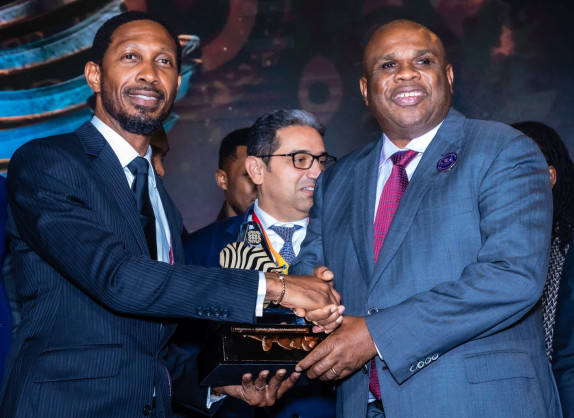
Professor Benedict Okey Oramah, President and Chairman of the Board of Directors at African Export-Import Bank (Afreximbank) (www.Afreximbank.com), has been awarded the prestigious Mohammed S. Barkindo Lifetime Achievement Award at the African Energy Awards, held on the sidelines of the African Energy Week (AEW) 2024: Invest in African Energy conference, happening between 4-8 November in Cape Town, South Africa.
The award, named in honour of the former Secretary-General of OPEC, the late Dr Mohammed Barkindo, recognizes individuals who have made exceptional and lasting contributions to Africa's oil, gas, and energy sectors. This honour represents the highest accolade in African energy, awarded to individuals whose work has had a transformative impact on the continent's energy sector. Notable past recipient of the Mohammed S. Barkindo Lifetime Award in 2023 is Keith Hill, former President and CEO of Africa Oil Corp.
For over three decades, Prof. Oramah has played a critical role in driving sustainable development across Africa by channelling essential funding into major oil, gas, and infrastructure projects. Since assuming leadership of Afreximbank in 2015, he has pioneered innovative financing structures that have democratised energy access and accelerated industrialization and the growth of Africa's strategically critical energy sector.
Under Prof. Oramah's leadership, Afreximbank has made substantial contributions to the growth of Africa's energy sector. Under his stewardship, the Afreximbank has facilitated the mobilization of over USD 70 bn to support Africa's energy sector. Included in this is more than USD 5bn for refineries in Nigeria, Angola and Senegal, to further Africa's refined product independence and reduce the continent's Foreign Exchange drain.
In Nigeria, Afreximbank now acts as Adviser and Settlement Bank for NGN denominated crude sales to Nigerian refineries. Replicated across the oil producing states in Africa, this will save several USD 100mn per annum in transactional charges alone. Ranking among President Oramah's most significant achievements is the historic signing of the Establishment Agreement and the Charter of the Africa Energy Bank (“AEB”) in Egypt in June 2024, in partnership with the African Petroleum Producers Organization (APPO). This landmark initiative aims to mobilize funding to support investments across Africa's entire energy system, aligning with the continent's energy needs and its environmental sustainability goals.
Professor Oramah has led the energy transition agenda through the Bank's support in renewable energy transactions including, but not limited to, the EUR1.3 bn ECA import facility Project Gleam in support of the import of sonar panels for rural electrification in Angola, the EUR 147mn Government of Cameroon solar power project and the US$363 million Gasmeth Energy Rwanda gas extraction and processing project.
Significantly, the majority of the above-mentioned transactions received numerous industry awards for their impact on the continent, their complexity and their unique structures.
Prior to joining Afreximbank, Professor Oramah distinguished himself in international trade finance and development. Beginning his career at the Nigerian Export-Import Bank (NEXIM), he played an instrumental role in shaping Nigeria's export development strategies. Prof Oramah holds a Ph.D. in Agricultural Economics from Obafemi Awolowo University in Nigeria.
Acknowledging the award, Prof. Oramah commented:
“It is a great honour to be awarded the Mohammed S. Barkindo Lifetime Achievement Award. Whilst a great honour for me personally, this award reflects the work and dedication of many others, including my colleagues at Afreximbank and our various partners. At Afreximbank, we remain deeply committed to reducing energy deficit on the continent and ensuring we are self-sufficient.
Distributed by APO Group on behalf of Afreximbank.
Media Contact:
Mr Vincent Musumba
Manager, Communications and Events (Media Relations)
Email: press@afreximbank.com
Follow us on:
Twitter: https://apo-opa.co/4fwz0D3
Facebook: https://apo-opa.co/4emjUyg
LinkedIn: https://apo-opa.co/4feURPa
Instagram: https://apo-opa.co/3CjGevc
About Afreximbank :
African Export-Import Bank (Afreximbank) is a Pan-African multilateral financial institution mandated to finance and promote intra-and extra-African trade. For 30 years, the Bank has been deploying innovative structures to deliver financing solutions that support the transformation of the structure of Africa's trade, accelerating industrialization and intra-regional trade, thereby boosting economic expansion in Africa. A stalwart supporter of the African Continental Free Trade Agreement (AfCFTA), Afreximbank has launched a Pan-African Payment and Settlement System (PAPSS) that was adopted by the African Union (AU) as the payment and settlement platform to underpin the implementation of the AfCFTA. Working with the AfCFTA Secretariat and the AU, the Bank is setting up a US$10 billion Adjustment Fund to support countries to effectively participate in the AfCFTA. At the end of December 2023, Afreximbank's total assets and guarantees stood at over US$37.3 billion, and its shareholder funds amounted to US$6.1 billion. The Bank disbursed more than US$104 billion between 2016 and 2023. Afreximbank has investment grade ratings assigned by GCR (international scale) (A), Moody's (Baa1), Japan Credit Rating Agency (JCR) (A-) and Fitch (BBB). Afreximbank has evolved into a group entity comprising the Bank, its impact fund subsidiary called the Fund for Export Development Africa (FEDA), and its insurance management subsidiary, AfrexInsure, (together, “the Group”). The Bank is headquartered in Cairo, Egypt.
For more information, visit: www.Afreximbank.com
Africa Data Centres (www.AfricaDataCentres.com), a business of Cassava Technologies, a pan-African technology group, has announced it is expanding its CPT1 facility in Cape Town.
This expansion shows the data centre giant adding three new state-of-the-art halls in new areas on the campus and adds another 6MW of IT load, effectively doubling its current capacity. The new expansion was implemented with support from the United States through an up to $300 million loan from the U.S. International Development Finance Corporation (DFC) to Africa Data Centres.
According to Hardy Pemhiwa, President & Group CEO of Cassava, “This expansion by Africa Data Centres is in response to the increasing demand for co-location capacity in South Africa. Not only is Cape Town the second largest economy in South Africa, but it is also the de facto software and technology hub in Southern Africa.”
The company is seeing tremendous growth in the data centre market in South Africa generally, as both national and international cloud and IT service providers seek to expand their footprints in the region.
In terms of size, the expansion adds 1000 racks of white space or the space available for customers to lease, although the physical site is significantly larger than that. It is made up of two more colocation data halls and one hyperscale hall.
The additional halls are built in the cutting-edge modular design pioneered by Africa Data Centres, which enables rapid scalability and a modern design that allows the facility to be populated as and when required to suit the needs of the customer.
Pemhiwa says this would not have been possible without the support of the Ministry of ICT, Western Cape Provincial Government and the Western Cape Department of Economic Development. “I would like to acknowledge their ongoing support, as we expand our data centre facilities in South Africa.”
The new halls feature the same cutting-edge security standards and focus on the elements that matter most to clients, including scalability, flexibility, and energy efficiency, to bring world-class, affordable solutions to all its clients in the area. This data centre is highly flexible and designed to accommodate different and evolving customer demands.
Additionally, this data centre boasts hybrid cooling technology capable of handling both air cooling and liquid cooling. Despite its versatility, no compromises were made on efficiency. It is one of the most efficient and sustainable data centres ever built in South Africa. It is powered by renewable energy, boasts a Water Usage Effectiveness of 0 due to no water consumption for the IT infrastructure, and has an impressive Power Usage Effectiveness rating as well.
The Africa Data Centres' CPT1 facility is at the forefront of pioneering the use of wheeled solar power in the market. This innovation is enabled through a 20-year Power Purchase Agreement (PPA) signed in March last year with Distributed Power Africa, part of the Cassava Technologies group. Africa Data Centres is the first company to successfully implement this groundbreaking technology in Africa, marking it the continent's first project of its kind.
“The introduction of wheeled solar power at the CPT1 facility offers significant benefits to our' customers, providing a truly sustainable data centre solution. As the demand for data continues to skyrocket across Africa, a continent where power supply is often intermittent, the need for reliable, cost-effective, and green power has never been more critical,” said Finhai Munzara, Interim CEO of Africa Data Centres.
By harnessing renewable energy, he says the CPT1 facility not only ensures consistent power supply but also supports sustainable operations, helping customers achieve their environmental goals. “Our state-of-the-art facility reduces reliance on non-renewable energy sources, setting a new standard for sustainability in the data centre industry.”
Munzara adds that Cape Town is an excellent location for colocation facilities as it is a stone's throw away from all the submarine cable landing stations. In addition, the Cape Town facility houses the Cape Town Internet Exchange (CINX), which makes multi-region peering more accessible, efficient, and easy to manage. This also facilitates direct connections between networks, enabling data to flow more efficiently and reducing latency, giving our users a faster, more responsive online experience.
In ending, Munzara says the expansion increases the capacity of the company's data centres in South Africa and it is an integral part of its investment plans to deliver several additional data facilities across the continent.
Distributed by APO Group on behalf of Africa Data Centres.
Social Media Platforms:
Twitter: https://apo-opa.co/3Sklmcm
LinkedIn: https://apo-opa.co/3WjNnSt
Facebook: https://apo-opa.co/3WjNpK5
YouTube: https://apo-opa.co/3WjNq0B
About Africa Data Centres:
Africa Data Centres owns and operates Africa's largest network of interconnected, carrier and cloud-neutral data centre facilities. Bringing international experts to the pan-African market, Africa Data Centres is a trusted partner for rapid and secure data centre services and interconnections across Africa. Strategically located in South, East and West Africa our world-class data centre facilities provide a home for all business-critical data for Africa's small, medium and large enterprises and global hyper scale customers. https://www.AfricaDataCentres.com/
With local South Africa branches Global EPC company Neosun Energy (www.Neosun.com) offers affordable solar energy solutions for local businesses to mitigate the impact of rising electricity prices.
According to South African Government reports, starting from July 2024, Johannesburg residents will experience a 12.72% increase in electricity costs under local authority tariff charges. Eskom's direct customers will increase all tariff charges, excluding the affordability subsidy charge, from 1st April 2024 to 31st March 2025.
This price hike will impact both residential and business customers, adding financial pressure across the board. The main issue is that new tariffs will increase business costs and reduce profit margins, which forces companies to increase prices and pass them onto the consumer. It means higher operational costs, potentially affecting profitability and leading to higher prices for goods and services.
In this challenging environment, Neosun Energy can play a pivotal role in alleviating the burden of increased electricity costs. Providing solar energy solutions, Neosun Energy can help businesses and local enterprises reduce their dependence on traditional, more expensive electricity sources.
“This increase will primarily affect businesses, especially small and medium-sized enterprises (SMEs), as their profitability will significantly decrease due to such a hike. The best solution to avoid this is to transition to solar energy, which locks in rates permanently. With solar generation, rates do not rise; they are fixed for the next 30 years. Solar Energy transferring - is exactly what can help local enterprises gain their independence from constant bill increases, ” emphasized Ilya Likhov, CEO of Neosun Energy.
Investing in solar energy, businesses can lower their operational costs over the long term, enhancing their profitability and competitiveness.
Today Neosun Energy is presented with 2 local branches in South Africa, located in Cape Town and Johannesburg, bringing to the South African market a high level service of a global company with experience in 16 countries around the world, and saving affordable prices for its customers.
"We firmly believe that establishing local Neosun Energy offices will bring us closer to local businesses and commercial enterprises, enabling us to offer affordable solar energy solutions such as solar plants, innovative energy storage systems, and portable Power Hubs." - added Mr. Likhov.
Distributed by APO Group on behalf of Neosun.
Media Contact:
For requests: info@neosun.com
CEO Neosun Energy
Social Media:
Ilya Likhov - LinkedIn: http://apo-opa.co/3Y3WoSi
About Neosun Energy:
Neosun Energy (www.Neosun.com) is an international Solar EPC company that provides Commercial Solar PV & Energy Storage Solutions (ESS) with capacity from 200kW to 10MW for Commercial and Industrial projects Worldwide. The company constructs solar power plants and energy storage systems (ESS) on a turn-key basis, covering all stages of construction including design, equipment supply, construction, and commissioning. The company has implemented solar PV projects in 16 countries worldwide.