• Skip to main content
  • Skip to header right navigation
  • Skip to after header navigation
  • Skip to site footer
MyZA

MyZA

News, Directory, Events and Other Stuff

  • Social Media
  • Sport
  • World News
  • Home
  • Submit News
  • Directory
  • Events
  • Stratlec
  • TFSA
  • News
    • APO
    • Today’s Sport News
    • Todays Social Media and Tech Headlines
    • Today’s World News
    • Today’s SA Financial News
  • Contact
You are here: Home / Archives for South Africa

South Africa

30 May 2023

Committee on Basic Education Receives Report on Infrastructure in Schools

Location: News

Republic of South Africa: The Parliament
Download logo

The Portfolio Committee on Basic Education today received a detailed progress report on infrastructure in terms of the Accelerated School Infrastructure Delivery Initiative (ASIDI) and the Sanitation Appropriate For Education Iniative (SAFE).

The committee heard that ASIDI focuses on providing appropriate school buildings for schools that previously were made of entirely inappropriate materials, appropriate water supply to schools with no water, appropriate sanitation at schools with no toilets and appropriate electricity supply to schools with no electricity supply. SAFE on the other hand focusses on appropriate sanitation at schools dependent on basic pit toilets.

The Department of Basic Education (DBE) informed the committee that it is estimated that in 1996 there were about 1,000 schools made entirely of inappropriate materials. In 2011, there were initially 510 schools on the ASIDI programme. This number decreased to 332 and of the 332 schools made entirely of inappropriate materials, 330 were replaced. Replacement of the two remaining  schools is scheduled for completion in the 2023/24 financial year.

According to the DBE, in 2006 a total of 8 823 schools were recorded with no water supply. In 2011, there were initially 1 117 schools on the ASIDI programme and this number increased to 1 306. The committee heard that of the 1 306 water supply projects, 1 292 were completed and the remaining 14 water supply projects are scheduled for completion in the 2023/24 financial year.

Regarding electricity supply, the committee heard that it was recorded that 15 263 schools were with no electricity supply. In 2011, there were initially 902 schools on the ASIDI programme. This number decreased to 373 and all of the 373 electricity supply projects had been completed.

The committee further heard that in 2006 a total of 3 265 schools were recorded with no toilets. In 2011, there were initially 701 schools on the ASIDI programme. This number increased to 1 087 and all of them have been replaced.

According to the Schools Register of Needs (SRN) in 2006, it was recorded that 9 600 schools depended on basic pit toilets. In 2018, there were initially 3 898 schools on the SAFE programme. This number decreased to 3 395 and of this,  2 728 have been completed. The remaining 667 sanitation projects are scheduled for completion in the 2023/24 financial year.

Committee Chairperson, Ms Bongiwe Mbinqo-Gigaba, said the committee noted and welcomes the improvements regarding maintenance in schools. The committee further appreciated the close monitoring by DBE regarding implementation.

Ms Mbinqo-Gigaba said: “We note that this has taken much longer than many of us would have wanted. We are, however, cognisant of the financial restictions in addressing all these issues at once, finances that the DBE does not have at its disposal due to other challenges in the country. We will continue to monitor the progress with both projects.”

Distributed by APO Group on behalf of Republic of South Africa: The Parliament.

Read moreCommittee on Basic Education Receives Report on Infrastructure in Schools
30 May 2023

GoGlobal Expands Global Presence to Africa with Local Offices in 18 Countries

Location: News
GoGlobal

GoGlobal (https://GoGlobalgeo.com/), a leading Employer of Record (EOR) is expanding its global footprint with the launch of on-the-ground offices in 18 African countries. The strategic move allows GoGlobal to offer comprehensive local coverage in one-third of the African continent, positioning the company as a key player in supporting multinational companies (MNCs) expanding into Africa.

Nick Broughton (https://apo-opa.info/3WEUgO2), Partner at GoGlobal, says, “Africa has undergone a remarkable transformation, evolving from a future prospect to a region teeming with immediate opportunities. With its youthful, talented and highly educated workforce, Africa is a dynamic hub of business potential.”

For companies looking to expand globally in industries such as technology, agribusiness, NGOs, financial services, construction and engineering, Africa is emerging as a land of boundless opportunities. With a growing population, a pool of talented professionals, a promising economy, robust infrastructure development and investor-friendly policies, Africa is quickly becoming top of mind for MNCs worldwide.

Africa's strategic positioning as a hub for international business presents a multitude of benefits, particularly for companies from China, Asia Pacific, Europe, the Middle East and North America. As part of its expansion, GoGlobal is providing end-to-end recruitment solutions, enabling MNCs to build exceptional teams in Africa and secure the right talent for their needs. By tapping into Africa's vast talent pool, MNCs benefit from a dynamic workforce, gaining access to localized insights and cost-effective operations.

“Partnering with an EOR is a way for companies to accelerate their growth strategy in Africa,” says Ashwin Tirvassen (https://apo-opa.info/3IHD6tx), Africa Regional Director, GoGlobal. “Strategic companies are choosing to partner with GoGlobal to navigate cross-border human resources, which can be complex.”

GoGlobal has in-country experts in Cameroon, Côte d'Ivoire, Egypt, Ghana, Kenya, Mali, Malawi, Mauritius, Morocco, Nigeria, Rwanda, Senegal, South Africa, Tanzania, Tunisia, Zambia and Zimbabwe.

Broughton adds, “Our deep knowledge of each country's unique cultural customs, language and regulatory environment enables us to provide tailored and personalized solutions to MNCs, empowering them to expand quickly, cost-effectively and compliantly.”

Distributed by APO Group on behalf of GoGlobal.

Media Enquiries:
Bonnie Elgie
Associate Director, Content and Communications
GoGlobal
Bonnie.elgie@goglobalgeo.com

About GoGlobal:
GoGlobal (https://GoGlobalgeo.com/) is a people-first international HR and Employer of Record (EOR) service provider, with a globally distributed, naturally diverse remote workforce. GoGlobal's technology-enabled EOR solution allows companies of all sizes to hire people anywhere in the world without the need to set up a local entity, opening new doors to rapid expansion and growth. With a presence in over 120 countries on six continents and growing, GoGlobal helps clients recruit, hire, manage, and pay exceptional talent – quickly, cost-effectively, and compliantly.
Media files
GoGlobal
Download logo
Read moreGoGlobal Expands Global Presence to Africa with Local Offices in 18 Countries
29 May 2023

Kenya and Russia to Boost Trade Relations

Location: News

President of the Republic of Kenya
Download logo

Kenya will deepen its relations with Russia to increase trade volumes.

President William Ruto said trade between the two countries is still low despite the huge potential.

He said the two countries will sign a trade pact that will give business the necessary impetus.

The Head of State spoke on Monday at State House, Nairobi, when he hosted Russian Foreign Minister Sergei Lavrov.

The two leaders agreed on the need to reform the United Nations Security Council to make it more representative and more responsive to the needs of the 21st Century.

President Ruto said Africa should be represented at the Security Council, the UN's top-decision making organ.

“The continent can bring to the table rich ideas, suggestions and experiences that would serve the globe well,” he explained.

The President observed that Kenya and Africa count on friends like Russia in the creation of a new architecture at the Council.

Russia is a permanent member of the UN Security Council. Others are the United States, United Kingdom, France and China.

The Security Council also has 10 non-permanent members elected for two-year terms.

On the raging Russia-Ukraine War, President Ruto reiterated Kenya's steadfast position on respect for territorial integrity of member States as outlined in the UN Charter.

“Kenya calls for a resolution of the conflict in a manner respectful to the two parties,” he said.

Mr Lavrov praised the 60 years' friendship between his country and Kenya, saying Russia's relationship with the continent has a new momentum after the 2019 Russia-Africa Summit.

He said science cooperation between the two countries has been growing.

Mr Lavrov was in Nairobi on his way to a meeting of the BRICs Ministers of Foreign and International Relations in Cape Town, South Africa.

Distributed by APO Group on behalf of President of the Republic of Kenya.

Read moreKenya and Russia to Boost Trade Relations
28 May 2023

Egypt’s Al Ahly Crowned 2023 Basketball Africa League Champions

Location: Sport

Basketball Africa League (BAL)
Download logo

Egypt's Al Ahly defeated Senegal's AS Douanes 80-65 to win the 2023 Basketball Africa League (BAL) (http://www.NBA.com/theBAL) Finals, which took place at BK Arena in Kigali, Rwanda and reached fans in 214 countries and territories in 17 languages.

Following the game, BAL President Amadou Gallo Fall and FIBA Africa President Anibal Manave presented Al Ahly with the BAL Championship Trophy and Al Ahly forward Anunwa “Nuni” Omot with The Hakeem Olajuwon Trophy for winning the 2023 BAL Most Valuable Player Award.  Omot recorded per game averages of 18.9 points, 3.5 rebounds and 2.1 assists during the season.

Al Ahly went 7-1 during the Nile Conference group phase and Playoffs, defeating Rwanda Energy Group and Mali's Stade Malien in the quarterfinals and semifinals, respectively, to advance to the Finals.  Stade Malien defeated Angola's Club Atlético Petróleos de Luanda (Petro de Luanda) 73-65 in the third-place game yesterday.

Notable attendees throughout the 2023 BAL Playoffs and Finals included NBA Deputy Commissioner and Chief Operating Officer Mark Tatum; FIBA President Hamane Niang; FIBA Secretary General Andreas Zagklis; NBA Africa CEO Victor Williams; Fall; Manave; FIBA Africa Executive Director Alphonse Bilé; Toronto Raptors Vice-Chairman and Team President Masai Ujiri; Academy Award-winning actor, social activist and NBA Africa investor Forest Whitaker; BAL Ambassadors and NBA Africa investors Luol Deng (South Sudan), Joakim Noah (grandfather from Cameroon) and Ian Mahinmi (France; ties to Benin); and New York Knicks President of G League Operations Pops Mensah-Bonsu (Ghana).

The league has also announced several end-of-season awards, some of which honor pioneering African NBA legends:

2023 BAL Coach of the Year

AS Douanes head coach Mamadou Gueye led his team to a 3-2 record in the Sahara Conference group phase before defeating Mozambique's Clube Ferroviário da Beira (CFV-Beira) and Petro de Luanda to advance to the Finals.  Gueye becomes the first African-born coach to win the award.

2023 BAL Defensive Player of the Year

Stade Malien center Aliou Diarra received The Dikembe Mutombo Trophy after helping his team to a 5-3 record and recording per game averages of 18.3 points, 12.8 rebounds and 2.3 blocks.

2023 BAL Sportsmanship Award

CFV-Beira guard Will Perry received The Manute Bol Trophy for exemplifying the ideals of sportsmanship and camaraderie.

2023 All-BAL First Team

Position

Player

Team

Guard

Jean Jacques Boissy

AS Douanes

Guard

Chris Crawford

AS Douanes

Guard

Dane Miller Jr.

S.L.A.C

Forward

Anunwa Omot

Al Ahly

Forward

Aliou Diarra

Stade Malien

2023 All-BAL Defensive Team

Position

Player

Team

Guard

Childe Dundao

Petro de Luanda

Guard

Jean Jacques Boissy

AS Douanes

Guard

Samkelo Cele

Cape Town Tigers

Forward

Aliou Diarra

Stade Malien

Center

Ater Majok

Petro de Luanda

The voting panels were comprised of coaches, team captains, media and broadcasters in attendance and varied for each award.  The 2023 BAL Ubuntu Award, which is awarded to an individual or organization that has made an impact on the local community during the BAL season, will be announced at a later date.

The 2023 BAL season once again featured the top 12 club teams from 12 African countries playing a total of 38 games in Dakar, Senegal; Cairo, Egypt; and Kigali, Rwanda over three months.  Champions from the national leagues in Angola, Egypt, Nigeria, Rwanda, Senegal and Tunisia earned their participation in the 2023 BAL season by winning their respective national leagues.  The remaining six teams, which came from Côte d'Ivoire, Guinea, Mali, Mozambique, South Africa and Uganda, secured their participation through the Road to the BAL qualifying tournaments conducted by FIBA Africa across the continent from October to November 2022.

Distributed by APO Group on behalf of Basketball Africa League (BAL).

Contact:
Edwin Eselem
BAL Communications
+221 78 615 4287
EEselem@theBAL.com

About the BAL:
The Basketball Africa League (BAL), a partnership between the International Basketball Federation (FIBA) and the NBA, is a professional league featuring 12 club teams from across Africa.  Headquartered in Dakar, Senegal, the BAL builds on the foundation of club competitions FIBA Africa has organized across the continent and marks the NBA's first collaboration to operate a league outside North America.  Fans can follow the BAL (@theBAL) on Facebook, Instagram, Twitter, and YouTube and register their interest in receiving more information at NBA.com/BAL.

Read moreEgypt’s Al Ahly Crowned 2023 Basketball Africa League Champions
26 May 2023

Namibia Forges Ahead with Green Hydrogen Agenda

Location: News
African Energy Chamber

Namibia has reached another milestone in the development of its green hydrogen economy, inking a deal with green hydrogen development company HYPHEN Hydrogen Energy for the next phase of a $10 billion project set to be located in the Namib Desert's Tsau//Khaeb National Park. As per the terms of the agreement, green hydrogen will be exported to Europe following the completion of the project, thereby consolidating the country's position as a global hydrogen hub.

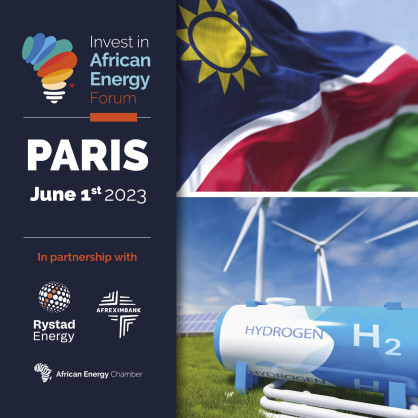
The milestone comes just week ahead of the African Energy Chamber's (AEC) Invest in African Energy Forum in Paris, a pivotal gathering that brings together movers and shakers from across the African and European energy sectors. Following a series of successful editions held in London, Oslo, Dubai and Frankfurt – the German edition of which was centered on exploring hydrogen-related investment opportunities in Africa – the Paris forum will expand on previous discussions regarding Africa-Europe collaboration, laying the foundation for a strong slate of new deals to be signed aimed at maximizing Africa's vast energy resources.

For its part, the Tsau//Khaeb green hydrogen project serves as not only a significant initiative in its own right, but as a demonstration of the potential for large-scale green hydrogen projects in Africa. Long-considered the final frontier for energy, Africa's significant renewable energy resources offer critical opportunities for the continent to address energy access concerns through the development of widespread solar and wind energy systems, as well as industrialization through the utilization of green hydrogen fuels. Green hydrogen projects have been cropping up across the continent, with markets such as South Africa, Mauritania and Egypt eager to capitalize on the benefits the resource provides. However, what sets the Namibian agenda apart if the country's focus on global collaboration. Working closely with its German partners, the Government is driving tits green hydrogen project forward, and energy access and industrialization opportunities are soon to follow.

In addition to regional access, monetizing renewable through green hydrogen opens up avenues for broader socioeconomic growth in Africa, with revenue generated through exports trickling down into various facets of the African economy. At a time when the African community is prioritizing energy security in the midst of the global energy transition, African green hydrogen projects will serve to meet dual goals of alleviating energy poverty while transitioning to sustainable energy sources. The HYPHEN-led green hydrogen project in Namibia is a testament to this. Planned to be constructed in two phases, the plant will eventually produce up to two million tons of green ammonia per annum, energy which will be distributed for both regional, and now with the offtake agreement, global use. Production is targeted for 2030, and with the signing of the feasibility and implementation agreement set to be signed on Friday, Namibian President Hage Geingob states that, “We kickstart a process that has the potential to transform the lives of many in our country, the region and indeed the world.” (https://apo-opa.info/45qsn0l).

Both HYPHEN and the Namibian Government consider the signing of the feasibility and implementation agreement to serve as a benchmark for the sustainable and equitable development of green hydrogen project in Africa. However, the agreement goes one step further to highlight the crucial role bilateral cooperation plays in developing energy projects in Africa. Under the soon-to-be signed agreement, the Government of Namibia will be responsible for equipping the country with the necessary regulatory, legal and fiscal environment to implement the project while HYPHEN is responsible for the technical, environment, financial, social and commercial delivery. A testament to both Africa-global relations as well as the role of public-private partnerships, this framework can be replicated in other markets in Africa.

“Namibia continues to make significant strides towards becoming a global energy giant. Notwithstanding the milestones that continue to be achieved regarding its oil and gas sector, the country has taken an accelerated approach to maximizing its renewable energy resources in collaboration with global partners. This green hydrogen project will open up significant avenues for the country, ushering in a new era of industrialization, energy access and revenue generation and positioning the country as a global green hydrogen contender. As Europe looks towards the lucrative opportunities in Africa, partnerships such as those between Namibia and Germany serve as a blueprint for other markets across the continent,” stated NJ Ayuk, Executive Chairman of the AEC, adding that, “The Invest in African Energy Forum in Paris provides the perfect opportunities for European investors and project developers to seize partnership opportunities with African countries. At the Frankfurt edition, we advocated for strengthened global collaboration, emphasizing the crucial role that European investment plays in not only developing Africa's economies but bringing new energy supplies on the global market. At a time when Europe is grappling with its own energy crisis, African energy is the solution the bloc needs. Come join us at the Paris edition and let's talk energy, investment and deals.”

Taking place on June 1st, 2023 at the Westin Paris Vendome in France, the Invest in African Energy Forum in Paris is open to all guests and RSVP is essential. RSVP to registration@aecweek.com. 

Distributed by APO Group on behalf of African Energy Chamber.

Media files
African Energy Chamber
Download logo
Read moreNamibia Forges Ahead with Green Hydrogen Agenda
25 May 2023

‘Justice will be done’

Location: News

UN News
Download logo

One of the world's most wanted genocide fugitives has been arrested after being on the run for more than two decades, the UN tribunal prosecuting war crimes committed in Rwanda announced on Thursday.

Fulgence Kayishema is alleged to have orchestrated the killing of approximately 2,000 Tutsi refugees at Nyange Catholic Church during the 1994 Genocide against the Tutsi in Rwanda, the International Residual Mechanism for Criminal Tribunals (IRMCT) said in a statement.

He was arrested in South Africa on Wednesday in a joint operation between the IRMCT Office of the Prosecutor and the authorities.

Finally facing justice

Kayishema has been at large since 2001 and was among four remaining fugitives from the genocide, during which an estimated one million people were killed, and roughly 150,000 to 250,000 women raped, over a period of some 100 days.

In a statement released by his Spokesperson, UN Secretary-General Antonio Guterres, said the arrest "sends a powerful message that those who are alleged to have committed such crimes cannot evade justice and will eventually be held accountable, even more than a quarter of a century later."

Mr. Guterres commended the cooperation between the IRMCT and the South African authorities for the apprehension, and recalled that "all States have an obligation to cooperate with the Mechanism in the location, arrest, detention, surrender and transfer of the accused persons still at large."

IRMCT Chief Prosecutor Serge Brammertz said his arrest ensures the long-standing fugitive will finally face justice for his alleged crimes.

“Genocide is the most serious crime known to humankind. The international community has committed to ensure that its perpetrators will be prosecuted and punished. This arrest is a tangible demonstration that this commitment does not fade and that justice will be done, no matter how long it takes,” he added.

International partners for justice

Mr. Brammertz said the thorough investigation that led to the arrest was made possible through the support and cooperation of South Africa and the Operational Task Team established by President Cyril Ramaphosa to assist the ICMRT Fugitive Tracking Team.

They also received “vital support” from similar Task Forces in other African countries, notably Eswatini and Mozambique.

“Rwandan authorities under the leadership of Prosecutor General Aimable Havugiyaremye continued to be our strongest partners and provided essential assistance,” he said.

The Chief Prosecutor also cited support from other countries, including the United States, Canada and the United Kingdom, saying “Kayishema's arrest demonstrates yet again that justice can be secured, no matter the challenges, through direct cooperation between international and national law enforcement agencies.”

The IRMCT performs essential functions previously carried out by the UN International Criminal Tribunal for Rwanda (ICTR), which closed in December 2015, and another for the former Yugoslavia, which concluded two years later.

Kayishema was indicted by the Rwanda tribunal in 2001.

He was charged with genocide, complicity in genocide, conspiracy to commit genocide, and crimes against humanity for killings and other crimes committed in Kivumu Commune, Kibuye Prefecture, during the 1994 Genocide against the Tutsi in Rwanda.

According to the indictment, he and other co-perpetrators murdered more than 2,000 refugees - men, women, elderly persons, and children - at the Nyange Church in Kivumu commune, on 15 April 1994.

He “directly participated in the planning an execution” of the massacre, working methodically over two days following, to transfer the corpses to mass graves.

‘Further step forward'

The arrest marks “a further step forward” in the effort to account for all those fugitives still at large who have been indicted by the ICTR.

Since 2020, the OTP Fugitive Tracking Team has accounted for five of the fugitives at large, including another of the architects of the genocide which was orchestrated by the extremist Hutu regime at the time, Félicien Kabuga, as well as Augustin Bizimana, Protais Mpiranya, and Phéneas Munyarugarama. There are now only three outstanding fugitives.

Distributed by APO Group on behalf of UN News.

Read more‘Justice will be done’
25 May 2023

African Banker Awards 2023

Location: News
African Banker

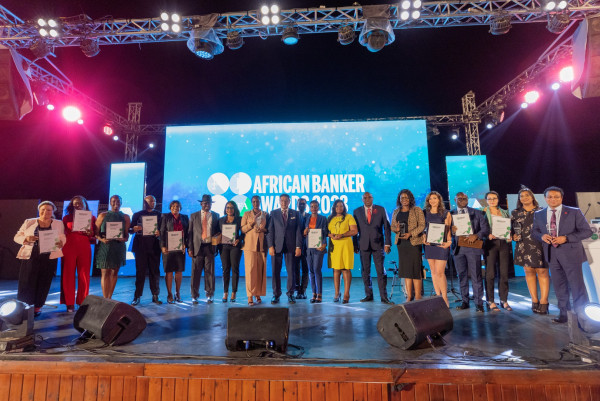
The African Banker Awards 2023 Gala Ceremony, the most prestigious event in the African banking calendar, took place last night at the Rixos Hotel in Sharm El Sheikh, Egypt on the sidelines of the African Development Bank Annual Meetings. The ceremony was attended by over 300 of the continent's leading bankers, regulators, and policymakers.

Now in its 17th edition, the African Banker Awards celebrate the achievements of individuals and institutions that have contributed significantly to the growth and development of Africa's banking sector over the past year. 

Highlights from the ceremony:

Esther Kariuki becomes the second woman to win African Banker of the Year Award

Perhaps one of the most coveted prizes of the evening, the African Banker of the Year prize was awarded to Esther Kariuki, Head of Agriculture Business at the Co-op Bank of Kenya. Ms Kariuki has been a central figure in advancing agriculture as a key asset class for her institution. Not only a leader and role model, she was also responsible for considerably increasing lending to the agriculture sector and oversaw the roll-out of the platform Co-op Bank Soko, a digital marketplace that connects the agriculture value chain and ensures, among other things, that small-holder farmers receive a higher price for their produce. 

Afreximbank scores a brace at African Banker Awards 2023

The African Export-Import Bank (Afreximbank) won two prestigious awards in Sharm El Sheikh, in recognition of its growing leadership within Africa's financial services sector. The Cairo-based institution was celebrated as both African Bank of the Year and Development Financial Institution of the Year, making it the sole institution to win more than one award during this year's ceremony.

Mauritius' Harvesh Seegolam wins Central Bank Governor of the Year

The youngest ever serving governor of Mauritius Central Bank, Harvesh Kumar Seegolam, took the Central Bank Governor of the Year Award. Appointed at the onset of the COVID-19 pandemic, Governor Seegolam leveraged Mauritius Investment Corporation (MIC) to provide critical financial support to key sectors of the economy by investing in private sector operators. Its latest returns report demonstrated that the investments made through the MIC have increased in value, despite the challenging economic conditions faced.

South African banks swept many of the Deal of the Year categories. South Africa's Enoch Godongwana won the Minister of Finance of the Year Award. He was recognised for his steadfast management of the economy as finance minister as well as the work he has done to encourage investment to accelerate the energy transition.

The African continent has the highest percentage of women entrepreneurs in the world. Letshego Nigeria took the inaugural AFAWA Bank of the Year Award, a category spotlighting financial institutions empowering female entrepreneurs across the continent. The Affirmative Finance Action for Women in Africa (AFAWA) is a pan-African initiative to bridge the $42 billion financing gap facing women in Africa.

The African Banker Icon was won by veteran dealmaker Miguel Azevedo, head of investment banking for sub-saharan Africa excluding South Africa at Citi. The lifetime achievement award went to another veteran banker, Hisham Ezz Al-Arab, former Managing Director and current Non-executive Chairman of CIB Bank, Egypt's largest private sector bank.

“This year's award ceremony is a testament not only to the vibrancy and dynamism of Africa's banking industry but also its increasing diversity,” said Omar Ben Yedder, Committee Chairman and Group Publisher at IC Publications, publishers of African Banker. “The financial services industry continues to demonstrate excellence, innovation and impact in their respective markets and regions. 

FinTech, Climate Finance, Cross-Border payments are all being shaped by the leaders we are recognising today.”

The ceremony is organised by African Banker magazine with the African Development Bank as its High Patron. This year's AfDB Meetings focused on mobilising private sector finance towards green growth. The 2023 edition was sponsored by the African Guarantee Fund, the Trade and Development Bank (TDB) and Tanzania's CRDB Bank.

Full list of winners:

Banker of the Year

Ms Esther Kariuki, Co-operative Bank of Kenya

Bank of the Year

Afreximbank

African Banker Icon

Miguel Azevedo, Citi

Lifetime Achievement

Mr. Hisham Ezz Al-Arab, Commercial International Bank

Central Bank Governor of the Year

Harvesh Seegolam, Bank of Mauritius

Minister of Finance of the Year

Hon. Enoch Godongwana, South Africa

Sustainable Bank of the Year

Nedbank, South Africa

DFI of the Year

Afreximbank

Fintech of the Year

MFS Africa

SME Bank of the Year

La Caisse des Dépôts et Consignations - CDC

Deal of the Year – Debt

Harmony Gold Company syndicated multi-tranche, multi-currency, loan facility of US$400m and R4bn – Absa & Nedbank

Deal of the Year – Equity

US$298m Infinity Energy equity investment and Lekela Power acquisition – Africa Finance Corporation

Deal of the Year – Agriculture

US$78m funding facility for the Southern Oil Structured Commodity Finance Transaction – Absa

Deal of the Year – Infrastructure

US$900m debt funding facility for Scatec Solar PV plus Battery Storage Project – Standard Bank

Regional Bank of the Year – North

Bank of Africa

Regional Bank of the Year – Southern

Zambia National Commercial Bank (Zanaco)

Regional Bank of the Year – East

CRDB Bank

Regional Bank of the Year – Central

Trust Merchant Bank

Regional Bank of the Year – West

Vista Bank

AFAWA Bank of the Year Award

Letshego, Nigeria

Distributed by APO Group on behalf of African Banker.

Media Contact:
awards@icpublications.com

African Banker:
African Banker is a quarterly magazine dedicated to banking and finance in Africa. It taps into the growing demand for information about Africa's banking and financial world, a sector that is consolidating rapidly and reshaping the economy of the continent. The magazine is published by IC Publications which also publishes African Business and New African.

Media files
African Banker
Download logo
Read moreAfrican Banker Awards 2023
25 May 2023

Climate activists call for removal of barriers to renewable energy, as local groups hold actions to trace Africa Day

Location: News

350.org
Download logo

As Africa celebrates Africa Day on May 25, 350Africa.org (https://www.350.Org) has unveiled the findings of research that reflects on the barriers of renewable energy and climate change policies in parts of West Africa. Among leading obstacles to the adoption of renewable energy identified in the region are lack of awareness, limited technical competence and know-how, limited investment, inadequate financial mechanisms to facilitate and promote investment in renewable energy, lack of tax incentives, lack of local manufacturing and assembly plants, insufficient policy and regulatory frameworks.

The research focused on the state of renewable energy in Benin, Togo, Ghana and Nigeria highlighting potential areas of intervention to support the adoption of renewable energy and foster a just transition to renewable energy on the continent. The report identified the need for strong and steady promotion of renewable energy in the targeted countries, by raising awareness of its benefits and opportunities, removal of financial barriers, implementation of enabling policies, encouraging innovation and research, as well as upskilling of workers.

The report was launched as Civil Society Organizations and grassroots groups under the Afrika Vuka (https://AfrikaVuka.org/) network held actions across the continent to highlight the role of renewable energy as a solution to the region's energy and climate crises. They underscored the need to address the barriers to the build out of community-centered renewable energy systems and the phasing out of fossil fuels, to avert worsening climate impacts, for a continent that already suffers disproportionately from these impacts.

Landry Ninteretse, Regional Director, 350Africa.org said,

“While our continent is sadly on the frontlines of the climate crisis that we have done little to cause, we are fortunate to have access to some of the solutions. Africa's wealth of renewable energy potential presents a great opportunity for the continent to not only address her own energy needs, but also potentially lead the global energy transition. What is required are concerted efforts by governments and other stakeholders to address the barriers to renewable energy - starting with finance and policy- by creating an enabling regulatory environment for its adoption, accelerating the shift away from polluting fossil fuels, while investing consistently in powering up community-centered renewable energy solutions that are absolutely critical to ensuring that we avert catastrophic climate impacts and secure a liveable future for us all.”

Michael Terungwa, Climate activist and Founder - Global Initiative for Food Security and Ecosystem (GIFSEP), Nigeria said,

“We need safe, reliable and sustainable energy systems to drive our economies. Continued dependence on polluting fossil fuels is not an option for us, as it has resulted in a climate crisis that is devastating communities. Just last year, Nigeria suffered flooding that led to the loss of hundreds of lives and displacement of an estimated 1.5 million others. We are counting on the political will of our new leadership to pave the way for the much needed just transition in Nigeria by being intentional in implementing relevant policies that create a conducive environment for the adoption of renewable energy. “

Portia Adu Mensah, National Coordinator - 350 Ghana Reducing Our Carbon(350GROC) said,

“Ghana needs an ambitious and concrete plan for renewable energy as we shoot for at least 30% renewable energy in the country's energy mix by the year 2030. We not only need to break free from fossil fuels, but also ensure that small-scale, off grid community friendly renewable energy is accessible to all. The involvement of communities in this is crucial, to ensure that plans factor in their views and interests as well as safeguard the well-being of the environment.”

Raïssa Oureya from the Renewable Energy Coalition said,

“The recently launched Renewable Energy Coalition (REC) of grassroots groups in Benin and Togo is geared at advocating for the adoption of renewable energy in these two countries that have great potential in renewable energy, but still rely heavily on energy imports. It's critical to maintain the push for a sustainable energy future built on renewables to enhance energy security and address the climate crisis. Beyond the launch of this research, we are holding various actions to raise awareness on the role of renewable energy in enhancing sustainable development in hopes that this will spur a much needed clean energy transition”

Ferron Pedro, South Africa Senior campaigner, 350Africa.org said,

"South Africa's energy crisis is a stark reminder of the dangers of reliance on fossil fuels. A just energy future built on socially owned renewable energy is possible and necessary to ensure access to affordable, safe energy for all while creating millions of green jobs. We call for transparency and meaningful public participation in the implementation of just energy transition programmes to ensure that the needs and interests of workers, communities and marginalized groups are placed centrally in the development of local, job-creating renewable energy industries”.

Distributed by APO Group on behalf of 350.org.

Notes to Editors:
More information about the renewable energy research is available here (https://apo-opa.info/3onGQJT)
Photos and videos from the Africa day actions will be made available here (https://apo-opa.info/3OEQ7b6)

Media contacts:
Christine Mbithi
Regional Communications Manager 
350Africa.org
christine.mbithi@350.org

Mamadou Lamine
Africa Digi/comms Specialist
350Africa.org
mamadou.thiam@350.org

Read moreClimate activists call for removal of barriers to renewable energy, as local groups hold actions to trace Africa Day
24 May 2023

Mashatile to respond to Oral Questions in the National Assembly

Location: News

The Presidency: Republic of South Africa
Download logo

Deputy President Paul Mashatile will on Thursday, 25 May 2023 respond to Oral Questions in the National Assembly. This is in line with a constitutional mandate for members of Cabinet to account to Parliament for the exercise of their powers and performance.

The questions asked to the Deputy President relate to progress on the land reform programme, stabilising coalition governments, and his role as the President's envoy on South Sudan, among others.

The Deputy President is expected to reassure Parliament of Government's commitment to the land reform process to ensure economic growth and inclusion while guaranteeing food security. 

On the question of stabilising coalition governments, the Deputy President will remind members of the framework for coalitions that has been drafted by the South African Local Government Association to guide political parties on structuring their coalitions for improved service delivery.

The Deputy President had also committed to the National Council of Provinces that he would convene a dialogue to deliberate on a consensus on how to better manage coalition governments so that they are responsive to the needs of communities.

In his capacity as the Special Envoy on South Sudan, Deputy President Mashatile will outline South Africa's plans to assist parties to the Transitional Government of National Unity in South Sudan with the implementation of the Revitalised Agreement on the Resolution of Conflict in South Sudan.

Distributed by APO Group on behalf of The Presidency: Republic of South Africa.

Read moreMashatile to respond to Oral Questions in the National Assembly
24 May 2023

Congratulations Eritrea

Location: News

Ministry of Information, Eritrea
Download logo

The leaders of China, South Africa, Libya, Italy and France sent messages of congratulations in connection with the 32nd Independence Day anniversary.

President Xi Jinping of the People's Republic China, President Matamela Cyril Ramaphosa of the Republic of South Africa, President Dr. Mohamed Yunus al-Menfi of Libya, President Sergio Mattarella of the Republic of Italy as well as President Emmanuel Macron of the French Republic wished good health to President Isaias Afwerki and peace and prosperity to the Eritrean people.

President Xi Jinping of the People's Republic of China pointing out that the 32nd anniversary of Eritrea's Independence Day is being celebrated at a time of the 30th anniversary of the establishment of diplomatic relations between the People's Republic of China and the State of Eritrea, said that over three decades the bilateral relations between the two countries have withstood the changing international landscape and always been defined by sincerity, friendship, a pursuit of common progress, and firm mutual support on issues concerning the respective core interests and major concerns.

President Xi went on to say that during the recent successful visit of President Isaias Afwerki to China they had an in-depth exchange of views and reached many important common understandings on the deepening of bilateral ties and on international and regional issues of mutual interest.

Distributed by APO Group on behalf of Ministry of Information, Eritrea.

Read moreCongratulations Eritrea
24 May 2023

African growth potential in a polycrisis world

Location: News

Afreximbank
Download logo

The global economy faces a perfect storm of stubborn inflation, high interest rates in key economies, trade wars, supply chain difficulties and fallout from the Ukraine crisis which has heightened geopolitical risks. This is having a big impact on emerging and developing market economies, including African economies in the form of fuelling price rises, constrained trade volumes, reduced access to capital markets and food supply problems. African economies as a whole will slightly outperform the global economy this year, with most enjoying higher levels of growth than in 2022.

Published by African Export-Import Bank (Afreximbank) the Africa's 2023 Growth Prospects: Securing growth resilience in a ‘polycrisis' world report highlights the various factors that are currently plaguing the global economy: stubbornly high inflation, U.S. and Chinese trade and tech wars,  geopolitical tensions and supply chain problems. Following a strong economic recovery from the height of the Covid-19 pandemic, global growth of 3.4% in 2022 was far lower than the IMF forecast of 4.9%, in part reflecting the extremely difficult global economic environment and a dramatic shift towards price stability in the inflation and growth trade-off.

Efforts by key global central banks to rein in inflation must take priority but this is having a negative effect on Africa, with higher external debt servicing costs and a collapse in African sovereign debt issuance. Only three African nations, Angola, Nigeria and South Africa, successfully accessed capital markets in 2022, collectively raising US$6bn, down from the nine that raised almost US$20bn in 2021.

Inflation is proving difficult to tame, while the opening up of the Chinese economy from Covid lockdown measures could further fuel global inflation by releasing pent-up domestic demand. However, “heightened geopolitical tensions, besides preventing opportunities for international cooperation on global issues such as security, climate change and trade, have raised the risk of fragmentation”, the report says.

The Afreximbank report forecasts 4.1% GDP growth for Africa this year, above the global average, with growth shared around the continent, although power shortages and other infrastructural shortcomings will see South African growth slow. The continent has the potential to accelerate its economic prospects, including via increasing infrastructural investment; ongoing structural transformation; improving the macroeconomic environment; digitalisation; and the implementation of the African Continental Free Trade Agreement (AfCFTA).

Dr Hippolyte Fofack, Afreximbank chief economist and director of research and international cooperation, commented: “Inflation, which hit multi-decade highs and is raising the spectre of stagflation, is likely to emerge as the dominant macroeconomic story, eclipsing the short-lived globalisation of growth resilience post-pandemic...In the immediate term, restraining inflation in the most affected leading economies without provoking a hard landing or a full-blown financial crisis remains the most urgent challenge and risk to both global and African growth.”

The Afreximbank Africa's 2023 Growth Prospects: Securing growth resilience in a ‘polycrisis' world is available at here: https://apo-opa.info/43q8YdQ

Distributed by APO Group on behalf of Afreximbank.

Media Contact:
Amadou Labba Sall, 
asall@afreximbank.com

Social Media:
Follow us on:
Twitter: https://apo-opa.info/41qI9VY
Facebook: https://apo-opa.info/3MGRNQi
LinkedIn: https://apo-opa.info/3KBxMYQ
Instagram: https://apo-opa.info/3UA1jH1

About Afreximbank:
African Export-Import Bank (Afreximbank) is a Pan-African multilateral financial institution mandated to finance and promote intra-and extra-African trade. For 30 years, the Bank has been deploying innovative structures to deliver financing solutions that support the transformation of the structure of Africa's trade, accelerating industrialization and intra-regional trade, thereby boosting economic expansion in Africa. A stalwart supporter of the African Continental Free Trade Agreement (AfCFTA), Afreximbank has launched a Pan-African Payment and Settlement System (PAPSS) that was adopted by the African Union (AU) as the payment and settlement platform to underpin the implementation of the AfCFTA. Working with the AfCFTA Secretariat and the AU, the Bank is setting up a US$10 billion Adjustment Fund to support countries to effectively participate in the AfCFTA. At the end of 2022, Afreximbank's total assets and guarantees stood at over US$31 billion, and its shareholder funds amounted to US$5.2 billion. The Bank disbursed more than US$86 billion between 2016 and 2022. Afreximbank has investment grade ratings assigned by GCR (international scale) (A), Moody's (Baa1), Japan Credit Rating Agency (JCR) (A-) and Fitch (BBB). Afreximbank has evolved into a group entity comprising the Bank, its impact fund subsidiary called the Fund for Export Development Africa (FEDA), and its insurance management subsidiary, AfrexInsure, (together, “the Group”).   

Read moreAfrican growth potential in a polycrisis world
23 May 2023

MEC David Maynier On 2024 Admissions Scheme Login Details

Location: News

Western Cape Education ​Department, South Africa
Download logo

We are making a public appeal to parents who have applied for the 2024 school year to please ensure that their login details are correct before 29 May 2023.

The 2024 admission process ended on 14 April 2023, and School Governing Bodies have been applying their admission policies over the past month to determine placements for next year.

From 29 May 2023, parents and caregivers will be able to log in to the online system to view the outcome of their applications as schools upload them.

During the on-time applications period from 13 March 2023 – 14 April 2023, thousands of parents that had applied previously on the system had forgotten their passwords and needed password resets.

That is why we encourage parents to make sure that they have their correct password details now, so that we can assist them before the outcomes of their applications become available from 29 May 2023.

We appeal to parents to test their passwords NOW by visiting: 

https://westerncapegov.custhelp.com/(link is external)

If parents wait until 29 of May 2023 to request assistance, it could result in having to wait for a response if password reset request volumes are high.

The reality is that over 150 000 parents and caregivers have been eagerly awaiting the outcome of their applications under very stressful circumstances. We therefore ask if you can test your passwords in advance so that you can resolve any reset issues before 29 May 2023. By doing so, you will have immediate access to the website on the day to view your application status. 

For assistance on password resets – please contact:

Call Centre: 0860 142 142

Email: service@westerncape.gov.za(link sends e-mail)

Or use the “Contact us” link on the login page!

Please “Don't Wait” – test your login details today!

Distributed by APO Group on behalf of Western Cape Education ​Department, South Africa.

Read moreMEC David Maynier On 2024 Admissions Scheme Login Details
23 May 2023

Western Cape Community Safety on Law Enforcement Advancement Position

Location: News

Western Cape Police Oversight and Community Safety, South Africa
Download logo

Since 2020, the Law Enforcement Advancement Plan (LEAP) officers have time-and-time again shown how effective they are in combating crime, particularly murder. LEAP stems from the Western Cape Safety Plan (WCSP) and is an initiative of the Western Cape Government (WCG) in partnership with the City of Cape Town (CoCT). The WCSP commenced in September 2019.

Since LEAP commenced, up until 30 April 2023, officers have confiscated 360 firearms. These committed officers have during the same period, also arrested 16 270 individuals for various offenses. The homicide report using provincial forensic pathology data indicates some promising results. LEAP areas recorded a total of 428 homicides in quarter 4, January to March 2023, of the 2022/23 financial year. This means homicides in LEAP areas decreased by 9% from 468 cases in 2021/22 to 428 in 2022/23, when compared with the same period of the previous year.

Comparing the 2021/22 financial year with the 2022/23 financial year, homicides in 8 LEAP precincts decreased, while 5 increased. This is the first time in LEAP's 3-year history that so many precincts recorded a decrease.

  • Decreases were recorded in Atlantis (23%), Bishop Lavis (10%), Gugulethu (5%), Harare (8%), Khayelitsha (17%), Mfuleni (6%) and Samora Machel (2%).
  • Increases occurred in Delft (12%), Mitchells Plain (25%), Nyanga (47%), Philippi (28%) and Philippi East (45%).

More than R 1 billion has already been invested in LEAP. For this current financial year, a further R 350 million has been allocated. In addition to this, R 10 million has also been set aside for the establishment of LEAP stations.

Western Cape Minister of Police Oversight and Community Safety, Reagen Allen said: “These preliminary results are truly encouraging. It shows that our investment is paying dividends. One murder will always remain one murder too many, and we must continue doing everything in our power to combat these murders and all other crimes across the entire Western Cape.

We are deeply concerned about the steep increases in some of the areas. We have our work cut out for ourselves. Our primary goal in the Western Cape Safety Plan (WCSP) is very clear. We have committed to reduce the murder rate by 50% by 2029. It is of utmost importance that safer communities are created.”

LEAP is strategically deployed, and its operations are based on evidence and data. This approach is also used as part of monitoring and evaluation to determine the effectiveness of LEAP and inform a cycle of continuous improvement. This includes our top 10 murder areas in the Western Cape, such as Delft, Gugulethu, Harare, Khayelitsha (Site B policing precinct), Kraaifontein, Mfuleni, Mitchells Plain, Nyanga, Philippi East, and Samora Machel. Other high crime areas in which they are deployed are Atlantis, Bishop Lavis and Hanover Park, along with Lavender Hill, Steenberg and Grassy Park.

LEAP officers work with a multitude of law enforcement agencies which is inclusive of other City of Cape Town Law Enforcement Agencies, the South African Police Service (SAPS), neighbourhood watches (NHWs), Community Policing Forums (CPFs) and various other stakeholders.

“In order for us to ensure areas where we can live in peace and dignity, it is vital that we all pull in the same direction. None of us should perpetuate crime or be a hindrance when any law enforcement agency is seeking to fulfill its mandate, which is to keep us safe. Let us all play our part,” concluded Minister Reagen Allen.

Distributed by APO Group on behalf of Western Cape Police Oversight and Community Safety, South Africa.

Read moreWestern Cape Community Safety on Law Enforcement Advancement Position
23 May 2023

South Africa Tourism on Infrastructure Development Programme

Location: News

Department of Tourism, Republic of South Africa
Download logo

Ahead of the Tourism Budget Vote tomorrow, the Deputy Minister of Tourism, Fish Mahlalela, visited the Agulhas National Park to assess progress on the Department's infrastructure development programme at the Lighthouse Precinct in the Park.

“Cape Agulhas is such a unique place as the official meeting point of the Indian and Atlantic Oceans as well as the most southernmost tip of Africa.  Through product enhancements at the Agulhas National Park, the Department of Tourism aims to boost tourism numbers to the Overberg area,” said the Deputy Minister.

Tourism is one of the main economic drivers and a significant generator of jobs and revenue. To give expression to its mandate, the Department has been at the forefront of the commissioning and construction of destination enhancement tourism facilities through its Working for Tourism which is an Expanded Public Works Programme (EPWP) to promote economic empowerment, employment opportunities and the transfer of skills to members of the community.

In 2016, the Department signed an agreement with South African National Parks (SANParks) for tourism enhancements at the Agulhas National Park which focussed on the construction of the iconic Map of Africa monument, construction of 1 km road, rehabilitation of the terrain and the re-alignment of the boardwalk. This R14 million project, which was Phase 1, was completed in 2018.

“The second phase namely the Lighthouse Precinct Project, commenced in 2017. It includes a 60-seater ocean view restaurant, a reception area, an interpretive centre, a curio shop, vendor stalls, paving and walkways and a conference facility. This project is set to be completed by early 2024,” said the Deputy Minister.

The Department provided a budget of R54,740,000 for Phase 2 with SANParks being the implementing agent. To date, the project is 43% completed and has employed 88 local people of which 62 were women and 52 youth.

“The Department of Tourism is excited to partner with SANParks on this tourism enhancement project as both Phase I and II serve as a springboard for further tourism developments and job creation in the Overberg region,” concluded Deputy Minister Mahlalela.

Distributed by APO Group on behalf of Department of Tourism, Republic of South Africa.

Read moreSouth Africa Tourism on Infrastructure Development Programme
23 May 2023

President Ramaphosa jointly launches Phase 2 Lesotho Highlands Water Project

Location: News

The Presidency: Republic of South Africa
Download logo

President Cyril Ramaphosa has today, 23 May 2023, arrived in the Kingdom of Lesotho on a Working Visit for the launch of Phase 2 of the Lesotho Highlands Water Project.

His Majesty King Letsie III, President Ramaphosa and Lesotho's Prime Minister, Samuel Ntsokoane Matekane, will jointly launch this project at the Polihali Dam.

The launch will commence with a sod-turning ceremony and will be followed by formal programme.

The launch is a critical step on the journey to greater water and energy security for South Africans and Basotho, and is a demonstration of the strong relations between the two countries.

It is also a demonstration of the human capital and technology that is shared and deployed jointly as neighbours, in the interest of improving the lives of citizens and economic development in both nations.

South Africa and the Kingdom of Lesotho share a close historic relationship whose substance today entails strengthened economic cooperation between our two countries.

The Working Visit aims to reinforce this relationship in which South Africa and Lesotho are pursuing the common interests of developing the region, creating employment and advancing innovation and technology. 

The Lesotho Highlands Water Project is a partnership between South Africa and Lesotho dating back to a treaty agreed upon by the two governments to supply water to the Vaal River System, which ensures water security for Gauteng, the Free State, the Northern Cape and the North West. 

The binational infrastructure project involves the construction of a network of tunnels and the dams to transfer water from the Orange-Senqu River in the Lesotho Highlands to South Africa, and to use the water delivery system to provide hydro-electric power to the Kingdom of Lesotho.

Phase 1 of the project was completed 20 years ago, in 2003.

The water transfer component of Phase 2 comprises a 165-metre high concrete-faced rock fill dam at Polihali, downstream of the confluence of the Khubelu and Senqu (Orange) Rivers.

This development will also feature a 38-kilometre, concrete-lined gravity tunnel connecting the Polihali reservoir to the Katse reservoir. 

A number of meetings of Ministers and Senior Officials  took place  in Maseru on Monday, 22 May 2023, to prepare for the launch and to deliberate on water and energy cooperation.

These activities are also a precursor to the hosting in Pretoria of the inaugural session of the South Africa-Lesotho Binational Commission. A date for the inaugural session is being firmed up through diplomatic channels.

President Ramaphosa is accompanied by Minister of Water and Sanitation, Mr Senzo Mchunu; Minister of Mineral Resources and Energy, Mr Gwede Mantashe; Minister of Electricity, Dr Kgosientsho Ramokgopa; and Deputy Minister of International Relations and Cooperation, Mr Alvin Botes.

The launch will commence  from 13h00 at the Polihali Dam in Malingoaneng.

Distributed by APO Group on behalf of The Presidency: Republic of South Africa.

Read morePresident Ramaphosa jointly launches Phase 2 Lesotho Highlands Water Project
23 May 2023

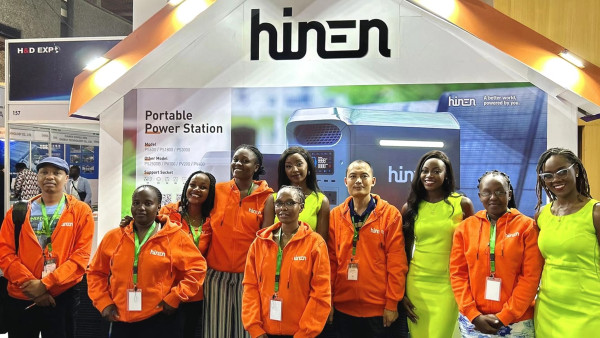
HINEN Unveils “Bring the Sunshine at Night” Energy Solution at Solar Africa Expo 2023

Location: News
Hinen

The Solar Africa Expo 2023 ended perfectly. HINEN (www.Hinen.com) achieved great success at the exhibition with the innovative concept “Bring the Sunshine at Night”, generating the sunshine and storing it in the battery system in the daytime, then outputting solar power at night.

During the exhibition, what drew people's great attention was HINEN's 3000W Portable Power Station PS3000, which could totally replace small diesel generator sets, the savour for home users and small business owners.

As a whole-chain energy storage company, HINEN also showcased its latest solar energy solutions, which included LiFePO4 battery cell production and recycling, small storage systems, home battery systems, and C&I storage systems.

HINEN is actively establishing relationships with distributors and partners in Kenya, South Africa, and Nigeria to expand the practicality and impact of its energy solutions, thus helping to address Africa's energy challenges in areas with power shortages. For more information about HINEN and its solutions, please visit www.Hinen.com.

Distributed by APO Group on behalf of Hinen.

Media files
Hinen
Download logo
Read moreHINEN Unveils “Bring the Sunshine at Night” Energy Solution at Solar Africa Expo 2023
22 May 2023

Technical teams to work with City of Tshwane and Health Department in response to Cholera eruption in Hammanskraal

Location: News

Department of Water and Sanitation, Republic of South Africa
Download logo

Water and Sanitation Minister, Mr Senzo Mchunu, has noted, with great concern, the outbreak of Cholera in Hammanskraal and conveys his condolences to families who have lost their loved ones due to the outbreak and wishes a speedy recovery to those who have tested positive and are currently receiving treatment in various medical facilities.

The Hammanskraal community under the City of Tshwane Metropolitan Municipality has been experiencing unreliable and poor-quality potable water supply for an extended period, despite the upgrade of the Temba Water Treatment Plant, to a capacity of 120 megalitres a day (ML/d).

The poor water quality is caused by the failure of the Rooiwal Wastewater Treatment Works to meet the desirable final effluent quality for discharge to the Apies River, which in turn, flows into the Leeukraal Dam. The Wastewater Treatment Works is situated upstream of Hammanskraal and has affected the Leeukraal Dam, where the Temba Water Treatment Works abstracts water for treatment and distribution to residents as potable drinking water.

This has over the years, led to the Department of Water and Sanitation instituting a series of enforcement actions (directives) and compliance requirements against the City, for the City to address the pollution from the Rooiwal Wastewater Treatment Works into the Apies River and Leeukraal Dam. After the City failed to respond to the Department's directives, a legal process was instituted against the City by the Department, with the aim of obtaining a court order to force the City to address the failure of the Rooiwal Wastewater Treatment Works. This legal process is currently underway and to date, the City has opposed the legal action. 

The Department had also directed the City to stop supplying water from the Temba Water Treatment plant to residents of Hammanskraal for human consumption. The City is currently providing potable water to affected communities that were initially supplied by the Temba Water Treatment Plant, through deployment of water tankers.

In 2021 the South African Human Rights Commission (SAHRC) produced a report: “Gauteng Provincial Inquiry into the Sewage Pollution of the City of Tshwane's Rivers and the Roodeplaat Dam”, which recommended, amongst others, that the National Government should take over the water and sanitation function of the City in terms of section 139 (7) of the Constitution, section 63 of the Water Services Act, 1997, and section 19 of the National Water Act ,1998.

The SAHRC recommendations were rejected by the City. The Department engaged with National Treasury for funding for the intervention recommended by the SAHRC, but National Treasury indicated that the City had already been provided with funding for the rehabilitation and upgrading of the Rooiwal Wastewater Treatment Works, through its Urban Settlements Development Grant (USDG) allocations. Consequently, the Department is pursuing legal action against the City for a court order to force the City to use its USDG allocations to rehabilitate and upgrade the Rooiwal Wastewater Treatment Works.

In response to the current Cholera outbreak, the Department has extended the scope of the prior existing technical team of experts in water services and regulations to work on an integrated model to address the current outbreak. The technical team from the Department will work directly with the national and provincial Departments of Health and the City of Tshwane, to assist with matters such as water quality investigations from source, taps, stationary tanks in some households and identifying the causes of the disease outbreak.

The technical team will further extend the intensive assessment of the various water supply systems from Magalies and Rand Water Boards to confirm the current drinking quality standards. The Department has recently, confirmed that the dual water systems supplied by Magalies and Rand Water meet the drinking water quality standards, as per the South African National Standards (SANS) 241.

Further, the Department has been continuously carrying out water quality tests at the Temba Water Treatment Works and at water distribution points in Hammanskraal; the latest tests indicate that the drinking water quality from the Temba Water Treatment work does not meet minimum drinking water quality. The water quality challenges are therefore, in central Hammanskraal, from water supplied by the City.

As immediate action, the Minister has deployed the Deputy Ministers, David Mahlobo and Judith Tshabalala and senior managers of the Department to work with the Gauteng MEC for Health to ensure that work is being carried out effectively.

The Minister will be meeting with the Mayor of Tshwane, Cllr Cilliers Brink before 26 May 2023, with the aim of agreeing on the action plan with timeframes, which the technical team would have developed over and above the current intervention support. Amongst others, the action plan will address how the City of Tshwane will rehabilitate and upgrade the Rooiwal Wastewater Treatment Works to the required production of drinking water quality standards. A joint task team between the Department and the City will then be re-affirmed to oversee the works with continuous reporting to the Minister.

Distributed by APO Group on behalf of Department of Water and Sanitation, Republic of South Africa.

Read moreTechnical teams to work with City of Tshwane and Health Department in response to Cholera eruption in Hammanskraal
22 May 2023

Uganda: Sports council, netball federation in Shs139 Million probe

Location: News

Parliament of the Republic of Uganda
Download logo

The Public Accounts Committee (Central Government) has kicked off another probe into the affairs of the Uganda Netball Federation (UNF) regarding an unaccounted expenditure of Shs139.3 million during a 2021 trip in Namibia.

This query arises from the Auditor General's report for Financial Year 2020/2021. It is noted by the Auditor General that in October 2021, the National Council of Sports (NCS) disbursed Shs186 million to UNF for preparation and participation of the She-Cranes, Uganda national netball team in the 2021 Pent Series and Africa Netball Championship respectively in Namibia held between 29 October and 17 November 2021.

Out of the Shs186 million disbursed, Shs139.3 million was meant for accommodation of the 27-member contingency, while Shs9.6 million was meant for Visa fees, Shs6.7 million for COVID-19 tests, Shs1.7 million for medical tests, Shs5.3 million for participation fees, Shs13.5 million for players' allowances and Shs10 million for team kits.

However, according to the Auditor General's report, a review of the invitation letter from Netball Namibia, the country's netball association revealed that accommodation costs while in Namibia were to be fully covered by the hosts [Namibia].

During the committee probe on Monday, 22 May 2023, the MPs noted that it was fraudulent for the netball federation to present receipts worth Shs139.3 million in respect to accommodation from Safari Hotels Namibia yet the item was reportedly paid for by the host country.

“According to what is on record, accommodation was supposed to be provided by the host. UNF and NCS have presented accountability indicating that they had receipts for accommodation. So we need to know was accommodation provided by the host or not? If so, where are the documents?” committee deputy chairperson, Hon. Asuman Basalirwa, asked.

The NCS General Secretary, Dr Bernard Patrick Ogwel, said that the disbursement of the funds for the Namibia trip was based on a requisition formally communicated to them by the UNF President, Sarah Kityo.

“The requisition had the relevant documents which included an invoice from Safari Hotels Namibia of US$39,033 equivalent to Shs139 million… Accountability documents including vouchers were submitted by UNF and we received it and forwarded to relevant committees,” Dr Ogwel said, adding that Council did not know that the Namibian government had taken care of part of the costs until they received a petition from some UNF officials who were suspended by the federation president.

“People who were suspended by the president [Kityo] provided additional information and we noted that the original letter sent from Namibia was actually not forwarded to us and what was forwarded to us did not provide the sponsorship by the Namibian government,” Dr Ogwel added.

To support his argument, Ogwel tabled to the committee all the accountability documents from the federation particularly the invoices, vouchers and receipts on the Shs139 million expenditure.

In response, Kityo refuted reports that the Namibian government fully or partially covered costs and challenged NCS to provide evidence.

“I want NCS to present any proof that African champion paid even for a single bottle of water. This is a 2021 audit query and by now someone from NCS or Ministry of Education should have travelled to Namibia on a fact-finding mission,” she said.

Kityo also denied most of the documents submitted by Dr Ogwel saying “there is a lot of witch hunt when it comes to accountability of Uganda Netball Federation.”

Hon. Basalirwa said the contested documents will be subjected to the Criminal Investigation Department (CID) and handwriting experts to rule out any cases of forgery.

On 11 May 2023, the committee whilst probing the NCS discovered loopholes in the accountability of Shs100 million allocated to UNF in the Financial Year 2021/2022 for the International Male Netball Championship in South Africa to facilitate the preparation of Uganda's men netball team, the Rock, to participate in the championship in South Africa in September 2021.

Following the discovery, the committee handed the Kityo, Richard Muhumuza (Vice President) and Aidah Nambusi (Treasurer) to the Parliament Police Criminal Investigation Department for further management.

Both Muhumuza and Nambusi pointed fingers at their president for allegedly diverting a huge chunk of the money for her personal use at the expense of the planned activities.

Distributed by APO Group on behalf of Parliament of the Republic of Uganda.

Read moreUganda: Sports council, netball federation in Shs139 Million probe
19 May 2023

Public comments sought on draft regulations on access and recreational use of state-owned dams

Location: News

Republic Of South Africa: Department of Forestry, Fisheries and the Environment
Download logo

Deadline of 23 May 2023 is fast approaching, and members of the public are left with five (5) days to submit comments on the draft regulations on access and use of government waterworks (state dams) and surrounding state-owned land for recreational purposes.

The Department of Water and Sanitation (DWS) published a notice for comments draft regulations on Government Gazette Notice No. 48294 on 24 March 2023, opening a 60-day window for interested parties and individuals to submit written comments on the access and use of the government water works for various recreational purposes including commercial activities such as fishing, organised sporting, tourism, accommodation and other events.

The department owns numerous government waterworks (state dams), and according to Section 113 of the National Water Act, 1998 (Act No. 36 of 1998), the water and surrounding state-owned land of state dams may be made available for recreational purposes.

Subsequent to the public comments on the draft regulation, the department will conduct extensive public consultations in all nine provinces across the country with the purpose of soliciting inputs from various stakeholders and members of the public with interests in accessing and using these departmental facilities and infrastructures for recreational purposes.

Details on physical provincial consultations will be communicated in due course.

The main objectives of the draft regulations, amongst others, include:

  • To address the need to apply precautionary approaches to recreational water use of state dams;
  • To meet the need to utilise recreational water use of state dams to achieve economic growth, human resource development, capacity building, employment creation and sound ecological balance consistent with the development objectives of national government;
  • To meet the need to protect the biodiversity of aquatic and associated ecosystems and to minimise pollution of these water resources;
  • To meet the need to achieve, to the extent practicable, broad and accountable participation in the decision-making process in resource management planning;
  • To meet the need to ensure compatibility of recreational water use with other water uses;
  • To meet the need to ensure the safety of recreational water users; and
  • To minimise the associated risks of the Department.

Interested individuals have 60 days to submit written comments, from the day of publishing, which is 24 March 2023 in the Government Gazette. Comments can be submitted to muira@dws.gov.za(link sends e-mail), malulekej2@dws.gov.za(link sends e-mail) and nhlabathis@dws.gov.za(link sends e-mail) by 23 May 2023. For more information on the draft regulations and the public consultations, please contact Dr Jabulani Maluleke on 066 300 5533 or Steven Nhlabathi on 083 609 1434.

Distributed by APO Group on behalf of Republic Of South Africa: Department of Forestry, Fisheries and the Environment.

Read morePublic comments sought on draft regulations on access and recreational use of state-owned dams
18 May 2023

National Anti-Corruption Advisory Council working towards building a corruption-free South Africa

Location: News

The Presidency: Republic of South Africa
Download logo

President Cyril Ramaphosa chaired a meeting of the National Anti-Corruption Advisory Council at Tuynhuys today, Thursday, 18 May 2023, as part of sustaining Government's response to the recommendations of the Judicial Commission (“Zondo Commission”) of Inquiry into Allegations of State Capture, Corruption and Fraud in the Public Sector Including Organs of State.

President Ramaphosa appointed the Council in August 2022 as a multi-sectoral partnership for advocacy and action against fraud and corruption.

The Council augments the work done by law enforcement agencies and plays an independent role in terms of combating corruption and other criminal activities. The Council has been established to deepen the country's efforts to rid society and the administration of corruption, improve investor confidence and secure higher levels of public trust.

Opening today's meeting, President Ramaphosa said the fight against corruption was among the foremost and most urgent tasks at this moment in the country's history.

The President said: “We have seen the effects of corruption across society. The State Capture Commission provided detailed and deeply disturbing insight into how corruption erodes the capability of the state and undermines the foundation of our democratic order.

“But we know that corruption in various guises existed before what is now known as the era of state capture and has continued afterwards.

“The fight against corruption is not simply about preventing and prosecuting criminal acts. It is also about fixing the institutional culture, processes and practices that enable unethical behaviour.”

The Council reported to the President on the creation of thematic workstreams to induce, and advise Government on, an all-of-society response to the prevention and prosecution of corruption.

Workstreams are dedicated to developing advice to the President and Government on areas such as the design of a new anti-corruption institutional architecture for the country, as recommended by the Constitutional Court and the Zondo Commission.

The Council has also reached out to civil society, academia and anti-corruption institutions outside South Africa as part of its focus on the creation of a conducive environment for whistleblowers, safeguarding public procurement against corruption, monitoring of the implementation of the National Anti-Corruption Strategy, and the identification of gaps in legislation that seeks to eradicate corruption.

The Council is due to propose legislative reforms spanning the current Public Procurement Bill, the Protected Disclosures Act and the Political Party Funding Act, to enrich the country's prevention of corruption and action against crimes involving corruption.

The Council has begun to coalesce around the insight that the building of a corruption-free society demands a shift from the current focus on individual acts of criminality to one on combating combating systemic corruption.

President Ramaphosa welcomed the Council's update on its deliberations and stakeholder outreach, as well as its preparations for a national dialogue that can form the basis of a national consensus on and commitment to a corruption-free South Africa.

Distributed by APO Group on behalf of The Presidency: Republic of South Africa.

Read moreNational Anti-Corruption Advisory Council working towards building a corruption-free South Africa
  • Previous
  • Page 1
  • Interim pages omitted …
  • Page 384
  • Page 385
  • Page 386

Copyright © 2026 · MyZA · All Rights Reserved · Powered by Reach Trust