Big Batting Display Powers SA U19 2-0 up Against Namibia
WINDHOEK: Half-centuries from Adnaan Lagadien, Jorich van Schalkwyk and Kamogelo Phiri helped South Africa Under-19 Men beat an improved Cricket Namibia by 131 runs in...

MyZA
News, Directory, Events and Other Stuff
WINDHOEK: Half-centuries from Adnaan Lagadien, Jorich van Schalkwyk and Kamogelo Phiri helped South Africa Under-19 Men beat an improved Cricket Namibia by 131 runs in...
As home to 30% of the world's critical minerals – resources essential to Europe's Green Deal and broader energy transition goals – Africa is attracting heightened interest from European investors and institutions.
Taking place from October 1–3, 2025 in Cape Town, African Mining Week – the continent's premier mining event – will host the Europe-Africa Roundtable under the theme, European Partnerships in African Mining: A Mutually Beneficial Future. The roundtable will convene mining stakeholders, policymakers and investors from both continents to explore investment opportunities and foster cross-continental collaboration.
As Africa seeks to mobilize new capital to drive industrial growth through mining, European-based companies are playing a pivotal role. British multinational Anglo American is advancing copper, nickel, coal and diamond projects in South Africa, Botswana, Zambia and Nigeria. Glencore, headquartered in Switzerland, maintains major coal, copper and cobalt operations in South Africa and Botswana, while the UK's Rio Tinto is engaged in a range of mineral ventures across the continent.
Europe's junior and mid-tier mining firms are also gaining ground. Pensana is developing Angola's first rare earths mine at Longonjo, which is expected to meet 5% of global demand for magnet rare earths. Endeavour Mining is leading several gold expansion projects across the continent, including the Lafigué Gold Mine in Ivory Coast, Sabodala-Massawa in Senegal and Kalana in Mali.
Beyond the private sector, the European Commission is also backing strategic infrastructure to unlock mineral corridors. Notably, it is co-financing the Lobito Corridor, which links the DRC, Zambia and Angola to global markets. Through frameworks such as the Global Gateway Africa-Europe Investment Package, the Africa-EU Partnership on Sustainable Raw Materials, and Strategic Partnerships on Critical Raw Materials, Europe is delivering financial backing and technical know-how to Africa's mining sector. These efforts aim to secure reliable, responsible and diversified mineral supply chains while fostering sustainable development and value addition on the African continent.
Within this context, AMW 2025 offers a vital platform to sustain this momentum, deepen cooperation and forge new partnerships that advance mining-led growth. From major investments by European mining giants to infrastructure financing through the Lobito Corridor, Africa is attracting unprecedented levels of capital and collaboration. The Europe-Africa Roundtable will spotlight opportunities across critical minerals, gold, copper and rare earths, while promoting sustainable practices and mutually beneficial engagement.
Distributed by APO Group on behalf of Energy Capital & Power.
About African Mining Week:
African Mining Week serves as a premier platform for exploring the full spectrum of mining opportunities across Africa. The event is held alongside the African Energy Week: Invest in African Energies 2025 conference from October 1-3 in Cape Town. Sponsors, exhibitors and delegates can learn more by contacting sales@energycapitalpower.com.
COLOMBO: Following a tightly contested defeat against India, the Proteas Women remain optimistic and are focusing on the controllables ahead of...
The Select Committee on Agriculture, Land Reform and Mineral Resources hosted a delegation from the Indonesian Parliament to discuss, among other things, cooperation on mining and mineral resources.
Committee chairperson Mr Mpho Modise warmly welcomed the delegation. He expressed his appreciation for the Indonesian representatives for visiting South Africa and engage with the committee. He said the committee looked forward to the exchange of ideas and exploration of potential areas of cooperation between South Africa and Indonesia on mining and minerals sectors.
South Africa and Indonesia have significant and diverse mineral resources, including gold, diamonds, platinum, coal, and rare earth minerals. Both countries are major global producers of key minerals. The discussions focused on potential areas of collaboration such as technology sharing, joint exploration, and downstream beneficiation of minerals.
The committee explained its mandate which includes overseeing the country's mineral resources development, environmental regulations, and community consultation processes for mining projects. The Indonesian delegation shared their country's approach to mineral rights, local economic development requirements for mining, and efforts to increase domestic mineral processing and manufacturing.
Both sides agreed to explore further parliamentary engagements and potential study visits to foster closer collaboration and knowledge-sharing between the mining industries and policymakers of South Africa and Indonesia. The delegations concluded with a commitment to strengthening ties between the two countries' legislatures and mining sectors for mutual economic benefit.
Distributed by APO Group on behalf of Republic of South Africa: The Parliament.
The Speaker of the National Assembly (NA), Ms Thoko Didiza, today reiterated Parliament's readiness to process and adopt the revised Budget and Fiscal Framework swiftly and responsibly within the legally prescribed timeframe and in full compliance with its constitutional and legislative obligations.
Chairing the National Assembly's Programme Committee this afternoon, the Speaker confirmed that the Minister of Finance, Mr Enoch Godongwana, will table the revised Budget and Fiscal Framework in the NA on 21 May 2025. The committee agreed that the sitting would be a physical meeting.
The Speaker reaffirmed the timeframes for budget approval prescribed in the Money Bills Amendment Procedure and Related Matters Act and emphasised that every effort will be made to ensure that government operations continue seamlessly and that the principles of accountability and sound financial governance are upheld.
She assured the public that the process in Parliament will be transparent and in full compliance with the law as the institution fulfils its constitutional mandate.
Distributed by APO Group on behalf of Republic of South Africa: The Parliament.
The Chairperson of the Portfolio Committee on Justice and Constitutional Development, Mr Xola Nqola, today noted and welcomed reports that President Cyril Ramaphosa is establishing a judicial commission of inquiry to establish whether attempts were made to prevent the investigation or prosecution of apartheid-era crimes referred by the Truth and Reconciliation Commission (TRC) to the National Prosecuting Authority.
Announcing this in a statement today, the Presidency said allegations of improper influence in delaying or hindering the investigation and prosecution of apartheid-era crimes have persisted from previous administrations. President Ramaphosa is determined to establish the facts and conclude the matter through this commission. The establishment of the commission of inquiry is the outcome of settlement discussions in a court application brought by families of victims of apartheid-era crimes, the statement reads.
Said Mr Nqola: “The finalisation of all such outstanding matters will be closure for the families who are still unsure of what happened to their loved ones. It is very concerning that families had to turn to the courts for there to be some movement. We will now monitor the process and ensure that the remaining matters are dealt with speedily so the families can get justice.”
Distributed by APO Group on behalf of Republic of South Africa: The Parliament.
TelCables Nigeria, a subsidiary of Angola Cables (www.AngolaCables.co.ao), is proud to announce that it will be hosting the Connect Xperience event. This initiative will bring companies and strategic partners together to evaluate how local cloud infrastructure and services can assist in accelerating digital transformation and bring far reaching benefits to multiple sectors across the Nigerian economy.
At present, Nigeria's cloud computing market is valued at around $1.03 billion and is expected to grow to $3.28 billion by 2030. With the exponential growth in the digitalization of the financial, technological and commercial sectors, dependence on cloud services is becoming increasingly critical.
The event will highlight the advantages of adopting a local cloud solution, that offers lower latency, greater data sovereignty, enhanced security and improved compliance with local regulations.
The IT sector currently contributes approximately 20% to Nigeria's real GDP, underscoring the pivotal role that the sector plays in the nation's economy.
Fernando Fernandes, CEO of TelCables Nigeria said, “we believe that the future of the cloud in Africa lies in innovative and adaptable solutions that have been developed in Africa, for Africa - and the unique requirements and demands of businesses and users across the continent. With strategic data centers and world-class connectivity, we are ready to support sustainable digital growth in Nigeria.”
During the Connect Xperience, TelCables experts will present cloud models tailored to the needs of Nigeria companies, from startups to large corporations, as well as opportunities for local resellers and integrators looking to expand their services based on a robust, affordable and available infrastructure in Lagos.
“Connect Xperience promises to be a meeting point for IT decision-makers, business leaders and industry professionals interested in exploring reliable, scalable and local cloud solutions that can improve business processes and boost the local Nigerian economy,” concluded Fernandes.
Distributed by APO Group on behalf of Angola Cables.
About Angola Cables:
Angola Cables is an internationally established ICT and digital solutions and network services provider. The company specializes in connectivity solutions for the wholesale market and offers tailored digital services and solutions across multiple industries, including Cloud resources for the corporate enterprise sector.
Known for its innovation, Angola Cables operates a robust global backbone network, providing access to major IXPs, Tier I operators, and global content providers. With more than 30 PoPs and connections to plus 930 interconnected Data Centres and 6000 peering agreements, traffic over its international network is more than 18 500 Tbps.
The company has its own submarine cable network spanning over 33,000 kilometres (WACS, SACS, and MONET) and extends its services to over 50,000 kilometres through partner cables, connecting the Americas, Africa, Europe, and Asia.
Additionally, the company operates two world-class Data Centres, AngoNAP Fortaleza in Brazil and AngoNAP Luanda in Angola. Angola Cables also manages PIX in Brazil and AngonIX in Angola - one of the leading internet traffic exchange points in Africa that directly connects to over 21 IXPs worldwide.
With a significant international presence, Angola Cables is expanding its operations into strategic markets such as Brazil, South Africa, the United States and Nigeria. The company promotes intercontinental interconnection, driving digital and economic development, and ranks among the top 25 internet service providers in the world today.
*The Center for Applied Internet Data Analysis (CAIDA) 2023
For more information, visit the website: www.AngolaCables.co.ao
About TelCables West Africa:
TelCables West Africa is powered by the Angola Cables network, a multinational telecommunications company operating in the wholesale market. The company operates connectivity, IT solutions and services as well as international data circuit capacity and IP Transit via submarine cables.
As the most connected network operator in Africa, we provide secure, low-latency direct routes from West Africa to the USA and South America and from West Africa to London. With our presence across a number of Nigerian IP hubs from Lekki, WACS CLS, Medallion DC, Rack Centre and others, and connections across Africa via the Djoliba network, we can connect your business to the world.
For more information, visit the website: https://TelCables.ng/
The Chairperson of the Multi-Party Women's Caucus (MPWC), Ms Lindelwa Dunjwa, has expressed deep sadness on the death of three police officers that were found dead.
The bodies of the two female constables Keamogetswe Buys (30) and Boipelo Senoge (20) as well as their male colleague, constable Cebekhulu Linda (24) were retrieved from the Hennops River in Centurion yesterday after a six-day search. Two other bodies were also retrieved during the search.
“As the committee we are extremely saddened by the death of these officers. They were in the prime of their lives, serving our country. This is indeed a sad day for women and men in blue,” emphasised Ms Dunjwa.
Ms Dunjwa called on the authorities to do all in their power to expedite the investigation regarding the circumstances that led to the deaths. “We convey our sincerest condolences to the families and friends of these officers. The country grieves with you,” she said.
Distributed by APO Group on behalf of Republic of South Africa: The Parliament.
The Chairperson of the Portfolio Committee on Police Mr Ian Cameron, has expressed deep sadness and disbelief following the identification of four bodies of members of the South African Police Service (SAPS), including three officers who went missing for over a week.
The Chairperson has called for the intensification of the investigation to ascertain the circumstances that led to the death of the officers. “It is heartbreaking to learn of the death of the SAPS officers when we were all hoping that they might be found alive and well. This tragic loss is not only felt by the family but by all within the law enforcement sector as these were committed officers on their way to their assigned duty,” Mr Cameron said.
The chairperson also highlighted the need for the SAPS to investigate the cause of death of the other two bodies retrieved in the Hennops River. “It is unusual that so many unrelated bodies could be found in one area. An intensive investigation must get to the bottom of what has happened to all the dead bodies,” said Mr Cameron.
He also commended SAPS for the speed with which the investigation was undertaken and urged for such speed to be the standard across the board. According to the Chairperson, trust between the SAPS and communities will be re-established if all cases are handled with such compassion, care and diligence. “The SAPS specialised teams who worked tirelessly over the past six days across several provinces to locate the missing individuals must be commended. However, serious questions remain, and we will monitor the progress of the investigation closely,” Mr Cameron emphasised.
The committee extends its heartfelt condolences to the families, friends, and colleagues of the deceased during this painful time.
Distributed by APO Group on behalf of Republic of South Africa: The Parliament.
President Cyril Ramaphosa has appointed accomplished business leader and former Director-General of the Department of Trade and Industry, Dr Alistair Ruiters, as Special Advisor: Investment Promotion.
Dr Ruiters will advise President Ramaphosa on South Africa's continuing investment drive which is a principal component of the 7th Administration's focus on inclusive economic growth and job creation.
Government is implementing a broad range of economic reforms aimed at rendering South Africa more attractive and rewarding for domestic and international investors; advancing greater diversification of the economy, and broadening South Africa's integration into continental and global supply chains.
Dr Ruiters held the position of Director-General of Trade and Industry for five years until April 2005, which followed 11 years of service in the Department.
He holds a D Philosophy degree from Oxford University and a BA Honours from the University of Cape Town, among other qualifications.
Dr Ruiters is a former Commissioner of the Competition Commission who, as an entrepreneur, established a number of businesses, and served as Chief Executive and Chairperson of diverse institutions and enterprises, including the National Empowerment Fund, Pebble Bed Modular Reactor and the Afarak Group.
Distributed by APO Group on behalf of The Presidency of the Republic of South Africa.
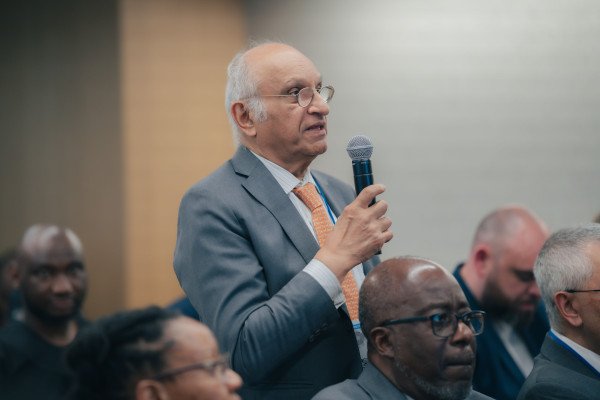
With more than 30 African countries subject to sovereign credit ratings, the decisions of global rating agencies significantly impact debt sustainability and access to international financial markets. At a high-level dialogue held on the sidelines of the 2025 IMF–World Bank Spring Meetings, African institutions and global credit rating agencies reaffirmed their commitment to developing a fair, transparent, and inclusive credit rating ecosystem for Africa.
Organized by the African Union's African Peer Review Mechanism (APRM), the United Nations Development Programme (UNDP), the United Nations Economic Commission for Africa (UNECA), AfriCatalyst, and the African Center for Economic Transformation (ACET), and hosted at the Open Society Foundations, the dialogue brought together senior representatives from Moody's, S&P, and Bank of America for a candid discussion on financing solutions for African countries.
Against a backdrop of rising market volatility, sovereign defaults and constrained fiscal space, the dialogue aimed to address urgent reforms in Africa's credit rating framework. Speakers identified structural issues such as data gaps, methodological opacity, and under-engagement between African governments and the ‘big three' credit rating agencies (Moody's, S&P, and Fitch), as barriers to accurate ratings.
Amb. Claver Gatete, Executive Secretary of UNECA, acknowledged Africa's financing paradox—a combined GDP of over $3 trillion, yet only two countries rated investment grade—and underscored the urgent need for reform. “Ultimately, a healthy credit rating ecosystem goes beyond evaluating risk – it becomes a platform for mobilizing capital, improving creditworthiness, and supporting Africa's broader development goals,” he added.
“We must rethink how creditworthiness is defined and measured,” said Dr. Raymond Gilpin, Chief Economist, UNDP Africa speaking on behalf of Ms. Ahunna Eziakonwa, UNDP Regional Director for Africa. “At UNDP, we believe a development-centric approach is essential to supporting governments in strengthening institutions, improving data systems, and engaging effectively with credit rating agencies to reshape the narrative around Africa's creditworthiness.”
African economies face mounting credit rating challenges, including perceptions of bias, lack of transparency and inconsistencies in rating methodologies. Dr. Misheck Mutize, Lead Credit Rating Expert at APRM, and Dr. Zuzana Schwidrowski, Director of Macroeconomics, Governance and Finance at UNECA, proposed solutions to addressing the capacity of African governments to respond to inaccurate or unfair credit ratings and steps toward creating an African Credit Rating Agency that complements and expands existing credit ratings coverage globally.
Mr. Roberto Sifon-Arevelo, Managing Director at S&P Global Ratings, Mr. Jorge Valez, Senior Vice President at Moody's Ratings, and Dr. Tatonga Rusike, Chief Economist for Africa at Bank of America, outlined opportunities to remedy longstanding risk perception issues and working together with banks and investors to build capacity and a better understanding of rating methodologies to address transparency. They further emphasized that while sovereign credit ratings are not the sole determinant of investor decisions, they exert significant influence over borrowing costs, market confidence, and access to capital.
"Given the ongoing stress in African governments related to both cost of capital and access to capital it is critical to ensure that credit ratings reflect the many different African contexts. This initiative is an important step in that regard - particularly engaging the credit rating agencies," shared Ms. Mavis Owusu-Gyamfi, President and CEO of ACET.
“The Africa Credit Rating Agency (AfCRA) is not being established to issue favourable ratings for African entities, but rather to contribute to a diversity of rating opinions that support more accurate assessments of African sovereigns, corporates, and sub-sovereigns,” expressed Dr. Mutize. “Our priority is to build a credible, independent, and sustainable institution that plays a vital role in developing domestic debt markets and rebalancing Africa's position within the evolving global financial architecture.”
In his closing remarks AfriCatalyst's CEO Dr. Daouda Sembene stressed the urgent need for collaboration among African institutions. “AfriCatalyst is proud to be at the heart of this critical dialogue, building on the foundation of our Credit Ratings Initiative with UNDP. We are optimistic that through stronger collaboration between African institutions and global rating agencies, we can foster a more accurate, robust, and representative credit rating ecosystem—one that empowers African nations and promotes sustainable growth.” said Daouda.
Key messages included the need for: transparent and regular engagement between rating agencies, investors, and African governments; stronger institutional narratives that reflect the continent's resilience and reform efforts; and local capacity-building and collaboration, particularly through the proposed African Credit Rating Agency, which aims to provide credible, contextual alternatives to global ratings.
As South Africa chairs the G20 and the African Union assumes permanent membership in 2025, the call for an African-led credit rating solution takes on added urgency. The outcomes of this dialogue will contribute to ongoing efforts to reform the global financial architecture and ensure Africa's capital works better for Africa's development.
Distributed by APO Group on behalf of AfriCatalyst.
Media Contacts:
Bineta Pouye
bpouye@africatalyst.com
Michelle Mendi Muita
michellemendi.muita@undp.org
Ejigayhu Tefera
ejigayhu.tefera@aprm-au.org
Jean-Marc Kilolo
jean-marc.kilolo@un.org
Belinda Ayamgha
bayamgha@acetforafrica.org
The World Health Organization (WHO) and the United Nations Children's Fund (UNICEF) are today launching a “Babies Before Bottom Lines” manifesto to warn parents in South Africa against false and unethical baby milk advertising. The manifesto was posted online today to call out “predatory and pervasive practices” and has been backed and shared by prominent parenting influencers around the country.
WHO and UNICEF are jointly calling the attention of parents and caregivers to the WHO International Code of Marketing of Breastmilk Substitutes and its related information sources. The code provides guidelines on stricter regulation of marketing of breastmilk substitutes, to curb harmful effects on babies' short- and long-term health.
WHO's Country Representative in South Africa, Shenaaz El-Halabi, says: “False, incomplete, misleading health and nutrition claims by formula companies should stop now. The WHO calls on formula milk companies to stop presenting incomplete scientific evidence and inferring unsupported health outcomes.”
WHO and UNICEF are specifically calling on local regulators to update Regulations Relating to Foodstuffs for Infants and Young Children (aka R991) to include other advertising techniques and digital marketing practices that have become prevalent in the past few years since the International Code of Marketing of Breastmilk Substitutes of 1981 and local Regulation R991 of 2012 were drafted. Some popular social media platforms, whose algorithms can target specific consumers with specific messages at specific times, were still in their infancy or did not yet exist in 2012. Of particular concern is that parents are often targeted with information that blurs the lines between nutritional facts and promotional pseudo-science and emotional manipulation when they are at their most vulnerable.
The pseudo-scientific health claims made by formula companies discourage mothers from breastfeeding, which should always be a first choice as breastmilk is the most complete and healthiest milk for babies. In addition, widespread evidence exists that women have internalised doubts about the quality and quantity of their breastmilk, mirroring the themes and messaging of formula milk marketing campaigns.
In line with their multi-country study on the impacts of marketing breastmilk substitutes, WHO and UNICEF warn that “inappropriate promotion of breastmilk substitutes negatively impacts breastfeeding practices, and that advertisers are promoting a false choice between formula feeding and breastfeeding, without offering informed choice to parents about the real differences between breastmilk and various brands of formula”.
UNICEF South Africa Representative, Christine Muhigana, notes that: “Government and civil society partners are to be commended for their efforts to address this concerning issue. It is evident that formula milk companies continue to actively target health professionals to convince them to prescribe formula. This Manifesto is part of a broader effort to address these unfair practices so that mothers and caregivers are fully aware of unethical marketing practices.”
Cross promotion, also known as “brand extension” which is a marketing practice whereby one product is used to advertise another product by using similar branding, packaging and labelling (including but not limited to similar colours, design, font types, mascots and logos) has become a common practice by the bay formula companies.
“All families need to be supported with evidence-based information so that they can make the most appropriate and informed decision for feeding their babies. Those choices, however, should never be exploited for corporate profits. We are finding again and again, all around the world, that unethical corporate influence is imposed on caregivers through false advertising. Companies use digital marketing algorithms that exploit parents when they are most vulnerable. They capitalize on parents' doubts and questions. For instance, we see advertisers directing fake science at caregivers in the middle of the night, when they or their babies are struggling, to falsely convince them that bottle-fed babies sleep better than breastfed babies. This is wrong and needs to stop,” says Dr Laurence Grummer-Strawn, who leads WHO‘s work on infant and young child feeding.
WHO and UNICEF have uncovered systematic and unethical marketing strategies by the US $55 billion infant formula industry, finding it uses the “infant formula industry uses pervasive, personalised and powerful methods to target parents when they are at their most vulnerable in the early days of their new babies life, and manipulate scientific claims to promote their products whilst undermining parents' confidence”.
Aqeelah Harron, an online content creator who owns the popular Fashion Breed social media platform, is supporting the campaign. "I'm a mom to a toddler and my child's health matters to me more than anything. I think it's wrong that powerful formula companies with big platforms are preying on parents to manipulate us into falling for fake science. Babies and new parents are vulnerable and should never be exploited. We need to prioritise comprehensive feeding education for all caregivers, free from the influence of profit-driven marketing." Several other online influencers are also backing the campaign.
WHO and UNICEF invite the public to join them in calling for an end to the aggressive marketing of formula milk, and to share their call to action: “Choose babies before bottom lines.”
Distributed by APO Group on behalf of World Health Organization (WHO) - South Africa.
JOHANNESBURG: Cricket South Africa (CSA) has announced the SA Emerging Men’s and Women’s squads set to tour Bangladesh next month....
COLOMBO: Proteas Women captain Laura Wolvaardt is upbeat about her side’s chances ahead of their opening match of the One-Day International...

Africa Finance Corporation (AFC) (www.AfricaFC.org), the continent's leading instrumental infrastructure solutions provider, today announced the appointment of Mrs Ireti Samuel-Ogbu as Chair of its Board of Directors. She succeeds Mr. Emeka Emuwa who has completed 12 years of meritorious service to the Corporation.
Mrs. Samuel-Ogbu brings a wealth of experience spread over three decades leading and transforming the banking sector in Europe, Middle East, and Africa. Until recently, she led Citi's institutional businesses in Nigeria and Ghana, with oversight across Banking, Markets and Services. During this period, she steered the franchise through significant macroeconomic and regulatory headwinds, strengthening its strategic momentum and resilience.
Her international career within Citibank included senior leadership roles across over 50 countries in the Europe, Middle East, and Africa region, during which time she worked in the United Kingdom, Nigeria, and South Africa.
Mrs. Samuel-Ogbu has extensive boardroom experience including Citibank Nigeria where she was a Non-Executive Director for 6 years and Chair of the Risk Committee prior to becoming the Managing Director. She also served on the board of CHAPS Clearing UK, the high value payment system now operated by the Bank of England and a UK-based charity, Opportunity International. Her extensive experience and unwavering dedication to the advancement of Africa make her a valuable asset to AFC at a time when the Corporation is more committed than ever to accelerating Africa's transformation through bold investments, innovative financing models and catalytic partnerships.
AFC recently delivered a record-breaking FY2024 financial performance, with total revenue increasing by 22.8% to US$1.1 billion, surpassing the US$1 billion milestone for the first time. This strong performance was driven by several transformational projects including acting as the Lead Project Developer for the Lobito Corridor, a transformative multi-country transport network connecting Angola, Zambia and the Democratic Republic of Congo (DRC), financing of the expansion of the Kamoa-Kakula Copper Complex in the DRC — one of the world's highest-grade, low-carbon underground copper mines and financing support for the commissioning of the Dangote Refinery, the largest in Africa.
Speaking on the appointment, Samaila Zubairu, President & CEO of AFC, said: " We are delighted to welcome Mrs Ireti Samuel-Ogbu as Chair of the Board. Her wealth of experience, visionary leadership and deep understanding of Africa's financial landscape will be invaluable as we navigate our next phase of growth- expanding our impact, mobilising urgently needed capital and delivering transformative projects that enable inclusive and sustainable prosperity across the continent.”
Mrs Ireti Samuel-Ogbu commented: “I am honoured to take on the role of Chair at AFC, an institution that serves as a trusted bridge between international capital and Africa's dynamic growth opportunities. I look forward to working closely with the board, management, and all stakeholders to advance the Corporation's mission and strengthen its role as the leading provider of strategic, investment-driven solutions that unlock Africa's full economic potential.”
Distributed by APO Group on behalf of Africa Finance Corporation (AFC).
Media Enquiries:
Yewande Thorpe
Communications
Africa Finance Corporation
Mobile +234 1 279 9654
Email: yewande.thorpe@africafc.org
About AFC:
AFC was established in 2007 to be the catalyst for pragmatic infrastructure and industrial investments across Africa. AFC's approach combines specialist industry expertise with a focus on financial and technical advisory, project structuring, project development, and risk capital to address Africa's infrastructure development needs and drive sustainable economic growth.
Seventeen years on, AFC has developed a track record as the partner of choice in Africa for investing and delivering on instrumental, high-quality infrastructure assets that provide essential services in the core infrastructure sectors of power, natural resources, heavy industry, transport, and telecommunications. AFC has 45 member countries and has invested over US$15 billion in 36 African countries since its inception.
The human rights record of Lesotho will be examined by the United Nations Human Rights Council's Universal Periodic Review (UPR) Working Group for the fourth time on Wednesday, 30 April 2025, in a meeting in Geneva that will be webcast live.
Lesotho is one of 14 States to be reviewed by the UPR Working Group during its upcoming session from 28 April to 9 May 2025. The first, second and third UPR reviews of Lesotho took place in May 2010, January 2015 and January 2020, respectively.
The UPR Working Group is comprised of the 47 Member States of the Human Rights Council. However, each of the 193 UN Member States can participate in a country review.
The documents on which the reviews are based are: 1) national report - information provided by the State under review; 2) information contained in the reports of independent human rights experts and groups, known as the special procedures, human rights treaty bodies, and other UN entities; 3) information provided by other stakeholders including national human rights institutions, regional organizations, and civil society groups.
The three reports serving as the basis for the review of Lesotho on 30 April can be found here.
Location: Room XX, Palais des Nations, Geneva.
Time and date: 14:30 – 18:00, Wednesday, 30 April 2025 (GMT+2).
The UPR is a peer review of the human rights records of all 193 UN Member States. Since its first meeting was held in April 2008, all 193 UN Member States have been reviewed thrice. During the fourth UPR cycle, States are again expected to spell out steps they have taken to implement recommendations posed during their previous reviews which they committed to follow up on and highlight recent human rights developments in the country.
The delegation of Lesotho will be led by Mr. Richard Ramoeletsi, Minister of Law and Justice.
The three country representatives serving as rapporteurs (“troika”) for the review of Lesotho are Germany, Indonesia, and South Africa.
The webcast of the session will be at: https://webtv.un.org/en/asset/k1y/k1ypkwnawz
The list of speakers and all available statements to be delivered during the review of Lesotho will be posted on the UPR Extranet.
The UPR Working Group is scheduled to adopt the recommendations made to Lesotho on Wednesday, 7 May 2025, between 15:30 and 18:00 (GMT+2). The State under review may wish to express its positions on recommendations posed to it during its review.
Distributed by APO Group on behalf of United Nations: Office of the High Commissioner for Human Rights (OHCHR).
President His Highness Sheikh Mohamed bin Zayed Al Nahyan has sent a message of congratulations to Cyril Ramaphosa, President of the Republic of South Africa, on the occasion of his country's Independence Day.
His Highness Sheikh Mohammed bin Rashid Al Maktoum, Vice President, Prime Minister and Ruler of Dubai, and His Highness Sheikh Mansour bin Zayed Al Nahyan, Vice President, Deputy Prime Minister and Chairman of the Presidential Court, dispatched similar messages to President Ramaphos.
Distributed by APO Group on behalf of United Arab Emirates, Ministry of Foreign Affairs.
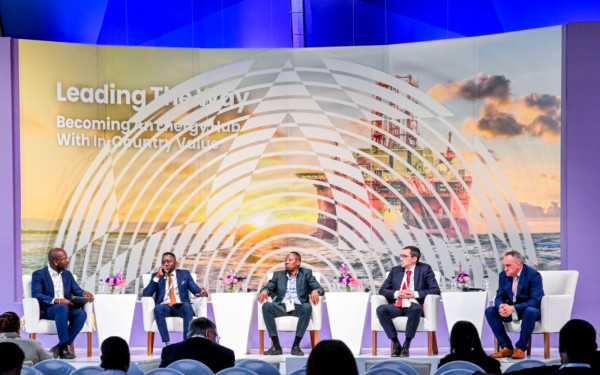
The National Petroleum Corporation of Namibia (NAMCOR) has revealed that the country could produce more than 2.5 million tons of natural gas per year, based on early-stage assessments of recent discoveries made since 2022.
Speaking during a panel discussion on gas monetization strategies at the Namibia International Energy Conference on April 24, Mtundeni Ndafyaalako, Executive of Upstream Development & Production at national oil company NAMCOR, outlined a dual-pronged approach adopted by the corporation.
The first pillar focuses on leveraging legislative frameworks to enable coordinated infrastructure development, fostering collaboration among operators. The second emphasizes expanding exploration activities to unlock further resources.
“We have launched a gas monetization strategy project to support both government and industry on how best to commercialize gas. From our appraisals, we now have a clearer picture of production potential and various applications,” said Ndafyaalako, noting that the strategy is designed to attract new players and investment by clarifying monetization pathways.
Manfriedt Muundjua, Deputy General Manager at BW Kudu, reinforced the importance of integrating four pillars of local content – training, skills transfer, local procurement and local ownership – into the broader gas development framework.
Muundjua shared that BW Kudu is placing Namibian interns in every technical role currently held by international staff, supporting long-term local capacity building. He also emphasized the urgent need for downstream investment and infrastructure development.
“We already have a downstream investment partner lined up to join us once production at Kudu begins,” he said.He added that drilling of additional wells is scheduled to begin in October, supporting NAMCOR's emphasis on continued exploration to identify new reserves.
Paul Eardley-Taylor, Head of Oil & Gas Coverage for Southern Africa at Standard Bank, highlighted the need for a "shadow infrastructure" – potentially led by public-private partnerships – in southern Namibia to address energy shortages through gas utilization. He suggested that oil revenues should be strategically directed toward financing gas infrastructure and fostering local energy markets.
Eardley-Taylor also pointed to the broader regional opportunity, suggesting that Namibia could assume a role once held by South Africa as the region's primary energy supplier, particularly as critical mineral projects are willing to pay a premium for stable power supply.
Meanwhile, Ian Thom, Research Director for Upstream at Wood Mackenzie, expressed confidence that Namibia could implement a comprehensive Gas Master Plan within the next nine months. With only 59% of the population currently connected to the electricity grid, Thom underscored the potential of gas to dramatically increase energy access across residential, commercial and industrial sectors.
“Namibia could generate more value by exporting electricity rather than raw gas, given the limited infrastructure for gas exports and the high costs associated with building it,” Thom said.
Looking ahead, the upcoming African Energy Week (AEW): Invest in African Energies conference – set to take place from September 29 to October 3, 2025, in Cape Town – will spotlight Namibia's gas developments and broader African opportunities The event will feature panel discussions, project showcases, deal signings and high-level networking sessions that connect African energy projects with global investors.
AEW: Invest in African Energies is the platform of choice for project operators, financiers, technology providers and government, and has emerged as the official place to sign deals in African energy. Visit www.AECWeek.com for more information about this exciting event.
Distributed by APO Group on behalf of African Energy Chamber.
Minister of International Relations and Cooperation, Mr Ronald Lamola, has warmly welcomed Tanzania's decision to lift its import ban on South African agricultural products. This resolution follows constructive diplomatic engagement between Minister Lamola and his counterpart, underscoring the enduring strength of bilateral relations. The Ministers agreed to facilitate the resolution of all outstanding issues.
In applauding the move, Minister Lamola reaffirmed the value of dialogue, stating, “This outcome demonstrates that the diplomatic route remains the most effective path to resolving challenges. Together, we prove that cooperation and mutual understanding can unlock shared opportunities.”
He emphasised the deep-rooted ties between South Africa and Tanzania, anchored in a spirit of African solidarity and a shared vision for mutual prosperity. “Our nations are bound not only by history but by a collective commitment to advancing Pan-Africanism, economic integration, and inclusive growth,” he added.
The announcement coincides with Tanzania's 61st anniversary of unification—a historic milestone marked every 26 April. On this day in 1964, Tanganyika and Zanzibar merged to form the United Republic of Tanzania, transcending divisions to forge a united national identity. Minister Lamola hailed the occasion as a “beacon of Pan-Africanism,” noting that Tanzania's journey continues to inspire the continent.
“As South Africa prepares to commemorate our own National Freedom Day on 27 April, we draw strength from Tanzania's example of unity in diversity. Their story reminds us that progress is born from solidarity, and that our destinies as African nations are intertwined,” he said.
Looking ahead, Minister Lamola expressed optimism for deepened collaboration, urging continued efforts to strengthen trade, people-to-people ties, and regional integration. “Let this decision be a steppingstone toward even greater collaboration, as we work together to realise the aspirations of Agenda 2063: The Africa We Want,” he concluded.
Distributed by APO Group on behalf of Republic of South Africa: Department of International Relations and Cooperation.
Having been briefed on the 2025-2030 strategic and annual performance plans as well as the 2025/26 budget of the Central Energy Fund (CEF) Group and subsidiaries, the Portfolio Committee on Minerals and Petroleum Resources is encouraged by the healthy balance sheet of the CEF Group.
The CEF Group's balance sheet will fund the company's operation until 2030, and the group is projecting a net profit of R398 million by 2030.
The committee views this information as positive, considering that CEF together with its subsidiaries, except for the Petroleum Agency South Africa (PASA), are Schedule 2 state-owned entities required to generate revenue to fund their operations, without allocation from the state.
The CEF Group's subsidiaries are PASA, the African Exploration Mining and Finance Corporation (AEMFC), iGas, PetroSA and the Strategic Fuel Fund (SFF). Meanwhile, the CEF Group is in an advanced stage to merge PetroSA, iGas and SFF to establish a single state petroleum company called South African National Petroleum Company (SANPC).
SANPC is established as part of government's initiative to repurpose and rationalise state-owned enterprises to support the country's growth and development.
The committee, however, raised a concern with the missed target for SANPC to go live by 1 April 2025, as it was promised in February this year. CEF Group announced a new date of 1 May 2025.
Although noting the challenge of transferring the current employees and some assets from PetroSA, iGas and SFF to SANPC, the committee is comforted by relentless efforts to find an amicable solution with the organised labour as well as the authorities in Ghana to approve the transfer of assets belonging to PetroSA Ghana Limited back to PetroSA in South Africa.
The committee further welcomed the commitment by the Board of CEF Group to fill existing vacancies at the executive level to strengthen governance and improve delivery.
Distributed by APO Group on behalf of Republic of South Africa: The Parliament.
The World Health Organization (WHO) has officially welcomed Dr. Fabian Ndenzako as the new Head of Mission and WHO Representative to Botswana and the Southern African Development Community (SADC). A seasoned global health expert, Dr. Ndenzako brings with him over 25 years of experience in public health, including more than two decades of service within WHO across various regions and leadership capacities.
His appointment comes at a pivotal time, as WHO continues to deepen its collaboration with the newly constituted Government of Botswana, following the November 2024 elections. Guided by the WHO Country Cooperation Strategy (CCS) 2024–2027, Dr. Ndenzako will lead efforts aligned with Botswana's National Development Plan. These efforts focus on five strategic priorities: strengthening health systems toward Universal Health Coverage (UHC); delivering quality, equitable, and integrated health services across the life course; preventing and controlling communicable and non-communicable diseases; enhancing health security and disaster risk reduction management; and promoting multisectoral action for a healthier population.
Dr. Ndenzako is a medical doctor trained at the University of Dar es Salaam in Tanzania. He holds a master's in public health from the University of Oslo and a master's in development studies and diplomacy from the University for Peace in collaboration with UNITAR. His impressive academic background complements a broad and deep understanding of global health systems, policy, and diplomacy.
Prior to his appointment in Botswana, Dr. Ndenzako served as Acting WHO Representative in South Africa, based in Pretoria. He has also led WHO country offices in South Sudan (2021–2024) and Malawi (2018–2019), demonstrating strong leadership in navigating complex public health landscapes, managing crises, and mobilizing resources to strengthen national health responses.
Earlier in his career, Dr. Ndenzako served as Medical Officer for HIV, Hepatitis, and TB at the WHO Regional Office for Africa, supporting over 20 countries in Eastern and Southern Africa. His contributions included reviewing national health programs, developing strategies and guidelines, coordinating multi-country responses, and facilitating resource mobilization for health emergencies and epidemics.
He also brings valuable international experience from nearly a decade with the WHO Western Pacific Region, based in Papua New Guinea, where he supported regional responses to both communicable and non-communicable diseases. His work with governments, the United Nations, NGOs, civil society, donors, and international partners underscores his commitment to inclusive and collaborative public health strategies.
Now at the helm of WHO Botswana, Dr. Ndenzako is poised to steer the office's efforts toward impactful implementation of the biennial plan, support national health priorities, and strengthen regional coordination through SADC. His vast experience and visionary leadership are set to advance the health and well-being of the people of Botswana and the region at large.
Distributed by APO Group on behalf of World Health Organization (WHO), Botswana.
The Portfolio Committee on Cooperative Governance and Traditional Affairs on Friday reaffirmed its support for the Cultural, Religious and Linguistics (CRL) Rights Commission's efforts to safeguard these rights.
The committee received briefings from the CRL Rights Commission and the Municipal Demarcation Board (MDB) on their strategic and annual performance plans. The MDB's mandate includes, among other things, the delimitation of municipal wards after consulting the Independent Electoral Commission.
Committee Chairperson Dr Zweli Mkhize acknowledged the commission's role in addressing harmful practices performed under the guise of religion. He also encouraged the commission in its ongoing efforts to confront psychological, physical and sexual abuse linked to such cases. “While we respect religious freedom in South Africa, these rights must be exercised in line with constitutional protections and human dignity,” he said.
The commission's briefing follows the recent Eastern Cape High Court judgement, which cleared Nigerian pastor Timothy Omotoso of all charges, including sexual assault and human trafficking.
Welcoming the commission's presentation, the Chairperson reaffirmed the importance of the commission's work in protecting the rights of cultural, religious and linguistic communities and the crucial role this plays in nation-building and social cohesion.
The committee noted the challenges impacting the commission's work, particularly budget constraints. It was encouraged by ongoing efforts to recognise and develop historically marginalised languages, such as SePulana (a language spoken by the Mapulana people in Limpopo and Mpumalanga) and isiMpondo (spoken by the AmaMphondo people in the Eastern Cape).
The committee also welcomed the continued focus on customary initiation practices and ensuring they conform to constitutional principles. The Chairperson stressed that there should be zero tolerance for illegal schools, mutilation, or loss of life in exercising this traditional custom. “There can be no acceptable number when it comes to mutilations or fatalities. Our goal must be zero in all respects. There is no acceptable threshold for such harms,” he said, stressing the need for stronger oversight, awareness and community education.
The committee also welcomed the shift in focus of the commission's referral and oversight systems that now ensure matters brought before it are addressed, even when other departments are involved. Previously, the commission would refer matters to relevant departments.
Meanwhile, while welcoming the MDB's presentation, the committee expressed concerns about the practicalities and impact municipal boundary determinations may have on communities. Highlighting that communities are often built on relationships and shared access to services, the Chairperson cautioned the Board against only relying on legal frameworks when making boundary determinations that may split communities and social networks. “The MDB must be sensitive to avoid dividing a settled cohesive community into different wards, municipalities, districts, and sometimes provinces as this practice may disrupt social stability and access to social amenities and centres for service delivery.”
Moreover, the committee sought concrete evidence of public consultation during demarcation. Members also called on the MDB to be more responsive to dissatisfaction in affected communities and asked for evidence that public education initiatives helped build public trust in the demarcation process.
Noting the budget constraints, the committee urged the MDB to build its institutional capacity and not solely rely on municipalities to do its work at the local level.
Distributed by APO Group on behalf of Republic of South Africa: The Parliament.
The Portfolio Committee on Cooperative Governance and Traditional Affairs (COGTA) voiced concerns on Thursday about the disconnect between local government's strategic plans and the reality of service delivery in communities.
The committee received a briefing on the South African Local Government Association's (SALGA) strategic plan (2022-2027) and the 2024/25 second and third-quarter financial and non-financial performance reports. Departments present these plans and reports to parliamentary committees to ensure accountability, transparency and effective resource management. This enables committees to scrutinise departmental performance and spending and hold them accountable to the public.
Members heard that SALGA is 71% on track with its strategic plan. One strategic outcome, for example, is for SALGA to focus on social cohesion through spatial integration, economic justice, and the development of viable communities, providing citizens with reliable and sustainable services to enable inclusive socio-economic growth. The target is an average of 10% improvement in identified municipalities; thus far, SALGA has completed pre-assessments in twenty-three municipalities. Members, however, emphasised that progress with performance indicators on paper rings hollow when communities cannot access basic services.
Moreover, considering the poor consequence management for senior management in underperforming municipalities, the committee sought clarity on the impact of SALGA's interventions and capacity-building efforts. Members asked for examples of success stories, which SALGA will provide in written responses.
The committee also expressed concern over SALGA's financial sustainability. Members highlighted that over 90% of SALGA's funding comes from municipality membership levies, which may compromise the entity's ability to intervene and support municipalities. The committee was assured that SALGA is open to exploring alternative revenue sources, but legal considerations must be ironed out.
The committee heard that part of SALGA's mandate is to build the capacity of municipalities, as well as the leadership and technical capacity of both councillors and municipal officials, and to support and advise its members to help them execute their mandate. Noting SALGA's role, the members interrogated its impact amid continued political instability and interference, the politicisation of municipal administration and skills shortages that paralyse municipal performance and fuel systemic inefficiencies. The committee called for a clearer distinction between political oversight and administrative execution. It urged SALGA to lead in the development of stronger training and performance management systems for councillors and officials.
Acting Chairperson of the committee, Ms Dikeledi Direko, said, “It is cause for serious concern the ‘invisible hand' (politicisation) that is part of local government, and we need to strongly condemn such practices. As political parties, we need to ensure that in elections we put forward councillors that can add value to local government.” She said councillors are often unable to hold officials to account. “We need councillors who can assist in turning around the system.”
The committee also noted poor coordination with and inclusion of traditional leaders in municipal planning and governance issues. “Traditional leaders, as part of our stakeholders, should not be left behind and treated as ‘by the way' stakeholders in local government. They should be included and they should be heard,” the acting chairperson said.
Welcoming SALGA's presentation, she said the committee wants to ensure sustainable solutions to the weaknesses in service delivery and municipal finances, thereby enabling municipalities to provide quality services to the people of South Africa. “We agree that despite many interventions in our municipalities, there is still a lot to be done. All relevant stakeholders should be on board, and proper coordination and support from all three spheres of government also play a critical role in improving our municipalities,” she said.
Distributed by APO Group on behalf of Republic of South Africa: The Parliament.
The Chairperson of the Select Committee on Agriculture, Land Reform and Mineral Resources, Mr Mpho Modise, acknowledges that the Department of Agriculture has set aside R1.7 billion to support 6000 farmers nationally to create 3000 jobs.
Mr Modise apologises for the incorrect figures that are in the media statement that was issued on behalf of the committee on Tuesday, 22 April 2025. “Upon further examination of the funding allocation, we discovered that the statement conveyed erroneous information regarding the allocation of funds related to the R1.7 billion initiative intended to support farmers,” said Mr Modise.
He added: “We understand the importance of transparency and accuracy especially in communicating such critical information. We acknowledge the error in the statement and retract the statement, and we profusely apologise for the damage caused by the erroneous information,” said Mr Modise.
The committee remains committed to ensuring accountability in the use of public resources and will continue to scrutinise all agricultural initiatives to guarantee their effectiveness and integrity.
Distributed by APO Group on behalf of Republic of South Africa: The Parliament.