• Skip to main content
  • Skip to header right navigation
  • Skip to after header navigation
  • Skip to site footer
MyZA

MyZA

News, Directory, Events and Other Stuff

  • Social Media
  • Sport
  • World News
  • Home
  • Submit News
  • Directory
  • Events
  • Stratlec
  • TFSA
  • News
    • APO
    • Today’s Sport News
    • Todays Social Media and Tech Headlines
    • Today’s World News
    • Today’s SA Financial News
  • Contact
You are here: Home / Archives for Technology

Technology

12 September 2023

Sony and Zoom partner to bring video conferencing to BRAVIA TVs

Location: MyPR

Sony and Zoom partner to bring video conferencing to BRAVIA TVs Connect with family and friends on the TV screen from the comfort of your living room JOHANNESBURG, 12 September 2023 – Sony announced that Zoom Video Communications, Inc. is now available on Sony’s BRAVIA TVs that are compatible with BRAVIA CAM[i]. This partnership will …

Read moreSony and Zoom partner to bring video conferencing to BRAVIA TVs
11 September 2023

Unleashing Agritech Innovation in Africa

Location: News
Pitch AgriHack

The Pitch AgriHack (https://apo-opa.info/3Zaz0kE) 2023 results are in, capping an inspiring journey celebrating Africa's most exciting agritech visionaries. Applicants from 39 African countries went through a rigorous selection process until six winners were crowned at the Youth Innovation Awards on the final day of The Africa Food Systems Forum hosted at the Julius Nyerere ICC, in Dar es Salaam, Tanzania. This year's Pitch AgriHack theme, “Unleash your Innovation,” resonated deeply with the entrepreneurs who demonstrated how technology can be harnessed to drive sustainability, improve productivity, and uplift communities.

Pitch AgriHack (https://apo-opa.info/3Zaz0kE) 2023 was jointly organized by the African Food Systems Forum (AGRF), Heifer International, and Generation Africa. This year participants and supporters witnessed an impressive showcase of innovation. The competition underscored the power of technology-driven solutions in addressing pressing challenges across the agricultural value chain. Awarding a total prize pool of USD 45,000, the competition recognized and celebrated the brilliance of young minds that are reshaping the future of African agriculture.

"This competition serves as a dynamic showcase of sustainable practices and innovation that is set to define African agriculture. Beyond acknowledging inventive ideas, Pitch AgriHack underscores the steadfast commitment of our youth to revolutionize the sector. At Heifer International, we recognize technology's pivotal role in fostering prosperity for smallholder farmers and rural communities," said Adesuwa Ifedi, Senior Vice President for Africa Programs. "We are deeply committed to investing in and enabling young individuals to create solutions that enhance the yields of smallholder farmers, and the agritech solutions presented not only address challenges within the agricultural value chain but also promote environmental conservation, resource efficiency, and long-term viability."

Dr. Agnes Kalibata, President of AGRA and Former Special Envoy to the UN Food Systems Summit, remarked, "The achievements seen at Pitch AgriHack 2023 truly celebrate entrepreneurial excellence in agriculture. These young innovators are not only shaping the sector's trajectory through their creativity and dedication, but they're also inspiring future leaders to consider impactful careers in agriculture and agribusiness. The technologies presented demonstrate the power of youth to drive practical and sustainable solutions, paving the way for a resilient and prosperous tomorrow."

The innovative solutions developed by the 2023 Pitch AgriHack finalists span a diverse spectrum. From turning waste into cooking gas and electricity, to ultra-fast composting with integrated nutrient analysers, these young entrepreneurs are finding value in nature-positive projects. Cost-saving measurement devices that analyse crop and soil health, providing recommendations that empower farmers, also impressed the judges. Artificial Intelligence integrations featured in several digital farming assistants. Drawing on massive data sets they optimize production, detect diseases, and generate recommendations for improved farming practices.

The entrepreneurs also presented game-changing inclusive finance solutions for women farmers and commodity-backed, post-harvest handling and storage for smallholders. With automated farm management and monitoring systems and behaviour modification solutions that reward farmers for following better practises, Africa's young innovators are determined to build a better food system. 

“The multi-facetted technologies, environmentally-aware approaches, and thorough business models we saw here today indicate that our youth entrepreneurs are building more resilient businesses with more comprehensive offerings that in turn help their farmers become more resilient, too,” said Dickson Naftali, Head of Generation Africa. “It is exactly the type of transformation we need, at scale, for the responsible development of the African food system. Pitch AgriHack not only celebrates such innovation but also fosters networking, collaboration, and exchange among these enterprising youth, mentors, investors, and industry experts. It creates a supportive ecosystem that propels them to grow. We are excited to see how they benefit from this opportunity."

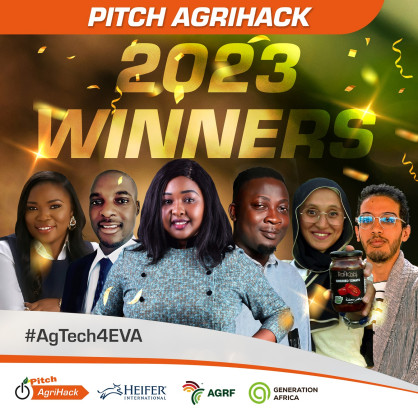
The Pitch AgriHack 2023 Winners are:

Early-Stage Winners:

Winner: Watson Matsa, Co-Founder and CEO of eSusFarm Africa, South Africa

eSusFarm connects with rural farmers via feature-phone USSD, allowing them access to value-chain services, markets, and credit providers. Their system helps small farmers build their track record by collecting farm production data, and monitoring produce quality. Connect with Watson's venture at www.eSusFarm.Africa.

Runner-up: El Mahdi Aboulmanadel, Founder and CEO of DeepLeaf, Morocco

DeepLeaf is an agricultural deep learning lab that is focused on leveraging the latest in AI technology to revolutionize the way we grow crops. Their intelligent farming chatbot, Morshida, uses deep learning to analyse plant images and assist farmers in disease analysis. With natural language processing, Morshida can communicate in 14 different languages and dialects. Connect with El Mahdi's venture at https://DeepLeaf.io.

Mature and Growth-Stage Winners:

Winner: Tunde Adeyemi, Founder and CEO of D-Olivette, Nigeria

D-Olivette builds Bio-Tanks, anaerobic digestors that transforms organic farm waste into fertilizer and biogas for cooking and electricity generation. Their solution is helping smallholder farmers to reduce operational costs, pollution, and CO2 emissions. Connect with Tunde's venture at http://D-Olivette.com.

Runner-up: Reem Nafea, Co-Founder and Business Development Director of BioMasr, Egypt

Biomasr's new Rafik app is a hub for organic agriculture in Egypt. It connects farmers to ecological waste management, clean energy production, and organic fertiliser suppliers, while also empowering women farmers to grow and sell quality organic produce. Connect with Reem's venture at https://BioMasr.com.

Women-led Agribusiness Winners:

Winner: Priscilla Wakarera, Co-Founder and CEO of Rhea, Kenya

Rhea helps smallholder farmers make the right decisions by providing affordable, convenient soil testing for smarter farming. Their IoT device does moisture testing, NPK measurements and soil PH tests before sending AI generated recommendations for fertiliser, pH adjustments, irrigation, and crop recommendations. Connect with Priscilla's venture at www.Rhea.Africa.

Runner-up: Solape Akinpelu, Co-Founder and CEO of HerVest, Nigeria

HerVest is about inclusive finance for African women. They provide easy access to target savings, impact investments and credit financing for smallholder women farmers and women-owned/led SMEs in Nigeria. Connect with Solape's venture at https://www.HerVest.ng.

The winners were selected by an esteemed panel of judges that included experts and leaders in agriculture and technology. Pitch AgriHack contestants were honoured to get invaluable advice and guidance from this highly-respected judges group consisting of:

  • Barbra Sehlule Muzata, Communications Lead – CGIAR  
  • Dr. Nalishebo Meebelo, Executive Director – Regional Network of Agricultural Policy Research Institutes (ReNAPRI)
  • Nono Sekhoto, Sector Lead - AL for Agribusiness Network – African Leadership Academy
  • Victor Mugo, Head of Local Youth Action – World Food Forum
  • Sheila Kaaya, Lead - Agriculture, Agribusiness and Agrifood systems – The Mastercard Foundation
  • Jane Lowicki-Zucca, Senior Youth Advisor – USAID
  • Patrick Heffer, Deputy Director General – International Fertilizer Association
  • Jehiel Oliver, Founder & CEO – Hello Tractor
  • Dr. Charles Iyangbe, Signature Program Director - Africa Programs – Heifer International

This year's Pitch AgriHack applicant breakdown mirrors Africa's youthful dynamism. 79.3% were early-stage startups, embodying the innovative pulse of the competition. Mature/growth-stage agritech ventures represented 20.5%, underlining the sector's growth.

The innovation showcased at Pitch AgriHack 2023 is a strong affirmation of the commitment of AGRF, Heifer International, and Generation Africa to nurture innovation, create job opportunities, and enhance food security across the continent. Through this dynamic competition, the partners seek to inspire a new generation of agritech entrepreneurs who will not only revolutionize the agricultural landscape but also empower smallholder farmers to overcome challenges and embrace sustainable change.

For further information and updates, please visit the official Generation Africa website: https://GenAfrica.org. 

Distributed by APO Group on behalf of Pitch AgriHack.

Contact:
Jane Machigere
jane@jsmcommunications.com
www.GenAfrica.org 

About Heifer International:
Since 1944, Heifer International has worked with nearly 43 million people around the world to end hunger and poverty in a sustainable way. Working with rural communities across Africa for nearly 50 years, Heifer International supports farmers and local food producers to strengthen local economies and build secure livelihoods that provide a living income. Heifer is currently operating in 19 countries across Africa, Asia and the Americas. For more information, visit https://www.Heifer.org.

About Generation Africa:
Generation Africa is a thematic platform of the AGRF, whose mandate is to strengthen the ecosystem for youth entrepreneurs in the agri-food sector across Africa. From its start in 2019, Generation Africa has brought together industry leaders, government institutions, NGOs, NPOs, and community platforms to collaborate on ecosystem development, curation and support of agribusinesses, research and advocacy, and the inspiration of young people to embrace opportunities in the agrifood sector. Find out more at https://GenAfrica.org.

About the AGRF:
The AGRF is the world's premier forum for African agriculture, bringing together stakeholders in the agricultural landscape to take practical actions and share lessons that will move African agriculture forward. Under AGRF's current strategy, the Forum is particularly focused on driving progress of the Malabo Declaration by 2025 as the priority set of commitments African Heads of State and Government have made to strengthen agricultural development at the centre of the continent's overall development and progress. The AGRF is organised by the AGRF Partners Group, a coalition of institutions that care about Africa's agriculture transformation. For more information visit https://AGRF.org.  

Media files
Pitch AgriHack
Download logo
Read moreUnleashing Agritech Innovation in Africa
11 September 2023

How cybercriminals trick their victims

Location: News
KnowBe4

Key findings:

  • 40% of the respondents from eight countries had been scammed online
  • Distraction and multi-tasking made 43% of the victims fall for an online scam
  • Financial scams affected nearly 48% of respondents

Nearly half of the 800 African survey participants have fallen victim to an online scam at least once, losing thousands of dollars in the process and compromising their personal data. This alarming statistic is one of the key findings of the KnowBe4 2023 Online Scams and Victims in Africa Report, which was just released. The report is based on a survey of 800 respondents across eight African countries, including South Africa, Kenya, Ghana, Nigeria, Morocco, Egypt, Mauritius, and Botswana. According to the report, 53% of the respondents who fell victim, were convinced the offer was legitimate because the website looked real, while nearly 48% of the scams were financial.

“These numbers highlight that online scams have evolved,” says Anna Collard, SVP Content Strategy & Evangelist at KnowBe4 AFRICA. “What is concerning is that 43% of the victims were distracted and multi-tasking when they fell for the scam, which highlights how easy it is for a person to make a mistake when they are not paying attention. Their emotional states can affect a person's judgment, awareness, and decision-making, causing them to be more vulnerable to online deception,” says Collard.

Financial scams were the most common type of online fraud, affecting nearly half of the respondents (50%). Other prevalent scams involved fake investments (30%), cryptocurrencies and NFTs (29%), brand impersonation (28%), information theft (24%), online shopping (21%), and fake job offers (21%). Less frequent but still significant scams included the classic Nigerian scam (17%), family or friend impersonation (18%), law enforcement impersonation (7%), tax fraud (6%), holiday fraud (9%), romance fraud (13%), and lottery fraud (15%).

An email was the preferred channel for scammers to initiate contact, accounting for 24% of the cases. Social media came in second with 19%, followed by WhatsApp with 10% and other messaging services like Telegram with 8%. In Nigeria, however, social media was the most used platform for scams (32%), while in South Africa, email was the dominant method (28%). The scammers often used social engineering techniques to convince their victims, such as creating rapport or trust by making websites look legitimate, sending messages that appealed to emotions, using social media profiles that seemed authentic, and avoiding spelling or grammar mistakes.

Collard says that the statistics reveal a more evolved and sophisticated network of scammers who use emerging technology to lure people into costly mistakes. 30% lost between US$100 and US$1,000, 40% around US$100, and 9% more than US$1,000.

The report also showed that falling for a scam had a significant psychological impact on many victims. While 23% said it had little or no effect on them, nearly 50% felt a strong or moderate impact. The results highlight how easy it is for victims to blame themselves, when in reality, they were deceived by cunning scam tactics. The survey found that many victims experienced negative emotions, such as embarrassment (39%), anger (40%), naivety (40%), loss of trust (36%), and shame (25%). Some also felt traumatised (20%), vulnerable and helpless (25%), anxious (16%), and guilty and fearful (15%).

The emotional toll of falling for an online scam may be more harmful than the money lost as a result. For most victims, the financial consequences were not severe, with 24% saying it took them several months to recover and 10% saying it took more than a year, but the majority had no repercussions or recovered in a few days to a few weeks. However, when it came to healing from the psychological impact of the scam, the majority said it took them a few months (22%) and 11% said it took more than a year.

“The report shows how vulnerable people are to online scams and the emotional distress they cause,” says Collard. “While respondents were aware of scams and understood the risks, many still said they did not feel prepared, which highlights the need for regular training that gives people continuous awareness of scams and the threat they pose, to themselves and their organisations.”

You can download the full report here. https://apo-opa.info/3LjspOS

Distributed by APO Group on behalf of KnowBe4.

Media files
KnowBe4
Download logo
Read moreHow cybercriminals trick their victims
11 September 2023

Chiropractor in Pretoria Enhances Well-being with Expert Care

Location: MyPR

Chiropractor in Pretoria Enhances Well-being with Expert Care Pretoria, South Africa – September 11, 2023 – Joint Health Chiropractic Pretoria is proud to announce its commitment to delivering top-notch chiropractic care to the Pretoria community. With a team of skilled professionals, state-of-the-art facilities, and a dedication to holistic well-being, Joint Health Chiropractic Pretoria has become …

Read moreChiropractor in Pretoria Enhances Well-being with Expert Care
11 September 2023

5 Reasons Every Small Business Owner Should Acquire a Mentor

Location: MyPR

In the ever-evolving landscape of entrepreneurship, small business owners face a multitude of challenges and opportunities. To thrive in this environment, guidance and support from experienced mentors have become invaluable. Kyle Ballard, Head of Accelerators for the Durban Chemicals Cluster (DCC) says, “In the often-solitary journey of entrepreneurship, business owners frequently find themselves navigating uncharted …

Read more5 Reasons Every Small Business Owner Should Acquire a Mentor
10 September 2023

Economic recovery measures improve economy

Location: News

Economic recovery measures improve economy

Deputy President Paul Mashatile has attributed the growth in gross domestic product (GDP) to the economic recovery measures that were implemented by government to support the economy.

Stats SA reported that the country's GDP grew by 0.6% in the second quarter of 2023 while it grew by of 0.4% in the first quarter.

These measures include financial support for distressed businesses, infrastructure investment, and job creation initiatives such as the Presidential Youth Employment Initiative (PYEI), implemented as the Basic Education Employment Initiative (BEEI) across all nine provinces.

“Between April and June this year, at least 135 000 earning opportunities were secured by young people through the Presidential Youth Employment Initiative’s National Pathway Management Network.

“Some 108 061 of these were accessed through the SA Youth platform, with 27 088 opportunities scored through the Department of Employment and Labour’s Employment Services of South Africa (ESSA) website. We are adamant that if PYEI can receive more funding, it will reach more young people,” Mashatile said on Saturday in Johannesburg.

Addressing the Forty Under 40 South Africa Awards Ceremony, he called on young people to take up the opportunities available in digital sectors and others to combat the high youth unemployment rate.

“Our government believes that entrepreneurship is part of the remedy for the massive youth unemployment. In partnership with the private sector, we have launched several youth business funding opportunities to help youth start and maintain their businesses. This includes the Youth Challenge Fund (YCF), the Youth Pipeline Development Programme, and the Youth Technology Innovation Fund (YTIF).

“While these measures have helped stabilise the economy, we must remain vigilant and adaptable to emerging challenges. Moreover, we have also gained some pace by implementing the structural reforms for the reconstruction and recovery plan, Operation Vulindlela,” Mashatile said.

Since Operation Vulindlela was launched in October 2020 as part of the Economic Reconstruction and Recovery Plan, government has implemented 35 priority structural reforms identified for their impact on economic growth and job creation.

“We have made progress in energy, our logistics network, digital communications, and the reform of the visa regime to enable businesses to attract the skills they need to grow. Eleven reforms have been completed, while 14 are on track or progressing well.

“Regarding the energy challenge that has remained a top priority in our country, we have amended Schedule 2 of the Electricity Regulation Act to remove the licencing requirement for generation projects of any size,” the Deputy President said.

More than 100 projects are at various stages of development, representing over 10 000 megawatts of new generation capacity and over R200 billion in private sector investment.

“Additionally, three projects from the risk mitigation programme have been constructed, with five projects expected to reach financial closure this quarter.

“We approved the Electricity Regulation Amendment Bill in March, which has been tabled in Parliament. This Bill will establish a competitive electricity market, enabling multiple generators to compete on a level playing field. These are essential to ramping up energy generation in the short and medium term,” the Deputy President said.

He said government’s efforts in investing in young people means redirecting efforts and resources in a number of critical areas, including the skills revolution and education, providing quality health care, investments in new technologies as part of 4IR and artificial intelligence as well as investments in infrastructure for ease of business and movement of goods allows entrepreneurs to flourish.

“Investing in youth participation is not just a trendy concept but a necessity for our collective future. It goes beyond just financial resources. It requires a mind-set shift and a collective commitment to nurturing talent and empowering individuals,” Mashatile said.

Taking advantage of opportunities on the continent

The Deputy President urged entrepreneurs to take advantage of the African Continental Free Trade Area (AfCFTA).

“In this regard, South Africa is a significant member of this trade revolution that will shape the continent's future by stimulating innovation and value-chain growth and boosting industrialisation and job creation across industries. The AfCFTA has 54 signatories, making it the largest free trade area in terms of the number of member states, second only to the World Trade Organisation.

“As part of Agenda 2063, we must dismantle the barriers that hinder youth participation in the economy. We need to break free from the cycle of generational exclusion and embrace an intergenerational approach where the knowledge and experience of our elders are combined with the fresh ideas and perspectives of today's youth,” he said.

Mashatile said unlocking the demographic dividend will spark a wave of growth and progress that will benefit the youth and the entire continent.

“We need greater collaboration among governments, civil society, the private sector, and international partners to achieve this,” he said. – SAnews.gov.za

nosihle
Sun, 09/10/2023 - 10:05

207 views
Read moreEconomic recovery measures improve economy
9 September 2023

SA celebrates women in science, technology, innovation

Location: News

SA celebrates women in science, technology, innovation

Higher Education, Science and Innovation Minister, Dr Blade Nzimande, says the South African Women in Science (SAWISA) Awards 2023 are premium awards to celebrate women who are contributing immensely to the Science, Technology and Innovation (STI) sector.

“The industrial revolutions are epochs in our social and economic history that are based on disruptions in innovations and technological developments, leading to advanced forms of production and service delivery,” Nzimande said.

Speaking at the SAWISA Awards 2023 event held in Durban on Friday, Nzimande said patriarchal attitudes, systematic barriers and certain practices and norms have defined women out of the research, scientific and technological developments that are engines of the industrial revolutions.

“We therefore have seen successive industrial revolutions having effects of disrupting or changing the lives of societies and economies,” Nzimande said.

Nzimande said with each industrial revolution, whole industries were adjusted or disrupted, new ones were created, and existing occupations and job families went through fundamental changes, with far reaching consequences for societies.

“Our (2019) White Paper on STI engages with the pivotal changes brought by the modern technology in promoting inclusivity, transformation, the development of human capabilities, knowledge expansion and innovation in ensuring that the benefits of the digital economy are enjoyed by all South Africans.

“The measures aimed at greater gender inclusion in our recently approved STI Decadal Plan (2022-2032), our ten-year plan, include the STI Transformation Framework, and the STI Gender Strategy that is aligned to the government-wide gender responsive planning and budgeting framework,” the Minister said.

This year’s glittering awards were attended by among others, members of Parliament, students and international guests.

SAWISA is an annual countrywide event profiling distinguished women researchers and scientists, as well as younger women who are emerging as excellent researchers. 

The awards also provide registered Masters and PhD students with fellowships to support their studies, in areas ranging from indigenous knowledge systems to astronomy. 

Harnessing technological change and innovation

University of Witwatersrand Chancellor, Dr Judy Dlamini, congratulated the Department of Higher Education, Science and Innovation for introducing the awards 20 years ago.

“Harnessing technological change and innovation, starts with ensuring access in the remote areas of our country, it’s about ensuring affordability by the most vulnerable, providing quality education with digital access in all our schools especially the township and rural schools, addressing inherent biases and social-cultural norms that are a hindrances to women and girls’ access,” Dlamini said.

Dlamini said the gender digital divide that still exists, especially for black rural women, has to be addressed.

“Women are under-represented in the ICT jobs, men are four times more likely than women to be ICT specialists,” she said.

Running since 2003, SAWISA also awards registered Masters and PhD students.

The theme for this year’s awards was, “Harnessing technological change and innovation to achieve gender equality and empower women and girls”.

Award categories

In honour of the late climate-change activist and science champion, the Department of Science and Innovation (DSI) called the fellowships the DSI-Ndoni Mcunu Fellowships.

Mcunu was the founder of Black Women in Science (BWIS).

The late Mcunu facilitated developmental training for more than 400 postgraduate students in business and entrepreneurship skills, research skills, scientific writing, project leadership, science communication and research career preparation.

During her life-time, Mcunu achieved numerous accolades, including being named a 2017 Mandela Washington Fellow, receiving an honorary awards at the KZN Young Achievers Awards in the Science Research and Entrepreneurship catergory and winning the Gagasi FM Shero Award in the Science and Technology catergory.

In the catergory of DSI-Ndoni Mcunu Fellowships: Masters’ Awards, the finalists were Nyleti Precious Mabaso from Stellenbosch University, Modjadi Rebecca Letsoalo from the University of Venda and Gizelle Roque van Niekerk from the University of Pretoria.

In the catergory of DSI-Ndoni Mcunu Fellowships: Doctoral Awards, the finalists were Munira Hoosain, University of Cape Town, Alletta Nortjie, Stellenbosch University, Boitumelo Makgabutlane, University of the Witwatersrand, Thendo Gertie Makhado, University of Venda, Bambesiwe Mbesi May, University of South Africa, Carlo Dodd, Nelson Mandela University, Lusani Mamushiane, University of Cape Town, Bettie Sebati, University of Johannesburg and Nicole Richardson from the University of Cape Town.

Other categories include awards for Distinguished Young Women Researchers and Distinguished Woman Researchers. – SAnews.gov.za

Edwin
Sat, 09/09/2023 - 10:36

62 views
Read moreSA celebrates women in science, technology, innovation
8 September 2023

SA awarded Chairship of the Africa Green Hydrogen Alliance

Location: News

SA awarded Chairship of the Africa Green Hydrogen Alliance

South Africa will use its Chairship of the Africa Green Hydrogen Alliance (AGHA) to advance the green hydrogen agenda on the continent and support opportunities for peer-to-peer learning, technology transfer, economic and employment opportunities.

This is according to Minister in the Presidency for Electricity, Dr Kgosientsho Ramokgopa, who was handed Chairship of the AGHA on the sidelines of the Inaugural Africa Climate Summit (ACS), which took place from 04-06 September 2023 in Nairobi Kenya.

“Green hydrogen and its associated large scale renewable energy production has the potential to support the expansion of the electricity transmission infrastructure, to add additional renewable energy generation capacity and to support the local development of renewable energy.

“As such it is a key component of South Africa’s future energy mix to achieve sustainable energy security,” the Ministry for Electricity said on Thursday.

AGHA was formed in May 2022 by six African countries, Egypt, Kenya, Mauritania, Morocco, Namibia and South Africa, to drive decarbonisation through green hydrogen.

The alliance seeks to intensify collaboration and supercharge the development of green hydrogen projects on the African continent in line with the Just Energy Transition.

“It focuses on public and regulatory policy, capacity building, financing and certification needs to mobilise green hydrogen production for domestic use and export. The inclusion of the Ethiopia and Angola’s membership were also announced alongside South Africa’s Chairship,” the Ministry for Electricity said.

During the ACS, the Minister participated in panel sessions where he shared lessons on South Africa’s energy outlook and the role of green hydrogen in supporting energy security and driving green industrialisation.

On the margins of the Summit, the Minister engaged in multiple high-level bilateral meetings to explore energy collaborations and meaningful partnerships in the energy space.

The Minister’s participation at the Summit was underpinned by a commitment to consistent, sustainable and affordable energy supply for South Africa. – SAnews.gov.za


nosihle
Fri, 09/08/2023 - 09:30

649 views
Read moreSA awarded Chairship of the Africa Green Hydrogen Alliance
7 September 2023

African Energy Chamber (AEC) Hosts High Commissioners and Ambassadors Reception in Pretoria

Location: News
African Energy Chamber

As global demand continues to grow and African countries seek to unlock new investment in untapped energy resources, the African Energy Chamber (AEC) (www.EnergyChamber.org) – serving as the voice of the African energy sector – is committed to facilitating engagement between governments, industry players, and capital and technology providers. On Thursday, the AEC hosted a High Commissioners and Ambassadors Reception in Pretoria, aimed at fostering new connections between countries.

The reception served as a prelude to the continent's largest energy event, African Energy Week (AEW) 2023 – taking place from October 16-20 at the Cape Town Convention Center. More than 50 High Commissioners and Ambassadors took part in the reception, with remarks delivered by André Nzapayeke, Ambassador of Central African Republic & Dean of the Diplomatic Corps in South Africa; Tebogo Seokolo, Acting Deputy Director General: Africa; and NJ Ayuk, Executive Chairman of the AEC. Verner Ayukegba, the Senior Vice President at the AEC, served as the Master of Ceremonies at the Reception.

“Energy security represents one of the greatest threats in the 21st century. It is one of the vexing challenges facing the African continent. We have to put all hands-on deck to address these challenges. It is about time that we see the positive results, see the investments,” Ambassador Seokolo stated. “This event is a precursor to AEW. It brings together global leaders and executives from both the public and private sector to discuss the future of African energy. On our part as Ambassadors of international relations, we commit to providing the support for visa facilitation.”

“We are dealing with a subject that is very important: energy. Without energy, we will not go far. Our continent has huge potential in energy. We will encourage out countries to attend AEW, because it is an opportunity for the actors in the sector to know each other and explore real business opportunities,” stated Ambassador Nzapayeke. “I would like to give the promise that we, the international diplomatic group, are willing to work hand in hand with you to promote the energy sector on the continent. The pan-African parliament can play an important role. Together we can make a difference.”

With energy security representing a significant challenge in Africa, the AEC Reception served as a strong foundation for country representatives to engage, share ideas and understand different approaches to resource maximization.

“Six million Africans don't have access to electricity, 900 million don't have access to clean cooking solutions. We have to deal with that fundamental issue,” stated Ayuk, adding that, “We need diplomacy to make energy poverty history. We need an environment that we can do projects in Africa and where we can do business. This is where governance will play a big part.”

AEW builds on a series of successful editions and has become the premier platform for investment to flow into African energy projects. This year's AEW takes place under the theme, ‘The African Energy Renaissance: Prioritizing Energy Poverty, People, the Planet, Industrialization and Free Markets,' and convenes African governments and policymakers, regional energy companies and thought leaders, and global investors and technology providers for four days of dialogue and deals.

“AEW, the largest oil and gas conference on the continent, is a platform that we use to push our agenda: increase investment in the oil and gas space. We want to see your companies from your countries help build for a future African. Come to AEW and create the right type of partnerships,” stated Ayukegba.

With the event merely weeks away, time is running out to secure your participation at the biggest gathering of energy stakeholders on the continent. Visit www.AECWeek.com and secure your place among Africa's energy leaders.

Distributed by APO Group on behalf of African Energy Chamber.

Media files
African Energy Chamber
Download logo
Read moreAfrican Energy Chamber (AEC) Hosts High Commissioners and Ambassadors Reception in Pretoria
7 September 2023

Government must maximise spend on education – Nzimande

Location: News

Government must maximise spend on education - Nzimande

Higher Education, Science and Innovation Minister Blade Nzimande says as government continues to spend a large share of its national budget on education, the challenge is to maximise the impact of this progressive investment.

The Minister was speaking at the launch of the National Plan for Post-School Education and Training (NPPSET) in Durban on Thursday.

He said the NPPSET showcases government’s continuous effort towards achieving an improved, transformed, expanded, responsive and articulated Post-School Education and Training.

“Our department of Higher Education and Training has the single largest number of entities of all the national government departments, with over 110,” Nzimande said.

South Africa’s PSET sector is one of the biggest in Africa with highly developed institutions that feature in the global arena of international education, training, research, technology development and innovation.

“We also have the single largest research infrastructure and systems on the African continent. Our National Plan for Post-School Education and Training is a roadmap for implementing the vision of the White Paper for Post-School Education and Training.

“It is framed within the broader goals and priorities of the National Development Plan (NDP), which foregrounds the national efforts to address the triple challenges of unemployment, inequality, and poverty. It is an overarching instrument and a blueprint for guiding planning in our PSET sector. 

“It aligns and integrates the work that is already underway and provides a policy framework for major transformative changes government wants to bring about across the PSET system and its nexus with society and the economy,” the minister said.

Nzimande explained that the National Plan for Post School Education and Training has six goals which are the drivers for the system.

“We are bringing together institutions and traditions that have different histories and investments and propose ways of making them work together towards common goals.

“We are consolidating and building on those aspects of the system that are working well whilst also streamlining a wide range of policies, plans, and strategies currently in existence that impact on the system without reducing its diversity,” Nzimande said.

Nzimande said his department has developed an articulation Policy for the Post-School Education and Training System of South Africa in 2017.

“The policy was established to create an enabling environment to ensure that articulation occurs within and between NQF sub-frameworks, institutions work together to develop learning and work pathways and support to students as they follow their individual learning and work pathways,” the Minister said.

Nzimande added that his department conducted a comprehensive evaluation study on the implementation of the National Qualification Framework Act on how articulation was implemented by both TVET colleges and universities.

“The baseline study was also conducted to determine how articulation was practiced within and between higher education institutions. The study has identified a number of challenges in how articulation works across the entire PSET system. 

“The major challenge still remains to optimise articulation pathways between universities, TVET colleges and CET colleges and without cul-de-sacs in the system. We must also fund and properly resource articulation,” Nzimande said.

The NPPSET sets out a roadmap for implementing the vision of the White Paper for Post-School Education and Training.

Having already been approved by the Minister, the NPPSET is being implemented by the department and may be viewed in conjunction with its enablers and or by-products which are the development of the Master Skills Plan, Student Funding Model, inclusive of the ‘missing middle’ and the implementation of the Labour Market Intelligence programme.

This launch provides an opportunity for the department to bring on board all stakeholders that are key in the broader implementation of the plan thereby ensuring effective implementation geared towards the realisation of the envisaged goals of the National Development Plan and other relevant policies to 2030 and beyond. – SAnews.gov.za

Edwin
Thu, 09/07/2023 - 14:36

37 views
Read moreGovernment must maximise spend on education – Nzimande
6 September 2023

Facelift for land ports of entry

Location: News

Facelift for land ports of entry

Home Affairs Minister, Dr Aaron Motsoaledi, says officials are committed to making the country's border posts safer, less porous and more efficient in the facilitation and easing of trade, as well as the legitimate movement of people.

“The South African government is committed to putting in the latest infrastructure and relevant technology in its efforts to modernise and upgrade our ports to be on par with the current global best practices on border management,” Motsoaledi said.

Addressing media in Pretoria on Wednesday, Motsoaledi said the main objective of upgrading border posts is to make it easier for law-abiding people and companies to easily enter and exit South Africa through the borders, while the illicit movement of persons and goods is nipped in the bud.

“It has taken a while for us to get to this point. I would like to commend my team consisting of officials from the Border Management Authority, the Department of Home Affairs, The Presidency’s Infrastructure SA, National Treasury, SARS, the DBSA’s Infrastructure Fund, and the transactional advisors, Bowmans and Ernst & Young, for their hard work in getting us to this point,” Motsoaledi said.

He said South Africa’s ports of entry were designed during the apartheid era, with the primary objective of tightened security, while neglecting the effective facilitation of regional and international trade.

“Since the advent of democracy, there has been an exponential increase in the number of people moving between South Africa and the countries in the region. The volume of regional and international trade has similarly increased.

“As a result, our land ports of entry are very congested and that continues to stifle trade, instead of enabling it. If you want to understand what we are talking about, just take a visit to the Lebombo Border Post between SA and Mozambique, where you will see trucks lining up for kilometres, bumper to bumper, for hours on end, on the N4 Corridor,” Motsoaledi said.

He said this is because mining companies in the North West, Limpopo and Mpumalanga took a decision to use the Maputo Port for their exports and no longer Richards Bay Harbour.

“Given the current narrow design of the port, this has led to congestion. The announcement we are making today will make sure that what is happening there, will become history (sic),” the Minister said.

Improvements to boost continental trade

Motsoaledi said SA has 72 ports of entry, 53 of which are land, 11 are international airports and eight are seaports -- all of which are now operated by the Border Management Authority.

“Of the 53 land ports of entry, we have now earmarked six of our largest and busiest, by traffic volume, for redevelopment in order to address the congestion. The outcome of the redevelopment of these ports of entry will be used as a blueprint in the long-term for all other South Africa’s land ports of entry.

“The primary intention is to ensure the realisation of regional economic integration in the SADC region, while facilitating the realisation of African Continental Free Trade Area,” the Minister said.

Motsoaledi said in order to ensure that ongoing operations at each of the designated Ports of Entry are not interrupted, construction will be undertaken in phases.

“During construction, the project is expected to create in the order of 38 000 jobs in areas around the six designated ports of entry,” he said.

The six ports of entry earmarked for upgrading or redevelopment are:

• Beitbridge - Zimbabwe

• Lebombo - Mozambique

• Maseru Bridge – Lesotho

• Ficksburg - Lesotho

• Kopfontein - Botswana

• Oshoek - Eswatini

The redeveloped ports of entry will result in:

• Efficient cross-border management of the movement of people, goods and services.

• Improved administration of persons entering and leaving the Republic.

• Better regional economic integration, and enhanced support for the African Continental Free Trade Area.

• Improved revenue collection and addressing leakages caused by the illegal movement of goods and illicit financial flows.

• Protecting local industry from harmful imports and exports.

• Effective migration management including curbing illegal migration. – SAnews.gov.za

Edwin
Wed, 09/06/2023 - 13:10

405 views
Read moreFacelift for land ports of entry
6 September 2023

KZN youth-owned businesses to benefit from R90m fund

Location: News

KZN youth-owned businesses to benefit from R90m fund

Fifty-nine youth-owned businesses are set to benefit from the R90 million KwaZulu-Natal Youth Empowerment Fund.

Announcing the youth businesses approved for funding during a ceremony held in Durban on Tuesday, KwaZulu-Natal Premier Nomusa Dube-Ncube said the event marks an important milestone in government’s quest to push back the frontiers of the stubbornly high rate of youth unemployment in the province.

She said moment marks the fulfilment of a pledge made during the State of the Province Address earlier this year, which was delivered under the theme, ‘Taking Decisive Action in the time of Renewal and Hope as we Rebuild a Better, Prosperous, and Resilient KwaZulu-Natal’.

The Youth Fund was established by the Office of the Premier in 2018 as part of government’s concerted efforts to crank up youth development and empowerment in the province. 

According to the fund structure, 90% of the fund received by each beneficiary is channelled to buy equipment in order to lower their cost of business, while 10% is for working capital.

Dube-Ncube said during the first phase, R60 million was disbursed to 51 youth-owned businesses. In the current phase, which was opened in July 2021, a total of 4 016 applications were received for funding. 

“Of those applications, 2 854 were disqualified for various compliance and other reasons while 1 162 were processed by the KwaZulu-Natal Growth Fund, an entity of government that is responsible for the disbursement process and management of the Youth Fund.

“A further rigorous evaluation process was undertaken, and 352 applications were shortlisted for the due diligence stage. Ultimately, site visits were conducted, which resulted in the 59 [businesses] that are today the recipients of the funding. The funding ranges from R200 000 to R2 million,” Dube-Ncube explained.

The Premier said youth-owned businesses that benefited from the current window operate in various strategic sectors, including water security, transport and logistics, farming technology, the digital economy, automotive and maritime industries.

“We could not have asked for a better present to mark the close of Women’s Month, as evidenced by the fact that 42% of the approved applicants are women. This is a significant improvement, if we consider that only 15% women applicants had benefitted previously. 

“Our goal, moving forward, is to ensure at least a 50-50 access between men-owned and women-owned businesses,” the Premier said.

The Premier said they are encouraged by the fact that there is adequate geographic spread in terms of the distribution of beneficiaries as they come from across all the districts in the province. 

She said the provincial government is decisively addressing the divide between urban and rural, the poor and affluent. They believe that all people must benefit equally from government’s interventions.

The Premier noted that the fund also approved businesses that are owned and managed by unemployed graduates and youths from professional sectors, including medical, engineering and accounting disciplines.

The Premier also announced that the new window (for R100 million funding) will be opened soon. – SAnews.gov.za

GabiK
Wed, 09/06/2023 - 13:04

51 views
Read moreKZN youth-owned businesses to benefit from R90m fund
6 September 2023

SARS Commissioner calls for tax administrators to be excluded from budget cuts

Location: News

SARS Commissioner calls for tax administrators to be excluded from budget cuts

South African Revenue Service (SARS) Commissioner Edward Kieswetter has called on National Treasuries to exclude tax administrations from across-the-board austerity measures, as it poses a threat to innovation, fiscal integrity and sovereignty.

“Once you suspend funding, the end result will always be the suspension of innovation and regression against the progress of other administrations. This goes against the intrinsic value of digitalisation in improving tax compliance and detecting tax non-compliance,” Kieswetter said on Tuesday in Cape Town.

He was addressing the 2nd Network of Tax Organisation (NTO) Technical Conference, which took place under the theme: ‘Digitalisation of Tax Administrations and Contemporary Issues’.

“As more financial transactions are taking place digitally, more third party data sources are shared with tax administrations, and central bank digital currencies are emerging, the importance of digitalisation and consequently the use of data science, and artificial intelligence have become central to revenue collection, compliance and trade facilitation.

“So, in short, whenever budget cuts are required, National Treasuries – Budget Offices are advised to avoid across-the-board cuts and ensure a more prudent approach to invest to build enabling and productive economic capacity, create employment, and thus expand the tax base.

“This secures fiscal integrity and sovereignty in the long run. Tax administrations should be excluded from across-the-board austerity measures. The investment in digitalisation should not be disrupted. The cost of recovery is simply too high in every respect,” Kieswetter said.

He said the COVID-19 pandemic accelerated the modernisation and digitisation of work at SARS.

“COVID-19 inadvertently took us to the drawing board to think from first principles, and very quickly accelerated our response towards reprioritising our technology investment to enable our employees to work during the hard lockdown and to allow taxpayers to continue to fulfil their tax obligations,” the Commissioner said.

Although SARS has made progress, he explained that much more still needs to be done, as the revenue service is behind in its digitalisation journey.

“I want to pause here and focus on one element as a critical enabler of the digitalisation journey - and that relates to funding. Before State capture, SARS was a leader in digital modernisation for many years.

“However, partly due to financial constraints, but also a short-term approach, budgets were then frozen for a number of years and SARS fell behind in driving technological innovation. We have now managed to restore some additional funds to continue our modernisation, but we are still substantially underfunded to move at the necessary speed in an environment that is changing exponentially, business models are being disrupted, and tax crime proliferating at an alarming rate,” he said.

SARS faces the challenge of not only having to play catch-up after many years of underinvestment, but also of accelerating modernisation simply to remain relevant.

“We are at a point where we can again focus on innovation. The important lesson here is that the digitalisation journey is not a finite project, but a new way of being. It is an ongoing journey. Once you suspend funding, the end result will always be the suspension of innovation and regression against the progress of other administrations,” the Commissioner said. - SAnews.gov.za


nosihle
Wed, 09/06/2023 - 10:08

121 views
Read moreSARS Commissioner calls for tax administrators to be excluded from budget cuts
5 September 2023

UIF launches free mobile app to speed up its services

Location: News

UIF launches free mobile app to speed up its services

The Unemployment Insurance Fund (UIF) has launched a zero-rated mobile APP, as well as a free USSD platform to enable clients to access UIF services at any time.

This will go a long way to reducing long queues at the labour centres.

The app, which was launched on Monday, will bring services to the people and enable UIF clients to access services at any time, from anywhere at no cost.

Unveiling the platforms during a media briefing in Cape Town, Maruping said the USSD (Unstructured Supplementary Service Data) and mobile APP will promote greater self-service for clients, reduce long queues in the labour centres and alleviate pressure on officials. 

UIF Commissioner Teboho Maruping believes the platforms will put more money in the pockets of clients because they will save on transport costs currently incurred when visiting labour centres.

“There is really no better time than now to do this to ensure that workers begin to access services at their fingertips. We are moving with the times to create a better, more capable UIF that leverages technology to respond to challenges on the ground and changes in the external environment,” Maruping said. 

He said the UIF recognises that most of their clients may not be in the best financial position when they need to access their services, hence the initiative to launch the mobile app and USSD platform.

Maruping said the two platforms also enable clients to check their UIF registration status, which will improve non-compliance with the Unemployment Insurance Act by employers who fail to register, declare and pay contributions for their workers.

“By simply dialling *134*843# on any cellular phone for free, clients can, among others, submit a continuation of payment or check their claim and payment status, instead of visiting a labour centre. The same services can also be accessed on our mobile APP, which can be downloaded from either Google Play Store, App Store for IOS phones or Huawei App Store,” Maruping explained.  

The Commissioner also called on all UIF contributing workers to use these platforms to check their registration status, whilst in employment, and not wait until they are no longer working. 

“If you find that your employer has not registered you, but is deducting UIF, then immediately report this to a labour inspector so it can be corrected,” Maruping said.

The Commissioner stressed that the fund is committed to taking bold steps to improve service delivery.

The UIF will go on roadshows to educate clients in all provinces and implement a mass media campaign. 

“In addition to these new platforms, we recently installed free Wi-Fi at all labour centres around the country to enable clients to access our services online and reduce the time it takes to queue for assistance. Meanwhile, our mobile buses continue to take services to the doorsteps of clients, especially in deep rural and remote areas,” Maruping said.

Maruping also visited the Bellville labour centre to interact with clients and promote the platforms. – SAnews.gov.za

GabiK
Tue, 09/05/2023 - 10:42

529 views
Read moreUIF launches free mobile app to speed up its services
5 September 2023

SA benefits economically from BRICS grouping

Location: News

SA benefits economically from BRICS grouping

Outlining the economic benefits of South Africa's participation in the BRICS grouping, President Cyril Ramaphosa has informed Members of Parliament that South Africa’s trade with the bloc has increased by an average of 10% every year over the period 2017 to 2021.

“The total South African trade with other BRICS [Brazil, Russia, India, China and South Africa] countries reached R830 billion in 2022, which represents an increase of more than 70% from R487 billion in 2017,” the President said on Tuesday in Cape Town.

Participating in a Questions for Oral Reply session in the National Assembly, President Ramaphosa explained that BRICS is an important source of foreign direct investment in key areas such as mining, automotive, transportation, clean energy, financial services and information technology (IT).

These investments and projects lead to significant job creation.

“South Africa has experienced significant benefits through its membership as well as its association with the BRICS grouping of countries. South Africa uses its BRICS membership to improve investment, trade, tourism, as well as capacity building, and it also flows into skills acquisition and technological capabilities that we see this relationship yielding for our country.

“Strengthening economic as well as financial ties between BRICS member countries is one of the key pillars of this cooperation that we have forged with all these countries,” the President said.

In 2020, the countries adopted the Strategy for BRICS Economic Partnership to increase access to each other’s markets, promote mutual trade and investment, and create a business-friendly environment for investors in all BRICS countries.

“Furthermore, the BRICS Business Council and the BRICS Women’s Alliance bring together important commercial networks that promote trade and investment partnerships among BRICS countries. In 2015, BRICS countries launched the New Development Bank to finance and largely support infrastructure and sustainable development projects,” President Ramaphosa said.

To date, the New Development Bank has provided funding to 12 projects in South Africa to the value of over R100 billion.

“Our membership of BRICS makes a valuable contribution to the implementation of our Economic Reconstruction and Recovery Plan. For example, growing the tourism industry is one of the priorities of the Plan. The BRICS countries are becoming increasingly important tourism markets for South Africa.

“In terms of supporting energy security in South Africa, another pillar of our recovery plan, BRICS countries have the expertise and technologies to support energy cooperation. In 2020, BRICS adopted a Road Map for BRICS Energy Cooperation up to 2025 aimed at building a strategic partnership in energy cooperation,” the President said.

On infrastructure investment, which is another pillar of the recovery plan, South Africa will continue to access funding from the New Development Bank for energy, transport and water.

“The inclusion of Argentina, Ethiopia, Egypt, Iran, Saudi Arabia and the United Arab Emirates as new members of the group will strengthen beneficial cooperation with South Africa in political, economic and financial matters.

“These countries will enhance economic partnership in key sectors such as oil and energy, telecommunication and information technology, agriculture, textile, logistics, air transportation and tourism and medicine,” the President said.

Last month’s three-day BRICS Summit wrapped up with several successful outcomes, including the expansion of the six aforementioned countries to become full members of BRICS effective from January 2024.

South Africa hosted the 15th BRICS Summit from 22-24 August in Johannesburg. This year’s summit took place under the theme, ‘BRICS and Africa: Partnership for mutually accelerated growth, sustainable development and inclusive multilateralism’.

The President said South Africa expects that its trade links and investments participation with all the additional countries will increase.

This addition is also expected to contribute to the growth of the country’s tourism industry.

“In economic terms, all these new additional countries are big players and on the horizon are a number of other countries that have indicated their willingness to be part of BRICS and they too will be considered in the next phase.

“We will obviously look at the economic value in terms of participation for all of us as BRICS members. These additional countries will be boosting our Economic Recovery and Reconstruction Plan and we expect great benefits from all this.

“The benefits for our countries has been very clear right from the beginning. It has led to enhanced activity amongst ourselves and all these countries. Being a BRICS member does contribute a great deal to economic growth as well,” the President said. – SAnews.gov.za

nosihle
Tue, 09/05/2023 - 15:18

615 views
Read moreSA benefits economically from BRICS grouping
5 September 2023

Anton Bredell Addresses Wide-Ranging Impact Of Climate Change

Location: News

Western Cape Local Government, Environmental Affairs and Development Planning, South Africa
Download logo

The Western Cape Government is planning and coordinating projects to address the wide-ranging impact of climate change. A formal task team, under the leadership of Minister Bredell, Western Cape Minister for Local Government, Environmental Affairs and Development Planning, supported by Minister Meyer, Western Cape Minister of Agriculture, met yesterday to discuss progress on several climate change initiatives.

Minister Bredell said that according to the World Economic Forum's Global Risk Report of 2023, the top four global risks for the next decade are all directly linked to the impact of climate change.

“We have developed a Climate Change Response Strategy and Implementation Plan that is based on a provincial vision of being a net zero emissions and climate-resilient region by 2050, while also building an equitable and inclusive economy and society that can thrive despite the shocks and stresses posed by climate change,” Minister Bredell said.

The Plan's focus areas are:

  • Responding to the climate emergency.
  • Transitioning in an equitable and inclusive manner to net zero emissions by 2050.
  • Reducing climate risk and increasing resilience.
  • Enabling a just transition through the public and private sectors together with civil society collaboration.
     

There are several priority focus areas which have been recognised by the Western Cape Cabinet, and climate change response strategies are currently being embedded in each one. As such, a Water Indaba and Infrastructure Indaba were hosted earlier this year.

Looking forward, Minister Bredell said climate change is being mainstreamed throughout the provincial growth strategy, Growth for Jobs (G4J). Climate finance and the role international partners can play is also being addressed.

A partnership between the Department of Agriculture, the Department of Environmental Affairs and Development Planning and the University of Stellenbosch will be formalised in October this year. “This is an important partnership for the provincial government and will give us access to the work of leading academics on climate change,” Bredell said.

Minister Meyer said the inter-ministerial committee on climate change signals the seriousness with which the Western Cape Government views climate change and that it is incumbent on all of us to take the necessary steps to mitigate the impact of climate change on the agriculture sector.

Minister Meyer continued: “within the agriculture sector, climate change causes unpredictable weather patterns, a change in the agricultural economy, forced technology adaptation, infrastructure changes on farms, adaptations in the type of input and machinery on farms, and changes on groundwater and surface water availability.”

“Given the potential impact that climate change could have on the agricultural economy, we must take the necessary steps to protect the economy and jobs,” added Minister Meyer.

Minister Bredell said that a Climate Change Indaba is being planned in the near future, where private sector stakeholders will be invited to engage with government on climate change specific projects and proposals. This indaba will be preceded by inter-departmental engagements as well as municipal engagements on climate change.

Distributed by APO Group on behalf of Western Cape Local Government, Environmental Affairs and Development Planning, South Africa.

Read moreAnton Bredell Addresses Wide-Ranging Impact Of Climate Change
5 September 2023

De Lille invites comments on tourism Green Paper

Location: News

De Lille invites comments on tourism Green Paper

To usher in Tourism Month and the upcoming Summer Campaign, Tourism Minister Patricia de Lille has welcomed Cabinet’s concurrence of ‘The Green Paper on the Development and Promotion of Tourism in South Africa’ to be published for public comment.

“The Green Paper comes at a particularly exciting time for tourism globally and in South Africa. Tourism is a growth sector and generator of jobs, and tourist destinations need to position themselves to take advantage of this sector’s recovery growth trajectory,” De Lille said.

The tourism sector has continued to grow for the past decade, earning the reputation of being one of the most significant and fastest-growing sectors before COVID-19.

In 2019, it contributed 3.7% to the local GDP and created 780 096 direct South African jobs. Despite numerous advances, the tourism sector lags relative to its potential.

To respond to this challenge and to accelerate inclusive tourism growth, the Department of Tourism embarked on a process of reviewing the 1996 Tourism White Paper.

The policy review process has yielded the Green Paper on the Development and Promotion of Tourism in South Africa. The Green Paper seeks to sustainably grow a more inclusive tourism sector that creates mass employment, reacts to innovations and adapts to future crises.

“The Green Paper seeks to facilitate growth and transformation of the tourism sector by creating an enabling regulatory environment for the present and future, especially with regards to technological developments.

“The Green Paper further seeks to increase the tourism sector’s contribution to the broader economy and drive employment and entrepreneurship, whilst enabling the sector to adapt to future crises.

“I invite the public to study The Green Paper on the Development and Promotion of Tourism in South Africa and provide us with substantive comments,” the Minister said.

The vision of the Green Paper is to sustainably and competitively grow the South African economy through an inclusive, inspiring, visitor-oriented tourism sector that consistently builds partnerships to strengthen the impact of the sector nationally, regionally and globally.

Its aim is also to address barriers to tourism growth and to respond to the social cohesion imperatives of the country.

Key elements include but are not limited to:

•          Implementation of a research-based tourism safety response programme in partnership with relevant agencies.

•          Develop and regularly review tourism crisis management framework to enable a response to crises.

•            Implementation of Tourism BBBEE Codes & strengthening mechanism for access to finance.

•            Facilitation of ease of access to the destination, especially as it relates to immigration and transport.

•            Recommitting the sector to the responsible tourism agenda.

•            Regulation of short-term rental accommodation to ensure policy certainty.

To enable the sector to reach its potential, The Green Paper focuses on four policy thematic areas with a specific focus under each.

The four thematic areas are:

-             Evolving former policy areas: Tourism governance, safety and security management and transformation.

-             Emerging policy issues: Embracing technology, crisis management, accessing the destination, quality visitor services, skills supply and employment and tourist services.

-             Policy issues for targeted growth: Prioritising rural and peri-urban tourism, enhancing domestic tourism for destination resilience and destination marketing and branding.

-             Sustainable growth model: Responsible tourism, knowledge management research and insights, tourism diplomacy, and tourism trade and investment.

The significance of tourism within the South African economy is widely recognised. The New Growth Path, the National Development Plan (NDP) and several State of the Nation Addresses identify the tourism sector among the core contributors to the country's medium to long-term national economic goals.

The 1996 Tourism White Paper predates many of these government frameworks, particularly the NDP, thus necessitating alignment. 

The country's Economic Reconstruction and Recovery Plan (ERRP) identifies tourism recovery as one of the priority interventions to drive the reconstruction and recovery of the economy.

The Tourism Sector's Recovery Plan also identifies the need to review the policy framework to support the sector's growth. 

The gazette for public comment was published on Friday 1 September and is available at: www.gpwonline.co.za/Documents/Government/49223%201-9%20Tourism.pdf.

Any person who wishes to submit written inputs in connection with the Green Paper is invited to do so within 60 days from the date of the gazette. Submissions should be:

a)           Mailed to the Department of Tourism, for attention: Mr Senzo Nkala, Private Bag x424, Pretoria, 0001

b)          Delivered by hand to the Tourism House, 17 Trevenna Street, Sunnyside, Pretoria, 0001

c)           Emailed to TourismGreenPaper@tourism.gov.za.  

The Green Paper is also available on the Department’s website at www.tourism.gov.za.  – SAnews.gov.za

Edwin
Tue, 09/05/2023 - 12:11

215 views
Read moreDe Lille invites comments on tourism Green Paper
5 September 2023

SA to participate in SA-Uganda Investment Summit

Location: News

SA to participate in SA-Uganda Investment Summit

Trade, Industry and Competition Deputy Minister, Nomalungelo Gina, is leading a delegation of 65 South African business representatives to a two-day Uganda – South Africa Investment and Trade Summit which started today in Kampala, Uganda.

The summit brings together trade and investment policymakers, business communities, trade support institutions, regional and multilateral organisations from Uganda and South Africa, to explore investment and trade opportunities.

The main goal is to improve bilateral trade between the two countries and to mobilise higher levels of private sector investments into priority sectors in Uganda.

The summit, which ends tomorrow, is being held at the Speke Resort in Munyonyo, Kampala.

This summit follows a business forum held in February 2023 in Pretoria on the margins of President Museveni’s State visit to South Africa. 

This summit has a particular focus on agriculture and agro-processing, Information Communication and Technology, manufacturing, energy and oil and gas.

The current status of bilateral trade is that South African exports to Uganda have decreased from R2.1 billion in 2018 to to R1.7 billion in 2022, while South Africa’s imports from Uganda have increased from R102 million to R304 million during the same timeframe.

There will also be an effort to mobilise higher levels of private investments into priority sectors in Uganda, as identified under the National Development Plan of Uganda (NDP III) and therefore they will ensure that by the end of the two days, a platform for networking and investment facilitation will be created between to fast track trade and business deals. – SAnews.gov.za

Edwin
Tue, 09/05/2023 - 10:46

82 views
Read moreSA to participate in SA-Uganda Investment Summit
4 September 2023

Largest CHIETA smart skills centre opens in rural KZN

Location: News

Largest CHIETA smart skills centre opens in rural KZN

Higher Education, Science and Innovation Minister, Dr Blade Nzimande, has commended the Chemical Industries Education and Training Authority (CHIETA) on the successful opening of the Babanango SMART Skills Centre, which will provide tech-enabled learning programmes.

Nzimande unveiled the third and largest CHIETA SMART Skills Centre last week. It forms part of CHIETA’s efforts to bridge the digital skills divide and accelerate the development of basic digital skills in rural communities.

The centre will provide tech-enabled learning programmes, including virtual and augmented reality, robotics and the Internet of Things, among others.

Speaking at the launch, Nzimande said the Babanango area was specifically identified for the establishment of the SMART Skills Centre because it is in a deeply rural area of KwaZulu-Natal, without any internet connectivity.

Nzimande said the centre will benefit the local community, including learners, students, job seekers and businesspeople. It will also provide youth with digital skills that will help to meet the demands of industries, which rely on technology to grow their enterprises.

“The centre will advance skills development for the unemployed youth by offering programmes based on various technologies, including Virtual Reality (VR), blockchain, artificial intelligence (AI), software development, data science and mobile repairs.

“Through this centre, our unemployed youth will have access to various online learning platforms to start up successful and scalable data-driven commercial businesses that will provide technological solutions. This centre we also help us bridge the digital skills divide between urban and rural communities,” Nzimande said.

The SMART Skills Centre is part of government’s bigger plans to revolutionise digital skills development in South Africa.

The skills centres will further cater for Small, Medium and Micro Enterprises (SMMEs) development, as they play a crucial role in the growth of the economy. SMMEs make up 34% of the Gross Domestic Product (GDP), which was valued at $358 billion in 2019.

Nzimande said through the National Development Plan (NDP), government has recognised the importance of SMMEs for job creation, innovation and sustainability of the country. 

“One of the goals outlined in the NDP was for 90% of new jobs to be created through SMMEs by 2030. This is against the backdrop that our country continues to struggle with the burgeoning problem of unemployment, particularly in its highly youthful population.

“I am more than certain that this project will certainly give our youth and the community at large the opportunity to get or create employment because digital skills are required in most occupations in the 21st century. I am also hoping that this centre will be a catalyst to attract other developmental projects and programmes,” Nzimande said.

The Minister announced that due to the successful implementation of CHIETA SMART Skills Centre, the department has taken a decision to expand this project in all nine provinces of the country.

CHIETA CEO, Yershen Pillay, commended the partners who were involved in this initiative, including the department, Mthashana Technical and Vocational Education and Training (TVET) college and Sector Education and Training Authority (SETA), among others.

Pillay noted that this is one of the biggest smart skills centres in the country, which has, among others, cell phone repair skills, and will also provide free data to the community of Babanango. – SAnews.gov.za 

GabiK
Mon, 09/04/2023 - 12:40

199 views
Read moreLargest CHIETA smart skills centre opens in rural KZN
3 September 2023

15th BRICS Summit heralds current chapter for the group

Location: News

15th BRICS Summit heralds new chapter for the group

The 15th BRICS Summit held at the Sandton Convention Centre during August was a success that 'heralded a new chapter' for the group.

This is according to President Cyril Ramaphosa who addressed the nation on Sunday evening.

“It was a historic Summit that heralded a new chapter for BRICS.

“The summit was attended by the five BRICS member countries along with representatives of 61 other countries. Forty-six of the countries that attended were from our continent, Africa. This included 20 Heads of State and Government. We were also honoured by the attendance of the United Nations Secretary-General Mr Antonio Guterres.

“The success of the summit is a credit to our country and its people. It is another demonstration of our ability to host major international gatherings that have a significant impact on the conduct of international affairs far beyond our borders. Overall, many people have said that this was a most successful BRICS Summit,” he said.

The President honed in on key decisions and outcomes that were taken during the summit, including the call for a comprehensive reform of the United Nations, including its Security Council.

“This was a most significant decision in view of the fact that it was supported by two BRICS members who are permanent members of the UN Security Council. The reform of the United Nations is important for South Africa and our continent Africa because we stand to benefit from a world that is more fair and from international institutions that are more democratic and more representative.

“In taking this position, the BRICS leaders recognised the desire of many other countries to contribute to redefining the terms of international relations,” he said.

On the second key outcome of the summit – which was to expand BRICS membership invitations to Argentina, Egypt, Ethiopia, Iran, Saudi Arabia, and the United Arab Emirates – President Ramaphosa said: “Through an expanded BRICS, we will be able to better align the voices of those countries that seek a fairer global governance, financial, investment and trading system based on clear rules that apply equally to all countries.

“An expanded BRICS also means that we will be able to export more of our products to major markets and, as a result, we will be able to produce more and create more jobs. While an expanded BRICS will be an important champion for the Global South, South Africa stands to benefit from its relationship with these countries.”

International relations

President Cyril Ramaphosa also used his address to reaffirm South Africa’s non-aligned stance in international relations.

“South Africa’s participation in BRICS and its support for the expansion of BRICS does not detract from the good and strategic relations we have with many other countries around the world.

“From the advent of our democracy, we have always sought to develop ties of friendship, cooperation and respect with all nations. We have never aligned ourselves with any one global power or bloc of countries. Our non-aligned approach has enabled us to pursue an independent foreign policy and to forge our own developmental path.

“We have consistently advanced the articles of the United Nations Charter, including the principle that all members shall settle their international disputes by peaceful means,” he said.

The President emphasised the importance of South Africa’s relations with our other countries and reflected on its impact on ordinary South Africans.

“[Our] country’s relations with other countries and the conduct of our foreign policy affects our lives as South Africans in many ways, such as in trade and investment, sport, peace and security, technology, education, and many other areas. As we have said before, our international work cannot be separated from our efforts to end poverty, to create jobs and to reduce inequality in South Africa.

“Through stronger investment and trade relations with other countries, we are able to grow our economy, create more opportunities for new businesses and reduce unemployment. By supporting peace and stability on our continent, and by promoting Africa’s development, we are able to improve social cohesion in our own country.

“By encouraging greater cooperation between countries in areas such as investment, financing for development, international crime, fighting terrorism, climate change and vaccine production, we are able to strengthen our efforts to tackle these challenges in our own country,” President Ramaphosa said. – SAnews.gov.za

NeoB
Sun, 09/03/2023 - 21:33

303 views
Read more15th BRICS Summit heralds current chapter for the group
1 September 2023

Government working to empower women

Location: News

Government working to empower women

Women’s Month is not only a platform to commemorate the heroic contributions of women in South Africa’s liberation struggle but also serves as a mechanism to assess progress made to date.

“Our government focuses its attention on the rights of women and to assess how far we have come as a nation on the journey towards women empowerment and gender equality,” said Deputy Minister in the Presidency, Nomasonto Motaung.

The Deputy Minister was speaking at the Marketing, Advertising and Communications (MAC) Charter B-BBEE Council Women’s Day event held in Sandton on Friday.

She said that government continues to pursue programmes, policies and activities that seek to create a better Africa and a better world.

“Government believes that democracy has registered significant progress in restoring the dignity of women through various measures introduced by government, and this has contributed towards the empowerment of women, including availing more opportunities and access to services for women.”

Government is painfully aware that the struggle for women emancipation is far from over.

“Women still bear a disproportionate burden of the triple challenges of poverty, inequality and unemployment. Poverty and unemployment in South Africa continue to paint and portray a black female face,” she said.  

“We are proud to be a country that is renowned as a multi-ethnic society. At the same time, we must all work together to end inequalities, poverty and social fragmentation.”

In 2022, working with the private sector, government appointed and launched the Marketing, Advertising and Communication Broad-Based Black Economic Empowerment Charter Council.

“We have 14 women in the council and many of whom, are chairpersons and deputies of committees.  

“... there is an opportunity to learn from experienced members to impart knowledge and experiences, since the advertising sector is largely youthful.

“The assumption is that these young people, who are mainly women, derive invaluable experience from knowledge that will come from the sector.

“We are here to grow South Africa together and particularly, to grow our media, advertising and communication sector because this is a stream that shapes and is shaped by our national identity, cultures and ambitions.”

Economic growth

The Deputy Minister said South Africa through the MAC Charter Council must focus all its attention on economic growth and the key problems affecting the South African economy.

“One area of interest to us as government and to South Africans at large is that of advertising. It is an open secret that advertising is an integral part of everyday life and continues to be an important influence on people’s behaviour and attitudes, and on-demand creation in the consumer economy.”

Social cohesion

Meanwhile, Government Communication and Information System (GCIS) Acting Director-General, Nomonde Mnukwa, said social cohesion, nation building and promoting national identity are all high on the list of South Africa's priorities.

“The pillars to eradicate poverty, unemployment and inequality are based on our quest to achieve a socially cohesive nation,” she told those attending the event.

She added that job creation, reducing unemployment and inequalities are key economic and social challenges facing South Africa.

“This is clearly articulated by the National Development Plan (NDP) vision of a more unified South Africa in which the life experiences of South Africans will progressively undermine and cut across the divisions of race, gender, disability, space and class.

Madoda Dhlamini, Municipal Development Director at JCDecaux, said challenges facing society cannot be addressed in silos.

“[The] empowerment of women must be accelerated, the time is now, tomorrow is too late,” he said.

The event was attended by representatives from various advertising and communications companies, including final year Journalism students from the Tshwane University of Technology.

The MAC Charter Council, is tasked with monitoring transformation of the sector by facilitating the implementation of the B-BBEE sector code. 

In addition, the Council, which has representatives from government, women, youth and organised labour, measure transformation progress made by the MAC sector. – SAnews.gov.za

Edwin
Fri, 09/01/2023 - 14:42

28 views
Read moreGovernment working to empower women
31 August 2023

Navigating the Complex World of Logistics

Location: MyPR

In today’s globalised world, the logistics industry plays a pivotal role in ensuring the smooth flow of goods from one point to another. Whether it’s trucking logistics, local companies, or even starting your own logistics business, understanding the different services available can help you make informed decisions. This article aims to shed light on these …

Read moreNavigating the Complex World of Logistics
31 August 2023

Understanding the Different Types of Cold Storage Solutions in the Food Sector

Location: MyPR

The food sector relies heavily on proper storage conditions to ensure the safety and quality of perishable goods. With various options available, it’s crucial to understand the differences between cold storage warehouses, facilities, and companies, as well as the role of refrigerated warehouses. This article delves into these different types of cold storage solutions and …

Read moreUnderstanding the Different Types of Cold Storage Solutions in the Food Sector
31 August 2023

Tailoring Answering Services for Small Businesses

Location: MyPR

Small businesses face unique challenges that larger corporations often don’t have to worry about. One of these challenges is managing customer communications effectively with limited resources. This is where tailored answering services can make a significant impact. Designed to meet the specific needs of small businesses, these services offer a range of benefits that can …

Read moreTailoring Answering Services for Small Businesses
  • Previous
  • Page 1
  • Interim pages omitted …
  • Page 61
  • Page 62
  • Page 63
  • Page 64
  • Page 65
  • Interim pages omitted …
  • Page 67
  • Next

Copyright © 2026 · MyZA · All Rights Reserved · Powered by Reach Trust