CSA And The Sporting Chance Foundation Rally Behind Team Sa For SCCWC
JOHANNESBURG: Cricket South Africa (CSA) has shared in the joy to be part of team South Africa (SA) in the Street...

MyZA
News, Directory, Events and Other Stuff
JOHANNESBURG: Cricket South Africa (CSA) has shared in the joy to be part of team South Africa (SA) in the Street...
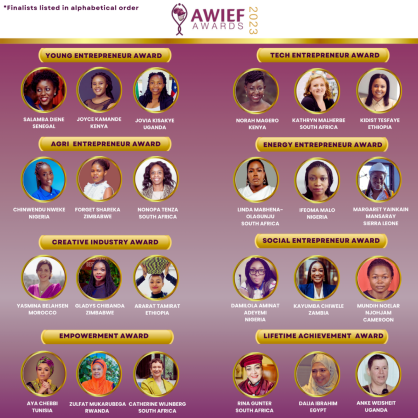
The Africa Women Innovation and Entrepreneurship Forum (AWIEF) (https://www.AWIEForum.org) is delighted to announce the finalists for its 2023 AWIEF Awards.
Launched in 2017, the prestigious annual AWIEF Awards is an initiative to recognise, honour, and celebrate women entrepreneurs and business owners in Africa across various industry sectors for their achievements and contribution to the continent's inclusive economic growth and social development.
An international and independent Panel of Judges selected the twenty-four (24) finalists across eight (8) categories. These outstanding women founders and business leaders operate in a diverse range of sectors and represent companies from fourteen (14) different African countries: Cameroon, Egypt, Ethiopia, Kenya, Morocco, Nigeria, Rwanda, Senegal, Sierra Leone, South Africa, Tunisia, Uganda, Zambia, and Zimbabwe.
The 2023 AWIEF Awards winners will be announced and celebrated at a special ceremony and gala dinner at the AWIEF2023 Conference and Awards, taking place on 9 and 10 November at the Kigali Convention Centre, Kigali, Rwanda.
AWIEF Founder and CEO, Irene Ochem, said: “Given the huge number and calibre of the nominations received this year, it is clear that female entrepreneurship and business leadership is thriving across Africa. It is our honour to recognise and celebrate the achievements and contributions of these women to the inclusive growth of their respective sectors, their countries and the continent's economy.”
A member of the 2023 AWIEF Awards Panel of Judges, John-Paul Iwuoha, Founder of Smallstarter Africa, said: "As a Judge, I was thoroughly impressed by the quality of applications in all the categories. It is great to see how AWIEF continues to attract innovative women across Africa who are creating enormous value for society."
The finalists for the 2023 AWIEF Awards are (listed in alphabetical order):
Young Entrepreneur Award
Salamba Diene, CEO, BIOSENE SARL, Senegal
Joyce Kamande, Co-founder & CEO, Safi Organics, Kenya
Jovia Kisakye, CEO, Sparkle Agro Brand, Uganda
Tech Entrepreneur Award
Norah Magero, Founder & CEO, Drop Access Limited, Kenya
Kathryn Malherbe, CEO, Med Sol AI Solutions, South Africa
Kidist Tesfaye, Founder & CEO, YeneHealth, Ethiopia
Agri Entrepreneur Award
Chinwendu Nweke, CEO, Bridge Merchant Enterprise, Nigeria
Forget Shareka, Founder, Chashi Foods, Zimbabwe
Nonopa Tenza, Founder & MD, Kevinot Farming, South Africa
Energy Entrepreneur Award
Linda Mabhena-Olagunju, Founder & CEO, DLO Energy Resources Group, South Africa
Ifeoma Malo, CEO, Clean Technology Hub, Nigeria
Margaret Yainkain Mansaray, Founder & CEO, Women in Energy Sierra Leone Limited, Sierra Leone
Creative Industry Award
Yasmina Belahsen, Founder, MayaDigital, Morocco
Gladys Chibanda, Founder & CEO, Krafted Ink, Zimbabwe
Ararat Tamirat, Founder & GM, Tuba By Ararat, Ethiopia
Social Entrepreneur Award
Damilola Aminat Adeyemi, Co-founder & CEO, D-Olivette Global Enterprise, Nigeria
Kayumba Chiwele, Founder & Principal Psychologist, MindAid Zambia, Zambia
Mundih Noelar Njohjam, Medical Doctor, Epilepsy Awareness, Aid and Research Association, Cameroon
Empowerment Award
Aya Chebbi, Founder & President, Nalafem Collective, Tunisia
Zulfat Mukarubega, Founder, University of Tourism, Technology and Business Studies, Rwanda
Catherine Wijnberg, Founder & CEO, Fetola, South Africa
Lifetime Achievement Award
Rina Gunter, Founding Partner, Gunter Attorneys, South Africa
Dalia Ibrahim, CEO, Nahdet Misr Publishing House, Egypt
Anke Weisheit, Co-founder & Chair, PHARMBIOTRAC, Mbarara University of Science and Technology, Uganda
Tickets for the AWIEF2023 Conference and Awards are available online at: https://apo-opa.info/3JHKUem
Distributed by APO Group on behalf of Africa Women Innovation and Entrepreneurship Forum (AWIEF).
For more information and media enquiries, email: info@awieforum.org

The 2023 African Conservation Awards, hosted by the Game Rangers' Association of Africa (GRAA) (https://www.GameRanger.org/) and sponsored by CNEI, took place on Saturday, September 16th, at the Southern African Wildlife College in Greater Kruger, South Africa.
This prestigious event honoured outstanding conservationists and showcased their exceptional contributions to protecting Africa's natural heritage.
Reflecting on the journey that led to this gathering, Dr. Larry Hansen, the visionary Founder of the African Conservation Awards said "13 years ago on a visit to The Kruger National Park there were three rhinos poached on the day I arrived. This shocking day led me to start the Rhino Conservation Awards 12 years ago together with Ms. Yu to honour and celebrate the brave conservation heroes that protect and do research on our wildlife.”
Every organisation and individual nominated for these awards has demonstrated exceptional determination to overcome formidable challenges. Often faced with daunting odds, they have showcased an unwavering commitment to their conservation missions. The African Conservation Awards serves as the vital stage where their exceptional efforts are rightfully acknowledged and celebrated.
“There are very few people who are willing to sacrifice to save wildlife,” adds Dr Hansen. “The expanded Awards have this year attracted nominations from 11 countries and incredible candidates. I wish to congratulate the winners and all of those nominated, they are TRUE HEROES and among the last protectors of the planet!"
The Winners for the 2023 African Conservation Awards are:
Best Field Ranger
Winner: Nkateko Letti Mzimba, Sergeant of Black Mambas Unit, Olifants West Nature Reserve, South Africa
Nkateko Letti Mzimba is a shining example of dedication and leadership in conservation. Her journey, beginning in 2014, reflects unwavering commitment and leadership that extends beyond routine patrols. Nkateko serves as a vigilant guardian of rhinos and other endangered species, diligently removing snares to protect wildlife. She also extends her caring hand to local communities, providing essential food and educational resources, and passionately educating the community's children about the importance of protecting nature.
1st Runner Up: Givemore Bako, Senior Ranger and Head Rhino Monitor, Savé Valley Conservancy, Zimbabwe
2nd Runner Up: Reginah Smith, Corporal of the Rhino Protection Unit, Pilanesberg Game Reserve, South Africa
Best Game Ranger
Winner: Amos Gwema, Principle Investigation and Security Officer, Zimbabwe Parks and Wildlife Management Authority, Zimbabwe
Amos Gwema is a dedicated wildlife protector in the Matebeleland region. His jurisdiction includes Hwange National Park, Zambezi National Park and Matopos National Park, which is renowned for its high rhino population. Amos's efforts have made a significant impact, notably reducing elephant and rhino poaching rates while achieving an impressive 95% conviction rate in Hwange and Bulawayo Magistrate courts. He also plays a crucial role in training rangers in wildlife law enforcement and intelligence techniques. Beyond his official duties, Amos engages in community projects, such as school programs and initiatives to encourage the safe surrender of wild animals, fostering a harmonious relationship between local communities and the natural world.
1st Runner Up: Petronella Chigumbura, Deputy Ranger Supervisor, Akashinga, Zimbabwe
2nd Runner Up: Orlat Ndlovu, Head of Ranger Services, Timbavati Private Nature Reserve, South Africa
Best Conservation Team
Winner: Wildlife Action Group, Thuma Forest Reserve and the Dedza Salima Escarpment Forest Reserve, Malawi
Wildlife Action Group (WAG), a Malawian non-profit conservation NGO, was created in 1996 in response to severe illegal commercial deforestation and poaching of wildlife in Thuma Forest. WAG's tireless efforts have restored ecological balance, ensuring the well-being of wildlife and the people of Malawi. They've played a vital role in reviving wildlife populations, preventing elephant poaching for five years, restoring 7,000+ hectares of degraded forest, reducing human-wildlife conflicts, and educating local schools about conservation.
1st Runner Up: Majete Wildlife Reserve, Malawi
2nd Runner Up: Zinave National Park, Mozambique
Best Conservation Supporter
Winner: Rhino Man, South Africa
Rhino Man, with their impactful 8-year film production, sheds light on the courageous South African rangers who risk everything to protect rhinos from extinction. This documentary honours these unsung heroes, showcasing their relentless dedication and the rigorous selection process they undergo. The film pays tribute to their late friend and training partner, Martin Mthembu, while also remembering the late and great Anton Mzimba, who dedicated his life to safeguarding the Timbavati Private Nature Reserve. Rhino Man's work is a testament to the invaluable role of rangers in protecting our precious natural world.
1st Runner Up: Joseph Serugo Ssalongo, Honorary Wildlife Officer, Uganda
2nd Runner Up: African Pangolin Working Group, South Africa
In a heartfelt video message, His Serene Highness Prince Albert II of Monaco, the esteemed Patron of the African Conservation Awards, paid tribute to the dedicated conservation heroes who have made the ultimate sacrifice. He honoured the memory of the 68 rangers who tragically lost their lives while safeguarding our natural heritage in the past 12 months. Additionally, Prince Albert extended his heartfelt tribute to the remarkable "633 African rangers killed in the fight for the preservation of our wilderness since 2011." His words resonated with deep respect for the thousands of individuals who daily face enormous risks, even putting their lives on the line, to protect the precious biodiversity, nature, and our planet, of which they are the unwavering and loyal stewards.
"Congratulations to all winners, runner ups and nominees of the 2023 African Conservation Awards! Your unwavering commitment to the conservation of our wildlife is both commendable and deeply inspiring. I wish to emphasize the pivotal role you each play in safeguarding our continent's invaluable natural resources. Your dedication to conservation is instrumental in shaping a brighter and more sustainable future for Africa. It is an honour and privilege for the Game Rangers' Association of Africa to recognise your remarkable achievements. Well done!" - Andrew Campbell, CEO, Game Rangers Association of Africa
The 2023 African Conservation Awards celebrated these exceptional individuals and organisations for their unwavering commitment to preserving Africa's natural heritage. They inspire us all to work toward a sustainable and harmonious future for our continent and its incredible wildlife.
In addition to the awards ceremony, the morning of the event witnessed the Game Rangers Association of Africa hosting the South Africa Hub Regional Challenge of the Wildlife Ranger Challenge. This unique sporting event took place at the South African Wildlife College, where rangers and their supporters united to run a challenging 21 kilometers in solidarity with wildlife rangers across Africa.
The primary objective of this initiative is to raise crucial funds in support of the courageous men and women on the front lines of Africa's protected areas. Beyond fundraising, the event also serves as a powerful platform to increase awareness of the ever-expanding and diverse roles that wildlife rangers undertake. These dedicated individuals are often operating with increasingly stretched resources, making their tireless efforts even more remarkable.
The African Conservation awards are hosted annually by the Game Rangers' Association of Africa (GRAA) and are made possible with the generous support of sponsors Chinese New Enterprise Investment (CNEI) and are endorsed by the Department of Forestry, Fisheries and Environment. His Serene Highness Prince Albert II of Monaco, who is committed to the protection of endangered species through the support of his Foundation, is the Patron of the African Conservation Awards.
For more information about the African Conservation Awards, please visit ConservationAwards.Africa.
Distributed by APO Group on behalf of Game Rangers Association of Africa.
Media Contact:
Game Rangers Association of Africa
Louise De Bruin
Email: info@gameranger.org
Love Africa Marketing
Casey Pratt
Email: casey@loveafricamarketing.com
Information:
GRAA background:
The Game Rangers' Association of Africa (GRAA) is a non-profit organisation, founded in 1970 which provides support, networks and representation for rangers across Africa. The GRAA is a proud member of the International Ranger Federation (IRF) and the International Union for Conservation of Nature (IUCN) where it serves as the voice of the African ranger.
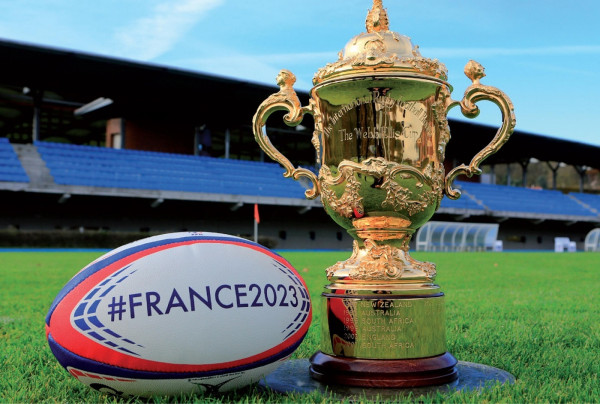
Today, Canon (Canon-CNA.com) begins its role as the Official Imaging Supplier of the Rugby World Cup 2023, which will be the third Rugby World Cup tournament it has sponsored. As the Official Imaging Supplier of Rugby World Cup 2023, Canon provides world-leading technology that ensures fans don't miss a moment of the action. Canon will be supplying a full range of support from its diverse businesses, including cameras, lenses, video camcorders and network cameras. As with many major sporting events, Canon Professional Services will be available, where its team members will be providing technical support to more than 800 press, 400+ photographers, 300+ TV crew personnel, 300+ agency staff and 70+ radio personnel. Support includes camera and lens maintenance services and product loans, ensuring they are equipped to capture every nail-biting moment.
AFP Partnership
In addition to its official imaging role, Canon is supporting several activities off the pitch that are designed to champion inclusivity across the sport. This includes an exciting partnership with the AFP, which will see one aspiring young photographer from each of the participating nations partnered with a staff photographer, equipped with a Canon camera.
Earlier this year, ahead of the tournament, each pair worked on an assignment together that illustrated their nation's relationship with the Rugby World Cup through photography. By allowing the next generation to show the world what the tournament means to their nation, we can celebrate the diversity of the sport and inspire a world of change.
Partnership with the Portuguese National Team
At the Rugby World Cup 2023, Canon will be giving members of the Portuguese national team PowerShot V10 (https://apo-opa.info/3VTs35H) cameras and will be featuring their stories on its website, enabling them to catalogue their tournament journey through their own lens.
Let's Celebrate our Differences
Rugby is a universal sport. It brings together women and men sharing key values of the sport such as solidarity, commitment, and respect, no matter where they come from and no matter who they are. These values have been celebrated in a unique international “Celebrating Our Differences” (https://www.LetsCelebrateOurDifferences.com/en/) photography competition, of which Canon is an official sponsor.
Once again, ahead of the tournament, the power was handed to fans across the world, to illustrate what the sport means to them. The winners of the challenge – from France, Argentina, Uganda, India, and Vietnam – were awarded prizes that included 16 Canon cameras: 12 Canon EOS R50s for the winners of each category and 4 EOS R8s for Canon's favourites. The photographs can be found on display on the gates of the UNESCO's headquarters in the seventh arrondissement of Paris until the 6th September, as well as during the tournament at the host cities of this year's Rugby World Cup.
See the winning images here (https://apo-opa.info/3Ewr6Zr).
“We're delighted to be the Official Imaging Supplier of the Rugby World Cup this year, following two great tournaments in England and Japan” says Peter Morris, Brand and Sponsorship Senior Manager, Canon EMEA. “We've also been thrilled to participate in the AFP partnership and the “Celebrate our Differences” photography competition, two initiatives that put the power of imaging in the hands of the diverse fans that help make this tournament such a special event. We hope that these moments, captured through the lens of our iconic imaging equipment, will help drive positive change.”
Rugby World Cup 2023
Host country: France
Tournament period: September 8 – October 28, 2023
Participating teams: 20 (South Africa, Namibia, England, Wales, New Zealand, Japan, France, Australia, Ireland, Scotland, Italy, Argentina, Fiji, Samoa, Uruguay, Georgia, Romania, Portugal, Tonga and Chile.
Distributed by APO Group on behalf of Canon Central and North Africa (CCNA).
Media enquiries, please contact:
Canon Central and North Africa
Mai Youssef
E-mail: Mai.youssef@canon-me.com
APO Group - PR Agency
Rania ElRafie
E-mail: Rania.ElRafie@apo-opa.com
About Canon Central and North Africa:
Canon Central and North Africa (CCNA) (Canon-CNA.com) is a division within Canon Middle East FZ LLC (CME), a subsidiary of Canon Europe. The formation of CCNA in 2016 was a strategic step that aimed to enhance Canon's business within the Africa region - by strengthening Canon's in-country presence and focus. CCNA also demonstrates Canon's commitment to operating closer to its customers and meeting their demands in the rapidly evolving African market.
Canon has been represented in the African continent for more than 15 years through distributors and partners that have successfully built a solid customer base in the region. CCNA ensures the provision of high quality, technologically advanced products that meet the requirements of Africa's rapidly evolving marketplace. With over 100 employees, CCNA manages sales and marketing activities across 44 countries in Africa.
Canon's corporate philosophy is Kyosei (https://apo-opa.info/3xeczh6) – ‘living and working together for the common good'. CCNA pursues sustainable business growth, focusing on reducing its own environmental impact and supporting customers to reduce theirs using Canon's products, solutions and services. At Canon, we are pioneers, constantly redefining the world of imaging for the greater good. Through our technology and our spirit of innovation, we push the bounds of what is possible – helping us to see our world in ways we never have before. We help bring creativity to life, one image at a time. Because when we can see our world, we can transform it for the better. For more information: Canon-CNA.com.

By Jason Mitchell
Africa's vast natural gas reserves are key to bringing energy to Africa's poorest countries, to a solid industrialisation process throughout the region and to significant poverty reduction.
The region is home to 33 of the world's 46 least-developed countries (LDCs) with an average income per head of less than $1,018 a year. The continent's poorest countries must expand at 6-7% a year if poverty is to be reduced in a big way and if the life chances of hundreds of millions of people are to be improved. To achieve this goal, these countries require abundant and cheap energy. Luckily, for many African states, the answer lies on their own doorstep — natural gas. Gas has remained a niche fuel in sub-Saharan Africa — contributing only 5% of the total energy mix against a global average of 20-25% — but its potential is enormous.
A new vision for Africa is required — a criss-crossing network of natural gas pipelines that brings energy to all corners of the region. The continent's contribution to global greenhouse gas emissions is tiny and will only become slightly bigger if the region's natural gas reserves are exploited. There is also a massive opportunity to wean poor Africans away from the use of biomass fuel and to help protect the region's forests through the rollout of small, liquified petroleum gas (LPG) stoves. Climate change is an issue in Africa but poverty reduction is a bigger one. Poverty is the biggest killer in Africa today.
It's very hard for Europeans and North Americans to imagine what it's like to live on under $1,018 a year, to not have readily available electricity, to not have a refrigerator or a washing machine, to not have a car, to not have a lawnmower, to not be able to fly from one country to another cheaply, to not have electricity in the school or the workplace and to have to use firewood or charcoal for cooking purposes. Fossil fuels have been at the heart of the Industrial Revolution that has brought prosperity and better living standards to the developed world. People in the First World must be very careful if they decide to deny Africans the same chance to prosper.
Africa has the lowest energy use per capita in the world — the average electricity use of a sub-Saharan African resident is lower than that of a household fridge in the United States. Average consumption per person in sub-Saharan Africa, excluding South Africa, is a mere 185 kilowatt-hours (kWh) a year, compared with about 6,500kWh in Europe and 12,700kWh in the US. Every year San Antonio, Texas, with a population of 1.5m people, uses as much electricity as the whole of Nigeria, with 203m people. Golden, Colorado, a small town with only 19,000 people, uses as much electricity as Chad, a country with 16m people.
The UN's Sustainable Development Goal Seven aims to “ensure access to affordable, reliable, sustainable and modern energy for all” by the year 2030. That's a tall order. In 2019, 917m people in Africa (around 80% of the region's population) relied on wood, charcoal, kerosene, animal and crop waste or other solid fuels to cook their food and heat their homes. The International Energy Agency (IEA) reports that almost 490,000 people die prematurely every year in sub-Saharan Africa from household air pollution-related causes — stemming from the lack of access to clean cooking facilities. Gas is a much cleaner form of cooking than biomass and its use should be encouraged. Biomass burning-power plants emit 300-400% more CO2 than natural gas per unit energy produced. Natural gas emits almost 50% less carbon dioxide than coal.
Africa has one-fifth of the world's population but contributes only 3% to global greenhouse gas emissions. Incredibly, some 48 sub-Saharan African countries, excluding South Africa, have an estimated share of global emissions of only 0.55%. The fact is that many African states are already at net zero. If the continent were to use an additional 90bn cu m of natural gas per year — or 50% more than today — the resulting emissions would only raise Africa's cumulative contribution to global carbon emissions to 3.5% (ten gigatonnes) by the year 2050, according to the IEA. It really is a tiny increase compared to the chance of reducing poverty levels for hundreds of millions of poor people. If Africa is to provide universal electricity access by 2030 it would have to almost double its total generation capacity from around 260gw today to 510gw.
Almost half the continent's 55 countries have proven natural gas reserves. Across the region, natural gas reserves amount to around 17.5trn cubic metres (cu m), making up around 9% of the world's total gas reserves. They are considerable in northern Africa (accounting for 45% of African reserves) and western Africa (32%), in particular. Commercial quantities of natural gas have been found in many African countries.
Previously, only four countries from the region have been major natural gas production hubs: Nigeria (with total gas reserves of 5.8trn cu m), Algeria (4.5trn cu m), Egypt (2.2trn cu m) and Libya (1.5trn cu m). These four accounted for 78% of African gas reserves in 2021 (https://apo-opa.info/48gDBWG), according to the United States Energy Information Administration.
However, seven African countries — Mozambique, Senegal, Tanzania, Mauritania, South Africa, Ethiopia and Morocco — with no history of fossil gas exploitation have now opened up their doors to gas projects. Some 84% of new reserves in the pre-production stage are found in these states — total new reserves amount to 5.1trn cu m. Mozambique has re-production reserves of 2.3trn cu m, Senegal 779bn cu m, Mauritania 575bn cu m, Tanzania 512bn cu m, South Africa 96bn cu m, Ethiopia 42bn cu m and Morocco 39bn cu m.
Furthermore, major untapped reserves have been discovered in Angola, Cameroon, Ghana, Equatorial Guinea, the Republic of the Congo, Kenya and Uganda. A number of these states — including Mozambique, Tanzania, Mauritania and Senegal — are actively marketing natural gas to capitalise on recent discoveries. In fact, the IEA has declared Africa the ‘new frontier' in global oil and gas.
The big four gas-producing countries will continue to dominate gas production in the near term but experts estimate that Mozambique and the other new entrants will contribute more than 50% of the region's gas production by 2038.
Natural gas can be used for electricity generation, industry and domestic use. Crucially, harnessing Africa's gas could provide the baseload power needed to boost Africa's capacity to process its raw materials locally. It could provide enough energy for industrial processes, including steel and cement production and paper and pulp manufacturing. It could be also used to make fertiliser to raise agricultural yields. Renewables, including solar and wind, cannot yet provide enough energy for these purposes.
The huge reserves of gas can play a significant role in the continent's energy transition, as natural gas has a much lower carbon footprint than oil and coal. Critically, natural gas development and renewable power are not mutually exclusive. If Africa were to triple its use of natural gas, the United Nations Economic Commission for Africa (Uneca) estimates that the region would be able to increase its use of renewable energy eight-fold. Reliable forms of energy such as gas can be used to stabilise a grid powered by intermittent sources such as wind and solar. It can play a key role in a ‘just' energy transition.
However, expanding gas supply across Africa would require a whole web of new gas pipelines and that does not come cheap. A lot of the gas from the new projects already under way in Africa is destined for international markets, including the European Union — which have been seeking new sources of energy since the Ukraine crisis — but it is vital that the region's gas reserves are deployed for domestic use, as well. Nigeria, for example, sits on the continent's largest known natural gas reserves but only 55% of the population had access to secure electricity in 2020.
Multilateral financial institutions (MFIs) — many of which are headquartered in the developed world — are now shying away from investing in natural gas projects in Africa because of pressure from a vociferous green lobby. In 2021, 20 countries — including almost all the world's big, rich democracies — pledged to stop almost all financing of new fossil fuel projects internationally by the end of 2022. Furthermore, under the Glasgow Financial Alliance for Net Zero (GFANZ), 450 financial firms across 45 countries, responsible for over $130trn in assets, committed to accelerate the global decarbonisation process. The problem is that most Western governments and financial institutions do not distinguish between coal, oil and gas, and the pressure to stop funding all hydrocarbons has negatively impacted gas projects in Africa in a big way.
Some of the continent's biggest financiers — including the African Development Bank (AfDB) — are finding it increasingly difficult to support gas project developments that require loan syndication and foreign partners. The World Bank is pulling back, too. Local banks cannot finance major gas projects on their own, as they are limited by their capital base. In particular, the fossil fuels divestment campaign is having a big impact on the amount of development and concessional finance available. This kind of finance used to support a number of gas projects for their poverty-reducing and economic development value.
For example, without the guarantees of development finance institutions (DFIs), most of Africa's recent gas-to-power plants would have never been built in the first place. The withdrawal of development finance from downstream gas and gas-to-power projects is a serious cause for concern for Africa's electrification effort and moving the needle on energy access.
Furthermore, there is a glaring double standard — many European countries have increased their use of hydrocarbons (coal as well as gas) since Russia's invasion of Ukraine. They are constructing new fossil fuel pipelines at home. The EU recently classified natural gas a ‘green' fuel, which will allow Europe's projects to be backed by investors committed to environmental, social and governance (ESG) principles. European countries are now looking towards African states for new sources of gas. However, they are not prepared to back new gas projects in Africa that would supply the fuel to the region itself. That smacks of hypocrisy of the worst kind. How can you deny the poorest people in the world the sort of energy that you want to use yourselves?
Lumping all hydrocarbons together is a blunt policy mechanism that is not good from an emissions perspective either. In poorer places, like sub-Saharan Africa, the available alternative to gas is not renewable electricity but rather coal, diesel and, most of all, polluting biomass. In sub-Saharan Africa, demand for biomass fuels is expected to surge by 40% by the year 2040 if ‘business as usual' continues. The burning of biomass is a major contributor to global carbon emissions and charcoal has been a top driver of tropical forest loss during the past two decades, with the greatest footprint in Africa. The continent's carbon sinks need protecting and the irony is that the greater use of gas would achieve that.
Africa is home to 18% of humanity but receives less than 5% of global energy investment. And much of this investment goes on producing oil and gas for export. There must be much more investment in the region for the domestic use of gas. Gas projects could play an absolutely vital role in bringing energy to Africa but obviously the projects require financing. DFIs must think again about their decision to limit investment in new projects in Africa. The financing of a network of gas pipelines throughout Africa would be one of the quickest and surest ways of industrialising the region in a big way and of alleviating poverty on a large scale. Renewables just cannot do that how ever much wishful thinking takes place.
In fact, development institutions should go one step further and consider subsiding a massive roll out of small LPG stoves to millions of poor households in the region. It could be one of the biggest moves in contributing to Africa's decarbonisation effort by arresting the pace of deforestation in the region. LPG is recovered from ‘wet' natural gas (gas with condensable heavy petroleum compounds) by absorption and reaches the domestic consumer in cylinders under relatively low pressures. The widespread adoption of LPG stoves would reduce the amount of pollutants in the air from biomass fuels. Poor households that currently depend on woodfuel for cooking require a cleaner cooking alternative — LPG is one of the solutions.
LPG stoves are also suitable for domestic use in rural settings — a key consideration in Africa where energy poverty is greatest in the countryside. For instance, in 2016, electricity access in urban and rural areas in Nigeria was 86% and 34%, respectively, according to the World Bank.
Africa only needs to look to Asia for examples. In 2006, Indonesia implemented a ‘mega-programme' to induce a large-scale transition from kerosene to LPG stoves in order to reduce government spending on kerosene subsidies. The initiative invested in LPG infrastructure, domestic cylinder production and consumer awareness. By 2012, 93% of the target had been reached and LPG consumption had grown by almost 350%.
In India, LPG access expanded through the early-2000s but it was still not reaching most poor families. To boost access among the poor, the Indian government introduced the Pradhan Mantri Ujjwala Yojana (PMUY) Scheme. Under it, the country's oil marketing companies provide subsidies to reduce the cost of both LPG connections and cylinder refills to women in households classified as below the poverty line. In 2016, the cost of a connection was about Rupees 3,200 ($48) and included the first full cylinder (plus deposit), deposit for a regulator, an LPG stove and administrative fees.
Furthermore, African governments must consider increasing domestic gas allocations from liquified natural gas (LNG) export projects. These are an effective way to ensure that even if developers prioritise lucrative exports over local sales, they must reserve part of their production for the domestic market. Upcoming LNG terminals in sub-Saharan Africa — for example, in Mozambique — now make it compulsory to allocate a specific amount of gas to the domestic market. The availability of domestic gas from export facilities can encourage gas-based industrialisation (for example, in Senegal) or additional gas-to-power capacity (Mozambique, Mauritania and Senegal). In August 2022, for instance, Senegal's Petrosen Trading & Services signed an MoU with Turkey's Çalık Enerji and Japan's Mitsubishi for the pre-feasibility study of a gas-based ammonia and urea manufacturing unit.
It is a huge mistake to lump all hydrocarbons together and for Western environmentalists to argue that no new new fossil fuel projects should happen in Africa whatsoever. Deforestation is one of the biggest issues in Africa today. Poor Africans must be weaned off the use of wood-based fuels. The widespread adoption of small LPG stoves would be one of the surest ways of reducing deforestation. Natural gas could also form the basis for a solid, large-scale industrialisation process in Africa — something that is essential if the region is to achieve the sort of economic growth needed to lift hundreds of millions of people out of poverty.
Distributed by APO Group on behalf of African Energy Chamber.
SA to participate in SA-Uganda Investment Summit
Trade, Industry and Competition Deputy Minister, Nomalungelo Gina, is leading a delegation of 65 South African business representatives to a two-day Uganda – South Africa Investment and Trade Summit which started today in Kampala, Uganda.
The summit brings together trade and investment policymakers, business communities, trade support institutions, regional and multilateral organisations from Uganda and South Africa, to explore investment and trade opportunities.
The main goal is to improve bilateral trade between the two countries and to mobilise higher levels of private sector investments into priority sectors in Uganda.
The summit, which ends tomorrow, is being held at the Speke Resort in Munyonyo, Kampala.
This summit follows a business forum held in February 2023 in Pretoria on the margins of President Museveni’s State visit to South Africa.
This summit has a particular focus on agriculture and agro-processing, Information Communication and Technology, manufacturing, energy and oil and gas.
The current status of bilateral trade is that South African exports to Uganda have decreased from R2.1 billion in 2018 to to R1.7 billion in 2022, while South Africa’s imports from Uganda have increased from R102 million to R304 million during the same timeframe.
There will also be an effort to mobilise higher levels of private investments into priority sectors in Uganda, as identified under the National Development Plan of Uganda (NDP III) and therefore they will ensure that by the end of the two days, a platform for networking and investment facilitation will be created between to fast track trade and business deals. – SAnews.gov.za
Edwin
Tue, 09/05/2023 - 10:46
Didiza to lead SA delegation to Trade and Investment Summit in Uganda
Agriculture, Land Reform and Rural Development Minister, Thoko Didiza, will participate in and lead the second Uganda/South Africa Trade and Investment Summit from 5 - 6 September 2023 in Kampala, Uganda.
The summit aims to encourage interaction and dialogue between various entities in the two countries, which may result in sustainable growth in trade and investment.
“The focus of the event is on the agro-industry to reflect on the importance of agriculture in the Ugandan economy, although not to the exclusion of other sectors,” the Department of Agriculture, Land Reform and Rural Development said.
Trade relations between the two countries have been growing until the recent slowdown as a result COVID-19 pandemic.
The department said while South Africa’s businesses are well established -- with the Forum for South African Business in Uganda (FOSABU) as an anchor to the South African business community in Uganda -- Ugandan businesses have had little success in penetrating the South African market due to the poor quality of products exported from Uganda, inadequate phytosanitary standards and high visa costs.
FOSABU is a business association that was formed in 2015. It comprises South African companies doing business in Uganda and other companies operating in Uganda that have strong linkages to South Africa.
The first edition of the Uganda-South Africa Investment and Trade Summit was held in Pretoria in February 2023, and was addressed by both South African President Cyril Ramaphosa and the President of Uganda, Yoweri Kaguta Museveni.
The Presidents agreed to work together to improve the business operating environment between the two countries, including addressing all challenges affecting the private sector.
The second Uganda-South Africa Investment and Trade Summit 2023 will be held under the theme, 'Accelerating Investments and Trade between Uganda and South Africa'. – SAnews.gov.za
GabiK
Mon, 09/04/2023 - 11:01
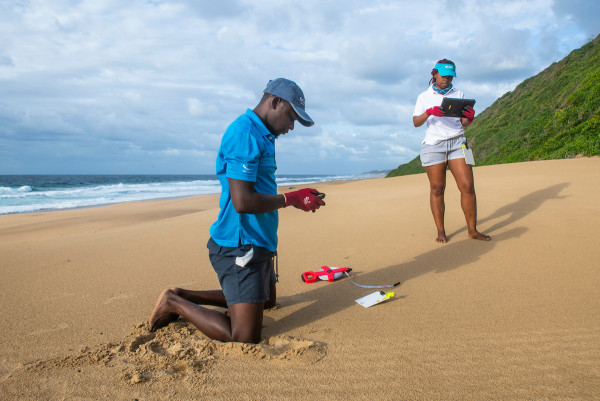
This year, the announcement of the winners of the prestigious African Conservation Awards will be held at the Southern African Wildlife College on 16 September 2023 and hosted by the Game Rangers Association of Africa (https://www.GameRanger.org/).
The Awards will take place after a regional event of the Wildlife Ranger Challenge, a Pan-African initiative which will see ranger teams across the continent compete against each other in a 21km race, carrying 22kgs on their backs! The Southern African Wildlife College is a perfect venue to host both these important events on the ranger calendar.
Each organisation and individual that has been shortlisted has shown remarkable determination to succeed when the odds have often been stacked against them. Conservation areas continue to face many challenges, including limited resources and working against criminal syndicates. Despite this, remarkable people continue to do amazing things for wildlife and the communities who benefit from it.
“The African Conservation Awards showcase extraordinary people doing extraordinary things for nature. It is our privilege to give them the recognition they so richly deserve. Well done to all the nominees who continue to inspire us with their dedicated contribution to conservation. We look forward to celebrating their exemplary efforts!” Andrew Campbell, Chief Executive Officer of the Game Rangers' Association of Africa.
60 nominations from 11 countries across Africa were received this year. What is also very encouraging to see is the increase in nominations of female rangers which resulted in half of the finalists in the Field Ranger and Game Ranger categories being female. We are also excited to see the different countries across Africa represented among the finalists. Highlighting the quality of nominations this year, we have a “Highly Commended” acknowledgment in each of the four categories. Although these are not finalists, they deserve special mention and must be applauded.
The finalists for this year's African Conservation Awards, listed in alphabetical order below, are:
Field Ranger:
Game Ranger:
Conservation Team:
Conservation Supporter:
Highly commended nominations by the judging panel for their excellent work were given to Field Ranger Owenyo Alphonse (Uganda) and Marine Ranger Tima Dago (Kenya); Game Rangers Ali Hassan (Kenya) and Simon Ewoi (Kenya); EWT Soutpansberg Rangers (South Africa) for Conservation Team and Johannesburg Wildlife Veterinary Hospital (South Africa) for Conservation Supporter.
These awards are hosted annually by the Game Rangers' Association of Africa (GRAA) and are made possible with the generous support of sponsors CNEI. His Serene Highness Prince Albert II of Monaco, who is committed to the protection of endangered species through the support of his Foundation, is the Patron of the African Conservation Awards.
The winners of each category will be announced on 16 September at SAWC where they will be celebrated by their ranger colleagues.
Distributed by APO Group on behalf of Game Rangers Association of Africa.
Contact persons:
Louise de Bruin
info@gameranger.org
Casey Pratt
casey@loveafricamarketing.com
Please join us on social media here:
Facebook: https://apo-opa.info/3ElcHze
Instagram: https://apo-opa.info/3EkEuzF
Information:
GRAA background:
The Game Rangers' Association of Africa (GRAA) is a non-profit organisation, founded in 1970 which provides support, networks and representation for rangers across Africa. The GRAA is a proud member of the International Ranger Federation (IRF) and the International Union for Conservation of Nature (IUCN) where it serves as the voice of the African ranger.
Hundreds protest in Sandton where summit is underway

The African energy sector serves as a catalyst for global development, and in this dynamic industry that powers the modern world, a select group of remarkable women have emerged as trailblazers. The African Energy Chamber (AEC) (www.EnergyChamber.org) is proud to announce the “25 Under 40 Energy Women Rising Stars' - individuals whose dedication, ingenuity and unwavering commitment serve as beacons of hope and pillars of inspiration. These women are redefining the possibilities within a traditionally male-dominated field, and the AEC proudly celebrates the rising stars who are leading the way towards making energy poverty history by 2030.
In no particular order:
Gbemisola Adeyemi Afolabi, Junior Geoscientist, AMNI International
Adeyemi Afolabi, a budding Junior Geoscientist at AMNI International, is an emerging force in the energy sector. With a Masters' Degree in Energy Geosciences from Rice University, she brings a fresh perspective to her role. Adeyemi's educational background, combined with her passion for geoscience, underscores her dedication to exploring and understanding the Earth's resources. Afolabi's commitment to harnessing scientific knowledge for practical energy solutions sets her apart as a promising talent within AMNI International.
Ibilola Akinnola, LNG Shipbroker, Maersk
Ibilola Akinnola has a wealth of experience across the legal and logistics fields, and represents an individual whose creativity, commitment and drive has advanced the global energy industry. A qualified Solicitor and Barrister of the Supreme Court of Nigeria, Akinnola went on to complete her Masters' degree in International Shipping Law at Queen Mary University of London. Now, she works at integrated logistics company Maersk as the LNG Shipbroker, and continues to make a lasting impact in the industry.
Rekik Bekele, CEO and Founder, Green Scene Energy
Rekik Bekele is a seasoned professional with over 10 years of experience in renewable energy. With a BSc in Electrical Engineering, she leads Green Scene Energy PLC as its CEO, providing affordable solar solutions in Ethiopia. Bekele also serves as a board member at Ethiopian Solar Energy Development Association, an Acumen fellow, and founder of PurposeBlack ETH and Run Africa. Her diverse initiatives drive positive change in energy and social development.
Sarah Bouzid, Technical Sales Lead: Production Systems Division, Schlumberger
Sarah Bouzid is a Chemical Engineer and Technical Sales Lead for Schlumberger's Production Systems Division – representing the only woman in this role in MENA region. Her expertise lies in the Audit to Optimize program, where she engages with clients to enhance process equipment performance. After completing an engineering degree from Bourmerdes University, she worked in various roles at Sonatrach. Navigating the largely male-dominated sector, Bouzid serves as a beacon of hope for women in science and engineering.
Sandra Chukwudozie, CEO, Salpha Energy
Sandra Chukwudozie is the Founder & CEO of Salpha Energy, a company dedicated to providing clean, affordable and innovative energy solutions for a carbon-neutral future. She is also Executive Director of Dozzy, one of Africa's largest petroleum storage facilities. After completing her studies at the University of Dundee in 2015, Chukwudozie dedicated her professional life to supporting economic growth through energy development, gaining experience in international management, industrial relations and economics. Her innovation, resilience and ability to embrace change has made her a leader in her field and an inspiration to many across the industry.
Nadia Simao da Costa, HR People Analytics Supervisor, Chevron
Nadia Simao da Costa is the People Analytics Supervisor at Chevron and represents the youngest person to be selected for Human Resource leadership at the company in Angola. Leveraging analytics and evidence to develop strategies to manage the current and future workforce needs, Simao da Costa is a strong advocate for inclusivity and human capital development. As the African energy sector grows and more people enter the workforce, professionals such as Simao da Costa serve as valuable role models.
Eghosa Ebube, Portfolio Analyst, Chevron Nigeria
Eghosa Ebube, initially Project Engineer and now Portfolio Analyst at global energy powerhouse Chevron, brings a wealth of expertise to the table. Having honed her skills in various roles including Onshore Construction Engineer, she has emerged as a force to be reckoned with in the energy sector. Her adeptness in engineering and her dedication to innovation shine through in her work, making her a pivotal contributor to Chevron's and Nigeria's energy success.
Katuiscia Laurence Ewane, General Field Engineer, SLB
With a Masters in Industrial Engineering from Ecole Nationale Supérieure Polytechnique, Katuiscia Laurence Ewane has spent several years working for global energy services company SLB. She currently serves as a General Field Engineer for the company and has pioneered several successful initiatives, including a new approach for the integration of Drilling Fluids and Cementing Fluids; completing a complex cementing operation on Mt Cameroon; and spearheading community outreach under the SLB Excellence in Educational Development program. Ewane is a testament to the important role female engineers play in Africa.
Taimi Itembu, Public and Government Affairs, ExxonMobil
A Harvard Kennedy School graduate with over 14 years' experience in leadership, energy and policy, Taimi Itembu represents an inspirational leader in Namibia's energy sector. She has served in various roles in the Namibian Government, showcasing her aptitude for policy dialogue and partnership building to drive transformation across the region. Her leadership in energy and exploration includes advocating for Africa strategy, investment protection, and a favorable operational environment, and as an industry expert, she represents a beacon of impactful leadership.
Anine Kilian: Managing Editor, Energy Capital & Power
Anine Kilian is a strong advocate for Africa's energy development. Currently serving as the Managing Editor for Africa-focused investment platform Energy Capital & Power, Kilian's journey began as a dedicated journalist and editor after studying at the Tshwane University of Technology in South Africa. Her career has taken her worldwide, and her expertise led her to become a pivotal writer at Creamer Media before joining Energy Capital & Power in 2018. Recognizing her talent and passion, Kilian was swiftly promoted to Managing Editor in 2021. Her journey epitomizes resilience, growth and a commitment to driving Africa's energy narrative at a time when the continent needs it most. Kilian represents a standout figure in the landscape of energy journalism and advocacy.
Ubuhle Noluti Mtetwa, National Manager, Secondary Logistics, bp Southern Africa
Armed with a degree in Transport Economics and Logistics Management, Ubuhle Noluti Mtetwa spearheads innovative projects in a traditionally male-dominated industry. In a relatively short period of time, Mtetwa climbed the ranks at bp from Logistics Intern to National Manager of Secondary Distribution. Now, she supports diversity efforts, using her platform to not only advance logistics in Africa's energy industry but support the progression of others.
Faith Musimenta, Senior Petroleum Economic and Financial Analyst, Petroleum Authority of Uganda
Faith Musimenta is currently the Senior Petroleum Economic and Financial Analyst at the Petroleum Authority of Uganda (PAU), where she leverages her skills in investment analysis to develop oil and gas financial models for billion-dollar projects. After competing her studies at the University of Dundee, Musimenta worked for various financial institutions including Citi Bank, Diamond Trust Bank and DFCU Bank. She represents an inspiration for women across the African financial sector, and continues to advocate for both inclusivity, sustainability and development of Uganda's oil and gas industry.
Nancy Asantewah Nkansah, Resource Manager: Planning and Supply Chain for West Africa, SLB
Nancy Asantewah Nkansah, a Resource Coordinator at SLB with 8+ years' experience, excels in planning chemical requirements and workforce coordination for efficient operations. With a BA in Political Science and a Geography minor, she spearheads resource management, enhances supply chain efficiency and facilitates environmentally responsible practices. From groundbreaking innovations to resilient problem-solving, Nkansah is redefining the energy industry in Africa.
Ezinne Nnachetta, Development Geologist, Chevron
Following the completion of her MSc in Petroleum Geoscience at Imperial College London, Ezinne Nnachetta has gained significant experience as a leading geoscientist for global energy major Chevron. Her 10-year commitment to the company demonstrates her dedication to opening up new hydrocarbon basins, integrating innovation with petroleum and forging new paths for women in energy. Nnachetta represents a role model for aspiring women in the field.
Teresa Isabel Nnang Avomo, CEO, GEPetrol
Teresa Isabel Nnang Ovomo, accomplished CEO of Equatorial Guinea's national oil company GEPetrol, ascended to the position after working in various positions at the company, including Deputy Director of Operations where she streamlined and optimized the NOC's upstream operations. Armed with a Masters from Heriot-Watt University, her journey includes various pivotal roles at Repsol. Avomo's leadership exemplifies operational acumen, innovation and drive, and she serves as an inspirational figurehead, both in Namibia's and Africa's energy sectors.
Monique Ntumngia, CEO, Green Girls Project
Monique Ntumngia is a sustainability entrepreneur and advocate for climate-gender justice. Founding Green Girls Organization, a Pan-African energy social enterprise, she leverages AI to pinpoint clean energy challenges faced by women in African rural communities. She is also the Founder of Monafrik Energy, whereby Monique measures and compares environmental impacts in supply chains, advancing clean energy initiatives. Her impactful work exemplifies her dedication to providing clean, affordable energy solutions not just in Cameroon but across Africa and beyond.
Lynette Nyagah, Project Lead, Bentworth Energy
As Project Lead at East Africa's pioneer oil and gas service company, Lynette Nyagah plays a pivotal role in establishing robust operational and quality systems. A graduate from the University of Cape Town, Nyagah gained experience in the sector as a Field Engineer for Baker Hughes. Now, she plays an instrumental part in positioning Bentworth as a globally recognized and competitive firm. Advocating for innovation in carbon footprint reduction, automation for enhanced efficiency, and the increase in participation by local African companies, Nyagha is an inspiration to many in the industry.
Oneyka Cindy Ojogbo, Partner, Centurion Law Group
Oneyka Cindy Ojogbo has a proven track record of providing strategic counsel to clients in complex energy transactions and projects. A graduate of Columbia Law School, Ojogbo currently serves as a Partner of Centurion Law Group, a pan-African legal and business advisory group. Throughout her career, Ojogbo has counselled clients across power, energy and infrastructure sectors. Her work has covered multiple sectors and tackled transactions of varying complexity, with her determination, passion and vision serving as an inspiration for many.
Isioma Okolo, Reservoir Engineer, Shell
Isioma Okolo is a Reservoir Engineer with the Shell Petroleum Development Company in Nigeria. She holds a Bachelor of Engineering Degree in Petroleum Engineering from The Federal University of Technology Owerri and an MBA from the Edinburgh Business School, Heriot-Watt University. Having worked as a Consultant in Pricewaterhouse Coopers and as a Society of Petroleum Engineering Certified Engineer, Okolo is paving the way for a prosperous future for Africa and beyond.
Uzochukwu Ozoh, Legal Advisor, Chevron
With a LLM from the University of Dundee and an MBA from Imperial College Business School, Uzochukwu Ozoh has emerged as an accomplished transactional lawyer who merges business acumen, legal prowess and risk analysis within the energy sector. Currently serving as Legal Advisor at Chevron, Ozoh guides a team of legal experts facilitating intricate gas, commercial, and supply chain transactions exceeding US$1 billion. Her mastery of stakeholder relations, leadership and organizational development makes her a force to be reckoned with.
Lecticia Sepulvede, Public and Government Affairs Advisor, ExxonMobil
Lecticia Sepulvede has a Masters in Petroleum, Energy, Economics and Finance from the University of Aberdeen and currently serves as the Public and Government Affairs Advisor for global energy major ExxonMobil. Her vision is to support Mozambicans achieve their full potential, and she works closely with stakeholders to facilitate safety and security efforts in the Cabo Delgado province of the country. Her commitment to people, her focus on the energy sector, and her ability to manage stressful environments makes her a highly valuable and admirable energy professional.
Eman S Shahin, Performance Lead and Senior Petroleum Engineer, Dragon Oil Egypt
Eman Shahin is a proficient Performance Lead and Senior Petroleum Engineer (SPE) at Dragon Oil Egypt, and boasts over 9 years' experience in reservoir, petroleum and production engineering. Her prowess spans budgeting, production forecasting, reservoir development planning and optimizing waterflood management. As a leader and coach at SPE Egypt, her commitment to mentorship shines. With roots at Cairo University and experience at GUPCO, Shahin's journey embodies expertise, leadership and fostering an inclusive energy landscape.
Mwanyengwa Ndapewoshali Shapwanale, Director: Communications and Stakeholders Relations, ReconEnergy Namibia
Mwanyengwa Ndapewoshali Shapwanale is the Director of Communication and Stakeholder Relations at Recon Energy Namibia. With a degree in Communication and Media Studies from the University of Cape Town and 10 years' experience in journalism and communication, she brings valuable compliance and ESG skills to her role in the energy sector. As the youngest member of Recon's management, she plays a pivotal role in shaping the organization's communication landscape.
Natznet Tesfay, VP Economics & Country Risk, S&P Global
Natznet Tesfay is Vice President of Economics & Country Risk at S&P Global Market Intelligence. Leading a global team of 150+ experts, she forecasts economic and country risk outlooks. With a rich background at IHS Markit and Exclusive Analysis, her expertise spans geopolitical analysis, energy transition and supply chain alignment. With degrees from Harvard University, The London School of Economics, and SOAS University of London, she has emerged as a trailblazer and advocate for Africa's economic future.
Nidra Araba Yebuah, Digital and Integration Account Manager for Ghana and Equatorial Guinea, SLB
Nidra Araba Yebuah is an accomplished Senior Geologist and Account Manager with over a decade of experience in the oil and gas service industry. She blends technical proficiency with business acumen to excel in her role. Her expertise spans data interpretation, geological environments and technical sales support. Yebuah has significantly contributed to sub-Saharan African operations, demonstrating innovation and leadership in the dynamic industry.
Call for Nominations
If you were not chosen this year, or if you nominated someone who was not selected, please understand that the process is highly selective, and we encourage you to re-submit updated information in 2024. We welcome suggestions of well-deserving candidates throughout the year. Simply email awben@energychamber.org. We look forward to honoring outstanding 25 Under 40 Energy Women Rising Stars again in 2024.
Distributed by APO Group on behalf of African Energy Chamber.
Cape Town, South Africa – Specialist Commercial Legal consultancy Caveat Legal has announced a new programme to help African companies comply with the myriad different Data Protection Laws across the multiple jurisdictions on the African continent. The last two years have seen a massive uptake in data protection laws and regulations in Africa with South …
The Capital City of South Africa, Tshwane will become the backdrop for an unforgettable experience on Sunday 27 August 2023 as the city prepares to host the inaugural Absa RUN YOUR CITY TSHWANE 10K! “We’re thrilled to celebrate the debut of the Absa RUN YOUR CITY Series in Tshwane on August 27,” expresses Michael Meyer, …
FAME Week Africa, the prestigious event celebrating outstanding achievements in the African entertainment industry, is pleased to announce its media partnership with ayoba, the leading African SuperApp. This strategic collaboration is set to amplify ayoba’s reach and engagement within the African market while complementing FAME Week Africa’s mission to promote excellence and innovation across the …
The field deepens as the darling of South African road running, Gerda Steyn, confirms her entry into the inaugural Absa RUN YOUR CITY TSHWANE 10K that will take place in the Jacaranda City on Sunday 27 August 2023. After a record-breaking year in which she shattered her own Totalsports Two Oceans Marathon record (becoming the …
Hammarsdale-based radial truck tyre recycler, Mathe Group, has received a new Waste Management License for a new R65-million plus tyre recycling facility which will be positioned alongside its already highly successful existing operation. CEO of Mathe Group and sister company, Van Dyck, Dr Mehran Zarrebini, says that negotiations with a potential funder are well under …
Starbucks National Barista Championship 2023: Bloemfontein’s Thapelo Reigns Supreme On July 20-21, Starbucks South Africa held its annual National Barista Championship at Starbucks Paarden Eiland, Cape Town. This year’s competition took a thrilling twist, as 7 Starbucks District Champions competed against each other, representing various corners of South Africa, including the bustling cityscape of Johannesburg, …
Cloudmania, launched by Liquid C2 in 2021 to support Africa's digital transformation journey, opens its doors for the Mauritius channel partner ecosystem. With partners in 22 countries across the continent, Cloudmania is committed to providing cloud and cyber security services to partners within an ecosystem defined by support, expertise, and enablement.
Vinay Hiralall, Managing Executive of Cloudmania, said, “Our operations have grown exponentially, in the last year itself, we have grown from 100 partners to over 500. This highlights that our value proposition resonates with channel partners across the continent. We have a deep understanding of the channel ecosystem and work with partners to provide the technical enablement, operational efficiency, and solution portfolio to drive their businesses forward. Winning the Microsoft Partner of the Year award in Ethiopia and Côte d'Ivoire in 2022 and 2023, respectively, reinforces our commitment to delivering solutions that propel cloud adoption and partner growth and accelerate digital transformation for businesses in Africa”.
All resellers that partner with Cloudmania receive access to a suite of market-leading solutions tailored to suit their customers' needs. Cloudmania aims to help channel partners better manage their business by creating a single-pane view via an always-on platform that assists with billing and subscription management services. In addition to providing partners with programmes that drive sales enablement, they also have access to our marketing initiatives and technical advisories. By alleviating the backend operations, partners can focus more on their core business of expanding their operations and increasing their customer base.
Cloudmania understands the critical role cloud and cyber security technologies play in today's digital economy. “Being recognised by one of the largest global hyper-scalers like Microsoft as ‘Partner of the Year' is testimony to Cloudmania's unwavering commitment towards ushering change, development, and progress through technology, and we hope to win next year's award for Mauritius,” concluded Hiralall.
Distributed by APO Group on behalf of Liquid Intelligent Technologies.
About Cloudmania:
Launched by Liquid C2 in 2021, Cloudmania is a Cloud Services and Solutions provider extending convenience, diversity, and a range of services. The company has opened its doors to numerous countries across the African continent, including South Africa, Uganda, Tanzania, Kenya, Rwanda, Zimbabwe, Zambia, Nigeria, Ghana, Mauritius, Ethiopia, Côte d'Ivoire, Senegal, Cameroon, Botswana, and the Democratic Republic of Congo serving the mission to bring about digital disruption using the power of the cloud. Cloudmania offers cutting-edge solutions to provide a full suite of partner-focused products and services. The organisation was awarded a Microsoft Partner of the Year in Ethiopia 2022 and Côte d'Ivoire in 2023. For more information: https://Cloudmania.Africa/
About Liquid C2:
Liquid C2 is a business of Liquid Intelligent Technologies, a pan-African technology group, offering managed cloud and security services, product solutions, and related professional and advisory services in 22 African countries. It operates Africa's widest Azure Stack deployment across four countries and deployed the only African Cyber Security Fusion Centres in South Africa and Kenya, with another four to be launched in 2023. Liquid C2 was selected as an Operator Connect launch partner by Microsoft in six countries. The organisation was a finalist in the Microsoft Partner of the Year 2021 in South Africa and Microsoft Partner of the Year in Ethiopia and Côte d'Ivoire in 2022 and 2023. https://LiquidC2.com/
President Ramaphosa to attend Netball World Cup closing
President Cyril Ramaphosa is expected to attend and deliver remarks at the final match of the Netball World Cup held at the Cape Town International Convention Centre in the Western Cape.
This has been the first instance where an African country has hosted the tournament.
“As the host nation, we have been honoured to welcome players and supporters from all over the globe and we look forward to an exciting final and the successful conclusion of the tournament.
“Of course we encourage our guests to extend their stay and be inspired in new ways by the many amazing experiences South Africa has to offer,” President Ramaphosa.
On Sunday, the Spar Proteas bowed out of the tournament with a sixth place finish following their defeat to Uganda. – SAnews.gov.za
NeoB
Sun, 08/06/2023 - 13:41
Leaders of African Peace Initiative makes progress
The Leaders of the African Peace Initiative have recognised progress achieved since the proposals discussed with Russian President Vladimir Putin at their first meeting on 17 June 2023 in St. Petersburg.
The leaders made proposals on humanitarian issues, in particular, related to the rights of children in areas of armed activities and prisoner exchanges between Russia and Ukraine, and agreed that humanitarian efforts would continue to bring further results.
The seven African leaders issued a joint Statement on Thursday following the engagement between them and the President of the Russian Federation on 28 July in St. Petersburg, in the Russian Federation.
At that engagement last week, the leaders continued their discussion on the African Peace Initiative, which they started on 17 June 2023.
“The Leaders recognised progress achieved since then on proposals they discussed at the first meeting on 17 June 2023 on humanitarian issues, in particular, related to the rights of children in areas of armed activities and prisoner exchanges between Russia and Ukraine, and agreed that humanitarian efforts would continue to bring further results.
“The Leaders called for specific steps to remove obstacles to Russian grain and fertilizer exports, thus allowing the resumption of the full implementation of the Black Sea package initiative of the United Nations Secretary-General as endorsed on 22 July 2022 in Istanbul,” the statement read.
The leaders further called upon the United Nations to take necessary action in order to release 200 000 tons of Russian fertilizer blocked in European Union seaports for immediate and free delivery to African countries.
The leaders have agreed to continue their dialogue on the African Peace Initiative so that a door to peace can be opened.
African Leaders attending the meeting on 28 July 2023 were:
- President Azali Assoumani of the Comoros in his capacity as Chair of the African Union;
- President Cyril Ramaphosa of the Republic of South Africa;
- President Denis Sassou Nguesso of the Republic of the Congo;
- President Abdel Fattah-el Sisi of the Arab Republic of Egypt;
- President Macky Sall of the Republic of Senegal;
- President Yoweri Museveni of the Republic of Uganda;
- Foreign Minister of Zambia, Stanley Kakubo.
Advancing SA's international interests
President Cyril Ramaphosa has welcomed the 2nd Russia-Africa Summit Declaration that included cooperation in a number of strategic areas, including Science and Technology, Energy, Trade and Investments, and Defense and Security Cooperation.
This after he concluded a successful working visit to the Russian Federation where, together with Leaders of African countries, a clear call for tangible and mutually beneficial and effective cooperation between Russia and the countries of the African Continent was made, during the summit which took place in the country's cultural capital, St. Petersburg.
President Ramaphosa highlighted the importance of a monitoring and evaluation mechanism that will assess the level and pace of implementation of the Summit commitments.
He concluded his working visit to Russia with a meeting at the Konstantinovsky Palace where the two Presidents discussed South Africa and Russia’s bilateral relationship, which is built on strategic partnerships in several areas of cooperation, including energy, industry, and agriculture.
“The discussions further sought to strengthen the two countries’ cooperation in the areas of education, science and technology, with a particular focus on space and satellite technology development,” Magwenya said.
Telephone call with Canadian Prime Minister Justin Trudeau
Meanwhile on Wednesday, President Cyril Ramaphosa held a telephone discussion with Prime Minister Justin Trudeau of Canada.
The Prime Minister expressed his deep appreciation for the 600 South African firefighters that demonstrated excellence and diligence during their support in extinguishing the wild fires that ravaged parts of Canada.
“In turn, Prime Minister Trudeau offered Canada’s support in the event South Africa experiences any form of disaster in the near future.
“The Prime Minister also expressed his appreciation for South Africa’s contribution to the African Peace Initiative to Russia and Ukraine, and committed his support to search for a peaceful solution to the conflict.
Both leaders agreed to continue their bilateral cooperation and to further collaborate in 2025, when Canada hosts the G7 summit, while South Africa will be hosting the G20,” Magwenya said. – SAnews.gov.za
DikelediM
Fri, 08/04/2023 - 10:54

Uganda's Bar Aviation (https://www.BarAviationUg.com/) has made a ground breaking achievement in the field of wildlife transportation in coordination with BAR the leading aviation company in Uganda. BAR successfully completed a task to transport a group of eighteen Rhinos on the weekend of 3rd to 4th of June 2023 with its C-130 aircraft from South Africa to Congo. The aviation sector gained a boost of confidence as Uganda's unwavering commitment to conservation was emphasized by this monumental event.
Download document: https://apo-opa.info/444BXEr
The extraordinary journey of these majestic creatures marks a significant milestone in wildlife transportation and further establishes Uganda as a key player in global conservation efforts. According to the Wildlife Conservation Society, Uganda has long been recognized as a leader in wildlife conservation, ranking second richest for mammals and 13th in the World. It is also home to diverse ecosystems and a rich array of plant and bird species.
The successful transportation of these rhinos reinforces the cardinal environment and policies created by the Ugandan government that have enabled private organizations to partake in initiatives meant to preserve its heritage and contribute to global conservation efforts. Bar's successful operation underscores the rapid development and competence of Uganda's aviation industry as such ventures are economically demanding operations that require precision execution.
The African Parks CEO Peter Fearnhead said “efforts to save the northern white Rhino was a case of ‘too little, too late' and should never be allowed to happen again” and so Bar is ready to embark on this move since Garamba is a safe location and has proper protection.
As BAR's CEO Barak Orland puts it, “This is an incredibly profound moment for us at BAR Aviation. Our team worked tirelessly over many months to make this dream into reality and we are delighted that we could be part of something so meaningful for both our country's image abroad as well as for global conservation efforts”.
This remarkable feat achieved by BAR Aviation highlights their commitment towards pushing boundaries within aviation services while providing safe and reliable solutions that help preserve our planet's precious resources. The successful transport of these Rhinos is testament to Uganda's dedication towards making sure no stone is left unturned when it comes to protecting nature's most valuable assets - its wildlife.
Distributed by APO Group on behalf of BAR Aviation Ltd.
Bar Aviation is based at Kajjansi Airfield, 20 miles North of Entebbe airport OR you can reach us ON TEL: +256 020 072 2200 OR at Email: nathan@baraviationug.com
Contact:
Bukenya Nathan
Tel: +256 0775 953 569
Email: nathan@baraviationug.com
The Public Accounts Committee (Central Government) has kicked off another probe into the affairs of the Uganda Netball Federation (UNF) regarding an unaccounted expenditure of Shs139.3 million during a 2021 trip in Namibia.
This query arises from the Auditor General's report for Financial Year 2020/2021. It is noted by the Auditor General that in October 2021, the National Council of Sports (NCS) disbursed Shs186 million to UNF for preparation and participation of the She-Cranes, Uganda national netball team in the 2021 Pent Series and Africa Netball Championship respectively in Namibia held between 29 October and 17 November 2021.
Out of the Shs186 million disbursed, Shs139.3 million was meant for accommodation of the 27-member contingency, while Shs9.6 million was meant for Visa fees, Shs6.7 million for COVID-19 tests, Shs1.7 million for medical tests, Shs5.3 million for participation fees, Shs13.5 million for players' allowances and Shs10 million for team kits.
However, according to the Auditor General's report, a review of the invitation letter from Netball Namibia, the country's netball association revealed that accommodation costs while in Namibia were to be fully covered by the hosts [Namibia].
During the committee probe on Monday, 22 May 2023, the MPs noted that it was fraudulent for the netball federation to present receipts worth Shs139.3 million in respect to accommodation from Safari Hotels Namibia yet the item was reportedly paid for by the host country.
“According to what is on record, accommodation was supposed to be provided by the host. UNF and NCS have presented accountability indicating that they had receipts for accommodation. So we need to know was accommodation provided by the host or not? If so, where are the documents?” committee deputy chairperson, Hon. Asuman Basalirwa, asked.
The NCS General Secretary, Dr Bernard Patrick Ogwel, said that the disbursement of the funds for the Namibia trip was based on a requisition formally communicated to them by the UNF President, Sarah Kityo.
“The requisition had the relevant documents which included an invoice from Safari Hotels Namibia of US$39,033 equivalent to Shs139 million… Accountability documents including vouchers were submitted by UNF and we received it and forwarded to relevant committees,” Dr Ogwel said, adding that Council did not know that the Namibian government had taken care of part of the costs until they received a petition from some UNF officials who were suspended by the federation president.
“People who were suspended by the president [Kityo] provided additional information and we noted that the original letter sent from Namibia was actually not forwarded to us and what was forwarded to us did not provide the sponsorship by the Namibian government,” Dr Ogwel added.
To support his argument, Ogwel tabled to the committee all the accountability documents from the federation particularly the invoices, vouchers and receipts on the Shs139 million expenditure.
In response, Kityo refuted reports that the Namibian government fully or partially covered costs and challenged NCS to provide evidence.
“I want NCS to present any proof that African champion paid even for a single bottle of water. This is a 2021 audit query and by now someone from NCS or Ministry of Education should have travelled to Namibia on a fact-finding mission,” she said.
Kityo also denied most of the documents submitted by Dr Ogwel saying “there is a lot of witch hunt when it comes to accountability of Uganda Netball Federation.”
Hon. Basalirwa said the contested documents will be subjected to the Criminal Investigation Department (CID) and handwriting experts to rule out any cases of forgery.
On 11 May 2023, the committee whilst probing the NCS discovered loopholes in the accountability of Shs100 million allocated to UNF in the Financial Year 2021/2022 for the International Male Netball Championship in South Africa to facilitate the preparation of Uganda's men netball team, the Rock, to participate in the championship in South Africa in September 2021.
Following the discovery, the committee handed the Kityo, Richard Muhumuza (Vice President) and Aidah Nambusi (Treasurer) to the Parliament Police Criminal Investigation Department for further management.
Both Muhumuza and Nambusi pointed fingers at their president for allegedly diverting a huge chunk of the money for her personal use at the expense of the planned activities.
Distributed by APO Group on behalf of Parliament of the Republic of Uganda.
The Leader of Opposition in Parliament, Hon. Mathias Mpuuga, has called for an emergency bridge on River Katonga along the Kampala-Masaka Highway until the Uganda National Roads Authority (UNRA) constructs a new one.
According to Mpuuga, the provisional arrangement will in meantime support the transport of persons and light merchandise.
He made the statement during his on-spot assessment of roads on Monday, 15 May 2023 that were affected by the flooding of River Katonga.
Hon. Mpuuga started his visit at the main bridge along the highway, in Mpigi district which caved in on Thursday, 11 May 2023. Thereafter, he inspected the damaged bridge that connects Gomba to Kalungu district along the Villa-Maria, Kyamulibwa- Kabulasoke Road.
Here, the bridge was washed away a week prior and travelers now use canoes to connect from one side to another. The LOP, accompanied by several members of his cabinet, ended his visit in Ssembabule district.
Following the flooding of River Katonga and the eventual damage visited on the bridge by ravaging storm waters, travelers from Kampala, the capital city, were advised to use the Mpigi-Butambala-Ssembabule Road as an alternative, while those from Masaka were asked to use the Masaka-Ssembabule Road.
"It is very unfortunate, the damage has greatly affected the local and national economy because this being a highway, it is a gateway to almost five neighbouring nations. Trade has been interfered with and movement of people...school children, persons going to hospital across Kayabwe... generally the general way of life of the community has been interfered with," said Hon. Mpuuga.
He said that alternative routes were not prepared for this kind of traffic and noted that the old bridge could have been built with substandard technology.
“If you look at the bars of the broken bridge...clearly there was a lot of compromising done. But I hope it is a huge lesson to engineers in UNRA as well as the environmentalists. This particular problem was just about to happen...it is only that it took a bit longer," Mpuuga said.
He recounted a decision made in the 10th Parliament advising government to halt rice growing and limit excavation of sand in Lwera.
"The interference with the eco-system could have been stopped long time ago. We all know that people mining sand in Lwera have no restoration or decommissioning programme to restore the environment. The rice growers are expanding...interfering with the eco-system and nature is fighting back," he added.
Hajjat Aisha Nakirijja, the Vice Chairperson, Mpigi District Local Government, expressed concern about the damaged bridge saying that markets for traders within the community are no longer accessible and that health facilities, like Nkozi hospital and Masaka referral hospital cannot be accessed by several people.
Fenekansi Sserwadda, the Kilyamenvu Village Local Council 1 chairperson also said that the 48 kilometre Villa-Maria, Kyamulibwa- Kabulasoke Road is key in transportation of the sick and goods from Masaka and that the current route through Ssembabule is longer, hence making it expensive for the locals to move goods to markets.
UNRA has assured the public that emergency repair works on the damaged bridge along the highway will take about three weeks.
The shadow ministers that accompanied the LOP included Hon. Yusuf Nsibambi (Works and Transport), Hon. Hilary Kiyaga (Culture and Performing Arts), Hon. Betty Naluyima (Local Government), Hon. Joyce Bagala (Information and Anti-Corruption), Hon. Gorreth Namugga (Science, Innovation and Communication Technology), Hon. Fortunate Nantongo (Gender, Labour and Social Development), Hon. Helen Nakimuli (Animal Industry and Fisheries), Hon. Francis Katabaazi (East African Community Affairs) and Kyamuswa County MP, Hon. Moses Kabuusu.
Distributed by APO Group on behalf of Parliament of the Republic of Uganda.
“Uganda is Africa in miniature,” said Susan Ngongi Namondo, United Nations Resident Coordinator in Uganda, at the wrap up of the Flexible Voluntary Contribution (FVC) Resource Partners' Field Trip, held in Uganda from 1 to 5 May. “All the development challenges that are faced in the rest of the African continent are present here,” she continued, “including gender gaps, extreme weather events, land tenure issues, and a high number of youths entering the labour market every year.” Nevertheless, Uganda holds also immense potential. “The country is blessed in terms of weather and natural resources,” added Antonio Querido, Representative of the Food and Agriculture Organization of the United Nations (FAO) in Uganda. “Agriculture can help absorb the youth workforce, which brings many opportunities for economic growth and innovation.”
The FVC Resource Partners' Field Trip, co-organized by the FAO Representation in Uganda and the Secretariat of the FVC, allowed resource partners to have a first-hand experience of how FVC-funded interventions have been instrumental to harnessing opportunities and addressing the most pressing challenges in the country. Ten officials of the FVC resource partners participated in the field trip, representing the governments of Belgium, Flanders, Netherlands, Norway, and Sweden.
A systemic response to development challenges
“The FVC is a unique, pooled, voluntary funding instrument established in 2010, which allows resource partners to support FAO's response to development challenges in a timely and cost-effective manner, in support of the Sustainable Development Goals,” explained Festus Akinnifesi, Head of Multi-Partner Initiatives and Flexible Funds in the FAO Resource Mobilization and Private Sector Partnerships Division (PSR).
Since its establishment, the FVC has supported over 65 projects in more than 80 countries, transforming hundreds of thousands of lives. In Uganda, FAO is implementing 14 out of the total 53 FVC-funded projects in the 2018-21 funding cycle. The impact can be seen at all levels – from policymaking to rural households.
The FVC Field Trip included field visits to beneficiaries in rural areas and strategic meetings with key stakeholders, such as Government officials and local implementing partners.
“Uganda is being looked upon as a country that other countries can learn from,” said Siobhan Kelly, FAO Agribusiness Economist, during the meeting with the Chair of the National Food Systems Coordination Committee (NFSCC). The NFSCC, hosted by the Office of the Prime Minister, embodies Uganda's coordinated approach towards the realization of the commitments made during the National Food Systems Dialogues. Currently, FAO is working with the Government to translate the national post-summit agenda into action.
The meetings with representatives from the Ministry of Foreign Affairs (MoFA), the Ministry of Agriculture, Animal Industries and Fisheries (MAAIF), incubators, diaspora networks, and youth organizations provided valuable opportunities to discuss FAO's work to boost decent employment in the Ugandan agrifood system, from different angles.
For instance, through FVC funds, FAO supported the establishment of the Uganda Diaspora Agribusiness Network (UDAN), which facilitates the transfer of knowledge and investments from diaspora members to Ugandan youth-led agribusinesses, as explained by Giulia Castro, FAO Migration and Rural Employment Specialist. The initiative is also helping young agripreneurs access foreign markets. Ambassador Johnny Muhindo, Head of the Diaspora Department in the Ministry of Foreign Affairs, commended these efforts.
Listening to rural communities
Uganda's small-scale fisheries sector, centred around the large lakes across the country, is an important source of employment for local communities. While fishing remains a male dominated activity, members of the Kiyindi Women Group in Buikwe explained how the fishing inputs, drying racks, kilns, and the training in post-harvest handling provided by FAO have empowered them, boosting their economic activities and enhancing their food and income security.
In Mubende,local farmers engaged in FAO's Farmer Field Schools (FFS) have benefited from training on group dynamics, agribusiness, innovative agricultural practices, village banking opportunities and gender equality and women's economic empowerment.
As a result, members of the Ssaka Women groupcurrentlygrow vegetables, rear poultry, and have been raising and saving money for three years with plans for business expansion. Members of the Balitulabilako FFS group in Lugala apply soil and water conservation practices,and prioritize coffee production. They are working to increase production, acquire value-addition technologies and market better.
“Scaling up is key,” said Festus Akinnifesi. “In Uganda we have seen a great model of partnership with stakeholders at all levels, we have heard life changing testimonies from the beneficiaries, and we are learning about successful practices that can be replicated elsewhere.” According to Priya Gujadhur, Deputy FAO Representative in Uganda, “The FVC funding instrument is key to bringing innovation, leveraging capacity, and creating catalytic effects. We need to connect it to bilateral investments to scale up impact.”
The feedback provided by FVC resource partners during the field trip is crucial to charting the way forward and identifying key priority areas, including further integration of interventions at UN level, in the context of the agrifood system transformations strategy.
FAO appreciates the generosity of all eleven resource partners that made flexible voluntary contributions in the 2018-21 funding cycle: Australia, Belgium, Flanders, France, Ireland, Italy, Netherlands, New Zealand, Norway, Sweden, Switzerland.
Distributed by APO Group on behalf of FAO Regional Office for Africa.
Members of the Committee on Health on a tour of select districts in Northern Uganda are perturbed by the impact of Nodding Disease on children.
In a meeting with the Gulu District Local Government leaders on Thursday, 11 May 2023, the committee led by its deputy chairperson, Hon. Joel Ssebikaali, was informed that there are 135 registered cases in the different sub counties across the district.
Nodding syndrome is a type of epilepsy characterised by repeated head-nodding seizures that appear in previously healthy children aged between three and 18 years.
The MPs were also shocked by the increasing level of hunger in in the region despite interventions like provision of oxen to plough people's land.
“We have moved to many districts like Gulu, Omoro and Pader where we have discovered a number of families being hit by hunger,” said Ssebikaali, advising the district leadership to initiate different avenues to sensitise their people about food security.
Santa Labong, a mother of two infected children, Patricia Auma, aged 18 and Ireen Odong, aged 24, said she relied on subsistence farming to provide for her family.
However, she is now constrained to tend her garden as she has to remain home to care for the sick children.
The Gulu District Health Officer (DHO), Dr Kenneth Canna, told the MPs the lack of a specialised clinic to treat Nodding Disease patients had left them with no option but to use the Out Patients Department.
According Dominic Okidi, who represented the DHO for Pader, some of the patients had died as result of drowning at the wells where they are sent to fetch water or fallen into fire places in the kitchens – all because of their condition that makes them unstable and vulnerable to falling.
Okidi requested that two treatment centres and a rehabilitation facility are constructed to treat and manage the patients.
Distributed by APO Group on behalf of Parliament of the Republic of Uganda.


