• Skip to main content
  • Skip to header right navigation
  • Skip to after header navigation
  • Skip to site footer
MyZA

MyZA

News, Directory, Events and Other Stuff

  • Social Media
  • Sport
  • World News
  • Home
  • Submit News
  • Directory
  • Events
  • Stratlec
  • TFSA
  • News
    • APO
    • Today’s Sport News
    • Todays Social Media and Tech Headlines
    • Today’s World News
    • Today’s SA Financial News
  • Contact
You are here: Home / Archives for Water

Water

1 April 2025

BMA reflects on progress made since its establishment 

Location: News

BMA reflects on progress made since its establishment 

While challenges remain, progress has been made in strengthening South Africa’s border management systems, Commissioner of the Border Management Authority (BMA), Dr Michael Masiapato, said on Tuesday.

“Beside the administrative successes relating to the establishment of the new organisation, there are operational successes, worth mentioning,” he said.

Some of the successes since the authority’s establishment in April 2023, include intercepting stolen vehicles. The authority also successfully managed the movement of heads of state and government technocrats from all over the world as well as a higher number of journalists for the BRICS Summit that the country hosted in August 2023. 

“We were able to apprehend or arrest over 468 000 individuals who were attempting to enter the country illegally since 1 April 2023,” he said, adding that 2 344 wanted criminals were also arrested. 

Additionally, over 262 explosives used in the explosion of rocks during illegal mining operations and the blowing up of cash-in-transit vehicles were also confiscated.

“The establishment of the BMA sought to create a single authority to effect border law enforcement with a single command and control. Contrary to what some people consider to be the functions of the Border Management Authority, our function is not just about stamping passports at the ports of entry,” Masiapato said.

The Commissioner was speaking at the High-Level Colloquium on Migration, in Pretoria.

He said the BMA exists to secure South Africa’s borders and concurrently facilitate legitimate movement of people and goods in all ports of entry and border law enforcement areas. The BMA Act provides for the BMA to collaborate with relevant stakeholders in executing its border law enforcement functions in the Ports of Entry and the Border Law Enforcement areas.

“The Border Management Authority plays a crucial role in facilitating the smooth movement of people, goods, and services across borders while ensuring the safety and security of the country,” he said.

The authority also works to prevent the introduction of invasive species, pests and diseases that can harm the environment and ecosystem.

“We also ensure that all imports and exports comply with environmental regulations, such as the Convention on International Trade in Endangered Species of Wild Fauna and Flora (CITES). The BMA also monitors the movement of hazardous waste across borders to prevent illegal dumping and ensure compliance with international regulations.

“We also inspect food and water imports to ensure they meet international health standards and regulations. We also monitor the movement of vectors, such as mosquitoes and ticks, to prevent the spread of vector-borne diseases,” the Commissioner explained.

He told those attending the colloquium that the authority is most known for its immigration function.

“In this regard, the BMA inspects travel documents, such as passports and visas, to ensure they are authentic and valid. We also monitor the movement of people to ensure compliance with immigration regulations and laws,” he said.

In the last 24 months, the BMA has screened millions of travellers for infectious and communicable diseases and “those we picked up with diseases have been referred to medical facilities for further medical attention.”

Masiapato said despite the achievements, challenges exist.

“Illegal migration, human trafficking and transnational organised crime continue to pose serious threats to our national security and public safety,” he said.

In June 2013, Cabinet made the decision to establish a Border Management Agency under the guidance of the Department of Home Affairs.

President Cyril Ramaphosa launched the Border Management Authority on 5 October 2023, in Musina, Limpopo. – SAnews.gov.za

Edwin
Tue, 04/01/2025 - 14:29
235 views
Read moreBMA reflects on progress made since its establishment 
1 April 2025

Third sluice gate opened to increase Vaal Dam water outflows

Location: News

Third sluice gate opened to increase Vaal Dam water outflows

With the Vaal Dam water levels at 107.30%, the Department of Water and Sanitation (DWS) has opened a third sluice gate at the dam to increase water outflows and manage the increase of inflows.

The third sluice gate which was opened on Tuesday afternoon, will increase water outflows to approximately 400 cubic metres per second (mᵌ/s), and manage the increase of inflows from upstream due to the ongoing rains.

The department reassured that the current water releases by the three sluice gates are still within the safe operational limits and are not expected to lead to overtopping of riverbanks downstream.

“Grootdraai Dam, located in Mpumalanga in the Upper Vaal River Catchment, which is upstream of Vaal Dam, had one sluice gate opened by one metre, and has now been increased to 1.5 metres to increase the water releases. The dam is currently sitting at 103.37%.

“At Bloemhof Dam, water outflows have been temporarily closed today due to maintenance work currently underway. As soon as the maintenance is completed today, water releases will resume and will be staggered over several hours to prevent wave-action flooding downstream,” the department said in a statement.

Additionally, increased outflows from Vaal Dam are expected to reach Bloemhof in three to four days and will result in water levels rising at the dam.

“If necessary, these increases will be managed by gradually increasing outflows from the dam. The dam levels are [at] 96.65%.”
The department added that it is implementing these necessary water releases at the dams as part of dam safety precautions to safeguard infrastructure and ensure that there is full storage capacity after the rainfall season.

The department opened the second sluice gate at the Vaal Dam on Friday, 28 March.

READ | Second sluice gate opened to increase Vaal Dam water outflows

The DWS is continuously monitoring the water levels in the Vaal River System. – SAnews.gov.za
 

GabiK
Tue, 04/01/2025 - 15:40
116 views

Read moreThird sluice gate opened to increase Vaal Dam water outflows
31 March 2025

Stakeholders commit to improved water services for all 

Location: News

Stakeholders commit to improved water services for all 

Stakeholders in the water sector have committed to collaborative efforts to implement tangible plans and reforms outlined at the recent Water and Sanitation Indaba aimed at improving water security and services for all citizens.

This pledge was made on the final day of the two-day Water and Sanitation Indaba, held at the Gallagher Convention Centre in Midrand, Johannesburg, from 27-28 March 2025.

At the Indaba, stakeholders including government representatives, agreed to work together and hold each other accountable for their actions and commitments. Stakeholders also agreed to increase investment in water research and development as well as technological transfer.

They also agreed to recognise the existing body of knowledge including indigenous systems as well as promote the inclusion of women, youth, and people with disabilities in the water and sanitation sector.

Several key resolutions were also made during the event, including a commitment by the Department of Water and Sanitation (DWS) to finalise the establishment of the National Water Resource Infrastructure Agency by mid-2026, and the creation of Catchment Management Agencies, set to be completed by July 2025.

The Water Service Authorities (WSAs) pledged to adopt a utility model for water and sanitation to ensure operational efficiency while maintaining municipal ownership, to be implemented within three years.

A utility can be a ring-fenced internal department, municipal entity, water board, special purpose vehicle, or concession, amongst other options.

Additionally, the South African Local Government Association (SALGA), in collaboration with the Departments of Co-operative Governance and Traditional Affairs (CoGTA) and DWS, committed to implement a coordinated Municipal Systems Act Section 78 consultative process, according to the timeframes in the plan. This process will facilitate the appointment of capable Water Service Providers (WSPs). This should lead to the appointment of capable Water Service Providers (WSPs).

In line with good governance and legal compliance, it was resolved that all WSAs must separate their WSA and WSP functions, accounting for them independently within one year. Resolutions on this matter should be presented to Council within three months.

The metropolitan municipalities were also tasked to implement the Reform of Metropolitan Trading Services Programme. This includes establishing or appointing ring-fenced, professionally managed utilities, either internal or external, for water and sanitation services within two years, with support from National Treasury and relevant departments.

Stakeholders also agreed that COGTA should review the current local government structure including the appropriateness of the two-tier system, followed by the review of the allocation of WSA status to municipalities.

Furthermore, the DWS committed to finalise the amendments to the Water Services Act for tabling to Parliament by May 2025.

“Following this, [the] DWS [is] to put in place an operating licensing system for Water Services Providers by June 2026. DWS to provide guidance to WSAs on the different options for external WSPs, on request from April 2025, and to issue guidelines on the roles and functions of WSAs versus WSPs by April 2025.

“[The] DWS and AWSISA [Association of Water and Sanitation Institutions of South Africa] to develop a plan for building Water Boards’ capacity and readiness to provide a retail WSP function to WSAs if requested, informed by a capacity assessment of the Water Boards, by end July 2025,” the declaration read.

Non-revenue water programmes 

Meanwhile, all WSAs and WSPs that have not yet established non-revenue water programmes, will be required to have these in place by May 2025.

These programmes should cover:

•    Budgets for maintenance and for reducing leaks in water distribution systems;
•    Ensuring that all reported leaks are fixed quickly;
•    Closing illegal water connections; 
•    Replacing old leaking pipes, including asbestos pipes (which are a danger to health);
•    Improving management of water systems (through pressure management for example); and
•    Strengthening metering, billing, and revenue collection, including ensuring that billing systems are accurate.

All WSAs that have not yet ring-fenced revenues from the sale of water for the water function, will be required to bring resolutions to their Councils within six months.  The DWS will facilitate provincial workshops with all WSAs in each province to develop a common understanding of "ring-fencing."

“All WSAs to review their indigent registers and ensure the provision of free basic water to the indigent within two years. All other water users to be billed and revenue to be collected from all other users. DWS and the Water Partnerships Office to develop Green and Blue Bond financing mechanisms with the private sector, for implementation by Catchment Management Agencies and WSAs, starting immediately.”

In his weekly newsletter on Monday, President Cyril Ramaphosa said a well-functioning water and sanitation sector is not only a constitutional right and a pillar of development, but also a crucial factor in driving economic growth and job creation.

READ | Water and sanitation sector is a key cog in economic growth 

President Ramaphosa underscored the importance of efficient water management in boosting investor confidence and ensuring sustainable development. – SAnews.gov.za
 

GabiK
Mon, 03/31/2025 - 14:41
313 views

Read moreStakeholders commit to improved water services for all 
31 March 2025

SCOPA Alarmed Following Oversight Visit to Two Eastern Cape Municipalities

Location: News

Republic of South Africa: The Parliament
Download logo

At 8 pm on Friday, 28 March 2025, the Standing Committee on Public Accounts (SCOPA) concluded its week-long oversight visit to the Eastern Cape's OR Tambo District Municipality and Buffalo City Metropolitan Municipality where it noted with alarm the state of most of the projects it visited at both municipalities.

The projects were chosen following the reports the committee received from the Auditor-General of South Africa (AG) and the Special Investigating Unit (SIU).

Key oversight observations: 

  • Chronic capital project delays with cost overruns being the norm rather than the exception, to the tune of hundreds of millions.
  • Persistence of years-long legacy of supply chain and financial management misdeeds and mismanagement – leading to write-offs or unresolved irregular expenditure.
  • Consulting engineers certify invoices for payment when work has not been completed and are never held accountable.
  • A culture of no consequences, with executive authorities either quashing reports on malfeasance or defending inexcusable failure to act.
  • Infrastructure departments and projects appear to be a cesspool of malfeasance and maladministration.

OR Tambo District Municipality
The committee visited the Lusikisiki Sewerage Project, whose third phase has been plagued by delays, with a service provider abandoning the site after it ran out of funds. The committee found on the site abandoned pipes and materials that, according to the municipality officials, are still usable. But the committee could not ascertain whether any had been stolen.

The visit was followed by a visit to Ntsonyini Dam in Port St. John's, which has also been delayed for years, notwithstanding a lot of money spent on it. The committee found a lot of unused materials strewn at the site, yet the project is still far from completion and more money is needed to complete it. Other parts of the project, which depend on the dam, have nonetheless progressed but cannot be utilised due to the delayed completion of the dam.

Members of the committee were alarmed to learn that some senior officials who have been arrested on more than one occasion are still on duty, with the Municipal Manager and the Executive Mayor defending their continued presence at work. The committee made its displeasure clear and demanded that immediate action be taken to protect the integrity of the district municipality.

In other cases, the committee found that the director of a company recently awarded a contract of over R105 million has been charged with fraud pertaining to Alfred Nzo District Municipality and officials claimed to be unaware about that.

The Mqanduli Bulk Water Project which was also visited by the committee, is beset with various problems, despite upbeat reporting by officials. The OR Tambo District Municipality is unable to draw water from Mthatha Dam due to a defective pipe owned by the Department of Water and Sanitation and instead draws directly from Mthatha River. The Thornhill Water Treatment Works is, in any event, below the capacity needed to supply the network of reservoirs that are supposed to bring water to urban and rural residents in the district.

The committee heard residents complaining of frequent and drawn-out water shortages and received from officials accounts of old infrastructure that breaks down often, leading to further water cuts. This affects both households and Walter Sisulu University.

Although the committee has noted signs of improvement in audit outcomes at the OR Tambo District Municipality, it remains deeply concerned by project delays, cost overruns, lack of consequences for errant officials and seemingly poor due diligence in the selection of service providers.

Buffalo City Metropolitan Municipality
The committee visited the Zwelitsha Waste-water Treatment Plant, which has been beset by chronic delays, mainly involving litigation and payment disputes. The plant remains incomplete and is causing delays in housing developments in the region. The site is poorly maintained, frequently vandalised and is vulnerable to organised crime.

However, it was at the Mdantsane NU2 Swimming Pool and Water World projects where the committee experienced first-hand the most egregious examples of years of mismanagement, malfeasance and possible fraud and corruption. While R57 million and R121 million have been spent at Mdantsane and Waterworld respectively, both projects are effectively unusable due to neglect, vandalism and non-existent maintenance.

The committee was further alarmed to learn that the Speaker of Council, the Chief Whip and the Executive Mayor have on more than one occasion quashed damning reports pertaining to the projects. They were unable to provide convincing reasons why this was the case, leading to what appears to be a culture of impunity and procurement malfeasance.

Conclusion
The committee will carefully consider its observations and table a comprehensive report before the National Assembly. Some matters will be referred to the AG for special audits and the SIU to pursue civil recoveries against service providers and staff.

It also became clear to the committee that urgent action must be taken in respect of supply chain, infrastructure and project management units where most of the malfeasance appears to be rooted, with some officials reportedly owning assets well beyond the salaries they earn.

While the committee noted that OR Tambo District Municipality and Buffalo City Metropolitan Municipality had recovery programs in place, it is nonetheless clear that both are far from recovery.

Distributed by APO Group on behalf of Republic of South Africa: The Parliament.

Read moreSCOPA Alarmed Following Oversight Visit to Two Eastern Cape Municipalities
30 March 2025

SIU to probe National Skills Fund, DPWI, among others

Location: News

SIU to probe National Skills Fund, DPWI, among others

President Cyril Ramaphosa has signed five proclamations - two new and three amendments - authorising the Special Investigating Unit (SIU) to investigate allegations of corruption and maladministration in the affairs of the National Skills Fund and the National Department of Public Works and Infrastructure.  

In addition, the President has amended existing proclamations to expand the scope of investigations into the South African Broadcasting Corporation (SABC), Eskom, PetroSA, Transnet, South African Airways (SAA), the Department of Human Settlements, Alexkor, and the South African Council for Educators (SACE). 

In a statement on Friday, the SIU said these investigations aim to recover financial losses suffered by the State. 

National Skills Fund 

“Proclamation 253 of 2025 authorises the SIU to investigate allegations of serious maladministration, improper or unlawful conduct by officials or employees of the Department of Higher Education and Training, and the possible mismanagement of funds allocated to the National Skills Fund (NSF),” the SIU said. 

The investigation will focus on procurement and contracting for the implementation of skills development programmes, training projects, and the appointment of implementing agents for the following projects: 

  • Yikhonolakho Woman and Youth Primary Co-operative Limited (NSF 16/1/3/21)
  • Dithipe Development Institute (Pty) Limited
  • Dzunde Farming Co-operative Limited – Rural Development
  • Dual System Apprenticeship Pilot Project – Port Elizabeth TVET College (NSF10/3/8/2/9)
  • Rubicon Communication CC
  • Centre for Education Policy Development (Fruitless & Wasteful Expenditure) — NSF 16/2/1/2 & NSF 10/4/4/3
  • Emanzini Staffing Solutions (Pty) Limited (NSF16/1/4/55 and/or 2016-NSFWIL — 0174)
  • ADA Holdings (NSF16/1/4/5, Ingewe TVET College — NSF/16/3/2/2 & Lusikisiki/ Bizana — NSF/16/1/2/3)
  • Ekurhuleni West TVET College (NSF16/1/2/39)
  • Passionate about People (Pty) Limited (NSF/16/1/3/12&16). 

Additionally, the SIU will investigate any unauthorised, irregular, fruitless, or wasteful expenditure by the NSF or the department. 

The scope of the investigation includes any unlawful or improper conduct by suppliers, service providers, and other involved parties, occurring between 1 January 2013 and 28 March 2025, or related matters before or after this period.

National Department of Public Works and Infrastructure 

Proclamation 256 of 2025 authorises the SIU to investigate allegations of maladministration in the affairs of the National Department of Public Works and Infrastructure (DPWI) relating to the appointment of travel agents in 2017 for the rendering of travel agency services, including flights, accommodation, and vehicle hire. 

“The investigation will determine whether these appointments and related payments were conducted in a manner that was not fair, competitive, transparent, equitable, or cost-effective; contrary to applicable legislation; or inconsistent with Treasury instructions, departmental manuals, policies, procedures, or other applicable prescripts. 

“The SIU will also investigate any unauthorised, irregular, fruitless, or wasteful expenditure incurred by the Department and any unlawful or improper conduct by officials, employees, service providers, or any other parties involved in the procurement of these services,” the SIU said. 

The SIU added that the scope of the investigation includes any unlawful or improper conduct by suppliers, service providers, and other involved parties, occurring between 1 March 2017 and 28 March 2025, or related matters before or after this period. 

Amendment of Proclamation No. R.206 of 2024 

Proclamation 252 of 2025 amends Proclamation R.206 of 2024 to reflect the full scope of the SIU’s investigation into several state institutions. 

The amendment corrects and clarifies the entities under investigation, which include the South African Broadcasting Corporation SOC Limited (SABC), Eskom Holdings SOC Limited, the Petroleum Oil and Gas Corporation of South Africa SOC Limited (PetroSA), Transnet SOC Limited, South African Airways SOC Limited (SAA), and the National Department of Human Settlements (formerly known as the National Department of Human Settlements, Water and Sanitation). 

The amendment substitutes the heading and paragraph 1 of the original Proclamation to formally add South African Airways as a state institution which will be subjected to an investigation of allegations of serious maladministration, corruption, and unlawful conduct in the affairs of these state institutions. 

Amendment of Alexkor investigation to include additional institutions and broader scope 

Proclamation 254 of 2025 amends Proclamation R.45 of 2021 to broaden the scope of the Special Investigating Unit’s (SIU) investigation beyond Alexkor SOC Limited. 

The amendment now includes the Alexkor Richtersveld Mining Company Pooling and Sharing Joint Venture and the State Diamond Trader—collectively referred to as “the Institutions.” The amendment updates several references throughout the original Proclamation to reflect this expanded scope. 

“The amended Proclamation authorises the SIU to investigate the procurement of and contracting for goods or services by or on behalf of the Institutions in relation to the marketing, valuation, sale (including decisions not to buy), and beneficiation of diamonds, and any income generated or lost, or payments made in respect thereof. 

“The investigation will consider whether such conduct was contrary to applicable legislation, Treasury instructions, or the Institutions’ own policies and procedures,” the SIU said. 

The SIU will also probe serious maladministration in the affairs of Alexkor SOC Limited in respect of contracts concluded with, and fees paid to, Regiments Capital (Pty) Limited. 

The SIU will also investigate any related unauthorised, irregular, or fruitless and wasteful expenditure incurred by the Institutions, as well as fraudulent, irregular, improper, or unlawful conduct by Board members, officials, employees, agents, service providers, traders, auctioneers, bidders, or buyers—particularly where such conduct resulted in undue benefit or concealed interests. 

In addition, the Proclamation authorises the SIU to probe serious maladministration in the affairs of the institutions in respect of agreements or contracts with service providers and other diamond trade actors and specifically empowers the SIU to investigate contracts concluded with and fees paid to Regiments Capital (Pty) Limited by Alexkor SOC Limited. 

The amended scope covers conduct occurring between 1 January 2014 (previously 1 October 2016) and the date of publication of this Proclamation and includes related matters outside this period if they are relevant to the investigation. 

“Beyond investigating maladministration, corruption, and fraud, the SIU will identify systemic failures and recommend measures to prevent future losses.” 

In accordance with the Special Investigating Units and Special Tribunals Act 74 of 1996 (SIU Act), the SIU will refer any evidence of criminal conduct uncovered during these investigations to the National Prosecuting Authority (NPA) for further action. 

The SIU is also empowered to institute civil action in the High Court or a Special Tribunal to recover financial losses to the State resulting from acts of corruption, fraud or maladministration. – SAnews.gov.za


DikelediM
Sun, 03/30/2025 - 13:09
166 views

Read moreSIU to probe National Skills Fund, DPWI, among others
29 March 2025

Deaths Spark Protest Over Unsafe Bridge Outside Pinetown

Location: News

Umngeni River claims two lives

Read moreDeaths Spark Protest Over Unsafe Bridge Outside Pinetown
28 March 2025

SADC’s withdrawal from DRC not a sign of abandonment of peace efforts

Location: News

SADC’s withdrawal from DRC not a sign of abandonment of peace efforts

Deputy President Paul Mashatile has reiterated that the Southern African Development Community’s (SADC) decision to withdraw the SADC Mission in the DRC (SAMIDRC) should not be interpreted as a sign of defeat or abandonment of peace efforts.

“However, it should be seen as a confidence-building measure to ensure peace and stability in the eastern DRC,” the Deputy President told the Members of the National Council of Provinces (NCOP) in Parliament, Cape Town on Thursday. 

Two weeks ago, SADC announced its decision to withdraw the SAMIDRC force from eastern DRC, opting for a phased withdrawal.

Reports indicate that leaders from the 16-nation SADC have lost at least a dozen soldiers in the eastern DRC since January of this year. 

Locally, 14 members of the South African Defence Force (SANDF) lost their lives, and several others sustained injuries as fighting in the Goma region intensified between 23 and 27 January. 

These soldiers were part of the SAMIDRC, which aims to help restore peace, security, and stability in Africa’s second-largest country.

Deputy President Paul Mashatile told Members of the NCOP that South Africa remains committed and supportive to ongoing peacekeeping efforts on the continent in line with the country’s foreign policy vision of a “prosperous and peaceful continent”. 

“South Africa’s contribution to peace and support operations should not be measured in isolation. As the country participates through missions, mandated and authorised by multilateral institutions such as United Nations and SADC,” he explained. 

However, he acknowledged that the recent death of 14 “brave” SANDF soldiers in the DRC is a clear indication of these challenges. 

Deputy President Mashatile sent his deepest condolences to the families of the deceased SANDF soldiers and wished the injured a speedy recovery. 

The second commander-in-chief stated that South Africa welcomes the appointment of former President Kgalema Motlanthe, who will join a panel of former presidents tasked with mediating peace in eastern Democratic Republic of the Congo (DRC). 

This decision to include Motlanthe was made during a virtual joint summit of the SADC and the EAC on Monday. 

“We welcome the recent progress and commitments made by EAC-SADC, and we also welcome the government of DRC and Rwanda’s commitment to an immediate and unconditional ceasefire. 

“The President and I will also continue interventions in South Sudan, to try and avert the return to full-scale war and holding of peaceful elections.”

The questions presented before him covered issues related to government’s plans to deliver quality water services to communities across all provinces and the progress achieved in facilitating the settlement of outstanding land claims. 

Water

On ensuring quality and reliable water delivery to communities, he stated that water is a fundamental human right as specified in Chapter 2 of the country’s Constitution.

“President Cyril Ramaphosa has established a Water Task Team, which I am chairing, working with Ministers and Water Authorities to provide clean water and sanitation services to all communities.

“In executing its task, the Water Task Team has been conducting outreach programmes, inspections, and oversight visits to assess challenges in communities affected by water supply challenges.” 

Land claims

He also addressed the issue of land claims, stating that the government’s commitment to finalising outstanding land claims remains a key priority.

“Over successive years, we have made good progress regarding the settlement of land claims and returning the land to those who were previously dispossessed. However, much more still needs to be done.”

To expedite land access and reform, he announced that the government is focused on concluding restitution cases. 

This includes prioritising old-order claims, which will lead to the transfer of secure and legally registered tenure to claimants along with settlement packages.

Meanwhile, he said R11.6 billion will be allocated over the medium term to settle about 844 land restitution claims, with R3 billion earmarked to allocate 138 000 hectares of land. – SAnews.gov.za


Gabisile
Fri, 03/28/2025 - 10:40
700 views

Read moreSADC’s withdrawal from DRC not a sign of abandonment of peace efforts
28 March 2025

Second sluice gate opened to increase Vaal Dam water outflows

Location: News

Second sluice gate opened to increase Vaal Dam water outflows

The Department of Water and Sanitation (DWS) has on Friday opened a second sluice gate at the Vaal Dam to manage increasing water levels due to the continuous rainfall.

This follows the opening of the first sluice gate last weekend.

The opening of another sluice gate on Friday increased the outflow to approximately 240 cubic metres per second (mᵌ/s).

The department said that all six valves that were opened on Monday, have been closed.

“The dam is currently sitting at 106.52% and the increased outflows seek to keep the dam at 105%. The current water release by the two sluice gates is still within the safe operational limits and is not expected to lead to overtopping of riverbanks downstream.

“At Bloemhof Dam, levels are currently at 96.10% and the outflow of 400 mᵌ/s will remain unchanged to allow for the extra flows that are expected from Vaal Dam, and to keep water levels at the dam below 100.0%,” the department said in a statement on Friday. – SAnews.gov.za

GabiK
Fri, 03/28/2025 - 12:36
121 views

Read moreSecond sluice gate opened to increase Vaal Dam water outflows
28 March 2025

Two-thirds of South Africans express strong interest in science and technology

Location: News

Two-thirds of South Africans express strong interest in science and technology

The 2022 South African Public Relationship with Science (SAPRS) survey, a first of its kind for the country, has found that two-thirds (66%) of the public were “very” or “quite” interested in South African science and technology (S&T). 

This was among the highlights of the SAPRS, which is the focus of a conference underway at the Birchwood Hotel in Boksburg, Gauteng. 

The Minister of Science, Technology and Innovation, Professor Blade Nzimande, released the report in December 2024 at the annual Science Forum South Africa. 

This week various stakeholders have convened to discuss the survey and its implications for science engagement programmes, among others. 

The Principal Investigator of the SAPRS Survey and a Distinguished Research Specialist at the Human Sciences Research Council (HSRC), Dr Vijay Reddy, stated that the survey’s purpose is to monitor the public’s relationship with science, focusing on knowledge, attitudes, and engagement.

The Department of Science, Technology and Innovation (DSTI) collaborated with the Equitable Education and Economies Research Programme of the HSRC on the survey.

The survey was conducted among adults aged 16 and older, selected from 500 areas across all nine provinces. 

The survey showed that 71% of the public has confidence in universities and research organisations that produce S&T information. 

According to SAPRS, 51% of those surveyed believed that scientists were honest about their work, which highlighted the need for greater transparency and public engagement. 

The majority (76%), however, agreed that scientists make life better for people and provide answers that explain the world we live in (75%). 

“The survey also showed that South African adults have a notable understanding of science knowledge,” the statement read. 

Meanwhile, six in 10 adults reported they were aware of S&T and had some formal S&T knowledge, while three-quarters (75%) of the public had been exposed to at least one post-grade 9 science or mathematics subject in school. 

The two-thirds of South African adults (66%) reported they were interested in S&T or wanted to know or learn more. 

When it came to the country’s research priorities, those polled had the highest knowledge (79%) about the quality of education in South Africa. 

Meanwhile, clean and efficient water supply ranked second (77%), energy supply third (76%), and access to good-quality food came in fourth (75%). 

The lowest-ranked priorities were advanced technologies such as robotics (57%) and space science and astronomy (44%). 

Acting Director-General of the DSTI, Gugulethu Zwane, said that the SAPRS survey results reflect that more needs to be done to provide equitable resources to all communities. 

She said there was a need to move from temporary improvements to permanent solutions that ensure inclusive science engagement and science literacy. 

“As we have said many times before, science affects everyone, and so – according to the ’nothing about us without us’ principle – all communities need to have at least some exposure to science. We need to rethink our approaches and ramp up our science outreach,” said Zwane.

In its 2019 White Paper on Science, Technology and Innovation, the DSTI has committed to carrying out this survey every five years. 

Preparations for the next survey will begin in the 2025/26 financial year. 

“The report on the second survey should be completed and released by the end of the current administration’s term. The first survey has shown us where we stand as a nation and given us data that will serve as the foundation for future efforts. The work to improve the situation starts here, in this conference, today,” she added. – SAnews.gov.za

Gabisile
Fri, 03/28/2025 - 12:41
44 views

Read moreTwo-thirds of South Africans express strong interest in science and technology
28 March 2025

Department confirms rescue of 23 South Africans from Myanmar

Location: News

Department confirms rescue of 23 South Africans from Myanmar

The Department of International Relations and Cooperation (DIRCO) has confirmed that 23 South Africans – who were part of a group of 7 000 people from various countries – have been rescued from Myanmar.

“Our citizens returned to South Africa a few hours ago, assisted by DIRCO and the Border Management Authority. DIRCO facilitated the repatriation of the South African nationals and provided financial assistance,” the department said in a statement issued on Thursday afternoon. 

Before leaving South Africa last year, these men and women were lured by an employment agency to Thailand under the pretences of lucrative jobs that were advertised on various social media platforms. 

“These adverts promised the victims good salaries, free accommodation, comprehensive travel expenses, and other lucrative benefits. Once in Thailand, they were transported to Myanmar against their will.” 

The victims were held captive for more than four months in a cybercrime compound in Myanmar, which borders Thailand. 

“They were subjected to brutal treatment, including intimidation, physical torture, and forced labour. They were also compelled to engage in illicit activities, including online scams that targeted individuals worldwide.”

In addition, DIRCO said, they were under 24-hour armed security and a ransom of about R50 000 was demanded for their release. 

“They were forced to work for 16 hours a day and were frequently beaten or tortured if they refused, and they survived on spoiled food and contaminated water without access to medical treatment.”

The department explained that the repatriation of the South African victims was part of the bilateral cooperation agreement to combat human trafficking and other forms of transnational organised crime signed by Thailand and South Africa in 2023. 

“The government is grateful for the assistance provided by Thai authorities in facilitating the repatriation of the victims.”

Victim support

The Department of Social Development (DSD) and the Directorate for Priority Crime Investigation (DPCI) have since conducted an initial screening of the victims to verify their identity and family information.

Following the screening interviews, the DPCI will transport the victims to health facilities to undergo health screenings. 

Temporary accommodation will be provided for those from outside Gauteng, enabling them to reunite with their families and relatives, while those who live in the province will be transported home by DPCI. 

Investigation

According to the department, the DPCI will investigate the matter and follow up appointments will be scheduled at a later stage with the victims to gather comprehensive statements, as their emotional and physical wellbeing must be taken into consideration.

“The DPCI will continue to work with all the relevant government departments to ensure the safety and wellbeing of the victims, as well as the successful arrest and conviction of traffickers in South Africa.” 

The department said the South African government strongly condemns any acts of trafficking and has introduced relevant legislation to deal harshly with this heinous crime. 

The government has urged citizens to exercise extreme caution when considering employment opportunities abroad. 

“If the promise of employment is too good to be true, you must exercise caution and be suspicious.”

All countries with embassies and liaison offices in South Africa are listed on the DIRCO website www.dirco.gov.za .

Travellers are also advised to register on the DIRCO Travel Smart app, a digital platform that provides support and information to South African citizens travelling or residing in foreign countries.

However, those who suspect that their loved one or someone else is a victim of human trafficking can report the matter to the SAPS Crime Stop hotline on 08000 10111, the nearest police station, the DSD, or a designated child protection organisation.

“Your safety and well-being are in your hands. Stay vigilant and protect yourself and your loved ones from falling victim to these malicious schemes. Let us all work together to stop trafficking in persons,” the department said. 

Use the following helplines to report suspected incidents of human trafficking:

• Childline – 116

• Film and Publication Board – 0800 148 148

• GBV Command Centre – 0800 428 428

• National Human Trafficking Hotline – 0800 222 777. – SAnews.gov.za

Gabisile
Fri, 03/28/2025 - 11:13
33 views

Read moreDepartment confirms rescue of 23 South Africans from Myanmar
27 March 2025

President commends progress made in provision of water and sanitation

Location: News

President commends progress made in provision of water and sanitation

President Cyril Ramaphosa has commended the Department of Water and Sanitation for its ongoing efforts to improve water and sanitation access in the country.

Delivering the keynote address at the Water and Sanitation Indaba currently underway at Gallagher Convention Centre in Midrand, Gauteng, the President highlighted that through the department’s efforts, progress has been made towards meeting the minimum standards for the provision of water and sanitation services, and in addressing connection backlogs.

“As a country we can be proud of the progress we have made in fulfilling this basic right of our people since the advent of democracy. The National Water Act of 1998 was the key legislative enabler to facilitate access to adequate water and sanitation for our people.

“The results of Census 2022 point to our ongoing progress since the National Water Act was signed into law. In 2022 access to clean water stood at 88.5 %, and access to improved sanitation stood at 80.7 %,” the President said on Thursday. 

The President highlighted an increase in water infrastructure build, and this includes the National Infrastructure Fund which has to date, secured R23 billion for seven large water infrastructure projects, Phase 2 of the Lesotho Highlands Water Project (LHWP) which is currently underway, as well as work on the uMkhomazi Dam.

Preparations are also underway for the construction of the Ntabelanga Dam on the uMzimvubu River.

The President noted a number of other water infrastructure projects earmarked for blended financing through the Infrastructure Fund, including the Polihali Dam that will feed 490 million cubic meters of water a year from the Lesotho Highlands into the Vaal River System.

Held under the theme: “Water Security and Provision”, the Indaba set for Thursday and Friday, underscores government’s ongoing commitment to tackling South Africa’s water security challenges and ensuring reliable and sustainable water and sanitation services for all citizens.

With its focus on water security and provision, the two-day gathering takes place during National Water Month and Human Rights Month, a significant period that underpins the importance of water as a fundamental human right and a critical resource for socio-economic development.

The timing of the gathering also underscores the urgency of addressing water and sanitation challenges to uphold the dignity and well-being of all South Africans.

Clean water and sanitation for all

While progress has been made, President Ramaphosa acknowledged that the country still has a long way to go towards achieving clean water and sanitation for all, as encapsulated in Sustainable Development Goal (SDG) 6.

“Last year’s Water Summit identified ageing and poorly maintained infrastructure, vandalism of water infrastructure, illegal connections, and organised crime in the water sector as some of the challenges facing service delivery in this sector.

“At a local government level, financial mismanagement, insufficient revenue collection systems and high levels of physical water losses are compounding existing service delivery problems. These challenges have been consistently reflected in reports of the Municipal Strategic Self-Assessment, Stats SA, the Auditor-General and others,” the President explained.

With this dire state of affairs, he added that the country has seen declining private sector investment in water infrastructure, “a situation that is only now improving”.

By equal measure, he said the municipalities have not reinvested the revenue they earn from the provision of services to the upkeep of key water infrastructure.

“A number of water boards have been or are the subject of probes by the Special Investigating Unit (SIU) for corruption and fraud. These are problems impacting a country with a growing population, which is one of the most water-scarce countries in the world,” the President said. – SAnews.gov.za

GabiK
Thu, 03/27/2025 - 13:21
254 views

Read morePresident commends progress made in provision of water and sanitation
27 March 2025

Call for national turnaround plan on water security

Location: News

Call for national turnaround plan on water security

The need for an urgent and high-level national turnaround plan on water security that is aligned to the Government of National Unity’s Medium-Term Development Plan 2025 to 2029, has been underscored by President Cyril Ramaphosa.

The President made the call during the Water and Sanitation Indaba, currently underway at the Gallagher Convention Centre in Midrand, Gauteng.

“What is needed is an urgent and high-level national turnaround plan on water security that is firstly aligned to the Government of National Unity’s Medium-Term Development Plan 2025 to 2029, and secondly, that harnesses the momentum of the reforms in the sector," said the President.

Delivering his keynote address at the opening of the two-day Indaba on Thursday, President Ramaphosa noted that Operation Vulindela has prioritised reforms in the water sector to improve water quality, to catalyse investment in the construction and maintenance of water infrastructure and strengthen regulation in the sector.

“Under the sixth administration we reinstated the drop water quality monitoring system as an important incentive. These reports are particularly important in area where water resources are key to the tourism, agriculture, and other sectors,” President Ramaphosa said.

As part of the structural reform process in the water sector, the President said government has been able to significantly reduce the turnaround time for the issuing of water use licenses, with 75% of applications being currently processed within 90 days.

“An additional 110 technical and scientific staff have been hired to support further process improvements. Last year we published the Raw Water Pricing Strategy as part of promoting efficient water management, and following a process initiated in 2022 under Operation Vulindlela.

“This will be key to promoting transparency around how raw water is priced in the country and will contribute towards instilling business and investor confidence. Creating an enabling legal and regulatory framework for water stewardship is a priority,” he said.

Interventions

The President added that through the Water Services Amendment Bill the country will introduce a licensing system for water service providers and remove licenses where providers do not meet the standards for quality drinking water.

He added that by next year government hopes to finalise the establishment of the National Water Resource Infrastructure Agency, “one of the most significant reforms coming to the sector to date.”

“This new agency will bring strategic alignment, consistency and accountability to the various institutional arrangements for water stewardship that have to date proven to be less than ideal,” he said.

The President also highlighted a number of strategic interventions implemented to enhance the delivery of water services in municipalities and support them to address their water and sanitation challenges.

Among the interventions include sustained progress in the Presidential eThekwini Working Group in KwaZulu-Natal.

He said the ongoing oversight work of the Presidential Water Task Team will augment these efforts.

Collaboration

President Ramaphosa also emphasised that resolving the country’s water and sanitation challenges necessitates deepened collaboration between all stakeholders in the water resources management ecosystem.

He underscored a need for greater cooperation between national and provincial government, including the water resource management entities, and the private sector to support the turnaround in water stewardship.

“Much of this focus must be on supporting service delivery at local government level, where it matters most. Structural reforms in the water sector, as vital as they are, cannot be effectively implemented without local government being strengthened.

“Municipalities are not effectively leveraging the likes of the Urban Settlements Development Grant, Municipal Infrastructure Grant, and other ring-fenced financial resources to improve the provision of these services in their localities. For its part, local government leadership needs to prioritise turnaround strategies for their respective Water Services Authorities.

“This Indaba must not become an exercise of problem-diagnosing: the challenges are well-known. What is needed is course correction - and comprehensive plan that will expand access to water and sanitation services, improve the quality of water and sanitation infrastructure, and bring stability and good governance to all the entities involved in South Africa’s water stewardship,” the President said. – SAnews.gov.za


GabiK
Thu, 03/27/2025 - 13:46
117 views

Read moreCall for national turnaround plan on water security
26 March 2025

Water and Sanitation Indaba to tackle SA’s water security challenges

Location: News

Water and Sanitation Indaba to tackle SA’s water security challenges

The development of a high-level national turnaround plan for water security will take centre stage at the National Water and Sanitation Indaba. 

The South African government will convene the indaba at Gallagher Convention Centre in Midrand, Gauteng, to address the provision of water security in the country.

Set for Thursday and Friday, the indaba underscores government’s ongoing commitment to tackling South Africa’s water security challenges, and ensuring reliable and sustainable water and sanitation services for all citizens.

With its focus on water security and provision, the two-day gathering takes place during National Water Month and Human Rights Month, a significant period that underpins the importance of water as a fundamental human right and a critical resource for socio-economic development.

The timing of the gathering also underscores the urgency of addressing water and sanitation challenges so as to uphold the dignity and well-being of all South Africans.

The two-day event will build on the outcomes of the Water Summit that was held in January 2024, which engaged all Water Services Authorities (WSAs), following the release of the Blue, No Drop Reports, as well as the Green Drop Progress Report in December 2023.

The summit identified critical challenges facing the sector, including aging, poor operation and maintenance infrastructure, organised criminality, water tankering and extortion mafia, vandalism of essential public infrastructure and corruption.

The summit also identified challenges including the growth of informal settlements, financial mismanagement, revenue shortfalls, mounting sector debt, illegal water connections, overconsumption and high levels of physical water losses as among the root causes of water supply challenges in most communities across the country.

The high-level event will bring together key stakeholders, including the Presidential Water Task Team that was set up by President Cyril Ramaphosa, the water boards, WSAs, the business sector, as well as thought leaders in the water sector.

Given South Africa’s classification as a water-scarce country, with rainfall levels significantly below the global average and further exacerbated by climate change, the Department of Water and Sanitation said the indaba will prioritise the development of a high-level national turnaround plan on water security.

“This strategy will align with the objectives of the 7th administration’s Medium-Term Development Plan (2025-2029) and Operation Vulindlela 2.0 (second round of economic reforms under Operation Vulindlela) to ensure a water-secure and resilient future. The Water and Sanitation Indaba seeks to devise immediate solutions that will ensure reliable and sustainable water supply to communities,” the department said in a statement.

The event will also assess progress made on implementing the 2024 Water Summit’s resolutions and mobilise various sectors and expertise to agree on a comprehensive national water and sanitation plan.

The department said this plan will focus on expanding access to water and sanitation services, enhancing water infrastructure, and implementing effective measures to improve water security and service reliability.

According to the department, the indaba represents a pivotal moment in government’s efforts to secure South Africa’s long-term water future.

“Following President Cyril Ramaphosa’s announcement during his State of the Nation Address that water has been elevated as a top priority of government, the outcomes of the indaba will reaffirm government’s unwavering commitment to overcoming sectoral challenges and fostering collaboration across all levels of society. 

“[This is] to build a sustainable water and sanitation sector, and further reinforce government’s dedication to ensuring that every South Africa has access to safe and reliable water and sanitation services,” it said.  – SAnews.gov.za

GabiK
Tue, 03/25/2025 - 15:42

559 views

Read moreWater and Sanitation Indaba to tackle SA’s water security challenges
26 March 2025

R2m to address eThekwini water challenges

Location: News

R2m to address eThekwini water challenges

The eThekwini Municipality has approved the transfer of R2 million within the water and sanitation capital budget in the 2024/25 financial year to address persistent water challenges affecting various areas in the northern parts of the city, particularly Verulam and surrounding areas.

The decision was taken during the City’s Executive Committee (EXCO) meeting on Tuesday.

In a statement after the meeting, the council said the funds will be transferred from the Pinkney Park project to the 'Hazelmere to Grange' Reservoir pipeline project.

The Pinkney Park project has been delayed by the Bid Evaluation Committee due to insufficient funding in the current approved 2024/25 and 2025/26 financial years.

The municipality said the Hazelmere to Grange Reservoir pipeline project is an ongoing project that urgently requires an additional R2 million in funding to complete it in the current financial year.

“Work has stopped on site due to funds having been exhausted for the Hazelmere to Grange Reservoir pipeline project. The additional allocation to complete the project will ensure much needed relief to the communities in the northern parts of the city, who have been experiencing water shortages,” the council said.

It said the water challenges have been further worsened by the recurring flood disasters that have battered the KwaZulu-Natal city in recent years.

R3 million approved for oThongathi crematorium 

The Executive Committee also approved an additional R3 million for the urgent replacement of the furnace at the oThongathi Crematorium.

This follows the initial allocation of R5 million in the city’s adjustment budget, bringing the total investment to R8 million.

eThekwini Mayor Cyril Xaba said the decision by EXCO emphasises the city’s commitment to ensuring that residents of the northern region have access to cremation services.

“We are pleased that EXCO has responded swiftly to this urgent matter. The failure of the furnace has left many families without access to cremation services in the area. This funding will allow us to expedite the process and restore this essential service,” Xaba said.

The existing cremator, which has been in use for many years, suffered repeated breakdowns before completely failing on 24 January 2025. Technical assessments confirmed that the furnace had reached the end of its lifespan, necessitating full replacement.

To fast-track the project, Xaba said the Parks, Recreation and Culture Unit has identified savings within its capital budget to cover the R3 million shortfall.

He said the municipality will now proceed with appointing a service provider to manufacture, construct, and install the new furnace.

The contractor, who must be South African-based, will also provide maintenance support for 12-months under warranty, with a potential extension for two years.

Xaba reiterated the city’s commitment to delivering dignified and efficient services.

“We understand the cultural and religious significance of cremation for many communities. The urgent reprioritisation of funds demonstrates our dedication to ensuring that all residents have access to essential municipal services,” the mayor said.

He said the city will continue to provide updates to residents as the project progresses, with the aim of restoring full operations at the crematorium within the current financial year. – SAnews.gov.za

GabiK
Wed, 03/26/2025 - 10:16
14 views

Read moreR2m to address eThekwini water challenges
25 March 2025

Hydroponic farming system overall winner of Global Cleantech Innovation Programme Awards

Location: News

Hydroponic farming system overall winner of Global Cleantech Innovation Programme Awards

A groundbreaking hydroponic farming system has won first prize at the Global Cleantech Innovation Programme – South Africa (GCIP-SA) Awards. 

This innovative system allows farmers to grow crops using up to 90% less water and requires only 10% of the land compared to traditional farming methods.

AB Farms, founded by Mogale Maleka, beat seven other competitors for the coveted sustainable development prize.  

Hosted by the Department of Science, Technology and Innovation (DSTI) entity, the Technology Agency (TIA), the United Nations Industrial Development Organisation (UNIDO) and the Global Environment Facility, the recently held awards acknowledged the outstanding achievements of entrepreneurs and innovators, who are driving sustainable solutions for a greener future.

According to the department, the GCIP is instrumental in South Africa’s response to the challenge of climate change by nurturing and accelerating cleantech startups and small, medium, and micro enterprises (SMMEs). 

The programme aligns with the Paris Agreement objectives and also supports South Africa in achieving its Nationally Determined Contribution targets to reduce carbon emissions from 350 to 420 megatonnes of carbon dioxide equivalent by 2030.

Maleka’s farm was recognised for its commitment to clean energy solutions.  

“His innovation also reduces electricity consumption by 50% and fertiliser use by 40%, making it a game-changer for resource-scarce regions. Designed for resilience, the system ensures consistent irrigation, even during power or water disruptions,” the statement read. 

Congratulating the finalists and winners, DSTI Minister Professor Blade Nzimande stressed the urgent need for sustainable solutions in South Africa, where environmental challenges such as water scarcity, air and water pollution, biodiversity loss, and extreme weather events are deepening socio-economic disparities.

“Unsustainable patterns of consumption and production have led to the triple planetary crisis of climate change, nature and biodiversity loss, and pollution and waste,” Nzimande said. 

According to the Minister, this crisis has resulted in severe environmental problems, including extreme weather events like droughts, floods, heatwaves and storms, which cause widespread damage to infrastructure, agriculture, and human lives.  

“South Africa, like many other parts of the world, is grappling with these challenges, making the need for climate-resilient infrastructure even more urgent,” Nzimande said. 

The 2025 GCIP-SA Awards also recognised other outstanding innovators in sustainable solutions.
Runner-up, Econova Solutions, led by Sanele Mabizela, was honoured for its impactful work in clean energy and environmental sustainability.  

Econova converts organic waste into biogas and organic fertilisers.  

Meanwhile, the second runner-up spot went to the Graduated Man of Steel, represented by Lunga Calvin Mahlangu, for an innovation that produces affordable electric micro-mobility solutions for urban and industrial transport.

Acting Chief Executive Officer of the TIA, Ismail Abdoola, commended the entrepreneurs for driving clean technology innovations and reaffirmed the TIA’s commitment to strengthening the programme’s impact.

“We recognise the remarkable achievements of the GCIP-SA and the entrepreneurs shaping the future of our country’s cleantech ecosystem.  This... is not just about celebrating accomplishments but about reaffirming our shared vision for innovation, sustainability and progress,” said Abdoola at the awards ceremony.

He also acknowledged the long-standing partnership between TIA and UNIDO, which has been instrumental in driving the success of GCIP-SA, and supporting local entrepreneurs in refining their solutions and positioning them for market success.

“The GCIP is more than a programme, it is a movement, a movement that brings together innovation, collaboration, and purpose-driven action in support of a sustainable future. As we look ahead, let us be inspired by the work done so far and remain committed to building a greener and more resilient South Africa,” Abdoola added. 

The winner and runners-up will represent South Africa, in the global installment of the Cleantech Awards in Turkey in September 2025. – SAnews.gov.za
 

Gabisile
Tue, 03/25/2025 - 10:13
408 views

Read moreHydroponic farming system overall winner of Global Cleantech Innovation Programme Awards
25 March 2025

African Development Bank Group to Expand Investment in Lesotho to $331 Million

Location: Business
African Development Bank Group (AfDB)

The African Development Bank Group (www.AfDB.org) plans to invest $331 million in key strategic sectors in Lesotho as part of its proposed Country Strategy Paper for 2025-2030 to boost economic growth and industrial competitiveness. 

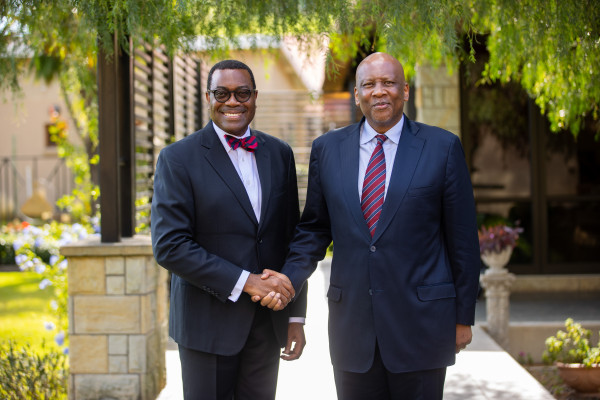
During an official visit to Lesotho -- the first by an African Development Bank President -- Dr. Akinwumi Adesina met with His Majesty King Letsie III to discuss strengthening development partnerships and expanding the Bank's investments in the country. 

His Majesty expressed delight at the Bank President's visit, viewing the mission as a reflection of the Bank and Adesina's appreciation for Lesotho's progress in improving people's lives. 

“With haste, we will ensure that the policies and incentives to accommodate the needs of and attract the private sector are in place, especially in healthcare, agriculture, and manufacturing,” the King remarked. 

King Letsie said he was confident that Adesina, whom he described as a 'man of action,' would help catalyze progress on the Bank's strategic projects in Lesotho. 

Adesina thanked King Letsie for his strong leadership role as the African Union Nutrition Champion since 2014, his advocacy for improved nutrition and food security on the continent -- especially for women, adolescents, and children -- and his passion for youth development. 

The African Development Bank president commended His Majesty for his leadership on the  King Letsie III Just Energy Transition Fund, which aims to generate approximately 200 megawatts of power through private sector investments. 

He also briefed King Letsie about the Bank's new 2025-2030 Country strategy paper and planned investments of $331 million to support quality infrastructure, capacity building, energy, integration and interconnectivity, debt management and standards, and strengthening the office of the Prime Minister.  

Referencing dwindling donor commitments globally, Dr. Adesina said, "Africa must prepare to engage more proactively with the private sector. Every challenge is an investor's dream. Ultimately, capital, like water, will always find a receptive place to go." 

According to Adesina, the Bank has implemented 87 projects totaling $429 million since Lesotho joined the Bank in 1973.  

"We have eight ongoing projects worth $60 million, and we look forward to significantly expanding our commitments," Adesina said. 

The Bank's investment strategy for Lesotho will focus on several priority areas: 

  • Energy infrastructure, including electricity transmission lines connecting Lesotho to South Africa 
  • Agricultural development to enhance food security and rural livelihoods 
  • Climate resilience initiatives to address environmental challenges 
  • Digital transformation, including broadband expansion for digital financial inclusion and government service digitalization 
  • Water resource management, building on the success of the Lesotho Lowland Rural Water Supply Project 
  • Public financial management and debt management support 
  • Trade competitiveness enhancements through improved grades and standards for exports 

The African Development Bank-led Lesotho Rural Water Supply and Sanitation Project has delivered remarkable results: 190 kilometers of pipeline to distribution networks, water storage tanks with a total capacity of 3.48 million liters, and 166 public water points serving approximately 28,266 people across eight zones in Maseru and Berea districts. 

Responding to King Letsie's request, Dr. Adesina said the Bank will prioritize investments in primary healthcare centers across Lesotho.  

“We will work on an integrated project that includes components of energy, a potential multi-partner $2.3 billion water transfer project from Lesotho through South Africa to Botswana, agro-value chains, and trade facilitation in Lesotho,” Adesina said after the meeting with King Letsie III. 

The Bank is expected to support Lesotho in mobilizing approximately $260 million for the integrated water transfer project, which will supply 308 million cubic meters of water for domestic, agricultural, and industrial use through a 700 km pipe system. The project has the potential to generate up to 22 MW of hydropower. 

Speaking earlier, Minister of Finance and Development Planning Retselisitsoe Matlanyane indicated that as Lesotho's energy supply will exceed domestic demand by the end of 2026, the country intends to build a substation to export excess power production to South Africa. She reiterated Lesotho's commitment to private sector-friendly policies and engagement. 

The minister highlighted the importance of primary healthcare and nutrition investments to help combat extreme stunting in several parts of the country.  

King Letsie is the African Union-appointed African Leaders for Nutrition champion.  The initiative, spearheaded by the African Development Bank and championed by African leaders, works to galvanize political will and significant investments to end malnutrition on the continent. 

Dr. Adesina also met with Prime Minister Samuel Ntsokoane Matekane; and the ministers of Foreign Affairs; Agriculture, Food Security & Nutrition; Natural Resources; Health; Communication, Science & Technology; and Education & Training. 

The Bank's delegation to Lesotho included its Executive Director for Lesotho, Dr. Nomfundo X. Ngwenya; Deputy Director General for Southern Africa, Moono Mupotola; and Senior Advisor to the President for Communication and Stakeholder Engagement, Dr. Victor Oladokun. 

Distributed by APO Group on behalf of African Development Bank Group (AfDB).

Media Contact:  
Emeka Anuforo
Principal Regional Communication Officer 
media@afdb.org

About the African Development Bank Group: 
The African Development Bank Group is Africa's premier development finance institution. It comprises three distinct entities: the African Development Bank (AfDB), the African Development Fund (ADF) and the Nigeria Trust Fund (NTF). On the ground in 41 African countries with an external office in Japan, the Bank contributes to the economic development and the social progress of its 54 regional member states. For more information: www.AfDB.org

Media files
African Development Bank Group (AfDB)
Download logo
Read moreAfrican Development Bank Group to Expand Investment in Lesotho to $331 Million
24 March 2025

Johannesburg Shows How People and Planet Gain From Greener Cities

Location: News

United Nations Environment Programme (UNEP)
Download logo

The sun has set in Johannesburg, South Africa and Nntuthuzelo Ndwandwa, 39, is returning home from her job as a customer care consultant. When once she would have glanced nervously into the shadows, now she walks through a complex illuminated by solar-powered lights and enters her home, where a solar-powered heater doles out warm water for washing up. 

“We are safe during load shedding because the external lights are on solar,” says Ndwandwa. “I'm also guaranteed hot water in the morning. It has made my life so much easier.” 

This may sound like a humdrum, everyday moment, but for Ndwandwa and the other hundreds of residents of the Tshedzani Phase 3 social housing project, these basics are a revelation. They were provided through a project funded by the Global Environment Facility (GEF) that installed solar-powered equipment in public housing units across South Africa's biggest city. The effort, implemented by the City of Johannesburg, was designed to improve the quality of life of urban dwellers and fight climate change.  

Residents of the social housing project say they now feel more secure, are saving money and have more job opportunities.  

“Before the project, we had load shedding, and outside, it was dark […] we would not go outside as we were scared,” says resident Catherine Gugulethe Mbuyisa, 55. “Cars would be hijacked, washing would be stolen. But since the installation of solar power, we haven't experienced any of those problems and I've saved a lot in terms of electricity.” 

Cities at the centre of climate action  

Johannesburg is one of a growing number of global cities racing to lower their greenhouse gas emissions through better urban planning, which experts say can be a quick and easy way to reach climate targets. But such work also has a host of other benefits – from providing access to energy to protecting residents from the health hazards of open dumping. 

“Action to reduce greenhouse gas emissions doesn't just make a difference at a global level – it invariably makes a positive difference to people's lives,” says Martin Krause, Director of the UN Environment Programme's Climate Change Division. “This is particularly obvious in cities, where the concentration of people means rapid gains for people and planet are possible.” 

Today, some 56 per cent per cent of the world's population live in cities. Almost 1.2 billion of these people already face a bevy of climate-related risks, including rising seas and heatwaves. At the same time, urban areas consume around 75 per cent of the world's energy and produce around 70 per cent of global greenhouse gas emissions, reports the International Energy Agency. Urbanization is occurring rapidly, increasing the impact of cities on the environment and economy.  

But cities are also hotbeds of climate solutions. And experts say how they are designed, built and managed will significantly impact global emissions, resource consumption and resilience to climate change. That is why successful projects, such as the one in Johannesburg, are considered so important. 

“By adopting integrated approaches to support green, affordable housing, waste management and clean energy access for communities thriving amidst verdant natural spaces, cities like Johannesburg are leading the way to a sustainable urban future that benefits people, natural ecosystems and the global environment,” says Fred Boltz, Manager of GEF's Programming Division. 

Multiple benefits 

Kicked off in 2020, the GEF project focused on five key areas, including retrofitting social housing, increasing food resilience through sustainable urban farming, boosting biodegradable waste management and increasing evidence-based planning. 

As part of this work, 172 units in Roodepoort Tshedzani 3 social housing have been fitted with solar water heaters, solar panels and lithium-ion batteries, energy-saving lighting and water-saving components.  

To boost organic peri-urban farming in other areas, seeds, fertilizer and tools have been provided to farmers, alongside boreholes at four sites. Some 8,000 square metres of land is now under organic production and waiting for certification. Residents were also trained in many aspects of sustainability, including recycling, and a biodigester plant is under construction to turn waste into energy.  

These additional benefits have brought opportunities to many residents, such as Voneen Trompeter, an unemployed single mother looking for ways to support her two children. 

“This project has made me feel more worthy of being in a community, and I have learned a lot about business and recycling,” she says. “My hope for the future is to get a permanent position within the recycling programme, as it will be beneficial to me and my family.” 

While the project is set to end later in 2025, its legacy will continue—not just in the infrastructure set up for residents. Standards and guidelines are being prepared to make it easier for such initiatives to take root in other parts of Johannesburg. 

“We are excited to see the results of the GEF project coming together,” says Liana Strydom, Assistant Director, Regional Planning, City Transformation and Spatial Planning Directorate in the City of Johannesburg. “It creates momentum to mainstream our initiatives and creates hope for broader impact across many different aspects of the city's resilience and our citizens' ability to navigate climate shifts.”  

Distributed by APO Group on behalf of United Nations Environment Programme (UNEP).

Read moreJohannesburg Shows How People and Planet Gain From Greener Cities
24 March 2025

Six valves opened at Vaal Dam to increase outflows

Location: News

Six valves opened at Vaal Dam to increase outflows

The Department of Water and Sanitation (DWS) has opened six valves at the Vaal Dam to gradually increase water outflows by another 200 cubic metres per second (mᵌ/s) and manage water levels.

The opening of six valves at 12pm on Monday is in addition to the single sluice gate that was opened last week, as water levels at the dam continue to rise.

In an update report on the Vaal River system, issued on Monday, the department said the dam is currently at its full capacity at 107.43%.

“At Bloemhof Dam, water releases have also been increased by 50 cubic metres per second from yesterday’s 350.97 - to 400 mᵌ/s - to allow for the extra flows that are expected from the Vaal Dam. Water levels at [Bloemhof] are currently at 99.97%, and the aim is to keep it at below 100%,” the department said.

The release of water on both dams is due to the rising of water levels as a result of the continuous rainfall.

READ | Water outflows increased at Bloemhof Dam

The department assured that the current water release by the one sluice gate, including the six valves at the Vaal Dam and the pipes at Bloemhof, is within the safe operational limits and is not expected to lead to overtopping of riverbanks downstream. – SAnews.gov.za


GabiK
Mon, 03/24/2025 - 13:25
108 views

Read moreSix valves opened at Vaal Dam to increase outflows
24 March 2025

Deaths, Cover-Ups and Bribes at Zimbabwe’s Lawless Redwing Mine

Location: News

Thousands of artisanal gold miners toil in the dirt in a mine controlled by political elites

Read moreDeaths, Cover-Ups and Bribes at Zimbabwe’s Lawless Redwing Mine
23 March 2025

Majodina hands over Garden Route Dam raw water pump station

Location: News

Majodina hands over Garden Route Dam raw water pump station

Water and Sanitation Minister Pemmy Majodina, has marked World Water Day celebration by officially handing over a newly Garden Route Dam raw water pumpstation to the George Local Municipality, Western Cape.

Unveiled on Saturday, the newly upgraded Garden Route Pump Station and its association infrastructure, forms part of the Budget Facility Water Project being implemented at George Local Municipality.

The upgraded work at the dam and pump station involved replacing the old 600 millimetres (mm) diameter pipe with new 800 mm diameter steel outlet pipes to increase the pumping capacity of raw water into the balancing dam. 

In addition, two 1 250 kilovolt-amperes (KVA) generators were installed to ensure uninterrupted pumping, even during power supply failures.

The department stated that this project is one of 12 sub-projects under the Water Security and Remedial Works Project underway in the municipality. 

The total project value exceeds R1.1 billion and is funded by the National Treasury’s Budget Facility for Infrastructure (BFI) through the Regional Bulk Infrastructure Grant (RBIG) from the Department of Water and Sanitation. 

The department allocated the funds to the municipality to implement the project over four years.

George Municipality, which is also the implementing agent of the project, has contributed an additional R305 million to make the total budget R1.4 billion. 

The multiple-phase project started in 2022 and is anticipated to be completed by December 2025.

Speaking at the event, Majodina said the handing over of the completed project at George Municipality, reaffirms government’s commitment to expand access to safe drinking water to all citizens. 

“George municipality is rapidly growing with the current daily potable water demand of 38 megalitres per day, and it is projected to increase to 106 megalitres per day over the next 50 years. Today is a demonstration of our commitment to ensure that we meet the rising water demand that is occasioned by the rapid population growth,” the Minister said. 

She said the project was an example of a successful inter-departmental collaboration between the national, provincial and local governments.  

She added that the project would ensure that the municipality has a sustainable supply of water for generations to come.

Mayor of George Municipality, Jacqueline von Brandis, expressed deep appreciation to the Minister and the department for the funding as it has unlocked economic and socio-economic opportunities for the tourism-inclined municipality. 

“We are celebrating an example of intergovernmental success. We are here to showcase the outstanding work and service delivery that can be achieved if we work together. Our BFI grant has been instrumental in enabling us to make significant strides in ensuring that our ever-growing city is water-secured for generations to come," von Brandis said.

The mayor also extended her gratitude towards the Department of Water and Sanitation and National Treasury for this investment. 

George Municipality currently provides water services to over 294 942 residents from 85 931 households across 28 wards, including Pacaltsdorp, Thembalethu, and coastal areas such as Kleinkrantz, Wilderness, Victoria Bay, Herold’s Bay, and Gwaing.

Over the years, the municipality has experienced a substantial increase in its population. 

The 12 phases of the project will improve water security and resilience for the current residents and support significant future expansion in various areas within George.

The projects will also prevent sewage spillages through upgrading critical sewage pump stations.

The core of the project is to increase the security of raw water supply to the Garden Route Dam and raw water balancing dams and to increase the capacity of two Water Treatment Works (WTW), which currently provide 38 megalitres (ml/d) to communities. 

The project will therefore increase this capacity to 60 60 Megaliters Per Day (ml/d), through the construction of a new 20 ml/d extension and the upgrading of the old WTW.

The upgrade of the Kaaimans River raw water pump station, which transports water from the Kaaimans River to the Garden Route Dam, will improve the supply and storage of raw water.

This enhancement will increase the bulk availability and security of raw water for the current and future population of George.

The scope of the 12 sub-projects includes:

  • A new 20 ml/d water treatment works adjacent to the old 38 ml/d water treatment plant
  • Construction of a new sludge treatment plant
  • Rehabilitation of old water treatment plant   
  • Refurbishment of the existing sludge discharge system in the old water treatment plant
  • Upgrade of Garden Route Dam outlet supply pipework
  • New Generator for Garden Route Dam Pumpstation
  • New 40 megalitres balancing dam and pipeline to new water treatment plant
  • Replacement of pumps for Kaaimans River pumpstations
  • New reservoir for Pacaltsdorp (West)
  • New reservoir, tower, and pump station of Pacaltsdorp (East)
  • New pump station and upgrade of supply pipeline for Thembalethu (West)
  • New reservoir, tower, and pump station for Thembalethu (East)

The department highlighted that George Municipality is geared for current and future residential and commercial developments in the east of George and two other more prominent future development areas to the east of Thembalethu and the south of Pacaltsdorp. 

“Therefore, the water security and remedial works project will provide certainty that water services will be provided to new residential units as well as commercial and industrial sites,” the department said. – SAnews.gov.za
 

Gabisile
Sun, 03/23/2025 - 10:19
180 views

Read moreMajodina hands over Garden Route Dam raw water pump station
21 March 2025

Deputy President calls for action to tackle unemployment, inequality

Location: News

Deputy President calls for action to tackle unemployment, inequality

Deputy President Paul Mashatile has called for urgent and sustained efforts to address unemployment and inequality, describing them as fundamental human rights issues.

Speaking at the national Human Rights Day commemoration in Kariega, the Deputy President acknowledged South Africa’s economic progress but said the country’s 31.9% unemployment rate remained an indicator of persistent socio-economic challenges.

“The pursuit of a just and equitable society is a complex endeavour. While South Africa has experienced notable economic growth through expanding economic participation, the harsh reality of a 31.9% unemployment rate starkly reveals our ongoing struggle against poverty and inequality,” he said. 

The Deputy President stressed this was not just an economic issue but a matter of fairness and human rights, requiring collective action from all sectors of society. 

“This is not merely an economic issue, it represents a fundamental matter of human rights and fairness, demanding concerted and sustained effort from all of us. The lack of economic and employment opportunities has a direct correlation to poverty, and it exacerbates inequality,” the Deputy President said.

He highlighted the government’s efforts to create economic opportunities through policy and legislative measures, citing key employment programmes that have benefitted millions of young people.

“Government is working to create more opportunities for all citizens through various policy and legislative frameworks. Programmes such as the Presidential Youth Employment Initiative (PYEI) are providing work experience to over 1.5 million young people, 70% of whom are women,” he said. 

Other initiatives like the National Skills Fund Disabilities Programme and the Social Employment Fund also address youth unemployment. 

The Deputy President emphasised that government remains committed to strengthening the safety net for the most vulnerable in society and will leave no one behind. 

Against the backdrop of Human Rights Day, he underscored the significance of youth engagement in shaping South Africa’s democracy. 

Across the country, he said, young people continue to step forward to shape the future of the nation’s democracy, ensuring that the rights enshrined in the Constitution are not just theoretical but truly lived.

He lauded young leaders participating in the Mandela-Sobukwe Leadership Camp at Nelson Mandela University, an initiative supported by the Departments of Higher Education and Training and Health.

“This leadership programme is about more than just discussions it is about preparing young leaders to champion civic engagement, ethical leadership, and economic justice in their institutions and communities,” he said.

Reflecting on the theme “Deepening a Culture of Social Justice and Human Rights,” the Deputy President emphasised the need to equip young people with the necessary tools and platforms to effect meaningful change. 

“We must ensure that we continue to empower young people with the correct tools, platforms, and opportunities to become the leaders of tomorrow – leaders who, like Nelson Mandela and Robert Sobukwe, do not just accept the status quo but actively work to transform it for the better,” he said. 

Deputy President Mashatile commended young people nationwide for their efforts in advocating for justice and progress. 

“I commend the young people in this programme, whom I am told are here in the stadium and all those across the country who continue to fight for dignity, justice, and progress. South Africa’s future is in your hands, and today, we celebrate your voices, your leadership, and your unwavering commitment to human rights,” he said. 

Building a just society

The Deputy President said building a just society involves ensuring continued access to critical services such as electricity, water, housing and sanitation to improve the quality of life for citizens.

He noted that government has made substantial progress towards achieving these rights. Between 2011 and 2022, access to water rose to 88.5%, while access to improved sanitation reached 80.7%.

“We are also working to increase access to affordable housing through initiatives such as First Home Finance, which is about the provision of serviced sites for qualifying beneficiaries, small-scale affordable rentals, and other strategic interventions that go beyond legislative measures to address the 2.4 million housing backlog,” he said. 

Land expropriation

The Deputy President underscored the nation’s land reform agenda as a crucial step in addressing historical injustices, as it acknowledged that land dispossession remains one of the most lasting and difficult legacy of the apartheid era.

He said the Expropriation Act, signed into law by President Cyril Ramaphosa in January this year, signifies a shift towards a more inclusive approach to land ownership, incorporating the principle of 'public interest' in land acquisition, and demonstrating a commitment to social justice and redress.

“We would like to reiterate that South Africa, as a sovereign state, would not disregard its policies and activities aimed at rectifying historical injustices due to external pressure. We are confident that we have chosen the correct path to establishing an equitable society, and we will not deviate from it,” the Deputy President said. 

This year’s Human Rights Day commemorative events were held at the Derrick Ferreira Stadium, in Kariega under the theme “Deepening a Culture of Social Justice and Human Rights”.

The theme calls for renewed commitment from all levels of society to accelerate practical solutions for inclusive growth, job creation, poverty reduction, and addressing the high cost of living while building a capable, ethical, and developmental state.

South Africa commemorates Human Rights Day annually on 21 March in remembrance of the Sharpeville Massacre of 1960, where 69 anti-apartheid protesters were killed by apartheid police. The day also honours the 35 people killed on 21 March 1985 in Uitenhage and KwaLanga when apartheid police targeted community members after a funeral. – SAnews.gov.za


DikelediM
Fri, 03/21/2025 - 15:34
150 views

Read moreDeputy President calls for action to tackle unemployment, inequality
20 March 2025

Namibia Unveils Offshore Drilling Plans

Location: News
African Energy Chamber

Namibia's offshore oil and gas industry is set for significant growth in 2025, driven by new licensing opportunities and an uptick in drilling activities, Petroleum Commissioner Maggy Shino announced during a webinar hosted by the African Energy Chamber (https://EnergyChamber.org), Wood Mackenzie and Namibia's Ministry of Mines and Energy. The move is set to attract fresh investment as the country cements its status as one of the world's most promising oil frontiers.

“We are operating in an open licensing regime and will be receiving applications shortly,” Shino stated, noting that available acreage spans deepwater, ultra-deepwater and shallow-water environments.

Meanwhile, development is accelerating on two of Namibia's most significant discoveries. TotalEnergies' Venus project in Block 2913B remains on track for a final investment decision (FID) in 2026, with new data confirming better density and permeability compared to surrounding blocks. On Galp's Mopane discovery, Shino revealed that 3,500Km2 of high-density seismic data were collected this week to refine volume estimates and advance the project toward FID.

On Shell's PEL 39 discovery – where the company recently wrote down $400 million – the Commissioner said Shell and its partners are analyzing data from the nine wells drilled so far to “ensure we have designed a pathway to development” and to determine the next steps.

Namibia's offshore basin remains vastly underexplored, despite its enormous scale. “The scale is enormous – there's 220,000 square kilometers of offshore license acreage,” said Ian Thom, Research Director for Sub-Saharan Africa Upstream at Wood Mackenzie. “With just over 20 exploration and appraisal wells drilled, this area is still hugely underexplored.”

“The resources are definitely there,” said Verner Ayukegba, Senior Vice President of the African Energy Chamber. “The big questions now revolve around sub-surface conditions, gas content and how best to commercialize these discoveries.”

Drilling activity in Namibia is set to ramp up in 2025, with seven wells expected this year alone. BW Energy plans to drill at the Kharas prospect within the Kudu license, while Rhino Resources awaits results from two high-impact wells in PEL 85. In South Africa's Orange Basin, TotalEnergies is expected to drill in Block 3B/4B, and Shell may drill in an ultra-deepwater block near the maritime boundary with Namibia.

On the Kudu license, Shino stated that BW Energy has “identified new targets with upside potential – not only for gas, but also for oil within the main area,” with two wells planned by year-end.

As Namibia advances toward first oil production, the government is committed to ensuring that petroleum discoveries translate into long-term economic benefits for the nation. “We are offering a sustainable operating environment, ensuring all discoveries are in a race to first oil while making a lasting impact on the local economy,” said Shino. Namibia's stable economy, industry alignment, respect for contract sanctity, expansive basins available for exploration and commitment to delivering sustainable energy resources position it as an attractive destination for investment.

Namibia's exploration boom and available licensing opportunities will take center stage at African Energy Week (AEW): Invest in African Energies 2025, where government leaders, industry executives and investors will discuss the latest developments firsthand. With major discoveries advancing toward production and new blocks opening for investment, AEW offers unparalleled access to key decision-makers shaping Namibia's energy future.

Distributed by APO Group on behalf of African Energy Chamber.

AEW: Invest in African Energies is the platform of choice for project operators, financiers, technology providers and government, and has emerged as the official place to sign deals in African energy. Visit www.AECWeek.com for more information about this exciting event.

Media files
African Energy Chamber
Download logo
Read moreNamibia Unveils Offshore Drilling Plans
20 March 2025

One Vaal Dam sluice gate opened

Location: News

One Vaal Dam sluice gate opened

The Department and Water and Sanitation opened one sluice gate at the Vaal Dam on Thursday to increase outflows and manage dam water levels.

In a statement on Thursday, the department said one sluice gate of the Vaal Dam opened at 12pm, in order to increase releases, due to the increased water levels at the dam amid continuous rainfall.

The dam, which supplies most of Gauteng, is currently sitting at 106.14%.

The department said the increased outflows seek to keep the dam at 105%.

“The opened sluice gate is expected to release between 110 to 130 cubic metres per second (mᵌ/s) and will remain open over the long weekend and dam levels continue to be closely monitored to ensure that any further action is activated depending on the level of water in the dam.

“All outlet valves that were previously opened and were releasing 60.1 cubic metres per second (mᵌ/s) of water at the Vaal Dam, have now been closed because they do not have the required capacity to release the required volumes,” the department said.

The department emphasised that the current water release by single sluice gate is within the safe operational limits and is not expected to lead to overtopping of riverbanks downstream.

“At Bloemhof Dam, outflows have also been increased to 250 mᵌ/s from 10 am today through the pipes and to allow for the extra flows that are expected from Vaal Dam in about three to four days and to keep the dam below 100%. Water levels at the dam are currently at 97.6%,” the department said.

The department added it will continue to monitor the water levels at both the dams closely. – SAnews.gov.za


GabiK
Thu, 03/20/2025 - 14:13
75 views

Read moreOne Vaal Dam sluice gate opened
20 March 2025

Presidency announces President Ramaphosa’s upcoming diary

Location: News

Presidency announces President Ramaphosa's upcoming diary

Presidential Spokesperson Vincent Magwenya has, on Thursday, briefed the media on President Cyril Ramaphosa’s programme for the upcoming weeks.

The following are some of the engagements the President will be undertaking:

•    The inauguration of Namibia’s President elect, Netumbo Nandi-Ndaitwah on Friday, 21 March.
•    President Ramaphosa will address the Water and Sanitation Indaba kicking off on 27 March.
•    On the same day, 27 March, President Ramaphosa will receive letters of credence from Heads of Mission from some 14 countries.
•    The President will deliver the keynote address at the Women Economic Assembly on March 28.
•    On 3 April, President Ramaphosa will receive an official visit from Zambia President Hakainde Hichilema.
•    On 9 April, the President will open and deliver an address at the three-day Police Summit.
•    Also on 9 April, he will tour the Council for Scientific and Industrial Research (CSIR) and will be taken through the institute’s flagship programmes. Following that, President Ramaphosa will join the conference of the International Association of Women Judges.

“If there are any changes on the President’s schedule, we will share those through various updates and media advisories,” Magwenya concluded. – SAnews.gov.za


NeoB
Thu, 03/20/2025 - 13:37
66 views

Read morePresidency announces President Ramaphosa’s upcoming diary
  • Previous
  • Page 1
  • Interim pages omitted …
  • Page 34
  • Page 35
  • Page 36
  • Page 37
  • Page 38
  • Interim pages omitted …
  • Page 107
  • Next

Copyright © 2026 · MyZA · All Rights Reserved · Powered by Stratlec Online