• Skip to main content
  • Skip to header right navigation
  • Skip to after header navigation
  • Skip to site footer
MyZA

MyZA

News, Directory, Events and Other Stuff

  • Social Media
  • Sport
  • World News
  • Home
  • Submit News
  • Directory
  • Events
  • Stratlec
  • TFSA
  • News
    • APO
    • Today’s Sport News
    • Todays Social Media and Tech Headlines
    • Today’s World News
    • Today’s SA Financial News
  • Contact
You are here: Home / Archives for Western Cape

Western Cape

22 October 2023

Calling All KZN Entrepreneurs! Play Your Fraction Ignite is here to give your business conceit a boost!

Location: MyPR

Johannesburg 20 October 2023 – Sometimes, all a great idea needs is a little fine-tuning to give it the confidence and gravitas it needs to succeed. A nudge in the right direction can be life-changing for many aspiring entrepreneurs in South Africa. Brand South Africa, through their Play Your Part Ignite roadshow, have been travelling …
Read moreCalling All KZN Entrepreneurs! Play Your Fraction Ignite is here to give your business conceit a boost!
20 October 2023

Western Cape charity Safeline Child Abuse Treatment and Prevention Centre receives R20,000 Sigma Connected donation

Location: MyPR

A NPO which supports children who have been victims of sexual abuse has received a R20,000 donation from a Western Cape outsourcing business. Safeline, which provides therapeutic counselling to children, and awareness and prevention programmes amongst various geographical areas including Athlone, Grassy Park, Delft and Mitchells Plain, has received the five-figure donation from business outsourcing …

Read moreWestern Cape charity Safeline Child Abuse Treatment and Prevention Centre receives R20,000 Sigma Connected donation
19 October 2023

Top merchants announced at the Uber Eats Merchant Awards

Location: MyPR

Uber Eats recently hosted its inaugural Merchant Awards in South Africa, celebrating outstanding restaurants and other non-food merchants on the platform. The ceremony took place at The Roof in Bryanston, Johannesburg, where industry leaders, partners, and esteemed guests gathered to honour these remarkable achievements. The public had the opportunity to participate by nominating their favourite …

Read moreTop merchants announced at the Uber Eats Merchant Awards
18 October 2023

Hi-Tec Conquers A Modern Peak At Tyger Valley Store Opening

Location: MyPR

Hi-Tec summits the peak of retail excellence at Tyger Valley Shopping Centre. On Thursday, 5 October, Hi-Tec has embarked on a new adventure with the opening of their brand-new store in Tyger Valley Shopping Centre. The Tyger Valley store is one out of five existing Hi-Tec stores in the Western Cape, but what makes it …

Read moreHi-Tec Conquers A Modern Peak At Tyger Valley Store Opening
18 October 2023

CSA and SASA II Announce Tri-Nations Series

Location: Sport

TSHWANE: Cricket South Africa (CSA) and the South African Sports Association for the Intellectually Impaired (SASA-II) is thrilled to host...

Read moreCSA and SASA II Announce Tri-Nations Series
18 October 2023

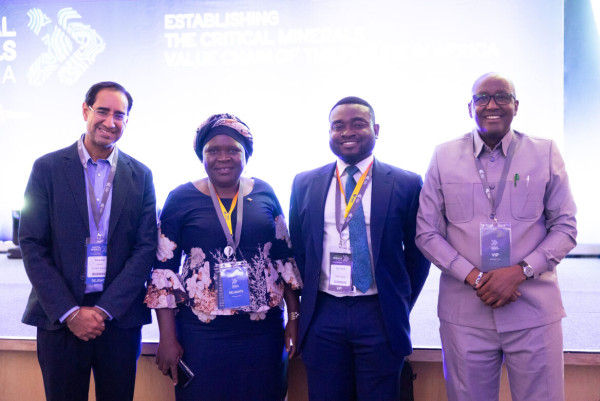
Critical Minerals Africa 2023 Prepares for Official Opening with Full Day of Strategic Presentations

Location: News
Energy Capital & Power

The first day of the Critical Minerals Africa 2023 summit on Tuesday – organized by Energy Capital & Power (www.EnergyCapitalPower.com) – featured a series of presentations from leading industry experts, providing unparalleled insights into Africa's critical mineral reserves and geopolitical position in the global mining economy. The main conference program begins on Wednesday, October 18 and will feature a highly anticipated ministerial forum, investor briefings and panel discussions, taking place alongside African Energy Week in Cape Town.  

Kicking off the agenda was a presentation by South African Institute of International Affairs (SAIIA) exploring the future of critical minerals in the SADC – namely, copper in the DRC, South Africa and Zambia, lithium in South Africa and Zimbabwe, cobalt in the DRC and Zambia, graphite in Mozambique, manganese in South Africa, and nickel in Madagascar, South Africa and Tanzania. The ability to harness these reserves depends on several factors, including growing geoeconomic competition among China, the US and Europe, the ability of SADC states to manage regional value chains, and the urgency of global policy action toward renewable and low-carbon energies.

“In 20-30 years, not only will these minerals be in high demand, but how we put systems in place will be important,” stated Dr. Deon Cloete, Head of SAIIA's Futures Program. “We have focused on Rare Earth Elements (REEs) and the need to scale up exploration and extraction and develop the entire value chain. The transition to climate goals by 2050 is challenging and we need to be critical about how these fault lines are emerging. We propose a resource-based economy that challenges the paradigm of how we approach mining.”

The Critical Minerals International Alliance (CMIA) built upon the geopolitical nature of critical minerals development during its presentation, addressing China's race to solidify its leadership on the continent and its successful dual-pronged investment approach. Western nations have sought to counter this influence through various policy measures, including the US' Inflation Reduction Act, the EU's Critical Raw Materials Act and the Minerals Security Partnership, which seeks to secure a stable supply of raw materials for member economies. 

“When we talk about critical minerals, we are focused on geopolitics — how they frame supply chains and influence pricing and how monopolies are increasingly changing the industry,” said Olimpia Pilch, Founder and COO of CMIA. “In a supply chain crunch, who gets priority and which industries will miss out? Those who have put in the work to have their own supply chain will be in a much better position.”

On the need to diversify mining supply chains, Roberto Cecutti, Head of Trade and Economics, EU Delegation to South Africa, stated during his presentation: "In terms of annual consumption, we have an aspirational target of covering at least 10% of extraction in Europe, 40% of processing and refinement and 15% of recycling capacity. We want to avoid dependence on the supply of one or more specific countries…This is why we have set this target, in which 65% should not depend on a specific country of origin of supply.”

"Each region has its own definition of what is ‘critical,' and what's critical for Africa may not be what's critical for the EU and vice versa. Africa has different requirements when it comes to minerals,” noted Sodhie Naicker, Managing Director: DMT Kai Batla and Consortium Partner: AfricaMaVal.

Energy research firm Rystad Energy also explored Chinese dominance within the low-carbon supply chain, as the country produces almost 90% of solar panels and is currently ramping up production of wind turbines. While Europe has made gains towards establishing its own clean energy supply chain, Africa remains reliant on imports to meet growing energy demand, despite having vast renewable energy potential and untapped mineral reserves. 

“The resource potential for solar generation in Africa is more than enough to satisfy the needs of the planet – it's enormous,” said Per Magnus Nysveen, Senior Partner & Head of Analysis for Rystad Energy. “You can find sites for mining every mineral in sub-Saharan Africa.”

A presentation from Steenkampskraal – operator of the Steenkampskraal Mine in South Africa's Western Cape – underscored the continent's resource potential and its evolution into a critical and industrial minerals hotspot. The mine is home to one of the highest grades of REEs globally, is licensed to operate and possesses well-developed underground infrastructure with a low-capital, three-stage development plan.

“Not even 20% of the known resources have been mined,” emphasized Graham Soden, Director, CEO & Mine Manager of Steenkampskraal. “It puts the project at a unique level. It's fully legislative compliant, and we can get it up and running within one year.”

The agenda concluded with a presentation by Trade & Industrial Policy Strategies (TIPS), which explored opportunities to develop vanadium redox battery (VRB) manufacturing in South Africa and to position the country as a key player in the global battery value chain, with a view to exporting to other African and international markets. Demand for VRBs has skyrocketed in recent years – largely from China, Japan, Europe and the US – resulting in over 30 new VRB projects installed in 11 countries since 2014.  

“Cell battery manufacturing remains to be proven competitive in South Africa. We have the industrial capacity, but we don't have a commercialized production,” said Lesego Moshikaro, Senior Economist for TIPS. “When you look at the short- to medium-term, South Africa cannot be competitive along the whole value chain, so it's important for us to choose key areas where we can excel.”

With its main conference program kicking off on October 18, the Critical Minerals Africa 2023 summit serves to position Africa as the primary investment destination for critical minerals. The event is held alongside the African Energy Week 2023 conference (www.AECWeek.com) from October 16-20, offering delegates access to the full scope of energy, mining and finance leaders in Cape Town.

Distributed by APO Group on behalf of Energy Capital & Power.

Media files
Energy Capital & Power
Download logo
Read moreCritical Minerals Africa 2023 Prepares for Official Opening with Full Day of Strategic Presentations
17 October 2023

Zarcare Empowers With Free Breast Cancer Awareness Talk This Breast Cancer Awareness Month

Location: MyPR

Cape Town, October 17, 2023 – In a commitment to improving healthcare accessibility, Zarcare, a prominent telemedicine provider, has partnered with the University of the Western Cape to present a free online health talk aimed at raising awareness about breast cancer. This event is taking place this coming Saturday, October 21, 2023. The session aims …

Read moreZarcare Empowers With Free Breast Cancer Awareness Talk This Breast Cancer Awareness Month
17 October 2023

Safeguarding the future of those who teach

Location: News

Safeguarding the future of those who teach

While one may no longer remember the name of the classroom teacher’s pet, chances are that one will never forget the name of that special teacher who changed the course of one’s life.

While we grow up to leave our school tomfooleries behind, teachers continue to leave an indelible mark in the lives of pupils.

“Passionate teachers often inspire and motivate their students. Passion for the subject matter and a genuine interest in the well-being of students can greatly impact the effectiveness of teaching,” said acting Chief Director of Education Human Resource Development at the Department of Basic Education, Lala Maje.

While teachers work hard to shape learners into the adults of tomorrow, who is helping newly qualified teachers to transition into the classroom environment?

This is where the Department of Basic Education’s (DBE) New Teacher Induction Programme (NTIP) comes in.

The programme is intended to support new teachers who are placed in schools within their first two years of permanent employment.

“NTIP is a programme that introduces the new teacher to the teaching profession, to the resources available, to the support that the DBE and all stakeholders avail to the teachers,” said Maje.

Teachers have to register on the learning management system for the programme. The one-year programme comprises seven modules that are linked to the Professional Teaching Standards. 

The Professional Teaching Standards and the Ethical Teaching Standards forms the basis of teaching being a profession and that is managed and guided by the South African Council of Educators (SACE). 

A teacher must register with SACE before they can practice in schools.  

The programme also supports SACE in ensuring that Professional Teaching Standards and the code of ethics are infused in the daily life of teachers,” said Maje.

The induction is based on four pillars namely mentoring, training, professional development and peer support.

The programme was set up after the Teacher Education Summit held by the DBE and the Department of Higher Education and Training in 2009.

Since its inception in 2017, the partnership between the DBE and Flemish Association for Development Cooperation and Technical Assistance (VVOB) has enabled the development of material and programmes which led to the 2020 school calendar year pilot of the programme.

The DBE has also worked with provincial education departments and partnered with the SACE, JET Education Services, the North-West University and the University of Witwatersrand to develop the programme for all new teachers that join the teaching profession.

Support

New teachers are also provided with mentors that are identified by their respective schools.

Feedback received is that teachers are appreciative of the support provided by the programme.

“The teachers find that the topics covered assist them to deal with a number of issues, classroom management, discipline in school and classrooms, diversity management, inclusive teaching, as well as work and life balance, to mention but a few.  Teachers want the programme, it provides real life practical experience and examples,” said Maje.

She added that while all the provinces have been supporting new teachers, this was not standardised.

“All provinces have been supporting new teachers; it was just not standardised at national.  The support was in the form of workshops on curriculum, on general human resource matters, many webinars on teacher wellbeing and wellness. 

“There was no national programme that a teacher can register and complete with evidence that indeed the new teacher underwent an induction programme. The DBE then partnered with VVOB to design a thoroughly researched programme and make it available for new teachers for free.”

Progress

The programme is being implemented on a phased in approach.

“Since the 2020 pilot, there was a round table in March 2023 where a decision was [taken] that the programme be phased in in four provinces [namely the] Free State, North West, KwaZulu-Natal and the Western Cape.

“The other five provinces are implementing however not under the tight monitoring of DBE.  This is allowing them to be fully ready when we implement in their provinces in 2024,” she explained.

She added that the provincial education departments are part of the interprovincial meetings that DBE holds with the nine provinces on a monthly basis.

“It should also be noted that all provinces are supporting new teachers.  The difference with the model brought by the DBE is [a] common standard across all provincial education departments, as well as the fact that the NTIP model has four pillars.”

Teachers’ Month

In South Africa October is Teachers’ Month and on 5 October, the country joined the world in commemorating World Teachers’ Day.

The day which is commemorated annually, aims to raise awareness, understanding and appreciation for the vital contribution that teachers make to education and development across the globe.

The day has been declared jointly by the International Labour Organization (ILO) and the United Nations Educational, Scientific and Cultural Organization (UNESCO) to celebrate the critical work that teachers do.

At the National Teachers’ Awards, held on World Teachers’ Day, the South African government reaffirmed its commitment to reinforcing teacher support and prioritising the professional growth of those who are the key drivers of basic education. 

“Such a posture is critical in that it boosts their personal prowess and propels our schools towards unparalleled achievements. The wellness of all public servants in the Department of Basic Education must as such remain a priority,” Deputy President Paul Mashatile said at the 23rd edition of the awards.

The awards honour teachers who have demonstrated exceptional performance and commitment in different areas of their work.

Recognition and experience

Maje who was a teacher herself, said recognition for teachers is essential not only for morale but also for attracting and retaining talented individuals in the teaching profession.

“When teachers feel valued and supported, they are more likely to be motivated, innovative, and dedicated to their students' success.”

Speaking at a media briefing earlier this month, Basic Education Minister Angie Motshekga said that education plays a critical role in providing the country with critical skills that will enable economic growth while also fighting poverty and unemployment.

“Teachers are at the centre of this critical imperative. UNESCO repeatedly stated that the quality of any education system is as good as the quality of its teachers. The continuous improvements that we have experienced within our education system broadly and in our schooling in particular is largely due to the efforts and sacrifices of our teachers,” said the Minister.

The Minister said while the education system is experiencing severe challenges including backlogs in infrastructure development, overcrowding and shortage of other educational resources, “it is our teachers who have made the center to hold.”

Maje said efforts to enhance the recognition of teachers often involve a combination of policy changes, increased investment in education, and societal shifts in perception.  She also referred to the Integrated Strategic Planning Framework for Teacher Education and Development. The primary outcome of the plan is to improve the quality of teacher education and development in order to improve the quality of teachers and teaching.

Planning and organising things in time are some of the lessons Maje has learned over the course of the years as a teacher.

She also notes “the knowledge that as a teacher you determine the future of the country with the content that you offer to the young minds.” She further adds that “the limitations of the teacher can be detrimental to development of the young mind.”

It is also important for teachers to keep learning all the time since knowledge is evolving and for them to be active participants in the matters of their respective communities.

Maje also called on teachers to take care of themselves.

“Achieving a work-life balance is an ongoing challenge for many teachers. Learning to prioritise self-care and maintaining a healthy balance between personal and professional life is important for sustained success in the field.”

While learner support is a critical ingredient for success, support for future unforgettable teachers is equally as important. - SAnews.gov.za

Neo
Tue, 10/17/2023 - 09:59

546 views
Read moreSafeguarding the future of those who teach
16 October 2023

National Safer Festive Season campaign yields positive results

Location: News

National Safer Festive Season campaign yields positive results

National Safer Festive Season operations have started on a high note with police in the Western Cape seizing R75 million worth of counterfeit goods and R200 000 in cash from a shopping centre in Bellville, Cape Town.

The counterfeit goods raid, led by the South African Police Service (SAPS), took place on Saturday as SAPS rolled out its nationwide Safer Festive Season operations.

Through heightened visibility, police are intensifying operations to deal decisively with crime. Regular roadblocks, stop and searches, as well as the tracing of wanted suspects are being intensified as the SAPS ushers in the busy festive period.

In the Western Cape, the Minister of Police, General Bheki Cele, handed over 36 vehicles to assist police to bolster their crime combatting efforts and heighten visibility in gang-ridden areas, where murders are prevalent.

The SAPS Safer Festive Season operational plan was rolled out on Saturday in all the provinces. The plan will see heightened focus on seven areas, which include gender-based violence and femicide (GBVF), combatting of serious and violent crimes such as aggravated robberies, border security, strengthening by-laws, road safety, as well as illegal mining.

“We are not going to co-govern with criminals. We are going toe-to-toe with them. Our priority is the safety and security of all the inhabitants of this country and their property. Police officers are instructed to also sharpen their responses to the most vulnerable in society during the holiday period and beyond,” Cele said.

SAPS has also launched a service rating platform, where members of the public will now be able to rate the service they receive from all police stations across the country.

This online rating platform will allow everyone in South Africa to rate the service they receive at their local police station.

“We encourage all people to rate every single service they receive from us, so that we can have a clear picture of our performance in an effort to enhance our service offering.

“We want to win back the trust of our communities and we can only do so if we deliver and intervene if there are gaps,” said National Police Commissioner, General Fannie Masemola.

The Rate My Service online platform will give an opportunity to members of the public to respond to a predefined questionnaire to rate the SAPS service.

This can be done as and when they interact with SAPS services or at a later stage.

SAPS hopes this project will encourage members of the public to sponsor suggestions for improved service delivery through participating in the online survey.

SAPS management is also encouraging all SAPS members to put more effort in rendering a professional, effective and efficient service at all times that the public deserves. – SAnews.gov.za

Edwin
Mon, 10/16/2023 - 09:29

490 views
Read moreNational Safer Festive Season campaign yields positive results
16 October 2023

Court showdown over Cape Flats evictions

Location: News

“We are not here because we want to be here. We are here because we need homes.”

Read moreCourt showdown over Cape Flats evictions
16 October 2023

Government activities for the week, 16 to 20 October 2023

Location: News

Government activities for the week, 16 to 20 October 2023

Government has scheduled the following briefings/activities for the week: 16 to 20 October 2023. 

From Monday, 16 – Tuesday, 17 October, the Ministry in The Presidency for Electricity hosts the second iteration of the South Africa Green Hydrogen Summit (SAGHS). The summit will on Monday be addressed by President Cyril Ramaphosa.

On Monday, 16 October, the Deputy Minister of Public Works and Infrastructure, Bernice Swarts, will lead the signing of the Dr. Kenneth Kaunda District Development Model (DDM) “One Plan” document in the North West province.

From Monday, 16 October – Wednesday, 18 October, the Minister of Agriculture, Land Reform and Rural Development, Thoko Didiza, will conduct a three-day visit in the Dr Kenneth Kaunda District in the North West. The Minister will undertake various activities, including engagements with farmers and communal property associations on challenges facing them in the agricultural sector and the Barolong Boo Modiboa Community.

On Tuesday, 17 October, the Department of Women, Youth and Persons with Disabilities, in partnership with the South African Federation for Mental Health,  will host a webinar to commemorate National Mental Healthcare Awareness Month.

On Tuesday, 17 October, the Minister for Small Business Development, Stella Ndabeni-Abrahams, will host the Pitch for Funding Competition in Stellenbosch, Western Cape.

On Friday, 20 October, the North West province will host the second leg of the Presidential Imbizo in J.B. Marks Local Municipality in the Dr. Kenneth Kaunda District Municipality.

Matona
Mon, 10/16/2023 - 11:51

61 views
Read moreGovernment activities for the week, 16 to 20 October 2023
16 October 2023

Teacher supply and demand by 2030: Securing SA’s future

Location: News

Teacher supply and demand by 2030: Securing SA’s future

South African teachers aren’t operating on survival mode since the public sector has solved the teacher shortages, writes Angie Motshekga.

As South Africa marks Teachers' Month, coinciding with last week's ceremony honouring the best in our teaching cohort, it's imperative to recognise the vital role teachers play in moulding our nation's future. The public sector's successful resolution of teacher shortages means our educators are no longer merely on “survival mode” even though resource constraints remain. Their impact, frequently extending beyond the classroom, is immeasurable. The significance of the Funza Lushaka Bursary Programme in bolstering South Africa's teaching profession is commendable. Here in black and white are facts and figures about teachers in SA today.

Since its inception, the Funza Lushaka Bursary Programme has facilitated the training and integration of new teachers into our educational system. From 2007, marking the year when bursars completed their studies and became eligible for placement in 2008, up to the most recent data for 2023, a cumulative total of 52 099 teachers have successfully completed their training through the Funza Lushaka programme.

This underscores its success in supporting teachers and rejuvenating the nation’s educational system with well-trained professionals.

The impact of Funza Lushaka on teacher placement: A decade in review

As we delve deeper into the data related to the Funza Lushaka Bursary Programme, another significant aspect comes to the fore – the successful placement of these trained educators within our educational system. This ensures that our investment in human capital translates into tangible benefits for our learners and the broader education sector.

From 2013 to 31 August 2023, spanning a decade and seven months, we have witnessed impressive placement rates across our Provincial Education Departments (PEDs).

Eastern Cape: Out of 6 608 trained teachers, 4 869 have been successfully placed, representing a placement rate of 74%. However, 1 739 remain unplaced.

Free State: Here, we see a higher placement percentage. Of the 3 092 educators, 2 752 have found positions, marking an 89% placement rate, leaving only 340 unplaced.

Gauteng: This province has seen the training of 9 423 teachers, with 8 002 of them (or 85%) being effectively integrated into schools. However, 1 421 are still seeking placement.

KwaZulu-Natal: With 9 012 trained educators, 6 908 have been placed (77%), while 2 104 await placement.

Limpopo: This province boasts one of the highest placement rates at 94%. Of 4 623 educators, 4 347 have been placed, leaving a mere 276 unplaced.

Mpumalanga: Here, 4 006 teachers were trained, and 3161 (or 79%) have been placed, leaving 845 awaiting placement.

North West: An impressive 96% placement rate is observed here. Of the 2 543 educators, 2 436 have found their roles in the education system, with only 107 still unplaced.

Northern Cape: Another province with an excellent placement rate of 96%. Of 1 166 educators, 1 115 have been effectively placed, and 51 remain unplaced.

Western Cape: From 6 867 educators, 5,127 have been successfully placed, making the rate 75%. However, 1 740 educators are still seeking placement.

Of the 47 340 educators trained over the past decade and seven months, 38 717 have been effectively placed within our educational system, representing an overall placement rate of 82%. While this achievement is worth celebrating, the data also underscores the need to address the 8 623 educators awaiting placement.

In other words, since 2013, 38 717 out of 47 340 Funza Lushaka graduates have found placement in schools, representing approximately 81.78% of these graduates. This translates to an average placement of about 4 300 graduates per annum. To put this into perspective, Funza Lushaka Bursary Scheme graduates placed in schools account for 20-25% of all graduates absorbed into the public education system each year. This figure is a testament to the programme’s significant contribution to rejuvenating the teaching profession.

The financial magnitude of investing in tomorrow’s teachers

However, a programme of this magnitude comes with substantial financial commitment. Between 2007 and 2022, the cumulative financial outlay for the scheme across all participating Higher Education Institutions (HEIs) amounts to a staggering R13 115 645 580.95.

These figures highlight the vast number of future educators being nurtured through the programme and the immense financial commitment to ensuring their readiness to shape the next generation. It’s essential to view this not merely as an expenditure but as a significant investment in the future of South Africa’s basic education system.

Investing in today’s educators for a brighter tomorrow

In 2023 alone, across all HEIs, some 10864 students have been funded to pursue their dreams of becoming educators. This comes at the cost of the fiscus of R1 164 539 332.47. This figure showcases a substantial investment into nurturing teaching professionals who will go on to play an integral role in our basic education system.

It’s worth noting that behind each bursary is an aspiring educator, a beacon of hope equipped to inspire our nation’s youth. This investment signifies belief in the transformative power of education and those who deliver it.

Teacher supply and demand by 2030

The cepartment’s research indicates two major factors: the ageing teaching workforce, which necessitates a new influx of educators, and a surge in learner numbers due to population growth. Given the current learner-educator ratio (LER) of 29.8:1, we employ around 405 000 educators in the public sector. However, by 2030, to maintain this LER, we’d require about 428 000 educators. Failing to meet this could result in the LER spiking to 31.6:1, signifying larger class sizes and potentially diminishing the quality of education. The challenge is further compounded when considering that funding plays a significant role in our ability to recruit and maintain these educators.

But here’s the silver lining: there’s already a surplus. Every year, while 31,000 fresh teacher graduates step out, only 18 000 to 20 000 are absorbed into the public sector, creating a significant reservoir.

However, quantity alone isn’t the solution. As the curriculum evolves with the Three Streams Model focusing on technical vocational and technical occupational streams, the quality and specialisation of training become paramount. Our bursary schemes must pivot, possibly minimising the general academic stream and emphasising the new curricular needs.

*Angie Motshekga is the Basic Education Minister in South Africa.

Matona
Mon, 10/16/2023 - 09:59

157 views
Read moreTeacher supply and demand by 2030: Securing SA’s future
15 October 2023

Police must ‘hit hard’ against criminality during festive season

Location: News

Police must 'hit hard' against criminality during festive season

Police Minister General Bheki Cele has called on law enforcement to step up their efforts to squeeze out criminality during this festive season.

The Minister was speaking the launch on Friday of the National Safer Festive Season operations.

“South Africans and all our visitors have a right to enjoy life, have a right to enjoy the festive season. Make sure that these South Africans, wherever they are, whether they are in the malls, whether they are in their houses, whether they are on the beaches, whether they are out dancing…wherever they are, make sure that they are safe.

“Give criminals a run for their money. Make sure that criminals are squeezed,” he said.

Cele gave criminals a stern warning that police will “hit hard”.

“There are criminals who want to co-govern with the people that are elected. You are not going to move around breaking into people’s houses, robbing people, raping people, going for cash heists, bank robberies and you believe…that we won’t do anything.

“I’m calling on those police officers who are given the responsibility to deal with those heartless criminals - that think they run the world and the country - don’t be kind to them. Hit and hit hard. Criminals have declared war against communities and society. I’m making a call to those police…to protect the communities,” he said.

Cele called on communities to work with the police to root out criminality.

“Don’t hide those criminals among yourselves because they will hurt you. As you protect that criminal, tomorrow he’s coming back for you,” he said.

The Minister also called on the police to do their job within the bounds of the law.

The festive season operations have already scored a victory after Western Cape police seized R75 million worth of counterfeit goods and R200 000 in cash at a shopping centre in Cape Town. – SAnews.gov.za


NeoB
Sun, 10/15/2023 - 10:02

96 views
Read morePolice must ‘hit hard’ against criminality during festive season
13 October 2023

The Popular Vitality Dash Series Is Coming To Gqeberha This Saturday!

Location: MyPR

Discovery Vitality has partnered with Rafi’s Appliances and Mattresses to bring the popular National Vitality Series to Gqeberha on Saturday. The Rafi’s BayRun will be hosted by 32Gi and Achilles Athletics clubs on Saturday, 21 October, and will start and finish at Cape Recife High School. Collection of race numbers and late entries will be …

Read moreThe Popular Vitality Dash Series Is Coming To Gqeberha This Saturday!
13 October 2023

Census 2022 shows decrease in orphans in the country

Location: News

Census 2022 shows decrease in orphans in the country

South Africa's Census 2022 national results has shown a decrease in the percentage of children aged 0-17 who are orphans in the country.

“KwaZulu-Natal observed the highest decrease in all orphanhood types from 2011 to 2022. Paternal orphans are highest in all censuses and provinces,” Statistician-General Risenga Maluleke said.

The data from Census 2022, which Maluleke handed over to President Cyril Ramaphosa on Tuesday in Pretoria, indicates that information on parental survival is collected in order to determine maternal or paternal orphanhood, and estimation of adult mortality.

In 2011, the stats for paternal orphans were at 12.1% while in 2022 they were at 8.9%, maternal orphans stood at 3.0% in 2011 and in 2022 they were at 2.3%.  Double orphans were at 3.9% in 2011 and they decreased to 2.5% in 2022. In 2011, non orphans were at 81.0% and in 2022 the figure stood at 86.2%.

“Comparison of Census 2011 and census 2022 showed that in both censuses, paternal orphanhood was more prevalent compared to maternal and double orphanhood. Trends show that there has been a decrease in orphanhood and this is the case for all the three types,” he said.

Non orphans are children 0-17 aged years whose both biological mother and father were still alive while paternal orphans are children 0-17 aged years whose biological fathers were no longer alive but their mothers were still alive.

Maternal orphans refer to children aged 0-17 years whose biological mothers were no longer alive but their fathers were still alive and double orphans are children aged 0-17 years who reported that both mother and father have died.

“Provincial variations in orphanhood showed that Eastern Cape (15.8%) and KwaZulu-Natal (15.5%) had the highest percentage of paternal orphans in both Censuses 2011 and 2022. In census 2022, Eastern Cape (3.4%), Free State (3.1%), North West (2.9% and Mpumalanga (2.6%) provinces had percentage of double orphans above the national average (2.5%),” Maluleke said.

Agricultural households

Census 2022 shows that 13.8% (2 463 429) of all households are agricultural households compared to 19.9% in 2011 (2 879 590).

Most of the households were involved in agriculture to produce ‘only for own consumption’ (1 988 825 or 80.7%) and ‘mainly for own consumption with some sale’ (189 371 or 7.7%).

Approximately 4.3% or 107 112 of agricultural households were producing ‘only for sale’.

“The major provinces contributing to the decrease are KwaZulu-Natal (-167 726 agricultural households), Eastern Cape (-114 846 agricultural households) and Free State (-65 522 agricultural households).

“Most of the agricultural households were in KwaZulu-Natal (24.9%), Eastern Cape (20.7%) and Limpopo (16.3%) in 2011. In 2022, KwaZulu-Natal (22.3%) still reported the highest percentage of agricultural households.

“However, Limpopo (21.1%) overtook Eastern Cape (19.6%). Northern Cape and Western Cape reported the lowest percentage of agricultural households in both 2011 and 2022,” Maluleke said.

The trends in percentage contribution by various population groups to total agricultural households remained largely the same in the two years.

Black African households (91.4% in 2011 and 90.8% in 2022) constituted the largest percentage of agricultural households, followed by white households (5.2% in both 2011 and 2022) in both years.

“Livestock and poultry production was the leading agricultural activity, reported in 959 365 (38.9%) households, followed by fruit or vegetable production (661 613 or 26,9%) and grains, food crops and industrial crops (650 096 or 26.4%).

“Eastern Cape (247 902 or 25.8%) and KwaZulu-Natal (247 043 or 25.8%) reported the highest number of households involved in livestock and poultry production. The leading provinces in the production of grains, food crops and industrial crops were Limpopo (250 463 or 38.5%) and KwaZulu-Natal (126 727 or 19.5%),” he said.

The main place used for household agricultural activity in 2022 was backyard (2 196 736 or 89.2%), followed by farm land (131 105 or 5.3%)

‘Other’, which includes schools and other public spaces, was reported by 51 007 households, and constituted the least reported place of agricultural activity.

“With the exception of chickens, Eastern Cape reported the highest numbers in all types of livestock ownership. Nationally, chickens (38.2 million) were the most numerous type of livestock kept at household level, followed by sheep (17.7 million) and cattle (12.3 million).

“The black African and white population groups were the most dominant in livestock and chicken farming. The highest number of cattle (7.7 million) and sheep (12.5 million) were reported in white-headed households, whereas most chickens (19.0 million), goats (4.9 million) and pigs (1.1 million) were reported in black African households,” Maluleke said. – SAnews.gov.za


nosihle
Fri, 10/13/2023 - 10:55

310 views
Read moreCensus 2022 shows decrease in orphans in the country
12 October 2023

Balwin Extends Its Footprint In KZN With Its Novel Lifestyle Estate At Iconic Westown

Location: Entertainment, MyPR

Shongweni Park to comprise 1 260 apartments in 20 phases over the next four years at Westown, near Hillcrest in outer west Durban Complements its two coastal estates in Umhlanga and Ballito Shongweni Park lifestyle estate will be developed according to Balwin’s Classic brand and include one-, two- and three-bedroom apartments Each apartment sold with a …

Read moreBalwin Extends Its Footprint In KZN With Its Novel Lifestyle Estate At Iconic Westown
12 October 2023

Census 2022 shows improvement in basic services   

Location: News

Census 2022 shows improvement in basic services   

South Africa’s first digital census shows an increase in the proportion of households that had access to piped water inside their dwelling, from 32.3% in 2001 to 46.3% in 2011 and to 59.7% in 2022.

This is according to the South Africa's Census 2022 national results, which was handed over to President Cyril Ramaphosa by Statistician-General Risenga Maluleke at the Union Buildings in Pretoria on Tuesday.

The data shows that in 2022 over four-fifths (82.4%) of households in the country had access to piped water either inside their dwelling or inside their yard.

“The proportion of households that accessed piped water off-site (from a water source outside the yard such as a neighbour or from a community stand) halved from 17.9% in 2011 to 8.9% in 2022.

“Households in the Western Cape were more likely to have piped water inside their dwelling (85.5%) compared to Limpopo, where less than one-third (31.4%) accessed piped water inside their dwelling.

“Although the national picture regarding access to piped water shows improvement over the years, there is a sizeable proportion of households in Limpopo (20.5%) and Eastern Cape (19.5%) with no access to piped water.

“The majority of households across the three censuses made use of a regional/local water scheme as their main source of water. This proportion increased steadily from 74.7% in 2001 to 79.7% in 2011 and to 82.7% in 2022,” Maluleke said.

There has been an increase in the percentage of households that used a flush toilet as their main type of toilet facility during this period (+18.9 percentage points).

However, the percentage of households that used a pit toilet without ventilation and households with no form of toilet facility declined during the same period, from 22.8% to 12.5% and from 13.6% to 1.6% respectively

Energy

The proportion of households using electricity as the main source of energy for lighting increased significantly from 58.1% in 1996 to 94.7% in 2022; conversely, the use of paraffin and candles as the main source of energy for lighting decreased.

Electricity was the main source of energy for lighting across all provinces.

In 1996, 28.8% of households utilised candles for lighting compared to the 3.2% in 2022.

The use of paraffin declined, with only 0.9% of households using it for lighting compared to the 12.7% in 1996.

“It is noted that the country recorded an upward trend in refuse removed by a local authority regularly, an increase from 52% in 1996 to 66% in 2022. Approximately two-thirds (66.3%) of households in the country had their refuse removed by a local authority once a week whilst one in four households used their own refuse dump (22.3%).

“The percentage of households with no refuse removal or using their own refuse dump both decreased over the same period. In 1996, 32.6% of households used their own refuse dump and 9.7% did not have any refuse removal,” he said.

In 2022, households using their own refuse dump decreased to 22.3% and those with no refuse removal halved to 4.5%

SA population

According to South Africa's Census 2022 national results, the population increased from 40.5 million in 1996 to just over 62 million in 2022; an increase of over 21.4 million people in 26 years.

“Black Africans remain consistently the dominant population group at a proportion of more than 80%, followed by the coloured and white populations at 8.2% and 7.3% in 2022, respectively.

“On the other hand, the Indian/Asian population comprised less than 3% of the population over the years. The age-sex structure indicates some decline in the ages between 0 and 29 years when compared to the 2011 distribution,” Maluleke said.

The sex ratio in the country decreased from 98.8 in 2011 to 94.1 in 2022. Gauteng reported the highest ratio at 101.8 in 2022, suggesting that there are more males than females in the province compared to the other provinces.

“Furthermore, the median age in the country was 28 years in 2022, showing an increase of three years from 25 years in 2011. It was highest in the Western Cape and lowest in Limpopo at 31 and 26 years, respectively.

“The median age of the white population was 45 years while that of the black African population was 27 years in 2022. The majority (62.2%) of the population has never been married, while 24% indicated that they are legally married,” Maluleke said.

The population and housing census was conducted in February 2022 and provides comprehensive data on population size, demographic trends, and other service delivery related information. – SAnews.gov.za


nosihle
Thu, 10/12/2023 - 10:54

15 views
Read moreCensus 2022 shows improvement in basic services   
11 October 2023

Protests in Cape Town in solidarity with Palestinians

Location: News

Dean of St Georges Cathedral calls for peace vigil

Read moreProtests in Cape Town in solidarity with Palestinians
11 October 2023

#UniteBehind takes PRASA and transport minister to court

Location: News

The organisation argues the state has a statutory and constitutional duty to devolve rail to the City of Cape Town

Read more#UniteBehind takes PRASA and transport minister to court
11 October 2023

CSA Appoints Adv. Ncumisa Mayosi As Independent Non-Executive Director

Location: Sport

JOHANNESBURG: Cricket South Africa (CSA) is pleased to announce the appointment of Advocate Ncumisa Mayosi to the Board as Independent Non-Executive...

Read moreCSA Appoints Adv. Ncumisa Mayosi As Independent Non-Executive Director
11 October 2023

How Thabo Bester murdered Nomfundo Tyhulu

Location: News

The Thabo Bester Story is on sale today

Read moreHow Thabo Bester murdered Nomfundo Tyhulu
11 October 2023

Flying the kite for mental health

Location: News

The annual Cape Mental Health kite event was held at Heideveld Sports Field on Tuesday

Read moreFlying the kite for mental health
9 October 2023

Family Call For The Vitality Sprint Series In Gqeberha

Location: MyPR

Discovery Vitality has partnered with Rafi’s Appliances and Mattresses to bring the National Vitality Series to Gqeberha on Saturday, 21 October. The Rafi’s BayRun, which will be hosted by 32Gi and Achilles Athletics clubs, will start and finish at Cape Recife High School. The Vitality Run Series was introduced in 2017, with the aim to …

Read moreFamily Call For The Vitality Sprint Series In Gqeberha
7 October 2023

A Comprehensive Guide to SEO Packages in South Africa

Location: MyPR

Search Engine Optimization (SEO) has become an integral part of any business’s digital marketing strategy. In a world where online visibility can make or break a brand, it’s vital to invest in the right SEO package. In South Africa, with its diverse landscape and unique regional characteristics, SEO services have been tailored to cater to …

Read moreA Comprehensive Guide to SEO Packages in South Africa
  • Previous
  • Page 1
  • Interim pages omitted …
  • Page 49
  • Page 50
  • Page 51
  • Page 52
  • Page 53
  • Interim pages omitted …
  • Page 57
  • Next

Copyright © 2026 · MyZA · All Rights Reserved · Powered by Stratlec Online