• Skip to main content
  • Skip to header right navigation
  • Skip to after header navigation
  • Skip to site footer
MyZA

MyZA

News, Directory, Events and Other Stuff

  • Social Media
  • Sport
  • World News
  • Home
  • Submit News
  • Directory
  • Events
  • Stratlec
  • TFSA
  • News
    • APO
    • Today’s Sport News
    • Todays Social Media and Tech Headlines
    • Today’s World News
    • Today’s SA Financial News
  • Contact
You are here: Home / News / Safeguarding the future of those who teach

Safeguarding the future of those who teach

17 October 2023 by Guest

Safeguarding the future of those who teach

While one may no longer remember the name of the classroom teacher’s pet, chances are that one will never forget the name of that special teacher who changed the course of one’s life.

While we grow up to leave our school tomfooleries behind, teachers continue to leave an indelible mark in the lives of pupils.

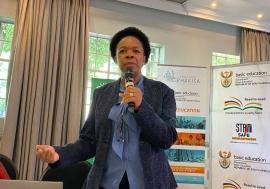
“Passionate teachers often inspire and motivate their students. Passion for the subject matter and a genuine interest in the well-being of students can greatly impact the effectiveness of teaching,” said acting Chief Director of Education Human Resource Development at the Department of Basic Education, Lala Maje.

While teachers work hard to shape learners into the adults of tomorrow, who is helping newly qualified teachers to transition into the classroom environment?

This is where the Department of Basic Education’s (DBE) New Teacher Induction Programme (NTIP) comes in.

The programme is intended to support new teachers who are placed in schools within their first two years of permanent employment.

“NTIP is a programme that introduces the new teacher to the teaching profession, to the resources available, to the support that the DBE and all stakeholders avail to the teachers,” said Maje.

Teachers have to register on the learning management system for the programme. The one-year programme comprises seven modules that are linked to the Professional Teaching Standards. 

The Professional Teaching Standards and the Ethical Teaching Standards forms the basis of teaching being a profession and that is managed and guided by the South African Council of Educators (SACE). 

A teacher must register with SACE before they can practice in schools.  

The programme also supports SACE in ensuring that Professional Teaching Standards and the code of ethics are infused in the daily life of teachers,” said Maje.

The induction is based on four pillars namely mentoring, training, professional development and peer support.

The programme was set up after the Teacher Education Summit held by the DBE and the Department of Higher Education and Training in 2009.

Since its inception in 2017, the partnership between the DBE and Flemish Association for Development Cooperation and Technical Assistance (VVOB) has enabled the development of material and programmes which led to the 2020 school calendar year pilot of the programme.

The DBE has also worked with provincial education departments and partnered with the SACE, JET Education Services, the North-West University and the University of Witwatersrand to develop the programme for all new teachers that join the teaching profession.

Support

New teachers are also provided with mentors that are identified by their respective schools.

Feedback received is that teachers are appreciative of the support provided by the programme.

“The teachers find that the topics covered assist them to deal with a number of issues, classroom management, discipline in school and classrooms, diversity management, inclusive teaching, as well as work and life balance, to mention but a few.  Teachers want the programme, it provides real life practical experience and examples,” said Maje.

She added that while all the provinces have been supporting new teachers, this was not standardised.

“All provinces have been supporting new teachers; it was just not standardised at national.  The support was in the form of workshops on curriculum, on general human resource matters, many webinars on teacher wellbeing and wellness. 

“There was no national programme that a teacher can register and complete with evidence that indeed the new teacher underwent an induction programme. The DBE then partnered with VVOB to design a thoroughly researched programme and make it available for new teachers for free.”

Progress

The programme is being implemented on a phased in approach.

“Since the 2020 pilot, there was a round table in March 2023 where a decision was [taken] that the programme be phased in in four provinces [namely the] Free State, North West, KwaZulu-Natal and the Western Cape.

“The other five provinces are implementing however not under the tight monitoring of DBE.  This is allowing them to be fully ready when we implement in their provinces in 2024,” she explained.

She added that the provincial education departments are part of the interprovincial meetings that DBE holds with the nine provinces on a monthly basis.

“It should also be noted that all provinces are supporting new teachers.  The difference with the model brought by the DBE is [a] common standard across all provincial education departments, as well as the fact that the NTIP model has four pillars.”

Teachers’ Month

In South Africa October is Teachers’ Month and on 5 October, the country joined the world in commemorating World Teachers’ Day.

The day which is commemorated annually, aims to raise awareness, understanding and appreciation for the vital contribution that teachers make to education and development across the globe.

The day has been declared jointly by the International Labour Organization (ILO) and the United Nations Educational, Scientific and Cultural Organization (UNESCO) to celebrate the critical work that teachers do.

At the National Teachers’ Awards, held on World Teachers’ Day, the South African government reaffirmed its commitment to reinforcing teacher support and prioritising the professional growth of those who are the key drivers of basic education. 

“Such a posture is critical in that it boosts their personal prowess and propels our schools towards unparalleled achievements. The wellness of all public servants in the Department of Basic Education must as such remain a priority,” Deputy President Paul Mashatile said at the 23rd edition of the awards.

The awards honour teachers who have demonstrated exceptional performance and commitment in different areas of their work.

Recognition and experience

Maje who was a teacher herself, said recognition for teachers is essential not only for morale but also for attracting and retaining talented individuals in the teaching profession.

“When teachers feel valued and supported, they are more likely to be motivated, innovative, and dedicated to their students’ success.”

Speaking at a media briefing earlier this month, Basic Education Minister Angie Motshekga said that education plays a critical role in providing the country with critical skills that will enable economic growth while also fighting poverty and unemployment.

“Teachers are at the centre of this critical imperative. UNESCO repeatedly stated that the quality of any education system is as good as the quality of its teachers. The continuous improvements that we have experienced within our education system broadly and in our schooling in particular is largely due to the efforts and sacrifices of our teachers,” said the Minister.

The Minister said while the education system is experiencing severe challenges including backlogs in infrastructure development, overcrowding and shortage of other educational resources, “it is our teachers who have made the center to hold.”

Maje said efforts to enhance the recognition of teachers often involve a combination of policy changes, increased investment in education, and societal shifts in perception.  She also referred to the Integrated Strategic Planning Framework for Teacher Education and Development. The primary outcome of the plan is to improve the quality of teacher education and development in order to improve the quality of teachers and teaching.

Planning and organising things in time are some of the lessons Maje has learned over the course of the years as a teacher.

She also notes “the knowledge that as a teacher you determine the future of the country with the content that you offer to the young minds.” She further adds that “the limitations of the teacher can be detrimental to development of the young mind.”

It is also important for teachers to keep learning all the time since knowledge is evolving and for them to be active participants in the matters of their respective communities.

Maje also called on teachers to take care of themselves.

“Achieving a work-life balance is an ongoing challenge for many teachers. Learning to prioritise self-care and maintaining a healthy balance between personal and professional life is important for sustained success in the field.”

While learner support is a critical ingredient for success, support for future unforgettable teachers is equally as important. – SAnews.gov.za

Neo
Tue, 10/17/2023 – 09:59

546 views

While one may no longer remember the name of the classroom teacher’s pet, chances are that one will never forget the name of that special teacher who changed the course of one’s life.

While we grow up to leave our school tomfooleries behind, teachers continue to leave an indelible effect in the lives of pupils.

“Passionate teachers often inspire and motivate their students. Passion for the subject matter and a absolute interest in the well-being of students can greatly impact the effectiveness of teaching,” said acting Chief Director of Education Human Resource Development at the Department of Basic Education, Lala Maje.

While teachers work hard to shape learners into the adults of tomorrow, who is helping newly qualified teachers to transition into the classroom environment?

This is where the Department of Basic Education’s (DBE) Novel Teacher Induction Programme (NTIP) comes in.

The programme is intended to support recent teachers who are placed in schools within their first two years of permanent employment.

“NTIP is a programme that introduces the recent teacher to the teaching profession, to the resources available, to the support that the DBE and all stakeholders avail to the teachers,” said Maje.

Teachers acquire to register on the learning management scheme for the programme. The one-year programme comprises seven modules that are linked to the Professional Teaching Standards. 

The Professional Teaching Standards and the Ethical Teaching Standards forms the basis of teaching being a profession and that is managed and guided by the South African Council of Educators (SACE). 

A teacher must register with SACE before they can practice in schools.  

The programme also supports SACE in ensuring that Professional Teaching Standards and the code of ethics are infused in the daily life of teachers,” said Maje.

The induction is based on four pillars namely mentoring, training, professional development and peer support.

The programme was set up after the Teacher Education Summit held by the DBE and the Department of Higher Education and Training in 2009.

Since its inception in 2017, the partnership between the DBE and Flemish Association for Development Cooperation and Technical Assistance (VVOB) has enabled the development of material and programmes which led to the 2020 school calendar year pilot of the programme.

The DBE has also worked with provincial education departments and partnered with the SACE, JET Education Services, the North-West University and the University of Witwatersrand to develop the programme for all modern teachers that join the teaching profession.

Support

Recent teachers are also provided with mentors that are identified by their respective schools.

Feedback received is that teachers are appreciative of the support provided by the programme.

“The teachers find that the topics covered assist them to deal with a number of issues, classroom management, discipline in school and classrooms, diversity management, inclusive teaching, as well as work and life balance, to mention but a few.  Teachers want the programme, it provides real life practical experience and examples,” said Maje.

She added that while all the provinces believe been supporting current teachers, this was not standardised.

“All provinces gain been supporting recent teachers; it was honest not standardised at national.  The support was in the form of workshops on curriculum, on general human resource matters, many webinars on teacher wellbeing and wellness. 

“There was no national programme that a teacher can register and complete with evidence that indeed the novel teacher underwent an induction programme. The DBE then partnered with VVOB to design a thoroughly researched programme and design it available for recent teachers for free.”

Pace

The programme is being implemented on a phased in approach.

“Since the 2020 pilot, there was a round table in March 2023 where a decision was [taken] that the programme be phased in in four provinces [namely the] Free State, North West, KwaZulu-Natal and the Western Cape.

“The other five provinces are implementing however not under the tight monitoring of DBE.  This is allowing them to be fully ready when we implement in their provinces in 2024,” she explained.

She added that the provincial education departments are fragment of the interprovincial meetings that DBE holds with the nine provinces on a monthly basis.

“It should also be noted that all provinces are supporting novel teachers.  The contrast with the model brought by the DBE is [a] common standard across all provincial education departments, as well as the fact that the NTIP model has four pillars.”

Teachers’ Month

In South Africa October is Teachers’ Month and on 5 October, the country joined the world in commemorating World Teachers’ Day.

The day which is commemorated annually, aims to raise awareness, understanding and appreciation for the vital contribution that teachers design to education and development across the globe.

The day has been declared jointly by the International Labour Organization (ILO) and the United Nations Educational, Scientific and Cultural Organization (UNESCO) to celebrate the critical work that teachers finish.

At the National Teachers’ Awards, held on World Teachers’ Day, the South African government reaffirmed its commitment to reinforcing teacher support and prioritising the professional growth of those who are the key drivers of basic education. 

“Such a posture is critical in that it boosts their personal prowess and propels our schools towards unparalleled achievements. The wellness of all public servants in the Department of Basic Education must as such remain a priority,” Deputy President Paul Mashatile said at the 23rd edition of the awards.

The awards honour teachers who believe demonstrated exceptional performance and commitment in different areas of their work.

Recognition and experience

Maje who was a teacher herself, said recognition for teachers is essential not only for morale but also for attracting and retaining talented individuals in the teaching profession.

“When teachers feel valued and supported, they are more likely to be motivated, innovative, and dedicated to their students’ success.”

Speaking at a media briefing earlier this month, Basic Education Minister Angie Motshekga said that education plays a critical role in providing the country with critical skills that will enable economic growth while also fighting poverty and unemployment.

“Teachers are at the centre of this critical imperative. UNESCO repeatedly stated that the quality of any education scheme is as qualified as the quality of its teachers. The continuous improvements that we gain experienced within our education scheme broadly and in our schooling in particular is largely due to the efforts and sacrifices of our teachers,” said the Minister.

The Minister said while the education scheme is experiencing severe challenges including backlogs in infrastructure development, overcrowding and shortage of other educational resources, “it is our teachers who believe made the center to hold.”

Maje said efforts to enhance the recognition of teachers often involve a combination of policy changes, increased investment in education, and societal shifts in perception.  She also referred to the Integrated Strategic Planning Framework for Teacher Education and Development. The primary outcome of the situation is to improve the quality of teacher education and development in order to improve the quality of teachers and teaching.

Planning and organising things in time are some of the lessons Maje has learned over the course of the years as a teacher.

She also notes “the knowledge that as a teacher you determine the future of the country with the content that you offer to the young minds.” She further adds that “the limitations of the teacher can be detrimental to development of the young mind.”

It is also indispensable for teachers to hold learning all the time since knowledge is evolving and for them to be active participants in the matters of their respective communities.

Maje also called on teachers to hold care of themselves.

“Achieving a work-life balance is an ongoing challenge for many teachers. Learning to prioritise self-care and maintaining a healthy balance between personal and professional life is critical for sustained success in the field.”

While learner support is a critical ingredient for success, support for future unforgettable teachers is equally as vital. – SAnews.gov.za

Read More at the Source

Share this:

  • Share on X (Opens in new window) X
  • Share on Facebook (Opens in new window) Facebook
  • Print (Opens in new window) Print
  • Email a link to a friend (Opens in new window) Email
  • Share on LinkedIn (Opens in new window) LinkedIn
  • Share on Tumblr (Opens in new window) Tumblr
  • Share on WhatsApp (Opens in new window) WhatsApp
  • Share on Mastodon (Opens in new window) Mastodon
Category: NewsTag: 2024, Africa, African, critical, Education, Environment, Free State, Government, infrastructure, KwaZulu-Natal, new, North West, ONE, SA News, South Africa, Summit, Teaching, Western Cape

If you feel strongly about this article then feel free to send MyZA a ‘Letter to the Editor’ using the submission form below:


Letter to the Editor

This field is for validation purposes and should be left unchanged.
If this is in response to an article please include that article title here or as the lead in for the first paragraph of your Letter below.

Separate tags with commas

Localise your letter by naming the city your words are about. Add relevant words describing your subject. Single comma separated words of no more than 5
Your Name(Required)
Your Name will be linked to the website below.
Your personal, business or social media web site
Choose NO to not set up a user account on MyZA. User Accounts will allow you to submit letters under your own Author Name

3 Latest Letters to the Editor:

  • Fun South African fact

    Dear Editor Fun South African fact: towns like Franschhoek and Stellenbosch are home to world-class wine farms set in stunning, scenic surroundings. Regards Aressa Smith In Response to/From: Luxury Properties Seized in New Lottery Crackdown

    27 January 2026
  • Condolences on the Passing of Lusanda Dumke

    Statement by Leander Kruger MPL – DA Buffalo City Constituency Leader: The Democratic Alliance in Buffalo City Metropolitan Municipality mourns the passing of Springbok Women’s rugby player and Mdantsane trailblazer, Lusanda Dumke, who lost her battle with cancer at the age of 28. South Africa has lost an exceptional athlete, a leader, and a source…

    17 December 2025
  • Rape Kits Delivered, But…

    Statement by Nicholas Gotsell MP – DA NCOP Member on Security & Justice: The DA can confirm that 2 840 rape kits arrived in Cape Town on Monday, following sustained DA oversight and pressure after multiple police stations across the Western Cape were found to be without this critical forensic evidence tool. While this delivery…

    17 December 2025

About Guest

Previous Post:How to Draw Your Own House Plans
Next Post:Elevate Your Hospitality Experience with Premium Linen and Bedding Sets from Top Lodge Suppliers

Reader Interactions

Comments

  1. Marine Dre

    22 October 2023 at 8:47 am

    Fun South African Fact: While the country only covers 1% of the Earth’s land surface, South Africa boasts 10% of the world’s bird, fish and plant species as well as 6% of its mammal and reptile species!

  2. Troubadour

    20 October 2023 at 3:40 pm

    Fun South African Fact: Despite the country’s status as a democratic republic, the Province of KwaZulu-Natal has a monarchy, specially provided for by the Constitution. Goodwill Zwelithini kaBhekuzulu is the King of the Zulu Nation, has 27 kids and 6 wives and lives, literally, like a King!

Copyright © 2026 · MyZA · All Rights Reserved · Powered by Reach Trust