Conrad Names Squad For ICC World Test Championship Final 2025
JOHANNESBURG: Proteas Men’s head coach Shukri Conrad has today announced the 15-player squad for the highly anticipated ICC World Test...

MyZA
News, Directory, Events and Other Stuff
JOHANNESBURG: Proteas Men’s head coach Shukri Conrad has today announced the 15-player squad for the highly anticipated ICC World Test...
RAJSHAHI: Half-centuries by Connor Esterhuizen and Andile Simelane were not enough as South Africa Emerging Men slipped to a narrow three-wicket...

As part of its continuing outreach to the parts of the world that it was set up to serve, FIND (www.FINDdx.org) hosted Ambassadors from 26 African countries and the African Union for a meeting at FIND's offices in the Global Health Campus in Geneva. The Ambassadors received an overview of FIND's work in their respective countries, future prospects and were made aware of FIND as a value-added partner for countries with respect to diagnostics.
“The foundation of any successful health response is diagnosis. From early detection to pandemic preparedness, our collaboration with the African Union is essential to guaranteeing that no one is left behind,” said Dr. Ifedayo Adetifa, CEO of FIND. “FIND's vision is focused on both catalyzing innovation and ensuring access to diagnostics in low- and middle-income countries.”
In order to improve diagnostic systems and get ready for potential health and pandemic risks, FIND's leadership presented its updated strategic vision as a precursor to this year's Diagnostics Day event to be held on 21 May, which will take place on the sidelines of the World Health Assembly.
The ambassadors of the African Union, Angola, Burkina Faso, Cabo Verde, Cameroon, Central African Republic, Chad, Côte d'Ivoire, Democratic Republic of Congo, Kenya, Lesotho, Madagascar, Malawi, Mauritania, Mauritius, Mozambique, Namibia, Rwanda, Sao Tomé and Principe, Sierra Leone, South Africa, South Sudan, Sudan, Tanzania, The Gambia, Togo, and Zimbabwe were present.
The Ambassadors led a lively discussion which touched upon a number of key issues, including South-South collaboration; pandemic preparedness and response; the role of health in national development; national essential diagnostics lists; the growing issue of non-communicable diseases such as diabetes; and ensuring sustainable financing for diagnostics and health in general.
Among the meeting's main conclusions were:
“In this moment of dramatic change, African leaders are stepping up to fill the power vacuum left by a world in turmoil where women and children are being left behind and left to die, particularly on the African continent – the continent with the greatest health burden,” said Dr Ayoade Alakija, FIND's Board Chair. “FIND will continue to support them on strengthening pandemic preparedness and ensuring quality diagnostics are available to all.”
FIND's Diagostics Day (https://apo-opa.co/44AX9pc) event on 21 May at the Vieux Bois in Geneva will bring leaders from health from around the world to agree on next steps to ensuring quality and accessible diagnostics for all.
Distributed by APO Group on behalf of FIND.
Media contacts:
Beatrice Bernescut
Director, Communications
media@finddx.org
About FIND:
FIND accelerates equitable access to reliable diagnosis around the world. We are working to close critical testing gaps that leave people at risk from preventable and treatable illnesses, enable effective disease surveillance, and build sustainable, resilient health systems. In partnership with countries, WHO and other global health agencies, we are driving progress towards global health security and universal health coverage. We are a WHO Collaborating Centre for Laboratory Strengthening and Diagnostic Technology Evaluation. For more information, please visit www.FINDdx.org.
CHATTOGRAM: The SA Emerging Women suffered a narrow 14-run defeat to Bangladesh Emerging Women in the final 50-over clash of the...
COLOMBO: Rising star Annerie Dercksen smashed her maiden international century, while Chloé Tryon recorded a fifty and a five-wicket haul to...
The Deputy Minister of Water and Sanitation, Mr. Sello Seitlholo, has called for intensified investment in the water sector to secure Southern Africa's future in the face of climate change and growing water demands.
Speaking at the ORASECOM Climate Resilient Investment Conference in Maseru, Lesotho on Thursday, 08 May 2025, Deputy Minister Seitlholo highlighted that resilient water infrastructure and cross-border collaboration are critical to the region's economic development, environmental sustainability, and long-term water security.
As a proud and committed member of the Orange-Senqu River Commission (ORASECOM), South Africa continues to champion regional cooperation for the sustainable and equitable management of shared water resources. Deputy Minister Seitlholo reaffirmed the country's support for the Commission, noting South Africa's role as host country and consistent contributor to its operations and basin-wide studies.
“Water is the foundation upon which our economies, communities, and ecosystems rest. In Southern Africa, it also binds us together across borders. Our shared future demands that we invest boldly and wisely in securing this most precious resource,” he said.
South Africa is undertaking major reforms to create an enabling environment for water investment. Deputy Minister Seitlholo said that these include legislative amendments to strengthen water governance, reduce inefficiencies, and attract private-sector involvement through improved regulatory certainty and streamlined project processes.
He pointed to multiple opportunities for investors, ranging from bulk infrastructure and wastewater treatment to innovative technologies in reuse and smart metering. Public-private partnerships are being pursued with urgency, including through the Water Partnership Office in collaboration with the Development Bank of Southern Africa (DBSA). “Investing in water is not just a necessity; it is a generational imperative. Our policy reforms, institutional innovation, and partnerships demonstrate that we are ready to work with all stakeholders to make water investment a success story,” he emphasised.
The Deputy Minister highlighted sustainability, technological advancement, and climate adaptation as key pillars of the country's water strategy. He emphasised the need for robust risk management to address droughts, floods, and pollution, backed by government funding instruments such as the Water Services Infrastructure Grant and the Regional Bulk Infrastructure Grant made available by the Department of Water and Sanitation.
Deputy Minister Seitlholo stressed that communities must be at the heart of water solutions. South Africa's water governance model prioritises public participation and inclusive development, particularly through forums supporting youth, women, and civil society engagement. Partnerships with NGOs, research institutions, and the private sector continue to drive innovation and ensure evidence-based planning.
In closing, Deputy Minister Seitlholo reaffirmed South Africa's unwavering commitment to regional leadership and global engagement in the water sector. He announced that South Africa will proudly host the Africa Water Investment Summit in August, a strategic platform aimed at unlocking large-scale investment and galvanising multi-sector partnerships for water infrastructure development across the continent.
Furthermore, as South Africa has assumed the G20 Presidency, the Deputy Minister committed that water financing will be elevated as a key agenda item, positioning water not merely as a development issue but as a central pillar of economic resilience, climate adaptation, and sustainable growth.
“South Africa stands ready to lead by example, mobilising political will, catalysing investment, and fostering cross-border cooperation to build a water-secure future for Africa and beyond,” he affirmed.
“Let us seize this moment to mobilise the partnerships, political will, and financing needed to ensure a climate-resilient and water-secure future for our region. What we decide today must shape a legacy of inclusive growth and sustainable prosperity for generations to come,” concluded Deputy Minister Seitlholo.
Distributed by APO Group on behalf of Department of Water and Sanitation, Republic of South Africa.
Friday, 09 May 2025 JOHANNESBURG: Cricket South Africa (CSA) is pleased to announce the appointment of Shukri Conrad as the...
CHATTOGRAM: Outstanding performances from all-rounders Gandhi Jafta and Eliz-Mari Marx proved decisive as the SA Emerging Women secured a narrow two-wicket...

Giants of Africa (https://GiantsOfAfrica.org/), a non-profit organization dedicated to empowering African youth through basketball, alongside its founder Masai Ujiri, Vice-Chairman and President of the Toronto Raptors, has announced Giants of Africa Festival 2025. Returning to the vibrant city of Kigali, Rwanda from July 26-August 2, the event will bring together 320 young athletes from 20 African nations, and more than 20,000 spectators for a week of community, culture, basketball, education, and entertainment. The festival will unite communities, spark potential, and drive transformative change across the continent.
“Like these kids, I grew up on the continent,” says Ujiri. “As Africans, we know the landscape of what the kids go through. We know they dream just like we did and it really inspires me because, those kids have so much more talent and intelligence, they have ways to communicate now that we didn't. This festival is about showing them there is a path. We want them to never stop dreaming.”
Giants of Africa Festival 2025 will begin with an exhilarating Opening Show, as the athletes unite in an inspiring parade to kick off the weeklong celebration. South African international DJ sensation Uncle Waffles, MTV Video Music Award-winning choreographer Sherrie Silver, and Rwandan singer and songwriter, Kevin Kade will bring electrifying performances as Ujiri and special guests welcome all to the festivities. The awe-inspiring event will mark the beginning of life-changing journeys for Africa's leaders of tomorrow.
Taking place across Kigali Sports City's BK Arena, Amahoro National Stadium, Petit Stade, and Paralympic Gymnasium, the festival will showcase the full potential of Africa's sports and entertainment ecosystem, highlighting its social and economic value for the next generation and the continent at large. Giants of Africa Festival 2025 will also serve as the grand opening of Zaria Court. Founded by Ujiri, the new mixed-use sports, entertainment, and cultural district includes an 80-room hotel, sports bar, basketball court, event space, retail outlets, gym, five-a-side football pitch, and outdoor public areas.
The festival will conclude with a spectacular Closing Concert featuring performances from Nigerian Afrobeats artist Kizz Daniel and award-winning Nigerian singer/songwriter Timaya. Celebrity guests in attendance throughout the week will include Chris Tucker, Candace Parker, Robin Roberts, Chiney Ogwumike, Didier Drogba, Michael Blackson, Boris Kodjoe and more. Additional performers for both the Opening Show and Closing Concert will be announced in the coming weeks.
Since 2003, Giants of Africa has empowered youth through basketball, hosting camps and building courts across 20 African countries. The foundation not only teaches game fundamentals but connects young people with inspirational mentors who show how determination, leadership, and integrity can transform dreams into reality. Also central to their mission is basketball's unique power to transcend barriers and unite diverse communities. The Giants of Africa Festival is a culmination of this vision, featuring a weeklong youth basketball camp and tournament that brings together young men and women from 20 nations. Youth campers will represent Senegal, Nigeria, Cameroon, Mali, Ivory Coast, Ghana, Burkina Faso, Benin, Gabon, Rwanda, Kenya, Uganda, South Sudan, Tanzania, D.R. Congo, Somalia, Ethiopia, Morocco, Botswana, and South Africa. Giants of Africa and NBA/WNBA coaches and personnel will lead training sessions, with assistance from local coaches from the participating countries. A round-robin tournament will determine which countries and players will compete in the festival's championship and all-star games.
This year, Giants of Africa will also present its inaugural Threads of Africa Fashion Show, celebrating culture, fashion, and design from across Africa. The show will spotlight the work of three talented fashion designers, each from a different region of the continent. Cameroon's Hortense Mbea (Afropian: https://apo-opa.co/4d97Od4), Niger's Alia Baré (Alia: https://apo-opa.co/3GMuRyk), and Rwanda and South Africa's Nyambo (Masa Mara: https://apo-opa.co/4377tTx) will each present their new collections, and come together for a moderated discussion.
Additionally, festival highlights include the International Youth Day Forum, presented in partnership with the Imbuto Foundation, Ministry of Youth and Arts and ALX, bringing together over 2,000 Rwandan youth and festival campers to hear from esteemed leaders. The Women's Community Outreach Program will take place in Rwanda and across all 20 represented countries, offering leadership and education sessions in local communities to empower women and girls with knowledge, resources, and inspiration.
Giants of Africa Festival 2025 follows the inaugural Giants of Africa Festival (https://apo-opa.co/42RZZFe) which took place in Kigali in 2023 in celebration of the non-profit's 20th anniversary. The event united over 250 youth basketball players from 16 African nations, drew in over 14,000 spectators, and saw an estimated $1.5M invested into Kigali's local economy. The festival culminated in a closing concert featuring performances from Afrobeats icon Davido, Queen of Afrobeats Tiwa Savage, Rwanda's own Bruce Melodie, and South African superstar Tyla. It was a beacon of unity, inspiration, and transformation that ignited the continent. Building upon their bold ambitions, Masai Ujiri and Giants of Africa are poised to make an even more powerful statement in 2025.
Tickets for Giants of Africa Festival 2025's Opening Show and Closing Concert will go on sale beginning Thursday, May 8 at 3:00PM Central Africa Time. To learn more about the festival, its other initiatives and to purchase tickets or VIP and corporate packages, please visit www.GOAFestival.org or email info@giantsofafrica.org.
Distributed by APO Group on behalf of Giants of Africa.
For the festival launch video and still images:
https://apo-opa.co/430fZUd
For more information, please contact:
Tamara Kamaka - Giants of Africa
tamara@giantsofafrica.org
Emmanuel Ainamani - SRC Agency
emmanuel@srcagency.com
Social Media:
Instagram: https://apo-opa.co/4d7L5Og
Facebook: https://apo-opa.co/44t3xik
X: https://apo-opa.co/4dbdpj9
YouTube: https://apo-opa.co/4k6P14f
About Masai Ujiri and Giants of Africa:
Masai Ujiri, an award-winning and barrier-breaking NBA executive, is the founder of Giants of Africa. Started in 2003, Giants of Africa draws upon Ujiri's unique basketball journey to achieve its goal of uplifting African youth with programs focused on empowerment and leadership. As the first African general manager in North American professional sports who was named NBA Executive of the Year in 2013, Ujiri's ascent to the top of the basketball world began in his native Nigeria and took him around the world as a player, scout and executive, culminating in 2019 when he served as the architect of a Toronto Raptors team that became the first franchise outside the United States to be crowned NBA champions. Ultimately, he believes his work with Giants of Africa will prove to be the most meaningful and rewarding of his life.
Partners:
Giants of Africa Festival 2025 would like to express its gratitude to all sponsors and partners who have contributed to making this event possible:
|
● The Lake Family's All One Fund ● RwandAir ● ALX Africa ● Kensington ● Sport Court International, LLC
|
● BK Arena ● DHL Express Canada ● Imbuto Foundation ● Ministry of Sports ● Visit Rwanda |
● Volkswagen Move ● Zaria Court ● Bralirwa PLC ● Toronto Raptors ● Marriott
|
JOHANNESBURG: Cricket South Africa (CSA) today announced ISDIN as the official sunscreen partner to CSA and the Proteas Men and...
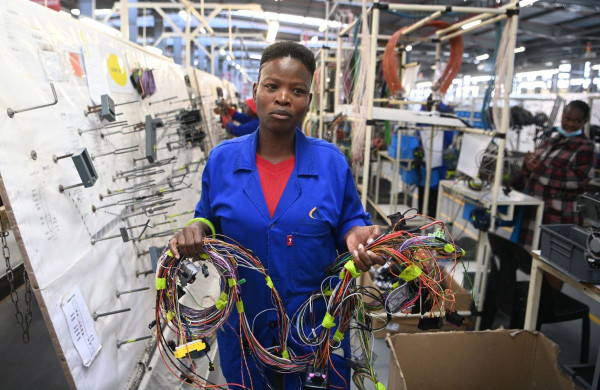
The Botswanan town of Lobatse, some 70 km south of Gaborone, has been transformed into a vibrant manufacturing centre. Across sprawling factory floors, hundreds of skilled hands meticulously assemble intricate wiring harnesses - components that will eventually power Volkswagen and Nissan vehicles across Africa and beyond.
In the automotive industry, wire harnesses are an intricate arrangement of wires, connectors, and components. They serve as vehicles' central nervous systems, enabling the transmission of electrical signals and power throughout the automobile.
This is Delta Automotive Technologies, where strategic financing from the African Development Bank has catalysed a manufacturing renaissance that extends far beyond the factory wallsThe company makes wiring harnesses primarily for Volkswagen and Nissan.. For decades, Botswana's economic history was written in diamonds. Today, a new chapter is unfolding as the African Development Bank's $80 million credit line to the Botswana Development Corporation (BDC) for businesses in the country fuels Delta Automotive's transformation into a manufacturing powerhouse.
"This funding hasn't just built infrastructure - it's built opportunity," says Darryn Hattingh, Delta's Director of Manufacturing. "We've built a world-class operation that competes globally while creating opportunity locally. The support enables us to industrialise not just today's production lines, but tomorrow's innovations. It will support us to industrialise future businesses obtained through Volkswagen.”
The firm, which is based in Botswana, makes wiring harnesses for Volkswagen's Polo Vivo and Polo 270, and Nissan's H60 brands.
It currently makes 120 vehicle harness sets for Volkswagen South Africa per day. By 2027, it hopes to create 340 vehicle sets for Volkswagen and 111 for Nissan in South Africa.
Women powering an industrial revolution
As one walks through Delta's expansive manufacturing facility, one fact is immediately apparent: in a traditionally male-dominated industry, women's expertise is driving this operation forward. An impressive 75% of Delta's workforce is female, shattering glass ceilings with every wire harness assembled.
For Clara Kaekane, a product and process engineer at Delta, the significance goes beyond personal achievement: "Every component we make is a challenge to outdated assumptions about gender and engineering work. I'm not just building car parts - I'm building a new perception of what is possible for women in manufacturing across Africa.”
Kaekane feels empowered to work at the management level in the automotive industry, which is normally male-dominated.
“This is a great opportunity for our country and company,” she says.
Connecting communities to global value chains
The hum of activity at Delta's plant represents more than manufacturing - it is the sound of Botswana's integration into sophisticated global supply networks. Currently producing 120 vehicle wiring harnesses daily, with plans to nearly triple output by 2027, Delta is an example of how African manufacturers can excel in precision-demanding global industries.
"What is happening here is the physical manifestation of our High 5 development priorities, particularly ‘Industrialize Africa' and ‘Integrate Africa'. It also provides skills to the people of Africa," said the African Development Bank's Deputy Director General for Southern Africa, Moono Mupotola. "Each wire harness connects not just vehicle components, but Botswana's workforce to global value chains, rural communities to industrial opportunities, and traditional economies to a diversified future."
Scaling impact: From hundreds to thousands
The numbers tell a compelling story: There are 327 employees today, expected to grow to 1,000 within four years. Behind those numbers are families supported, skills developed, and communities transformed. With 95% of the workforce Botswana nationals, the company has become a major driver of local economic empowerment.
"We're seeing multiple development dividends from this single investment," says Benedicta Abosi of BDC. "Delta's growth is generating export earnings, creating quality jobs, developing technical skills and, perhaps most importantly, demonstrating what's possible when development finance meets entrepreneurial vision."
She explained that five years ago, the Botswana Development Corporation supported multiple businesses, including Delta Automotive Technologies, through a $80 million line of credit facility from the African Development Bank.
A blueprint for African industrial transformation, Delta's success offers a replicable model for industrial development across the continent. By strategically supporting companies integrated into global supply chains, development finance can simultaneously address unemployment, gender inequality, economic diversification, and regional integration.
As workers at Delta Automotive Technologies continue to assemble the components that will power vehicles across the region; they're also creating a template for how African development finance can catalyse inclusive industrial transformation.
“This has definitely been a good investment for the African Development Bank, and this is how we see development financing working in Africa, Mupotola added.
Distributed by APO Group on behalf of African Development Bank Group (AfDB).
More images:
https://apo-opa.co/42JGePY
https://apo-opa.co/3GL0NTB
About the African Development Bank Group:
The African Development Bank Group is Africa's premier development finance institution. It comprises three distinct entities: the African Development Bank (AfDB), the African Development Fund (ADF) and the Nigeria Trust Fund (NTF). On the ground in 41 African countries with an external office in Japan, the Bank contributes to the economic development and the social progress of its 54 regional member states. For more information: www.AfDB.org
CHITTAGONG: Faye Tunnicliffe was the star of the show as the SA Emerging Women began their tour to Bangladesh with a...
COLOMBO: Head coach Mandla Mashimbyi values the lessons of defeat while looking at the bigger picture as the Proteas Women...

In the evolving and competitive energy landscape of Africa, the Frontier and Africa Energies Summit in London holds a critical position, drawing substantial revenue from the continent's thriving markets. However, there is a glaring issue that the organization cannot afford to ignore: the lack of Black Africans in its workforce. This absence raises serious concerns about the company's commitment to diversity and inclusion, and it's time for Africa Energies Summit to address this inequality. The African Energy Chamber (https://EnergyChamber.org) has issued a direct call for action, urging the summit to rectify this imbalance by hiring Black Africans.
It is deeply disappointing that, despite reaping significant benefits from Africa's economic contributions, Frontier and Africa Energies Summit in London has failed to reflect the continent's rich diversity by hiring Black employees. The company continues to prioritize personal networks in its hiring practices, which perpetuates exclusionary systems. As a result, many highly qualified Black Africans, with the necessary skills and experience, are left outside the company's inner circle.
This issue becomes even more perplexing when we consider that Black Africans are not merely passive participants in the success of the Africa Energies Summit; they are active sponsors and contributors to its events and programs. This contradiction calls into question the sincerity of the company's commitment to inclusivity and raises concerns about the integrity of its diversity policies.
NJ Ayuk, Executive Chairman of the African Energy Chamber, has highlighted the remarkable progress of the Oil and Gas industry in promoting Africans, especially women, into leadership positions. He praises the industry for fostering entrepreneurship and providing opportunities for Africans to rise to the top. This success serves as a stark reminder that Africans, especially African women, are not only capable but essential to the success of organizations operating within the continent.
The African Energy Chamber believes firmly that Black Africans possess the expertise, leadership qualities, and vision required for positions at the highest levels within the Africa Energies Summit. Inclusion is not just a matter of social justice—it is a strategic necessity for a company that depends heavily on Africa's energy market for its revenue. It is time for Frontier and Africa Energies Summit in London to move beyond lip service and show real, meaningful commitment to diversity by empowering Africans within its workforce.
The issue at hand goes beyond tokenism; it speaks to the very principles of fairness and equal opportunity. The idea that Africans can contribute to the financial success of the company through large exhibitions, yet are denied equal representation within the organization, is both unacceptable and unsustainable. The time to act is now, and this imbalance must be addressed without delay.
While it may be uncomfortable to raise these concerns, the African Energy Chamber is committed to shining a light on uncomfortable truths within the industry. The progress made in the Oil and Gas sector—particularly in the hiring, training, and promotion of Africans—demonstrates that genuine diversity efforts lead to entrepreneurial success and organizational growth. The African Energy Chamber urges Africa Energies Summit in London to adopt similar practices and take lessons from the success stories in the Oil and Gas industry.
Countries such as South Africa, Nigeria, Angola, Gambia, Sierra Leone, Kenya, Ghana, Namibia, and Tanzania—along with others that actively support the summit and participate in its events—deserve to see their talent represented at the highest levels of the organization. Africa Energies Summit must step up and ensure that the diversity it benefits from in its African markets is reflected in the diversity of its workforce.
"Frontier makes a huge part of its revenue from Africa, yet no Black people are hired within the company. They hire people they know, trust, and like, but we are not part of that circle. I am deeply disappointed. Black Africans are major participants and sponsors of their programs. I believe we are more than capable of doing the job, but there has been no true commitment to hiring or promoting us. We also need to have a serious conversation about why Africa Energies Summit in London isn't hosted in Africa," said NJ Ayuk, Executive Chairman of the African Energy Chamber.
The African Energy Chamber calls on Africa Energies Summit in London to recognize the urgent need to address the underrepresentation of Black Africans in leadership roles within its organization. This is a critical opportunity for the summit to prove its commitment to true diversity and inclusivity by embracing the talents, skills, and potential of Africa's brightest minds.
Distributed by APO Group on behalf of African Energy Chamber.
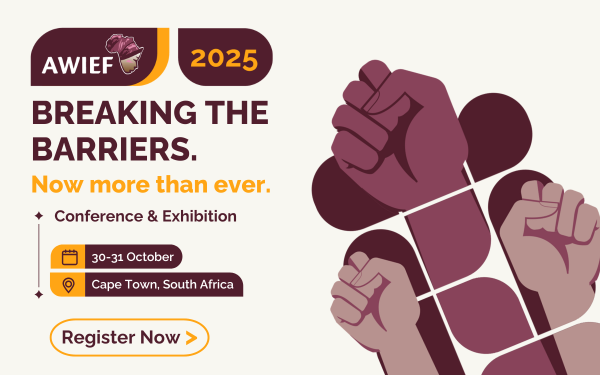
The Africa Women Innovation and Entrepreneurship Forum (AWIEF) (www.AWIEForum.org) has announced the theme for its prestigious annual conference taking place at the Cape Town International Convention Centre (CTICC), Cape Town, South Africa, from 30 to 31 October 2025.
As a leading pan-African organisation driving women's entrepreneurship and innovation, AWIEF continues to provide a powerful platform to promote inclusive economic growth and gender equity across the continent.
AWIEF2025 is the 11th edition of the annual conference, a highly anticipated two-day event, an international platform and gathering of a wide range of stakeholders from the African and global entrepreneurship ecosystem, to engage in impactful dialogue and work together on bold, gender-inclusive and forward-thinking solutions for a thriving business landscape for women in Africa.
The conference theme this year is “Breaking the Barriers: Now More Than Ever”.
Despite notable progress in women's empowerment, today, we are witnessing not just a stagnation but, alarmingly, an active backlash against gender equality and women's rights. This regression threatens to reverse hard-won gains and underscores the need for urgent, collective action.
The theme of AWIEF2025 is both a call to action and a statement of urgency. It reflects the growing recognition that, in a world marked by political instability, economic uncertainty, technological disruption, and persistent inequality, we cannot afford to remain complacent. As UN Secretary-General António Guterres recently emphasized, “We are witnessing an aggressive backlash against gender equality – threatening hard-won progress… We must push back against this pushback.”
In the lead-up to 2030, "Now more than ever," we must renew our commitment to gender equity and ensure that no woman is left behind in Africa's development journey.
Following the resounding success of AWIEF2024, which brought together over 1,000 attendees from over 50 countries, including 42 African nations, the upcoming AWIEF2025 promises even greater impact and engagement.
AWIEF2025 will once again convene a vibrant community of entrepreneurs, corporate executives, investors, policymakers, development institutions, academia, media, and civil society to foster collaboration, drive transformative change, and scale women-led innovation and enterprise.
Delegate registration is now open.
Exhibition stand bookings are also open, offering a prime opportunity for businesses, startups, and organisations to showcase their products, services, solutions, and innovations to a pan-African and global audience.
Join AWIEF in Cape Town and be part of Africa's most empowering platform for advancing women in business and innovation.
Visit www.AWIEForum.org to register and to secure your place. Contact: info@awieforum.org
Distributed by APO Group on behalf of Africa Women Innovation and Entrepreneurship Forum (AWIEF).
JOHANNESBURG: Cricket South Africa (CSA) has today announced the 2025 CSA Emerging Academy intake for men and women. This year’s...
JOHANNESBURG: Cricket South Africa (CSA) can confirm that Proteas Men right arm fast bowler Kagiso Rabada has returned an adverse analytical...
WINDHOEK: Half-centuries from Adnaan Lagadien, Jorich van Schalkwyk and Kamogelo Phiri helped South Africa Under-19 Men beat an improved Cricket Namibia by 131 runs in...
COLOMBO: Following a tightly contested defeat against India, the Proteas Women remain optimistic and are focusing on the controllables ahead of...
The Chairperson of the Multi-Party Women's Caucus (MPWC), Ms Lindelwa Dunjwa, has expressed deep sadness on the death of three police officers that were found dead.
The bodies of the two female constables Keamogetswe Buys (30) and Boipelo Senoge (20) as well as their male colleague, constable Cebekhulu Linda (24) were retrieved from the Hennops River in Centurion yesterday after a six-day search. Two other bodies were also retrieved during the search.
“As the committee we are extremely saddened by the death of these officers. They were in the prime of their lives, serving our country. This is indeed a sad day for women and men in blue,” emphasised Ms Dunjwa.
Ms Dunjwa called on the authorities to do all in their power to expedite the investigation regarding the circumstances that led to the deaths. “We convey our sincerest condolences to the families and friends of these officers. The country grieves with you,” she said.
Distributed by APO Group on behalf of Republic of South Africa: The Parliament.
The World Health Organization (WHO) and the United Nations Children's Fund (UNICEF) are today launching a “Babies Before Bottom Lines” manifesto to warn parents in South Africa against false and unethical baby milk advertising. The manifesto was posted online today to call out “predatory and pervasive practices” and has been backed and shared by prominent parenting influencers around the country.
WHO and UNICEF are jointly calling the attention of parents and caregivers to the WHO International Code of Marketing of Breastmilk Substitutes and its related information sources. The code provides guidelines on stricter regulation of marketing of breastmilk substitutes, to curb harmful effects on babies' short- and long-term health.
WHO's Country Representative in South Africa, Shenaaz El-Halabi, says: “False, incomplete, misleading health and nutrition claims by formula companies should stop now. The WHO calls on formula milk companies to stop presenting incomplete scientific evidence and inferring unsupported health outcomes.”
WHO and UNICEF are specifically calling on local regulators to update Regulations Relating to Foodstuffs for Infants and Young Children (aka R991) to include other advertising techniques and digital marketing practices that have become prevalent in the past few years since the International Code of Marketing of Breastmilk Substitutes of 1981 and local Regulation R991 of 2012 were drafted. Some popular social media platforms, whose algorithms can target specific consumers with specific messages at specific times, were still in their infancy or did not yet exist in 2012. Of particular concern is that parents are often targeted with information that blurs the lines between nutritional facts and promotional pseudo-science and emotional manipulation when they are at their most vulnerable.
The pseudo-scientific health claims made by formula companies discourage mothers from breastfeeding, which should always be a first choice as breastmilk is the most complete and healthiest milk for babies. In addition, widespread evidence exists that women have internalised doubts about the quality and quantity of their breastmilk, mirroring the themes and messaging of formula milk marketing campaigns.
In line with their multi-country study on the impacts of marketing breastmilk substitutes, WHO and UNICEF warn that “inappropriate promotion of breastmilk substitutes negatively impacts breastfeeding practices, and that advertisers are promoting a false choice between formula feeding and breastfeeding, without offering informed choice to parents about the real differences between breastmilk and various brands of formula”.
UNICEF South Africa Representative, Christine Muhigana, notes that: “Government and civil society partners are to be commended for their efforts to address this concerning issue. It is evident that formula milk companies continue to actively target health professionals to convince them to prescribe formula. This Manifesto is part of a broader effort to address these unfair practices so that mothers and caregivers are fully aware of unethical marketing practices.”
Cross promotion, also known as “brand extension” which is a marketing practice whereby one product is used to advertise another product by using similar branding, packaging and labelling (including but not limited to similar colours, design, font types, mascots and logos) has become a common practice by the bay formula companies.
“All families need to be supported with evidence-based information so that they can make the most appropriate and informed decision for feeding their babies. Those choices, however, should never be exploited for corporate profits. We are finding again and again, all around the world, that unethical corporate influence is imposed on caregivers through false advertising. Companies use digital marketing algorithms that exploit parents when they are most vulnerable. They capitalize on parents' doubts and questions. For instance, we see advertisers directing fake science at caregivers in the middle of the night, when they or their babies are struggling, to falsely convince them that bottle-fed babies sleep better than breastfed babies. This is wrong and needs to stop,” says Dr Laurence Grummer-Strawn, who leads WHO‘s work on infant and young child feeding.
WHO and UNICEF have uncovered systematic and unethical marketing strategies by the US $55 billion infant formula industry, finding it uses the “infant formula industry uses pervasive, personalised and powerful methods to target parents when they are at their most vulnerable in the early days of their new babies life, and manipulate scientific claims to promote their products whilst undermining parents' confidence”.
Aqeelah Harron, an online content creator who owns the popular Fashion Breed social media platform, is supporting the campaign. "I'm a mom to a toddler and my child's health matters to me more than anything. I think it's wrong that powerful formula companies with big platforms are preying on parents to manipulate us into falling for fake science. Babies and new parents are vulnerable and should never be exploited. We need to prioritise comprehensive feeding education for all caregivers, free from the influence of profit-driven marketing." Several other online influencers are also backing the campaign.
WHO and UNICEF invite the public to join them in calling for an end to the aggressive marketing of formula milk, and to share their call to action: “Choose babies before bottom lines.”
Distributed by APO Group on behalf of World Health Organization (WHO) - South Africa.
JOHANNESBURG: Cricket South Africa (CSA) has announced the SA Emerging Men’s and Women’s squads set to tour Bangladesh next month....
COLOMBO: Proteas Women captain Laura Wolvaardt is upbeat about her side’s chances ahead of their opening match of the One-Day International...
TSHWANE: Building on the momentum of previous SA20 U19 Women’s Camps, the second instalment of the SA U19 Women’s national...