Bavuma Ruled Out of First Test Against Bangladesh Brevis and Ngidi Added to Squad
JOHANNESBURG: Proteas Men’s Test captain Temba Bavuma has been ruled out of the first Test against Bangladesh after scans revealed a...

MyZA
News, Directory, Events and Other Stuff
JOHANNESBURG: Proteas Men’s Test captain Temba Bavuma has been ruled out of the first Test against Bangladesh after scans revealed a...
The third Project Steering Committee (PSC) meeting of the "Conserving Aquatic Biodiversity in Africa's Blue Economy" project took place on October 9, 2024, in Mombasa, Kenya. The meeting aimed to update stakeholders on project progress, discuss difficulties, and provide strategic guidance for the future. The meeting included discussions on the 2023-2024 work plan, no-cost extension activities, adopted recommendations, and strategic recommendations for future project implementation.
The opening session was chaired by Dr. Huyam Salih, Director of AU-IBAR, on behalf of H.E. Ambassador Josefa Sacko, Commissioner for Agriculture, Rural Development, Blue Economy, and Sustainable Environment. Dr. Salih welcomed participants and expressed gratitude to the Government of Kenya and the Swedish International Development Cooperation Agency (SIDA) for their continued support.
In his statement, Dr. Joachim Beijmo, Head of Regional Development Cooperation in Africa at the Swedish Embassy to the African Union, emphasized the importance of the Blue Economy for livelihoods and food security across Africa. He highlighted Sweden's commitment to aquatic biodiversity conservation and development cooperation across many sectors, with the Blue Economy being a key priority. Dr. Beijmo underscored the potential of the Blue Economy to improve livelihoods and noted that the sustainable management of aquatic ecosystems is a global concern. He welcomed the growing interest from diverse stakeholders, including local communities, and emphasized the importance of cooperation among institutions to maximize synergies. However, he also warned about the increasing threats to ecosystems, such as overfishing, and reaffirmed Sweden's commitment to expanding Marine Spatial Planning (MSP) initiatives and supporting local communities in conservation efforts.
Dr. Ndiaga Gueye, Senior Fisheries and Aquaculture Officer at FAO's Regional Office for Africa, commended AU-IBAR for its achievements in aquatic biodiversity conservation and called for continued efforts in this critical area. He pointed out the vulnerability of oceans and inland waters and noted that the fishing industry is at a crossroads. Dr. Gueye stressed the need for greater investment in capacity building to achieve Sustainable Development Goal (SDG) 14, which focuses on life below water. He also highlighted the importance of international agreements, which can take time to implement, and emphasized the essential role of the private sector in the sustainable management of aquatic resources. Access to data, knowledge sharing, and enhanced communication were identified as key enablers for achieving these goals.
In his remarks officially opening the meeting, Mr. Rodrick Kundu, Secretary of the State Department for Blue Economy and Fisheries, Kenya, highlighted the challenges faced by aquatic ecosystems, including pollution and the impacts of climate change, which have severely undermined the productivity of fisheries resources. He stressed that when the productivity of these resources declines, the livelihoods of millions of people, especially those dependent on fisheries, are negatively affected. Mr. Kundu acknowledged Kenya's leadership in promoting the Blue Economy, citing its role in high-level initiatives such as the Blue Growth concept and its participation in the High-Level Panel for a Sustainable Ocean Economy. He also noted the significant benefits Kenya has gained from the project, particularly in terms of capacity building among local communities.
Solidarity Messages from the Regions
Representatives from the five regions of Africa shared insights on their countries' progress in aquatic biodiversity conservation:
- Uganda: Ms. Grace Namukasa, representative of the Ministry of Agriculture, Animal Industry, and Fisheries, highlighted Uganda's achievements in transboundary aquatic ecosystem management. She emphasized the importance of regional cooperation to address challenges in aquatic biodiversity and noted Uganda's commitment to sustainable resource management.
- Côte d'Ivoire: Mr. Yao N'da Firmin, Director of Blue Economy and Coastal Environment, underscored the critical role of fisheries in food security in West Africa. He explained that Côte d'Ivoire has implemented systems for managing biodiversity and is currently working on its second Marine Spatial Planning (MSP) project. Mr. Firmin emphasized the need for integrated strategies to enhance the conservation of aquatic biodiversity and adapt to emerging challenges.
- Cameroon: Prof. Paul Tchawa, Secretary General of MINEPDED, discussed Cameroon's National Strategy on mangrove conservation and climate change adaptation. He stressed the importance of solidarity and complementarities among African countries to defend their shared interests in aquatic resource conservation.
- South Africa: Mr. Belemane Semoli, Chief Director of Aquaculture and Economic Development, reiterated the significance of sustaining aquatic biodiversity for mitigating climate change and promoting sustainable development. He highlighted that maintaining biodiversity is essential for both aquatic ecosystems and human life, providing energy, food, shelter, and livelihoods. Mr. Semoli noted South Africa's Marine Spatial Plan and Ocean Plan, which recognize the contributions of all sectors, and identified the challenge of balancing conservation with realizing the socio-economic benefits of the Blue Economy.
Technical Sessions and Presentations
Key presentations covered the progress of the project, recommendations from the PTC, the project's no-cost extension activities, and budget updates. The PSC members endorsed the presentations and commended AU-IBAR for the significant achievements made so far.
Emerging Issues and Recommendations
Several important issues were raised during the meeting, including the need for:
- A second phase of the project to ensure sustainability and broader coverage across Africa.
- Increased collaboration with regional institutions to strengthen capacity-building efforts.
- Greater private sector involvement to support the long-term sustainability of the project.
- Addressing the challenges of plastic pollution and expanding training programs to replicate the project's successes in other regions.
The PSC members endorsed the recommendations from the 3rd PTC and approved the work plan for the no-cost extension. They recommended the preparation of a comprehensive report on the 3rd PSC meeting and requested AU-IBAR to share its exit strategy with PSC members. They also urged AU-IBAR to begin preparations for a second phase of the project and to enhance partnerships with both regional institutions and the private sector.
The meeting concluded with closing remarks from Dr. Huyam Salih, AU-IBAR Director, as well as representatives from Uganda and SIDA. SIDA noted the significant progress made, the valuable recommendations provided, and the strong leadership demonstrated throughout the project. FAO acknowledged the relevance of the successful recommendations shared during the exchanges.
In her vote of gratitude, the president of AWFISHNET emphasised the importance of women's participation in the initiative. A government officer from Kenya formally ended the meeting. The significance of ongoing communication with member nations was stressed by Mr. Rodrick Kundu in his concluding remarks. He emphasised the significance of establishing mechanisms for cross-border cooperation, bringing project initiatives down to the local level, and keeping partnerships and accountability at the forefront of the project's objectives. At its third meeting, the Project Steering Committee (PSC) reaffirmed AU-IBAR's dedication to protecting aquatic biodiversity in Africa and fostering long-term growth in the Blue Economy across the continent.
Distributed by APO Group on behalf of The African Union – Interafrican Bureau for Animal Resources (AU-IBAR).
The long-term viability of the Lesotho Highlands Water Project faces various threats
SA called to protect girl children
President Cyril Ramaphosa has called on South Africans to protect, promote and respect the rights of girl children, as the world commemorates International Day of the Girl Child.
“On this day, we recognise the rights of girl children everywhere: their right to live, freedom and safety; their right to education and health care, their right to opportunity and above all, to be treated equally.
“Let us commit to protecting and nurturing our nation’s girl children. Together, let us, as South Africans, be aware of the rights of the children, and to respect them, and to protect them, and above all, to honour them. Let us build a country where every girl child can fulfil her potential and realise her dreams,” President Ramaphosa said on Friday.
He lamented that in many parts of the world, girl children are subjected to “gender apartheid”.
“In many parts of the world, girls face a terrible plight. They are victims of conflict, human trafficking and sexual violence. In places like Afghanistan, girls face the worst form of gender apartheid. They are denied the rights to education, freedom, as well as even having a voice.
“In some parts of the world, young girls are taken out of school early to work inside and outside their home,” the President said.
South Africa is committed to all global instruments aimed at the prosperity of girl children.
“South Africa is committed to upholding the United Nations Convention on the Rights of the Child and all global instruments to advance the rights of women and girls.
“Gender equality is enshrined in our Constitution. We have progressive laws to advance the rights of girl children to ensure that they have opportunities and to protect them from abuse and exploitation.
“I call on all South Africans to be part of the global effort to protect an advance the rights of girls,” said the President.
According to the United Nations (UN), International Day of the Girl Child “focuses attention on the need to address the challenges girls face and to promote girls’ empowerment and the fulfilment of their human rights”.
In December 2011, the UN General Assembly adopted Resolution 66/170 to declare 11 October as the International Day of the Girl Child. – SAnews.gov.za
NeoB
Fri, 10/11/2024 - 12:04
Majodina to participate in Africa and Cairo Water Weeks
Water and Sanitation Minister Pemmy Majodina is set to participate in the 9th Africa Water Week (AWW) and 7th Cairo Water Week (CWW) from Sunday.
The session will be held from Sunday, 13 October to Thursday, 17 October in Cairo, Egypt.
The 9th edition of the Africa Water Week will this year be held jointly with the Cairo Water Week, hosted by the government of the Arab Republic of Egypt, through the Ministry of Water Resources and Irrigation.
The Africa Water Week is an African Ministers' Council on Water (AMCOW) flagship initiative to facilitate the dissemination, sharing, networking and brokering of knowledge and information on water management and Water, Sanitation and Hygiene (WASH) services provision in Africa.
Since the establishment of the AWW, participants have included Ministers and representatives responsible for water affairs in Africa; development partners and civil society organisations from Africa and beyond.
Held under the theme “Placing Water and Sanitation at the Heart of Achieving Agenda 2063: The Africa We Want, “Africa Water Week will have three running sub-themes.
The sub-themes include financing, investments and resource mobilisation; water supply, sanitation, hygiene, and wastewater; and water infrastructure for economic production, climate resilience, and disaster risk reduction.
“With less than two years before the end of the Africa Water Vision 2025, the 9th Africa Water Week aims to evaluate progress made in implementing the vision, consolidate the gains and derive lessons for the future,” Majodina said.
Meanwhile, the Cairo Water Week to be held under the theme “Water and Climate: Building Resilient Communities” aims to explore the intricate relationship between water and climate, emphasising their collective impact on community resilience.
Discussions will extend beyond recognition, delving into the need for sustainable and adaptive practices that fortify communities against the challenges of climate change and water scarcity.
Climate change
As part of the event, various related sub-themes and sub-topics will be explored in plenary and technical sessions organised by international and regional organisations.
Majodina said government is standing at a defining moment as climate change is a lead conversation with rising sea levels that increase chances of floods, its impact on droughts and changing weather patterns that force changes in agricultural productions.
She said the impacts are global, hence the importance of the Cairo Water Week Theme.
“As a country, we are constantly working towards Goal Six of the Sustainable Development Goal (SDG), which aims to ensure the availability and sustainable management of water and sanitation for all. I look forward to engaging with my counterparts from across the continent and learning from their work and taking some of the lessons home,” Majodina said.
During her visit, Majodina will attend high-level plenary sessions and will be meeting with her Egyptian counterpart, Water Resources and Irrigation Minister, Professor Hani Sewilam.
The Minister will also be delivering keynote addresses at sessions convened by Water and Sanitation on the African Transboundary Management Benchmarking and Youth, Gender and Social Inclusion workshop, among others.
The Youth, Gender and Social Inclusion Strategy is aimed at addressing power imbalances and social inequalities based on various social identities.
Taking an action-oriented, and youth and women-led approach; it is improving the terms on which individuals and groups take part in society - improving the ability, opportunity, and dignity of those who have been disadvantaged based on their identity. – SAnews.gov.za
GabiK
Fri, 10/11/2024 - 10:34
CENTURION: Heinrich Klaasen delivered a batting masterclass under challenging conditions at SuperSport Park as the Momentum Multiply Titans powered to a...
DUBAI: Marizanne Kapp excelled with the bat, followed by Nonkululeko Mlaba’s brilliance with the ball, as the Proteas Women secured a...
The laws “have not deterred … the selling or buying of sex … and are not rationally capable of doing so. They merely create greater stigma and vulnerability among sex workers and violate their rights”.
Repeated extended blackouts as electricity poles are cut down and cables stolen
Limpopo school has been going strong for nearly 20 years
Many families in Matikwe north of Durban were left out when pipes were installed
Water infrastructure was installed in uMsinga in KwaZulu-Natal years ago but has never worked
JOHANNESBURG: Cricket South Africa (CSA) is thrilled to announce the launch of an exciting new addition to the upcoming season with...
Protesters renew call for boycott
Municipality condemns murder of young woman by metro officer
Nelson Mandela Bay (NMB) Municipality has condemned the killing of a young woman in Motherwell, allegedly by an off-duty Metro Police member.
NMB Metro Police Acting Commissioner, Advocate Andrew Moses, said the incident took place in Maku Street, Motherwell NU2, on Sunday afternoon.
The officer, who is now facing a murder charge, is believed to have been in a relationship with the deceased.
The Acting Commissioner has, on behalf of the Metro Police management expressed shock and dismay at the incident and sent condolences to the family of the deceased.
“As a department, we are saddened by this incident, but we want to assure the community that we will work with the South African Police Service during the investigation,” Moses said.
The suspect is detained at Ikamvelihle police station, where he had handed himself over to the police.
"We wish to reiterate to the community that as a department, we condemn any and all kinds of violence, especially against women and children... We will be seeking the immediate suspension of the member to allow the legal process to unfold without any undue delays or interferences,” Moses said.
The Acting Commissioner noted that the police member was not on duty at the time of the incident.
“The preliminary report suggests that it was not an official firearm that was used, but rather an illegal firearm,” Moses said. – SAnews.gov.za
GabiK
Tue, 10/08/2024 - 10:19
SHARJAH: The experienced duo of Nat Sciver-Brunt and Danni Wyatt-Hodge led England to a seven-wicket win over the Proteas Women in...
Leaders challenged to ensure women enjoy full access to water, sanitation
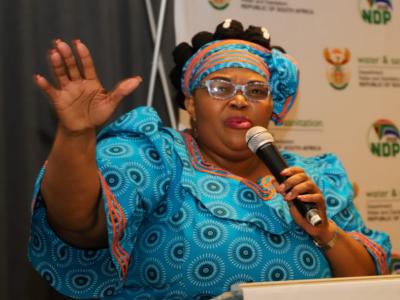
Minister Pemmy Majodina has challenged women leaders in her department and its entities to ensure that the rights enshrined in the Constitution, especially access to water and sanitation, become the lived experience for all women in South Africa.
“The Constitution guarantees access to water and basic sanitation as a fundamental human right,” Majodina said.
Majodina, the Minister of Water and Sanitation, was speaking at the Women in Leadership Dialogue held in Pretoria on Friday, 4 October.
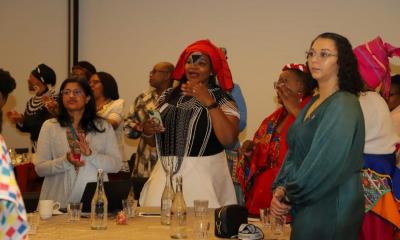
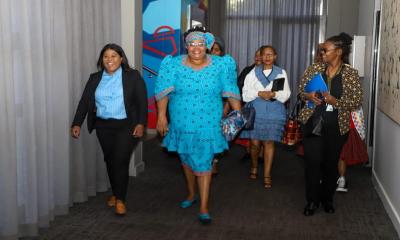
The dialogue was hosted by the Department of Water and Sanitation (DWS) for women in leadership positions in the department and its entities. It aimed to reflect on the strides made by women and the role played by women in leadership within the sector to uplift women, and expand access to basic services, especially water and sanitation.
Majodina said women and girls are the hardest hit by lack of access to clean water and basic sanitation.
The Minister noted that while significant strides have been made to empower women and promote gender equality since 1994, “the stark reality is that the majority of people living in conditions of poverty are women and the poorest households are headed by women”.
She said women are the hardest hit by a lack of access to clean water.
“Collecting water by carrying 25 litres on the head or pushing wheelbarrows while pregnant can cause health complications. Giving birth in a setting without safe drinking water or sanitation poses a serious risk for the survival of both mother and child.
“Lack of access to water and sanitation at home and school impacts negatively on girl children. They have to spend time collecting water or finding a safe place to relief themselves in the open,” Majodina said.
If there is no water and sanitation facilities, the Minister said, women dignity and self-esteem are affected.
PHOTOS | DWS Women in Leadership Dialogue
 |
 |
 |
The Minister also noted that women are vulnerable to harassment and violence when they have to travel long distances to fetch water, use shared toilets or relieve themselves in unsafe places.
She stressed the importance of leaders in the water and sanitation sector understanding the negative impact of lack of water and sanitation, so that they are well-positioned to make a difference.
“Let our programmes and practices be inspired by the values and vision of a truly equal and non-sexist society. Let us ensure that a gender perspective permeates all decision-making processes and programmes of the department,” Majodina said.
She further called on the Director-General and senior leadership of the department to ensure that the department and its entities create a conducive environment for women employees to work and thrive.
“[Senior leadership] carries a responsibility to ensure that the department becomes a safe space for women, where their rights are promoted and protected,” the Minister said. - SAnews.gov.za
GabiK
Mon, 10/07/2024 - 09:58
CENTURION: In an action-packed round of the T20 Challenge, the Auto Investments North West Dragons, DP World Lions, Knights, and World...
DURBAN: The Hollywoodbets Pro Series, encompassing both the Hollywoodbets Pro50 and Pro20 Competitions, kicked off on Friday with an exciting weekend...
SHARJAH: The Proteas Women head into their second ICC Women’s T20 World Cup 2024 match against England at the Sharjah Cricket...
PAARL: Durban and Paarl were at the heart of thrilling cricket action on Friday, with the Hollywoodbets Pro20 and T20 Challenge...
ABU DHABI: Proteas Men’s One-Day International (ODI) captain Temba Bavuma has been ruled out of the third ODI against Ireland due...
Citizens urged to take part in International Fire Safety and Prevention Week
The National Disaster Management Centre (NDMC) has called on all South Africans to participate in this year’s International Fire Safety and Prevention Week, which will be observed from 6 to 12 October 2024.
This global event aims to raise awareness of fire prevention and safety practices, encouraging individuals, communities and businesses to take proactive steps to reduce the risk of fires and protect lives.
According to the organisation, South Africans can pledge their support by learning more about fire safety, practising safe fire prevention measures at home and in the workplace, and backing local fire services.
During the International Fire Safety and Prevention Week, fire services across the country will host a variety of awareness campaigns and community outreach activities to educate the public about fire safety.
“These efforts will include school visits, fire drills, safety demonstrations, and information sessions designed to help communities better understand how they can prevent fires and respond effectively in an emergency,” the NDMC said.
Meanwhile, the NDMC has also taken the time to recognise the heroic work done by the brave men and women of fire services across the country, both public and designated services, who are at the forefront of fire prevention and emergency response.
“Their dedication to protecting lives and property, often in dangerous and challenging conditions, deserves the highest praise.”
The organisation has been working closely with all provinces and local municipalities to strengthen fire safety and prevention measures across the country.
Since 2016, according to NDMC statistics, more than 118 municipalities have been assessed, with more than 500 fire safety practitioners trained in fire risk assessment and safety strategies through partnership with the Fire Protection Association of South Africa (FPASA).
“In line with the Fire Services White Paper, fire services are encouraged to pursue the implementation of an integrated fire risk management strategy, as it is critical that collectively we, as a nation, focus on fire prevention and preparedness together,” the statement read.
Fire is preventable, and the NDMC urges everyone to take simple steps, such as:
• Educating communities to build their informal dwellings with a minimum gap of three meters between them to reduce the risk of fire spreading quickly.
• Ensuring that the spaces between these buildings are kept clear of debris and always maintain open and accessible roads leading to the homes, so that emergency vehicles can reach them without delay.
• Ensuring that homes are equipped with smoke detectors and fire extinguishers.
• Creating and practising fire escape plans.
• Being mindful of potential fire hazards, such as unattended cooking or faulty electrical wiring.
• Educating children, family members, and the frail and elderly about fire safety measures. – SAnews.gov.za
Gabisile
Fri, 10/04/2024 - 10:38
ABU DHABI: Proteas Men’s fast bowler Nandre Burger has been ruled out of the remainder of the One-Day International (ODI)...