• Skip to main content
  • Skip to header right navigation
  • Skip to after header navigation
  • Skip to site footer
MyZA

MyZA

News, Directory, Events and Other Stuff

  • Social Media
  • Sport
  • World News
  • Home
  • Submit News
  • Directory
  • Events
  • Stratlec
  • TFSA
  • News
    • APO
    • Today’s Sport News
    • Todays Social Media and Tech Headlines
    • Today’s World News
    • Today’s SA Financial News
  • Contact
You are here: Home / News / Tanzania Advances Avocado Sector With Support From FAO’s OCOP Initiative

Tanzania Advances Avocado Sector With Support From FAO’s OCOP Initiative

8 July 2025 by Guest
Food and Agriculture Organization of the United Nations (FAO): Regional Office for Africa

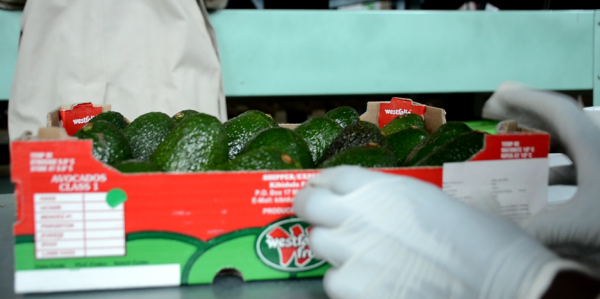
The United Republic of Tanzania is promoting avocado as a key driver of sustainable agricultural transformation under the One Country One Priority Product (OCOP) initiative. Led by the Government and supported by the Food and Agriculture Organization of the United Nations (FAO), the initiative is helping to strengthen the avocado value chain through innovation, investment, and inclusive development.

Tanzania is one of more than 30 African countries participating in OCOP, a global initiative that supports countries to promote one Special Agricultural Product with unique qualities and market potential. Avocado was selected as Tanzania’s OCOP crop in line with national strategies to develop high-value horticultural exports.

The country is currently one of Africa's top three producers of avocado, with Kenya and South Africa. Smallholder farmers account for about 90 percent of this production, highlighting the crop’s role in supporting rural livelihoods. Avocados are grown across many parts of the country, including Arusha, Kilimanjaro, Mbeya, Songwe, Njombe, Kagera, Kigoma, Rukwa, Tanga, Manyara and Ruvuma. National efforts have focused on increasing production, improving quality and expanding access to international markets.

Avocado: a strategic crop for growth

Recent data from the Tanzania Horticultural Association (TAHA) shows that avocado exports increased by 74 percent between 2021 and 2023, rising from 15,432 tonnes to 26,826 tonnes. Over the same period, export earnings grew from USD 44.3 million to USD 77.3 million. In November 2024, Tanzania’s first shipment of avocados arrived in China, opening access to a new Asian market.

The OCOP initiative complements Tanzania’s national plans by promoting sustainable production and green value chain development. It encourages countries to build more inclusive and resilient agrifood systems through improved practices in production, storage, processing and marketing.

Tanzania has set a national target to increase avocado production from 190,000 tonnes in 2018 to 290,000 tonnes by 2025. Reaching this goal will require further investment in quality seedling production, irrigation systems, storage and processing infrastructure, and harvesting technologies. Strengthening the capacity of extension workers is also a priority.

Transforming agrifood systems

The OCOP initiative provides a platform for knowledge sharing and collaboration across countries. To date, 33 African countries are participating, each focusing on one special agricultural product. The initiative is country-led, with FAO offering technical support and facilitating partnerships.

The OCOP initiative is aligned with FAO’s vision for more efficient, inclusive, resilient, and sustainable agrifood systems for better production, better nutrition, a better environment and a better life, leaving noone behind.

Distributed by APO Group on behalf of Food and Agriculture Organization of the United Nations (FAO): Regional Office for Africa.

Media files
Food and Agriculture Organization of the United Nations (FAO): Regional Office for Africa
Download logo

The United Republic of Tanzania is promoting avocado as a key driver of sustainable agricultural transformation under the One Country One Priority Product (OCOP) initiative. Led by the Government and supported by the Food and Agriculture Organization of the United Nations (FAO), the initiative is helping to strengthen the avocado value chain through innovation, investment, and inclusive development.

Tanzania is one of more than 30 African countries participating in OCOP, a global initiative that supports countries to promote one Special Agricultural Product with unique qualities and market potential. Avocado was selected as Tanzania’s OCOP crop in line with national strategies to develop high-value horticultural exports.

The country is currently one of Africa’s top three producers of avocado, with Kenya and South Africa. Smallholder farmers account for about 90 percent of this production, highlighting the crop’s role in supporting rural livelihoods. Avocados are grown across many parts of the country, including Arusha, Kilimanjaro, Mbeya, Songwe, Njombe, Kagera, Kigoma, Rukwa, Tanga, Manyara and Ruvuma. National efforts have focused on increasing production, improving quality and expanding access to international markets.

Avocado: a strategic crop for growth

Recent data from the Tanzania Horticultural Association (TAHA) shows that avocado exports increased by 74 percent between 2021 and 2023, rising from 15,432 tonnes to 26,826 tonnes. Over the same period, export earnings grew from USD 44.3 million to USD 77.3 million. In November 2024, Tanzania’s first shipment of avocados arrived in China, opening access to a new Asian market.

The OCOP initiative complements Tanzania’s national plans by promoting sustainable production and green value chain development. It encourages countries to build more inclusive and resilient agrifood systems through improved practices in production, storage, processing and marketing.

Tanzania has set a national target to increase avocado production from 190,000 tonnes in 2018 to 290,000 tonnes by 2025. Reaching this goal will require further investment in quality seedling production, irrigation systems, storage and processing infrastructure, and harvesting technologies. Strengthening the capacity of extension workers is also a priority.

Transforming agrifood systems

The OCOP initiative provides a platform for knowledge sharing and collaboration across countries. To date, 33 African countries are participating, each focusing on one special agricultural product. The initiative is country-led, with FAO offering technical support and facilitating partnerships.

The OCOP initiative is aligned with FAO’s vision for more efficient, inclusive, resilient, and sustainable agrifood systems for better production, better nutrition, a better environment and a better life, leaving noone behind.

Per Kind Favour of APO

Africa Fact: The mediaeval Nubian Kingdoms kept archives. From the site of Qasr Ibrim legal texts, documents and correspondence were discovered. An archaeologist informs us that: “On the site are preserved thousands of documents in Meroitic, Latin, Greek, Coptic, Old Nubian, Arabic and Turkish.”

Share this:

  • Share on X (Opens in new window) X
  • Share on Facebook (Opens in new window) Facebook
  • Print (Opens in new window) Print
  • Email a link to a friend (Opens in new window) Email
  • Share on LinkedIn (Opens in new window) LinkedIn
  • Share on Tumblr (Opens in new window) Tumblr
  • Share on WhatsApp (Opens in new window) WhatsApp
  • Share on Mastodon (Opens in new window) Mastodon
Category: NewsTag: APO

If you feel strongly about this article then feel free to send MyZA a ‘Letter to the Editor’ using the submission form below:


Letter to the Editor

This field is for validation purposes and should be left unchanged.
If this is in response to an article please include that article title here or as the lead in for the first paragraph of your Letter below.

Separate tags with commas

Localise your letter by naming the city your words are about. Add relevant words describing your subject. Single comma separated words of no more than 5
Your Name(Required)
Your Name will be linked to the website below.
Your personal, business or social media web site
Choose NO to not set up a user account on MyZA. User Accounts will allow you to submit letters under your own Author Name

3 Latest Letters to the Editor:

  • Thoughts on Lotto Winner News

    Dear Editor This is fantastic news for the community of Gqeberha. It is always heartwarming to hear about such life-changing positive outcomes for everyday people. Congratulations to the lucky winner! Regards Buhle Ngcobo In Response to/From: R8.5 Million Lotto Winner Claims Prize in Gqeberha

    13 October 2026
  • Inquiry Regarding SASSA Card Replacement

    Dear Editor I am a social grant recipient and need guidance on swapping my SASSA Gold Card for the Postbank Black Card. Please assist. Regards Buhle Ngcobo In Response to/From: Minister Tolashe assures smooth transition to Postbank Black Cards for grant beneficiaries Swapping your SASSA Gold Card for the new Postbank Black Card is a…

    13 October 2026
  • Congratulations to the Lotto Winner

    Dear Editor Dear Editor, I was thrilled to hear about the R8.5 million Lotto win for the community of Gqeberha. Such life-changing news brings hope and excitement to everyone in the area. I congratulate the winner and wish them all the best with their prize. May this bring positive change to their life and the…

    1 October 2026

About Guest

Previous Post:Huawei South Africa Partners Forum 2025: joining hands for a digital, intelligent future – TechCentral | SA News
Next Post:Not broken, just paralysed: The cash flow consequences of South Africa’s deeds backlog | SA News

Reader Interactions

Comments

  1. Woo Woo

    8 September 2026 at 7:45 pm

    Thanks for this article – it has opened my eyes to the possibilities in my life.

  2. Guillotine

    7 September 2026 at 9:05 pm

    Jol – party / to have fun [jo-rl] Similar to ‘kiff’ or ‘kief’, jol can be used in any context to express having a good time.Example: “I’m going to a jol tonight!” / “I’m having a jol!” / “It was such a jol!”

Copyright © 2026 · MyZA · All Rights Reserved · Powered by Stratlec Online