• Skip to main content
  • Skip to header right navigation
  • Skip to after header navigation
  • Skip to site footer
MyZA

MyZA

News, Directory, Events and Other Stuff

  • Social Media
  • Sport
  • World News
  • Home
  • Submit News
  • Directory
  • Events
  • Stratlec
  • TFSA
  • News
    • APO
    • Today’s Sport News
    • Todays Social Media and Tech Headlines
    • Today’s World News
    • Today’s SA Financial News
  • Contact
You are here: Home / News / Turning Risk Into Resilience

Turning Risk Into Resilience

6 November 2025 by Guest
VUKA Group

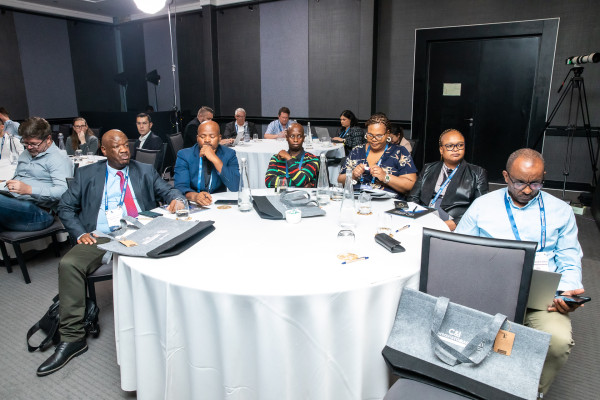
The multifaceted challenges of water management, governance and infrastructure financing were robustly addressed in a dynamic Turning risk into resilience – Spotlighting C&I Projects tackling SA’s biggest water challenges session at the recent Water Security Africa Johannesburg conference (http://apo-opa.co/4hLpIoh), co-located with C&I Energy+Storage Summit, featuring leaders from mining, engineering and digital innovation sectors. Discussions covered visionary planning, on-the-ground implementation and transformative financing tools, yielding fresh perspectives on water security for both private and public operators.

Harmony Gold’s roadmap: operational vision for water resiliency

Thigesh Vather, Senior Environment Officer-Water (Sustainable Development Department) Harmony Gold, opened the session by outlining the group’s “water ambition roadmap”—a strategic framework designed to drive improved communication, accountability and performance measurement in water management. With operations across South Africa, Australia and Papua New Guinea, Harmony faces the universal mining challenge: water- and energy-intense production with heightened resource risk.

Their approach targets not only operational efficiency but also sustainability, emphasizing reduction in potable water dependency and elevated recycling rates. Critical investments include installing several reverse osmosis (RO) plants, collectively treating over 20 mega litres daily and offsetting considerable reliance on external supplies. A blend of clear metrics, such as tracking potable water dependency as a percent of total use and a focus on asset lifecycle risk (including mine closure and acquisition impacts) underline a forward-thinking strategy. Notably, from 2016 to 2024, Harmony achieved a substantial decrease in potable water dependency—primarily via recycling and sophisticated RO deployment.

Digital water governance: Innovation meets opportunity

Benoit Le Roux, co-founder of the South African Water Chamber, delivered a compelling presentation detailing the transformative potential of digital tools and market instruments for water governance. He highlighted two central threats: widespread water loss (non-revenue water) and persistent pollution—problems compounded by aging infrastructure and governance gaps.

Le Roux emphasized how digital transformation, using IoT sensors, big data analytics and distributed ledger (blockchain) systems, brings real-time transparency to both water systems and financing. Through tokenisation—the conversion of water savings or mitigation actions into secure, blockchain-based “digital assets”—water performance can be audited, traded and used to attract new investment. This model, proven in the US and Australia, holds promise for countries like South Africa where traditional municipal finances are constrained and require “de-risking” to attract pension funds and bond issuers.

The creation of ring-fenced, project-based entities (special purpose vehicles) ensures investments directly support tangible infrastructure, rather than vanishing into broader government coffers. Transparent digital markets and protocols allow for performance tracking, incentivizing both improved compliance and stakeholder trust.

Bridging Public-Private gaps: Stakeholder engagement and PPP models

The session also saw industry experts from mining and academia raise nuances around operational resilience, regulatory shifts and stakeholder engagement. Thiara Ratshibvumo, Environmental Manager, South Deep Gold Mine discussed the build-own-operate funding model for water plants—a contract structure where private operators build, finance and run assets, while the mine pays for actual water processed. This reduces up-front capital demands and operational risk for the mining company, providing flexibility and resilience in a volatile operating landscape.

Panellists underscored the importance of aligning water management with catchment requirements, climate resilience and community impact—factors that are drawing increasing investor scrutiny. The incorporation of digital performance measurement, contractual guarantees and transparent reporting is equipping the private sector and PPPs to better attract and manage blended infrastructure funding.

Towards a new water investment paradigm

The session’s robust exchange distilled key lessons for water sector leaders: marry technology with transparent governance; build creative, risk-minimized funding models; and prioritize measurable outcomes over rhetoric. As digital tools proliferate, the potential to unlock both local and international capital for resilient water infrastructure is increasingly within reach. Public sector actors, industrial water users and financiers alike were called upon to harness these innovations to meet the evolving challenges of water security and sustainability.

Distributed by APO Group on behalf of VUKA Group.

About the C&I Energy+Storage Summit:
In its second year, the C&I Summit is a platform to unlock investment and speed up localisation, helping South Africa's energy-intensive sectors build resilience through innovation and resource security. Water Security Africa is co-located with C&I Energy+ Storage Summit. https://Energy-StorageSummit.com/

About ESI Africa:
Africa’s leading power and energy journal is positioned as an impartial industry mouthpiece, delivering the latest technical developments, breaking news and analysis in both print and digital formats, on the web portal http://www.ESI-Africa.com as well as YouTube channel @ ESIAfricaTV (https://apo-opa.co/47pS2cu). ESI Africa is the proud Host Media Partner of the C&I Energy+Storage Summit.

About the event organisers:
VUKA Group connects people and organisations to information and each other across Africa's energy, mining, infrastructure, mobility, green economy and technology sectors via events, content and networking. Venture partners to The Global Trust Project, founders of WomenIN empowerment platform and leaders of NPO Go Green Africa. Discover more at www.WeAreVUKA.com

Media files
VUKA Group
Download logo

The multifaceted challenges of water management, governance and infrastructure financing were robustly addressed in a dynamic Turning risk into resilience – Spotlighting C&I Projects tackling SA’s biggest water challenges session at the recent Water Security Africa Johannesburg conference, co-located with C&I Energy+Storage Summit, featuring leaders from mining, engineering and digital innovation sectors. Discussions covered visionary planning, on-the-ground implementation and transformative financing tools, yielding fresh perspectives on water security for both private and public operators.

Harmony Gold’s roadmap: operational vision for water resiliency

Thigesh Vather, Senior Environment Officer-Water (Sustainable Development Department) Harmony Gold, opened the session by outlining the group’s “water ambition roadmap”—a strategic framework designed to drive improved communication, accountability and performance measurement in water management. With operations across South Africa, Australia and Papua New Guinea, Harmony faces the universal mining challenge: water- and energy-intense production with heightened resource risk.

Their approach targets not only operational efficiency but also sustainability, emphasizing reduction in potable water dependency and elevated recycling rates. Critical investments include installing several reverse osmosis (RO) plants, collectively treating over 20 mega litres daily and offsetting considerable reliance on external supplies. A blend of clear metrics, such as tracking potable water dependency as a percent of total use and a focus on asset lifecycle risk (including mine closure and acquisition impacts) underline a forward-thinking strategy. Notably, from 2016 to 2024, Harmony achieved a substantial decrease in potable water dependency—primarily via recycling and sophisticated RO deployment.

Digital water governance: Innovation meets opportunity

Benoit Le Roux, co-founder of the South African Water Chamber, delivered a compelling presentation detailing the transformative potential of digital tools and market instruments for water governance. He highlighted two central threats: widespread water loss (non-revenue water) and persistent pollution—problems compounded by aging infrastructure and governance gaps.

Le Roux emphasized how digital transformation, using IoT sensors, big data analytics and distributed ledger (blockchain) systems, brings real-time transparency to both water systems and financing. Through tokenisation—the conversion of water savings or mitigation actions into secure, blockchain-based “digital assets”—water performance can be audited, traded and used to attract new investment. This model, proven in the US and Australia, holds promise for countries like South Africa where traditional municipal finances are constrained and require “de-risking” to attract pension funds and bond issuers.

The creation of ring-fenced, project-based entities (special purpose vehicles) ensures investments directly support tangible infrastructure, rather than vanishing into broader government coffers. Transparent digital markets and protocols allow for performance tracking, incentivizing both improved compliance and stakeholder trust.

Bridging Public-Private gaps: Stakeholder engagement and PPP models

The session also saw industry experts from mining and academia raise nuances around operational resilience, regulatory shifts and stakeholder engagement. Thiara Ratshibvumo, Environmental Manager, South Deep Gold Mine discussed the build-own-operate funding model for water plants—a contract structure where private operators build, finance and run assets, while the mine pays for actual water processed. This reduces up-front capital demands and operational risk for the mining company, providing flexibility and resilience in a volatile operating landscape.

Panellists underscored the importance of aligning water management with catchment requirements, climate resilience and community impact—factors that are drawing increasing investor scrutiny. The incorporation of digital performance measurement, contractual guarantees and transparent reporting is equipping the private sector and PPPs to better attract and manage blended infrastructure funding.

Towards a new water investment paradigm

The session’s robust exchange distilled key lessons for water sector leaders: marry technology with transparent governance; build creative, risk-minimized funding models; and prioritize measurable outcomes over rhetoric. As digital tools proliferate, the potential to unlock both local and international capital for resilient water infrastructure is increasingly within reach. Public sector actors, industrial water users and financiers alike were called upon to harness these innovations to meet the evolving challenges of water security and sustainability.

Per Kind Favour of APO

Africa Fact: The ancient Egyptian city of Kahun was the world’s first planned city. Rectangular and walled, the city was divided into two parts. One part housed the wealthier inhabitants – the scribes, officials and foremen. The other part housed the ordinary people. The streets of the western section in particular, were straight, laid out on a grid, and crossed each other at right angles. A stone gutter, over half a metre wide, ran down the centre of every street.

Share this:

  • Share on X (Opens in new window) X
  • Share on Facebook (Opens in new window) Facebook
  • Print (Opens in new window) Print
  • Email a link to a friend (Opens in new window) Email
  • Share on LinkedIn (Opens in new window) LinkedIn
  • Share on Tumblr (Opens in new window) Tumblr
  • Share on WhatsApp (Opens in new window) WhatsApp
  • Share on Mastodon (Opens in new window) Mastodon
Category: NewsTag: APO, Johannesburg

If you feel strongly about this article then feel free to send MyZA a ‘Letter to the Editor’ using the submission form below:


Letter to the Editor

This field is for validation purposes and should be left unchanged.
If this is in response to an article please include that article title here or as the lead in for the first paragraph of your Letter below.

Separate tags with commas

Localise your letter by naming the city your words are about. Add relevant words describing your subject. Single comma separated words of no more than 5
Your Name(Required)
Your Name will be linked to the website below.
Your personal, business or social media web site
Choose NO to not set up a user account on MyZA. User Accounts will allow you to submit letters under your own Author Name

3 Latest Letters to the Editor:

  • Thoughts on Lotto Winner News

    Dear Editor This is fantastic news for the community of Gqeberha. It is always heartwarming to hear about such life-changing positive outcomes for everyday people. Congratulations to the lucky winner! Regards Buhle Ngcobo In Response to/From: R8.5 Million Lotto Winner Claims Prize in Gqeberha

    13 October 2026
  • Inquiry Regarding SASSA Card Replacement

    Dear Editor I am a social grant recipient and need guidance on swapping my SASSA Gold Card for the Postbank Black Card. Please assist. Regards Buhle Ngcobo In Response to/From: Minister Tolashe assures smooth transition to Postbank Black Cards for grant beneficiaries Swapping your SASSA Gold Card for the new Postbank Black Card is a…

    13 October 2026
  • Congratulations to the Lotto Winner

    Dear Editor Dear Editor, I was thrilled to hear about the R8.5 million Lotto win for the community of Gqeberha. Such life-changing news brings hope and excitement to everyone in the area. I congratulate the winner and wish them all the best with their prize. May this bring positive change to their life and the…

    1 October 2026

About Guest

Previous Post:South Africa’s Cell C plans listing in Johannesburg | SA News
Next Post:Township & Village wins Global Silver at the Responsible Tourism Awards and passes R1 million in direct community earnings in 2025

Reader Interactions

Comments

  1. Hog Butcher

    8 September 2026 at 9:11 pm

    Fun South African Fact: The world’s largest visible crater is in South Africa.

  2. Mr. Fabulous

    8 September 2026 at 6:37 pm

    Hopefully my journey through MyZA will be as EVENTFUL as it has been enjoyable so far.

Copyright © 2026 · MyZA · All Rights Reserved · Powered by Stratlec Online