• Skip to main content
  • Skip to header right navigation
  • Skip to after header navigation
  • Skip to site footer
MyZA

MyZA

News, Directory, Events and Other Stuff

  • Social Media
  • Sport
  • World News
  • Home
  • Submit News
  • Directory
  • Events
  • Stratlec
  • TFSA
  • News
    • APO
    • Today’s Sport News
    • Todays Social Media and Tech Headlines
    • Today’s World News
    • Today’s SA Financial News
  • Contact
You are here: Home / News / 4th National Shelter Indaba pioneers solutions for GBV survivors

4th National Shelter Indaba pioneers solutions for GBV survivors

18 October 2024 by Guest

4th National Shelter Indaba pioneers solutions for GBV survivors

The 4th National Shelter Indaba has highlighted the urgent need for effective shelter solutions for survivors of gender-based violence (GBV).  

The Department of Social Development, in partnership with the National Shelter Movement of South Africa (NSMSA), initiated the 4th National Shelter Indaba, currently underway in Sandton, Johannesburg. 

This significant initiative coincides with the department’s month-long campaign, Social Development Month, which reflects on and showcases the department’s programmes and services. 

Director of Victim Empowerment and Prevention of Gender-Based Violence within the Department of Social Development, Sibusiso Malope, delivered a compelling opening speech, emphasising the critical need for effective shelter solutions for GBV survivors. 

“Addressing gender-based violence is not just a moral imperative; it is a critical human rights issue that affects the well-being of individuals and the stability of our communities,” Malope said.  

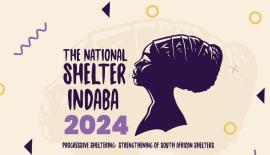
Under the theme: “Progressive Sheltering: Strengthening Shelters in South Africa”, this year’s indaba seeks to drive meaningful change in the fight against GBV by focusing on key pillars of the National Strategic Plan (NSP).

According to the World Health Organisation (WHO), globally, about one in three women (30%) have experienced physical or sexual violence in their lifetime, predominantly from intimate partners. 

The statistics underscore the severity of the issue. 

In Eastern and Southern Africa, this figure rises to 42%, which not only impacts individual survivors but also hinders family and community development, costing economies up to 4% of gross domestic product (GDP), as reported by the United Nations Economic Commission for Africa (UNECA). 

“This crisis represents a fundamental violation of human rights and poses significant barriers to women’s participation in education and the labour market,” Malope emphasised.

He outlined the pivotal role of shelters in providing immediate safety and comprehensive support services. 

“Shelters offer more than just a safe haven. They are essential in delivering trauma-informed counselling, legal assistance, and life skills training, which empower survivors to rebuild their lives,” he explained.

Malope said effective shelter programmes must include features such as secure locations, community integration, and cultural competence. He underscored the need for inclusive policies that ensure accessibility for marginalised populations, including LGBTQI [lesbian, gay, bisexual, transgender, queer/questioning (one’s sexual or gender identity, and intersex individuals]. 

“We must ensure that our services are sensitive to the diverse backgrounds and needs of all survivors,” Malope said.

Staff training, including personnel being trained on trauma-informed practices to meet the unique needs of survivors, is also key. 

“Well-trained staff are crucial for providing high-quality care and support,” Malope said.

Malope discussed the significance of data-driven practices, stating that regular monitoring and evaluation of shelter programmes is essential for improving services and ensuring accountability. 

“By collecting and analysing data, we can better understand the effectiveness of our interventions and adapt to the needs of survivors,” he said.

Improving policies

Recent developments in policies and community responses to GBV in South Africa reflect government’s commitment to addressing this pressing issue through a multifaceted approach. 

The Trafficking in Persons Act (TiP) aims to combat human trafficking, which often intersects with GBV, providing a legal framework to protect vulnerable individuals. 

Additionally, the Domestic Violence Act (DVA) has been strengthened to enhance protections for survivors, ensuring they can access immediate support and legal recourse. 

The Sexual Offences Act (SORMA) and the Criminal Law (Sexual Offences and Related Matters) Amendment Act have also been revised to impose stricter penalties on perpetrators, reinforcing the message that GBV will not be tolerated.

Malope emphasised the importance of these legislative frameworks.

“Robust laws are essential, but they must be accompanied by community-driven responses to be truly effective. 

“Programmes like the Victim Support Services (VSS) and the National Gender-Based Violence Strategy (NGBV) are critical for ensuring that survivors receive holistic support.” 

He further highlighted that community initiatives, including awareness campaigns and local support networks, play a vital role in shifting societal attitudes toward GBV.

“Engaging communities is key to prevention, as it fosters a culture of respect and accountability, ultimately contributing to the safety and empowerment of all individuals,” Malope said.

The two-day Indaba features keynote addresses, panel discussions, and opportunities for collaboration among government departments, Chapter 9 institutions, and civil society organisations, policymakers and advocates. 

Topics include innovations in shelter services, mental health support for survivors and community engagement strategies. 

“This conference is a call to action for all of us to work collaboratively in creating safer communities,” Malope said.

As participants engage in discussions and share best practices over the two-day initiative, the NSMSA aims to develop actionable strategies to enhance shelter services for survivors of GBV, reinforcing the importance of a survivor-centred approach in responding to this pervasive issue.

The National Shelter Movement of South Africa plays a pivotal role in the implementation of Pillar 4 of the NSP on GBVF, and is an umbrella body for 99 shelters across the country. 

These shelters provide essential care and support services for individuals affected by GBV, offering safety, counselling, healing, empowerment for survivors as they rebuild their lives, and interrupting and breaking the cycle of violence. – SAnews.gov.za

DikelediM
Thu, 10/17/2024 – 11:04

380 views

The 4th National Shelter Indaba has highlighted the urgent need for effective shelter solutions for survivors of gender-based violence (GBV).  

The Department of Social Development, in partnership with the National Shelter Movement of South Africa (NSMSA), initiated the 4th National Shelter Indaba, currently underway in Sandton, Johannesburg. 

This significant initiative coincides with the department’s month-long campaign, Social Development Month, which reflects on and showcases the department’s programmes and services. 

Director of Victim Empowerment and Prevention of Gender-Based Violence within the Department of Social Development, Sibusiso Malope, delivered a compelling opening speech, emphasising the critical need for effective shelter solutions for GBV survivors. 

“Addressing gender-based violence is not just a moral imperative; it is a critical human rights issue that affects the well-being of individuals and the stability of our communities,” Malope said.  

Under the theme: “Progressive Sheltering: Strengthening Shelters in South Africa”, this year’s indaba seeks to drive meaningful change in the fight against GBV by focusing on key pillars of the National Strategic Plan (NSP).

According to the World Health Organisation (WHO), globally, about one in three women (30%) have experienced physical or sexual violence in their lifetime, predominantly from intimate partners. 

The statistics underscore the severity of the issue. 

In Eastern and Southern Africa, this figure rises to 42%, which not only impacts individual survivors but also hinders family and community development, costing economies up to 4% of gross domestic product (GDP), as reported by the United Nations Economic Commission for Africa (UNECA). 

“This crisis represents a fundamental violation of human rights and poses significant barriers to women’s participation in education and the labour market,” Malope emphasised.

He outlined the pivotal role of shelters in providing immediate safety and comprehensive support services. 

“Shelters offer more than just a safe haven. They are essential in delivering trauma-informed counselling, legal assistance, and life skills training, which empower survivors to rebuild their lives,” he explained.

Malope said effective shelter programmes must include features such as secure locations, community integration, and cultural competence. He underscored the need for inclusive policies that ensure accessibility for marginalised populations, including LGBTQI [lesbian, gay, bisexual, transgender, queer/questioning (one’s sexual or gender identity, and intersex individuals]. 

“We must ensure that our services are sensitive to the diverse backgrounds and needs of all survivors,” Malope said.

Staff training, including personnel being trained on trauma-informed practices to meet the unique needs of survivors, is also key. 

“Well-trained staff are crucial for providing high-quality care and support,” Malope said.

Malope discussed the significance of data-driven practices, stating that regular monitoring and evaluation of shelter programmes is essential for improving services and ensuring accountability. 

“By collecting and analysing data, we can better understand the effectiveness of our interventions and adapt to the needs of survivors,” he said.

Improving policies

Recent developments in policies and community responses to GBV in South Africa reflect government’s commitment to addressing this pressing issue through a multifaceted approach. 

The Trafficking in Persons Act (TiP) aims to combat human trafficking, which often intersects with GBV, providing a legal framework to protect vulnerable individuals. 

Additionally, the Domestic Violence Act (DVA) has been strengthened to enhance protections for survivors, ensuring they can access immediate support and legal recourse. 

The Sexual Offences Act (SORMA) and the Criminal Law (Sexual Offences and Related Matters) Amendment Act have also been revised to impose stricter penalties on perpetrators, reinforcing the message that GBV will not be tolerated.

Malope emphasised the importance of these legislative frameworks.

“Robust laws are essential, but they must be accompanied by community-driven responses to be truly effective. 

“Programmes like the Victim Support Services (VSS) and the National Gender-Based Violence Strategy (NGBV) are critical for ensuring that survivors receive holistic support.” 

He further highlighted that community initiatives, including awareness campaigns and local support networks, play a vital role in shifting societal attitudes toward GBV.

“Engaging communities is key to prevention, as it fosters a culture of respect and accountability, ultimately contributing to the safety and empowerment of all individuals,” Malope said.

The two-day Indaba features keynote addresses, panel discussions, and opportunities for collaboration among government departments, Chapter 9 institutions, and civil society organisations, policymakers and advocates. 

Topics include innovations in shelter services, mental health support for survivors and community engagement strategies. 

“This conference is a call to action for all of us to work collaboratively in creating safer communities,” Malope said.

As participants engage in discussions and share best practices over the two-day initiative, the NSMSA aims to develop actionable strategies to enhance shelter services for survivors of GBV, reinforcing the importance of a survivor-centred approach in responding to this pervasive issue.

The National Shelter Movement of South Africa plays a pivotal role in the implementation of Pillar 4 of the NSP on GBVF, and is an umbrella body for 99 shelters across the country. 

These shelters provide essential care and support services for individuals affected by GBV, offering safety, counselling, healing, empowerment for survivors as they rebuild their lives, and interrupting and breaking the cycle of violence. – SAnews.gov.za


Watch a 4th National Shelter Indaba pioneers solutions for GBV survivors related video:

Stunning South Africa:

Have you visited MyPR?

MyPR.co.za offers free to publish press releases for your news site, blog or offline publication. Use the handy REPUBLISH facility or the Full Text RSS Feeds or just copy and paste.

Straton Electrical | Straton Solar | Straton Prepaid | Straton Plumbing | Straton IoT | Straton eBikes | BA Systems | Mbane Contracting | Reach Trust

Share this:

  • Share on X (Opens in new window) X
  • Share on Facebook (Opens in new window) Facebook
  • Print (Opens in new window) Print
  • Email a link to a friend (Opens in new window) Email
  • Share on LinkedIn (Opens in new window) LinkedIn
  • Share on Tumblr (Opens in new window) Tumblr
  • Share on WhatsApp (Opens in new window) WhatsApp
  • Share on Mastodon (Opens in new window) Mastodon
Category: NewsTag: 2024, ACT, Africa, Civil Society, Conference, critical, data, Education, GBV, Government, health, human rights, Identity, Johannesburg, law, Market, ONE, Partnership, SA News, solutions, South Africa, Video, Women

If you feel strongly about this article then feel free to send MyZA a ‘Letter to the Editor’ using the submission form below:


Letter to the Editor

This field is for validation purposes and should be left unchanged.
If this is in response to an article please include that article title here or as the lead in for the first paragraph of your Letter below.

Separate tags with commas

Localise your letter by naming the city your words are about. Add relevant words describing your subject. Single comma separated words of no more than 5
Your Name(Required)
Your Name will be linked to the website below.
Your personal, business or social media web site
Choose NO to not set up a user account on MyZA. User Accounts will allow you to submit letters under your own Author Name

3 Latest Letters to the Editor:

  • Congratulations to the Lotto Winner

    Dear Editor Dear Editor, I was thrilled to hear about the R8.5 million Lotto win for the community of Gqeberha. Such life-changing news brings hope and excitement to everyone in the area. I congratulate the winner and wish them all the best with their prize. May this bring positive change to their life and the…

    1 October 2026
  • Opinion on Lotto Winner News

    Dear Editor Congratulations to the lucky winner! This is truly wonderful news for the community. Regards Marina Adams In Response to/From: Congratulations to the Lucky Winner

    1 October 2026
  • Regarding Lotto Winner Story

    Dear Editor Congratulations to the winner, this is wonderful news for the community. Wishing them the best for the future. Regards Willem Pieterse In Response to/From: Re: R8.5 Million Lotto Winner Claims Prize in Gqeberha

    27 September 2026

About Guest

Previous Post:Luxury Co-working Space Opens at Hyde Park Corner: New Premium Workspace Designed to Inspire Collaboration and Productivity
Next Post:Court Interdicts Are Being Used to Stifle Protest

Reader Interactions

Comments

  1. Sultan of Speed

    9 September 2026 at 8:55 pm

    Skebenga / Skelm – a crook / gangster [skuh-beng-guh] A Zulu word for gangster.

  2. Lord Nikon

    27 August 2026 at 8:43 pm

    Elon Musk was born in South Africa, and made an electric car. What if he had been born in Madagascar?

    He would have made a gas car

Copyright © 2026 · MyZA · All Rights Reserved · Powered by Stratlec Online