• Skip to main content
  • Skip to header right navigation
  • Skip to after header navigation
  • Skip to site footer
MyZA

MyZA

News, Directory, Events and Other Stuff

  • Social Media
  • Sport
  • World News
  • Home
  • Submit News
  • Directory
  • Events
  • Stratlec
  • TFSA
  • News
    • APO
    • Today’s Sport News
    • Todays Social Media and Tech Headlines
    • Today’s World News
    • Today’s SA Financial News
  • Contact
You are here: Home / News / Africa Finance Corporation Reports US$50 Billion GDP Impact and 7 Million Jobs Created Through Scalable Infrastructure Model

Africa Finance Corporation Reports US$50 Billion GDP Impact and 7 Million Jobs Created Through Scalable Infrastructure Model

7 August 2025 by Guest
Africa Finance Corporation (AFC)

  •  166 projects across 36 countries delivering real-world impact at scale
  • Climate-smart infrastructure avoiding annual 8.8 million tons of CO₂ emissions
  • Africa’s largest and fastest-growing renewable energy platform delivers 1.4 GW of clean electricity, and on track to reach 3 GW by 2030

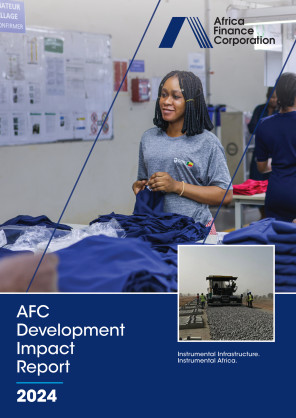
Africa Finance Corporation (www.AfricaFC.org), the continent’s leading infrastructure solutions provider, has published its annual Development Impact Report, presenting a comprehensive, data-driven account of AFC’s cumulative development outcomes across Africa. The report reveals that AFC-backed projects have to date added over US$50 billion to GDP and supported the creation of 7 million jobs across 36 countries.

The report also highlights the establishment of the continent’s largest and fastest-growing renewable energy platform, Infinity Power, now delivering 1.4GW of clean electricity, and on track to reach 3GW by 2030 – a clear marker of AFC’s leadership in Africa’s energy transition.

“This report is a record of the tangible, large-scale impact we’ve always aimed for—driven by disciplined capital, strategic partnerships, and a focus on outcomes that matter,” said Samaila Zubairu, President & CEO of AFC. “From clean energy to industrial ecosystems and regional rail links, AFC’s investments are transforming challenges into opportunities and unlocking Africa’s potential at scale.”

The report tracks outcomes across 166 projects, drawing from over 250,000 data points validated by a rigorous methodology. AFC’s development model, grounded in its Theory of Change, prioritises four pillars: industrialization, energy transition, regional integration, and digital inclusion.

Further key cumulative metrics include:

  • US$14 billion in capital mobilised
  • 4.1 million homes connected to electricity
  • 8.8 million tons of CO₂ emissions avoided annually

The report also details broad social outcomes, including inclusive employment across gender and age, among significant community-level impacts. For example, AFC investments in Gabon’s ARISE Industrial Platform resulted in 42% female workforce participation. Women are employed across manufacturing, services and off-grid energy sectors, advancing gender equity in traditionally male-dominated industries.

Digital inclusion initiatives like M-KOPA, a pay-as-you-go mobile and solar energy finance platform, empowered 1.7 million first-time mobile internet users, while investments in providers like MTN and Airtel have connected over 100 million people to mobile and broadband services.

AFC’s model links strategic project development with exit discipline, crowding in private capital once projects are commercially viable. The report highlights notable investment outcomes, including:

  • Infinity Power/Lekela acquisition – now Africa’s largest renewable platform, with large-scale wind and solar operations spanning Egypt, Senegal, and South Africa
  • The Red Sea Power project – setting Djibouti on course to become the first African nation powered entirely by renewable energy
  • Lobito Rail Corridor – linking Angola, DRC and Zambia to shorten export timelines from 45 to 7 days, cut 300,000 tons of CO2 emissions annually, and unlock trade routes for minerals critical to the global energy transition,
  • Takoradi Port exit (Ghana) – a demonstration of transition to private capital, preserving impact and redeploying funds
  • Kamoa-Kakula – the world’s lowest-emission copper mine, contributing 6% to DRC’s GDP

All data is aligned with international benchmarks, including the UN Sustainable Development Goals (SDGs), GIIN IRIS+ and the Joint Impact Model (JIM)

As global demand grows for sustainable, high‑yield investments, AFC’s blended finance model offers a replicable approach to accelerating Africa’s infrastructure development. The report concludes with a call to partners – governments, investors, and development institutions – to collaborate in scaling proven models that drive structural transformation, climate resilience, and inclusive growth.

Access the full report here : https://apo-opa.co/3HfWvUY

Distributed by APO Group on behalf of Africa Finance Corporation (AFC).

Media Enquiries:
Yewande Thorpe
Communications
Africa Finance Corporation
Mobile +234 1 279 9654
Email: yewande.thorpe@africafc.org

About AFC:
Africa Finance Corporation (AFC) was established in 2007 to be the catalyst for pragmatic infrastructure and industrial investments across Africa. AFC’s approach combines specialist industry expertise with a focus on financial and technical advisory, project structuring, project development, and risk capital to address Africa’s infrastructure development needs and drive sustainable economic growth.

Eighteen years on, AFC has developed a track record as the partner of choice in Africa for investing and delivering on instrumental, high-quality infrastructure assets that provide essential services in the core infrastructure sectors of power, natural resources, heavy industry, transport, and telecommunications. AFC has 45 member countries and has invested over US$15 billion in 36 African countries since its inception.

 www.AfricaFC.org

Media files
Africa Finance Corporation (AFC)
Download logo
  •  166 projects across 36 countries delivering real-world impact at scale
  • Climate-smart infrastructure avoiding annual 8.8 million tons of CO₂ emissions
  • Africa’s largest and fastest-growing renewable energy platform delivers 1.4 GW of clean electricity, and on track to reach 3 GW by 2030

Africa Finance Corporation (www.AfricaFC.org), the continent’s leading infrastructure solutions provider, has published its annual Development Impact Report, presenting a comprehensive, data-driven account of AFC’s cumulative development outcomes across Africa. The report reveals that AFC-backed projects have to date added over US$50 billion to GDP and supported the creation of 7 million jobs across 36 countries.

The report also highlights the establishment of the continent’s largest and fastest-growing renewable energy platform, Infinity Power, now delivering 1.4GW of clean electricity, and on track to reach 3GW by 2030 – a clear marker of AFC’s leadership in Africa’s energy transition.

“This report is a record of the tangible, large-scale impact we’ve always aimed for—driven by disciplined capital, strategic partnerships, and a focus on outcomes that matter,” said Samaila Zubairu, President & CEO of AFC. “From clean energy to industrial ecosystems and regional rail links, AFC’s investments are transforming challenges into opportunities and unlocking Africa’s potential at scale.”

The report tracks outcomes across 166 projects, drawing from over 250,000 data points validated by a rigorous methodology. AFC’s development model, grounded in its Theory of Change, prioritises four pillars: industrialization, energy transition, regional integration, and digital inclusion.

Further key cumulative metrics include:

  • US$14 billion in capital mobilised
  • 4.1 million homes connected to electricity
  • 8.8 million tons of CO₂ emissions avoided annually

The report also details broad social outcomes, including inclusive employment across gender and age, among significant community-level impacts. For example, AFC investments in Gabon’s ARISE Industrial Platform resulted in 42% female workforce participation. Women are employed across manufacturing, services and off-grid energy sectors, advancing gender equity in traditionally male-dominated industries.

Digital inclusion initiatives like M-KOPA, a pay-as-you-go mobile and solar energy finance platform, empowered 1.7 million first-time mobile internet users, while investments in providers like MTN and Airtel have connected over 100 million people to mobile and broadband services.

AFC’s model links strategic project development with exit discipline, crowding in private capital once projects are commercially viable. The report highlights notable investment outcomes, including:

  • Infinity Power/Lekela acquisition – now Africa’s largest renewable platform, with large-scale wind and solar operations spanning Egypt, Senegal, and South Africa
  • The Red Sea Power project – setting Djibouti on course to become the first African nation powered entirely by renewable energy
  • Lobito Rail Corridor – linking Angola, DRC and Zambia to shorten export timelines from 45 to 7 days, cut 300,000 tons of CO2 emissions annually, and unlock trade routes for minerals critical to the global energy transition,
  • Takoradi Port exit (Ghana) – a demonstration of transition to private capital, preserving impact and redeploying funds
  • Kamoa-Kakula – the world’s lowest-emission copper mine, contributing 6% to DRC’s GDP

All data is aligned with international benchmarks, including the UN Sustainable Development Goals (SDGs), GIIN IRIS+ and the Joint Impact Model (JIM)

As global demand grows for sustainable, high‑yield investments, AFC’s blended finance model offers a replicable approach to accelerating Africa’s infrastructure development. The report concludes with a call to partners – governments, investors, and development institutions – to collaborate in scaling proven models that drive structural transformation, climate resilience, and inclusive growth.

Per Kind Favour of APO

Africa Fact: Style and fashion existed in mediaeval Sudan. A dignitary at Jebel Adda in the late thirteenth century AD was interned with a long coat of red and yellow patterned damask folded over his body. Underneath, he wore plain cotton trousers of long and baggy cut. A pair of red leather slippers with turned up toes lay at the foot of the coffin. The body was wrapped in enormous pieces of gold brocaded striped silk.

Share this:

  • Share on X (Opens in new window) X
  • Share on Facebook (Opens in new window) Facebook
  • Print (Opens in new window) Print
  • Email a link to a friend (Opens in new window) Email
  • Share on LinkedIn (Opens in new window) LinkedIn
  • Share on Tumblr (Opens in new window) Tumblr
  • Share on WhatsApp (Opens in new window) WhatsApp
  • Share on Mastodon (Opens in new window) Mastodon
Category: NewsTag: APO

If you feel strongly about this article then feel free to send MyZA a ‘Letter to the Editor’ using the submission form below:


Letter to the Editor

This field is for validation purposes and should be left unchanged.
If this is in response to an article please include that article title here or as the lead in for the first paragraph of your Letter below.

Separate tags with commas

Localise your letter by naming the city your words are about. Add relevant words describing your subject. Single comma separated words of no more than 5
Your Name(Required)
Your Name will be linked to the website below.
Your personal, business or social media web site
Choose NO to not set up a user account on MyZA. User Accounts will allow you to submit letters under your own Author Name

3 Latest Letters to the Editor:

  • Older Persons Grants Land Today — No Need to Queue at Dawn

    Dear Editor, Older Persons grants are paid today, 30 October, under SASSA’s revised November payment schedule — with disability grants on Monday 2 November, children’s grants on Tuesday 3 November, and grants under review on Thursday 5 November. Two things every beneficiary should know. First, grant money does not expire on payment day. It stays…

    30 October 2026
  • November Grants Pay Early – No Need to Queue at Dawn

    Dear Editor, I run SAGrant (sagrant.co.za), a free resource helping South Africans navigate SASSA grants. November grants pay earlier than usual. Older Persons grants are paid on Friday 30 October, Disability grants on 2 November, and Child Support and other grants on 3 November. Grants still under review are paid on 5 November. The money…

    27 October 2026
  • NSFAS 2027 applications close on 31 October — SASSA households, apply now

    Dear Editor, I run SAGrant (sagrant.co.za), a free resource helping South Africans navigate SASSA grants. NSFAS applications for the 2027 academic year close on Friday 31 October 2026, and no extension is expected. If your household receives a SASSA grant, your child already passes the NSFAS financial eligibility test — but they still have to…

    25 October 2026

About Guest

Previous Post:South Africa ready to kick off CHAN campaign in Uganda – South African Football Association
Next Post:Khayelitsha Informal Settlements Demand Electrification

Reader Interactions

Comments

  1. Flint Cast-Iron

    29 September 2026 at 8:58 am

    Fun South African Fact: Table Mountain, one of the iconic landmarks of South Africa, is one of the oldest mountains in the world

  2. orange teflon

    3 September 2026 at 12:57 am

    Imagine jou ma skep jou kos in \’n bakkie…en die bakkie ry weg.

Copyright © 2026 · MyZA · All Rights Reserved · Powered by Stratlec Online