• Skip to main content
  • Skip to header right navigation
  • Skip to after header navigation
  • Skip to site footer
MyZA

MyZA

News, Directory, Events and Other Stuff

  • Social Media
  • Sport
  • World News
  • Home
  • Submit News
  • Directory
  • Events
  • Stratlec
  • TFSA
  • News
    • APO
    • Today’s Sport News
    • Todays Social Media and Tech Headlines
    • Today’s World News
    • Today’s SA Financial News
  • Contact
You are here: Home / News / Business / AGES 2026 Delivers Definitive Roadmap to Turn Africa’s Climate Ambition Into Bankable, Scalable Reality

AGES 2026 Delivers Definitive Roadmap to Turn Africa’s Climate Ambition Into Bankable, Scalable Reality

5 March 2026 by Guest
VUKA Group

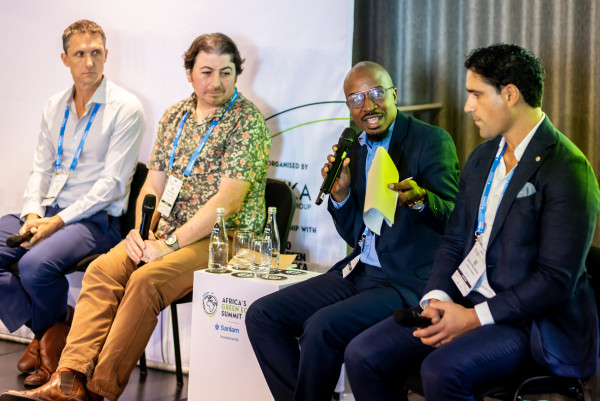
Africa’s Green Economy Summit (AGES) 2026 concluded in Cape Town with a resounding call to action, urging the continent to leverage its digital revolution, transform water financing and redesign agriculture to unlock a sustainable, net-zero future. The four-day platform united over 600 delegates from 42 countries, including global investors, project developers and policymakers. The consensus was clear that with sound policies and financial innovation, Africa can convert its climate vulnerabilities into economic opportunity.

Pioneering new models for climate finance

The summit opened with a focus on innovative finance for nature, exploring green, blue, and wildlife bonds, including the “Rhino Bond” and emerging biodiversity credits. A key lesson was the importance of engaging communities as core stakeholders, not merely beneficiaries.

Carl Roothman, CEO of Sanlam Investment Group, stressed the urgency of scale: “Africa needs billions of dollars. It's great to dream, but we must act and at scale.” Iain Banner, co-founder of Go Green Africa and AGES, framed the shift as fundamental: “The green and blue economies are the new operating systems of the modern world.”

Government calls for practical collaboration

Deputy Minister of Forestry, Fisheries and Environment, Narend Singh, set a pragmatic tone: “This is where the rubber hits the road.” He emphasised moving from policy to tangible results, citing South Africa’s Just Energy Transition Partnership (JETP) and renewable energy procurement programme as examples. Singh urged African nations to move beyond exporting raw materials: “A low-hanging fruit is developing local value chains and beneficiating minerals here, creating jobs and advancing technology.”

A digital imperative for climate action

Integrating climate goals with digital transformation emerged as a central theme. Siddhartha Raja, Senior Digital Specialist at the World Bank, noted that data centres could act as “anchor loads” to stimulate new renewable energy but warned that climate resilience must be designed in from the start. From flood-proofing to managing e-waste, which could spawn new recycling industries.

Chrissy Meier of the Digital Impact Alliance highlighted a critical gap, noting that most African cities have climate plans but lack local data for implementation. She cautioned against AI models trained on non-African data, which risk missing the realities of African communities. Raja’s advice: “Carpe Digital, seize the digital to make economies more efficient, inclusive, and greener.”

Making water infrastructure bankable

A high-level panel tackled the perception that water projects are uninvestable. Obadiah Mungai of the World Resources Institute Africa argued the real issue is translation: “How do you convert water outcomes into bankable outputs?” Fixing governance and data is the first step to attracting capital.

Louise Stafford of The Nature Conservancy cited Cape Town’s post-“Day Zero” investment in catchment restoration, which proved far more cost-effective than desalination. “There is a bigger risk in business as usual than in investing in water,” she said. The panel concluded that with robust preparation and blended finance, water resilience can become an attractive asset class.

Strengthening food security through renewable energy

Energy instability directly threatens food systems, without reliable power, irrigation fails and cold chains break. Henry Roman of the International Water Management Institute called for a holistic approach to the water-energy-food nexus, showcasing data tools helping farmers optimise water use.

Ian de Jager of I&F Engineering noted a new trend: farmers becoming energy producers, using small-scale hydropower to power operations and sell excess renewable energy certificates. Andrea Campher of Standard Bank added that with the Carbon Border Adjustment Mechanism (CBAM) now in effect, a farmer’s emissions profile is as critical as product quality. “Renewable energy strengthens ESG credibility,” she said.

AGES 2026 has laid the cornerstone for a resilient green economy, proving that when climate goals are woven into the continent's core systems, ambition transforms into tangible progress. The next summit takes place 17-19 March 2027 in Cape Town.

Distributed by APO Group on behalf of VUKA Group.

About Africa’s Green Economy Summit (AGES): 
Africa’s Green Economy Summit (AGES) is a premier pan-African platform dedicated to accelerating Africa’s transition to a sustainable, inclusive, and climate-resilient economy. Hosted by VUKA Group, AGES brings together policymakers, investors, project developers, innovators and business leaders to unlock green finance, scale bankable projects, and drive actionable solutions across energy, mobility, infrastructure, agriculture, water, waste, and the blue economy. Through high-level content, deal-making opportunities, and strategic networking, AGES turns ambition into action for Africa’s green future.

About VUKA Group: 
VUKA Group brings people and organisations together to connect through platforms that drive growth and transformation across Africa’s key industries. With over 20 years of experience on the continent, VUKA delivers sector-leading platforms across Energy, Mining, Mobility, Retail, Sustainability, and Women Empowerment – creating spaces where knowledge is shared, partnerships are formed, and real economic impact is achieved.

For more information, visit: www.GreenEconomySummit.com

Media files
VUKA Group
Download logo

Africa’s Green Economy Summit (AGES) 2026 concluded in Cape Town with a resounding call to action, urging the continent to leverage its digital revolution, transform water financing and redesign agriculture to unlock a sustainable, net-zero future. The four-day platform united over 600 delegates from 42 countries, including global investors, project developers and policymakers. The consensus was clear that with sound policies and financial innovation, Africa can convert its climate vulnerabilities into economic opportunity.

Pioneering new models for climate finance

The summit opened with a focus on innovative finance for nature, exploring green, blue, and wildlife bonds, including the “Rhino Bond” and emerging biodiversity credits. A key lesson was the importance of engaging communities as core stakeholders, not merely beneficiaries.

Carl Roothman, CEO of Sanlam Investment Group, stressed the urgency of scale: “Africa needs billions of dollars. It’s great to dream, but we must act and at scale.” Iain Banner, co-founder of Go Green Africa and AGES, framed the shift as fundamental: “The green and blue economies are the new operating systems of the modern world.”

Government calls for practical collaboration

Deputy Minister of Forestry, Fisheries and Environment, Narend Singh, set a pragmatic tone: “This is where the rubber hits the road.” He emphasised moving from policy to tangible results, citing South Africa’s Just Energy Transition Partnership (JETP) and renewable energy procurement programme as examples. Singh urged African nations to move beyond exporting raw materials: “A low-hanging fruit is developing local value chains and beneficiating minerals here, creating jobs and advancing technology.”

A digital imperative for climate action

Integrating climate goals with digital transformation emerged as a central theme. Siddhartha Raja, Senior Digital Specialist at the World Bank, noted that data centres could act as “anchor loads” to stimulate new renewable energy but warned that climate resilience must be designed in from the start. From flood-proofing to managing e-waste, which could spawn new recycling industries.

Chrissy Meier of the Digital Impact Alliance highlighted a critical gap, noting that most African cities have climate plans but lack local data for implementation. She cautioned against AI models trained on non-African data, which risk missing the realities of African communities. Raja’s advice: “Carpe Digital, seize the digital to make economies more efficient, inclusive, and greener.”

Making water infrastructure bankable

A high-level panel tackled the perception that water projects are uninvestable. Obadiah Mungai of the World Resources Institute Africa argued the real issue is translation: “How do you convert water outcomes into bankable outputs?” Fixing governance and data is the first step to attracting capital.

Louise Stafford of The Nature Conservancy cited Cape Town’s post-“Day Zero” investment in catchment restoration, which proved far more cost-effective than desalination. “There is a bigger risk in business as usual than in investing in water,” she said. The panel concluded that with robust preparation and blended finance, water resilience can become an attractive asset class.

Strengthening food security through renewable energy

Energy instability directly threatens food systems, without reliable power, irrigation fails and cold chains break. Henry Roman of the International Water Management Institute called for a holistic approach to the water-energy-food nexus, showcasing data tools helping farmers optimise water use.

Ian de Jager of I&F Engineering noted a new trend: farmers becoming energy producers, using small-scale hydropower to power operations and sell excess renewable energy certificates. Andrea Campher of Standard Bank added that with the Carbon Border Adjustment Mechanism (CBAM) now in effect, a farmer’s emissions profile is as critical as product quality. “Renewable energy strengthens ESG credibility,” she said.

AGES 2026 has laid the cornerstone for a resilient green economy, proving that when climate goals are woven into the continent’s core systems, ambition transforms into tangible progress. The next summit takes place 17-19 March 2027 in Cape Town.

Distributed by APO Group on behalf of VUKA Group.

About Africa’s Green Economy Summit (AGES): 
Africa’s Green Economy Summit (AGES) is a premier pan-African platform dedicated to accelerating Africa’s transition to a sustainable, inclusive, and climate-resilient economy. Hosted by VUKA Group, AGES brings together policymakers, investors, project developers, innovators and business leaders to unlock green finance, scale bankable projects, and drive actionable solutions across energy, mobility, infrastructure, agriculture, water, waste, and the blue economy. Through high-level content, deal-making opportunities, and strategic networking, AGES turns ambition into action for Africa’s green future.

About VUKA Group: 
VUKA Group brings people and organisations together to connect through platforms that drive growth and transformation across Africa’s key industries. With over 20 years of experience on the continent, VUKA delivers sector-leading platforms across Energy, Mining, Mobility, Retail, Sustainability, and Women Empowerment – creating spaces where knowledge is shared, partnerships are formed, and real economic impact is achieved.

Per Kind Favour of APO

Africa Fact: Bling culture existed in the mediaeval Sudan. Archaeologists found an individual buried at the Monastery of the Holy Trinity in the city of Old Dongola. He was clad in an extremely elaborate garb consisting of costly textiles of various fabrics including gold thread. At the city of Soba East, there were individuals buried in fine clothing, including items with golden thread.

Share this:

  • Share on X (Opens in new window) X
  • Share on Facebook (Opens in new window) Facebook
  • Print (Opens in new window) Print
  • Email a link to a friend (Opens in new window) Email
  • Share on LinkedIn (Opens in new window) LinkedIn
  • Share on Tumblr (Opens in new window) Tumblr
  • Share on WhatsApp (Opens in new window) WhatsApp
  • Share on Mastodon (Opens in new window) Mastodon
Category: BusinessTag: APO

If you feel strongly about this article then feel free to send MyZA a ‘Letter to the Editor’ using the submission form below:


Letter to the Editor

This field is for validation purposes and should be left unchanged.
If this is in response to an article please include that article title here or as the lead in for the first paragraph of your Letter below.

Separate tags with commas

Localise your letter by naming the city your words are about. Add relevant words describing your subject. Single comma separated words of no more than 5
Your Name(Required)
Your Name will be linked to the website below.
Your personal, business or social media web site
Choose NO to not set up a user account on MyZA. User Accounts will allow you to submit letters under your own Author Name

3 Latest Letters to the Editor:

  • Fun South African fact

    Dear Editor Fun South African fact: towns like Franschhoek and Stellenbosch are home to world-class wine farms set in stunning, scenic surroundings. Regards Aressa Smith In Response to/From: Luxury Properties Seized in New Lottery Crackdown

    27 January 2026
  • Condolences on the Passing of Lusanda Dumke

    Statement by Leander Kruger MPL – DA Buffalo City Constituency Leader: The Democratic Alliance in Buffalo City Metropolitan Municipality mourns the passing of Springbok Women’s rugby player and Mdantsane trailblazer, Lusanda Dumke, who lost her battle with cancer at the age of 28. South Africa has lost an exceptional athlete, a leader, and a source…

    17 December 2025
  • Rape Kits Delivered, But…

    Statement by Nicholas Gotsell MP – DA NCOP Member on Security & Justice: The DA can confirm that 2 840 rape kits arrived in Cape Town on Monday, following sustained DA oversight and pressure after multiple police stations across the Western Cape were found to be without this critical forensic evidence tool. While this delivery…

    17 December 2025

About Guest

Previous Post:R66-Million Lottery Grant for Netball Courts Halted After Investigation
Next Post:DIRCO’s Hollow Denial

Reader Interactions

Comments

  1. howitzer rise

    5 March 2026 at 2:12 pm

    James Endersby has grown research and insights agency, Opinium Research, from a small London start-up to an international insight agency with clients all over the world, including South Africa. His business grew 50 percent last year, and won an international research award for its work with the London School of Economics measuring democratic engagement around the world. Endersby helps build better futures for children from the poorest countries in the world in his postition as Interim Chairman for Street Kids International.

Copyright © 2026 · MyZA · All Rights Reserved · Powered by Reach Trust