Artscape Social Housing Development Moves Ahead
1,476 social housing units planned at 16-storey development

MyZA
News, Directory, Events and Other Stuff
1,476 social housing units planned at 16-storey development
President Cyril Ramaphosa has concluded a meeting between the National executive and the Northern Cape Provincial Executive.
The meeting, held under the theme “Unlocking the Northern Cape potential as a modern, growing and successful province”, was the sixth formal engagement that the national executive had with a provincial executive.
The meeting was also joined by Executive Mayors.
Previous sessions include meetings with the Executive Councils of Limpopo, Mpumalanga, KwaZulu-Natal, Gauteng, and most recently, the Eastern Cape.
These sessions have resulted in strengthening cooperative governance, breaking down silos and cooperative project planning that leads to collaborative execution.
As President Ramaphosa said during the Budget Debate last week, when the three spheres of government work together, the lives of the people of South Africa are improved.
It is envisaged that the National Executive would have met with the leadership of the remaining provinces over the next few months.
The President emphasised the importance of structured engagements between the national and provincial executives that assist government coordinate more efficiently, resolve challenges together and to plan smarter.
The meetings are also meant to facilitate innovative ideas and proposals to address service delivery and skills challenges.
The meeting discussed the ongoing roll out of catalytic economic development projects that require the deepening of cooperation between the national and provincial governments.
These include the Boegoebaai Harbor and SEZ development, revitalisation and expansion of Vaalharts, Namakwa SEZ and the development of the infrastructure masterplan.
The meeting further affirmed closer cooperation on issues of climate change mitigation considering the province's vulnerability to erratic weather conditions.
The national executive pledged to continue working closely with the province in areas of Transport and Logistics, Basic Education, Water and Sanitation infrastructure development, Human Settlements, Tourism and Energy and Electricity.
Distributed by APO Group on behalf of The Presidency of the Republic of South Africa.
The Portfolio Committee on Correctional Services today expressed concern over the low success rate of the current legislation in reducing overcrowding in correctional facilities in the country.
The committee received a briefing from the Department of Correctional Services (DCS) on the use of Section 49G of the Correctional Services Act (CSA) and Section 62F of the Criminal Procedures Act (CPA) applications. Both sections are about strategies to reduce overcrowding in correctional facilities.
Committee Chairperson, Ms Kgomotso Anthea Ramolobeng, encouraged the executive of the DCS and the Department of Justice and Constitutional Development (DOJ&CD) to continue working together in order to strive for better ways to implement these pieces of legislation effectively to increase the success rate of matters referred.
Section 49G of the CSA refers to the maximum period of incarceration and provides that the period of incarceration of a Remand Detainee (RD) must not exceed two years from the initial date of admission into the remand detention facility without such matter having been brought to the attention of the court concerned in the manner set out in this section: provided that no RD shall be brought before a court in terms of this section, if such RD appeared before a court three months immediately prior to the expiry of such two year period and the court during that appearance considered the continued detention of such detainee.
Whilst Section 62F of CPA provides that any court before a charge is pending in respect of which bail was granted, may at any stage, whether bail was granted by court or any other, on application by the Prosecutor, add any further condition of bail. The section further provides that the accused shall be placed under the supervision of a probation officer or Correctional Official. The committee heard that both strategies are driven by the DCS and may result in the reduction of the inmates.
The committee heard that the success rate under Section 49G of the CSA for the 2022/23 financial year is 1.25% of 12 283 court referrals nationally with the Eastern Cape and Western Cape both indicating a 0% success rate. In terms of 2023/24, the Eastern Cape once again showed a 0% success rate. In the 2024/25 financial year the province had 142 court referrals and only one was successful and in the current financial year it has had two successful court referrals.
The committee also heard that approximately 40% of the total sentenced offender population are serving sentences above 15 years, inclusive of those serving life sentences. Lifers will typically remain incarcerated for longer periods of time and are sentenced/ convicted of serious crimes. This means that bed spaces will not become readily available, which places more pressure on already overcrowded correctional facilities.
Ms Ramolobeng said the DCS needs to capacitate and improve the functioning of community corrections so that the courts can have confidence in the system and place more remand detainees under correctional supervision.
“In terms of the outcomes of Section 49G application, especially relating to the Eastern Cape, it's a very serious concern. The committee will raise this with the Minister of Justice and Constitutional Development that deals with referrals,” said Ms Ramolobeng.
She said the committee will continue the implementation of both the sections that can address overcrowding in facilities if implemented efficiently and effectively.
Distributed by APO Group on behalf of Republic of South Africa: The Parliament.
H.E. Dr. Rania A. Al-Mashat, Minister of Planning, Economic Development, and International Cooperation, met with H.E. Mr. Åsmund Aukrust, Minister of International Development of the Kingdom of Norway.
The two sides reviewed ways to strengthen cooperation opportunities between the two countries and discussed a number of joint issues.
This meeting took place during her representation of the Arab Republic of Egypt at the Fourth G20 Development Working Group (DWG) Meeting and the G20 Ministerial Meeting on Development. These meetings are being held under South Africa's G20 presidency from July 20 to 25, 2025, under the theme "Solidarity, Sustainability and Equality" in South Africa.
During the meeting, H.E. Dr. Rania Al-Mashat lauded the Egyptian-Norwegian relations, and noted that the two countries have strengthened and deepened bilateral ties across various sectors, including renewable energy and regional stability efforts.
H.E. Dr. Al-Mashat highlighted that the extended partnership between the governments of Egypt and Norway has been essential in boosting the economy, developing the renewable energy sector, and creating better opportunities for the Egyptian economy.
H.E. Dr. Rania Al-Mashat emphasized Egypt's commitment, with its expanding economy and attractive investment climate, to attracting new foreign partnerships and investments that can drive innovation, economic growth, and sustainable development.
H.E. Dr. Al-Mashat pointed to the most prominent areas of cooperation with the Norwegian side, which include the oil, energy, gas, maritime transport, shipping, and shipbuilding sectors, in addition to fisheries and aquaculture. She noted that Egypt is keen to expand these areas of cooperation, and highlighted that the Egyptian-Norwegian partnership in promoting investments in the renewable energy sector was a central focus of H.E. President Abdel Fattah El-Sisi's historic visit to the Kingdom of Norway in December 2024.
H.E. Minister Al-Mashat added that the shared goals and mutual respect characterizing the bilateral relations between Egypt and Norway represent a model for international cooperation that will be built upon in the coming years.
She further stated that Norway's commitment to sustainability and international cooperation aligns with Egypt's Vision 2030 and green transformation goals.
H.E. Dr. Al-Mashat pointed out that the cooperation between the two countries in green hydrogen and renewable energy, which includes several prominent projects. These include a green ammonia production project from green hydrogen, a green methanol production project in the Suez Canal Economic Zone, in addition to a number of funded projects in various fields. These contribute to creating decent job opportunities for youth in cooperation with the International Labour Organization and the Norwegian Ministry of Foreign Affairs, and promoting health and combating violence against women in Egypt in cooperation with the United Nations Population Fund.
H.E. Minister Al-Mashat affirmed Egypt's keenness to involve the private sector, especially in strategic sectors such as renewable energy, green hydrogen, maritime industries, and technology. She noted that the country provides a stable investment climate, competitive incentives, and access to key regional markets, making it an ideal gateway for Norwegian and other international companies seeking to expand into the Middle East and Africa.
She also referred to the cooperation between Egypt and Scatec, and mentioned that Egypt and Norway have historically strong economic ties, which have translated into tangible projects benefiting both economies.
H.E. Dr. Al-Mashat outlined that the new partnerships with Scatec enhance active cooperation between the public and private sectors and development partners, aiming to promote green transformation. She noted Scatec's contribution to the implementation of the Benban Solar Park, one of the largest solar parks in the world, and the first green hydrogen plant in the Suez Canal Economic Zone, in cooperation with the European Bank for Reconstruction and Development and other partners.
H.E. Dr. Al-Mashat also pointed to the efforts of the Ministry of Planning, Economic Development, and International Cooperation in continuing to support international partnerships and mobilize local and international financing to promote green transformation in Egypt and increase the number of environmentally friendly projects.
She pointed out that the cooperation portfolio with Scatec includes a number of projects under the energy sector of the "NWFE" program, including the green hydrogen project in Egypt, the green ammonia production project in Damietta, the 1 GW solar power project with battery energy storage solutions (BESS), and a 1 GW solar power plant for the aluminum complex in Naga Hammadi.
Egyptian-Dutch Relations
On another note, H.E. Dr. Rania Al-Mashat met with H.E. Ms. Pascalle Grotenhuis, Netherlands' Vice Minister for International Development, to discuss strengthening Egyptian-Dutch relations and developments in the partnership between the two countries.
During the meeting, Dr. Rania Al-Mashat affirmed that Egypt and the Netherlands have deep-rooted political, cultural, and economic relations spanning several decades. These relations have witnessed significant momentum and growing cooperation at various levels in recent years.
H.E. Dr. Al-Mashat noted that the economic cooperation between the two countries has been an important axis in bilateral relations, with the Netherlands providing over 407 million Euros in development financing to Egypt since 1975. This assistance has contributed to supporting many vital sectors, including agriculture and irrigation, health and social affairs, transport, electricity, housing, tourism, education, and local development.
She stated that the Netherlands is one of Egypt's main trading partners within the European continent, with bilateral trade amounting to approximately one billion Euros annually. Both sides aim to expand this cooperation and diversify its areas, especially given the available opportunities for economic integration between the two countries.
H.E. Dr. Al-Mashat highlighted the "Orange Corners" program, implemented in cooperation with the Dutch side and the private sector, to support entrepreneurs in the Nile Delta and Upper Egypt governorates. After the success of the first three-year phase, the program is now in a new cycle extending from 2024 to 2028, reflecting the shared interest of both countries in achieving inclusive economic growth and providing job opportunities for youth.
The two sides also reviewed developments in cooperation in the fields of water and climate following the Memorandum of Understanding signed between the Egyptian and Dutch governments in October 2024, to enhance cooperation in coastal resource management and adaptation to climate change.
Distributed by APO Group on behalf of Ministry of Planning, Economic Development, and International Cooperation - Egypt.
By Pamela Coke-Hamilton, Executive Director, International Trade Centre, and Benedict Oramah, President and Chairman, Afreximbank (www.Afreximbank.com).
The share of bilateral exports between Africa and the Caribbean, despite extensive shared history, has never surpassed 6%, according to an ITC and African Export-Import Bank (Afreximbank) study, leaving much room for growth of up to $2.1 billion within the next 5 years according to new studies. Key to this growth is adding value in priority sectors, such as minerals, processed food, , manufactured products, transport, travel and creative industries.
We're living in precarious times.
In an era marked by global economic uncertainty, geopolitical tensions and fragmented supply chains, Africa and the Caribbean are at a critical juncture.
Most Caribbean countries now face a blanket 10% tariff on (https://apo-opa.co/455uBCM) goods exported to their biggest trading partner, the United States – which takes 40% of its total exports. The so-called reciprocal tariffs on African nations (https://apo-opa.co/4lIyzZ7)ranges from 10-50%, with Lesotho facing the single highest tariff of all US trading partners, nullifying preferences granted through the African Growth and Opportunity Act (AGOA).
These are real challenges, especially for smaller firms that are having to adapt with little time and often scarce resources. But there are also promising prospects on the horizon—if we dare to seize them.
Africa, for one, is now moving into full, accelerated implementation of the African Continental Free Trade Agreement (AfCFTA), arguably the biggest decision made by African Heads of Government in six decades. This treaty has the power not only to revolutionize African trade and development, but also to equip African countries with stronger negotiating power in multilateral arenas—therefore boosting their collective ability to change the terms of global trade.
The Caribbean, with its smaller, remote and import-dependent economies, is one of the region's most vulnerable to external shocks, whether from tariff escalations, climate disasters or supply chain disruptions. But it also has a chance to invest in long-term stability and economic growth by diversifying exports and trading partners, processing goods before export to retain more value, and strengthening regional and international trade ties.
While many are taking a wait-and-see approach on what this next phase of global trade will look like, for Africa and the Caribbean, this is an approach that neither can afford. With the longstanding sociocultural history shared by the two regions, the time is ripe to forge far deeper ties through mutually beneficial, trade-led economic growth and development—and serve as a model of South-South cooperation that inspires others to follow in their footsteps.
Investing in interregional, value-added trade
Despite efforts at regional integration, trade between Africa and the Caribbean remains minimal. ITC data shows that bilateral trade has never exceeded 6% of total exports for either region. In fact, African exports to the Caribbean have declined since 2014 and have been close to 0.1% since 2020, while Caribbean exports to Africa remain volatile, from just 0.8% of total exports in 2020 to 2.3% in 2022.
There is room to grow, from the current $729 million in interregional trade to potentially $2.1 billion within the next 5 years, if trade barriers are slashed and investments are made in key sectors.
A formalised trade corridor could reduce regulatory divergence and non-tariff barriers. For instance, Caribbean rum exporters currently face an 88% tariff when selling to African markets—a significant barrier to growth.
But removing or lowering trade barriers alone is not enough.
Access to trade and Investment finance are vital for tapping into the major untapped growth potential in trade in value-added goods. This is critical for priority sectors like minerals and metals, processed food and animal feed, manufactured products, travel, transport and creative industries, where the regions have comparative advantages and synergies are possible. Trade between the regions currently relies heavily on unprocessed commodities, which reflects missed opportunities for industrial collaboration, innovation and economic diversification.
Afreximbank's presence in the region, through its Barbados office established about two years ago is set to significantly boost trade between the two regions. This is further strengthened by the ongoing project to create the Afreximbank African Trade Centre (AATC), and the initiative to create the CARICOM Eximbank – an Afreximbank subsidiary. Additionally, the CARICOM Payment and Settlement System (CAPSS), being developed by Afreximbank and CARICOM central banks, will deepen and improve efficiency of intra-CARICOM payments in national currencies. Through its integration with the Pan-African Payment and Settlement System (PAPSS), CAPSS will accelerate integration of financial systems of the two regions while boosting Africa-Caribbean trade and investments.
In the fast-growing creative economy, for instance, both regions already have longstanding traditions in textiles, ceramics and woodwork, and can build on their shared cultural heritage. The collaboration between African and Caribbean designers, musicians and artists also offers significant potential for growth.
Afreximbank Creative Africa Nexus (CANEX) has highlighted fashion, design and crafts as a priority value chain, and has doubled programme funding from $1 billion to $2 billion for the next three years, aimed at providing infrastructure, financing and resources to scale Africa and diasporic creative industries globally. The Bank is also developing a $500 million private equity film fund to support African filmmakers. These efforts reflect the scale of ambition required to transform the creative industries into global growth engines.
Breaking bottlenecks
To take advantage of these economic growth opportunities, foundations need to be laid. The major hurdles in enhancing Africa-Caribbean trade include weak institutional frameworks, logistical inefficiencies and infrastructural gaps. Despite their geographic proximity—just 1,600 miles apart—the lack of direct transport links and weak regulatory frameworks make trade between the two regions cumbersome.
Logistics, unfortunately, remains a major bottleneck. ITC data show that 57% of unrealized trade potential stems from logistical challenges. Both regions score poorly on the logistics index, according to the World Bank, ranking among the lowest in the world in terms of transport efficiency. Investing in interregional infrastructure will be key, including direct maritime and air transport links, improving ports and enhancing digital infrastructure.
For example, the Afreximbank has an ongoing $3 billion credit facility for CARICOM countries, to boost trade infrastructure and the competitiveness of small businesses. These are the types of arrangements, when replicated, that make a difference in the long term.
Empowering small businesses to seize the moment
But all of this could be for naught unless both regions' small businesses are empowered to act and seize these opportunities for themselves. The Strengthening AfriCaribbean Trade and Investment Project, an initiative spearheaded by Afreximbank and the ITC, is forging vital links between the private sectors of Africa and the Caribbean. This ambitious endeavour aims to cultivate not only strategic commercial partnerships but also cultural connections. In collaboration with the Caribbean Private Sector Organization and the African Business Council, the project empowers both regions to unearth business opportunities and stimulate business-to-business exchanges, paving the way for a dynamic synergy to elevate the economic landscape of both Africa and the Caribbean.
Small businesses are the backbone of the African and Caribbean economies but remain underrepresented in trade. The first-ever Global Small and Medium-sized Enterprises Ministerial Meeting, was hosted by ITC and the Government of South Africa in Johannesburg this month, in the year of South Africa's G20 Presidency, which positioned small businesses as key players in global trade reform. Afreximbank enabled the participation of 15 ministers to attend, 10 from Africa and five from the Caribbean. Days later, the AfriCaribbean Trade and Investment Forum (ACTIF) will kick off in St. George's Grenada from 28 to 30 July 2025, where the work to increase trade and investment between the two regions will continue. To participate, please visit https://ACTIF2025.com.
Our alliance is more than just a response to global uncertainty; it is a blueprint for inclusive, resilient and opportunity-driven trade in the 21st century. Together, Africa and the Caribbean can showcase South-South trade as a solution in a time of great change.
Distributed by APO Group on behalf of Afreximbank.
The UK is resetting its relationship with countries in the Global South and helping countries exit the need for aid, as Baroness Chapman attends the G20 Development Ministerial Meeting in South Africa today (Friday 25 July 2025).
This follows the publication of ODA allocations earlier this week (Tuesday 22 July 2025), which indicate how the UK is going to spend its aid budget for the next year.
The UK will move from being a donor to a genuine partner and investor, ensuring every pound spent on aid delivers for the UK taxpayer and the people we support.
Economic development underpins the UK's new approach, to help countries grow fairer, more resilient economies and ultimately exit the need for aid, in support of the government's Plan for Change.
The Minister saw this in action yesterday (Thursday 24 July 2025) as she visited an Agristar farm which produces macadamia nuts in Mbombela, eastern South Africa. British International Investment (BII), the UK's development finance institution, is supporting Agristar to expand – supporting jobs and growth and helping to stock British supermarket shelves.
The Minister also visited a UK supported care centre for survivors of gender-based violence in Mbombela, alongside South African Minister for Women, Youth and Persons with Disability, Sindisiwe Lydia Chikunga. The centre is supported by a multi-donor fund which has seen increased backing from South African and international private investors. The innovative funding approach has supported over 200 community-based organisations in South Africa working to prevent violence in schools and communities and provide response services for survivors of gender-based violence. This demonstrates the UK and South Africa's shared commitment to gender equality and women's empowerment.
By mobilising private finance and empowering partners to take charge of their own development, the UK is moving away from a paternalistic approach to aid.
Minister for Development, Baroness Chapman said:
We want to help countries move beyond aid. In South Africa, I've seen the impact we can have with genuine partnerships, rather than paternalism. Our work is supporting jobs and generating global economic growth - and bringing high quality South African produce to UK shops.
At the G20 in South Africa, I have one simple message: the world has changed and so must we. The UK is taking a new approach to development, responding to the needs of our partners and delivering real impact and value for money for UK taxpayers.
At the G20, the Minister is due to discuss the UK's new approach to international development with counterparts from Egypt, India and Germany.
The Agristar farm in Mbombela, which the Minister visited yesterday, has benefitted from UK investment as part of the Just Energy Transition Partnership (JETP). BII support has enabled the macadamia nut producer to expand its operations across Africa, invest in measures to mitigate climate risks, and support nearly 400 jobs. BII is also supporting Agristar's expansion into Malawi.
BII, which aims to make a return on its investments, has so far supported 92 companies in South Africa and over 35,000 jobs.
Its success highlights how the UK's investment in international development is driving green growth and jobs, boosting global prosperity and stability to help create the conditions to deliver the government's Plan for Change at home.
The Minister will also announce today a new £2 million commitment to support local agribusiness projects by partnering with South African investment funds to drive more private finance for the farming sector.
In G20 talks on tackling illicit financial flows, the Minister will highlight how money and assets siphoned away as part of criminal activity deprive lower-income countries of vital resources which could otherwise support growth and development. The Foreign Secretary is leading a campaign against illicit finance, mobilising the best UK expertise and international partnerships, so dirty money has nowhere to hide. This is also vital to deterring threats to the safety and security of Britain, as part of the government's Plan for Change.
Distributed by APO Group on behalf of United Kingdom Foreign, Commonwealth and Development Office.
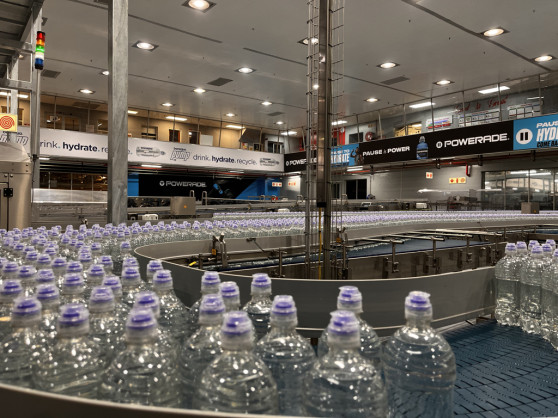
Coca-Cola Beverages Africa (CCBA) (www.CCBAGroup.com) has invested R365m in a new state-of-the-art bottling line capable of producing 72,000 bottles per hour at its plant in Midrand, South Africa.
The high-speed production line marks a South African first, producing Bonaqua Pump Still 750ml and Powerade 500ml packs with an innovative sports bottle cap. Beyond this milestone, the line will also produce Bonaqua Still in 330ml and 500ml packs, further driving the company's efforts to expand its hydration category. Underscoring a commitment to innovation, the line will additionally produce the recently launched Powerade Springboks Edition.
“By launching this new line, we strengthen our ability to meet growing consumer demand and create shared value across the local value chain, including for our customers and communities,” said Moses Lubisi, Manufacturing and Technical Director at Coca-Cola Beverages South Africa (CCBSA), a company in the CCBA group.
“Importantly, this investment reaffirms the Coca-Cola system's local approach – we produce locally, distribute locally and, where possible, source locally.”
“At CCBA, our passion for refreshing the continent drives everything we do,” said Sunil Gupta, Chief Executive Officer of CCBA. “This new production line in South Africa represents a key step in our ambitious growth plans in all our markets on the continent. It enhances our ability to meet consumer needs while reinforcing our commitment to delivering reliability and top-quality beverages across Africa.”
To help support the company's environmental goals, the new production line features advanced technology to optimise water and energy use. Additionally, the line required skills training for employees, contributing to the development of a future-ready workforce for both the business and the country.
Distributed by APO Group on behalf of Coca-Cola Beverages Africa.
ISSUED BY:
Motshidisi Mokwena
Head: Reputation and Communication Coca-Cola Beverages South Africa
Tel: +27 83 306 0349
Email: mmokwena@ccbagroup.com
Keli Fernie
Head: Reputation and Communication Coca-Cola Beverages Africa
Tel: +27 82 419 8766
Email: kfernie@ccbagroup.com
Follow us on:
LinkedIn: https://apo-opa.co/456e7ua
About CCBA:
CCBA is the eighth largest Coca-Cola authorised bottler in the world by revenue, and the largest on the continent. It accounts for over 40% of all Coca-Cola ready-to-drink beverages sold in Africa by volume. With over 18,000 employees in Africa, CCBA group services more than 735,000 customers with a host of international and local brands. CCBA group operates in 15 countries, including its six key markets of South Africa, Kenya, Ethiopia, Uganda, Mozambique and Namibia, as well as Tanzania, Botswana, Ghana, Zambia, the islands of Comoros and Mayotte, Eswatini, Lesotho, and Malawi.
Learn more at https://www.CCBAGroup.com
On 23 July 2025, Western Cape Mobility Minister, Isaac Sileku, hosted the launch of the Overberg Freight Rail Business Case and Implementation Plan pilot project in Bredasdorp. The business case is the first step towards revitalising freight rail along one of the Western Cape’s most significant agricultural corridors. The initiative, co-designed with agricultural producers, freight …
Dear Editor The DA strongly opposes the Minister of Employment and Labour’s proposed job-killing retrenchment reform, which would double the costs of retrenchment for struggling businesses, stifling hiring and job creation in South Africa. Higher retrenchment costs will entirely disincentivize job creation. Businesses will not hire if, when times are tough, they face massive costs …
Dear Editor The Democratic Alliance (DA) in Johannesburg calls on Mayor Dada Morero to immediately publish the report of the investigation into the allegations against Patriotic Alliance (PA) MMC, Kenny Kunene. Morero indicated last night that he will receive the report today. While the DA has already said it has no faith in the PA’s …
On Friday, 25 July 2025, Premier, Alan Winde, and Western Cape Minster of Infrastructure, Tertuis Simmers, unveiled the Founders Garden inner-city, mixed-use, affordable housing development in the Cape Town metro. This development is the second of three major inner-city developments that will go to market this year, of which the Leeuloop Precinct, which will yield …
Renting a home – or letting one out – used to be simpler. The rental landscape has become far more dynamic, shaped by tech, lifestyle shifts, and evolving expectations on both sides of the lease. “It’s not just about four walls and a roof anymore,” says Jacqui Savage, National Rentals Manager at Rawson Property Group. “People …
Salvador Caetano Auto South Africa, a subsidiary of the globally recognised Salvador Caetano Group, is taking a significant step in expanding its footprint in the local automotive market through a strategic partnership with Jiangling Motors Corporation (JMC), a leading Chinese commercial vehicle manufacturer. This collaboration not only strengthens Salvador Caetano’s position in South Africa but …
A team of 14 South Africans will dive into action as the swimming programme gets underway at the World Aquatics Championships in Singapore on Sunday. Leading the way for the South Africans will be young Pretoria swimmer Pieter Coetzé, who travelled directly to Singapore from Germany, where he was representing the country at the World …
Ford Motor Company of Southern Africa (Manufacturing) (Pty) Ltd (FMCSA) has determined that a concern which relates to motor vehicle safety may exist for certain Ford EcoSport models built between April 2021 and July 2022. FMCSA has identified that in the affected vehicles, the front half shafts may not have been fully inserted into the …
The Portfolio Committee on Agriculture welcomed the briefings it received yesterday from the Agricultural Research Council (ARC), National Agricultural Marketing Council (NAMC), and the Perishable Products Export Control Board (PPECB) on their performance in the fourth quarter of the 2024/25 financial year and commended their notable performance.
In welcoming the briefings from the three entities of the Department of Agriculture, the Chairperson of the Committee, Ms Dina Pule, said the committee was happy about the progress that the entities reported to the committee. She said the committee notes the hard work the entities have demonstrated and called for more improvement in all the areas of work that included implementation of the Auditor General's recommendations on their last audit outcomes.
The ARC reported that funding for building of the new Foot-and-mouth Disease (FMD) Vaccine Facility is still a challenge and that, efforts to obtain the required funding for the new facility remains a priority. The entity reported that field assessment of the FMD vaccine in Mpumalanga and Limpopo is ongoing and the study on vaccine safety in pregnant cows and young calves has been initiated.
In appreciating the performance of the NAMC, the committee called on the entity to do more on finding market access for the small-scale farmers as markets are alfa and omega for their growth, survival and meaningful contribution to the South African economy and for national food security.
The Chairperson told the Deputy Minister of the Department of Agriculture, Ms Zoleka Capa, who led the departmental delegation, that the committee notes with appreciation the accountability of both the Minister and his Deputy that they demonstrate to the committee.
The Chairperson also said that accountability is a critical starting point for the success of the department. “We deeply appreciate your availability to our meetings with the department. Your presence solidifies the accountability of the department to the committee and the oversight responsibility of the committee over the department,” emphasised the Chairperson.
Distributed by APO Group on behalf of Republic of South Africa: The Parliament.
This is part of the municipality’s bid to recover R17-billion in unpaid electricity bills across its 60 wards
The Portfolio Committee on Communications and Digital Technologies has recommended Ms Moipone Malefane and Dr Natalie Skeepers for appointment on the Board of the Media Development and Diversity Agency (MDDA).
There are two vacancies on the MDDA Board currently, and the committee was tasked with recruiting suitably qualified individuals to be considered for appointment in terms of section 4 of the MDDA Act 14 of 2002.
On 8 April this year, the committee, in line with the Act, published an advertisement inviting members of the public to submit nominations.
A total of 159 nominations were received and screened, followed by a shortlisting of nine candidates. The shortlisted candidates were interviewed on 15 July 2025.
On Friday (25 July) morning, the committee deliberated on the outcomes of the interviews and agreed to recommend Ms Malefane and Dr Skeepers.
The committee Chairperson, Ms Khusela Sangoni Diko, thanked all the interviewed candidates. She said that the interviewed candidates collectively possessed a tapestry of knowledge, experience and skill set required on the MDDA Board.
The committee report will be tabled in the National Assembly for adoption, and once adopted, it will be forwarded to the President for his appointment in terms of section 4(1)(b) of the MDDA Act.
Distributed by APO Group on behalf of Republic of South Africa: The Parliament.
A Natural Haven for Mind and Body Wellness Tucked along South Africa’s famed Garden Route, a lush region of forests, mountains, and coastline, lies one of the country’s best-kept wellness secrets. With a rich blend of indigenous forests, waterfalls, mountain views, and the soothing waves of the Indian Ocean, this destination is ideal for travellers seeking a peaceful, restorative escape. Forest …
Cartrack, a leading name in vehicle tracking and recovery, understands this better than anyone. But in an emergency, knowing who to call and what number to dial can make all the difference. This blog post is dedicated to providing you with the crucial information you need: Cartrack’s emergency contact numbers in South Africa. Why Knowing …
The Portfolio Committee on Human Settlements kick -started its two-day oversight visit to the municipalities in the Garden Route District Municipality in Knysna yesterday where it received briefings on the implementation of the Human Settlements Development Grant (HSDG), Informal Settlements and Upgrading Partnership Grant (ISUPG).
The committee expressed its displeasure with the absence of the MEC for Human Settlements and the Head of the department who failed to communicate their apologies in advance.
The committee also received briefings from the Western Cape Provincial Department of Human Settlements, Knysna Local Municipality, George Local Municipality, and Mossel Bay Local Municipality on the implementation of the human settlements' strategic plans, projects and programmes.
The committee expressed its disappointment to learn that a total budget of about R300 million, which was allocated to the municipalities during the 2024/25 financial year, had to be given to other provinces due to poor performance of the municipalities and R100 million of that amount was initially budgeted for HSDG.
The Deputy Director-General of the National Department of Human Settlements, Dr Nana Mhlongo told the committee that the allocation of the budget to other provinces was due to the department's due diligence in terms of monitoring performance within the province.
The HSDG is a key funding mechanism for human settlements development, while ISUPG focuses on upgrading of informal settlements. These programmes are being implemented by the Garden Route District Municipality, and they include the development of new housing units, infrastructure upgrades, and the formalisation of informal settlements.
Also, part of these programmes is the Integrated Human Settlements Strategic Plan that has been
developed by the Garden Route District Municipality which incorporates George, Mossel Bay, and Knysna local municipalities. This plan aims to guide the coordinated development of human settlements, and to ensure alignment with national, provincial strategic goals and performance plans.
Outlining the purpose of the visit, the Chairperson of the Portfolio Committee on Human Settlements, Mr Mammoga Seabi, highlighted the committee's role regarding oversight over any executive organ of state that falls within its portfolio. He said: “This is in line with the mandate of the committee to undertake provincial oversight visits to evaluate progress made in the service delivery and to identify challenges.”
The Chairperson said the committee undertook this oversight due to the need for the improvement of institutional capacity at the local municipal level and the lack of strong instruments for implementation in the district municipality. “These issues hinder service delivery, economic development, and overall community well-being,” he said.
The committee heard that the Garden Route District Municipality faces challenges that include limited funding and implementation of non-human settlements related mandate in informal settlements upgrading, bulk infrastructure capacity constraints prevalence in most municipalities, municipal capacity challenges, lengthy statutory approval processes, lack of clear and coherent understanding, and response from stakeholders involved in upgrading process.
The committee conducted site visits to the Knysna Bungalos, temporal relocation site and the houses built for the Knysna Bungalo beneficiaries. The committee was unhappy with the appalling state of the temporary structures and requested the municipality, provincial and national departments of human settlements to review the project and provide a report to the committee in 30 days.
The committee will today conduct site visit in Mossel Bay as follows:
Distributed by APO Group on behalf of Republic of South Africa: The Parliament.
[featured_image] Version Download 91 File Size 218.45 KB File Count 1 Create Date Last Updated Attached Files File Action F202 May 2025 Exam+(SoM).pdf Download First Democratic Elections: South Africa held its first fully democratic elections in 1994, allowing all citizens, regardless of race, to vote. Read More at the Source
Ottery firefighters helped deliver a healthy baby boy early on the morning of Thursday, 24 July 2025. An expectant mother arrived at around 05:30 at the fire station complaining of abdominal pains. The crew immediately assisted the second time mom, who told them her bundle of joy was due tomorrow, 25 July, and she was …