• Skip to main content
  • Skip to header right navigation
  • Skip to after header navigation
  • Skip to site footer
MyZA

MyZA

News, Directory, Events and Other Stuff

  • Social Media
  • Sport
  • World News
  • Home
  • Submit News
  • Directory
  • Events
  • Stratlec
  • TFSA
  • News
    • APO
    • Today’s Sport News
    • Todays Social Media and Tech Headlines
    • Today’s World News
    • Today’s SA Financial News
  • Contact
You are here: Home / News / Bud rot of palms detected in some parts of SA

Bud rot of palms detected in some parts of SA

22 January 2025 by Guest

Bud rot of palms detected in some parts of SA

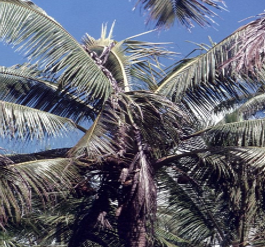
The Department of Agriculture, Land Reform and Rural Development (DALRRD) has issued a warning on the detection of the Bud rot of palms (Phytophthora palmivora) in certain parts of the country.

This follows the detection of P. palmivoraIn orchards in the Mopani District in Limpopo, and three commercial papaya orchards in the Ehlanzeni District Municipality in Mpumalanga.

The National Plant Protection Organisation of South Africa (NPPOZA) confirmed detection of the pest in August 2024. The disease is caused by a fungus that attacks palms. Disease transmission may also occur through soil contaminated with roots from an infected palm.

According to a statement issued by the department on Wednesday, NPPOZA, in collaboration with different role players and stakeholders, initiated a delimiting survey to determine the extent of spread of the pest in the country.

“This was done in accordance with the P. palmivora National Action Plan and relevant standards. DALRRD is currently conducting delimiting surveys in all production areas to determine the extent of the spread.

“Phytosanitary measures are implemented to restrict the movement of host material from infested areas to non-infested areas, unless such movement is authorised by means of a removal permit,” the department said.

The department noted that removal and, or movement of host material from affected areas to unaffected areas in the rest of the Republic of South Africa, is restricted in accordance with the Agricultural Pests Act, 1983 (Act No. 36 of 1983), and Control Measures R.110, as amended to prevent further spread of the pest to other provinces.

The department said hundreds of plant species, including horticultural, ornamental, and agricultural crops, have been infected by P. palmivora.

The agricultural host crops include papaya, pineapple, citrus, black pepper, cocoa, and coconut.

“Potential spread or establishment of P. palmivora from infested areas through host material to other areas, may negatively affect domestic and international trade, as well as export potential of relevant host commodities to various countries, where it is recognised as a quarantine pest.

“This pest can be managed by practicing effective cultural control, use of resistant varieties, chemical control, constant monitoring, and regulation of the removal of host material from quarantine (infested) to non-quarantine (non-infested) areas,” the department explained.

The department has since encouraged farmers and communities to practice effective cultural control, and “not to move host materials from infested areas to non-infested areas without authorisation”.

“International travellers are advised to avoid illegal importation of agricultural commodities into South Africa, as this may lead to the introduction of new pests and diseases that are expensive and difficult to manage.” – SAnews.gov.za

GabiK
Wed, 01/22/2025 – 12:55

42 views

The Department of Agriculture, Land Reform and Rural Development (DALRRD) has issued a warning on the detection of the Bud rot of palms (Phytophthora palmivora) in certain parts of the country.

This follows the detection of P. palmivoraIn orchards in the Mopani District in Limpopo, and three commercial papaya orchards in the Ehlanzeni District Municipality in Mpumalanga.

The National Plant Protection Organisation of South Africa (NPPOZA) confirmed detection of the pest in August 2024. The disease is caused by a fungus that attacks palms. Disease transmission may also occur through soil contaminated with roots from an infected palm.

According to a statement issued by the department on Wednesday, NPPOZA, in collaboration with different role players and stakeholders, initiated a delimiting survey to determine the extent of spread of the pest in the country.

“This was done in accordance with the P. palmivora National Action Plan and relevant standards. DALRRD is currently conducting delimiting surveys in all production areas to determine the extent of the spread.

“Phytosanitary measures are implemented to restrict the movement of host material from infested areas to non-infested areas, unless such movement is authorised by means of a removal permit,” the department said.

The department noted that removal and, or movement of host material from affected areas to unaffected areas in the rest of the Republic of South Africa, is restricted in accordance with the Agricultural Pests Act, 1983 (Act No. 36 of 1983), and Control Measures R.110, as amended to prevent further spread of the pest to other provinces.

The department said hundreds of plant species, including horticultural, ornamental, and agricultural crops, have been infected by P. palmivora.

The agricultural host crops include papaya, pineapple, citrus, black pepper, cocoa, and coconut.

“Potential spread or establishment of P. palmivora from infested areas through host material to other areas, may negatively affect domestic and international trade, as well as export potential of relevant host commodities to various countries, where it is recognised as a quarantine pest.

“This pest can be managed by practicing effective cultural control, use of resistant varieties, chemical control, constant monitoring, and regulation of the removal of host material from quarantine (infested) to non-quarantine (non-infested) areas,” the department explained.

The department has since encouraged farmers and communities to practice effective cultural control, and “not to move host materials from infested areas to non-infested areas without authorisation”.

“International travellers are advised to avoid illegal importation of agricultural commodities into South Africa, as this may lead to the introduction of new pests and diseases that are expensive and difficult to manage.” – SAnews.gov.za


Watch a Bud rot of palms detected in some parts of SA related video:

Stunning South Africa:

Have you visited MyPR?

MyPR.co.za offers free to publish press releases for your news site, blog or offline publication. Use the handy REPUBLISH facility or the Full Text RSS Feeds or just copy and paste.

Straton Electrical | Straton Solar | Straton Prepaid | Straton Plumbing | Straton IoT | Straton eBikes | BA Systems | Mbane Contracting | Reach Trust

Share this:

  • Share on X (Opens in new window) X
  • Share on Facebook (Opens in new window) Facebook
  • Print (Opens in new window) Print
  • Email a link to a friend (Opens in new window) Email
  • Share on LinkedIn (Opens in new window) LinkedIn
  • Share on Tumblr (Opens in new window) Tumblr
  • Share on WhatsApp (Opens in new window) WhatsApp
  • Share on Mastodon (Opens in new window) Mastodon
Category: NewsTag: 2024, ACT, Africa, agriculture, Limpopo, Mpumalanga, new, production, SA News, South Africa, Video

If you feel strongly about this article then feel free to send MyZA a ‘Letter to the Editor’ using the submission form below:


Letter to the Editor

This field is for validation purposes and should be left unchanged.
If this is in response to an article please include that article title here or as the lead in for the first paragraph of your Letter below.

Separate tags with commas

Localise your letter by naming the city your words are about. Add relevant words describing your subject. Single comma separated words of no more than 5
Your Name(Required)
Your Name will be linked to the website below.
Your personal, business or social media web site
Choose NO to not set up a user account on MyZA. User Accounts will allow you to submit letters under your own Author Name

3 Latest Letters to the Editor:

  • Older Persons Grants Land Today — No Need to Queue at Dawn

    Dear Editor, Older Persons grants are paid today, 30 October, under SASSA’s revised November payment schedule — with disability grants on Monday 2 November, children’s grants on Tuesday 3 November, and grants under review on Thursday 5 November. Two things every beneficiary should know. First, grant money does not expire on payment day. It stays…

    30 October 2026
  • November Grants Pay Early – No Need to Queue at Dawn

    Dear Editor, I run SAGrant (sagrant.co.za), a free resource helping South Africans navigate SASSA grants. November grants pay earlier than usual. Older Persons grants are paid on Friday 30 October, Disability grants on 2 November, and Child Support and other grants on 3 November. Grants still under review are paid on 5 November. The money…

    27 October 2026
  • NSFAS 2027 applications close on 31 October — SASSA households, apply now

    Dear Editor, I run SAGrant (sagrant.co.za), a free resource helping South Africans navigate SASSA grants. NSFAS applications for the 2027 academic year close on Friday 31 October 2026, and no extension is expected. If your household receives a SASSA grant, your child already passes the NSFAS financial eligibility test — but they still have to…

    25 October 2026

About Guest

Previous Post:Plot and Plan 101: The Game-Changer in Real Estate Investment
Next Post:What Is Alpha-Gal Syndrome? Understanding the Red Meat Allergy

Reader Interactions

Comments

  1. Trash

    22 September 2026 at 8:05 am

    Archeologists in South Africa have just discoved what they think is the oldest tampon ever found

    They are trying to find out what period it came from.

  2. Fiend Oblivion

    7 September 2026 at 6:30 am

    Jamaica: You have two cows. They win 25 gold medals at the Bovine Olympics.

Copyright © 2026 · MyZA · All Rights Reserved · Powered by Stratlec Online