• Skip to main content
  • Skip to header right navigation
  • Skip to after header navigation
  • Skip to site footer
MyZA

MyZA

News, Directory, Events and Other Stuff

  • Social Media
  • Sport
  • World News
  • Home
  • Submit News
  • Directory
  • Events
  • Stratlec
  • TFSA
  • News
    • APO
    • Today’s Sport News
    • Todays Social Media and Tech Headlines
    • Today’s World News
    • Today’s SA Financial News
  • Contact
You are here: Home / Archives for News

News

30 July 2026

Ten-Year Driving Licences: It’s a Yes!

Location: News

OUTA notes Cabinet’s long-overdue approval of ten-year driving licence cards for light motor vehicles. The decision follows years of calls for reform from OUTA and other civil society organisations. “This decision is almost six years overdue, but it is a victory for motorists and for common sense. Government has finally accepted that forcing motorists through …
Read moreTen-Year Driving Licences: It’s a Yes!
30 July 2026

Lamprecht Ready

Location: Sport

She has played and beaten Fiji in the biggest cauldron of women’s sevens and now Shiniqwa Lamprecht has her eyes on another big prize against the Pacific nation – a first Test cap for South Africa. The 23-year-old was on the field when the Springbok Women’s Sevens outplayed their Fijian opponents 21-15 in their 11th-place …

Read moreLamprecht Ready
30 July 2026

Starting gun fired on rugby’s own ‘Odyssey’

Location: Sport

A 30-year wait for the resumption of tours between rugby’s greatest rivals, ended this week with the arrival of the touring All Blacks in South Africa for the start of an eight-match odyssey. The All Blacks will be hosted at a Welcome to Country event at DHL Stadium in Cape Town on Friday – a …

Read moreStarting gun fired on rugby’s own ‘Odyssey’
30 July 2026

No to Higher Electricity Tariffs for Ekurhuleni

Location: News

During a meeting of the Ekurhuleni Metro Council, the Freedom Front Plus (VF Plus) rejected a proposal that would result in electricity tariffs increasing beyond what was initially approved in the budget. When the budget was adopted, an increase of approximately 9% for consumers was approved. The recent council resolution, however, means that certain residents […]

The post Freedom Front Plus says no to higher electricity tariffs for Ekurhuleni appeared first on Freedom Front Plus.

Read moreNo to Higher Electricity Tariffs for Ekurhuleni
30 July 2026

Making Home Ground Advantage Count

Location: Sport

The Leopards Women, Hollywood Foundation Pumas Women and Limpopo Blue Bulls Women will bank on home ground advantage in round five of the Pick n Pay Women’s Super League 2 on Saturday when they host AVBOB Griquas Women, the SWD Eagirls and Griffons Women, while the Valke enjoy a bye. Victories for the home sides …

Read moreMaking Home Ground Advantage Count
30 July 2026

Kaspersky Uncovers the Cyber Threats Defining the First Half of 2026 in META

Location: News
Kaspersky

Kaspersky's (www.Kaspersky.co.za) Global Research & Analysis Team (GReAT) reveals key cyber threat trends for the first half of 2026 at the recent Cyber Security Weekend for the Middle East, Turkiye and Africa region (META).

As the cybersecurity landscape continues to evolve, cyberthreats are becoming increasingly diverse and sophisticated. The rapid adoption of artificial intelligence (AI), coupled with ongoing geopolitical and economic instability, is contributing to the rise of cybercrime and the growing complexity of cyberattacks.

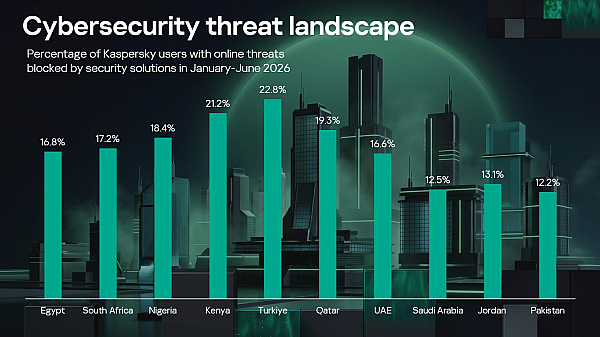
According to Kaspersky's telemetry, online threats exploiting vulnerabilities in websites, emails and web services continued to affect millions of users across the META region during the first half of 2026. Specifically, Kaspersky detection systems stopped 5,7M attacks from various online resources in South Africa, 4,5M in Kenya and 1,6M in Nigeria.

Turkiye recorded the highest percentage of users affected by web-based threats at 22.8%, followed by Kenya (21.2%), Qatar (19.3%), Nigeria (18.4%) and South Africa (17.2%). In contrast, Saudi Arabia, Jordan and Pakistan registered the lowest share of users targeted by web-borne attacks in the region.

AI is transforming attacker operations

Kaspersky experts report that threat actors are increasingly integrating AI into different stages of their operations. Large language models are already being used to generate phishing emails, malicious code and supporting operational content.

AI is also beginning to play a larger role in malware development. Modern language models are capable of generating substantial portions of malicious software, from initial code scaffolding to functional modules. Researchers have already observed AI-assisted malware development in campaigns linked to the FunkSec group, which deployed Rust-based malware capable of data theft, encryption and process manipulation. Similarly, during the RevengeHotels campaign in 2025, threat actors used large language models to generate portions of the infector and downloader code.

"We expect AI to remain one of the key factors shaping the threat landscape in 2026, as we already see how it is reshaping attacker workflows and accelerating their operations," said Sergey Lozhkin, Head of Global Research and Analysis Team in APAC and META regions at Kaspersky. "By lowering the time and cost required to develop and adapt malicious tools, AI allows threat actors to iterate faster and scale their efforts. Defenders should be prepared for quicker shifts in tactics."

Emerging trends shaping the cyber threat landscape

In addition to the growing use of AI by cybercriminals, Kaspersky experts identified several trends that organisations should monitor closely:

  • AI-driven malware evolution: generative models can rewrite malware in different languages or architectures, making malicious code harder to detect, and faster to deploy at scale.
  • Cloud-based data exfiltration: attackers increasingly route stolen data through legitimate cloud and file-sharing services to blend in with normal traffic.
  • Ransomware targeting operations: some groups disrupt production and business processes, not just encrypt data, to increase pressure for payment.
  • AI agents as persistence mechanisms: some AI agent solutions are granted broad or even full system access. If compromised, attackers could modify the system prompt or the agent's configuration, for example, causing it to download a payload on every startup.
  • Malicious AI skills become a new attack vector: as AI agents gain broader access to enterprise systems, attackers start to exploit compromised skills to manipulate agent behaviour, steal sensitive data, execute unauthorised actions, and establish persistent access. This creates a new layer of risk where trusted AI tools can be turned into powerful mechanisms for cyberattacks.

As cyberthreats continue to evolve alongside emerging technologies, Kaspersky recommends that organisations strengthen their cybersecurity posture through continuous vulnerability management, timely patching, employee awareness training, threat intelligence, and advanced security solutions like Kaspersky Next (https://apo-opa.co/4xbceIX), capable of detecting sophisticated and AI-assisted attacks.

Distributed by APO Group on behalf of Kaspersky.

For further information please contact:
Nicole Allman
nicole@inkandco.co.za

Social Media: 
Facebook: https://apo-opa.co/3RLnLj8
X: https://apo-opa.co/4pKRkhD
YouTube: https://apo-opa.co/4x5zaJK
Instagram: https://apo-opa.co/44SGa0D
Kaspersky Blog: https://apo-opa.co/4fDxBNv

About Kaspersky:
Kaspersky is a global cybersecurity and digital privacy company founded in 1997. Innovating the industry with a Cyber Immunity approach, Kaspersky safeguards consumers, businesses, critical infrastructure, and governments from cyberthreats, with over a billion devices protected to date. Kaspersky ensures Cybersecurity True to Business, focusing on providing clear outcomes, protecting revenue, easing workloads and preventing downtime. Kaspersky's deep threat intelligence and security expertise is constantly transforming into innovative solutions and services for organizations of every size, from small businesses to large enterprises, combining proven AI-driven protection technologies with simple management and expert support. Recognized in independent tests and trusted by millions of individuals worldwide and nearly 200,000 organizations, Kaspersky helps detect threats earlier, respond faster and operate with greater confidence and freedom, protecting what matters most to our clients. Learn more at www.Kaspersky.co.za. 

Media files
Kaspersky
Download logo
Read moreKaspersky Uncovers the Cyber Threats Defining the First Half of 2026 in META
30 July 2026

Live Your Lifestyle & Win at Centurion Lifestyle Centre

Location: Entertainment, MyPR

Centurion – Shopping has never been more rewarding at Centurion Lifestyle Centre. The centre has launched its Live Your Lifestyle & Win shopper promotion, giving customers the opportunity to win a share of R25,000 worth of prizes, with 29 lucky winners set to walk away with prizes from participating stores. Running from 28 July to …

Read moreLive Your Lifestyle & Win at Centurion Lifestyle Centre
30 July 2026

Community Objects to Renaming of Friedman Square

Location: News

The proposed renaming of Ben Friedman Square in Strand to the “Strand Muslim Community Square” has sparked public outcry. During the public participation process, 74 residents attended the meeting and 54 formally lodged objections against the proposal. The motivation behind the name change is to recognise the Muslim community’s role in the history of Strand. […]

The post Community’s objection to renaming Friedman Square should be taken seriously appeared first on Freedom Front Plus.

Read moreCommunity Objects to Renaming of Friedman Square
30 July 2026

Historic Midrand Race Enters a New Era as the Midrand Striders Chamberlain Country Classic

Location: MyPR

Midrand, Gauteng: One of Gauteng’s longest-standing road running events is entering an exciting new chapter. Dating back to the early 1980s, the race began as a 15km event and has evolved over the decades into the Midrand Striders Chamberlain Country Classic. While long-serving members differ on the exact inaugural year, all agree that the race …

Read moreHistoric Midrand Race Enters a New Era as the Midrand Striders Chamberlain Country Classic
30 July 2026

Plettenberg Bay Robbed of Its Arts Festival

Location: News

It is disappointing and unacceptable that the Bitou Municipality dragged its feet in appointing a new tourism service provider. Consequently, the Plett Arts Festival cannot take place this year. The mandate of the Plettenberg Bay Tourism Association lapsed on 30 June 2026. The Municipality undertook to award the new tourism services tender by 1 July, […]

The post Bitou’s administrative foot-dragging robs Plettenberg Bay of its Arts Festival appeared first on Freedom Front Plus.

Read morePlettenberg Bay Robbed of Its Arts Festival
30 July 2026

Illegal Mining Continues to Threaten Barberton’s Water Security

Location: News

ActionSA remains concerned that illegal mining continues to threaten critical water infrastructure in the City of Mbombela, following the municipality's warning that illegal mining activities at the Rimers Creek Water Treatment Plant have disrupted raw water abstraction and posed a risk to the quality and reliability of Barberton's water supply.

The post Illegal Mining Continues to Threaten Barberton’s Water Security appeared first on ActionSA.

Read moreIllegal Mining Continues to Threaten Barberton’s Water Security
30 July 2026

Inside Africa’s Green Economy: Kevin Munjal on What’s Coming Next

Location: News
VUKA Group

Exclusive interview with Kevin Munjal, Director, Development Impact at FSD Africa, which recently published a report on “Unlocking Africa's Green Transition: Opportunities Towards a Green and Inclusive Workforce (https://apo-opa.co/4yMIbJt)” in partnership with Shell Foundation. It contains highly relevant insights for stakeholders working on Africa's green transition and related human capital challenges.  

Interview Summary:
Kevin Munjal, Director of Development Impact at FSD Africa, highlights the potential for up to 84.5 million green jobs in Africa by 2050 if capital flows to service-led value chains, regulations are enforced, and skills systems modernised. He stresses vocational training models with guaranteed income pathways, innovative financing that embeds workforce development into green infrastructure, and mobile-based social protection for informal workers.

Gender equity requires targeted interventions across both formal and informal economies. Clean cooking and waste recycling are identified as transformative sectors, while national strategies must reflect distinct labour market structures in Nigeria, South Africa and Kenya.

Let's start with some background on you and the work that you do for FSD Africa. Where in Africa are you active?
My name is Kevin Munjal, I'm the Director of Development Impact at FSD Africa. FSD Africa is a specialist development agency deploying financial and non-financial instruments to strengthen Africa's financial sector to enable the continent to mobilise sustainable capital at scale for financing of its development needs. We currently have a presence in over 30 countries.

As Director of Development Impact, I oversee the body of work that helps FSD Africa understand the effectiveness of its financial sector development strategies. Together with my team, we help craft and test hypotheses, generating data and insights that inform stronger programming.

I also oversee a growing portfolio of work on green skills and jobs, advocating for climate financing strategies that enable a just green transition in Africa.

The recently published FSD Africa report projects up to 84.5 million green jobs by 2050. What policy choices are most critical to ensure Africa reaches the high scenario outcome rather than falling short?
The gap between the low and high scenarios, 18 million jobs by 2050,  comes down to three things: where capital is directed, whether regulations are enforced, and whether skills systems keep pace with deployment.

On capital, the high scenario requires finance to flow toward service-led value chains like clean cooking, solar home systems, waste recycling, e-mobility, rather than concentrating in utility-scale infrastructure. These service chains generate more jobs per dollar and reach more people.

On regulation, the gap between policy intent and market reality is enormous. Thirteen African countries have published e-mobility strategies, but very few have operational enforcement frameworks. Clean cooking targets appear in only 45% of African NDCs. 

On skills, the training systems that exist are largely calibrated to legacy technologies. There are no national training programmes for IoT-enabled remote operations, battery management system governance, or carbon measurement and verification in any of the three countries we studied. 

How can African governments and industry rapidly scale vocational training and skills systems to meet demand?
Africa's renewable energy workforce is around 324,000 people—just 2% of the global total—despite the continent holding 60% of the world's best solar resources. That gap cannot be closed through the formal TVET system alone, which is too slow to reform and too geographically fixed to reach the workers who need it most.

The most effective approaches we've seen share a common design principle: train for a specific job with a guaranteed income pathway. The Rural Electrification Agency's NextGen model in Nigeria—bootcamp training paired with a nine-month paid internship—is a strong example. South Africa's Grootbos Green Futures programme places 90% of its trainees into roles in the local restoration economy.

Beyond individual programmes, three instruments can scale quickly without new legislation. Recognition of prior learning, embedding green skills modules into existing qualifications rather than creating standalone credentials, and making industrial apprenticeships paid, which has been shown to dramatically improve female retention.

Less than 1% of climate finance currently goes to skills development. What innovative financing mechanisms could redirect capital towards workforce training?
Less than 1% of climate finance currently goes to skills development. While "Jobs created" is the standard metric for investors, it tells you nothing about whether those jobs are decent, skilled, or sustainable.

The first shift needed is to embed workforce development criteria directly into green infrastructure financing. If a DFI is deploying capital into a solar project, a defined share of that deployment should be earmarked for training. Gender inclusion criteria should also be part of the deal terms.

To move beyond grants, need to identify how the underlying assets of a green investment can innovatively finance the skilling of workers. For instance, can a portion of the carbon revenue generated by a green investment be used to finance skilling, In principle, more private finance needs to be directed to the skilling agenda if it is to be sustainable, hence the need to find financing models that can enable this.

The report warns that 86% of green jobs in 2030 will be informal. How can stakeholders extend social protection and career pathways to informal workers, especially women and youth?
By 2030, 86% of green jobs will be informal. That is not a problem to solve for, it is the structure of Africa's green economy, and any serious strategy has to work within it rather than around it.

Three instruments matter most. Mobile-based social protection, linked to the digital payment platforms that African workers already use, can extend access to health insurance, accident cover, and pensions for self-employed green workers.

Portable digital credentials, verified through employer records and accessible on basic mobile devices, allow workers to build a recognised skills profile that travels with them across employers and markets. For young people in particular, this converts informal experience into a career asset.

Finally, giving micro-distributors access to working capital and trade finance allows nano and micro-enterprises to build the enterprise performance records that financial institutions need to extend credit. This is how you move someone from a survivalist activity to a sustainable livelihood.

Staying with women, they are concentrated in lower value, commission-based roles. What targeted interventions could ensure gender equity and progression opportunities in the green economy?
Women are projected to hold 31% of green jobs by 2030 and 44% by 2050. That sounds positive until you look at where those jobs are concentrated—the lowest-value, most informal, commission-based roles, with no contract, no social protection, and no progression pathway.

The barriers are structural and well-documented. Safety and mobility issues prevent women from taking on remote or overnight technical assignments. Women's care burdens conflict with the rigid schedules of higher-tier roles. Gaps in certification and field placement mean that women who complete technical training often cannot convert it into employment.

The most effective interventions address these simultaneously rather than one at a time.

In South Africa, where the green economy is highly formalised, the levers are procurement standards, worksite infrastructure and embedding these into financing conditionalities so they become institutional expectations rather than voluntary practice.

In Nigeria and Kenya, where growth is happening through informal channels, the priority is expanding women's access to distribution roles and providing working capital for women-led enterprises through catalytic finance instruments.

Gender covenants in DFI financing, specifying targets by value chain and tracking women in technical and management roles, are the accountability mechanism that makes all of this stick.

Africa's transition is mainly driven by service-led industries. In your view, which of these sectors are most transformative for inclusive job creation?
Clean cooking stands out. By 2030, it is projected to be the largest green value chain on the continent generating between 1.4 and 2.5 million jobs through micro-distributors, maintenance technicians, and community agents. By 2050, clean cooking employment is projected to grow more than tenfold. The majority of customers are women, which means effective distribution requires women as agents, and the sector is approaching gender parity in our high-scenario projections.

Waste recycling is the other sector I'd highlight. It has the highest accessibility rates for low-income workers, around 72%, and the regulatory frameworks to drive formalisation are already in place in South Africa, Kenya, and increasingly Nigeria. South Africa's Extended Producer Responsibility regime has already created over 24,000 formal jobs since 2022.

The common thread in both sectors is that employment is driven by service delivery at scale with millions of household connections and collections, not a handful of large construction projects. That is precisely what makes them transformative: the jobs are distributed, the barriers to entry are low, and the potential to reach workers who have been structurally excluded from the formal economy is real.

The report highlights differences across Nigeria, South Africa and Kenya. How should national strategies be tailored to reflect these distinct labour market structures and enabling conditions?
Our research is very clear that there is no single African green transition, and a continental template would miss the mark badly.

Nigeria's transition is 87% informal and dominated by nano-enterprises. Mandating formalisation will not work at the scale and speed the sector requires. The priority is improving job quality within informal systems—portable credentials, mobile social protection, quality standards within agent networks—while expanding the sectors where women are better represented, like climate-smart agriculture.

South Africa's transition is 70% formal, shaped by regulated procurement frameworks and the most capitalised just transition plan on the continent. The challenge here is not reaching informal workers; it is reforming conditions within formal systems, particularly the occupational segregation that keeps women's participation stagnant at around 25%, and ensuring that the shift from construction-phase to operations and maintenance roles translates into improved incomes.

Kenya occupies a middle ground—a renewable electricity system already operational, an emerging e-mobility sector anchored by the continent's most mature mobile money infrastructure, and a devolved governance structure that requires green skills to be integrated at the county level if employment benefits are to reach workers where deployment is actually occurring.

FSD Africa is launching the Green Jobs Innovation Hub. What role do you envision this initiative playing in bridging the gap between investment in infrastructure and investment in human capital?
The hub is a direct response to the coordination failure that sits at the heart of this problem. Training institutions cannot invest in green skills without demand signals from employers. Employers cannot plan workforces without deployment pipelines. DFIs cannot condition financing on workforce outcomes without data on what those outcomes should look like. And governments cannot sequence skills expenditure without occupation-level employment projections. Everyone is waiting for someone else to move first.

The Green Jobs Innovation Hub is designed to break that deadlock by bringing these actors together around shared data, shared standards, and shared investment. Concretely, The Hub works to unlock financing models that close the workforce investment gap—ensuring that capital flows alongside green infrastructure investment.

Any final thoughts from your side?
The most important thing I want to emphasise is that Africa's green transition is not primarily a story about solar panels and megawatts. It is a story about millions of micro-distributors, maintenance technicians, waste sorters, and community agents, people who are already doing this work, largely informally, largely without recognition, and largely without protection.

We also have the data now. We know which value chains will generate the most jobs, we know who those jobs will reach, and we know what is preventing more people from accessing better ones.

Therefore, we should stop separating the infrastructure conversation from the human capital conversation. They are the same investment. And until we finance them that way, we will keep building green infrastructure that imports its skills and perpetuates the same development challenges we've seen over the years.

Distributed by APO Group on behalf of VUKA Group.

Additional Link: https://apo-opa.co/44SPLEG

About Africa's Green Economy Summit (AGES): 
The Africa's Green Economy Summit (AGES), powered by VUKA Group, is a leading platform for advancing sustainable development across the continent. Now in its 5th edition, AGES 2027 brings together investors, policymakers, project developers, and industry leaders to accelerate Africa's transition to a green and inclusive economy. Through high-level dialogue, strategic networking, and deal-making opportunities, the summit connects global capital with African projects across sectors including climate finance, infrastructure, energy, and environmental sustainability.

About VUKA Group: 
VUKA Group is a purpose-driven business that connects people and organisations to drive meaningful impact across Africa's key industries. Through its portfolio of events, digital platforms, and insights, VUKA enables collaboration, knowledge-sharing, and business growth in sectors critical to the continent's future.

Media files
VUKA Group
Download logo
Read moreInside Africa’s Green Economy: Kevin Munjal on What’s Coming Next
30 July 2026

Relief for Lesotho as US tariffs expire

Location: News

But uncertainty remains over AGOA agreement

Read moreRelief for Lesotho as US tariffs expire
30 July 2026

Outdoor Network Expands Digital Billboard Network With Four Fully Approved Sites

Location: MyPR

Outdoor Network, a division of the Provantage Group, is expanding its national digital out-of-home (DOOH) footprint with four new 3m x 6m digital billboard sites in Pretoria and the Western Cape. Every structure has passed the full municipal and local authority approval process required before an advertising sign may legally be erected. That distinction carries …

Read moreOutdoor Network Expands Digital Billboard Network With Four Fully Approved Sites
30 July 2026

76-Year-Old Woman Arrested for Alleged Dealing in Dagga

Location: News

SPRINGBOK – Members of the SAPS in the Namakwa District continues to intensify its efforts to combat the distribution and sale of illicit drugs the Namakwa policing precinct. On Wednesday, 29 July 2026, at approximately 08:00, members attached to the Namakwa District Task Team (Shift A and Shift B) executed a tactical operation at a …

Read more76-Year-Old Woman Arrested for Alleged Dealing in Dagga
30 July 2026

Keeping the Compass Pointed at Dakar: Jayden Els’ Next Chapter

Location: MyPR

For King Price Xtreme rally driver Jayden Els, the destination has never changed. The route, however, has become far more demanding. Still only in his early twenties, Jayden has already built a motorsport résumé that many drivers spend decades chasing. From winning the 2017 Rotax Karting World Finals to claiming the Class T Championship in …

Read moreKeeping the Compass Pointed at Dakar: Jayden Els’ Next Chapter
30 July 2026

Battery Energy Storage (BES): Comparing Sodium-Ion (Galvani) vs. Lithium Iron Phosphate (LFP)

Location: MyPR

If I had R1.00 for every call from a Neanderthal glorifying a vehicle fire supposedly set off by a Lithium Ion Battery I would be able to buy a Tesla Cybertruck for cash… That is what one gets for being an early adopter and brand evangelist for renewable energy! But, maybe ‘brand evangelist’ is slightly …

Read moreBattery Energy Storage (BES): Comparing Sodium-Ion (Galvani) vs. Lithium Iron Phosphate (LFP)
30 July 2026

Emalahleni Residents Stranded Without Water and Power While Tariffs and Debt Keep Climbing

Location: News

The residents of the Emalahleni Local Municipality are affected by water and power outages on a daily basis, while tariffs keep climbing and the Municipality’s financial position keeps declining. The Municipality issues no proactive notifications of service disruptions. Residents are left in the dark – literally and figuratively – unable to plan their daily lives, […]

The post Emalahleni residents stranded without water and power while tariffs and debt keep climbing appeared first on Freedom Front Plus.

Read moreEmalahleni Residents Stranded Without Water and Power While Tariffs and Debt Keep Climbing
30 July 2026

Africa’s Energy Ambitions Depend on Stronger Grids, Smarter Finance and Pragmatic Generation Choices

Location: News
VUKA Group

Africa's energy transition is entering a more demanding phase. Adding new generation capacity remains essential, but the continent must also confront the transmission constraints, financing gaps and policy trade-offs that determine whether electricity can reach the businesses, communities and industries that need it.

Across many African markets, renewable energy projects are progressing faster than the infrastructure required to connect them. Ageing networks, limited transmission capacity and slow grid expansion are restricting investment, delaying projects and increasing the risk that available generation cannot be fully used.

Closing this gap will require financing structures that can attract institutional and private capital while managing the risks associated with long development timelines, regulated revenues and financially constrained utilities. Public-private partnerships, blended finance, guarantees and independent transmission models could play a greater role, provided they are supported by credible regulation, bankable project pipelines and clear procurement frameworks.

Building an energy mix that can withstand pressure

Transmission investment forms only part of the challenge. African governments must also determine how to meet growing electricity demand while strengthening energy security, managing affordability and responding to climate commitments.

There is no single generation formula that can be applied across the continent. Each market must consider its natural resources, existing infrastructure, industrial requirements and ability to finance new capacity.

Renewables will continue to expand, supported by storage and stronger regional power trading. At the same time, policymakers must address the role of dispatchable and baseload technologies in maintaining system reliability. The real test will be whether countries can build diversified energy systems that remain resilient during periods of peak demand, climate disruption and fuel supply volatility.

These questions will be explored through two upcoming webinars:

Scaling Transmission Infrastructure: Innovative Financing Models for Emerging Markets

Explore the financing and delivery models that could accelerate transmission development in emerging markets.
Webinar date: 12 August 2026
Time: 2pm SAST

Register for the transmission infrastructure webinar: https://apo-opa.co/4w0my5N

Balancing the Scales: Climate Change, Energy Security and Africa's Optimal Energy Mix

Join the discussion on grid constraints, baseload requirements and the generation choices shaping Africa's energy future.
Webinar date: 26 August 2026
Time: 2pm SAST

Register for the energy mix webinar: https://apo-opa.co/4w0myCP

Continuing the conversation at Enlit Africa 2027

Transmission expansion, infrastructure finance, energy security and Africa's evolving generation mix will be examined in greater depth at Enlit Africa 2027, taking place from 11 to 13 May 2027 at the Cape Town International Convention Centre in South Africa.

Created by VUKA Group, the event will bring together utilities, governments, regulators, financiers, developers, technology providers and large energy users to address the policy, investment and implementation decisions shaping Africa's power, energy and water sectors.

For more information, pre-registration, and the 2026 post event report, visit the event website: https://apo-opa.co/4bgcgHk. 

Distributed by APO Group on behalf of VUKA Group.

About Enlit Africa:
Enlit Africa convenes stakeholders across the power sector value chain to address the commercial and operational realities of delivery, bringing together leaders across finance, utilities, government, industry and technology to accelerate bankable investment, system readiness and measurable outcomes. www.Enlit-Africa.com

About VUKA Group:
VUKA Group connects people and organisations across Africa's energy, mining, mobility, green economy, and retail sectors through events, content, and strategic networking. Venture partners to The Global Trust Project and leaders of NPO Go Green Africa. www.WeAreVuka.com

Media files
VUKA Group
Download logo
Read moreAfrica’s Energy Ambitions Depend on Stronger Grids, Smarter Finance and Pragmatic Generation Choices
30 July 2026

At 86, Limpopo farmer still waiting for promised irrigation water

Location: News

Shortcomings and delays with the Giyani Water Project has left small-scale farmers without reliable irrigation

Read moreAt 86, Limpopo farmer still waiting for promised irrigation water
30 July 2026

Kenya’s Stock Market Is Using Tether to Test Blockchain’s Promise

Location: News

Stablecoin issuer Tether has signed a memorandum of understanding with the Nairobi Securities Exchange (NSE) to explore blockchain technology, tokenized […]

Read moreKenya’s Stock Market Is Using Tether to Test Blockchain’s Promise
30 July 2026

City of Cape Town-Supported Events Generate More Than 2100 Online Media Mentions

Location: MyPR

The City of Cape Town’s investment in major sporting, cultural and entertainment events generated 2125 online editorial mentions, according to an independent report measuring online media coverage between July 2025 and June 2026. According to the Brand Media Index™ – Cape Town Events Edition, the top five events generated 1908 online editorial mentions that included …

Read moreCity of Cape Town-Supported Events Generate More Than 2100 Online Media Mentions
30 July 2026

Complaint Lodged Against Tshwane Speaker

Location: News

The Freedom Front Plus (VF Plus) lodged a complaint with the Public Protector (PP) against the Speaker of the Tshwane Metro Council, Mncedi Ndzwanana. The step was taken in an effort to ensure accountability after he was once again accused of undermining democratic processes in the Metro. The complaint follows the urgent court application currently […]

The post Freedom Front Plus lodges complaint against Tshwane Speaker appeared first on Freedom Front Plus.

Read moreComplaint Lodged Against Tshwane Speaker
30 July 2026

Berean App: How South African Innovation Is Revolutionizing Bible Study With AI

Location: MyPR

In a market dominated by apps that push a single theological perspective, a South African development team has created something genuinely different: an AI-powered Bible study platform that presents theological information fairly and without bias. The Berean App uses machine learning to show how over 20 Christian denominations interpret any Bible passage—Catholic, Orthodox, Reformed, Pentecostal, …

Read moreBerean App: How South African Innovation Is Revolutionizing Bible Study With AI
  • Previous
  • Page 1
  • Interim pages omitted …
  • Page 92
  • Page 93
  • Page 94
  • Page 95
  • Page 96
  • Interim pages omitted …
  • Page 1964
  • Next

Copyright © 2026 · MyZA · All Rights Reserved · Powered by Stratlec Online