
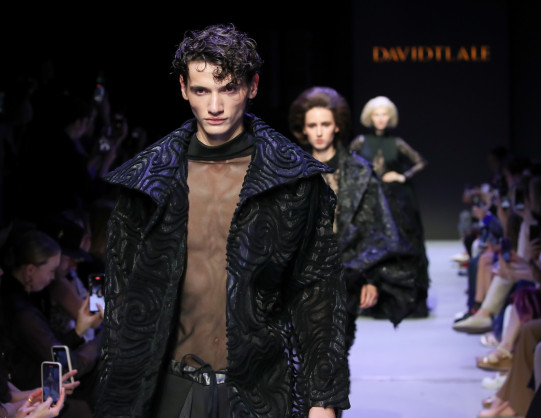
African designers are making a stronger presence on international runways, reflecting the continent’s dynamic and fast-growing fashion scene. This year, the global Fashion Week calendar began in Moscow, and African countries eagerly participated in the event. Moscow Fashion Week, held in early September, surpassed expectations, attracting global attention and showcasing talent from all over the world.
Designers from 13 countries converged on Moscow for the event. Among them was David Tlale, the acclaimed couturier from South Africa. A familiar face on Russian runways, David Tlale has showcased his collections in Moscow before. This season, he aims to tell the world an authentic story of Africa through his designs.
“Each collection narrates African stories in sophisticated yet powerful tones, connecting past traditions with modern fashion innovation,” says David Tlale.
Already an established designer, David Tlale has presented his creations at New York, Paris, Shanghai, and Dubai Fashion Weeks. This year, he chose Moscow to debut his new collection.
“The collection celebrates the modern working woman – confident, elegant, and effortlessly versatile. Designed for seamless transitions, she moves from the office to high tea, and on to an evening cocktail party with grace. She embodies refined sophistication in every setting,” explains David Tlale.
Russian brands are also gaining momentum in Africa. Designers like Solangel participated in South Africa’s Soweto Fashion Week in 2024, while Darya Kipriyanova presented her collection at Hub of Africa Fashion Week in 2025. Strong ties between Africa and Russia extend across industries, including culture and fashion, reflecting a growing exchange of ideas and inspiration.
Alongside Moscow Fashion Week, the BRICS+ Fashion Summit recently unfolded in the Russian capital. The event brought together delegations from full BRICS members South Africa, Egypt, and Ethiopia, as well as representatives from other countries. Among the African attendees were Mmantlha Sankoloba, CEO of the Botswana Exporters and Manufacturers Association (Botswana); Nana Tamakloe, CEO of Accra Fashion Week (Ghana); Kalistu Ramos Mukoroli, Director of MTC Windhoek Fashion Week (Namibia); and Brian James Kihindas, Director of Kenya Fashion Council and Nairobi Fashion Week (Kenya). The Summit offered African industry leaders a unique stage to exchange expertise with European, American, and Russian counterparts.
“My expectations middle around deepening global collaboration, especially between African fashion ecosystems and emerging markets,” notes Brian James Kihindas. “I’m particularly keen on exploring strategic partnerships that can lead to more inclusive and equitable fashion systems, where African creatives and artisans are not only celebrated but actively integrated into global value chains.”
African fashion in Moscow always captivates the audience. Authentic, bold, and vibrant, it tells the rich stories and traditions of its nations with color, texture, and emotion. For Africa, Moscow Fashion Week is more than an event – it is a gateway to international recognition, fostering cultural exchange and opening doors to global fashion markets.
Africa Fact: Sudan has more pyramids than any other country on earth – even more than Egypt. There are at least 223 pyramids in the Sudanese cities of Al Kurru, Nuri, Gebel Barkal and Meroë. They are generally 20 to 30 metres high and steep sided.
Howitzer Rise
Fun South African Fact: South Africa is the only country in the world to build and then decide to dismantle the whole of its nuclear weapons program.
Avenge Paws
Fun South African Fact: The Cape Floral Kingdom is one of the world’s six floral kingdoms – and the only one which is wholly contained within a single country.