• Skip to main content
  • Skip to header right navigation
  • Skip to after header navigation
  • Skip to site footer
MyZA

MyZA

News, Directory, Events and Other Stuff

  • Social Media
  • Sport
  • World News
  • Home
  • Submit News
  • Directory
  • Events
  • Stratlec
  • TFSA
  • News
    • APO
    • Today’s Sport News
    • Todays Social Media and Tech Headlines
    • Today’s World News
    • Today’s SA Financial News
  • Contact
You are here: Home / News / Intensified control measures too curb Foot and Mouth Disease

Intensified control measures too curb Foot and Mouth Disease

30 March 2025 by Guest

Intensified control measures too curb Foot and Mouth Disease

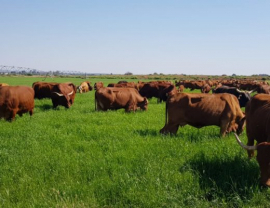
The Ministry of Agriculture has provided an update on the ongoing outbreaks of Foot and Mouth Disease (FMD) in KwaZulu-Natal and the Eastern Cape, with intensified control measures being implemented to curb the spread of the virus.

As reported to the World Organisation for Animal Health (WOAH), KwaZulu-Natal has experienced 165 outbreaks of Foot and Mouth Disease, with 18 of these having been closed and 147 still active. 

In a statement, the Ministry said an enlarged Disease Management Area (DMA) was declared on 17 March 2025, where signs of continued virus activity persist. 

“Livestock owners are urged to maintain strict biosecurity and adhere to movement protocols to curb disease spread. Full compliance could result in a noticeable reduction of viral load after 28 days,” the Ministry said. 

A new outbreak in Bergville, outside the newly-declared DMA, has been confirmed. The Ministry said the traceback suggests the infection originated from within the extended DMA boundaries before the declaration was made. 

“Two additional suspect cases outside the DMA are under investigation and all these locations have been quarantined. 

“Surveillance and vaccination efforts are being intensified within affected zones and a 10 km radius around infected locations. A meeting was recently held with key stakeholders to finalise the Movement Control Protocol for the DMA, now accessible via the department’s and KZN Agriculture’s official platforms,” the Ministry said. 

Eastern Cape Disease Management Area Update 

The Eastern Cape has reported 40 outbreaks, with 1 closed and 39 still open. 

“One newly reported outbreak was detected through routine surveillance and reported to WOAH, but blood test results indicate past infection only, with no evidence of active viral circulation,” the Ministry of Agriculture said. 

The Ministry said ongoing testing on selected properties aims to finalise surveillance efforts within the DMA, with the hope that the results will support the lifting of DMA restrictions in the near future.  

In light of the encouraging results from ongoing surveillance, the department is now able to introduce targeted relief measures for farmers within the DMA whose herds have consistently tested negative and have not received FMD vaccinations. 

These farms will now be permitted to process milk for local consumption through single pasteurisation, instead of the previously mandated double pasteurisation or UHT treatment. 

Additionally, such farms will no longer be required to conduct 28-day interval testing to qualify for direct slaughter. These measures are intended to ease the economic burden on compliant farmers. Eligible farm owners are urged to contact their local State Veterinarian to apply for the necessary exemptions. 

National biosecurity and movement controls 

The following control measures introduced in October 2022 remain in effect: 

  • Movement of cloven-hoofed livestock across South Africa requires a health declaration from the owner.
  • Newly-introduced cattle, sheep, or goats must be isolated from resident herds for at least 28 days. 

“Farmers are strongly advised to limit animal movements and exercise caution when procuring animals. Section 11 of the Animal Diseases Act imposes a legal duty on any owner or manager of animals to take all reasonable steps to prevent their animals from becoming infected with any disease and to prevent the spread of any disease from their animals or land to other animals or other properties,” the Ministry said. 

Essential biosecurity measures include limiting and/or postponing the introduction of new animals if possible and, if necessary, only introducing animals from known clean farms with a health declaration, preventing nose-to-nose contact of farm animals with animals outside the farm, maintaining secure farm boundaries, and restricting access for people and vehicles as much as possible. 

Report suspicious symptoms 

FMD is a controlled animal disease in terms of the Animal Diseases Act, 1984 (Act No 35 of 1984). The Ministry has urged that any suspicious clinical symptoms (salivation, blisters in the mouth, limping or hoof lesions) must be reported to the local State Veterinarian immediately and such animals must not be moved under any circumstances. 

The Act prescribes certain control measures, like isolation and movement control, that are being enforced by Veterinary Services. – SAnews.gov.za


DikelediM
Sun, 03/30/2025 – 11:47
139 views

The Ministry of Agriculture has provided an update on the ongoing outbreaks of Foot and Mouth Disease (FMD) in KwaZulu-Natal and the Eastern Cape, with intensified control measures being implemented to curb the spread of the virus.

As reported to the World Organisation for Animal Health (WOAH), KwaZulu-Natal has experienced 165 outbreaks of Foot and Mouth Disease, with 18 of these having been closed and 147 still active. 

In a statement, the Ministry said an enlarged Disease Management Area (DMA) was declared on 17 March 2025, where signs of continued virus activity persist. 

“Livestock owners are urged to maintain strict biosecurity and adhere to movement protocols to curb disease spread. Full compliance could result in a noticeable reduction of viral load after 28 days,” the Ministry said. 

A new outbreak in Bergville, outside the newly-declared DMA, has been confirmed. The Ministry said the traceback suggests the infection originated from within the extended DMA boundaries before the declaration was made. 

“Two additional suspect cases outside the DMA are under investigation and all these locations have been quarantined. 

“Surveillance and vaccination efforts are being intensified within affected zones and a 10 km radius around infected locations. A meeting was recently held with key stakeholders to finalise the Movement Control Protocol for the DMA, now accessible via the department’s and KZN Agriculture’s official platforms,” the Ministry said. 

Eastern Cape Disease Management Area Update 

The Eastern Cape has reported 40 outbreaks, with 1 closed and 39 still open. 

“One newly reported outbreak was detected through routine surveillance and reported to WOAH, but blood test results indicate past infection only, with no evidence of active viral circulation,” the Ministry of Agriculture said. 

The Ministry said ongoing testing on selected properties aims to finalise surveillance efforts within the DMA, with the hope that the results will support the lifting of DMA restrictions in the near future.  

In light of the encouraging results from ongoing surveillance, the department is now able to introduce targeted relief measures for farmers within the DMA whose herds have consistently tested negative and have not received FMD vaccinations. 

These farms will now be permitted to process milk for local consumption through single pasteurisation, instead of the previously mandated double pasteurisation or UHT treatment. 

Additionally, such farms will no longer be required to conduct 28-day interval testing to qualify for direct slaughter. These measures are intended to ease the economic burden on compliant farmers. Eligible farm owners are urged to contact their local State Veterinarian to apply for the necessary exemptions. 

National biosecurity and movement controls 

The following control measures introduced in October 2022 remain in effect: 

  • Movement of cloven-hoofed livestock across South Africa requires a health declaration from the owner.
  • Newly-introduced cattle, sheep, or goats must be isolated from resident herds for at least 28 days. 

“Farmers are strongly advised to limit animal movements and exercise caution when procuring animals. Section 11 of the Animal Diseases Act imposes a legal duty on any owner or manager of animals to take all reasonable steps to prevent their animals from becoming infected with any disease and to prevent the spread of any disease from their animals or land to other animals or other properties,” the Ministry said. 

Essential biosecurity measures include limiting and/or postponing the introduction of new animals if possible and, if necessary, only introducing animals from known clean farms with a health declaration, preventing nose-to-nose contact of farm animals with animals outside the farm, maintaining secure farm boundaries, and restricting access for people and vehicles as much as possible. 

Report suspicious symptoms 

FMD is a controlled animal disease in terms of the Animal Diseases Act, 1984 (Act No 35 of 1984). The Ministry has urged that any suspicious clinical symptoms (salivation, blisters in the mouth, limping or hoof lesions) must be reported to the local State Veterinarian immediately and such animals must not be moved under any circumstances. 

The Act prescribes certain control measures, like isolation and movement control, that are being enforced by Veterinary Services. – SAnews.gov.za


Watch a Intensified control measures too curb Foot and Mouth Disease related video:

Stunning South Africa:

Have you visited MyPR?

MyPR.co.za offers free to publish press releases for your news site, blog or offline publication. Use the handy REPUBLISH facility or the Full Text RSS Feeds or just copy and paste.

Straton Electrical | Straton Solar | Straton Prepaid | Straton Plumbing | Straton IoT | Straton eBikes | BA Systems | Mbane Contracting | Reach Trust

Share this:

  • Share on X (Opens in new window) X
  • Share on Facebook (Opens in new window) Facebook
  • Print (Opens in new window) Print
  • Email a link to a friend (Opens in new window) Email
  • Share on LinkedIn (Opens in new window) LinkedIn
  • Share on Tumblr (Opens in new window) Tumblr
  • Share on WhatsApp (Opens in new window) WhatsApp
  • Share on Mastodon (Opens in new window) Mastodon
Category: NewsTag: ACT, Africa, agriculture, Eastern Cape, health, KwaZulu-Natal, new, ONE, SA News, South Africa, Video

If you feel strongly about this article then feel free to send MyZA a ‘Letter to the Editor’ using the submission form below:


Letter to the Editor

This field is for validation purposes and should be left unchanged.
If this is in response to an article please include that article title here or as the lead in for the first paragraph of your Letter below.

Separate tags with commas

Localise your letter by naming the city your words are about. Add relevant words describing your subject. Single comma separated words of no more than 5
Your Name(Required)
Your Name will be linked to the website below.
Your personal, business or social media web site
Choose NO to not set up a user account on MyZA. User Accounts will allow you to submit letters under your own Author Name

3 Latest Letters to the Editor:

  • Older Persons Grants Land Today — No Need to Queue at Dawn

    Dear Editor, Older Persons grants are paid today, 30 October, under SASSA’s revised November payment schedule — with disability grants on Monday 2 November, children’s grants on Tuesday 3 November, and grants under review on Thursday 5 November. Two things every beneficiary should know. First, grant money does not expire on payment day. It stays…

    30 October 2026
  • November Grants Pay Early – No Need to Queue at Dawn

    Dear Editor, I run SAGrant (sagrant.co.za), a free resource helping South Africans navigate SASSA grants. November grants pay earlier than usual. Older Persons grants are paid on Friday 30 October, Disability grants on 2 November, and Child Support and other grants on 3 November. Grants still under review are paid on 5 November. The money…

    27 October 2026
  • NSFAS 2027 applications close on 31 October — SASSA households, apply now

    Dear Editor, I run SAGrant (sagrant.co.za), a free resource helping South Africans navigate SASSA grants. NSFAS applications for the 2027 academic year close on Friday 31 October 2026, and no extension is expected. If your household receives a SASSA grant, your child already passes the NSFAS financial eligibility test — but they still have to…

    25 October 2026

About Guest

Previous Post:Leinster’s Durban Delight
Next Post:Art for Awakening UpdateUPDATE: Art for awakening | Carte Blanche | M-Net

Reader Interactions

Comments

  1. jigsaw

    8 September 2026 at 1:30 am

    Great dynasties of history

    Egypt: Ayyubid

    South Africa: Zulu

    China: Ming

    Greece: Helena

    Italy: Medici

    U.S.: Duck

  2. Pigeon Woman

    3 September 2026 at 9:21 am

    Fun South African Fact: Table Mountain in Cape Town is believed to be one of the oldest mountains in the world and one of the planet’s 12 main energy centres, radiating magnetic, electric or spiritual energy.

Copyright © 2026 · MyZA · All Rights Reserved · Powered by Stratlec Online