
COSAFA Women’s CupTop Story
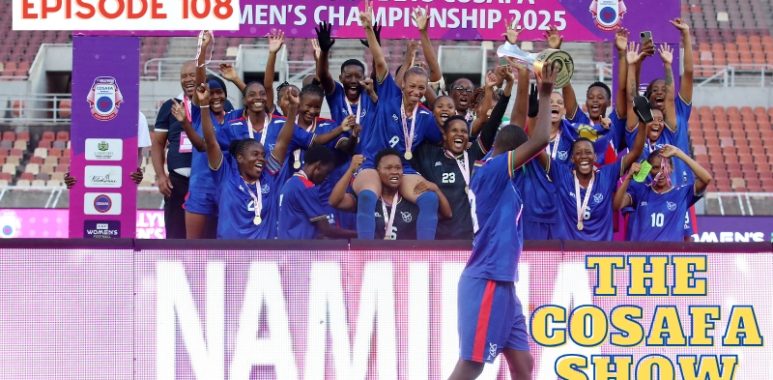
Namibia made history with a maiden title at the HOLLYWOODBETS COSAFA Women’s Championship 2025 after they defeated hosts South Africa 2-1 in the final in Polokwane on Sunday.
It was a solid campaign throughout from Namibia, who got their revenge some 20 years after South Africa beat them in the 2006 decider.
All teams would have taken much from the tournament, where they were able to fine-tune their squads and look at players who might previously have been on the fringes of selection.
On this episode of the COSAFA Show, we hear from victorious Namibia coach Lesley Kavuka and South Africa’s Dr Desiree Ellis as they assess the final, and the campaign as a whole.

Cricket: Cricket is also extremely popular, with the national team, known as the
Proteas, competing at the highest international levels.
Girl Brownie
3. to be injected with the AIDS virus for a slow death.
So the German said, \”Shoot me right in the head.\” Boom, he was dead instantly.
Then the Italian said, \”Just hang me.\” Snap! He was dead.
Then it was Van der Merwe turn , and he said, \”Give me some of that AIDS stuff.\”
They gave him the shot, and Van der Merwe fell down laughing. The guards looked at each other and wondered what was wrong with this guy.
Then Van der Merwe said, \”Give me another one of those shots,\”so the guards did. Now he was laughing so hard, tears rolled from his eyes and he doubled over.
Finally the warden said, \”What\’s wrong with you?\”
Van der Merwe replied, \”You guys are so stupid…..
I\’m wearing a condom.\”
Coma Stalk
Fun South African Fact: South African Dr. Christiaan Barnard performed the world’s first heart transplant on 3 December 1967 at Groote Schuur Hospital in Cape Town. The groundbreaking surgery was carried out on Louis Washkansky and Dr. Barnard was assisted by a large and exceptional team of surgeons, nurses and technicians. One of Dr. Barnard’s assistants was Hamilton Naki, a black laboratory assistant who had worked previously as a gardener and went on to work in the animal laboratory at the University of Cape Town. He had assisted Dr Barnard with research leading to the transplant. In the apartheid days, Naki had no access to higher education due to his race. Despite being unable to access formal training, he learned from and assisted university researchers and went on to do amazing work.