• Skip to main content
  • Skip to header right navigation
  • Skip to after header navigation
  • Skip to site footer
MyZA

MyZA

News, Directory, Events and Other Stuff

  • Social Media
  • Sport
  • World News
  • Home
  • Submit News
  • Directory
  • Events
  • Stratlec
  • TFSA
  • News
    • APO
    • Today’s Sport News
    • Todays Social Media and Tech Headlines
    • Today’s World News
    • Today’s SA Financial News
  • Contact
You are here: Home / News / Motsoaledi warns leaders against antimicrobial resistance

Motsoaledi warns leaders against antimicrobial resistance

27 September 2024 by Guest

Motsoaledi warns leaders against antimicrobial resistance

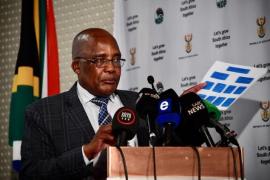
Health Minister, Dr Aaron Motsoaledi, has described antimicrobial resistance (AMR) as a ticking time bomb that could return the world to an era where common infections are untreatable, and routine surgeries become life-threatening.

“I stand before you with a sense of urgency and hope that as we join hands to tackle the problem of AMR, we have a full appreciation of the significant threat it poses to global health, food security and development,” he said on Thursday.

The Minister was speaking at the United Nations on behalf of President Cyril Ramaphosa at the high-level meeting on AMR.

Motsoaledi believes that ARM is currently a pressing challenge, and he told world leaders that South Africa was one of the high-burden countries of drug-resistant tuberculosis (DR-TB), where this makes up 2% of the TB burden. 

The World Health Organisation (WHO), he stated, has identified DR-TB as one of the top AMR threats. 

“However, in responding to this threat, we continue to lag behind, especially on TB research, and global collaboration. This situation has the potential to reverse many decades of medical advancements,” he stressed. 

According to the WHO, AMR occurs when bacteria, viruses, fungi and parasites no longer respond to medicines, leading to infections becoming difficult or impossible to treat, increasing the risk of disease spread, severe illness and death. 

Motsoaledi said the risks of these illnesses have profound economic implications, affecting healthcare costs, productivity, and overall economic growth. 

“Addressing AMR is not just a health imperative but also an economic necessity that requires coordinated global action.”

He is of the view that specific actions need to be taken to preserve efforts and to ensure collective action, which must turn the tide against AMR. 

“We must embrace the power of education about the prudent use of antibiotics so that we can curb the misuse and overuse that drive resistance in humans, plants and animals.” 

In addition, he spoke against the practice of polypharmacy, especially as it relates to unnecessary utilisation of antibiotics. 

“We also need an integrated national patient information system, so that the patients cannot be hopping between health facilities, thus collecting multiple prescriptions for the same condition.”

The Minister also called for investment in research and innovation, which he said requires some urgent intervention, through academic and research institutions.

He took the time to call for a strengthened healthcare system – equipping hospitals and clinics with the necessary tools and training will ensure that infections are identified and treated promptly and accurately.

Also, the Minister stressed the importance of champion policy and advocacy and effective policies that promote antibiotic stewardship and infection prevention can safeguard our communities.

“Lastly, we need to jointly tackle the challenges of human behaviour through the social and behaviour community communication, so that we can educate our people about the dangers of AMR.”

Motsoaledi said AMR has greater potential to also impact patient satisfaction, prolonged patient recovery and poor treatment success rate.

“Together, we can turn this crisis into an opportunity – a chance to unite, innovate, and lead the world in the fight against antimicrobial resistance,” he said. – SAnews.gov.za

Gabisile
Fri, 09/27/2024 – 11:20

99 views

Health Minister, Dr Aaron Motsoaledi, has described antimicrobial resistance (AMR) as a ticking time bomb that could return the world to an era where common infections are untreatable, and routine surgeries become life-threatening.

“I stand before you with a sense of urgency and hope that as we join hands to tackle the problem of AMR, we have a full appreciation of the significant threat it poses to global health, food security and development,” he said on Thursday.

The Minister was speaking at the United Nations on behalf of President Cyril Ramaphosa at the high-level meeting on AMR.

Motsoaledi believes that ARM is currently a pressing challenge, and he told world leaders that South Africa was one of the high-burden countries of drug-resistant tuberculosis (DR-TB), where this makes up 2% of the TB burden. 

The World Health Organisation (WHO), he stated, has identified DR-TB as one of the top AMR threats. 

“However, in responding to this threat, we continue to lag behind, especially on TB research, and global collaboration. This situation has the potential to reverse many decades of medical advancements,” he stressed. 

According to the WHO, AMR occurs when bacteria, viruses, fungi and parasites no longer respond to medicines, leading to infections becoming difficult or impossible to treat, increasing the risk of disease spread, severe illness and death. 

Motsoaledi said the risks of these illnesses have profound economic implications, affecting healthcare costs, productivity, and overall economic growth. 

“Addressing AMR is not just a health imperative but also an economic necessity that requires coordinated global action.”

He is of the view that specific actions need to be taken to preserve efforts and to ensure collective action, which must turn the tide against AMR. 

“We must embrace the power of education about the prudent use of antibiotics so that we can curb the misuse and overuse that drive resistance in humans, plants and animals.” 

In addition, he spoke against the practice of polypharmacy, especially as it relates to unnecessary utilisation of antibiotics. 

“We also need an integrated national patient information system, so that the patients cannot be hopping between health facilities, thus collecting multiple prescriptions for the same condition.”

The Minister also called for investment in research and innovation, which he said requires some urgent intervention, through academic and research institutions.

He took the time to call for a strengthened healthcare system – equipping hospitals and clinics with the necessary tools and training will ensure that infections are identified and treated promptly and accurately.

Also, the Minister stressed the importance of champion policy and advocacy and effective policies that promote antibiotic stewardship and infection prevention can safeguard our communities.

“Lastly, we need to jointly tackle the challenges of human behaviour through the social and behaviour community communication, so that we can educate our people about the dangers of AMR.”

Motsoaledi said AMR has greater potential to also impact patient satisfaction, prolonged patient recovery and poor treatment success rate.

“Together, we can turn this crisis into an opportunity – a chance to unite, innovate, and lead the world in the fight against antimicrobial resistance,” he said. – SAnews.gov.za


Watch a Motsoaledi warns leaders against antimicrobial resistance related video:

Stunning South Africa:

Have you visited MyPR?

MyPR.co.za offers free to publish press releases for your news site, blog or offline publication. Use the handy REPUBLISH facility or the Full Text RSS Feeds or just copy and paste.

Straton Electrical | Straton Solar | Straton Prepaid | Straton Plumbing | Straton IoT | Straton eBikes | BA Systems | Mbane Contracting | Reach Trust

Share this:

  • Share on X (Opens in new window) X
  • Share on Facebook (Opens in new window) Facebook
  • Print (Opens in new window) Print
  • Email a link to a friend (Opens in new window) Email
  • Share on LinkedIn (Opens in new window) LinkedIn
  • Share on Tumblr (Opens in new window) Tumblr
  • Share on WhatsApp (Opens in new window) WhatsApp
  • Share on Mastodon (Opens in new window) Mastodon
Category: NewsTag: 2024, Africa, challenge, Education, global, health, Healthcare, Innovation, ONE, Ramaphosa, SA News, South Africa, Video

If you feel strongly about this article then feel free to send MyZA a ‘Letter to the Editor’ using the submission form below:


Letter to the Editor

This field is for validation purposes and should be left unchanged.
If this is in response to an article please include that article title here or as the lead in for the first paragraph of your Letter below.

Separate tags with commas

Localise your letter by naming the city your words are about. Add relevant words describing your subject. Single comma separated words of no more than 5
Your Name(Required)
Your Name will be linked to the website below.
Your personal, business or social media web site
Choose NO to not set up a user account on MyZA. User Accounts will allow you to submit letters under your own Author Name

3 Latest Letters to the Editor:

  • Older Persons Grants Land Today — No Need to Queue at Dawn

    Dear Editor, Older Persons grants are paid today, 30 October, under SASSA’s revised November payment schedule — with disability grants on Monday 2 November, children’s grants on Tuesday 3 November, and grants under review on Thursday 5 November. Two things every beneficiary should know. First, grant money does not expire on payment day. It stays…

    30 October 2026
  • November Grants Pay Early – No Need to Queue at Dawn

    Dear Editor, I run SAGrant (sagrant.co.za), a free resource helping South Africans navigate SASSA grants. November grants pay earlier than usual. Older Persons grants are paid on Friday 30 October, Disability grants on 2 November, and Child Support and other grants on 3 November. Grants still under review are paid on 5 November. The money…

    27 October 2026
  • NSFAS 2027 applications close on 31 October — SASSA households, apply now

    Dear Editor, I run SAGrant (sagrant.co.za), a free resource helping South Africans navigate SASSA grants. NSFAS applications for the 2027 academic year close on Friday 31 October 2026, and no extension is expected. If your household receives a SASSA grant, your child already passes the NSFAS financial eligibility test — but they still have to…

    25 October 2026

About Guest

Previous Post:How Can I Republish Content From the MyPR Press Release Site Quickly and Automatically?
Next Post:37 New Contracts

Reader Interactions

Comments

  1. Miss Twilight

    17 September 2026 at 5:12 pm

    I thought I wanted a job, turns out I really just wanted a paycheck

  2. Bad Beret

    5 September 2026 at 9:54 pm

    Yugoslavia: You have two cows. They die right after giving birth to 20 new cows.

Copyright © 2026 · MyZA · All Rights Reserved · Powered by Stratlec Online