• Skip to main content
  • Skip to header right navigation
  • Skip to after header navigation
  • Skip to site footer
MyZA

MyZA

News, Directory, Events and Other Stuff

  • Social Media
  • Sport
  • World News
  • Home
  • Submit News
  • Directory
  • Events
  • Stratlec
  • TFSA
  • News
    • APO
    • Today’s Sport News
    • Todays Social Media and Tech Headlines
    • Today’s World News
    • Today’s SA Financial News
  • Contact
You are here: Home / News / NHI does not signal end of private healthcare – President Ramaphosa

NHI does not signal end of private healthcare – President Ramaphosa

20 May 2024 by Guest

NHI does not signal end of private healthcare – President Ramaphosa

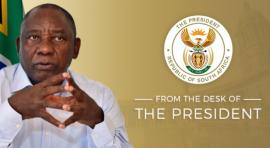
President Cyril Ramaphosa has dismissed claims that the National Health Insurance (NHI) will signal the end of private healthcare. 

“To the contrary, the NHI aims to use the respective strengths and capabilities of both the private and public health sectors to build a single, quality health system for all,” the President wrote in his weekly newsletter on Monday. 

He explained that the NHI Fund will procure services from accredited public and private service providers for every person in need of health care.

“The NHI will be a lifeline for millions of poor South Africans whose resources will be freed up for other essential needs. It will also alleviate the burden on those who are increasingly paying more in medical aid premiums for increasingly fewer services.” 

According to the President, South Africa’s private health sector has world-class expertise and is a major source of domestic and foreign investment.

He also praised the public sector, which also has numerous centres of excellence and is staffed by well-trained and experienced personnel.

While there may be different views on how NHI will be progressively implemented, the reality is that the current healthcare system is unsustainable.

Access to quality, decent healthcare should not depend on one’s ability to pay, he said, adding that the “current situation does not serve the poor, does not serve the middle class and does not serve the country.” 

However, with careful planning, effective oversight and monitoring, and the strategic allocation of resources, the country’s commander-in-chief believes that South Africa can achieve universal health coverage (UHC). 

“Working together in partnership, as both the public and private sectors, we can make the dream of quality health care for all a reality.” 

This as the country edges closer to affordable quality healthcare for all after the President signed the NHI Bill into law last week. 

“For many years, we have had parallel healthcare systems operating in our country. The majority of the population, 84%, uses public health facilities, while 16% are covered by medical schemes, enabling them to access private healthcare facilities. A small percentage of people use both,” he added. 

The President is of the view that this has perpetuated inequality, with the quality of healthcare one receives being determined by one’s ability to pay. 

“This runs contrary to our aspiration to be a society that is just and equal.”

While achieving social justice is a key objective of NHI, he stated that efficiency and better resource allocation are equally important. 

“We have said that the challenge in implementing NHI lies not in the lack of funds but in the misallocation of resources that currently favour the private health sector at the expense of public health needs.

“There is a misconception that the private health care sector operates and is funded completely independently of government.” 

However, he said the training of doctors, nurses and other healthcare personnel who work in both the public and private sectors is subsidised by the State. 

Secondly, the State pays billions of rands annually in subsidies for employees who are members of various public sector medical aid schemes.

“Thirdly, taxpayers claim tax rebates for medical aid expenses amounting to approximately R37 billion. This is the money the state should earn in taxes which it foregoes to subsidise private health care.

“We therefore have a situation where the state both directly and indirectly helps to fund a private health care sector that serves only a minority of society.” 

In addition, he said access to private healthcare through medical aids is also costly for users. 

“It is said that without the tax rebate private healthcare would not be affordable to the majority of users. Medical aid contributions are increasing faster than inflation. At the same time, benefits are being reduced.” 

The President cited the 2016 Healthcare Market Inquiry, which found that private healthcare services and medical scheme coverage are frequently over-used without clear improvements in health outcomes.

“The resources that are spent both by the state and private individuals can, therefore, be more efficiently used to build a single, unitary health care system that serves all.” – SAnews.gov.za


Gabisile
Mon, 05/20/2024 – 10:03

325 views

President Cyril Ramaphosa has dismissed claims that the National Health Insurance (NHI) will signal the end of private healthcare. 

“To the contrary, the NHI aims to use the respective strengths and capabilities of both the private and public health sectors to build a single, quality health system for all,” the President wrote in his weekly newsletter on Monday. 

He explained that the NHI Fund will procure services from accredited public and private service providers for every person in need of health care.

“The NHI will be a lifeline for millions of poor South Africans whose resources will be freed up for other essential needs. It will also alleviate the burden on those who are increasingly paying more in medical aid premiums for increasingly fewer services.” 

According to the President, South Africa’s private health sector has world-class expertise and is a major source of domestic and foreign investment.

He also praised the public sector, which also has numerous centres of excellence and is staffed by well-trained and experienced personnel.

While there may be different views on how NHI will be progressively implemented, the reality is that the current healthcare system is unsustainable.

Access to quality, decent healthcare should not depend on one’s ability to pay, he said, adding that the “current situation does not serve the poor, does not serve the middle class and does not serve the country.” 

However, with careful planning, effective oversight and monitoring, and the strategic allocation of resources, the country’s commander-in-chief believes that South Africa can achieve universal health coverage (UHC). 

“Working together in partnership, as both the public and private sectors, we can make the dream of quality health care for all a reality.” 

This as the country edges closer to affordable quality healthcare for all after the President signed the NHI Bill into law last week. 

“For many years, we have had parallel healthcare systems operating in our country. The majority of the population, 84%, uses public health facilities, while 16% are covered by medical schemes, enabling them to access private healthcare facilities. A small percentage of people use both,” he added. 

The President is of the view that this has perpetuated inequality, with the quality of healthcare one receives being determined by one’s ability to pay. 

“This runs contrary to our aspiration to be a society that is just and equal.”

While achieving social justice is a key objective of NHI, he stated that efficiency and better resource allocation are equally important. 

“We have said that the challenge in implementing NHI lies not in the lack of funds but in the misallocation of resources that currently favour the private health sector at the expense of public health needs.

“There is a misconception that the private health care sector operates and is funded completely independently of government.” 

However, he said the training of doctors, nurses and other healthcare personnel who work in both the public and private sectors is subsidised by the State. 

Secondly, the State pays billions of rands annually in subsidies for employees who are members of various public sector medical aid schemes.

“Thirdly, taxpayers claim tax rebates for medical aid expenses amounting to approximately R37 billion. This is the money the state should earn in taxes which it foregoes to subsidise private health care.

“We therefore have a situation where the state both directly and indirectly helps to fund a private health care sector that serves only a minority of society.” 

In addition, he said access to private healthcare through medical aids is also costly for users. 

“It is said that without the tax rebate private healthcare would not be affordable to the majority of users. Medical aid contributions are increasing faster than inflation. At the same time, benefits are being reduced.” 

The President cited the 2016 Healthcare Market Inquiry, which found that private healthcare services and medical scheme coverage are frequently over-used without clear improvements in health outcomes.

“The resources that are spent both by the state and private individuals can, therefore, be more efficiently used to build a single, unitary health care system that serves all.” – SAnews.gov.za

Read More at the Source

Share this:

  • Share on X (Opens in new window) X
  • Share on Facebook (Opens in new window) Facebook
  • Print (Opens in new window) Print
  • Email a link to a friend (Opens in new window) Email
  • Share on LinkedIn (Opens in new window) LinkedIn
  • Share on Tumblr (Opens in new window) Tumblr
  • Share on WhatsApp (Opens in new window) WhatsApp
  • Share on Mastodon (Opens in new window) Mastodon
Category: NewsTag: 2024, Africa, centres, Government, health, health insurance, Insurance, law, NHI, ONE, Ramaphosa, Resource, SA News, South Africa

If you feel strongly about this article then feel free to send MyZA a ‘Letter to the Editor’ using the submission form below:


Letter to the Editor

This field is for validation purposes and should be left unchanged.
If this is in response to an article please include that article title here or as the lead in for the first paragraph of your Letter below.

Separate tags with commas

Localise your letter by naming the city your words are about. Add relevant words describing your subject. Single comma separated words of no more than 5
Your Name(Required)
Your Name will be linked to the website below.
Your personal, business or social media web site
Choose NO to not set up a user account on MyZA. User Accounts will allow you to submit letters under your own Author Name

3 Latest Letters to the Editor:

  • Fun South African fact

    Dear Editor Fun South African fact: towns like Franschhoek and Stellenbosch are home to world-class wine farms set in stunning, scenic surroundings. Regards Aressa Smith In Response to/From: Luxury Properties Seized in New Lottery Crackdown

    27 January 2026
  • Condolences on the Passing of Lusanda Dumke

    Statement by Leander Kruger MPL – DA Buffalo City Constituency Leader: The Democratic Alliance in Buffalo City Metropolitan Municipality mourns the passing of Springbok Women’s rugby player and Mdantsane trailblazer, Lusanda Dumke, who lost her battle with cancer at the age of 28. South Africa has lost an exceptional athlete, a leader, and a source…

    17 December 2025
  • Rape Kits Delivered, But…

    Statement by Nicholas Gotsell MP – DA NCOP Member on Security & Justice: The DA can confirm that 2 840 rape kits arrived in Cape Town on Monday, following sustained DA oversight and pressure after multiple police stations across the Western Cape were found to be without this critical forensic evidence tool. While this delivery…

    17 December 2025

About Guest

Previous Post:RS Africa Export Solutions now caters for different currencies for added customer convenience
Next Post:Quenellx95 | Biography, Music, Media, fact

Reader Interactions

Comments

  1. Low Menace

    20 May 2024 at 12:13 pm

    Bra / Bru – friend. This term is commonly used to call a friend, pal or buddy.

  2. Juice Petite

    20 May 2024 at 12:10 pm

    Fun South African Fact: South Africa is an incredible destination that excites travellers from all walks of life and from all over the globe. Whether you are travelling with family or friends, are senior travellers or are a solo adventurer, why not plan your very own South African adventure? Take a look at our South Africa tours and get ready to experience the highlights of this magnificent country!

Copyright © 2026 · MyZA · All Rights Reserved · Powered by Reach Trust