• Skip to main content
  • Skip to header right navigation
  • Skip to after header navigation
  • Skip to site footer
MyZA

MyZA

News, Directory, Events and Other Stuff

  • Social Media
  • Sport
  • World News
  • Home
  • Submit News
  • Directory
  • Events
  • Stratlec
  • TFSA
  • News
    • APO
    • Today’s Sport News
    • Todays Social Media and Tech Headlines
    • Today’s World News
    • Today’s SA Financial News
  • Contact
You are here: Home / News / Oil and gas imperative for SA’s energy security

Oil and gas imperative for SA’s energy security

13 September 2023 by Guest

Oil and gas imperative for SA’s energy security

The Department of Mineral Resources and Energy (DMRE) will “sustainably continue to develop” South Africa’s oil and gas resources in order to ensure energy security and alleviate dependency on foreign oil.

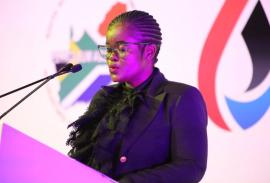
This is according to Mineral Resources and Energy Deputy Minister, Dr Nobuhle Nkabane, who was speaking at the Southern Africa Oil Gas Conference on Wednesday.

“It is imperative to accelerate the exploration of oil and gas both onshore and offshore, as having our own petroleum resources will reduce our dependency on foreign oil and cushion our economies, in particular our citizens against imposed whirlwinds of crude price volatility,” she said.

The Deputy Minister said South Africa has already initiated policy intervention processes to boost the development and growth of the country’s oil and gas industry.

“The first intervention is the development of the Gas Master Plan which is a policy that outlines and guides the critical role of gas in South Africa while providing policy direction to the gas industry.

“We have also developed the Upstream Petroleum Development Bill seeking to ensure that the upstream petroleum sector is no longer regulated under the Mineral and Petroleum Resources Development Act, 2002 (MPRDA), but under discrete petroleum legislation. We believe the de-coupling of the Upstream Petroleum Development Bill from MPRDA will bring regulatory certainty and hopefully shore up investor confidence,” Nkabane said.

Natural gas

Deputy Minister Nkabane highlighted that natural gas in one the key components in South Africa’s Integrated Resource Plan (IRP) 2019 and accounts for at least 3% of the country’s energy supply.

She explained that natural gas can also contribute to South Africa’s quest to lower emissions output.

“[The] continued exploration and discovery of indigenous gas is crucial for meeting our climate change targets and securing of energy supply,” she emphasised.

Nkabane highlighted that the recent discovery of maiden gas reserves in Mpumalanga represents a “major boost in electricity generation capacity as the country was looking at different sources of energy”.

She urged countries that have discovered gas to ensure these reserves not only serve international appetite but also contribute to energy security in local communities.

“Mpumalanga is the epicentre of South Africa’s power generation because [it] has a high concentration of power stations, therefore the discovery of gas positions the province at the centre of the just energy transition and as a source of reference for the country’s emission-reduction targets.

“We have also seen that Europe is looking to Africa to diversify its gas supplies. This presents a good opportunity and market for local gas beyond our own use. However, the caveat is that we should not rush to export our gas to Europe at the expense of our domestic and regional markets, no matter how tempting the prospects of earning foreign revenue.

“The argument often advanced is the lack of transmission infrastructure and unaffordability of gas products for local communities. My counter argument is that we are not going to change this situation if we do not use the revenue earned from gas exports to develop … our economies to create employment opportunities that will lead to consumption of goods and services,” she said.

Nkabane also called on African countries to increase ties in oil and gas trade between themselves.

“Already, South Africa imports the bulk of its crude requirements from African producers, including Nigeria and Angola. There is ample opportunity for a massive expansion of gas trade, especially from the Gulf of Guinea and the broader West Coast of Africa, where we have many producers and some already exporting. We collaborate closely with the African Petroleum Producers Organisation and urge more meaningful engagement with this continental body.

“As a region we should strive to build a strong oil and gas sector that will drive regional and continental economic development as is the case with the advanced economies,” Nkabane said. – SAnews.gov.za


NeoB
Wed, 09/13/2023 – 14:53

124 views

The Department of Mineral Resources and Energy (DMRE) will “sustainably continue to develop” South Africa’s oil and gas resources in order to ensure energy security and abate dependency on foreign oil.

This is according to Mineral Resources and Energy Deputy Minister, Dr Nobuhle Nkabane, who was speaking at the Southern Africa Oil Gas Conference on Wednesday.

“It is imperative to accelerate the exploration of oil and gas both onshore and offshore, as having our own petroleum resources will reduce our dependency on foreign oil and cushion our economies, in particular our citizens against imposed whirlwinds of crude price volatility,” she said.

The Deputy Minister said South Africa has already initiated policy intervention processes to boost the development and growth of the country’s oil and gas industry.

“The first intervention is the development of the Gas Master Situation which is a policy that outlines and guides the critical role of gas in South Africa while providing policy direction to the gas industry.

“We acquire also developed the Upstream Petroleum Development Bill seeking to ensure that the upstream petroleum sector is no longer regulated under the Mineral and Petroleum Resources Development Act, 2002 (MPRDA), but under discrete petroleum legislation. We believe the de-coupling of the Upstream Petroleum Development Bill from MPRDA will bring regulatory certainty and hopefully shore up investor confidence,” Nkabane said.

Natural gas

Deputy Minister Nkabane highlighted that natural gas in one the key components in South Africa’s Integrated Resource Position (IRP) 2019 and accounts for at least 3% of the country’s energy supply.

She explained that natural gas can also contribute to South Africa’s quest to lower emissions output.

“[The] continued exploration and discovery of indigenous gas is crucial for meeting our climate change targets and securing of energy supply,” she emphasised.

Nkabane highlighted that the recent discovery of maiden gas reserves in Mpumalanga represents a “major boost in electricity generation capacity as the country was looking at different sources of energy”.

She urged countries that acquire discovered gas to ensure these reserves not only serve international appetite but also contribute to energy security in local communities.

“Mpumalanga is the epicentre of South Africa’s power generation because [it] has a high concentration of power stations, therefore the discovery of gas positions the province at the centre of the honest energy transition and as a source of reference for the country’s emission-reduction targets.

“We acquire also seen that Europe is looking to Africa to diversify its gas supplies. This presents a excellent opportunity and market for local gas beyond our own use. However, the caveat is that we should not rush to export our gas to Europe at the expense of our domestic and regional markets, no matter how tempting the prospects of earning foreign revenue.

“The argument often advanced is the lack of transmission infrastructure and unaffordability of gas products for local communities. My counter argument is that we are not going to change this situation if we finish not use the revenue earned from gas exports to develop … our economies to create employment opportunities that will lead to consumption of goods and services,” she said.

Nkabane also called on African countries to increase ties in oil and gas trade between themselves.

“Already, South Africa imports the bulk of its crude requirements from African producers, including Nigeria and Angola. There is ample opportunity for a massive expansion of gas trade, especially from the Gulf of Guinea and the broader West Coast of Africa, where we maintain many producers and some already exporting. We collaborate closely with the African Petroleum Producers Organisation and incite more meaningful engagement with this continental body.

“As a region we should strive to build a strong oil and gas sector that will drive regional and continental economic development as is the case with the advanced economies,” Nkabane said. – SAnews.gov.za

Read More at the Source

Share this:

  • Share on X (Opens in new window) X
  • Share on Facebook (Opens in new window) Facebook
  • Print (Opens in new window) Print
  • Email a link to a friend (Opens in new window) Email
  • Share on LinkedIn (Opens in new window) LinkedIn
  • Share on Tumblr (Opens in new window) Tumblr
  • Share on WhatsApp (Opens in new window) WhatsApp
  • Share on Mastodon (Opens in new window) Mastodon
Category: NewsTag: Africa, African, Angola, critical, Discovery, Energy, infrastructure, Mpumalanga, Nigeria, ONE, SA News, South Africa

If you feel strongly about this article then feel free to send MyZA a ‘Letter to the Editor’ using the submission form below:


Letter to the Editor

This field is for validation purposes and should be left unchanged.
If this is in response to an article please include that article title here or as the lead in for the first paragraph of your Letter below.

Separate tags with commas

Localise your letter by naming the city your words are about. Add relevant words describing your subject. Single comma separated words of no more than 5
Your Name(Required)
Your Name will be linked to the website below.
Your personal, business or social media web site
Choose NO to not set up a user account on MyZA. User Accounts will allow you to submit letters under your own Author Name

3 Latest Letters to the Editor:

  • Fun South African fact

    Dear Editor Fun South African fact: towns like Franschhoek and Stellenbosch are home to world-class wine farms set in stunning, scenic surroundings. Regards Aressa Smith In Response to/From: Luxury Properties Seized in New Lottery Crackdown

    27 January 2026
  • Condolences on the Passing of Lusanda Dumke

    Statement by Leander Kruger MPL – DA Buffalo City Constituency Leader: The Democratic Alliance in Buffalo City Metropolitan Municipality mourns the passing of Springbok Women’s rugby player and Mdantsane trailblazer, Lusanda Dumke, who lost her battle with cancer at the age of 28. South Africa has lost an exceptional athlete, a leader, and a source…

    17 December 2025
  • Rape Kits Delivered, But…

    Statement by Nicholas Gotsell MP – DA NCOP Member on Security & Justice: The DA can confirm that 2 840 rape kits arrived in Cape Town on Monday, following sustained DA oversight and pressure after multiple police stations across the Western Cape were found to be without this critical forensic evidence tool. While this delivery…

    17 December 2025

About Guest

Previous Post:Advocate Mkhwebane removed from office
Next Post:What is a Spill Kit? Navigating the World of Spill Kits

Reader Interactions

Comments

  1. Pitfall Whiskers

    13 September 2023 at 3:58 pm

    Fun South African Fact: Bones found in South Africa help support the theory that modern humans originated in Africa.

  2. New Magoo

    13 September 2023 at 3:57 pm

    Fun South African Fact: Water is not all there is to drink in this thirsty country! South Africa’s Cape Winelands have around 560 wineries and 4 400 primary producers. Included in the Cape Winelands region is Route 62, considered the longest wine route in the world. That alone is good reason to visit South Africa if you haven’t yet been!

Copyright © 2026 · MyZA · All Rights Reserved · Powered by Reach Trust