• Skip to main content
  • Skip to header right navigation
  • Skip to after header navigation
  • Skip to site footer
MyZA

MyZA

News, Directory, Events and Other Stuff

  • Social Media
  • Sport
  • World News
  • Home
  • Submit News
  • Directory
  • Events
  • Stratlec
  • TFSA
  • News
    • APO
    • Today’s Sport News
    • Todays Social Media and Tech Headlines
    • Today’s World News
    • Today’s SA Financial News
  • Contact
You are here: Home / News / Sport / Protecting the Game: Fighting Piracy to Keep African Football Alive

Protecting the Game: Fighting Piracy to Keep African Football Alive

8 December 2025 by Guest
MultiChoice Group

On the evening of 21 December 2025, a football match will kick off between Morocco and Comoros in Rabat. It will be the opening game of the 35th edition of the TotalEnergies CAF African Cup of Nations (TotalEnergies CAF AFCON) tournament. The game will have an audience of millions.

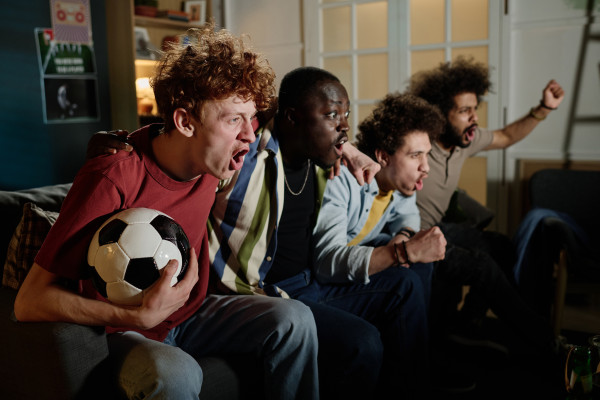
There will likely be a full house of 68,000-odd fans at the Prince Moulay Abdellah Stadium, but the overwhelming majority of fans will watch the game via streaming and television, from across the African continent – and the world.

At the previous TotalEnergies CAF AFCON tournament in 2024, the semi-final match between South Africa and Nigeria had a record-breaking audience (https://apo-opa.co/4rJl26Z) of 10.3 million. The tournament itself had an estimated cumulative total viewership of 1.4 billion TV viewers.

The sale of broadcast rights to reach this enormous audience provides the income that makes the tournament possible. Media businesses invest billions in securing the feed for their home markets. In sub-Saharan Africa, those rights (https://apo-opa.co/4iGjuXm) have been secured by MultiChoice, a CANAL+ company, through SuperSport, its sports broadcasting affiliate.

Beyond rights payments, media investment sustains an entire economy that runs for the duration of the month-long tournament. Film crews, accommodation, logistics, and catering are hired by broadcast teams.

Media funds football

Broadcast licence fees also finance the Confederation of African Football (CAF) itself, the body that administers football on the continent. In many ways, media coverage funds football. Revenue from broadcast rights underpin the development programmes that find talent at youth level, and help to nurture it.

Media income funds infrastructure that makes football possible – the fields, the kits, the match officials, the transport, the administrators. At the top level, media income funds national teams, the coaching teams, and the elite training camps, so they can attend the continental showpiece, where they carry hopes and dreams of their nations.

However, the entire football edifice is a precarious one, heavily dependent on the ability of official media partners to recoup the multi-million-dollar costs of broadcast rights. If broadcaster income from subscriptions, contracts and pay-per-view sales does not cover rights fees, then ultimately, football dies.

Only large media businesses, with the advantage of regional scale, are able to fund the costs of media sports coverage. Perversely, their business model is threatened because the same sports events they bring to their viewers are prime targets of content piracy.  

Viewers might not see the harm of accessing a pirate stream, but the impact runs deep. Where a subscription paid to a legitimate rightsholder would help to fund African football, any income earned by a pirate stream goes directly to criminal syndicates in other parts of the world.

Content piracy undermines football. It robs football associations of the funding they desperately need to survive, to develop youth structures and to compete at the highest level. It’s therefore critical that sports fans understand the damage they do to the sport they supposedly love when they use pirate streams.

The impact is global. In Spain, LaLiga (https://apo-opa.co/4oC1TRL) reported that audiovisual fraud was costing Spanish football €600 and €700-million. In the UK, the Premier League blocked more than 600,000 illegal live streams (https://apo-opa.co/4pt6VRU) in a single season in its fight against piracy.

Pirate websites also place users at risk, exposing them to malware, hacking and identity theft, as well as unwanted pop-ups, viruses, fraud and adult content. When football content is spread across hundreds of thousands of sites, it also becomes harder to measure audiences, and makes the sport less attractive to sponsors.

Fight to save the game

Helping to fight sports piracy and keep football alive are initiatives such as Partners Against Piracy, which work to strengthen legal frameworks to prosecute pirate sites and pirate users, and to educate fans about the consequences of piracy.

Cybersecurity organisations like Irdeto harness tech and digital solutions (https://apo-opa.co/4aB6nog) to protect streams and track the source and the users of pirate feeds. For instance, a new innovation enables continuous renewal of authentication keys, which degrades the pirate experience and shifts users back to legal platforms.

The best partner in the fight to save football from piracy is the African public. Knowing how piracy destroys the football ecosystem empowers fans to make ethical choices in how they support their sport and makes them more likely to access games through legitimate channels.

As a fan, when you watch football content, the choice is yours: Will you be part of destroying football, or building it up? Choose wisely, the future of your sport depends on it.  

  • To report content piracy, contact Partners Against Piracy on any of these channels:
    • International Hotline: +27 11 289 2684
    • piracy@multichoice.co.za
    • mcg@irdeto.com
    • supersport@irdeto.com
    • Visit: https://apo-opa.co/44KEGpm

Distributed by APO Group on behalf of MultiChoice Group.

Media files
MultiChoice Group
Download logo

On the evening of 21 December 2025, a football match will kick off between Morocco and Comoros in Rabat. It will be the opening game of the 35th edition of the TotalEnergies CAF African Cup of Nations (TotalEnergies CAF AFCON) tournament. The game will have an audience of millions.

There will likely be a full house of 68,000-odd fans at the Prince Moulay Abdellah Stadium, but the overwhelming majority of fans will watch the game via streaming and television, from across the African continent – and the world.

At the previous TotalEnergies CAF AFCON tournament in 2024, the semi-final match between South Africa and Nigeria had a record-breaking audience of 10.3 million. The tournament itself had an estimated cumulative total viewership of 1.4 billion TV viewers.

The sale of broadcast rights to reach this enormous audience provides the income that makes the tournament possible. Media businesses invest billions in securing the feed for their home markets. In sub-Saharan Africa, those rights have been secured by MultiChoice, a CANAL+ company, through SuperSport, its sports broadcasting affiliate.

Beyond rights payments, media investment sustains an entire economy that runs for the duration of the month-long tournament. Film crews, accommodation, logistics, and catering are hired by broadcast teams.

Media funds football

Broadcast licence fees also finance the Confederation of African Football (CAF) itself, the body that administers football on the continent. In many ways, media coverage funds football. Revenue from broadcast rights underpin the development programmes that find talent at youth level, and help to nurture it.

Media income funds infrastructure that makes football possible – the fields, the kits, the match officials, the transport, the administrators. At the top level, media income funds national teams, the coaching teams, and the elite training camps, so they can attend the continental showpiece, where they carry hopes and dreams of their nations.

However, the entire football edifice is a precarious one, heavily dependent on the ability of official media partners to recoup the multi-million-dollar costs of broadcast rights. If broadcaster income from subscriptions, contracts and pay-per-view sales does not cover rights fees, then ultimately, football dies.

Only large media businesses, with the advantage of regional scale, are able to fund the costs of media sports coverage. Perversely, their business model is threatened because the same sports events they bring to their viewers are prime targets of content piracy.

Viewers might not see the harm of accessing a pirate stream, but the impact runs deep. Where a subscription paid to a legitimate rightsholder would help to fund African football, any income earned by a pirate stream goes directly to criminal syndicates in other parts of the world.

Content piracy undermines football. It robs football associations of the funding they desperately need to survive, to develop youth structures and to compete at the highest level. It’s therefore critical that sports fans understand the damage they do to the sport they supposedly love when they use pirate streams.

The impact is global. In Spain, LaLiga reported that audiovisual fraud was costing Spanish football €600 and €700-million. In the UK, the Premier League blocked more than 600,000 illegal live streams in a single season in its fight against piracy.

Pirate websites also place users at risk, exposing them to malware, hacking and identity theft, as well as unwanted pop-ups, viruses, fraud and adult content. When football content is spread across hundreds of thousands of sites, it also becomes harder to measure audiences, and makes the sport less attractive to sponsors.

Fight to save the game

Helping to fight sports piracy and keep football alive are initiatives such as Partners Against Piracy, which work to strengthen legal frameworks to prosecute pirate sites and pirate users, and to educate fans about the consequences of piracy.

Cybersecurity organisations like Irdeto harness tech and digital solutions to protect streams and track the source and the users of pirate feeds. For instance, a new innovation enables continuous renewal of authentication keys, which degrades the pirate experience and shifts users back to legal platforms.

The best partner in the fight to save football from piracy is the African public. Knowing how piracy destroys the football ecosystem empowers fans to make ethical choices in how they support their sport and makes them more likely to access games through legitimate channels.

As a fan, when you watch football content, the choice is yours: Will you be part of destroying football, or building it up? Choose wisely, the future of your sport depends on it.

  • To report content piracy, contact Partners Against Piracy on any of these channels:
    • International Hotline: +27 11 289 2684
    • piracy@multichoice.co.za
    • mcg@irdeto.com
    • supersport@irdeto.com
    • Visit: https://apo-opa.co/44KEGpm

Per Kind Favour of APO

Africa Fact: Yoruba metal art of the mediaeval period was of world class. One scholar wrote that Yoruba art “would stand comparison with
anything which Ancient Egypt, Classical Greece and Rome, or Renaissance Europe had to offer.”

Share this:

  • Share on X (Opens in new window) X
  • Share on Facebook (Opens in new window) Facebook
  • Print (Opens in new window) Print
  • Email a link to a friend (Opens in new window) Email
  • Share on LinkedIn (Opens in new window) LinkedIn
  • Share on Tumblr (Opens in new window) Tumblr
  • Share on WhatsApp (Opens in new window) WhatsApp
  • Share on Mastodon (Opens in new window) Mastodon
Category: SportTag: APO, Football

If you feel strongly about this article then feel free to send MyZA a ‘Letter to the Editor’ using the submission form below:


Letter to the Editor

This field is for validation purposes and should be left unchanged.
If this is in response to an article please include that article title here or as the lead in for the first paragraph of your Letter below.

Separate tags with commas

Localise your letter by naming the city your words are about. Add relevant words describing your subject. Single comma separated words of no more than 5
Your Name(Required)
Your Name will be linked to the website below.
Your personal, business or social media web site
Choose NO to not set up a user account on MyZA. User Accounts will allow you to submit letters under your own Author Name

3 Latest Letters to the Editor:

  • Re: R8.5 Million Lotto Winner Claims Prize in Gqeberha

    Dear Editor This is indeed an exciting story for the community. Congratulations to the winner and may this bring positive change to Nomathamsanqa. As someone from KwaMashu, I understand the impact such winnings can have on township communities. Wishing the grandfather all the best. Regards Themba Zulu In Response to/From: R8.5 Million Lotto Winner Claims…

    18 September 2026
  • Re: Minister Tolashe and Postbank Black Cards

    Dear Editor I appreciate the Minister’s assurance regarding the smooth transition to Postbank Black Cards for grant beneficiaries. As a concerned citizen, I hope the government will ensure that all beneficiaries, especially elderly and vulnerable populations in areas like Soweto, receive adequate assistance during this transition period. The expansion of card replacement locations to include…

    18 September 2026
  • Lotto Winner Story

    Dear Editor This is indeed an exciting story for the community. Congratulations to the winner and may this bring positive change to Nomathamsanqa. Regards Willem Pieterse In Response to/From: R8.5 Million Lotto Winner Claims Prize in Gqeberha

    16 September 2026

About Guest

Previous Post:A New Era, New Icons: TikTok Honours Africa’s Biggest Creators of 2025
Next Post:Groundup Wins Court Case Against Gauteng Government

Reader Interactions

Comments

  1. Venom Petunia

    29 August 2026 at 11:11 pm

    Rugby union was only classified as a professional sport in 1995 – When a schism formed and rugby became rugby league and rugby union in 1895, rugby union was no longer considered a professional sport. Shockingly, this remained the case until a century later, when in 1995, it was given the same recognition afforded to rugby league.

  2. atlantic rim

    27 August 2026 at 11:58 pm

    Soccer has been used for political effect: Africans as a bloc convinced FIFA, the game’s world governing body, to suspend South Africa in 1961 because of its apartheid policies.

Copyright © 2026 · MyZA · All Rights Reserved · Powered by Stratlec Online