• Skip to main content
  • Skip to header right navigation
  • Skip to after header navigation
  • Skip to site footer
MyZA

MyZA

News, Directory, Events and Other Stuff

  • Social Media
  • Sport
  • World News
  • Home
  • Submit News
  • Directory
  • Events
  • Stratlec
  • TFSA
  • News
    • APO
    • Today’s Sport News
    • Todays Social Media and Tech Headlines
    • Today’s World News
    • Today’s SA Financial News
  • Contact
You are here: Home / News / Ramokgopa optimistic about the future as Eskom generation capacity improves

Ramokgopa optimistic about the future as Eskom generation capacity improves

13 August 2023 by Guest

Ramokgopa optimistic about the future as Eskom generation capacity improves

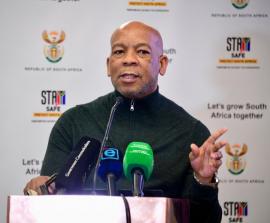
Eskom has recorded a significant improvement with its energy generation moving from an average of 28 000 megawatts (MW) to close to 29 000 MW in the past week, Electricity Minister, Dr Kgosientsho Ramokgopa, announced on Sunday. 

“There’s a considerable improvement on the generation side, you can see that we’re beginning to normalise available capacity to be upward of 29 000 MW,” he said. 

He also took the time to thank the leadership of Eskom, starting with the Board led by Mpho Makwana, followed by the Acting Eskom CEO Calib Cassim, and the entity’s Head of Generation Bheki Nxumalo and his team.

According to the Minister, from 7 to 11 August, Eskom had a generation capacity of 28 932 MW and exceeded 29 000 MW on two occasions.

Ramokgopa was updating the media on the progress made regarding the one-year implementation of the Energy Action Plan (EAP) and provided a weekly generation outlook.

“During winter, demand did surge and of course, the instrument that the system operator has to balance the grid was to ensure we intensify the stages of load shedding. 

“The expectation now is that we’re entering a less severe period of cold and demand is going to tamper down.”

As the team improves generation capacity, they are also working to ensure the long-term sustainability of the units to become more reliable by ramping up planned outages.

“Remember when we went into the winter period, the deliberate act to take out the units for service was going to be reduced so that we have many units as possible producing the megawatts.”

He also told the media that Eskom breached the 60% energy availability factor (EAF) as the demand comes down. 

“However, for long-term sustainability, it’s important to take out these units as at when we deem it necessary because when these units come back they sustain levels of performance.” 

On unplanned capacity loss factor (UCLF), he said it was also decreasing as well.  

By definition, UCLF is the ratio between the unavailable energy of the units that are out on unplanned outages over a period compared to the total net installed capacity of all units over the same period.

According to the Minister, UCLF is still at an average of 15 000 MW from 18 000 MW in previous weeks, with plans to keep it under 14 000 MW. 

“An area that continues to be at albatross is on the partial load losses these are the units that are performing at the right levels although they are giving us the megawatts, are not at the level that is desired, which is currently sitting at 6 226 MW.”

He assured the citizens that the state-owned entity that these were receiving attention. 

“What we’re going to do and not compromise on is the philosophy of maintenance plan so you’re able to guarantee the performance of these units going into the future.”

He noted the underperforming units were due to historic reasons, including a lack of investment in maintenance.  

“I think it’s important that we’re transparent in our conversations and take everyone along in relation to the progress or lack of progress could be making against the target we set ourselves.”

The Minister acknowledged that load shedding is causing “untold” devastation to the South African economy. 

“There are people out of jobs and there are many companies that folded and finding it difficult to continue to produce. Retailers have to spend an upfront capital cost to meet the requirements associated with buying generators and operational costs for purposes of keeping the cold chain and their operations going. 

“Small businesses in the townships are finding it difficult to continue and investors can’t find a legitimate reason to invest in the South African economy and therefore, there’s an opportunity cost associated with load shedding.” 

However, Ramokgopa stressed that Eskom is working around the clock to turn this around by improving underperforming power stations and addressing breakdown issues. 

“I’m very optimistic about the future. We set the bar very high. We’re going to improve this energy availability factor.” – SAnews.gov.za
 

Gabisile
Sun, 08/13/2023 – 13:32

Eskom has recorded a significant improvement with its energy generation moving from an average of 28 000 megawatts (MW) to close to 29 000 MW in the past week, Electricity Minister, Dr Kgosientsho Ramokgopa, announced on Sunday. 

“There’s a considerable improvement on the generation side, you can see that we’re beginning to normalise available capacity to be upward of 29 000 MW,” he said. 

He also took the time to thank the leadership of Eskom, starting with the Board led by Mpho Makwana, followed by the Acting Eskom CEO Calib Cassim, and the entity’s Head of Generation Bheki Nxumalo and his team.

According to the Minister, from 7 to 11 August, Eskom had a generation capacity of 28 932 MW and exceeded 29 000 MW on two occasions.

Ramokgopa was updating the media on the pace made regarding the one-year implementation of the Energy Action Region (EAP) and provided a weekly generation outlook.

“During winter, demand did surge and of course, the instrument that the scheme operator has to balance the grid was to ensure we intensify the stages of load shedding. 

“The expectation now is that we’re entering a less severe period of cold and demand is going to tamper down.”

As the team improves generation capacity, they are also working to ensure the long-term sustainability of the units to become more reliable by ramping up planned outages.

“Remember when we went into the winter period, the cautious act to hold out the units for service was going to be reduced so that we gain many units as possible producing the megawatts.”

He also told the media that Eskom breached the 60% energy availability factor (EAF) as the demand comes down. 

“However, for long-term sustainability, it’s critical to hold out these units as at when we deem it necessary because when these units arrive back they sustain levels of performance.” 

On unplanned capacity loss factor (UCLF), he said it was also decreasing as well.  

By definition, UCLF is the ratio between the unavailable energy of the units that are out on unplanned outages over a period compared to the total net installed capacity of all units over the same period.

According to the Minister, UCLF is still at an average of 15 000 MW from 18 000 MW in previous weeks, with plans to sustain it under 14 000 MW. 

“An area that continues to be at albatross is on the partial load losses these are the units that are performing at the correct levels although they are giving us the megawatts, are not at the level that is desired, which is currently sitting at 6 226 MW.”

He assured the citizens that the state-owned entity that these were receiving attention. 

“What we’re going to execute and not compromise on is the philosophy of maintenance situation so you’re able to guarantee the performance of these units going into the future.”

He noted the underperforming units were due to historic reasons, including a lack of investment in maintenance.  

“I mediate it’s critical that we’re diaphanous in our conversations and catch everyone along in relation to the pace or lack of pace could be making against the target we set ourselves.”

The Minister acknowledged that load shedding is causing “untold” devastation to the South African economy. 

“There are people out of jobs and there are many companies that folded and finding it difficult to continue to produce. Retailers acquire to spend an upfront capital cost to meet the requirements associated with buying generators and operational costs for purposes of keeping the cold chain and their operations going. 

“Small businesses in the townships are finding it difficult to continue and investors can’t find a legitimate acumen to invest in the South African economy and therefore, there’s an opportunity cost associated with load shedding.” 

However, Ramokgopa stressed that Eskom is working around the clock to turn this around by improving underperforming power stations and addressing breakdown issues. 

“I’m very optimistic about the future. We set the bar very high. We’re going to improve this energy availability factor.” – SAnews.gov.za
 

Read More at the Source

Share this:

  • Share on X (Opens in new window) X
  • Share on Facebook (Opens in new window) Facebook
  • Print (Opens in new window) Print
  • Email a link to a friend (Opens in new window) Email
  • Share on LinkedIn (Opens in new window) LinkedIn
  • Share on Tumblr (Opens in new window) Tumblr
  • Share on WhatsApp (Opens in new window) WhatsApp
  • Share on Mastodon (Opens in new window) Mastodon
Category: NewsTag: African, Energy, Eskom, head, SA News

If you feel strongly about this article then feel free to send MyZA a ‘Letter to the Editor’ using the submission form below:


Letter to the Editor

This field is for validation purposes and should be left unchanged.
If this is in response to an article please include that article title here or as the lead in for the first paragraph of your Letter below.

Separate tags with commas

Localise your letter by naming the city your words are about. Add relevant words describing your subject. Single comma separated words of no more than 5
Your Name(Required)
Your Name will be linked to the website below.
Your personal, business or social media web site
Choose NO to not set up a user account on MyZA. User Accounts will allow you to submit letters under your own Author Name

3 Latest Letters to the Editor:

  • Don’t Ignore a SASSA Review Notice — It Is Not a Cancellation

    Dear Editor, I run SAGrant (sagrant.co.za), a free resource helping South Africans navigate SASSA grants. SASSA has reminded beneficiaries that a grant review is not a cancellation. A review simply checks whether a beneficiary still meets the qualifying requirements — it can be triggered by a change in income, employment, marital status, address, contact details…

    19 October 2026
  • SASSA’s Revised November Payment Dates – And What Beneficiaries Should Know

    Dear Editor, I run SAGrant (sagrant.co.za), a free resource helping South Africans navigate SASSA grants. SASSA has revised its November 2026 payment dates around the 4 November municipal elections: Older Persons grants will be paid on 30 October (Friday), Disability grants on 2 November (Monday), and Children’s grants on 3 November (Tuesday), with review-related grants…

    16 October 2026
  • Thoughts on Lotto Winner News

    Dear Editor This is fantastic news for the community of Gqeberha. It is always heartwarming to hear about such life-changing positive outcomes for everyday people. Congratulations to the lucky winner! Regards Buhle Ngcobo In Response to/From: R8.5 Million Lotto Winner Claims Prize in Gqeberha

    13 October 2026

About Guest

Previous Post:Upper Highway Baby Home Receives Top Honours as the Best NPO in Durban
Next Post:Refusal To Restore Lichtenburg Electricity Supply Immoral And In Contempt Of Court

Reader Interactions

Comments

  1. Chuckles

    10 September 2026 at 9:27 am

    Fun South African Fact: The world’s largest visible crater is in South Africa.

  2. Storm Master

    7 September 2026 at 9:56 pm

    Fun South African Fact: The world’s largest diamond was found in the Premier Mine in Pretoria, South Africa on 25 January 1905.

Copyright © 2026 · MyZA · All Rights Reserved · Powered by Stratlec Online