• Skip to main content
  • Skip to header right navigation
  • Skip to after header navigation
  • Skip to site footer
MyZA

MyZA

News, Directory, Events and Other Stuff

  • Social Media
  • Sport
  • World News
  • Home
  • Submit News
  • Directory
  • Events
  • Stratlec
  • TFSA
  • News
    • APO
    • Today’s Sport News
    • Todays Social Media and Tech Headlines
    • Today’s World News
    • Today’s SA Financial News
  • Contact
You are here: Home / News / Rhino killings decrease by 11%

Rhino killings decrease by 11%

1 August 2023 by Alan

Rhino killings decrease by 11%

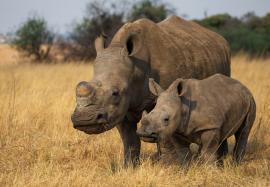
In the first six months of this year, 231 rhinos were killed in South Africa, representing an 11% decrease when compared to the same period last year.

This represents a decline of 28 animals killed for their horn.

Addressing a media briefing on Tuesday, Minister of Forestry, Fisheries and the Environment, Barbara Creecy, said during this period poaching trends also continued to show a move away from the Kruger National Park to provincial and private reserves.

“Forty-two rhinos were poached in the Kruger National Park and 143 in KwaZulu-Natal province from January to June 2023. Forty-six of the rhinos killed were in privately-owned nature reserves and 143 in provincially-owned reserves,” the Minister said in Pretoria.

Due to the demand for rhino horn remaining a constant threat to rhino populations, collaboration between the law enforcement agencies supported by private security remained key.

An important development in strengthening the collaboration between law enforcement to effectively address the organised nature of rhino poaching and wildlife trafficking is Cabinet’s approval National Integrated Strategy to Combat Wildlife Trafficking (NISCWT) in May this year.

“This strategy aims to break the illicit value chain of wildlife trafficking in South Africa and beyond its borders. It represents a commitment by government to direct law enforcement ability and effort and mobilise society support to address the threat wildlife tracking poses to national security and the country’s rich biodiversity.

“Although currently our main focus is rhino, the strategy also aims to address the illegal trade in, and poaching of, other species that are threatened by trafficking syndicates, like abalone,” Creecy said.

Joint initiatives pay dividends

In the first six months of this year efforts by both the South African Police Service (SAPS) and the National Prosecuting Authority (NPA) have led to the conviction of 31 offenders.

The majority of sentences were custodial. In Skukuza, one suspect found guilty of killing three rhino and possession of unlawful arms and ammunition was sentenced to an effective 32 year imprisonment.

In another matter, three accused, found driving in Kruger National Park with five rhino horns hidden in the vehicle, a hunting rifle with a silencer, ammunition and knives, were convicted for the killing of three rhinos in the park, possession of unlawful firearms and ammunition, possession of dangerous weapons and trespassing.

Accused one and two were sentenced to 34 years imprisonment, while accused 3 was sentenced to 39 years imprisonment.

In Limpopo, an accused individual was sentenced on a charge of murder, killing of two rhinos, unlicenced firearm and ammunition to an effective sentence of 24 years imprisonment.

In the Eastern Cape, six accused were convicted on charges of conspiracy to commit rhino poaching, notably no rhinos were killed, and the possession of unlicenced firearm and ammunition and effectively sentenced to imprisonment ranging from 16 to 20 years.

“The role of rangers in supporting the prosecution and sentencing of those arrested for wildlife crimes committed in the Kruger cannot be underestimated.

“There is strong collaboration between the SAPS forensic teams and South African National Parks (SANParks) Environmental and Corporate Investigations (ECI) when attending crime scenes to ensure the collection of vital evidence to link suspects to the crime scenes. It is also done to ensure minimum contamination of the crime scene.

“During the meeting held earlier this year with the Director of Public Prosecutions’ Environmental Working Group we discussed the challenge relating to the opposing of bail due to the fact that rhino poaching is not listed as a scheduled offence.

“Research is being conducted to propose, if viable, legislative amendments to address this challenge,” the Minister said.

Creecy said it was unfortunate that rhino poachers have continued to target the Hluhluwe/iMfolozi game reserve in KwaZulu-Natal where Ezemvelo KZN Wildlife, supported by the Department of Forestry, Fisheries and the Environment and iSimangaliso Wetland Park, continue to implement a number of measures to combat rhino poaching.

Among these has been the establishment of a Tactical Operations Joint Control Centre which now facilitates the SAPS deployments to Hluhluwe/iMfolozi Park (HiP).

The department has made available R40 million for the repair and replacement of the boundary fence around the Hluhluwe/iMfolozi game reserve, which is regularly breached and through which wild animals can escape to nearby communities.

The National Prosecuting Authority has designated a prosecutor to facilitate rhino cases in KwaZulu-Natal and cases have been prioritised and identified to be expedited through the court processes.

Criminal syndicates

In response to a range of studies that point out collusion between ranger services and criminal syndicates, the Kruger National Park has developed a holistic Ranger Services – Integrity Management Plan.

“This plan aims to improve ranger morale and resilience to corruption by providing services that enhance ranger health and well-being, provide training and counselling, offer a range of financial management services and debt management.

“The Ranger Service has also enlisted the Association of Savings and Investment South Africa (ASISA) Foundation to provide specialised financial literacy training for all field rangers. This was attended by 334 employees,” the Minister said.

SANParks has also established an integrity testing system – a polygraph policy – for new recruits and to support anti-corruption investigations.

To ensure the safe passage of tourists, SANParks has joined a task team championed by the Deputy Minister of Tourism, Fish Mahlalela, in collaboration with the traditional leaders of adjoining communities, the SAPS and private security companies to ensure constant patrols along the identified hotspots en route to the Kruger National Park.

“South Africa’s national parks are situated in areas of extreme poverty and are surrounded by many vulnerable communities.

“In order to ensure that communities on the outskirts of parks benefit from tourism and thus help to keep tourists safe, SANParks has held a number of stakeholder engagements with entrepreneurs in the past four years with regard to the provision of goods and services to our national parks.

“In addition, through Working for Water, Ecosystems and Wetlands programmes, we have created 33 222 work opportunities for communities living on the outskirts of our national parks,” the Minister said. – SAnews.gov.za


nosihle
Tue, 08/01/2023 – 11:48

In the first six months of this year, 231 rhinos were killed in South Africa, representing an 11% decrease when compared to the same period last year.

This represents a decline of 28 animals killed for their horn.

Addressing a media briefing on Tuesday, Minister of Forestry, Fisheries and the Environment, Barbara Creecy, said during this period poaching trends also continued to exhibit a crawl away from the Kruger National Park to provincial and private reserves.

“Forty-two rhinos were poached in the Kruger National Park and 143 in KwaZulu-Natal province from January to June 2023. Forty-six of the rhinos killed were in privately-owned nature reserves and 143 in provincially-owned reserves,” the Minister said in Pretoria.

Due to the demand for rhino horn remaining a constant threat to rhino populations, collaboration between the law enforcement agencies supported by private security remained key.

An necessary development in strengthening the collaboration between law enforcement to effectively address the organised nature of rhino poaching and wildlife trafficking is Cabinet’s approval National Integrated Strategy to Combat Wildlife Trafficking (NISCWT) in May this year.

“This strategy aims to ruin the illicit value chain of wildlife trafficking in South Africa and beyond its borders. It represents a commitment by government to direct law enforcement ability and effort and mobilise society support to address the threat wildlife tracking poses to national security and the country’s rich biodiversity.

“Although currently our main focus is rhino, the strategy also aims to address the illegal trade in, and poaching of, other species that are threatened by trafficking syndicates, like abalone,” Creecy said.

Joint initiatives pay dividends

In the first six months of this year efforts by both the South African Police Service (SAPS) and the National Prosecuting Authority (NPA) gain led to the conviction of 31 offenders.

The majority of sentences were custodial. In Skukuza, one suspect found guilty of killing three rhino and possession of unlawful arms and ammunition was sentenced to an effective 32 year imprisonment.

In another matter, three accused, found driving in Kruger National Park with five rhino horns hidden in the vehicle, a hunting rifle with a silencer, ammunition and knives, were convicted for the killing of three rhinos in the park, possession of unlawful firearms and ammunition, possession of uncertain weapons and trespassing.

Accused one and two were sentenced to 34 years imprisonment, while accused 3 was sentenced to 39 years imprisonment.

In Limpopo, an accused individual was sentenced on a charge of murder, killing of two rhinos, unlicenced firearm and ammunition to an effective sentence of 24 years imprisonment.

In the Eastern Cape, six accused were convicted on charges of conspiracy to commit rhino poaching, notably no rhinos were killed, and the possession of unlicenced firearm and ammunition and effectively sentenced to imprisonment ranging from 16 to 20 years.

“The role of rangers in supporting the prosecution and sentencing of those arrested for wildlife crimes committed in the Kruger cannot be underestimated.

“There is strong collaboration between the SAPS forensic teams and South African National Parks (SANParks) Environmental and Corporate Investigations (ECI) when attending crime scenes to ensure the collection of vital evidence to link suspects to the crime scenes. It is also done to ensure minimum contamination of the crime scene.

“During the meeting held earlier this year with the Director of Public Prosecutions’ Environmental Working Group we discussed the challenge relating to the opposing of bail due to the fact that rhino poaching is not listed as a scheduled offence.

“Research is being conducted to propose, if viable, legislative amendments to address this challenge,” the Minister said.

Creecy said it was unfortunate that rhino poachers acquire continued to target the Hluhluwe/iMfolozi game reserve in KwaZulu-Natal where Ezemvelo KZN Wildlife, supported by the Department of Forestry, Fisheries and the Environment and iSimangaliso Wetland Park, continue to implement a number of measures to combat rhino poaching.

Among these has been the establishment of a Tactical Operations Joint Control Centre which now facilitates the SAPS deployments to Hluhluwe/iMfolozi Park (HiP).

The department has made available R40 million for the repair and replacement of the boundary fence around the Hluhluwe/iMfolozi game reserve, which is regularly breached and through which wild animals can escape to nearby communities.

The National Prosecuting Authority has designated a prosecutor to facilitate rhino cases in KwaZulu-Natal and cases acquire been prioritised and identified to be expedited through the court processes.

Criminal syndicates

In response to a range of studies that point out collusion between ranger services and criminal syndicates, the Kruger National Park has developed a holistic Ranger Services – Integrity Management Location.

“This region aims to improve ranger morale and resilience to corruption by providing services that enhance ranger health and well-being, provide training and counselling, offer a range of financial management services and debt management.

“The Ranger Service has also enlisted the Association of Savings and Investment South Africa (ASISA) Foundation to provide specialised financial literacy training for all field rangers. This was attended by 334 employees,” the Minister said.

SANParks has also established an integrity testing scheme – a polygraph policy – for modern recruits and to support anti-corruption investigations.

To ensure the safe passage of tourists, SANParks has joined a task team championed by the Deputy Minister of Tourism, Fish Mahlalela, in collaboration with the traditional leaders of adjoining communities, the SAPS and private security companies to ensure constant patrols along the identified hotspots en route to the Kruger National Park.

“South Africa’s national parks are situated in areas of extreme poverty and are surrounded by many vulnerable communities.

“In order to ensure that communities on the outskirts of parks benefit from tourism and thus aid to sustain tourists safe, SANParks has held a number of stakeholder engagements with entrepreneurs in the past four years with regard to the provision of goods and services to our national parks.

“In addition, through Working for Water, Ecosystems and Wetlands programmes, we maintain created 33 222 work opportunities for communities living on the outskirts of our national parks,” the Minister said. – SAnews.gov.za

Read More at the Source

Share this:

  • Share on X (Opens in new window) X
  • Share on Facebook (Opens in new window) Facebook
  • Print (Opens in new window) Print
  • Email a link to a friend (Opens in new window) Email
  • Share on LinkedIn (Opens in new window) LinkedIn
  • Share on Tumblr (Opens in new window) Tumblr
  • Share on WhatsApp (Opens in new window) WhatsApp
  • Share on Mastodon (Opens in new window) Mastodon
Category: NewsTag: MyPR, News, Public Relations

If you feel strongly about this article then feel free to send MyZA a ‘Letter to the Editor’ using the submission form below:


Letter to the Editor

This field is for validation purposes and should be left unchanged.
If this is in response to an article please include that article title here or as the lead in for the first paragraph of your Letter below.

Separate tags with commas

Localise your letter by naming the city your words are about. Add relevant words describing your subject. Single comma separated words of no more than 5
Your Name(Required)
Your Name will be linked to the website below.
Your personal, business or social media web site
Choose NO to not set up a user account on MyZA. User Accounts will allow you to submit letters under your own Author Name

3 Latest Letters to the Editor:

  • Older Persons Grants Land Today — No Need to Queue at Dawn

    Dear Editor, Older Persons grants are paid today, 30 October, under SASSA’s revised November payment schedule — with disability grants on Monday 2 November, children’s grants on Tuesday 3 November, and grants under review on Thursday 5 November. Two things every beneficiary should know. First, grant money does not expire on payment day. It stays…

    30 October 2026
  • November Grants Pay Early – No Need to Queue at Dawn

    Dear Editor, I run SAGrant (sagrant.co.za), a free resource helping South Africans navigate SASSA grants. November grants pay earlier than usual. Older Persons grants are paid on Friday 30 October, Disability grants on 2 November, and Child Support and other grants on 3 November. Grants still under review are paid on 5 November. The money…

    27 October 2026
  • NSFAS 2027 applications close on 31 October — SASSA households, apply now

    Dear Editor, I run SAGrant (sagrant.co.za), a free resource helping South Africans navigate SASSA grants. NSFAS applications for the 2027 academic year close on Friday 31 October 2026, and no extension is expected. If your household receives a SASSA grant, your child already passes the NSFAS financial eligibility test — but they still have to…

    25 October 2026

About Alan

Previous Post:Tackling lung cancer in Africa and the Middle East
Next Post:As Cremations Increase Revised Regulations On Crematoriums Critical

Reader Interactions

Comments

  1. Delirious Supernova

    7 September 2026 at 5:28 am

    Thanks for this article – it has opened my eyes to the possibilities in my life.

  2. All Natural

    6 September 2026 at 12:16 am

    Ukraine: You have two cows. One of them feeds on American grass, the other feeds on Russian grass.

Copyright © 2026 · MyZA · All Rights Reserved · Powered by Stratlec Online