• Skip to main content
  • Skip to header right navigation
  • Skip to after header navigation
  • Skip to site footer
MyZA

MyZA

News, Directory, Events and Other Stuff

  • Social Media
  • Sport
  • World News
  • Home
  • Submit News
  • Directory
  • Events
  • Stratlec
  • TFSA
  • News
    • APO
    • Today’s Sport News
    • Todays Social Media and Tech Headlines
    • Today’s World News
    • Today’s SA Financial News
  • Contact
You are here: Home / News / SA commemorates World Obesity Day

SA commemorates World Obesity Day

5 March 2024 by Guest

SA commemorates World Obesity Day

As the country joins the global community to mark World Obesity Day, the Department of Health has urged people to engage in regular physical activity and follow a balanced eating plan. 

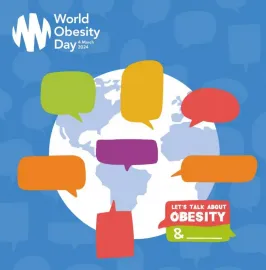
World Obesity Day is aimed at raising awareness and improving understanding of obesity root causes and actions needed to address them, and tackling the associated stigma.

Obesity has become one of the biggest health crises faced by people today around the world. 

According to the World Health Organization, obesity has reached epidemic proportions globally, claiming at least 2.8 million lives annually, while 1 in 8 people in the world were living with obesity in 2022.

“Evidence shows that interventions (such as improved diet and physical activity) introduced to tackle obesity have the potential benefits to reduce the incidence of NCDs and its burden on healthcare spending, individuals and their families.

“The Department of Health urges people to engage in regular physical activity; drink [sufficient] water; serve the correct amount of food to avoid overeating; limit the consumption of foods and drinks high in sugar, salt and fat, and snack on fresh vegetables and fruits instead of salty snacks or sugary treats,” the department said in a statement. 

The department highlighted that the rise in obesity poses a serious challenge to public health worldwide, with South Africa being amongst the countries with the highest overweight and obesity rates. 

According to the 2016 national survey, 68% of women and 31% of men are either overweight or obese, while 13% of children under the age of 5 are overweight. 

In terms of obesity, at least 41% of women have obesity, with 20% of them falling in the severe obesity category. In contrast, only 11% of men have obesity. The prevalence of obesity among women rose from 27% in 1998 to 41% in 2016. There was very little change in obesity amongst men, with only a 2% increase during the same period.

“These worrying figures underscore the need for effective prevention interventions to address obesity and promote healthier lifestyles and setting nutrition standards for food and beverages provided in places like Early Child Development Centres, schools, community nutrition development centres and other feeding programmes,” the department said. 

The department said the increased prevalence of overweight and obesity among people contributes to the onset of Non-Communicable Diseases (NCDs) such as type 2 diabetes, cardiovascular diseases, hypertension and cancer, which are currently the biggest threats to health and development among populations. 

Women with obesity are at increased risk of miscarriage, pre-eclampsia, induced labour, and are less likely to initiate breastfeeding. On the other hand, obese men are at a higher risk of developing cancers of the colon, rectum and erectile dysfunction.

“The words obesity and overweight are often confused and used interchangeably. However, these are two related health conditions with slightly different meanings. Overweight is when a body mass index (a value derived from the mass and height of a person) is greater than or equal to 25, whereas obesity is a BMI greater than or equal to 30,” the department explained.

The department said while many people exercise day and night to keep fit and healthy, it is important to know the 80/20 rule for weight loss, which emphasises that nutrition contributes 80% and routine exercise contributes only 20% when it comes to losing weight.

“This means that as long as you don’t make healthier food choices, physical activities will do less to reduce obesity.

“The department urges employers to support efforts by government and other stakeholders by creating healthy and productive working environments for employees as part of health and wellness programmes. 

“This includes establishing wellness centres and serving healthier food menus in their canteens,” the department said. – SAnews.gov.za

DikelediM
Mon, 03/04/2024 – 11:54

653 views

As the country joins the global community to mark World Obesity Day, the Department of Health has urged people to engage in regular physical activity and follow a balanced eating plan. 

World Obesity Day is aimed at raising awareness and improving understanding of obesity root causes and actions needed to address them, and tackling the associated stigma.

Obesity has become one of the biggest health crises faced by people today around the world. 

According to the World Health Organization, obesity has reached epidemic proportions globally, claiming at least 2.8 million lives annually, while 1 in 8 people in the world were living with obesity in 2022.

“Evidence shows that interventions (such as improved diet and physical activity) introduced to tackle obesity have the potential benefits to reduce the incidence of NCDs and its burden on healthcare spending, individuals and their families.

“The Department of Health urges people to engage in regular physical activity; drink [sufficient] water; serve the correct amount of food to avoid overeating; limit the consumption of foods and drinks high in sugar, salt and fat, and snack on fresh vegetables and fruits instead of salty snacks or sugary treats,” the department said in a statement. 

The department highlighted that the rise in obesity poses a serious challenge to public health worldwide, with South Africa being amongst the countries with the highest overweight and obesity rates. 

According to the 2016 national survey, 68% of women and 31% of men are either overweight or obese, while 13% of children under the age of 5 are overweight. 

In terms of obesity, at least 41% of women have obesity, with 20% of them falling in the severe obesity category. In contrast, only 11% of men have obesity. The prevalence of obesity among women rose from 27% in 1998 to 41% in 2016. There was very little change in obesity amongst men, with only a 2% increase during the same period.

“These worrying figures underscore the need for effective prevention interventions to address obesity and promote healthier lifestyles and setting nutrition standards for food and beverages provided in places like Early Child Development Centres, schools, community nutrition development centres and other feeding programmes,” the department said. 

The department said the increased prevalence of overweight and obesity among people contributes to the onset of Non-Communicable Diseases (NCDs) such as type 2 diabetes, cardiovascular diseases, hypertension and cancer, which are currently the biggest threats to health and development among populations. 

Women with obesity are at increased risk of miscarriage, pre-eclampsia, induced labour, and are less likely to initiate breastfeeding. On the other hand, obese men are at a higher risk of developing cancers of the colon, rectum and erectile dysfunction.

“The words obesity and overweight are often confused and used interchangeably. However, these are two related health conditions with slightly different meanings. Overweight is when a body mass index (a value derived from the mass and height of a person) is greater than or equal to 25, whereas obesity is a BMI greater than or equal to 30,” the department explained.

The department said while many people exercise day and night to keep fit and healthy, it is important to know the 80/20 rule for weight loss, which emphasises that nutrition contributes 80% and routine exercise contributes only 20% when it comes to losing weight.

“This means that as long as you don’t make healthier food choices, physical activities will do less to reduce obesity.

“The department urges employers to support efforts by government and other stakeholders by creating healthy and productive working environments for employees as part of health and wellness programmes. 

“This includes establishing wellness centres and serving healthier food menus in their canteens,” the department said. – SAnews.gov.za

Read More at the Source

Share this:

  • Share on X (Opens in new window) X
  • Share on Facebook (Opens in new window) Facebook
  • Print (Opens in new window) Print
  • Email a link to a friend (Opens in new window) Email
  • Share on LinkedIn (Opens in new window) LinkedIn
  • Share on Tumblr (Opens in new window) Tumblr
  • Share on WhatsApp (Opens in new window) WhatsApp
  • Share on Mastodon (Opens in new window) Mastodon
Category: NewsTag: 2024, Africa, centres, global, Government, health, ONE, SA News, South Africa, Water

If you feel strongly about this article then feel free to send MyZA a ‘Letter to the Editor’ using the submission form below:


Letter to the Editor

This field is for validation purposes and should be left unchanged.
If this is in response to an article please include that article title here or as the lead in for the first paragraph of your Letter below.

Separate tags with commas

Localise your letter by naming the city your words are about. Add relevant words describing your subject. Single comma separated words of no more than 5
Your Name(Required)
Your Name will be linked to the website below.
Your personal, business or social media web site
Choose NO to not set up a user account on MyZA. User Accounts will allow you to submit letters under your own Author Name

3 Latest Letters to the Editor:

  • Older Persons Grants Land Today — No Need to Queue at Dawn

    Dear Editor, Older Persons grants are paid today, 30 October, under SASSA’s revised November payment schedule — with disability grants on Monday 2 November, children’s grants on Tuesday 3 November, and grants under review on Thursday 5 November. Two things every beneficiary should know. First, grant money does not expire on payment day. It stays…

    30 October 2026
  • November Grants Pay Early – No Need to Queue at Dawn

    Dear Editor, I run SAGrant (sagrant.co.za), a free resource helping South Africans navigate SASSA grants. November grants pay earlier than usual. Older Persons grants are paid on Friday 30 October, Disability grants on 2 November, and Child Support and other grants on 3 November. Grants still under review are paid on 5 November. The money…

    27 October 2026
  • NSFAS 2027 applications close on 31 October — SASSA households, apply now

    Dear Editor, I run SAGrant (sagrant.co.za), a free resource helping South Africans navigate SASSA grants. NSFAS applications for the 2027 academic year close on Friday 31 October 2026, and no extension is expected. If your household receives a SASSA grant, your child already passes the NSFAS financial eligibility test — but they still have to…

    25 October 2026

About Guest

Previous Post:Free State focuses on job creation
Next Post:Cape Town Pride celebrates equality in South Africa, condemns Ghana’s new anti-gay law

Reader Interactions

Comments

  1. Golden Cougar

    8 September 2026 at 3:03 pm

    Fun South African Fact: South African Dr. Christiaan Barnard performed the world’s first heart transplant on 3 December 1967 at Groote Schuur Hospital in Cape Town. The groundbreaking surgery was carried out on Louis Washkansky and Dr. Barnard was assisted by a large and exceptional team of surgeons, nurses and technicians. One of Dr. Barnard’s assistants was Hamilton Naki, a black laboratory assistant who had worked previously as a gardener and went on to work in the animal laboratory at the University of Cape Town. He had assisted Dr Barnard with research leading to the transplant. In the apartheid days, Naki had no access to higher education due to his race. Despite being unable to access formal training, he learned from and assisted university researchers and went on to do improbable work.

  2. Super Flick

    7 September 2026 at 1:23 pm

    Fun South African Fact: South African Dr. Christiaan Barnard performed the world’s first heart transplant on 3 December 1967 at Groote Schuur Hospital in Cape Town. The groundbreaking surgery was carried out on Louis Washkansky and Dr. Barnard was assisted by a large and exceptional team of surgeons, nurses and technicians. One of Dr. Barnard’s assistants was Hamilton Naki, a black laboratory assistant who had worked previously as a gardener and went on to work in the animal laboratory at the University of Cape Town. He had assisted Dr Barnard with research leading to the transplant. In the apartheid days, Naki had no access to higher education due to his race. Despite being unable to access formal training, he learned from and assisted university researchers and went on to do amazing work.

Copyright © 2026 · MyZA · All Rights Reserved · Powered by Stratlec Online