• Skip to main content
  • Skip to header right navigation
  • Skip to after header navigation
  • Skip to site footer
MyZA

MyZA

News, Directory, Events and Other Stuff

  • Social Media
  • Sport
  • World News
  • Home
  • Submit News
  • Directory
  • Events
  • Stratlec
  • TFSA
  • News
    • APO
    • Today’s Sport News
    • Todays Social Media and Tech Headlines
    • Today’s World News
    • Today’s SA Financial News
  • Contact
You are here: Home / Archives for African

African

24 October 2024

Zimbabwe Establishes Local Laboratory for Polio Surveillance

Location: News

World Health Organzation (WHO) - Zimbabwe
Download logo

In a significant step towards strengthening its public health infrastructure, Zimbabwe established a dedicated laboratory for the analysis of polio samples collected through environmental surveillance (ES). Previously, these samples were sent to South Africa for testing, resulting in a turnaround time of approximately 21 days.

With financial and technical support from the World Health Organization (WHO), the newly renovated laboratory is equipped with state-of-the-art technology testing equipment and staffed by highly trained personnel. WHO further provided training to 10 laboratory scientists to run the new laboratory and locally carry out environmental samples testing. This local capability will significantly reduce the time required to detect and respond to potential outbreaks of polio. 

Three experts from the African Polio Laboratory network, proficient in WHO ES testing methods for poliovirus, were identified by WHO Regional Officer for Africa (AFRO) to provide the training needs to th University of Zimbabwe (UZ) where the laboratory is situated. The team includes Shelina Moonsamy as the Team Lead (Head of Polio Laboratory, NICD, Johannesburg, South Africa), James Peter Eliku (ES Technical Expert, Uganda Virus Research Institute, Entebbe, Uganda) and Thabo Mashupye (ES Technical Expert, NICD). 

"The establishment of this laboratory is a major milestone in our efforts to safeguard the health of Zimbabweans," said Mr Paradzayi Chibukira, Technical Supervisor at the Zimbabwe National Virology Polio Laboratory at UZ.  "By reducing the turnaround time for laboratory results, we can more effectively implement prevention and control measures to prevent the reintroduction of polio into our country."

Environmental surveillance for polio is a critical component of global efforts to monitor and eradicate the polio. It involves collecting and analyzing sewage and other environmental samples to detect the presence of the poliovirus, which can indicate circulation of the virus in the community. This method complements traditional surveillance through the Acute Flaccid Paralysis (AFP) surveillance system and provides a broader view of potential outbreaks.

Polio is a highly contagious viral disease that can cause paralysis, especially in children. While Zimbabwe has been polio-free for many years, the risk of reintroduction remains, particularly due to the ongoing global efforts to eradicate the disease.

With support from WHO, Zimbabwe launched its environmental surveillance programme in 2023, beginning with sites in Harare and Chitungwiza. This initiative was part of a broader strategy to strengthen disease monitoring and improve response capabilities. The introduction of environmental surveillance in these initial sites marked a key step in the country's commitment to enhancing its public health infrastructure. Additional sites were established in other major cities, including Bulawayo, Gweru, and Victoria Falls in 2024. This expansion reflects Zimbabwe's proactive approach to disease monitoring and its determination to safeguard public health.

"We applaud and fully support Zimbabwe's decision to set up the laboratory for polio surveillance and this development not only enhances the country's capacity for timely and accurate detection of poliovirus in the environment but also strengthens the overall public health infrastructure,” said Mr Kenneth Chindedza, WHO Zimbabwe Technical Officer for Logistics and Supply Chain. 

Distributed by APO Group on behalf of World Health Organzation (WHO) - Zimbabwe.
Read moreZimbabwe Establishes Local Laboratory for Polio Surveillance
24 October 2024

President Ramaphosa delivers country statement at BRICS Summit

Location: News

President Ramaphosa delivers country statement at BRICS Summit

By Neo Bodumela

Kazan, Russia: The BRICS Engagement and BRICS Plus platforms are an opportunity for countries to forge greater and deeper ties for development. 

This is according to President Cyril Ramaphosa, who was delivering South Africa’s country statement during the BRICS/Plus Countries First Session in Kazan, Russia.

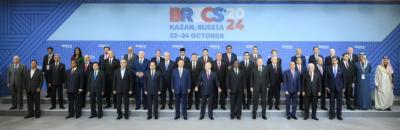
The leaders of Brazil, Russia, India, China, South Africa, Egypt, Ethiopia, Iran and the United Arab Emirates are meeting for the first time since new members were invited to join BRICS during the Johannesburg BRICS Summit of 23 August 2023.

Together, the powerful bloc holds around 35% of the global Gross Domestic Product (GDP) and 20% of world exports.

“The BRICS Outreach and BRICS Plus engagements are important platforms for developing strong ties among countries from the greater Global South and emerging markets.

“We should use these platforms to foster meaningful engagement. We should use the BRICS platform to contribute to social, economic and cultural development of our peoples,” President Ramaphosa said. 
 

READ | BRICS partnership is a catalyst for global growth
 

The President welcomed initiatives by Russia aimed at developing other BRICS nations. 

“We welcome the Russian initiatives that are aimed at strengthening a number of BRICS countries through the various networks aimed at improving the future of BRICS countries’ transport networks and connectivity under the theme, ‘Innovation and Digitalisation of Transport’.

“This will help us find ways to integrate and deepen our interconnectedness in new and imaginative ways,” he said. 

The President noted that work has already begun in this regard through the International North-South Transport Corridor -- a multimodal transportation corridor established from St Petersburg in Russia to Mumbai, India.

“This corridor is an opportunity for this region to unlock new trade flows and trade routes in an increasingly multipolar world.

“On the African continent, the African Continental Free Trade Area will unlock opportunities for trade and investment for local and global businesses. It will create a number of opportunities that will lead to an integrated and connected continent,” President Ramaphosa said. 

He encouraged BRICS countries and friends of BRICS to “use these projects to further connect the greater Global South”. 

WATCH I BRICS Summit Outreach/ BRICS+ First Session

International conflicts 

The President called for the resolution of conflicts that are escalating not only in the Middle East but also on the African continent. 

“We must find lasting solutions to all these conflicts.

“We must remain committed to the peaceful resolution of all disputes through negotiation and inclusive dialogue. We must safeguard the ability of States to pursue independent foreign policy. 

“We must safeguard the multilateral system because it is the cornerstone of international relations, and foster an environment of peace and development,” he said. 

He emphasised that conflicts cannot be allowed to “continue in perpetuity”. 

“We need to find paths to peace. In our quest for a more interconnected, just and prosperous world, we have the ability to foster an environment of peace through a focus on sustainable development.

“We must continue to support nations and peoples, who seek to end the cycle of conflict and choose the path of peace,” President Ramaphosa said. - SAnews.gov.za

NeoB
Thu, 10/24/2024 - 12:07

196 views
Read morePresident Ramaphosa delivers country statement at BRICS Summit
24 October 2024

Police Minister Confirms Thabo Bester Was Detained and Then Released While He Was on the Run

Location: News

Bester showed police a fraudulent ID when he was stopped for speeding

Read morePolice Minister Confirms Thabo Bester Was Detained and Then Released While He Was on the Run
24 October 2024

Freedom fighter Basil February’s remains finally handed over to his family

Location: News

Freedom fighter Basil February’s remains finally handed over to his family

Western Cape MEC for Cultural Affairs and Sport Ricardo Mackenzie and Head of Department Guy Redman have officially handed over custodianship of the remains of struggle stalwart, Basil February, to his family. 

The ceremony took place at St George’s Cathedral in Cape Town on Wednesday. 

February, who died in combat in 1967 while exiled in Zimbabwe, was one of 49 struggle stalwarts repatriated to South Africa in September 2024. 

February is one of three stalwarts, whose remains will be returned to their home province -- the Western Cape.

February’s remains were buried for over five decades in an unmarked grave in Bulawayo.

The Repatriation and Reburial Project for Liberation Stalwarts is a collaborative effort involving several government departments and entities. 

The entities involved include the Presidency, the National Department of Sport, Arts and Culture, the South African Heritage Resources Agency, the Department of Home Affairs, the National Prosecuting Authority’s Missing Persons Task Team, the Department of Defence and Military Veterans, as well as various provincial departments.

The project also works closely with local communities, historical experts and governments at various levels to ensure a smooth and dignified process.

In his address, Mackenzie said: “Today, we hand over custodianship of the mortal remains of Basil February, a liberation hero recently repatriated to South Africa, who died in combat fighting against apartheid. 

“We honour his family and their sacrifice, and we hope that his return home brings a measure of peace.”

The MEC said February’s story is part of the national heritage, and his fight for justice, equality, and human dignity will inspire future generations.

The Western Cape Department of Cultural Affairs and Sport has stated that it will continue its involvement in the Repatriation and Reburial Project for Liberation Stalwarts. 

The department has also committed to providing support to the families affected throughout this process on behalf of the provincial government.

Last month, the State hosted the repatriation and restitution homecoming ceremony for the 42 South African freedom fighters who perished in Zambia and Zimbabwe during the apartheid era.

READ | Honouring SA’s liberation heroes and heroines 

The remains included that of former African National Congress (ANC) Secretary-General Duma Nokwe; Head of the ANC Women’s Section Florence Mophoshe; composer, musician and journalist, Todd Matshikiza, and other unsung liberation fighters.

In his address last month, President Cyril Ramaphosa said the repatriation and restitution marks not just the end of a long journey, but the beginning of healing for the families they left behind. 

The President stressed the importance of South Africans recognising and honouring the former liberation heroes and heroines who have returned to their home country, acknowledging their vital role in securing the nation’s freedom.

“South Africans need to know the names and appreciate the contributions of these returned freedom fighters. I ask that we read out the names of these patriots for all our people to know them.”

READ | South Africans must know the names of struggle heroes and heroines

The country’s commander-in-chief has since tasked Mackenzie with establishing a Heroes' Acre to celebrate the nation’s struggle heroes. 

"As I travel to other countries like Zimbabwe, Namibia and Mozambique, they have created incredible Heroes' Acres, where the heroes of their struggle are buried, and those memorial sites have, in many ways, become sacred places of the nation. 

“Of course, we may well argue that our leaders and heroes are buried all over the country, but it does not mean that monuments that memorialise them cannot be brought together at a Heroes' Acre,” the President said then. – SAnews.gov.za


Gabisile
Thu, 10/24/2024 - 10:09

170 views
Read moreFreedom fighter Basil February’s remains finally handed over to his family
24 October 2024

Suspect arrested for alleged rape, murder of a six-year old Soweto girl

Location: News

Suspect arrested for alleged rape, murder of a six-year old Soweto girl

The South African Police Service (SAPS) has thanked the community of Soweto, journalists, media houses and all social media users for assisting in to track down a man who was wanted for the alleged rape and murder of a six-year old girl in Soweto on Monday.

The suspect was arrested last night and is expected to appear in court soon.

The little girl, Amantle Samane, was found murdered and allegedly raped at a shack about 650 metres from her home on Monday.

Her family last saw her alive when she and other children were playing in the street. 

A day after her death, Gauteng police announced that they were searching for Pethe Sara Simiao to assist them in their investigation into the murder.

According to the police, the suspect has been identified as being from Mozambique.

An immigration status check with the Home Affairs Department revealed that Simiao was living illegally in South Africa. – SAnews.gov.za

Edwin
Thu, 10/24/2024 - 10:18

5 views
Read moreSuspect arrested for alleged rape, murder of a six-year old Soweto girl
24 October 2024

Linde, Simmonds Lead Western Province to Victory Over Dragons

Location: Sport

JOHANNESBURG: World Sports Betting Western Province secured a comfortable 41-run win over Auto Investments North West Dragons in the T20 Challenge...

Read moreLinde, Simmonds Lead Western Province to Victory Over Dragons
24 October 2024

Enhancing polio detection with advanced sequencing technology

Location: News

WHO Regional Office for Africa
Download logo

The African region, declared free of indigenous wild poliovirus in August 2020, faces an urgent threat: the intense transmission of type 2 variant poliovirus (cVDPV2). This year alone, 290 poliovirus detections have been reported in 23 African countries.

As countries ramp up vaccination efforts to protect children against the virus, one of the most critical components of the response is early and accurate detection. To enhance the effort, the World Health Organization Regional Office for Africa (WHO AFRO), together with the United States Centers for Disease Control and Prevention (US CDC) and the Gates Foundation, is focusing on equipping and training laboratories across Africa with an innovative advanced sanger sequencing technology, a crucial method in investigating new regions in the poliovirus genome.

The poliovirus has a genome that is 7.5 kilobases long (a kilobase, or kb, is a unit of measurement used to describe the length of DNA). This genome has one main part that is used to create four proteins, named VP1 to VP4. The VP1 protein is important for how the virus attaches to cells and has been used to identify and track the spread of poliovirus.

In 2024, WHO AFRO initiated targeted training on Advanced Sanger Sequencing training aimed at diversifying the diagnostic windows for polioviruses which will eventually reduce turn-around-time of poliovirus detection. These trainings are essential to equip lab personnel with the skills to operate advanced sequencing technologies and provide timely results for public health decision-makers.

Sequencing allows laboratories to pinpoint genetic changes in poliovirus strains, providing critical data for tracking transmission pathways and understanding viral evolution. The technology offers a level of precision that helps identify mutations in real-time, making it possible to detect emerging threats swiftly. This technique has hitherto been limited to VP1 region of the gene but after this training laboratories will be able to use the entire five prime untranslated region and the remaining VP4/2 of the poliovirus gene.

“Expanding our sequencing window to the other regions of the poliovirus, alongside the VP1 region, enhanced our ability to classify cases more accurately - bringing us one step closer to polio eradication”, says Irene Turyahabwe, participant from Uganda.

“Advanced sequencing will not only open different diagnostic windows for efficient and rapid diagnosis but will also provide much needed evidence for the success of specific vaccination campaigns essential for ongoing polio eradication efforts. The data gathered through this technology informs decision-making, ensuring that the right public health interventions are deployed in time to prevent further spread of the virus” says Dr Jude Kfutwah, coordinator of the Regional Polio Laboratory Network at the WHO Regional Office for Africa. 

South Africa hosted the first round of the training, where laboratory personnel received hands-on experience in Advanced Sanger Sequencing techniques. The training, under the umbrella of the Global Polio Eradication Initiative (GPEI), is part of a broader initiative to ensure that countries have the necessary capacity to detect polioviruses quickly and accurately, without delays that could hinder response efforts.

Following South Africa's success, WHO plans to expand the training to key countries across the continent. Algeria, Central African Republic and Madagascar are among the next in line, where national laboratories will benefit from this knowledge transfer. This regional expansion ensures that multiple countries are better prepared to contribute to Africa's polio eradication journey.

In addition, WHO is supporting 16 polio laboratories in the African region who are providing environmental surveillance support, testing for poliovirus in stool and wastewater samples to track geographic patterns of spread.

With laboratories across Africa enhancing their capacity to process samples quickly, there is an added layer of regional cooperation that strengthens the entire surveillance network. This collaborative spirit is vital in eradicating polio once and for all.

Distributed by APO Group on behalf of WHO Regional Office for Africa.

Read moreEnhancing polio detection with advanced sequencing technology
23 October 2024

Designation research studies underway to strengthen local production and content

Location: News

Designation research studies underway to strengthen local production and content

Designation research studies are underway to strengthen the role of local production and content in the South African public procurement system, says Chief Director of Industrial Procurement and Development at the Department of Trade, Industry and Competition (the dtic).

Makube on Tuesday made a presentation at the 11th Manufacturing Indaba Conference and Exhibition in Johannesburg.

The Manufacturing Indaba is an annual event in South Africa that brings together key stakeholders from the manufacturing sector, including business leaders, government representatives, investors, and industry experts. 

Its purpose is to foster growth, collaboration and innovation in the manufacturing industry, providing a platform for discussion on challenges, opportunities and policy frameworks. 

The event aims to enhance industrialisation, drive economic growth and promote sustainable practices in manufacturing across the continent.

Makube’s presentation, which focused on “Localisation in the Public Procurement System”, highlighted key areas where policy adjustments could better support South Africa's economic growth, emphasising the strategic importance of localisation in stimulating the local economy by leveraging public sector expenditure. 

He provided a comprehensive analysis of the current economic landscape, underscoring the importance of targeted interventions to drive growth.

"It is crucial that we intervene strategically in the economy by being deliberate about our procurement and purchasing choices. This requires rigorous economic analysis. 

"While South Africa faces challenges in achieving the growth rates outlined in the National Development Plan, efforts to strengthen the localisation framework are essential. 

“We need to address structural challenges in our economy, such as the declining manufacturing value addition to gross domestic product (GDP), high unemployment rates and scaling up export growth that will ensure sustainable economic development,” Makube said.

He emphasised the potential for localisation to drive economic multipliers, such as job creation and industrial development through strategic procurement. 

Local production, particularly in sectors like manufacturing, can significantly enhance South Africa’s economic resilience.

“Manufacturing has historically been a key contributor to the GDP product, and we need to revive its role by focusing on sectors where we have a competitive advantage. 

“Public procurement serves as a powerful tool to achieve this by prioritising South African-made goods and services. Such measures would help address issues related to South Africa’s reliance on imports and support government's broader economic transformation agenda,” Makube said.

Looking ahead, Makube highlighted the dtic's commitment to fostering a fair, transparent and competitive public procurement environment that benefits local producers and suppliers. He noted that recent legislative developments, such as the development of the Public Procurement Act, offer new opportunities for supporting local industries.

“Our goal is to ensure that procurement processes not only meet constitutional requirements but also contribute to building a stronger local economy. 

“By enhancing transparency and competitiveness, we can create a more inclusive market that benefits all South Africans, especially those previously excluded from economic participation,” Makube said. – SAnews.gov.za

Edwin
Wed, 10/23/2024 - 13:51

130 views
Read moreDesignation research studies underway to strengthen local production and content
23 October 2024

Policy frameworks bear fruit 

Location: News

Policy frameworks bear fruit 

Trade, Industry and Competition Minister Parks Tau says through the Automotive Production and Development Programme (APDP), the dtic has provided critical incentives and policy frameworks to help drive investment, innovation and job creation.

Tau was speaking at the South Africa Auto-Week in Cape Town recently.

According to Tau, this has enabled South Africa to remain competitive on the global stage. 

He said since its inception in 2011, the Automotive Investment Scheme (AIS) disbursed R20.7 billion to component manufacturers (CMs) and original equipment manufacturers (OEMs).

“AIS funding to over 150 projects has resulted in investment of over R76 billion from the 2016/17 financial year to September 2024, generating a simple investment multiplier of five. 

“This means that for every R1 of incentive spending, R5 of investment was spent by the project. Over this period, the average grant disbursed was 20% of the total investment generated by the project,” Tau explained.

On transforming the sector, the Minister said out of the R15.2 billion disbursed from the AIS, 50% was payments to projects outside of the five main metros showing the substantial reach of AIS to generate spatial transformation.

“In terms of ownership, R227 million, which is 1% of AIS funding, was accessed by black-owned projects; 2%, amounting to R242 million, was accessed by small, medium and micro enterprises; R3 million by youth-owned, and R7.9 million by women-owned projects. This shows that a more deliberate approach to transformation is required in the sector. We are, however, aware that we can do more.”

Tau said the recent announcement of the extended APDP Phase 2 until 2035 is a clear signal of government's long-term commitment to the sector.

Resolving the logistics challenge

Speaking as a panel member on infrastructure investment at the same event, the Deputy Minister of Trade, Industry and Competition, Andrew Whitfield, said the Statement of Intent of the 2024 Government of National Unity (GNU) listed infrastructure development as a key priority.

“The fact that we have the Presidential National Logistics Crisis Committee (NLCC), established by the South African government to address the country's transport and logistics, indicates and recognises that we have a crisis of infrastructure in the country. 

“South Africa has the skills and talent to resolve these challenges, but the skills and talent cannot exist in silos. We all need to work together to unlock these challenges,” Whitfield said.

Whitfield said the dtic’s core mission, through the GNU, is going to make it easier for businesses to grow so that they can create jobs and that people can keep those jobs. 

“We also need to heed President Ramaphosa’s instruction to cut red tape and produce key performance indicators that will drive the plan to make it easier for businesses to do business, grow and create jobs,” he said.

Whitfield said there is nothing more urgent than the unemployment crisis that South Africa faces, and that there is an urgent need towards unlocking the infrastructure potential that the country has. – SAnews.gov.za

Edwin
Wed, 10/23/2024 - 14:04

240 views
Read morePolicy frameworks bear fruit 
23 October 2024

Government to present state of readiness for severe summer season

Location: News

Government to present state of readiness for severe summer season

The Minister of Cooperative Governance and Traditional Affairs (CoGTA), Velenkosini Hlabisa, will brief media on the state of readiness for the summer season on Monday, 28 October 2024.

The CoGTA briefing will cover National Disaster Management Centres (NDMC), Fire Services, and support provided to affected municipalities.

“The Minister’s briefing underscores the importance of adopting a multidisciplinary preparedness approach for the imminent severe summer weather,” the department explained. 

Every year, CoGTA said South Africa experiences disasters and hazards such as floods, heatwaves, snow, windstorms, drought and wildfires. 

“These disasters have a negative impact on communities, property and infrastructure and regrettably sometimes also lead to loss of lives.

“To this effect, disaster contingency planning highlights the critical role that proactive preparedness plays in safeguarding our communities, sustaining our livelihoods, and ensuring our collective resilience.”

The department believes early warnings and early actions save lives. 

The NDMC, in collaboration with the South African Weather Service (SAWS) and other key role players, continues to enhance the early warning system so that it can reach the broader public, focusing on vulnerable groups. – SAnews.gov.za

Gabisile
Wed, 10/23/2024 - 14:40

115 views
Read moreGovernment to present state of readiness for severe summer season
23 October 2024

Committee satisfied with report on matric examinations readiness

Location: News

Committee satisfied with report on matric examinations readiness

The Portfolio Committee on Basic Education is satisfied with the updated Status Report on Matric Examinations Readiness, noting that the first day proceeded smoothly, despite challenges posed by severe weather conditions in the Eastern Cape.  

On Tuesday, the Portfolio Committee received an update report from the Department of Basic Education (DBE) and the Council for Quality Assurance in General and Further Education and Training (Umalusi) on examination readiness for the National Senior Certificate (NSC).

The committee said it noted concerns that the weather has already had an impact on the examinations, testing the DBE’s contingency plans in Gqeberha in the Eastern Cape, where storms affected electricity supply, preventing Grade 12 learners from doing the Computer Applied Technology (CAT) practical examination. 

The exam was scheduled for Tuesday. 

“The committee has, however, been assured that as part of its planning, the DBE ensures that more than one question paper is set and quality approved by Umalusi for each exam paper, so the 400 affected learners will do the examination on another date,” the committee said in a statement. 

Committee chairperson Joy Maimela said although the committee is concerned about back-up plans to deal with all eventualities, their fears have been allayed due the contingency plans reported on. 

“We urge the DBE and Provincial Education Departments (PEDs) to take note of further weather warnings and make the necessary plans to accommodate our matric learners.”

READ | Eastern Cape disaster teams on high alert

The committee heard that the first day of the examinations went by swiftly and seamlessly. The exams commenced on 21 October and will conclude on 28 November 2024.

Over the examination period, 200 question papers are scheduled to be written. Six question papers were written on the first day on Monday.

On Tuesday, a further 15 papers were written on Computer Applications Technology (Practical) and non-official languages. Wednesday’s papers are Today Business Studies and Information Technology.

In its preliminary briefing on examination readiness last month, the committee heard that that 727 121 full-time candidates and 155 215 part-time candidates are registered for this year’s NSC examinations. 

A total of 6 334 public schools and 575 independent centres are serving as exam centres.

The seventh cohort of learners is to sit for South African Sign Language Home Language (SASL HL) examinations. A total of 210 candidates for the SASL HL exams come from 23 schools in nine provinces, compared to 134 candidates in 2023.

Marking

The committee previously heard that more than 55 000 markers have been appointed. Concerns were raised by committee members about reports of a shortage of markers for certain subjects. 

The DBE said that there is a shortage in History, English (HL) and Afrikaans (HL and FAL). 

To overcome this problem, a staggered marking approach has been adopted by some PEDs so that Paper 3 of the languages are marked in the first session. 

Other PEDs have embarked on a second recruitment drive and a few PEDs have extended the number of marking days. The committee was assured that the shortage of markers will not compromise the quality of marking.

In this regard, Umalusi said it has concluded the audit of the appointed markers to verify that their appointments align with established criteria, except for four provinces – North West, Limpopo, Free State and Northern Cape – which will be finalised by 30 October 2024.

Umalusi indicated that it is satisfied with the continuous enhancement of security measures, particularly the expedited vetting of individuals involved in handling live question papers. 

To mitigate the identified risk regarding the partially approved storage points, with specific reference to the DBE, the department will use concessions from the heads of provincial departments to grant permission, and Umalusi will conduct a sample on some of these storage facilities for monitoring purposes.

Umalusi said that during the verification of marked scripts, it will track how the PEDs are managing the marking process in subjects where marker shortages were identified as a risk.

Additionally, Umalusi will closely monitor the implementation of the staggered marking approach to ensure the credibility of the examinations.

Maimela wished the Class of 2024 every success as they continue their exams. – SAnews.gov.za

DikelediM
Wed, 10/23/2024 - 14:53

11 views
Read moreCommittee satisfied with report on matric examinations readiness
23 October 2024

Deputy President to convene second meeting of the GNU clearing house mechanism

Location: News

Deputy President to convene second meeting of the GNU clearing house mechanism

Deputy President Paul Mashatile will convene the second meeting of the Government of National Unity (GNU) clearing house mechanism on Thursday, 24 October 2024.

The Deputy President chaired the first virtual meeting last week, which the Presidency said got off to a good start.

READ | Inaugural meeting of the GNU clearing house gets off to a good start

The GNU clearing house mechanism is a platform created by President Cyril Ramaphosa to resolve policy disagreements and disputes within the GNU.

All 10 political parties that are signatories to the GNU – African National Congress, Democratic Alliance, Patriotic Alliance, Inkatha Freedom Party, Good Party, Pan Africanist Congress of Azania, Freedom Front Plus, United Democratic Movement, Al Jama-ah, and Rise Mzansi have been invited. 

The Office of the Deputy President serves as the Secretariat of the GNU clearing house mechanism. 

Issues to be discussed include the clearing house mechanism's terms of reference and an update on the preparations for the G20 Summit. 

The leaders will also touch on the aspects of the Basic Education Laws Amendment Act (BELA Act), update on the preparations for the National Dialogue, and discuss challenges at the provincial and local government level in relation to coalition governments. 

The mechanism will not override Cabinet decisions, as the Executive remains the final decision-making body in government. However, it will ensure that all GNU signatories develop a common understanding of critical policy matters.

In addition to the mechanism, the Presidency said it was resolved to establish a technical committee to serve as a processing channel for matters of divergence within the GNU.

This means that this mechanism will establish the Political Leaders’ Forum of parties who signed the statement of intent. – SAnews.gov.za

Gabisile
Wed, 10/23/2024 - 14:09

60 views
Read moreDeputy President to convene second meeting of the GNU clearing house mechanism
23 October 2024

BRICS bloc a beacon for the global south

Location: News

BRICS bloc a beacon for the global south

By Neo Bodumela

Kazan, Russia: President Cyril Ramaphosa has hailed the BRICS bloc of countries as a beacon of hope for countries in the global South.

The President was delivering remarks at a plenary session of the BRICS Summit currently underway in Kazan, Russia. 

The now expanded BRICS bloc of countries includes Brazil, Russia, China, India, South Africa, as well as newly minted Member States Egypt, Ethiopia, Iran, and the United Arab Emirates (UAE).

This makes it one of the most powerful blocs on the global stage, with 3% of the world’s population, 32% of the world’s land area, around 35% of global GDP and 20% of world exports.

“Fifteen years ago, South Africa attended its first BRICS Summit in Sanya, China. Today, we gather as a group of nine leading emerging countries. Our historic expansion is a beacon of hope for the global South.

“Individually, we are countries of diverse histories, values and strengths. Together, we demonstrate the benefits of cooperation instead of competition. As an increasingly influential group, we must ensure the success of this expanded group,” he said.

The President called on the influential bloc to use its voice to advance global change – particularly on the resolution of international conflicts that require “a UN Security Council that is representative and inclusive”.

“We see from many conflicts raging across the world that the UN Security Council has not fulfilled its mandate to maintain international peace and security. It does not represent the interests of the global community, and therefore does not have the means to give effect to the global desire for peace.

“Just as BRICS has a vital role in shaping a new multipolar world order, so too must it use its voice to advance change.

“We found consensus on the reform of the UN Security Council when we met in Johannesburg last year. Let us build on that foundation to develop an improved consensus that addresses the concerns and aspirations of all BRICS members,” President Ramaphosa said.

On the plight of the Palestinian people, President Ramaphosa emphasised that the South African government remains “gravely concerned at the further escalation of a conflict that has already caused so much death and destruction”.

“The International Court of Justice has made it clear that the international community has a duty to prevent genocide by Israel. The countries of the world have a responsibility not to fund or facilitate Israel’s genocidal actions.

“As the UN General Assembly has now resolved, the countries of the world have a responsibility to promote the realisation of the right of the Palestinian people to self-determination. Lasting peace and security will not be achieved until Palestinians have realised their aspirations for statehood, justice and freedom.

“Peace and security across the world requires the collective will of the community of nations. It requires a UN Security Council that is representative and inclusive,” he said – SAnews.gov.za
 

NeoB
Wed, 10/23/2024 - 12:28

5 views
Read moreBRICS bloc a beacon for the global south
23 October 2024

Africa urged to act now against climate change

Location: News

Africa urged to act now against climate change

With climate-driven events such as droughts and floods disrupting agricultural production across the continent, and leading to increasing food insecurity, government has called on the Southern African Development Community (SADC) to act now against climate change.

“To counter this, it is essential to promote sustainable agricultural practices, improve irrigation systems, invest in agricultural research and technology, and develop resilient crop varieties,” Deputy Minister of Forestry, Fisheries and the Environment, Narend Singh, said on Wednesday in Durban.

He pointed out that Africa’s reliance on natural resources, rain-fed agriculture, and inadequate infrastructure makes it particularly vulnerable to the impacts of climate change. 

The Deputy Minister was addressing the Environmental Assessment Practitioners Association of South Africa (EAPASA) Regional Conference, which is taking place under the theme: "SADC Sustainable  Synergies".

Singh said integrated environmental management and social tools provide a comprehensive framework for sustainable development, one that balances economic growth, environmental conservation and social equity. 

“This integrated approach is vital for addressing the many environmental challenges our continent faces, while simultaneously promoting inclusive growth and resilience. By embracing this method, we ensure that development is not only sustainable but also equitable, benefiting both present and future generations.

“The time to act is now. The environmental challenges we face do not respect borders or timelines, and every day we delay, the cost to our region and our people increases. 

“As we transition our key economic sectors towards low carbon, climate resilient and a just society, it is important that our strategic, integrated and environmental impact assessments pay attention to the balance in social, economic and environmental aspects of sustainable development path and ultimately the achievement of our Nationally Determined Contribution (NDC),” the Deputy Minister said.

He emphasised the importance of prioritising a sustainable just transition path that pays attention to addressing the challenges of poverty, unemployment and inequality.

South Africa’s just transition path

He said South Africa’s Just Energy Transition (JET) programme has emerged as a crucial response to the climate crisis, setting an ambitious course for the nation to shift away from coal, while building a low-carbon, climate-resilient economy. 

“The JET programme has already made strides in diversifying our energy mix by investing in renewable energy sectors such as solar, wind, and green hydrogen.

“We have closed some coal plants and retrained workers, ensuring that the transition is just and inclusive. This transformation is more than just an energy strategy; it is a fundamental reimagining of our future, one that presents profound opportunities for collaboration with SADC countries. 

“By working together on cross-border energy projects, technology sharing, and capacity building, we can build a united front that not only mitigates climate change but also spurs economic growth and energy security across the region,” the Deputy Minister said.

He touched on the significance of regional cooperation, which is essential in the quest to balance environmental sustainability with economic development. 

“This year marks six years since the Department of Forestry, Fisheries, and the Environment appointed EAPASA as the sole registration authority under Section 24H of the National Environmental Management Act (NEMA). 

“It is truly remarkable to witness how, in just six years, this young organization has successfully convened SADC members for the third time in such a short period. This achievement speaks to the tremendous commitment to our region and the greater cause of environmental stewardship.

“As we implement our individual laws and regulations, we must remain mindful that our true success will be measured by how well we collaborate. I urge you to envision the SADC region as a unified entity, one where our systems are integrated and harmonised to enable development that benefits not only our generation but those to come,” the Deputy Minister said. - SAnews.gov.za

nosihle
Wed, 10/23/2024 - 12:06

29 views
Read moreAfrica urged to act now against climate change
23 October 2024

South Africa, Russia set sights on expanded trade relations

Location: News

South Africa, Russia set sights on expanded trade relations

By Neo Bodumela

Kazan, Russia: Russian President Vladimir Putin says there are “promising spheres of cooperation” for Russia and South Africa to expand their trade relations.

President Putin was delivering remarks during the bilateral meeting between the two countries held on the sidelines of the BRICS Summit in Kazan, Russia. The meeting was also addressed by President Cyril Ramaphosa.

The BRICS Summit, held from 22 - 24 October, is a platform for the bloc's leaders to reflect on the status of mutually beneficial BRICS cooperation, regional and global economic and political developments, as well as global governance reform.

READ | SA, Russian Presidents meet ahead of significant BRICS Summit

“Trade and economic ties between Russia and the Republic of South Africa are generally positive. Following a brief dip, mutual trade volumes have started to increase, rising by 3% in January - August 2024.

“Of course, we need to work jointly on some aspects in order to expand and diversify mutual trade and investment. Promising spheres of cooperation include energy, industry, agriculture, science and innovation,” President Putin said.

He hailed the bilateral relations between South Africa and Russia as those based of “mutual respect”.

“The relevant agencies of our countries collaborated in the financial sector to expand the use of national currencies in mutual settlements and to create an independent payment system.

“Our bilateral relations are based on the principles of a comprehensive strategic partnership, equality and mutual respect. Our political dialogue is progressing, and our foreign policy departments and security councils are actively communicating. Interparliamentary cooperation has been established.

“Russia and the Republic of South Africa closely coordinate their efforts on the international stage to establish a fair multipolar world order,” he said.

On relations with the African continent, President Putin called for stronger relations between the European country and countries in Africa.

“Russia attaches special significance to strengthening relations with African countries. Collaborative work is underway to implement joint agreements approved at the Russia-Africa Summit in St Petersburg, notably a declaration and an action plan, until 2026.

“We look forward to hosting the head of your foreign policy agency in Sochi for the first ministerial conference of the Russia-Africa Partnership Forum, scheduled for November 9 – 10,” he said.

Turning to the Summit, President Putin said as host country, Russia has “built our work taking into account the results achieved at the Johannesburg summit”.

South Africa played host to the Summit in 2023.

This year, the leaders of Brazil, China, Egypt, Ethiopia, India, Iran, Russia, South Africa and the United Arab Emirates are meeting for the first time since new members were invited to join BRICS during the Johannesburg II BRICS Summit of 23 August 2023.

“Our focus has been on the seamless integration of new participants into the multi-level architecture of BRICS. In close contact with our South African friends, we have worked on coordinating the modalities for establishing the partner state status,” he said. – SAnews.gov.za

NeoB
Wed, 10/23/2024 - 09:31

185 views
Read moreSouth Africa, Russia set sights on expanded trade relations
23 October 2024

Disability Grant Applicant Collapses in Long Queue at Sassa Office

Location: News

SASSA’s Bellville office manager blames staff shortages

Read moreDisability Grant Applicant Collapses in Long Queue at Sassa Office
23 October 2024

Former Minister Mdladlana to be honoured with Special Official Funeral Category 2

Location: News

Former Minister Mdladlana to be honoured with Special Official Funeral Category 2

Acting President Paul Mashatile has declared a Special Official Funeral Category 2 to honour former Minister of Labour and High Commissioner to Canada, Membathisi Mphumzi Shepherd Mdladlana. 

Mashatile has also offered his sincere condolences to the family and friends of the former Minister, who passed away on Friday, 18 October 2024 at the age of 72. 

“The Special Official Funeral Category 2 designated by the Acting President will entail ceremonial elements presented by the South African Police Service.

“The occasion will take place in Cape Town on Saturday, 26 October 2024. Further details will be communicated in due course,” the Presidency said in a statement on Tuesday.

The Acting President further declared that the National Flag be flown at half-mast around the country from Wednesday until the evening of the funeral.

A teacher by training and a former school principal, Mdladlana became a member of South Africa’s first democratic Parliament in 1994.

Four years later, he was appointed Minister of Labour by President Nelson Mandela and was retained in this role by Presidents Thabo Mbeki, Kgalema Motlanthe and Jacob Zuma.

Mdladlana was a seasoned African National Congress (ANC) activist, a passionate teacher, unionist and founding member and first president of the South African Democratic Teachers Union (SADTU) from 1990 to 1994.

READ | President Ramaphosa mourns passing of former Minister Membathisi Mdladlana

He was also Ambassador of South Africa in Burundi and High Commissioner of South Africa to Canada.

Meanwhile, the Presiding Officers of Parliament, led by National Assembly Speaker Thoko Didiza and National Council of Provinces Chairperson Refilwe Mtshweni-Tsipane, have also expressed their profound sadness at the passing of Mdladlana. 

The Presiding Officers said Mdladlana was a stalwart of South Africa's democratic transformation, whose legacy of service and commitment will forever be remembered. 

“As one of the pioneering members of the first post-apartheid Parliament, he played an instrumental role in navigating the country through the complexities of its early democratic journey. His significant contributions to the drafting of the Bill of Rights are a lasting testament to his dedication to safeguarding the fundamental freedoms of all South Africans,” the Presiding Officers said.

Throughout his career, Mdladlana held several key positions, each marked by his leadership and unwavering resolve to serve the nation: Chairperson of the Constitutional Assembly Committee (Theme Committee Four); Member of the Home Affairs Portfolio Committee; Whip of the Parliamentary Programming Committee; Deputy Chairperson of the Parliamentary Scout Union of South Africa; Minister of Labour (1998-2009); Ambassador to Burundi and High Commissioner to Canada.

Mdladlana’s commitment extended far beyond his political and diplomatic roles. He was a tireless advocate for education and the rights of educators. As co-founder and the first President of SADTU, he was instrumental in championing the professionalisation of the teaching profession and advancing the rights of educators. 

His leadership in the education sector strengthened the public education system and underscored his belief in education as the bedrock for a more just and prosperous society.

“South Africa has lost a political giant and a trailblazer in our democratic education system. Mr. Mdladlana's contribution is enshrined in the foundation of our democracy and the national education framework. 

“His relentless pursuit of equality, his passion for justice, and his unwavering commitment to empowering future generations through education remain an enduring source of inspiration,” the Presiding Officers said. – SAnews.gov.za

DikelediM
Wed, 10/23/2024 - 09:43

5 views
Read moreFormer Minister Mdladlana to be honoured with Special Official Funeral Category 2
23 October 2024

Maphaka and Peter Star as Lions Secure Final Spot

Location: Sport

JOHANNESBURG: The DP World Lions hosted their cross-town rivals, Momentum Multiply Titans, in the Jukskei derby at DP World Wanderers, clinching...

Read moreMaphaka and Peter Star as Lions Secure Final Spot
22 October 2024

SA, Russian Presidents meet ahead of significant BRICS Summit

Location: News

SA, Russian Presidents meet ahead of significant BRICS Summit

By Neo Bodumela

Kazan, Russia: President Cyril Ramaphosa has on Tuesday afternoon held a bilateral meeting with his Russian counterpart, President Vladimir Putin.

The meeting was held on the sidelines of the XVI BRICS Summit in Kazan, Russia. 

“We continue to see Russia as a valued ally, as a valued friend who supported us right from the beginning, from the days of our struggle against Apartheid…up until now.

“So, we are really delighted to be here and to know that we are going to have very important discussions here in Kazan, within the BRICS family,” President Ramaphosa said.

He told the Russian delegation at the meeting that since the last BRICS Summit held in South Africa last year, the country has held elections and formed a Government of National Unity.

“We have formed a Government of National Unity following our elections in May of this year. We will have time…to talk more about that and inform you how that whole process of governing South Africa with a number of other partners is evolving as we have sought to unite the country, to stabilise the country politically,” he said.

The President added that the South African delegation was enthused to be at the BRICS Summit.

The delegation includes Minister in the Presidency Khumbudzo Ntshavheni, International Relations and Cooperation Minister Ronald Lamola, Minister of Trade, Industry and Competition Parks Tau and Defence and Military Veterans Minister Angie Motshekga.

“We would like to congratulate you for…being the President of BRICS having taken over from us. As South Africa we are sure that we will be able to chair our summit so that BRICS and the enlarged BRICS body can continue growing.

“We also do look forward…to the Summit itself, to participate with all other countries under your leadership and deal with matters that are of great importance in geo-political terms and everything that is happening around the world and also, the matters that have to do with trade and climate change [and] with peace and security,” President Ramaphosa said. 

The expanded BRICS now covers 43% of the world's population, 32% of the world's land area, around 35% of global GDP and 20% of world exports and provides opportunities to develop mutually beneficial cooperation that contributes to the sustainable growth and development of South Africa.

The leaders of Brazil, China, Egypt, Ethiopia, India, Iran, Russia, South Africa and the United Arab Emirates will meet for the first time since new members were invited to join BRICS during the Johannesburg II BRICS Summit of 23 August 2023.

During the Summit, BRICS leaders will reflect on the status of mutually beneficial BRICS cooperation, regional and global economic and political developments as well as global governance reform. - SAnews.gov.za
 

Janine
Tue, 10/22/2024 - 18:17

34 views
Read moreSA, Russian Presidents meet ahead of significant BRICS Summit
22 October 2024

Nelson Mandela Bay Municipality cautions against spread of mpox

Location: News

Nelson Mandela Bay Municipality cautions against spread of mpox

With the 2024 festive season looming, the Nelson Mandela Bay Municipality has urged residents to remain vigilant against the spread of mpox disease which broke out in South African earlier this year.

The metro said that on receiving the news about the outbreak, the municipality, working together with the Eastern Cape Department of Health and private health care facilities conducted investigations on suspected cases.

Clinical investigations confirmed that by October 2024, no mpox cases had been recorded in the metro.

“However, with the festive season looming and travelling expected to be at peak season, the metro urges residents to remain vigilant and present themselves for examination to their nearest health facility should they experience mpox related symptoms,” the municipality said.

Mpox is an infectious disease caused by the Monkeypox virus an enveloped double-stranded DNA virus of the Orthopoxviral genus.

Anyone can get mpox as it can spread through contact with infected people through touch, kissing, or sex or through contaminated needles, among others.

Pregnant people may also pass the virus on to their unborn baby.

“Although no cases have been recorded in the Bay area, as the city we believe knowledge is power. It is for this reason that we wish to urge our residents to remain vigilant and present themselves for examination to their nearest health facilities should they experience mpox related symptoms,” the municipality said.

In September, the Department of Health called for continued public vigilance as the country recorded another laboratory-confirmed mpox case.

This increased the total number of positive cases recorded in the country since the outbreak in May this year to 25 cases, including three deaths. 

READ | SA records another mpox case

Mpox causes signs and symptoms

Mpox signs and symptoms usually begin within a week but can start between 1–21 days after exposure.

Symptoms typically last 2–4 weeks but may last longer in someone with a weakened immune system.

Common symptoms of mpox are rash, fever, sore throat, headache, muscle aches, back pain, low energy, swollen lymph nodes.

For some people, the first symptom of mpox is a rash, while others may have different symptoms first.

The rash begins as a flat sore which develops into a blister filled with liquid and may be itchy or painful. As the rash heals, the lesions dry up, crust over, and fall off.

Some people may have one or a few skin lesions and others have hundreds or more. These can appear anywhere on the body such as the palms of hands and soles of feet, face, mouth and throat, groin and genital areas and the anus.

Children, pregnant people, and people with weak immune systems are at risk for complications from mpox. Some people can be infected without developing any symptoms.

People with mpox can become very sick, for example, the skin can become infected with bacteria leading to abscesses or serious skin damage.

Other complications include pneumonia, corneal infection with loss of vision; pain or difficulty swallowing, vomiting and diarrhoea causing severe dehydration or malnutrition; sepsis (infection of the blood with a widespread inflammatory response in the body), inflammation of the brain (encephalitis), heart (myocarditis), rectum (proctitis), genital organs (balanitis) or urinary passages (urethritis), or death.

People with immune suppression due to medication or medical conditions are at higher risk of serious illness and death due to mpox.

Most people with mpox usually recover within 2–4 weeks.

Some things to do to help the symptoms and prevent infecting others:

  • Stay home and in your own room if possible (isolation). 
  • Wash hands often with soap and water or hand sanitizer, especially before or after touching sores. 
  • Wear a mask and cover lesions when around other people until your rash heals.
  • Keep skin dry and uncovered (unless in a room with someone else). 
  • Avoid touching items in shared spaces and disinfect shared spaces frequently. 
  • Use saltwater rinses for sores in the mouth. 
  • Take over-the-counter medications for pain. 
  • Hair clippers and similar contact equipment in salons to be thoroughly sterilised after each customer.
  • Body piercing and tattooing equipment in tattoo parlours to be thoroughly sterilised after each customer. – SAnews.gov.za

GabiK
Tue, 10/22/2024 - 13:15

233 views
Read moreNelson Mandela Bay Municipality cautions against spread of mpox
22 October 2024

Mental health placed under the spotlight 

Location: News

Mental health placed under the spotlight 

Deputy Minister in the Presidency for Women, Youth and Persons with Disabilities, Mmapaseka Steve Letsike, has emphasised the need for targeted interventions that integrate prevention, care, and treatment of mental health challenges, particularly for the youth.

Letsike was speaking at the Commonwealth Youth Forum (CYF), on Tuesday on the sidelines of the Commonwealth Heads of Government Meeting (CHOGM) currently underway in Apia, Samoa.

Letsike is leading the South African delegation at the 2024 CHOGM which is convened under the theme “Our Resilient Common Future: Transforming our Commonwealth”.

The CHOGM Samoa 2024, taking place from 21 to 26 October 2024, will feature several Ministerial Meetings, including 35 side events, four Forums, and the election of the new Commonwealth Secretary-General.

Addressing the youth forum, Letsike said that as part of the apex priorities for the youth, the Republic of South Africa has prioritised physical and mental health promotion among the youth as a basic human right.

However, the Deputy Minister noted that while many countries like South Africa are starting to put in place mental health policies, such policies often fail to provide for the needs of young people, as they are not adequately implemented.

“As the Republic of South Africa, we are keen to learn from nations in the Commonwealth on how mental health among the youth is addressed, particularly as we forge ahead with our own interventions. We have a responsibility, as governments of the world, to respond to the global mental health crisis among young people,” Letsike said.

Interventions promoting mental health

Letsike highlighted South Africa’s National Youth Policy which proposed interventions that would promote mental health and these include:

•    Introducing compulsory physical education to promote healthy lifestyle and combat diseases such as diabetes, hypertension, and obesity.
•    Providing recreational facilities, including gyms and sporting facilities in communities.
•    Having onsite community and institution-based professionals to provide psycho-social services which strengthen families and address social ills such as mental health, substance abuse, crime, bullying, gender based-violence, rape, racism, and other forms of discrimination. 
•    Increasing awareness of therapy and counselling services for children, adolescents, and youth, including those in disadvantaged and rural communities.
•    Extending programmes and services to support parents and guardians of affected children and youth.
•    Increase awareness on counselling services for children, adolescents and youth, including for youth in disadvantaged and rural communities. These include ISHP services, community-based mental health services provided by NGOs, Childline and the South African Depression Action Group (SADAG). 
•    Department of Health to establish community-based mental health institutions for provision of these services and they should be given names that do not attract stigma to patients.
•    Introduce a dedicated 24/7 confidential service toll-free numbers accessible to youth seeking counselling services. Chat services with lay counsellors, youth workers, psychologists, mental health therapists or professional counsellors on platforms such as WhatsApp/Messenger are useful and can be linked to geographic information system (GIS) to identify the location of the user and offer immediate response in case a person has suicidal ideation or other mental health challenges. Such services were advertised widely during pandemic lockdown and should be expanded, rolled out and implemented beyond pandemic.
•    All role players must view the mental health issue broadly using the public health lens, and deal with the root causes of challenges facing youth, such as high levels of gender-based violence, drug-abuse, suicide, crime, experiences of racism or other discrimination, and the psyche of unemployed young people.

Letsike said the interventions must be comprehensive, consistent, and adequately meet young people’s mental health needs.

She emphasised that professional counsellors, psychologists, psychiatrists, specialist nurses, and other trained staff must be prepared with adequate information to ensure quality care provision.

“These professionals must also collaborate with young people, their families, and communities, particularly in dismantling the current power imbalances and patterns of oppression, discrimination, and exploitation.

“We cannot wait any longer to take action - the mental health and well-being of our youth is at stake! The consequences of failing to safeguard the mental health conditions of the youth extend to adulthood, impairing their physical and mental health and limiting opportunities for them to participate meaningfully in all areas of human endeavour,” Letsike said. – SAnews.gov.za
 

GabiK
Tue, 10/22/2024 - 14:36

147 views
Read moreMental health placed under the spotlight 
22 October 2024

National Treasury explains details of GFECRA settlement agreement

Location: News

National Treasury explains details of GFECRA settlement agreement

The National Treasury has sought to clarify the details of the Gold and Foreign Exchange Contingency Reserve Account's (GFECRA) new settlement agreement.

In the 2024 Budget Review, Treasury announced a reform to the settlement framework for the GFECRA.

The Minister of Finance and the Governor of the South African Reserve Bank (SARB) signed a new GFECRA settlement agreement in June 2024.

The agreement allocates funds across three “buckets,” with the first bucket being allocated to GFECRA to retain sufficient funds to absorb exchange rate swings.

“Failure to do so would create an obligation for the National Treasury to cover exchange rate losses. In terms of the agreement, a R250 billion distribution will be made from the GFECRA.

“Of this amount R100 billion was paid into a second bucket for the SARB contingency reserve account, to ensure the central bank’s solvency and to pay sterilisation costs to neutralise the interest rate impact,” National Treasury said on Tuesday.

The balance of R150 billion will be paid to the National Treasury in tranches of R100 billion (2024/25), R25 billion (2025/26) and R25 billion (2026/27).

“This will be used to reduce government’s borrowing and therefore the growth in the stock of debt. The impact of the GFECRA settlement on the budget was presented in Table 7.2 of the Budget Review – financing of national government gross borrowing requirement – and disclosed over the medium-term as a balance sheet transaction reducing the borrowing requirement.

“The treatment of the transaction will remain the same in the 2024 Medium Term Budget Policy Statement (MTBPS), as well as in future budget publications. The distribution from GFECRA (R250 billion) is recorded as a return on an investment, which is a balance sheet transaction.

“This is not recorded as revenue of government. Funds are paid from the SARB into governments bank account (the National Revenue Fund) and from this account the cash is used to pay government’s commitments and to provide for the contribution to the SARB contingency reserve account (as required in terms of GFECRA Defrayal Amendment Act, Act no 27 of 2024),” National Treasury said.

Flow of funds

To comply with both the requirements of the Public Finance Management Act (PFMA), Act no 1 of 1999 and the GFECRA Defrayal Amendment Act, Act no 27 of 2024, the flow of funds for the SARB contingency reserve account of R100 billion, requires a payment into and withdrawal from the National Revenue Fund (NRF – the bank account of government).

“However, this does not imply that the amount is recognised as revenue, as it remains a balance sheet flow. In other words, government converts the GFECRA investment into cash (in the NRF), which is then used to fund the SARB contingency reserve. All these transactions are recorded on the balance sheet.

“In the monthly Statement of National Governments’ Revenue, Expenditure and Borrowing published in terms of section 32 of the PFMA, the cash flow position of government is presented in tables 1 to 4 of the release.

“In these tables, which presents the flows into and withdrawals from the bank account (NRF) of government, the R200 billion received from the SARB is shown as Exchequer revenue (the cash receipt) and the payment to the SARB as a departmental requisition of R100 billion,” National Treasury said.

This means that R200 billion in cash from an investment was received into the bank account of government, of which R100 billion was requisitioned by the Department of the National Treasury to contribute to the SARB Contingency Reserve Account.

“The balance of R100 billion remains as a positive balance that is used to reduce the gross borrowing requirement. Reducing the borrowing requirement implies that government is using the cash to borrow less, as is required in terms of the GFECRA settlement agreement.

“The Budget of government is presented on the adjusted cash basis of accounting. Revenue and expenditure are recorded when transactions are initiated in the cashbook, in other words when a transaction is processed in the financial system,” National Treasury said.

The monthly budget comparable revenue and expenditure information is published in the summary statement of the section 32 report.

“This format mirrors the presentation of the 2024 Budget, which remains as the budget presentation for the 2024 MTBPS and future budget publications. In this table the cash flows of government are recorded as part of Changes in cash and other balances, which includes the net inflow of R100 billion (R200 billion in exchequer receipts less R100 billion in departmental requisitions) recorded in the cash flow statement.

“To ensure transparency in reporting the GFECRA settlement arrangement, the R100 billion set aside to reduce governments’ borrowing requirement is shown separately as part of the calculation of the gross borrowing requirement. This is in line with the presentation of the transaction at the time of the 2024 Budget, and this presentation format will remain both in the 2024 MTBPS and future budgets,” National Treasury said. - SAnews.gov.za


nosihle
Tue, 10/22/2024 - 14:38

200 views
Read moreNational Treasury explains details of GFECRA settlement agreement
22 October 2024

Bringing Streaming to the Mainstream

Location: News
MultiChoice Group

Television is in the midst of its latest game-changing technology shift – this time from the traditional linear, direct-to-home (DTH) content distribution model to the over-the-top or OTT approach. 

OTT – or streaming – offers flexibility, and means users are no longer tied to a specific device or location to consume content.  

The power of access is now in the hands of the customer, who can choose what to watch, when, and how much of it. This is an advantage for large content providers. At MultiChoice Africa, for instance, streaming on-demand is the perfect way to give customers access to our self-produced local content library of 84 000 hours.  

Innovating for a better experience  

The shift to streaming and OTT also comes with new challenges, however. Faced with thousands of hours of content, viewers may be overwhelmed. Artificial Intelligence and machine learning allow us to solve this, surfacing and recommending customised selections of content based on viewing behaviour.  

To do this effectively, UX design must build upon AI data insights, to shape the content experience in ways that are both personalised and attuned to industry trends.  
 
Because audience preferences can now be observed and understood in real time, it's also important that in-house UX teams be deeply integrated with product and tech teams. This has been our approach with our ongoing MultiChoice UI design refinements. 
 
Another AI application in the broader content space is in building efficiencies that allow millions of viewers to watch content in their local languages.  
 
At MultiChoice, have been able to train AI for subtitling in several regional languages, enabling us to automate translations for entire series of content. This capability has already been deployed for Swahili translations in Kenya, on the Showmax platform, as well as in two vernacular languages in Nigeria.  
 
The next step is to use AI to automate the audio dubbing of content into African regional languages to further bolster the content that we already deliver in those languages.  

As an Africa-wide content provider, MultiChoice also understands that our customers face very real data challenges. We have therefore been forced to innovate to alleviate this pain point, and to find value and efficiencies for our customers through technology.  

Data compression is one solution we have found. To address the distance factor, we have found partners that will allow us to cache content closer to our various user communities. We have created nodes closer to those regions that will copy content from source locations in South Africa before relaying it to the end user.   

Adapted bit rate is another practical solution to data challenges. With this in place, picture quality adapts dynamically along with internet fluctuations, while ensuring that the stream remains uninterrupted. We also allow users to select bit rates and stream qualities according to their needs, to optimise their data use. 

We have also formed partnerships with telcos across Africa to package our content with their data offers. It is a time of great innovation in the market.   

Buffering and latency solutions 

A related technology challenge is latency issues, which will be familiar to anyone who has been watching live TV during a power outage. The streaming lags and buffering effects that often result can be a real inconvenience. To address this, we have implemented a low-latency solution with one of our partners. Again, the goal is for streaming to have the same latency quality as DTH or linear satellite TV. 

In our approach to solving this, we set ourselves the goal of getting our buffering rate to below the industry standard in developed countries, which is 0.72%. The buffering rate represents the percentage of time that a device is buffering, instead of playing content. We have already achieved an average of 0.31% and we are confident of achieving further gains.  

We are also working to optimise our configuration to ensure that our OTT platforms receive our stream before satellite receives the stream, to gain additional seconds, and compensate for the discrepancy.  

If we are going to bring streaming into the mainstream, I believe it should have the same high-quality viewing experience as satellite.  

Another technological discrepancy is lags in the content delivery times between DTH and streaming. We conducted a study of major international players in “first world” markets, and found that streaming delivery was often between 20 and 25 seconds behind satellite.  

In our quest to align these two platforms, we have managed to get lags down to five seconds, and we are on course to drop them even further, so that our steaming speed is on par with our decoder broadcasts. This confirms that African streaming services are now among the global leaders in this space.  

The next phase of innovation in the TV space is already upon us. Thanks to streaming innovation, the medium is now ubiquitous – accessible everywhere we go.  

But for that transition to be real, for it to represent real evolution, we must use all the technology and expertise at our disposal to ensure streaming is as good, as fast, and as seamless as the technology that came before it. And even more entertaining!  

Then, it becomes time for the next transition. And that process is already underway. It's an exciting time for television. 

Distributed by APO Group on behalf of MultiChoice Group.

Media files
MultiChoice Group
Download logo
Read moreBringing Streaming to the Mainstream
22 October 2024

Minister Tolashe wishes social grant beneficiaries well in matric exams

Location: News

Minister Tolashe wishes social grant beneficiaries well in matric exams

Social Development Minister Sisisi Tolashe has sent well wishes to the beneficiaries of social grants who will be writing their National Senior Certificate (NSC) examinations.

According to the records of the South African Social Security Agency (SASSA) there are 696 886 social grants beneficiaries writing the NSC exams which commenced on Monday.

The department has, through SASSA, invested R46 677 286 420 in the Class of 2024 from 1997 to current financial year to support the learners.

In the 2023 academic year, 556 133 social grant beneficiaries wrote their final matric exams and 451 578 passed, achieving an 81.3% pass rate.

The Minister said this success rate is testament to the substantive positive impact and outcomes of comprehensive social security on the health and well-being of children.

“Social assistance is the biggest government programme to deal with poverty. As the class of 2024 sits for the final examination, we understand the path that you have travelled, and we wish you the best of luck as you write your examinations,” the Minister said.

Social grants beneficiaries are encouraged to apply to the National Student Financial Aid Scheme (NSFAS) for assistance with tertiary education. – SAnews.gov.za

DikelediM
Tue, 10/22/2024 - 14:39

115 views
Read moreMinister Tolashe wishes social grant beneficiaries well in matric exams
  • Previous
  • Page 1
  • Interim pages omitted …
  • Page 98
  • Page 99
  • Page 100
  • Page 101
  • Page 102
  • Interim pages omitted …
  • Page 264
  • Next

Copyright © 2026 · MyZA · All Rights Reserved · Powered by Stratlec Online