South Africa needs to spend an extra R535-billion a year to meet climate goals
Climate investments need to jump from R131-million a year, Presidential Climate Commission says

MyZA
News, Directory, Events and Other Stuff
Climate investments need to jump from R131-million a year, Presidential Climate Commission says
BLOEMFONTEIN: Khaya Zondo and Neil Brand both struck half-centuries for South Africa A (SA ‘A’) against West Indies A on day...
Four years after notorious gang leader was shot by police, Roodepoort families still live in fear
Government departments urged to pay suppliers on time
Public Service Commission (PSC) Commissioner Anele Gxoyiya says out of 40 national government departments, only 15 have fully complied with the policy on timeous payment of service providers.
Gxoyiya on Tuesday addressed media in Pretoria on the PSC’s Quarterly Bulletin titled: ‘The Pulse of the Public Service’.
According to the PSC, the number of invoices paid after 30 days by the national and provincial departments amounts to 117 158, with the rand value of R11.1 billion. This represents a regression of 12% when compared with the number of invoices paid after 30 days by national and provincial departments during the first quarter of the 2022/23 financial year, which amounted to 104 937 invoices, with the rand value of R8.6 billion.
Gxoyiya encouraged the departments that are compliant to maintain their performance and continue to pay all legitimate invoices from suppliers within 30 days, as required by the Public Finance Management Act (PFMA) and its related prescripts.
“The rand value of invoices paid after 30 days in the first quarter of the 2023/24 financial year amounted to R1.2 billion, and this indicates a regression of 126% when compared to the rand value of invoices paid after 30 days in the first quarter of the 2022/23 financial year, which amounted to R530 million,” said Gxoyiya.
The most common reasons provided by both the national and provincial departments for the late or non-payment of invoices are interruptions caused by poor internal controls, internal capacity, and budget constraints.
“North West provincial departments reported the second highest invoices paid after 30 days, amounting to 12 988 invoices, with the rand value of R880 million during the same period.
“In contrast, Eastern Cape provincial departments reported the highest number of invoices older than 30 days amounting to 25 789, with the rand value of R2.3 billion at the end of June 2023,” Gxoyiya said.
According to the PSC, the main contributing departments towards late or non-payment of invoices at national level are the Departments of Home Affairs; Correctional Services; Defence; Military Veterans; South African Police Service; Agriculture, Land Reform and Rural Development; Transport; Water and Sanitation; Public Works and Infrastructure; Health, and Tourism.
Gxoyiya advocated for transparency in dealing with public finances.
“Transparency is subtly intertwined with accountability... Transparency is pivotal to democracy and accountability, as well as upholding the principles of responsiveness and efficiency.
“In many ways, democracy is government by explanation because in an open and democratic society, government should be accountable for its actions and decisions, which should be informed by rational considerations that are explicable to those affected by them,” Gxoyiya said. – SAnews.gov.za
Edwin
Tue, 12/05/2023 - 13:34
Health places medical interns, community service practitioners for 2024
The Department of Health has concluded the process of placing medical interns and community service applicants on the Internship and Community Service Programme (ICSP) due to commence in January 2024.
The department said all successful applicants have been notified accordingly.
The department said it received 10 386 applications through an online application system, of which 10 228 were South African citizens, including permanent residents and 158were foreign nationals.
The department said 9 395 applicants have since been placed, including medical doctors, nurses, pharmacists and other health professionals at health facilities throughout the country.
“The majority of posts were allocated to rural and underserved areas, in line with the philosophy of promoting access to Universal Health Care. Therefore, applicants are encouraged to take up those positions where they are allocated to serve the people of South Africa.
“The department tried hard to accommodate the applicants’ choices of placement. However, everyone can't be placed according to their choice areas and provinces of preference.”
The allocation process, the department said, was conducted in line with the relevant employment laws and guidelines, which prescribe that priority should be given to qualifying South African citizens.
This is followed by permanent residents and lastly, foreign nationals who wish to pursue their career in South Africa.
In addition, the department urged all students who wish to further their health science studies outside the country to ensure the institutions they wish to enrol in offer academic programmes that are aligned to the curriculum eligible for registration with the relevant South African statutory bodies.
This, according to the department, is aimed at preventing avoidable registration challenges once they complete training. – SAnews.gov.za
Gabisile
Tue, 12/05/2023 - 15:09
JOHANNESBURG: Cricket South Africa (CSA) is thrilled to announce a transformative partnership with LootMogul, a pioneering sports technology platform, marking...
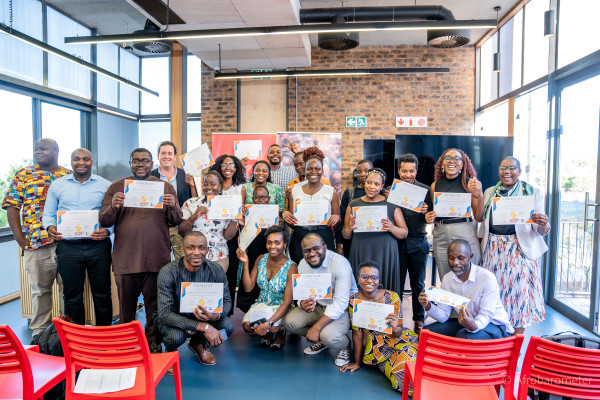
“Writing never stops. This is the starting point. Take the lessons that you have learnt here and demonstrate to the world that not only can we produce our own data, but that we are capable of analysing it,” Afrobarometer surveys director Boniface Dulani told up-and-coming researchers at the closing ceremony of the Afrobarometer (https://www.Afrobarometer.org/) Pretoria summer school on Friday.
The three-week training programme equips African scholars with solid skills in research design, survey methodology, and the use of social statistics. Afrobarometer manages the programme in collaboration with the University of Pretoria's Future Africa, a pan-African research institute pioneering approaches to research and innovation on the continent and beyond.
“One thing that excites me is not only do we have access to the [Afrobarometer] data, but as Africans, we also understand the context from which the data comes,” Dulani added.
In his remarks to the group, Neeraj Mistry, deputy director of Future Africa, said, “In a world of mis- and disinformation, we need solid data and good analysis of it. So we are relying on you to give us the evidence base, to give us real-time analysis from the ground from real people's contributions. That's the kind of evidence that we need in order to make change happen.”
The 19 summer school participants – 50% women – represented 13 countries: Benin, Botswana, Ghana, Kenya, Lesotho, Madagascar, Malawi, Mozambique, Namibia, Nigeria, South Africa, Tanzania, and Uganda.
Reflecting on the summer school experience, David Asante-Darko from the Ghana Center for Democratic Development commented, "The highlight of my Afrobarometer summer school was my exposure to the diverse ways in which Afrobarometer data can be analysed to speak convincingly to African realities.
“As a member of an African community dedicated to the fight against the decline of democracy, it is assuring to have discovered that I have unfettered access to a wealth of credible and unbiased data,” Asante-Darko further noted.
Another participant, Caroline Nakayiza from Uganda, remarked, “As a data collector, I have picked a lot from the summer school. It has been a great journey – I have explored a new country and made new friends and connections.”
After weeks of intense learning, the participants are producing research papers that will feed into Afrobarometer's publications series, advancing the organisation's goal to “let the people have a say!”
Distributed by APO Group on behalf of Afrobarometer.
For more information, please contact:
Asafika Mpako
Afrobarometer communications coordinator for Southern Africa
Email: ampako@afrobarometer.org
Telephone: +27 83979 8299
Visit us online at www.Afrobarometer.org
Follow us on:
Twitter: https://apo-opa.info/3jYM2la
Facebook: https://apo-opa.info/3K0t6gq
YouTube: https://apo-opa.info/3Ysf4IU
Visit us online at www.Afrobarometer.org
Follow our releases on #VoicesAfrica.
About Afrobarometer:
Afrobarometer (AB) is a trusted source of high-quality data and analysis on what Africans are thinking. With an unmatched track record of more than 370,000+ interviews in 42 countries, representing the views of 75% of the African population, AB is leading the charge to bridge the continent's data gap. AB data inform many global indices, such as the Ibrahim Index of African Governance, Transparency International's Global Corruption Barometer, and the World Bank's Worldwide Governance Indicators. The data are also used for country risk analyses and by credit rating and forecasting agencies such as the Economist Intelligence Unit. All AB data sets are publicly available on the website (https://www.Afrobarometer.org) and may be analysed free of charge using AB's online data analysis tool (https://apo-opa.info/3lVrwlT).
About Future Africa at the University of Pretoria:
The University of Pretoria established the Future Africa initiative as a platform to develop leadership in transdisciplinary research in Africa. Future Africa is a hub for African and global research networks to address the challenges that hamper transformation toward a prosperous, equitable, and sustainable future in Africa.
As organisations continue to become more digitised, throughout 2023 Africa remains one of the world regions most targeted by cybercrime. At a recent press conference in Johannesburg, Kaspersky (www.Kaspersky.co.za) shared some insights and statistics related to the regional threat landscape in the third quarter of 2023 and made forecasts on how the situation is going to develop in 2024.
Web threats
Web threats are Internet-based threats that expose people and computer systems to harm online. There was a 24% increase in the number of corporate users affected by web threats from Q2 to Q3 2023 in South Africa. However, comparing Q3 2022 to Q3 2023, there was an 8% decline in the number of corporate users affected by web threats.
Phishing
Phishing is a type of Internet fraud that seeks to acquire a user's credentials by deception. It includes theft of passwords, credit card numbers, bank account details and other confidential information.
Phishing attacks detected in Kenya in Q3 2023 increased by 32% compared to Q2 2023 and by 12% compared to Q3 2022. In Nigeria, there was a 12% increase in phishing attack detections in Q3 2023 compared to Q2; however, compared to Q3 2022, the number of phishing detects decreased by 8%.
Attacks on Industrial Control Systems
Africa is among the regions with the highest number of detected attacks on industrial control systems (ICS computers). ICS computers are used in energy and mining sectors, automotive manufacturing, building automation infrastructures and other spheres to perform a range of operational technology functions – from the workstations of engineers and operators to supervisory control and data acquisition servers.
In Q3 2023, according to Kaspersky ICS CERT¹, attacks were detected on 32% of ICS computers in Africa. In South Africa, attacks were detected on 22% of machines, in Kenya – on 28%, in Nigeria – on 25%. Globally, malicious objects were detected on 25% of ICS machines in Q3 2023.
Attacks on the Internet of Things
The number of attacks on Internet of Things (IoT) devices has been increasing exponentially over the last years globally. This is related both to the activity of criminal actors and to the increasing number of IoT devices that are in use by individual users, businesses, and production facilities. IoT devices include not only wearables and smart home appliances, but also smart city systems, self-driving cars, automated retail checkouts, and other smart devices for home and business use. These devices can collect and transfer data over a wireless network without human input. Cybercriminals use networks of infected smart devices to conduct DDoS attacks or as a proxy for other types of malicious actions.
In Q3 2023, South Africa accounts for 28% of attacks on IoT devices that were detected by Kaspersky in the African region. Kenya accounts for 12% of attacks on IoT devices, and Nigeria – for 6%. All these attacks were spotted on Kaspersky IoT honeypots – decoy devices used to attract the attention of cybercriminals and analyse their activities.
“In forecasting the development of the cyberthreat landscape for 2024, we anticipate a dynamic evolution of cyberthreats marked by an upsurge in state-sponsored cyber-attacks, and 'hacktivism' will become one of the norms of cyber-warfare,” comments Bethwel Opil, Enterprise Client Lead at Kaspersky in Africa. “The prevalence of accessible generative AI is set to fuel an expansion of spear-phishing tactics, while the creative exploitation of vulnerabilities in mobile and IoT devices will be on the rise. Businesses today should be proactive and counter these cyberthreats with advanced technologies such as threat feeds, security information and event management systems, endpoint detection and response solutions, and tools with digital forensics and incident response features.”
To protect organisations from cyberthreats, Kaspersky experts recommend:
Reference:
¹Kaspersky Industrial Control Systems Cyber Emergency Response Team
Distributed by APO Group on behalf of Kaspersky.
About Kaspersky:
Kaspersky is a global cybersecurity and digital privacy company founded in 1997. Kaspersky's deep threat intelligence and security expertise is constantly transforming into innovative solutions and services to protect businesses, critical infrastructure, governments and consumers around the globe. The company's comprehensive security portfolio includes leading endpoint protection, specialized security products and services, as well as Cyber Immune solutions to fight sophisticated and evolving digital threats. Over 400 million users are protected by Kaspersky technologies and we help over 220,000 corporate clients protect what matters most to them. Learn more at www.Kaspersky.co.za.
In homes across the country, many South Africans are preparing for the traditional spruce-up ahead of the festive season. Our teens may roll their eyes as we cajole them to take down the curtains, but we just like to start the new year with a clean slate. It’s as much in preparation of welcoming family …
Home Affairs Minister welcomes BMA’s sting operation at Beitbridge
Home Affairs Minister, Dr Aaron Motsoaledi, has welcomed the commendable management of South Africa’s borders by the Border Management Authority (BMA).
This follows a successful sting operation at the Beitbridge port of entry on Saturday.
The BMA border guards, the Counter Corruption and Security Services Branch of the Department of Home Affairs (DHA) and members of the South African Police Service (SAPS) conducted a sting operation at the port of entry wherein 42 buses from Zimbabwe were stopped and searched.
During the search, 443 unaccompanied minors under the age of eight were found in the buses being brought into South Africa with no consent of parents or guardians.
“The hard work of the Border Management Authority is commendable, showing we’re pulling out all stops to prevent acts of crime and illegal entry into the country. Clearly the BMA is hard at work and is making inroads in effective border law enforcement,” Minister Motsoaledi said in a statement.
All persons in the 42 buses were refused entry into South Africa, and after engaging with the Zimbabwean Authorities, they were all taken back to Zimbabwe, including the children.
All the children who were found, were handed over to the Zimbabwean authorities for processing.
“We condemn in the strongest possible terms these acts of criminality especially where the interest of the child is at stake. It’s unacceptable that these minors were not with their parents or guardians throughout this ordeal.
“Protecting children, especially in this period of the 16 Days of Activism for No Violence against Women and Children Campaign, is paramount,” Minister Motsoaledi said.
In the same night, 150 adult Zimbabwean nationals were also apprehended and prevented from entering the country.
“The BMA, Home Affairs officials and members of the SAPS are on the ground establishing all relevant details of the incident,” BMA Commissioner, Dr Mike Masiapato said.
“Further work is being done and will continue to be done to ensure detection of all perpetrators in order to bring all of them to book,” he said.
“The entire episode at Beitbridge shows great achievements of the BMA and in a very short space of time. It’s a good sign in tackling sharply the outcry on porous borders.
“We’ll continue relentlessly to act swiftly in enforcing immigration and other laws in the interest of national security and safety of all persons in the country, especially during this peak period, the festive season, and beyond,” Minister Motsoaledi said. – SAnews.gov.za
Edwin
Tue, 12/05/2023 - 08:46
Leading African law firm, Bowmans, has enhanced the breadth and depth of its offering in banking and finance with the appointment of Pride Jani as a partner in its Johannesburg office. ‘Pride has extensive experience advising clients, lenders and borrowers on finance transactions and structures, and will add new capacity to our General Finance Practice,’ …
Mzukisi Makatse recognised by Blueprint for Free Speech
The holiday season is around the corner, and with the warmer weather enticing everyone outdoors, the KZN South Coast is: Destination…summer! There are endless outdoor adventures for the whole family to enjoy from the sea to the sky! “Adventure tourism and nature-based experiences are top of the list for many visitors, and we’re so fortunate …
16 Days campaign: Spotlight on Captain Dhawrajh
The South African Police Service (SAPS) continues to highlight the work of its men and women in blue, who work tirelessly to put ruthless rapists and gender-based violence and femicide (GBVF) perpetrators behind bars.
One such officer committed to the fight against GBV is Captain Michelle Dhawrajh, who is attached to the KwaZulu-Natal Family Violence, Child Protection and Sexual Investigations (FCS) Unit.
With more than 20 years in the field, Dhawrajh still leads and conducts evening raid operations to trace wanted suspects in GBVF related cases.
To date, she has secured 20 life sentences and a collective 70 years imprisonment for rapists and GBVF perpetrators in and around Durban.
In total, 25 suspects are doing time in prison, thanks to her meticulous investigative prowess.
Dhawrajh is also passionate about raising awareness and sensitising communities to reporting rape and other sexual offences.
Amongst her many assignments, Dhawrajh secured the sentencing of a 35-year-old man to life in prison for raping his eight-month-old niece.
In light of the 16 Days of Activism for No Violence against Women and Children campaign, Dhawrajh has urged communities to stop alcohol and drug abuse, as they are major contributors to most crimes committed against women and children.
She further encouraged communities to get more involved and report cases to stop the scourge of GBVF. – SAnews.gov.za
Edwin
Tue, 12/05/2023 - 09:01
When his family relocated from Pietermaritzburg to the KZN Mid-South Coast in the middle of his high school career, Ayanda Masengemi didn’t realise the profound impact this move would have on his future trajectory. True to his nature, Ayanda continued to work hard and excel, finishing as one of the top students in his class …
No sensitive information taken during NPA offices break in
The National Prosecuting Authority (NPA) has moved to assure the country that no sensitive information, dockets or files were taken during a break in at the Director of Public Prosecution’s office in the Free State.
According to NPA Northern Cape regional spokesperson, Mojalefa Senokoatsane, the break-in occurred during the early hours of Monday morning at the prosecutorial body’s Bloemfontein office.
“These criminals managed to break into the Office of the DPP, offices of Deputy Directors of Public Prosecutions (DDPP), the office of the PA (Personal Assistant) in the office of the DPP, as well as other offices of the other PA within the Office of the DPP. One [thing] the NPA can confirm is that during this break-in, four laptops and voice recorders were taken.
“Even though these criminals managed to break into this Central Nerve of Prosecutions in the province, the citizenry of the Republic and the Free State Province can rest assured that no sensitive information, dockets or files were taken, as they are not stored in these offices but have a secure area where they are safely secured and kept safe,” he said.
Senokoatsane emphasised that the break-in will not discourage the NPA from doing its work.
“The National Prosecuting Authority, even though shocked, disturbed, and disdained by these cowardly acts, will not be discouraged to continue prosecuting all cases without fear, favour, or prejudice.
“The security at the NPA Offices is taken seriously as these offices always have 24-hour security warm bodies, seven days a week. This break-in, which is an isolated case, does not render the security at these important prosecutorial offices as not being taken seriously,” he said.
A case has been opened with the South African Police Service.
“The Office of the Director of Public Prosecutions in the Free State would like to send a heartfelt appreciation to the South African Police Service, who promptly reacted to this emergency state and began their investigations.
“The crime scene was closed off and specialised units of the SAPS including the Forensic, Intelligence, and Investigations were on the scene in no time, DNA and fingerprints were collected at the scene and sent to the SAPS Forensic Laboratory.
“Investigations that are led by the South African Police Service are continuing in this matter. Members of the community who might have information regarding this matter are encouraged to provide the information to their nearest police stations or HAWKS Offices in Bloemfontein,” Senokoatsane concluded. – SAnews.gov.za
NeoB
Tue, 12/05/2023 - 09:24
Dr Nthabiseng Moleko is an Economist at Stellenbosch Business School The 2023 quarter 3 Labour Force Survey paints a grim reality. The unemployment crisis is not a recent development. It has been persisting for at least the past decade. Unemployment according to Stats SA a decade ago (quarter 3 of 2013) was at 4.9 million …
The Equanimity Wellness Centre was founded on the sincere desire to create a refuge for anyone in search of professional, trustworthy and compassionate therapeutic support. In the heart of Johannesburg, South Africa, Equanimity Wellness stands out as a facility implementing cutting-edge therapeutic practices, couched within a broader wellness framework, and delivered in an expertly curated, …
Palaeobiologist Anusuya Chinsamy-Turan speaks at GroundUp’s Science for the People seminar
Durban, 01 Dec 2023 – Following the noteworthy achievement of being awarded the prestigious Mandela Rhodes Foundation Äänit Prize, in September 2022, Dr Jessica Ronaasen, National Programmes Lead at the DO MORE FOUNDATION (DMF), in collaboration with key partners, has successfully spearheaded a transformational programme across South Africa. Their collective efforts have led to the …
SAPS 16 Days campaign: Spotlight on Sergeant Peter's outstanding work
As the country observes the annual 16 Days of Activism for No Violence against Women and Children campaign, the South African Police Service (SAPS) has undertaken to profile the work of its outstanding members.
Today the spotlight is on Sergeant Nombi Peter, a detective attached to the Mangaung Family Violence, Child Protection and Sexual Offences (FCS) unit in the Free State. She also forms part of the Mangaung District’s serial rape task team.
Peter’s childhood dream of becoming a police officer came true when she was enlisted in the service 14 years ago as a student constable.
She holds a degree in Forensic Investigation (2022), a diploma in policing (2016) and has completed various internal courses.
To date, Peter's sterling investigations have led to a collective number of five life terms and 305 years in prison for 31 rapists, who are now behind bars.
Peter joined the Mangaung FCS in 2018. Her recent career highlights include the sentencing of a 28-year-old convicted rapist to 20 years imprisonment by the Bloemfontein Magistrates Court on 18 October 2023 for the rape of a 13-year-old girl.
The accused was found guilty of rape, kidnapping and assault to cause grievous bodily harm (GBH). The accused attacked the victim at Phase Six informal settlement, Mangaung, in March 2021. He forcefully dragged the victim into his shack where he repeatedly raped her until he let her go the following day.
The accused threatened the victim by saying he would kill her if she discloses the incident to anyone.
A month later, the victim fell ill at school, which led to the discovery of her being pregnant following a visit to the hospital.
The victim then told her mother what had happened and the police were alerted. The case was assigned to Peter, who immediately commenced with her investigation.
The accused was arrested the same day and appeared before court where he was granted bail.
The accused, a Lesotho national, contravened his bail conditions and failed to appear in court. Peter left no stone unturned and through information she obtained, she re-arrested the accused in Phomolong earlier this year.
The accused remained in custody until he was sentenced. Peter says she resonates with victims of gender-based violence and femicide (GBVF) and along with her team, they continuously conduct campaigns within the communities they serve to create awareness on topics such as domestic violence, different forms of abuse, how to apply for a protection order and what to do when you are a victim of rape.
"Being a FCS investigator is my calling, therefore, I go beyond my desk and office hours to catch rapists. I urge community members to report crime to their nearest police station for investigations to commence immediately,” Peter said.
Peter flies the South African Police Service’s flag high as she continues to put more rapists behind bars. – SAnews.gov.za
Edwin
Mon, 12/04/2023 - 08:59
Local government should be covered by fulltime beat reporters
Local government is an important sphere of government and should be covered by fulltime beat reporters in newsrooms, writes Lakela Kaunda.
Local government is regarded as the most important sphere of government as it is closest to the people. It delivers basic services that people require daily, such as water, electricity, good roads, refuse removal and cutting grass on the verges of roads. It is also at the local government level that people experience the work of government directly. A citizen or resident may never see a Minister until the end of a government term, but they are likely to know the local mayor or councillor.
The local government sphere also bears responsibility for promoting local economic development and to provide a conducive environment for the private sector to thrive and create jobs in the respective municipalities. A dysfunctional or distressed municipality becomes a threat to social cohesion and to economic growth and development. It also becomes an obstacle to the achievement of the apex goal of building a better life for all, especially the poor and the working class, as promised by President Nelson Mandela in 1994.
There are 257 municipalities in South Africa, made up of eight metropolitan, 44 districts and 205 local municipalities. Essentially, given the country’s wall-to-wall local government system, everyone stays in a ward and every business enterprise is located in a ward. Due to the importance of local government, its work should be reported on consistently and continuously by the media. This should not be done only when there is a crisis, a scandal or major reports of corruption or maladministration in a particular municipality. Consistent reporting on municipal council meetings, analysing council budgets and expenditure, scrutinising and monitoring the delivery of services and infrastructure and covering ward committee meetings contributes to deepening democracy in the country as it promotes oversight and accountability and enhances the media’s watchdog role.
I undertook a research study of the role of mainstream commercial newspapers in deepening democracy in local government, for my public affairs doctoral thesis at Tshwane University of Technology. The study investigated the editorial policies and practices of newspapers and the model used for the coverage of local government, especially whether they had employed fulltime reporters or beat reporters to cover the sphere on an ongoing basis. Beat reporting is the practice of assigning special subjects to reporters for them to exclusively focus on, for example crime, sports, business, politics, or environmental affairs.
The study established that the press contributed meaningfully to deepening democracy through performing a watchdog role exposing corruption, maladministration or service delivery failures. However, this contribution was limited by the fact that local government was not prioritised as a special subject like politics, business or sports. Most newspapers do not have reporters that cover local government exclusively and assign general or political reporters on an ad-hoc basis. The study recommended a new model, the Media Watchdog and Development Model, which elevates local government to a special subject with fulltime reporters. The model also integrates the commercial liberal ideological outlook with the development communication paradigm. This means that the media would not ignore developmental stories such as the need for a bridge or road that would improve the lives of the people in a certain community. They would run such a story alongside a breaking news story which would boost newspaper sales and suit the commercial imperatives.
The beat reporting system is advantageous as it enables follow ups and staying with the story monitoring developments. When a building goes on fire in central Johannesburg every media house descends on the premises. After a few days or even less, the media would have relocated to other stories. A municipal reporter will stay with the story and provide updates on what has happened to the victims and survivors and whether all the deceased were identified as well as their names. They would scrutinise the discussions in council and subcommittees and keep track of the work being done by relevant municipal departments to eliminate the problem of dangerous and hijacked buildings in the city. The media would therefore play the watchdog and oversight role in a more systematic and institutionalised manner.
The study was also encouraged by the difficulties facing the local government sphere. Marked progress has been made in the transformation of local government and the delivery of services since the dawn of democracy in 1994. This has been outlined in the various studies including the Statistics SA’s 2022 Population Count Census result as released in October 2023 (Statistics SA, 2023 link). The Census indicated that access to basic services had generally shown an upward trend from 2001 to 2022. Over 80% of households in the country had access to piped water, either inside their dwellings or inside their yards. The results also recorded an improvement in refuse removal. There was an increase in households whose refuse was removed at least once a week by a local authority/private service from 52,1% in Census 1996 to 66,3% in Census 2022. Electricity access has also expanded with more than 90% of households having access to electricity for lighting. This is a marked increase from the 58% recorded in 1996.
However, the Auditor-General of South Africa (AGSA) releases annual audit reports which indicate poor governance, financial management and administration by municipalities, the point at which the services must be delivered. In the 2019/20 local government audit report, the AGSA announced that only 27 municipalities obtained clean audit outcomes, with only 28% being able to submit quality financial statements for audit purposes. The 2021/22 Municipal Audit Report described the local government sphere as characterised by accountability and service delivery failures, poor governance, weak institutional capacity and instability.
Municipal beat reporting is not only about bad news. It is also about reporting on positive developments in communities such as sporting and education achievements, entrepreneurial activities or work that build communities and which encourages community participation in improving the quality of life. In this way, the poor would not only feature in newspapers when there are violent protests in their residential areas or when they are victims of disasters. A key benefit for journalism is that local government beat reporting would develop a corps of expert reporters who understand the intricacies of local government, which is a highly legislated and regulated sphere.
An obstacle to beat journalism for local government could be the commercial constraints facing print media. The business model has changed. Scores of readers are migrating online and obtain their stories and updates from social media sources. Online giants such as Facebook or Google also provide stiff competition and grab the advertising spend. The effect of COVID-19 on the print media was also severe as newspapers faced both an advertising and circulation decrease which led to the closure of some newspapers and magazines as well as job losses. The South African National Editors Forum produced a report on the impact of COVID-19 on the media which outlines the devastation.
Commercial constraints notwithstanding, nothing can take the place of having informed journalists who focus on a particular beat and develop sources and expertise in a particular field. This is currently the case for the sports, politics and business beats. Local government should be elevated to the same level.
*Dr Lakela Kaunda is a former newspaper editor and government communication executive and is currently a deputy director-general in a national government department.
This article was published by Politicsweb on 1 December 2023.
Janine
Mon, 12/04/2023 - 09:49
Dark Fusion Technologies, the company behind the Simple Contract Language (SCL), has made groundbreaking progress in the race to develop smart contracts and tokens on Bitcoin’s Layer 1, becoming one of the first projects to accomplish this incredible feat. This revolutionary development holds massive potential for the tech industry and various customers & institutions alike, …
Holiday must-have: New Kasi Kruza ride-on hits Shoprite shelves South African toy manufacturer Hope Sonic’s brand-new Kasi Kruza ride-on motorbike, made almost entirely from recycled materials, is now available in Shoprite supermarkets nationwide. With a striking red and black colour scheme, and suitable for children aged 3-10 years, the ride-on retails for R349.99 and sports …