• Skip to main content
  • Skip to header right navigation
  • Skip to after header navigation
  • Skip to site footer
MyZA

MyZA

News, Directory, Events and Other Stuff

  • Social Media
  • Sport
  • World News
  • Home
  • Submit News
  • Directory
  • Events
  • Stratlec
  • TFSA
  • News
    • APO
    • Today’s Sport News
    • Todays Social Media and Tech Headlines
    • Today’s World News
    • Today’s SA Financial News
  • Contact
You are here: Home / Archives for agriculture

agriculture

19 November 2024

Close to 4 000 jobs on the cards as China-African Precious Metals expand operations in North West

Location: News

Close to 4 000 jobs on the cards as China-African Precious Metals expand operations in North West

The China-African Precious Metals Company has recently opened a newly refurbished gold processing plant, which will create close to 4 000 work opportunities in Orkney in the City of Matlosana Local Municipality, North West.

The plant, which was resuscitated to the tune of over R200 million, forms part of the company’s R2 billion investment at its Orkney operations in the province.

The official opening of the plant was attended by Minister of Mineral and Petroleum Resources, Gwede Mantashe, Premier of the North West, Kagiso Lazarus Mokgosi, Executive Mayor of City of Matlosana Local Municipality, Councilor Fikile Mahlope and former Acting Premier Nono Maloyi.

Mokgosi maintains this investment which will create close to 4 000 work opportunities for locals is a culmination of government’s investment initiatives aimed at addressing the scourge of unemployment and poverty in the province.

“This means all our investment initiatives from the sixth to the seventh administration were not in vain. Moreover, our ongoing efforts to lure investments and address the scourge of unemployment and poverty is yielding desired results particularly in economically depressed communities like this one,” Mokgosi said. 

More investment commitments are trickling in as the much-anticipated gas to power project in the same municipality will be announced before the end of the year. 

“Over and above this project, on the 28th of this month, we will be meeting with a delegation of business people from the Henan province of China, led by the Ambassador, to engage in various investment opportunities in mining, tourism and agriculture, which are mainly the three economic drivers of the province,” Mokgosi said.  

Mokgosi further said that these investment commitments come at a time when the province has recorded sixty-nine thousand job opportunities in the third quarter of 2024.

He said these efforts serve as a glimmer of hope in the province’s ongoing endeavours to create various socio-economic opportunities for the people of North West. – SAnews.gov.za

DikelediM
Tue, 11/19/2024 - 10:07
16 views
Read moreClose to 4 000 jobs on the cards as China-African Precious Metals expand operations in North West
18 November 2024

African Development Bank to Join World Leaders at the G20 Leaders’ Summit

Location: News
African Development Bank Group (AfDB)

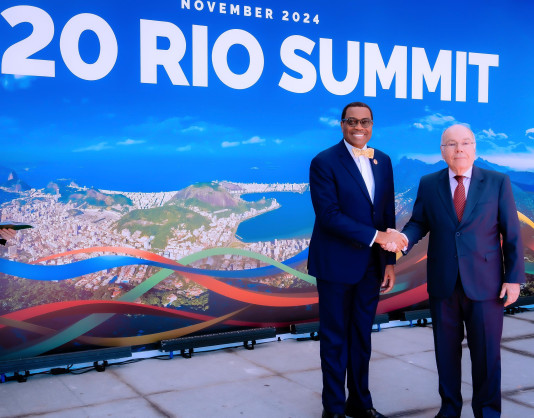
African Development Bank (www.AfDB.org) President Akinwumi Adesina is in Rio de Janeiro where he will reaffirm his commitment to ending hunger and malnutrition.

The theme of the G20 Rio Summit is “Building a just world and a sustainable planet”. It will be held from 18-19 November, and a major focus here will the G20's Global Alliance against Hunger and Poverty, an ambitious initiative led by the current G20 Chair Brazil, which seeks to unite developed and developing nations in eradicating hunger and addressing inequalities.

The Alliance will launch a range of coordinated actions which include expanding the production of healthy food and developing sustainable agriculture. Africa, which accounts for more than a third of the world's hungry people is central to that. According to the 2024 State of Food security and Nutrition in the world 20.4% of Africa's population are facing hunger.

“In Africa over 280 million people suffer from hunger, some 38% of the hungry people in the world” African Development Bank President Adesina stated at the 2024 World Food Prize Norman Borlaug Dialogue in Iowa last month.

“Hunger is the worst form of deprivation. The mind, the body, and the soul are shrivelled by hunger. Hunger strips away human dignity,” he said.

The African Development Bank, along with the World Bank and several other development institutions have affirmed support for the new Global Alliance initiative. Specifically, the African Development Bank and the Inter-American Development Bank have launched a campaign to use IMF Special Drawing Rights (SDRs) channelled through multilateral development banks under a hybrid financing mechanism, to scale up financing to back the effort.

The African Development Bank's Feed Africa (http://apo-opa.co/3ZazvNe) strategy under its High Five priority blueprint, steadfastly continues to bolster its objective of food security and resilience in Africa.

The Brazilian Presidency is building upon the progress achieved under the Indonesian and Indian G20 Presidencies in strengthening multilateral development Banks to become bigger, better and more effective institutions.

Brazil will hand over the baton of the chair of the G20 to South Africa at the end of the Rio summit.  The Group of Twenty or G20, comprises 19 countries and two regional bodies: the European Union and the African Union. The G20 members represent around 85% of the global GDP, over 75% of the global trade, and about two-thirds of the world population.

Distributed by APO Group on behalf of African Development Bank Group (AfDB).

Contact:
Amba Mpoke-Bigg,
Communication and External Relations Department 
email: media@afdb.org

About the African Development Bank Group:
The African Development Bank Group is Africa's premier development finance institution. It comprises three distinct entities: the African Development Bank (AfDB), the African Development Fund (ADF) and the Nigeria Trust Fund (NTF). On the ground in 41 African countries with an external office in Japan, the Bank contributes to the economic development and the social progress of its 54 regional member states. For more information: www.AfDB.org

Media files
African Development Bank Group (AfDB)
Download logo
Read moreAfrican Development Bank to Join World Leaders at the G20 Leaders’ Summit
15 November 2024

Spaza shops implicated in child deaths to be shut down

Location: News

Spaza shops implicated in child deaths to be shut down

President Cyril Ramaphosa has announced decisive measures to address the recurring food-borne illnesses that have claimed the lives of at least 22 children across the country.  

These include the immediate closure of spaza shops implicated in the deaths and stricter regulations to protect communities.

Addressing the nation from the Union Buildings in Pretoria on Friday, President Ramaphosa outlined three critical interventions to be implemented with immediate effect.

“Following the special meeting of Cabinet, we have decided to make the following interventions: The first intervention is to get hazardous pesticides off the street, the second critical intervention is to protect children from exposure to these substances, the third critical intervention is to prevent future outbreaks. The following measures will be implemented with immediate effect.

“The spaza shops which have been implicated in the deaths of children will be closed with immediate effect. Non-compliant businesses and shops linked to any poisoning incidents or found to unlawfully stock hazardous chemicals will be shut down,” the President said. 

To ensure compliance, all spaza shops and food-handling facilities must register with their respective municipalities within 21 days. 

“Any shop that is not registered within 21 days and does not meet all health standards and requirements will be closed,” President Ramaphosa said. 

The President’s address comes in response to 890 reported cases of food-borne illnesses across the country, with Gauteng, KwaZulu-Natal, Limpopo, Free State, and Mpumalanga the hardest hit. 

In recent weeks, food-borne illnesses have claimed the lives of at least 22 children. Last month there was a major food-borne incident in Naledi, in Soweto in which six children died, the youngest of them being six years old. 

Multidisciplinary Response teams activated

Soon after the deaths, a multidisciplinary team in government was activated to address the incidents, with Cabinet having met on three occasions to receive reports on them.

These teams included detectives from the South African Police Service, health officials, environmental inspectors, Department of Agriculture officials and officials from the National Consumer Commission. 

The National Institute for Communicable Diseases was requested to conduct scientific tests and has established that the deaths of the six children in Naledi can be directly attributed to a highly hazardous chemical used as a pesticide known as Terbufos.

The President said few words can adequately convey the sadness and pain of the nation.

“Our thoughts and prayers are with their families as they go through the pain and the anguish of losing their children. Losing a child is something no parent should ever have to endure,” he said. 

Nationwide Inspections and Crackdowns

President Ramaphosa said that the South African Police Service and other law enforcement agencies will be required to investigate, arrest and prosecute offenders. This will involve close cooperation with all registered manufacturers and suppliers. 

“Integrated multidisciplinary inspection teams will undertake compliance inspections of food handling facilities, manufacturers, distributors, wholesalers and retailers. This will include spaza shops and general dealers.

“A massive campaign of door-to-door inspections of all spaza shops, tuck shops and other informal traders will be undertaken, starting with Gauteng and KwaZulu-Natal,” he said. 

This will be undertaken by inter-disciplinary inspections teams consisting of the South African Military Health Services, environmental health practitioners, the South African Police Service, the National Consumer Council, labour inspectors and others.

The President emphasised that the initial phase of inspections will need be completed within a month.

Registered manufacturers and distributors of Terbufos will also be scrutinised to ensure compliance and prevent misuse. The supply chain for hazardous chemicals will face tighter regulations, including strengthened protocols for traceability, repackaging, and disposal.

“All registered manufacturers of Terbufos will be inspected to ensure that no products are diverted into the non-agricultural market. The supply chain process for distribution and sale of Terbufos will be investigated to ensure that controls are being adhered to and that there is accountability for who they sell to,” the President said.

President Ramaphosa emphasised that regulations and protocols on the traceability, repackaging, destruction and sale of pesticides, insecticides and foodstuffs will be strengthened. 

Turning to the second intervention on the protection of children from exposure to harmful substances, the President announced that the Department of Basic Education will immediately issue a circular to Provincial Education Departments and all schools on best practice protocols for preventing and managing food-borne illnesses within schools.

The third intervention, which is aimed at preventing future outbreaks, is that the President has directed that joint operational and intelligence structures be established at a national and provincial level to deal with the crisis.

“Our local municipalities will be required to take urgent action to address the problem of rat infestations by cleaning cities and towns and removing waste. All municipal landfill sites will be required to comply with the National Environmental Management Waste Act. Failure to comply will result in strict sanctions that include directives, compliance notices and criminal enforcement,” he said. 

The President said a Ministerial Health Advisory Committee was being established to develop medium- and long-term prevention measures. This committee will consist of experts such as toxicologists, paediatricians, chemical pathologists, epidemiologists, forensic pathologists and others.

“All deaths of patients 12 years and below will be made notifiable in the Notifiable Medical Condition Surveillance System. An electronic medical certification of death system will be established to allow the National Department of Health to access cause of death information immediately after a death is certified,” he said. 

President Ramaphosa said the work of the Biosecurity Hub will be strengthened to better control the entry of products, organisms and harmful biological products at ports of entry.

The Department of Agriculture is in the process of reviewing and updating all relevant legislation with respect to the regulation and authorisation of agricultural pesticides for use in South Africa.

WATCH I President Cyril Ramaphosa addresses nation on food safety actions

The President announced a joint fund of R500 million to support small businesses, particularly township and rural convenience shops. The funding will cover refurbishment, technical training, and compliance support.

“A joint fund of R500 million will be established by the Departments of Trade, Industry and Competition and Small Business Development to support township and rural businesses, including community convenience shops.

“The funding will be for the refurbishment of businesses and non-financial support in terms of technical skills, regulatory compliance and capacity building,” he said. 

The President said that as government undertakes these interventions and measures there is a lot that parents can do to protect their children. – SAnews.gov.za


DikelediM
Fri, 11/15/2024 - 21:41

195 views
Read moreSpaza shops implicated in child deaths to be shut down
15 November 2024

Government commends progress made in Lesotho Highlands Water Project maintenance

Location: News

Government commends progress made in Lesotho Highlands Water Project maintenance

Water and Sanitation Deputy Minister, David Mahlobo, has commended the progress made in the Lesotho Highlands Water Project (LHWP) tunnel maintenance operations, which started last month.

Mahlobo and Deputy Minister Sello Seitlholo led an inspection of the maintenance operation at the Lesotho Highlands Water Project tunnel in Clarens, Free State, on Friday.

The joint maintenance operation by Trans Caledon Tunnel Authority (TCTA) and the Lesotho Highlands Development Agency (LHDA) is currently underway, following the tunnel system closure on 1 October 2024.

The TCTA is undertaking the maintenance operation on Delivery Tunnel North within South Africa, and LHDA will focus on the transfer tunnels at the Muela hydro power station in Lesotho.

Speaking at the inspection, Mahlobo commended the TCTA for the quality of the work delivered since the tunnel shutdown on 1 October 2024.

Mahlobo emphasised the ability of the two nations to cooperate and share the resources, noting that there are rivers that are flowing in between the neighbouring countries of South Africa, Lesotho, Eswatini, Namibia and Botswana.

“This trans-boundary cooperation is one of the things that we need to promote because in other parts of the world, there’s conflict around the issue of sharing water,” Mahlobo said.

Mahlobo highlighted the other advantages, which benefit both South Africa and Lesotho.

“In Lesotho, they have a hydro power station to power the system. It’s clean energy… At the very same time, this side, we are able to supply [water] for domestic use and other economic uses, whether it is agriculture industries, powering a number of communities and provinces (sic).

“The water… touches more than 13 million beneficiaries because it touches the province of Free State, Northern Cape, North West, Gauteng, and it also touches Mpumalanga. That is the scale of it and it is massive,” Mahlobo said.

The Deputy Minister said the Lesotho Highlands Water Project was completed by the democratic government, as it was commissioned in 1998.

South Africa’s richness in engineering

Mahlobo said South Africa is rich with skilled people in engineering, science and technology.

“[The LHWP] is a very sophisticated and complex system, where you have to go through the mountains, and you can see very serious engineering just to put [up] infrastructure of this nature. You can see the technology that is used…

“There is a need for continuous maintenance when you have assets. Therefore, investing in an asset gives you a longer life span and this one is going to extend the life span for the additional 20 years,” Mahlobo said.

The Deputy Minister called for reduced water losses, reiterating that every drop of water counts.

Support for municipalities

Mahlobo reiterated government’s support for all the municipalities that are directly or indirectly affected by the LHWP system.

“We are satisfied that the system will be managed, [but we acknowledge] it will remain vulnerable because it is a life system. It must be monitored from time to time, [hence] the weekly meetings happening every Wednesday to oversee the work. We want to encourage the workers to continue to do a good job and we are very proud of the work they do.

“Our call for citizens to use water sparingly still remains. In as much as water will continue to be available, it must be used sparingly,” Mahlobo said.

The LHWP maintenance is expected to be completed on 31 March 2025. – SAnews.gov.za

GabiK
Fri, 11/15/2024 - 14:59

60 views
Read moreGovernment commends progress made in Lesotho Highlands Water Project maintenance
13 November 2024

SA strengthens bilateral ties with Egypt

Location: News

SA strengthens bilateral ties with Egypt

International Relations and Cooperation (DIRCO) Minister Ronald Lamola, along with a business delegation, will today undertake a working visit to Cairo, in the Arab Republic of Egypt, to co-chair the South Africa-Egypt Political Consultations.

The Minister will co-chair the consultations with his counterpart, Dr Badr Abdelatty, the Minister of Foreign Affairs, Emigration and Expatriate Affairs of the Arab Republic of Egypt, from 13 to 14 November. 

South Africa and Egypt enjoy cordial political, economic and social relations following the formal establishment of diplomatic relations on 29 March 1995. These relations are historical and based on friendship, solidarity and collaboration between the peoples of both countries.

The Joint Commission for Cooperation (JCC) that exists between the two countries is a structured bilateral mechanism that provides a platform for political, economic, social, cultural, scientific and technical cooperation between the two.

“We will be accompanied by a South African business delegation consisting of close to 50 companies. The delegation will explore further investment and trade opportunities across a range of economic sectors.

“The working visit will provide an opportunity to exchange views on regional, continental, and global issues of mutual interest, with an emphasis on the conflict in Sudan. Before the conflict, Sudan was already experiencing a severe humanitarian crisis,” Lamola said during a media briefing on Tuesday.  

Lamola said the long-term political instability and economic pressures left 15.8 million people in need of humanitarian aid, and that the conflict has only exacerbated these conditions, leaving 25.6 million people -- more than half of Sudan’s population -- in need.

“The brutal conflict has forced more than 11 million people from their homes. The vast majority (over 8.1 million people) remain within Sudan, representing the largest displacement crisis in the world. 

“Furthermore, the session will also reinforce the importance of accelerating efforts towards the implementation of the African Continental Free Trade Agreement and in consolidation of Africa’s Agenda 2063,” Lamola said. 

The working visit will further reinforce the commitment by both countries to expand and strengthen political and economic relations.

South Africa and Angola strengthen economic ties 

On the 1st of November 2024, the Minister undertook a working visit to Luanda, Angola, for political and diplomatic consultations. 

Discussions included preparations for the upcoming State Visit by President João Manuel Gonçalves Lourenço to South Africa. 

“It was agreed that this visit should reaffirm the existing bilateral relations, underpinned by a strong economic partnership. We informed our counterpart that a business forum will also be organised during the visit, with the participation of companies from both countries, focusing on sectors such as agriculture and agro-processing, mining, energy, transport, healthcare, tourism and education,” Lamola said.  – SAnews.gov.za

DikelediM
Wed, 11/13/2024 - 09:44

278 views
Read moreSA strengthens bilateral ties with Egypt
12 November 2024

KZN commits to economic development, investment growth toward 2030

Location: News

KZN commits to economic development, investment growth toward 2030

KwaZulu-Natal Premier, Thamsanqa Ntuli, has underscored the commitment to economic development, trade, and investment growth toward 2030, aligned with the province's broader strategic priorities.

Ntuli reiterated the province’s commitment during the KwaZulu-Natal Trade and Investment Conference currently underway at the Inkosi Albert Luthuli International Convention Centre in Durban.

The two-day conference, which started on Monday, aims to promote, brand, and market KwaZulu-Natal as an investment destination, identify and develop investment opportunities, among others.

The conference brings together investors, government leaders, and industry captains to explore and amplify the province’s status as a top investment destination.

Delivering his keynote address on Monday, Ntuli highlighted that over the past decade, KwaZulu-Natal has attracted significant investments in key sectors, especially through developments at the Durban and Richards Bay Ports, two of Africa’s largest and busiest maritime hubs.

“Enhanced container capacity, automation, and infrastructure upgrades have strengthened KZN’s position as a regional logistics powerhouse. Similarly, the Dube Trade Port, adjacent to King Shaka International Airport, has drawn over R2 billion in investments, cementing its role in warehousing, logistics, and agriculture, including the Dube AgriZone, a major hub for export-focused agri-business,” Ntuli said.

Reflecting on the 2019 Provincial Trade and Investment Strategy’s achievements and areas for intensified effort, Ntuli said the strategy targeted R76 billion in new and expansionary investments by 2024. This is alongside the creation of approximately 68 000 jobs and an increase in the province’s national export value to R1.28 trillion.

While projections indicate that the targets may not be fully met by the year’s end, the Premier emphasised the need to redouble efforts in investment initiatives.

“The Richards Bay Industrial Development Zone (RBIDZ) has fuelled growth in heavy industry and energy, particularly in metals like aluminium and steel, generating jobs and boosting export potential.

“Renewable energy investments, particularly in biomass and solar, have diversified KZN’s energy landscape, with biofuel production from the sugarcane industry enhancing the province’s green economy credentials.”

Growth in the agricultural sector

The Premier also highlighted the province’s strong agricultural sector, which has attracted investments in agro-processing, and supporting industries including sugar refining, dairy processing, and timber.

The Premier said this growth is further supported by a thriving food and beverage industry, pharmaceutical, and packaging sectors, benefiting from proximity to key ports and an expanding consumer base.

Tourism

He said tourism also remains central to KZN’s economy, supported by new hospitality investments, including the reopening of the international Hilton Hotel and the Durban Beach promenade renewal.

READ | Mayor welcomes re-opening of the Hilton Hotel in Durban
 

Noting KZN’s absence from many long-haul tourist packages, Premier Ntuli stressed the importance of positioning the province as a key destination for international tourism.

Ntuli highlighted several strategic assets crucial to the province’s competitive advantage, and these include expanded port capacities, Special Economic Zones (SEZs) like Richards Bay and Dube TradePort, and streamlined regulatory and tax incentives to attract foreign and local investments.

The Premier urged stakeholders to seize the opportunities presented by the African Continental Free Trade Area (AfCFTA), which offers KZN unprecedented access to a $3.4 trillion market.

Partnerships 

The Premier also addressed issues in freight rail services and port bottlenecks, emphasising that public-private partnerships could unlock efficiencies.

He further called attention to KZN’s role in automotive manufacturing, underscoring opportunities in electric vehicle (EV) component production to tap into Africa’s growing EV market.

“Sustainable growth initiatives, including green hydrogen, biomass, and digital innovation, are essential for positioning KZN as a leader in the renewable and digital economies. Collaboration with local universities and technology firms is building a skilled workforce to support industries like IT, finance, and business outsourcing, further enhancing KZN’s role as a technology and logistics hub,” Ntuli said.

The Premier emphasised the importance of resilient infrastructure, including sustainable energy investments, and inclusive growth that extends to all municipalities, cities, and rural areas.

He issued a call to action for deeper engagement with rural and municipal stakeholders, ensuring these areas are active participants and beneficiaries in KZN’s economic growth. – SAnews.gov.za


GabiK
Tue, 11/12/2024 - 13:35

16 views
Read moreKZN commits to economic development, investment growth toward 2030
11 November 2024

Food borne poisoning claims 23 lives

Location: News

Food borne poisoning claims 23 lives

Twenty-three people in Gauteng have died as a result of food borne-related poisoning after consuming food from spaza shops.

The majority of the deaths have been children between the ages of six and nine.

This is according to Premier Panyaza Lesufi who on Sunday updated residents on the implementation of by-laws to govern spaza shops.

“The first uniform approach across the province was to adopt a mechanism of reporting because we have so many deaths that are taking place that we want to isolate those that are food borne and those that need our immediate attention.

“The Department of Health has been given that task. They’ve given us their preliminary report, and in that report, they’ve indicated that the deaths that have been registered thus far. Today, we can confirm that we are at 23 [deaths] which is a sad thing,” he said.

He added that a large number of the incidents occurred within schools with the rest being within the community.

Furthermore, at least 441 cases of food poisoning have been reported throughout the province.

“Some of the people were either discharged or they just showed the symptoms of vomiting, stomach aches and related,” Lesufi said.

The Premier said from now on, the provincial government will “develop a template” that will be used by medical facilities, schools and community centres so that the province “can be in a position to track the areas that need immediate attention”.

“The Department of Health…will then develop a common template that will be utilised as a mechanism and then we’ll utilise the law enforcement agencies in terms of the cases that they have to ensure that we have the right figures.

“To us this is important because that becomes the base level of understanding the problem and it becomes the area in which we can record, trace and where intervention is needed, we can be in a position to make that intervention.”

Cracking down

Lesufi told the media that the provincial government has taken the decision to ban an agricultural pesticide that has been found to be at the root of some of the deaths.

“The MEC for Agriculture [Vuyiswa Ramokgopa] will formulate the approach on how to deal with that substance. We have agreed…that that substance is banned in our province and that it must not be found in any shops, it must not be found in any informal traders and that the law enforcement agencies will assist us to eliminate it where possible.

“But those that are authorised…the Department of Agriculture will be the institution that will give the licensing and the permission to utilise that,” he said.

The Premier added that because by-laws across municipalities are different in managing businesses – including spaza shops – a new uniform approach will be used.

“We have now formally adopted a draft gazette that was signed by the Minister of CoGTA [Cooperative Governance and Traditional Affairs, Velenkosini Hlabisa]. All municipalities in our province, without exception, will now adopt this gazette. These are new by-laws that have been developed nationally. 

“These by-laws explain how to register a business, how business should conduct themselves and all those related matters. [This] makes it easier for law enforcement agencies to monitor.

“The next resolution we have taken is the registration of businesses. All businesses – especially that are affecting the issue of our children – have to re-register. That’s the process that will also empower those that want to open or operate businesses, but they don’t have the financial muscle or the facilities,” he said.

Lesufi announced that stakeholder meetings are expected to be held to discuss the challenges.

Speaking at the District Development Model (DDM) Presidential Imbizo on Friday, President Cyril Ramaphosa assured the public that the issue is being addressed at the highest levels of government. 

READ | Food poisoning incidents managed at highest level, says President Ramaphosa

In his address, President Ramaphosa highlighted government's serious approach to the matter. 

The Department of Basic Education (DBE) said it was working with the Department of Health to develop safety guidelines for schools to effectively mitigate the risks of organophosphate pesticide exposure in school environments.

READ | Basic Education works to develop school safety guidelines

- SAnews.gov.za

NeoB
Mon, 11/11/2024 - 10:51

265 views
Read moreFood borne poisoning claims 23 lives
8 November 2024

Food poisoning incidents managed at highest level, says President Ramaphosa

Location: News

Food poisoning incidents managed at highest level, says President Ramaphosa

President Cyril Ramaphosa has addressed the tragic deaths of children due to food poisoning, assuring the public that this issue is being addressed at the highest levels of government.

Speaking at the District Development Model (DDM) Presidential Imbizo at Umnini Sportfield in Umgababa, KwaZulu-Natal, the President led attendees in a moment of silence for the young lives lost in recent weeks.

In his address on Friday, President Ramaphosa highlighted government's serious approach to the matter. 

This wave of tragic incidents has left communities devastated.

The President expressed his heartfelt condolences to the families, recognising the profound grief of losing a child. He said government would take immediate action to prevent further loss of life.

“We have in the last few weeks lost a number of school children, who have died as a result of some chemical that has been found in the food or snacks that they have been eating and buying from Spaza shops. 

“This matter is being addressed at the highest level. It’s been raised by a number of parents and our people, and I fully understand the concern. We join these families who have lost their children. It is very painful for a parent to lose a child... We pass our condolences to them," the President said. 

He said he will fully address these matters to provide a clear direction and ensure that no further children die needlessly. 

“All these matters are going to be fully addressed this coming week, and I will be able to then make a statement on how we are going to deal with this matter to enable us to ensure that no further children die needlessly in our country. 

“So, this matter is being handled at the highest level, and we’ve got our various departments and agencies working around the clock. I’ve directed that I should get reports as soon as possible so that we can take action to prevent further deaths of the young people of our country,” the President said.

The President urged parents to remain vigilant, encouraging them to ensure their children consume food only from trusted and safe sources. 

“I will say to us as parents, let us take care and ensure that our children only get food from places that we regard as safe places, but we will be coming out with a clear directive and direction on this matter,” the President said.

The President said that police have already made arrests in connection with the storage of hazardous chemicals on premises selling food, and new regulations governing the licensing of spaza shops are being enforced.

“We are also looking at the matter form an agricultural point of view. I have directed [Agriculture] Minister Steenhuisen to do proper research with regards to these chemicals. The Minister of Police is also seized with this matter, and we are working around the clock to enable us to look very closely at the incidents that have been happening. 

The Minister of Health, the President said, is also seized with this matter and has requested a number of agencies to do testing of the various chemicals from a health point of view. – SAnews.gov.za

DikelediM
Fri, 11/08/2024 - 18:58

83 views
Read moreFood poisoning incidents managed at highest level, says President Ramaphosa
8 November 2024

Mining Ministers Present Critical Mineral Expansion Strategies at CMA

Location: News

Energy Capital & Power
Download logo

The second day of the Critical Minerals Africa (CMA) Summit began with a Ministerial Forum, where mining ministers from Eswatini, Malawi, Argentina and representatives from Tanzania highlighted initiatives to advance the mining sector.

HRH Prince Lonkhokhela, Minister of Natural Resources and Energy for the Kingdom of Eswatini, described mining as a foundational pillar of economic growth for the country.

“Our recent high-resolution aerial survey has indicated the presence of copper, nickel and cobalt in the western regions, along with lithium and tantalum in the south,” he stated.

Eswatini is developing a Critical Minerals Strategy in collaboration with the Commonwealth Group, slated for completion by mid-next year, according to the minister.

Lonkhokhela stated that Eswatini is revamping its regulations to align with neighboring nations such as Mozambique and South Africa, aiming for knowledge sharing, resource pooling and regional cooperation on value addition.

Monica Chang'anamuno, Minister of Mining for the Republic of Malawi, emphasized the need for Malawi and Africa to align with the global conversation on critical minerals and the energy transition to seize emerging opportunities.

Chang'anamuno highlighted Malawi's vision to diversify its agriculture-dependent economy through its Agriculture, Tourism and Mining Strategy, prioritizing critical minerals as a driver of growth.

Malawi currently has several rare earth and lithium projects, including the Kasongo rare earth project, which employs 1,200 people, with plans to engage up to 10,000 throughout its lifespan, according to the Minister.

Malawi also discovered one of the world's largest lithium deposits, in partnership with a Korean firm and Rio Tinto, the Minister told delegates at CMA. Additionally, the nation aims to double its energy production to 1,000 MW by next year, with 232 MW allocated to support mining operations.

Maria Alejandra Vlek, Minister of Economic and Commercial Section of Embassy of Argentina in South Africa, highlighted the country's significant lithium potential, holding 22% of global lithium resources, with 180 critical mineral projects currently underway.

She said the country is deploying some 50 lithium projects, including an $800 million lithium facility, and seeks to leverage expertise and investment from African mining countries such as South Africa.

Venace Mwasse, Director of Tanzania's State Mining Corporation, stated “We are aware of the need to reduce emissions through critical mineral production and are committed to ensuring this while benefiting our communities.”

He added that only 16% of Tanzania's land has been surveyed, with a target to reach 50% as part of the country's Vision 2030 Strategy.

Distributed by APO Group on behalf of Energy Capital & Power.

Read moreMining Ministers Present Critical Mineral Expansion Strategies at CMA
8 November 2024

Boost for start-ups involved in space, Earth observation

Location: News

Boost for start-ups involved in space, Earth observation

Eight start-ups involved in space and Earth observation innovations have received funding through the Earth Observation Frontiers Enterprises Innovation Support Fund (NEOFrontiers EISF). 

Launched in 2021, the NEOFrontiers is an innovation funding mechanism designed to drive the growth of the local space sector through increased public investments. 

It seeks to stimulate collaboration, cooperation and innovation in the public and private South African Earth observation community.

The NEOFrontiers programme is managed by the South African National Space Agency (SANSA) and the National Research Foundation (NRF), and implemented with the support of Tuksnovation, the University of Pretoria's business and technology incubator. 

The programme subsidises enterprises with amounts ranging from R750 000 to R1 million for 12 months.

SANSA launched NEOFrontiers in 2021 through investment from the Department of Science, Technology and Innovation (DSTI). 

The first four NEOFrontiers projects were funded in 2022, while 2023 saw three start-ups supported. 

This year’s NEOFrontiers call saw eight successful start-ups submit brilliant proposals on mining, agriculture, infrastructure development, healthcare innovation, banking and financial institutions, as well as disaster risk reduction. 

These include Abiri Innovations, Agizo Solutions (Pty) Ltd, Aphelion World JV/Consortium, CreditAIs, Integrated Geoscience Solutions, Kgothatso Innovations, Regona Trading and YaAzi.

A total of 56 applications were received earlier in the year, 25 of which were eligible and allowed to pitch to an independent adjudication committee.

DSTI’s Acting Chief Director Itumeleng Makoloi said this programme unfolds at an opportune time when South Africa seeks to foster innovation.

“We need to create new ways of modernising areas such as agriculture, mining and manufacturing. We believe that this programme represents our shared vision to foster innovation, capacity building and strategic partnership across the public sector. 

"The joint efforts of DSTI entities, such as SANSA and the NRF, play a critical role in driving this vision.”

SANSA CEO, Humbulani Mudau, believes this platform will create a market pool for innovative solutions, for which space is a significant enabler and a value provider.

“I’m delighted to report that there is an equal split in gender representation. We have awarded the grant to start-up companies led and owned by four males and four females. This is good progress towards transforming the industry,” Mudau said. 

He said the NEOFrontiers is poised for greater strides in terms of direction and investments. 

“We’re indeed going to make this a flagship programme that will transform space-based ideas into relevant products and services that address societal and environmental challenges. As we do that, we’re going to be looking at increasing the competitiveness of the South African Earth observation industry for the benefit of the South African society.”

NRF CEO, Dr Fulufhelo Nelwamondo, is of the view that the initiative has the potential to gear small enterprises in the space sector to create job opportunities.

“The key focus is to support start-ups, SMMEs and entrepreneurs with funding. The reason for this is that we expect much more from our SMMEs to make sure that they can grow and employ more people.

“When they employ more people, there is an increase in new technology and service innovations coming out of their areas to a point that we can get even more people involved. Our rate of unemployment is increasing.”

The University of Pretoria’s Head of Innovation and Contracts Management, Advocate Lawrence Baloyi, said this has the potential to shape the future of South African space innovation. 

The next call to fund new SMMEs will be published before the end of 2024. – SAnews.gov.za

Gabisile
Fri, 11/08/2024 - 11:04

28 views
Read moreBoost for start-ups involved in space, Earth observation
7 November 2024

Farmers advised to implement weather wise measures

Location: News

Farmers advised to implement weather wise measures

The Department of Agriculture, Land Reform and Rural Development has advised farmers to be on the lookout for daily extreme weather warnings and implement risk-reduction measures.

The department said large parts of the country are currently reporting reasonable to poor veld and livestock conditions, and many dryland farmers have yet to receive sufficient rain before planting.

According to the Seasonal Climate Watch issued by the South African Weather Service (SAWS) on 31 October 2024, predictions indicate above-normal rainfall for most north-eastern summer rainfall regions during the entire summer period.

Some interior regions, however, still indicate below-normal rainfall during the mid- and late-summer seasons.

“These predictions may change if the El Niño–Southern Oscillation (ENSO) predictions become more certain towards a La Niña state and as such, continued monitoring of future seasonal climate watches are advised. Minimum and maximum temperatures are expected to be mostly above normal countrywide for the forecast period.

“Considering the seasonal forecast, farmers are advised to approach the season with vigilance and follow the weather and climate forecasts regularly to make informed decisions and wait for sufficient moisture before planting. Drought-tolerant cultivars should be prioritised in areas that have constantly been experiencing dry conditions,” the department said in a statement.

The department also advised farmers in regions that are in a reasonable condition to prepare in line with the expected conditions, in line with the seasonal forecast. However, the department warned against expanding planting land unnecessarily.

“Moreover, farmers should consider short-season cultivars. Farmers should also note that rainfall distribution continues to remain a challenge. Therefore, not all north-eastern areas of the country might receive the anticipated above-normal rainfall that is well distributed,” the department explained.

Farmers are also advised to put measures in place for pests and diseases associated with wet and hot conditions, as “above-normal rainfall and high temperatures are anticipated, especially in the north-eastern parts of the country”.

Farmers using irrigation have been urged to comply with water restrictions in their areas, and continually conserve resources in accordance with the Conservation of Agricultural Resources Act (CARA), 1983 (Act No. 43 of 1983).

The department further urged farmers to keep livestock in balance with the carrying capacity of the veld and provided with additional feed, including relevant licks.

“Livestock should be provided with enough water points on the farm, as well as shelter during bad weather conditions,” the department said.

Fire belts

The department further noted veld fires in several provinces, which resulted in damage to grazing land and infrastructure, and livestock fatalities.

“Winter rainfall areas are drying out, increasing favourable conditions for veld fires. Therefore, the creation and maintenance of fire belts should be prioritised as well as adherence to veld fire warnings.

“Episodes of heatwaves have occurred, as well as localised flooding and remain likely for the remainder of summer. Preventive measures should be in place and farmers are encouraged to implement strategies provided in the early-warning information issued.” 

The department said it will continue to monitor the seasonal forecasts and provide updates when necessary.

“In addition, the department will partner with all relevant stakeholders to continue raising awareness in the sector and capacitate farmers on understanding, interpretation and utilisation of early-warning information for disaster risk mitigation and response.” – SAnews.gov.za

GabiK
Thu, 11/07/2024 - 13:31

160 views
Read moreFarmers advised to implement weather wise measures
6 November 2024

Select Committee Receives Briefing From AG on Audit Outcomes for Departments of Forestry, Mineral Resources, and Electricity

Location: News

Republic of South Africa: The Parliament
Download logo

The Select Committee on Agriculture, Land Reform, and Mineral Resources received a briefing from the Auditor-General of South Africa (AG) on the audit outcomes of the Department Forestry, Fisheries and the Environment, the Department of Mineral Resources, and the Department of Electricity and Energy for the 2023/24 financial year.

The AG's findings revealed significant irregular expenditure, with the Department of Forestry, Fisheries and the Environment reporting R635 million and the Department of Mineral Resources and Energy disclosing R432.6 million. The AG also highlighted compliance issues, including a 100% non-compliance rate in the Free State pertaining to environmental management regulations in waste management and landfill site operations.

This was of great concern to the committee and members expressed their disbelief at the lack of accountability for such significant failures. Members asked for clarity on how the committee could ensure these matters are adequately addressed.

Additional questions arose regarding the operational performance of the National Energy Regulator of South Africa (NERSA). The committee noted that NERSA's effectiveness is crucial in guiding the energy sector, and members sought to understand its plans for improving compliance and monitoring energy distribution.

The role of the South African National Energy Development Institute (SANEDI) was also discussed, with committee members recognising its importance in supporting government initiatives for sustainable energy practices. The committee emphasised that SANEDI must fulfil its mandate to provide credible data and insights to inform energy planning and policy development.

The committee concluded that a workshop with the AG would be beneficial to enhance understanding and collaboration among members concerning the complex issues surrounding energy security and environmental management. This engagement would facilitate better oversight and accountability within the relevant departments, ultimately benefiting the citizens that the committee serves.

Distributed by APO Group on behalf of Republic of South Africa: The Parliament.

Read moreSelect Committee Receives Briefing From AG on Audit Outcomes for Departments of Forestry, Mineral Resources, and Electricity
5 November 2024

North West government wishes agricultural students well for end-of-year assessments

Location: News

North West government wishes agricultural students well for end-of-year assessments

As the academic year draws to a close, the North West Agriculture and Rural Development MEC, Madoda Sambatha, has extended his good wishes to all students at Taung and Potchefstroom Agricultural Colleges as they embark on their end-of-year assessments. 

Recognising the dedication and resilience these future agricultural leaders have demonstrated throughout the academic year, Sambatha commended their commitment to advancing their knowledge and skills within the sector.

“As you approach this critical phase of your academic journey, I want to take a moment to wish you all the best. 

“Your dedication to agricultural education will pave the way to a brighter future. Know that your hard work and perseverance are the seeds sown for a brighter future in agriculture. The department stands behind you, confident that your efforts will yield great success,” the MEC said. 

According to the provincial department, these assessments are set to continue until mid-November.

“A team of dedicated staff at both campuses has worked diligently to maintain a conducive learning environment, ensuring a seamless examination process, with secure venues, comprehensive exam schedules, and robust support services,” the department said.

The department encouraged communities and parents to rally behind these future agriculturists, providing emotional support and motivation during this critical period. 

“Their success will significantly contribute to the growth and development of the agricultural sector.” 

Through the Department of Agriculture and Rural Development, the Potchefstroom College of Agriculture was established as an agricultural training institution in 1909. 

Since then, it has grown into one of the largest agricultural colleges in South Africa. – SAnews.gov.za
 

Gabisile
Tue, 11/05/2024 - 11:02

8 views
Read moreNorth West government wishes agricultural students well for end-of-year assessments
4 November 2024

Blooming Good: How a Desert Garden Is Saving Endangered Plants

Location: News

The Richtersveld Desert Botanical Garden is a lifeline for plants species endemic to the region

Read moreBlooming Good: How a Desert Garden Is Saving Endangered Plants
3 November 2024

Deputy Minister Letsike addresses Village Economy Indaba

Location: News

Deputy Minister Letsike addresses Village Economy Indaba

Deputy Minister in the Presidency for Women, Youth and Persons with Disabilities, Mmapaseka Letsike, says more than 60% of jobs and 25% of the Gross Domestic Product (GDP) of the African continent comes from the agricultural sector which is rooted in the rural areas.

“This presents an opportunity for boundless growth through the potential that is inherent in the rural economy and for expansion to industries that ordinarily have not proliferated in rural areas,” Letsike said.

Speaking at the Village Economy Indaba ceremony held in the North West province, Letsike said over half of the population resides in rural regions, yet these areas often face higher poverty rates, lower access to basic services and limited economic opportunities.
“This divide is not only a matter of geography, it concerns social justice, economic necessity, and national progress.”

Letsike said rural areas in South Africa hold an enormous but often overlooked potential for lifting people out of poverty.

“When we invest in rural economies, we create jobs and boost incomes in areas where they are needed most. Imagine empowering smallholder farmers with access to better technology, training, and markets. 

“Not only could they increase their production, but they could also improve their livelihoods, leading to better education, healthcare, and overall well-being for their families and communities,” Letsike said on Friday.

The Deputy Minister said it was reported that about 75% of food produced on the continent is from small farms of less than 20 hectares, while 80% of the 51 million farms on the continent have an area less than two hectares.

“Developing rural economies helps curb urban migration. Every year, thousands of people leave rural areas, hoping for better opportunities in the big cities.

“By creating viable economic opportunities in rural areas, through initiatives such as The Village Economy Indaba whether in agriculture, renewable energy, tourism, or small-scale manufacturing, we can reduce the strain on our cities while enhancing quality of life in the countryside,” the Deputy Minister said.

Letsike said vulnerable groups such as women, youth, LGBTI (lesbian, gay, bisexual, and transgender or intersex), persons and persons with disabilities are the hardest hit by climate change.

“Therefore, renewable energy projects, like solar and wind farms in areas such as the Northern and Eastern Cape, to eco-tourism in Limpopo and the Western Cape, rural South Africa holds immense potential for green growth and sustainability, particularly as we engage the Just Energy Transition.

“By focusing on sustainable practices, we can preserve our environment for future generations while creating jobs today. 

“Many of us who have a rural background will understand that even our indigenous agricultural practices such as companion planting have been proven to promote soil health and maximise production on small pieces of land and it is still used by many farmers in rural areas,” Letsike said.  -SAnews.gov.za 


Edwin
Fri, 11/01/2024 - 14:03

55 views
Read moreDeputy Minister Letsike addresses Village Economy Indaba
1 November 2024

Gauteng Health MEC laments poor Ekurhuleni spaza food safety standards

Location: News

Gauteng Health MEC laments poor Ekurhuleni spaza food safety standards

Gauteng MEC for Health and Wellness, Nomantu Nkomo-Ralehoko, has lamented the lack of food safety standards at some of the local spaza shops in Ekurhuleni townships.

The MEC, together with City of Ekurhuleni officials and local councillors, conducted a food safety blitz in the area following the recent spate of deaths and children falling ill after eating snacks from local spaza shops across the country. 

Health Minister Aaron Motsoaledi announced this week that forensic tests unveiled those six primary school children from Naledi, Soweto, were killed by a highly toxic organophosphate called Terbufos.

The children aged between six and nine had allegedly eaten snacks from a foreign-owned local spaza shop that officials concluded was contaminated by this lethal pesticide.

READ | Death of six Soweto children linked to Terbufos

According to Nkomo-Ralehoko, who was part of the interdepartmental team that visited spaza shops on Friday, the initiative aims to educate the public about food safety and monitoring compliance with food safety standards by local businesses and protecting public health. 

Some of the things confiscated at one of the shops illegally occupying municipal land in Alra Park include spices and snacks and expired sour milk and meat. 

“Some of the foods are on the floor and not on the shelves. We’re going to close the shop to ensure they follow the right processes and channels. But this place mustn’t be open again for illegal trading even if it means the municipality has to demolish it,” she stressed. 

The MEC said she would also rope in the South African Health Products Regulatory Authority (Sahpra) team after it was discovered they were also selling “wrong” medication. 

“These spaza shop owners aren’t compliant and the building itself, they’re using municipal land and that’s why we are closing it,” she said while speaking outside the shop with journalists.

Last week, the National Department of Health rebuffed claims that government is neglecting the issue of children dying from suspected food poisoning.

However, government said the National Joint Operational and Intelligence Structure (NATJOINTS) is currently treating the recent spate of deaths as a national security threat.

“These increasing incidents in black communities have led to an unfortunate and unsubstantiated perception that authorities are turning a blind eye to this crisis and seem not to care about what’s happening to citizens. 
“Contrary to these beliefs and perceptions, this is what various authorities have been engaged in,” a statement from the department read.
READ | Food poisoning incidents treated as national security threat

The Health Minister has now involved the National Institute of Communicable Diseases (NICD) to assist in these cases. 
Meanwhile, the inspectors from the department are also working with the teams selected from the South African Police Service (SAPS), the Department of Agriculture and the National Consumer Commission (NCC), under NICD’s direct supervision. – SAnews.gov.za

Gabisile
Fri, 11/01/2024 - 13:09

178 views
Read moreGauteng Health MEC laments poor Ekurhuleni spaza food safety standards
1 November 2024

President calls for enhanced collaboration between national and provincial governments

Location: News

President calls for enhanced collaboration between national and provincial governments

President Cyril Ramaphosa has emphasised the importance of closer cooperation between national and provincial governments, urging ministers to engage more directly and consistently with their provincial counterparts.

The President was addressing a meeting between the National Executive and the Limpopo Executive Council, led by Premier Phophi Ramathuba, at the Polokwane Municipality Council Chamber in Limpopo on Friday. 

President Ramaphosa described today’s meeting as significant, marking the start of a programme by the National Executive to visit all the provinces in the coming months and to engage directly with their leadership. 

The President outlined the significance of the meeting as the first high-level bilateral engagement between the National Executive and provinces under the 7th Administration and the Government of National Unity (GNU). 

President Ramaphosa highlighted the necessity for such interactions to ensure that both spheres of government can effectively coordinate their efforts and address local needs.

“As we strive for greater alignment between the developmental priorities of national and provincial governments, there is a need for Ministers to engage more directly and regularly with their provincial counterparts.

“On the one hand, this enables the National Executive to have better line of sight of provincial programmes. On the other hand, it enables provincial executive councils to better align their developmental roadmap with national plans,” the President said. 
The President reiterated the constitutional mandate for cooperation among different spheres of government, stressing that effective governance must be transparent, accountable, and coherent in serving the people of South Africa. 

“Section 41 of the Constitution outlines the obligation of different spheres of Government to cooperate with one another, assist one another, coordinate with one another and consult on matters of common interest. 

“The spheres of government are to do so, while respecting the scope of their respective powers and functions,” the President said.
He called for a focus on overcoming structural challenges that hinder investment and job creation in the provinces. 
The GNU, the President said, has identified a set of key priorities for the term of its administration, which includes driving inclusive growth and job creation; reducing poverty and tackling the high cost of living, and building a capable, ethical and developmental State. 

He underscored the vital role provinces play in achieving these goals, particularly through the implementation of the Medium-Term Development Plan.

“Our collective focus now is on marshalling the necessary will and resources to finalise and implement the Medium-Term Development Plan. Driving economic growth that is inclusive and transformational is at the centre of our national agenda. 
“Provinces have a critical role to play in this effort.  Improving service delivery, accelerating job creation and growing provincial economies are as much a priority for provinces as they are for national government. 

“What will be critical in the coming months is a razor-sharp focus on the actions that we all need to take to enable provinces to leverage their respective endowments – be they avocados, minerals or citrus fruit – to ensure that that endowment is more effectively used for economic growth,” the President said. 

The discussion also highlighted the need for provinces to leverage their unique resources such as agriculture, minerals, and tourism to stimulate economic growth. 

President Ramaphosa noted the under-utilisation of arable land and the potential for improved tourism infrastructure as areas needing urgent attention.

Some provinces are extracting large amounts of minerals from the soil, but are not moving to another level. They need to start looking at the second level to beneficiate those minerals. 

“We need to move beyond diagnosis of problems. We need to look at how to overcome the obstacles to provincial endowments being successfully used for development,” he said. 

Premier Ramathuba and the provincial leadership were urged to identify obstacles to growth and to collaborate with ministers to formulate actionable strategies. 

President Ramaphosa pointed out that ongoing structural reforms in sectors, such as electricity and water management, are critical to unlocking provincial potential.

This engagement is intended to open channels of communication and foster a collaborative spirit, with the aim of ensuring that Limpopo and other provinces align their economic development plans with the national vision.

Limpopo perfectly positioned to lead in a number of key sectors

The President said this first engagement between the National Executive and the Limpopo Executive Council must set the tone and agenda for future cooperation.
 
“We have to set our collective sights on what must be done to ensure provinces' economic development plans align with the broader national economic vision. 

“Limpopo is perfectly positioned to lead the country in a number of key sectors, including agriculture, tourism, freight and logistics, and also mineral resources. The province is set to play a major role in the green economy transition. 

“Limpopo possesses a number of critical energy transition minerals, including platinum, and has been designated as a site for the proposed Hydrogen Valley. We are pleased with the work already underway in this regard,” the President said.

President Ramaphosa added that Limpopo, by way of geographical positioning, is South Africa’s gateway to the continent. 

He said the province is well positioned to strengthen South Africa’s links to the rest of the African continent under the African Continental Free Trade Area. 

The President called for innovative solutions and clear timelines to realise the full potential of provincial economies and improve the lives of citizens.

As government prepares for further engagements across the country, the focus remains on creating a capable and accessible governance framework that prioritises the needs of South Africans.

From here, President Ramaphosa will go to KwaZulu-Natal next week and then to other provinces. 

“Our plan is to go to each province over the course of one year. We engage with provinces on an ongoing basis through MinMEC [Minister and Members of Executive Council] meetings and other forums, and we engage with people through izimbizo. This is the government that we want to make more capable and accessible to the people,” the President said. – SAnews.gov.za


DikelediM
Fri, 11/01/2024 - 13:26

150 views
Read morePresident calls for enhanced collaboration between national and provincial governments
1 November 2024

Government accelerating land reform and redistribution

Location: News

Government accelerating land reform and redistribution

Accelerating land reform remains the key priority of government, says Deputy President Paul Mashatile.

The Deputy President announced in Parliament on Thursday that in the past five years alone, the Inter-Ministerial Committee (IMC) on Land Reform and Agriculture, through the relevant departments and State organs, redistributed 305 990 hectares of land. 

This includes 127 525 hectares allocated to women, 111 071 hectares to youth, and 2 781 hectares to people with disability between 2019 and 2024. 

Meanwhile, he said about 2.3 million people have benefitted from land restitution, where a total of R25 billion was spent on the restitution of 3 972 331 hectares. 

In addition, R22.5 billion has been spent on financial compensation for those beneficiaries who opted to receive financial compensation instead of the land being transferred.

The Deputy President was responding to a question from a Member of Parliament from the uMkhonto weSizwe Party who had asked about his role in leading government efforts to fast-track land reform and coordinating programmes to accelerate land reform and agricultural support. 

The MP asked whether the Deputy President intended to facilitate the introduction of a Bill by the government to amend Section 25 of the Constitution to give effect to expropriation without compensation instead of expropriation with nil compensation. 

“Regarding the matter of the introduction of a Bill to amend Section 25 of the Constitution, this is a matter that falls within the structures of Parliament. 

“Honourable Members would remember that the sixth Parliament established the Joint Constitutional Review Committee, which conducted public hearings in all the provinces of South Africa to get public inputs on the amendment of Section 25 of the Constitution.” 

The country’s second-in-command said this process culminated in the development of a Bill that was aimed at amending Section 25 of the Constitution to allow for expropriation of land without compensation. 

“However, the National Assembly could not pass this Bill since its support could not meet the required two-thirds majority vote for the 18th Amendment of the Constitution.” 

He told MPs that the current constitutional framework provides for the expropriation of property subject to just and equitable compensation. 

“To this end, Parliament has passed the Expropriation Bill which has been sent to the President for assent. The Bill provides for the expropriation of property for a public purpose or in the public interest and matters connected therewith.”

He assured Parliament that the agenda of accelerating land reform and land restitution will continue. 

“However, we are certain that once the President has completed his consultation process, and assented the Bill into an act, government will be in a better position to accelerate the pace of land reform, land restitution and sustainable development that will benefit all the people of South Africa.” – SAnews.gov.za

Gabisile
Fri, 11/01/2024 - 09:51

160 views
Read moreGovernment accelerating land reform and redistribution
31 October 2024

100 days in office: Advancing the strategic priorities of the GNU

Location: News

100 days in office: Advancing the strategic priorities of the GNU

By Deputy Minister Bernice Swarts

The first 100 days as Deputy Minister of Forestry, Fisheries, and the Environment, under the Government of National Unity (GNU), have been a period of significant learning and action. 

It has allowed me to engage closely with stakeholders in the sector, developing a blueprint to drive the implementation of the GNU's strategic priorities which are to fostering inclusive growth and job creation, reducing poverty and addressing the high cost of living, and building a capable, ethical, and developmental state.

The experience has been invaluable, providing me with a deeper understanding of the department’s mandate, core operations, and both domestic and international context.

Alongside Minister Dr Dion George and fellow Deputy Minister Narend Singh, we recently briefed the media on our progress in the department during this period. 

A key highlight of these 100 days has been the opportunity to engage with staff and various stakeholders, including the forestry sector, traditional leaders, firefighting personnel, community forest owners, young beneficiaries of departmental programs, field rangers from entities such as South African National Parks (SANParks), and industry players like the South African Weather Service (SAWS). These engagements have helped shape a shared vision for the department's future.

We kicked off our 100 days in the office by presenting the department's Budget Vote to Parliament on July 15, 2024. We delivered our department’s budget vote in a month where we celebrated our national unifying figure in the form of uTata Madiba – which seemed to tie in well with our mandate of unifying our people through the Government of National Unity.

In the first 100 days, we have initiated efforts to reengineer and repackage the department’s approach to wildland fire management. This involves building firefighting skills, especially in vulnerable rural communities, with a focus on women and youth. We aim to strengthen stakeholder engagement across both state and non-state actors to better deliver on our critical priorities.

As part of this initiative, I hosted stakeholder engagements with on the National Veld and Forest Fires Act, 1998 (Act No. 101 of 1998). These engagements were hosted with various stakeholders within the wildland fire management sector from both the North West and Free State. Some of the stakeholders who attended these engagements included local and provincial government departments, fire protection associations (FPAs) and other key players in the sector. 

Through these stakeholder engagements, I have instructed the officials to address challenges raised in these interactive engagements such as payment delays for FPAs, challenges on the use of government firefighting vehicles, training of FPA members as well as the clarification of the roles of different stakeholders. I am satisfied with the honest discussions and note the commitment of all parties to find practical solutions.

I have recently led the 2024 Forestry Summit at the Freedom Park in Pretoria. The Summit brought all stakeholders within the forestry sector under one roof to discuss pertinent issues within the sector such as the growth and transformation of the sector, forestry sustainability and the contribution of the sector in addressing climate change.

The Summit was interactive as it provided role players with an opportunity to freely engage with us on the challenges they face in the sector. What was even more fascinating was the involvement of traditional leaders who came from various parts of the country to raise issues their communities were facing. I am pleased with the decision that came out of this frank engagement, which includes plans to go to communities to address issues they have raised.

In the month of September, I had the privilege to lead both the launch and closing ceremonies of the 2024 National Arbor Month campaign. The launch was hosted at Freedom Park in Pretoria and the closing ceremony at Fort Cox Agriculture and Forestry Training Institute in Middledrift, Eastern Cape. A total of 6000 trees were planted in both the localities that hosted these ceremonies.

The Arbor Month campaign is aimed at raising awareness among South Africans about the importance of conserving, protecting, and planting trees for the benefit of both the environment and society.

As part of the Arbor Month launch, I planted the first tree to officially initiate the Forest of Freedom at the designated site at Freedom Park in honour of the heroes and heroines who contributed to South Africa's democracy and liberation struggle. The first 30 trees planted at the Forest of Freedom marks the 30 years of Freedom and Democracy in South Africa. World leaders and other luminaries visiting Freedom Park will get an opportunity to plant a tree in the Forest of Freedom, when it is ready. 

During the Arbor Month, I also took a deliberate decision to heighten the Presidential Ten Million Tree Programme, which is a clarion call by President Cyril Ramaphosa to all sectors of society led by DFFE. As the Deputy Minister of Forestry, Fisheries and the Environment, I am currently driving an ambitious campaign to relaunch the Presidential Ten Million Tree Programme by planting 1 million trees in one day, on a day to be announced soon.

I want to call on all South Africans – the three spheres of Government, forestry sector, private sector, labour, academia, civil society and many others to join this ambitious campaign by pledging and committing to providing and planting trees on that specific day and going forward. 

Trees are important for life. I call on all South Africans to plant trees today and build a better future for generations to come!
On July 31, we celebrated World Ranger Day at Kruger National Park, honoring the dedication of rangers who protect our natural heritage. Their commitment inspires our ongoing conservation efforts.

I also participated in the National Consultative Workshop on Early Warnings for All (EW4ALL), a UN initiative aimed at protecting people from hazardous weather events by 2027. We are committed to developing systems that not only safeguard the economy and infrastructure but also protect the lives and well-being of our people.

The first 100 days have been marked by hard work and significant strides towards delivering the priorities of the GNU. 
I look forward to continuing our work, confident that together we will achieve our shared goals for a prosperous, inclusive, and sustainable South Africa.

*Bernice Swarts is the Deputy Minister of Forestry, Fisheries and the Environment

Janine
Thu, 10/31/2024 - 10:24

61 views
Read more100 days in office: Advancing the strategic priorities of the GNU
29 October 2024

Ukraine visa agreement still undergoing diplomatic processes

Location: News

Ukraine visa agreement still undergoing diplomatic processes

International Relations and Cooperation Minister, Ronald Lamola, has confirmed that the long-awaited visa waiver for Ukrainian holders of diplomatic and official passports will move forward through diplomatic channels, with the agreement to be signed upon the completion of the necessary procedures.

“Once those processes have been concluded, the agreement will then be concluded, which will enable our diplomats and services and official passports to be able to travel between the two countries seamlessly,” the Minister said on Monday. 

Lamola made the remarks in Pretoria while hosting his Ukrainian counterpart, Andrii Sybiha, the Minister of Foreign Affairs.

“The agreement has not been signed and once all the diplomatic processes have been concluded, the agreement will be signed. The officials between the two departments, including the Department of Home Affairs, have agreed in terms of the text of this agreement, which represents progress because it’s a process that was started by my predecessor.”

Lamola noted that the process was “ripe” for conclusion and stated that his team was dedicated to completing the project.

Lamola said he has noted the Ukraine’s request for reciprocity concerning ordinary citizens. 

“As we are aware, we service our citizens and the citizens of Ukraine through Warsaw in Poland, which complicates our work. We will process this matter through our own internal mechanisms, and we’ll be able to give you feedback through the diplomatic channels. 

“Regarding this request, we deliberated on constraints to fragile international security, including, but not limited, to the current wars.” 

Lamola told Sybiha and his delegates that he was pleased to learn that the Ukraine wants peace, and that they are willing and ready to engage with Russia, as suggested by South Africa. 

“We believe that in this conflict, it’s important that all the warring factions are on the table, and they [are] able to engage.

“They cannot only meet on the battlefield, because any peaceful resolution will come through diplomatic engagements and peaceful negotiations of the conflict that is currently ongoing.”

Lamola believes that it is important to find long-lasting peace in this ongoing conflict that has affected the global supply of grain and food prices across the globe. 

“It is in the interest of us and the people of the world that we see a peaceful resolution to this conflict, and we look forward to that engagement through the peace formula that will involve all the parties.”

Lamola said he was looking forward to continuing the engagement between the two parties, with regard to the Africa Initiative led by President Cyril Ramaphosa and other African leaders. 

This initiative aims to persuade the parties to a negotiation platform, Lamola explained, adding that South Africa is also part of the China-Brazil initiative, which is also pushing to bring the parties to any engagement. Lamola said he is hopeful that one day this will be realised.

Lamola told the delegation that South Africa, which has also engaged in peace efforts in Africa, particularly in the Sahel region and Sudan, was “very concerned” about the current humanitarian crisis. 

This includes the maiming of innocent children and women in Sudan, while the Red Cross, the largest humanitarian organisation, has declared the Sahel region as one of the biggest humanitarian disasters the world has ever seen.

Shifting his focus back to the political consultations, Lamola said South Africa is looking forward to allowing diplomatic processes that will enable the strengthening of bilateral trade between South Africa and the Ukraine. 

This involves the areas of trade, digital transformation, agriculture and many other fields, including the skills gap that exists in both nations.

Meanwhile, Lamola said his department will process the invite they received to visit the Ukraine. 

“We will be able to give feedback in terms of what is possible after we have followed all the diplomatic processes,” he said. 

He also stressed South Africa’s non-alignment stance and the country’s participation in various initiatives aimed at finding a solution to this ongoing conflict.  

“There must be a channel of communication that is open, that enables them to engage on some issues, including finding a ceasefire in that conflict. This is very important for the people of the group, in line with the UN [United Nations] Charter.” – SAnews.gov.za 

Gabisile
Tue, 10/29/2024 - 13:05

268 views
Read moreUkraine visa agreement still undergoing diplomatic processes
29 October 2024

dtic to fund 35 companies to participate in China’s import expo

Location: News

dtic to fund 35 companies to participate in China's import expo

The Department of Trade, Industry and Competition (the dtic) says it will fund 35 South African companies, through the Export Marketing and Investment Assistance (EMIA) group scheme, to participate in the China International Import Expo (CIIE) 2024.

The expo is to take place in Shanghai from 5 to 10 November 2024.

South Africa is participating in this event to showcase products and services from local companies to potential buyers in China and from across the globe. The South African companies will also be exposed to the culture of doing business with Chinese enterprises.

The Deputy Director-General of Exports at the dtic, Lerato Mataboge, said the 35 participants this year will represent a range of sectors, including agro-processing and agriculture, textiles, clothing and leather, oil and gas, the rail industry, electro-technical, chemicals, metal fabrication, ICT and mining.

“The exhibition is aligned with our strategic objectives of advancing South African exports through assisting new and existing South African exporters to penetrate international markets.

“The CIIE 2024 is one of the leading import-themed fairs in China, and a key platform to profile our offerings to South Africa’s largest trading partner and the second largest economy in the world. The Chinese economy is seeing increasing levels of consumption, which also reflects growing potential and demand for certain imported products,” Mataboge said. – SAnews.gov.za

Edwin
Tue, 10/29/2024 - 10:59

60 views
Read moredtic to fund 35 companies to participate in China’s import expo
28 October 2024

Death of six Soweto children linked to Terbufos

Location: News

Death of six Soweto children linked to Terbufos

Organophosphate has been found to be the cause of death of six Soweto children who were said to have consumed snacks from a local spaza shop.

“The organophosphate identified in this instance is called Terbufos,” Health Minister, Dr Aaron Motsoaledi said.

Earlier this month, Gauteng MEC of Finance and Economic Development, Lebogang Maile, called for calm in Naledi, Soweto, following reports of angry community members looting, destroying and shutting down foreign-owned shops in the area.

Providing an update on the investigation into the deaths of the six children at a media briefing on Monday, Motsoaledi confirmed that all six children died of Terbufos ingestion. 

WATCH | Government Ministers brief the media 

“As you know, organophosphate is not one substance but a group of substances, which are usually used in agriculture or as pesticides. The organophosphate identified in this instance is called Terbufos,” Motsoaledi said.

He said as part of the investigation, a group 80 environmental health practitioners, or health inspectors, were dispersed. They were joined by officials from other government departments whose line of work is relevant to the food-borne problem in Naledi.

“As said before they visited 84 spaza shops in search of the evidence of a chemical which we believed was responsible for the illnesses and fatalities that befell our nation, especially in Naledi, Soweto.

“That work was concluded on Thursday, with mop-up operations done on Friday. This operation was done under the supervision and instruction of experts from the National Institute of Communicable Diseases (NICD).

“This team was given all the information, including the medical files of the deceased children, and more importantly the post-mortem results. They used the World Health Organisation’s (WHO) medical certification form recommended by the World Health Assembly (WHA) to do their analysis,” the Minister explained.

Toxicology has proven that the actual cause of death was not Carbamate, but organophosphate. The Minister added that there was a slight difference between Carbamates and organophosphates. One major difference is that organophosphate is much more lethal and can cause irreversible damage. 

Arrests and tests 

“On Friday, we had informed you that four people were arrested at the Johannesburg Mall because they were found trading in a chemical called Aldicarb. 1,450g of this chemical was confiscated.

“What led to their arrest is that during the operations in Naledi some of the spaza shop owners confessed that those were the people who were selling them illegal chemicals. 

“Aldicarb falls in the class of Carbamates and, as stated, you can see that Aldicarb was not the cause of death in these cases, but it remains illegal to sell to the public because it is also a dangerous substance.”

Motsoaledi said the samples that were taken at the various spaza shops in Soweto have been sent to the National Health Laboratory Service (NHLS) and they are still waiting for the results.

“It is also important to mention that the police did find a packet of chips in the pocket of one of the children. This was also sent for analysis and the results are out and were found to be negative,” the Minister said.

Also speaking at the same media briefing, Gauteng Police Commissioner General Tommy Mthombeni said the four people who were arrested have been released on a warning.

Mthombeni said the four were fined R2 000.

The four were found selling a different chemical that was not linked to the children's deaths.

Police Minister Senzo Mchunu called on parents and guardians to discourage their children from buying food outside of the school yard. 

“We call on parents to encourage their children not to buy [food] outside their schools. We are sympathising with all the parents who lost their children,” Mchunu said.

Meanwhile, the Department of Basic Education has expressed concern at the increasing reports of food poisoning involving children of school-going age.

“These incidents of food poisoning have disrupted teaching and learning as the majority of the cases affected learners during school hours. As a result, school time has been directed towards assisting the affected learners with medical attention,” the department said in a statement.

In addition, the psycho-social impact of such incidents continues to have negative effects on both the learners and teachers. 

The department said schools and communities in general are places where young children should feel and be safe. 

READ | Food poisoning incidents not related to school nutrition programme

“In all the cases the learners have consumed items bought from vendors and spaza shops in and around schools. The Department of Basic Education appreciates the work being done by various government departments and other organs of state to address the matter,” the department said. – SAnews.gov.za
 

Edwin
Mon, 10/28/2024 - 12:47

216 views
Read moreDeath of six Soweto children linked to Terbufos
27 October 2024

Government and industry’s efforts to control animal disease spread must be lauded

Location: News

Government and industry’s efforts to control animal disease spread must be lauded

By Wandile Sihlobo

The past three years have been challenging for South Africa's livestock and poultry industry because of the spread of animal diseases. Throughout this period, we have had various cases of foot and mouth (FMD) disease in cattle, African swine fever in pigs, and avian influenza in poultry. While animal disease outbreaks are not unique to South Africa and indeed common across the world, South Africa's challenges have intensified in the recent past. 

In 2022, six of South Africa's nine provinces reported foot and mouth disease outbreaks. This was the first time in the country's history that the disease had spread this wide. The challenging place the country found itself in prompted the government and industry stakeholders to increase their focus on strengthening farm biosecurity controls and surveillance. 

Other interventions that are still underway include efforts to improve South Africa's veterinary and related support services (mainly the laboratories) that deal with vaccine production needs. 

The cost of diseases in the livestock industry is not only felt through loss of livestock, but also through reduced exports to the world market in times of outbreaks. For example, South Africa's beef exports volume for 2022 was down by 16% year-on-year to 26 881 tonnes, according to data from Trade Map. This decline was primarily due to the temporary closures of various export markets following the outbreak of FMD disease in South Africa. 

Furthermore, the sheep industry was also affected by the 2022 outbreak. China, a significant market for South African wool, suspended imports. The impact of those temporary closures is visible on export volumes of wool. For example, in 2022, South Africa's wool exports fell by 19% year-on-year to 42 239 tonnes. The major decline in volume was in the Chinese market. 

Livestock and poultry account for roughly half of agriculture's gross value added. Moreover, livestock also significantly contributes to the inclusion of black farmers in commercial agricultural production. For example, the National Agricultural Marketing Council estimates suggest that black farmers account for 18%, 13% and 34% of wool, mohair and cattle production, respectively. 

Therefore, the prevalence of animal disease outbreaks in the past few years slowed South Africa's commercial agriculture, export ambition and transformation in the industry. 

In 2023, as the government and industry continued with its work to control the spread of animal diseases, we saw a slight recovery in beef and wool exports. For example, South Africa's beef exports recovered slightly in 2023, up 3% year-on-year to 27 675 tonnes. 

For wool, the engagements between the South African and Chinese authorities to reassure the Chinese traders of the safety measures in place to ensure that there is no spread of disease led to the resumption of exports. In 2023, South Africa's wool exports recovered 18% year-on-year to 49 715 tonnes. 

On 25 October 2024, the Department of Agriculture released even more positive news, which we believe will further support the recovery path of the industry. The department announced that the "foot and mouth disease outbreak, occurred during 2021-2022, has been successfully resolved in the North West, Free State, Gauteng, and Mpumalanga provinces. These provinces, initially impacted by the outbreak, have now completed comprehensive testing of animals on quarantined farms. The results indicate that the foot and mouth disease virus is no longer present”. 

The department added that "the World Organisation for Animal Health has confirmed that the outbreak in these regions has officially been closed. However, it is important to note that the KwaZulu-Natal and Eastern Cape provinces remain affected by foot and mouth disease outbreaks. Encouragingly, no new signs of the disease have been reported in these two provinces over the past month”. 

This is admirable progress and further supports South Africa's ambition of being a global player in red meat exports. The successful path to the export markets involves addressing the biosecurity challenges. Continuous efforts must be made to address the remaining challenges in the Eastern Cape and KwaZulu-Natal. 

In addition, the South African government must work collaboratively with the private sector to revive the efficiency of the Agricultural Research Council and the Onderstepoort Biological Products, which are key for vaccine production and various livestock disease management matters.

*Wandile Sihlobo is the chief economist at the Agricultural Business Chamber of SA (Agbiz) and a senior fellow in Stellenbosch University's Department of Agricultural Economics.

Janine
Sun, 10/27/2024 - 18:58

27 views
Read moreGovernment and industry’s efforts to control animal disease spread must be lauded
25 October 2024

Job loss births passionate farmer

Location: News

Job loss births passionate farmer

By Sihle Manda

After losing her job as a sales representative at a furniture store, Collien Khawula from the South Coast of KwaZulu-Natal was forced to re-discover her passion for farming. 

Despite many challenges since then, it is a decision she has yet to regret. 

Khawula is the director of Tumies Enterprise, a mixed farm in Malangeni, in Umdoni Local Municipality, KwaZulu-Natal. 

The business farms in poultry, vegetables, as well as a thriving nursery. It produces onion, carrot, cabbage, spinach, lettuce, green pepper and beetroot. 

“I started in 2020 during the COVID-19 lockdown. I lost my job and decided to start something that didn’t require a lot of capital, as long as you have a bit of land and seeds. I wanted to be independent and not depend on others to survive,” she said. 

The journey, however, has not been without its challenges. These ranged from self-doubt to a lack of financial resources. 

Tumies Enterprise also had to contend with water shortages in the area. 

“We need a lot of water to farm but we are struggling. It doesn’t help that we don’t have water tankers or pumps,” she said. 

Despite these challenges, she is grateful for the ongoing technical assistance and training she often receives from the KwaZulu-Natal Department of Agriculture and Rural Development. 

The Department often assists the business with ploughing implements, fencing, seeds and fertilisers. 

In early 2024, she received R50 000 during an entrepreneur development programme pitching competition by Raiz Corp and Illovo Sugar, Africa's largest sugar producer. 

“The money has come in handy, especially for office equipment. If you want to be professional, your paperwork needs to be in order.” 

Khawula added that she has plans to apply for government support to grow her business. The business, which employs four people, supplies its produce to local restaurants and markets in the area. 

She explained that she has prospects to grow her business but is unable to due to lack of space. While she has two four-hectare farms in two of her rural homes, she is unable to utilise them because it is too far from the central business district and she does not have her own transport. Instead, she farms on various smaller plots to produce her vegetables. 

“My wish is to move to a bigger farm in one space. I don’t have land of my own close to the CBD so, I rely on the generosity of people to offers me parcels of land for farming,” she said. 

*This article first appeared in Vuk’uzenzele

Janine
Fri, 10/25/2024 - 10:35

153 views
Read moreJob loss births passionate farmer
  • Previous
  • Page 1
  • Interim pages omitted …
  • Page 10
  • Page 11
  • Page 12
  • Page 13
  • Page 14
  • Interim pages omitted …
  • Page 28
  • Next

Copyright © 2026 · MyZA · All Rights Reserved · Powered by Stratlec Online