• Skip to main content
  • Skip to header right navigation
  • Skip to after header navigation
  • Skip to site footer
MyZA

MyZA

News, Directory, Events and Other Stuff

  • Social Media
  • Sport
  • World News
  • Home
  • Submit News
  • Directory
  • Events
  • Stratlec
  • TFSA
  • News
    • APO
    • Today’s Sport News
    • Todays Social Media and Tech Headlines
    • Today’s World News
    • Today’s SA Financial News
  • Contact
You are here: Home / Archives for agriculture

agriculture

19 March 2025

Support From the United Kingdom Enables Food and Agriculture Organization of the United Nations (FAO) to Scale up Pest Monitoring and Improve Food Security in Africa

Location: News

FAO Regional Office for Africa
Download logo

The Food and Agriculture Organization of the United Nations (FAO) has welcomed a contribution of nearly USD 1.2 million (£ 950 000) from the United Kingdom of Great Britain and Northern Ireland which will support the implementation of the Africa Phytosanitary Programme (APP).  

APP is an initiative of the International Plant Protection Convention (IPPC) and is designed to strengthen the technical capacity of personnel in national plant protection organizations - government agencies responsible for phytosanitary work. The programme equips them to use scientific approaches and advanced digital technologies to improve monitoring, detection, response and recovery from pest outbreaks. 

Annually, pests cause between 30 to 60 percent of crop losses in Africa, resulting in an economic cost of about USD 65.58 billion. These losses leave millions of people at risk of food insecurity, impact small-scale and commercial farmers' livelihoods and hinder regional and international trade of agricultural commodities.  

“This contribution to the APP will strengthen Africa's phytosanitary capacity, enhancing our collective efforts to combat plant pests. Robust plant health systems are essential for safeguarding food security, enhancing biosecurity, facilitating trade, and protecting livelihoods across the continent,” said Beth Bechdol, FAO Deputy Director-General and interim IPPC Secretary.  

The APP implementation targets all 54 African countries, with phase one underway in Cameroon, the Democratic Republic of the Congo, Egypt, Guinea-Bissau, Kenya, Mali, Morocco, Sierra Leone, Uganda, Zambia and Zimbabwe. Phase two will be launched in 2025 with eight countries: Algeria, Cabo Verde, Chad, the Republic of the Congo, Liberia, Malawi, South Africa and Tunisia.  

A partnership for sustainable and resilient agriculture  

Since becoming a Member of FAO in 1945, the United Kingdom has helped to promote sustainable agriculture and global food security by supporting the Organization's strategic work in areas such as agricultural statistics, nutrition and food security analysis, development cooperation, resilience and peacebuilding, and climate change. The most recent contribution from the UK's International Biological Security Programme will bolster a key area of FAO's work, helping to prevent, detect and manage plant pests that have the potential to move quickly and easily across borders and cause significant economic and environmental damage.  

“We applaud the support of the United Kingdom of Great Britain and Northern Ireland to strengthen phytosanitary systems across Africa,” said Alexander Jones, Director of FAO's Resource Mobilization Division. “As global travel and trade increase, improving the technical capacities of national plant protection organizations so that they are able to identify and respond to threats as they emerge is an investment whose impacts will be felt at a global level.” 

The United Kingdom has been a strong advocate for plant health throughout the years, lending support to various IPPC initiatives such as the International Year of Plant Health, the first International Plant Health Conference, the IPPC ePhyto Solution, and assessment and management of climate change impacts on plant health. The United Kingdom is also closely engaged in the development and implementation of the International Standards for Phytosanitary Measures (ISPMs), which provide the basis for countries to make national legislation, guidelines, and measures to protect their plant resources from pests.  

Distributed by APO Group on behalf of FAO Regional Office for Africa.

Read moreSupport From the United Kingdom Enables Food and Agriculture Organization of the United Nations (FAO) to Scale up Pest Monitoring and Improve Food Security in Africa
19 March 2025

SA gears up for Water Investment Summit

Location: News

SA gears up for Water Investment Summit

Water and Sanitation Minister Pemmy Majodina is set to host the preparatory meeting for the African Union-Africa Water Investment Programme (AU-AIP) Water Investment Summit 2025.

The meeting is scheduled to take place on the sidelines of the International Water Association (IWA) Congress, currently underway in Cape Town.

The department said the preparatory meeting, to take place on Thursday, is a critical step towards the AU-AIP Water Investment Summit, scheduled to take place at Cape Town in August.

“The summit aims to mobilise at least USD 30 billion annually for climate-resilient water and sanitation initiatives across Africa, aligning with South Africa’s G20 Presidency priorities on economic growth, climate sustainability, and enhanced financing for development,” the Department of Water and Sanitation (DWS) said on Wednesday.

The preparatory meeting will bring together key stakeholders, including government representatives, international development agencies, private sector investors, and civil society organisations, to refine the objectives, thematic areas, and expected outcomes of the summit scheduled for August.

“The meeting will also serve as a platform to consolidate bilateral partnerships and secure commitments. Additionally, it will ensure that the summit aligns with South Africa’s G20 Presidency goals and effectively contributes to water security and investment mobilisation in Africa,” the department said.

Among the delegates expected to participate at the summit, include:
•    Jakaya Kikwete, former President of the United Republic of Tanzania, chair of the Global Water Partnership Southern Africa (GWPSA), and co-chair of the Africa Water Investment Panel, which includes sitting and former Presidents and eminent leaders (President Cyril Ramaphosa of South Africa is also a member of the AIP Panel).
•   Arif Alkalali, General Supervisor of the General Directorate for Water Resources in the Ministry of Water, Environment, and Agriculture, Kingdom of Saudi Arabia.
•    Anxious Jongwe Masuka, Minister of Lands, Agriculture, Water, and Rural Resettlement, Zimbabwe.
•    Collins Nzovu, Minister of Water Development and Sanitation, Republic of Zambia.
•    Dr Cheikh Tidiane Dièye, Minister of Water and Sanitation, Republic of Senegal, and President of the African Ministers’ Council on Water (AMCOW). – SAnews.gov.za
 

GabiK
Wed, 03/19/2025 - 13:20

14 views

Read moreSA gears up for Water Investment Summit
18 March 2025

Dinner With Deputy President Mashatile of South Africa Hosted by State Minister Fujii for Foreign Affairs

Location: News

Ministry of Foreign Affairs of Japan
Download logo

On March 18, Mr. FUJII Hisayuki, State Minister for Foreign Affairs, hosted a dinner with the Honourable Mr. Paul Mashatile, Deputy President of the Republic of South Africa, who is visiting Japan upon the invitation of the Ministry of Foreign Affairs. The overview of the dinner is as follows.

  1. At the outset, State Minister Fujii welcomed Deputy Minister Mashatile's first visit to Japan, and expressed his wish to work closely with South Africa both bilaterally and internationally for the success of TICAD 9 and the G20 Johannesburg Summit to be held this year.
  2. In response, Deputy President Machatile thanked the Japanese side for the hospitality and welcomed the further deepening of the Japan-South Africa cooperation.
  3. The two sides exchanged views on cooperation in various fields, including economy, energy, culture, sports, and agriculture, as well as views on regional and international issues, including the East Asia situation.

Distributed by APO Group on behalf of Ministry of Foreign Affairs of Japan.

Read moreDinner With Deputy President Mashatile of South Africa Hosted by State Minister Fujii for Foreign Affairs
18 March 2025

Unlocking Opportunities for a Climate-Resilient Future

Location: News
African Development Bank Group (AfDB)

The African Development Bank Group (www.AfDB.org) participated in the third edition of the Africa's Green Economy Summit (AGES) (https://apo-opa.co/4izmWCf) in Cape Town, South Africa, from 18 – 21 February, 2025.

The annual Summit, hosted by the African Union, brought together policy makers, stakeholders, private sector and experts who discussed Africa's green transition and the urgent need for increased investment in climate resilience. The conference was held under the theme, “Building a Climate Resilient Africa: Catalysing Investment and Innovation in the Green and Blue Economies”. Discussions over the four days cut across five key areas: climate finance, biodiversity and nature, green reforms, resilient cities and green industrialisation.

With its vast renewable energy potential, abundance of critical minerals essential for the global energy transition, and a growing commitment to climate-smart solutions, Africa is very well placed to lead the way toward sustainable global growth. As it navigates a path towards fully realizing these boundless possibilities, against the backdrop of mounting climate challenges, there is increasing focus on the urgency of resource mobilization.

Dr. Anthony Nyong, Director of Climate Change and Green Growth at the African Development Bank and keynote speaker at the summit's opening ceremony, touched on this in his remarks. Affirming that “Africa has enormous opportunities to lead global efforts to transition to a green economy”, he added that, “To build a climate-resilient Africa, adaptation must be at the heart of our strategies. While global climate finance continues to prioritize mitigation efforts, adaptation remains significantly underfunded, receiving less than 10 percent of total climate finance flows.”

Calling for a tripling of Africa's climate finance flows and green investments, and for the right partnerships to underpin the financing, Nyong concluded that “Together, we can build an Africa that thrives in harmony with nature.”

A “platinum sponsor” for the summit, the Bank featured in a range of activities, discussions and roundtables, consistently demonstrating its leadership role in supporting Africa's countries transition to climate resilience and low carbon development, as articulated in the its Climate Change and Green Growth Framework 2021 – 2030.

Harsen Nyambe, Director of Blue Economy and Sustainable Environment at the African Union, emphasized the summit's role as “a vital link between global capital and sustainable projects on the continent.”

Barbara Buchner, Global Managing Director of Climate Policy Initiative, stressed the critical need for private sector engagement, highlighting that existing funding amounts to only about 23 percent of Africa's estimated climate finance needs, while only 18 percent of the continent's climate finance is from the private sector – a figure “much lower than in other regions.”

Maxwell Gomera, South Africa Resident Representative of the United Nations Development Programme, highlighted another key issue: “We've sent people to the moon, yet we still haven't solved the challenge of clean cooking. This is a business problem.”

“For the African Development Bank, driving green growth in Africa comes with challenges but also significant opportunities. In this regard, AGES presents a unique platform to spotlight Africa as a land of green economic opportunities in a range of sectors such as renewable energy, critical minerals, climate-smart agriculture, green cities, low-carbon and climate-resilient infrastructure, among others,” said Al Hamndou Dorsouma, Manager of Climate and Green Growth at the African Development Bank.

On Tuesday, 18 February, the Bank Group hosted a Masterclass on Carbon Markets in Africa, explored how carbon markets are becoming more stable and attractive for growth, and offering new opportunities for market entry and project development.

By leveraging platforms like AGES, Africa can strengthen partnerships, unlock funding, and implement policies that drive a sustainable and resilient future. With targeted investments and bold commitments, the continent has the potential to lead the way in shaping a low-carbon, climate-smart economy that benefits both its people and the planet.

Read and watch Anthony Nyong's interview, here (https://apo-opa.co/4bAIT1g)

Distributed by APO Group on behalf of African Development Bank Group (AfDB).

Social Media:
EMBED FLICKR ALBUM https://apo-opa.co/4iXi7Cx
LINK TO CARBON MARKET BLOG

Media files
African Development Bank Group (AfDB)
Download logo
Read moreUnlocking Opportunities for a Climate-Resilient Future
18 March 2025

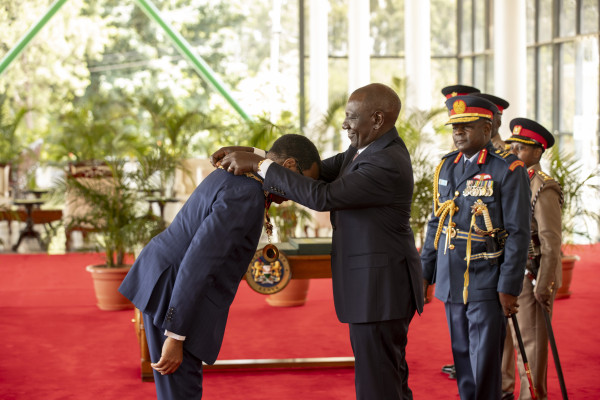
Kenya’s President Ruto Awards African Development Bank’s Adesina Highest National Honour

Location: News
African Development Bank Group (AfDB)

  • “I am proud of the journey we started together ten years ago; I can see its fruits. Kenyans can feel its benefits,” President Ruto
  • “What a great honour! What a rare privilege! What a historic recognition!” Adesina

Kenya's President H.E. William Samoei Ruto has conferred the country's highest honour, Chief of the Order of the Golden Heart CGH, on the President of the African Development Bank Group, Dr Akinwumi Adesina (www.AfDB.org).

Dr Adesina becomes the 20th recipient of the honour that was established in 1967 and first awarded to Kenya's founding father and former President, H.E. Jomo Kenyatta. Others include globally renowned leaders such as former UN Secretary General Kofi Annan, South Africa's Nelson Mandela, Queen Elizabeth II of the United Kingdom, Uganda's Yoweri Museveni and Kenya's subsequent Presidents Daniel arap Moi, Mwai Kibaki, Uhuru Kenyatta and Dr Ruto.

During a colourful investiture ceremony at Nairobi's State House, President Ruto praised Dr Adesina's distinguished service, commitment, and passion for the economic development of Kenya and Africa.

President Ruto congratulated Adesina and told him, “You are amazing. You are a great leader. You deserve this honour and investiture.” 

The two leaders share a warm relationship that dates back 20 years when Adesina lived and worked in Kenya for the Alliance for Green Revolution in Africa, AGRA. At that time Ruto was Kenya's Minister for Agriculture. Both recalled how they worked together to provide subsidies to farmers despite opposition at the time from some donors and global financial institutions.

President Ruto said under his presidency he has continued with the same policy of offering subsidies to farmers, leading to an increase in the country's food production.

“Our maize production increased from 40 million to 70 million bags last year. Our sales from tea, generated more than 220 billion shillings [approximately $1.7 billion], the highest ever earnings.”

“I am proud of the journey we started together ten years ago; I can see its fruits. Kenyans can feel its benefits,” President Ruto told Adesina who was accompanied by his wife, Mrs Grace Yemisi Adesina.

In its citation, the Kenya government recognized Adesina as a distinguished economist and a global development leader.

“He transformed the African Development Bank into a globally recognized institution for financial innovation and development impact and grown  the Bank's general capital from $93 billion to $318 billion,” the citation reads.

In his acceptance speech, Adesina said: “I am greatly humbled by your incredible kindness! What a great honour! What a rare privilege! What a historic recognition!”

Adesina spoke about Kenya's special place in the history of the Bank which was established in 1964. Since then, the Bank has financed a total of 167 projects, with financial commitment of $7.8 billion.

He said the Bank's current portfolio in Kenya consists of 45 projects worth $4.09 billion. They include, among others: 

  • The Last-Mile Connectivity electricity project, which has helped to increase the number of Kenyans connected to the national electricity grid from 2.42 million households in 2014 to 9.7 million households in 2024.
  • The expansion of the Thika-Nairobi Highway, which has drastically reduced travel time from 2-3 hours to just 30-45 minutes between the two destinations.
  • The Bank is providing $634 million for the Kenya Town's Sustainable Water Supply and Sanitation project. This includes 314.92 million Euros for the construction of the Thwake Multipurpose Water Dam, to be completed by July 2026. It will provide water to about 1.3 million people in Kitui and Makueni counties, as well as the Konza Techno-City in Machakos County.
  • The Bank's support for the private sector in Kenya includes over $700 million in lines of credit to more than eight commercial banks.

President Ruto said the Bank's support to the country's mortgage sector has boosted the government's national housing programme, with 150,000 houses under construction, generating jobs for 260, 000 youth.

Speaking about Kenya's high youth unemployment, Adesina pointed to several youth riots that shook the country last year.

In addition to providing $309 million for eight on-going projects targeting skills development, Adesina said the Bank is preparing for Board approval, financial support for the establishment of a Youth Entrepreneurship Investment Bank of Kenya.

“This will be a stand-alone financial institution, that will be 100 percent dedicated to providing technical assistance, debt and equity financing for youth businesses in Kenya.”

Adesina was accompanied by Vice President for Power, Energy, Climate and Green Growth Dr Kevin Kariuki, the Vice President for Regional Development, Integration and Business Delivery Nnenna Nwabufo; the Director General for East Africa, Kennedy Mbekeani; the Executive Director for Eastern Africa, Jonathan Nzayikorera; and his Senior Advisor to the President for Communication and Stakeholder Engagement Dr Victor Oladokun, who delivered the opening prayer for the ceremony.

“This is an honour that I will cherish for life,” Adesina said. “It will be a constant reminder that the country I love so much, Kenya, loves me back, appreciates and celebrates my leadership at the African Development Bank, and values and honours the incredible contributions of the Bank to its development. I accept this honour with great humility.”

Distributed by APO Group on behalf of African Development Bank Group (AfDB).

To look at the album click  here (apo-opa.co/3FzwNt7).

About the African Development Bank Group:
The African Development Bank Group is Africa's premier development finance institution. It comprises three distinct entities: the African Development Bank (AfDB), the African Development Fund (ADF) and the Nigeria Trust Fund (NTF). On the ground in 41 African countries with an external office in Japan, the Bank contributes to the economic development and the social progress of its 54 regional member states. For more information: www.AfDB.org

Media files
African Development Bank Group (AfDB)
Download logo
Read moreKenya’s President Ruto Awards African Development Bank’s Adesina Highest National Honour
18 March 2025

KZN Foot and Mouth Disease boundaries extended

Location: News

KZN Foot and Mouth Disease boundaries extended

In response to the spread of Foot and Mouth Disease (FMD) in KwaZulu-Natal, Agriculture Minister, John Steenhuisen, has announced the extension of the province's Disease Management Area boundaries to curb further outbreaks.

According to a departmental report on Monday, the outbreaks of FMD in KwaZulu-Natal have not been successfully contained, with new cases recently detected in the Newcastle area.

“The disease has now spread beyond the initial Disease Management Area (DMA) declared in 2021, when outbreaks of the SAT2 FMD strain first emerged in the province,” the department said.

READ | Ministry provides update on Foot and Mouth Disease 

The department said the latest measure aims to control the movement of cloven-hoofed animals (cattle, sheep, and goats) and their derived products in affected areas.

“No cloven-hoofed animals, their products, or genetic material may be moved from, to, or within the DMA unless authorised by a state veterinary permit and in full compliance with the stipulated conditions of such [a] permit. The updated DMA boundaries will be officially declared in the Government Gazette in the coming days,” the department said.

The DMA has now been extended to local municipalities including Big Five Hlabisa; Mtubatuba; Nongoma; Ulundi; Umhlabuyalingana; Jozini; Pongola; Abaqulusi; Mfolozi; uMhlathuze; Mthonjaneni; Nqutu; Nkandla; uMlalazi; and Mandeni Local Municipality.

Partial municipalities (specific portions covered by the DMA) include:
•    Emadlangeni: South of R34 from R33
•    Newcastle: South of R34 up to and east of N11
•    Dannhauser: East of N11 and north of R68
•    Endumeni: North of R68 and east of R33
•    Msinga: East of R33
•    UMvoti: East of R33 up to R74 and north of R74
•     Maphumulo: Northeast of R74
•    Ndwedwe: East of R74
•    KwaDukuza: Northeast of R74 up to the N2 and west to the N2 up to Mandeni.

Movement control measures and responsibility

The department has reiterated that movement control measures, originally declared in October 2022, remain in place nationwide, and “these control measures have been included again in the new Government Gazette notice".

“These measures require that: any movement of cattle, sheep, or goats must be accompanied by an owner declaration confirming the animals’ origin and health status; and that the recipient of the animals at the destination must provide a signed undertaking ensuring the animals will be isolated for at least 28 days before integration with the main herd,” the department explained.

The department emphasised that Section 11 of the Animal Diseases Act, 1984 (Act No. 35 of 1984), places a legal obligation on all animal owners and farm managers to take all reasonable steps to prevent their animals from becoming infected and to prevent the spread of diseases.

Essential biosecurity measures include:
•    Limiting or postponing the introduction of new animals onto farms.
•    Only introducing animals from known, disease-free sources with a valid health declaration.
•     Preventing direct contact between farm animals and those outside the farm.
•    Maintaining secure farm boundaries and restricting access to livestock areas.
•    Minimising human and vehicle access to farms, with proper disinfection protocols in place.

Reporting 

FMD is classified as a controlled animal disease under the Animal Diseases Act, 1984 (Act No. 35 of 1984), which mandates specific control measures, such as isolation and movement restrictions, enforced by Veterinary Services.

“Any suspicious clinical symptoms, such as salivation, blisters in the mouth, limping, or hoof lesions, should be reported immediately to the local State Veterinarian, and such animals must not be moved under any circumstances,” the department emphasised. – SAnews.gov.za

GabiK
Tue, 03/18/2025 - 08:45
137 views

Read moreKZN Foot and Mouth Disease boundaries extended
17 March 2025

Minister Dion George Announces Proclamation and Implementation of Climate Change Act

Location: News

Republic Of South Africa: Department of Forestry, Fisheries and the Environment
Download logo

The Minister of Forestry, Fisheries and the Environment, Dr Dion George, is pleased to inform the members of the public that the President, His Excellency Cyril Ramaphosa, has proclaimed the Climate Change Act, 2024 (Act No. 22 of 2024) (the Act). The proclamation notice was published in the Government Gazette on 17 March 2025, which is therefore the commencement date of the Act.

The Act is intended to enable the development of an effective climate change response and a long-term, just transition to a low-carbon and climate-resilient economy and society for South Africa in the context of sustainable development; and to provide for matters connected therewith.

Furthermore, the Act lays the foundation for a green economy that is resilient, inclusive, and future-focused. By creating a clear framework for climate action, the Act will drive innovation, foster sustainable industries, and support job creation in renewable energy, sustainable agriculture, and eco-tourism, among other sectors.

Dr George said, “The Act represents a critical milestone not just for environmental sustainability, but for economic development and job creation. We are committed to ensuring that climate action becomes a catalyst for driving economic growth, creating jobs, and building a sustainable future for South Africa.”

The Act reflects the government's commitment to achieving a just transition to a low-carbon economy, ensuring that climate action goes hand-in-hand with economic empowerment and job creation. As the country, much like the rest of the world, faces growing environmental and economic complexities, the Act provides a vital framework for securing a prosperous and sustainable future for all South Africans.

It must be noted that although the Act has come into operation, the commencement of certain provisions of the Act, namely, sections 12(6), 13(1), 13(2), 13(3)(b), 14(3)(a), 15(5), 15(6), 17, 18, 19, 20, 21, 22, 25(4)(c), 26(2) to (6), 27, 28 and 30(2)(a) and (b), has been deferred to a later date. The reason for deferring these specific provisions is that the Department of Forestry, Fisheries and the Environment (DFFE) is developing a set of regulations that will enable implementation of these provisions. Some of the draft regulations are at an advanced stage of development and will be gazetted for public input and comment soon.

The DFFE will continue to keep members of the public informed of the finalisation of the regulations and the full implementation of the Climate Change Act.

“The recent severe weather conditions that have caused havoc in different parts of the country are a stark reminder of the urgent need for decisive climate action and my Department will continue to work hard towards achieving our mandate,” said Dr George.

A copy of the Act, Gazetted Proclamation Notice, and the Deferred provisions of the Act can be accessed on the following links:

Climate Change Act: https://www.dffe.gov.za/sites/default/files/legislations/cca_assented_g50966vol709n5050.pdf

Climate Change Act proclamation: https://www.dffe.gov.za/sites/default/files/legislations/cca_commencement_g52319pn251.pdf

Deferred provisions of the Act: https://www.dffe.gov.za/sites/default/files/legislations/cca_deferredprovisions_g52319pn251.pdf

Distributed by APO Group on behalf of Republic Of South Africa: Department of Forestry, Fisheries and the Environment.

Read moreMinister Dion George Announces Proclamation and Implementation of Climate Change Act
17 March 2025

Eastern Cape Government announces key leadership appointments

Location: News

Eastern Cape Government announces key leadership appointments

The Eastern Cape Provincial Government has reinforced its administrative leadership with the appointment of new Heads of Departments (HoDs) across several critical portfolios.

In a statement on Monday, the provincial government said the strategic decisions reflect the government’s commitment to enhancing service delivery, stability, and efficiency in the province.

Eastern Cape Premier, Lubabalo Oscar Mabuyane, confirmed the provincial government’s confidence in the three incumbents who previously served in an acting capacity.

The newly appointed HODs are Sharon Marsdorp, who has been appointed as the new Education Head of Department, Bonginkosi Dayimani in Agriculture, Edmond Desmond Quinton Venn in Human Settlements, and Phucuka Penny Penxa in Public Works and Infrastructure.

Mickey Mama’s contract as HOD in the Department of Economic Development, Environmental Affairs, and Tourism (DEDEAT) has been renewed.

Mabuyane also announced that the recruitment process for the Head of Departments for Community Safety is at an advanced stage, while the recruitment of HODs in the Departments of Sport, Recreation, Arts and Culture (DSRAC) and Cooperative Governance and Traditional Affairs (COGTA) is currently underway.

Mabuyane urged the newly appointed HoDs to remain steadfast in their commitment to ethical leadership.

“As we welcome our new Head of Departments, I urge them to embrace this opportunity to serve our people with dedication, integrity, and passion. Let us work together to strengthen government as a whole and make a meaningful difference in the lives of our citizens, where everyone has access to opportunities, resources, and services,” Mabuyane said.

He added that the appointments reaffirm the Provincial Government’s commitment to strengthening leadership and governance in the province, ensuring that the provincial administration is guided by capable and dedicated professionals who will play a pivotal role in advancing the Eastern Cape’s development agenda. – SAnews.gov.za


GabiK
Mon, 03/17/2025 - 10:05
83 views

Read moreEastern Cape Government announces key leadership appointments
17 March 2025

Deputy President Mashatile arrives in Japan for a working visit

Location: News

Deputy President Mashatile arrives in Japan for a working visit

Deputy President Paul Mashatile arrived at Narita International Airport in Tokyo, Japan, on Sunday for a working visit aimed at strengthening the cooperation between South Africa and Japan in areas of mutual interest.

According to the Presidency, the two countries have strong diplomatic relations, particularly in trade, investment, education, and science and technology.

“Japan is one of South Africa’s major economic partners with a sizeable investment in the South African economy, and potential for increased investment exists,” the statement read. 

During the working visit, the Deputy President and his delegation will engage with the business community in Japan to enhance economic relations. 

They will focus on key areas such as manufacturing and machinery, mining and mineral beneficiation, energy cooperation, the automotive industry, and improving market access for South Africa’s agricultural products.

The Deputy President and his delegation will visit the Isuzu Fujisawa Plant in Japan on Monday, 17 March 2025. 

Isuzu is a multinational corporation that produces commercial vehicles, diesel engines, and automotive parts, and it has a significant presence in South Africa.

During this visit, the Deputy President will meet with Dr Akihiko Tanaka, the President of the Japan International Cooperation Agency (JICA). 

JICA is a government agency that is actively involved in various development projects in South Africa.

On Tuesday, 18 March 2025, the Deputy President and his delegation will have a breakfast meeting with the Japan-African Union Parliamentary Friendship League, which aims to promote economic cooperation and trade between Japan and African countries. 

In addition, he will pay a courtesy visit to Prime Minister Ishiba Shigeru of Japan and visit the Meiji Jingu Shinto Shrine.

The Deputy President is expected to deliver a keynote address at the United Nations University, focusing on the theme “South Africa’s G20 Presidency: Solidarity, Equality, Sustainability – a Conversation with Japan”.

On Wednesday, 19 March 2025, the Deputy President and his team will participate in roundtable discussions hosted by the Japan External Trade Organisation (JETRO) and the Japan Organisation for Metals and Energy Security (JOGMEC).

The Deputy President will also host South African Rugby players based in Japan at the South African official residence. 

The Deputy President is supported by several officials including the Deputy Minister of International Relations and Cooperation Thandi Moraka; the Minister of Sport, Arts and Culture Gayton McKenzie; the Minister of Higher Education Dr Nobuhle Nkabane; the Minister of Agriculture John Steenhuisen; the Minister of Trade, Industry and Competition Parks Tau and the Deputy Minister of Science, Technology and Innovation Nomalungelo Gina. – SAnews.gov.za


Gabisile
Mon, 03/17/2025 - 08:50
58 views

Read moreDeputy President Mashatile arrives in Japan for a working visit
16 March 2025

South Africa, Dutch collaborates to improve water management

Location: News

South Africa, Dutch collaborates to improve water management

The Department of Water and Sanitation (DWS), together with the Dutch Water Authorities, have held a Blue Deal Steering Committee meeting, focusing on the Blue Deal South Africa Programme, which aims to improve water management and access to clean water in South Africa. 

According to the department, the meeting, held in Pretoria, on Friday, aimed at enabling environment for future Blue Deal partnerships, discuss lessons learned from the various projects, and provide strategic direction to address key bottlenecks.

“This Blue Deal Programme is a collaboration between the Republic of South Africa and the Government of the Netherlands to support water management by exchanging knowledge and experiences, assisting national, regional, and local organisations, and cooperating with key stakeholders. The Blue Deal South Africa Programme will specifically contribute to clean and sufficient water,” the department said in a statement.

During the meeting, the two parties discussed the Crocodile River Revitalisation Action Plan and its adoption and the Theewaterskloof Project Non-Sewer Sanitation pilot project.

“The Crocodile River faces threats of pollution from agriculture, industry, and municipalities. The performance of the wastewater treatment plants in the area is inadequate. The challenge is to improve the operation of the municipal wastewater management systems to ensure better water quality in the river.

“The objective of the Theewaterskloof project is to reduce pollution by improving sanitation and solid waste management through innovative solutions, such as non-sewered sanitation and harnessing the circular economy.

“General discussions covered the status of ongoing projects, a recap of 2024 Blue Deal activities, the outlook for the 2025 projects, and developments regarding international collaborations,” the department said.

DWS Director of International Relations, Albert Mmbidi said: “Today was an important day in the history of the Blue Deal programme. As a team, we managed to review the progress that the project has already made, the challenges, and we proposed solutions to the issues raised. 

“We are confident that out of the solutions we have proposed, the programme will be able to run efficiently and strengthen the relationship between the two countries,” Mmbidi said. – SAnews.gov.za

NeoB
Sun, 03/16/2025 - 12:23
543 views

Read moreSouth Africa, Dutch collaborates to improve water management
16 March 2025

Deputy President Mashatile Arrives in Japan on a Working Visit

Location: News

The Presidency of the Republic of South Africa
Download logo

Deputy President Shipokosa Paulus Mashatile has today, 16 March 2025 arrived at Narita International Airport in Tokyo, Japan on a Working Visit aimed at reaffirming the strong cooperation between South Africa and Japan in areas of mutual interest.

The two countries enjoy well-established diplomatic relations which are particularly strong in the fields of trade and investment, education, science and technology.

Japan is one of South Africa's major economic partners with a sizeable investment in the South African economy, and potential for increased investment exists.

During the working visit, the Deputy President and delegation will engage the business community in Japan with the objective of strengthening economic relations in areas such as manufacturing and machinery, mining and mineral beneficiation, energy cooperation, the automotive industry and greater market access for South Africa's agricultural products, amongst others. 

In this regard, the Deputy President and delegation will on Monday 17 March 2025 visit the Isuzu Fujisawa Plant Service, a Japanese multinational corporation that produces commercial vehicles, diesel engines and automotive parts, and has a significant presence in South Africa.

The Deputy President will also meet with Dr. Akhiko Tanaka, President of the Japan International Cooperation Agency (JICA), a Japanese government agency that has been actively involved in various development projects in South Africa. 

On Tuesday, 18 March 2025, the Deputy President and delegation will have a breakfast meeting with Japan-African Union Parliamentary Friendship League, which seeks to promote economic cooperation and trade between Japan and African countries. 

Furthermore, the Deputy President will pay a courtesy call on His Excellency Prime Minister Ishiba Shigeru and visit the Meiju Jingu Shinto Shrine.

The Deputy President will also deliver a keynote address at the United Nations University under the theme "South Africa's G20 Presidency: Solidarity, Equality, Sustainability - a conversation with Japan.

On Wednesay 19 March 2025, the Deputy President and delegation will participate in Roundtable Discussions hosted by the Japan External Trade Organisation (JETRO) and Japan Organisation for Metals and Energy Security (JOGMEC).

The Deputy President will also host South African Rugby players based in Japan at the South African Official Residence. 

The Deputy President is supported by the Deputy Minister of International Relations and Cooperation, Ms. Tandi Moraka; the Minister of Sport, Arts & Culture, Mr. Gayton McKenzie; the Minister of Higher Education, Dr. Nobuhle Nkabane; the Minister of Agriculture Mr. John Steenhuisen; the Minister of Trade Industry and Competition, Mr. Parks Tau; and the Deputy Minister of Science, Technology and Innovation, Ms. Nomalungelo Gina.

Distributed by APO Group on behalf of The Presidency of the Republic of South Africa.

Read moreDeputy President Mashatile Arrives in Japan on a Working Visit
16 March 2025

Deputy President leads working visit to Japan

Location: News

Deputy President leads working visit to Japan

Deputy President Paul Mashatile will on Sunday undertake a working visit to Tokyo, in Japan.

The Presidency said the visit, from 16 – 19 March 2025, is aimed at “reaffirming the strong cooperation between” the countries in areas of mutual interest.

“The two countries enjoy well established diplomatic relations, and the year 2025 marks 115 years of such relations. The working visit by the Deputy President underscores South Africa’s strong commitment and the importance that South Africa attaches to the relationship with Japan.

“During the working visit, the Deputy President and his delegation will meet with the Japanese Government and private sector stakeholders to advance South Africa’s key economic growth drivers, such as manufactured-led growth and increasing South Africa’s exports,” the Presidency said in a statement on Saturday.

The Deputy President will be accompanied by Deputy Minister of International Relations and Cooperation, Tandi Moraka; Minister of Sport, Arts and Culture, Gayton McKenzie, Minister of Higher Education, Dr Nobuhle Nkabane; Minister of Agriculture, John Steenhuisen, Trade Industry and Competition Minister, Parks Tau; and Science, Technology and Innovation Deputy Minister,  Nomalungelo Gina. – SAnews.gov.za

NeoB
Sun, 03/16/2025 - 13:13
275 views

Read moreDeputy President leads working visit to Japan
15 March 2025

Deputy President Mashatile to Undertake a Working Visit to Japan

Location: News

The Presidency of the Republic of South Africa
Download logo

Deputy President Shipokosa Paulus Mashatile will on 16 - 19 March 2025, undertake a working visit to Tokyo in Japan, aimed at reaffirming the strong cooperation between South Africa and Japan in areas of mutual interest.

The two countries enjoy well established diplomatic relations, and the year 2025 marks 115 years of such relations.

The working visit by the Deputy President underscores South Africa's strong commitment and the importance that South Africa attaches to the relationship with Japan.

During the working visit, the Deputy President and his delegation will meet with the Japanese Government and private sector stakeholders to advance South Africa's key economic growth drivers such as manufactured-led growth and increasing South Africa's exports.

The Deputy President will be supported by the Deputy Minister of International Relations and Cooperation, Ms Tandi Moraka; the Minister of Sport, Arts & Culture, Mr Gayton McKenzie; the Minister of Higher Education, Dr Nobuhle Nkabane; the Minister of Agriculture, Mr John Steenhuisen; the Minister of Trade Industry and Competition, Mr Parks Tau; the Deputy Minister of Science, Technology and Innovation, Ms Nomalungelo Gina.

Distributed by APO Group on behalf of The Presidency of the Republic of South Africa.

Read moreDeputy President Mashatile to Undertake a Working Visit to Japan
14 March 2025

North West takes steps to tackle unemployment

Location: News

North West takes steps to tackle unemployment

Over 24 000 job opportunities are expected to help tackle the unemployment challenge in the North West province.

This was revealed during a roundtable discussion involving North West Premier Lazarus Kagiso Mokgosi, Deputy Minister of Employment and Labour Judith Nemadzinga-Tshabalala, as well as representatives from organised labour, business, and civil society.

The initiative, which involves collaborative work between the North West Provincial Government and the Department of Employment and Labour, will be implemented through a Labour Activation Plan (LAP). 

The LAP initiative, funded by the Unemployment Insurance Fund (UIF), aims to enhance employability, enable entrepreneurship, and preserve jobs through skills training, enterprise development, and other intervention measures. 

“This initiative has been in the pipeline for some time, and I am happy that it is coming to fruition. This is one of the policy announcements I made during the State of the Province Address [SOPA] to help find solutions to high levels of unemployment in the province,” Mokgosi said on Thursday. 

In the SOPA delivered last month, the Premier reaffirmed the government’s commitment to creating job opportunities through public employment programs, such as expanded public works, community health workers, community works, and labour activation programmes.

These initiatives aim to create over 150 000 job opportunities in the next five years, targeting women, youth, and persons with disabilities.
READ | Over R20 million allocated to boost North West economy 

At the roundtable, Deputy Minister Nemadzinga-Tshabalala said the roll-out of the programme is in full swing in various provinces and that the North West is the latest beneficiary.

“Young people will be trained in various fields such as engineering, agriculture and artisanal work in preparation for the job market and consequently placed in various industries,” Nemadzinga-Tshabalala added. – SAnews.gov.za


Gabisile
Fri, 03/14/2025 - 09:36
290 views

Read moreNorth West takes steps to tackle unemployment
13 March 2025

SA focuses on improving diplomatic relations with United States

Location: News

SA focuses on improving diplomatic relations with United States

Deputy President Paul Mashatile says South Africa is working on stabilising relations with the United States of America (USA), given the long-standing ties between the two nations.

Addressing the 7th BizNews Conference (BNC#7) at the Hermanus Municipal Auditorium in the Western Cape, on Thursday, the Deputy President said this partnership is also significant to South Africa's economic development goals.

The BizNews Conference is an annual event focused on investment, business and political issues.

The Deputy President emphasised the need for collaborative efforts, in light of recent cuts to key health funding programmes, such as the President’s Emergency Plan for AIDS Relief (PEPFAR).

PEPFAR was established by former President George W Bush in 2003 and continued under various administrations.

“The withdrawal of PEPFAR funding highlights the urgent need for South Africa to further strengthen its own interventions to reach the most vulnerable and access health services and support," Mashatile said.

He said the opportunity showed the importance of bolstering the country's own healthcare interventions and ensuring the delivery of health services without heavy reliance on external assistance.

"In this regard, we have been investing heavily in healthcare reform and responding to the dual epidemics of HIV/AIDS and TB. The Department of Health has put measures in place to ensure that patients receiving TB and HIV treatment are not affected and do not default," said the Deputy President.

Mashatile encouraged stakeholders to unite and support government in promoting South Africa's interests in the United States, including through mechanisms such as the African Growth and Opportunity Act (AGOA).

"The loss of AGOA benefits would have the most devastating effect on South African farmers and agriculture workers. AGOA is presently providing support to South Africa's agriculture and manufacturing sectors, which is expected to generate around $21 billion in trade with the United States.

“Therefore, our position is that South Africa should maintain strong bilateral relations with the United States. Most importantly, as a country, we are committed to improving mutually beneficial trade, political, and diplomatic relations with the United States,” he said. 

Diversifying export markets and growing the economy

The country’s second-in-command stated that South Africa should push for diversified export markets, citing ongoing engagement with global powers such as China, Russia, India, and various European countries. 

President Cyril Ramaphosa is currently co-chairing the EU-South Africa Summit, which aims to deepen relations with the European Union (EU) across several domains, including trade, security, and sustainable development.

In addition, Mashatile highlighted the importance of intra-African trade and financial cooperation through the African Continental Free Trade Area (AfCFTA). 

According to the Deputy President, the AfCFTA is a crucial step toward reducing dependency on volatile global markets.

Mashatile believes that South Africa’s wealth of natural resources, including significant agricultural potential, is positioned as an attraction for investment. 

He said government is committed to removing blockages to economic growth, lifting economic expansion to above 3% in the medium-term, and creating a cycle of investment, growth and jobs.

He outlined government’s plans to focus on improving productivity and innovating skills development through the National Digital and Future Skills Strategy as part of a broader vision for a knowledge-based economy.

Furthermore, he said the newly approved Reconceptualised Human Resource Development Strategy outlines priority goals aimed at enhancing early education outcomes, increasing youth employability, and ensuring that higher education aligns with market demands. 

FATF grey list

The Deputy President said South Africa is making steady progress in efforts to be removed from the Financial Action Task Force (FATF) grey list.

"Through new legislation, we have strengthened our ability to prevent money laundering and fraud, and secure South Africa’s removal from the grey list of the Financial Action Task Force."

He said the country has addressed 20 of the 22 action items relating to combating money laundering and terrorist financing. 

“These improvements are essential not only to remove ourselves from the grey list but also to strengthen the battle against crime and corruption, which is crucial for the betterment of all South Africans. 

“We will continue to resolve both remaining action items by June, towards our removal from the grey list by October 2025,” he said.

Moreover, the Deputy President committed that South Africa will use its Group of 20 (G20) Presidency to place Africa’s development at the top of the agenda. – SAnews.gov.za

Gabisile
Thu, 03/13/2025 - 13:52
339 views

Read moreSA focuses on improving diplomatic relations with United States
13 March 2025

South Africa successfully hosts key G20 Working Groups and Task Force Meetings

Location: News

South Africa successfully hosts key G20 Working Groups and Task Force Meetings

As part of its G20 Presidency, South Africa has successfully hosted a series of high-level G20 working groups and task force meetings during this month, focusing on global challenges such as corruption, food security, disaster risk reduction, agriculture, and tourism.

The first Anti-Corruption Working Group Meeting, held in Cape Town from 3 to 5 March 2025, focused on mechanisms to enhance the implementation of legal instruments to fight corruption. 

Cabinet said in a statement that this meeting was an opportunity for participants to establish the agenda and lay the groundwork for future discussions, encouraging dialogue and collaboration to strengthen anti-corruption strategies. 

“During this meeting, participants discussed and agreed on these several key priorities which are strengthening Public Sector Integrity; Increasing Asset Recovery Efficiency; Inclusive Participation; and Whistle-Blower Protection,” Cabinet said.

Agriculture Working Group

The First Agriculture Working Group Meeting, held virtually on 3 and 4 March, discussed critical issues that affect agricultural stakeholders worldwide and agreed on priorities for the year ahead. 

The group established four key priorities:

  • Promoting inclusive market participation and food security;
  • Empowering youth and women in agrifood systems;
  • Fostering innovation and technology transfer and
  • Building climate resilience for sustainable agriculture

Tourism Working Group

On 5 March, the First Tourism Working Group Meeting, also held virtually, deliberated on how tourism can be used to change people’s lives, communities and the world. 

The group also identified four focus areas for the year ahead namely:

  • Leveraging People-Centered Artificial Intelligence (AI) and Innovation to support travel and tourism start-ups and SMMEs,
  • Enhancing tourism financing and investment to promote equality and sustainability,
  • Improving air connectivity for seamless travel, and
  • Boosting resilience for inclusive, sustainable tourism development.

Disaster Risk Reduction Working Group

First Disaster Risk Reduction Working Group Meeting also held virtually on 5 March, discussed the acceleration of early warnings for all initiatives which is a key global target set by the United Nations and reinforced the implementation of the Sendai Framework for Disaster Risk Reduction 2015-2030. 

“South Africa sees this meeting as a key international forum to drive the agenda of a shared responsibility to build resilience, strengthen our cooperation, and drive meaningful action that is needed to prevent an escalation or exacerbation of risk,” Cabinet said. 

Key priorities included:

  • addressing Inequalities and Reducing Vulnerabilities
  • Global Coverage of Early Warning Systems
  • Disaster Resilient Infrastructure
  • Financing for Disaster Risk Reduction
  • Disaster Recovery, Rehabilitation and Reconstruction; and
  • Ecosystems-Based Approaches for DRR/Nature-Based Solutions. 

Food Security Task Force

The First Task Force Meeting on Food Security, held virtually on 5 March, discussed policies and programs to improve food security. 

“Participants agreed to build a stronger, fairer, and more sustainable food system. They also committed to address key challenges like trade barriers, funding for food production, and the impact of climate change on food supply chains,” Cabinet said. 

Some of the priorities outcomes discussed are the following: 

  • Stronger food security policies
  • Stable food prices
  • Clear regulations & standards
  • G20 Action Plan for Food Security; and
  • Ministerial approval & implementation

G20 Outreach Programme

On 7 March 2025, the G20 Outreach Programme was held at the University of Venda in Thohoyandou, to encourage public engagement in South Africa’s G20 presidency.

Citizens were urged to welcome international delegates, promote South Africa’s cultural heritage, and share positive narratives about the country.

“The gathering was used to encourage the people of this country to get involved in welcoming our guests to the country as we continue to host meetings in various parts of the country and to promote their culture and heritage. South Africans were also encouraged to tell a good story about their country,” Cabinet said. 

The following G20 Working Groups and Task Forces meetings are scheduled to take place until the end of March 2025: 

  • First Task Force Meeting: Inclusive Economic Growth, Industrialisation, Employment, and Reduce Inequality: 17 March 2025 – virtual.
  • First Trade and Investment Working Group Meeting: 18-20 March 2025 – virtual.
  • Second Health Working Group: 26-28 March 2025 – Durban.
  • First Climate and Environment Sustainability Working Group Meeting: 25-28 March 2025 – virtual.

For more information on these various G20 meetings and their outcomes can be accessed on www.g20.org OR www.g20.org.za– SAnews.gov.za

DikelediM
Thu, 03/13/2025 - 15:15
81 views

Read moreSouth Africa successfully hosts key G20 Working Groups and Task Force Meetings
13 March 2025

Cabinet welcomes GDP growth in fourth quarter of 2024

Location: News

Cabinet welcomes GDP growth in fourth quarter of 2024

The 0.6% increase in South Africa’s gross domestic product (GDP) in the fourth quarter of 2024 signals a recovery across the economy, says Minister in The Presidency, Khumbudzo Ntshavheni.

“Cabinet is confident that the increased focus and pace of delivery on economic structural reforms, improved service delivery and State capacity, and increased participation of the private sector will spur further growth of the economy in 2025 and beyond,” the Minister said during a post-Cabinet media briefing in Cape Town on Thursday.

According to Statistics South Africa (Stats SA), South Africa’s GDP increased by 0.6% in the fourth quarter of 2024, following a decrease of 0.1% in the third quarter of 2024.

“The agriculture, forestry and fishing industry increased by 17.2%, contributing 0.4 of a percentage point to the positive GDP growth. This was primarily due to increased economic activities reported for field crops and animal products.

“The finance, real estate and business services industry increased by 1.1%, contributing 0.3 of a percentage point. Increased economic activities were reported for financial intermediation, real estate activities and other business services,” Stats SA said earlier this month.

The trade, catering and accommodation industry increased by 1.4%, contributing 0.2 of a percentage point. Increased economic activities were reported for wholesale trade, retail trade and motor trade.

Investments

Meanwhile, Cabinet welcomed the announcement by Microsoft South Africa that it will invest R5.5 billion in artificial intelligence (AI) infrastructure in the country. 

“This investment will strengthen South Africa’s position as a leading Artificial Intelligence hub on the African continent and builds Microsoft South Africa’s R20.4 billion investment over the past three years.

“Microsoft South Africa also announced their contribution to developing South Africa’s digital literacy by paying for technical certification for 50 000 individuals in high-demand digital skills.

“In further uplifting our investment profile, Indian car manufacturer, Mahindra, signed a memorandum of understanding (MoU) with South Africa’s Industrial Development Corporation (IDC) to explore the possibility of setting up a full-scale vehicle assembly plant in the country,” the Minister said.

Mahindra already has an assembly plant of Pik Up range of vehicles in Durban operated by AIH Logistics.

The company recently celebrated the production of their 25 000th locally assembled Pik Up vehicles [range of bakkies].

“Cabinet reminded every South African as direct shareholder in South Africa Incorporated (SA Inc.) of their vested interest in promoting our country as an investment destination in a globally competitive environment. We must continue to speak with one voice in defence of our national interest, our sovereignty and our constitutional democracy,” the Minister said. - SAnews.gov.za

nosihle
Thu, 03/13/2025 - 12:12
94 views

Read moreCabinet welcomes GDP growth in fourth quarter of 2024
11 March 2025

Nelson Mandela Bay shines in global business services sector

Location: News

Nelson Mandela Bay shines in global business services sector

Nelson Mandela Bay Municipality (NMBM) has emerged as the fastest growing region in South Africa for the global business services sector, following Johannesburg, Cape Town and Durban.

This is according to data from the municipality's Economic Development, Tourism and Agriculture (EDTA) Directorate. 

NMBM Member of the Mayoral Committee for the EDTA, Bassie Kamana, on Monday said she was encouraged by the rapid growth of the global business services sector (call centre services) within the city. 

In collaboration with Business Process Enabling South Africa (BPESA), NMBM recently hosted a stakeholder engagement session in Newton Park, Gqeberha.

BPESA is a leading association that represents global business services and business process outsourcing companies in South Africa. The association’s key objectives include positioning South Africa as a prime destination for offshoring, driving local job creation, and promoting excellence in service delivery within the global business services sector.

BPESA partners with the private sector, the Department of Trade, Industry and Competition (the dtic), and municipalities to promote South Africa's capabilities, empower youth through training and job creation, and strengthen the industry’s ability to deliver high quality services.

The purpose of the engagement session was to create a collaborative platform for sector stakeholders to share experiences, review their growth since establishing operations in Nelson Mandela Bay, and explore future opportunities for expanding the industry within the region.

The session also highlighted the support available from government and its entities to further develop the sector.

Participants included representatives from the Coega Special Economic Zone, the Eastern Cape Development Corporation, the dtic, Harambe Youth Accelerator, and various global business services companies.

Prominent players in the industry that have already established operations in Nelson Mandela Bay include Discovery Health, ISON, Startek, Dastile Wealth Insure, Outworks and Teleperformance. Teleperformance, which opened its office in late 2024, has already created over 500 jobs for young people in the city.

Addressing the session, Kamana highlighted the growing investments in the sector, noting that over 3 000 jobs have been created for youth with secondary and tertiary education.

"Working with our partners to mobilise resources and create a conducive environment for Nelson Mandela Bay to be a destination of choice is starting to pay off. We can already see ourselves being a major player among the major three cities that are leading in this sector, [and] that alone is encouraging news.

“What encourages [me the] most is the fact that this sector is able to offer jobs to youth, an area that we as the metro we are working around the clock to come up with solutions to,” Kamana said.

Teleperformance Vice President, Leanne Felix, expressed optimism about the future growth of the industry in Nelson Mandela Bay, and even greater expansion in the next five years.

Felix acknowledged the partnership the company has with NMBM.

“This partnership makes it easier for us to mobilise resources and market the city and its talent. The international industry is beginning to show interest in the talent, commitment and skills base we have here in Nelson Mandela Bay.

“We just need to do more in to showcase our capabilities as the Eastern Cape and open up about the support and incentives that are available to support the industry. When the demand came last year for the company to expand our operations from Cape Town, Nelson Mandela Bay became an obvious choice. The support we have received from the metro has been amazing,” Felix said. – SAnews.gov.za

GabiK
Tue, 03/11/2025 - 09:44
203 views

Read moreNelson Mandela Bay shines in global business services sector
11 March 2025

Call for urgent action to tackle water pollution

Location: News

Call for urgent action to tackle water pollution

Water and Sanitation Deputy Minister Sello Seitlholo has called on stakeholders to join hands with the department and its entities in addressing water pollution.

This includes collaboration in the removal of invasive aquatic weeds, such as water hyacinth, which have become a significant threat in most of the country’s water resources.

Seitlholo recently conducted a two-day oversight visit at Blesbokspruit Wetlands near Springs, Ekurhuleni, and Jukskei River in Alexandrea, north of Johannesburg.

During the visit last week, Seitlholo inspected wastewater pumpstations at Olifanstfontein Water Care Works, which are managed by the Ekurhuleni Water Care Company (ERWAT). He also inspected Zandspruit Wastewater Treatment Works operated by the City of Johannesburg.

Blesbokspruit Wetlands is a Ramsar site (sites listed on the list of wetlands of international importance) in the Upper Vaal catchment along Blesbokspuit River, and it is one of the major tributaries to the Vaal River in Gauteng.

According to the department, the wetland is hugely infested by the growth of hyacinth, which covers up to approximately 12 kilometres.

Despite its removal by means of manual labour and biological control, led by the Centre for Biological Control (CBC) at Rhodes University, the department said the plant has spread and multiplied, resulting in the destruction of the ecosystem of the wetland.

The CBC uses bugs, Megamelus scutellaris, that feed on the seeds of the plant, eventually killing the plant.

While Seitlholo is resolute to see all the hyacinth at the wetland annihilated, he was conflicted to discover that the dried hyacinth is harvested and is used by an emerging business to make home decoration accessories, baskets, and charcoal briquettes.            

“There is another dynamic that I have been exposed to, and this seems to have created local economic development in Ekurhuleni. However, the sustainability of the business needs to be explored further, and the control of the plant should also be taken into consideration. This is one plant that destroys the ecosystem, and our main priority is to have it removed,” Seitlholo said.

During an inspection at the Vaal River Barrage Reservoir, the Deputy Minister discovered how hyacinth has been controlled through a combination of community action, biological control, and chemical treatments.

The weed constituted about 400 hectares of the dam last year, but the remaining weeds are now standing at 12 hectares.

The oversight inspection continued to Alexandra and Bruma, where Jukskei River is also polluted.

However, the Deputy Minister commended the Alexandra community members who have rehabilitated the river by removing litter and debris.

The initiative has kept the water clean and free from pollution, and has also educated members of the community about the disadvantages of polluting the river.

“Water pollution is a crisis in this country, and it needs to be treated as such. We need this societal approach to tackle this problem, and we wish to see communities and stakeholders joining hands with the department to fight the scourge of water pollution and the eradication of invasive aquatic weeds.

“Society needs to understand that the value chain of water does not start at the water tap, but it rather starts at the rivers or wetlands. Polluted water has a direct impact on the quality of the final product -- potable water. Therefore, we need to take the issues of water pollution seriously because if our rivers are polluted and contaminated, it becomes costly for the entities that treat water in bulk,” Seitlholo said.

As the country commemorates Water Month, Seitlholo urged South Africans to ensure that water sources are protected and safe.

Seitlholo’s oversight also included a visit at East Basin Acid Mine Drainage Treatment Plant, managed by Trans Caledon Tunnel Authority (TCTA), which treats polluted water coming from the oxidation of sulfide minerals exposed to water in abandoned mines within Ekurhuleni.

The minerals cause acidic and potentially toxic water, which significantly impacts water quality and ecosystems in the area.

An oversight inspection at Zandspuit wastewater pump station revealed that the plant malfunctions, and this results in over 30 million litres of raw sewage spillage into Jukskei River, ending up in Hartbeespoort Dam.

Despite the efforts by the City of Johannesburg to restore the pumpstation, the Deputy Minister said the Department of Water and Sanitation, through its Compliance and Enforcement Unit, will continue to monitor the pumpstation, and tackle the issues of failing municipal wastewater infrastructure, including mining industries and irrigation from agriculture, to ensure that they take responsibility through the polluter-pay-principle.

Seitlholo also emphasised that pollution of water resources remains a crisis in the country, with Gauteng as the epicentre of water pollution because it is the economic hub of the country.

He said the department will continue with efforts to stop pollution and get the required quality of water within the water courses. – SAnews.gov.za

GabiK
Tue, 03/11/2025 - 11:20
58 views

Read moreCall for urgent action to tackle water pollution
10 March 2025

South Africa to outline progress on Beijing+30 implementation

Location: News

South Africa to outline progress on Beijing+30 implementation

Minister in the Presidency for Women, Youth and Persons with Disabilities, Sindisiwe Chikunga, has arrived at the United Nations Headquarters in New York to present South Africa’s report on the country’s progress in implementing the Beijing Platform for Action (Beijing+30).

Chikunga is leading South Africa’s delegation to the 69th Session of the United Nations Commission on the Status of Women (CSW69), which takes place from 10 to 21 March 2025.

The South African Beijing+30 report provides a comprehensive overview of the progress made in advancing gender equality from 2019 to 2024. It draws on data, statistics, and key trends to assess achievements and challenges in this area.

The report highlights the 12 critical areas of concern outlined in the Beijing Platform for Action, including women and poverty, education and training, women’s health, violence against women, women and armed conflict, and women and the economy.

In addition, it covers vital topics, including women in power and decision-making, human rights of women, women and the media, women and the environment, and the empowerment of the girl child.

“The focus of the report will look at the priorities, achievements, challenges and gaps, while also demonstrating and highlighting the emerging and future priorities,” the department said in a statement on Sunday.

South Africa will join the global community in celebration of the 30th anniversary of the adoption of the Beijing Declaration and Platform for Action, which coincides with South Africa’s Presidency of the G20, where women’s empowerment and gender equality are a priority.

The Minister is joined by Social Development Minister Nokuzola Tolashe; Higher Education and Training Deputy Minister, Dr Mimmy Gondwe; Basic Education Deputy Minister, Dr Reginah Mhaule, and Deputy Minister of Forestry, Fisheries and the Environment, Bernice Swarts.

KZN MEC for Agriculture and Rural Development, including Northern Cape MEC for Sport, Arts and Culture, and Mpumalanga MEC for Social Development, also form part of the delegation that will provide provincial updates on South Africa's progress in areas such education, health and social protection. – SAnews.gov.za
 

GabiK
Mon, 03/10/2025 - 10:41
121 views

Read moreSouth Africa to outline progress on Beijing+30 implementation
10 March 2025

Agriculture is a vital part of our growth story – President

Location: News

Agriculture is a vital part of our growth story – President

President Cyril Ramaphosa says it is in the interest of all South Africans to have a diverse and inclusive agricultural sector that drives economic growth and ensures food security. 

In his weekly newsletter to the nation, he emphasised the need for a farming industry that reflects South Africa’s diversity while sustaining the country's food supply.  

“The farming sector of South Africa is vital to our growth agenda. It has shown resilience in the past and will likely continue along this encouraging and promising path. It will therefore be critical that the sector embraces the onward march of transformation.

“It is in the interests of all South Africans that we have an agricultural sector that is representative and inclusive, that contributes to the growth of our economy and that produces the food our country needs,” the President said. 

The President highlighted that agriculture was one of the most important sectors in the nation’s economy. The goods and services produced across the agricultural value chain underpin the country’s food security and account for a significant portion of South Africa’s exports. 

According to data from the Agbiz, last year South Africa’s agricultural exports reached a record $13.7 billion. These agricultural exports are diverse, with 44% of these products exported to other African countries, 21% to Asia and the Middle East, 19% to the European Union and 6% to the Americas. 

The President reflected that the value and volume of South Africa’s farming sector have more than doubled since the country’s transition to democracy in 1994, reflecting the combined efforts of government and industry to ensure that South African products access as many export markets as possible. 

Beyond the role of expanded export markets, agricultural economists have attributed the sector’s growth to government’s embrace of science, allowing the private sector to register better seed cultivars and genetics to boost productivity.

“The agricultural sector remains ripe for investment because of its recognised growth prospects. In addition, the revenue the state collects from agricultural enables government to provide services that improve the lives of our citizens,” the President said. 

President Ramaphosa also noted that the sector is a major source of employment. By the end of 2024, approximately 924 000 people worked directly in agriculture and over 200 000 worked elsewhere in the agriculture value chain.

“The health and growth of our farming sector is vital to supporting small towns and keeping rural South Africa vibrant. Given the critical role of agriculture in our national life, government is working with all stakeholders to ensure the survival, sustainability and growth of this sector,” the President said. 

In collaboration with partners in the industry, the President said government was undertaking growth-enhancing measures such as the sectoral master plans. The Poultry and Sugar Master Plans were the first steps, culminating in the Agriculture and Agro-processing Masterplan that was signed by organised agriculture and other partners in 2022.

The Department of Agriculture has launched a blended finance instrument in collaboration with the Land Bank to help farmers who require capital to continue growing the sector.

As this labour-intensive sector expands, the President said that more work opportunities will be created in the most vulnerable areas of the country, particularly rural areas. This in turn will support their economic rejuvenation.

The President further noted that agriculture, like other sectors, is affected by municipal service delivery challenges, and by the poor state of key infrastructure such as roads, rail and ports. He said this constrains the delivery of agricultural goods to markets.

However, the structural reforms that started during the sixth administration are making progress towards addressing the port and rail challenges. Several road transport and bulk water infrastructure projects are underway that will boost the growth of agriculture.

President Ramaphosa added that achieving sustainable agriculture in South Africa requires addressing challenges related to equity, inclusion, and land ownership in the farming sector.

“We cannot talk about sustainable agriculture in South Africa without addressing issues of equity and inclusion in farming and land ownership. Transformation remains a challenge in agriculture,” he said. 

The President highlighted that in his book, A Country of Two Agricultures, economist Wandile Sihlobo notes that black farmers currently only account for around 10% of the commercial output in South Africa's agriculture.  

“Our growth agenda must therefore have a bias towards the empowerment of black farmers. The inclusion of black farmers in commercial agriculture necessitates that land is made available to them. 

“The ongoing land reform process and release of government land will continue to benefit emerging farmers and ensure that they too add to the growth of South Africa's farming economy.

“This is an effort that requires multi-sectoral collaboration. The Land Bank and other commercial financiers will need to collaborate by providing capital. Organised agriculture can come on board to deploy the necessary training,” he said. – SAnews.gov.za

DikelediM
Mon, 03/10/2025 - 10:27
41 views

Read moreAgriculture is a vital part of our growth story – President
9 March 2025

Limpopo a province of boundless opportunity

Location: News

Limpopo a province of boundless opportunity

Limpopo Premier Dr Phophi Ramathuba has called on the Diplomatic Corps to view Limpopo as a province of boundless opportunity.

“Our economy is powered by three key drivers, mining, agriculture, and tourism, each offering lucrative potential for investment and growth,” Ramathuba said.

Speaking at a Diplomatic Corps breakfast in Thohoyandou on Saturday, she said Limpopo was rich in mineral wealth, home to vast deposits of platinum, diamonds and rare earth minerals that are crucial to the modern world.

“The global demand for these resources continues to grow, and Limpopo is well-positioned to be a leading supplier, offering a stable and investor-friendly environment for responsible mining and beneficiation,” Ramathuba said.

Limpopo remains the breadbasket of South Africa, she said, producing a significant portion of the country’s fresh produce, including citrus, avocados and macadamia nuts.

“With fertile lands and a climate suited for year-round production, we are not just feeding the nation, we are feeding the world. 

“We seek partnerships that will drive agro-processing, value addition and sustainable farming practices, ensuring that our agricultural sector remains a pillar of economic resilience.

“Our province is a place where nature, culture and heritage converge. From the breathtaking landscapes of the Kruger National Park to the ancient wonders of Mapungubwe, we offer an unparalleled tourism experience,” the Premier said.

Ramathuba said the hospitality of Limpopo people, combined with world-class facilities, makes the province a premier destination for both domestic and international travelers.

“We therefore invite you to join us in expanding this sector, developing eco-tourism, luxury lodges, and cultural heritage sites that will continue to draw visitors from across the globe.

“Our province is not just an economic hub, it is a strategic gateway to Africa. Limpopo shares borders with Botswana, Zimbabwe and Mozambique, making it a key trade corridor for goods and services moving across the continent. 

“Our transfrontier parks and cross-border infrastructure position us as a link between SADC markets and global investors looking for an entry point into Africa’s growing economies,” the Premier said.

The province hosted the first Outreach Program of the Group of 20 (G20) on Friday. The Premier described it as a historic milestone.

“The G20 represents 85% of global GDP, 75% of global trade, and two-thirds of the world’s population. The outreach was more than just a dialogue, it was a powerful opportunity for the people of Limpopo to understand and engage with South Africa’s G20 Presidency.

“Moreover, it allowed us to showcase our investment potential in mining, agriculture, manufacturing, tourism and the green economy,” she said.

Ramathuba said Limpopo was ready to open doors to investors, to forge new partnerships and to build a future where the province stands as a global leader in industrialisation and sustainable development.

“Limpopo is open for business. Our investment landscape is rich with potential and we stand ready to work alongside you to turn vision into reality,” Ramathuba said.

At a gala dinner on Friday, the Premier told the Diplomatic Corps that Limpopo was a land of immense potential, rich in culture, heritage and economic opportunities.

“We encourage you to consider Limpopo not just as a tourist destination but as a region ripe for investment. Tourism is one of the key drivers of our economy, creating jobs and supporting local communities,” she said.

She said the province believed that investment in infrastructure, particularly in roads, bridges, and logistics would unlock the full economic potential of the province.

“When businesses and farmers have access to reliable roads, they can transport goods efficiently, engage in larger markets, and ultimately grow their enterprises. 

“We invite our esteemed guests and members of the Diplomatic Corps to explore opportunities in infrastructure development, as we seek partnerships that will transform Limpopo into a well-connected economic hub,” she said.

Limpopo is blessed with fertile soil and a climate that supports diverse agricultural activities. 

“We are committed to strengthening our farming industry by supporting small-scale farmers to transition into commercial farming,” the Premier said.  

Friday’s launch of the G20 Outreach Programme forms part of a series of initiatives aimed at fostering wider public dialogue and participation in South Africa's G20 Presidency.

South Africa assumed the G20 Presidency on 1 December 2024.

The G20 is a group of 19 countries, as well as the African Union and the European Union, which defines itself as the premier forum for global economic cooperation. – SAnews.gov.za


Edwin
Sat, 03/08/2025 - 23:04
365 views

Read moreLimpopo a province of boundless opportunity
6 March 2025

Minister welcomes forestry’s contribution to GDP

Location: News

Minister welcomes forestry’s contribution to GDP

The Minister of Forestry, Fisheries and the Environment, Dr Dion George, has welcomed the vital role of the forestry and fishing sectors in driving South Africa’s economic growth in the fourth quarter of 2024. 

According to Statistics South Africa’s data, released on Tuesday, 4 March 2025, the nation’s gross domestic product (GDP) grew by 0.6% in the fourth quarter, rebounding from a slight dip in the previous quarter. 

The agriculture, forestry, and fishing industry -- the top performer across all sectors -- surged by 17.2%, adding 0.4 percentage points to this growth.

“Our forestry and fishing sectors, as part of the top-performing agriculture industry, are proving their worth, delivering real value through sustainable practices and smart policies that boost growth, create jobs, and protect our natural resources,” the Minister said on Thursday.

The industry’s performance outshone contributions from sectors like finance (0.3 points) and trade (0.2 points) relative to their scale.

The Minister noted that the forestry and fishing sector provided a steady anchor amid economic pressures.

“This is a solid step, but it’s not enough. Our growth must outpace population growth to lift more South Africans out of poverty and into opportunity, and that requires pushing forestry, fishing, and the broader economy harder and faster.

“Together, we’re setting the stage for a future where forestry and fishing don’t just add to GDP: they drive prosperity and sustainability for all. This green shoot is just the beginning. We’re committed to doing much more, ensuring South Africa’s growth opens doors for every citizen,” George said. - SAnews.gov.za

nosihle
Thu, 03/06/2025 - 12:11
49 views

Read moreMinister welcomes forestry’s contribution to GDP
4 March 2025

GDP increases by 0.6% in Quarter 4 of 2024

Location: News

GDP increases by 0.6% in Quarter 4 of 2024

South Africa’s gross domestic product (GDP) increased by 0.6% in the fourth quarter of 2024, following a decrease of 0.1% in the third quarter of 2024.

This is according to Statistics South Africa (Stats SA), which attributed the growth to, among others, an increase by 17.2% in the agriculture, forestry and fishing industry, which contributed 0.4 of a percentage point to the positive GDP growth. 

“This was primarily due to increased economic activities reported for field crops and animal products. The finance, real estate and business services industry increased by 1.1%, contributing 0.3 of a percentage point. Increased economic activities were reported for financial intermediation, real estate activities and other business services,” Stats SA said on Tuesday

The trade, catering and accommodation industry increased by 1.4%, contributing 0.2 of a percentage point. 

Increased economic activities were reported for wholesale trade, retail trade and motor trade.

“The transport, storage and communication industry decreased by 1.0%, contributing -0.1 of a percentage point. Decreased economic activities were reported for land transport and transport support services.

“The manufacturing industry decreased by 0.6%, contributing -0.1 of a percentage point. Six of the 10 manufacturing divisions reported negative growth rates. The largest negative contributions were reported for the basic iron and steel, non-ferrous metal products, metal products and machinery division and the motor vehicles, parts and accessories, and other transport equipment division,” Stats SA said.

General government services decreased by 0.5%. This was mainly due to decreased employment in national and provincial government and extra-budgetary institutions.

The electricity, gas and water industry decreased by 1.4%. This was largely due to decreases in electricity production and consumption.

The mining and quarrying industry decreased by 0.2%. Decreased economic activities were reported for manganese ore and iron ore.

Expenditure on GDP

As far as the expenditure on real GDP, it increased by 0.6% in the fourth quarter of 2024, following a decrease of 0.1% in the third quarter of 2024.

“Household final consumption expenditure (HFCE) increased by 1.0%, contributing 0.6 of a percentage point to the total growth. Positive growth rates were reported for semi-durable, durable and non-durable goods,” Stats SA said. 

The main positive contributors to the increase in HFCE were expenditures on clothing and footwear (4.4% and contributing 0.2 of a percentage point); food and non-alcoholic beverages (1.4% and contributing 0.2 of a percentage point); recreation and culture (2.5% and contributing 0.2 of a percentage point); furnishings, household equipment and maintenance (1.9% and contributing 0.1 of a percentage point); ‘other’ (0.9% and contributing 0.1 of a percentage point); health (1.2% and contributing 0.1 of a percentage point), and alcoholic beverages, tobacco and narcotics (1.4% and contributing 0.1 of a percentage point).

Stats SA said the negative contributors were expenditures on transport and restaurants and hotels.

“Final consumption expenditure by general government decreased by 0.8%, contributing -0.2 of a percentage point to the total growth. This was mainly driven by decreases in purchases of goods and services and compensation of employees.

“Gross fixed capital formation decreased by 0.7%, contributing -0.1 of a percentage point to the total growth. 

"The negative contributors to the decrease were residential buildings (-7.5% and contributing -0.9 of a percentage point), machinery and other equipment (-1.3% and contributing -0.5 of a percentage point) and non-residential buildings (-2.7% and contributing -0.2 of a percentage point),” Stats SA said.

There was a R16.4 billion drawdown of inventories (seasonally adjusted and annualised value).

Large decreases in two industries, namely mining and trade, catering and accommodation, contributed to the inventory drawdown.

“Net exports made a neutral contribution (0.0 percentage points) to expenditure on GDP. Exports of goods and services increased by 2.1%, largely influenced by increased trade in pearls, precious and semiprecious stones and precious metals, and chemical products

“Imports of goods and services increased by 2.0%, largely influenced by increased trade in vehicles and transport equipment excluding large aircraft; vegetable products; and machinery and electrical equipment,” Stats SA said. - SAnews.gov.za

nosihle
Tue, 03/04/2025 - 13:34
371 views

Read moreGDP increases by 0.6% in Quarter 4 of 2024
  • Previous
  • Page 1
  • Interim pages omitted …
  • Page 6
  • Page 7
  • Page 8
  • Page 9
  • Page 10
  • Interim pages omitted …
  • Page 28
  • Next

Copyright © 2026 · MyZA · All Rights Reserved · Powered by Stratlec Online