• Skip to main content
  • Skip to header right navigation
  • Skip to after header navigation
  • Skip to site footer
MyZA

MyZA

News, Directory, Events and Other Stuff

  • Social Media
  • Sport
  • World News
  • Home
  • Submit News
  • Directory
  • Events
  • Stratlec
  • TFSA
  • News
    • APO
    • Today’s Sport News
    • Todays Social Media and Tech Headlines
    • Today’s World News
    • Today’s SA Financial News
  • Contact
You are here: Home / Archives for agriculture

agriculture

22 April 2025

Verdant Capital Ranked 2nd in Dealmakers Africa League Table for East Africa
Location: News
Verdant Capital

Verdant Capital (www.Verdant-Cap.com) has been ranked second in the Financial Advisers (Transaction Flow) category for East Africa at the 2024 DealMakers AFRICA Awards, under the General Corporate Finance sector. This ranking is the 5th year in the row that Verdant has ranked in the top 3 in the DealMakers Africa East Africa league able, demonstrating the firm's consistent excellence in this market. This accolade highlights the firm's growing influence and consistent performance in East Africa's corporate finance space.

The DealMakers rankings are the authoritative rankings for finance professionals in the African continent, across financial advisory, sponsor services, legal and transaction services / financial due diligence. Awards are among the most prestigious in the inve industry, celebrating firms that demonstrate excellence in advisory services, transaction execution, and overall impact in mergers and acquisitions, capital raising, and other corporate finance activities. Rankings are based on the volume and value of completed deals, with Verdant Capital's second-place ranking reflecting a year of strong strategic advisory and client-focused execution.

In 2024 Verdant Capital, which is also trading under the Verdant IMAP brand, advised on transactions in sectors including financial services, fintech, agriculture, automotive, digital infrastructure and others, in East Africa, West Africa, Southern Africa and South Africa, transacting with corporates and financial investors from across Africa and from around the World.. The firm's deep market knowledge and expertise in mid-market transactions position it as a trusted adviser to companies, investors, and development finance institutions in East Africa and further afield. The firm continues to expand its regional presence, supporting clients with tailored financial solutions that drive meaningful impact across the continent.

Distributed by APO Group on behalf of Verdant Capital.

Media Enquiries:
Verdant Capital:
Orient Mahonisi
T: +27 10 140 3700
E: orient.mahonisi@verdant-cap.com

About Verdant:
Verdant IMAP is a leading investment bank operating on a Pan-African basis and specialising in private capital markets. Verdant IMAP is the IMAP firm for its region; IMAP established in 1973, with 40 partner firms in 50 countries, with over 600 investment bankers and completing over 250 M&A transactions per year is the largest global M&A partnership.  Verdant IMAP is a division of Verdant Capital.  Verdant Capital is the manager of the Verdant Capital Hybrid Fund is investing mezzanine capital into inclusive financial institutions on a pan-African basis. www.Verdant-Cap.com

Media files
Verdant Capital
Download logo
Read moreVerdant Capital Ranked 2nd in Dealmakers Africa League Table for East Africa
13 April 2025

Smallholder Farmer Programme empowers 100 farmers

Location: News

Smallholder Farmer Programme empowers 100 farmers

One hundred smallholder farmers in KwaZulu-Natal have received training in herb and spice cultivation enabling them to become suppliers for Unilever's supplier localisation programme, said the Department of Agriculture (DOA).

This is a result of the Jozini Smallholder Farmer Programme by the DOA, Unilever South Africa and the KwaZulu-Natal provincial Department of Agriculture and Rural Development (DARD). The Programme is aimed at promoting sustainability, improving livelihoods, and empowering smallholder farmers in the Jozini region.

The 100 farmers participated in a comprehensive training aligned with Agricultural Sector Education and Training Authority (AgriSETA) unit standards, covering practical and theoretical aspects of herb and spice farming.

“Through the programme, I've gained important skills for nurturing crops, preparing soil, identifying issues, and taking necessary actions to support crop growth. It has also taught me the steps involved in the farming process. 

“I’m happy that Unilever is assisting us by providing access to marketplaces to sell our produce, helping to prevent financial losses. I encourage young people and women to join such programmes to learn about farming, which can be a viable source of income,” Jozini smallholder farmer, Zinhle Manzini said.

The farmers also received a tractor while there was also an unveiling of a drying tunnel, symbolising the support and resources for the farmers.   

Agriculture Minister John Steenhuisen emphasised the importance of collaboration to address the challenges faced by the country.

“Partnerships are very important… we recognise that if we try and do things on our own, we won’t get far, but if we work together, we can go far. Partnerships go beyond just something on paper, or what we say is a priority. Partnerships are rooted in our core philosophy as South Africans – Ubuntu,” the Minister said.

Unilever South Africa CEO Justin Apsey said the initiative will improve the livelihoods of the farmers.

“This initiative will not only improve the livelihoods of smallholder farmers but also contribute to a more sustainable agricultural sector. This is a capacity-building initiative empowering and alleviating unemployment while providing a decent life in the heart of KwaZulu-Natal,” said Apsey.

The programme is also aimed at creating employment opportunities, enhancing the skills of local farmers, and promoting sustainable agricultural practices.

By empowering smallholder farmers, the initiative will contribute to the economic growth and development of the Jozini region. -SAnews.gov.za


nosihle
Sun, 04/13/2025 - 09:53
416 views

Read moreSmallholder Farmer Programme empowers 100 farmers
13 April 2025

Smallholder Farmer Programme empowers100 farmers

Location: News

Smallholder Farmer Programme empowers100 farmers

One hundred smallholder farmers in KwaZulu-Natal have received training in herb and spice cultivation enabling them to become suppliers for Unilever's supplier localisation programme, said the Department of Agriculture (DOA).

This is a result of the Jozini Smallholder Farmer Programme by the DOA, Unilever South Africa and the KwaZulu-Natal provincial Department of Agriculture and Rural Development (DARD). The Programme is aimed at promoting sustainability, improving livelihoods, and empowering smallholder farmers in the Jozini region.

The 100 farmers participated in a comprehensive training aligned with Agricultural Sector Education and Training Authority (AgriSETA) unit standards, covering practical and theoretical aspects of herb and spice farming.

“Through the programme, I've gained important skills for nurturing crops, preparing soil, identifying issues, and taking necessary actions to support crop growth. It has also taught me the steps involved in the farming process. 

“I’m happy that Unilever is assisting us by providing access to marketplaces to sell our produce, helping to prevent financial losses. I encourage young people and women to join such programmes to learn about farming, which can be a viable source of income,” Jozini smallholder farmer, Zinhle Manzini said.

The farmers also received a tractor while there was also an unveiling of a drying tunnel, symbolising the support and resources for the farmers.   

Agriculture Minister John Steenhuisen emphasised the importance of collaboration to address the challenges faced by the country.

“Partnerships are very important… we recognise that if we try and do things on our own, we won’t get far, but if we work together, we can go far. Partnerships go beyond just something on paper, or what we say is a priority. Partnerships are rooted in our core philosophy as South Africans – Ubuntu,” the Minister said.

Unilever South Africa CEO Justin Apsey said the initiative will improve the livelihoods of the farmers.

“This initiative will not only improve the livelihoods of smallholder farmers but also contribute to a more sustainable agricultural sector. This is a capacity-building initiative empowering and alleviating unemployment while providing a decent life in the heart of KwaZulu-Natal,” said Apsey.

The programme is also aimed at creating employment opportunities, enhancing the skills of local farmers, and promoting sustainable agricultural practices.

By empowering smallholder farmers, the initiative will contribute to the economic growth and development of the Jozini region. -SAnews.gov.za


nosihle
Sun, 04/13/2025 - 09:53
46 views

Read moreSmallholder Farmer Programme empowers100 farmers
8 April 2025

Deputy President Mashatile Convenes the Water Task Team

Location: News

The Presidency of the Republic of South Africa
Download logo

Deputy President Shipokosa Paulus Mashatile has today, 08 April 2025, at the Union Buildings in Pretoria, convened a meeting of the Water Task Team, comprised of the Ministers responsible for the Departments of Water and Sanitation, COGTA, Finance, Human Settlements, Public Works and Infrastructure, Agriculture, Police, Electricity as well as Land Reform and Rural Development.

The meeting took place following a successful Water and Sanitation two-day Indaba hosted by the Department of Water and Sanitation, which received inputs from President Cyril Ramaphosa, Deputy President Mashatile, Ministers as well as Representatives of Water Boards, Management Agencies, SALGA, Traditional Leaders, Civil Society and sector experts.

Today's meeting received presentations from the Department of Water and Sanitation, the Department of Cooperative Governance and Traditional Affairs, Human Settlements and Infrastructure South Africa. 

Issues discussed included measures and interventions by the departments to work towards resolving the challenges of water and reticulation. In particular, the meeting noted issues such as the non-payment for water services, lack of effective reticulation, declining infrastructure and capacity challenges at the local government level.

The meeting then agreed to intervene within the prescripts of existing legislation, also directing that all budgetary allocations for water in various departments be pooled together to ensure effectiveness. An update was also received on ongoing work under the Strategic Integrated Projects initiative by Government to create water retention facilities as well as enhancement of water treatment plants.

The Water Task Team also resolved after discussion to accelerate the formalisation of informal settlements, which will assist with the provision of services to residents. This applies to 4 076 illegal settlements who use illegal means to connect to water. Furthermore, it was agreed that all incomplete water projects must be completed and to that effect, the meeting requested departments to review their turn-around times on water projects. 

The meeting then proposed a structured mechanism for effective coordination in the form of the following workstreams:

Workstream 1 - Responses to water supply disruptions in prioritised areas,

Workstream 2 - National and Municipal water institutional reforms, 

Workstream 3 - Accelerating private investment in municipal water services, (through the Partnership Office)

Workstream 4 - Improving municipal sanitation services and management of wastewater, 

Workstream 5 - Improving turn-around time in regulation and funding, 

Workstream 6 - Institutional reforms (led by COGTA, SALGA, DWS & Human Settlements, and  

Workstream 7 – Communication. 

Deputy President Mashatile commended the work and interventions of the various departments in the area of water supply and preservation.

Distributed by APO Group on behalf of The Presidency of the Republic of South Africa.

Read moreDeputy President Mashatile Convenes the Water Task Team
7 April 2025

SA advocates for linguistic equity in AI at G20

Location: News

SA advocates for linguistic equity in AI at G20

South Africa has called on the Group of Twenty (G20) members to support initiatives that develop Artificial Intelligence (AI) in low-resource languages and share data and tools to make this possible.

Addressing the Meeting of the G20 Digital Economy Working Group Task Force on AI, Minister of Communications and Digital Technologies, Solly Malatsi, said there were over 7 000 languages spoken in the world, yet most AI models and digital content is trained on a tiny fraction of these – predominantly English and a handful of others.

“We know that AI is only as good as the data and algorithms it is built on and currently, both of these have serious gaps. One glaring gap is the linguistic and cultural diversity deficit in AI systems.

“This linguistic inequity is not just a cultural loss; it’s a practical barrier that threatens to exclude billions from the AI-driven digital economy,” the Minister said on Monday in Gqeberha.

He emphasised that AI must not only be looked at from a technology perspective, but from the standpoint of social impact. 

“We must investigate how AI can help us achieve the Sustainable Development Goals. How can it improve healthcare, education, agriculture, and governance? Beyond language, ethical AI governance requires addressing issues of bias, transparency, and accountability. 

“We have seen instances of AI algorithms that exhibit racial or gender bias in hiring, lending, or policing. These are systemic harms we have to root out. During our Task Force discussions, we must consider how G20 nations can share best practices on AI governance, including regulatory approaches and standards to ensure AI safety and trustworthiness,” Malatsi said.

South Africa’s G20 Presidency has set inclusion and equity at the heart of the digital agenda.

The G20 Presidency will focus on four key pillars that include bridging the digital divide with meaningful connectivity; building inclusive digital public infrastructure; nurturing innovation ecosystems for local development and championing ethical AI that respects diverse languages, cultures, and values.

“We cannot allow a new form of digital inequality to take hold in our world. We need to unite our efforts, North and South, public and private, to invest in connectivity for all. This means mobilising financing for digital infrastructure, sharing innovations to lower costs, and collaborating on policies to make internet access affordable for the poorest,” the Minister said.

The International Telecommunication Union indicates that roughly 2.9 billion people still don’t have internet access at all.

“While most of these individuals live within range of mobile broadband networks, they remain offline due to multiple factors ranging from high data costs, lack of affordable smart devices and limited digital skills. Infrastructure alone is no longer enough; the real barriers are economic, educational, and linguistic. 

“And they demand our immediate collective attention. The socio-economic benefits of closing the digital divide are enormous. We cannot allow a new form of digital inequality to take hold in our world,” he said.

According to the Global System for Mobile Communications Association (GSMA), bringing the currently offline population onto the internet could add $3.5 trillion to the global economy by 2030, with 90% of the benefits flowing to developing countries. 

“We propose that G20 members share strategies on supporting start-ups and micro, small and medium enterprises (MSMEs) – from startup financing initiatives to innovation hubs and tech parks, from simplifying regulatory burdens to providing mentorship networks. 

“Let us commit to growing the digital innovation ecosystem in all our countries. As we discuss policy frameworks, we must also consider the idea of an innovation fund or facility to support digital entrepreneurship in underserved regions, an idea that has been floated with the notion of a possible global fund for AI and digital innovation. 

“If we want a truly global digital economy, we must ensure that innovation knows no borders – that brilliant ideas from Africa, Asia, or Latin America can find the resources and support to grow,” Malatsi said. - SAnews.gov.za

nosihle
Mon, 04/07/2025 - 14:42
37 views

Read moreSA advocates for linguistic equity in AI at G20
5 April 2025

South Africa’s Response to the US Government’s Imposition of Tariffs

Location: News

Republic of South Africa: Department of International Relations and Cooperation
Download logo

South Africa's Strategic Adaptation to US Tariffs: Advancing National Interests through Policy and Strategy

The new tariff regime arising from the decision by the United States of America, which have been directed not only to South Africa, but the entire world necessitates strategic responses to maintain and grow our industrial base, as a crucial avenue to pursue inclusive growth.

In response to the US Government's imposition of tariffs, South Africa will continue to navigate the challenges and opportunities these measures present with resilience and innovation. Guided by its national interests and aligned with its broader trade and industrial policy, South Africa is committed to ensuring economic growth, industrial development, and the well-being of its citizens.

South Africa intends to:

1. Negotiate Favourable Agreements

South Africa will work to secure opportunities, in a context of a rapid withdrawal of favourable arrangements giving our exports preferential access to the United States of America. This might involve securing additional exemptions and favourable quota agreements, ensuring our industries maintain critical access to the US market, including through sectoral cooperation. This aligns with the national interest of promoting economic prosperity and safeguarding the livelihoods of South Africans.

2. Diversify and Expand Trade Relations

Efforts will intensify to diversify export destinations, targeting markets across Africa, as well as in Asia, Europe, Middle East, and Americas.

Moreover, such efforts will also, where deemed appropriate involve bilateral arrangements where these allow for the pursuance of our national interest. In our presidency of the G20, as the recent engagements at the G20 trade and investment working group (TIWG) indicate, the issue of supply chain geographical diversification is a challenge confronting all open market economies the world over.

This diversification supports South Africa's industrial strategy and reduces dependency on single destination markets for our exports or single sources for our intermediate input requirements. Fostering resilience in line with national economic priorities.

3. Enhance Regional Trade Collaboration

South Africa will leverage the African Continental Free Trade Area (AfCFTA) to bolster intra-African trade, fostering stronger regional economic integration and cooperation. This approach aligns with the national interest of contributing to a better Africa and world.

4. Focus on Value-Added Production

Industries will prioritise transforming raw materials into higher value finished goods, reducing tariff exposure and driving innovation to improve profitability. This supports South Africa's industrial policy objectives of boosting local manufacturing and creating jobs.

5. Stimulate Domestic Growth

The government will invest strategically in industries impacted by the tariffs, supporting economic growth through modernisation and targeted infrastructure development. This aligns with the national interest of ensuring the well-being of South African citizens.

6. Forge Global Alliances

South Africa will continue to build strategic partnerships with other nations enhancing collaboration and our influence in international trade negotiations. This reflects the national interest of strengthening global diplomatic and economic ties.

South Africa's tariff and industrial strategy are designed to support industrial development, employment growth, and economic resilience. By aligning these policies with the national interest, South Africa will ensure that its economy emerges stronger, more diversified, and resilient in the face of global trade complexities.

This approach will also apply to the 7 February Executive Order, which is currently being attended by an interdepartmental team which includes the departments affected by the executive order.

The 31% tariff implemented by the US Administration will be effective from 9 April 2025. South Africa's average tariff is 7.6% and therefore South Africa needs clarity on the basis for the 31% to be implemented by the US.

It is important to note that products such as copper, pharmaceuticals, semiconductors, lumber articles, certain critical minerals, and energy and energy products have been exempted from the reciprocal tariffs. Some of these materials are already key parts of the United States of America's sourcing requirements. According to the United States Geological Survey, 97% of their chrome ore requirements come from South Africa, 6% of fluorspar import requirements and 24% of the United States manganese requirements. These reciprocal tariffs will not apply to products already facing Section 232 tariffs of 25% such as steel, aluminium, automobiles and auto parts.

The reciprocal tariffs effectively nullify the preferences that Sub-Saharan Africa countries enjoy under the Africa Growth and Opportunity Act (AGOA). The sweeping tariff measures will affect several sectors of our economy, including automotive industry, agriculture, processed food and beverage, chemical, metals, and other segments of manufacturing, with implications for jobs and growth.

The US represented 7.45% of South Africa's total exports in 2024, while South Africa accounted for only 0.4% of US total imports. As such, South Africa does not constitute a threat to US and where there is a trade imbalance in favour of South Africa, it is mainly on agriculture products which are counter-cyclical and on minerals which are inputs in US industries.

South Africa will continue building domestic supply resilience, reducing cost of doing business and increasing competitiveness of our economy. Further, South Africa will continue with efforts to diversify export markets as part of its resilience building strategy.

The significant market access opportunities both through trade agreements and through strategic partnerships with countries across the globe present huge opportunities for our exports. The recently concluded Africa Continental Free Trade Area (AfCFTA) remains untapped, beyond the Southern Africa Development Community (SADC).

Furthermore, South Africa enjoys preferential market access through the Southern Africa Customs Union, SADC, SADC-EU Economic Partnership Agreement (EPA), SACU+Mozambique-UK EPA, the European Free Trade Association (EFTA), MERCUSUR (that includes Argentina, Brazil, Paraguay and Uruguay) and Japan Generalised System of Preferences. In addition, government is strengthening relations with countries in Asia and the Middle East to open new market access opportunities. Some of these efforts are bearing fruit with new market access opportunities for our agriculture products.

To re-iterate the Presidency, whilst South Africa remains committed to a mutually beneficial trade relationship with the United States, unilaterally imposed and punitive tariffs are a concern and serve as a barrier to trade and shared prosperity. The tariffs affirm the urgency to negotiate a new bilateral and mutually beneficial agreement with the US, that will establish more fair-trade relations with the US as an essential step to secure long-term trade certainty.

Distributed by APO Group on behalf of Republic of South Africa: Department of International Relations and Cooperation.

Read moreSouth Africa’s Response to the US Government’s Imposition of Tariffs
4 April 2025

SA unveils strategic economic diversification plan amid US tariffs

Location: News

SA unveils strategic economic diversification plan amid US tariffs

South Africa has unveiled a comprehensive strategy to mitigate the economic impact of new United States tariffs, focusing on export diversification, value-added production, and strengthening regional trade partnerships.

This is after United States President, Donald Trump, announced global reciprocal tariffs on most imported goods, with South Africa facing a 31% tariff increase.

“The new tariff regime arising from the decision by the United States of America, which have been directed not only to South Africa, but the entire world, necessitates strategic responses to maintain and grow our industrial base, as a crucial avenue to pursue inclusive growth,” the Minister of International Relations and Cooperation, Ronald Lamola, said on Friday. 

Lamola was speaking during a joint media briefing with the Minister of Trade, Industry and Competition, Parks Tau. 

He informed journalists that South Africa will continue to tackle the challenges and seize opportunities with resilience and innovation, as the country moves forward with ensuring economic growth, industrial development, and the well-being of its citizens.

Lamola outlined plans to navigate the challenges posed by the 31% tariffs set to take effect from 9 April 2025.

These include negotiating favourable trade agreements with the United States; leveraging the African Continental Free Trade Area (AfCFTA) to boost intra-African trade; and prioritising high-value manufacturing to reduce tariff exposure. 

In addition, he said government remains committed to building economic resilience, exploring alternative market access through existing trade agreements and strategic partnerships with countries across various regions.

“We will intensify efforts to diversify export destinations, targeting markets across Africa, Asia, Europe, the Middle East, and the Americas,” the Minister stated. 

According to Lamola, government aims to reduce dependence on single export markets and foster economic resilience.

Meanwhile, he announced that the State will invest strategically in industries impacted by the tariffs, supporting economic growth through modernisation and targeted infrastructure development.

The sweeping tariff measures will affect several sectors of South Africa’s economy, including automotive, industrial agriculture, processed food and beverage, chemical, metals, and other segments of manufacturing.

According to Lamola, South Africa’s tariff and industrial strategy are designed to support industrial development, employment growth, and economic resilience. 

“By aligning these policies with the national interest, South Africa will ensure that its economy emerges stronger, more diversified, and resilient in the face of global trade complexities,” he explained.

This approach will also apply to the 7 February Executive Order, which led to the withdrawal from the Just Energy Transition (JET) partnership with South Africa.

“South Africa’s average tariff is 7.6% and therefore South Africa needs clarity on the basis for the 31% to be implemented by the US.”

Lamola clarified that products such as copper, pharmaceuticals, semiconductors, lumber articles, certain critical minerals, and energy and energy products, have been exempted from the reciprocal tariffs.

These reciprocal tariffs will also not apply to products already facing Section 232 tariffs of 25%, such as steel, aluminium, automobiles, and auto parts.

Currently, the Minister said the United States represents 7.45% of South Africa’s total exports, while South Africa accounts for only 0.4% of the United States’ imports.

“As such, South Africa does not constitute a threat to the US, and there is a trade imbalance in favour of South Africa. It is mainly on agricultural products, which are counter-cyclical, and on minerals, which are inputs in US industries.”

Highlighting the potential impact, Lamola noted that the tariffs “effectively nullify the preference that Sub-Saharan African countries enjoy under the Africa Growth and Opportunity Act (AGOA).”

However, despite the challenges, Lamola said government remains optimistic. 

“The tariffs affirm the urgency to negotiate a new bilateral and mutually beneficial agreement with the US, that will establish more fair-trade relations with the US as an essential step to secure long-term trade certainty,” Lamola added. 

Transparency in tariff calculations

Meanwhile, Tau stressed the need for confirmation from the United States on how they arrived at the tariff number, referencing international norms and standards.

He also highlighted the importance of transparency in tariff calculations, using World Trade Organisation (WTO) standards and the most favoured nations mechanism.

“And that’s why we are advocating for a reform of the World Trade Organisation and ensuring that it’s able to adapt to current reality, but also ensuring that we’re able to reinforce a multilateral system of trade and transparency across the board. Otherwise, you’re going to have an environment where there are no global rules,” Tau added. – SAnews.gov.za
 

Gabisile
Fri, 04/04/2025 - 13:08
177 views

Read moreSA unveils strategic economic diversification plan amid US tariffs
3 April 2025

Mining Advances Growth Prospects for African Economies

Location: News

Energy Capital & Power
Download logo

Mineral-rich African countries are strengthening cooperation with global partners to optimize the mining value chain, leveraging investments to accelerate GDP growth and sustainable development. In recent years, the contribution of mining to the national fiscus has grown significantly across many nations, and looking ahead, this growth momentum is on track to continue as nations promote greater investment in mineral development.  

Mali

The Malian government expects to collect $1.2 billion (apo-opa.co/41Uk6C6) in tax revenue from the mineral sector in Q1, 2025 alone. New developments such as Hummingbird Resources' Yanfolia project and Ganfeng Lithium's Goulamina mine coming online, the country's mining industry is set to expand even further. In 2023, the sector contributed approximately $1 billion to the economy, accounting for 21.5% of the national budget.

Malawi

Malawi is accelerating the rollout and monetization of mining projects under its Agriculture, Mining and Tourism strategy. The strategy focuses on boosting activities across these sectors, with goals including increase exports, job creation and greater investment. The World Bank (apo-opa.co/3E0bWyX) projects that the mining sector will contribute 12% to Malawi's GDP by 2027, generating $300 billion in export revenue between 2026 and 2040.

South Africa

South Africa's mining sector remains a major economic pillar, contributing 6% to the country's GDP in 2024 and generating R100 billion in national revenue. The industry provided 474,876 formal jobs, accounting for 4.5% of total employment, while exports reached R800 billion - representing 45% of total merchandise exports. With efforts to revitalize the gold industry and accelerate growth in critical minerals underway, the industry's contribution to economic stability continues.

Zambia

In Zambia, mining continues to play a critical role, contributing 20% of total revenue, 15% of formal employment and 70% of export earnings (apo-opa.co/447UXVS). A plan to increase annual copper production to 3.1 million tons by 2031, reallocate 1,000 repossessed mining licenses (apo-opa.co/3R1l2hS) and attract new investments by firms such as Barrick, Jubilee Metals and Tertiary Minerals, will further expand the sector's contribution to GDP.

Botswana

With a wealth of untapped mineral opportunities, Botswana seeks to leverage international partnerships to unlock additional value across its diamond sector. Diamond mining currently accounts for 4% of employment, 30% of GDP and 85% of total exports in the country. Going forward, greater investment across the industry will not only spur job creation but generate increased revenue from the industry.

Ghana

Ghana's mining industry is a significant contributor to the country's economy, with minerals such as gold, manganese, bauxite and diamonds generating substantial revenue for the economy. Gold accounted for 48.4% of GDP in 2024 while small-scale gold miners alone generated $5 billion in foreign earnings from gold exports in the same year. However, with a focus on improving industry regulation, formalizing small-scale mining operations and increasing investments, Ghana is on track to generate greater value from its mining sector.

As global demand for minerals rises - driven by the energy transition and the Fourth Industrial Revolution - the prospects for Africa's mining sector remain strong. The upcoming African Mining Week - taking place on October 1-3 in Cape Town - will highlight the sector's expanding role in economic growth, job creation and revenue generation. African Mining Week will explore how countries are leveraging mining revenues to drive economic growth and infrastructure development, ensuring the industry remains a cornerstone of Africa's economic future.

Distributed by APO Group on behalf of Energy Capital & Power.

Read moreMining Advances Growth Prospects for African Economies
3 April 2025

CLG Granted CEMAC Tax Accreditation, Reinforcing Position as Regional Legal Partner

Location: Business
CLG

Legal, tax and business advisory conglomerate CLG (www.CLGGlobal.com) - formerly Centurion Law Group – has officially been approved as a Central African Economic and Monetary Community (CEMAC) tax advisor by the CEMAC Standing Committee on Fiscal and Accounting Harmonization. CLG Tax and Legal will provide its full suite of tax services across all CEMAC member countries, supporting business and transactions across various strategic fields, including oil, gas and mining.

The tax certification not only comes as part of a broader restructuring of CLG's tax and legal services offerings, aimed at positioning the firm to better serve clients throughout the region with integrated solutions, but as the CEMAC region pursues accelerated growth across its strategic economic sectors. Specifically, the region's oil and gas sector is on track for rapid growth, as nations implement ambitious production targets. The Republic of Congo aims to produce 500,000 barrels per day (bpd) by 2027; Gabon targets 220,000 bpd in the short-term; while Equatorial Guinea and Cameroon are scaling-up gas monetization. These targets require significant levels of investment and CLG stands ready to support transactions and broader economic growth.

Given the potential of the CEMAC region's natural and mineral resources, project developers and investors have already begun to expand their presence across the region. In the Republic of Congo, TotalEnergies is investing $600 million in the Moho Nord project; Trident Energy recently acquired stakes in the Nkossa, Nsoko II, Lianzi and Moho-Bilondo fields; while Perenco increased production at the Tchibouela II and Tchendo II fields following a $30 million investment. In Gabon, wildcat drilling is underway on Blocks BC-9 and BCD-10 while Perenco advances the $1 billion Cap Lopez LNG terminal toward a 2026 start. In Equatorial Guinea, the country is preparing to launch an oil and gas licensing round while Cameroon drives a gas-to-industry agenda. Further developments in Chad are underway, highlighting the region's potential as a major producing hub.

Stepping into this picture, CLG's accreditation will serve to further support current and future transactions. Over the past decade, CLG has significantly grown its tax practice, providing comprehensive tax advisory and compliance services to numerous multinational companies operating across Africa. This sustained growth reflects CLG's commitment to meeting the complex tax needs of investors and businesses on the continent, from corporate tax planning and regulatory compliance to cross-border taxation strategies.

“By bolstering our tax practice in the CEMAC region, CLG continues to establish itself as a one-stop-shop for investors in the region and across the continent. The CEMAC accreditation aligns with our strategy to support impactful transactions in Africa and we look forward to strengthening our presence across the continent,” stated Zion Adeoye, CEO and Managing Partner of CLG.

CLG already has a strong presence in Africa, with offices in South Africa, Nigeria, Mauritius, Ghana, the Republic of Congo, Cameroon, Equatorial Guinea, Namibia and South Sudan. The company caters to a diverse portfolio of multinational companies operating globally, delivering bespoke solutions tailored to address the unique challenges and complexities faced by clients in different industries. CLG's expertise covers energy, infrastructure, mining, agriculture and ESG, to name a few. For the CEMAC region, CLG's extensive network and growing expertise positions the firm as strategic partner for regional and global firms. As companies expand their presence across the region, CLG's agile, integrated approach - underpinned by its local roots and depth of experience - demonstrates the rising prominence of African advisory firms on the global stage. The CEMAC tax certification not only expands CLG's regional service coverage but also solidifies its reputation as a trusted partner for businesses navigating Central Africa's evolving tax landscape.

“CLG's deep understanding of its clients' businesses, collaborative approach with local authorities, multinational orientation and highly experienced local teams are some of the factors that set our tax practice apart in the region,” stated Daoudou Mohammed, CLG Tax and Legal Director.

Distributed by APO Group on behalf of CLG.

Media files
CLG
Download logo
Read moreCLG Granted CEMAC Tax Accreditation, Reinforcing Position as Regional Legal Partner
2 April 2025

Deputy President Mashatile Appoints Ms Gadija Brown as Economic Special Advisor

Location: News

The Presidency of the Republic of South Africa
Download logo

The Office of the Deputy President of the Republic South Africa, His Excellency, Mr Shipokosa Paulus Mashatile, is pleased to announce the appointment of former MEC for Finance in the Free State Province, Ms Gadija Brown as Special Economic Advisor to the Deputy President.  

A seasoned professional with rich experience in the commercial banking sector, Ms Brown brings a wealth of knowledge and expertise to her role as an Advisor in the Presidency, having served the Free Sate Provincial Government in various capacities; as a Member of the Provincial Executive Council for Finance, Head of the Departments of Agriculture and Rural Development, Public Works and Infrastructure as well as the Economic, Small Business Development, Tourism and Environmental Affairs department. 

Among her educational qualifications, Ms Brown holds a Bachelor's Degree in Management and Leadership,  majoring in Finance and Economics, from the University of Free State as well as various other Certificates in banking, project and risk management, ethics, contributing to her academic aptitude.

“The appointment of Ms Brown will surely enhance the work of the advisory team in the Office of the Deputy President, and her great deal of expertise in various fields, will significantly strengthen the delivery of tasks delegated to us, by President Ramaphosa”, said Deputy President Mashatile. 

Distributed by APO Group on behalf of The Presidency of the Republic of South Africa.

Read moreDeputy President Mashatile Appoints Ms Gadija Brown as Economic Special Advisor
2 April 2025

Deputy President appoints Gadija Brown as Special Economic Advisor

Location: News

Deputy President appoints Gadija Brown as Special Economic Advisor

The Office of the Deputy President, Paul Mashatile, has announced the appointment of Gadija Brown, the former MEC for Finance in the Free State, as his Special Economic Advisor.

A seasoned professional with rich experience in the commercial banking sector, the Office of the Deputy President believes Brown brings a wealth of knowledge and expertise to her role as an advisor in the Presidency. 

Brown served the Free Sate Provincial Government in various capacities as a Member of the Provincial Executive Council for Finance, Head of the Departments of Agriculture and Rural Development, Public Works and Infrastructure as well as the Economic, Small Business Development, Tourism and Environmental Affairs Department. 

“The appointment of Ms Brown will surely enhance the work of the advisory team in the Office of the Deputy President, and her great deal of expertise in various fields, will significantly strengthen the delivery of tasks delegated to us, by President Ramaphosa,” the Deputy President said on Wednesday.

Brown holds a Bachelor’s Degree in Management and Leadership, majoring in Finance and Economics, from the University of Free State. 

She also holds various certificates in banking, project and risk management, and ethics, contributing to her academic aptitude. – SAnews.gov.za
 

Gabisile
Wed, 04/02/2025 - 11:00
28 views

Read moreDeputy President appoints Gadija Brown as Special Economic Advisor
31 March 2025

Government allocates R1.44 billion for natural disaster recovery efforts – Hlabisa

Location: News

Government allocates R1.44 billion for natural disaster recovery efforts – Hlabisa

Minister of Cooperative Governance and Traditional Affairs (CoGTA), Velenkosini Hlabisa, has announced a significant financial commitment of R1.44 billion from the R11 billion requested to assist municipalities impacted by recent natural disasters.

The funds, dispersed between February and March 2025, aim to address infrastructure damage caused by floods, heat waves, and severe weather events across multiple provinces.

The grant allocation covers 60 municipalities and provincial sector departments across five provinces, including the Eastern Cape, KwaZulu-Natal, Limpopo, Mpumalanga and Free State, targeting sectors such as infrastructure repair, education, health and agriculture.

Meanwhile, the Minister announced that the National Disaster Management Centre (NDMC) has officially classified recent weather events as a national disaster, enabling prompt intervention and support for affected communities.

“As we face the growing challenges posed by natural hazards such as floods, heat waves, fires and droughts, it is crucial to recognise the substantial threats these events pose to our communities, to our infrastructure, as well as to our economy.

“While climate change has exacerbated some of these risks, we also confront challenges that stem from unsustainable practices and inadequate planning,” the Minister said on Monday at a media briefing. 

He believed that acknowledging these factors allowed government to pursue proactive measures and solutions that can lessen future risks.

The country has been experiencing significant weather events, including heavy rains, floods, thunderstorms and strong winds since the beginning of 2025. 

The Minister is of the view that this calls for urgent collaborative action and resilience-building within communities on behalf of the government and South Africans. 

Hlabisa also took the time to offer his condolences to the families and loved ones of the 40 people who have lost their lives since the December holidays. 

“We continue to commit our efforts to build resilience and reduce the risk of future disasters so that no more lives are needlessly lost.” 

He assured citizens that the State was now turning its attention to recovery and improving preparedness for future challenges by learning through developing stronger systems and strategies that will safeguard citizens and enhance collective resilience.

Hlabisa emphasised the importance of accountability, warning that any mismanagement or diversion of funds will face strict consequences. 

“I'm speaking about the funds amounting to R1.44 billion already in the accounts of our municipalities, but what we notice in some of our municipalities is that the poor infrastructure, planning and implementation become a serious factor.

“The poor workmanship is always noted once the money has been spent, diversion from the original allocation. When money was allocated for a bridge, a municipality decides to use the money for salaries, or when the money was allocated for 3 kilometres, the municipality decided to spend the money on 1 kilometre,” he explained. 

However, he said government will do whatever it takes to ensure that they follow these monies that have been allocated and have given municipalities up until August this year to use the allocated funds.

“The allocation of disaster response and recovery grants is a testament to our unwavering commitment to safeguarding our communities and rebuilding our nation as we navigate these challenging times. We must work together, leveraging our collective strengths and resources to ensure a resilient and prosperous future for all people of South Africa,” he concluded. – SAnews.gov.za

Gabisile
Mon, 03/31/2025 - 14:24
389 views

Read moreGovernment allocates R1.44 billion for natural disaster recovery efforts – Hlabisa
30 March 2025

Intensified control measures too curb Foot and Mouth Disease

Location: News

Intensified control measures too curb Foot and Mouth Disease

The Ministry of Agriculture has provided an update on the ongoing outbreaks of Foot and Mouth Disease (FMD) in KwaZulu-Natal and the Eastern Cape, with intensified control measures being implemented to curb the spread of the virus.

As reported to the World Organisation for Animal Health (WOAH), KwaZulu-Natal has experienced 165 outbreaks of Foot and Mouth Disease, with 18 of these having been closed and 147 still active. 

In a statement, the Ministry said an enlarged Disease Management Area (DMA) was declared on 17 March 2025, where signs of continued virus activity persist. 

“Livestock owners are urged to maintain strict biosecurity and adhere to movement protocols to curb disease spread. Full compliance could result in a noticeable reduction of viral load after 28 days,” the Ministry said. 

A new outbreak in Bergville, outside the newly-declared DMA, has been confirmed. The Ministry said the traceback suggests the infection originated from within the extended DMA boundaries before the declaration was made. 

“Two additional suspect cases outside the DMA are under investigation and all these locations have been quarantined. 

“Surveillance and vaccination efforts are being intensified within affected zones and a 10 km radius around infected locations. A meeting was recently held with key stakeholders to finalise the Movement Control Protocol for the DMA, now accessible via the department’s and KZN Agriculture’s official platforms,” the Ministry said. 

Eastern Cape Disease Management Area Update 

The Eastern Cape has reported 40 outbreaks, with 1 closed and 39 still open. 

“One newly reported outbreak was detected through routine surveillance and reported to WOAH, but blood test results indicate past infection only, with no evidence of active viral circulation,” the Ministry of Agriculture said. 

The Ministry said ongoing testing on selected properties aims to finalise surveillance efforts within the DMA, with the hope that the results will support the lifting of DMA restrictions in the near future.  

In light of the encouraging results from ongoing surveillance, the department is now able to introduce targeted relief measures for farmers within the DMA whose herds have consistently tested negative and have not received FMD vaccinations. 

These farms will now be permitted to process milk for local consumption through single pasteurisation, instead of the previously mandated double pasteurisation or UHT treatment. 

Additionally, such farms will no longer be required to conduct 28-day interval testing to qualify for direct slaughter. These measures are intended to ease the economic burden on compliant farmers. Eligible farm owners are urged to contact their local State Veterinarian to apply for the necessary exemptions. 

National biosecurity and movement controls 

The following control measures introduced in October 2022 remain in effect: 

  • Movement of cloven-hoofed livestock across South Africa requires a health declaration from the owner.
  • Newly-introduced cattle, sheep, or goats must be isolated from resident herds for at least 28 days. 

“Farmers are strongly advised to limit animal movements and exercise caution when procuring animals. Section 11 of the Animal Diseases Act imposes a legal duty on any owner or manager of animals to take all reasonable steps to prevent their animals from becoming infected with any disease and to prevent the spread of any disease from their animals or land to other animals or other properties,” the Ministry said. 

Essential biosecurity measures include limiting and/or postponing the introduction of new animals if possible and, if necessary, only introducing animals from known clean farms with a health declaration, preventing nose-to-nose contact of farm animals with animals outside the farm, maintaining secure farm boundaries, and restricting access for people and vehicles as much as possible. 

Report suspicious symptoms 

FMD is a controlled animal disease in terms of the Animal Diseases Act, 1984 (Act No 35 of 1984). The Ministry has urged that any suspicious clinical symptoms (salivation, blisters in the mouth, limping or hoof lesions) must be reported to the local State Veterinarian immediately and such animals must not be moved under any circumstances. 

The Act prescribes certain control measures, like isolation and movement control, that are being enforced by Veterinary Services. – SAnews.gov.za


DikelediM
Sun, 03/30/2025 - 11:47
139 views

Read moreIntensified control measures too curb Foot and Mouth Disease
27 March 2025

A Landmark Step for Lesotho

Location: News

World Health Organization (WHO) - Lesotho
Download logo

In a significant stride towards bolstering its pandemic preparedness and response capabilities, Lesotho convened its inaugural National Steering Committee (NSC) meeting for the Pandemic Fund Southern Africa Multicountry Project. This crucial gathering, held in Maseru, marked a pivotal moment in the nation's efforts to safeguard its population against future health crises.

Lesotho, a recipient country in the second round of the Pandemic Fund's regional proposal alongside Botswana, Madagascar, Mozambique, Malawi, Namibia, South Africa, and Zimbabwe, will benefit from resources aimed at strengthening One Health Disease Surveillance and Response. This initiative, focused on combating disease outbreaks, will enhance Lesotho's infrastructure for pandemic/epidemic preparedness and response. The NSC, a vital component for the implementation of the fund, will serve as the guiding force to ensure the effective utilization of these funds for maximum impact.

The meeting was presided over by the Principal Secretary of the Ministry of Health, Mrs. Moliehi Maneo Ntene, and co-chaired by the WHO Representative, Dr. Innocent Nuwagira. The session drew a diverse and influential assembly, including head of mission from the World Health Organization (WHO) and representation from the World Bank and UNICEF. Principal Secretaries from key ministries, including Health, Agriculture, Finance, Environment, Trade, Education, Gender and Social Development, and Disaster Management Authority, were also in attendance as members of the NSC. 

This broad representation underscores the cross-sectoral nature of pandemic preparedness, recognizing that effective responses require a unified, multi-faceted approach.

In her opening remarks, Mrs. Ntene acknowledged Lesotho's vulnerabilities and the need to strengthen its health systems. “Recognizing our vulnerabilities in emergency prevention, preparedness, and response, we seized the opportunity to apply for funding through the Pandemic Fund. The successful multi-country initiative allows us to strategically address our gaps. With this newly formed, multi-sectoral steering committee, we are confident in our ability to strengthen our health systems and build a more resilient Lesotho, ensuring the health security of our people,” said Mrs. Moliehi Maneo Ntene, Principal Secretary, Ministry of Health

WHO Representative Dr. Innocent Nuwagira echoed this sentiment, emphasizing the importance of strong national leadership and coordinated action. “The establishment of this National Steering Committee signifies Lesotho's proactive commitment to safeguarding its population. As WHO, we are committed to working alongside the government and partners, ensuring the Pandemic Fund's resources are strategically deployed to build a resilient and robust health system capable of effectively responding to pandemic threats,” reflected Dr. Innocent Nuwagira, WHO Representative in Lesotho.

A key focus of the meeting was to establish and define the functions of the NSC. Participants meticulously reviewed and endorsed the Terms of Reference (TORs), laying a solid foundation for the committee's operational framework. This crucial step ensures clarity and accountability in the NSC's role, facilitating efficient decision-making and implementation. Additionally, the meeting provided an opportunity to review and endorse the projects microplan presented by the Pandemic Fund task team. The plan outlined strategic interventions in critical areas such as early warning and disease surveillance, laboratory capacity, and workforce capacity through a One Health approach. These focus areas are essential for strengthening Lesotho's ability to prevent, detect and respond to future pandemics.

The Pandemic Fund aims to empower countries like Lesotho to build resilient health systems by investing in infrastructure, training healthcare professionals, and fostering inter-agency collaboration. The One Health approach recognizing the interconnectedness of human, animal, and environmental health - will enable a more holistic and proactive response to emerging threats. As Lesotho embarks on this critical phase of implementing the Pandemic Fund's initiative, the inaugural NSC meeting demonstrates the nation's dedication to strengthening its health security, through collaborative efforts and strategic planning, for a safer and more resilient future for Basotho.

Distributed by APO Group on behalf of World Health Organization (WHO) - Lesotho.

Read moreA Landmark Step for Lesotho
27 March 2025

Call for national turnaround plan on water security

Location: News

Call for national turnaround plan on water security

The need for an urgent and high-level national turnaround plan on water security that is aligned to the Government of National Unity’s Medium-Term Development Plan 2025 to 2029, has been underscored by President Cyril Ramaphosa.

The President made the call during the Water and Sanitation Indaba, currently underway at the Gallagher Convention Centre in Midrand, Gauteng.

“What is needed is an urgent and high-level national turnaround plan on water security that is firstly aligned to the Government of National Unity’s Medium-Term Development Plan 2025 to 2029, and secondly, that harnesses the momentum of the reforms in the sector," said the President.

Delivering his keynote address at the opening of the two-day Indaba on Thursday, President Ramaphosa noted that Operation Vulindela has prioritised reforms in the water sector to improve water quality, to catalyse investment in the construction and maintenance of water infrastructure and strengthen regulation in the sector.

“Under the sixth administration we reinstated the drop water quality monitoring system as an important incentive. These reports are particularly important in area where water resources are key to the tourism, agriculture, and other sectors,” President Ramaphosa said.

As part of the structural reform process in the water sector, the President said government has been able to significantly reduce the turnaround time for the issuing of water use licenses, with 75% of applications being currently processed within 90 days.

“An additional 110 technical and scientific staff have been hired to support further process improvements. Last year we published the Raw Water Pricing Strategy as part of promoting efficient water management, and following a process initiated in 2022 under Operation Vulindlela.

“This will be key to promoting transparency around how raw water is priced in the country and will contribute towards instilling business and investor confidence. Creating an enabling legal and regulatory framework for water stewardship is a priority,” he said.

Interventions

The President added that through the Water Services Amendment Bill the country will introduce a licensing system for water service providers and remove licenses where providers do not meet the standards for quality drinking water.

He added that by next year government hopes to finalise the establishment of the National Water Resource Infrastructure Agency, “one of the most significant reforms coming to the sector to date.”

“This new agency will bring strategic alignment, consistency and accountability to the various institutional arrangements for water stewardship that have to date proven to be less than ideal,” he said.

The President also highlighted a number of strategic interventions implemented to enhance the delivery of water services in municipalities and support them to address their water and sanitation challenges.

Among the interventions include sustained progress in the Presidential eThekwini Working Group in KwaZulu-Natal.

He said the ongoing oversight work of the Presidential Water Task Team will augment these efforts.

Collaboration

President Ramaphosa also emphasised that resolving the country’s water and sanitation challenges necessitates deepened collaboration between all stakeholders in the water resources management ecosystem.

He underscored a need for greater cooperation between national and provincial government, including the water resource management entities, and the private sector to support the turnaround in water stewardship.

“Much of this focus must be on supporting service delivery at local government level, where it matters most. Structural reforms in the water sector, as vital as they are, cannot be effectively implemented without local government being strengthened.

“Municipalities are not effectively leveraging the likes of the Urban Settlements Development Grant, Municipal Infrastructure Grant, and other ring-fenced financial resources to improve the provision of these services in their localities. For its part, local government leadership needs to prioritise turnaround strategies for their respective Water Services Authorities.

“This Indaba must not become an exercise of problem-diagnosing: the challenges are well-known. What is needed is course correction - and comprehensive plan that will expand access to water and sanitation services, improve the quality of water and sanitation infrastructure, and bring stability and good governance to all the entities involved in South Africa’s water stewardship,” the President said. – SAnews.gov.za


GabiK
Thu, 03/27/2025 - 13:46
117 views

Read moreCall for national turnaround plan on water security
26 March 2025

SA-DRC to hold diplomatic consultations

Location: News

SA-DRC to hold diplomatic consultations

The Minister of International Relations and Cooperation, Ronald Lamola, will hold political and diplomatic consultations with his counterpart from the Democratic Republic of the Congo (DRC), Thérèse Kayiwamba Wagner.

Kayiwamba serves as the Minister of Foreign Affairs, International Cooperation, and Francophonie for the DRC.

According to the Department of International Relations and Cooperation, the Ministers plan to review the bilateral cooperation between South Africa and the DRC, focusing on commitments made during the 12th Session of the South Africa-DRC Bi-National Commission (BNC) aimed at strengthening this cooperation.

The meeting will take place on Thursday, 27 March 2025, in Pretoria. 

Political ties between the two nations date back to 1997 when former President Nelson Mandela facilitated a meeting between the late President Désiré Kabila and Mobutu Sese Seko aboard a South African Navy ship in Pointe-Noire, Congo-Brazzaville. 

Formal bilateral relations between South Africa and the DRC were established in 1992. 

The department stated that these relationships are mainly conducted through the BNC, which was established in 2004.

The last session of the BNC took place in Kinshasa, DRC, on 6 July 2023. South Africa is scheduled to host the 13th session of the BNC.

“Since then, South Africa and the DRC have significantly strengthened their bilateral cooperation across various sectors, culminating in the signing of 38 bilateral agreements and Memoranda of Understanding.” 

These legal instruments cover a broad spectrum of areas, including agriculture, defence, trade and investment, health, policing, energy, public service and administration, cooperative governance, transport, diplomatic cooperation, and immigration.
Meanwhile, the department said South Africa has significant investments in the DRC and is the second largest source of imports for the country. 

“Many South African multinational companies have a large footprint in the country in several sectors, including, among others, infrastructure development, financial services, mining, construction and property development, retail, and so on,” the department added. – SAnews.gov.za

Gabisile
Wed, 03/26/2025 - 15:19
208 views

Read moreSA-DRC to hold diplomatic consultations
25 March 2025

Rodgers announces strategic initiatives to drive KZN economic growth, job creation

Location: News

Rodgers announces strategic initiatives to drive KZN economic growth, job creation

KwaZulu-Natal Finance MEC, Francois Rodgers, has announced a number of strategic initiatives aimed at boosting the province's economic growth, creating jobs, and stabilising the cost of living.

Rodgers highlighted some of the initiatives, when he was tabling the province’s R158.478 billion budget for the 2025/2026 financial year, on Tuesday.

In his address, Rodgers highlighted the positive signs of economic recovery, pointing to key indicators, including an increase in the province’s equitable share and additional allocations in conditional grants.

He also noted the progress being made through the Provincial Financial Recovery Plan.

“What is required now is discipline with a sharp focus on the end objective, growth in our economy, job creation, and stabilising and reducing the cost of living,” Rodgers said.

Initiatives to strengthen financial discipline

The MEC said the provincial Treasury is committed to perform financial oversight and monitor provincial expenditure, with a view to prevent non-essential government activities.

He added that efforts are underway to identify new streams of revenue for the provincial fiscus.

Another key initiative is the adoption of a cost-containment instruction by the Executive Council, which aims to sustain KZN’s ability to meet its needs, “while protecting its future.”

“Cutting the nice to haves to protect the must haves. One such example is [council] agreement to do away with rental vehicles, with procurement for vehicles, in line with National Treasury guidelines.

“When the GPU (Government of Provincial Unity) took office, the province was projecting to over-spend in the region of R10 billion, [but] with strict control measures and compliance, we have now reduced this to R4.9 billion,” Rodgers highlighted.

E-procurement tool

To further improve financial efficiency, Rodgers announced that Treasury is awaiting approval for the acquisition and implementation of an e-procurement tool, a system designed to eliminate overcharging of goods and services during the Supply Chain Management (SCM) and tender processes.

“This system will yield enormous savings for the province and reduce irregularities in the procurement process,” Rodgers said.

The MEC said the provincial government is making great strides in achieving a balanced budget, noting that “it’s a painful process, but a process that needs to be sustained and supported.”

Rodgers further announced that starting in April 2025, the provincial government will introduce departmental financial dashboards, which will reflect departments financial metrics, such as creditors, debtors, cash balances, and projected expenditure.

He said these dashboards will assist members of the Executive Council and oversight committees with a clearer picture of the province's financial health.

Additionally, the provincial Treasury is exploring the establishment of an information centre, which will focus on "Operation Pay on Time" and assist with tender processes and supplying information on Public Private Partnerships (PPPs).

“Going forward, I will continue, in my capacity as MEC, to regularly engage the Premier and the provincial executive on good financial practices. We will be consistent in our advocacy for efficient expenditure and the prioritisation of programmes aimed at alleviating poverty, inequality, unemployment, effective service delivery and building a sustainable economy,” the MEC said.

Provincial budget highlights

A large portion of the 2025/2026 provincial budged (79.9%), has been allocated to the three key social services departments, including Education, Health, and Social Development.

The Education Department received the largest share of the budget, with R66 690 206 allocated, followed by Health with R56 211 801.

Other allocations include:
•    Transport allocated R13 827 066.
•    Office of the Premier R817 875. 
•    Provincial Legislature R850 796. 
•    Agriculture and Rural Development R2 757 443. 
•    Economic Development, Tourism and Environmental Affairs R3 606 998.
•    Provincial Treasury R710 190. 
•    Human Settlements R3 549 877.
•    Community Safety and Liaison R275 716.
•    Sport, Arts and Culture R1 598 141.
•    Co-operative Governance and Traditional Affairs R1 931 153.
•    Social Development R3 613 297. 
•    Public Works and Infrastructure R2 037 490. – SAnews.gov.za


GabiK
Tue, 03/25/2025 - 13:53
157 views

Read moreRodgers announces strategic initiatives to drive KZN economic growth, job creation
25 March 2025

Hydroponic farming system overall winner of Global Cleantech Innovation Programme Awards

Location: News

Hydroponic farming system overall winner of Global Cleantech Innovation Programme Awards

A groundbreaking hydroponic farming system has won first prize at the Global Cleantech Innovation Programme – South Africa (GCIP-SA) Awards. 

This innovative system allows farmers to grow crops using up to 90% less water and requires only 10% of the land compared to traditional farming methods.

AB Farms, founded by Mogale Maleka, beat seven other competitors for the coveted sustainable development prize.  

Hosted by the Department of Science, Technology and Innovation (DSTI) entity, the Technology Agency (TIA), the United Nations Industrial Development Organisation (UNIDO) and the Global Environment Facility, the recently held awards acknowledged the outstanding achievements of entrepreneurs and innovators, who are driving sustainable solutions for a greener future.

According to the department, the GCIP is instrumental in South Africa’s response to the challenge of climate change by nurturing and accelerating cleantech startups and small, medium, and micro enterprises (SMMEs). 

The programme aligns with the Paris Agreement objectives and also supports South Africa in achieving its Nationally Determined Contribution targets to reduce carbon emissions from 350 to 420 megatonnes of carbon dioxide equivalent by 2030.

Maleka’s farm was recognised for its commitment to clean energy solutions.  

“His innovation also reduces electricity consumption by 50% and fertiliser use by 40%, making it a game-changer for resource-scarce regions. Designed for resilience, the system ensures consistent irrigation, even during power or water disruptions,” the statement read. 

Congratulating the finalists and winners, DSTI Minister Professor Blade Nzimande stressed the urgent need for sustainable solutions in South Africa, where environmental challenges such as water scarcity, air and water pollution, biodiversity loss, and extreme weather events are deepening socio-economic disparities.

“Unsustainable patterns of consumption and production have led to the triple planetary crisis of climate change, nature and biodiversity loss, and pollution and waste,” Nzimande said. 

According to the Minister, this crisis has resulted in severe environmental problems, including extreme weather events like droughts, floods, heatwaves and storms, which cause widespread damage to infrastructure, agriculture, and human lives.  

“South Africa, like many other parts of the world, is grappling with these challenges, making the need for climate-resilient infrastructure even more urgent,” Nzimande said. 

The 2025 GCIP-SA Awards also recognised other outstanding innovators in sustainable solutions.
Runner-up, Econova Solutions, led by Sanele Mabizela, was honoured for its impactful work in clean energy and environmental sustainability.  

Econova converts organic waste into biogas and organic fertilisers.  

Meanwhile, the second runner-up spot went to the Graduated Man of Steel, represented by Lunga Calvin Mahlangu, for an innovation that produces affordable electric micro-mobility solutions for urban and industrial transport.

Acting Chief Executive Officer of the TIA, Ismail Abdoola, commended the entrepreneurs for driving clean technology innovations and reaffirmed the TIA’s commitment to strengthening the programme’s impact.

“We recognise the remarkable achievements of the GCIP-SA and the entrepreneurs shaping the future of our country’s cleantech ecosystem.  This... is not just about celebrating accomplishments but about reaffirming our shared vision for innovation, sustainability and progress,” said Abdoola at the awards ceremony.

He also acknowledged the long-standing partnership between TIA and UNIDO, which has been instrumental in driving the success of GCIP-SA, and supporting local entrepreneurs in refining their solutions and positioning them for market success.

“The GCIP is more than a programme, it is a movement, a movement that brings together innovation, collaboration, and purpose-driven action in support of a sustainable future. As we look ahead, let us be inspired by the work done so far and remain committed to building a greener and more resilient South Africa,” Abdoola added. 

The winner and runners-up will represent South Africa, in the global installment of the Cleantech Awards in Turkey in September 2025. – SAnews.gov.za
 

Gabisile
Tue, 03/25/2025 - 10:13
408 views

Read moreHydroponic farming system overall winner of Global Cleantech Innovation Programme Awards
25 March 2025

Visit of Ms. SUZUKI Takako, Ambassador on Special Mission, to the Republic of Namibia

Location: News

Ministry of Foreign Affairs of Japan
Download logo

From 20 to 22 March, Ms. SUZUKI Takako, Member of the House of Representatives, visited the Republic of Namibia as Ambassador on Special Mission. During her visit, Ambassador SUZUKI attended the Inauguration Ceremony of Hon. Netumbo Nandi-Ndaitwah, President of the Republic of Namibia, as well as paid a courtesy call on the President. The overview of the visit is as follows.

1. On March 21, Ambassador SUZUKI attended the Inauguration Ceremony of President Nandhi-Ndaitwa and the 35th Independence Anniversary as well as a luncheon hosted by President Nandhi-Ndaitwa.

After the luncheon, Ambassador SUZUKI paid a courtesy call on President Nandhi-Ndaitwa. On this occasion, she handed the letter from the Prime Minister ISHIBA and conveyed a congratulatory message from Prime Minister ISHIBA. In addition, while referring to the importance of strengthening cooperation in the fields of agriculture, education and human resource development, on which Namibia places importance, she expressed her expectations for the participation of the President in TICAD 9 this August.

President Nandhi-Ndaitwa expressed her gratitude for the dispatch of Ambassador on Special Mission as well as the support provided by Japan to date and asked Ambassador SUZUKI to convey her best regards to Prime Minister ISHIBA and the Japanese people.

2. Prior to the Presidential Inauguration Ceremony, on March 20, Ambassador SUZUKI attended a dinner hosted by H.E. Dr. Nangolo Mbumba, Former President of the Republic of Namibia (*).

At the dinner, Ambassador SUZUKI expressed her gratitude to the former president for all of his efforts to strengthen bilateral relations between the two countries. Former President Mbumba expressed his hope for further strengthening cooperation with Japan.

*Dr. Mbumba was the President incumbent at the time of the dinner on March 20.

3. During her visit, Ambassador SUZUKI also visited the BeFree Youth Campus, where the mobile medical clinic provided by Japan and the “Shoe Laundry Initiative Tidy Tekkies”, a base for youth startups, are located. She also held discussions with JICA staff and Japan Overseas Cooperation Volunteers (JOCVs) working in Namibia.

Ambassador SUZUKI also actively encouraged the participants from various African countries attending the presidential inauguration ceremony (including the Chairperson of the African Union Commission, the President of the Democratic Republic of the Congo, and the former President of South Africa) to strengthen their relations with Japan and to attend TICAD 9.

Distributed by APO Group on behalf of Ministry of Foreign Affairs of Japan.

Read moreVisit of Ms. SUZUKI Takako, Ambassador on Special Mission, to the Republic of Namibia
25 March 2025

African Development Bank Group to Expand Investment in Lesotho to $331 Million

Location: Business
African Development Bank Group (AfDB)

The African Development Bank Group (www.AfDB.org) plans to invest $331 million in key strategic sectors in Lesotho as part of its proposed Country Strategy Paper for 2025-2030 to boost economic growth and industrial competitiveness. 

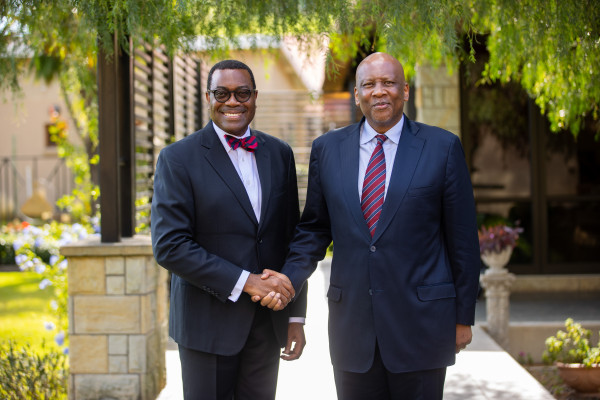
During an official visit to Lesotho -- the first by an African Development Bank President -- Dr. Akinwumi Adesina met with His Majesty King Letsie III to discuss strengthening development partnerships and expanding the Bank's investments in the country. 

His Majesty expressed delight at the Bank President's visit, viewing the mission as a reflection of the Bank and Adesina's appreciation for Lesotho's progress in improving people's lives. 

“With haste, we will ensure that the policies and incentives to accommodate the needs of and attract the private sector are in place, especially in healthcare, agriculture, and manufacturing,” the King remarked. 

King Letsie said he was confident that Adesina, whom he described as a 'man of action,' would help catalyze progress on the Bank's strategic projects in Lesotho. 

Adesina thanked King Letsie for his strong leadership role as the African Union Nutrition Champion since 2014, his advocacy for improved nutrition and food security on the continent -- especially for women, adolescents, and children -- and his passion for youth development. 

The African Development Bank president commended His Majesty for his leadership on the  King Letsie III Just Energy Transition Fund, which aims to generate approximately 200 megawatts of power through private sector investments. 

He also briefed King Letsie about the Bank's new 2025-2030 Country strategy paper and planned investments of $331 million to support quality infrastructure, capacity building, energy, integration and interconnectivity, debt management and standards, and strengthening the office of the Prime Minister.  

Referencing dwindling donor commitments globally, Dr. Adesina said, "Africa must prepare to engage more proactively with the private sector. Every challenge is an investor's dream. Ultimately, capital, like water, will always find a receptive place to go." 

According to Adesina, the Bank has implemented 87 projects totaling $429 million since Lesotho joined the Bank in 1973.  

"We have eight ongoing projects worth $60 million, and we look forward to significantly expanding our commitments," Adesina said. 

The Bank's investment strategy for Lesotho will focus on several priority areas: 

  • Energy infrastructure, including electricity transmission lines connecting Lesotho to South Africa 
  • Agricultural development to enhance food security and rural livelihoods 
  • Climate resilience initiatives to address environmental challenges 
  • Digital transformation, including broadband expansion for digital financial inclusion and government service digitalization 
  • Water resource management, building on the success of the Lesotho Lowland Rural Water Supply Project 
  • Public financial management and debt management support 
  • Trade competitiveness enhancements through improved grades and standards for exports 

The African Development Bank-led Lesotho Rural Water Supply and Sanitation Project has delivered remarkable results: 190 kilometers of pipeline to distribution networks, water storage tanks with a total capacity of 3.48 million liters, and 166 public water points serving approximately 28,266 people across eight zones in Maseru and Berea districts. 

Responding to King Letsie's request, Dr. Adesina said the Bank will prioritize investments in primary healthcare centers across Lesotho.  

“We will work on an integrated project that includes components of energy, a potential multi-partner $2.3 billion water transfer project from Lesotho through South Africa to Botswana, agro-value chains, and trade facilitation in Lesotho,” Adesina said after the meeting with King Letsie III. 

The Bank is expected to support Lesotho in mobilizing approximately $260 million for the integrated water transfer project, which will supply 308 million cubic meters of water for domestic, agricultural, and industrial use through a 700 km pipe system. The project has the potential to generate up to 22 MW of hydropower. 

Speaking earlier, Minister of Finance and Development Planning Retselisitsoe Matlanyane indicated that as Lesotho's energy supply will exceed domestic demand by the end of 2026, the country intends to build a substation to export excess power production to South Africa. She reiterated Lesotho's commitment to private sector-friendly policies and engagement. 

The minister highlighted the importance of primary healthcare and nutrition investments to help combat extreme stunting in several parts of the country.  

King Letsie is the African Union-appointed African Leaders for Nutrition champion.  The initiative, spearheaded by the African Development Bank and championed by African leaders, works to galvanize political will and significant investments to end malnutrition on the continent. 

Dr. Adesina also met with Prime Minister Samuel Ntsokoane Matekane; and the ministers of Foreign Affairs; Agriculture, Food Security & Nutrition; Natural Resources; Health; Communication, Science & Technology; and Education & Training. 

The Bank's delegation to Lesotho included its Executive Director for Lesotho, Dr. Nomfundo X. Ngwenya; Deputy Director General for Southern Africa, Moono Mupotola; and Senior Advisor to the President for Communication and Stakeholder Engagement, Dr. Victor Oladokun. 

Distributed by APO Group on behalf of African Development Bank Group (AfDB).

Media Contact:  
Emeka Anuforo
Principal Regional Communication Officer 
media@afdb.org

About the African Development Bank Group: 
The African Development Bank Group is Africa's premier development finance institution. It comprises three distinct entities: the African Development Bank (AfDB), the African Development Fund (ADF) and the Nigeria Trust Fund (NTF). On the ground in 41 African countries with an external office in Japan, the Bank contributes to the economic development and the social progress of its 54 regional member states. For more information: www.AfDB.org

Media files
African Development Bank Group (AfDB)
Download logo
Read moreAfrican Development Bank Group to Expand Investment in Lesotho to $331 Million
24 March 2025

Cassava to Upgrade Its Data Centres

Location: Business
Cassava Technologies

Cassava Technologies (www.CassavaTechnologies.com) announced today that it plans to build Africa's first AI factory — a powerful and super-secure data centre facility powered with NVIDIA AI computing technology. This will give African businesses, governments and researchers access to cutting-edge AI computing capacity — helping them develop smarter AI products, streamline operations and stay competitive in a fast-changing world. It provides the supercomputers and software needed to train AI while keeping data within Africa's borders. 

Cassava plans to deploy NVIDIA accelerated computing and AI software using NVIDIA Cloud Partner (NCP) reference architectures, at its data centres in South Africa by June 2025, with expansion planned at its other data centre facilities in Egypt, Kenya, Morocco and Nigeria. Cassava's AI Factory will leverage the company's pan-African high-speed, ultra-low-latency, fibre-optic network with sustainable data centres to deliver AI as a Service (AIaaS). Cassava's world-class data centres are designed to be energy efficient, using less electricity to power AI computing workloads. 

NVIDIA GPU-based supercomputers will power the AI factory, enabling faster AI model training, fine-tuning and advanced inference capabilities. Cassava aims to be the first to introduce these accelerated computing platforms to Africa as an NCP, playing a crucial role in the continent's AI ecosystem. 

The Cassava AI Factory will ensure businesses and researchers have access to the AI computing power required to scale, boost productivity and power innovation. By using this secure, high-performance AI Factory, African businesses and governments can develop local solutions to local challenges, enabling Africans to build, train, scale and deploy AI in a secure environment compliant with global and local regulations. 

“Building digital infrastructure for the AI economy is a priority if Africa is to take full advantage of the fourth industrial revolution. Our AI Factory provides the infrastructure for this innovation to scale, empowering African businesses, startups and researchers with access to cutting-edge AI infrastructure to turn their bold ideas into real-world breakthroughs — and now, they don't have to look beyond Africa to get it,” said Strive Masiyiwa, Founder & Chairman of Cassava. “Collaborating with NVIDIA gives us the advanced computing capabilities needed to drive Africa's AI innovation while strengthening the continent's digital independence.” 

“AI is helping innovators solve our greatest challenges in agriculture, healthcare, energy, financial services and many other industries creating opportunity in Africa,” said Jaap Zuiderveld, VP EMEA at NVIDIA. “As an NVIDIA Cloud Partner, Cassava is providing essential infrastructure and software to help pioneering companies and organizations accelerate AI development to foster innovation across the continent.” 

Cassava's AI Factory marks the next step in the group's long-standing leadership in providing world class digital solutions, reinforcing its broader commitment to responsible AI adoption, innovation and productivity growth in Africa. 

Distributed by APO Group on behalf of Cassava Technologies.

About Cassava Technologies:
Cassava Technologies is a global technology leader of African heritage providing a vertically integrated ecosystem of digital services and infrastructure enabling digital transformation. Headquartered in the UK, Cassava has a presence across Africa, the Middle East, Latin America and the United States of America. Through its business units, namely, Cassava AI, Liquid Intelligent Technologies, Liquid C2, Africa Data Centres, and Sasai Fintech, the company provides its customers' products and services in 94 countries. These solutions drive the company's ambition of establishing itself as a leading global technology company of African heritage. https://www.CassavaTechnologies.com/  

Media files
Cassava Technologies
Download logo
Read moreCassava to Upgrade Its Data Centres
20 March 2025

Nelson Mandela Bay sails to cruise industry growth

Location: News

Nelson Mandela Bay sails to cruise industry growth

The strong working relationship between the Nelson Mandela Bay Municipality (NMBM) and local tour guides and operators, has proven to be the key driving force for the booming cruise tourism industry within the city.

According to the Tourist Guide Association of Mandela Bay (TGAMB), which represents the tour guides and operators within Nelson Mandela Bay, the industry has seen drastic growth post-COVID-19, due to the ongoing good working relationship with the municipality. 

Luxolo Kanti confirmed that huge strides have been made within the tourism industry, with the "cruise industry as the catalyst and gateway” to the region’s broader tourism growth.

Kanti noted that the association, working with the municipality to rebuild the cruise industry, has seen more diversity and inclusiveness.

“A lot of emerging tour guides and operators have managed to get into the industry and thrive. Through a number of training programmes and workshops we have received on areas like Digital Marketing, Tourism Best Practice and Packaging of Cruise Tourism in South Africa, we have managed to acquire skills to market both the city and our businesses to attract more people to venture into the cruise tourism experience across the world,” he said.

Kanti also commended the municipality’s openness to the industry’s advice and contributions in policy development.
"In as much as we have made strides, there are still areas we need to improve on, both as the industry and the municipality, so that we can be competitive against other major cities.”

Successes 

Highlighting the success of the current cruise season, NMBM mayor, Babalwa Lobishe said  Nelson Mandela Bay has already received 34 cruise vessels which docked at the city’s ports, from the 45 scheduled for the season which started in November last year.

“In March alone, there has been seven cruise vessel dock-ins and five overnight stays, with three vessels still expected for this month. During the current cruise season, there will be 15 cruise vessels that will stay for more than one day. The cruise vessels for this season are expected to spend a combined total of 61 days,” Lobishe said.

The mayor also announced that the current cruise season is expected to generate significant economic benefits for the region, with a forecasted R100 million in economic spin-offs, an increase from R85 million during the 2023/24 season.

“This forecast is based on the anticipated 50 000 passengers who will be spending on tours, dining, shopping, and other cultural and heritage experiences across Nelson Mandela Bay. This influx of visitors will not only boost our local economy but also showcase the rich diversity and vibrant culture of our city,” the mayor said.

Appeal

In line with the city’s Tourism Master Plan, several initiatives are being pursued to enhance the region’s tourism appeal. These include the development of new cultural and heritage routes, the promotion of township tourism through community forums, and the expansion of events strategies aimed at attracting international visitors.

Member of the Mayoral Committee (MMC) for Economic Development, Tourism and Agriculture, Bassie Kamana, emphasised the municipality’s commitment to ensuring that the city remains a top destination for tourists and a thriving community for the residents.

According to Kamana, part of the work that the NMBM Tourism Sub-Directorate is doing is to create a conducive environment for the cruise industry to optimise on regional economic opportunities.

“Working with the vast tourism industry stakeholders, the metro encourages passengers to explore the full breadth of the region, including private game reserves, cultural and heritage sites, and local businesses.

“This is done to make sure that passengers do not just sleep over in the metro, but spend funds, explore and experience the region’s tourist attractions and create unforgettable memories,” Kamana said.

The MMC added that working with its development entity Mandela Bay Development Agency, Transnet, Eastern Cape Tourism, and other stakeholders, it has made strategic infrastructure investments to improve port facilities, tourism products and heritage sites. This is so as to ensure a seamless and welcoming experience for cruise tourists.

The NMBM has also paid special attention to tourist safety and hospitality by training and recruiting youth with a tourism background to work as tourism ambassadors. – SAnews.gov.za


GabiK
Thu, 03/20/2025 - 12:53
92 views

Read moreNelson Mandela Bay sails to cruise industry growth
20 March 2025

Deputy President Shipokosa Paulus Mashatile Concludes Working Visit to Japan

Location: News

The Presidency of the Republic of South Africa
Download logo

Deputy President Sipokosa Paulus Mashatile has successfully concluded his working visit to Japan aimed at reaffirming the strong cooperation between South Africa and Japan in areas of mutual interest. 

As the two countries mark 115 years of well established diplomatic relations, the year 2025 also marks a special milestone, with both countries chairing important multilateral organisations – South Africa's Presidency of the G20 and the Tokyo International Conference on African Development (TICAD-9) Summit led by Japan.

During the working visit, the Deputy President met with Japanese Government officials, including paying a courtesy call on His Excellency Mr Ishiba Shigeru, Prime Minister of Japan and Chief Cabinet Secretary Mr Yoshimasa Hayashi.

The Deputy President expressed his appreciation for Japan's support for South Africa's Presidency of the G20 and looked forward to collaborating with Japan to ensure that TICAD-9 is a success.

“Since 1993, Japan has been hosting TICAD, which focuses on Japan's support of African development through public and private support of initiatives aimed at peace and stability, and growth in the private sector, infrastructure, human resources, climate change, and education. Indeed, South Africa and Africa have a reliable and respectable ally in Japan,” said the Deputy President.

The Deputy President also met with the Japan-African Union Parliamentary Freindship League with the aim of strengthening bilateral relations and parliamentary cooperation between South Africa and Japan.

The meeting emphasized the importance of parliamentary diplomacy in promoting mutual understanding and cooperation and highlighted the importance of the Japan-African Union Parliamentary Friendship League in fostering stronger ties between Japan and African countries. 

The Deputy President also had an opportunity to engage with the representatives of the Japanese business community which included Japan External Trade Organisation (JETRO) and Japan Organisation for Metals and Energy Security (JOGMEC), Keidenran and the Association of the African Economy and Development in Japan Committee (AFRECO), with the objective of promoting trade, investment and economic cooperation between the two countries.

During these engagements, the Deputy President highlighted South Africa's favourable business environment, skilled workforce and strategic location, making it an attractive destination for Japanese investment.

Addressing concerns raised by the Japanese business community, the Deputy President reported on progress made in reducing the backlog and fast racking visa applications, government's commitment to ending loadshedding and ensuring safety for citizens and investors.

The Deputy President is confident that these engagements will yield positive results, further strengthening the partnership between the two countries.

“As this delegation goes back to South Africa, we have a collective mandate to bring to life some of the discussions and agreements that we have had with our counterparts and other stakeholders here. We are motivated and will do everything it takes to make sure another 115 years, with sustainable economic, cultural and people-to-people benefits for the people of both our countries.” said Deputy President Mashatile.

The Deputy President was supported by the Deputy Minister of International Relations and Cooperation, Ms Thandi Moraka; the Minister of Sport, Arts & Culture, Mr Gayton McKenzie; the Minister of Higher Education, Dr Nobuhle Nkabane; the Minister of Agriculture Mr John Steenhuisen; the Minister of Trade Industry and Competition, Mr Parks Tau; and the Deputy Minister of Science, Technology and Innovation, Ms Nomalungelo Gina.

Distributed by APO Group on behalf of The Presidency of the Republic of South Africa.

Read moreDeputy President Shipokosa Paulus Mashatile Concludes Working Visit to Japan
20 March 2025

The Africa Debate Returns to London

Location: News
Invest Africa

Now in its 11th year, The Africa Debate 2025 returns as London's leading Africa-focused investment forum, bringing together global policymakers, industry leaders, and investors at the prestigious Guildhall on 2 July 2025. 

At a time when Africa's economic transformation is at a critical inflection point, this year's debate will focus on “Harnessing Natural Capital for Growth.” With 60% of the world's richest solar resources and a wealth of critical minerals crucial to next-generation industries, Africa is positioned at the centre of the global energy transition. However, realising this opportunity requires more than just resource extraction. The focus must shift towards bold policy reforms, investment in value chains, and partnerships that promote industrial growth, ensuring Africa is not just a supplier of raw materials but a leader in global markets. 

“Africa is no longer defined by its raw materials - it is emerging as a global force in advanced industries, sustainable energy, and digital innovation,” said Chantelé Carrington, CEO at Invest Africa. “The challenge now is not just unlocking potential, but turning ambition into action. This year's debate will bring together visionary leaders and investors to shape the strategies that will drive Africa's next phase of economic transformation.”  

Key Themes Driving The Africa Debate  

This year's discussions will focus on four central themes shaping Africa's investment landscape:  

  • Africa's Role in Global Supply Chains: With demand for green energy and digital infrastructure surging, Africa has a unique opportunity to move up the value chain and position itself as a leader in advanced manufacturing and sustainable industrialisation. At The Africa Debate, we will explore the policies, investments, and trade agreements needed to ensure that Africa captures greater economic value from its natural capital rather than exporting it in its raw form. 
  • Mobilising Capital for Natural Resources: Unlocking Africa's vast resources requires smart, structured finance. Traditional funding models have fallen short in mobilising the capital needed for infrastructure, energy, and industrialisation. At The Africa Debate, we will examine how blended finance, innovative investment vehicles, and risk-mitigation tools can de-risk projects and bridge Africa's financing gap. 
  • Digitalising Natural Capital: Africa loses an estimated $88.6 billion annually to illicit financial flows, opaque commodity trading and resource mispricing. Could blockchain technology provide the transparency and security needed to capture fair value from resources? At The Africa Debate, we will explore whether blockchain and digital solutions can revolutionise governance in extractives, sustainable agriculture, and carbon markets. 
  • Industrialisation and Energy: Africa must triple its energy generation capacity by 2040 to meet growing industrial and consumer demand, yet investment in the energy sector remains fragmented and inconsistent. At The Africa Debate, we will explore bankable energy solutions—from renewables and gas to nuclear—and discuss the financing models needed to ensure Africa secures reliable, sustainable, and scalable energy for industrial growth. 

The Africa Debate 2025 offers a unique platform for deal-making, strategic discussions and networking that will shape the future of trade and investment across the continent. Attendees will gain exclusive insights from high-level industry leaders, investors, and policymakers driving Africa's economic transformation. Join us on 2 July 2025 at London's Guildhall for a day of unparalleled thought leadership and opportunity. Register now at The Africa Debate 2025 (https://apo-opa.co/4hj6zsc). 

Distributed by APO Group on behalf of Invest Africa.

Media Contact: 
Invest Africa 
Email: pippa.vanbreda@investafrica.com

Websites: 
Invest Africa: www.InvestAfrica.com
The Africa Debate: https://TheAfricaDebate.com

About The Africa Debate: 
The Africa Debate is London's premier investment forum dedicated to shaping the future of African trade, investment, and economic transformation. Now in its 11th year, the event serves as a critical platform for global businesses, investors, policymakers, and thought leaders to engage in high-level discussions on Africa's evolving role in the global economy. 

About Invest Africa: 
Invest Africa is a leading business and investment platform with over sixty years of expertise in Africa, dedicated to connecting businesses with unique opportunities across the continent. Their global network comprises more than 400 member companies, including multinationals, private equity firms, institutional investors, development finance institutions, professional service providers, government bodies, and entrepreneurs. With chapters in Kenya, South Africa, the UAE, the UK, and the US, Invest Africa leverages their global reach, market intelligence, and extensive network to support and connect businesses. As a trusted gateway into Africa, they drive socio-economic growth by facilitating sustainable capital flows and providing strategic insights through our membership, consultancy services, and dynamic events programme. 

Media files
Invest Africa
Download logo
Read moreThe Africa Debate Returns to London
  • Previous
  • Page 1
  • Interim pages omitted …
  • Page 5
  • Page 6
  • Page 7
  • Page 8
  • Page 9
  • Interim pages omitted …
  • Page 28
  • Next

Copyright © 2026 · MyZA · All Rights Reserved · Powered by Stratlec Online